Mission Briefing
Chief Miles O'Brien is subjected to a unique and harrowing form of Argrathi justice after being falsely accused of espionage during a mission. Instead of a physical prison, the Argrathi implant a twenty-year sentence directly into his mind, compressing decades of incarceration into mere hours of real time. Upon his return to Deep Space Nine, O'Brien struggles profoundly to distinguish between his 'real' life and the vivid, traumatic memories of his virtual imprisonment, which feel undeniably authentic to him.
The psychological toll of this experience is immense, as O'Brien finds himself haunted by the ingrained habits and perceived relationships forged during his 'hard time'. His attempts to reintegrate into his family life and Starfleet duties are severely complicated by his inability to shake the profound impact of his ordeal, leading to erratic behavior and a deep internal conflict that threatens to unravel his very sense of self and his connections to those he loves and serves on the station.
LCARS Tactical Mission Registry: A detailed reconstruction of chronological events and narrative progression compiled from historical logs and mission briefs.
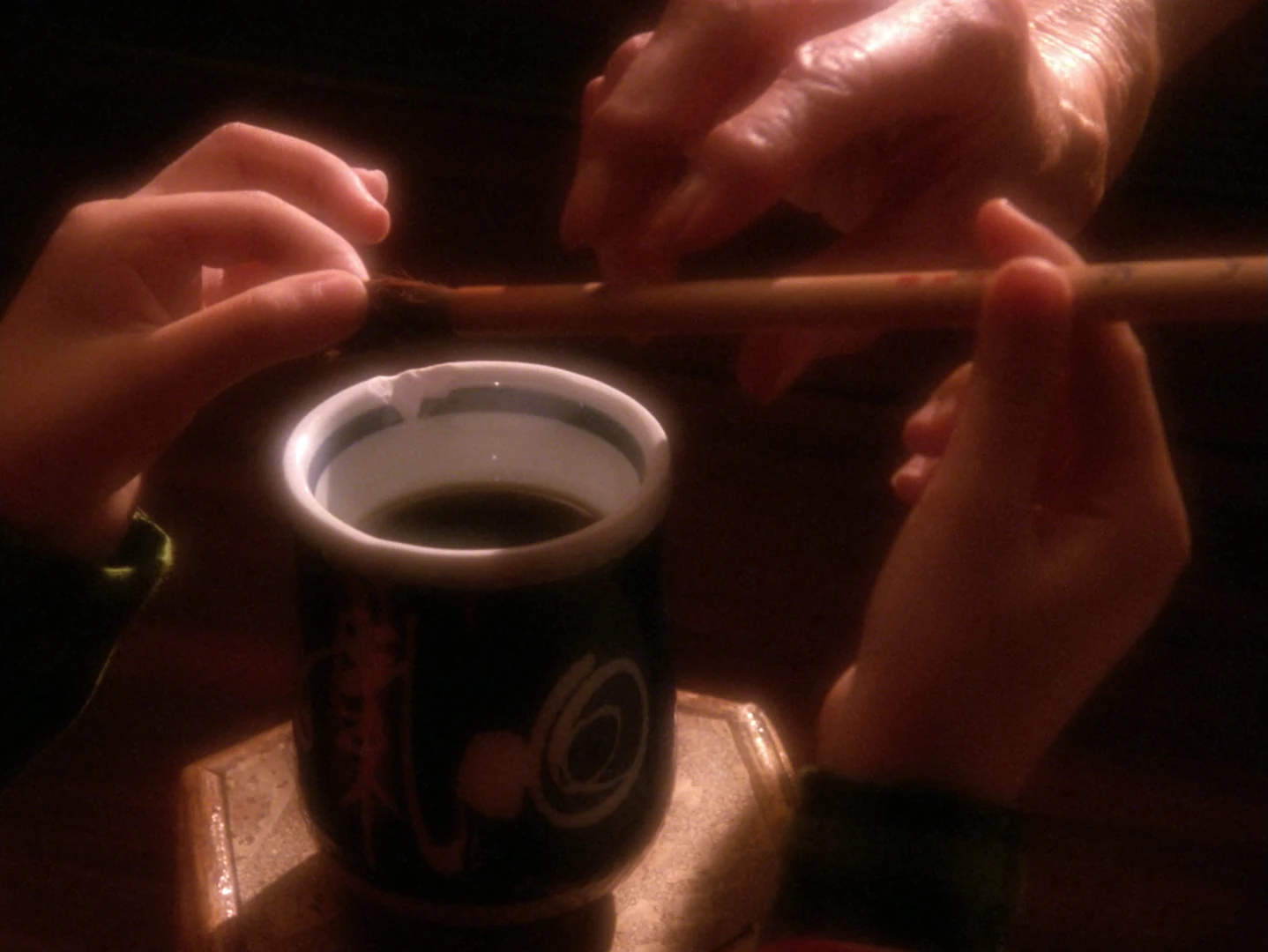
The episode opens with Chief Miles O'Brien, aged and bearded, in an Argrathi jail cell, drawing patterns in the sand. Two Argrathi guards inform him his twenty-year sentence for espionage is complete, and he is free. Confused and disoriented, O'Brien protests, claiming he has nowhere to go. He then abruptly awakens to find Major Kira Nerys looking over him, revealing that only a few hours have passed. The Argrathi, masters of mind-altering technology, had implanted the entire twenty-year prison experience into his mind as a form of 'correction' without physically harming him. O'Brien, however, insists the experience was profoundly real to him, a sentiment that will define his struggle throughout the episode. Captain Benjamin Sisko later explains the situation to Keiko O'Brien, detailing how Miles was falsely accused of espionage on Argratha and subjected to this unique form of punishment before Starfleet could intervene, by which time the 'sentence' had already been completed.
Doctor Julian Bashir meets Miles O'Brien and Major Kira Nerys at the Deep Space Nine airlock, promising to help remove the implanted memories. During their initial conversation, O'Brien denies having had a cellmate, but a flashback reveals his deep bond with Ee'char, a fellow prisoner who taught him survival techniques like drawing 'eseekas' and sharing 'chee'lash fruit'. This internal conflict between his 'real' memories and the 'implanted' ones immediately highlights the psychological trauma. Bashir soon discovers that the memories are not mere implants but a deeply integrated, time-compressed experience, making their eradication impossible without wiping O'Brien's entire memory. Keiko O'Brien, initially hopeful, is forced to accept this grim reality. Miles struggles to readjust to normal life, exhibiting prison habits like hoarding food and sleeping on the floor, further alienating him from his family and the familiar comforts of Deep Space Nine.
The psychological toll intensifies as Miles O'Brien begins to hallucinate Ee'char, seeing him on the Promenade and in Quark's Bar, Grill, Gaming House and Holosuite Arcade. His attempts to reintegrate into his duties on Deep Space Nine are fraught with difficulty; while working in a cargo bay with Jake Sisko, he struggles with basic tool identification, and later snaps at Doctor Julian Bashir for pushing him to attend counseling sessions with Counselor Telnorri. A flashback shows O'Brien's breaking point in the Argrathi cell, where Ee'char had to physically restrain him from provoking the guards. Back in the present, O'Brien's frustration boils over in Quark's, where he violently confronts Quark for a drink, pinning him by the arm and further isolating himself. Ee'char's spectral presence becomes a constant reminder of his past, claiming to be O'Brien's friend and an inescapable part of him. Constable Odo observes O'Brien's erratic behavior, signaling growing concern among the station's command staff.
Captain Benjamin Sisko, informed of O'Brien's deteriorating mental state and aggressive outbursts, relieves him of duty and orders him to attend daily counseling sessions and report to the infirmary. O'Brien's anger escalates, culminating in him throwing his commbadge at the floor in a turbolift and lashing out at Commander Jadzia Dax. He confronts Doctor Julian Bashir in the infirmary, where Ee'char appears just behind Bashir, intensifying O'Brien's distress and causing him to snap at both of them. Returning to his quarters, a worried Keiko O'Brien tries to comfort him, but when Molly O'Brien innocently seeks his attention, Miles becomes so angry that he nearly strikes her. Horrified by his own violent impulse, he flees to a cargo bay, where he smashes containers in a fit of rage. His despair reaches its peak when he retrieves a Phaser from weapons locker 47, intending to take his own life, believing himself to be a dangerous 'monster' unfit for his family and friends.
Doctor Julian Bashir arrives just in time to prevent Miles O'Brien's suicide attempt. O'Brien, breaking down, confesses his deepest shame: after nearly twenty years in the Argrathi cell, driven by starvation, he murdered Ee'char in a fit of rage, only to discover moments later that Ee'char had been hoarding food to share with him. He laments his failure to uphold the 'evolved' humanity of the 24th century, feeling he repaid kindness with blood and was no better than an animal. Bashir, however, reassures him that his profound remorse proves his humanity is intact, arguing that taking his own life would allow the Argrathi to truly win by destroying a good man. O'Brien lowers the Phaser, and Ee'char appears one last time, smiling and telling Miles to 'be well' before disappearing, signifying O'Brien's acceptance and release from his internal torment. Bashir prescribes medication for depression and hallucinations, emphasizing that while the memories remain, O'Brien can learn to live with them through continued counseling. The episode concludes with a hopeful reunion between Miles O'Brien and Molly O'Brien, symbolizing his return home.
LCARS Tactical Mission Log: Chronological action logs detailing exactly what each character did during the events of this mission, linked directly to personnel dossiers.


Subspace Visual Feed
Sensors & Diagnostic Metrics
Visual Sensor Logs


Synaptic Lore Link Contexts
By the time the details of the events had been received by Deep Space 9, the "sentence" had already been completed, and he was free to return home.
Finally, he spots weapons locker 47 and pulls a phaser out, deciding to take his own life.His despair reaches its peak when he retrieves a Phaser from weapons locker 47, intending to take his own life, believing himself to be a dangerous 'monster' unfit for his family and friends.
Captain Benjamin Sisko later explains the situation to Keiko O'Brien, detailing how Miles was falsely accused of espionage on Argratha and subjected to this unique form of punishment before Starfleet could intervene, by which time the 'sentence' had already been completed.
Bashir soon discovers that the memories are not mere implants but a deeply integrated, time-compressed experience, making their eradication impossible without wiping O'Brien's entire memory.
The Argrathi, masters of mind-altering technology, had implanted the entire twenty-year prison experience into his mind as a form of 'correction' without physically harming him.
Mission Registries & Linkages
Subspace Playlists
This registry lists all curated subspace playlists and chronological collections containing this mission.
Technology
This registry contains all specialized technologies deployed, analyzed, or referenced during this mission.
Location
This registry displays all celestial bodies, planets, starbases, or coordinates charted or visited during this mission.
Starship
This registry lists all vessels encountered, scanned, or active during this mission.
[ NO STARSHIPS REGISTERED ]
Species & Factions
This registry documents all species, civilizations, and organizational factions contacted or active in this sector during the mission.
Culture & Lore
This registry outlines historical events, cultural traditions, organizations, and database lore referenced during this mission.
[ NO CULTURE/LORE RECORDED ]
Production & Archival Linkages
This registry documents behind-the-scenes production references, draft concepts, star charts, or archival cataloging links officially connected to this mission.
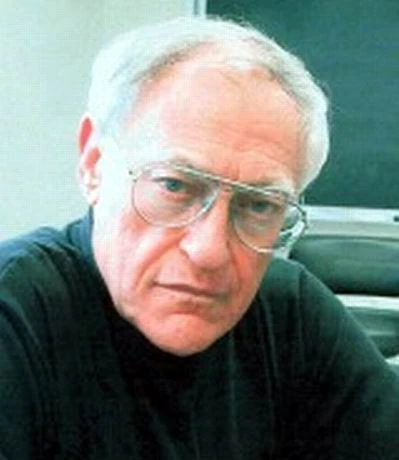
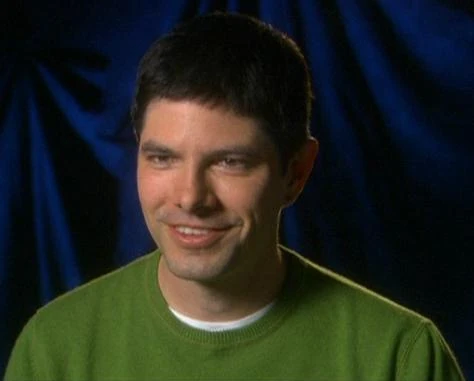
"The character of Ee'char hadn't been in the original pitch, Robert Hewitt Wolfe himself added that character. He also introduced elements from a completely separate pitch that had been purchased, but which never made it into production. This other story concerned the discovery that Ensign Sito Jaxa, from the episodes and , was still alive. After being presumed dead, she was found to have been held in a Cardassian prison since the events of "Lower Decks". This episode would have detailed her struggle to reintegrate into normal life and was basically a study of post-traumatic stress disorder (PTSD). However, there was no motivating factor for why Sito was suffering from this condition, so Wolfe had decided that she had killed her cellmate, to whom she had become very close. The episode was never produced, but when composing "Hard Time", the idea of Sito killing her cellmate resurfaced in his mind, so he took that idea and imported it into the O'Brien story. ()"
Continuity & Trivia
-
This episode is frequently cited by fans as one of the darkest and most psychologically impactful episodes of Deep Space Nine, deeply exploring the trauma inflicted upon Miles O'Brien.
-
The concept of experiencing a lifetime in a brief period of real time, as seen with O'Brien's virtual prison, draws parallels to the TNG episode 'The Inner Light,' though O'Brien's experience is entirely negative and punitive.
-
Michael Dorn, who plays Worf, directed this episode. He has often spoken about the challenges and rewards of directing, especially in working with Colm Meaney on such an emotionally demanding performance.
-
The story pitch for 'Hard Time' was initially rejected twice by Michael Piller before Robert Hewitt Wolfe finally convinced Ira Steven Behr to purchase it during the fourth season.Sources: Memory Alpha
-
Writer Robert Hewitt Wolfe incorporated the concept of a prisoner killing their cellmate, a key plot point in 'Hard Time,' from a previously undeveloped Star Trek: Deep Space Nine episode pitch concerning the survival of Ensign Sito Jaxa.Sources: Memory Alpha
-
Celeste Wolfe, a licensed psychotherapist and wife of writer Robert Hewitt Wolfe, served as an unofficial consultant for the script, offering professional insights into the psychological trauma depicted.Sources: Memory Alpha
-
Executive Producer Ira Steven Behr articulated the creative team's rationale for frequently tormenting Chief O'Brien, stating they enjoyed 'hammering him' because his accessible nature makes viewers deeply empathize with his suffering.Sources: Memory Alpha
-
In the United Kingdom, the VHS release of the episode was erroneously titled 'Hard Times' on its packaging and was one of only two Deep Space Nine volumes to receive a 15 certificate due to its violent scenes.Sources: Memory Alpha