Mission Briefing
As the USS Enterprise (NCC-1701-D) docks at Starbase 74, orbiting Tarsas III, for crucial maintenance and system upgrades, Captain Jean-Luc Picard and Commander William T. Riker choose to remain aboard. They are joined by the Bynars, a highly intelligent and technologically advanced species from Bynaus, assigned to oversee the complex computer reconfigurations. From the outset, the Bynars exhibit a peculiar demeanor, displaying an unusual intensity surrounding their work and the tight deadlines. Commander William T. Riker also takes the opportunity to test the newly upgraded Holodeck, where he encounters Minuet, a remarkably sophisticated and intuitive holodeck character, whose advanced artificial intelligence creates a compelling and realistic experience.
However, subtle signs of a deeper, undisclosed agenda begin to emerge, as unexplained power fluctuations ripple through the starship. Suddenly, the USS Enterprise (NCC-1701-D) unexpectedly departs Starbase 74, leaving Captain Jean-Luc Picard and Commander William T. Riker seemingly alone on a deserted vessel. Faced with a baffling mystery, they must unravel the Bynars' true intentions and discover why their starship has been taken on an unknown course. With Starfleet’s most advanced vessel in question, Captain Jean-Luc Picard and Commander William T. Riker must take decisive action to understand the escalating situation and regain control of their ship, before its cutting-edge technology can be misused.
LCARS Tactical Mission Registry: A detailed reconstruction of chronological events and narrative progression compiled from historical logs and mission briefs.
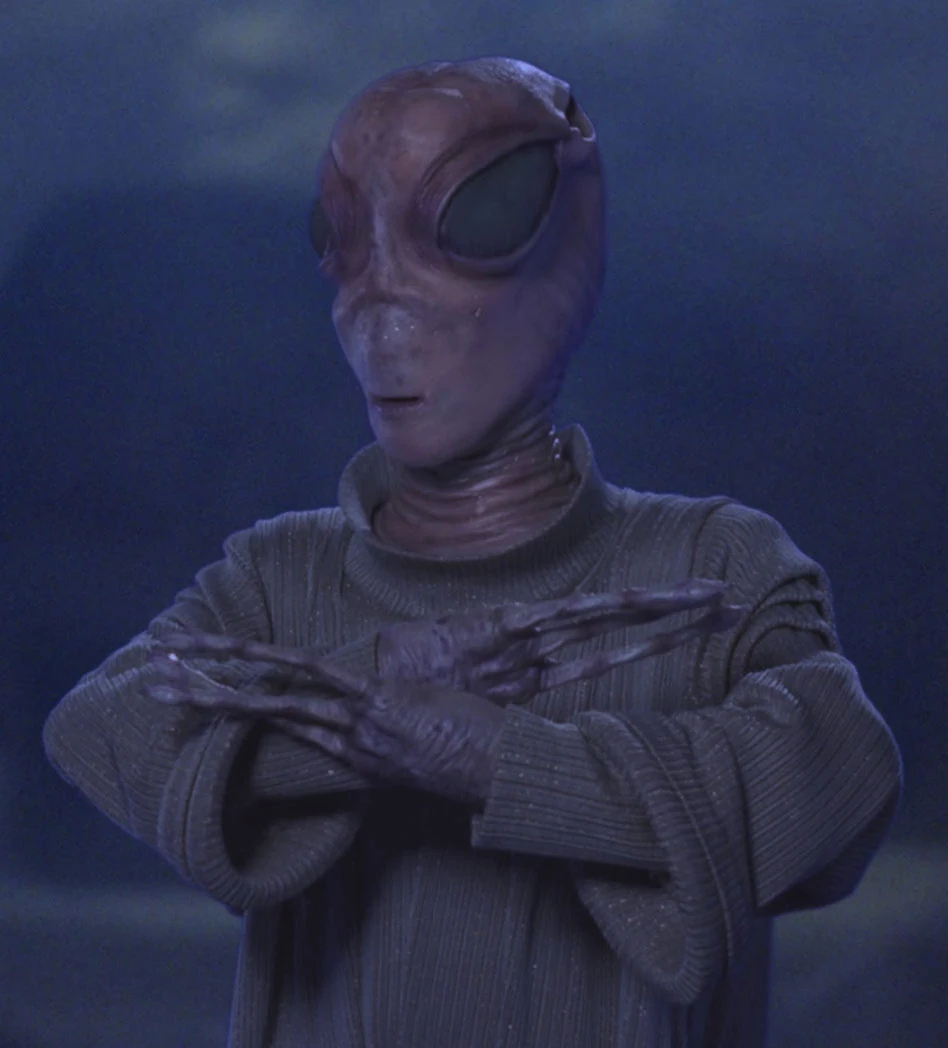
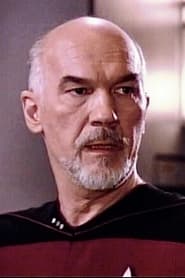
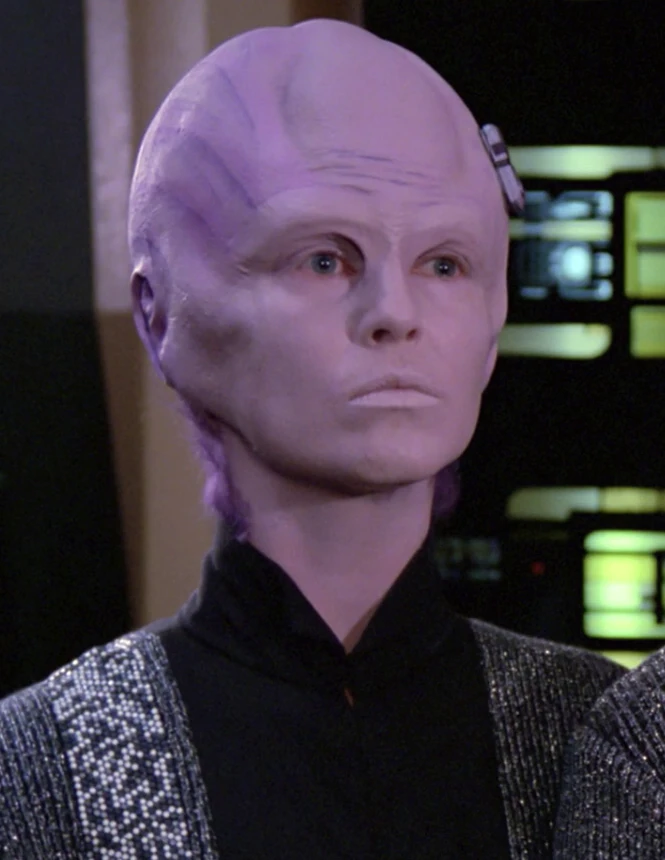
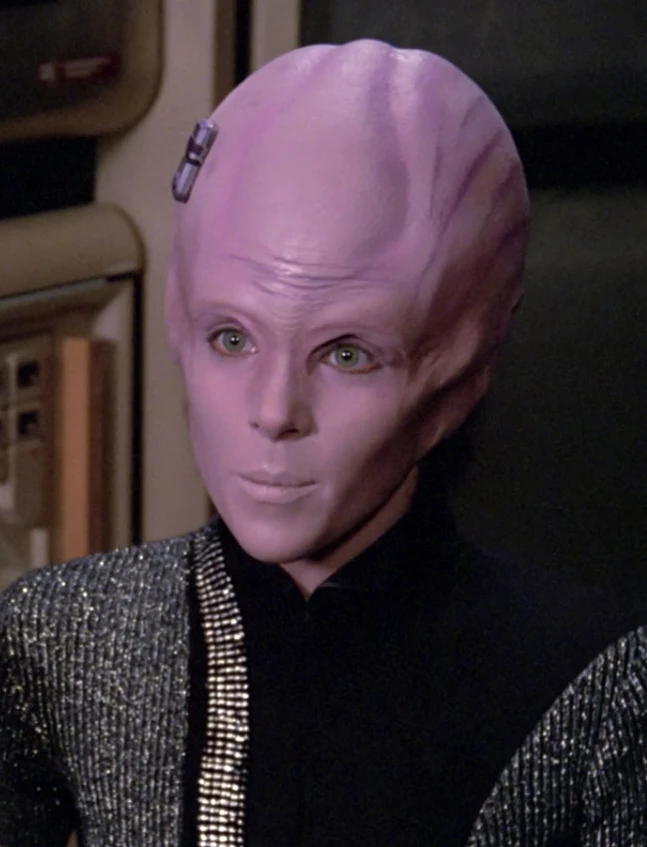
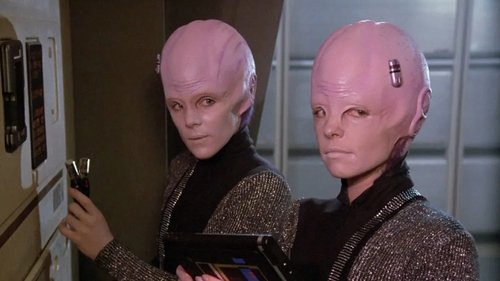
The USS Enterprise (NCC-1701-D) arrives at Starbase 74, orbiting Tarsas Three, for a scheduled drydock overhaul and system upgrades, including its holodeck, which has experienced minor malfunctions. Captain Jean-Luc Picard and Commander William T. Riker opt to remain aboard during the maintenance period. They are introduced to the Bynars, a diminutive, highly intelligent, and technologically advanced species from the planet Bynaus, who are renowned for their symbiotic relationship with their planetary supercomputer. The Bynars, who communicate in pairs (such as One Zero and Zero One), are assigned to perform the critical computer upgrades on the USS Enterprise (NCC-1701-D). From the outset, their behavior is peculiar; they express concern over the tight 48-hour deadline and exhibit an unusual excitement when discussing the complex reconfigurations required. Commander William T. Riker notes their odd demeanor, and subtle signs, such as unexplained power reductions in unoccupied sections of the ship, begin to hint at a deeper, undisclosed agenda.
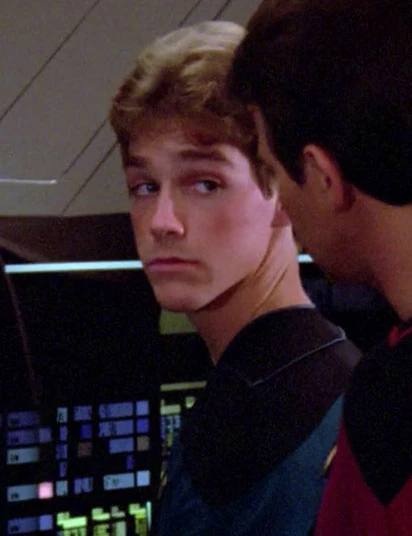
While the Bynars continue their work, Commander William T. Riker decides to test the newly upgraded holodeck. He initiates a program simulating a 1958 New Orleans Bourbon Street Bar, where he encounters Minuet, a remarkably sophisticated and intuitive holodeck character. Minuet's advanced artificial intelligence allows her to adapt, anticipate, and engage in deeply personal conversations, even speaking French with Captain Jean-Luc Picard, who later joins Commander William T. Riker in the simulation. Her realism and emotional depth are unprecedented for a holodeck program, quickly forming a profound, albeit artificial, connection with Commander William T. Riker. Concurrently, on the USS Enterprise (NCC-1701-D)'s bridge, Ensign Wesley Crusher detects a critical failure in main Engineering: the magnetic containment field for the antimatter is rapidly deteriorating. Lieutenant Commander Data and Lieutenant Geordi La Forge rush to Engineering, finding it deserted and the situation escalating towards catastrophic antimatter release. Recognizing the imminent destruction of the ship, Lieutenant Commander Data, acting with command authority in the Captain's absence, orders a full evacuation of all personnel to Starbase 74. The entire crew, including Lieutenant Tasha Yar, Lieutenant Worf, and Doctor Beverly Crusher, are safely transported off the starship, leaving Captain Jean-Luc Picard and Commander William T. Riker unknowingly stranded.
Captain Jean-Luc Picard and Commander William T. Riker remain oblivious to the evacuation, engrossed in their holodeck experience with Minuet. The truth is revealed when Minuet's programming actively prevents Captain Jean-Luc Picard from exiting the holodeck, exposing her role as a deliberate distraction. Upon leaving the holodeck, they discover the USS Enterprise (NCC-1701-D) has departed Starbase 74 and is no longer docked. The ship's computer confirms that all personnel, save for them, have been evacuated, and the USS Enterprise (NCC-1701-D) is now on an automated course to Bynaus in the Beta Magellan system. Minuet confesses that the Bynars programmed her to keep Commander William T. Riker occupied, and Captain Jean-Luc Picard's presence was merely a 'fortunate happenstance.' Realizing they have been marooned and their starship stolen, Captain Jean-Luc Picard and Commander William T. Riker face a dire choice: regain control of the USS Enterprise (NCC-1701-D) or, if unsuccessful, initiate its auto-destruct sequence to prevent the advanced Starfleet vessel from falling into potentially hostile hands. This ethical dilemma underscores Starfleet's commitment to preventing its technology from being misused.
Navigating the deserted starship, Captain Jean-Luc Picard and Commander William T. Riker proceed to Engineering, where they activate the auto-destruct sequence, setting a five-minute countdown that can only be canceled from the bridge. During their journey, they observe an immense data transfer occurring within the USS Enterprise (NCC-1701-D)'s main computer, a crucial clue to the Bynars' true intentions. They devise a plan to beam simultaneously to two different locations on the bridge, surprising the Bynars (One Zero and Zero One), who are found in a state of near-death. After canceling the auto-destruct, they discover the USS Enterprise (NCC-1701-D) is in orbit around Bynaus, where the planetary computer is completely inert, and the Bynar population is similarly dying. Returning to the holodeck, Minuet reveals the full, desperate truth: a star in the Bynar system went supernova prematurely, threatening to unleash an electromagnetic pulse that would destroy their planetary supercomputer, which is inextricably linked to their very existence. Their only hope was to transfer their entire planetary memory core to the USS Enterprise (NCC-1701-D)'s massive computer and then transfer it back after the pulse passed. Their drastic actions were necessitated by the USS Enterprise (NCC-1701-D)'s unexpected delay at Omicron Pascal and the early supernova, leaving them no time to simply ask for help, fearing rejection due to their binary, 'yes or no' thought patterns.
Understanding the Bynars' desperate plight and their binary logic, Captain Jean-Luc Picard and Commander William T. Riker deduce the 'password' for the data transfer: '11001001,' the episode's title, representing the Bynars' fundamental nature. Working together, as the Bynars themselves always do, they successfully initiate the transfer of the planetary memory core back to Bynaus, reactivating the Bynar computer and saving their civilization. The revived Bynars express profound gratitude and willingly submit to Starfleet's judgment at Starbase 74 for their actions. The USS Enterprise (NCC-1701-D) returns to Starbase 74, where the Bynars are handed over to Commander Quinteros for a hearing. In the aftermath, Commander William T. Riker returns to the holodeck, only to find Minuet gone, her advanced programming having been a temporary construct of the Bynars' gambit. He expresses genuine sadness at her disappearance, acknowledging the unique connection they shared. The episode concludes by highlighting themes of trust, the complexities of interspecies communication, the ethical boundaries of artificial intelligence, and the extreme measures a species might take for survival, while also showcasing Commander William T. Riker's burgeoning command capabilities and Captain Jean-Luc Picard's astute problem-solving under pressure.
LCARS Tactical Mission Log: Chronological action logs detailing exactly what each character did during the events of this mission, linked directly to personnel dossiers.


Subspace Visual Feed
Sensors & Diagnostic Metrics
Visual Sensor Logs



Synaptic Lore Link Contexts
They are introduced to the Bynars, a diminutive, highly intelligent, and technologically advanced species from the planet Bynaus, renowned for their unique symbiotic relationship with their planetary supercomputer.
They are introduced to the Bynars, a diminutive, highly intelligent, and technologically advanced species from the planet Bynaus, renowned for their unique symbiotic relationship with their planetary supercomputer.
The USS Enterprise (NCC-1701-D) arrives at Starbase 74, orbiting Tarsas Three, for a scheduled drydock overhaul and essential system upgrades, including its advanced holodeck.
The USS Enterprise (NCC-1701-D) arrives at Starbase 74, orbiting Tarsas Three, for a scheduled drydock overhaul and essential system upgrades, including its advanced holodeck.
The USS Enterprise (NCC-1701-D) arrives at Starbase 74, orbiting Tarsas Three, for a scheduled drydock overhaul and essential system upgrades, including its advanced holodeck.
Back on the Enterprise, Picard and Riker enter the weapons room to obtain phasers.
On Starbase 74, Data asks what the nearest Starfleet ship is.Riker face a dire choice: regain control of the USS Enterprise (NCC-1701-D) or, if unsuccessful, initiate its auto-destruct sequence to prevent the advanced Starfleet vessel from falling into potentially hostile hands.
The electromagnetic pulse was going to knock out the main computer, so the only option was to back up its contents into the only mobile computer large enough: the computer aboard the Enterprise.Returning to the holodeck, Minuet reveals the full, desperate truth: a star in the Bynar system went supernova prematurely, threatening to unleash an electromagnetic pulse that would destroy their planetary supercomputer, which is inextricably linked to their very existence.
The USS Enterprise (NCC-1701-D) arrives at Starbase 74, orbiting Tarsas Three, for a scheduled drydock overhaul and system upgrades, including its holodeck, which has experienced minor malfunctions.
Their drastic actions were necessitated by the USS Enterprise (NCC-1701-D)'s unexpected delay at Omicron Pascal and the early supernova, leaving them no time to simply ask for help, fearing rejection due to their binary, 'yes or no' thought patterns.
This ethical dilemma underscores Starfleet's commitment to preventing its technology from being misused.
Mission Registries & Linkages
Subspace Playlists
This registry lists all curated subspace playlists and chronological collections containing this mission.
Technology
This registry contains all specialized technologies deployed, analyzed, or referenced during this mission.
Location
This registry displays all celestial bodies, planets, starbases, or coordinates charted or visited during this mission.
Starship
This registry lists all vessels encountered, scanned, or active during this mission.
Species & Factions
This registry documents all species, civilizations, and organizational factions contacted or active in this sector during the mission.
Culture & Lore
This registry outlines historical events, cultural traditions, organizations, and database lore referenced during this mission.
Production & Archival Linkages
This registry documents behind-the-scenes production references, draft concepts, star charts, or archival cataloging links officially connected to this mission.
"Commander Quinteros remarks that the was expected at Starbase 74 a week earlier, a delay which Riker claims is due to an unexpected stop at Omicron Pascal. At the end of (which aired two weeks before this episode), Picard informs Riker that the ship is due for a computer refit which is what happens in this episode, however, the Enterprise-D would carry out an unexpected mission to Angel I and an outpost near the Romulan Neutral Zone in (which aired a week later) in-between. It is possible that the outpost was Omicron Pascal and would account for the one week delay."
"Commander Quinteros remarks that the was expected at Starbase 74 a week earlier, a delay which Riker claims is due to an unexpected stop at Omicron Pascal. At the end of (which aired two weeks before this episode), Picard informs Riker that the ship is due for a computer refit which is what happens in this episode, however, the Enterprise-D would carry out an unexpected mission to Angel I and an outpost near the Romulan Neutral Zone in (which aired a week later) in-between. It is possible that the outpost was Omicron Pascal and would account for the one week delay."
"The Bynars seen in this episode are somewhat similar to the Talosian species from : they were androgynous aliens with male-sounding voices and played by females. In both cases, the effect suggests an alien gender (or non-gender) to the viewer."
Continuity & Trivia
-
This episode marks the first appearance of Starbase 74, which would later be mentioned several times throughout TNG.
-
Minuet, the holodeck character, was originally intended to be a recurring character on the show, but this idea was ultimately dropped.
-
This episode marks the first time Majel Barrett, who had previously voiced the computer on the original USS Enterprise, supplied the voice for a Federation starship computer in The Next Generation, though her voice was shared with an unidentified male voice in this particular episode.Sources: Memory Alpha
-
The episode's title, '11001001,' can be broken into two 4-bit nybbles, 1100 and 1001, which directly correspond to the combined names of each pair of Bynars aboard the Enterprise (11, 00, 10, and 01).Sources: Memory Alpha
-
The episode was originally intended to be filmed and aired before 'The Big Goodbye' to establish that the Bynars' modifications were the cause of the latter's holodeck malfunction.Sources: Memory Alpha
-
The episode won a 1988 Emmy Award for Outstanding Sound Editing for a Series.Sources: Memory Alpha
-
TV Guide ranked '11001001' as the sixth best Star Trek episode in their 1996 celebration of the franchise's 30th anniversary.Sources: Memory Alpha