Mission Briefing
Starfleet Command records chronicle the perplexing events surrounding the USS Enterprise (NCC-1701)'s encounter with a profound cosmic anomaly. While conducting a routine survey of an uncharted Iron-silica planet 001, the vessel was rocked by a mysterious, galaxy-wide disruption – a momentary 'winking out' that drained vital dilithium crystals and prompted a Code Factor 1 alert from Starfleet Command, designating the USS Enterprise (NCC-1701) as bait in the affected region of the Milky Way Galaxy.
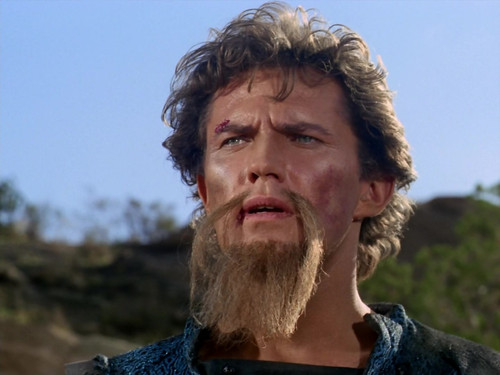
A disheveled individual named Lazarus materialized on the planet, claiming to be pursued by a devastating entity responsible for his civilization's ruin. Captain James T. Kirk brought Lazarus aboard for questioning, only for the man to make increasingly contradictory demands for assistance and dilithium crystals. Science Officer Spock's logical deductions quickly cast doubt on Lazarus's story, especially when further cosmic disruptions coincided with inexplicable changes in Lazarus's physical state. As Lazarus seemingly pilfered critical dilithium, the crew faced the alarming possibility that this enigmatic individual, or the unseen force he pursued, held the key to these reality-bending occurrences, threatening the very fabric of existence across the Milky Way Galaxy.
LCARS Tactical Mission Registry: A detailed reconstruction of chronological events and narrative progression compiled from historical logs and mission briefs.
The USS Enterprise (NCC-1701), under the command of Captain James T. Kirk, is conducting a routine survey of an uncharted Iron-silica planet 001 when the starship is violently rocked by a mysterious, galaxy-wide disruption. This 'winking out' phenomenon causes everything within sensor range to momentarily cease to exist, draining the ship's dilithium crystals almost completely. In the wake of this cosmic event, a disheveled man, Lazarus, appears on the planet's surface, claiming to be pursued by a hideous monster. Starfleet Command issues a Code Factor 1 message, indicating an invasion status, and Commodore Barstow informs James T. Kirk that the USS Enterprise (NCC-1701) is to serve as bait, as all other Starfleet units are evacuated from the affected region of the Milky Way Galaxy.
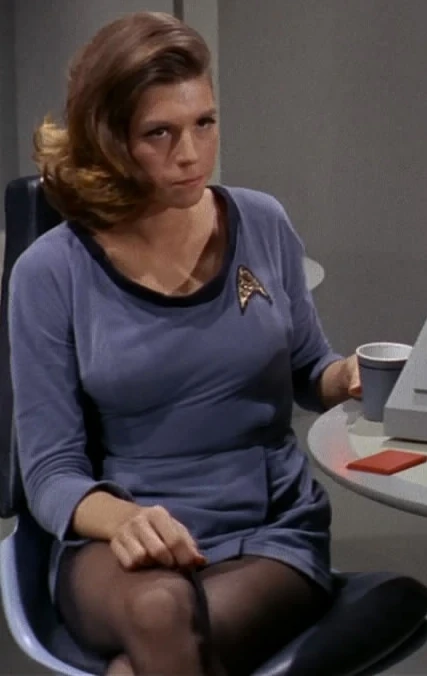
James T. Kirk brings Lazarus aboard the USS Enterprise (NCC-1701) for questioning. Lazarus insists he is hunting a 'thing' that destroyed his entire civilization and demands James T. Kirk's help and the ship's dilithium crystals. Spock, however, logically deduces that Lazarus is lying, as ship's sensors detect no other life form on the planet. During this confrontation, the universe 'winks out' again, and Lazarus's bandaged forehead inexplicably appears and disappears, further perplexing the crew. Later, Lazarus overpowers Lieutenant Charlene Masters and an unnamed engineering officer, stealing two dilithium crystals and beaming down to the Iron-silica planet 001, intensifying James T. Kirk's suspicions.
Confronted by James T. Kirk in the briefing room, Lazarus denies the theft, attributing it to his 'monster' counterpart. Dr. Leonard McCoy observes Lazarus's wound vanish and reappear, adding to the mystery. Lazarus eventually confesses to James T. Kirk and Dr. Leonard McCoy that he is a time traveler and his Lazarus' spaceship is a dimensional gateway, explaining that the desolate Iron-silica planet 001 is his ruined homeworld in a future he reached while chasing his foe. James T. Kirk and Spock theorize that two versions of Lazarus, one matter and one antimatter, are constantly switching between parallel universes. If both were to exist in the same universe simultaneously, it would trigger a catastrophic matter-antimatter annihilation, destroying everything.
The alternate, insane Lazarus-A creates chaos by setting a fire in main engineering and stealing more dilithium crystals before beaming back to the Iron-silica planet 001. James T. Kirk pursues him, and upon attempting to enter Lazarus' spaceship, is unexpectedly transported into the parallel universe. There, James T. Kirk encounters the sane Lazarus-B, who reveals the full truth: their people discovered how to traverse the negative magnetic corridor connecting their universes. Lazarus-A, unable to cope with the existence of his duplicate, became mad and obsessed with destroying Lazarus-B, regardless of the cosmic annihilation it would cause.
James T. Kirk and Lazarus-B devise a desperate plan: James T. Kirk must force Lazarus-A into the negative magnetic corridor, where Lazarus-B will hold him, while James T. Kirk destroys Lazarus' spaceship, sealing both Lazaruses in eternal conflict within the corridor and preventing the destruction of both universes. James T. Kirk returns to his universe, engages Lazarus-A in hand-to-hand combat, and forcibly throws him into the dimensional door. He then orders Lieutenant Lesley to target Lazarus' spaceship with the USS Enterprise (NCC-1701)'s phasers. As the two Lazaruses meet and fight within the corridor, the phaser beams vaporize the ship, trapping them forever between universes. James T. Kirk reflects on their grim fate, while Spock pragmatically reminds him that the universes are now safe.
LCARS Tactical Mission Log: Chronological action logs detailing exactly what each character did during the events of this mission, linked directly to personnel dossiers.


Subspace Visual Feed
Sensors & Diagnostic Metrics
Visual Sensor Logs



Synaptic Lore Link Contexts
"Starfleet Command" transmitted a crucial Code Factor 1 message, signaling an invasion.Starfleet Command, represented by Commodore Barstow, issues a galaxy-wide Code Factor One alert, confirming the widespread nature of the cosmic disruption and its epicenter near the USS Enterprise's position.
A mysterious "winking out" phenomenon and the threat of annihilation are depicted as impacting the entire "Milky Way Galaxy" and beyond, highlighting the vast scope of the danger.Kirk that the USS Enterprise (NCC-1701) is to serve as bait, as all other Starfleet units are evacuated from the affected region of the Milky Way Galaxy.
He then orders Lieutenant Lesley to target Lazarus' spaceship with the USS Enterprise (NCC-1701)'s phasers.
The USS Enterprise (NCC-1701), under the command of Captain James T.
Mission Registries & Linkages
Subspace Playlists
This registry lists all curated subspace playlists and chronological collections containing this mission.
Technology
This registry contains all specialized technologies deployed, analyzed, or referenced during this mission.
Location
This registry displays all celestial bodies, planets, starbases, or coordinates charted or visited during this mission.
Starship
This registry lists all vessels encountered, scanned, or active during this mission.
Species & Factions
This registry documents all species, civilizations, and organizational factions contacted or active in this sector during the mission.
[ NO SPECIES/FACTIONS REGISTERED ]
Culture & Lore
This registry outlines historical events, cultural traditions, organizations, and database lore referenced during this mission.
Production & Archival Linkages
This registry documents behind-the-scenes production references, draft concepts, star charts, or archival cataloging links officially connected to this mission.
"In this episode, the dilithium energizer panel in the new engineering set incorporates controls that were originally part of the "neural neutralizer" prop from a previous episode."
"The orbital visual effects for the Iron-silica planet 001 in this episode are recycled from footage previously used to depict the planet "Alfa 177" in "The Enemy Within"."
"The recurring planet visual effect, first seen as Alfa 177 and also present in this episode, is last used to represent the planet "Ardana" in "The Cloud Minders"."
"The visual effect for the Iron-silica planet 001 is later repurposed to depict the planet "Argus X" in the episode "Obsession"."
"The planet visual effect, which appears as Alfa 177 and the Iron-silica planet 001 in this episode, was also previously utilized to portray the planet "M-113" in "The Man Trap"."
Continuity & Trivia
-
This episode is infamous for its troubled production; actor Robert Brown was initially cast as Lazarus but was replaced by John Drew Barrymore after two days of shooting. Barrymore then failed to show up for work, leading to Brown being rehired, with a stand-in (Ted Cassidy) playing the 'other' Lazarus for many scenes, adding to significant delays and budget overruns.
-
Despite being one of the more expensive episodes of the first season due to its complex production, 'The Alternative Factor' is frequently cited by fans and critics alike as one of the weakest and least coherent episodes of Star Trek: The Original Series.
-
The iconic 'chasm' set, where Kirk and Lazarus battle, was a redress of the 'planet surface' set used in previous episodes like 'The Enemy Within' and 'Miri', demonstrating the efficient (or repetitive) use of studio resources in early Star Trek production.
-
The original script included a romantic entanglement between Charlene Masters and Lazarus, which was ultimately cut by Gene Roddenberry due to its similarity to the Khan/McGivers romance in "Space Seed."Sources: Memory Alpha
-
Montgomery Scott and Hikaru Sulu are notably absent from this episode, an omission considered particularly unusual for Scott given the prominent engineering-focused plotline involving dilithium crystals.Sources: Memory Alpha
-
The unique visual effect of the two Lazaruses fighting in transdimensional limbo was created by double-exposing color negative footage of stuntmen in a smoke-filled room over an astronomical photograph of the Trifid Nebula.Sources: Memory Alpha
-
A visible production error appears in the closing credits, where the title for "Script Supervisor" is misspelled as "SCPIPT SUPERVISOR."Sources: Memory Alpha
-
This episode marks the first instance in Star Trek: The Original Series where live, two-way communication with Starfleet Command is depicted, contrasting with earlier episodes that featured only delayed radio messages.Sources: Memory Alpha