Personnel dossier: Surak

| Species | Vulcan |
| Occupation | Philosopher, scientist, logician |
| Status | Deceased |
| Died | 4th century, Vulcan |
| Datestatus | 4th century |
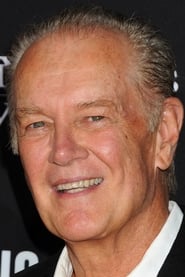
| Portrayed By | Bruce Gray |
Actors & Casting
Archival biography summary
The Time of Awakening and Philosophical Foundations
Surak was a legendary Vulcan philosopher, scientist, and logician who lived during the 4th century, a period known as the Time of Awakening. He is widely regarded as the greatest individual to have ever lived on Vulcan and is credited as the father of modern Vulcan civilization. His scientific intellect was considered on par with historical figures such as Albert Einstein and Isaac Newton.
During his lifetime, Surak undertook a significant journey through Vulcan's Forge, commencing at the Gateway and traversing the Plain of Blood. It was in this region that he established the T'Karath Sanctuary, a place where his logic was said to have cooled the intense heat of battle. Surak was also known for his teachings on the IDIC, stating that it 'had no end' and that its name was merely a shadow of its profound true meaning. He was an active practitioner of mind melding, a skill he shared with his followers, which included T'Klaas, one of the first Kolinahr masters.
The Vulcan Wars and Surak's Demise
The Time of Awakening was a tumultuous era for Vulcan, marked by a series of devastating wars that brought the planet to the brink of destruction. In the early stages of what threatened to become another catastrophic conflict, Surak's followers dispatched emissaries to propose peace. Although many of these emissaries were tragically killed, their persistent efforts eventually led to the establishment of peace across their world.
Surak himself met his end in the final battle against 'those who marched beneath the raptor's wings'. He died on Mount Seleya, succumbing to radiation sickness, a consequence of atomic weapons used during these conflicts.
The Journey of Surak's Katra
Just prior to his death, Surak's katra, his living spirit, was preserved and housed within a katric ark. This ancient artifact was eventually discovered in 2137 by Syrran, who subsequently became the new holder of Surak's katra. With the profound influence of Surak's mind, Syrran founded the Syrrannite movement, a philosophical group whose members would meld with Syrran to collectively experience Surak's thoughts.
In 2154, Syrran died during a sandfire storm and, in his final moments, transferred Surak's katra to Captain Jonathan Archer. Archer began experiencing vivid visions from Surak's time, which guided him to locate the T'Karath Sanctuary and the legendary Kir'Shara, and to identify the previously unnamed remains of T'Klaas. An attempt by T'Pau to remove Surak's katra from Archer's mind proved unsuccessful, as Surak's will was to remain within Archer until his quest was complete. Following the successful conclusion of Archer's mission, Surak's katra was respectfully transferred to the mind of another Vulcan priest.
Enduring Legacy and the Kir'Shara
By the 22nd century, Surak's original writings, known as the Kir'Shara, were widely believed to be lost, though copies of his teachings continued to circulate among his followers. These teachings profoundly influenced Vulcan society, leading the majority of Vulcans to purge their emotions. Prior to 2152, 'The Teachings of Surak' were translated into English by Skon. However, with the Kir'Shara lost, Surak's true teachings became largely forgotten by mainstream Vulcan society, often considered a myth, while various radical sects claimed to follow his 'real' teachings. One such group, the V'tosh ka'tur, believed Surak advocated for mastering emotions rather than purging them, and they carried a small statue of Surak aboard the civilian transport ship Vahklas. The Syrranites represented another significant sect dedicated to his original philosophy.
The rediscovery of the Kir'Shara in 2154 marked a pivotal moment, ushering in the Vulcan Reformation and profoundly reshaping Vulcan society. Surak's influence extended beyond philosophy; in the 22nd century, a class of Starfleet vessels was named the Surak class in his honor. In 2268, an image of Surak, drawn from the mind of Spock, was created by the Excalbians on Excalbia. By the mid-2270s, a long-range shuttle serving as a courier was also named 'Surak'. His enduring impact was highlighted in 2285 when David Marcus suggested that Carol Marcus, if Project Genesis had succeeded, would be remembered alongside luminaries like Isaac Newton, Albert Einstein, and Surak. By the 24th century, items predating his era were commonly referred to as 'pre-Surak'.
■ Characters Portrayed by Bruce Gray (Dossier Registry)
This registry displays all characters played by Bruce Gray across the Star Trek franchise, dynamically compiled from casting credits, production archives, and actor relationship mapping within the Federation database.

■ Species Taxonomy Mappings (Consolidated Database)
This panel displays the taxonomic classification profiles associated with this character. The species registry mappings are compiled from anatomical telemetry, evolutionary archives, and genetic profiles stored in the Consolidated Registry Database.

Genealogy vectors
This diagram maps the familial ties, bloodline vectors, and personal relationship nodes established in the databases. Information is derived from canon dialogue and genealogy net transcripts.
No family vectors registered in the interactive network graph.
Career rank progression timeline
This ledger tracks the official rank promotions, demotions, and strategic commission shifts of this officer over their operational history. Data is compiled from canon episode transcripts and Starfleet registry timelines.
No rank promotions or commission changes logged in Starfleet logs.
Archival appearances log
This registry lists all episodes and films featuring appearances or text mentions of this character, dynamically cataloged from cast records, credit databases, and synaptic analysis of lore descriptions.
Telemetry Verification & Badge combinations
[ Badge Combinations ]
Row entries render two distinct telemetry vectors side by side:
- Type of Role: Denoted by Main (regular cast) or Guest (guest star).
- Data Verification: Denoted by the source label next to it (e.g. Memory Alpha, 🤖 LCARS Telemetry).
Example: A row displaying "Main" + "Memory Alpha" means the character was a regular cast member and the appearance was confirmed via direct Memory Alpha references.