Mission Briefing
The USS Enterprise, en route to Babel, carries Commodore Robert April, its first captain, who is facing mandatory retirement. While observing the Beta Niobe supernova, the starship encounters an alien vessel traveling at impossible speeds directly towards the nova. Despite James T. Kirk's attempts to warn the alien captain, Karla Five, and then to use a tractor beam to divert her, the Enterprise becomes inextricably linked to the alien ship. The tractor beam malfunctions, pulling both vessels into the heart of the supernova.
To the crew's astonishment, they survive, but find themselves in a bizarre 'reverse universe' where time flows backward, causing everyone and everything to de-age. Karla Five explains that she accidentally crossed into 'our' universe through a similar phenomenon involving a dead star in her own dimension. Now, James T. Kirk and his crew must find a way to replicate these unique conditions to return to their own universe before the effects of reversed time render them too young to operate the Enterprise or even survive.
LCARS Tactical Mission Registry: A detailed reconstruction of chronological events and narrative progression compiled from historical logs and mission briefs.
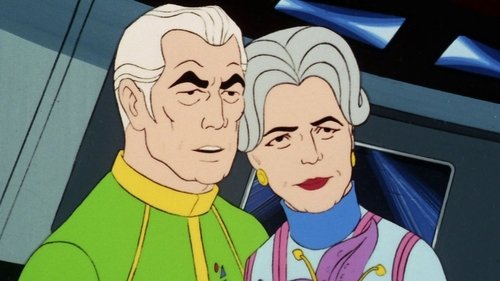
The USS Enterprise is en route to Babel, carrying distinguished passenger Commodore Robert April, the starship's first captain and now a Federation Ambassador-at-Large, who is facing mandatory retirement at 75. On the bridge, April reminisces with James T. Kirk about his deep connection to the Enterprise, which he considers 'like a child', having been present during its construction at the San Francisco Navy Yards. Leonard McCoy and April's wife, Sarah April, join them, with McCoy praising Sarah's pioneering work as the first medical officer on a warp drive-equipped vessel. Sarah, carrying a Capellan flower from Capella IV, notes its rapid aging, a detail that will soon become profoundly significant. As Spock displays the Beta Niobe supernova on the viewscreen, a massive, unidentified vessel traveling at an impossible Warp Factor 36 appears on a collision course. James T. Kirk orders Red Alert and evasive action, narrowly avoiding impact.
Spock quickly deduces that the alien ship is not on a collision course by design but is heading directly into the Beta Niobe nova. James T. Kirk attempts to warn the alien captain, but receives no response. He then orders Hikaru Sulu to engage a tractor beam, which slows the vessel to Warp Factor 32. The alien captain, Karla Five, appears on screen, speaking in a language that the universal translator initially renders as gibberish. Nyota Uhura soon realizes the language is standard English spoken in reverse. When played backward, Karla Five's message is a demand for release, stating she is on a priority mission. Despite James T. Kirk's warnings, she refuses to alter course. Montgomery Scott reports the Enterprise's engines are buckling under the strain of maintaining Warp Factor 11, which rapidly escalates to Warp Factor 20 and beyond as the tractor beam inadvertently pulls them along. Hikaru Sulu is unable to disengage the tractor beam, trapping the Enterprise on a suicidal trajectory into the supernova.
With the Enterprise seemingly doomed, James T. Kirk apologizes to Robert and Sarah April, who stoically accept their fate as starship personnel. James T. Kirk theorizes that the alien ship's destruction in the nova might break the tractor beam's hold, giving them a mere 42.85 seconds to escape. However, to the crew's astonishment, the Enterprise survives the supernova, emerging into a 'reverse universe' where black stars shine in a white void, and the ship is flying backward. Montgomery Scott reports that all controls now operate in reverse. Sarah April observes that her Capellan flower, previously dying, is now in full bloom and growing younger. Spock confirms that the ship's chronometers are running backward, indicating that time itself is reversed in this universe, causing everyone and everything to de-age. Karla Five, now understandable without the universal translator due to their brains also operating in reverse, explains that she was pulled into 'our' universe when her dead star, Amphion, became a supernova, creating a gateway. Robert April deduces that a simultaneous nova in both universes allows inter-dimensional travel.
To return home, James T. Kirk, Spock, and Robert April must find a corresponding 'dead star' in the reverse universe that aligns with a nova in their own. They beam down to Karla Five's planet, Arret, where they meet her 'son', Karl Four, who is an elderly man, and her 'father', a child in a playpen, illustrating the reversed life cycle. Karl Four, a scientist, has already identified a dead star in their galaxy, Minara, that corresponds to a nova in the Milky Way Galaxy. Karla Five's ship, though too small for the Enterprise crew, is equipped with positive matter armament capable of igniting the dead star. The plan is to use Karla Five's unmanned vessel, towed by the Enterprise's tractor beam, to prematurely ignite Minara, creating the necessary dual-nova gateway. As the Enterprise races towards Minara, the crew rapidly de-ages. Hikaru Sulu and Nyota Uhura quickly become too young to operate their stations, losing their knowledge.
Spock, whose Vulcan physiology slows his aging, temporarily assumes command, but even he soon begins to regress. Robert April, having de-aged into a vigorous young adult, asserts his seniority and takes command, with Sarah April ensuring the safety of the rapidly regressing crew. Robert April, now Captain April again, guides the Enterprise to the dead star. Just as Spock becomes too young to reach the controls, April detonates Karla Five's ship, igniting Minara and propelling the Enterprise back into its own universe. The reverse aging process stops, but the crew remains children. Sarah April suggests they could stay young, but Robert April, content with his life, insists on returning to their original ages. The transporter, retaining a memory of their original molecular structure, restores the crew to their proper ages. The Federation, recognizing Robert April's heroic actions, reviews his mandatory retirement, allowing him to continue as Ambassador-at-Large. Sarah April notes that their journey gave her Capellan flower, and all of them, a 'second life'.
LCARS Tactical Mission Log: Chronological action logs detailing exactly what each character did during the events of this mission, linked directly to personnel dossiers.


Subspace Visual Feed
Sensors & Diagnostic Metrics
Visual Sensor Logs


Synaptic Lore Link Contexts
Spock notifies Kirk, per his request, that the ship is within visual range of the Beta Niobe supernova and Kirk orders it put on the viewscreen to show Mrs.As Spock displays the Beta Niobe supernova on the viewscreen, a massive, unidentified vessel traveling at an impossible Warp Factor 36 appears on a collision course.
April says that he always felt the starship was almost like a child of his and that he was present at the San Francisco Navy Yards while the ship was under construction.
The is on course for the planet Babel, where ambassadors of all Federation planets are waiting to honor the Enterprises distinguished passenger Commodore Robert April, first captain of the USS Enterprise, and for the past twenty years, Federation Ambassador-at-Large.
Spock then pulls up a map of the Milky Way (likely downloaded from Enterprises computer) and that Beta Niobe and Earth correspond exactly with Amphion and Arret, respectively.
Kirk asks Spock if they can compare this to a map of their own galaxy and he says they can.Karl Four, a scientist, has already identified a dead star in their galaxy, Minara, that corresponds to a nova in the Milky Way Galaxy.
He asks Kirk at what age did he become a starship captain and what age did he enter Starfleet Academy.
Spock says that because as a Vulcan, his aging process is much slower so he'll be able to retain command longer than anyone else, but that even Spock will become too young to know what to do.Spock, whose Vulcan physiology slows his aging, temporarily assumes command, but even he soon begins to regress.
Karla Five, now understandable without the universal translator due to their brains also operating in reverse, explains that she was pulled into 'our' universe when her dead star, Amphion, became a supernova, creating a gateway.
They beam down to Karla Five's planet, Arret, where they meet her 'son', Karl Four, who is an elderly man, and her 'father', a child in a playpen, illustrating the reversed life cycle.
Sarah, carrying a Capellan flower from Capella IV, notes its rapid aging, a detail that will soon become profoundly significant.
Karl Four, a scientist, has already identified a dead star in their galaxy, Minara, that corresponds to a nova in the Milky Way Galaxy.
He then orders Hikaru Sulu to engage a tractor beam, which slows the vessel to Warp Factor 32.
The transporter, retaining a memory of their original molecular structure, restores the crew to their proper ages.
The alien captain, Karla Five, appears on screen, speaking in a language that the universal translator initially renders as gibberish.
Leonard McCoy and April's wife, Sarah April, join them, with McCoy praising Sarah's pioneering work as the first medical officer on a warp drive-equipped vessel.
As Spock displays the Beta Niobe supernova on the viewscreen, a massive, unidentified vessel traveling at an impossible Warp Factor 36 appears on a collision course.
Mission Registries & Linkages
Subspace Playlists
This registry lists all curated subspace playlists and chronological collections containing this mission.
Technology
This registry contains all specialized technologies deployed, analyzed, or referenced during this mission.
Location
This registry displays all celestial bodies, planets, starbases, or coordinates charted or visited during this mission.
Starship
This registry lists all vessels encountered, scanned, or active during this mission.
[ NO STARSHIPS REGISTERED ]
Species & Factions
This registry documents all species, civilizations, and organizational factions contacted or active in this sector during the mission.
Culture & Lore
This registry outlines historical events, cultural traditions, organizations, and database lore referenced during this mission.
Production & Archival Linkages
This registry documents behind-the-scenes production references, draft concepts, star charts, or archival cataloging links officially connected to this mission.
"The name Arret had previously been used for a planet in , though only in an early script draft for that episode and not in the final version of the installment. (TAS DVD text commentary) The name Arret is also "Terra" spelled backwards."
Continuity & Trivia
-
This episode introduces Robert April as the first captain of the USS *Enterprise*, a concept that predates both Christopher Pike and James T. Kirk. This foundational lore for the ship was established here for the first time on screen.
-
The voice of Commodore Robert April was provided by James Doohan, famously known for portraying Chief Engineer Montgomery 'Scotty' Scott. Doohan voiced numerous guest characters throughout *Star Trek: The Animated Series*.
-
The complex visual effects required for a universe where time runs backwards—such as exploding ships re-forming or de-aging characters—were far more feasible and budget-friendly to realize in animation than they would have been in live-action television at the time.
-
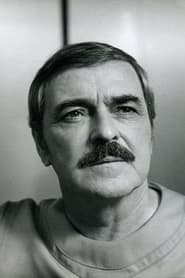
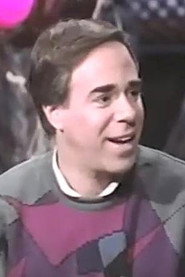
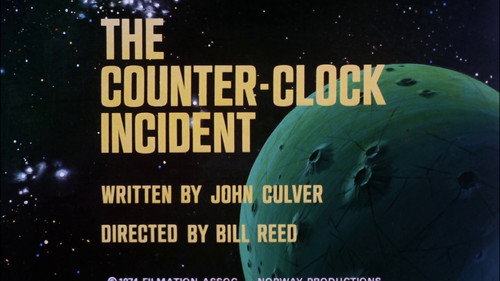
John Culver, the credited writer, was a pseudonym for NBC publicist Fred Bronson, who, as a Star Trek fan, used the name due to initial concerns about writing for a network show while employed.Sources: Memory Alpha
-
The name Robert April originated from Gene Roddenberry's initial Star Trek pitch documents, and writer Fred Bronson carefully established April as a captain predating Christopher Pike after reviewing "The Menagerie" for continuity.Sources: Memory Alpha
-
An explanation for the crew's accelerated de-aging in the reverse universe, based on a reversed Einsteinian effect, was originally included in the script but cut due to the episode's time constraints.Sources: Memory Alpha
-
The animated format enabled the depiction of elaborate alien laboratory sets, which would have been prohibitively expensive to construct for a contemporaneous live-action production given the limitations of 1960s and 1970s Hollywood prop rentals.Sources: Memory Alpha
-
This episode preceded the longest period of dormancy in Star Trek franchise history, with over five years passing before the release of the next production, Star Trek: The Motion Picture.Sources: Memory Alpha