Mission Briefing
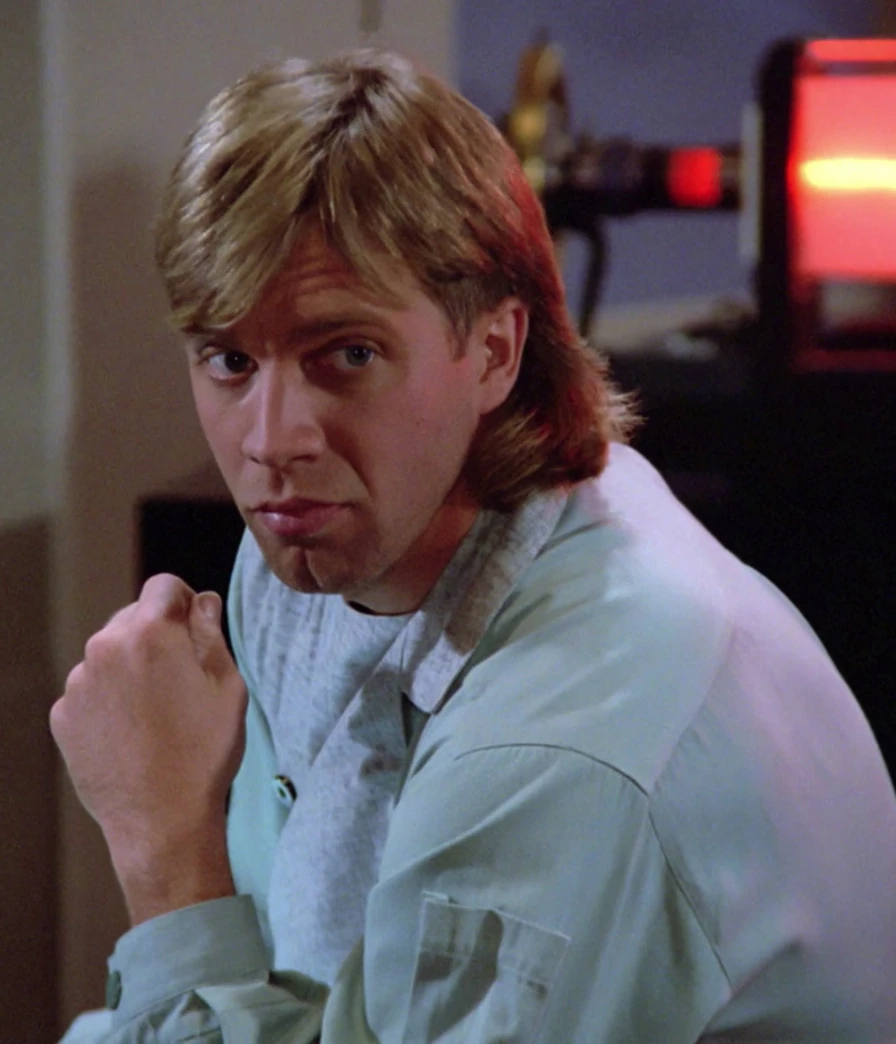
The USS Enterprise-D, under Captain Jean-Luc Picard, arrives at Velara III to assess a crucial terraforming project. Concerns about erratic communications from the planet soon escalate when an away team, including Commander William Riker, Counselor Deanna Troi, and Lieutenant Commander Data, witnesses a violent incident: engineer Arthur Malencon is critically injured by equipment in the Hydraulics lab. What initially seemed a routine check becomes a high-stakes investigation, with the remaining terraforming staff — Director Mandl, Luisa Kim, and Bjorn Benson — becoming prime suspects in a potential murder.
Further investigation by Lieutenant Commander Data and Lieutenant Geordi La Forge reveals an astonishing discovery: an inorganic, crystalline substance that appears to be a sophisticated, adaptive life form. Beam-transferred to the USS Enterprise-D, this 'microbrain' rapidly replicates and interfaces with the ship’s systems. Through the Universal translator, it begins to communicate, expressing profound anger and hostility towards the Human terraformers, accusing them of destroying its kind. Declaring war, this unprecedented form of life threatens the USS Enterprise-D, pushing Captain Picard and the United Federation of Planets crew to understand and navigate a conflict that challenges Starfleet's most fundamental principles, including the Prime Directive, regarding the recognition and protection of all life.
LCARS Tactical Mission Registry: A detailed reconstruction of chronological events and narrative progression compiled from historical logs and mission briefs.
The USS Enterprise-D, under the command of Captain Jean-Luc Picard, arrived at Velara III to assess a critical terraforming project. Communications from the planet had been erratic, prompting Starfleet's concern. Upon establishing contact, Director Mandl of the Velara III terraforming station exhibited an unusual level of apprehension and evasiveness, despite Captain Picard's offers of assistance and hospitality. An away team, including Commander William Riker, Counselor Deanna Troi, Lieutenant Tasha Yar, Lieutenant Geordi La Forge, and Lieutenant Commander Data, beamed down to the station. While touring the facility, the team witnessed a horrifying incident: Arthur Malencon, the hydraulics engineer, was critically injured by a laser drill that appeared to malfunction. This bizarre and violent event immediately escalated the Enterprise-D's mission from a routine welfare check to a murder investigation, with Director Mandl and his remaining staff, Luisa Kim and Bjorn Benson, becoming prime suspects.
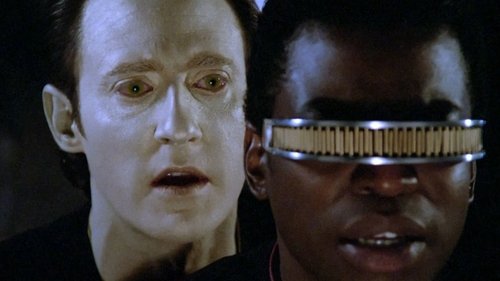
Following Arthur Malencon's death, Lieutenant Commander Data and Lieutenant Geordi La Forge returned to the hydraulics room for a more thorough investigation. During their inspection, the laser drill inexplicably reactivated and attacked Lieutenant Commander Data, demonstrating an adaptive, almost sentient, targeting system. Lieutenant Commander Data was forced to destroy the drill to protect himself, further deepening the mystery. Subsequent analysis of the drill's remnants revealed a startling discovery: an inorganic, crystalline substance that exhibited complex energy patterns. This substance was beamed aboard the USS Enterprise-D for examination in the Medical Lab by Doctor Beverly Crusher and Ensign Wesley Crusher. Initial tests confirmed its inorganic nature, but further magnification and observation revealed it was reacting to the ship's systems, emitting a hum, and, most astonishingly, replicating itself. The USS Enterprise-D's computer, under Doctor Crusher's command, ultimately identified the substance as a life form, challenging all conventional definitions of life.
The revelation of an intelligent, inorganic life form on Velara III, which had been certified lifeless by Federation recon expeditions, forced Captain Jean-Luc Picard to confront Director Mandl. Under pressure, Director Mandl admitted to knowing about 'random energy patterns' in the sand but denied recognizing them as life. However, Bjorn Benson disclosed that these patterns had become specific geometric shapes as the terraforming progressed, suggesting an attempt at communication. The situation escalated dramatically when the 'microbrain', as the crew dubbed it, took over the USS Enterprise-D's Medical Lab and began to interface with the ship's computer systems. Through the Universal Translator, the microbrain communicated its anger, referring to humans as 'ugly bags of mostly water' and accusing the terraformers of 'killing' its kind. It explicitly declared war, stating that the 'bags who drill in sands of home have to die', confirming its responsibility for Arthur Malencon's death and its attack on Lieutenant Commander Data.
With the USS Enterprise-D's systems compromised and the microbrain threatening a warp core breach, Captain Jean-Luc Picard urgently sought to understand its motivations. Director Mandl, Luisa Kim, and Doctor Beverly Crusher theorized that the microbrains were sustained by the highly saline subsurface water that Arthur Malencon had been siphoning off. Lieutenant Commander Data concluded that this saline fluid served as their 'circuitry', connecting individual cells into a collective intelligence. The terraforming project, by removing this water, was inadvertently destroying their nascent civilization, providing a clear motive for their defensive actions. Lieutenant Geordi La Forge and Lieutenant Commander Data then discovered that the microbrains were photoelectric, converting infrared light into energy. Captain Jean-Luc Picard used this knowledge to negotiate, dimming the lights in the Medical Lab to weaken the microbrain and force a dialogue.
Captain Jean-Luc Picard, demonstrating Starfleet's commitment to the Prime Directive and the protection of all life, honored the agreement. The microbrain, weakened but still defiant, agreed to a truce, expressing its desire to return to its 'wet sand' home. Though the microbrain expressed lingering distrust, calling humans 'arrogant' and 'primitive', it acknowledged the truce. The microbrain colony was safely beamed back to its original location on Velara III. Captain Jean-Luc Picard declared an indefinite quarantine for Velara III, halting all terraforming operations to protect the newly recognized sentient species. The three surviving terraformers, Director Mandl, Luisa Kim, and Bjorn Benson, were taken aboard the USS Enterprise-D for transport to a Starbase. This profound encounter underscored the vast diversity of life in the galaxy and the ethical imperative to recognize and respect even the most unconventional forms of existence, serving as a crucial lesson for Starfleet in its ongoing mission of exploration.
LCARS Tactical Mission Log: Chronological action logs detailing exactly what each character did during the events of this mission, linked directly to personnel dossiers.



Subspace Visual Feed
Sensors & Diagnostic Metrics
Visual Sensor Logs


Synaptic Lore Link Contexts
While touring the facility, the team witnesses a horrifying incident: Arthur Malencon, the hydraulics engineer, is critically injured by a laser drill that appears to malfunction.
While touring the facility, the team witnesses a horrifying incident: Arthur Malencon, the hydraulics engineer, is critically injured by a laser drill that appears to malfunction.
While touring the facility, the team witnesses a horrifying incident: Arthur Malencon, the hydraulics engineer, is critically injured by a laser drill that appears to malfunction.
Along the way, they have been instructed by the Federation to check on the terraforming colony on Velara III, as they were behind schedule.
The USS Enterprise-D, under the command of Captain Jean-Luc Picard, arrives at Velara III to assess a critical terraforming project.
Soon, the universal translator comes online by itself, saying "Ugly giant bags of mostly water." Picard is confused, and Data indicates it is an accurate description of Human physiology; he points out that Humans are 90% water surrounded by a flexible container.Through the Universal Translator, the microbrain communicated its anger, referring to humans as 'ugly bags of mostly water' and accusing the terraformers of 'killing' its kind.
Initial tests confirmed its inorganic nature, but further magnification and observation revealed it was reacting to the ship's systems, emitting a hum, and, most astonishingly, replicating itself.
Captain Jean-Luc Picard, demonstrating Starfleet's commitment to the Prime Directive and the protection of all life, honored the agreement.
The three surviving terraformers, Director Mandl, Luisa Kim, and Bjorn Benson, were taken aboard the USS Enterprise-D for transport to a Starbase.
Through the Universal Translator, the microbrain communicated its anger, referring to humans as 'ugly bags of mostly water' and accusing the terraformers of 'killing' its kind.
Mission Registries & Linkages
Subspace Playlists
This registry lists all curated subspace playlists and chronological collections containing this mission.
Technology
This registry contains all specialized technologies deployed, analyzed, or referenced during this mission.
Location
This registry displays all celestial bodies, planets, starbases, or coordinates charted or visited during this mission.
Starship
This registry lists all vessels encountered, scanned, or active during this mission.
[ NO STARSHIPS REGISTERED ]
Species & Factions
This registry documents all species, civilizations, and organizational factions contacted or active in this sector during the mission.
Culture & Lore
This registry outlines historical events, cultural traditions, organizations, and database lore referenced during this mission.
Continuity & Trivia
-
This episode is one of the early TNG examples to explore the concept of silicon-based life, challenging the common carbon-centric view of biology within the Star Trek universe.
-
The unique visual effects for the 'microbrain' entities were achieved through the use of macro photography on various crystals, minerals, and gels, illuminated from behind to create their ethereal, glowing appearance.
-
The script for 'Home Soil' underwent significant revisions. Originally, the entities were portrayed as purely malicious, but Gene Roddenberry insisted on changing them to be simply defensive and misunderstood, aligning with his vision of the Prime Directive.
-
"Home Soil" had an early working title of "The Sandy Soils of Home" during its second draft story outline phase.Sources: Memory Alpha
-
This episode marked Gene Roddenberry's final credit as head writer for the series, with Maurice Hurley taking over the writing staff from the following episode.Sources: Memory Alpha
-
According to Maurice Hurley, the production of "Home Soil" was notoriously troubled, facing issues with casting, sets, location, and directors receiving script pages just a day before shooting.Sources: Memory Alpha
-
Actress Carolyne Barry made her second Star Trek appearance in "Home Soil," having previously played a Metron in the Original Series episode "Arena" under the name Carole Shelyne.Sources: Memory Alpha
-
The narrow, wedge-shaped medical lab set, which debuted in this episode, was newly built for TNG in the space freed up by shortening the transporter room from the Original Series films.Sources: Memory Alpha