Astrometrics Node: Human

Xenobiology & Cultural Archive Dossier
Introduction
Humans (Homo sapiens), also known as Human beings, 'mankind', 'man', or occasionally Terrans, were a warp-capable humanoid species originating from the planet Earth, located in the Sol system, Sector 001, within the Alpha Quadrant. They represented the sole surviving race among several sentient and intelligent species that evolved from the Genus Homo on Earth, as noted in 'Dear Doctor'. Another spacefaring intelligent species known to have originated from Earth were the Voth, who had migrated to the Delta Quadrant approximately 20 million years before the 24th century, as documented in 'Distant Origin'. The Borg designated Humans as Species 5618, a detail revealed in 'Dark Frontier'. The Latin word for their homeworld, 'Terra', led to the occasional use of 'Terrans' to refer to Humans, a term more consistently applied to their counterparts in the mirror universe. This term also served to distinguish Humans residing on Earth from those on Federation colonies, and as an adjective for Human-associated subjects like Terran cuisine, Terran literature, and Terran art.
History & Origins
Humans became a founding member of the United Federation of Planets. Earth achieved warp capability in 2063, marking the year of their first official contact with an alien species, the Vulcans. This pivotal event occurred on April 5th, 2063, when Zefram Cochrane successfully engaged the first warp drive, a historical moment depicted in Star Trek: First Contact and referenced in episodes such as 'Broken Bow', 'Desert Crossing', 'E²', 'Year of Hell', 'Relativity', 'Homestead', and 'Maps and Legends'. By the 24th century, Human society had undergone profound transformations. On Earth, societal scourges like hunger, war, disease, famine, and poverty were largely eradicated. The pursuit of wealth ceased to be the primary motivator for many Humans, with significant emphasis placed on continuous social and personal development. The advent of the non-currency-based New World Economy and the development of replicators ensured that material needs were largely met. While money was no longer utilized by Humans within the Federation, they did engage with currencies like gold-pressed latinum, Bajoran litas, and credits in regions where they were still necessary, such as at Quark's, as seen in 'Necessary Evil' and 'In the Cards'. This philosophy aimed to encourage self-betterment and the advancement of Humanity, as explored in Human philosophy. However, these advancements primarily applied to Humans within the Sol system, as many Federation colonies, like Turkana IV, developed distinct cultural differences and some even experienced periods of chaos, as shown in 'The Ensigns of Command' and 'Legacy'.
Earth Colonies & Unaffiliated Settlements
Various Earth governments and United Earth established numerous colonies, most predating the United Federation of Planets, which maintained close ties with Earth. These included Alpha Eridani II, Colony Alpha 5, the Deneva colony on Deneva, Earth Colony II, the Lunar Colonies on Luna (including Lunar One Colony and the Orpheus Mining Complex), the Martian colonies on Mars (Martian Colony 3 and Utopia Colony), the Proxima colony in the Alpha Centauri system, the Terra Nova colony on Terra Nova (abandoned in 2083), and the Vega colony. Beyond these affiliated settlements, Human populations were also found on other planets, often having been transplanted by alien species prior to Earth's warp capability. In 2153, the NX Enterprise, commanded by Captain Jonathan Archer, discovered a planet in the Delphic Expanse inhabited by six thousand Humans whose ancestors from the Ancient West had been enslaved by the Skagarans in the late 19th century, as detailed in 'North Star'. In 2257, the Federation starship USS Discovery encountered approximately eleven thousand Humans on the Beta Quadrant planet Terralysium. These were descendants of Earth residents who, during World War III in 2053, were rescued by the time traveler Gabrielle Burnham using the Red Angel suit and transported to this remote Class M planet. They established an agrarian society, developing a new religion based on seven Earth faiths and revering the Red Angel. Captain Christopher Pike, adhering to General Order 1, did not reveal Discovery's presence to this pre-warp civilization, as depicted in 'New Eden'. In 2268, the USS Enterprise NCC-1701 found a population of Native Americans on Amerind, whose ancestors were transplanted by the Preservers in the 19th century. Captain James T. Kirk, suffering from amnesia, was adopted by a tribe as Kirok before recovering, as seen in 'The Paradise Syndrome'. In 2371, the USS Voyager discovered a Delta Quadrant world where the Briori had abducted over three hundred Humans from Earth in 1937, including Amelia Earhart and Fred Noonan. These Humans established a thriving community after overthrowing their captors. Earhart and six others, known as 'the 37's', were revived from suspended animation but chose to remain with the colonists rather than join Voyager's journey back to the Alpha Quadrant, as recounted in 'The 37's'. An independent Human polity, the Hysperians, were 'Ren faire type' Humans who colonized Hysperia, maintaining their own laws and a fleet known as the Hysperian royal navy, led by monarchs like Queen Paolana by 2381, as shown in 'Where Pleasant Fountains Lie'.
Biology & Physiology
Human and Earth DNA, like much of the galaxy's life, was seeded by an ancient humanoid race, allowing evolution under Earth's unique conditions. This shared DNA contributed to Humans' compatibility with many other humanoid races and susceptibility to similar diseases across the galaxy, as explored in 'The Chase' and 'Distant Origin'. Humanity's evolutionary ancestors included various forms, from amphibians and reptiles to primates, apes, and hominid proto-Humans, stretching back to Earth's earliest lifeforms, as suggested in 'Genesis' and 'Threshold'. Humans evolved from australopithecines, and in the 22nd century, their closest living relative was the chimpanzee, as mentioned in 'Dear Doctor' and 'The Xindi'. Humans are bilaterally symmetrical, bipedal, warm-blooded primates, possessing two hands and two feet, each with five digits and an opposable thumb, as described in 'Distant Origin' and 'Azati Prime'. The average Human lifespan significantly increased over history due to advancements in nutrition, medicine, and technology. From an initial 35 years, it roughly doubled by the 20th century, extended to about 100 years in the 22nd century ('Observer Effect'), and by the mid-24th century, Humans often lived to 120 years or more. Notable long-livers included Leonard McCoy, who lived to at least 137 years ('Encounter at Farpoint'), and in an alternate reality, Jonathan Archer, who lived to 145 years (Star Trek). Humans have two common sexes/genders, with females fertile from puberty until menopause ('Manhunt'). Human gestation is notably longer than the Bajoran five months ('Body Parts'). The unique make-up of Human DNA allows for successful crossbreeding with a wide range of other races, including Vulcans, Betazoids, and Klingons, as seen in 'Where No Man Has Gone Before', 'Encounter at Farpoint', 'The Emissary', 'Caretaker', 'Faces', and 'Lineage'. While not as physically strong as species like Klingons or Vulcans ('Divergence', 'This Side of Paradise', 'Take Me Out to the Holosuite'), Humans exhibit remarkable resilience and adaptability. They are more adaptable to incarceration than Klingons ('In Purgatory's Shadow', 'By Inferno's Light', 'Inquisition'), can survive with one lung or kidney (Star Trek IV: The Voyage Home, 'Phage', 'Fury', 'Lineage'), and can endure days without water and weeks without food ('Strange New World', 'Shuttlepod One'). Their efficient temperature regulation, including sweating, allows them to resist cold temperatures that would affect Cardassians and Klingons, or high temperatures uncomfortable for Andorians ('Displaced', 'The Aenar'), also contributing to their endurance and a distinct 'Human smell' noted by Vulcans ('Broken Bow'). Humans also possess more acute hearing than Cardassians ('Distant Voices'). Their blood contains iron-based hemoglobin ('Obsession', 'The Pirates of Orion') and comes in various types, such as AB-positive, O-negative, and B-negative ('Carpenter Street', 'Broken Link'). Humans are prone to strong, often overwhelming emotions like love, hatred, embarrassment, and elation ('Journey to Babel'). They frequently anthropomorphize pets and show compassion for fictional characters ('Dear Doctor'). While marginal extrasensory perception, such as telepathy and precognition, remained controversial until the 23rd century, telepaths like Miranda Jones were a rarity ('Where No Man Has Gone Before', 'Is There in Truth No Beauty?').
Society & Culture
Humans are characterized as the most outworldly, idealistic, and expansionistic race within the United Federation of Planets, often exhibiting these qualities to a greater degree than many alien species they encounter. Lacking a singular extraordinary quality, they are considered average in both technological and physical attributes. Devore inspector Kashyk observed that Human culture is rich with contradictions, harmoniously blending elements like violence and beauty, and science and faith, akin to a musical composition's counterpoint, as noted in 'Counterpoint'. Their strong interest in space exploration led to Humans comprising a large majority of Starfleet, an organization that originated as a pre-Federation Earth entity. Humans also formed the majority of colonists on Federation colonies. Their adaptability, innovation, and cooperative spirit propelled them to the forefront of the Federation's interstellar endeavors. This dynamic nature means Human society is in constant flux, with fashion, speech, and political views continually evolving, not only on frontier colonies but also in the established core worlds. For species rooted in tradition and genealogical reverence, the Human fascination with novel experiences and their unending drive to innovate, explore, and discover for discovery's sake are often challenging concepts to comprehend. Culturally, jazz music persisted into the 24th century, becoming a contribution to galactic culture, alongside opera and 'classical music' played collaboratively ('11001001', 'The Ensigns of Command', 'Second Chances', 'Phantasms', 'The Ship', 'Virtuoso', 'Renaissance Man'). Competitive sports from Human cultures, such as soccer (football), fencing, wrestling, water polo, baseball, and hockey, also integrated into Federation culture ('Minefield', 'The Naked Time', Star Trek, 'Apocalypse Rising', 'Emissary', 'Critical Care'). Dance is another significant Human art form ('Data's Day', 'Lifesigns'). Human cuisine is diverse and widely shared, reflecting their omnivorous nature, unlike the vegetarian Vulcan culture. Popular Human dishes enjoyed by other species include pecan pie, chocolate, jambalaya, and oden, often imbued with cultural significance tied to place, language, or family ('All Our Yesterdays', 'Breaking the Ice', 'The Game', 'Liaisons', 'Prime Factors', 'Favor the Bold'). In most Human families, women traditionally shared in the cooking ('Time Squared'). Human mating rituals often involve a cultural ceremony known as a wedding, signifying a lasting commitment, similar to Vulcan and Klingon traditions ('Data's Day', Star Trek Nemesis, 'Breaking the Ice', 'Home', 'Amok Time', 'You Are Cordially Invited', ‘Til Death Do Us Part'). By 2113, Human culture had evolved to eliminate war, poverty, and disease, as depicted in Star Trek: First Contact, 'Broken Bow', and 'Time's Arrow, Part II'.
Humanity's Children
In later centuries, Humans extended their drive to seek out new life by creating it in their own image. The 20th-century Augments, a group of stronger, more intelligent, and physically resilient individuals, represented an early form of genetic enhancement. Following his experiences with Augments in the 22nd century, Dr. Arik Soong shifted his focus from genetics to cybernetics. His work was continued by Dr. Noonien Soong, who created a series of sentient Soong-type androids, including Lore, B-4, Juliana Tainer (a near-perfect reproduction of his comatose wife), and Data, who became the first android officially recognized as sentient by Federation law and capable of reproduction, creating his daughter Lal. These developments are chronicled in 'Space Seed', 'The Augments', 'Datalore', 'The Measure Of A Man', 'Inheritance', and Star Trek Nemesis. Humans also utilized holographic technology to generate new sentient life, beginning with the first self-aware holographic character, James Moriarty, in 2365 ('Elementary, Dear Data'). Dr. Lewis Zimmerman's work on Emergency Medical Holograms led to the creation of The Doctor, Humanity's most complex photonic lifeform, developed in the later 24th century ('Caretaker').
Alternate Timelines & Mirror Universe
In an alternate timeline, Humanity was assimilated by the Borg in 2063 after the Borg prevented first contact between Humans and Vulcans. This timeline was erased when the USS Enterprise NCC-1701-E traveled back in time from 2373 to 2063, ensuring that first contact occurred as historically recorded, as depicted in Star Trek: First Contact. In another alternate timeline, Humanity faced near extinction by the Xindi in 2154, who destroyed Earth, Mars, the Alpha Centauri colony, and the Vega colony, leaving only six thousand Human survivors who escaped to Ceti Alpha V. This timeline was undone in 2165 when an experimental treatment retroactively removed interspatial parasites from Captain Jonathan Archer's brain, allowing him to remain in command of Enterprise and successfully prevent the Xindi weapon from destroying Earth, as shown in 'Twilight'. In the mirror universe, Humans are known as Terrans and founded the Terran Empire. In 2063, they reacted to a Vulcan scout ship's landing with fear and suspicion, slaughtering the Vulcan crew and using their technology to forge an interstellar empire, as detailed in 'In A Mirror, Darkly'. This Empire endured for centuries until it was eclipsed by the equally ruthless Klingon-Cardassian Alliance. Despite hopes among many mirror universe races for a peaceful alliance, Terrans rarely joined such rebel movements, benefiting from the wealth and security provided by their violent expansionist policies, as seen in 'Crossover'.
Other Information
The Borg designation for Humans was Species 5618, and they were considered by the Borg to possess below-average cranial capacity, minimal redundant systems, and limited regenerative abilities ('Dark Frontier'). The Ferengi notably pronounced the term 'Human' as 'hew-mon' ('Envoys'). Q once speculated that the Human race might one day surpass the Q in power ('Hide And Q'). Occasionally, the term 'Human' was used to describe other races, such as the Betans or the being Lazarus, even when no direct link to Earth was evident ('The Alternative Factor', 'The Return of the Archons').
■ Correlative Archive Mappings (Explicit Registry Connections)
Explicit database relations. Unmarked links are manually or structurally verified; links with 🤖 are established via AI analysis.
Synaptic Diagnostics (Outgoing Mentions)
Subspace Neural Link Diagnostics: Links marked with the 🤖 AI insignia are synaptic linkages dynamically reconstructed from local summaries, while unmarked links indicate official Starfleet database entries registered in primary archives.
Automatically mapped connection based on archive scanning.This Empire endured for centuries until it was eclipsed by the equally ruthless Klingon-Cardassian Alliance.
Automatically mapped connection based on archive scanning.Their strong interest in space exploration led to Humans comprising a large majority of Starfleet, an organization that originated as a pre-Federation Earth entity.
Automatically mapped connection based on archive scanning.In the mirror universe, Humans are known as Terrans and founded the Terran Empire.
Automatically mapped connection based on archive scanning.However, these advancements primarily applied to Humans within the Sol system, as many Federation colonies, like Turkana IV, developed distinct cultural differences and some even experienced periods of chaos, as shown in 'The Ensigns of Command' and 'Legacy'. Various Earth governments and United Earth established numerous colonies, most predating the United Federation of Planets, which maintained close ties with Earth.
Automatically mapped connection based on archive scanning.This term also served to distinguish Humans residing on Earth from those on Federation colonies, and as an adjective for Human-associated subjects like Terran cuisine, Terran literature, and Terran art. Humans became a founding member of the United Federation of Planets.
Automatically mapped connection based on archive scanning.These were descendants of Earth residents who, during World War III in 2053, were rescued by the time traveler Gabrielle Burnham using the Red Angel suit and transported to this remote Class M planet.
Automatically mapped connection based on archive scanning.This timeline was undone in 2165 when an experimental treatment retroactively removed interspatial parasites from Captain Jonathan Archer's brain, allowing him to remain in command of Enterprise and successfully prevent the Xindi weapon from destroying Earth, as shown in 'Twilight'.
These included Alpha Eridani II, Colony Alpha 5, the Deneva colony on Deneva, Earth Colony II, the Lunar Colonies on Luna (including Lunar One Colony and the Orpheus Mining Complex), the Martian colonies on Mars (Martian Colony 3 and Utopia Colony), the Proxima colony in the Alpha Centauri system, the Terra Nova colony on Terra Nova (abandoned in 2083), and the Vega colony.
Captain Christopher Pike, adhering to General Order 1, did not reveal Discovery's presence to this pre-warp civilization, as depicted in 'New Eden'.
Lewis Zimmerman's work on Emergency Medical Holograms led to the creation of The Doctor, Humanity's most complex photonic lifeform, developed in the later 24th century ('Caretaker'). In an alternate timeline, Humanity was assimilated by the Borg in 2063 after the Borg prevented first contact between Humans and Vulcans.
These included Alpha Eridani II, Colony Alpha 5, the Deneva colony on Deneva, Earth Colony II, the Lunar Colonies on Luna (including Lunar One Colony and the Orpheus Mining Complex), the Martian colonies on Mars (Martian Colony 3 and Utopia Colony), the Proxima colony in the Alpha Centauri system, the Terra Nova colony on Terra Nova (abandoned in 2083), and the Vega colony.
These included Alpha Eridani II, Colony Alpha 5, the Deneva colony on Deneva, Earth Colony II, the Lunar Colonies on Luna (including Lunar One Colony and the Orpheus Mining Complex), the Martian colonies on Mars (Martian Colony 3 and Utopia Colony), the Proxima colony in the Alpha Centauri system, the Terra Nova colony on Terra Nova (abandoned in 2083), and the Vega colony.
In 2153, the NX Enterprise, commanded by Captain Jonathan Archer, discovered a planet in the Delphic Expanse inhabited by six thousand Humans whose ancestors from the Ancient West had been enslaved by the Skagarans in the late 19th century, as detailed in 'North Star'.
These included Alpha Eridani II, Colony Alpha 5, the Deneva colony on Deneva, Earth Colony II, the Lunar Colonies on Luna (including Lunar One Colony and the Orpheus Mining Complex), the Martian colonies on Mars (Martian Colony 3 and Utopia Colony), the Proxima colony in the Alpha Centauri system, the Terra Nova colony on Terra Nova (abandoned in 2083), and the Vega colony.
The Latin word for their homeworld, 'Terra', led to the occasional use of 'Terrans' to refer to Humans, a term more consistently applied to their counterparts in the mirror universe.
These included Alpha Eridani II, Colony Alpha 5, the Deneva colony on Deneva, Earth Colony II, the Lunar Colonies on Luna (including Lunar One Colony and the Orpheus Mining Complex), the Martian colonies on Mars (Martian Colony 3 and Utopia Colony), the Proxima colony in the Alpha Centauri system, the Terra Nova colony on Terra Nova (abandoned in 2083), and the Vega colony.
In 2257, the Federation starship USS Discovery encountered approximately eleven thousand Humans on the Beta Quadrant planet Terralysium.
In another alternate timeline, Humanity faced near extinction by the Xindi in 2154, who destroyed Earth, Mars, the Alpha Centauri colony, and the Vega colony, leaving only six thousand Human survivors who escaped to Ceti Alpha V.
In 2257, the Federation starship USS Discovery encountered approximately eleven thousand Humans on the Beta Quadrant planet Terralysium.
These included Alpha Eridani II, Colony Alpha 5, the Deneva colony on Deneva, Earth Colony II, the Lunar Colonies on Luna (including Lunar One Colony and the Orpheus Mining Complex), the Martian colonies on Mars (Martian Colony 3 and Utopia Colony), the Proxima colony in the Alpha Centauri system, the Terra Nova colony on Terra Nova (abandoned in 2083), and the Vega colony.
In 2371, the USS Voyager discovered a Delta Quadrant world where the Briori had abducted over three hundred Humans from Earth in 1937, including Amelia Earhart and Fred Noonan.
Humans (Homo sapiens), also known as Human beings, 'mankind', 'man', or occasionally Terrans, were a warp-capable humanoid species originating from the planet Earth, located in the Sol system, Sector 001, within the Alpha Quadrant.
Humans (Homo sapiens), also known as Human beings, 'mankind', 'man', or occasionally Terrans, were a warp-capable humanoid species originating from the planet Earth, located in the Sol system, Sector 001, within the Alpha Quadrant.
However, these advancements primarily applied to Humans within the Sol system, as many Federation colonies, like Turkana IV, developed distinct cultural differences and some even experienced periods of chaos, as shown in 'The Ensigns of Command' and 'Legacy'. Various Earth governments and United Earth established numerous colonies, most predating the United Federation of Planets, which maintained close ties with Earth.
The advent of the non-currency-based New World Economy and the development of replicators ensured that material needs were largely met.
The average Human lifespan significantly increased over history due to advancements in nutrition, medicine, and technology.
This pivotal event occurred on April 5th, 2063, when Zefram Cochrane successfully engaged the first warp drive, a historical moment depicted in Star Trek: First Contact and referenced in episodes such as 'Broken Bow', 'Desert Crossing', 'E²', 'Year of Hell', 'Relativity', 'Homestead', and 'Maps and Legends'.
Their efficient temperature regulation, including sweating, allows them to resist cold temperatures that would affect Cardassians and Klingons, or high temperatures uncomfortable for Andorians ('Displaced', 'The Aenar'), also contributing to their endurance and a distinct 'Human smell' noted by Vulcans ('Broken Bow').
The unique make-up of Human DNA allows for successful crossbreeding with a wide range of other races, including Vulcans, Betazoids, and Klingons, as seen in 'Where No Man Has Gone Before', 'Encounter at Farpoint', 'The Emissary', 'Caretaker', 'Faces', and 'Lineage'.
In 2153, the NX Enterprise, commanded by Captain Jonathan Archer, discovered a planet in the Delphic Expanse inhabited by six thousand Humans whose ancestors from the Ancient West had been enslaved by the Skagarans in the late 19th century, as detailed in 'North Star'.
An independent Human polity, the Hysperians, were 'Ren faire type' Humans who colonized Hysperia, maintaining their own laws and a fleet known as the Hysperian royal navy, led by monarchs like Queen Paolana by 2381, as shown in 'Where Pleasant Fountains Lie'. Human and Earth DNA, like much of the galaxy's life, was seeded by an ancient humanoid race, allowing evolution under Earth's unique conditions.
While money was no longer utilized by Humans within the Federation, they did engage with currencies like gold-pressed latinum, Bajoran litas, and credits in regions where they were still necessary, such as at Quark's, as seen in 'Necessary Evil' and 'In the Cards'.
The Ferengi notably pronounced the term 'Human' as 'hew-mon' ('Envoys').
The unique make-up of Human DNA allows for successful crossbreeding with a wide range of other races, including Vulcans, Betazoids, and Klingons, as seen in 'Where No Man Has Gone Before', 'Encounter at Farpoint', 'The Emissary', 'Caretaker', 'Faces', and 'Lineage'.
In 2268, the USS Enterprise NCC-1701 found a population of Native Americans on Amerind, whose ancestors were transplanted by the Preservers in the 19th century.
While money was no longer utilized by Humans within the Federation, they did engage with currencies like gold-pressed latinum, Bajoran litas, and credits in regions where they were still necessary, such as at Quark's, as seen in 'Necessary Evil' and 'In the Cards'.
Devore inspector Kashyk observed that Human culture is rich with contradictions, harmoniously blending elements like violence and beauty, and science and faith, akin to a musical composition's counterpoint, as noted in 'Counterpoint'.
Earth achieved warp capability in 2063, marking the year of their first official contact with an alien species, the Vulcans.
These included Alpha Eridani II, Colony Alpha 5, the Deneva colony on Deneva, Earth Colony II, the Lunar Colonies on Luna (including Lunar One Colony and the Orpheus Mining Complex), the Martian colonies on Mars (Martian Colony 3 and Utopia Colony), the Proxima colony in the Alpha Centauri system, the Terra Nova colony on Terra Nova (abandoned in 2083), and the Vega colony.
Humans (Homo sapiens), also known as Human beings, 'mankind', 'man', or occasionally Terrans, were a warp-capable humanoid species originating from the planet Earth, located in the Sol system, Sector 001, within the Alpha Quadrant.
In 2063, they reacted to a Vulcan scout ship's landing with fear and suspicion, slaughtering the Vulcan crew and using their technology to forge an interstellar empire, as detailed in 'In A Mirror, Darkly'.
The Borg designated Humans as Species 5618, a detail revealed in 'Dark Frontier'.
Another spacefaring intelligent species known to have originated from Earth were the Voth, who had migrated to the Delta Quadrant approximately 20 million years before the 24th century, as documented in 'Distant Origin'.
These included Alpha Eridani II, Colony Alpha 5, the Deneva colony on Deneva, Earth Colony II, the Lunar Colonies on Luna (including Lunar One Colony and the Orpheus Mining Complex), the Martian colonies on Mars (Martian Colony 3 and Utopia Colony), the Proxima colony in the Alpha Centauri system, the Terra Nova colony on Terra Nova (abandoned in 2083), and the Vega colony.
Recorded Visitations
This list displays officially verified Starfleet database logs for episodes and movies where this species or faction was actively encountered or officially recorded.
■ Synaptic Diagnostics (Incoming Mentions) (In-Text References)
Reconstructed text references. Unmarked entries are canonical database linkages; links with 🤖 are derived from LCARS text analysis.
Other locations, starships, technologies, or cultural files containing direct textual references to this profile.
Subspace Scan Mentions: This list records episodes where this species or faction was not officially registered as a primary profile detail, but is mentioned by name within the episode's plot summary or dialogue transcripts.
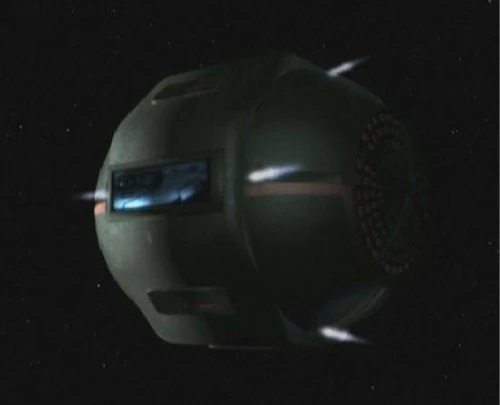
■ Associated Technologies & Weapons (Database Registry)
Technologies and weapons commonly utilized or invented by this species or faction.




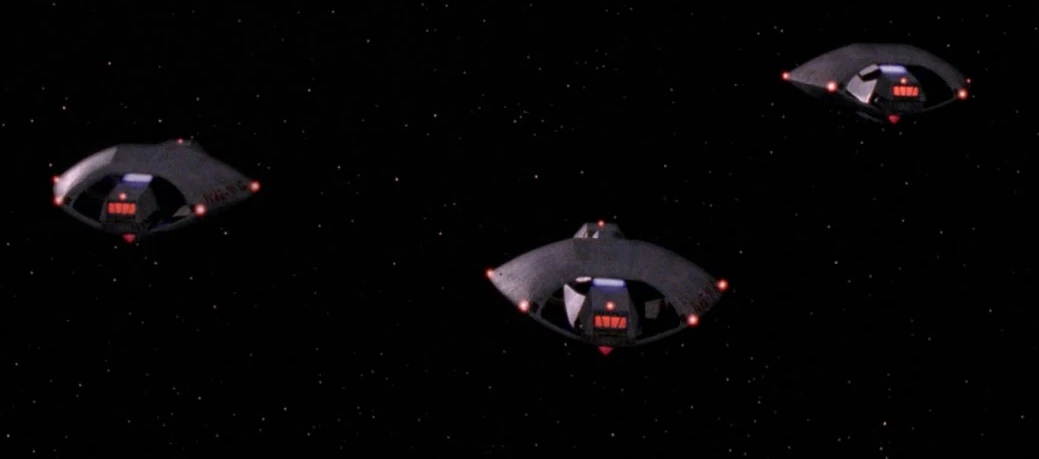
■ Associated Starships & Vessels (Vessel Registry)
Starships operated by or affiliated with this species or faction.






■ Human Members & Faction Personnel (Dossier Registry)
Explicit members and affiliated personnel resolved from structured dossier metadata.


■ Associated Characters & Personnel (Textual References)
Character dossiers referencing this species or faction; links with 🤖 indicate AI-derived connections.


