Mission Briefing
The USS Enterprise (NCC-1701-D) encounters an unusual internal challenge in the person of Lieutenant Reginald Barclay, a Starfleet officer plagued by severe social anxiety. His primary coping mechanism involves elaborate Holodeck fantasies, where he transforms into a confident, admired, and even heroic figure, often featuring holographic versions of his fellow crew members, including Commander William T. Riker, Lieutenant Commander Geordi La Forge, and Counselor Deanna Troi. This extensive escapism, however, begins to directly impact his real-world duties and professional performance, leading to tardiness, neglect, and frustration among his engineering colleagues and the senior staff.
As the USS Enterprise (NCC-1701-D) proceeds with a critical mission to transport vital medical samples to Nahmi IV, a series of seemingly unrelated malfunctions begins to subtly plague various ship systems. Captain Jean-Luc Picard, despite some recommendations, insists on leadership's role in fostering every crew member's potential. The growing technical issues, coupled with Barclay's increasing withdrawal into his private Holodeck worlds, present a complex challenge, forcing the crew to confront the delicate balance between individual well-being and the rigorous demands of Starfleet operations, particularly when the functioning of systems crucial to the warp drive might be compromised.
LCARS Tactical Mission Registry: A detailed reconstruction of chronological events and narrative progression compiled from historical logs and mission briefs.
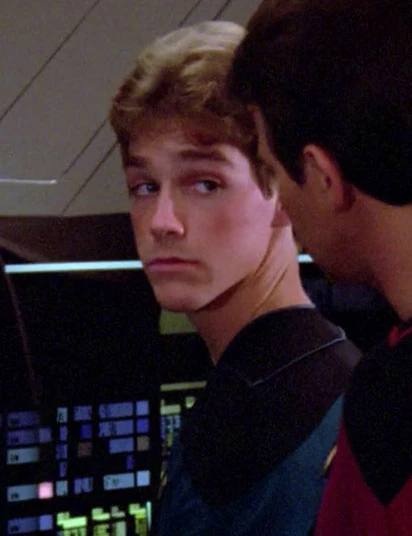
The USS Enterprise (NCC-1701-D) encounters an unusual internal challenge in Stardate 43807.4, personified by Lieutenant Reginald Barclay, a Starfleet officer plagued by severe social anxiety. His coping mechanism involves elaborate holodeck fantasies where he transforms into a confident, admired, and even heroic figure, often featuring holographic versions of his fellow crew members, including Commander William T. Riker, Lieutenant Commander Geordi La Forge, and Counselor Deanna Troi. This escapism, however, directly impacts his real-world performance, leading to tardiness, neglect of duties, and a general inability to function effectively within the highly demanding Starfleet environment. His engineering colleagues, particularly Lieutenant Commander Geordi La Forge, express deep frustration, with Ensign Wesley Crusher even coining the exasperated nickname 'Broccoli' for him, a term Captain Jean-Luc Picard later admonishes. The episode opens with a vivid depiction of Barclay's holodeck persona, where he is insubordinate and arrogant towards holographic senior officers, starkly contrasting with his timid and apologetic demeanor during a real-world inspection in Cargo Bay Five, where a malfunctioning anti-grav unit highlights his professional shortcomings.
As the USS Enterprise (NCC-1701-D) proceeds with a critical mission to transport Mikulak tissue samples to Nahmi Four to combat a Correllium Fever outbreak, a series of seemingly unrelated malfunctions begins to plague the ship. An anti-grav unit in Cargo Bay Five fails, a glass in Ten Forward undergoes atomic-level alteration, and Transporter Room Three experiences inexplicable failures. These incidents, initially dismissed as minor, gradually escalate concerns among the senior staff. Captain Jean-Luc Picard, despite Commander William T. Riker's recommendation for Lieutenant Reginald Barclay's transfer, insists that Lieutenant Commander Geordi La Forge make a concerted effort to integrate and support Barclay, emphasizing the importance of leadership in fostering every crew member's potential. Lieutenant Commander Geordi La Forge's attempts to engage Barclay, including inviting him to a mission briefing, are met with Barclay's characteristic nervousness and withdrawal, further driving him back into the comforting, self-aggrandizing world of his holodeck programs, even after a brief, awkward, and ultimately unhelpful session with the real Counselor Deanna Troi.
The extent of Lieutenant Reginald Barclay's holodeck addiction is dramatically revealed when Lieutenant Commander Geordi La Forge, Commander William T. Riker, and Counselor Deanna Troi discover him immersed in a fantasy where he is a swashbuckling hero, with holographic versions of the senior staff as his adversaries or adoring fans. Commander William T. Riker, appalled by the breach of protocol and the disrespectful portrayal of the crew, attempts to delete the program, but Counselor Deanna Troi intervenes, arguing that such a drastic action could be psychologically damaging to Barclay. Their confrontation with the holographic crew members, who are programmed to be aggressive and mocking, underscores the depth of Barclay's escapism. Simultaneously, the ship's malfunctions intensify, with the USS Enterprise (NCC-1701-D) suddenly accelerating out of control, its warp core injectors locking and antimatter flow increasing, threatening structural failure within minutes. This critical technical crisis forces the crew to confront the profound human problem of Barclay's condition, as his neglect of duties is now directly linked to the ship's peril.
In the face of imminent destruction, with the USS Enterprise (NCC-1701-D) hurtling towards structural collapse, Lieutenant Commander Geordi La Forge and his engineering team, including Ensign Wesley Crusher and Ensign Duffy, frantically search for a solution. It is Lieutenant Reginald Barclay, despite his fear and anxiety, who makes the crucial conceptual breakthrough. He proposes that the disparate malfunctions are not systemic computer errors but rather linked by a common, undetectable contaminant spread by the crew themselves. Through a rapid, high-stakes diagnostic process, they identify Invidium, a rare substance previously used in medical containment fields by the Mikulaks, as the culprit. A broken canister in Cargo Bay Five had released the Invidium, which then contaminated crew members like Ensign Duffy and Chief Miles O'Brien, who inadvertently spread it to various ship systems, causing the cascade of failures. The team devises a plan to flood the injector pathway conduit with gaseous cryonetrium to neutralize the Invidium. With seconds to spare, the plan is executed, the injectors come back online, and the USS Enterprise (NCC-1701-D) is saved from destruction, a testament to Barclay's unique insight and the team's collaborative effort.
Following the crisis, the USS Enterprise (NCC-1701-D) sets course for Starbase 121 for complete systems and bio-decontamination. Lieutenant Commander Geordi La Forge expresses his gratitude to Lieutenant Reginald Barclay, acknowledging his vital contribution in the 'real world.' This experience marks a turning point for Barclay. In a poignant final scene, he returns to his holodeck program, where holographic versions of Captain Jean-Luc Picard, Lieutenant Commander Geordi La Forge, and Counselor Deanna Troi bid him a fond farewell, believing he is leaving the ship. Barclay then makes the courageous decision to erase all his elaborate, self-aggrandizing holodeck programs, save for one, signifying his commitment to confronting reality and working on his social anxieties. The episode concludes with a powerful message about empathy, leadership, and the importance of supporting individuals through their personal struggles, even when their coping mechanisms are unconventional or problematic.
LCARS Tactical Mission Log: Chronological action logs detailing exactly what each character did during the events of this mission, linked directly to personnel dossiers.


Subspace Visual Feed
Sensors & Diagnostic Metrics
Visual Sensor Logs



Synaptic Lore Link Contexts
, the officer working with the canisters, has now placed them on an anti-grav sled and informs La Forge that one of the canisters has a broken seal; indeed, we see vapor pouring from the front middle canister.
His coping mechanism involves elaborate holodeck fantasies where he transforms into a confident hero, often featuring holographic versions of his fellow crew members, including Commander William T.
Captain Jean-Luc Picard insists that Lieutenant Commander Geordi La Forge make a concerted effort to integrate and support Barclay, even as minor malfunctions begin to plague the ship, raising initial concerns among the senior staff.
Picard then says that despite Barclay's behavior, he still chose this way of life and made the same commitment to Starfleet as everyone else.However, an unusual internal challenge emerges in the form of Lieutenant Reginald Barclay, a Starfleet officer struggling with severe social anxiety.
La Forge tells Riker that he is basically at his wit's end when dealing with Barclay, that he is always late and never gives his best effort, and questions how someone like Barclay could have even made it through the Academy.
The USS Enterprise (NCC-1701-D) embarks on a critical mission to transport Mikulak tissue samples to Nahmi Four to combat a Correllium Fever outbreak.
O'Brien calls La Forge to Transporter Room 3 and reports that there's a major problem; O'Brien shows La Forge how he transports a pure duranium test cylinder from one pad into the buffer and onto another pad.
It is not a problem with the replicator, as that would affect the liquid in the glass as well as the glass itself.
The episode opens with a vivid depiction of Barclay's holodeck persona, where he is insubordinate and arrogant towards holographic senior officers, starkly contrasting with his timid and apologetic demeanor during a real-world inspection in Cargo Bay Five, where a malfunctioning anti-grav unit highlights his professional shortcomings.
The team devises a plan to flood the injector pathway conduit with gaseous cryonetrium to neutralize the Invidium.
Following the crisis, the USS Enterprise (NCC-1701-D) sets course for Starbase 121 for complete systems and bio-decontamination.
An anti-grav unit in Cargo Bay Five fails, a glass in Ten Forward undergoes atomic-level alteration, and Transporter Room Three experiences inexplicable failures.
Mission Registries & Linkages
Subspace Playlists
This registry lists all curated subspace playlists and chronological collections containing this mission.
Technology
This registry contains all specialized technologies deployed, analyzed, or referenced during this mission.
Location
This registry displays all celestial bodies, planets, starbases, or coordinates charted or visited during this mission.
Starship
This registry lists all vessels encountered, scanned, or active during this mission.
Species & Factions
This registry documents all species, civilizations, and organizational factions contacted or active in this sector during the mission.
[ NO SPECIES/FACTIONS REGISTERED ]
Culture & Lore
This registry outlines historical events, cultural traditions, organizations, and database lore referenced during this mission.
Continuity & Trivia
-
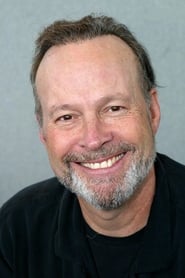
This episode marks the debut of Lieutenant Reginald Barclay, played by Dwight Schultz. Barclay would go on to become a recurring character in TNG and Star Trek: Voyager, a rare feat for a non-main cast member.
-
Barclay's holodeck fantasies depict Commander Riker as an 18th-century musketeer, Counselor Troi as a seductive goddess, Dr. Crusher as a medieval healer, and Captain Picard as a regal king, offering a revealing look into his psyche and insecurities.
-
The character of Barclay was largely based on writer Sally Caves's own experiences with introversion and her observations of similar personality types within society, aiming to explore social awkwardness and escapism in a Starfleet context.
-
Dwight Schultz was recommended to the Star Trek producers by Whoopi Goldberg, who worked with him on the film The Long Walk Home and recognized his talent and fandom.Sources: Memory Alpha
-
Executive producer Michael Piller deeply identified with Barclay's character, seeing him as a reflection of his own tendency towards fantasy life over reality, and thus found the episode delightful.Sources: Memory Alpha
-
A memorable line spoken by Barclay about 'standing in the corner, trying to look comfortable examining a potted plant' was taken almost verbatim from something Michael Piller himself once said to Ira Steven Behr.Sources: Memory Alpha
-
Holo-Wesley's distinctive appearance in the episode, including his costume, was meticulously based on Thomas Gainsborough's famous painting, 'The Blue Boy'.Sources: Memory Alpha
-
Barclay's reference to a 'flux capacitor' while in Troi's office serves as a direct nod to the Back to the Future film series.Sources: Memory Alpha