Personnel dossier: Reginald Barclay

| Species | Human |
| Affiliation | Federation Starfleet |
| Rank / Title | Lieutenant |
| Occupation | Starfleet officer |
| Relatives | Frank (cousin) (possibly illusory) |
| Status | Active |
| Datestatus | 2378 |
| Marital Status | Single |
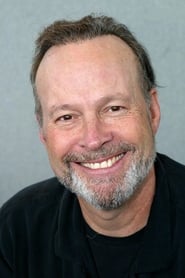
| Portrayed By | Dwight Schultz |
Actors & Casting
Archival biography summary
Early Life and Starfleet Academy
Reginald Endicott Barclay III, a highly talented Human Starfleet systems diagnostic engineer, lived in the 24th century. During his attendance at Starfleet Academy, his seclusive tendencies were noted in his service record and by his classmates. Despite these traits, Barclay successfully graduated from the Academy and received a commendation for his competent service in Starfleet over many years.
Prior to his transfer to the USS Enterprise-D, Barclay served aboard the USS Zhukov, where he consistently earned satisfactory personnel ratings. Upon his impending transfer, Captain Gleason, the commanding officer of the Zhukov, spoke highly of Barclay to his new ship's crew, endorsing his capabilities.
Initial Service on the USS Enterprise-D
In 2366, Barclay transferred to the USS Enterprise-D, holding the rank of lieutenant junior grade. During his early tenure on the Federation flagship, he frequently displayed nervous behavior, a noticeable lack of confidence, and was extremely introverted, often stammering and bumbling. These traits led some shipmates, including Wesley Crusher, to derisively nickname him 'Lieutenant Broccoli' behind his back, and occasionally to his face, including once in front of Captain Jean-Luc Picard.
Barclay's initial performance on the Enterprise-D was marked by routine lateness for duty and frequent reports for not performing to his best ability, resulting in an 'unsatisfactory' rating in his evaluation. Commander William Riker and Lieutenant Commander Geordi La Forge initially sought to have him transferred, with Riker suspecting Captain Gleason had exaggerated his assessment to expedite Barclay's departure. However, Captain Picard refused a simple transfer, and with Picard's support and La Forge's encouragement, Barclay's confidence gradually began to improve.
In late 2366, during the first major Borg incursion into the Federation, Barclay was actively involved in repair efforts alongside Sherbourne. This work was critical after the Enterprise-D crew, in an unsuccessful attempt to destroy the Borg cube, emitted a burst of energy from their ship's navigational deflector during the Battle of Wolf 359.
Intellectual Enhancement and Holodeck Adventures
As time progressed, Barclay's confidence slowly grew, and he became one of Lieutenant Commander La Forge's most skilled engineers. In 2367, following an encounter with an alien Cytherian probe, Barclay experienced a neurological enhancement that dramatically increased his IQ to an estimated range of 1200 to 1450. During this period of heightened intellect, Barclay exhibited unprecedented confidence, becoming more outgoing and self-assured. He even engaged in complex discussions on grand unified theories with a hologram of Albert Einstein on the holodeck.
Barclay utilized the holodeck to integrate his mind directly into the ship's computer, effectively gaining complete control of the Enterprise-D. Unbeknownst to him, this was orchestrated by the Cytherians, the probe's creators, as their method of investigating new species. All attempts to disconnect or dissuade him proved futile, and he successfully created a subspace distortion that transported the Enterprise-D to the Cytherians. After this encounter, Barclay's intellect returned to its previous level, but he retained a lasting measure of the confidence and intelligence gained from the experience.
In 2369, Barclay assisted Alexander Rozhenko in developing a holodeck program depicting Deadwood, South Dakota, in the Ancient West. Barclay's inclusion of a prostitute and brothel in the simulation, likely an oversight regarding its intended audience, was not appreciated by Lieutenant Worf, Alexander's father. Later that year, while diagnosing a failure of the holodeck matrix diodes, Barclay inadvertently released the holographic Professor James Moriarty from his confinement within the Enterprise-D's computer memory core. Moriarty, who had caused the diode failure, explained his history to Barclay and deduced that Captain Picard had not fulfilled his promise to find a way for him to exist in the real world. Barclay defended Picard and reported the incident to his superiors.
Barclay, Picard, and Data reactivated the program to converse with Moriarty, who reiterated his desire to leave the holodeck. Barclay proposed using transporter pattern enhancers to beam Moriarty into the 'real world,' unaware this was a ruse by Moriarty to gain control of the ship through a holographic simulation of the Enterprise-D within the Sherlock Holmes program. Data uncovered the deception, and at Captain Picard's suggestion, he and Barclay devised a separate simulation within both programs, effectively turning Moriarty's plan against him. Believing he was free, Moriarty relinquished control of the Enterprise, allowing Barclay to safely store his program in an enhancement module, where Moriarty could explore the galaxy without causing further trouble. Following a discussion with the senior staff, Captain Picard instructed Barclay to safeguard the module. Barclay, intrigued by Picard's jest about their reality being a simulation, tested the idea by ordering the computer to 'end program,' and, satisfied when nothing happened, departed with the module.
Medical Incidents and Personal Development
In 2370, Barclay became the namesake for a new illness, 'Barclay's Protomorphosis Syndrome.' He and the rest of the crew were affected when a treatment for the mild Urodelan flu, administered by Doctor Beverly Crusher, activated one of Barclay's recessive genes, causing him to mutate into a spider-like creature. Captain Picard and Lieutenant Commander Data, who were off-ship during the incident, developed a retrovirus and released it through the ventilation systems, saving Barclay and the crew. Dr. Crusher named the newly discovered illness in his honor as he was the first known patient.
By 2375, Lieutenant Commander Worf and Chief Miles O'Brien fondly recalled Barclay when reminiscing about old friends on the Enterprise-D. They particularly remembered him for his extravagant 'Three Musketeers' holoprogram, which he often invited the crew to join.
Service on the USS Enterprise-E
Sometime between 2371 and 2376, Reginald Barclay was promoted from lieutenant junior grade to lieutenant. He was subsequently assigned to the new USS Enterprise-E before the Battle of Sector 001 in 2373. During this period, he traveled into the past with the rest of the ship's crew to the day before Earth's First Contact with the Vulcans in 2063.
Barclay had the extraordinary opportunity to meet the noted inventor Dr. Zefram Cochrane, the architect of Earth's first warp flight. He was so thrilled to shake Cochrane's hand that Lieutenant Commander Geordi La Forge had to remind him to maintain his composure and continue his work. Barclay played a crucial role in helping Cochrane repair the Phoenix, and he secured La Forge's approval and input on a makeshift component that he and other Enterprise-E engineers intended to use as a replacement for the Phoenix's warp plasma conduit.
The Pathfinder Project: Establishing Contact with Voyager
In 2374, Barclay was transferred to the Pathfinder Project at Starfleet's Communications Research Center, a critical initiative aimed at returning the USS Voyager to the Alpha Quadrant from the distant Delta Quadrant. This assignment necessitated his relocation to Earth, where he maintained an apartment in San Francisco. As part of his work, Barclay created a holographic recreation of the Voyager and its crew, which he used to experiment with various solutions for establishing contact.
Later that year, with the assistance of The Doctor, Barclay conceived an innovative idea: to use the MIDAS array to direct a tachyon beam towards an approaching Class B itinerant pulsar, thereby generating an artificial micro-wormhole. This wormhole could then be precisely aimed at Voyager's likely locations to facilitate communication with the stranded vessel. However, Commander Pete Harkins dismissed his proposal as impractical.
Undeterred, Barclay's enthusiasm led him to appeal directly to Admiral Owen Paris during an inspection of the research facility, which prompted Harkins to send him home for the day. Disobeying orders, Barclay returned to his simulation to refine his ideas. When Harkins discovered him, Barclay was suspended pending a psychological evaluation, as the Commander believed he had suffered a relapse of his holo-addiction. Refusing to accept this, Barclay broke into the communications center and attempted to execute his plan. To prevent interruption, he activated the holographic recreation of Voyager, using the holographic crew to protect and assist him. Just as Harkins initiated a simulated warp core breach to end the program, Captain Kathryn Janeway hailed the Communications Center from the Delta Quadrant, having received Barclay's message. This brief but successful two-way communication allowed for the transmission of ship's logs, research data, a personal message for Tom Paris from his father, and instructions to improve Voyager's communication systems, thus vindicating Barclay's ideas. The crew of Voyager later toasted their unmet hero, honoring Barclay as an honorary member of their crew.
Sustaining the Voyager Link and Later Career
In 2377, Barclay successfully developed a method using the MIDAS array to transmit a data stream to Voyager once a month, enabling Starfleet to send the crew vital information and letters from home. He later returned to Jupiter Station with Voyager's EMH, who had been transmitted to the Alpha Quadrant via this connection. Barclay informed The Doctor that his creator, Doctor Lewis Zimmerman, had been diagnosed with acute subcellular degradation and was dying. Despite Zimmerman's initial refusal of assistance, Barclay, with the aid of Counselor Deanna Troi, helped The Doctor persuade Zimmerman that his help was the best course of action to save his life.
Later that year, possibly inspired by The Doctor's journey, Barclay attempted to send a hologram to Voyager to assist the crew. This effort failed when the hologram disappeared, costing Voyager's crew that month's data stream. Barclay subsequently discovered that a romantic acquaintance, Leosa, had been manipulating him to gain information on Voyager and the Pathfinder project. This information was sold to a group of Ferengi who used it to alter Barclay's holographic program, intending for it to kill the crew and reprogram Voyager's shields to withstand a geodesic fold they had created between the Alpha and Delta Quadrants, all to steal Borg technology from Seven of Nine. With Counselor Troi's help, Barclay managed to deceive the Ferengi into abandoning their plan, thereby saving Voyager.
In 2378, Barclay achieved an incredible feat by creating the first-ever transgalactic com link, utilizing a quantum singularity to establish daily, albeit brief, real-time contact with Voyager. Later, he informed Admiral Paris that a draft version of the holonovel 'Photons Be Free,' written by The Doctor, had been prematurely released and gained popularity in thousands of holosuites across the Federation. Barclay was present during the hearing convened to determine The Doctor's rights as the creator of the work. Later that year, Barclay was on duty at the Communications Center when long-range sensors detected a Borg transwarp conduit opening just outside the Sol system. He promptly reported this critical information to several visiting admirals. When a Borg sphere emerged from the conduit and exploded to reveal Voyager, Barclay was among the first to welcome the starship's crew home.
Medical and Psychological History
Reginald Barclay suffered from severe transporter phobia, a psychological barrier he later successfully overcame. He was also known to be a hypochondriac, frequently prone to self-diagnosis. On one occasion, he mistakenly believed he had transporter psychosis, and on another, he diagnosed himself with Terellian Death Syndrome, both of which proved to be untrue.
Battle with Holo-addiction
Sometime prior to 2366, Barclay developed a severe holo-addiction, becoming deeply engrossed in the fantasy worlds and narratives the holodeck could create. This addiction persisted after his transfer to the Enterprise-D, leading him to spend more time in the holodeck, where he felt more confident and comfortable, than in real-life social interactions. Unlike typical holoprograms, Barclay created scenarios using the likenesses of the Enterprise's senior staff, casting himself as the hero. One such program was an exact recreation of the Enterprise-D, where he would argue with and talk back to holographic senior officers without fear of repercussions. In one session, he propelled a holographic Geordi La Forge across Ten Forward and threatened a holographic First Officer William Riker, all in an attempt to impress a holographic Deanna Troi.
Another of Barclay's creations was 'Barclay Program 15,' a scenario where he engaged in sword fights with 'The Three Musketeers' (holograms resembling Jean-Luc Picard, Geordi La Forge, and Data), romanced the 'Goddess of Empathy' (a representation of Deanna Troi), and relaxed with a hologram of Beverly Crusher. He also created an effigy of William Riker as an extremely short, bumbling swordsman. When his holo-addiction was discovered, Commander Riker was particularly annoyed and wished to delete all programs featuring the crew's likenesses. Counselor Troi objected, citing the valuable insight these programs offered into Barclay's troubles, but upon seeing the 'Goddess of Empathy,' she too became angry, much to Riker's amusement, who then prevented her from deleting it for the same reason.
With the help of Geordi La Forge, Barclay managed to overcome his addiction. During a crisis where the Enterprise was in danger of flying apart due to an invidium infection of the computer systems, La Forge encouraged Barclay's imaginative problem-solving. It was Barclay who discovered the infection, leading to the resolution of the crisis. Following La Forge's guidance, Barclay returned to the holodeck and deleted all his holoprograms except 'Barclay Program 9.' The crew subsequently recognized his importance to the ship.
In 2376, during his work on the Pathfinder Project, Barclay became dangerously close to suffering a relapse of his holo-addiction. His obsession with returning Voyager from the Delta Quadrant led him to use a program that recreated the Voyager crew. While initially a tool for testing theories, the program quickly became another sanctuary from the real world. The program was semi-accurate, with the holographic duplicates of Voyager's crew programmed to like and rely upon him, treating him as their best friend. He joked with Harry Kim, played poker with the senior staff, enjoyed hoverball with Tom Paris, assisted B'Elanna Torres with warp core calibrations, and even received a massage from The Doctor. Barclay once confided in Deanna Troi that he slept better in his holographic quarters than in his actual apartment. This fascination and his unauthorized interactions with the holographic crew expedited his dismissal from the Pathfinder Project. However, once Barclay successfully used the program to prove his theory correct, his time spent in the Voyager simulation dwindled, along with his need for the holodeck.
Personal Relationships and Interests
Reginald Barclay was known for his cheese omelets. He had a deep affection for cats, an affection that was reciprocated. Data's pet cat, Spot, found only her owner and Barclay to be suitable to her mercurial tastes. Though Barclay never physically met Neelix, he named his own cat after the Talaxian, suggesting a level of respect or admiration, and even programmed his Voyager simulation to have the Talaxian purr.
Barclay's nervous nature often led to a series of unsuccessful romantic affiliations, causing him to prioritize his work. Despite this, he began a relationship with Hope, the sister-in-law of his superior officer, Pete Harkins, in mid-2376, though it was short-lived. By early 2377, Barclay began seeing Leosa, but this relationship proved to be a ruse. Following this deception, Barclay decided against pursuing another relationship, but was later introduced to Maril, a teacher and friend of William Riker, by Deanna Troi.
Geordi La Forge, initially Barclay's superior on the Enterprise-D, was critical of his early performance but later became a key figure in encouraging him and helping him overcome his holo-addiction. Barclay once stated that La Forge felt the most 'real' to him among the crew. Their professional cooperation continued on the Enterprise-E, where La Forge supervised Barclay during his meeting with Zefram Cochrane. In February 2377, La Forge expressed pride in Barclay at his birthday party, upon seeing the specifications for a hologram Barclay planned to send to Voyager.
Barclay first met Lewis Zimmerman in 2371 during the development of the EMH Mark I, and they developed a mutual respect. Barclay was instrumental in fostering Zimmerman's friendship with The Doctor. When Zimmerman believed he was terminally ill, he included Barclay in his last will and testament, bequeathing him his collection of holographic art, including the 'Woman in Four Dimensions,' and requesting that Starfleet allow Barclay to complete his 'Trojan Horse Project,' trusting him as the only engineer capable of doing so.
Barclay met Counselor Deanna Troi during his time on the Enterprise-D and developed an initial attraction, even featuring her as a lover in one of his holoprograms. His feelings evolved into professional respect, and Troi continued to provide him with counseling and friendship. In 2376, she visited him at his request to discuss his feelings about his new assignment at Starfleet's Communications Research Center, where he expressed missing the family-like atmosphere of the Enterprise. As a favor, Troi took leave from the Enterprise to help Barclay convince Lewis Zimmerman to accept treatment from Voyager's EMH, even assisting in a ruse to disrupt The Doctor's programming. In 2377, she again helped Barclay realize Leosa's deception and encouraged him to report it. Troi later invited him on a double date with her, Commander Riker, and her teacher friend, Maril, to help him meet new people.
Barclay first physically met The Doctor when he brought him to Jupiter Station to help Dr. Zimmerman, though they had corresponded via the MIDAS array communication system. Barclay informed The Doctor of Zimmerman's illness and initially convinced him to stay and treat Zimmerman despite his refusal of help. When Voyager received an altered Barclay hologram, The Doctor recognized it as fraudulent, noting that the real Barclay never exhibited such rude and careless traits. During The Doctor's hearing to decide his rights as a hologram, Barclay defended him, recounting how The Doctor had 'traveled halfway across the galaxy' to care for Dr. Zimmerman, comparing it to a son making his 'old man' proud. He congratulated The Doctor when it was ruled that he had the right to control his own work.
Commander Pete Harkins was Barclay's superior officer on the Pathfinder Project. Harkins once invited Barclay to dinner with his wife, Angie, and her sister, hoping to set them up, but Barclay declined, preferring to focus on his work. While acknowledging Barclay as a competent engineer, Harkins was skeptical of some of his theories, partly due to Barclay's past. He dismissed Barclay's idea to use the MIDAS array to create an artificial singularity for Voyager as a 'cock-eyed theory' and ordered him to abandon it. Barclay's decision to bypass Harkins and appeal directly to Admiral Paris strained their relationship. Harkins later discovered Barclay's holographic recreation of the Voyager crew, believing Barclay had relapsed into holo-addiction. He removed Barclay from the project and ordered him to seek counseling. After Barclay broke into the lab and used the MIDAS array without authorization, Harkins ordered Security to apprehend him, but Barclay activated the Voyager scenario, locking out controls and using holographic characters to deter security. Harkins eventually apprehended him by initiating a warp core breach in the simulation. Harkins then arrested Barclay, but a message from Voyager confirmed Barclay's plan had worked, leading Harkins to apologize for doubting him. After Barclay's hologram transmission to Voyager failed, Harkins ordered him to take a week's leave, offering his cousin's Malaysian beach house, which Barclay refused, preferring to seek Deanna Troi's help.
Alternate Realities and Holographic Manifestations
In an alternate timeline set in 2404, Reginald Barclay held the rank of commander and served as a teacher at Starfleet Academy, specializing in the Borg. In this timeline, he had overcome his stutter, though it resurfaced when he was caught in a lie. Commander Barclay played a crucial role in assisting Admiral Janeway to travel back in time, enabling Voyager to return to Earth sooner than in the original timeline. The Doctor learned the truth about Janeway's mission from Barclay after an addled Tuvok managed to warn him that Janeway was leaving forever.
Barclay was holographically duplicated on at least two occasions. In 2371, the USS Voyager encountered a subspace anomaly that caused a feedback surge through The Doctor's holographic matrix, generating a holographic hallucination. Among the projections was one of Lieutenant Barclay, who insisted The Doctor was Lewis Zimmerman and that Voyager was merely a simulation at Jupiter Station. The Voyager crew eventually extracted The Doctor's program and deactivated the hallucination. In 2377, Barclay created a holographic duplicate of himself with the intention of transmitting it to Voyager to aid the crew on their journey home. However, during its first transmission, the hologram was intercepted and reprogrammed as part of a profit scheme devised by three Ferengi. Barclay himself ultimately discovered their plan, and the altered hologram was deactivated.
■ Characters Portrayed by Dwight Schultz (Dossier Registry)
This registry displays all characters played by Dwight Schultz across the Star Trek franchise, dynamically compiled from casting credits, production archives, and actor relationship mapping within the Federation database.
■ Species Taxonomy Mappings (Consolidated Database)
This panel displays the taxonomic classification profiles associated with this character. The species registry mappings are compiled from anatomical telemetry, evolutionary archives, and genetic profiles stored in the Consolidated Registry Database.

Genealogy vectors
This diagram maps the familial ties, bloodline vectors, and personal relationship nodes established in the databases. Information is derived from canon dialogue and genealogy net transcripts.
Career rank progression timeline
This ledger tracks the official rank promotions, demotions, and strategic commission shifts of this officer over their operational history. Data is compiled from canon episode transcripts and Starfleet registry timelines.
No rank promotions or commission changes logged in Starfleet logs.
Archival appearances log
This registry lists all episodes and films featuring appearances or text mentions of this character, dynamically cataloged from cast records, credit databases, and synaptic analysis of lore descriptions.
Telemetry Verification & Badge combinations
[ Badge Combinations ]
Row entries render two distinct telemetry vectors side by side:
- Type of Role: Denoted by Main (regular cast) or Guest (guest star).
- Data Verification: Denoted by the source label next to it (e.g. Memory Alpha, 🤖 LCARS Telemetry).
Example: A row displaying "Main" + "Memory Alpha" means the character was a regular cast member and the appearance was confirmed via direct Memory Alpha references.