Mission Briefing
The USS Enterprise, commanded by Captain James T. Kirk, embarks on a vital humanitarian mission to deliver critical medical supplies to the New Paris colonies on Makus III. Diverting from this crucial task, Captain Kirk opts to investigate Murasaki 312, a unique and puzzling quasar-like phenomenon, despite firm objections from Galactic High Commissioner Ferris. A scientific expedition, led by Commander Spock and several Starfleet officers, is launched aboard the shuttlecraft Galileo to explore the anomaly. However, as the shuttlecraft enters Murasaki 312, it is immediately assailed by severe electromagnetic interference and unpredictable turbulence, knocking it violently off course. Communications with the USS Enterprise are abruptly severed, leaving Captain Kirk and his crew in the dark as the shuttlecraft Galileo is forced to make a harrowing emergency landing on the uncharted, Class M planet Taurus II. Isolated and with their vessel severely compromised, Spock and his Human crew face a desperate struggle for survival against the planet's hostile environment, including its indigenous Taurus II anthropoids, and the stark reality of dwindling resources, all while Captain Kirk races against time to locate his missing command.
LCARS Tactical Mission Registry: A detailed reconstruction of chronological events and narrative progression compiled from historical logs and mission briefs.
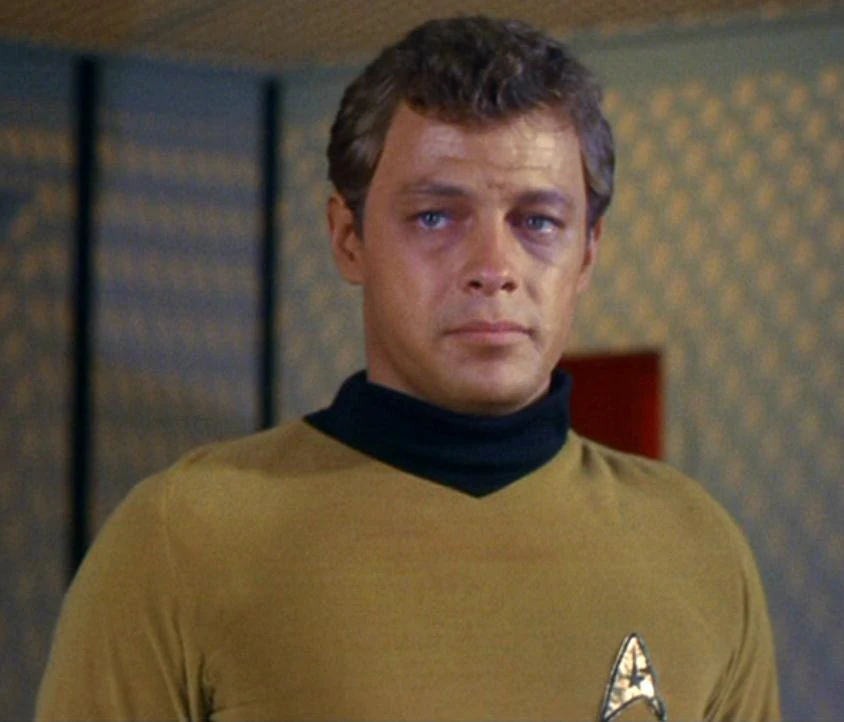
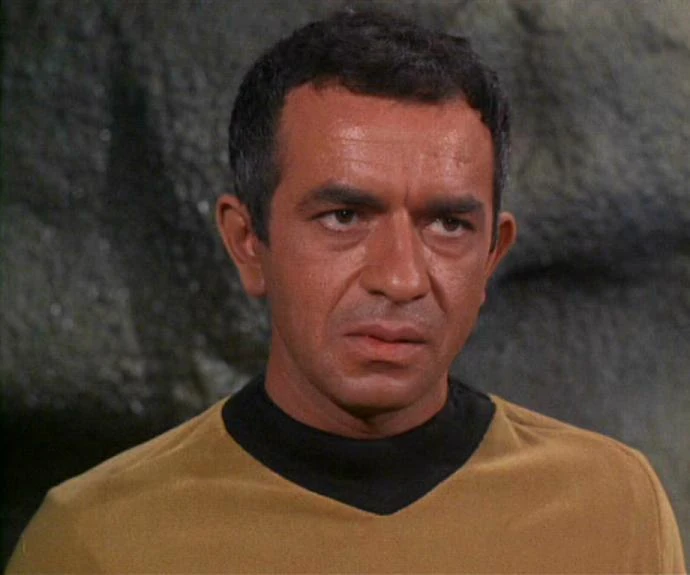
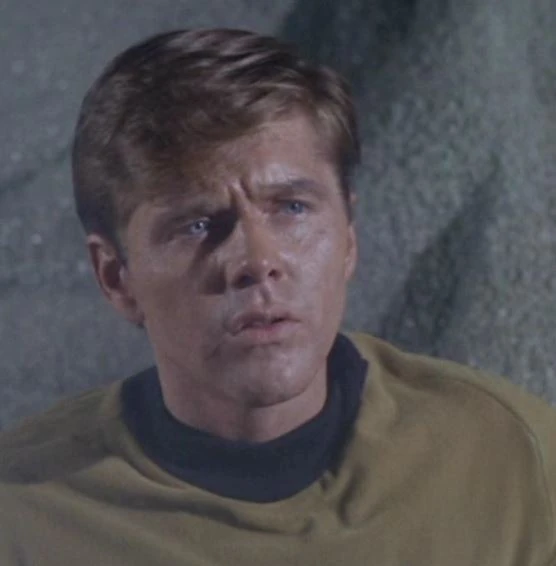
The USS Enterprise, under the command of James T. Kirk, is en route to Makus III to deliver vital medical supplies to the New Paris colonies, which are suffering from a devastating plague. Despite objections from Galactic High Commissioner Ferris, who prioritizes the medical mission, James T. Kirk diverts the starship to investigate Murasaki 312, a unique quasar-like phenomenon, citing Starfleet orders. A scientific expedition, led by Spock and including Lieutenant Commander Montgomery Scott, Dr. Leonard McCoy, Lieutenant Latimer, Lieutenant Gaetano, Lieutenant Boma, and Yeoman Mears, is launched aboard the shuttlecraft Galileo. However, upon entering Murasaki 312, the shuttlecraft Galileo encounters severe electromagnetic interference and turbulence, causing it to be knocked off course and lose control. Communications with the USS Enterprise are severed, leaving James T. Kirk and his crew blind and helpless in their search efforts.
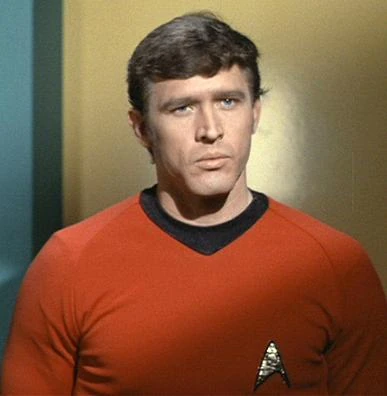
The shuttlecraft Galileo is forced to make an emergency landing on Taurus II, an unexplored, class M planet within Murasaki 312. Lieutenant Commander Montgomery Scott immediately begins repairs, but discovers significant fuel loss, rendering the shuttlecraft Galileo too heavy to achieve orbit without jettisoning approximately 500 pounds, equivalent to three adults. Spock, as commanding officer, logically prepares to select three crew members to be left behind, a decision that deeply unnerves Lieutenant Boma and Dr. Leonard McCoy. Meanwhile, Lieutenant Latimer and Lieutenant Gaetano, sent to scout the area, are attacked by hostile, spear-wielding Taurus II anthropoids in a dense fog. Lieutenant Latimer is mortally wounded by a spear and falls to his death, marking the first casualty of the mission.
Following Lieutenant Latimer's death, Spock's detached, logical assessment of the Taurus II anthropoids' primitive weaponry further exacerbates tensions with Lieutenant Boma and Lieutenant Gaetano, who are grieving their fallen comrade. Back on the USS Enterprise, James T. Kirk continues his desperate search for the shuttlecraft Galileo, dispatching the shuttlecraft Columbus and multiple landing parties to Taurus II, despite High Commissioner Ferris's increasing pressure to resume the primary mission. A ruptured fuel line on the shuttlecraft Galileo then drains all remaining conventional fuel, leaving the crew completely stranded. Lieutenant Commander Montgomery Scott proposes a risky alternative: reconfiguring the main reactor to run on the energy from their Phaser weapons. While Spock initially advocates for non-lethal deterrence against the Taurus II anthropoids, Lieutenant Gaetano is subsequently killed by the creatures, losing his Phaser in the process, which is then converted for fuel.
As Lieutenant Commander Montgomery Scott works to convert the Phaser energy, Spock electrifies the shuttlecraft Galileo's hull, temporarily repelling the attacking Taurus II anthropoids. Lieutenant Boma insists on performing a burial ceremony for Lieutenant Gaetano and Lieutenant Latimer, which Spock reluctantly permits. During the burial, the Taurus II anthropoids attack again, and Spock is trapped by a large rock. Dr. Leonard McCoy and Lieutenant Boma disregard Spock's logical order to leave him behind, rescuing him instead. This delay allows the Taurus II anthropoids to physically hold down the shuttlecraft Galileo during takeoff, forcing Lieutenant Commander Montgomery Scott to use the boosters, further depleting their already scarce fuel. Once in orbit, with only minutes of fuel remaining before re-entry and incineration, Spock makes a desperate, seemingly illogical decision: he jettisons and ignites the remaining fuel, creating a brilliant flare.
This gamble pays off, as Hikaru Sulu on the USS Enterprise spots the flare. James T. Kirk, defying High Commissioner Ferris's orders, immediately changes course and orders the shuttlecraft Galileo crew to be beamed aboard just moments before the shuttle burns up in Taurus II's atmosphere. Back on the USS Enterprise bridge, James T. Kirk confronts Spock, attempting to get him to admit that his final act was a purely Human emotional one. Spock, ever logical, reinterprets his desperation as a 'logical decision, logically arrived at,' maintaining his Vulcan composure. James T. Kirk playfully calls Spock a 'stubborn man,' concluding the mission with a sense of relief and camaraderie among the surviving crew.
LCARS Tactical Mission Log: Chronological action logs detailing exactly what each character did during the events of this mission, linked directly to personnel dossiers.


Subspace Visual Feed
Sensors & Diagnostic Metrics
Visual Sensor Logs


Synaptic Lore Link Contexts
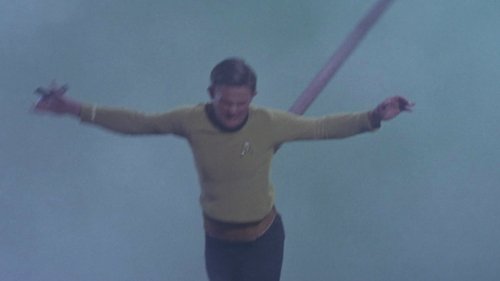
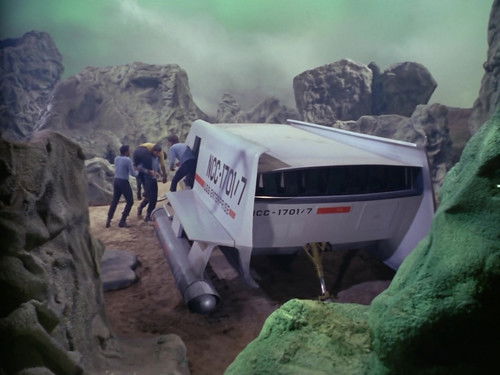
The Galileo is unexpectedly pulled into Murasaki 312's highly disruptive electromagnetic field, suffering critical damage, losing primary power and communications, and crash-landing on the unexplored planet Taurus II.
Kirk decides to make a scientific detour to investigate Murasaki 312, a mysterious quasar-like phenomenon.
Kirk, is en route to Makus Three with vital medical supplies for the New Paris colonies.
Captain Kirk acknowledges the situation but emphasizes that Starfleet directives require him to investigate all quasars and similar phenomena.Kirk faces a daunting challenge to find the Galileo before Starfleet protocol demands the search be abandoned.
The Galileo is unexpectedly pulled into Murasaki 312's highly disruptive electromagnetic field, suffering critical damage, losing primary power and communications, and crash-landing on the unexplored planet Taurus II.
The ionization effect from Murasaki 312 renders the USS Enterprise's long-range sensors and transporters inoperative, severely hampering Captain James T.
Kirk confronts Spock, attempting to get him to admit that his final act was a purely Human emotional one.
Makus III is the initial intended destination for the USS Enterprise, which is transporting crucial medical supplies for the New Paris colonies.Kirk, is en route to Makus III to deliver vital medical supplies to the New Paris colonies, which are suffering from a devastating plague.
Lieutenant Commander Montgomery Scott proposes a risky alternative: reconfiguring the main reactor to run on the energy from their Phaser weapons.
Meanwhile, Lieutenant Latimer and Lieutenant Gaetano, sent to scout the area, are attacked by hostile, spear-wielding Taurus II anthropoids in a dense fog.
Mission Registries & Linkages
Subspace Playlists
This registry lists all curated subspace playlists and chronological collections containing this mission.
Technology
This registry contains all specialized technologies deployed, analyzed, or referenced during this mission.
Location
This registry displays all celestial bodies, planets, starbases, or coordinates charted or visited during this mission.
Starship
This registry lists all vessels encountered, scanned, or active during this mission.
[ NO STARSHIPS REGISTERED ]
Species & Factions
This registry documents all species, civilizations, and organizational factions contacted or active in this sector during the mission.
Culture & Lore
This registry outlines historical events, cultural traditions, organizations, and database lore referenced during this mission.
Production & Archival Linkages
This registry documents behind-the-scenes production references, draft concepts, star charts, or archival cataloging links officially connected to this mission.
"A deleted dialogue features the commissioner using the idiom "needle in a haystack" to illustrate the challenge of locating a small group."
"Standard Starfleet energy weapons, known as Phaser, are initially used for defense but are later cleverly modified by Lieutenant Commander Montgomery Scott to serve as an emergency fuel source for the shuttlecraft Galileo."
"Lieutenant Kelowitz notes that the Taurus II anthropoids bear a resemblance to life forms previously encountered on Hansen's Planet."
"Murasaki 312 is a quasar-like phenomenon that Captain Kirk prioritizes for investigation, causing the USS Enterprise to divert from its original course."
"The New Paris colonies are experiencing a serious plague, making the delivery of medical supplies a crucial and urgent mission."
"Taurus II is an unexplored Class M planet where the shuttlecraft Galileo crash-lands after being diverted by the Murasaki 312 phenomenon."
"Lieutenant Gaetano initially describes the hostile Taurus II anthropoids as being "like a giant ape," offering a basic visual comparison."
"Spock's difficulties with command and a subsequent "desperate" action are interpreted by Dr. McCoy and Captain Kirk as a purely Human emotional reaction."
"The hostile, giant, spear-wielding native creatures of Taurus II, known as Taurus II anthropoids, pose a serious threat to the stranded Starfleet crew."
"Ferris was known as "Galactic High Commissioner" because the official designation United Federation of Planets had not yet been established."
Continuity & Trivia
-
This episode marks the first appearance of a Starfleet shuttlecraft on screen. The prop, named 'Galileo', was notoriously difficult to film and frequently broke down.
-
The 'giants' on Taurus II were simply regular actors filmed on oversized sets, using forced perspective to create the illusion of immense scale. The spears they wielded were also proportionally huge.
-
Initially, the script for 'The Galileo Seven' was titled 'Shuttlecraft Galileo: Missing'. The change was made to better reflect the focus on the crew and their dire situation.
-
This is one of the early episodes that significantly develops Spock's character, showcasing his struggle to reconcile logic with the emotional demands of command and the human element of his crew.Sources: Memory Alpha
-
All future shuttlecraft model shots used throughout the original series were stock footage recycled from this episode, sometimes with altered backgrounds.Sources: Memory Alpha
-
The closing credits for "The Galileo Seven" famously contain a misspelling, listing the title as "SCPIPT SUPERVISOR" instead of "SCRIPT SUPERVISOR."Sources: Memory Alpha
-
The story for this episode originated as a science fiction reimagining of the 1939 film "Five Came Back," which notably co-starred Lucille Ball.Sources: Memory Alpha
-
Wah Chang's ape-creature makeup was considered too grotesque for close-ups, prompting NBC Broadcast Standards to mandate post-production effects to obscure a clear view of Latimer's impalement.Sources: Memory Alpha
-
Leonard Nimoy found playing Spock as the central character challenging due to William Shatner's absence from many scenes, later recalling he "experienced it as a failure."Sources: Memory Alpha