Mission Briefing
The USS Enterprise arrives at Omicron Ceti III, a planet long considered uninhabitable due to its constant bombardment by deadly berthold rays. Captain James T. Kirk, Commander Spock, Doctor Leonard McCoy, and their landing party are astonished to discover a thriving agricultural colony, whose inhabitants are not only alive but in perfect health. Led by Elias Sandoval, the colonists attribute their remarkable well-being to a unique, plant-based lifestyle. Spock is reunited with Leila Kalomi, a botanist he had known on Earth years earlier, adding a personal dimension to the unexpected discovery.
Despite Starfleet Command's orders for evacuation, Sandoval resists, citing the colonists' miraculous health. However, as Commander Spock investigates the peculiar local flora, he experiences a profound and unexpected transformation, exhibiting unusual euphoria and a dramatic shift in his demeanor. This sudden change in Spock, coupled with the rapid spread of an unknown influence among the USS Enterprise crew, quickly escalates into a dire challenge for Captain Kirk, threatening the mission, the ship, and the very nature of his command.
LCARS Tactical Mission Registry: A detailed reconstruction of chronological events and narrative progression compiled from historical logs and mission briefs.
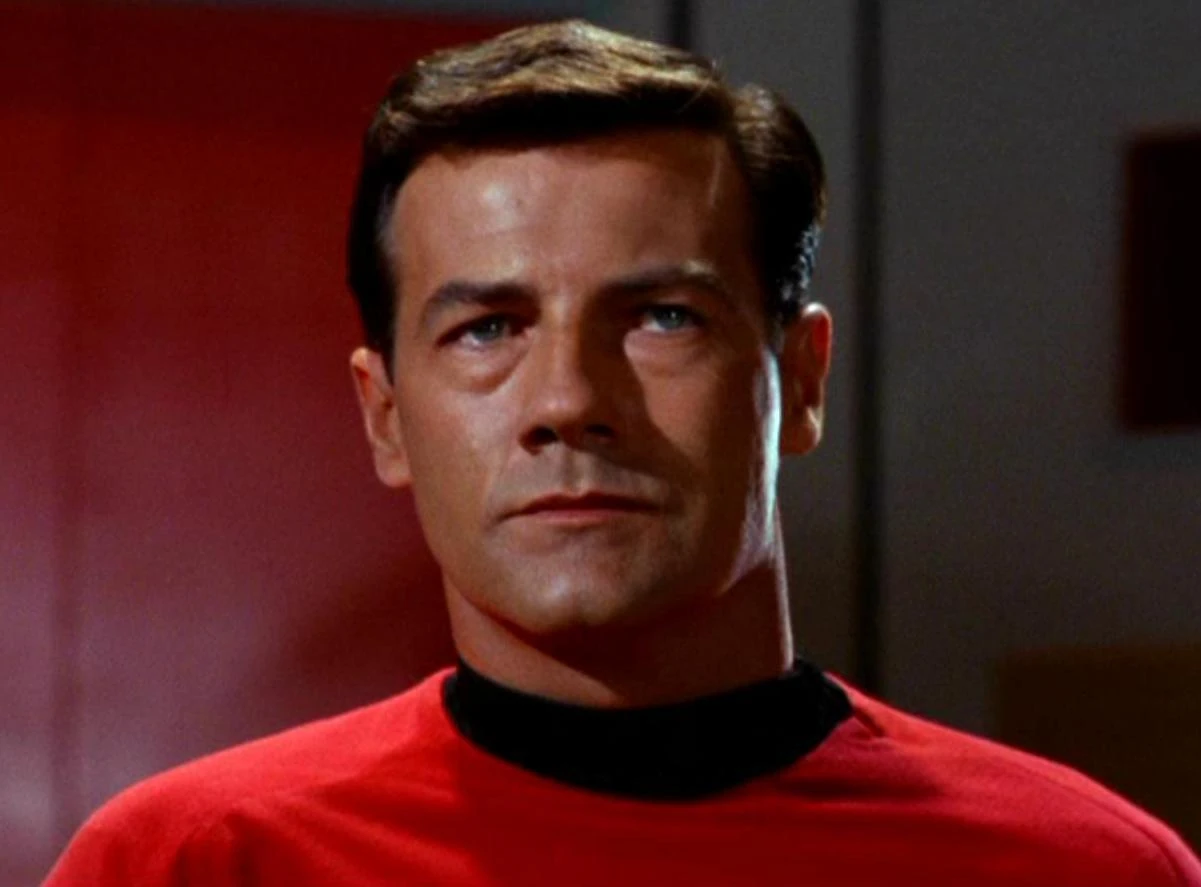
The USS Enterprise (NCC-1701) arrives at Omicron Ceti III, a planet believed to be uninhabitable due to constant bombardment by deadly berthold rays. The mission of Captain James T. Kirk, Commander Spock, Doctor Leonard McCoy, Lieutenant Hikaru Sulu, Lieutenant DeSalle, and Lieutenant Kelowitz is to catalog the destruction of an agricultural colony established there four years prior. To their astonishment, they discover the colonists, led by Elias Sandoval, not only alive but thriving in perfect health. Spock is reunited with Leila Kalomi, a botanist he had known on Earth six years earlier, who harbored unrequited feelings for him. Initial investigations reveal several anomalies: a complete absence of animal life, including Cattle, Pigs, Horses, and Dogs, and McCoy's medical scans showing impossible healing, such as Sandoval's appendix having regenerated and childhood lung scars having vanished. The colonists exhibit an unusual state of contentment and peace, attributing it to their simple, plant-based lifestyle.
Despite Starfleet Command's orders to evacuate the colony due to the berthold rays, Elias Sandoval adamantly refuses, citing the colonists' miraculous health. Leila Kalomi then leads Spock to a unique pod plant, which blasts him with Omicron spores. The spores immediately break down Spock's emotional barriers, causing him to experience profound euphoria and openly confess his love for Leila, transforming him into one of the contented colonists. Spock's sudden casualness and disrespect alarm Kirk and McCoy. Under the spores' influence, Spock leads Kirk to a plant, infecting Sulu and Kelowitz. Lieutenant DeSalle, already infected, then infects Doctor Leonard McCoy, who, in his euphoric state, orders hundreds of the pod plants beamed aboard the USS Enterprise (NCC-1701). The spores quickly spread throughout the ship via the ventilation system, infecting the entire crew. Lieutenant Nyota Uhura, compromised, sabotages the communications station, leaving only ship-to-surface contact, before beaming down. The crew, including Crewman Leslie, openly mutinies against Captain James T. Kirk, deserting the ship to join the colony on Omicron Ceti III.
Captain James T. Kirk finds himself marooned and alone aboard the USS Enterprise (NCC-1701), unable to pilot the ship or contact Starfleet Command. He returns to the planet's surface to confront Spock and Sandoval. Spock, while still under the spores' influence, explains that the plants thrive on the berthold rays and act as a repository for microscopic spores that inhabit Human bodies, granting complete health and peace of mind – a 'true Eden.' Kirk vehemently disagrees, arguing that humanity is not meant for such stagnation, but rather for challenge and ambition. Back on the deserted bridge, Kirk is accidentally exposed to the spores from a pod plant he had previously thrown. He experiences a brief period of euphoria, but his strong sense of duty and anger at the thought of abandoning his Starfleet medal and the USS Enterprise (NCC-1701) causes him to slam his fist on the transporter console. This violent emotional outburst breaks the spores' hold, revealing that intense negative emotions are the antidote. Realizing the immense physical strength of a Vulcanian, Kirk devises a risky plan to provoke Spock into a fight to free him from the spores' influence.
Feigning continued infection, Captain James T. Kirk hails Spock, luring him back to the USS Enterprise (NCC-1701) transporter room under the pretense of needing help with equipment. Once Spock is aboard, Kirk launches a deliberate and brutal verbal assault, calling him a 'mutinous, disloyal, computerized, half-breed,' an 'overgrown jackrabbit,' and a 'devil-eared freak,' questioning his Vulcanian heritage and integrity, and insulting Leila Kalomi. Spock, initially confused, eventually snaps under the barrage of insults and attacks Kirk, throwing him violently around the transporter room. Just as Spock is about to deliver a potentially fatal blow, the surge of anger breaks the spores' influence, and he regains his logical composure. Spock and Kirk then work together to construct a subsonic transmitter, designed to broadcast anger-inducing frequencies through the crew's communicators to the planet's surface, thereby eradicating the spores' effects on everyone.
Leila Kalomi beams up to the USS Enterprise (NCC-1701), heartbroken, realizing she has lost Spock and the euphoric feeling the spores provided. Spock, now free of the spores, explains his unwavering responsibility to the ship and Captain James T. Kirk, stating that his identity and 'self-made purgatories' are an inherent part of him. The subsonic transmitter is activated, causing widespread anger and fights among the colonists and crew on Omicron Ceti III, successfully breaking the spores' hold. Elias Sandoval expresses profound regret, acknowledging that their three years of 'progress' were an illusion and that they must now genuinely work to build a new life. As the USS Enterprise (NCC-1701) prepares to transport the colonists to Starbase 27, Doctor Leonard McCoy cynically remarks that humanity has been 'thrown out of paradise' for a second time. Kirk counters that this time, they walked out on their own, suggesting that humanity's true nature lies in struggle and ambition, not passive contentment. Spock, in a rare moment of personal reflection, admits that his time with Leila on Omicron Ceti III was the first time in his life he had ever been truly happy.
LCARS Tactical Mission Log: Chronological action logs detailing exactly what each character did during the events of this mission, linked directly to personnel dossiers.



Subspace Visual Feed
Sensors & Diagnostic Metrics
Visual Sensor Logs





Synaptic Lore Link Contexts
Omicron Ceti III serves as the main location for the episode, featuring an agricultural colony that has inexplicably endured dangerous berthold rays thanks to native spores providing euphoria and perfect health.Kirk, arrives at Omicron Ceti III on a mission of grim expectation: to evacuate an agricultural colony believed to have been annihilated by deadly Berthold rays.
Kirk informs Sandoval that Starfleet Command has ordered the colonists' evacuation from the planet, but Sandoval expresses their unwillingness to leave.Despite Starfleet Command's orders to evacuate the colony due to the berthold rays, Elias Sandoval adamantly refuses, citing the colonists' miraculous health.
Initial investigations reveal several anomalies: a complete absence of animal life, including Cattle, Pigs, Horses, and Dogs, and McCoy's medical scans showing impossible healing, such as Sandoval's appendix having regenerated and childhood lung scars having vanished.
Spock and Kirk then work together to construct a subsonic transmitter, designed to broadcast anger-inducing frequencies through the crew's communicators to the planet's surface, thereby eradicating the spores' effects on everyone.
Initial investigations reveal several anomalies: a complete absence of animal life, including Cattle, Pigs, Horses, and Dogs, and McCoy's medical scans showing impossible healing, such as Sandoval's appendix having regenerated and childhood lung scars having vanished.
Spock is reunited with Leila Kalomi, a botanist he had known on Earth six years earlier, who harbored unrequited feelings for him.
Spock, while still under the spores' influence, explains that the plants thrive on the berthold rays and act as a repository for microscopic spores that inhabit Human bodies, granting complete health and peace of mind – a 'true Eden.' Kirk vehemently disagrees, arguing that humanity is not meant for such stagnation, but rather for challenge and ambition.
Initial investigations reveal several anomalies: a complete absence of animal life, including Cattle, Pigs, Horses, and Dogs, and McCoy's medical scans showing impossible healing, such as Sandoval's appendix having regenerated and childhood lung scars having vanished.
Spock, while still under the spores' influence, explains that the plants thrive on the berthold rays and act as a repository for microscopic spores that inhabit Human bodies, granting complete health and peace of mind – a 'true Eden.' Kirk vehemently disagrees, arguing that humanity is not meant for such stagnation, but rather for challenge and ambition.
As the USS Enterprise (NCC-1701) prepares to transport the colonists to Starbase 27, Doctor Leonard McCoy cynically remarks that humanity has been 'thrown out of paradise' for a second time.
Despite Starfleet Command's orders to evacuate the colony due to the berthold rays, Elias Sandoval adamantly refuses, citing the colonists' miraculous health.
He experiences a brief period of euphoria, but his strong sense of duty and anger at the thought of abandoning his Starfleet medal and the USS Enterprise (NCC-1701) causes him to slam his fist on the transporter console.
The USS Enterprise (NCC-1701) arrives at Omicron Ceti III, a planet believed to be uninhabitable due to constant bombardment by deadly berthold rays.
Mission Registries & Linkages
Subspace Playlists
This registry lists all curated subspace playlists and chronological collections containing this mission.
[ NO ASSOCIATED PLAYLISTS RECORDED ]
Technology
This registry contains all specialized technologies deployed, analyzed, or referenced during this mission.
Location
This registry displays all celestial bodies, planets, starbases, or coordinates charted or visited during this mission.
Starship
This registry lists all vessels encountered, scanned, or active during this mission.
Species & Factions
This registry documents all species, civilizations, and organizational factions contacted or active in this sector during the mission.
Culture & Lore
This registry outlines historical events, cultural traditions, organizations, and database lore referenced during this mission.
Production & Archival Linkages
This registry documents behind-the-scenes production references, draft concepts, star charts, or archival cataloging links officially connected to this mission.
"Earth is mentioned as the home planet from which the Omicron Ceti III colonists originated four years earlier, and also as the location where Commander Spock and Leila Kalomi initially encountered each other six years prior."
"Omicron Ceti is the star system containing Omicron Ceti III, a planet subjected to intense berthold radiation."
"The lack of livestock, specifically cattle, on Omicron Ceti III provides an initial hint about the colony's peculiar situation, especially since expedition logs showed they had brought animals for sustenance and reproduction."
"The landing party observes the absence of common animals such as dogs on Omicron Ceti III, which underscores the unusual environment influenced by the spores, and Captain James T. Kirk employs the term "dog-faced boy" to incite Spock."
"The landing party notes the total lack of horses and other agricultural animals on Omicron Ceti III, which is unexpected for a farming settlement."
Continuity & Trivia
-
This episode is notable for featuring one of the most significant depictions of Spock experiencing and expressing deep emotion, particularly during his romantic scenes with Leila Kalomi.
-
The plant spores used in the episode were actually made from common birdseed, specifically a type of millet, creating an unusual texture that would react well on screen.
-
The character of Elias Sandoval, the colony leader, was originally intended to be a more ambiguous figure, possibly even a villain, but the final script portrayed him as a benevolent leader simply under the spores' influence, like the rest.
-
Jerry Sohl's original draft of the episode featured Lieutenant Sulu, rather than Spock, falling in love with Leila Kalomi after being infected by the spores.Sources: Memory Alpha
-
Dorothy Fontana earned her position as story editor for Star Trek after Gene Roddenberry challenged her to rewrite Jerry Sohl's script, ultimately shifting the episode's romantic focus from Sulu to Spock.Sources: Memory Alpha
-
Director Ralph Senensky improvised the iconic shot of Spock hanging from a tree limb while on location at Bronson Canyon; the original script only described Kirk finding Spock and Leila kissing by a stream.Sources: Memory Alpha
-
A famous blooper occurred during filming when Leonard Nimoy accidentally mispronounced 'repository' as 'suppository' while explaining the spores, leading to widespread laughter on set.Sources: Memory Alpha
-
Filming plans for the episode were significantly disrupted when actress Jill Ireland, who played Leila Kalomi, fell ill, forcing a last-minute change in outdoor locations from the Disney Ranch to Bronson Canyon.Sources: Memory Alpha