Mission Briefing
Starfleet Command's archives chronicle myriad existential threats, but few are as profoundly unsettling as the entity encountered by Captain James T. Kirk and his crew. Responding to a desperate distress call, their Starfleet starship discovers the terrifying aftermath in System L-370: an entire solar system reduced to cosmic dust. Further investigation leads them to System L-374, where they find the severely damaged USS Constellation, a sister starship, adrift and silent. Aboard, they locate its sole survivor, Commodore Matt Decker, deeply traumatized and struggling to articulate the unspeakable horror he has witnessed.
Decker's fragmented account reveals a colossal 'planet-killer' machine – a horn-shaped automaton, miles long, with a maw capable of devouring planets whole. This horrifying entity, originating from another galaxy, systematically obliterates celestial bodies, digesting the debris for fuel and charting a course directly into the heart of the United Federation of Planets. Captain Kirk theorizes it is a 'doomsday machine,' a relic of an ancient conflict now mindlessly continuing its programmed destruction. Despite its impenetrable hull, Commodore Decker, consumed by grief and a desperate need for vengeance, insists on a direct confrontation. Their Starfleet vessel soon finds itself in a desperate struggle, sustaining heavy damage, losing both deflector shields and warp drive, and ensnared by the machine's powerful tractor beam. With the USS Constellation serving as a diversion, Captain Kirk and his crew face an unparalleled challenge: how can Starfleet possibly stop a truly unstoppable engine of destruction?
LCARS Tactical Mission Registry: A detailed reconstruction of chronological events and narrative progression compiled from historical logs and mission briefs.
The USS Enterprise, under the command of Captain James T. Kirk, responds to a distress call originating from System L-370, only to discover that the entire solar system has been obliterated, leaving behind nothing but debris. Further investigation leads them to System L-374, where they locate the derelict USS Constellation, a sister starship to the Enterprise. The Constellation is severely damaged, its power plants dead, and its bridge uninhabitable. A boarding party, including Captain Kirk, Doctor Leonard McCoy, and Chief Engineer Montgomery Scott, beams aboard to find no survivors, only a single, traumatized individual: Commodore Matt Decker, the Constellation's commanding officer. Decker is found in a state of profound shock and grief, haunted by the loss of his ship and crew, and barely able to articulate the horror he witnessed.
Through Commodore Decker's fragmented account and the Constellation's auxiliary log, the Enterprise crew learns of a monstrous 'planet-killer' machine. This colossal, horn-shaped automaton, described as miles long with a maw capable of swallowing a dozen starships, systematically destroys entire solar systems by slicing planets into rubble and then digesting the debris for fuel, making it self-sustaining. Science Officer Spock's analysis confirms the machine's existence and its origin from another galaxy, projecting its destructive path directly through the most densely populated regions of the Federation. Captain Kirk theorizes it is a 'doomsday machine,' a weapon of ultimate deterrence from an ancient, forgotten war, now mindlessly continuing its programmed destruction. Decker, consumed by guilt and a desperate need for vengeance, insists on immediate, aggressive action against the seemingly unstoppable entity.
As the 'planet-killer' pursues the USS Enterprise, Commodore Decker, exercising his authority as a senior Starfleet officer, assumes command from Science Officer Spock, overriding Spock's logical assessment that retreat is necessary to warn Starfleet Command. Decker's trauma-driven insubordination leads him to recklessly engage the 'planet-killer' with the Enterprise, despite Spock's warnings that its hull is composed of impenetrable neutronium. The Enterprise sustains heavy damage, losing warp power and deflector shields, and is eventually caught in the 'planet-killer's tractor beam. From the crippled USS Constellation, Captain Kirk, having managed to restore minimal impulse power, uses the Constellation as a diversion, firing its last remaining phaser bank to draw the 'planet-killer's attention and free the Enterprise from its grasp.
With Captain Kirk back in command of the Enterprise, he devises a daring, last-ditch plan: to turn the USS Constellation into a massive bomb by overloading its impulse engines and ramming it into the 'planet-killer's maw. Before Kirk can execute this, Commodore Decker, still consumed by guilt over his lost crew, takes a shuttlecraft and pilots it directly into the 'planet-killer's mouth in a suicidal act of atonement, causing a minor power fluctuation in the machine. Kirk proceeds with his plan, rigging the Constellation's impulse engines for a thirty-second delayed detonation. He pilots the Constellation deep into the 'planet-killer' and attempts to beam back to the Enterprise, but the transporter malfunctions repeatedly, leaving him stranded inside the machine as the countdown progresses. Chief Engineer Montgomery Scott, working frantically in a Jefferies tube, manages to jury-rig the transporter at the last possible second, beaming Captain Kirk aboard the Enterprise just as the USS Constellation explodes, destroying the 'planet-killer' from within.
The destruction of the 'planet-killer' marks a narrow victory for the Federation, achieved through Captain Kirk's audacious strategy and the tragic sacrifice of Commodore Matt Decker. Captain Kirk ensures that Decker's official record reflects a death in the line of duty, acknowledging his ultimate, albeit misguided, heroism. The episode concludes with a reflection on the irony of using a 'doomsday machine'-like weapon (the overloaded Constellation) to destroy another, and Science Officer Spock's logical, yet unsettling, question about the potential existence of more such destructive machines wandering the vastness of the universe. The crew of the USS Enterprise is left to ponder the immense power and existential threats that lie beyond the known reaches of Starfleet exploration.
LCARS Tactical Mission Log: Chronological action logs detailing exactly what each character did during the events of this mission, linked directly to personnel dossiers.




Subspace Visual Feed
Sensors & Diagnostic Metrics
Visual Sensor Logs



Synaptic Lore Link Contexts
Through his fragmented account and auxiliary logs, the crew learns of a colossal, horn-shaped 'planet-killer' machine, miles long with a maw capable of swallowing starships, systematically destroying entire solar systems.
At the same time, the Enterprise also encounters heavy subspace interference, which prevents the crew from reporting their discoveries to Starfleet Command.As the 'planet-killer' pursues the USS Enterprise, Commodore Decker, exercising his authority as a senior Starfleet officer, assumes command from Science Officer Spock, overriding Spock's logical assessment that retreat is necessary to warn Starfleet Command.
Kirk wonders if the crew might have beamed down to one of the remaining planets, but Spock (on the Enterprise) informs him that the planets could not possibly sustain Human life: the inner planet having a surface temperature close to the melting point of lead and the second's atmosphere is simply too toxic to support Human life.
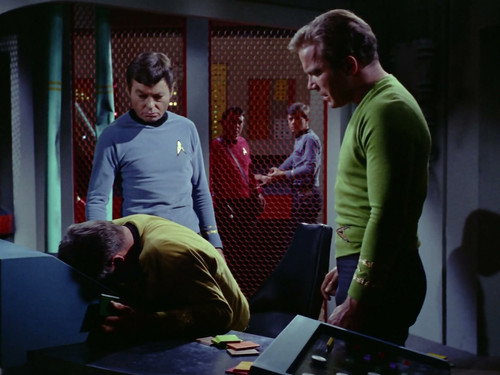
McCoy gives him an injection with his hypospray and he starts to come around, eventually recognizing Kirk.
Spock and Sulu have used the locations of the ravaged star systems they encountered to calculate that the planet killer came from outside the galaxy, and that its projected path will take it through the most densely populated section of our galaxy.
Decker describes how his ship was attacked and disabled and, unable to contact Starfleet due to heavy subspace interference, he beamed his crew down to the third planet.
Now some distance away, the planet killer stops pursuing the Enterprise, veers off, and resumes its course for the densely-inhabited Rigel system.
Decker objects, stating that their primary duty is to protect Federation citizens, and that they must attack the planet killer immediately.
On the Enterprise, an unauthorized Class F launches before Sulu can stop the launch bay doors from opening.
This colossal, horn-shaped automaton, described as miles long with a maw capable of swallowing a dozen starships, systematically destroys entire solar systems by slicing planets into rubble and then digesting the debris for fuel, making it self-sustaining.
With Captain Kirk back in command of the Enterprise, he devises a daring, last-ditch plan: to turn the USS Constellation into a massive bomb by overloading its impulse engines and ramming it into the 'planet-killer's maw.
The Enterprise sustains heavy damage, losing warp power and deflector shields, and is eventually caught in the 'planet-killer's tractor beam.
With Captain Kirk back in command of the Enterprise, he devises a daring, last-ditch plan: to turn the USS Constellation into a massive bomb by overloading its impulse engines and ramming it into the 'planet-killer's maw.
He pilots the Constellation deep into the 'planet-killer' and attempts to beam back to the Enterprise, but the transporter malfunctions repeatedly, leaving him stranded inside the machine as the countdown progresses.
From the crippled USS Constellation, Captain Kirk, having managed to restore minimal impulse power, uses the Constellation as a diversion, firing its last remaining phaser bank to draw the 'planet-killer's attention and free the Enterprise from its grasp.
The Enterprise sustains heavy damage, losing warp power and deflector shields, and is eventually caught in the 'planet-killer's tractor beam.
He pilots the Constellation deep into the 'planet-killer' and attempts to beam back to the Enterprise, but the transporter malfunctions repeatedly, leaving him stranded inside the machine as the countdown progresses.
Mission Registries & Linkages
Subspace Playlists
This registry lists all curated subspace playlists and chronological collections containing this mission.
[ NO ASSOCIATED PLAYLISTS RECORDED ]
Technology
This registry contains all specialized technologies deployed, analyzed, or referenced during this mission.
Location
This registry displays all celestial bodies, planets, starbases, or coordinates charted or visited during this mission.
Starship
This registry lists all vessels encountered, scanned, or active during this mission.
Species & Factions
This registry documents all species, civilizations, and organizational factions contacted or active in this sector during the mission.
Culture & Lore
This registry outlines historical events, cultural traditions, organizations, and database lore referenced during this mission.
Production & Archival Linkages
This registry documents behind-the-scenes production references, draft concepts, star charts, or archival cataloging links officially connected to this mission.
"Footage of Scott being tossed around engineering is stock footage from . A console that appears only in that episode can be seen. Scott wears a tricorder throughout this episode. But when the old footage of him being thrown against the grating in is spliced in, the tricorder vanishes."
"According to the game , there is a school of thought that speculates that the galactic barrier around the perimeter of the galaxy was created to keep these planet killers out."
"In James Blish's adaptation, Decker's first name is "Brand" and he doesn't pilot the shuttlecraft into the planet-killer. In addition, after being ordered off the bridge by Decker with "Mr. Spock knows his duties under regulations, doctor… do you?" Blish gives McCoy one final retort: "Yes, sir – go to sickbay and wait for the casualties you're about to send me." This line, by the Enterprise CMO to someone in temporary command, would later appear on-screen in , when Dr. Crusher said it to Edward Jellico as he prepared to mine the nebula where he believed, correctly, that a Cardassian invasion fleet was hiding – though this never came to pass, as the operation was a complete success, allowing the Enterprise to neutralize the fleet without firing a shot."
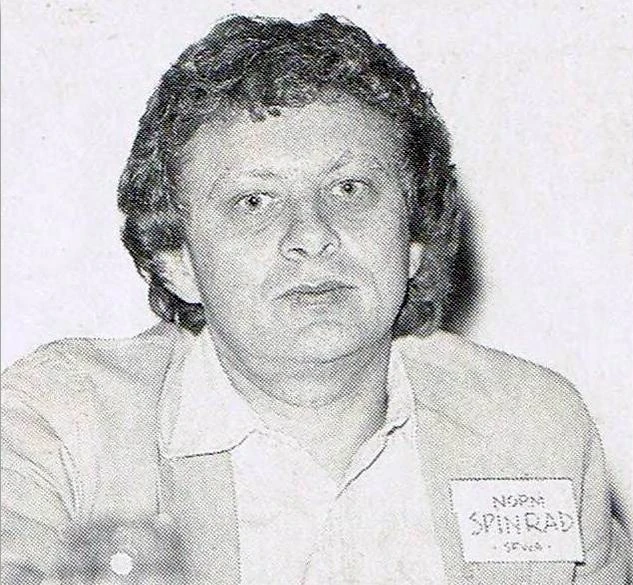
"Peter David's TNG novel Vendetta connects the planet killers with the Preservers, an ancient race first mentioned in , who have fought the Borg as well as created the galactic barrier. This method of attack used against the Borg would be consistent with that seen used by Species 8472 in . Also, David's description of the new planet killer's look matches Norman Spinrad's original conception."
"In James Blish's adaptation, Decker's first name is "Brand" and he doesn't pilot the shuttlecraft into the planet-killer. In addition, after being ordered off the bridge by Decker with "Mr. Spock knows his duties under regulations, doctor… do you?" Blish gives McCoy one final retort: "Yes, sir – go to sickbay and wait for the casualties you're about to send me." This line, by the Enterprise CMO to someone in temporary command, would later appear on-screen in , when Dr. Crusher said it to Edward Jellico as he prepared to mine the nebula where he believed, correctly, that a Cardassian invasion fleet was hiding – though this never came to pass, as the operation was a complete success, allowing the Enterprise to neutralize the fleet without firing a shot."
"This episode marks the debut of the re-designed engineering set. The dilithium crystal storage units now occupy the center of the floor (complete with recycled Horta eggs); a ladder and upper level have been added into what was just a high bank of lighted panels in the first season. The set also is entered through a short spur hallway now, rather than as a side door off a main corridor. The console across from the forced-perspective end of the set has been replaced by a doorway and moved to the main wall to the left of the red grid. The huge structures among which Kirk's evil self and Benjamin Finney once hid are not seen in detail again, but the emergency manual monitor set was built on stilts on that spot, making its debut in ."
"Peter David's TNG novel Vendetta connects the planet killers with the Preservers, an ancient race first mentioned in , who have fought the Borg as well as created the galactic barrier. This method of attack used against the Borg would be consistent with that seen used by Species 8472 in . Also, David's description of the new planet killer's look matches Norman Spinrad's original conception."
Continuity & Trivia
-
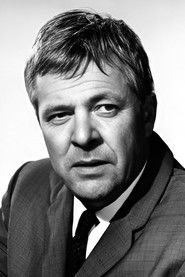
William Windom (Commodore Decker) performed his own stunt of climbing into the shuttlecraft, adding to the intensity of his character's desperate actions.
-
This episode was nominated for a Hugo Award for Best Dramatic Presentation in 1968, highlighting its lasting impact and critical acclaim among science fiction fans.
-
William Windom, who played Commodore Decker, did not realize the 'Moby Dick' allegories in "The Doomsday Machine" until years later, admitting he thought the episode "seemed kind of silly" at the time.Sources: Memory Alpha
-
Director Marc Daniels completed the episode in five days instead of the usual six, earning a US$500 bonus for his exceptional efficiency.Sources: Memory Alpha
-
William Windom intentionally had his character compulsively fiddle with cassette cartridges as an homage to Captain Queeg's ball-bearing mannerism in 'The Caine Mutiny'.Sources: Memory Alpha
-
James Doohan, who portrayed Scotty, consistently named "The Doomsday Machine" as his favorite 'Star Trek' episode, highlighting William Windom's performance and the strong statement about nuclear weapons.Sources: Memory Alpha
-
In the German dub of the episode, Kirk makes an atypical remark about a female crewman's skirt, saying "I think I should work on getting these skirts longer again," instead of his original line about planetary destruction.Sources: Memory Alpha