Mission Briefing
The Doctor, seeking to understand human family dynamics, creates a holographic family on the Holodeck. Initially, his wife and children are perfectly agreeable and accomplished, leading Lieutenant B'Elanna Torres to intervene, suggesting that such an idealized scenario offers no real learning. She helps The Doctor introduce randomized behavioral algorithms to make his holographic family more realistic, anticipating a more authentic, albeit challenging, experience.
Concurrently, the USS Voyager investigates the mysterious destruction of a Vostigye space station. Following a strange subspace signal, the crew encounters a massive, highly energetic 'astral eddy' that emerges from subspace, causing damage to the ship. Captain Kathryn Janeway and her senior staff must then devise a strategy to understand and potentially harness this dangerous, unprecedented phenomenon, which could offer a solution to their persistent power shortages.
LCARS Tactical Mission Registry: A detailed reconstruction of chronological events and narrative progression compiled from historical logs and mission briefs.
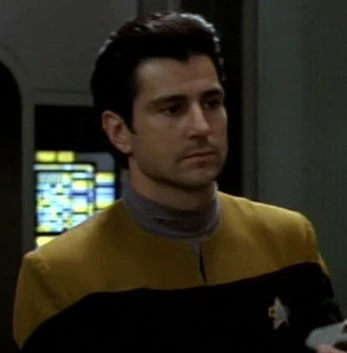
The episode 'Real Life' opens with The Doctor enjoying a seemingly perfect holographic family life on the Holodeck, featuring his wife Charlene and children Jeffrey and Belle. They are unfailingly polite, academically brilliant, and doting, providing The Doctor with an idealized domestic experience. Meanwhile, the USS Voyager investigates the destruction of a Vostigye space station, finding only debris and no survivors. Ensign Harry Kim detects a strange subspace signal, leading Captain Kathryn Janeway to follow it. Back in Sickbay, Lieutenant B'Elanna Torres performs a diagnostic on The Doctor, who, along with Kes, enthusiastically describes his new family. Torres and Kes accept an invitation to dinner, where Torres quickly becomes exasperated by the family's saccharine perfection, calling them 'lollipops' and freezing the program. She offers to help The Doctor make his family more realistic by adding randomized behavioral algorithms, believing he won't learn anything from a fantasy.
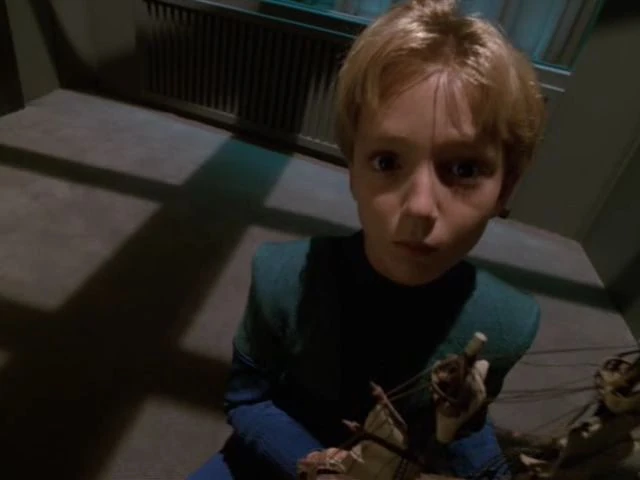
As The Doctor's holographic family undergoes its 'realistic' transformation, the USS Voyager encounters a massive energy wave anomaly, an 'astral eddy,' emerging from subspace. The ship's engines fail, and it sustains minor damage before the anomaly dissipates. Commander Chakotay and Ensign Harry Kim determine it's a highly charged plasma phenomenon at the confluence of space and subspace, potentially a valuable energy source. The Doctor, confident in his pediatric and romantic relationship 'experience,' returns to his now-randomized family. His holographic home is chaotic: Charlene is busy with a Bolian embassy lecture, Belle is frantically searching for her ion mallet for Parrises squares practice, and Jeffrey is blasting Klingon music. The Doctor's attempts to impose order and dictate new rules during a family meeting are met with resistance and resentment, particularly from Jeffrey, who is influenced by his Klingon friends, Larg and K'Kath, and rejects his father's 'Human' values.
The USS Voyager's crew continues to investigate the astral eddies. Tom Paris, after a flirtatious exchange with B'Elanna Torres in the Mess Hall, volunteers to take the Class 2 shuttlecraft Cochrane into an eddy to collect plasma, despite the risk of radiation poisoning. The Doctor, after injecting Paris with temporary protection, expresses his disapproval of Paris's risk-taking, drawing a parallel to his own daughter's adventurous nature. During his mission, Paris is pulled into an 'interfold layer between space and subspace,' the eddies' 'spawning ground,' losing contact with the USS Voyager. Back in the holodeck, The Doctor discovers Jeffrey and his Klingon friends preparing for a 'kut'luch' ceremony, a violent Klingon rite of passage. The Doctor intervenes, expelling the Klingon friends, but Jeffrey, disgusted by his father's 'weak' Human ethical standards, declares his intention to become a warrior and leaves the holographic home.
Immediately following Jeffrey's departure, Charlene contacts The Doctor with devastating news: Belle has been severely injured during a Parrises squares competition. The Doctor rushes to the holographic hospital, where he and a colleague operate on Belle for three hours, but her severe cranial trauma, brain stem, and motor cortex damage prove intractable. Charlene refuses to accept the prognosis, seeking a second opinion. Unable to face Belle's impending death, The Doctor abruptly ends the program. Meanwhile, the USS Voyager re-establishes contact with Paris, who devises a daring plan to ride a large eddy back into normal space. The USS Voyager successfully rescues an injured Paris, beaming him directly to Sickbay, though the shuttle's hull is ruptured and the main ship sustains further damage from the plasma wave.
In Sickbay, The Doctor, treating Paris's mild concussion, bitterly laments the consequences of risk-taking, revealing his daughter's injury and his decision to abandon the program. Paris, however, offers a profound perspective, explaining that while everyone on the USS Voyager has experienced loss and pain, these shared hardships have forged them into a family. He argues that The Doctor created the program to experience both the joys and sorrows of family life, and by turning his back on the pain, he would miss the 'whole point' of having a family, including the chance to say goodbye and offer support. Moved by Paris's words, The Doctor re-enters the program. He comforts his dying daughter, Belle, as Charlene and Jeffrey (now without his Klingon jewelry) join them. The family shares a final, tearful moment together, drawing closer in their grief as Belle passes away, signifying The Doctor's acceptance of the full spectrum of human experience.
LCARS Tactical Mission Log: Chronological action logs detailing exactly what each character did during the events of this mission, linked directly to personnel dossiers.






Subspace Visual Feed
Sensors & Diagnostic Metrics
Visual Sensor Logs


Synaptic Lore Link Contexts
The intrepid EMH-Mark I, longing for a semblance of organic life, ventures into the holodeck to construct a vibrant family unit.
The setting is a modern Human home where everything is spotlessly clean and neatly arranged.His perfectly idyllic program, however, chafes at B'Elanna Torres' Klingon sensibilities, prompting her to inject unpredictable variables for "realism." What begins as an attempt to introduce genuine human experience quickly devolves into tragedy, forcing the Doctor to confront the painful realities of loss and grief that transcend his programmed existence.
The intrepid EMH-Mark I, longing for a semblance of organic life, ventures into the holodeck to construct a vibrant family unit.
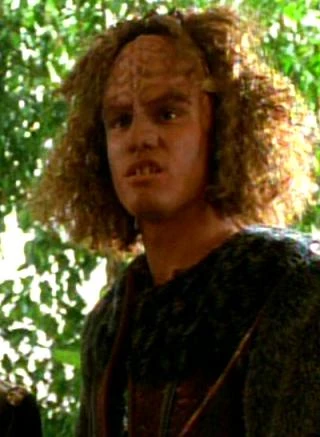
Two Klingon adolescents, and K'Kath, knock on the door and rudely ask where Jeffrey is; when The Doctor tells them Jeffrey is doing homework and can't see friends, Jeffrey emerges and says something to Larg and K'Kath in Klingonese.His perfectly idyllic program, however, chafes at B'Elanna Torres' Klingon sensibilities, prompting her to inject unpredictable variables for "realism." What begins as an attempt to introduce genuine human experience quickly devolves into tragedy, forcing the Doctor to confront the painful realities of loss and grief that transcend his programmed existence.
She is set to speak at the Bolian embassy, and he learns that it is his turn to cook.His holographic home is chaotic: Charlene is busy with a Bolian embassy lecture, Belle is frantically searching for her ion mallet for Parrises squares practice, and Jeffrey is blasting Klingon music.
His holographic home is chaotic: Charlene is busy with a Bolian embassy lecture, Belle is frantically searching for her ion mallet for Parrises squares practice, and Jeffrey is blasting Klingon music.
The USS Voyager successfully rescues an injured Paris, beaming him directly to Sickbay, though the shuttle's hull is ruptured and the main ship sustains further damage from the plasma wave.
Meanwhile, the USS Voyager investigates the destruction of a Vostigye space station, finding only debris and no survivors.
Mission Registries & Linkages
Subspace Playlists
This registry lists all curated subspace playlists and chronological collections containing this mission.

Technology
This registry contains all specialized technologies deployed, analyzed, or referenced during this mission.
Location
This registry displays all celestial bodies, planets, starbases, or coordinates charted or visited during this mission.
Starship
This registry lists all vessels encountered, scanned, or active during this mission.
Species & Factions
This registry documents all species, civilizations, and organizational factions contacted or active in this sector during the mission.
Culture & Lore
This registry outlines historical events, cultural traditions, organizations, and database lore referenced during this mission.
Production & Archival Linkages
This registry documents behind-the-scenes production references, draft concepts, star charts, or archival cataloging links officially connected to this mission.
"The Holodeck serves as the central setting for The Doctor's personal journey, where he creates and interacts with his holographic family to experience the complexities of human relationships."
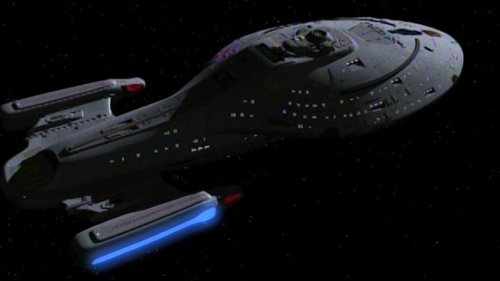
"The USS Voyager crew arms its phasers in preparation to disperse the massive astral eddy anomaly, demonstrating their standard defensive protocols against unknown threats."
"The replicator is used by Charlene to create a new coffee blend and is mentioned by Neelix as an alternative for Tom Paris when he runs out of rations, highlighting its role in daily life and resource management aboard USS Voyager."
"Charlene, The Doctor's holographic wife, proudly mentions replicating a new coffee blend from Paksor III, showcasing her programmed culinary skills and attention to detail."
Continuity & Trivia
-
This episode deeply explores the Doctor's emotional and social development, a recurring theme for sentient artificial intelligences in Star Trek, reminiscent of Data's journey on the USS Enterprise-D.
-
The holographic children, Jeffrey and Belle, are named after Jeffrey and Belle Biller, the children of executive producer Kenneth Biller, who also directed this episode.
-
The narrative arc, where a seemingly perfect simulated life is disrupted by the introduction of randomness and hardship, serves as a powerful metaphor for the unpredictable nature of biological existence and the challenges faced by the crew of Voyager in the Delta Quadrant.
-
The shooting script added to the Star Trek lexicon by describing The Doctor's holographic appearances and disappearances as "Zimmers in" and "Zimmers out," an in-joke referencing long-time production designer Herman Zimmerman.Sources: Memory Alpha
-
Actor Robert Picardo noted the episode explores a variety of styles, transitioning from a '70s sitcom in the first act to a '90s sitcom, and concluding as a dramatic ER-like episode by the end.Sources: Memory Alpha
-
The story originated from an unsolicited submission by Harry "Doc" Kloor, an academically high-achieving writer who sold the concept to Executive Producer Jeri Taylor after being invited to a pitch session despite not meeting Writer's Guild of America internship requirements.Sources: Memory Alpha
-
The episode presents a continuity discrepancy regarding the Klingon weapon kut'luch, describing it as intended for a rite of passage ceremony, contrary to Star Trek: The Next Generation's "Sins of The Father" which identified it as an assassin's ceremonial weapon.Sources: Memory Alpha
-
The name The Doctor adopts for his holographic family program, Kenneth, is an in-joke reference to Voyager co-producer Kenneth Biller, marking a temporary end to his ongoing quest for a name that he only used within the program.Sources: Memory Alpha