Class dossier: Birdseye type
Design & Development
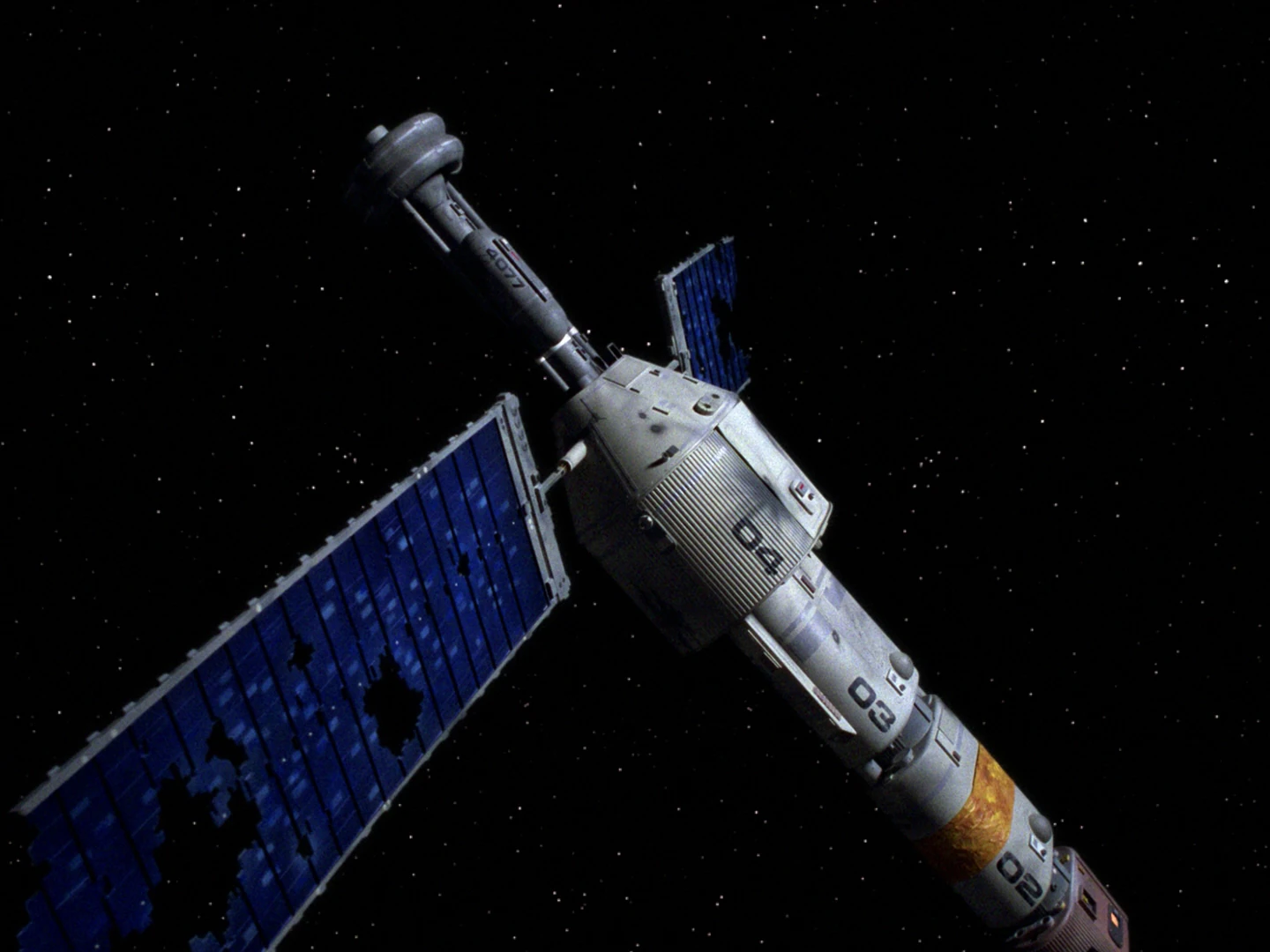
The Birdseye-type space module is a specialized artificial satellite primarily designed for the cryogenic preservation of individuals who have passed away, with the hope that future medical advancements could treat their conditions. These modules are powered by solar panels, indicating a design for long-term, autonomous operation in space. The interior of a Birdseye-type module is divided into four distinct sections, housing the cryonic crypts and associated life support and computer systems. Data retrieval from these modules, as demonstrated by Lieutenant Commander Data, involves accessing an 'ancient disk' from the module's computer to extract personal information about the occupants.
Class History
The Birdseye-type space module has a service history spanning from the late 20th century into the late 24th century. A notable encounter occurred in 2364 when the USS Enterprise (NCC-1701-D) located the SS Birdseye, an Earth-originating module. Lieutenant Commander Data identified it as a space module containing cryogenically frozen Humans. This event was depicted in the Star Trek: The Next Generation episode 'The Neutral Zone'. Later, in 2381, another satellite of this type was encountered and repaired by the crew of the USS Cerritos, as seen in the Star Trek: Lower Decks episode 'I, Excretus'. The class's continued presence in the 24th century, as evidenced by its appearance in 'A Few Badgeys More', indicates its enduring utility or the longevity of its design.
- No propulsion telemetry logged in database.
- No armament telemetry logged in database.
- No defensive systems telemetry logged in database.
This directory lists all individual commissioned starships belonging to this class profile. Data is retrieved from the Starfleet registry ledger.
No individual vessels of this class are currently registered in the active Starfleet archives.