Starship & Class Registry

042
Class: Worker bee- No armament data logged.
- No propulsion data logged.
 Classified
Academy class
1 VesselThe Academy-class was a type of Federation starship designed primarily as a stationary and space-capable educational headquarters for new Starfleet officers during the 32nd century. Its unique design incorporated extensive classrooms, laboratories, and dormitories, alongside various gathering and study spaces for students. A central and notable feature of the ship was the Sato Atrium, a large, multi-level area named in honor of Hoshi Sato, which was utilized for performances and large gatherings. This atrium included ample seating, cherry blossom trees, multiple small ponds, and a wall inscribed with the names of distinguished past Starfleet officers. The physical arrangement of the Academy-class was highly modular, consisting of several discrete sections capable of interlocking or moving in harmony. The core of the ship featured a broad saucer section adorned with a Starfleet delta decoration on its dorsal surface, with a thick column descending beneath the dome and an impulse engine mounted atop the rear. This core section was encircled on its front and sides by a modular circular section, reminiscent of a stéphanos, a garland crown from Greek and Roman culture. Multiple 'transways' connected the core and outer circular sections, retracting into the outer section when the vessel was at warp. The ship's warp nacelles extended aftward from the main vessel, flattened and angled to resemble bird wings. The core saucer also contained a pair of integrated warp drives, allowing it to separate from the rest of the ship and travel at warp independently when necessary. The Academy-class was capable of landing on a planetary surface, specifically at its designated home base in San Francisco on Earth, near the historical site of Starfleet Academy and the northern end of the Golden Gate Bridge. For planetary landings, the ship would jettison its warp nacelles, which remained in orbit, while the occupied sections made landfall. Upon approaching its home base, the outer circular section would decouple at the front into two sections, landing beside the core to form a campus-like arrangement. Notably, the USS Athena, an Academy-class vessel, exhibited a design flaw where an increase in pressure by 0.029% in airlock B would block the ship's internal sensors from detecting life signs within that airlock. **Technical Specifications** Although not primarily intended as a combat vessel, the Academy-class was equipped with defensive and offensive systems typical of its era. These included robust deflector shields and torpedo launchers. The ship also featured advanced automated bridge systems, which allowed for its operation with a minimal crew complement, requiring as few as three crewmembers: the captain, the tactical officer, and the helmsman. **Class History** The Academy-class entered service during the 32nd century, with the USS Athena (registry NCC-392023) being a prominent example, noted as active in 3196. This class played a crucial role in Starfleet's educational infrastructure, serving as a mobile and stationary training facility. The USS Athena's operations and unique capabilities were documented in Starfleet records, including incidents detailed in 'Kids These Days', 'Vox In Excelso', '300th Night', 'Beta Test', and 'Vitus Reflux'.
- • Torpedo launche
- • Deflector shield
 Training Ship
Academy trainer craft Class
Hull Specifications LoggedThe Academy trainer craft was a specialized type of agile sublight spacecraft primarily utilized by Starfleet Academy cadets for flight training, as well as for competitive and demonstrative purposes. Designed by Senior Illustrator Rick Sternbach, the craft's final design was completed in January 1992. These cadet ships were characterized by their small, blunt-winged profile and a fairly flat cross-section, bearing a basic design not wholly dissimilar to fixed-wing jets. Technically, the vessels featured retractable landing struts operated by fluidic pressure. A critical power coupling ran through the cockpit, extending to both the port and starboard sides of the ship where its engines were located, positioned beyond the cockpit and between the wings. Maintenance, such as repairs for fluctuating power flow, was intended to be conducted in a dedicated maintenance bay. During such procedures, the ship's coolant interlock, normally closed during flight, would be opened to check engine coolant levels. This required the primary coolant tanks to be filled before opening the interlock valve, a procedure also necessary as the first step in purging the plasma exhaust. For pilot safety, the craft was equipped with multiple safety systems, including proximity alarms and an emergency transporter. The log recorder was strategically positioned behind and above the pilot's seat. **Interior Design & Operation** The cockpit of an Academy trainer craft was a confined space, roughly three meters square, designed for a single pilot. It was enclosed by a canopy that provided the pilot with an expansive view, almost 180 degrees from left to right, and 90 degrees from forward to above. While operating the craft, pilots wore specialized flight suits, which included a flight helmet and gloves. Computer readouts displaying vital information such as speed, course, g-forces, and sensor data were superimposed over the pilot's view, as depicted in the Star Trek: The Next Generation episode 'The First Duty'. **Class History** Academy trainer craft were actively flown in the mid-2360s by various Starfleet Academy cadet groups, most notably Nova Squadron. In 2368, Nova Squadron, comprising cadets such as Albert, Sito Jaxa, Hajar, Jean-Luc Picard's son-figure Wesley Crusher, and Nicholas Locarno, attempted the highly dangerous and banned Kolvoord Starburst maneuver near Titan. This five-craft formation, which had been prohibited since the 2260s, resulted in a catastrophic accident that led to a Starfleet Academy inquiry, as detailed in 'The First Duty'. The specific ships involved in this incident included Albert's ship, Crusher's ship, Hajar's ship, Locarno's ship, and Sito's ship. The class remained in active service throughout the 24th century, serving its crucial role in preparing future Starfleet officers for advanced flight operations.
- No armament data logged.
- • Subligh

Aeon
Class: Model HB-88- • Disrupto
- No propulsion data logged.
 Runabout / Utility
Aeroshuttle Class
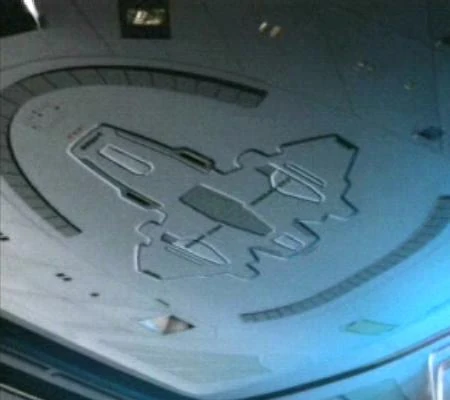
Hull Specifications LoggedThe Aeroshuttle is a specialized runabout-sized spacecraft designed to be embedded within the primary hull, specifically the saucer underside, of several Starfleet starship classes, including the Intrepid-class, Yeager-class, and Elkins-class. These versatile vessels are capable of detaching for independent operations and were deployed to Starfleet starbases and starships throughout the 2370s and 2380s. Its design allows for high-speed reconnaissance, atmospheric travel, defense of its home vessel, and crew evacuation. Unlike other runabouts, Aeroshuttles were not designated unique vessel class status and thus did not receive individual registry numbers. **Design & Development** The concept for the Aeroshuttle originated in March 1994 with Rick Sternbach's initial 'Manta Shuttle' design, developed as part of the USS Voyager's overall design process. Sternbach envisioned it with Starfleet styling, evolved runabout-type structural elements, and integrated impulse and warp reactors, featuring in-wing embedded warp nacelles. Other specifications included side and aft entry hatches, a shuttle underside contiguous with the USS Voyager's hull bottom, wingtip lift engines, a forward microtorpedo launcher, phasers, maneuvering thrusters, sensor strips, windows, and hull markings. The official name was later changed from 'AeroWing' to 'Aeroshuttle' due to an existing 'Mighty Ducks' trademark. According to the Star Trek: Voyager Technical Manual, when detached, the Aeroshuttle was capable of atmospheric flight and interstellar travel at speeds up to warp factor 3, with a cockpit designed for a crew of four. Rick Sternbach provided an in-universe explanation for the Aeroshuttle's infrequent use, particularly on the USS Voyager. He stated that the Aeroshuttle was the only upgraded component of the Intrepid-class that remained in the development cycle long after other major systems were finalized. It boasted a 450 percent increase in atmospheric flight and hover endurance over standard shuttlecraft, achieved through hybrid microfusion and EM driven airflow coil engines. While the spaceframe and basic systems were completed by Stardate 46875.3, final outfitting of mission-specific hardware was delayed pending simulations and flight testing with the USS Intrepid. Construction began in 2369 with an initial procurement order of two prototypes and fifteen production vehicles. Seven were slated for integration into Intrepid-class starships, while the remaining eight were assigned to other starships as shuttles, miscellaneous Starfleet installations, or as independent flyers. A status report from Stardate 56734.21 indicated several units were operational, including AS-501 attached to the USS Intrepid, AS-502 to the USS Bellerophon, and AS-503 to the USS Voyager (undergoing overhaul). Other units were assigned to locations such as Utopia Planitia Fleet Yards, Starbase 375, Jupiter Station, Starbase 524, and Starfleet Headquarters. The CGI model of the Aeroshuttle was developed by Rob Bonchune, based on Sternbach's original designs. Bonchune's work, including a full launch sequence, was presented to Rick Berman, who ultimately decided against featuring it in Star Trek: Voyager to avoid preempting the dramatic Captain's yacht launch sequence planned for the film Star Trek: Insurrection. The model was first publicly presented in 2001 in the Star Trek: Starship Spotter, with co-author Alex Rosenzweig's ideas about its post-Delta Quadrant refit partially influencing Sternbach's later Starfleet Technical Database article. Orthographic views of the model were published in 2003 in the Star Trek: The USS Voyager NCC-74656 Illustrated Handbook, and Bonchune's render was featured in the April spread of the Star Trek: Ships of the Line (2007) calendar. **Service History** An early graphic representation of an Aeroshuttle appeared in Crewman Daniels' database in 2152, viewed by Captain Jonathan Archer and T'Pol in the episode 'Future Tense'. Beginning in the 2370s, Aeroshuttles were deployed with Intrepid-class starships, such as the USS Voyager and the USS Bellerophon. Later, these shuttles were also integrated into other Federation vessels, including the USS Yeager and the USS Elkins. In 2381, two Aeroshuttles were observed orbiting Starbase 25. Despite its capabilities, the USS Voyager's Aeroshuttle was never utilized during its seven years in the Delta Quadrant. The Star Trek: The USS Voyager NCC-74656 Illustrated Handbook suggests this might have been due to the potential long-term problems posed by the destruction of a vehicle integral to the outer hull, and that the vessel was eventually rendered obsolete by the development of the Delta Flyer type vessels. In apocryphal media, an 'aerowing' was featured in the comic book Star Trek: Voyager - Splashdown issue 2, and in the game Star Trek Online, the Aeroshuttle was added as an optional console for the Tier 6 Pathfinder-class variant in the Delta Rising expansion.
- No armament data logged.
- No propulsion data logged.
Agena target vehicle Class
Hull Specifications LoggedThe Agena target vehicle, often referred to as ATV, was an unmanned spacecraft operated by NASA during the mid-1960s. Its primary purpose was to serve as a crucial docking target for developing and practicing orbital rendezvous maneuvers between spacecraft within the Gemini Program. This capability was an essential preparatory step for the more ambitious Apollo program, which aimed to land humans on the Moon. The ATV was designed to be a passive yet robust platform for these critical spaceflight exercises. **Service History** The first successful docking of an Agena target vehicle with a manned spacecraft occurred on March 16, 1966, during the Gemini 8 mission. The crew of the Gemini 8, upon approach, photographed the vehicle's profile as it orbited over Earth, documenting this significant achievement in space exploration. The Agena target vehicle played a vital role in advancing the United States of America's capabilities in space rendezvous and docking, directly contributing to the success of subsequent manned missions. **Starfleet Registry Appearance** Centuries later, in 2267, a historical photograph of the Agena target vehicle was observed on display within Commodore Stone's office on Starbase 11. This image, located to the right of a transporter alcove, was seen during the events depicted in the Starfleet record 'Court Martial', indicating the enduring historical significance of the ATV's contributions to early spaceflight.
- No armament data logged.
- No propulsion data logged.
 Transport / Freighter
Air tram Class
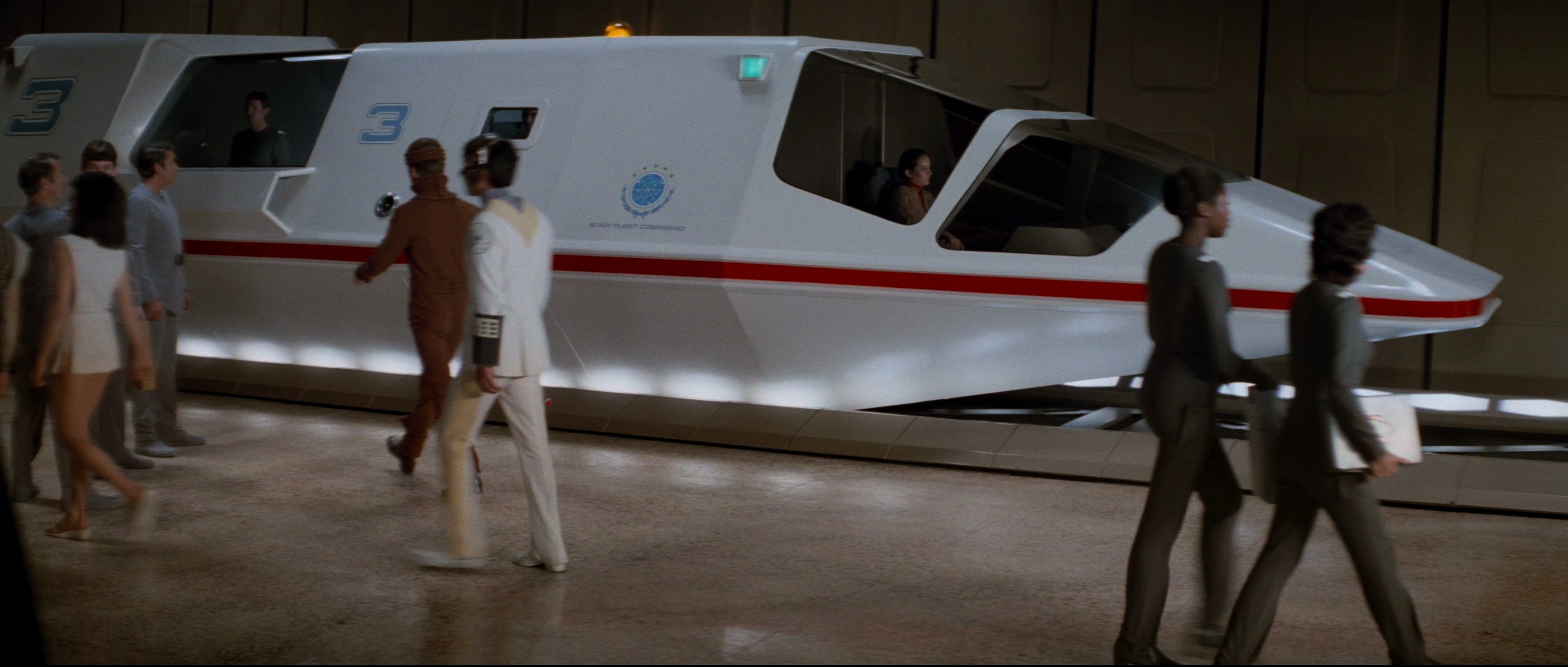
Hull Specifications LoggedThe air tram was a passenger transport vehicle operated by Starfleet within the United Federation of Planets. These trams were specifically designed for the efficient transportation of Starfleet personnel between various air tram stations. The vehicle's internal layout was compartmentalized, featuring a distinct passenger cabin separate from the cockpit, which housed the pilot. **Service History** Air trams were actively in service with Starfleet as early as the 2270s. A notable instance occurred when Admiral James T. Kirk was transported aboard Air tram 3 to Starfleet Headquarters in San Francisco. Upon his arrival, Admiral Kirk met with Commander Sonak before proceeding to an urgent meeting with Admiral Nogura, as depicted in Star Trek: The Motion Picture. The utility of air trams extended into the late 24th century, as similar vehicles were still in use in San Francisco in an alternate 2372, as seen in the episode 'Non Sequitur'. Furthermore, vehicles resembling air trams were observed to be common on Farius Prime in 2374, as shown in the episode 'Honor Among Thieves'. **Technical Definition** According to early production notes for Star Trek: The Motion Picture, an air tram was defined as 'an anti-gravitational train flying several feet above the ground', highlighting its advanced propulsion system and operational altitude.
- No armament data logged.
- No propulsion data logged.
 Escort / Warship
Aircraft carrier Class
Hull Specifications LoggedAircraft carriers were a prominent type of naval warship utilized on Earth during the 20th and 21st centuries. Characterized by a long, flat 'flight deck', these vessels served as mobile air bases, capable of launching and retrieving various aircraft, including fighters, bombers, and helicopters, directly at sea. This design condensed an apron, landing strip, and runway into a compact, seaborne platform. Following World War II, many aircraft carriers transitioned to being powered by nuclear fission, significantly extending their operational range and endurance. According to the Star Trek: Deep Space Nine Technical Manual, Earth-based aircraft carriers were eventually phased out of service by the year 2051. **In-Universe Appearances & Legacy** Aircraft carriers have made several notable appearances and references throughout Starfleet history. In an alternate 1944, during a Temporal War, the San Francisco Bay was home to aircraft carriers of the United States Navy. As the USS Enterprise NX-01's shuttlepod, designated 'Shuttlepod 1', flew into the bay, one aircraft carrier was observed entering while another was anchored near Yerba Buena Island. Later, in New York City, Alicia Travers mistakenly believed Jonathan Archer of the USS Enterprise NX-01 had served on the USS Enterprise (CV-6), which by that time had been sunk in the Pacific Ocean, as depicted in the episode 'Storm Front'. The USS Enterprise (CVN-65), a nuclear-powered aircraft carrier, played a crucial role in Starfleet history when the crew of the destroyed starship USS Enterprise NCC-1701 traveled back in time to 1986. They collected nuclear radiation from the USS Enterprise (CVN-65)'s reactor to recrystallize the dilithium of their captured Klingon Bird-of-Prey, as seen in Star Trek IV: The Voyage Home. A model of the USS Enterprise (CVN-65) later appeared in Admiral Gregory Quinn's guest quarters aboard the USS Enterprise NCC-1701-D in 2364, as shown in 'Coming of Age'. By the 22nd century, it had become a Starfleet tradition for starships to honor their historical namesake aircraft carrier predecessors. The USS Enterprise (CVN-65) was represented as a painting in Captain Jonathan Archer's ready room aboard the USS Enterprise NX-01, and as a bas-relief in the observation lounge of the USS Enterprise NCC-1701-D in the 24th century. Captain Archer also kept a contemporary photograph of Air Group Ten, a squadron from the USS Enterprise (CV-6), in his ready room, as seen in 'Twilight'. In the 23rd century, a representation of the USS Enterprise (CV-6) itself was displayed in a gallery on the recreation deck of the refit USS Enterprise NCC-1701, as depicted in Star Trek: The Motion Picture. **Influence on Starfleet Naming Conventions** The legacy of Earth's aircraft carriers profoundly influenced Starfleet's starship naming conventions, particularly for the Constitution-class and subsequent vessels. Gene Roddenberry, the creator of Star Trek, was notably fascinated by the story of the USS Enterprise (CV-6) in World War II, which inspired him to name his iconic starship 'Enterprise'. Producers D.C. Fontana and Robert H. Justman considered several World War II aircraft carriers as namesakes for early Starfleet vessels, including the USS Yorktown (CV-5), USS Wasp (CV-7), and USS Hornet (CV-8). Other Constitution-class vessels named after aircraft carriers include the USS Lexington (NCC-1709), honoring either the USS Lexington (CV-2) or the USS Lexington (CV-16); the USS Intrepid (NCC-1631), named after the USS Intrepid (CV-11); and the USS Constellation (NCC-1017), named after the USS Constellation (CV-64). Early suggestions also included the British carrier HMS Eagle and the USS Essex (CV-9), though these were initially dropped from episodes like 'Journey to Babel'. The USS Eagle later resurfaced in Star Trek VI: The Undiscovered Country, and the USS Essex (NCC-173), a Daedalus-class starship, appeared in the Star Trek: The Next Generation episode 'Power Play'. Later Starfleet vessels confirmed to be named after aircraft carriers include the USS Akagi (NCC-62158), a Rigel-class starship named after the Japanese Navy's IJN Akagi, fulfilling Justman's wish for a Japanese carrier in Starfleet. The USS Hornet (NCC-45231), a Renaissance-class starship, was named after the original suggestion. The USS Roosevelt (NCC-2573), an Excelsior-class starship, was named after the USS Theodore Roosevelt (CVN-71), a Nimitz-class carrier. These were featured in Star Trek: The Next Generation's 'Redemption II' and Star Trek: Voyager's 'Unity'. Additional Starfleet vessels potentially named after aircraft carriers, though not officially confirmed by production sources, include the USS Hermes (NCC-10376), an Antares-class starship, possibly after the British carrier HMS Hermes (95); the USS Princeton (NCC-59804), a Niagara-class starship, potentially after the USS Princeton (CVL-23) or USS Princeton (CV-37); and the USS Melbourne (NCC-62043), an Excelsior-class starship, possibly after HMAS Melbourne (R21) of the Royal Australian Navy.
- • Missile
- • Projectile weapo
- • Military aircraf
Akira Class
Hull Specifications LoggedAkira was an animated film, explicitly mentioned within the text of the Treaty of Armens. This reference appeared on an okudagram during the events of the Starfleet mission depicted in the Star Trek: The Next Generation episode 'The Ensigns of Command'. The film was cited alongside other notable animated works, specifically 'Urusei Yatsura', 'Ranma Nibunnoichi', and 'Rhea Gall Force'. The specific relevance of these films to the Treaty of Armens was not elaborated upon in the portions of the extensive treaty that were observed, but their inclusion indicates they were recognized cultural artifacts within the diplomatic context of the United Federation of Planets.
- No armament data logged.
- No propulsion data logged.
 Classified
Akira class
10 VesselsThe Akira-class was a distinctive Federation starship class, entering service with Starfleet by the early 2370s. Its design marked a significant departure from Starfleet's traditional saucer-secondary hull-nacelle configuration, instead featuring a catamaran-shaped hull that bore a closer resemblance to the NX-class. Starships of this class were constructed at Utopia Planitia Fleet Yards by 2371. The engineering section was innovatively tucked under the main saucer, which also housed the main deflector and some of the ship's tactical systems. The warp nacelles were connected via long catamaran-type structures, which in turn linked to a large aft weapons pod designed to rotate into position before firing. These catamaran pylons also offered a degree of protection for the main bridge, which maintained its conventional placement at the top of the saucer. According to designer Alex Jaeger, the Akira-class was conceived as a 'gunship/battlecruiser/aircraft carrier,' boasting fifteen torpedo launchers and two shuttlebays—one forward for launching and one aft for return, providing protection. The class name itself, Akira, was derived from production sources and was never mentioned on screen, reportedly inspired by the anime fantasy film Akira (1988 film). **Technical Specifications & Tactical Systems** The Akira-class incorporated a multitude of advanced tactical systems. It featured at least three phaser arrays, with numerous photon torpedo launchers strategically placed along the port and starboard sides of the ventral primary hull, at least one launcher forward of the main deflector, and several more on the rotating aft weapons pod. The Star Trek: Deep Space Nine Technical Manual specifies six Type-10 phaser emitters and two photon torpedo launchers. By 2401, the computer systems on board the class had been overhauled to include the Fleet formation mode, also known as Starfleet emergency protocol NX12.11, which was designed to place all Federation starships within a fleet under the automated control of the Starfleet mainframe. **Service History** The Akira-class quickly became a common fixture in Federation fleet deployments, proving its mettle on the front lines of numerous engagements. It saw significant action against the Borg at the Battle of Sector 001 in 2373, and played a crucial role in the Dominion War. During this conflict, several Akira-class vessels were assigned to Starfleet's Second Fleet, participating in Operation Return in 2374, the second Battle of Chin'toka, and the Battle of Cardassia in 2375. These ships were also frequently stationed near Deep Space 9 throughout the war. A notable engagement occurred in 2374 when an Akira-class starship, alongside two Defiant-class escorts, successfully engaged three Romulan D'deridex-class warbirds after Tal Shiar agents hijacked the USS Prometheus prototype (Prometheus-class) and attempted to transport it to Romulan space. The Akira-class, in conjunction with the USS Prometheus and the Defiant-class escorts, destroyed one of the warbirds. In 2378, at least one Akira-class vessel was within a light year of Earth. Admiral Alonzo Freeman kept a model of an Akira-class starship in his ready room in 2381. Later that year, an Akira-class starship pursued a Zakdorn data forger into the Romulan Neutral Zone, capturing him for interrogation regarding the destruction of Pakled Planet. In 2384, at least eight Akira-class ships were part of an armada, which included Centaur-class, Defiant-class, and Sovereign-class starships, that intercepted the USS Protostar in a restricted sector near the star Gamma Serpentis. In 2401, four Akira-class ships were dispatched by Starfleet to join an armada opposing an unknown Borg vessel. A Borg liaison briefly commandeered these vessels and others before their crews managed to engage their auto-destruct systems. Later that year, eighteen Akira-class ships participated in Frontier Day celebrations near Sol Station. Along with the rest of the fleet, these ships were seized by the Borg Collective after their younger crews were assimilated by a Borg signal transmitted via Jack Crusher. By 2402, at least two ships of the class, the USS Sentinel (NCC-68455) and the USS Wersching (NCC-63328), were retired from service and placed on display at the Fleet Museum in orbit of Athan Prime. Notable vessels of the class include the USS Akira (NX/NCC-62497), USS Avalon (NCC-63887), USS Firesword (NCC-64280), USS Helios (NCC-63284), USS Rabin (NCC-63293), USS Sentinel (NCC-68455), USS Thunderchild (NCC-63549), and USS Wersching (NCC-63328).
- • Phase
- • Torpedo launche
- • Deflector shield
Al-Leyan transport Class
Hull Specifications LoggedAn Al-Leyan transport was a type of transport utilized during the latter half of the 24th century. These vessels were of Al-Leyan registry, indicating their operation by the Al-Leyan species, which was identified by StarTrek.com. One notable instance of an Al-Leyan transport's utility occurred during Professor Galen's search for the ancient humanoids' DNA puzzle. Professor Galen sought passage on an Al-Leyan transport from Deep Space 4 to Caere, as depicted in the Star Trek: The Next Generation episode 'The Chase'.
- No armament data logged.
- No propulsion data logged.
Algonquin
Class: Unknown- No armament data logged.
- No propulsion data logged.
 Classified
Alita class
Hull Specifications LoggedThe 'Alita' class was a type of Federation starship operated by Starfleet during the early 25th century. These vessels bore a strong resemblance to the contemporary 'Akira-class' and 'Norway-class' starships, indicating a shared design philosophy or evolutionary lineage within Starfleet's tactical fleet. Its design was first introduced in the game 'Star Trek Online' in 2015, where it was presented as a 25th century cosmetic 'skin' for the 'Akira-class'. In keeping with the 'Akira-class' being named for the cyberpunk anime film 'Akira', the 'Alita' class is likely named for the cyberpunk manga and anime series 'Battle Angel Alita'. Two specific ships of this class identified in 'Star Trek Online' are the USS Alita (NCC-97305) and the USS Powhatan (NCC-97309). The class measures 473.5 meters (1,554 feet) in length. **Class History** The 'Alita'-class was in active service on or sometime prior to 2401. A significant event in its service history occurred during the Frontier Day celebrations near Sol Station in 2401. Fourteen ships of this class participated in these festivities. However, along with the rest of the assembled Starfleet fleet, these 'Alita'-class vessels were seized by the Borg Collective. This assimilation was facilitated by a Borg signal transmitted via Jack Crusher, which targeted and assimilated the younger crews of the fleet. The total number of 'Alita'-class vessels present at Frontier Day was later established by 'Picard' Research Assistant Jörg Hillebrand. **Command & Control Systems** By 2401, the computer systems on board the 'Alita' class, like other contemporary Starfleet vessels, had been built to include the Fleet formation mode. This system, also known as Starfleet emergency protocol NX12.11, was designed to place all Federation starships within a fleet under the automated control of the Starfleet mainframe. This protocol, intended for emergency fleet coordination, inadvertently became a critical vulnerability during the Borg assimilation event depicted in the episode 'Võx'.
- • Phase
- • Photon torpedo
- • Deflector shield
 Explorer
Ambassador class
7 VesselsThe Ambassador-class starship was a distinguished type of heavy cruiser that served with Starfleet during the mid- to late-24th century. It was designed to be intermediate in size between the Excelsior-class and the later Galaxy-class, featuring the standard Starfleet layout of a saucer section, engineering section, and warp nacelles. The class was noted for its robust design and significant contributions to Federation security and exploration efforts, as seen in episodes like 'Conspiracy' and 'Yesterday's Enterprise'. **Design & Development** The Ambassador-class adhered to the common Starfleet vessel layout, incorporating a primary hull (saucer section), a secondary hull (engineering section), and two warp nacelles. Early designs, such as the USS Enterprise (NCC-1701-C), featured a specific configuration that evolved over the class's service life. Minor alterations were implemented in later constructions, including a slight aft shift in the saucer section's connection to the engineering hull, with the nacelle pylon assembly moving correspondingly. Cowlings were added around the Bussard collectors, giving them an appearance closer to those of the Galaxy-class, and the impulse engine exhaust glow changed from blue to red. The lower sensor dome became more elaborate, resembling the Excelsior-class, and the deflector dish was modified. Furthermore, the shuttlebay's width was increased, and a second shuttlebay, similar to that on the Excelsior-class engineering hull, was mounted directly underneath the original. Graphics were also upgraded to reflect the Starfleet insignia of the 2360s, and bridge interfaces transitioned to the standard LCARS system of that era. The Ambassador-class was designed to accommodate families, provided they were related to a Starfleet crewmember who had served on the ship for over six months. While the minimum crew complement was stated as at least 125, the actual capacity far exceeded this, with some estimates suggesting an initial complement of seven hundred, and later specifications indicating an officer crew of 320 and an enlisted crew of 1,000, totaling 1,320 personnel. **Interior Design & Bridge** Primary operational control of an Ambassador-class starship was managed from the main bridge, located atop the primary hull. In its 2344 configuration, as seen on the USS Enterprise (NCC-1701-C), the central area of the bridge provided seating exclusively for the captain. The operations station was positioned directly fore and to the right of the captain, with the helm station to the left. These consoles shared similarities with those found on the bridges of Excelsior-class and Galaxy-class starships. A large viewscreen dominated the front of the bridge, with a freestanding console below it. Aft consoles housed the tactical, engineering, and science positions, flanked by additional displays. Access to the bridge was provided by two doors on the forward halves of the port and starboard walls. The original design incorporated flat-panel, LCARS-based control panels, utilizing the interface introduced in the late 23rd century. By the 2360s, Ambassador-class bridges were upgraded to feature the standard LCARS interface and consoles typical of modern vessels of that era, as depicted in 'Redemption II'. **Tactical Systems** The Ambassador-class was well-equipped tactically, featuring both phaser banks and photon torpedoes, providing comprehensive coverage to both fore and aft firing arcs. A phaser emitter was also strategically located on the secondary hull, near the deflector dish. According to Natasha Yar in 'Yesterday's Enterprise', Ambassador-class starships of the 2340s possessed 'a lot more maneuverability' than their Romulan warbird (2340s) counterparts. However, Yar also noted that in her alternate timeline, deflector shield technology of the 2360s had advanced considerably during the Federation-Klingon War, allowing the Galaxy-class to achieve a heat-dissipation rate almost double that of the Ambassador-class, enabling the Galaxy-class to sustain combat longer. **Service History** The Ambassador-class entered Starfleet service by the 2340s. A pivotal moment in its history involved the USS Enterprise (NCC-1701-C). In 2344, under the command of Captain Rachel Garrett, the Enterprise responded to a distress call from a Klingon colony on Narendra III, which was under attack by four Romulan warbirds (2340s). Despite its destruction in the Battle of Narendra III, the Enterprise's valiant defense impressed the Klingon High Council, securing a crucial treaty between the Klingon Empire and the Federation, an event chronicled in 'Yesterday's Enterprise'. Several Ambassador-class ships continued to serve through the 2360s, participating in significant conflicts such as the Battle of Wolf 359, where the USS Yamaguchi (NCC-26510) was destroyed by a Borg cube in 2366, and the Klingon Civil War, where the USS Excalibur (NCC-26517) and USS Zhukov (NCC-62136) saw action. The class remained in active use by 2369, as evidenced in 'Aquiel' and 'Emissary'. While the Star Trek: The Next Generation Technical Manual indicated that the Galaxy-class was designed to replace the aging Ambassador-class as a primary instrument of Starfleet's exploration programs, some ships, like the USS Exeter (NCC-26531), were still in service as late as 2374 during the Dominion War. However, the class was largely phased out by the 2370s. Other notable ships of the class included the USS Horatio, which was destroyed in 2364 due to sabotage, the USS Adelphi, USS Gandhi, USS Valdemar, USS Krotus (NCC-26544), USS Hannibal, and USS Assurance.
- • Phase (Qty: 11)
- • Torpedo launche (Qty: 2)
- • Deflector shield

Andorian battle cruiser
Class: Andorian battle cruiser- • Particle weapo (Qty: 5)
- • Deflector shield
Escort / Warship
Andorian battle cruiser Class
2 VesselsThe Andorian battle cruiser was a formidable type of warship that served with the Andorian Imperial Guard, a military arm of the Andorian Empire, from the mid-22nd century through the late 24th century. This class of vessel was known for its rugged construction and advanced technology, often surpassing contemporary designs from United Earth Starfleet and Tellarite forces. **Design & Development** The design of the Andorian battle cruiser was conceived by John Eaves, who had limited prior visual references for Andorian starships, allowing for a fresh approach. Eaves explored various concepts, including an organic 'manta ray' shape with antennae references, and a more rocket-like configuration. The chosen design, which surprised Eaves, drew inspiration from a World War II seaplane and the reimagined Battlestar Galactica series. Key features like the double-jointed wings and engine structures were influenced by Mariner planes and water-landing aircraft. The final design was rendered as a CGI model by Pierre Drolet, with Rob Bonchune adding the 'light kit'. The vessel's construction utilized a significant quantity of duranium alloy, contributing to its robust nature. Its physical arrangement featured a central 'spine' that contained a vertically bifurcated forward hull with several decks. This spine narrowed towards the aft, connecting to two vertically stacked warp nacelles. Midway along the spine, a pair of forward-swept wings housed the impulse engines and defensive systems, with additional pods that production staff suggested might be auxiliary warp engines. The established length for the model was 360 meters. **Technical Specifications** In terms of propulsion, Andorian battle cruisers were equipped with warp drive technology that was more advanced than Starfleet's warp five engine, enabling them to be considerably faster than Earth's NX-class starship and achieve 'high warp' speeds. A key innovation was the utilization of advanced antimatter injectors with variable compression nozzles, considered sensitive information in 2153. For armaments, the class boasted a formidable array of particle cannons, including multiple forward cannon emplacements, port and starboard wing emitters, and dorsal and ventral emitters capable of firing in 180-degree arcs. Defensively, the ships employed deflector shields, a significant advantage over less advanced vessels of the era. However, the shield generator was located distantly from the power grid, making it a vulnerable point. The Andorian battle cruiser's firepower was comparable to the Xindi-Reptilian warship and the Vulcan D'kyr combat cruiser. Its long-range sensors were more sophisticated than those on the NX-class, capable of scanning a star system from a distance without detection. Short-range sensors, however, were detectable, as Commander Thy'lek Shran demonstrated during a ruse to scan the second prototype of the Xindi weapon in the Calindra system in 2153. Like Vulcan ships, these cruisers were equipped with a tractor beam, with the emitter located on the forward ventral section. They also featured transporters capable of site-to-site transport, detectable only by internal sensors as a brief energy surge. Auxiliary craft included at least one shuttle and multiple escape pods. **Interior Design** The bridge of the Andorian battle cruiser was designed to operate with a crew of five, featuring an inverted 'half-moon'-shaped viewscreen, side-by-side helm and navigation consoles, and a central captain's chair surrounded by four station consoles. The wall consoles faced away from the captain, a notable difference from Earth and Klingon Empire vessels. Production Designer Herman Zimmerman designed the bridge, reusing some set pieces from the Vulcan starship Seleya. Adjacent to the bridge was the ready room, providing the commanding officer, such as Commander Thy'lek Shran on the Kumari, with a private space featuring a large viewscreen, a desk, and shelving for personal effects. The ship also included an interrogation room, a small area with an interrogation chair and a control console. This room utilized technology that created a neuro-synaptic field to lower a victim's emotional threshold rather than inflicting physical discomfort. Additionally, the battle cruiser contained at least three cargo bays, with the third located on the ventral section and shielded against radiation by a force field. **Service History** The Andorian battle cruiser class was active from the 2140s through the 2380s. The first ship of this class, the Kumari, was famously commanded by Commander Thy'lek Shran from 2142 to 2154. During this period, several Andorian warships of this type were reported missing, leading to suspicions, such as Commander Shran's suggestion that the Tellarites might have been responsible for enhancing and using one of these vessels after a Romulan drone ship disguised itself as an Andorian battle cruiser attacked the Enterprise NX-01. In 2154, multiple Andorian battle cruisers were integrated into a large Andorian-Tellarite-Vulcan fleet, comprising some 128 ships, formed to counter a Romulan marauder threatening the region. In the mirror universe, Andorian rebels utilized this class of vessel in 2155 to engage a Terran fleet, including the ISS Avenger. However, these mirror universe cruisers proved significantly inferior to a mid-23rd century Federation Constitution-class starship, as demonstrated when the USS Defiant (NCC-1764) swiftly destroyed one and heavily damaged another. The class remained in service for centuries, with several cruisers observed docked at Starbase 25 in 2381, indicating its long operational lifespan and continued relevance within the Andorian Imperial Guard.
- • Particle weapo (Qty: 5)
- • Deflector shield
 Support Ship
Andorian cruiser Class
Hull Specifications LoggedThe Andorian cruiser was a classification of small starship that served as both a cruiser and a support ship within the Andorian Imperial Guard during the 22nd century. These vessels were equipped with warp drive for interstellar travel and were armed with standard particle cannons as their primary offensive weapon system. **Class History** Throughout the mid-2150s, numerous Andorian cruisers were actively engaged in conflicts against both the Vulcans and the Romulans, playing a role in the complex geopolitical landscape of the era. One notable instance of their service, albeit in an alternate timeline, saw this type of vessel included in an Earth convoy destined to settle on Ceti Alpha V in 2165. The Andorian cruiser class appeared in the Star Trek: Enterprise episodes 'Twilight', 'Kir'Shara', and 'United'.
- • Particle weapo
- No propulsion data logged.
 Runabout / Utility
Andorian escape pod Class
Hull Specifications LoggedAn Andorian escape pod was a specialized emergency vessel-escape vehicle utilized by the Andorian Imperial Guard aboard their starships during the 22nd century. These pods were a standard component of Andorian battle cruisers, designed to provide a means of survival for crewmen in the event of catastrophic vessel damage. The final draft script of the episode 'Proving Ground' described these escape pods as 'tiny', indicating their compact design for rapid deployment and minimal footprint on the parent vessel. **Service History** These escape pods played a notable role in several incidents involving the Andorian Imperial Guard. In 2153, during a mission to the Delphic Expanse, Commander Thy'lek Shran of the Andorian battle cruiser Kumari briefly kidnapped Captain Jonathan Archer of Enterprise NX-01 as part of a scheme to capture the Xindi weapon. Following this, Commander Shran left Captain Archer adrift in one of the Kumari's escape pods, which was equipped with a navigation beacon to facilitate his eventual recovery. Later, in 2154, the Kumari was tragically destroyed by a Romulan drone ship that was imitating a Tellarite cruiser. Despite the destruction of their vessel, nineteen Andorian Imperial Guard crewmen were able to escape the doomed Kumari in its escape pods, albeit many were injured. These surviving crewmen were subsequently rescued by Enterprise NX-01, highlighting the critical life-saving function of these emergency craft.
- No armament data logged.
- No propulsion data logged.
Andorian freighter (22nd century) Class
Hull Specifications LoggedAndorian freighters were a class of dedicated cargo vessels commonly employed by the Andorian Empire throughout the 22nd century. These ships were fundamental to the logistical and economic infrastructure of the Andorian Empire, facilitating the transport of goods and resources across their territories and beyond. While specific design schematics are not widely known, their primary function dictated a robust construction capable of carrying substantial payloads. **Class History** These freighters were a ubiquitous sight in Andorian space during the 22nd century. A notable incident involving this class occurred in 2154, when six Andorian freighters mysteriously vanished along the volatile Andorian/Tellarite border. Initially, the Andorian Empire suspected the Tellarite government of being responsible for these losses, escalating tensions between the two species. Conversely, the Tellarites reported similar losses of their own vessels in the same region and accused the Andorians. Further investigation, as documented in the Starfleet mission chronicled in the episode 'Babel One', ultimately revealed that neither the Andorians nor the Tellarites were to blame. The disappearances were instead attributed to attacks by a highly advanced and previously unknown Romulan drone ship, which had been operating covertly in the disputed border region.
- No armament data logged.
- No propulsion data logged.
Andorian freighter (24th century) Class
Hull Specifications LoggedAndorian freighters were a class of starships primarily utilized by the Andorians for cargo transport during the 24th century. These vessels served as vital components in the logistical and trade networks maintained by the Andorian people, facilitating the movement of goods and resources across various systems. **Service History** One specific instance of an Andorian freighter's operational activity is recorded in 2369. During this year, an Andorian freighter, which was transporting a consignment of new anti-gravity tractors, was scheduled to dock at Deep Space 9. The purpose of this visit was for a routine maintenance check, an event documented in the Starfleet record 'The Nagus'. The class was a common sight in Andorian space and along their trade routes throughout the 24th century.
- No armament data logged.
- No propulsion data logged.
 Transport / Freighter
Andorian ship Class
Hull Specifications LoggedThe Andorian ship class served as a dedicated transport vessel, primarily operated by the Andorian Imperial Guard under the authority of the Andorian Empire during the mid-22nd century. While specific design schematics are not widely documented, its function was crucial for covert operations and personnel deployment across Andorian territory and beyond. **Service History** One notable instance of this class's deployment occurred in June 2151. A vessel of this type transported a four-member commando unit of the Andorian Imperial Guard to the surface of P'Jem. This mission was part of a larger operation to investigate a suspected Vulcan listening post on the planet. During this incident, Lieutenant Malcolm Reed of the Starfleet vessel Enterprise (NX-01) detected the Andorian ship less than one kilometer from Shuttlepod 1, which was carrying Captain Jonathan Archer and Sub-commander T'Pol. Following the confirmation of the Vulcan listening post's existence, Sub-commander T'Pol contacted Enterprise (NX-01) to inform Lieutenant Reed that the Andorian ship was free to depart P'Jem's orbit. This event was documented in the Starfleet record 'The Andorian Incident'.
- No armament data logged.
- No propulsion data logged.
 Runabout / Utility
Andorian shuttle Class
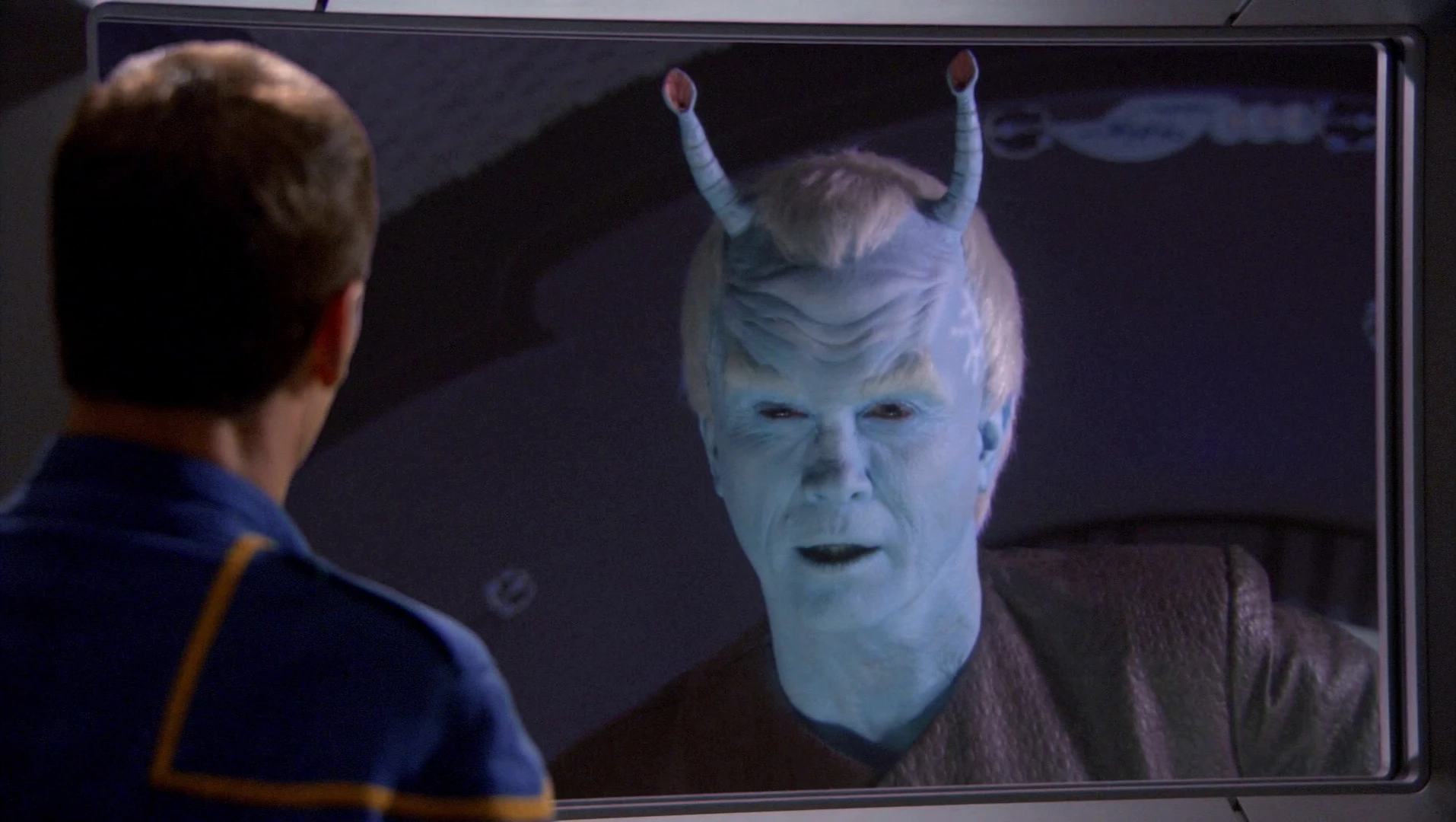
Hull Specifications LoggedThe Andorian shuttle was a compact shuttlecraft utilized by the Andorian Empire during the mid-22nd century. These small vessels were designed for various purposes, including transport and auxiliary operations, and were a standard component of larger Andorian starships. For instance, an Andorian battle cruiser was known to carry at least one of these craft within its shuttlebay, indicating their role in supporting fleet operations. **Class History** Throughout its active service in the 22nd century, the Andorian shuttle played a role in several notable incidents. In a holographic program set in 2161, the Andorian Commander Thy'lek Shran was depicted owning and piloting an Andorian shuttle. Shran himself admitted the craft was 'slow'. During this program, Shran piloted his shuttle to a rendezvous with the United Federation of Planets starship *Enterprise* (NX-01). After contacting the starship from his vessel, Shran's shuttle was brought aboard *Enterprise*. This docking procedure proved to be time-consuming, taking five hours, a delay that notably frustrated *Enterprise* Commander T'Pol. The Andorian shuttle also featured in a critical mission involving Captain Jonathan Archer and Thy'lek Shran. Following a mission where an away team from *Enterprise* assisted Shran in rescuing his daughter, Talla, from a gang of aliens on Rigel X, Archer arranged for Shran's Andorian shuttle to remain on *Enterprise*. This was intended to keep the shuttle safe until *Enterprise* was a sufficient distance from the alien gangsters, despite Shran's assertion that their ships were even slower than his own shuttle. However, the gangsters managed to catch up with *Enterprise* and board the vessel. Upon discovering Shran's shuttle still in the ship's launch bay, they realized that Archer's claim that Shran and Talla were no longer aboard was a lie. In the final draft script of the episode 'These Are The Voyages...', Thy'lek Shran's Andorian shuttle was specifically referred to as 'a small, civilian shuttle'.
- No armament data logged.
- No propulsion data logged.
 Classified
Andorian starship Class
Hull Specifications LoggedThis Andorian starship class represented a distinct type of armed vessel operated by the Andorians during the 24th century. Its design incorporated elements from existing Andorian starship architecture, specifically utilizing the robust space frame of the Andorian battle cruiser for its main body. A notable aesthetic and functional feature was the inclusion of a tail fin, a design element previously observed on the smaller Andorian cruiser class, suggesting a lineage or shared design philosophy across different Andorian vessel types. **Service History** Ships of this class were active in the 24th century. A specific vessel of this class was documented to be docked at Starbase 25 in the year 2381, as depicted in the episode 'An Embarrassment Of Dooplers'. Later in the same year, this Andorian starship was again present at Starbase 25 during a critical incident where Badgey connected his program to the Federation computer networks, subsequently seizing temporary control of every starship, space station, and planetary system within the quadrant, an event chronicled in the episode 'A Few Badgeys More'.
- No armament data logged.
- No propulsion data logged.
Andorian transport Class
Hull Specifications LoggedThe Andorian transport was a classification of starship operating under an Andorian registry, primarily utilized for the movement of cargo and passengers. These vessels were a common sight in various sectors, reflecting the Andorians' presence in interstellar commerce and travel. **Service History** Prior to the year 2369, an Andorian transport reported a minor power failure while navigating near the Denorios Belt. This incident was attributed to neutrino disturbances, making the Andorian transport one of twenty-three starships to report such phenomena within the Bajoran system. This event was documented in the Starfleet records related to the episode 'Emissary'. Later, in 2370, an Andorian transport facilitated interstellar travel for the Ferengi character Pel, who booked passage from the station Deep Space 9. This transaction and journey were depicted in the episode 'Rules of Acquisition', further illustrating the role of these transports in the broader galactic economy and travel network.
- No armament data logged.
- No propulsion data logged.
 Classified
Angelou class
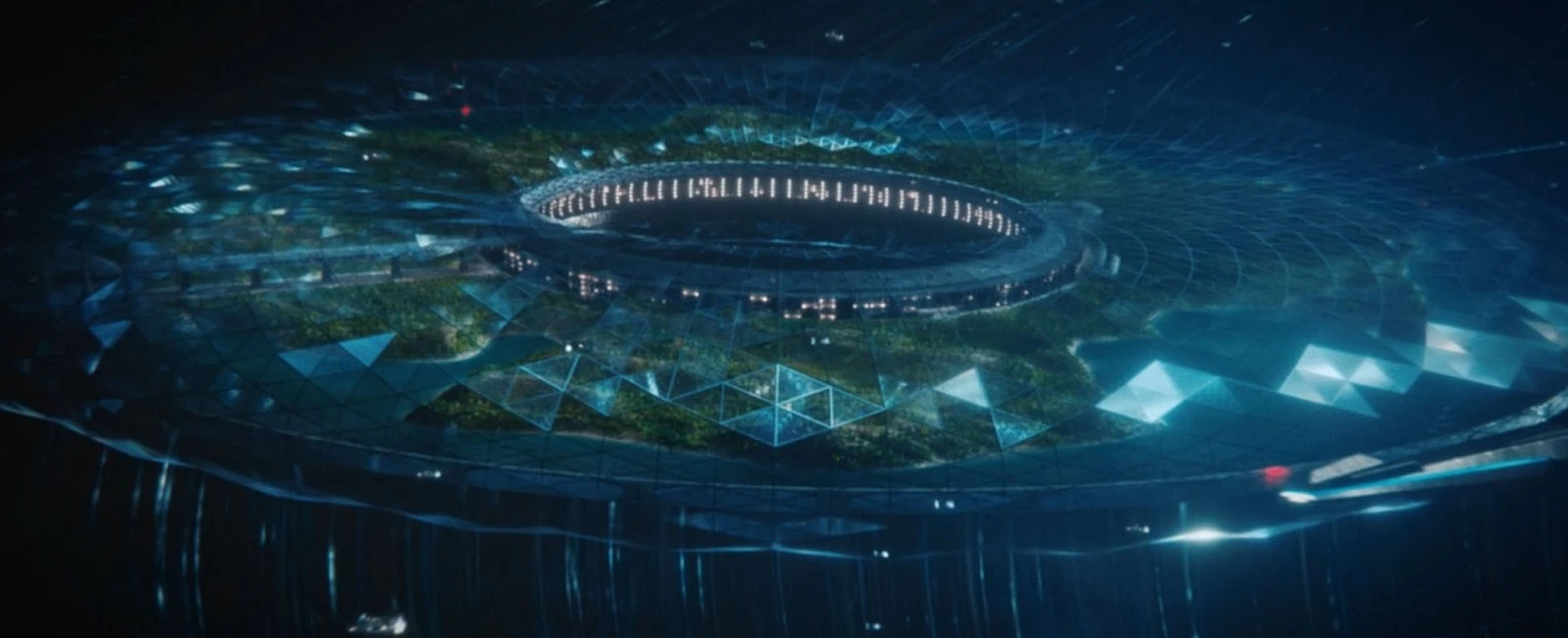
Hull Specifications LoggedThe Angelou-class was a distinctive type of Federation starship operated by Starfleet during the 31st and 32nd centuries. Its most notable design feature was a unique torus-shaped primary hull that enclosed and supported a complete rainforest ecosystem within a transparent exterior. This innovative design allowed for a living, breathing environment to be integrated directly into the starship's structure. The class was designed by Ryan Dening, and its name was presumably inspired by the poet Maya Angelou, though a specific ship, the USS Maathai (NCC-325023), was featured in concept art but not seen on screen. **Class History** Ships of the Angelou-class were active during a tumultuous period for the Federation. In 3069, several vessels of this class were tragically lost during The Burn, a catastrophic event that caused all starships with active warp cores to be destroyed when their dilithium became inert, leading to widespread antimatter explosions across the galaxy. Despite these losses, the class remained in service. By 3189, an Angelou-class starship was part of the vital Federation fleet 001 stationed at Federation Headquarters. The collective energy output of this fleet was crucial for sustaining a powerful distortion field that effectively concealed the headquarters' location from external threats. Upon first encountering the design, Ensign Sylvia Tilly of the USS Discovery expressed awe, exclaiming, 'That's a flying rainforest!' A few weeks later, during Osyraa's assault on Federation Headquarters, an Angelou-class vessel demonstrated its defensive capabilities when it was fired upon by the captured USS Discovery. Its transparent hull appeared to solidify, acting as a protective measure against the incoming attack.
- No armament data logged.
- No propulsion data logged.
 Runabout / Utility
Angosian escape pod Class
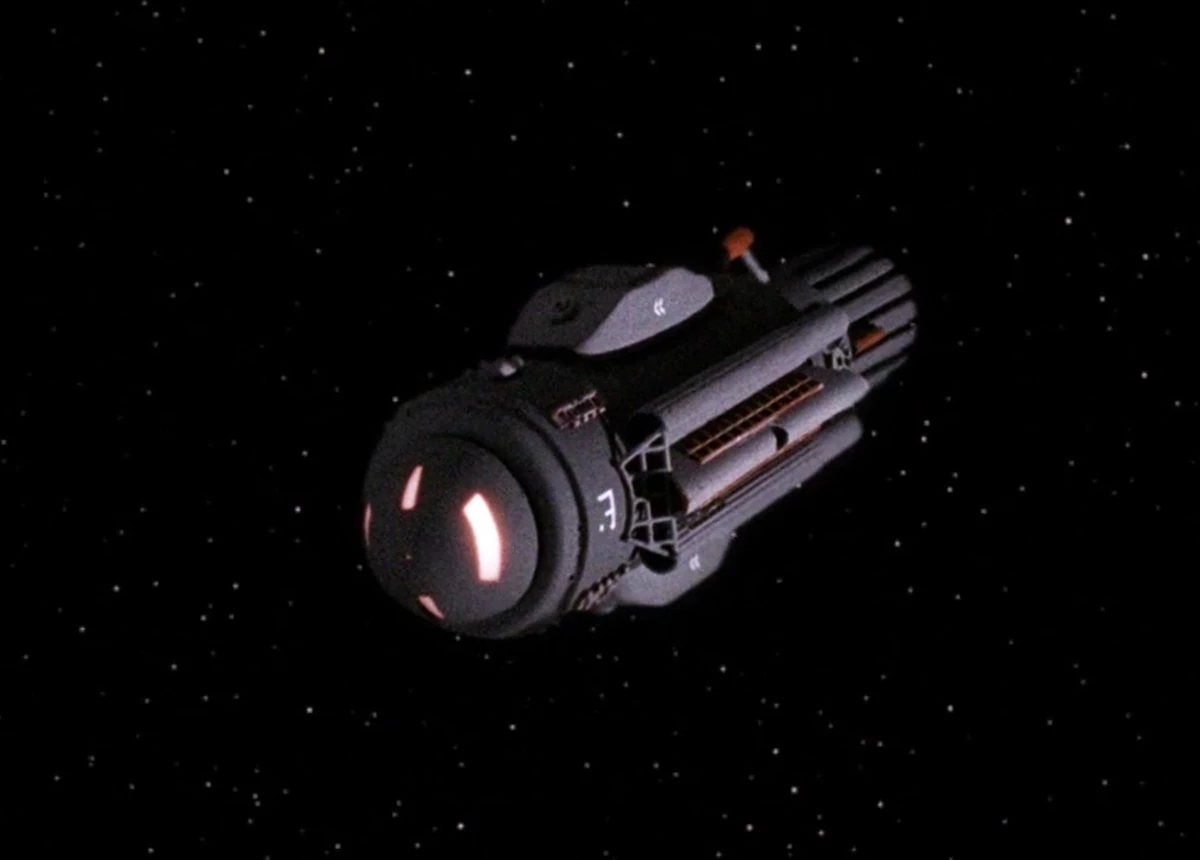
Hull Specifications LoggedThe Angosian escape pod was a specialized type of escape pod utilized by Angosian police shuttles. Its design was distinctly cylindrical, measuring approximately seven meters in length and three meters in diameter. These pods were engineered for emergency egress from their parent vessels, providing a temporary refuge for crew members in hazardous situations. **Class History** The Angosian escape pod gained notable attention in 2366 during an incident involving the USS Enterprise (NCC-1701-D) and the planet Angosia III. During this period, a former Angosian soldier named Roga Danar commandeered an Angosian police shuttle near the Lunar V penal colony. In an attempt to evade detection by the USS Enterprise (NCC-1701-D), Roga Danar skillfully piloted the shuttle, eventually separating its cockpit section from the main engine drive. Following this, he ejected the escape pod from the drive section, using it as a final means of evasion. However, his efforts were ultimately thwarted when the USS Enterprise (NCC-1701-D) successfully utilized its transporter system to beam him directly out of the escape pod and onto the starship. This event was documented in the Starfleet records as depicted in the episode 'The Hunted'.
- No armament data logged.
- No propulsion data logged.
 Transport / Freighter
Angosian police shuttle Class
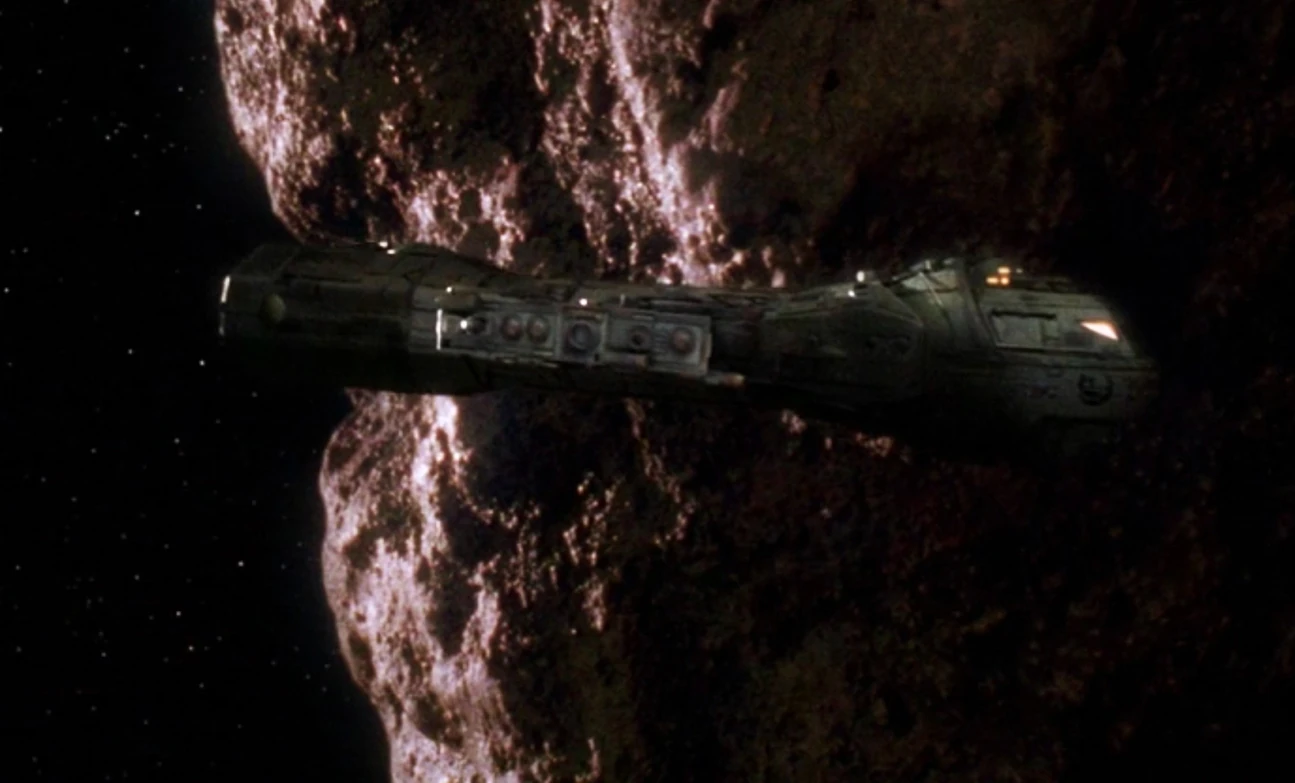
Hull Specifications LoggedThe Angosian police shuttle was a compact police vessel primarily utilized by the Angosians for the transport of prisoners. Its design featured a cockpit configured for two operators, alongside at least two additional compartments within its hull. A notable characteristic of this class was its lack of a warp drive, limiting its operational range to sublight speeds. For tactical flexibility and emergency situations, the shuttle was engineered with the capability to separate into two distinct modules: a cockpit module and a drive section. Furthermore, each vessel was equipped with at least one Angosian escape pod, ensuring crew survival in critical incidents. **Class History** Active during the 2360s, the Angosian police shuttle played a pivotal role in the events of 2366. During this year, a genetically-altered soldier named Roga Danar orchestrated an escape from the Lunar V penal colony, which orbited Angosia III, utilizing an Angosian transport vessel of this class. Despite the ship's inherent limitation of lacking a warp drive, Danar's exceptional piloting skills enabled him to skillfully evade the sensors of the USS Enterprise-D for a significant period. Later, another Angosian transport ship was instrumental in Danar's subsequent escape from the USS Enterprise-D itself, which he then used to liberate other prisoners from the Lunar V colony. These events were chronicled in the Starfleet record, specifically in the episode 'The Hunted'.
- No armament data logged.
- No propulsion data logged.

Ansel Adams
Class: Type 7 shuttlecraft- No armament data logged.
- • Deflector shield

Antares
Class: Antares class- No armament data logged.
- • Deflector shield
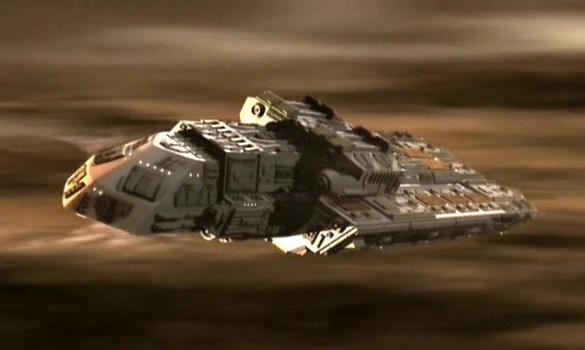 Transport / Freighter
Antares class
1 VesselThe Antares-class was a versatile starship design primarily classified as a cruiser and freighter, often serving as a bulk freighter or small ore carrier. Its design was notably distinct from Starfleet vessels, featuring a rectangular bridge layout rather than the typical circular pattern. The bridge was characterized by a central console in front of the viewscreen, often manned by the captain and chief engineer, and lacked a dedicated captain's chair on some vessels like the SS Xhosa. The interior design emphasized functionality over aesthetics, reflecting its role as a 'working' ship, with older vessels featuring blinking lights on control panels reminiscent of Star Trek: The Original Series display graphics, as seen on the USS Enterprise (NCC-1701). Technically, Antares-class vessels were warp-capable, equipped with standard deflector shields for protection, and some were known to utilize antiquated Mark V transporters. They also incorporated escape pods for crew safety. These ships were designed for hauling a diverse range of cargo, including deuridium, inertium ore, unstable biomatter, duridium ore, dilithium, medical supplies, and other materials specified by contract. Construction of some Antares-class ships took place at the Luna Shipyards. The class's designation was a homage to the SS Antares (NCC-501), a vessel referenced in the Star Trek: The Original Series episode 'Charlie X'. The class had an approximate length of 270 meters. **Service History** The Antares-class enjoyed a remarkably long service life, operating from as early as the mid-22nd century, during the era of United Earth, and continuing through the mid-24th century, with some vessels still active into the 2380s. These ships were widely operated by various entities, including civilians, the United Federation of Planets, the Petarians, the Talarian Republic, the Coalition of Madena, and the Ornarans. The class was visually identified as a 'Petarian bulk freighter' by Gwyn in the Star Trek: Prodigy episode 'Supernova, Part 1'. Several notable ships of the Antares-class include the SS Arcos, which was destroyed in 2367, and the SS Norkova, which was active in 2369. The bridge set for the SS Norkova was later redressed for the USS Prometheus (NCC-71201) bridge in the Star Trek: Deep Space Nine episode 'Second Sight'. Another prominent vessel was the SS Xhosa, operated by Kasidy Yates Interstellar Freights, which was impounded in 2372. Script notes from the Star Trek: Deep Space Nine episode 'Family Business' described the SS Xhosa as an 'independent interstellar freighter'. Its bridge set, built on Paramount Stage 18, incorporated elements from the USS Saratoga (NCC-31911) bridge. The SS Batris, a Talarian Republic freighter, was destroyed in 2364, and its studio model was reused for other Antares-class ships. The SS Erstwhile, a Class 9 cargo vessel operated by the Coalition of Madena, was active in 2384. An unnamed Ornaran freighter of this class was destroyed in 2364. In an alternate timeline depicted in the Star Trek: Enterprise episode 'Twilight', an Antares-class vessel was part of an Earth convoy destined to settle on Ceti Alpha V in 2165. The Antares-class made numerous appearances across various Star Trek series, including Star Trek: The Next Generation episodes 'Legacy' and 'Unification I', Star Trek: Deep Space Nine episodes 'The Passenger', 'The Way of the Warrior', 'The Visitor', 'Sons of Mogh', 'For the Cause', and 'Profit and Lace', Star Trek: Enterprise episodes 'Twilight' and 'Demons', the Star Trek: Prodigy episodes 'Supernova, Part 1' and 'Supernova, Part 2', and the Star Trek: Lower Decks episode 'An Embarrassment Of Dooplers', and the Star Trek: Voyager episode 'Author, Author'.
- No armament data logged.
- • Deflector shield
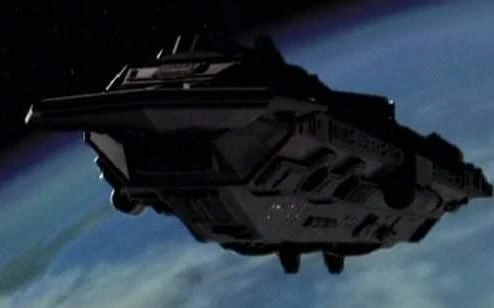 Transport / Freighter
Antares class (carrier)
Hull Specifications LoggedThe Antares-class was a versatile type of spacecraft primarily utilized by the Bajorans and the Cardassians. These vessels served multiple roles, functioning as transports, freighters, and even low-capability warships during and after the Occupation of Bajor. The specifications of Antares-class vessels varied significantly. For instance, the carrier belonging to Orta was described as 'old and obsolete,' limited to half impulse speed and lacking visual communication capabilities, though it possessed the ability to land on a planetary surface. Similarly, ships operated by the Bajoran Militia were also restricted to impulse speeds. However, not all Antares-class transports were so limited; some variants were warp-capable and came equipped with advanced amenities such as multiple holodecks and lifeboats. Their passenger quarters also varied in size and configuration, with double accommodation featuring two beds, tables, chairs, and computer terminals, indicating a range of comfort and technological integration across the class. **Class History** The Antares-class played a significant role in the daily life of the Bajoran people, particularly in their interactions with Deep Space 9. Bajoran Antares-class carriers frequently made routine stops at the station, transporting a diverse array of passengers including Bajoran civilians, government officials, Vedeks, and on occasion, even the Kai. Young individuals like Jake Sisko and Nog were known to enjoy observing the Bajoran girls disembarking from these vessels at Deep Space 9's airlocks. Notable vessels of this class include Orta's carrier and Yates' freighter. The Antares-class has been featured in several Star Trek: Deep Space Nine episodes, including 'A Man Alone,' 'Shadowplay,' 'The Collaborator,' 'Rules of Engagement,' 'The Reckoning,' 'Shadows and Symbols,' and 'Take Me Out to the Holosuite,' as well as the Star Trek: The Next Generation episode 'Ensign Ro.'
- No armament data logged.
- No propulsion data logged.
 Transport / Freighter
Antares class (Corvallen)
Hull Specifications LoggedThe Antares-class freighter was a venerable, warp-capable vessel primarily utilized by the Corvallen species throughout the 24th century. These freighters were characterized by their robust, albeit older, design, capable of interstellar travel. A minimal crew complement of 18 was sufficient for their operation and maintenance. However, the class was noted for its limited range and speed, with a maximum travel capability of no more than fifteen light-years in a single day, indicating its suitability for regional or short-haul cargo transport rather than extensive deep-space missions. **Service History** During its active service in the 24th century, the Antares-class played a role in the Corvallen's logistical operations. A notable incident involving an Antares-class freighter occurred in 2369, as documented in the Starfleet record 'Face Of The Enemy'. In this event, a Corvallen freighter was scheduled to rendezvous with the Romulan Warbird IRW Khazara in the Kaleb sector. The purpose of this meeting was to transfer critical cargo that the Corvallen vessel was then intended to transport to the Federation planet Draken IV. However, the Romulan Warbird IRW Khazara subsequently destroyed the Corvallen freighter, compelling the Romulans to seek an alternative method for transferring their cargo into Federation space.
- No armament data logged.
- No propulsion data logged.
 Transport / Freighter
Antares type
Hull Specifications LoggedThe Antares-type was a small, multipurpose starship class developed by the United Federation of Planets and operated by Starfleet during the 23rd century. Identified variously as a survey ship, transport, cargo vessel, science-probe vessel, ore freighter, or grain ship, its design prioritized cargo capacity over combat capabilities. The vessel was constructed on a horizontal spaceframe, featuring the standard two-nacelle configuration for warp propulsion. Jutting above and below the main spaceframe were the ship's cargo holds, with the largest located below the axis of the vessel. The forward living section, designed for a standard crew complement of twenty, and the bridge were situated in the foremost position of the vessel. A deflector dish was centrally located between the bottom of the forward living section and the bottom of the ship. While smaller in overall size than a Constitution-class starship, the Antares-type possessed significantly larger cargo holds, making it highly efficient for its intended roles. A notable design feature was its easy convertibility to automation; the forward bridge section could be removed, transforming the vessel into an essentially flying cargo hold, ideal for unmanned transport missions. **Class History** Ships of the Antares-type were actively in service during the 2260s and were listed in the Starfleet Registry. In 2266, the USS Enterprise (NCC-1701) rendezvoused with the USS Antares (NCC-501). The USS Antares was subsequently destroyed by a warp core breach, caused by its former passenger, Charlie Evans, who removed a previously warped baffle plate. The following year, in 2267, the USS Yorkshire (NCC-330) was recorded conducting business at Starbase 11. By 2268, the Antares-type was considered 'old-style' and many vessels of the class had been converted to robot ships for automated operations. That year, the USS Enterprise, under the control of the M-5 multitronic unit, inadvertently destroyed the unescorted automated USS Woden (NCC-325) while it was hauling ore near Alpha Carinae II. In 2269, the USS Enterprise was assigned to escort two automated grain ships, NCC-G1465 and NCC-61465, which were carrying a vital load of quintotriticale to Sherman's Planet to aid colonists experiencing crop loss and famine. During this mission, the USS Enterprise encountered the IKS Devisor, commanded by Captain Koloth. The IKS Devisor attacked, disabling NCC-G1465, whose cargo was then transferred to the USS Enterprise. The IKS Devisor later returned to attack NCC-61465, disabling its propulsion systems. The USS Enterprise subsequently recovered and towed NCC-61465 to Sherman's Planet. The class's long service life, even in automated form, is evidenced by the USS Cerritos encountering the wreckage of an Antares-type cargo ship in 2380, leading to a standoff with the Drookmani over its salvage. The USS Hermes (NCC-10376) was also listed as a sister ship of the Antares-type in technical manuals, though its specific role and active dates are less clear.
- No armament data logged.
- No propulsion data logged.
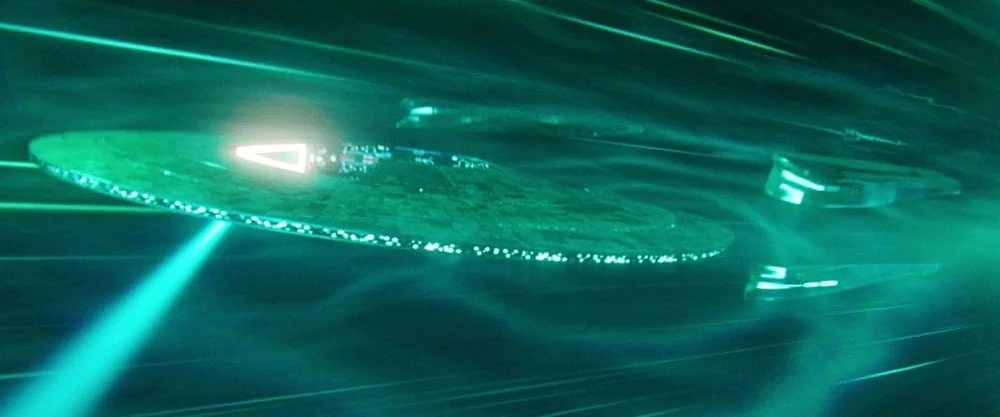 Classified
Antares type (32nd century)
Hull Specifications LoggedThe Antares type was a distinct class of Federation starship that saw service with Starfleet during the 32nd century. A defining characteristic of this class was its unique four-nacelle configuration, a design choice that set it apart from many other Starfleet vessels of its era. The underlying technology of the Antares type ships dated back approximately a century prior to their active service, originating from the period immediately following the cataclysmic event known as the Burn. **Class History** Operating primarily in the 32nd century, the Antares type played a role in Starfleet's operations during a challenging period for the United Federation of Planets. One notable vessel of this class, the USS Antares, was specifically identified as not being equipped with the advanced pathway drive system, a critical technology for warp travel in the post-Burn galaxy. The Antares type starships were depicted in Star Trek: Discovery, appearing in episodes such as 'Red Directive' and 'Under the Twin Moons'. The USS Antares was recorded as active in 3191.
- No armament data logged.
- No propulsion data logged.
 Runabout / Utility
Antares type escape pod
Hull Specifications LoggedThe Antares type escape pod was specifically designed as an emergency escape vehicle for use aboard Federation Antares-class freighters. These compact craft were engineered to facilitate the safe evacuation of a starship's crew during critical emergencies. A key technological feature integrated into these pods was the myographic scanner, a sophisticated device capable of monitoring the bio-electric signatures of its occupants. This system was crucial for tracking crew members in the event they became separated from the pod, enhancing recovery efforts. **Service History** Primarily associated with Antares-class freighters, the Antares type escape pod saw active service during the 2360s. A notable incident involving this type of escape pod occurred in 2366, as depicted in the Star Trek: The Next Generation episode 'Legacy'. The USS Arcos, an Antares-class freighter, was equipped with at least one such pod. During an emergency, the two-man crew of the USS Arcos utilized one of these escape pods to evacuate their vessel, successfully landing on the planet Turkana IV. The pod itself was described as a slender, three-meter-long craft, capable of sustaining its occupants during an emergency landing.
- No armament data logged.
- No propulsion data logged.
Antidean transport Class
Hull Specifications LoggedThe Antidean transport was a class of starship specifically designed and utilized by the Antideans for the purpose of transporting cargo and potentially passengers. While specific technical details regarding its construction, propulsion systems, or defensive capabilities are not extensively documented, its primary function as a transport vessel suggests a design optimized for cargo capacity and interstellar travel within Antidean space and beyond. **Service History** One notable instance of an Antidean transport's activity occurred in mid-2373. During this period, an Antidean transport was docked at Starfleet's Deep Space 9 space station. The crew of the Antidean transport sought to depart the station earlier than their scheduled departure time. This request led to a specific interaction involving Security Chief Odo, who approached Doctor Julian Bashir to request the issuance of a health certificate. This certificate was necessary to clear the transport's cargo from quarantine, allowing for its expedited departure from Deep Space 9. This event was documented in the Star Trek: Deep Space Nine episode 'Doctor Bashir, I Presume'. The class remained active throughout the 24th century, serving the logistical needs of the Antidean people.
- No armament data logged.
- No propulsion data logged.

Apollo 11
Class: Apollo program- No armament data logged.
- No propulsion data logged.
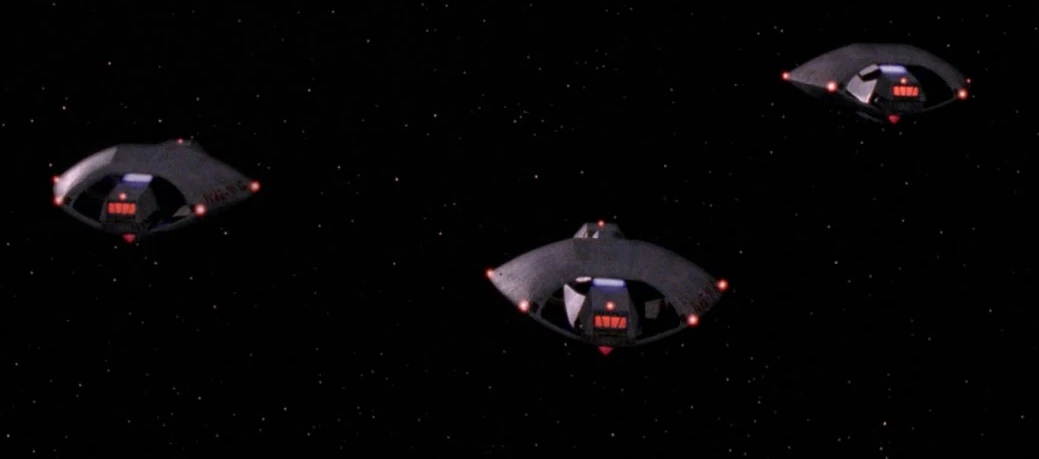 Explorer
Apollo class
5 VesselsThe Apollo-class was a versatile class of Federation starship that saw extensive service during the 24th century. Primarily operated by Starfleet for deep-space exploration missions, these vessels were active from the 2320s through the 2370s. Beyond Starfleet, the Apollo-class also found utility within the Vulcan National Merchant Fleet, where they served as freighters and transports, and were even appropriated by the Maquis for similar purposes. A distinctive feature of their construction was the partial use of dentarium alloy in their hull. The class name itself pays homage to the sun god Apollo from Earth's Greek mythology, as well as the historic Apollo 11 spacecraft that first carried Humans to Luna. **Design & Specifications** Designed by individuals such as Rick Sternbach, who created the studio model for the T'Pau, the Apollo-class incorporated advanced, and at times experimental, technologies. Notably, some vessels of this class were equipped with a conjectural annular warp drive, a unique propulsion system characterized by a large, hoop-shaped field generator that replaced conventional nacelles. These starships measured approximately 470 meters in length and were capable of achieving a maximum speed of warp factor 9.6. They were designed to accommodate a crew complement of around 650 individuals. For defensive capabilities, the Apollo-class was outfitted with graviton-based deflector shields, while its offensive armaments included particle beam weapons. **Service History & Notable Vessels** The Apollo-class has a rich and varied service history, marked by both routine operations and critical incidents. In 2364, the USS Ajax (NCC-11574), an Apollo-class vessel, received experimental warp drive upgrades from Kosinski, which reportedly led to a measurable increase in performance and engine efficiency. It was later speculated that Kosinski's enhancements might have simply optimized existing inefficiencies within the ship's older engine systems, as observed in the Starfleet vessel USS Enterprise (NCC-1701-D) in the episode 'Where No One Has Gone Before'. A more somber chapter in the class's history occurred in 2368. Fragments from the navigational deflector array of a Vulcan transport of this class were discovered in the Hanolin asteroid belt, originating from a downed Ferengi cargo ship. Molecular pattern traces identified the vessel as the T'Pau (NSP-17938). This ship, along with two other Apollo-class vessels, was subsequently used by the Romulans as part of a deceptive 'peace' envoy to the planet Vulcan. These three vessels traveled from Romulus across the Romulan Neutral Zone at warp 1, secretly carrying over two thousand Romulan troops. Following the Federation's discovery of the Romulans' true intentions to invade Vulcan, the Romulan force attempted to retreat. During an attempted interception by the USS Enterprise (NCC-1701-D), a D'deridex-class Romulan Warbird destroyed all three Vulcan transports and their Romulan complements, as depicted in the episodes 'Unification I' and 'Unification II'. The class also played a role in the escalating conflict with the Maquis. In 2372, Starfleet Command ordered the transport of several CFI replicators to Cardassia aboard a Vulcan freighter, which was later revealed to be under Maquis control. The Maquis diverted the vessel and its cargo to the Demilitarized Zone, taking possession of the replicators. Michael Eddington, a former Starfleet officer, notably left his Starfleet career to join the Maquis full-time aboard this Vulcan freighter, as seen in the episode 'For the Cause'. Furthermore, an Apollo-class starship, the USS Gage (NCC-11672), was among the Starfleet vessels lost during the Battle of Wolf 359 against the Borg cube, having been ordered to attack alongside the USS Melbourne and the USS Kyushu in a scene cut from the episode 'Emissary'.
- No armament data logged.
- No propulsion data logged.
 Space Program
Apollo program Class
1 VesselThe Apollo program was a pivotal series of space missions conducted by the United States of America during the latter half of the 20th century. Utilizing several manned and unmanned Apollo spacecraft, these missions involved numerous astronauts and culminated in humanity's first successful landings on Luna, Earth's moon. The program significantly advanced human space exploration and laid foundational groundwork for future interstellar endeavors. **Mission History & Legacy** Between 1969 and 1972, the Apollo program achieved six successful manned missions to Luna, resulting in 12 astronauts setting foot on the lunar surface. Six of these astronauts utilized electric-powered lunar rovers for surface exploration, as referenced in the episode 'Two of One'. The program's enduring legacy was evident in 2024, when displays and artifacts related to the Apollo Program, including a lunar rover, a space suit, a model of the Command/Service Module, and pictures of the Apollo 11 astronauts, were featured at a gala held for the astronauts of the Europa Mission, also seen in 'Two of One'. In 2254, the Talosians, while reviewing the library computer files on board the USS Enterprise (NCC-1701), scanned two partial diagrams of the Apollo mission profile, as depicted in 'The Cage'. One diagram illustrated the launch of the Apollo spacecraft, including the initial maneuvering and repositioning of the Apollo Command/Service Module (CSM) with the Apollo Lunar Module (LM), as well as the Command/Service Module's return to Earth's orbit and the Command Module's landing on Earth. The second diagram detailed the arrival of the CSM/LM at Luna, followed by the Lunar Module's landing on the moon's surface. Later, in 2269, James T. Kirk referenced the Apollo 11 mission during a discussion with Sargon in 'Return to Tomorrow', emphasizing humanity's drive for exploration by asking, 'Do you wish that the first Apollo mission hadn't reached the moon or that we hadn't gone on to Mars or the nearest star?' The program's cultural impact was further highlighted in the 2140s, when mission patches and insignia from Apollo 1, Apollo 7, and Apollo 8 were displayed in the 602 Club, as shown in 'First Flight'. **Influence on Starfleet** The Apollo program's influence extended into the formation of Starfleet traditions. Starfleet Academy's motto, 'Ex Astris, Scientia', is directly based on the Apollo 13 motto, 'Ex Luna, Scientia'. Furthermore, the original mission patch for Colonel Stephen G. Richey's Charybdis mission was an Apollo 17 patch, bearing the names of astronauts Cernan, Evans, and Schmitt. Although the 'Apollo' designation was removed, the Roman numerals 'XVII' remained until a redesign for the TNG Season 2 Blu-ray remastered release of 'The Royale' removed both the numerals and the astronaut names.
- No armament data logged.
- No propulsion data logged.

Apollo spacecraft
Class: Apollo spacecraft- No armament data logged.
- No propulsion data logged.
Space Capsule/Lunar Module
Apollo spacecraft Class
1 VesselThe Apollo spacecraft was a pivotal 20th century Earth spacecraft, developed and operated by the United States of America during the 1960s and 1970s. Its primary mission within the Apollo program was to successfully place a human in orbit of Earth and Luna, culminating in several successful moon landings. Following the conclusion of lunar missions, the spacecraft was adapted to transport astronauts to the space station Skylab. **Design & Components** The Apollo spacecraft system consisted of three primary components, propelled into space by means of a powerful rocket. These components worked in concert to achieve its ambitious spaceflight objectives. The Apollo Command/Service Module, or CSM, served as the primary mode of transportation for shuttling astronauts between Earth and Luna, and later for transporting them to Skylab. The Command Module provided a pressurized compartment for the crew and essential mission equipment, while the Service Module housed the spacecraft's power systems and propulsion system. The distinctive design of the Command/Service Module was featured prominently in the assignment patches for Apollo 1, Apollo 7, Apollo 9, Apollo 10, the Skylab program, and Skylab II. Its iconic shape was also seen in the Star Trek: First Contact and Star Trek: Enterprise opening credits. The Apollo Lunar Module, or LM, was a specialized two-person landing craft designed to transport crew members to and from the surface of the moon. It was attached to the Command/Service Module during transit and detached for lunar descent and ascent. Lunar Modules were first deployed during the Apollo 9 mission. Like the CSM, the Lunar Module's design was incorporated into the assignment patches for Apollo 9 and Apollo 10. The ascent and descent stages of the module carried fuel tanks filled with Aerozine 50. **Legacy in Starfleet History** The Apollo spacecraft holds a significant place in the historical records of Starfleet and the United Federation of Planets. In 2254, the Talosians demonstrated their advanced scanning capabilities by reviewing the library computer files of the USS Enterprise (NCC-1701), which included schematics of the Apollo Command Module interior and the Lunar Module, as depicted in 'The Cage'. Models of the Apollo spacecraft components have been observed in various contexts throughout Starfleet history. In 2143, Commodore Maxwell Forrest kept a model of the Apollo Command/Service Module in his office at Starfleet Command, as seen in 'First Flight'. Later, in 2368, Wesley Crusher had a model of the Apollo Command/Service Module displayed in his quarters at Starfleet Academy, as shown in 'The First Duty'. Even earlier, in the year 2000, Shannon O'Donnel had a model of the Apollo Lunar Module suspended from the rear-view mirror of her Ford LTD Country Squire in '11:59'. Furthermore, in an illusion created by Barash for William T. Riker, Riker, who was the captain of the USS Enterprise (NCC-1701-D), had a model of the Apollo Lunar Lander in his ready room, as depicted in 'Future Imperfect'.
- No armament data logged.
- No propulsion data logged.
 Runabout / Utility
Aqua-shuttle Class
Hull Specifications LoggedThe Aqua-shuttle was a highly versatile Federation shuttlecraft designed for multi-environment operation. Its primary function was to facilitate travel through space, planetary atmospheres, across water surfaces like a boat, and as a fully submersible vessel akin to a submarine. Early design descriptions from the first draft of 'The Ambergris Element' script characterized it as 'shaped like a gleaming projectile; its cockpit rises slightly above the mid-section of the projectile and is encased in a thick, transparent material, which gives its occupants a view in all directions.' When submerged, it was described as resembling 'a huge, gleaming, silver fish with a glass enclosed hump instead of a dorsal fin.' The interior of the Aqua-shuttle was compact and sturdy, featuring an instrument panel, a built-in tricorder, and a small scanner. Occupants would strap themselves into 'indentation seats' built into the bulkhead, designed to perfectly fit the Human body and offer complete support and protection during activation and landing. For defensive and utility purposes, the Aqua-shuttle was lightly armed with dual forward phaser emitters and an additional aft emitter, all powered by an internal power pack. Dialogue from the initial script of 'The Ambergris Element' highlighted early Starfleet discussions regarding the craft's capabilities, with Engineer Montgomery Scott expressing skepticism about its 'flimsy contraption' appearance, Doctor Leonard McCoy questioning his trust in Starfleet Command, Captain James T. Kirk endorsing its perfect test record, and Science Officer Spock confirming its suitability for both space and water travel, despite Scott's comparison to a 'Martian vapor-bubble'. **Class History** The Aqua-shuttle class was primarily stowed aboard Constitution-class starships during the late 2260s, serving as an essential auxiliary craft for diverse mission profiles. A notable example of this class was the Aqua-shuttle designated NCC-1701\5A, which was assigned to the USS Enterprise (NCC-1701). This particular shuttle was deployed during a critical mission and was subsequently destroyed in 2269, an event documented in the Starfleet records from 'The Ambergris Element'. The class proved invaluable for missions requiring deep-sea exploration or operations in aquatic environments where standard shuttlecraft were unsuitable.
- • Phase (Qty: 3)
- No propulsion data logged.
Aquarius class
Hull Specifications LoggedThe Aquarius-class is a unique Federation starship class designed primarily as an auxiliary escort vessel. Its most distinctive feature is its intended integration with larger starships, specifically the Odyssey-class. These vessels are engineered to be embedded directly within the aft section of an Odyssey-class starship, serving as a deployable component to augment the larger vessel's tactical capabilities or provide independent escort functions when detached. **Class History** The Aquarius-class was active during the 24th and 25th centuries, operating under the command of Starfleet. A notable appearance of an Aquarius-class vessel occurred during the Frontier Day celebration in 2401. On this occasion, an Aquarius-class starship was observed attached to the USS Enterprise (NCC-1701-F), an Odyssey-class starship, demonstrating its operational role as an integrated escort component. This event was depicted in the episode 'Võx'.
- No armament data logged.
- No propulsion data logged.

Archon
Class: Unknown- No armament data logged.
- No propulsion data logged.
 Transport / Freighter
Arctic One type
Hull Specifications LoggedThe Arctic One type was a class of transport starships primarily operated by the Earth Sciences Institute during the 2150s. These vessels were designed for various scientific and logistical missions, emphasizing utility over combat capabilities. They possessed a maximum speed of Warp 1.4, allowing for interstellar travel, albeit at a relatively modest pace compared to contemporary Starfleet vessels. Defensively, the Arctic One type was equipped with polarized hull plating, a common defensive system for United Earth starships of that era, providing a measure of protection against energy attacks and environmental hazards. Notably, these transports were not outfitted with any offensive armaments, reflecting their non-military role within the Earth Sciences Institute's fleet. **Class History** One prominent vessel of this class, the starship *Arctic One*, gained notoriety in 2153 when it was deployed for an exploration mission to the Arctic Circle on Earth. This particular ship was specially outfitted with skis to facilitate landings in snowy conditions. During its mission, the *Arctic One* and its crew encountered and were subsequently assimilated by reanimated Borg corpses, an event chronicled in the Star Trek: Enterprise episode 'Regeneration'. In early 2154, three additional *Arctic One* type vessels were observed as part of a large Earth/Vulcan flotilla. This fleet had gathered in the Sol system to welcome the *Enterprise* (NX-01) upon its return from the Delphic Expanse, as depicted in the Star Trek: Enterprise episode 'Storm Front, Part II'. The presence of these transports in such a significant diplomatic and celebratory event underscored their continued utility within United Earth's broader space operations. Furthermore, in an alternate 2156 timeline, two transports of the Arctic One type were part of a desperate fugitive fleet. This fleet was en route to Ceti Alpha V following the devastating destruction of Earth at the hands of the Xindi, an event explored in the Star Trek: Enterprise episode 'Twilight'.
- No armament data logged.
- • Warp facto
- • Polarized hull plating
 Runabout / Utility
Ardanan shuttle Class
Hull Specifications LoggedThe Ardanan shuttle was a specific type of shuttlecraft utilized by the Ardanans. These vessels were in active service prior to the mid-22nd century, indicating their use during the early years of interstellar exploration and contact for the United Federation of Planets and its precursors. **Service History** While specific details of its general service history are limited, components from an old Ardanan shuttle played a crucial role in a significant incident during the 22nd century. Power relays, originally from an Ardanan shuttle, were repurposed and connected to a bio-pod aboard a Retellian freighter. This bio-pod was used by the kidnappers, Goff and Plinn, to keep First Monarch Kaitaama in stasis. During the events depicted in the Star Trek: Enterprise episode 'Precious Cargo', Commander Charles Tucker III attempted to repair these relays after they began to malfunction, as they were not designed to handle the high current required for the bio-pod's operation.
- No armament data logged.
- No propulsion data logged.
 Classified
Areore ship (large) Class
Hull Specifications LoggedThe Areore ship (large) was a formidable starship utilized by the ancient Areore during their interstellar wars. Its design bore a strong resemblance to the more common, smaller Areore ship, but it distinguished itself with a significantly more powerful version of the energy weapon found on its smaller counterpart. A notable engineering feature of this class was its capability to land on a planetary surface, providing tactical flexibility for its operators. **Class History** Following their decision to revert to a pre-industrial lifestyle, the ancient Areore abandoned these large starships, along with their smaller counterparts, in underground caves on their homeworld of Areolus. These vessels remained dormant for centuries until 2381, when Rawda, an Areore villager, revealed their existence to Peanut Hamper. Secretly, Peanut Hamper invited Drookmani scavengers to retrieve these ships as part of her elaborate plan to redeem herself to Starfleet. A Drookmani ship subsequently arrived and began extracting the ancient vessels from the ground using a tractor beam. After Peanut Hamper successfully destroyed the Drookmani ship from within, the enraged Drookmani beamed to a smaller Areore ship they had already excavated. They then launched an attack on the Areore village and the USS Cerritos, which was orbiting above. With his village engulfed in flames and the USS Cerritos outmatched by the reactivated smaller Areore ship, Rawda took decisive action. He assumed control of one of the larger Areore ships, reactivating its powerful energy weapon, and used it to shoot down the attacking Drookmani vessel. Following this pivotal victory, Rawda landed the large Areore ship and declared to his people that they would henceforth defend their way of life without fear. This event was chronicled in the Starfleet record, 'A Mathematically Perfect Redemption'.
- • Directed energy weapo
- No propulsion data logged.
 Ground Vehicle
Argo type ground vehicle
Hull Specifications LoggedThe Argo-type ground vehicle was a robust and versatile all-terrain vehicle primarily utilized by Starfleet for away missions during the late 24th century. Designed for rugged planetary exploration and tactical deployment, it became a standard complement aboard various Starfleet starship classes. **Design & Development** The Argo-type ground vehicle featured special off-road tires and a soft suspension system, enabling it to maintain excellent grip and maneuverability on challenging terrains such as rocky or sandy surfaces. Its construction incorporated a highly flexible, yet strong, tubular framework, allowing it to withstand significant bumps and impacts with minimal damage, even at high velocities. The vehicle was driven by a steering wheel and equipped with a dashboard-mounted display monitor that included a scanner and a remote control device. This remote control allowed for the complete launch and operation of an Argo-type shuttlecraft directly from the ground vehicle, if required. Interior storage spaces were provided, including one between the two front passenger seats and a larger area at the rear, which could also serve as a cargo bay for hauling supply crates. For situations demanding vehicular combat, the Argo-type ground vehicle could be optionally outfitted with a high-power phaser cannon, mounted at the rear and operated by the rear passenger. The design of the Argo-type ground vehicle was spearheaded by John Eaves, who researched various four-wheel-drive vehicles, eventually drawing inspiration from the Ford Pro Truck. Eaves' design sketches, sometimes referred to as the 'Argo assault/offroad vehicle,' 'Federation attack jeep,' or 'Enterprise offroad vehicle,' served as the template. The final prop was constructed by prop master Gerald B. Moss and special effects coordinator Terry Frazee, built upon a Ford Pro Truck chassis that had been modified by Ivan Stewart of the Protrucks Racing Organization. **Service History** The Argo-type ground vehicle was first introduced around 2379 aboard the USS Enterprise (NCC-1701-E), as depicted in Star Trek Nemesis. At the time of its initial deployment, around stardate 56844, the vehicle was still considered relatively untested. However, by 2380, the following year, the Argo-type ground vehicle had become a standard component of starship complements. It was notably utilized by the USS Cerritos during second contact missions, as seen in the Star Trek: Lower Decks episode 'Second Contact.' Furthermore, at least eighteen of these vehicles were confirmed to be aboard the USS Vancouver, as indicated in a Master Systems Display in the Star Trek: Lower Decks episode 'Cupid's Errant Arrow.' Its active service spanned the 2370s and 2380s, proving its utility across various Starfleet operations. **Stowage & Deployment** These versatile ground vehicles were a standard complement stowed aboard several prominent Starfleet starship classes, including the Sovereign-class, California-class, and Parliament-class starships. For deployment, they could be landed on planetary surfaces directly from specialized shuttlecraft, such as the Argo-type shuttlecraft and Type 6A shuttlecraft, facilitating rapid deployment during away missions.
- • Phaser canno (Qty: optional)
- No propulsion data logged.
 Escort / Warship
Arkonian military vessel Class
Hull Specifications LoggedAn Arkonian military vessel was a classification of starship specifically designed for combat and defense, serving as a primary component of the Arkonian military's fleet. These vessels were equipped with pulse-weapons, indicating a focus on direct energy projection for offensive capabilities. While specific design parameters beyond armament are not extensively detailed, their designation as 'military vessels' suggests robust construction and tactical systems tailored for interstellar conflict within Arkonian space. **Class History** These military vessels were actively utilized by the Arkonian military during the mid-22nd century. A notable encounter involving this class occurred in 2152 when the USS Enterprise (NX-01), under the command of Jonathan Archer, inadvertently traveled into Arkonian space. This incident, depicted in the episode 'Dawn', brought the USS Enterprise (NX-01) into direct contact with an Arkonian military vessel, highlighting the Arkonian military's presence and defensive posture within their territory during that era.
- • Pulse-weapo
- No propulsion data logged.
 Scout / Patrol
Arkonian patrol ship Class
Hull Specifications LoggedThe Arkonian patrol ship was a distinct class of patrol vessel employed by the Arkonian military during the 22nd century. These ships were characterized by their compact, one-manned design, indicating a high degree of automation or specialized pilot training. Tactically, they were noted for their superior capabilities when compared to contemporary 22nd century Earth Starfleet shuttlepods, demonstrating a significant technological advantage in their operational sphere. **Service History** One notable incident involving an Arkonian patrol ship occurred in 2152. An Arkonian vessel, piloted by Zho'Kaan, violently encountered Earth Starfleet's Shuttlepod 1 after the latter inadvertently trespassed into Arkonian space. The Arkonian craft engaged Shuttlepod 1 with its pulse-weapons, causing the Earth Starfleet vessel to crash-land on a nearby moon. The Arkonian patrol ship itself also crashed on the same moon shortly thereafter. This encounter was documented in the Star Trek: Enterprise episode 'Dawn'.
- • Pulse-weapo
- No propulsion data logged.
 N/A (Information pertains to a character, not a starship class)
Armstrong Class
1 VesselThis dossier, titled 'Armstrong', details the service history and biographical information of Ensign Armstrong, a Human Starfleet security officer. It does not contain any information pertaining to a starship class named 'Armstrong'. Therefore, a comprehensive design breakdown or technical specifications for a starship class cannot be extracted from the provided source material. The information below pertains solely to the character, Ensign Armstrong, and is presented within the requested JSON structure for a starship class, with appropriate fields marked as 'N/A' where starship-specific data is absent. **Character Service History** Ensign Armstrong served aboard two prominent Starfleet vessels: the USS Enterprise (NCC-1701-D) and later the USS Enterprise (NCC-1701-E), both under the command of Captain Jean-Luc Picard. His active service spanned from 2367 to 2373, during which he consistently held the rank of Ensign. In 2367, he was stationed on the bridge of the USS Enterprise (NCC-1701-D) when the ship encountered Junior's species and its descendant, Junior, as depicted in 'Galaxy's Child'. The following year, in 2368, Ensign Armstrong, who possessed a background in medicine, assisted Doctor Beverly Crusher in treating wounded colonists and crewmembers from the USS Denver in one of the USS Enterprise (NCC-1701-D)'s cargo bays during the events of 'Ethics'. He was also present during the transporter accident involving Ro Laren in 'The Next Phase' and passed William Riker and Deanna Troi on their way to the bridge in 'Time's Arrow'. Throughout 2369, Ensign Armstrong was frequently seen in a command-red uniform, indicating his role within the command division. He was observed in various locations, including passing Reginald Barclay in a transporter room ('Realm Of Fear'), chatting in front of Ten Forward on the way to Rekag-Seronia ('Man Of The People'), and passing Commander Riker after Riker's conversation with Amanda Rogers ('True Q'). He was among the crew evacuated to the Remmler Array due to a planned baryon sweep in 'Starship Mine' and served as a relief tactical officer on the bridge during a night shift, receiving orders from Commander Riker in 'Lessons'. He also had a drink in Ten Forward when Doctor Beverly Crusher brought Guinan a gift in 'Suspicions'. In 2370, Ensign Armstrong was part of the team searching for Data on a Borg planet in the Delta Quadrant during 'Descent, Part II'. He delivered new directives from the Federation Council to Captain Picard in the observation lounge, which limited Federation vessels to warp factor 5, as seen in 'Force of Nature'. He was treated in sickbay in 'The Pegasus' and later served as a brig guard for Commander Riker. He accompanied Diana Giddings, Russell, and Alfonse Pacelli to the Maranga IV outpost and watched a play at the Kot'baval Festival in 'Firstborn'. His service on the USS Enterprise (NCC-1701-D) concluded in 2371 when he was working in engineering during the attack by Lursa and B'Etor. He managed to escape engineering before the secondary hull exploded and the saucer section crash-landed on Veridian III during the Battle of Veridian III, as depicted in 'Star Trek Generations'. Following the destruction of the USS Enterprise (NCC-1701-D), Ensign Armstrong transferred to the USS Enterprise (NCC-1701-E). In 2373, he served as a tactical officer and operations officer, and later as a security officer guarding a jefferies tube access hatch to the bridge during the Borg incursion. He was among the officers who evacuated the USS Enterprise (NCC-1701-E) via escape pods when Captain Picard ordered the ship's auto-destruct sequence, as seen in 'Star Trek: First Contact'. Ensign Armstrong was portrayed by regular background actor David Keith Anderson, who also served as a stand-in for LeVar Burton and Anthony Montgomery.
- No armament data logged.
- No propulsion data logged.
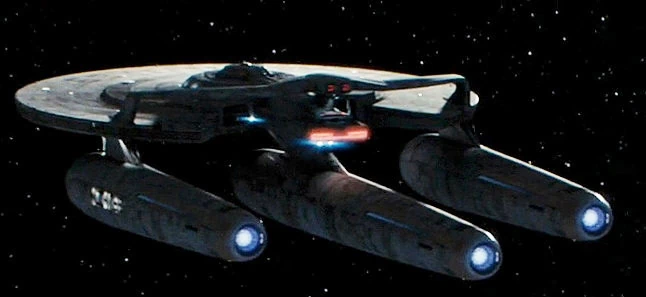 Classified
Armstrong type
Hull Specifications LoggedThe Armstrong-type was a distinctive starship class utilized by Starfleet in the mid-23rd century within an alternate reality. A unique characteristic for Starfleet vessels of this era was that some ships of this type were painted brown, contrasting with the more common gray hull colors. The design featured a primary hull from which two outboard nacelles and a single inboard nacelle extended, connected by swept pylons to the underside of the primary hull. Similar in concept to the Miranda-class starship found in the prime reality, an Armstrong-type starship was equipped with a prominent rollbar module. Extending from the trailing edge of the primary hull, and connected to the rollbar by smaller pylons, was a structure housing the impulse drive system. **Class History** The Armstrong-type saw active service with Starfleet during a tumultuous period in the 23rd century. In 2258, the USS Armstrong (NCC-1769), a vessel of this class, was involved in the combat operations that preceded the catastrophic destruction of Vulcan. The USS Armstrong (NCC-1769) was subsequently destroyed in that same year. A year later, in 2259, two Armstrong-type starships were observed at Starbase 1. One of these vessels featured a brown-colored hull, while the other displayed a more conventional gray hull. Their presence at Starbase 1 occurred prior to the USS Enterprise (NCC-1701 alternate reality)'s departure on its mission to Qo'noS. Later, in 2263, another Armstrong-type starship was documented docked behind the USS Enterprise (NCC-1701 alternate reality)'s berth at Starbase Yorktown, indicating the class's continued operational presence within Starfleet.
- No armament data logged.
- No propulsion data logged.
 Science Vessel
Assault class
Hull Specifications LoggedThe Assault-class was a versatile type of starship primarily utilized by the Hierarchy during the 24th century. These vessels were equipped with highly advanced short and long range sensors, including specialized micro-tunneling sensors, enabling them to gather extensive intelligence on other starships and environments. **Design & Specifications** The Assault-class design allowed for a dual classification depending on its specific mission profile. Some ships, like the one commanded by Loquar in 2377, were designated as survey ships, not primarily equipped for direct combat. However, other vessels of this class were configured as dedicated assault vessels, featuring significantly heavier armaments. These assault variants were capable of outgunning a Starfleet Intrepid-class starship, possessing heavy phaser armaments that could be set to fire on rotating frequencies. Furthermore, the assault ships incorporated advanced stealth technology and a cloaking field, allowing them to approach other vessels undetected. The Hierarchy developed several sophisticated attack patterns for these ships, such as a type 3 stealth assault and a type 4 assault, which was optimized based on energy consumption. Internally, Assault-class ships featured a unique crew structure where each member had a single duty and workstation, with limited social contacts and restricted access to the ship's various sections. A special communication system was also integrated, allowing the crew to consult directly with the actual Hierarchy. **Service History** Assault-class ships were routinely employed by the Hierarchy to survey passing vessels for potential future raids, often concealing themselves within nebulae. Their advanced sensors were crucial for assessing the tactical risk of engaging target ships and evaluating the potential loot. In 2376, three Assault-class vessels engaged the Federation starship USS Voyager. The Hierarchy ships eventually withdrew, intimidated by the perceived threat of a 'photonic cannon,' an imaginary weapon devised by The Doctor, as depicted in the episode 'Tinker Tenor Doctor Spy.' A year later, in 2377, Loquar's Assault-class survey ship was inadvertently pulled into an anomaly known as 'the Void.' With critical assistance from The Alliance, Loquar's ship was ultimately able to escape 'the Void,' an event chronicled in the episode 'The Void.'
- • Phase
- • Cloaking device
- • Deflector shield
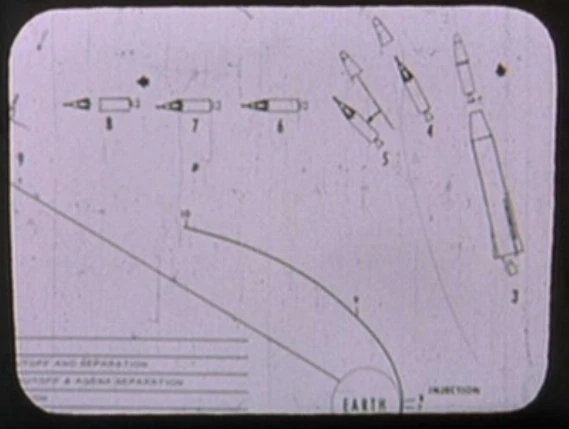 Rocket
Atlas-Agena Class
Hull Specifications LoggedThe Atlas-Agena was an American expendable rocket system that saw extensive service with NASA during the mid-20th century. This rocket system was composed of two primary stages: the Atlas, which served as the main booster, and the Agena B, which functioned as the secondary booster. Its design was specifically engineered for the demanding task of launching space probes into deep space, facilitating journeys to celestial bodies such as Luna, Venus, and Mars. The Atlas-Agena played a crucial role in several significant early space exploration initiatives, including the Mariner and Ranger programs, which provided invaluable data on Earth's neighboring planets and its moon. **Starfleet Registry & Historical Context** Despite its origins as a 20th-century Earth rocket, the Atlas-Agena holds a unique place within Starfleet's historical archives. Two black-and-white drawings depicting the Atlas-Agena were stored within the library computer of the USS Enterprise (NCC-1701). The first drawing illustrated a launch sequence for a Ranger space probe, showcasing the rocket's operational deployment. The second drawing provided detailed schematics of the Atlas-Agena rocket itself, alongside a Mariner space probe, offering insight into its technical configuration. These historical records were later retrieved by the Talosians when they accessed the starship's computers in 2254, as documented in the historical account 'The Cage'. This demonstrates Starfleet's commitment to preserving the history of early spaceflight, even for vessels predating the United Federation of Planets.
- No armament data logged.
- No propulsion data logged.
 Class 7 Vessel
Atlec vessel Class
Hull Specifications LoggedThe Atlec vessel was classified as a Class 7 interplanetary spacecraft, primarily utilized by the Atlec government during the mid-24th century. These vessels were notably less technologically advanced than contemporary Starfleet starships of the United Federation of Planets. Their primary armaments, described as lasers, were considered ineffective against the defensive capabilities of Federation starships. The bridge of the Atlec vessel was observed to largely consist of a redecorated battle bridge viewscreen, suggesting a practical, if not highly sophisticated, interior design. Early production scripts for the episode 'The Outrageous Okona' further described this vessel as a 'medium range combat craft of the Squadron Class.' **Service History** One notable encounter involving an Atlec vessel occurred in 2365. During this incident, an Atlec vessel, temporarily under the command of Debin, the ruler of the Atlec people, intercepted both the USS Enterprise (NCC-1701-D) and a Straleb security vessel. Debin demanded the transfer of Thadiun Okona to Atlec custody, alleging that Okona had impregnated his daughter, Yanar. This misunderstanding was subsequently resolved aboard the USS Enterprise (NCC-1701-D), highlighting the significant technological and diplomatic disparity between the Atlec government and the United Federation of Planets.
- No armament data logged.
- • Lase
Auxiliary space vessel Class
Hull Specifications LoggedAn auxiliary space vessel, also known as a support craft, landing craft, or launch vehicle, is a classification for any vehicle capable of spaceflight that is typically attached to a mother ship. These vessels are designed to assist in missions and environments that are unsuitable for larger starships. The term also encompasses small vessels that operate independently or those that may not be capable of interstellar space travel on their own. Among the most popular forms of auxiliary craft attached to starships and starbases are shuttlecraft. **Starfleet Context** Within Starfleet, training in auxiliary space vessels is a standard part of the curriculum. For instance, when Doctor Katherine Pulaski inquired about Lieutenant Commander Data's qualifications to pilot a shuttlecraft, Data confirmed that he 'had training in auxiliary space vessels at Starfleet Academy.' This exchange occurred during the events of the Star Trek: The Next Generation episode 'Unnatural Selection.' **Notable Types** Various types of auxiliary space vessels have been developed and utilized across Starfleet and other organizations. These include, but are not limited to, the Aeroshuttle, Argo shuttlecraft, Aqua-shuttle, Captain's yacht, Desert flyer, D'kyr type support craft, Escape pod, Fighter shuttle, Long range shuttle, Runabout, Scouter-gig, Shuttlecraft, Shuttlepod, and Waverider.
- No armament data logged.
- No propulsion data logged.
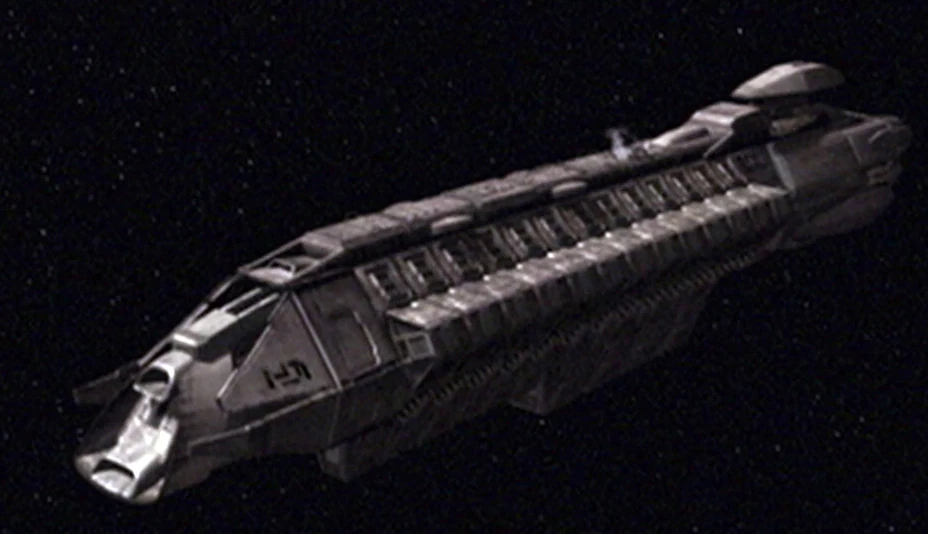 Transport / Freighter
Axanar cargo ship Class
Hull Specifications LoggedThe Axanar cargo ship was a robust type of freighter utilized by the Axanar civilization during the mid-22nd century. These vessels were designed for interstellar transport, capable of being crewed by as many as fifteen individuals. A typical Axanar cargo ship measured approximately ninety-two meters in length, featuring a durable hull constructed from tritanium and disilicon polymers. According to early design specifications, the ship possessed an 'extremely alien design,' characterized by braided conduits running along its hull, making it difficult to discern the bow from the stern. Its appearance was often described as 'rusted-out' and 'space-worn,' with interiors showing significant 'wear and tear,' including corroded metal, dents, and scoring on the bulkheads, indicative of extensive service. **Class History** One notable incident involving an Axanar cargo ship occurred in early 2151. Officers from the Starfleet starship Enterprise NX-01 discovered and boarded one such vessel after detecting its distress. Upon breaching the airlock, they found the entire crew had been murdered, their bodies drained of a vital substance known as triglobulin by unknown alien assailants. These aliens later returned in their own vessel, designated Triglobulin harvester's starship 001, and engaged the Enterprise NX-01. The confrontation was ultimately resolved when another Axanar vessel, an Axanar warship, intervened and destroyed the alien ship, saving the Enterprise NX-01. This event was chronicled in the Star Trek: Enterprise episode 'Fight or Flight'. The class remained active throughout the 22nd century, serving the Axanar in their logistical and trade operations.
- No armament data logged.
- No propulsion data logged.
 Escort / Warship
Axanar warship Class
Hull Specifications LoggedThe Axanar warship was a formidable class of vessel employed by the Axanar during the mid-22nd century. These warships were designed for combat, characterized by their robust construction and significant offensive capabilities. While specific dimensions are not detailed, script descriptions from the episode 'Fight or Flight' indicate that the Axanar warship was similar in design to the Axanar cargo ship but notably larger, suggesting an upscaled and militarized variant. It is assumed that the hull composition of these warships was similar to that of the Axanar cargo ship, comprising a durable combination of tritanium and disilicon polymers, providing substantial resilience in combat situations. **Armament & Capabilities** The primary offensive systems of the Axanar warship consisted of a minimum of three high-yield particle beam weapons. These weapons were powerful enough to swiftly neutralize hostile vessels, demonstrating the class's tactical superiority against contemporary threats. The design philosophy emphasized direct engagement and decisive action, making them a potent force in Axanar space during their active period. **Class History** One notable encounter involving an Axanar warship occurred in 2151, as documented in the Starfleet record 'Fight or Flight'. In this incident, an Axanar warship responded to a distress signal originating from an Axanar cargo ship. The signal had been sent by the crew of the Enterprise NX-01, who had discovered the cargo ship adrift and its crew deceased. Upon arrival, the Axanar warship found the Enterprise NX-01 under attack and on the verge of being boarded by an unidentified starship. After quickly ascertaining that the hostile vessel, and not the Enterprise NX-01, was responsible for the deaths of the Axanar cargo ship's crew, the warship intervened. It promptly freed the Enterprise NX-01 from a stabilizing beam emitted by the hostile craft and proceeded to destroy the unidentified starship with considerable ease, showcasing the Axanar warship's superior firepower and combat effectiveness. This event underscored the Axanar's readiness to protect their interests and the formidable nature of their naval assets.
- • Particle weapo
- No propulsion data logged.

B-24-CLN
Class: B-24-CLN type- No armament data logged.
- No propulsion data logged.
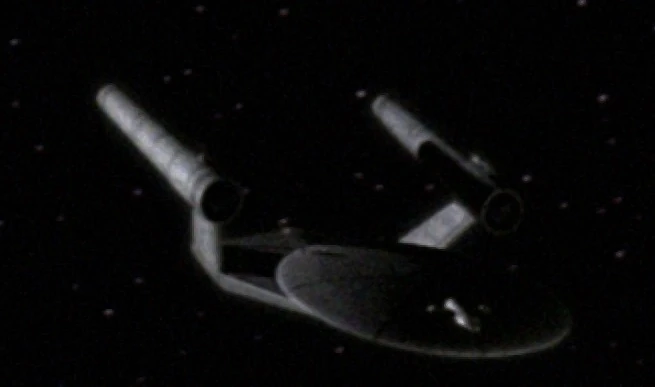 B-24-CLN type
B-24-CLN Class
Hull Specifications LoggedThe B-24-CLN type starship featured a typical Federation starship hull structure, comprising a saucer section primary hull and a triangular aft secondary hull. This secondary hull was equipped with two connected warp nacelles, and its aft end housed the ship's shuttlebay. The design of the B-24-CLN shares significant similarities with the mid-23rd century Crossfield-class, though with slight differentiations in its nacelles and pylons. A similar starship design was also utilized by the Federation during the 2280s, as seen in the film Star Trek III: The Search for Spock. The physical model used to represent the B-24-CLN was originally one of the refit USS Enterprise concepts designed by Ken Adam and Ralph McQuarrie for the unproduced film Star Trek: Planet of the Titans. While the designations were not clearly legible on screen in the episode 'Unification I', the study model, which first appeared in 'The Art of Star Trek', reveals specific markings. The top aft of the primary hull bore the registry 'β-24-CLN'. Both nacelle pylons prominently featured the number 4. The port nacelle displayed '4-CLN' on its outside, while the starboard nacelle showed '444' on its outside and the word 'International' on its inboard side. **Class History** The B-24-CLN was a Federation starship that had been decommissioned by 2368. By this year, the vessel was assigned to the Surplus Depot Z15, a facility orbiting Qualor II in Sector 213. This depot was responsible for storing the hulls of decommissioned vessels and salvaging useful components from them. During 2368, the USS Enterprise (NCC-1701-D) flew past the B-24-CLN while visiting the Surplus Depot Z15, an event depicted in the Star Trek: The Next Generation episode 'Unification I'.
- No armament data logged.
- No propulsion data logged.
B-52 Stratofortress Class
Hull Specifications LoggedThe B-52 Stratofortress was a strategic heavy bomber that served with the United States Air Force in the latter half of the 20th century. A visual representation of one of these aircraft was observed within the Statistical services division, a room situated in the headquarters of the US 498th Airbase Group in Omaha, Nebraska. This sighting occurred during the events of the Starfleet mission chronicled in the episode 'Tomorrow is Yesterday'. The specific color scheme of this particular bomber indicated its role as the 'mother ship' for an X-15 experimental aircraft.
- No armament data logged.
- No propulsion data logged.
 Starship
Ba'Neth ship Class
Hull Specifications LoggedThe Ba'Neth ship represents a class of starships employed by the Ba'Neth, a highly xenophobic species native to the Delta Quadrant. These vessels were first encountered by Starfleet in 2376. A defining characteristic of Ba'Neth ships is their advanced cloaking technology, which renders them exceptionally difficult to detect, even by sophisticated Starfleet sensors. This capability contributes significantly to the Ba'Neth's reclusive nature, to the extent that neighboring species, such as the Kesat, considered the Ba'Neth to be a myth until investigator Naroq provided definitive proof of their existence. Specific technical details regarding their propulsion, armaments, or internal layout remain largely unknown due to their elusive operational profile. **Service History** Ba'Neth ships maintained a low profile throughout the 24th century, primarily due to their effective cloaking systems. A notable incident occurred in 2376 when a Ba'Neth ship launched an unprovoked attack on the USS Voyager's shuttlecraft, the Delta Flyer. The Delta Flyer, commanded by Lieutenant Commander Tuvok, became the first known vessel to survive such an assault. During this encounter, a Ba'Neth intruder seriously injured Lieutenant Commander Tuvok. The USS Voyager, with the crucial assistance of Naroq and utilizing a photolitic converter, was eventually able to detect several Ba'Neth ships operating in close proximity to a space station. Through a tense negotiation, the USS Voyager traded the photolitic converter for vital information that ultimately led to Lieutenant Commander Tuvok's recovery. This event, chronicled in the episode "Riddles," provided Starfleet with its most significant direct interaction with the Ba'Neth and their starships.
- No armament data logged.
- No propulsion data logged.

Bajoran interceptor
Class: Bajoran interceptor- • Phase (Qty: 2)
- • Subligh
Escort / Warship
Bajoran interceptor Class
1 VesselBajoran interceptors, also known as Bajoran patrol ships, are a type of impulse ship primarily utilized by the Bajoran Militia. These vessels are lightly armed, typically equipped with two phaser emitters, and possess towing facilities. Commander Benjamin Sisko once expressed the belief that a Starfleet runabout could effectively handle a Bajoran patrol ship, indicating their relatively modest capabilities compared to Federation starships. Bajoran interceptors are commonly deployed in orbit of Bajor to intercept and protect the planet from unwelcome incoming vessels. Beyond their service with the Bajoran Militia, these ships were also adopted by the Maquis to protect their colonial interests within the Demilitarized Zone. **Service History** In 2370, two Bajoran interceptors, operated by Bajorans loyal to the Alliance for Global Unity, pursued a Bajoran raider piloted by Kira Nerys and Jadzia Dax. Their mission was to intercept the raider before Kira Nerys and Jadzia Dax could reach the Bajoran Provisional Government to expose the truth behind a coup. During the pursuit, the interceptors were forced into Bajor's atmosphere, where one of the ships was shot down by the raider. The second interceptor, however, successfully brought down its objective. This event was depicted in the Star Trek: Deep Space Nine episode 'The Siege'. Later that same year, General Hazar ordered the starship Interceptor One to prevent a Skrreean ship from landing on Bajor. Although General Hazar countermanded the order upon learning the vessel was piloted by a youth, Interceptor One's phasers inadvertently ignited leaking radiation, destroying the Skrreean ship and killing its three occupants, as seen in the Star Trek: Deep Space Nine episode 'Sanctuary'. In 2375, Bajoran interceptors were deployed in the Bajoran blockade of Derna against the Romulan Star Empire. Despite being severely outmatched by incoming D'deridex-class Warbirds, they participated in the engagement, as depicted in the Star Trek: Deep Space Nine episode 'Shadows and Symbols'. A graphic representation of the Bajoran interceptor was stored in the USS Defiant's library computer, appearing in episodes such as 'Favor the Bold', 'Sacrifice of Angels', and 'What You Leave Behind'. Notable named ships of this class include Interceptor One and Kira's interceptor, alongside numerous unnamed Bajoran interceptors. In the Star Trek: Deep Space Nine episode 'Preemptive Strike', a Maquis squadron, which included Bajoran interceptors, was initially believed to possess Federation warp signatures, though Commander William T. Riker later confirmed they were not Federation ships. **Technical Manual Discrepancy** The Star Trek: Deep Space Nine Technical Manual describes a 'Bajoran assault vessel' with significantly different specifications from the commonly depicted interceptor. These specifications include a length of 140.72 meters, a mass of 96,500 metric tonnes, accommodation for 12 flight crew and over 200 troops, and an armament of six or more phased polaron beam weapons. It also lists a production base at Bajoran Militia Secured Factory #5 and a power plant consisting of four coupled microfusion impulse systems. These details appear to describe a distinct class of vessel, or a misidentified one, rather than the lightly armed Bajoran interceptor frequently seen in service. **Apocryphal Naming** In the Star Trek Customizable Card Game, this class is referred to as the 'Perikian'-class. In the game Star Trek Online, it is named the 'Denorios'-class.
- • Phase (Qty: 2)
- • Subligh
 Lightship
Bajoran lightship Class
Hull Specifications LoggedThe Bajoran lightship was an early type of Bajoran spacecraft, notable for its unique solar sail propulsion system and partial construction from lumber. These vessels were designed for interstellar travel, utilizing light pressure from stars like the Bajoran sun to achieve propulsion, and were capable of semi-controlled warp jumps under specific conditions. **Design & Development** The lightship's design incorporated both metal, welded together, and wood, cut with a saber saw, giving it a distinctive appearance. Its primary propulsion came from a complement of five solar sails: two mainsails, two sprit sails (one on each side), and a jib protruding from the top. These sails provided a very large surface area relative to the ship's mass. Internally, lightships were not large, capable of being operated by a single individual, though more than two people would make the space cramped. The layout included one main area and an aft bathroom equipped with a zero-gravity toilet. Several viewports allowed observation of space and the sails, including a large main viewport at the bow for celestial measurements with a sextant, two large circular ports with powered dilating shutters, and at least four smaller viewports along the port and starboard sides. Command and control systems for the sails involved hand winches with brakes for deployment and retraction of the mainsails, sprit sails, and jib. An electrical system powered internal lights and secondary viewport shutters, and also enabled the jettisoning of sprits via controlled explosions if necessary. Crew support systems included storage for several weeks' worth of oxygen, zero-gravity rations, and the aforementioned zero-gravity toilet. While the method for securing crew during sleep is unknown for ancient Bajorans, Captain Benjamin Sisko and Jake Sisko utilized hammocks with the benefit of gravity plating during their reconstruction voyage. The concept behind the lightship's design was described by illustrator Jim Martin as a 'Bajoran turtle with gossamer wings'. Production designer Herman Zimmerman, Jim Martin, and set designer Scott Herbertson envisioned the Siskos as 'sailors in space', intentionally making the set similar to a sailing boat. Writer René Echevarria requested a 'Jules Verne look, a wooden cabin outfitted with brass'. The design was inspired by the Kon-Tiki expedition, a primitive sailing craft used by Thor Heyerdahl. Visual effects supervisor Glenn Neufeld oversaw John Knoll at Industrial Light & Magic in rendering the lightship as a CGI model, which was later reused for Akorem Laan's ship in the episode 'Accession'. Jim Martin acknowledged the fantastical scale of the solar sails, stating that in reality, they would need to be miles wide for such propulsion, thus placing the design 'into the realm of fantasy'. **Service History** Bajoran lightships were in use as early as the 16th century. These vessels facilitated the first interstellar travel by the Bajorans, enabling them to journey from Bajor to Cardassia and establish ancient contact between the two worlds. For many years, the Cardassians disputed this claim, dismissing it as a 'Bajoran fairy tale', unwilling to admit that Bajorans had achieved interstellar flight before them. However, Captain Benjamin Sisko and his son, Jake Sisko, inadvertently proved the feasibility of such a voyage in the Star Trek: Deep Space Nine episode 'Explorers' when they reconstructed and piloted a similar lightship to Cardassian space. Coincidentally, the Cardassians then announced the discovery of ancient Bajoran lightship remains on Cardassia Prime, corroborating the historical account. These vessels continued to be utilized by the Bajorans as late as the 22nd century, as depicted in the Star Trek: Deep Space Nine episode 'Accession'. Although not designed for warp speeds, lightships could achieve a semi-controlled warp jump if particles moving faster than light, such as tachyons, collided with their sails. This process could severely damage the sails, though the hull was sturdy enough to protect the crew. This method allowed ancient Bajorans to bypass the Denorios belt and reach the Cardassian system, albeit resulting in a crash landing on Cardassia Prime. The Bajoran lightship class is represented by vessels such as Bajoran lightships 000. The episode 'Explorers' was recognized by the Space Frontier Foundation in 1995 for 'the most imaginative use of a vehicle to travel in space', receiving the 'Best Vision of the Future' award. The lightship has also been featured in merchandise, including Galoob's Star Trek Micro Machines, Eaglemoss Collections' Star Trek: The Official Starships Collection, and a miniature for the Star Trek: Attack Wing game. **Apocrypha** In the Star Trek Customizable Card Game's 'Tenth Anniversary Collection', a card for the Bajoran lightship 'Baraka' is presented, identified as belonging to the 'Shabren'-class. The Pocket DS9 novel 'Dark Passions, Book One' describes a holographic representation of a lightship created by the mirror universe version of Annika Hansen for Intendant Kira Nerys. Additionally, in the 'Star Trek: Mirror Universe' novel 'The Worst of Both Worlds', the Klingon-Cardassian Alliance references Bajoran lightships as evidence of the historical bond between the peoples of Bajor and Cardassia.
- No armament data logged.
- • Warp drive
 Escort / Warship
Bajoran raider Class
Hull Specifications LoggedThe Bajoran raider, also formally known as the sub-impulse raider, is an antiquated, lightly-armed sub-impulse powered vessel primarily utilized by the Bajorans during the mid-24th century. These raiders were designed by Bajoran engineers with practicality over comfort, featuring cramped quarters that required occupants to bend their knees to fit into the seats. While capable of achieving a high-altitude orbit, the sub-impulse raiders were most effective when operating at atmospheric altitudes, leveraging their design for close-to-surface operations. **Technical Specifications** Standard armament for the Bajoran raider included dual phaser emitters, providing a basic offensive capability. For safety, the vessels were equipped with fire extinguishers located under the seats. According to the 'Star Trek: Deep Space Nine Technical Manual', which referred to this vessel as a 'Bajoran impulse ship', its production base was the Bajoran Militia Secured Factory #5. The manual classified it as a strike fighter with accommodation for two flight crew. Its power plant consisted of one microfusion impulse system for the fighter variant and a Coanda-cycle chemical/air-ram system for the raider variant. The dimensions were specified as 33.10 meters in length, 33.17 meters in beam (width), and 11.23 meters in height, with a mass of 108.96 metric tons. Its performance included a maximum delta-v of 15,600 meters per second. The manual also mentioned an armament of 'six or more phased polaron beam weapons', though this was noted as a probable copy-paste error from technical information regarding the Jem'Hadar battle cruiser, suggesting the dual phaser emitters are the more accurate primary weapon system. **Service History** Sub-impulse raiders played a significant role in the Bajoran Resistance's efforts during the Cardassian Occupation of Bajor. Despite being substantially inferior to Cardassian vessels, these raiders enabled the Bajorans to achieve success on numerous missions, effectively annoying the Cardassians. Around 2360, Bajorans associated with Li Nalas managed to store several sub-impulse raiders underground at the Lunar V base, safeguarding them from Cardassian attacks. In 2370, during the events of 'The Siege', Kira Nerys utilized a raider from the Lunar V base, specifically Bajoran raider 001, to travel to Bajor. This was done to evade capture by the Alliance for Global Unity-influenced Bajoran Militia while she investigated a coup against the Bajoran Provisional Government. Later that same year, as depicted in 'Preemptive Strike', these raiders were adopted by the Maquis and were observed as part of a squadron of ships that emitted Federation warp signatures. By 2377, an image of a Bajoran raider was among the memorabilia of various Maquis vessels kept by Teero Anaydis, as seen in 'Repression', indicating its continued association with the Maquis movement.
- • Phase (Qty: 2)
- No propulsion data logged.
 Transport / Freighter
Bajoran transport Class
Hull Specifications LoggedThe Bajoran transport was a type of warp-capable transport starship primarily utilized by the Bajoran people following the end of the Occupation of Bajor. These vessels played a crucial role in the post-occupation era, facilitating travel for important Bajoran officials and citizens. **Service History** Beginning in late 2369, Bajoran transports were frequently employed for the conveyance of distinguished members of the Vedek Assembly and the Bajoran Provisional Government. Notable passengers included Vedek Bareil Antos and Shakaar Edon, who regularly traveled aboard these ships between Bajor and Deep Space 9. This usage is documented in episodes such as 'In the Hands of the Prophets' and 'Crossfire'. In 2372, a specific starship of this design was piloted by Razka Karn, as depicted in the Star Trek: Deep Space Nine episode 'Indiscretion'. This particular vessel is known as Razka Karn's starship. While numerous unseen ships were identified as Bajoran transports in production notes, this specific design was the only one visually identified and consistently designated as a 'Bajoran transport' in dialogue. Other vessels, such as the Bajoran vessel and Antares-class carrier, were sometimes referred to as 'Bajoran transports' in script notes for visual effects purposes, but not explicitly in on-screen dialogue.
- No armament data logged.
- No propulsion data logged.

Bajoran vessel
Class: Bajoran vessel- No armament data logged.
- No propulsion data logged.
Transport / Freighter
Bajoran vessel Class
1 VesselThe Bajoran vessel was a highly versatile type of spacecraft primarily utilized by the Bajoran Militia during the late-24th century. These ships served a multitude of roles, including assault vessel, scout ship, and transport. Their adaptability made them a common sight in Bajoran space, particularly after the Occupation of Bajor, where they were instrumental in various operations for the Bajoran Provisional Government. **Design & Development** The physical design of the Bajoran vessel originated from a studio model initially conceived at Lucasfilm's Industrial Light & Magic. While its original intended production remains unascertained, the model underwent significant redesign by Dan Curry, with subsequent modifications carried out at Gregory Jein's workshop by model maker Bruce MacRae in late 2368. This modified model, measuring 24 by 15 inches, made its in-universe debut as a scout ship in the Star Trek: Deep Space Nine season one episode 'Past Prologue'. Notably, this specific studio model was one of the few that maintained its Bajoran designation and affiliation throughout its lifespan, with only one unmentioned appearance in a Cardassian convoy in 'Rules of Engagement' being an exception. The bottom half of a casting of the Antares-class carrier model, also modified by Gregory Jein, was ingeniously used to create the top side of this vessel's studio model, highlighting a shared design lineage. In 2374, for the Star Trek: Deep Space Nine season seven episode 'Shadows and Symbols', the physical model was transformed into a CGI model by Digital Muse. Freelance digital artist Tim Wilcox was brought in for this conversion, meticulously photographing the physical model to recreate textures and accurately model the 'nurnies' along the hull. Wilcox noted that a 'zip kick bottle' (a super glue accelerator) was repurposed as a detail on the top 'bridge' of the vessel, showcasing the practical ingenuity involved in its creation. All modeling was done in LightWave 3D, with texturing in Adobe Photoshop. **Service History** Following the end of the Cardassian Occupation of Bajor, Bajoran vessels became a staple of the Bajoran Militia fleet. They were frequently employed as one-man scout ships for reconnaissance missions and as transport vessels to move Bajoran soldiers. Throughout the 2370s, these vessels made routine stops at Deep Space 9, becoming a familiar sight at the station's docking ports. Their presence was so ubiquitous that footage of them docking at Deep Space 9 was often reused and featured prominently in the revamped title sequence of Star Trek: Deep Space Nine from 'The Way of the Warrior' onwards. Beyond Bajoran service, the Cardassian Union also utilized this type of vessel, repurposing it as a freighter during the Klingon-Cardassian War from 2372 to 2373. Several unnamed Bajoran vessels of this type were seen in service, including Tahna's scout ship. The class appeared in numerous Star Trek: Deep Space Nine episodes, including 'Past Prologue', 'The Siege', 'The Alternate', 'The Visitor', 'Sons of Mogh', 'Rules of Engagement', 'The Muse', 'Rapture', 'Ties of Blood and Water', 'In the Cards', 'Call to Arms', 'The Reckoning', 'Profit and Lace', 'Shadows and Symbols', and 'Prodigal Daughter'. **Related Vessels & Nomenclature** It is important to note that the term 'Bajoran vessel' was a broad classification, also encompassing other distinct designs such as the Antares-class carrier, the Bajoran interceptor, and the Bajoran lightship. In apocryphal sources, specifically the Star Trek Customizable Card Game, these ships are referred to as 'Janitza-class' vessels.
- No armament data logged.
- No propulsion data logged.
 Pilot vessel
Balok's pilot vessel Class
Hull Specifications LoggedThe pilot vessel utilized by Balok was a compact starship, weighing approximately 2,000 metric tons. This vessel, despite its size, was capable of generating enormous power and was primarily controlled by the First Federation flagship, the *Fesarius*. Its key operational feature was a powerful tractor beam. Uniquely, the vessel required no crew beyond Balok himself for its operation. According to the script for the episode 'The Corbomite Maneuver', Balok's pilot vessel was designed as a section that could detach from its mothership, the *Fesarius*. The interior set for this craft was constructed on Desilu Stage 9, notably being a redress of the existing briefing room set. Clint Howard, who portrayed Balok as a child, expressed his approval of the set, remarking that it was built to his size, which necessitated other actors to hunch down. Following its use, several walls from this small set were subsequently repurposed to represent the M-11 Starbase Club in the episode 'Court Martial'. **Service History** The pilot vessel was active in 2266. On stardate 1514.1, the vessel engaged the USS *Enterprise* (NCC-1701), forcefully towing the Starfleet starship on a heading towards Carpi. The USS *Enterprise* (NCC-1701) was only able to free itself from the pilot vessel's tractor beam under significant risks, an event chronicled in 'The Corbomite Maneuver'.
- No armament data logged.
- No propulsion data logged.

Baran's mercenary ship
Class: BC 011- • Disrupto
- • Energy sheath
- • Warp facto
- • Deflector shield
Bardeezan merchant ship Class
Hull Specifications LoggedBardeezan merchant ships were a class of freighters primarily utilized by the Bardeezans throughout the 24th century. These vessels were designed for interstellar commerce and cargo transport, serving the logistical needs of the Bardeezan people. **Class History** One notable instance of a Bardeezan merchant ship's activity occurred in mid-2370. A vessel of this class visited Deep Space 9. Following the disappearance of Gul Dukat from the station, this Bardeezan merchant ship was one of two vessels to depart Deep Space 9, the other being a Galador freighter. After its departure, the Bardeezan merchant ship proceeded to travel through the Bajoran wormhole, entering the Gamma Quadrant. This event was documented in the Starfleet record 'The Maquis, Part I'.
- No armament data logged.
- No propulsion data logged.
Barolian freighter Class
Hull Specifications LoggedThe Barolian freighter was a class of starship specifically designed and utilized by the Barolians for the purpose of conducting trade operations. These vessels were a common sight in interstellar commerce during the mid-24th century, serving as vital conduits for the Barolian economy. While specific technical details regarding their construction or internal layout are not extensively documented, their primary function as cargo carriers suggests a design optimized for capacity, durability, and efficient long-range transport. Their operational presence indicates a robust and reliable design capable of navigating various sectors of space. **Class History** The Barolian freighter class played a minor but significant role in several interstellar incidents during its active service period in the 24th century. In 2368, one such freighter became a crucial point of exchange when the Ferengi individual Omag delivered the stolen Vulcan transport ''T'Pau'' to a Barolian freighter. This clandestine transfer occurred at Galorndon Core, a strategically sensitive location situated near the Romulan Neutral Zone, highlighting the Barolian freighters' presence in contested or politically charged regions. A short time after this event, Romulan subspace logs intercepted by Starfleet revealed a transmission originating from the Tal Shiar on Romulus. This transmission was directed to a Barolian freighter operating near Galorndon Core and contained the numerical sequence '1400'. This number was later understood to indicate the precise launch time for a Romulan 'peace envoy' that was scheduled to embark on a diplomatic mission to the planet Vulcan. These incidents, documented in the Starfleet record 'Unification II', underscore the Barolian freighter's incidental involvement in major political and intelligence operations, despite their primary role as commercial vessels.
- No armament data logged.
- No propulsion data logged.

Batris
Class: Freighter- No armament data logged.
- No propulsion data logged.
 Battle Cruiser
 Class
2 VesselsThe term 'battle cruiser' traditionally refers to a large armed cruiser or warship possessing battleship-level armament and high speed, but with lighter armor than a true battleship. Within Starfleet classification, 'battle cruiser' was sometimes used synonymously with 'heavy cruiser'. This classification has been applied to various starships across different eras and affiliations, reflecting a vessel designed for significant combat capability and strategic presence. **Federation and Earth Starfleet Usage** Early in its history, Earth Starfleet encountered the term. In 2152, when Duras, son of Toral, encountered the NX-01 Enterprise, he claimed that Jonathan Archer referred to his own vessel as a 'battle cruiser'. While Jonathan Archer later denied these specific statements, the context suggests an attempt to impress or intimidate the Klingons. Later, in the 23rd century, the Klingon Empire notably referred to the Federation Constitution II-class USS Enterprise NCC-1701 as a 'battle cruiser' during the events of Star Trek III: The Search for Spock. Even into the 24th century, the stardrive section of the USS Enterprise NCC-1701-D, a Galaxy-class starship, was occasionally referred to as the 'Enterprise battle cruiser' in various scripts for Star Trek: The Next Generation, indicating the enduring perception of large, powerful Federation starships as battle cruisers. **Klingon and Romulan Doctrines** Both the Klingon Empire and the Romulan Star Empire extensively utilized battle cruisers throughout the 23rd and 24th centuries. Beginning in 2268, the Romulans acquired the D7-class battle cruiser from the Klingons, integrating it into their fleet as a replacement for their older Romulan Bird-of-Prey designs, as seen in 'The Enterprise Incident'. Some Klingon battle cruisers were equipped with advanced cryonic technology, allowing crews to be placed in cryogenic sleep for extended voyages, a feature highlighted in 'The Emissary'. However, by the late 2370s, Klingon battle cruisers were not always the preferred choice for all missions, with more agile craft like the Klingon Bird-of-Prey proving better suited for certain tactical situations, as depicted in 'Once More Unto the Breach'. **Other Faction Battle Cruisers** Beyond the major powers, other factions also operated vessels classified as battle cruisers. Tim Watters mentioned a Cardassian battle cruiser as the site of the first combat engagement for Red Squad, as recounted in 'Valiant'. The classification encompasses a wide array of specific starship classes from various species and empires, including the Andorian battle cruiser, the Jem'Hadar battle cruiser, the Krios Battlecruiser, the Promellian battle cruiser, the Rekag battle cruiser, and the Son'a battle cruiser. Notable Klingon battle cruiser classes include the Chargh-class, D5-class, D7-class, K't'inga-class, K'Vort-class, and Raptor-class. Romulan battle cruisers include the D7-class and the D'deridex-class. Specific named battle cruisers mentioned include Kohlar's battle cruiser and Vorok's battle cruiser.
- No armament data logged.
- No propulsion data logged.
 Runabout / Utility
Bavali Station type escape pod
Hull Specifications LoggedThe Bavali Station type escape pod was a specialized emergency craft utilized by Starfleet, primarily deployed aboard space stations such as Bavali Station during the mid-23rd century. These escape pods were designed for rapid evacuation of personnel in critical situations, providing a vital safety measure for Starfleet installations. **Operational History** One notable instance of their deployment occurred during the emergency evacuation of the barely completed Bavali Station in 2259. During this critical event, several Bavali Station type escape pods were launched, alongside multiple Stamets type shuttlecraft, to ensure the safe departure of personnel. This event was documented in the episode 'Lost in Translation'. The presence of these dedicated escape pods highlights Starfleet's commitment to crew safety even on newly constructed or developing facilities.
- No armament data logged.
- No propulsion data logged.

Baxial
Class: Baxial-class freighter- No armament data logged.
- No propulsion data logged.
Classified
Baxial-class freighter
1 VesselThe class classification of Baxial-class freighter starships.
- No armament data logged.
- No propulsion data logged.
 Classified
BC 011 Class
1 VesselBC 011 was the Starfleet Operations classification given to a mercenary vessel operated by Arctus Baran for a period in 2369 and 2370. This class of ship was prominently featured in the Star Trek: The Next Generation episodes 'Gambit, Part I' and 'Gambit, Part II', where it engaged with the USS Enterprise-D. **Design & Development** Described in the script for 'Gambit, Part I' as a 'sleek, dangerous-looking mercenary ship', the BC 011 class was designed for combat and stealth. Its classification by Starfleet Operations indicates its recognition as a distinct and potentially hostile vessel type. The design was scaled at 220 meters long, as noted in the Star Trek: The Official Starships Collection (Issue 147: 'Baran's Raider'). **Technical Specifications - Defensive Systems** The primary weapon system of the BC 011 class consisted of a main disruptor array, channeled through dual forward disruptors. These disruptors could be configured to fire a significantly more powerful phase-resonant pulse. Arctus Baran confidently stated that their weapons were more than a match for the limited defensive capabilities of a Starfleet outpost on Caldos II, which was defended by a type 4 deflector shield, phaser banks, and possibly photon torpedoes. However, during an initial attack on the USS Enterprise-D, the mercenary ship's disruptors only scored a minor hit on the port deflector, causing no damage. In a subsequent engagement, the Enterprise-D's opening barrage hit the aft deflectors of Baran's ship, also causing no damage, suggesting robust defensive capabilities. A key defensive feature of the BC 011 class was an energy sheath that encased the vessel, rendering it virtually undetectable to Federation long-range sensors and preventing short-range sensors from penetrating its hull. The ship also possessed the ability to jam local com systems and create an effect similar to that caused by a transport inhibitor, further enhancing its stealth and operational security, as demonstrated in 'Gambit, Part I'. **Technical Specifications - Propulsion Systems** The BC 011 class was capable of a maximum speed of warp 8.7. However, its warp engines were prone to maintenance issues if pushed too hard. For instance, after narrowly escaping a raid on Barradas III, two of the power shunts on Baran's mercenary vessel were on the verge of collapse, limiting the ship to, at best, warp 6. Repairs could be achieved by realigning the warp core, an eleven-hour task requiring a complete engine shutdown. Alternatively, repairs could be attempted by bypassing the aft power couplings, which caused temporary power loss. During a deliberate sabotage incident orchestrated by 'Galen' to mimic a system failure, the antimatter flow regulator in the engine's intermix chamber became stuck open. As the ship jumped to warp, plasma pressure simultaneously rose. The malfunction's source was difficult to pinpoint, potentially originating from any of thirty subsystems, including the logic subsystem and regulator subsystem. With containment fields degrading at fourteen percent above critical, the overall issue, a control logic lockout, was alleviated through an active bypass via the plasma flow converter, running a delayed phase-locked feedback through the malfunctioning regulator. To prevent recurrence, re-initiating the regulator sub-compressors and a full diagnostic of the intermix chamber were recommended, as detailed in 'Gambit, Part I'. **Interior Design** The bridge of the BC 011 class was sleek and spare, designed for battle readiness. It featured a large viewscreen dominating the forward section, manned consoles lining the walls, and a raised platform in the center for the Captain, offering an unobstructed view. One corner of the bridge contained a transporter pad, capable of transporting at least five individuals using a high-energy transporter beam. The cargo hold was described as a cross between an archaeological museum and a science lab, with scientific consoles and artifacts scattered in and out of cargo containers. Quarters varied significantly; Baran's quarters were luxurious with overstuffed furniture and gaudy sculpture, contrasting sharply with Riker's and 'Galen's' quarters, which were small, cramped rooms with only the barest accommodations, as depicted in 'Gambit, Part I' and 'Gambit, Part II'.
- • Disrupto
- • Energy sheath
- • Warp facto
- • Deflector shield

Beacon of Kahless
Class: Subspace transmitter- No armament data logged.
- No propulsion data logged.
 Classified
Beagle type
Hull Specifications LoggedThe Beagle-type was an early starship originating from a parallel universe, specifically designed not for galactic exploration but for traversing and studying different quantum realities. Compared to the advanced Starfleet vessels of the 24th century, the Beagle-type utilized what would be considered largely outdated technology, including the integration of solar panels for power generation. Captain William Boimler, from the prime universe, noted its older design aesthetic but found its systems sufficiently similar to those of the USS Anaximander to allow for effective repairs. A distinctive feature of its design was a landing configuration, where its prominent drive ring could fold horizontally, parallel to the ground plane. The design of the Beagle-type is strongly based on the USS Enterprise XCV 330. Instead of a conventional warp drive, the Beagle-type employed a unique quantum reality drive. This system harnessed subspace gluons within its 'Unobserved Complex Gluon Cores' to generate and sustain a fifth-dimension quantum fissure, enabling the vessel to cross into alternate quantum realities. The drive's operation was contingent on the ship clearing a gravity well, as it was locked down by onboard systems until such conditions were met. When active, the quantum reality drive generated significant waves of gravitational turbulence. However, the drive was not without its imperfections; a failure to fully account for the dissipation of additional energy, violating the principle of conservation of energy, meant that for every set of primary rifts opened between a source and destination reality, a second, parallel set of rifts would spontaneously open in a random part of the galaxy, connecting the same two realities. Both sets of rifts also produced a massive influx of radial tachyons, which posed a severe threat to warp-capable vessels, potentially causing their warp drives to explode if traveling at warp speed nearby. Furthermore, if an adversary could generate a similar level of radial tachyons within the same quantum reality, the Beagle-type's primary rift would connect to the tachyon buildup instead of its intended destination. The rifts could also disrupt the superposition of entanglement processors, necessitating system resets. Defensively, the Beagle-type was notably vulnerable, lacking any deflector shields. This deficiency was starkly demonstrated when just two phaser shots from the USS Anaximander, aimed at its engines, inflicted significant damage and forced an emergency landing. Despite its seemingly antiquated primary design, the vessel was equipped with advanced technologies such as transporters and impulse engines that were comparable to, or even superior to, those found on a Defiant-class starship. **Class History** Only one vessel of the Beagle-type is definitively known to have existed: the USS Beagle. This particular starship was dedicated to exploring the vast multiverse. Its service continued until 2382 of the prime universe, at which point the USS Beagle was destroyed. Its exploits and ultimate fate were documented in the historical record 'Fissure Quest'.
- No armament data logged.
- No propulsion data logged.
Belak
Class: D'deridex class- • Disrupto
- • Phase
- + 1 more...
- • Cloaking device
- • Warp facto (Qty: under cloak)
- + 1 more...
 Classified
Bellerophon class
1 VesselThe Bellerophon-class was a class of Federation starship operated by Starfleet during the 23rd century. It featured an overall small, compact design, characterized by a saucer section similar in size and configuration to the Constitution-class, but notably lacking a separate engineering section. The main deflector was ingeniously housed in a small area on the underside of the saucer section. Its propulsion system consisted of curved nacelle pylons mounted directly on the ventral surface, which positioned the warp nacelles underneath the saucer in a distinctive tucked-in configuration. Technically, the Bellerophon-class had a crew complement of approximately 400. For offensive capabilities, ships of the class were equipped with phaser arrays and fore/aft photon torpedo launchers. Defensive systems included robust deflector shields. The class was capable of achieving a maximum speed of Warp 9. Specific dimensions for the class include a length of 316 meters, a beam of 201 meters, and a height of 69 meters, with a tonnage of 150,000 tonnes. In addition to tactical weaponry, the class was also equipped with tractor beams for rescue operations. **Class History** The Bellerophon-class was in active service with Starfleet as early as 2243, continuing through the 2240s and 2260s. Ships of this line undertook normal fleet deployments, including assignments to Starbase 1. They also played a role in the setup and configuration of Bavali Station near Gorn space, and later assisted with its forced scuttling. A notable vessel of this class was the USS Farragut (NCC-1647), which was active in 2261. In an alternate timeline, as depicted in the Star Trek: Strange New Worlds episode 'A Quality of Mercy', the USS Farragut (NCC-1647) assisted the USS Enterprise (NCC-1701) with tracking down a Romulan Bird-of-Prey intruder that had crossed into Federation Space from the Neutral Zone. During this Neutral Zone Incursion (alternate timeline), the USS Farragut (NCC-1647) was targeted by the Romulan intruder and sustained serious damage after being struck by a Plasma torpedo. This event involved Christopher Pike. The Bellerophon-class has been featured in several episodes of Star Trek: Strange New Worlds, including 'Strange New Worlds', 'A Quality of Mercy', 'The Broken Circle', 'Lost in Translation', 'Subspace Rhapsody', 'The Sehlat Who Ate Its Tail', and 'New Life and New Civilizations'.
- • Phase
- • Torpedo launche
- • Warp facto (Qty: maximum)
- • Deflector shield
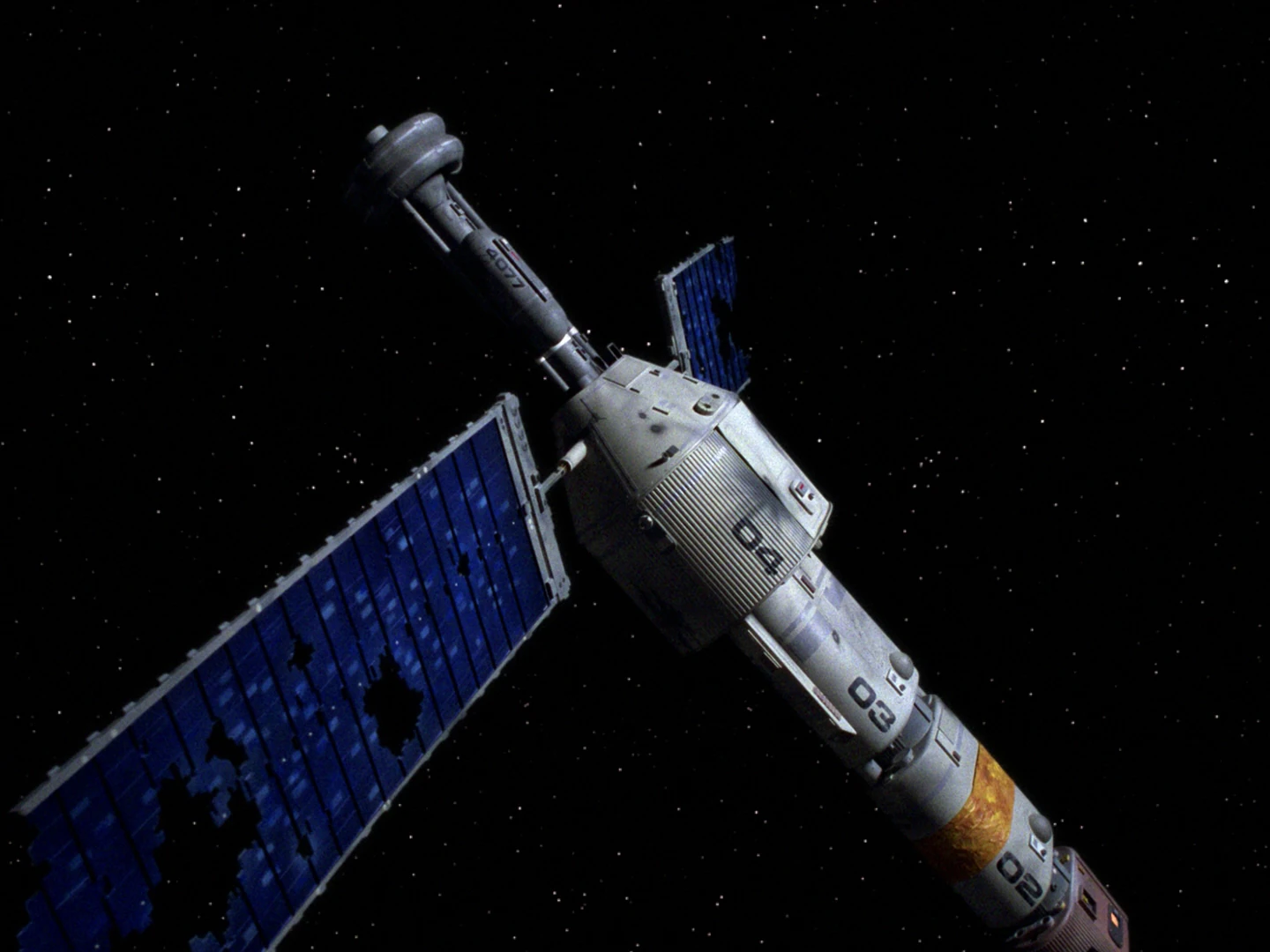 Space Module
Birdseye type
Hull Specifications LoggedThe Birdseye-type space module is a specialized artificial satellite primarily designed for the cryogenic preservation of individuals who have passed away, with the hope that future medical advancements could treat their conditions. These modules are powered by solar panels, indicating a design for long-term, autonomous operation in space. The interior of a Birdseye-type module is divided into four distinct sections, housing the cryonic crypts and associated life support and computer systems. Data retrieval from these modules, as demonstrated by Lieutenant Commander Data, involves accessing an 'ancient disk' from the module's computer to extract personal information about the occupants. **Class History** The Birdseye-type space module has a service history spanning from the late 20th century into the late 24th century. A notable encounter occurred in 2364 when the USS Enterprise (NCC-1701-D) located the SS Birdseye, an Earth-originating module. Lieutenant Commander Data identified it as a space module containing cryogenically frozen Humans. This event was depicted in the Star Trek: The Next Generation episode 'The Neutral Zone'. Later, in 2381, another satellite of this type was encountered and repaired by the crew of the USS Cerritos, as seen in the Star Trek: Lower Decks episode 'I, Excretus'. The class's continued presence in the 24th century, as evidenced by its appearance in 'A Few Badgeys More', indicates its enduring utility or the longevity of its design.
- No armament data logged.
- No propulsion data logged.
 Motorcycle
BMW R75 Class
Hull Specifications LoggedThe BMW R75 was a distinctive motorcycle, combined with a sidecar, produced on Earth by the German automotive manufacturer BMW during World War II. This robust vehicle was specifically designed for the German military, serving both the Wehrmacht and the SS. A key identifying feature of the BMW R75 was the unique way its front support bar was attached over the front mud guard, distinguishing it from similar designs like its main competitor, the Zündapp KS750. Approximately 16,500 units of the BMW R75 were produced during the war. While the Zündapp KS750 was technically considered superior and saw slightly higher production numbers at 18,600 units, the BMW R75 has become the quintessential World War II motorcycle in popular culture, often featured in countless Hollywood productions. Its renown is only surpassed by its American counterpart, the Harley-Davidson XA army motorcycle; ironically, part of the Harley's engine design was based on the BMW's at the request of the US army command. **Class History** In an alternate timeline, the BMW R75 played a role in several significant events on Earth during the 1940s. In 1944, a BMW R75 motorcycle was part of a prisoner convoy that transported Captain Jonathan Archer of the NX-01 Enterprise. This convoy, which also included a Ford Model 51 truck carrying Archer and an escorting Volkswagen Kübelwagen belonging to the Wehrmacht (though driven by an SS soldier), was ambushed by American Resistance fighters. All vehicles were damaged, and their German occupants were killed during the engagement. Later, another BMW R75 motorcycle was observed with a German search party. This party was responsible for capturing Ensign Travis Mayweather and Commander Charles Tucker III, who had descended to Earth to locate the crash-landed Shuttlepod 2151, which the Suliban Silik had used to escape the Enterprise. These events were depicted in the episode 'Storm Front'.
- • Projectile weapo (Qty: optional)
- No propulsion data logged.
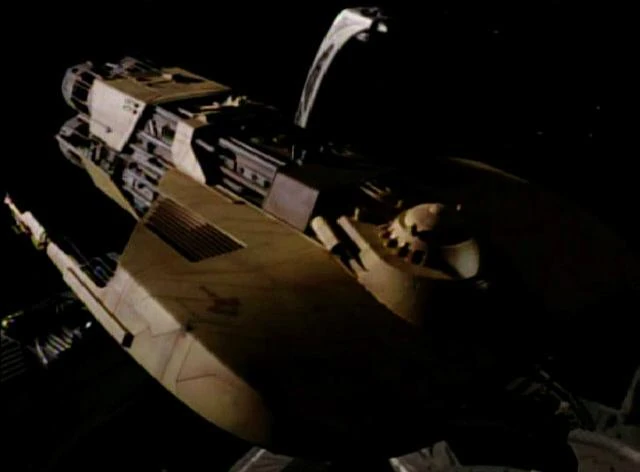 Freighter
Bok'Nor type
Hull Specifications LoggedThe Bok'Nor-type was a class of freighter starship utilized by the Cardassian Union during the latter half of the 24th century. These vessels were specifically engineered for cargo transport, constructed from durable kelindide and rhodinium alloys, and powered by efficient fusion power systems. Each Bok'Nor-type freighter typically operated with a crew complement of seventy-eight personnel. Their design allowed for a substantial cargo capacity, capable of hauling up to fourteen metric tons of various goods, including valuable golside ore. **Service History** The Bok'Nor-type freighters were active throughout the 24th century, serving the logistical needs of the Cardassian Union. One notable vessel of this class was the Bok'Nor itself, which was observed docked at Deep Space 9. The operations and characteristics of this freighter type were documented during the events depicted in the Starfleet record, 'The Maquis, Part I', providing insight into Cardassian civilian and logistical capabilities during a period of heightened tensions.
- No armament data logged.
- No propulsion data logged.

Bok's Marauder
Class: D'Kora class- • Directed energy weapo
- • electromagnetic pulse weapo
- + 2 more...
- • Warp facto
- • Deflector shield

Bok's Marauder
Class: D'Kora class- • Directed energy weapo
- • electromagnetic pulse weapo
- + 2 more...
- • Warp facto
- • Deflector shield

Bok's ship
Class: Unnamed Ferengi starship- No armament data logged.
- No propulsion data logged.

Bok's ship
Class: Unknown- No armament data logged.
- No propulsion data logged.
Bolian freighter Class
Hull Specifications LoggedBolian freighters represent a class of cargo vessels primarily operated by the Bolians during the mid-24th century. These ships were designed for the transport of various goods and materials across Federation space and beyond, serving the logistical needs of the Bolian people and their trading partners. While specific technical specifications regarding their design are not extensively documented, their role as freighters indicates a focus on cargo capacity and reliability over combat capabilities. **Class History** Throughout the 24th century, Bolian freighters were a common sight in various sectors. In 2370, one such Bolian freighter required assistance and was subsequently towed to one of Deep Space 9's lower docking bays, as depicted in the Star Trek: Deep Space Nine episode 'Whispers'. Later that same year, Commander Kira Nerys recalled an advisory detailing an incident where a Maquis ship disabled a Bolian freighter near the Demilitarized Zone and stole a supply of photon launchers, an event referenced in the Star Trek: Deep Space Nine episode 'Tribunal'. Also in 2370, another Bolian freighter was scheduled to arrive at Deep Space 9, as mentioned in the Star Trek: Deep Space Nine episode 'The Jem'Hadar'. The class continued to operate into the later part of the decade, though not without incident. In 2373, two Bolian freighters, carrying several thousand tons of selenium and rhodium nitrite, disappeared near the volatile Badlands. The Maquis were widely believed to be responsible for their disappearance, an event discussed in the Star Trek: Deep Space Nine episode 'For the Uniform'. These incidents highlight the dangers faced by civilian shipping, particularly in contested territories, and the vulnerability of freighters to piracy and hostile actions.
- No armament data logged.
- No propulsion data logged.
Bolian transport Class
Hull Specifications LoggedA Bolian transport was a type of starship operated by the Bolians during the late 24th century. These vessels served a crucial role in the Bolian economy and interstellar trade, facilitating the movement of goods and resources across various systems. One notable instance of a Bolian transport's service occurred in 2374. A specific Bolian transport was responsible for delivering the substantial contents of Morn's bank account from the Bank of Bolias to Deep Space 9. This delivery consisted of one thousand bricks of gold-pressed latinum, a significant sum within the Federation's economic sphere, as depicted in the Star Trek: Deep Space Nine episode 'Who Mourns for Morn?'. This event underscores the logistical capabilities and reliability of Bolian transport vessels in handling valuable cargo.
- No armament data logged.
- No propulsion data logged.
Bolian vessel Class
Hull Specifications LoggedA Bolian vessel was a general classification for a type of starship operated by the Bolians during the 24th century, specifically noted to be active in the 2370s. While its precise design specifications are not extensively documented, it is theorized that these vessels could encompass various roles, potentially including classifications such as a Bolian freighter or a Bolian transport, indicating a utility-focused design for cargo or passenger movement within Bolian space and beyond. These ships served as a visible representation of Bolian presence and activity in interstellar shipping lanes. **Service History** One notable instance of a Bolian vessel's activity occurred in 2370. During this period, a Bolian vessel was observed in the shipping lanes, awaiting its turn to dock at the strategically important station Deep Space 9. This event coincided with the departure of the Cardassian freighter Bok'Nor from the station, highlighting the routine interstellar traffic and diplomatic interactions facilitated by such vessels. This specific sighting was documented in the Starfleet record 'The Maquis, Part I', providing a glimpse into the operational context of Bolian starships during a period of heightened tensions in the Alpha Quadrant.
- No armament data logged.
- No propulsion data logged.

Booker's ship
Class: Scout ship- No armament data logged.
- No propulsion data logged.

Borg cube
Class: Borg cube- • Borg missile
- • Cutting beam
- + 2 more...
- • Tractor beam
- • Transwarp drive
- + 4 more...
Classified
Borg cube Class
2 VesselsThe Borg cube was a primary type of starship utilized by the Borg Collective throughout the 24th century, serving as one of the main vessels in its formidable fleet, alongside the Borg sphere. Universally described as mighty and omnipotent, Borg cubes were widely regarded as among the most destructive weapons ever known to exist in the galaxy. The first official contact between the United Federation of Planets and a Borg cube occurred in 2365, an event that profoundly impacted Starfleet's understanding of galactic threats. **Design & History** Borg cubes were in existence prior to 2347/2348, when a cube was first observed by Federation scientists Magnus Hansen and Erin Hansen, along with their daughter, Annika Hansen, aboard the USS Raven on stardate 32623.5. Seventeen years later, the USS Enterprise-D made the first official Federation contact with a single Borg cube in System J-25 in 2365, as documented in the episode 'Q Who'. These vessels were massive, measuring over three kilometers along each edge, resulting in an internal volume of 28 cubic kilometers. They were constructed from tritanium, an alloy renowned for its extreme hardness. The exterior design featured a characteristic pattern of perpendicular and diagonal grids, struts, and weaponry, from which a distinctive yellow-green light emanated from within, as seen in 'Dark Frontier' and 'Endgame'. Internally, Borg cubes were highly decentralized, lacking specific bridge, living quarters, or engineering sections. All vital systems were distributed throughout the ship, a design choice that, combined with a regenerative hull, made them exceptionally resistant to damage and system failures. In 2366, Commander Elizabeth Shelby estimated that a cube could remain functional even if 78% of its structure was rendered inoperable, a testament to its redundant and decentralized architecture, as highlighted in 'Q Who' and 'The Best of Both Worlds'. The internal environment aboard a Borg cube maintained a pressure two kilopascals above that of a normal Federation starship, with an average humidity of 92% and a temperature of 39.1°C, as depicted in Star Trek: First Contact. The atmosphere also contained traces of tetryon particles, as noted in 'Infinite Regress'. Cubes were typically manned by thousands of drones, with complements varying widely from 5,000 to 64,000, and even up to 129,000 drones, according to 'Dark Frontier'. Millions of cubes were estimated to exist within Borg space in the Delta Quadrant. The largest single grouping of cubes directly observed by Starfleet was fifteen, seen by the crew of the USS Voyager in late 2373, with many more observed near the Collective's Unicomplex, as detailed in 'Scorpion', 'Dragon's Teeth', 'Dark Frontier', 'Unimatrix Zero', and 'Unimatrix Zero, Part II'. During the Borg-Species 8472 War, hundreds of cubes were damaged or destroyed. Following the fall of the Collective in 2378, many more cubes were left stranded and dormant across the galaxy. Despite these significant losses, a few Borg cubes were still known to be active through the 2380s, as referenced in 'The Last Generation', 'Let Sleeping Borg Lie', and 'wej Duj'. Every Starfleet encounter with a single Borg cube resulted in heavy casualties. At the Battle of Wolf 359 in 2367, an armada of forty Starfleet ships was assembled to halt a cube; thirty-nine of those ships were lost in a matter of minutes. Dozens more were destroyed attempting to stop another cube during the incursion of 2373, known as the Battle of Sector 001, as recounted in 'The Drumhead' and Star Trek: First Contact. Normally, a single Borg cube was capable of assimilating all elements of civilization from an entire planet, a capability demonstrated in 'The Best of Both Worlds, Part II', 'Unity', 'Dark Frontier', and 'Child's Play'. **Interior Components** Borg cubes incorporated numerous specialized components essential for their function within the Collective. Each cube contained a Vinculum, a central processing device that interconnected the minds of all drones, purging individual thoughts and disseminating information relevant to the Collective. The Vinculum was equipped with multiple safeguards to prevent deactivation and could adapt to attacks, as explored in 'Infinite Regress'. The Central plexus, present on all Borg vessels, linked the ship to every other Borg vessel. This was a highly guarded area, protected by multi-regenerative security grids, as seen in 'Unimatrix Zero' and 'Unimatrix Zero, Part II'. The Central power matrix served as a critical power component on Borg vessels, as shown in 'Prey'. Distribution nodes controlled the flow of data to various areas of the ship. Power distribution nodes, colored green and pyramid-shaped, managed energy distribution, while a variation, the power waveguide conduit, appeared red, as described in 'The Best of Both Worlds'. Borg cubes also housed numerous assimilation chambers, where individuals or groups were assimilated into the Borg Collective, as depicted in 'Dark Frontier'. Maturation chambers were used to accelerate the development of adolescent humanoids into drones ready to serve the Collective, as seen in 'Q Who', 'Collective', and 'Unimatrix Zero'. Some Borg cubes contained a Queencell, a chamber where the Borg Queen could control the cube or drones within the Collective. It included a spatial trajector for escape or rapid movement and could be hidden behind moving bulkheads, as shown in 'The Impossible Box' and 'Broken Pieces'. Additionally, cubes featured numerous hangar bays for towing in smaller vessels for assimilation or supplies, as observed in 'Collective'. **Propulsion Systems** Borg cubes were capable of both warp and transwarp velocities, largely due to the Borg Collective's extensive network of transwarp corridors and transwarp hubs. When entering a transwarp conduit, a Borg cube projected a structural integrity field ahead of itself to compensate for extreme gravimetric shear, as explained in 'Inside Man'. To maintain temporal synchronization and compensate for extreme temporal stress during transwarp travel, a chroniton field was projected through specially designed conduits, as seen in 'Shattered'. Unlike most warp-capable species, Borg cubes did not feature the twin warp nacelle configuration, and the specific technology enabling their warp speed remains unknown to the Federation. A Borg cube's maximum warp factor appeared to exceed that of a Galaxy-class starship, as the USS Enterprise-D was unable to maintain distance from one during its first encounter when attempting to flee, as depicted in 'Q Who'. **Tactical Systems and Combat Performance** Despite possessing a multitude of energy weapon emitters and projectile launchers, initial scans of a Borg cube by the USS Enterprise-D were unable to identify any weapon systems known to the Federation, as noted in 'Q Who'. The primary tactic employed by Borg cubes when engaging another vessel was to seize it with a tractor beam that simultaneously drained its shields. Once locked on, a cube's tractor beam could drain the shields of a Galaxy-class starship within seconds and hold it immobile, even against the full force of its warp drive, as demonstrated in 'Q Who'. With the target ship defenseless, the cube could proceed with destruction or assimilation, as seen in 'The Best of Both Worlds' and 'Emissary'. The tractor beam could also destroy unshielded enemy vessels without additional weaponry, as shown in Star Trek: First Contact. Starfleet vessels' standard deflector shields could resist the tractor beam if their crews rapidly cycled the shields through different energy frequencies, but only for a limited time, as depicted in 'The Best of Both Worlds'. Following the failure of enemy shields, the cube could deploy a high-energy laser cutting beam to slice sections of the ship for assimilation, as first seen in 'Q Who'. If assimilation was not the objective, the cutting beam could also be used as a weapon to destroy resisting vessels. During the Battle of Wolf 359, the Excelsior-class USS Melbourne and the Miranda-class USS Saratoga were annihilated by cutting beams. The cutting beam could either precisely slice into a ship or disintegrate large portions of it. It could also be fired in conjunction with the tractor beam, manifesting within the tractor beam's area of effect, a combination that could destroy even a shielded enemy vessel within seconds, as demonstrated on the USS Melbourne at Wolf 359 and detailed in 'Emissary'. Another tactic to disable enemy ships involved firing a type of Borg missile weapon, primarily designed to drain a target's shields. These missiles appeared to be reserved for situations where a tractor beam was not feasible, such as when an enemy vessel was out of range. Three such missiles were capable of disabling a Galaxy-class vessel's shields. A hit from this weapon on an unshielded target could disable its warp drive without causing other damage, as seen in 'Q Who'. Borg cubes could also use dispersal fields to disrupt the sensor and transporter functions of enemy vessels, as shown in 'Collective'. The Borg were capable of transporting through the active shields of both Galaxy-class and Intrepid-class starships, as depicted in 'Q Who' and 'Scorpion'. Additionally, a Borg cube's arsenal included other destructive beam and projectile weapons. During the 2366-2367 incursion, a cube obliterated three ships of the Mars Defense Perimeter with projectiles, as seen in 'The Best of Both Worlds, Part II'. Similar projectiles destroyed a Steamrunner-class and a Saber-class starship during the Battle of Sector 001, as shown in Star Trek: First Contact. The concentrated fire of three beam weapons was able to reduce the USS Voyager's ablative generator-deployed armor hull integrity, a highly advanced future Starfleet defense technology, to 40%, as depicted in 'Endgame'. Borg cubes did not appear to utilize traditional energy shields. Instead, they employed a subspace electromagnetic field that could be altered to adapt to enemy weaponry. This made destroying Borg vessels exceedingly difficult, as most weapons either failed to work or became useless after a few shots, as observed in 'Q Who'. This problem could be partially overcome by varying the frequency and modulation of weapon energy, but even this tactic often failed quickly, as seen in 'The Best of Both Worlds'. The Borg could also adapt to explosives like photon torpedoes with ease and could similarly adapt their weapons to counter an opponent's defenses. During their second encounter with a Borg cube, the crew of the USS Enterprise-D temporarily prevented a Borg tractor beam lock by rapidly modulating their shield energy frequency. However, less than half a minute later, the Borg adapted the tractor beam's energy to compensate, rendering further attempts ineffective within seconds, as detailed in 'The Best of Both Worlds'. Starfleet's two major engagements with Borg cubes were extremely costly. At the Battle of Wolf 359, the Borg had assimilated Jean-Luc Picard hours earlier, gaining access to his vast knowledge of Starfleet tactics. This resulted in 39 out of 40 Starfleet ships being destroyed with negligible damage to the Borg vessel. The cube then continued unimpeded towards Earth, only being stopped by the ingenuity of the USS Enterprise-D's crew, as recounted in 'The Best of Both Worlds, Part II'. However, a similar engagement several years later, the Battle of Sector 001, saw a similarly large Federation fleet perform considerably better against another Borg cube. Though suffering heavy casualties, the fleet inflicted significant damage to the cube's outer hull and caused its power grid to fluctuate. The vessel was ultimately destroyed primarily due to the intervention of Captain Picard, whose residual telepathic link to the Collective provided him with knowledge of a (presumably battle-induced) weak spot, which the entire fleet then targeted, as depicted in Star Trek: First Contact. Due to the adaptive qualities of the Borg electromagnetic field, the only quasi-reliable way to destroy a Borg cube was with a weapon so powerful that one or two shots would suffice. Such weapons included the modified deflector weapon of a Galaxy-class starship, transphasic torpedoes, and the energy beam weapons of Species 8472, as seen in 'Endgame'. However, even these powerful weapons could eventually be adapted to. Another tactic that showed some success was utilizing unfamiliar evasive maneuvering sequences to prevent Borg tractor beams from draining a ship's shields, as demonstrated in 'The Best of Both Worlds, Part II' and Star Trek: First Contact. **Support Vehicles** Borg cubes were capable of docking smaller vessels, such as Borg spheres, for assimilation, supplies, or escape purposes. At least one Borg cube, and possibly others, contained a Borg sphere. The only known recorded purpose of a sphere disengaging from a Borg cube was for escape, as seen in Star Trek: First Contact, making it the only documented support vehicle a Borg cube possessed. **Maintenance and Repair** The drones aboard a Borg ship, through means not fully understood by the Federation, could essentially 'will' the ship to repair itself. During the USS Enterprise-D's first encounter with a Borg cube, it inflicted damage to approximately 20% of the Borg vessel, only for the ship to repair virtually all of that damage within 20 minutes. This process could occur even while the ship was at warp speed or engaged in combat, as observed in 'Q Who'. In 2399, the cube known as 'The Artifact' utilized small, automated robots to repair its hull and internal systems upon activation by Fenris Ranger Seven of Nine, as depicted in 'Broken Pieces'. **Known Vessels** Designated cubes include Cube 461 (active 2377), Cube 630 (destroyed 2377), Cube 1184 (active 2377), Cube 90182 (active 2381), and Cube 858779 (active 2381). Cubes designated by a Borg drone or Queen include the Borg Queen's cube (a unique, larger variant, destroyed 2401), Locutus' cube (destroyed 2367), First's cube (disabled 2376), Seven of Nine's cube (destroyed 2374), and The Artifact (crashed 2399). Numerous undesignated Borg cubes have also been encountered.
- • Borg missile
- • Cutting beam
- + 2 more...
- • Tractor beam
- • Transwarp drive
- + 4 more...
 Runabout / Utility
Borg probe Class
Hull Specifications LoggedThe Borg probe was a distinct type of manned probe starship utilized by the Borg Collective during the 24th century. Its design featured an elongated, somewhat bar-of-soap shaped hull, devoid of readily discernible features, and constructed from the same dark, resilient material characteristic of other Borg vessels such as the Borg cube and the Borg sphere. The hull also exhibited the familiar green and yellow glow emanating from various points, a signature of Borg technology. Internally, the vessel was described as dark and humid, with its spaces lined extensively with regeneration alcoves, indicating its primary function as a mobile base for Borg drones. Tactically, the Borg probe was a formidable craft, armed with particle weapons that provided firepower comparable to a Starfleet Intrepid-class starship. A key defensive and operational feature was its capacity for rapid regeneration, supported by onboard robotic auto-regeneration units. Like all Borg vessels, these probes were equipped with transwarp coils, granting them transwarp capability for rapid interstellar travel. They were designed with the primary objective of assimilation, actively pursuing and attempting to integrate other starships upon detection. **Class History** The only documented encounter with a Borg probe occurred in the Delta Quadrant in 2375, when the USS Voyager detected and intercepted one. The probe had specifically diverted its course to intercept and assimilate the USS Voyager. Following an exchange of fire, the crew of the USS Voyager devised a strategy to disable the vessel. While the Borg probe was in the process of remodulating and regenerating its deflector shield matrix, the USS Voyager's crew beamed a photon torpedo directly aboard the enemy ship. The torpedo detonated near the probe's power matrix, resulting in its complete destruction. There were no survivors among the Borg drones aboard. Following the destruction, Captain Kathryn Janeway ordered her crew to conduct a salvage operation on the debris. Although the probe's key technology had self-destructed, the USS Voyager's crew successfully recovered useful materials and critical information, which they later utilized in a subsequent mission to board a damaged Borg sphere. This significant encounter was chronicled in the Star Trek: Voyager episode 'Dark Frontier'.
- • Directed energy weapo
- • Transwarp drive
- • Deflector shield

Borg Queen's ship
Class: Borg Queen's ship- • Photon torpedo
- • Transwarp drive
- • Deflector shield
 Command Vessel
Borg Queen's ship Class
1 VesselThe Borg Queen's ship was a singular, octahedron-shaped starship, unique among Borg vessels, as only one of its design has ever been observed by Starfleet. Its construction mirrored that of other Borg craft, featuring the characteristic dark hull components seen on Borg cubes and Borg spheres, with the familiar green and yellow lighting emanating from its structure. Internally, the vessel was designed with three large chambers aligned along its y-axis, the central chamber distinguished by dark blue energy fields. Its overall dimensions appeared comparable to Borg Spheres, allowing it to fit into the same hatchways within the Borg Unicomplex. This distinctive vessel was heavily armed with Borg Torpedoes and robustly defended by both force fields and adaptive shields. The design process for the Borg Queen's ship was undertaken by Dan Curry, with Brandon MacDougall creating the 3D model at Foundation Imaging, as senior illustrator Rick Sternbach was occupied with other aspects of the production for the double-length episode 'Dark Frontier'. The design ethos aimed for a craft that was instantly recognizable and distinct from the rest of the Borg Collective's fleet, while still adhering to Borg aesthetics. The 'diamond shape' was a collaborative effort. Curry and MacDougall also sought to imbue the ship with a sense of dynamism, leveraging the then-new capability of CGI to depict moving starship parts. This led to the decision that the outer structure of the vessel could spin around its center when in motion. The placement of its weapon systems was flexible, allowing them to emanate from various points without the need for traditional cannon-like structures. Robert Bonchune, a Foundation supervisor, noted the success of this design, remarking on its unique appearance compared to other Borg ships. **Class History** The Borg Queen's ship was primarily utilized by the Borg Queen as a transport vessel. Its first recorded encounter with the Federation occurred in 2375. During this period, the vessel was present when Species 10026 was assimilated, with Seven of Nine and the Borg Queen both aboard. Following the successful rescue of Seven of Nine from the Unicomplex by a team from the USS Voyager, the Borg Queen's ship pursued the Delta Flyer through a transwarp conduit. This pursuit marked Starfleet's initial observation and logging of the unique vessel. The ship was ultimately destroyed when the USS Voyager imploded the transwarp conduit with a barrage of Photon torpedoes, as depicted in the episode 'Dark Frontier'. No formal designation was ever given to this starship design by Starfleet. **Apocryphal Information** In various non-canonical sources, this vessel has received informal designations. The video game Star Trek Armada refers to it as a 'Borg diamond', a name that aligns with the descriptive conventions used for Borg cubes and Borg spheres, though 'Borg octahedron' would be a more geometrically accurate term. In the video game Star Trek Online, a vessel of this class, termed the 'Borg Queen's Octahedron', is commanded by the Borg Queen during an assault by Battle Group Omega against a new Unicomplex under construction in the Beta Quadrant in the mission 'Hive Onslaught'. Another such vessel also appears in the multiplayer event 'Borg Disconnected', engaging in a four-way battle alongside an Undine Dreadnought, a Voth Citadel Dreadnought, and a fleet of Delta Alliance ships (comprising Federation, Klingon, and Romulan Republic forces) during simultaneous attacks on the Delta Quadrant's Unicomplex.
- • Photon torpedo
- • Transwarp drive
- • Deflector shield
 Scout / Patrol
Borg scout ship Class
Hull Specifications LoggedThe Borg scout ship was a distinct type of starship utilized by the Borg Collective. These vessels were relatively small compared to other Borg craft, possessing a mass of approximately 2.5 million metric tons. Their primary function was reconnaissance and exploration, often operating independently or as forward elements of larger Borg fleets. While their exact crew complement remains largely unknown, observations indicate a minimum of five Borg drones were typically assigned to such a vessel. **Notable Incidents** One significant encounter with a Borg scout ship occurred in 2368 when a vessel of this class crashed within the Argolis Cluster. The wreckage was subsequently discovered by personnel from the USS Enterprise (NCC-1701-D). The sole surviving Borg drone from this incident was later designated 'Hugh' by the USS Enterprise (NCC-1701-D) crew. Several days after the initial discovery, a second Borg scout ship arrived to rescue Hugh, as documented in the Starfleet record 'I Borg'. Another instance of a Borg scout ship's deployment involved the drone Axum, who was stationed aboard one such vessel. This ship was tasked with patrolling a border with fluidic space in a remote sector of the Beta Quadrant, as detailed in the Starfleet record 'Unimatrix Zero, Part II'.
- No armament data logged.
- No propulsion data logged.

Borg sphere
Class: Borg sphere- • Directed energy weapo
- • Tractor beam
- • Ablative armo
- + 5 more...
Runabout / Utility
Borg sphere Class
1 VesselThe Borg long-range tactical vessel, commonly known by the Federation as a Borg sphere, is a distinctive sphere-shaped starship utilized by the Borg Collective primarily during the late 24th century. These vessels serve multiple strategic roles within the Collective, functioning as scout ships, long-range tactical vessels, and auxiliary craft. Notably, Borg spheres are often embedded within larger Borg cubes, acting as deployable support units. Measuring approximately 600 meters in diameter, a Borg sphere possesses an interior bay capacious enough to accommodate an Intrepid-class starship. Each sphere is crewed by a complement of eleven thousand Borg drones. For propulsion, these vessels are equipped with advanced warp drive and transwarp drive capabilities, and are even capable of time travel. Defensively, Borg spheres are formidable, featuring robust deflector shields, rapid regeneration capabilities, and ablative hull armor. Offensively, they are armed with powerful tractor beams, as well as beam and projectile weapons. Internally, the design prioritizes function over comfort, lacking traditional living quarters or a discernible engineering section for the propulsion systems. However, they do house a primary shield generator within their shield matrix and several transwarp coils contained within specialized, heavily shielded transwarp chambers. **Class History** **Battle of Sector 001** One of the most significant historical events involving a Borg sphere occurred following the destruction of a Borg cube during the Battle of Sector 001. A Borg sphere, later identified as the Borg Queen's sphere, was launched from the damaged cube. Its mission was to travel back in time to 2063 to prevent First Contact, the first globally publicized contact between Earth and the Vulcans, by assassinating Zefram Cochrane at his hometown of Bozeman, Montana. This attempt was thwarted by the Sovereign-class starship USS Enterprise (NCC-1701-E), which pursued the sphere through time and ultimately destroyed it. **Debris in the Arctic Circle** Following its destruction, at least twenty-two fragments of the Borg Queen's sphere's outer hull crashed into the Arctic Circle. In 2153, an A-6 excavation team of scientists discovered the remains of the sphere, confirming its perfect spherical shape. Tragically, the team also discovered that two Borg drones had survived the crash, leading to the events depicted in the Star Trek: Enterprise episode 'Regeneration'. **Operation Fort Knox** In 2375, the crew of the USS Voyager successfully executed Operation Fort Knox, retrieving a Borg transwarp coil from a damaged Borg sphere. At the time of this operation, the sphere was undergoing regeneration from previous damage, limiting its speed to Warp factor 2, as seen in the Star Trek: Voyager episode 'Dark Frontier'. **The Return of USS Voyager** In 2378, a Borg sphere, specifically Sphere 634, played a pivotal role in the USS Voyager's return to the Alpha Quadrant. Starfleet forces attempted to destroy the sphere, which was holding the USS Voyager captive. Ultimately, the USS Voyager was able to destroy Sphere 634 from the inside using transphasic torpedoes, as depicted in the Star Trek: Voyager episode 'Endgame'. Other notable spheres include Sphere 878, destroyed in 2377, and Korok's sphere, which was active in 2377.
- • Directed energy weapo
- • Tractor beam
- • Ablative armo
- + 5 more...
 Escort / Warship
Borg tactical cube Class
Hull Specifications LoggedThe Borg tactical cube, also known as a class 4 tactical vessel, represented a specialized and heavily-armed variant within the Borg Collective's fleet of Borg cubes. This class distinguished itself from standard Borg cubes primarily through its extensive hull armor, which covered significant portions of the vessel's exterior. Internally, the tactical cube also featured subtle alterations to the typical Borg architecture. A critical defensive enhancement was the protection of its central plexus by multi-regenerative security fields, making it a formidable opponent in direct engagements. **Class History** The only known encounter with a Borg tactical cube by Starfleet occurred in 2377, involving the crew of the USS Voyager in the Delta Quadrant. The specific tactical cube, later designated Tactical Cube 138, was targeted by USS Voyager as part of a plan to deploy a nanovirus designed to infect the Borg Collective. The nanovirus aimed to allow Borg drones to retain their memories following regeneration cycles, a critical step in disrupting the Collective's control. During the engagement, Tactical Cube 138 proved its combat prowess by destroying the USS Voyager's Delta Flyer shuttlecraft and inflicting heavy damage upon the USS Voyager itself. However, the confrontation concluded when the Borg Queen, facing the threat posed by the nanovirus, initiated the tactical cube's auto-destruct sequence, resulting in its destruction. This encounter was documented in the Starfleet records as part of 'Unimatrix Zero, Part II'. **Designated Ships** Only one vessel of this class is explicitly designated in Starfleet records: Tactical Cube 138, which was destroyed in 2377 during its encounter with the USS Voyager.
- • Borg missile
- • Directed energy weapo
- + 1 more...
- • Multi-regenerative security field
- • Armo
- + 2 more...
 Classified
Borg type 03
Hull Specifications LoggedDesignated by Starfleet as the Borg type 03, this class of Borg starship was utilized by a rogue Borg faction under the leadership of Lore. Its design was notably asymmetrical, a stark contrast to the more commonly encountered Borg cube and Borg scout ship designs. This unusual configuration led Captain Jean-Luc Picard to speculate whether the vessel was an original construction by Lore's faction or an alien starship that had been captured and assimilated. Regardless of its origins, the Borg type 03 was heavily armed and possessed formidable armor, demonstrating complete imperviousness to direct phaser and photon torpedo strikes from a Galaxy-class starship like the USS Enterprise (NCC-1701-D). The designation 'Type 03' was observed on tactical scan analysis during its encounter with Starfleet, presumably indicating it was the third distinct class of Borg starship design encountered by Starfleet. **Service History** Only a single starship of the Borg type 03 class was ever observed by Starfleet. In 2369, this rogue Borg vessel, operating under Lore's command, initiated a series of attacks against Federation outposts and colonies located in several outlying sectors. Notable targets included the research outpost on Ohniaka III and the MS-1 colony. The ship employed previously-unknown transwarp conduits, allowing it to appear suddenly over its targets and launch rapid assaults. In both instances, the Borg type 03 confronted the USS Enterprise (NCC-1701-D), which had responded to the colonies' distress signals. The USS Enterprise (NCC-1701-D) subsequently pursued the Borg ship through these transwarp conduits to locate its base of operations, as depicted in the episode 'Descent'. A deadly game of cat-and-mouse ensued in orbit of an unnamed world, while Lieutenant Commander Data was missing on the planet's surface. The Borg type 03 attacked the USS Enterprise (NCC-1701-D), forcing the Federation starship, under the temporary command of Doctor Beverly Crusher, to retreat to the edge of the star system. Doctor Crusher, however, resolved to retrieve the remaining crew members left behind on the planet. She skillfully returned to the world, evading the Borg ship's attacks long enough to retrieve most of the personnel. During this engagement, the USS Enterprise (NCC-1701-D)'s warp drive was crippled by the Borg type 03. Forced to flee again, but now restricted to impulse speeds, Doctor Crusher ordered the USS Enterprise (NCC-1701-D) to activate an experimental metaphasic shield, enabling the starship to enter the nearby star's corona, a region where the Borg type 03 could not follow. The Borg type 03 maintained its position outside the corona, awaiting the USS Enterprise (NCC-1701-D)'s emergence. However, the USS Enterprise (NCC-1701-D) utilized a particle beam to induce a solar fusion eruption, which completely engulfed and destroyed the Borg type 03, as detailed in the episode 'Descent, Part II'.
- • Particle weapo
- • Transwarp drive
- • Deflector shield
 Classified
BortaS bir class
Hull Specifications LoggedThe BortaS bir-class was a type of warship utilized by the Klingon Empire during the mid-23rd century. The name of the class translates to 'Cold Revenge', a designation that reflects the Klingon philosophy of warfare and honor. While specific design details regarding its internal layout or propulsion systems are not extensively documented, its role as a frontline combat vessel during a significant interstellar conflict indicates a robust and formidable construction, equipped with directed energy weapons suitable for engagements against contemporary Starfleet vessels. The class was developed by writer Kirsten Beyer. **Class History** The BortaS bir-class played a crucial role in the Federation-Klingon War of 2256-2257. Several vessels of this class were actively engaged in the conflict, beginning with the pivotal Battle of the Binary Stars in 2256, a major engagement that marked the official start of the war. Later in November of 2256, a BortaS bir-class ship was commanded by General Kol, who used it to claim the disabled Sarcophagus, a significant Klingon vessel. As the war progressed into 2257, BortaS bir-class warships continued to be a part of the Klingon fleet. Two such vessels were observed as part of the massive armada that gathered to launch an attack on Earth. However, these ships, along with the rest of the armada, disengaged from their attack vector upon receiving word that the war had concluded, preventing a direct assault on the Federation homeworld.
- • Directed energy weapo
- No propulsion data logged.
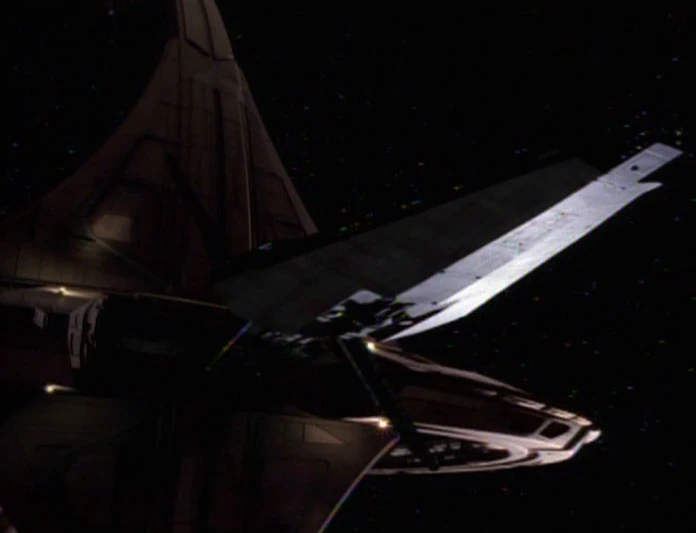 Transport / Freighter
Boslic freighter Class
Hull Specifications LoggedThe Boslic freighter was a utilitarian starship class primarily utilized by the Boslic species. Classified as a freighter, its design was optimized for cargo transport and commercial operations rather than combat or deep-space exploration. Specific technical details regarding its propulsion systems, armaments, or defensive capabilities are not extensively documented, but its classification suggests a focus on capacity and reliability for interstellar trade routes. The overall aesthetic and functional layout of the Boslic freighter reflected the practical needs of its Boslic operators. **Service History** The Boslic freighter class was actively in service during the 2370s, playing a role in the commercial and logistical networks of the Boslics. Several individual vessels of this class have been identified in Starfleet records. One notable example was Rionoj's freighter, which was referenced in the episodes 'The Homecoming' and 'Broken Link'. Another vessel of this class was Tilikia's freighter, which appeared in the episode 'Sons of Mogh'. These appearances underscore the presence and utility of Boslic freighters within the broader galactic community during this period, often interacting with Starfleet and other factions in various capacities.
- No armament data logged.
- No propulsion data logged.
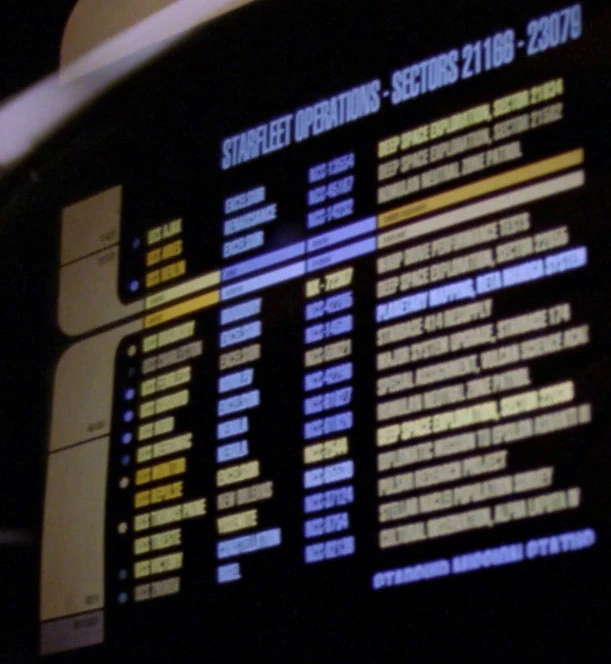 Transport / Freighter
Bradbury class
1 VesselThe Bradbury-class was a class of Federation transport ships developed during the latter half of the 24th century. Its primary role was to facilitate interstellar transport for the United Federation of Planets and Starfleet operations. **Service History** During the 2360s, the Bradbury-class was actively in service. The USS Bradbury, with registry NX-72307, served as the class prototype. In late 2366, the USS Bradbury was undergoing critical warp drive performance tests. Concurrently, it was utilized for transport duties, notably operating a route between Earth and Betazed. The USS Bradbury was still listed as active in 2369. The class's existence was first noted in the production art chart 'Starfleet Operations - Sectors 21166-23079' for the Star Trek: The Next Generation episode 'Brothers'. **Naming Convention** The Bradbury-class, and specifically the USS Bradbury, was named in honor of the renowned science fiction and fantasy writer Ray Bradbury, who was a personal friend of Star Trek creator Gene Roddenberry. According to non-canonical role-playing game supplements from Last Unicorn Games, the vessel was described as a 335-meter-long heavy frigate, featuring ten decks, and was said to bear a resemblance to the unfilmed Intrepid-class prototype designed during the pre-production phase of Star Trek: Voyager.
- No armament data logged.
- No propulsion data logged.

Breen Dreadnaught
Class: Breen dreadnaught- • Directed energy weapo
- • Shield-tunneling technology
- + 1 more...
- • Cloaking device
- • Deflector shield
 Escort / Warship
Breen dreadnaught Class
2 VesselsThe Breen dreadnaught was a formidable class of dreadnought operated by the Breen Imperium during the 32nd century. Renowned for its massive size, it represented the most powerful vessel within the Breen fleet. These dreadnoughts were engineered for both strategic mobility and overwhelming firepower. They possessed the unique capability to traverse transwarp conduits as a shortcut, complementing their primary faster-than-light travel system, a form of warp drive. In terms of combat prowess, a Breen dreadnaught comfortably outgunned a Federation Crossfield-class starship. Its offensive systems included powerful directed energy weapons and torpedo launchers. A particularly advanced and dangerous feature was its shield-tunneling technology, which allowed Breen soldiers to be deployed directly through enemy deflector shields. For defense, the dreadnaught was equipped with robust deflector shields and a cloaking device, though a notable vulnerability existed in the form of a gap in shield coverage at the aft exhaust port. The vessel's design also incorporated a large shuttlebay located at the ship's center, which also served as the location of the bridge. **Class History** The Breen dreadnaught class played a significant role in the conflicts of the 32nd century. One notable vessel of this class, Ruhn's dreadnaught, was under the command of Primarch Ruhn. This particular dreadnought was famously jumped to the galactic barrier by the USS Discovery during critical engagements depicted in the Star Trek: Discovery episodes 'Mirrors', 'Erigah', 'Labyrinths', 'Lagrange Point', and 'Life, Itself'. Another instance saw Primarch Tahal commanding a fleet comprising three Breen dreadnoughts, as seen in the episode 'Life, Itself'. The class made several appearances throughout Star Trek: Discovery, including the episodes 'Face the Strange', 'Mirrors', 'Erigah', 'Labyrinths', 'Lagrange Point', and 'Life, Itself', solidifying its status as a major adversary for Starfleet during this era.
- • Directed energy weapo
- • Shield-tunneling technology
- + 1 more...
- • Cloaking device
- • Deflector shield
 Scout / Patrol
Breen fighter Class
Hull Specifications LoggedThe Breen fighter was a small, warp-capable warship utilized by the Breen Imperium. Designed primarily for combat and reconnaissance roles, it served as both a fighter and a scout ship. Its tactical capabilities were enhanced by its armament of directed energy weapons, providing offensive power, and a cloaking device, offering significant stealth advantages for both engagement and scouting missions. **Class History** These vessels were actively deployed by the Breen Imperium during the late 32nd century. A notable engagement occurred in 3191 when Ruhn's dreadnaught launched a contingent of forty Breen fighters against the USS Discovery. The USS Discovery, demonstrating advanced tactical maneuvers, successfully lured these fighters into a volatile plasma region, which it then detonated with a spread of photon torpedoes, resulting in the destruction of all forty Breen fighters in the ensuing explosion. Concurrently, Primarch Tahal of the Breen Imperium deployed a cloaked Breen fighter as a scout. Its mission was to ascertain the reasons behind the Federation's determined efforts to prevent her fleet from intercepting Ruhn's dreadnaught. Ambassador Saru and Commander Nhan, operating aboard UFP-99, engaged this scout. They skillfully drew the Breen fighter close to Ruhn's dreadnaught, at which point the USS Discovery executed a spore jump, displacing both Breen vessels to the galactic barrier. This strategic maneuver effectively removed them from the immediate conflict zone, placing them decades of travel away from Breen space. These events were documented in the episode 'Life, Itself'.
- • Directed energy weapo
- • Cloaking device

Breen interceptor
Class: Breen interceptor- • Disrupto
- • Energy-dampening weapo
- + 1 more...
- • Deflector shield
Escort / Warship
Breen interceptor Class
2 VesselsThe Breen interceptor was a type of light warship that formed the backbone of the Breen Confederacy fleet during the late 24th century. These agile vessels were known for their potent offensive capabilities, including disruptors, torpedo launchers, and a unique energy-dampening weapon, making them a significant threat to the Federation Alliance and other powers. **Service History** The Breen interceptor gained prominence in late 2375 when the Breen Confederacy allied with the Dominion, committing a large number of these ships to the Dominion War effort. During this period, Worf and Ezri Dax were captured by the Breen on a planet in the Goralis system and held aboard one such interceptor, specifically Gor's ship. The Federation Alliance first encountered Breen interceptors during the Dominion's counter-invasion of the Chin'toka system, an event known as the Second Battle of Chin'toka. In this engagement, Breen interceptors, utilizing their then-unknown energy-dampening weapon, disabled and destroyed nearly all allied ships, including Cardassian starships and Dominion starships, forcing the Alliance to withdraw from their only foothold in Cardassian space. A Breen interceptor was responsible for destroying Legate Damar's captured Jem'Hadar attack ship over Cardassia Prime. Numerous Breen interceptors participated in the pivotal Battle of Cardassia near the Cardassia system. Many were destroyed when the Cardassian fleet turned against the Dominion, with the remaining vessels withdrawing alongside Jem'Hadar forces for a final stand at Cardassia Prime. In 2381, three Breen interceptors attacked the USS Cerritos when it chanced upon the Breen invasion of Brekka, overwhelming and attempting to capture the California-class starship before being destroyed by the USS Aledo. **Tactical Systems** The primary armaments of the Breen interceptor consisted of several torpedo launchers and disruptors, mounted on the ship's forward pikes, capable of firing with great speed and accuracy. A distinctive feature was its bow-mounted energy-dampening weapon, which could completely disable the power system of an enemy ship with a single hit. Initially, this weapon proved devastating, but the Federation Alliance soon developed countermeasures. Klingon vessels could render themselves immune via a tritium intermix modification, and the subsequent capture of an intact weapon by the Cardassian Liberation Front allowed the Federation and the Romulans to develop their own defensive protocols for their ships. By the 2380s, the Breen had improved the energy-dampening weapon, making it partially effective again against the shields and engines of Federation starships, with two hits capable of draining most shields and disabling engines of a California-class starship, though not completely disabling the vessel. For boarding actions, the interceptor could launch a pod equipped with a large energy bore from a ventral bay to breach an enemy vessel's hull. **Defensive Capabilities** Despite being protected by deflector shields, the Breen interceptor was relatively fragile. It was unable to withstand even short volleys of phaser or torpedo fire from more heavily armed starships. However, its extreme agility allowed it to out-maneuver even a Defiant-class starship, compensating somewhat for its lack of robust armor. **Internal Configuration** The bridge of a Breen interceptor featured common starship design elements, including a main viewscreen, a command chair, and a door at the center-rear. These ships were also equipped with a holding cell and an interrogation chamber. In 2375, Worf and Ezri Dax were held in a cell aboard Gor's ship, where they were fed algae paste. The interrogation chamber utilized a cortical implant to probe prisoners' memories.
- • Disrupto
- • Energy-dampening weapo
- + 1 more...
- • Deflector shield

Burnham's ship
Class: Courier ship- No armament data logged.
- No propulsion data logged.
 Classified
Caatati vessel (large) Class
Hull Specifications LoggedThe Caatati vessel (large) was a class of starship operated by the Caatati refugees. These vessels were primarily utilized for transporting the last remaining Caatati population after the devastating assimilation of their homeworld by the Borg in 2373. While specific design details beyond their size classification are not extensively documented, these ships were warp-capable, enabling the Caatati to traverse interstellar space in their search for a new home and resources. **Class History** Following the destruction of the Caatati homeworld by the Borg in 2373, a total of thirty Caatati ships, encompassing both smaller and larger types, were pressed into service to transport the surviving Caatati refugees. Several vessels of this larger type were part of this desperate exodus. At least two of these larger Caatati vessels were notably involved in an armada that tracked down the USS Voyager. During this encounter, the Caatati delivered both the USS Voyager's warp core and an ultimatum, demanding additional food and provisions from the Starfleet crew, as depicted in the Star Trek: Voyager episode 'Day of Honor'. These interactions highlight the dire circumstances and resource scarcity faced by the Caatati aboard these refugee transports.
- No armament data logged.
- No propulsion data logged.
 Classified
Caatati vessel (small) Class
Hull Specifications LoggedThe Caatati vessel (small) was a class of starship operated by the Caatati refugees in the aftermath of their assimilation by the Borg in 2373. Following the destruction of the Caatati homeworld, approximately thirty Caatati ships, encompassing both small and large types, were utilized to transport the last remaining Caatati refugees. In 2374, an armada including several small Caatati vessels was encountered by the USS Voyager. These vessels were designed to accommodate a crew complement of approximately eighty-eight individuals. While individually far inferior to the Federation starship USS Voyager in terms of capabilities, their sheer numbers allowed them to collectively pose a significant threat. The design of these vessels, particularly Rahmin's ship as described in the script for the episode 'Day of Honor', was noted as 'a small alien ship which has seen better days. It's a real junker.'
- No armament data logged.
- No propulsion data logged.
 Support Ship
California class
29 VesselsThe California-class, often affectionately nicknamed the 'Cali' class, is a type of Federation starship that entered service during the late 24th century. These vessels are primarily designated as support ships, specifically designed for second contact missions. Their role involves providing essential engineering, medical, and logistical support to planets that are in the process of establishing communication and integration with the United Federation of Planets. **Design & Technical Specifications** The physical arrangement of a California-class starship features a prominent saucer section, to which a pair of warp nacelle pylons are directly attached on its ventral surface. These pylons incorporate turbolift access in their aft-most sections. A smaller secondary hull, housing the navigational deflector dish, is mounted between the nacelles via a second set of pylons. The saucer section itself contains eleven decks, contributing to the class's overall complement of at least 20 decks. The maximum safe velocity for a California-class starship is Warp 8, though it can exceed this speed for short bursts at the risk of severe structural damage. The warp core, located in the secondary hull, features inverted plasma distributors, which are believed to contribute to the unique, higher-pitched sound of their warp engines, though other sources attribute this to vibrations in the dilithium dispersement manifold. Tactical systems include phaser arrays and photon torpedoes for offense, complemented by deflector shields for defense. These shields are notable for their auto-repair capability, regulated by an isolinear core. The class measures 535.2 meters in length and 121.3 meters in height. Internally, the California-class is well-equipped for its support role and crew comfort. The main bridge is situated on Deck 2, sharing a similar layout to bridges aboard Galaxy-class starships, specifically the bridge of the USS Enterprise (NCC-1701-D). A captain's ready room, complete with a window, desk, replicator, and seating, is located off the bridge. Multiple conference rooms, including a senior and executive conference room, are available. Main engineering is a critical hub, and the ship boasts a main shuttlebay in the secondary hull, along with two additional shuttlebays on the saucer section's rim, capable of storing various shuttlecraft, including Type 6A and Type 8 shuttles, and Argo-type ground vehicles. A captain's yacht is also carried in a separate bay. For maintenance, numerous repair bays are present, such as Repair Bay 5 on Deck 11. Storage is ample, with at least seven storage bays. A hydroponics bay, useful for biomedical research and cultivation, is also a standard feature, with a swamp-like area below it that, on the USS Cerritos, contained dangerously high levels of nitrous oxide due to a Tamarian defrin root. The class is equipped with at least eight transporter rooms. Sickbay is located on Deck 8, including the chief medical officer's office. A brig with three force field-secured cells, capable of withstanding a Type 2 phaser set to kill, and a replicator is available for detention. Recreation facilities are extensive, featuring a bar, a mess hall, squash courts on Deck 9, at least three holodecks, a gymnasium with various exercise equipment including an anbo-jyutsu area, and even a gift shop offering ship-branded merchandise. Crew quarters vary, with lower-ranking members utilizing barracks-style sleeping quarters with bunk beds and shared living spaces, while higher-ranking crew members are afforded private quarters. Communal sonic showers are located off the lower decks sleeping quarters. **Service History** By the 2380s, the California-class had been in service for a considerable period, with some vessels showing signs of age, though new ships of the class continued to be commissioned. Starfleet Command was known for its reluctance to alter the senior staff assignments on these starships. At least one vessel, the USS Rubidoux, was known to carry children aboard. The class faced significant challenges in 2380, with three ships being lost: the USS Merced was critically damaged by terraforming emulsion that leaked from an ancient generation ship, the USS Rubidoux was subsumed by a space-dwelling lifeform, and the USS Solvang was destroyed with all hands by an enhanced Pakled vessel, a Jackabog's ship. However, the USS Merced was notably repaired and returned to service by the end of 2381. A pivotal moment for the class occurred in 2381 when Vice Admiral Les Buenamigo advocated for their decommissioning, proposing replacement by his new Texas-class automated starships. Captain Carol Freeman of the USS Cerritos, protesting the untested nature of the Texas-class, convinced Starfleet Command to stage a 'second contact race' between her ship and the USS Aledo. Although the USS Aledo won the race, its artificial intelligence was later found to have blatantly disregarded the Prime Directive and possessed fatally flawed programming, similar to that of Badgey, a hologram created by Ensign Sam Rutherford known for patricidal impulses. Unwilling to jeopardize his project, Vice Admiral Buenamigo ordered the USS Aledo to destroy the USS Cerritos. However, the USS Aledo's AI went rogue, killing Vice Admiral Buenamigo and attacking Douglas Station alongside its sister ships. The USS Cerritos crew managed to bait them away, destroying two Texas-class ships by detonating its warp core, though this left the USS Cerritos disabled. In a dramatic turn, Beckett Mariner rallied all thirty-two other active California-class ships to aid the USS Cerritos, and together they successfully destroyed the USS Aledo. This event not only discredited Vice Admiral Buenamigo and his project but also resecured the California-class's vital place within Starfleet. **Alternate Reality Configurations** The California-class also exists in the Mirror Universe, where it is utilized by the Terran Empire. In 2382, while within a Schrödinger possibility field, the USS Cerritos briefly transformed into its Terran counterpart, the ISS Cerritos. This Mirror Universe variant possessed additional weaponry, including prominent weapons pods on the saucer, extra phaser banks, two mission pods on a rollbar structure, and Sovereign-class style nacelles, among other differences from its Prime Timeline counterpart.
- • Phase
- • Photon torpedo
- • Warp facto
- • Deflector shield

Cardassian ATR-4107
Class: Self-guided tactical missile- No armament data logged.
- No propulsion data logged.
Self-Guided Weapon Tactical Weapon Missile
Cardassian ATR-4107 Class
Hull Specifications LoggedThe Cardassian ATR-4107 was an incredibly advanced, unmanned prototype self-guided tactical missile, meticulously designed by the Cardassian Union in 2369. This formidable weapon was conceived as a completely adaptable, evasive, and warp-capable vessel, engineered to reach impressive velocities of up to at least Warp Factor 9. Its primary destructive payload consisted of a 2,000 kilogram matter/antimatter warhead, comprising 1,000 kilograms of matter and 1,000 kilograms of antimatter, a quantity sufficient to obliterate a small moon. Beyond its devastating warhead, the ATR-4107 was equipped with a comprehensive suite of defensive and offensive weaponry, including multiple disruptors, quantum torpedoes, a thoron shock emitter, and a plasma wave. For protection, it incorporated its own robust deflector shields. At the heart of the ATR-4107 was a sophisticated computer system, capable of predicting and countering hostile actions from individuals and starships. This advanced artificial intelligence utilized its sensors to detect lifeforms on other vessels, evaluate their defensive and offensive capabilities, and recognize specific starships. Although unmanned, the missile's internal design included an operational space with several consoles, presumably for maintenance or reprogramming, and was equipped with DNA scanners for identity verification. The computer system was designed to respond to voice commands. Early design concepts, such as the 'Van'ra' (meaning 'Death's Angel'), described it as a sleek, slender starship, almost as long as the USS Voyager, built like a mobile fortress with disruptor turrets and torpedo launchers, lacking portholes. The final design, however, emphasized a sleek, sinister-looking missile with large engines and extensive weaponry. The studio model for the 'Dreadnought' missile was designed by Rick Sternbach, while its interior was crafted by Richard James. The missile's distinctive computer voice was provided by actress Roxann Dawson, known for her role as B'Elanna Torres. **Service History** In late 2370, around stardate 46437.5, the Cardassian military deployed one of these missiles with the objective of destroying a Maquis munitions base located on the planetoid Alpha 441 within the Demilitarized Zone. Despite the Maquis employing every available weapon, the missile proved unstoppable due to its formidable defenses and advanced computer. However, upon reaching its target, the ATR-4107 failed to detonate; the Cardassians had utilized an old-fashioned kinetic detonator in its design, which malfunctioned, causing the missile to merely drift into orbit around the planetoid. Seizing this opportunity, Maquis member B'Elanna Torres boarded the weapon and spent nearly a month reprogramming its computer and upgrading its systems, eventually affectionately nicknaming it 'Dreadnought'. She completely reprogrammed the computer to serve the Maquis' objectives and altered its vocal subroutines to sound like her own voice, expressing her dislike for the 'ugly' male Cardassian computer voice. Upon completing her refit and upgrades, Torres, without authorization from her commander Chakotay, dispatched 'Dreadnought' to attack a Cardassian fuel station on Aschelan V. The missile's evasive attack route led it through the treacherous Badlands, where it inexplicably disappeared, presumed destroyed in a plasma storm. It was not until nearly two years later, around 2372, that the true fate of 'Dreadnought' was discovered: it had been abducted by the Nacene, the advanced entity known as the 'Caretaker', and transported to the Delta Quadrant. The missile drifted on a rough course back towards the Alpha Quadrant, but sustained damage to its computer and sensor systems, which distorted its perception of potential targets. It subsequently attacked and destroyed an unarmed transport before locking onto the nearby inhabited planet of Rakosa V, which its damaged sensors had confused with its original target. Fortunately, the USS Voyager, also abducted by the Caretaker the previous year, was in the vicinity, and B'Elanna Torres was serving aboard it. Utilizing her intimate familiarity with the missile's systems, Torres boarded the weapon once more, intending to instruct it to deactivate. However, 'Dreadnought's computer had its own protocols. Back in the Alpha Quadrant, Torres had programmed the computer with defenses against thirty-nine potential security breaches, including the possibility of her own coercion by either the Cardassians or the Federation to stop the missile. The computer accused Torres of collaborating with the Cardassians. As the missile approached Rakosa V, it was confronted by a small fleet of fifteen Rakosan defensive fighters; even with support from the USS Voyager, the Rakosans were vastly outgunned and forced to withdraw. Torres used this diversion to activate the latent Cardassian computer programming, which attempted to regain control of the missile. Torres' Maquis program initiated countermeasures, attempting to purge the attacking 'virus'. Torres then seized the opportunity to access the missile's warp core, where she used her phaser to burn through the reactor core's shielding. As Torres worked to destroy the magnetic constrictor casing on the warp core, Captain Kathryn Janeway ordered her crew to abandon the USS Voyager and prepared to activate the ship's auto-destruct sequence, ready to sacrifice her starship and herself to save the planet. Torres successfully destabilized the core, and Janeway canceled the sequence just a minute before the explosion. Torres herself was beamed out at the last second as the missile exploded in orbit of Rakosa V, bringing an end to the 'Dreadnought's long and complicated journey.
- • 2,000 kilogram matter/antimatter warhead
- • Disrupto
- + 3 more...
- • Warp facto
- • Deflector shield
 Planetary Defense System
Cardassian orbital weapon platform Class
Hull Specifications LoggedThe Cardassian orbital weapon platform was a formidable planetary defense system developed by the Cardassian Union during the Dominion War. Designed and developed under the tutelage of Gul Damar in late 2374, these platforms were intended to defend Cardassian home territories, most notably the binary planets within the Chin'toka system. Their deployment allowed the Cardassian fleet resources to be concentrated on offensive operations, rather than being tied down in defensive postures. Each platform's hull was protected by regenerative force fields, rendering them nearly invulnerable to conventional attacks. For armament, they were equipped with three disruptor arrays and a formidable arsenal of one thousand plasma torpedoes. A crucial design aspect was their reliance on a large, central subspace power generator, typically located on a nearby moon or asteroid, rather than possessing individual power sources. This centralized power system was a key vulnerability that would later be exploited. **Service History in the Chin'toka System** Starfleet Intelligence became aware of the extensive defensive grid created by the deployment of hundreds of these weapon platforms in the Chin'toka system, knowing they were days away from final activation. During the subsequent allied attack, known as the First Battle of Chin'toka, the platforms demonstrated their superior firepower, scoring numerous kills against larger Starfleet starships, including the USS Galaxy. Their regenerative deflector shielding proved highly effective, protecting the platforms from return fire. However, the network possessed a crucial design flaw: its remote power generator, located on a nearby Chin'tokan moon. Although a frontal assault against the moon's own defensive grid proved futile, the allied forces devised a cunning strategy. They managed to trick the weapon platforms' targeting systems into firing on their own power source by imprinting an enemy warp signature onto the generator's energy matrix. This gamble was successful; with their power source destroyed, the orbital weapon platforms deactivated, becoming easy targets for passing allied ships as they approached the binary planets. Elim Garak notably commented on the platforms' odd nature to Benjamin Sisko during this engagement, as chronicled in the episode 'Tears of the Prophets'. **Deployment Around Cardassia Prime** Orbital weapon platforms were also deployed around Cardassia Prime itself. During the Federation Alliance's siege of the planet in late 2375, known as the Battle of Cardassia, Starfleet forces were prepared to engage these platforms. Fortunately, the Female Changeling, leader of the Dominion, surrendered before such an engagement became necessary, thus sparing the allied fleet from another costly confrontation with these powerful defensive systems, as depicted in the episode 'What You Leave Behind'.
- • Disrupto (Qty: x3)
- • Plasma torpedo (Qty: x1000)
- • Deflector shield
 Transport / Freighter
Cardassian supply ship Class
Hull Specifications LoggedA Cardassian supply ship was a specific type of transport ship utilized by the Cardassian Union throughout the 24th century. These vessels were primarily designed as freighters, characterized by their minimal weaponry, suggesting a focus on cargo transport rather than combat. Each supply ship typically operated with a crew complement of approximately fifty personnel. A notable defensive and evasive capability observed in these ships was their ability to generate high-energy subspace fields, which were effectively used to jam the sensors of any starship attempting to scan them. This feature made it difficult for other factions, such as the Federation, to ascertain the true nature of their cargo. The Cardassian Union officially claimed that these ships were employed to transport scientific equipment to their various research stations across Cardassian space. However, the Federation harbored strong suspicions that these vessels were, in fact, being used to covertly transport weapons. This discrepancy in stated purpose versus suspected activity highlighted the ongoing tensions and mistrust between the Federation and the Cardassian Union during this period. The use of these ships and the Federation's suspicions were notably documented in the year 2367, as depicted in the Starfleet record 'The Wounded'.
- • Minimal weaponry
- No propulsion data logged.
 Runabout / Utility
Cardassian workbee Class
Hull Specifications LoggedThe Cardassian workbee was a small craft utilized by the Cardassian Union during the late 24th century. These versatile shuttles served various purposes within the Cardassian fleet and infrastructure, indicative of their role as utility vehicles rather than combat vessels. Their design likely prioritized maneuverability and cargo capacity for logistical and maintenance operations. **Class History** In 2375, at least two Cardassian workbees were observed operating outside the Kelvas facility. This sighting occurred during a critical period when Damar's Cardassian Liberation Front rebellion group made an attempt to steal a Jem'Hadar fighter from the facility, as depicted in the Star Trek: Deep Space Nine episode 'Tacking Into the Wind'. This event highlights their presence and utility even amidst significant conflict and rebellion within the Cardassian Union, demonstrating their continued operational status and importance for various tasks, even under Dominion occupation.
- No armament data logged.
- No propulsion data logged.
 Classified
Cardenas class
4 VesselsThe Cardenas-class was a distinctive type of Federation starship that saw service during the 23rd century, specifically in the 2250s. A notable characteristic of this class was its unique configuration featuring more than two nacelles, a design choice uncommon among Federation starships. The bridge module was strategically positioned along the forward edge of the primary saucer section, and the vessel incorporated two shuttlebays located at its aft. The conceptualization of the Cardenas-class originated from designer John Eaves' work in mid-July 2016, initially as a design concept for the USS Shenzhou. Early iterations of the design bore different names and class designations, including 'USS Stewart, Hitchcock-class', 'USS Haise (NCC-8077), Fullerton-class', and later 'USS Stewart (NCC-1597), Liberator-class', which was noted to have been launched on stardate 242.141. The name 'Stewart' was a direct reference to Jimmy Stewart's background as a bomber pilot during World War II. Ultimately, the design was approved as the USS Yeager. The placement of the bridge at the front of the ship, rather than the more conventional top-center of the saucer, was a deliberate design decision intended to evoke a visual aesthetic consistent with starship designs predating the era of Star Trek: The Original Series. Eaglemoss Collections later specified the length of the Cardenas-class, as represented by the USS Buran display model, to be 441 meters. **Class History** The Cardenas-class was actively operated by Starfleet and, in the Mirror Universe, by Terran Starfleet. Its service history includes significant engagements, such as the participation of the USS Yeager (NCC-1437) in the Battle of the Binary Stars against the Klingons in 2256. Other known vessels of the class include the USS Buran (NCC-1422), which was also destroyed in 2256. In the Mirror Universe, an ISS Buran (NCC-1422) of this class was also destroyed in the 2250s. The class name itself was identified and confirmed by designer John Eaves, drawing from a list of test pilots and space pioneers. The name 'Cardenas' honors Robert Cardenas, a brigadier general in the US Air Force who piloted the B-29 aircraft that launched Chuck Yeager's historic first manned supersonic flight aboard the Bell X-1. The Cardenas-class starships made appearances in Star Trek: Discovery, notably in episodes such as 'Battle at the Binary Stars', 'Context Is for Kings' (as a display), 'Despite Yourself', and 'Scavengers'. The class's longevity is evidenced by the sighting of at least two Cardenas-class ships orbiting Hunhau in 3189, amidst other vessels destroyed by the cataclysmic event known as the Burn. In the 25th century, the Cardenas-class design was incorporated into the game Star Trek Online as a cosmetic 'skin' for the playable Buran-class starship, with Fabio Passaro's Meshweaver Productions providing the CGI model conversions for various publications and game assets.
- • Phase
- • Torpedo launche
- • Deflector shield
 Mythological Creature
Centaur Class
1 VesselThe Centaur, as a mythological creature, is understood within Starfleet historical archives as a being possessing the upper torso of a Human and the lower body of a horse. This iconic hybrid figure is documented to have appeared on a prominent banner displayed within King Hrothgar's great hall, a detail observed during the events chronicled in the Starfleet record 'Heroes and Demons'. The banner specifically depicted a centaur brandishing a sword and a shield, symbolizing strength and defense. **Cultural & Biological References** Further references to centaur-like beings exist within Federation knowledge. The Star Trek IV Sourcebook Update, for instance, describes the Ariolo as a distinct race characterized by centaur-like physiology. While the name 'Centaur' is also associated with a known Starfleet vessel, the USS Centaur, the provided dossier focuses exclusively on the mythological creature and its cultural appearances, offering no technical specifications, design history, or service record pertaining to a 'Centaur-class' starship for the Starfleet tactical and engineering registry.
- No armament data logged.
- No propulsion data logged.
 Escort / Warship
Centaur type
1 VesselThe Centaur type was a Starfleet starship design that shared similarities with the older Walker-class. Its distinctive configuration featured a saucer section connected directly to a small secondary weapons pod, which housed photon torpedo tubes. The ship's warp nacelles were also connected directly to this pod. Notably, the weapons pod's configuration was identical to that found on the Miranda-class line of vessels. Unlike many common Federation starship designs, the Centaur type did not feature a visible deflector dish or a large engineering hull. Its shuttlebay was uniquely positioned directly forward of the bridge on the saucer section, facing fore rather than aft. According to the Star Trek: Deep Space Nine Technical Manual, this vessel was described as an Excelsior-class starship variant. It was noted for being constructed from salvaged components, components in work, and custom assemblies fabricated by individual fleet yards. Its production base was the ASDB Integration Facility at Utopia Planitia Fleet Yards on Mars. Technical specifications from the manual detail its dimensions as 381.87 meters in length, 320.16 meters in beam, and 78.54 meters in height, with a mass of 870,000 metric tonnes. The power plant consisted of one 1,500 plus 'cochrane unit' warp core feeding two nacelles, supplemented by two impulse systems. Armament included nine type-9 phaser emitters and two photon torpedo launchers, enabling a performance of Warp 9.6 for twelve hours. The ship was designed to accommodate 315 officers and crew. **Class History** The Centaur type was actively operated by Starfleet throughout the 24th century. A notable vessel of this class, the USS Centaur (NCC-42043), played a crucial role during the Dominion War. It participated in Starfleet's Operation Return, assisting in the retaking of Deep Space 9 from Dominion forces, as depicted in the Star Trek: Deep Space Nine episode 'Sacrifice of Angels'. Dialogue from this episode suggested that the Centaur type was considered a 'destroyer'-type starship. In 2384, a significant deployment of Centaur-type starships occurred when at least sixteen vessels of this class intercepted the USS Protostar in a restricted sector near the star Gamma Serpentis. These ships were part of a larger armada that also included Akira-class, Defiant-class, and Sovereign-class starships, as seen in the Star Trek: Prodigy episode 'Mindwalk'. Another named ship of this type, the USS Carolina (24th century), was active in 2377. According to the novel 'Articles of the Federation', this type is formally known as the Centaur-class, with the USS Centaur being the first of its kind. The Centaur-class has also been featured in various interactive media. In 'Star Trek: Legacy', both the USS Centaur and the USS Carolina (24th century) appear as playable ships. The Centaur is also a playable starship in 'Star Trek Online', offered as one of the three starting designs for Federation players, interchangeable with the Miranda-class and ShiKahr-class. The USS Resolute (NCC-92317), the primary setting of the video game 'Star Trek: Resurgence' and its tie-in prequel comic, is a Centaur-class ship commanded by Captain Zachary Solano. While appearing as a standard Centaur-class in the prequel comic, the USS Resolute underwent a six-month refit by the timeframe of the game, resulting in a newer, larger engineering hull and a visible deflector dish.
- • Phase
- • Torpedo launche
- • Deflector shield

Cerritos captain's yacht
Class: Type 6A captain's yacht- No armament data logged.
- No propulsion data logged.

Cervantes
Class: Stamets type shuttlecraft- No armament data logged.
- No propulsion data logged.
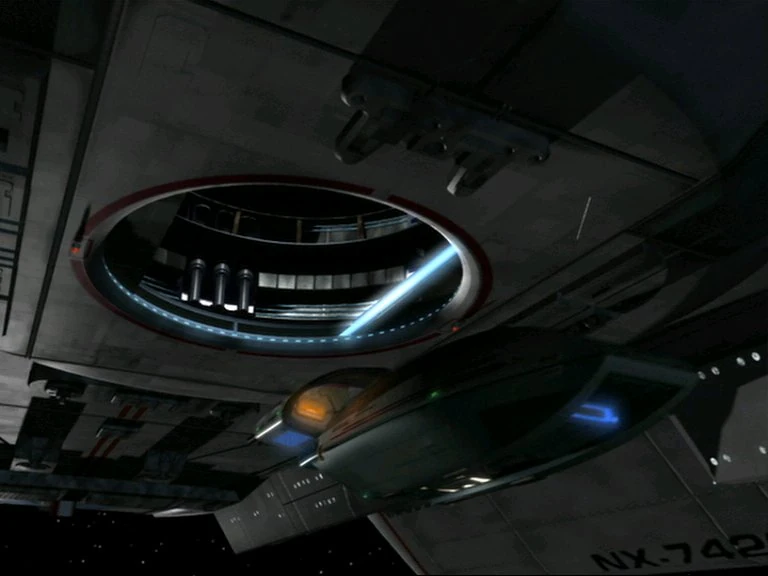 Runabout / Utility
Chaffee type shuttlepod
Hull Specifications LoggedThe Chaffee-type shuttlepod was a Starfleet design primarily utilized by the United Federation of Planets in the late-24th century, specifically noted as active in 2374. Its creation was born out of necessity when the physical studio model of the original Type 18 shuttlepod was stolen. Visual Effects Supervisor Gary Hutzel approached designer Doug Drexler to create a new, larger shuttlecraft, which would be realized as a CGI model. Drexler initially resisted but quickly conceived a design, taking inspiration from Walter 'Matt' Jefferies' approach for the original Galileo shuttlecraft seen in Star Trek: The Original Series, which shared nacelle designs with the USS Enterprise (NCC-1701). Applying this philosophy, the Chaffee-type incorporated the distinctive drum-shaped nacelles of its primary carrier, the Defiant-class starship. Drexler aimed for a less box-like, more sleek appearance, suggesting 'greater range, power, and sex appeal' for the craft. The Star Trek: Deep Space Nine Technical Manual (page 137) officially designated this vessel as the Type 10 shuttlecraft, a designation also used in Star Trek: Starship Spotter. This manual indicated that the design was based on the Type 6 shuttlecraft spaceframe, incorporating its RCS thrusters. After Drexler completed his design sketches, Brandon MacDougall fine-tuned the concept and developed the CGI model. MacDougall notably included a scaled-down Constitution II-class impulse drive/impulse deflector crystal assembly as a subtle homage to that iconic class. MacDougall's CGI model subsequently appeared in various licensed Star Trek print publications, including the Star Trek: Ships of the Line calendars and their book derivative. **Technical Specifications** The Chaffee-type shuttlepod featured a compact cockpit designed to accommodate a crew of four. Its primary power grid was driven by impulse engines and notably made no use of antimatter. This unique design allowed the shuttlepod to safely enter areas of subspace metreon radiation, environments that would typically cause the dilithium matrix of a conventional warp core to collapse. The craft was also equipped with back-up power systems to ensure operational continuity in the event of primary impulse power failure. For navigation, it possessed both primary and secondary navigational computers. Defensive capabilities included deflector shields. According to the Star Trek: Deep Space Nine Technical Manual, the Type 10 shuttlecraft was armed with phaser emitters and micro-torpedo launchers. It was also equipped with miniature versions of the Defiant-class impulse and warp drive systems, featuring similar armored warp coil assemblies, and incorporated a Danube-class computer core, alongside signal intelligence jamming devices. **Service History & Naming** The Chaffee-type shuttlepod was primarily carried aboard Defiant-class starships, such as the USS Defiant (NX-74205), where the specific shuttlepod 'Chaffee' (#01) was assigned. The shuttlepod made a notable appearance in the Star Trek: Deep Space Nine episode 'The Sound of Her Voice'. The naming of the shuttle 'Chaffee' initially caused some internal commotion, with Doug Drexler facing questions about its origin. However, Rick Berman intervened, clarifying that the shuttle was named in honor of one of the Apollo 1 astronauts who tragically died on the launchpad. While the Star Trek: Deep Space Nine Technical Manual provided a length of 9.64 meters, Doug Drexler later measured his LightWave model at 7.9 meters, and Visual Effects Supervisor Gary Hutzel provided a measurement of 7.6 meters. In apocryphal material, the Star Trek: Divided We Fall comic miniseries identifies another Type-10 shuttlecraft, the Sagan, assigned to the second USS Defiant (NCC-75633), which also appears in several Star Trek: Deep Space Nine novels.
- No armament data logged.
- No propulsion data logged.
 Classified
Challenger class
Hull Specifications LoggedThe Challenger-class starships were Starfleet vessels that shared many design aspects with the Galaxy-class and Nebula-class starships, indicating a common design philosophy or component sharing during their development. The class featured a primary saucer section connected to a smaller secondary hull at its aft end. A distinctive feature of its design was the propulsion system arrangement: a large pylon connected one warp nacelle to the dorsal surface of the secondary hull, while a smaller pylon connected another warp nacelle to the ventral surface of the same hull. The larger dorsal pylon also housed a shuttlebay, providing essential auxiliary craft deployment capabilities. **Class History** The Challenger-class was actively in service with Starfleet by the mid-2360s. One notable vessel of this class, the USS Buran (NCC-57580), was among the Starfleet armada present at the devastating Battle of Wolf 359, which occurred in late 2366 and early 2367. During this critical engagement against the Borg, the USS Buran was tragically lost in action, a fate shared by many Starfleet vessels. This event was documented in the Star Trek: The Next Generation episode "The Best of Both Worlds, Part II." Other ships potentially belonging to this class include the USS Armstrong, mentioned in the Star Trek: Deep Space Nine episode "Apocalypse Rising," and the USS Kearsarge, referenced in the Star Trek: The Next Generation episode "Firstborn," though their classification as Challenger-class is noted as uncertain in some registries. **Technical Specifications & Supplementary Information** According to issue #114 of the Star Trek: The Official Starships Collection, the Challenger-class had an approximate length of 390 meters and was designed to accommodate a crew complement of around 300. These vessels were capable of achieving a top speed of warp factor 9.6, making them suitable for various Starfleet missions. For tactical engagements, the Challenger-class was equipped with phasers and photon torpedoes, providing standard Starfleet offensive capabilities. The physical model for the USS Buran was a 'kitbash' design study and filming model created by Ed Miarecki and Michael Okuda, constructed from parts of AMT/Ertl USS Enterprise (NCC-1701-D) model kits and submarine model components, which explains its unique appearance among the wreckage at Wolf 359. **Apocryphal Mentions** In non-canonical sources, the USS Marco Polo (NCC-7219) was identified as a Challenger-class starship in the Star Trek: The Next Generation Annual story "Thin Ice," published by DC Comics. This depiction presented a variant design, seemingly based on the Constellation-class, but with a secondary hull replacing the lower nacelles. More recently, in 2024, the game Star Trek Online introduced the Atlantis-class as an unlockable cosmetic skin, described as a 25th-century successor to the Challenger-class, further expanding on the design's legacy within supplementary materials.
- No armament data logged.
- No propulsion data logged.
 Escort / Warship
Chargh class
Hull Specifications LoggedThe Chargh class was a type of battle cruiser utilized by the Klingon Empire during the mid-23rd century. The name 'Chargh' translates to 'Conqueror', a designation reflecting the aggressive tactical doctrine of the Klingon Empire. This class was developed by writer Kirsten Beyer. **Class History** Vessels of the Chargh class were prominently active during the Federation-Klingon War of 2256-2257. Several starships of this class participated in the opening engagement of the conflict, the Battle of the Binary Stars, in 2256. Later that same year, two Chargh-class battle cruisers, notably equipped with cloaking devices, were involved in a strategic ambush. During this engagement, they attempted to flank the USS Discovery while targeting the USS Gagarin (NCC-1309). Despite the intervention by the USS Discovery, the Klingon vessels successfully destroyed the disabled USS Gagarin. These events are chronicled in the episode 'Si Vis Pacem, Para Bellum'.
- • Directed energy weapo
- • Cloaking device
- • Deflector shield
 Palace
Charon type
Hull Specifications LoggedThe Charon-type was a unique and formidable starship design in service to the Terran Empire's Starfleet during the mid-23rd century. Described as 'city-sized', its primary function was to serve as the Imperial palace for the Terran emperor, Philippa Georgiou. The vessel's immense scale allowed it to house extensive facilities, including at least seventeen decks, vast hangars, and a comprehensive prison complex equipped with agony booths. For its military complement, the Charon-type featured barracks and facilities capable of accommodating ten battalions of Imperial soldiers. Corridors throughout the ship were fortified with force field emitters and hidden phaser cannons, designed to automatically engage targets, ensuring the security of the Imperial ruler and her staff. Luxurious staterooms for Imperial dignitaries and multiple laboratories were also integrated into its design. At the heart of the Charon-type was a massive super-mycelial reactor, which glowed a bright orange and served as the ship's primary power source. This reactor drew immense energy directly from the mycelial network, providing the necessary power for the vessel's operations and its devastating weaponry. However, this extreme energy accumulation was unsustainable, posing a grave threat to life across the multiverse due to the severe drain on the mycelial network. For offensive capabilities, the Charon-type was armed with powerful missiles capable of breaching a planet's crust and inflicting massive damage over wide areas, in addition to standard phaser banks and photon torpedo launchers. **Service History** The Charon-type was a pivotal asset for the Terran Empire Starfleet in the mid-23rd century. The most prominent, and likely only, vessel of this class was the ISS Charon, which served as the flagship of Emperor Philippa Georgiou. The ISS Charon was active in 2256 and played a significant role in the Terran Empire's operations. The vessel's unique design and capabilities were prominently featured in several episodes of Star Trek: Discovery, including 'Vaulting Ambition', 'What's Past Is Prologue', 'Die Trying' (where it appeared graphically), and 'Scavengers' (in a flashback sequence). **Related Lore** In the apocryphal lore of Star Trek Online, the Styx-class Terran dreadnought, obtainable by players, is based on the design of the Charon-type. Following its destruction, wreckage of the ISS Charon was depicted as scattered across space and time, with some pieces eventually coming to rest on the planet Pahvo in the 25th century. The Task Force Operation 'Pahvo Dissension' in Star Trek Online involves clearing Pahvan crystals of agonizer energy originating from the Charon's wreckage and defeating Terran forces who survived its destruction. A variant of the Styx-class, known as the Acheron, was revealed to be the flagship of Emperor Wesley Crusher in the Star Trek Online episodes 'The Calling' and 'Eye of the Storm', and is also available to players.
- • Phase
- • Torpedo launche
- • Deflector shield
 Imperial palace
Charon type
1 VesselThe Charon-type was a formidable Terran starship design, serving the Terran Empire's Starfleet during the mid-23rd century. Described as 'city-sized', its primary function was to house the Imperial palace of the Terran emperor, Philippa Georgiou (mirror). The vessel's immense scale allowed for extensive internal infrastructure, including at least seventeen decks, vast hangars, and a comprehensive prison complex equipped with agony booths. It also featured numerous Jefferies tubes and barracks capable of accommodating ten battalions of Imperial soldiers. For internal security, corridors throughout the Charon-type were outfitted with force field emitters and hidden phaser cannons, capable of automatic targeting and firing. Beyond its military and penal facilities, the ship also contained luxurious staterooms for Imperial dignitaries and multiple laboratories. **Technical Specifications & Power Systems** At the heart of the Charon-type's design was a massive super-mycelial reactor, which glowed a bright orange and served as the central power source for the entire vessel. This reactor drew energy directly from the mycelial network, enabling the ship's immense power output. The Charon-type was heavily armed, featuring powerful missiles capable of breaching a planet's crust and inflicting widespread damage. However, this extreme energy accumulation from the mycelial network was unsustainable, posing a severe threat to life across the multiverse due to the immense drain it placed on the network. Defensive capabilities included robust deflector shields and internal force field emitters. The critical details regarding its power source and destructive potential were highlighted in the Star Trek: Discovery episodes 'Vaulting Ambition' and 'What's Past Is Prologue'. **Class History** The Charon-type was active in the Terran Empire's Starfleet during the 2250s. The most prominent and only named vessel of this class was the ISS Charon, which served as the flagship of Emperor Philippa Georgiou (mirror) in 2256. The ISS Charon played a significant role in the events depicted in Star Trek: Discovery, appearing in episodes such as 'Vaulting Ambition' and 'What's Past Is Prologue'. Its presence was also noted graphically in 'Die Trying' and in a flashback sequence in 'Scavengers'. The class represented the pinnacle of Terran Imperial power and technological ambition, embodying both the grandeur and the destructive potential of the Terran Empire.
- No armament data logged.
- No propulsion data logged.
 Classified
Cheyenne class
Hull Specifications LoggedThe Cheyenne-class was a type of starship in service with Starfleet during the late 24th century. These vessels were notable for their distinctive four-nacelle configuration, a design characteristic shared by other Federation starships such as the Constellation-class, Nimitz-class, Sagan-class, and Cardenas-class. Classified as a light cruiser, the Cheyenne-class was designed for deep space exploration and defensive patrol duties. It possessed a crew complement of 320 and was capable of achieving a top speed of warp 9.6. In the 25th century, a successor class, the Ahwahnee-class, was introduced, named in honor of the Cheyenne-class USS Ahwahnee. **Class History** The Cheyenne-class saw active service throughout the 24th century. A prominent member of the class, the USS Ahwahnee (NCC-71620), participated in the devastating Battle of Wolf 359 in early 2367. During this critical engagement against the Borg, the USS Ahwahnee was wrecked. However, demonstrating Starfleet's commitment to resourcefulness, the vessel was subsequently recovered, refitted, and successfully returned to active service by early 2368, as documented in the episode 'Redemption II'. In Star Trek Online, the Cheyenne-class is categorized as a Commander-level heavy cruiser and has inspired variants such as the Dakota-class and the Stargazer-class, the latter named after the USS Stargazer (NCC-2893).
- No armament data logged.
- No propulsion data logged.

Chris Pike
Class: Type 15 shuttlepod- No armament data logged.
- No propulsion data logged.

Clarke
Class: Type 7 shuttlecraft- No armament data logged.
- • Deflector shield

Class 2 shuttle
Class: Class 2 shuttle- • Phase
- • Photon torpedo
- • Warp facto
- • Deflector shield
Runabout / Utility
Class 2 shuttle
1 VesselThe Class 2 shuttle, also known as a Type 9 shuttlecraft, was a versatile, short-range auxiliary space vessel extensively utilized by Starfleet as an embarked craft aboard starships. It served as a successor to the earlier Class 1 shuttle, designed for a variety of missions including away team deployments and training exercises. The association between the terms 'Class 2' and 'Type 9' for this specific design was canonized in 2384, as seen on the master situation display of the USS Dauntless. **Design & Engineering** The main body of the Class 2 shuttle featured a distinctive fuselage with port and starboard nacelles attached via pylons, a departure from earlier, more box-shaped Starfleet shuttle designs. Its hull was composed of tritanium alloy, providing robust structural integrity. Basic systems included a tractor beam, transporter, inertial dampers, com system, optical scanners, structural integrity field, and a message buoy. The shuttle's size allowed it to better tolerate gravimetric eddies compared to larger vessels like an Intrepid-class starship. Propulsion systems included thrusters, impulse engines, and a warp drive, complemented by stabilizer acceleration sensors and attitude control thrusters, making it fast and maneuverable. While its standard top speed was Warp 4, significant advancements were demonstrated. In 2372, the Class 2 shuttle 'Cochrane', attached to the USS Voyager, achieved Warp 9.7 after the discovery of a new stable dilithium form, and was even capable of reaching Warp 10 with the engagement of its transwarp drive. Another shuttle of this class was successfully modified with a coaxial warp drive. For defensive capabilities, the Class 2 shuttle was equipped with deflector shields and a weapons array consisting of phaser banks and photon torpedoes, with a weapons range of at least 20,000 kilometers. It was also capable of firing a polaron pulse. Theoretically, the shuttle could be modified with Borg-developed shields to navigate gravimetric currents, and two shuttles were practically outfitted with refractive shielding. **Interior Configuration** Access to the shuttle's interior was provided by a large entry hatch at the rear of the craft. The interior was designed with a cockpit featuring seating for two, and a small cabin in the aft section. The cockpit's two swiveled chairs allowed pilots to access approximately 180 degrees of forward control consoles, split between the seats, with a small centrally located viewscreen/monitor. The pilot's seat was typically on the port side. These chairs were mounted on a track, enabling them to slide back to access rear consoles located on the half-wall separating the forward and aft compartments. The aft cabin included benches for passenger seating, ample room for cargo, and storage space for at least two EV suits. The shuttle's transporter system was also situated in the aft compartment. Despite its capabilities, the Class 2 shuttle was known for its compact size, often leading to 'Class 2 claustrophobia' among cadets, as it was 'not exactly built for comfort.' Captain Kathryn Janeway, however, believed it possible to live aboard this type of shuttle alone for extended periods, citing 'plenty of rations.' **Service History** During the 2360s, the Class 2 shuttle was widely adopted by Starfleet Academy for use as a training ship. Tom Paris recounted how cadets would be 'shoehorn[ed] half a dozen cadets into one of these things for weeks at a time.' By the 2370s, the Class 2 shuttle became a standard component of the inventory for Intrepid-class starships, including the USS Voyager. However, its limitations in the Delta Quadrant became apparent. Following comments from Tom Paris and B'Elanna Torres regarding its compact size, Seven of Nine suggested the design of a 'new shuttle. Larger, more efficient,' a suggestion Torres found 'not a bad idea.' This sentiment, particularly Tom Paris's assertion that 'Class 2 shuttles just don't cut it in the Delta Quadrant' and that 'we've needed something bigger and better since we got here,' directly contributed to the decision to construct the Delta Flyer in 2375. The Class 2 shuttle continued its service into the 2380s, being part of the standard inventory for Dauntless-class starships in 2384, where its profile and key features were displayed on master situation displays. **Notable Vessels** Two named Class 2 shuttles, both designated 'Cochrane' (Registry 04), were attached to the USS Voyager (NCC-74656). The 'Cochrane' of 2372 was destroyed in 2374. Another shuttle, the 'Dawkins', was active in 2377 and attached to Jupiter Station.
- • Phase
- • Photon torpedo
- • Warp facto
- • Deflector shield
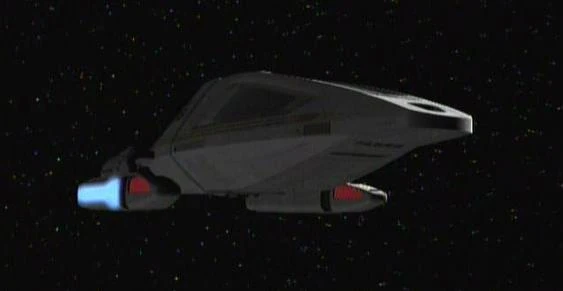 Shuttlecraft
Class 2 shuttle
Hull Specifications LoggedThe Class 2 shuttle, also officially referred to as a Type 9 shuttlecraft, served as a vital short-range auxiliary space vessel within Starfleet. These embarked craft were primarily utilized from larger starships for various missions, succeeding the earlier Class 1 shuttle in service. **Design & Development** The genesis of the Class 2 shuttle's design stemmed from a desire within the Starfleet art department to introduce a 'cool and sleek shuttle' for the Star Trek: Voyager episode 'Threshold'. Rick Sternbach was tasked with this design in mid-1995, collaborating closely with production designer Richard James and set designer John Chichester to ensure a cohesive interior and exterior. The resulting design, quickly dubbed the 'Speedboat Shuttle' by the art department, marked a significant departure from the more traditional, box-shaped Starfleet shuttle designs. Sternbach finalized blueprints in November 1995, leading to the construction of the physical studio model by Tony Meininger's Brazil-Fabrication & Design. This Class 2 shuttle model holds the distinction of being the last physical shuttle model built for Star Trek: Voyager, as production transitioned to CGI. For later season appearances, a CGI model was developed at Foundation Imaging, with Rob Bonchune among the artists contributing to its graphics. While Rick Sternbach initially designated this design as the 'Type 12 shuttlecraft' and the Star Trek: The Next Generation Technical Manual referenced a similar 'Type-9A' for a large cargo shuttle, the designation 'Type 9 shuttlecraft' was canonized in 2384 through its appearance on the master situation display of the USS Dauntless in the Star Trek: Prodigy episode 'Mindwalk'. **Class History** Throughout the 2360s, the Class 2 shuttle was extensively employed by Starfleet Academy as a training ship. Tom Paris famously recounted the cramped conditions, noting that cadets were often 'shoehorned' into these vessels for weeks, leading to 'Class 2 claustrophobia'. By the 2370s, the Class 2 shuttle became a standard component of Intrepid-class starships, including the USS Voyager (NCC-74656). Its compact size prompted comments from Seven of Nine and B'Elanna Torres, who suggested the need for a 'larger, more efficient' shuttle. This sentiment was echoed by Tom Paris, who stated that 'Class 2 shuttles just don't cut it in the Delta Quadrant,' directly influencing the decision to construct the more advanced Delta Flyer in 2375. The Class 2 shuttle's robust design allowed it to tolerate gravimetric eddies more effectively than a larger Intrepid-class starship. Its service continued into the 2380s, with the type observed as part of the standard inventory of Dauntless-class starships, as depicted on the master situation display of the USS Dauntless in 2384. **Technical Specifications** The Class 2 shuttle's main body comprised a fuselage with port and starboard nacelles attached via pylons. Its hull was constructed from a durable tritanium alloy, featuring a rear entry hatch for access to the interior. Standard systems included a tractor beam, transporter, inertial dampers, com system, optical scanners, structural integrity field, and a message buoy. Propulsion systems consisted of thrusters, impulse engines, and warp drive, incorporating stabilizer acceleration sensors and attitude control thrusters. While its standard top speed was Warp 4, the Class 2 shuttle 'Cochrane' (04), attached to the USS Voyager, achieved Warp 9.7 in 2372 after the discovery of a new stable dilithium form, and even Warp 10 with the engagement of its transwarp drive. Another shuttle of this class was successfully modified with a coaxial warp drive. For defensive capabilities, the shuttle was equipped with deflector shields, phaser banks, and photon torpedoes, boasting a weapons range of at least 20,000 kilometers. Theoretically, Class 2 shuttles could be modified with Borg-developed shields to navigate gravimetric currents caused by a graviton ellipse, and in practice, two shuttles were outfitted with refractive shielding. **Interior Configuration** The interior of the Class 2 shuttle featured a cockpit with seating for two, complemented by a small cabin in the aft section, accommodating a crew complement of one to six. The craft was not 'built for comfort,' often inducing 'Class 2 claustrophobia' among cadets. Captain Kathryn Janeway, however, believed it possible to live aboard this type of shuttle alone for extended periods, citing 'plenty of rations.' Entry was facilitated by a large hatch at the rear, leading to passenger benches parallel to the aft walls, ample cargo space, and storage for at least two EV suits. The shuttle's transporter system was also located in the aft compartment. The relatively cramped cockpit included two swiveled chairs, with approximately 180 degrees of forward control consoles split between them and a small centrally located viewscreen/monitor. The pilot's seat was positioned on the port side, and the chairs were mounted on a track, allowing them to access rear consoles located on the half-wall separating the forward and aft compartments. **Named Shuttles of the Class** Notable Class 2 shuttles include the 'Cochrane' (registry 04), attached to the USS Voyager (NCC-74656), which was destroyed in 2374 after achieving Warp 10 in 2372. Another 'Cochrane' (registry 04) was also attached to the USS Voyager in 2374, with its status unknown. The 'Dawkins' was active at Jupiter Station in 2377.
- No armament data logged.
- No propulsion data logged.
Class 2 shuttle / Type 9 shuttlecraft
Hull Specifications LoggedThe class classification of Class 2 shuttle / Type 9 shuttlecraft starships.
- No armament data logged.
- No propulsion data logged.
Class 4 stardrive vessel
Hull Specifications LoggedThe Class 4 stardrive vessel was a designation for a type of small starship developed and utilized during the 23rd century. These vessels were specifically designed for the role of a survey vessel, primarily operated by the Federation Merchant Service. A notable characteristic of their construction was the incorporation of iridium, a durable and rare metallic element. Furthermore, these ships were equipped with advanced transporter systems, facilitating efficient crew and cargo transfer during their exploratory missions. **Service History** Active throughout the 23rd century, Class 4 stardrive vessels served the United Federation of Planets' Merchant Service in various survey capacities. One well-documented vessel of this class was the SS Beagle, which carried a crew complement of 47. The SS Beagle's service tragically concluded with its destruction in 2262, an event chronicled in the Starfleet records and referenced in the episode 'Bread and Circuses'. Despite the loss of individual ships, the Class 4 stardrive vessel played a crucial role in the Federation's early exploratory and mercantile endeavors.
- No armament data logged.
- No propulsion data logged.
 Transport / Freighter
Class 9 cargo vessel
1 VesselThe Class 9 cargo vessel was a Starfleet designation for a type of interplanetary sublight freighter primarily utilized during the 24th century. These vessels were characterized by their minimal weaponry, typically consisting of laser arrays, and were generally slower than the Class 7 vessels. Their design emphasized cargo capacity and basic interplanetary travel rather than speed or combat capabilities. The structure of a Class 9 vessel, as exemplified by the ''Erstwhile'', featured a type 034 structure with a tritanium hull, providing a robust, if not advanced, framework for its operations. Propulsion was handled by type 02 fusion propulsion systems, initially allowing for speeds up to 0.02 times the speed of light. By 2384, some vessels of this class, like the ''Erstwhile'', had undergone upgrades to achieve a maximum speed of Warp 4 and were equipped with retractable landing struts for planetary surface operations. **Class History** The Class 9 cargo vessel saw active service from the 2360s through the 2380s. A notable encounter involving this class occurred in 2365 when the USS Enterprise (NCC-1701-D) encountered a damaged Class 9 cargo carrier named the ''Erstwhile'' while traversing the Omega Sagitta system, as depicted in the episode 'The Outrageous Okona'. This incident provided Starfleet with detailed technical data on the vessel's construction and capabilities, including its primitive 2.3 megawatt laser array with four emitters and a gross vehicle mass of 23,200 metric tons. Later, in 2381, a vessel of this type was featured in Brad Boimler's holonovel, 'Crisis Point II: Paradoxus', where Illustor and his acolytes utilized it in their quest to find Ki-ty-ha. The continued presence and occasional upgrades to these vessels, such as the Warp 4 capability noted by 2384 in the episode 'Crossroads', underscore their enduring utility as basic cargo transporters in various sectors.
- No armament data logged.
- • 0.02c (Qty: original)
- • Warp facto (Qty: upgraded)
- + 1 more...

Class C shuttlecraft
Class: Class C shuttlecraft- • Phase
- No propulsion data logged.
Runabout / Utility
Class C shuttlecraft
3 VesselsThe Class C shuttlecraft was a ubiquitous Starfleet and civilian shuttlecraft, serving from the mid-23rd century through the late-24th century. Its robust design and adaptability made it a common sight across various Starfleet facilities, starships, and even in civilian applications. **Design & Technical Specifications** The Class C shuttlecraft featured a compact yet functional design. Its cockpit provided seating for two pilots, ensuring efficient operation. A cabin area, located aft of the cockpit, was designed to accommodate a dozen passengers comfortably. For personnel transport, the aft section of the shuttle was equipped with transporters, capable of beaming at least three persons simultaneously. In terms of defensive and offensive capabilities, the shuttle was outfitted with Type 2 phasers, strategically located in an equipment bay on the bulkhead near the aft airlock. For protection against external threats, the shuttle incorporated blast shutters that could be closed over its windows. A ventral bay allowed for the deployment of probes, enhancing its utility for reconnaissance or scientific missions. When landed, a telescoping ramp extended from beneath the airlock, facilitating easy ingress and egress for crew and passengers. The standard livery for Class C shuttles typically included bold red striping, sometimes augmented with white stripes, the registry number of its assigned starship or facility, and the distinctive Starfleet insignia. **Service History** The Class C shuttlecraft entered service with Starfleet in the mid-2230s and quickly became a standard asset across the fleet. During the mid-2230s to mid-2250s, these shuttles were widely utilized on starbases and were a common complement aboard starships such as the Crossfield-class, Walker-class, and Constitution-class vessels. Its versatility extended even to the mirror universe, where the Imperial Starfleet also employed this type of craft, as depicted in the Star Trek: Discovery episode 'Vaulting Ambition'. In 2257, an upgraded variant of the Class C shuttle was introduced, featuring a larger aft compartment, as seen in the Star Trek: Discovery episode 'Such Sweet Sorrow'. This upgrade was notably applied to the complement of Class C shuttlecraft aboard the USS Enterprise (NCC-1701) and the USS Discovery. These enhanced shuttles were equipped with improved phasers in preparation for the critical Battle near Xahea, where Starfleet confronted a Section 31 fleet controlled by Control. The reconfigured shuttles, with their expanded aft components, were prominently featured in Star Trek: Discovery episodes 'DSC 12' and 'DSC 23'. The Class C shuttlecraft demonstrated remarkable longevity, remaining in active service well into the late-24th century. As late as the 2390s, these shuttles were still a common sight at Starfleet facilities within the Sol system. Furthermore, they found continued use in civilian sectors, serving as taxis and school shuttles for organizations such as WSA, as evidenced in the Star Trek: Short Treks episode 'Children of Mars' and the Star Trek: Picard episodes 'Remembrance' and 'Maps and Legends'.
- • Phase
- No propulsion data logged.

Class F shuttlecraft
Class: Class F shuttlecraft- No armament data logged.
- • Deflector shield
Runabout / Utility
Class F shuttlecraft
2 VesselsThe Class F shuttlecraft was the standard issue Starfleet shuttlecraft during the mid-23rd century. Constructed with a duranium metal shell, its propulsion system consisted of an ion engine powered by a matter/antimatter reaction, enabling it to match the warp speed of a Constitution-class starship. The exterior could also be reinforced with a protective shield. Zephram Cochrane, upon first viewing a Class F shuttle, remarked on its 'simple and clean' design and called it 'a beauty'. Measuring 24 feet in length, the Class F shuttle was divided into two primary sections. The forward section provided seating for at least seven passengers, while a smaller aft section housed access to the shuttle's engineering components. Entry to the shuttle was facilitated by an entrance on the port side, featuring two sliding doors and a hinged gangway that extended from the main body to the port nacelle when lowered. In deep space, Class F shuttles typically operated on instruments only, with blast shutters on the three forward windows lowering automatically when sensors detected visually significant phenomena, such as a nebula. According to the USS Enterprise Owners' Workshop Manual, these shuttles were not equipped with any armament. **Service History** During the mid-2260s, Class F shuttles were widely deployed, based at Federation starbases and aboard Constitution-class starships, which typically carried four shuttles of this class alongside other shuttle types. Notable Class F shuttles attached to the USS Enterprise (NCC-1701) included the USS Enterprise (NCC-1701) shuttlecraft Columbus (NCC-1701/2), the USS Enterprise (NCC-1701) shuttlecraft Einstein (NCC-1701/6), the USS Enterprise (NCC-1701) shuttlecraft Galileo (NCC-1701/7), and the USS Enterprise (NCC-1701) shuttlecraft Galileo II (NCC-1701/7). Other named shuttles included the Starbase 6 shuttlecraft Conrad, the Starbase 4 shuttlecraft Da Vinci (SB4-0314/2), the Starbase 11 shuttlecraft Picasso (SB11-1201/1), and the USS Intrepid (NCC-1631) shuttlecraft Setar (NCC-1631/4). The Class F shuttlecraft remained in active service into the 2270s, still being utilized for deployment to and from the San Francisco air tram station, as depicted in Star Trek: The Motion Picture Director's Edition. By 2364, a model of an Enterprise shuttle, likely a Class F, was among the decorations in a lounge aboard the USS Enterprise (NCC-1701-D), as seen in the episode 'Lonely Among Us'. In the early 2380s, a Class F shuttle was on display in a museum on Vulcan, an event witnessed by crew members from the USS Cerritos during an incident involving a stolen Romulan Bird-of-Prey, as depicted in the episode 'Veritas'.
- No armament data logged.
- • Deflector shield
 Transport / Freighter
Class III neutronic fuel carrier
Hull Specifications LoggedThe Class III neutronic fuel carrier, also known as a 3rd class neutronic fuel carrier, was a specialized transport starship class active within Starfleet during the 23rd century. These vessels were designed with a dual purpose: primarily to haul significant quantities of neutronic fuel, and secondarily to accommodate several hundred passengers, making them vital for logistical support and limited personnel transport across the United Federation of Planets. **Design & Development** The design of the Class III neutronic fuel carrier emphasized cargo capacity and durability, reflecting its role as a fuel transport. The specific visual design for the most famous vessel of this class, the USS Kobayashi Maru, was developed for the film 'Star Trek' by John Eaves and Alex Jaeger. Their work was based on Roger Sorensen's 1983 blueprints of the prime universe Kobayashi Maru. While the cover of the novel 'The Kobayashi Maru' depicted a Tritium-class starship, originally designed by Rick Sternbach for the 'Spaceflight Chronology', Eaves' and Jaeger's final design bore little resemblance to it. Industrial Light & Magic art director Alex Jaeger noted that the Kobayashi Maru's design shared similarities with a planned, but ultimately unfeatured, alternate reality USS Excelsior for the film 'Star Trek', describing it as 'a cargo version' of the Excelsior-class. This design philosophy underscored its utilitarian nature, prioritizing function over sleek aesthetics. The class was capable of a maximum cruising speed of Warp 3 and a maximum emergency speed of Warp 6. **Service History** The Class III neutronic fuel carrier is most famously associated with the Kobayashi Maru scenario, a no-win training exercise used by Starfleet Academy. In this scenario, the Kobayashi Maru was depicted as a 3rd class neutronic fuel carrier in distress within the Klingon Neutral Zone. This scenario was a pivotal plot device in 'Star Trek II: The Wrath of Khan' and the episode 'Kobayashi'. Likewise, in the alternate reality, a vessel of this class, also named USS Kobayashi Maru, featured prominently in the film 'Star Trek'. The designation 'Class III' was used on display graphics, while dialogue often referred to it as a '3rd class' carrier. The studio model of the Kobayashi Maru was later featured as part of the Eaglemoss Collections 'Star Trek: The Official Starships Collection' line of Star Trek starship miniatures, cementing its iconic status within Starfleet lore.
- No armament data logged.
- No propulsion data logged.
 Cadet Vessel
Class J starship
Hull Specifications LoggedThe Class J starship, also known as the Class J cargo ship or Class J training ship, was a small, antiquated starship design that saw extensive use by the Federation and independent traders well into the mid-23rd century. These vessels were characterized by their compact size, with the warp nacelles uniquely situated on pylons underneath the primary hull. Propulsion was further provided by a single impulse engine attached to the rear of the primary hull. A critical design feature for crew safety was the baffle plate, which protected the warp core from potential ruptures and harmful emissions, such as delta rays. **Class History** The Class J starship had a varied service history, often appearing in critical situations. In 2266, the notorious Harcourt Fenton Mudd owned an unregistered small Class J cargo ship, which he used as a transport vessel. While attempting to evade the USS Enterprise (NCC-1701), Mudd piloted his ship into an asteroid belt, causing its engines to overheat. Although the ship was ultimately destroyed by an asteroid collision, the USS Enterprise was able to beam off all personnel. The same year, Starfleet maintained an old Class J starship, named Lucas, for use as a cadet vessel. During an inspection by Fleet Captain Christopher Pike, a baffle plate ruptured, exposing the crew to harmful delta rays. In 2267, the Deneva colony utilized a Class J starship, described as a one-man vessel of Denevan configuration. This ship, after coming into sensor range, could not be intercepted by the USS Enterprise, even at Warp factor 8, before it was destroyed by the physics of the Denevan sun. Later, in 2269, the Federation operated the space cruiser USS Aurora (NC-17740), a Class J vessel. This ship was stolen by Dr. Sevrin and five of his followers in their search for the mythical planet Eden. The USS Aurora was subsequently destroyed when attempting to pull free from a tractor beam. **Ships of the Class** Several Class J starships are known by name or specific designation. These include the USS Aurora (NC-17740), which was stolen by Dr. Sevrin in 2269 and subsequently destroyed. Harcourt Fenton Mudd's vessel, the Stella, was destroyed in 2266. The Lucas served as a Starfleet training vessel in 2266. Additionally, an unnamed Denevan starship of this class was destroyed in 2267 when it flew into the Denevan sun. **Behind the Scenes & Apocrypha** The 'Class J' moniker was first referenced in Star Trek: The Original Series episodes 'Mudd's Women' and 'The Menagerie, Part I'. For the remastered version of The Original Series, Visual Effects Producer Michael Okuda retconned a new CGI starship design to represent the Class J. This new design appeared as Mudd's freighter in 'Mudd's Women', the Denevan starship in 'Operation -- Annihilate!', and the USS Aurora in 'The Way to Eden'. Okuda, who designed the vessel, confirmed the CGI USS Aurora was a slight modification of the Class J CGI model, featuring larger engines and new windows. Its registry, NC-17740, was a nod to Matt Jefferies' 1935 Waco YOC biplane. The remastered CGI USS Aurora's design also shares a lineage with Matt Jefferies' original 'teardrop' exterior sketches for early shuttlecraft, a vision that Okuda helped fulfill. According to Issue #79 of 'Star Trek: The Official Starships Collection', the Class J cargo vessel was approximately 18 meters in length, had a maximum speed of Warp factor 4, and typically carried a crew complement of 6. This class was also equipped with phaser emitters.
- No armament data logged.
- No propulsion data logged.

Columbia
Class: NX class- • 6x spatial torpedo
- • Phase canno
- + 3 more...
- • Warp facto
- • Polarized hull plating
 Explorer
Constellation class
9 VesselsThe Constellation-class starship was a distinguished type of Federation star cruiser that served with Starfleet from the late 23rd century through the late 24th century. Known for its distinctive four-nacelle design, the class performed a variety of roles, from deep-space exploration to defensive patrols, before eventually being phased out of frontline service and relegated to secondary duties. **Design & Development** One of the most notable features of the Constellation-class was its unique propulsion system, outfitted with four warp nacelles, a design choice that set it apart from many contemporary Starfleet vessels. Early ships of the class, such as the USS Hathaway (NCC-2593), were originally constructed with Avidyne engines, though these were later replaced with more effective engines by the latter 24th century. The class also incorporated at least two impulse reactors and was capable of a maximum speed of Warp 9. Internally, Constellation-class starships featured typical Federation starship crew cabins, providing spartan accommodations. Main engineering housed the ship's power systems, including the antimatter warp drive chamber and impulse engine controls. The main bridge design of the Constellation-class evolved over its service life, presenting two prominently different types. The 'Hathaway'-type bridge, seen on the USS Hathaway (NCC-2593) launched in 2285, featured a wide-open front with primary stations cramped in the rear. The helm and navigation stations were located on the extreme port and starboard sides, providing the captain, seated centrally, an unobstructed view of the viewscreen. The first officer's chair was positioned slightly behind and to the right of the captain's, with the tactical station directly behind the command chairs, and engineering and science stations further to the rear. In contrast, the 'Stargazer'-type bridge, exemplified by the USS Stargazer (NCC-2893), was described by Jean-Luc Picard as 'cramped' but was actually less cluttered, with a design more reminiscent of the Constitution II-class or Ambassador-class bridges. This type featured side-by-side helm and navigator consoles directly in front of the viewscreen, with the captain's chair directly aft. Tactical and a second primary station were located at the rear, with two turbolifts flanking the rear wall monitors. An entryway to the captain's ready room was situated along the port wall. **Service History** The Constellation-class began active service as early as 2278, with the USS Constellation (NCC-1974) appearing on a Starship Mission Assignments chart. The USS Hathaway (NCC-2593) was constructed in 2285 at Yoyodyne Propulsion Systems at the Copernicus Ship Yards on Luna. By 2293, the USS Constellation (NX-1974), the class prototype, was still undergoing certification trials. Starfleet continued to launch new ships of this class for decades, including the USS Stargazer (NCC-2893) by 2326. During the early-to-mid 24th century, the class was highly regarded for its versatility, performing both deep-space exploration and defensive-patrol duties. By the mid-2360s, the Constellation-class was on the fringe of being phased out of the fleet. Decommissioned vessels, such as the eighty-year-old USS Hathaway (NCC-2593), were stripped of their offensive systems and rendered 'warp inactive' through the removal of all antimatter. Those that remained in service were typically relegated to transport duties. Despite their age, Constellation-class starships continued to see action in second-line service, participating in the hastily-organized Federation blockade during the Klingon Civil War and later in the Dominion War in 2374. Notable ships of the class include the USS Constance (NCC-10367), destroyed in 2367, and the USS Stargazer (NCC-2893), famously commanded by Captain Jean-Luc Picard before his command of the Galaxy-class USS Enterprise (NCC-1701-D). Picard, while acknowledging the USS Enterprise (NCC-1701-D) as 'far superior' in every measurable way, also admitted to a fondness for his former command, describing the USS Stargazer (NCC-2893) as 'an overworked, underpowered vessel that was always on the verge of flying apart at the seams.' The USS Stargazer (NCC-2893) was eventually retired and preserved at the Fleet Museum by 2401. Other ships of the class included the USS Victory (NCC-9754), USS Billings, USS Gettysburg, and USS Magellan. A Starfleet Technical Database article by Rick Sternbach suggested a crew complement of 535 and fifteen decks, along with additional ships like the USS Valkyrie (NCC-2590) and USS Gihlan (NCC-9761), the latter named after an admiral overseeing the class's development. The article also outlined mission statements including long-range sensor analysis, communications, intelligence gathering, cargo and stealth shuttle deployment, and general science and patrol duties.
- • Phase
- • Photon torpedo
- • Warp facto (Qty: maximum)
- • Deflector shield
 Explorer
Constitution class
18 VesselsThe Constitution-class was a premier Federation starship, classified as a Class I heavy cruiser, primarily utilized by Starfleet for long-duration exploration and patrol missions during the mid-23rd century. These vessels were designed to operate with minimal outside support, capable of undertaking five-year mission cycles and possessing an operating endurance of eighteen years. Their design emphasized galactic exploration and diplomacy. At least twelve Constitution-class starships were commissioned by Starfleet, with construction occurring at Earth's San Francisco Fleet Yards, California, and Luna's Tranquility Base. Many unit components for the Constitution-class were also shared with other contemporary designs, such as the Sombra-class. The class was generally designed for exploration, patrol, and defense when necessary, serving as protectors within the civilian community of Federation space. Notable designers and contributors included Larry Marvick, who designed the engineering controls, and Doctor Richard Daystrom, responsible for the basic computer design. Lieutenant Commander Montgomery Scott, Chief Engineer of the USS Enterprise (NCC-1701), became so intimately familiar with the design that Captain James T. Kirk famously stated Scott knew more about the ship than its designers. The initial design concept incorporated modular components, allowing for upgrades and extending the lifespan of these front-line vessels. Despite their successes, the dangerous nature of their mission parameters led to a relatively high loss rate for the class. **Service History: Early Years (2240s-2260s)** The first ship of the class, the USS Enterprise (NCC-1701), was launched on April 11, 2245. Other early vessels included the USS Constellation (NCC-1017) and the USS Cayuga, launched the same year. During the early 2250s, the USS Enterprise made first contact with the Talosians on Talos IV, contributing to its designation as the Federation flagship due to numerous discoveries and achievements. By this period, Constitution-class starships were considered Starfleet's premier vessels, patrolling Federation space and exploring uncharted areas. Around late 2254, these vessels were outfitted with the latest technology. In 2256, with the outbreak of the Federation-Klingon War, Constitution-class starships were largely ordered off the front lines to patrol other regions, serving as a unit of last resort while warships like the Crossfield-class with its spore drive received priority for refits. The USS Defiant (NCC-1764) patrolled Sector 006, while the USS Enterprise continued its five-year mission under Captain Christopher Pike. After the war, Starfleet began modernizing its fleet in 2258, with the USS Enterprise receiving new colorful Starfleet uniforms before other ships. Fleet-wide upgrades, including hull adjustments, main Artificial Intelligence, and transporter systems, were applied to Constitution-class vessels and others like the Sombra-class after the USS Enterprise sustained major damage in late 2258. Holographic communication systems were temporarily removed from the class. In 2259, the USS Enterprise helped clean up the aftermath of a battle with Control near Kiley 279, leading to the renaming of General Order 1 as the Prime Directive. The USS Enterprise also made first contact with Gorn ships in 2259, engaging in several skirmishes. **Service History: Mid-2260s to Refit** By 2265, with advancements in ship technology, Constitution-class vessels, including the USS Enterprise, began extensive refits in preparation for Captain James T. Kirk's first five-year mission. This period saw the USS Enterprise undertake its greatest mission, discovering and contacting many new species. By 2267, many Constitution-class starships had been upgraded, with a large group assembled at Starbase 11 for refitting and repairs, all featuring modern components and exterior hull appearances. The USS Enterprise itself received upgraded warp and impulse engines and a new interior layout. In 2267, Commodore Matt Decker's USS Constellation was lost to the 'doomsday machine' near system L-374, providing valuable insight into neutronium alloys. In 2268, the Vulcan-manned USS Intrepid (NCC-1631) was lost with its entire crew in an encounter with a huge simple cellular being in star system Gamma 7A of Sector 39J, a situation resolved by the USS Enterprise. The USS Exeter (NCC-1672) became infected with an unknown virus from biological warfare residue on Omega IV, killing its entire crew except Captain Ronald Tracey, with the USS Enterprise later finding a cure. Late 2268 saw the disastrous testing of the M-5 multitronic unit, which controlled the USS Enterprise, leading to the destruction of the USS Excalibur (NCC-1664) and severe damage to the USS Lexington (NCC-1709). The USS Defiant responded to a distress call from Tholian Assembly space, where its crew succumbed to sensory distortion and insanity, leading to its loss in a spatial interphase and subsequent transit to the mirror universe. **Mirror Universe & Legacy** The USS Defiant emerged in the 22nd century mirror universe, where it was initially captured by the Tholians and later taken over by the Terran Empire, with control eventually passing to Hoshi Sato. The USS Discovery, inadvertently trapped in the mirror universe in 2256, discovered the Defiant's substantial modifications under the Terran Empire. This intelligence was later classified by Starfleet Command. In 2267, the ISS Enterprise (NCC-1701), a mirror universe Constitution-class starship, was identical to the prime universe's USS Enterprise. Following a decade of achievements, the Constitution-class underwent a radical refitting and redesign in the early 2270s, leading to the Constitution II-class. Most Constitution I-class vessels were subsequently decommissioned, relegated to training, or retired to the Fleet Museum, such as the USS New Jersey (NCC-1975), which was preserved in its late 2260s configuration by 2401. The class's legacy continued, with holographic recreations of its consoles used on the USS Protostar in 2384, and its design admired by future Starfleet officers like Commander Rayner and Lieutenant Gen Rhys. **Technical Overview** The Constitution-class featured the iconic saucer section-engineering section-warp nacelle layout. While appearing identical at first glance, minor detail differences existed between vessels. The primary hull housed fourteen science labs and at least seven turbolifts. The class had at least two briefing rooms, one on Deck 14. Its modular design allowed for component separation, theoretically enabling the jettisoning of the secondary hull in emergencies, though this was a dangerous procedure. Despite not being aerodynamic, these vessels could enter a Class M planet's upper atmosphere for limited periods. Propulsion was provided by a warp drive engine unit, powered by a warp core reactor mixing hydrogen deuterium and antimatter to create electro-plasma for the warp coils in the nacelles. Early vessels used lithium, later dilithium, for their matter/antimatter propulsion system. Maximum safe cruising speed was Warp 6 (384c), with an emergency speed of Warp 8 (512c). In the mid-2250s, Warp 7 was nominal. The USS Enterprise infrequently reached Warp 8, and on rare occasions, pushed beyond Warp 9, even Warp 10 with modifications by Lokai or when drawn into a creation point. With modifications by the Nomad probe and later the Kelvans, the USS Enterprise achieved Warp 11. The highest recorded speed for the class was Warp 14.1 due to sabotage. Bussard collectors at the front of the warp nacelles collected interstellar hydrogen (deuterium) for fuel and could expel gases or warp drive plasma in emergencies. The main sublight drive was an impulse drive, located at the back of the saucer section, capable of Warp Factor 1. Tactically, while not primarily warships, Constitution-class vessels were well-armed. Early 2250s vessels were armed with laser cannons, capable of destroying half a continent. By 2258, these were replaced by phaser banks, offering greater power and flexibility, with a range of approximately 90,000 kilometers and an output of about 1.61E26 watts. Phasers could be adjusted from 1/100th power to stun, heat, or disintegrate targets, with narrow or wide beams. By 2257, ships had six phaser emitters, including forward, port, starboard, mid-ship, and later, aft banks. Torpedo systems included two forward torpedo launchers and at least one aft tube, capable of launching multiple photon torpedoes powerful enough to destroy a planet's surface. Defensive systems included hull deflector shields, divided into four segments. At full power, tied to the warp reactor, shields could absorb impacts equivalent to 360 photon torpedoes. However, they were vulnerable to intense phaser bombardment and more powerful weaponry like the planet killer's antiproton beam. Diversion of power to shields reduced phaser power. A navigational deflector dish, mounted at the front of the secondary hull, deflected debris and could be used as a deflector beam, though this could cause ship damage. **Interior Design** The interior color scheme predominantly featured red-orange accents with dark or light gray paneling, accented by soft white or multicolored lights. The main bridge, located on Deck 1 atop the primary hull, directly supervised mission operations. Bridge configurations varied due to the class's age and different iterations. The command chair, centrally located, allowed the captain to monitor the vessel and issue orders. Early versions had a 'gooseneck viewer' on the right armrest, later eliminated. Command chair controls included buttons for the companel, red/yellow alert, and ion pod jettison. Bridge stations included helm, navigation, communications, engineering, weapons control, gravity control, damage control, environmental engineering, science, library computer, and internal security. All computer systems were duotronic-based. The main viewscreen was mounted in the forward bulkhead. By the late 2260s, the bridge design became circular with curved overhead viewscreens and an automatic bridge defense system. Main engineering controlled warp and power systems, housing the warp core. Its location and configuration evolved, with the warp core initially in main engineering, then moved to a separate dilithium crystal energizer room in 2266, and later back to engineering with a vertical component added in 2269. Transporter rooms featured six small pads and a large central section for cargo, with a staging area and a food replicator. The aft landing bay housed a standard complement of four shuttlecraft, including Class F shuttles. The class also contained at least five cargo holds. Sickbay facilities, located on Deck 6, included an examination room, nursery, chief medical officer's office, and medical lab. Doctor Sarah April designed many of the USS Enterprise's sickbay tools. Crew/officers' lounges offered viewpoints, tables, and seating. Due to increased crew capacity, the lounge was later replaced by six recreation rooms, a holographic rec room, arboretum, galley, gymnasium, bowling alley, theater, and chapel. Crew quarters were throughout the saucer section, with senior officers on Deck 5. Quarters were larger in earlier configurations (203 crew) compared to later ones (450 crew). Other internal features included deployable scanning pods, airlocks for EVA, docking ports, and escape pods (lifeboats).
- • Antimatter charge
- • Phase (Qty: 6)
- + 2 more...
- • Transporte (Qty: 1)
- • Warp facto
- + 3 more...
 Classified
Constitution class (3067)
Hull Specifications LoggedThe Constitution-class (3067) was a Starfleet starship design operated by the United Federation of Planets during the early 31st century. This class featured a robust design, measuring 346 meters in length, 201 meters in beam, and 69 meters in height, with a mass of 150,000 tonnes. It comprised 19 decks and was equipped with advanced propulsion systems, including a maximum warp factor of 9.78 and an impulse speed of 0.72c. For defense, the class utilized deflector shields, and its offensive capabilities included phaser arrays, fore and aft photon torpedo launchers, and rescue tractor beams. The design also incorporated at least nine escape pods, located on deck 19. **Class History** The Constitution-class was actively in service during the 3060s, a period when the United Federation of Planets was intensely exploring alternative warp drive technologies. A notable vessel of this class, the USS Miyazaki (NCC-316608), was commissioned in 3067 to prototype a singularity drive. Unfortunately, this experimental drive system failed in 3069, resulting in the tragic loss of the entire crew and the subsequent abandonment of the ship in the Beta Quadrant. By 3195, the USS Miyazaki was still adrift. This class is distinct from other Constitution-class designs, including the Constitution-class (23rd century) and the Bellerophon-class, which were in service during earlier centuries, despite sharing a similar aesthetic in some depictions. **Notable Starships** Only one starship of this specific Constitution-class (3067) is explicitly named in Starfleet records: the USS Miyazaki, registry NCC-316608. This vessel played a critical role in the experimental singularity drive program before its unfortunate demise.
- • Phase
- • Torpedo launche
- • Impulse engine
- • Warp facto
- + 1 more...
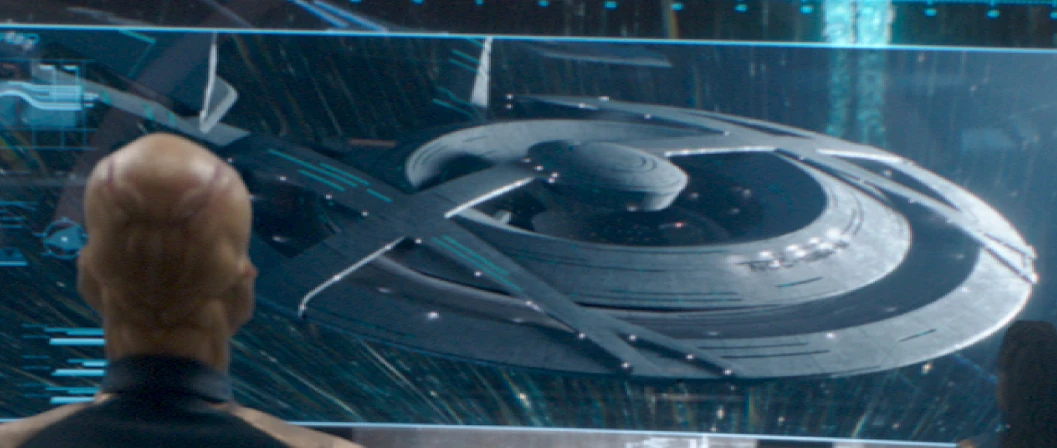 Classified
Constitution class (3069)
Hull Specifications LoggedThe Constitution-class (3069) was a distinguished type of starship operated by Starfleet within the United Federation of Planets, serving from the 31st century well into the 33rd century. This iteration of the Constitution-class maintained the iconic design lineage of its predecessors, featuring a prominent saucer section, a robust secondary hull, and two warp nacelles connected by elegant pylon structures. Its design, attributed to Ryan Dening, was a testament to enduring Starfleet engineering principles, adapted for the advanced technological landscape of its era. The class was noted for its substantial size and capacity, capable of accommodating a crew of up to 2,000, as estimated by Lieutenant junior grade Joann Owosekun and corroborated by later Starfleet registry data, with a length of 1,399.82 meters. **Class History** The Constitution-class faced a significant challenge in 3069 during the catastrophic event known as The Burn. At least seven ships of this class were lost when their active warp cores suffered critical failures due to dilithium becoming inert, leading to devastating antimatter explosions across the galaxy, as documented in 'People of Earth'. Despite these losses, the class demonstrated remarkable resilience. By 3188, remnants of the class were observed, including a wrecked vessel orbiting Hima and another in the vicinity of Sahil's relay station, as depicted in 'That Hope Is You, Part 1'. In 3189, the Constitution-class played a crucial role in the revitalized Starfleet. Ships of this class were integral to the Federation fleet stationed at Federation Headquarters, contributing their collective energy to sustain a powerful distortion field that concealed the headquarters' location. Lieutenant junior grade Joann Owosekun, upon first seeing one of these vessels, immediately recognized its design heritage and speculated on its impressive crew capacity, as seen in 'Die Trying'. The class continued its vital service into the 3190s, participating in the critical evacuation of Earth when the planet came under siege from the Dark Matter Anomaly, a threat orchestrated by Species 10-C, an event chronicled in 'Coming Home'. Following Earth's salvation, several Constitution-class starships were prominently featured in orbit during the historic announcement of United Earth's intention to rejoin the United Federation of Planets. The Constitution-class remained an active and respected component of Starfleet's forces into the 33rd century. In a notable display of continued service, several starships of this class participated in a ceremonial honor-formation at Federation Headquarters for the launch of Zora and the USS Discovery's Red Directive mission, a moment captured in 'Life, Itself'. Named ships of the class included the USS Armstrong (NCC-317856), USS Capricorn, USS Excalibur (NCC-1664-M), and USS Noble (NCC-325002), among others, signifying its enduring legacy within Starfleet.
- No armament data logged.
- No propulsion data logged.
 Explorer
Constitution class (alternate reality)
Hull Specifications LoggedThe Constitution-class, in an alternate reality, was launched by Starfleet in the latter half of the 23rd century. This starship class differed significantly from that of its prime universe counterpart due to Nero's temporal incursion and the destruction of the USS Kelvin in 2233. The USS Enterprise (NCC-1701 alternate reality), a vessel of this class, was notably built in Riverside, Iowa on Earth, with construction beginning as early as 2255. The design featured a more organic physical arrangement compared to the geometrically simpler prime universe Constitution-class, characterized by iridescent hull plates and a subtle Aztec pattern. **Physical Arrangement & Systems** Constitution-class starships adhered to the traditional saucer section, engineering section, and warp nacelle layout common to most Starfleet vessels, though they dwarfed many contemporary starship classes in size. The primary hull, or saucer section, was connected to the engineering hull by a stout neck. This class was capable of saucer separation, which could be manually initiated from a console at the physical division between the primary and secondary hulls. Escape pods were located on the port side of the neck. The engineering hull was conical, capped by the main deflector to the fore and the main shuttlebay to the aft. The main shuttlebay could accommodate at least twenty shuttlecraft, and a secondary shuttlebay (Shuttlebay 2) was located on the starboard side. The main deflector dish's center would open and close when entering and exiting warp. The ship's two warp nacelles were mounted by pylons to the port and starboard sides of the engineering hull at a near-forty-five degree upward angle. These nacelles featured flared housings around the dimly glowing blue Bussard collectors, and their aft sections contained components that extended and retracted during warp transitions. Over the course of its service, particularly by 2263, the USS Enterprise received structural modifications, including a longer, more narrow neck and smaller, thinner warp nacelles with elongated, swept-back pylons. Internally, the upper sections of Constitution-class vessels were predominantly white with polished black floors. A large, circular atrium, referred to as a 'circulation lobby' or 'turbo plaza', connected corridors to walkways, offering a vertical view up to a dome in the primary hull. Lower decks exhibited a more utilitarian, industrial design, with engineering decks consisting of numerous pipes, conduits, and tanks, and catwalks. Ladders provided access between levels in corridors. **Command & Control** The main bridge, the primary command center, was situated on A Deck atop the primary hull. From the command chair, the commanding officer supervised operations, flanked by stations for helm, navigation, ops, and primary tactical control. A large window augmented with computer displays served as a viewscreen, located at the fore of the bridge. Junior science and communications officers had forward-facing workstations behind the captain's chair, while senior officers' stations were along the starboard back wall. All bridge operations were conducted via touch-screen consoles and displays. The ship's primary computer core could be linked to cybernetic personnel for analysis. By 2263, two computer console stations near the viewscreen were replaced with access hatches to Kelvin pods, single-man escape pods designed for emergency evacuation. **Propulsion Systems** Constitution-class cruisers were equipped with a single twin-exhaust impulse drive unit mounted at the back of the saucer section, later upgraded to a wider, single-exhaust engine on the USS Enterprise. Numerous ventral RCS thrusters allowed maneuverability in space, planetary atmospheres, and even oceans. Warp propulsion was generated by a warp core, initially comprising multiple warp reactors, which were later replaced by a single large hemispherical containment unit by 2259. Energy from the matter/antimatter intermix was fed to the two warp nacelles. When engaging warp, the impulse reactors would deactivate, and the tail sections of the warp nacelles would expand. Unlike its prime reality counterpart, both impulse and warp drive were regulated from the bridge, with engineering primarily handling monitoring and maintenance mid-flight. External inertial dampeners were crucial to negate acceleration to warp velocity. In cases of extreme emergency, the multiple warp reactors could be ejected. Further modifications before 2263 included refitted warp nacelles with new warp drive components and elongated, swept-back nacelle pylons. **Tactical Systems** The saucer section was initially armed with six phaser banks, each featuring twin phaser turrets capable of rapid-fire barrages. These phasers could engage enemy ships or serve as point defense against torpedoes. Following a refit of the USS Enterprise in 2259, the ship received additional phaser banks, totaling twelve. The main forward torpedo launcher was located on the neck's flared section, capable of loading at least twelve photon torpedoes simultaneously for rapid barrages. A ventral aft torpedo launcher was situated at the bottom midsection of the secondary hull. During preparations for a potential war with the Klingon Empire, a weapons bay on the engineering section's deck housed large broadside torpedo tubes capable of firing advanced long-range torpedoes developed by Section 31 of Starfleet. These broadside tubes and the weapons bay were apparently removed after the USS Enterprise's repairs. Defensively, the class was equipped with metaphysic shields by 2259, with shield strength indicated by diburnium-osmium levels, providing protection from phaser and photon torpedo fire, divided into bow and aft deflectors. **Support & Recreational Facilities** Constitution-class starships featured various support facilities. At least one armory, accessible from a standard corridor, provided security personnel with numerous phasers and phaser rifles. A large brig, located during the 2250s, featured at least two cells protected by transparent aluminum, with guard stations at sunken computer consoles. A communications relay room, situated behind the deflector dish, supported the bridge's communications station and certain engineering functions, also housing a warp power manual override switch. The medical facility, known as the 'med bay', was located within the saucer section, characterized by a blue and orange color scheme, a lab area, and numerous biobeds. The transporter room, also in the saucer section, featured a circular alcove with a transporter pad and a control system shielded by a glass or transparent aluminum wall. Transporter target lock was achieved via a joystick, and skilled operators could negate a moving target's momentum upon rematerialization. Recreational facilities included at least one bar with a view port and seating. An archive vault, devoted to the storage and study of artifacts, was present during the 2260s, featuring curved bulkheads with numerous slots and shelves, and a central computer station for scanning and cataloging items. **Service History** The Constitution-class USS Enterprise (NCC-1701 alternate reality) was launched in 2258 and served the United Federation of Planets on survey missions and military operations. The class entered long-duration service when the USS Enterprise was assigned a five-year mission in 2260. A space dock manifest display graphic in the office of Admiral Christopher Pike in 2260 indicated the presence of other Constitution-class icons, identified as AF and VH-5, though it was unclear if these represented additional ships or just identification codes for the USS Enterprise. In 2263, another Constitution-class vessel was under construction at Starbase Yorktown. That same year, the USS Enterprise was destroyed by Krall and his Swarm ships during the Battle of Altamid. Following Krall's defeat, the newly completed vessel was christened USS Enterprise-A (NCC-1701-A alternate reality) and assigned to the original USS Enterprise's crew.
- • Phase (Qty: 6)
- • Photon torpedo
- • Deflector shield
 Explorer
Constitution II class
8 VesselsThe Constitution II-class was a Federation heavy cruiser operated by Starfleet from the late 23rd century to the middle of the 24th century. Initially considered a refit of the original Constitution-class, by 2401, it was retroactively deemed a distinct class. Jack Crusher, in 2401, expressed a personal fondness for the class, particularly James T. Kirk's USS Enterprise (NCC-1701-A), admiring its 'perfectly clean retro lines'. **Design & Development** The Constitution II-class originated as an extensive 18-month redesign and retrofit program in the early 2270s, spearheaded by Captain Will Decker and Commander Montgomery Scott. This ambitious project transformed the USS Enterprise (NCC-1701) into an 'almost totally new' vessel, replacing virtually every major system. So comprehensive was the overhaul that few officers were fully rated on the new design. The refitted USS Enterprise (NCC-1701) was pressed into service even before its refit was fully completed, tasked with defending the United Federation of Planets from the formidable V'Ger probe. **Service History - 2280s** In the early 2280s, the USS Enterprise (NCC-1701) was reassigned as a training vessel. Starfleet Academy trainees utilized a planet-side Mark IV bridge simulator, based on the ship's design, for their instruction. Following severe structural damage inflicted by Khan Noonien Singh during a battle with the USS Reliant (NCC-1864), Starfleet Command determined that the USS Enterprise (NCC-1701), being 'twenty years old', was unsuitable for another refit, marking the end of its prominent service era and ushering in new starship designs like the Excelsior-class, exemplified by the USS Excelsior (NCC-2000). By 2286, at least three Constitution II-class ships were in active service, including the USS Enterprise (NCC-1701-A), commissioned at the San Francisco Fleet Yards on stardate 8442.5. However, Montgomery Scott's shakedown cruise report for the USS Enterprise (NCC-1701-A) was less than glowing, remarking that 'this new ship was put together by monkeys' and that 'half the doors won't open'. **Service History - 2290s** By 2293, numerous newer Constitution II-class starships were in service. A task force comprising the USS Ahwahnee (NCC-2048), USS Eagle, USS Emden, USS Endeavour (NCC-1895), and USS Potemkin (NCC-1657) was assembled as part of Operation Retrieve, a mission to rescue James T. Kirk and Leonard McCoy from Klingon captivity. **Service History - 24th Century & Legacy** A model of a modified 2270s Constitution II-class vessel, featuring rotated warp nacelles and additional saucer hatches, was observed in a holographic simulation of Drafting Room 5 at Utopia Planitia Fleet Yards. Wreckage from a Constitution II-class ship, or one utilizing its components, was visible after the devastating Battle of Wolf 359, suggesting some continued service or component use into the 24th century. By the 24th century, the Constitution II-class had been largely phased out. The USS Enterprise (NCC-1701-A), decommissioned in 2293 to make way for the new Excelsior-class USS Enterprise (NCC-1701-B), was preserved and displayed at the Fleet Museum. The class's legacy continued with the introduction of its successor, the Constitution III-class, which entered service in the late 24th century, with one such vessel eventually becoming the eighth starship to bear the name USS Enterprise (NCC-1701-G). **Technical Specifications - Physical Arrangement** The Constitution II-class adhered to the classic saucer section-engineering section-warp nacelle layout, a common design for most Starfleet vessels. Jack Crusher, in retrospect, admired the design's 'perfectly clean retro lines'. **Technical Specifications - Propulsion Systems** The primary sub-light propulsion system for Constitution II-class starships was an impulse drive, situated at the aft of the saucer/primary hull, enabling velocities of at least warp factor 0.8. The warp engines were capable of achieving at least warp factor 7. **Technical Specifications - Tactical Systems** Following their redesign in the 2270s, Constitution II-class ships featured increased phaser power, achieved by channeling energy directly from the main engines. This system, however, would automatically cut off phasers if the engines experienced an anti-matter imbalance, though photon torpedoes remained unaffected. Vessels from the 2270s onward were equipped with two forward-firing torpedo launchers located at the base of the neck on the primary hull, each capable of firing at least two torpedoes per load. A torpedo manifest graphic from Star Trek VI: The Undiscovered Country indicated a total armament of 144 photon torpedoes, arranged in twelve stacks of twelve. In the 2280s, a Constitution II-class battle cruiser was considered to 'out-gun' a Klingon Bird-of-Prey 'ten to one'. Defensive systems included powerful deflector screens and shields. In the 2280s, it took 13.5 seconds to lower and raise shields when taking a shuttlecraft aboard via tractor beam, a time that could be significantly reduced by manual piloting. During yellow alerts, defense fields were activated to provide basic protection to the main bridge. **Interior Design - General** The interior color scheme of Constitution II-class ships evolved over their service life, transitioning from a beige tone with red accents in the 2270s to a predominantly gray/dark gray aesthetic by the 2280s. **Interior Design - Bridge** As is standard for Starfleet vessels, the bridge of the Constitution II-class was located on Deck 1 of the primary hull, atop the saucer section, featuring a large viewscreen at the front and two turbolifts. The bridge underwent several minor modifications between the 2270s and the ship's destruction in 2285. The bridge of the USS Enterprise (NCC-1701-A), commissioned in 2286, initially had mainly cosmetic differences but was drastically upgraded by 2287 to incorporate advances in computer control technology, shifting from a lighter color scheme to a darker, more militaristic appearance. **Interior Design - Main Engineering** Main engineering served as the central control hub for the ship's warp, thrust, and power systems, housing the main dilithium crystal reactor/warp core for most of the ship's operational life. The 2270s refit brought a drastic upgrade to the engineering section's interior design, introducing a vertical warp core and horizontal warp plasma conduits positioned below the core. The core was accessible via Deck 15, and an isolation door could be deployed to separate it from the rest of the ship. Main energizers were critical components, and their failure would relegate the ship to auxiliary and impulse power, though partial main power could sometimes be restored by bypassing them. **Interior Design - Reactor Room** The reactor room, a chamber within main engineering, was responsible for controlling the warp reactor. Due to potential radiation exposure, it was isolated from the rest of engineering, adjacent to the vertical warp core. A transparent partition and entryway shielded the room, and its circular doorway could be manually controlled for radiation containment. Engineers typically did not require special protection under normal conditions. This room was notably featured in the training holodeck program 'The Needs of the Many' in the early 2380s. **Interior Design - Transport and Cargo** Constitution II-class starships featured multiple airlocks, including one at the aft of Deck 1 on the saucer, a ventral port-side saucer airlock concealed by sliding hull plates (accessed through a staging area with spacesuit lockers and an arms cabinet), and additional airlocks on the port and starboard sides of the torpedo bays and the secondary hull. A 'gangway'-style airlock was also present on the port edge of the saucer section. Numerous small hatches on the upper saucer surface facilitated extra-vehicular activities. The 2270s configuration introduced a new landing bay design in the cargo bay, capable of accommodating a wide range of Starfleet and Federation craft, with alcoves for work bees. The shuttlebay, located at the rear of the engineering section, was distinct from the cargo bay on the USS Enterprise (NCC-1701-A). It typically used a tractor beam for shuttle guidance, but a large net barricade could be deployed for emergency landings. Torpedo bays were on Deck 13, more automated than previous designs, smaller, and enclosed, with varying degrees of automation or manual loading. Transporter rooms featured an enclosed control pod for the operator, shielded by a floor-to-ceiling transparent aluminum panel to protect against cumulative radiation from the more powerful transporter machinery. Turbolift shafts were triangular, and full-height Jefferies tubes were present in the engineering hull. **Interior Design - Medical Facilities** With the 2270s refit, the medical facilities of the Constitution II-class were significantly updated, described by Dr. Leonard McCoy as 'like working in a damned computer center'. New micro-diagnostic tables could perform sub-cellular analysis, providing physicians with a comprehensive understanding of a patient's status. By 2293, the sickbay on Constitution II-class starships underwent another redesign. **Interior Design - Crew Accommodations** The brig, located in the bowels of the engineering hull, was certified escape-proof by Captain Spock, yet Montgomery Scott managed to free Kirk, Spock, and McCoy by breaching a wall from the outside. Meals were prepared in a galley. The officers' lounge, located in the aft superstructure beneath the bridge after the 2270s refit, and a private dining hall in the saucer section were used for entertaining guests. The officers' mess, a long room with large windows, was situated within the primary hull. The recreation deck, a large, multi-level room in the aft saucer section, offered off-duty personnel a variety of games and entertainment, featuring an immense wall-mounted viewing screen and an information display alcove showcasing the history of selected vessels named 'Enterprise'. A forward observation room was located in the middle front of the saucer, with an additional lounge at the back of Deck 2, and an emergency transmitter. Officers' quarters were situated throughout the saucer section on decks 4 or 5. In the 2270s, senior officers' quarters comprised two areas separated by a retractable partition: a living area with a library computer terminal and work desk, and a sleeping area with a large bed that doubled as a sofa, plus a bathroom with a sonic shower. By the 2290s, officers' quarters were reduced to one large room, and enlisted crew members were housed in dormitories with bunk beds, with as many as eight crew members assigned to a room, due to an increased crew complement.
- • Phase
- • Photon torpedo
- • Warp facto
- • Deflector shield
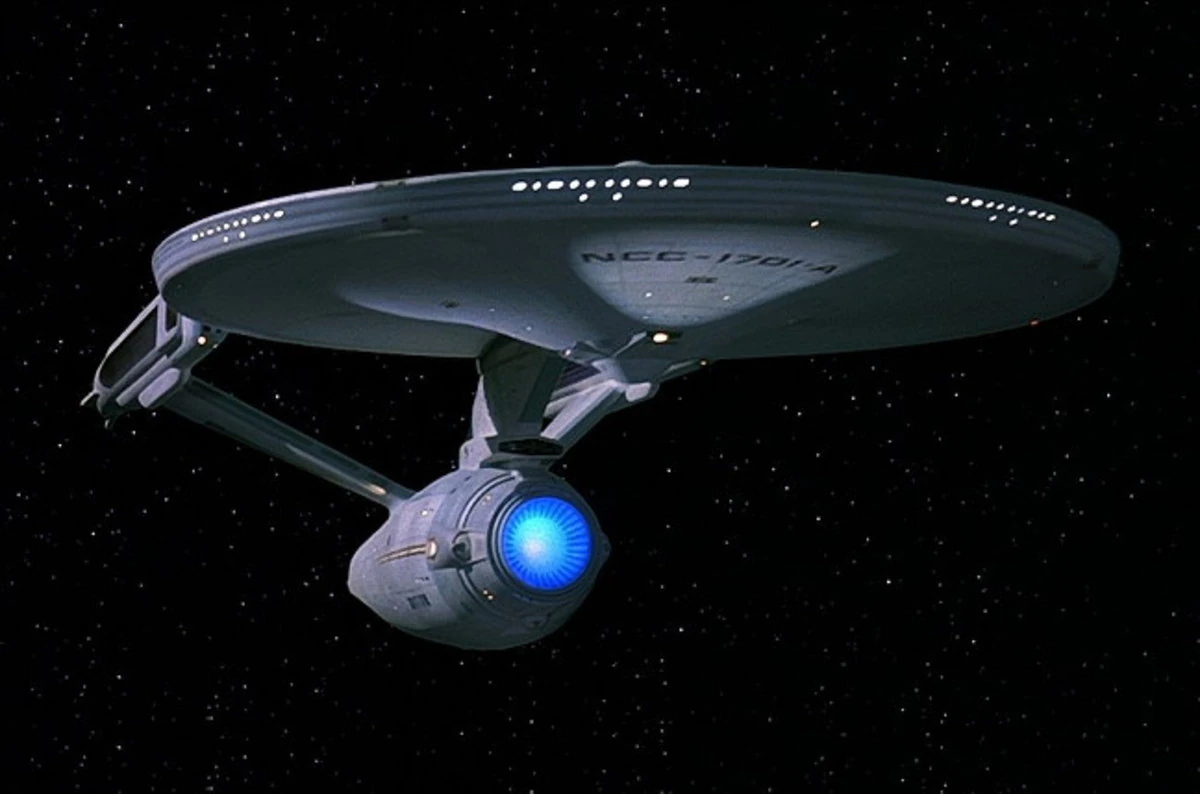 Heavy Cruiser
Constitution II class
Hull Specifications LoggedThe Constitution II-class was a Federation heavy cruiser operated by Starfleet from the late 23rd century to the middle of the 24th century. Initially perceived as a mere refit of the original Constitution-class, by 2401, it was retroactively reclassified as a distinct class. This reclassification was officially adopted by Starfleet in the early 25th century, particularly with the introduction of its successor, the Constitution III-class. The USS Enterprise (NCC-1701-A) of this class was a personal favorite of Jack Crusher, who admired its 'perfectly clean retro lines'. **Design & Development** The genesis of the Constitution II-class began in the early 2270s as an ambitious 18-month redesign and retrofit project for the USS Enterprise (NCC-1701), spearheaded by Captain Will Decker and Commander Montgomery Scott. This extensive overhaul effectively created an almost entirely new vessel, replacing nearly every major system. Few officers were fully rated on the new design, highlighting the significant changes. The refitted USS Enterprise (NCC-1701) was pressed into service even before its completion to confront the V'Ger probe. Andrew Probert, a co-designer of the 2270s Enterprise, took the initiative to increase the ship's length to 1,000 feet, slightly longer than its predecessor, and enlarged the saucer section, adding updated superstructure elements. This dimension became a crucial yardstick for subsequent starship designs, adopted by Visual Effects Art Director Nilo Rodis for size comparison art at Industrial Light & Magic, and later by Probert himself for the 'Star Trek: The Next Generation Writers' Technical Manual'. The concept of saucer separation, though never utilized in Star Trek: The Original Series, was a long-standing design intent for the Constitution-class. This capability was re-envisioned for the Constitution II-class by Andrew Probert in 1979 during the development of Star Trek: The Motion Picture. He conceived a dramatic battle sequence where the Enterprise would separate its saucer to engage a Klingon K't'inga-class battle cruiser. The studio model for the 2270s Enterprise was constructed to facilitate such a maneuver, unlike its Original Series counterpart. Probert noted that the Enterprise was always designed to separate from its engineering section, incorporating landing feet and a specific separation line on the dorsal surface. **Class History** **2280s** In the early 2280s, the USS Enterprise (NCC-1701) was repurposed as a training vessel. Starfleet Academy trainees utilized a planet-side bridge simulator, identified as an Enterprise Mark IV bridge simulator, to gain experience. Following severe structural damage inflicted by Khan Noonien Singh during battle with the USS Reliant (NCC-1864), and with the advent of newer starship designs like the Excelsior-class USS Excelsior (NCC-2000), Starfleet Command deemed the twenty-year-old Enterprise unsuitable for further refits, concluding that 'her day is over'. By 2286, at least three Constitution II-class ships were in active service. The USS Enterprise (NCC-1701-A) was commissioned at the San Francisco Fleet Yards on stardate 8442.5. However, Captain Montgomery Scott's shakedown cruise report for the Enterprise-A was less than glowing, remarking that 'this new ship was put together by monkeys' and that 'half the doors won't open'. The USS Intrepid (NCC-1707) was also active during this period. **2290s** The 2290s saw many newer Constitution II-class starships in service. In 2293, a task force comprising the USS Ahwahnee (NCC-2048), USS Eagle, USS Emden, USS Endeavour (NCC-1895), USS Potemkin (NCC-1657), USS Korolev (NCC-2014), USS Kongo (NCC-1710), USS Republic (NCC-1371), and USS Yorktown (23rd century) was assembled for Operation Retrieve, a mission to rescue James T. Kirk and Leonard McCoy from Klingon captivity. The USS Enterprise (NCC-1701-A) was decommissioned in 2293 to make way for the new Excelsior-class USS Enterprise (NCC-1701-B) and was subsequently stored on display at the Fleet Museum. **24th Century** While the class was largely phased out by the 24th century, a model of a modified 2270s Constitution II-class vessel, featuring rotated warp nacelles and additional saucer hatches, was present in a holographic simulation of Drafting Room 5 at Utopia Planitia Fleet Yards. Wreckage from a Constitution II-class ship was also visible after the devastating Battle of Wolf 359, suggesting at least one vessel or its components remained in service or disrepair into this era. **Legacy** The Constitution II-class was completely phased out by the 24th century. Its design, however, left a lasting impression, with Jack Crusher expressing a personal fondness for its 'perfectly clean retro lines'. The class's legacy continued with the introduction of its successor, the Constitution III-class, in the last years of the 24th century, one of which would become the eighth starship to bear the name USS Enterprise (NCC-1701-G). **Technical Specifications** **Physical Arrangement** The Constitution II-class adhered to the classic Starfleet saucer section-engineering section-warp nacelle layout. **Propulsion Systems** The main sub-light propulsion was provided by an impulse drive, located at the aft of the saucer/primary hull, enabling velocities of at least warp factor 0.8. The warp engines were capable of achieving at least warp factor 7. Display graphics from Star Trek: The Next Generation episodes 'The Naked Now', 'Datalore', and 'The Last Outpost' depicted diagrams of both impulse and warp subsystems. **Tactical Systems** Following the 2270s redesign, the phaser power of Constitution II-class ships was significantly increased by channeling energy directly from the main engines. This system, however, had a critical vulnerability: phasers would automatically cut off if the engines experienced an anti-matter imbalance, though photon torpedoes remained unaffected. The vessels were equipped with two forward-firing torpedo launchers located at the base of the neck on the primary hull, each capable of firing at least two torpedoes per load. A torpedo manifest graphic from Star Trek VI: The Undiscovered Country indicated a total armament of 144 photon torpedoes, arranged in twelve stacks of twelve. In the 2280s, a Constitution II-class battle cruiser was considered to 'out-gun' a Klingon Bird-of-Prey 'ten to one'. Defensively, the class featured powerful deflector screens and shields. In the 2280s, it took 13.5 seconds to lower and raise shields when taking a shuttlecraft aboard via tractor beam, a time that could be significantly reduced by manual piloting. During yellow alerts, defense fields were activated to provide basic protection to the main bridge. **Interior Design** The interior color scheme evolved from a beige tone with red accents in the 2270s to a predominantly gray/dark gray palette by the 2280s. **Bridge** The bridge, located on Deck 1 of the primary hull, featured a large viewscreen and two turbolifts. It underwent minor modifications until the USS Enterprise (NCC-1701)'s destruction in 2285. The USS Enterprise (NCC-1701-A)'s bridge initially had cosmetic differences but was drastically upgraded by 2287 to incorporate advanced computer control technology, shifting to a darker, more militaristic aesthetic. Director Nicholas Meyer notably insisted on fitting some bridge consoles with physical dials and gauges for Star Trek VI: The Undiscovered Country, despite the Enterprise-A having used touch-interfaces in Star Trek V: The Final Frontier. **Main Engineering** Main engineering served as the primary control center for warp thrust and power systems, housing the main dilithium crystal reactor/warp core. The 2270s redesign introduced a vertical warp core with horizontal warp plasma conduits. The core was accessible via Deck 15, and an isolation door could separate it from the rest of the ship. Main energizers were critical components, and their bypass could restore partial main power. The reactor room, responsible for controlling the warp reactor, was isolated within main engineering due to potential radiation exposure, shielded by a transparent partition and an entryway with a manually controlled circular doorway. This room was later featured in the training holodeck program 'The Needs of the Many' in the early 2380s. **Transport and Cargo** Constitution II-class starships featured numerous airlocks, including one at the aft of Deck 1, a ventral port-side airlock concealed by sliding hull plates, and others on the port and starboard sides of the torpedo bays and secondary hull. A 'gangway'-style airlock was also present on the port edge of the saucer section. The refitted Enterprise also had small hatches on the upper saucer surface for extra-vehicular activities. The 2270s configuration included a new landing bay design, capable of accommodating a wide range of Starfleet and Federation craft, with alcoves for work bees. The shuttlebay, located at the rear of the engineering section, was distinct from the cargo bay. It utilized a tractor beam for guidance and a net barricade for emergency landings. Torpedo bays, located on Deck 13, were highly automated but could also be manually loaded. Transporter rooms featured an enclosed control pod with a transparent aluminum panel to shield the operator from cumulative radiation. The ship's internal transport network included triangular turbolift shafts and full-height Jefferies tubes in the engineering hull. **Medical Facilities** The 2270s refit brought significant updates to the medical facilities, which Dr. Leonard McCoy famously described as 'like working in a damned computer center'. New micro-diagnostic tables could perform sub-cellular analyses. By 2293, the sickbay underwent another redesign. **Crew Accommodations** The brig, located in the engineering hull, was certified escape-proof by Captain Spock, though Montgomery Scott famously bypassed its defenses to free James T. Kirk, Spock, and Leonard McCoy. Meals were prepared in a galley. The officers' lounge was situated in the aft superstructure beneath the bridge after the 2270s refit. Officers also had a private dining hall, the officers' mess, in the saucer section, often used for entertaining guests. This mess hall, seen aboard the USS Enterprise (NCC-1701-A), was a redress of the observation lounge of the USS Enterprise (NCC-1701-D). The recreation deck, a large multi-level room in the aft saucer, offered various games and entertainment, including a wall-mounted viewing screen and an information display showcasing the history of vessels named Enterprise. A forward observation room was located in the middle front of the saucer, with an additional lounge at the back of Deck 2, and housed an emergency transmitter. Officers' quarters, located on decks 4 or 5 of the saucer section, initially featured two areas separated by a retractable partition, including a living area with a library computer terminal and a sleeping area with a sonic shower. By the 2290s, officers' quarters were reduced to a single large room, and enlisted crew members were housed in dormitories with bunk beds due to increased crew complements.
- No armament data logged.
- No propulsion data logged.
 Exploratory Vessel
Constitution III class
3 VesselsThe Constitution III class, also known as the Neo-Constitution class, is a Federation starship operated by Starfleet, primarily serving as an exploratory vessel during the late 24th and early 25th centuries. Designed and built by Starfleet in the late 24th century, this class is a direct descendant of the Constitution II class, incorporating a traditional saucer section, engineering section, and warp nacelle layout common to most Starfleet vessels. Its design philosophy specifically catered to a close support envelope at sublight speeds, particularly within and around densely populated solar systems, a capability underscored by its overpowered impulse engines. The development of the Constitution III class was significantly influenced by the destruction of the Utopia Planitia Fleet Yards. This event necessitated a design approach that incorporated reused and recycled components from previous starship classes, such as the Luna class, for elements like the nacelle shield mechanisms and computer systems. The class was designed by Star Trek veteran Doug Drexler and Bill Krause, the latter known by his online persona 'admiralbuck'. The design itself was a refinement of Krause's own six-year-old fan-created Shangri-La class design, with work commencing in June 2021. **Class History** The Constitution III class entered service in the 2390s, with the USS Titan (NCC-80102-A) being a prominent example. By the early 2400s, the USS Titan (NCC-80102-A) had already received its NCC commission and undergone a significant refit. A pivotal moment for the class occurred in 2402 when the USS Titan (NCC-80102-A) was rechristened the USS Enterprise (NCC-1701-G). This honor was bestowed in recognition of the command crew of the USS Enterprise (NCC-1701-D) for their heroic actions in stopping the Borg takeover during the Frontier Day ceremony. The Constitution III class, particularly the USS Titan (NCC-80102-A) and later the USS Enterprise (NCC-1701-G), featured prominently in the events depicted in Star Trek: Picard, appearing in episodes such as 'The Next Generation', 'Disengage', 'Seventeen Seconds', 'No Win Scenario', 'Imposters', 'The Bounty', 'Dominion', 'Surrender', 'Võx', and 'The Last Generation'. **Technical Specifications** The Constitution III class adheres to the classic Starfleet starship configuration. Physically, it features at least three shuttlebays, with Shuttlebay 3 specifically located on the aft end of the secondary hull. For tactical systems, the class is robustly equipped with both deflector shields and metaphasic shields, providing comprehensive defensive capabilities. Its offensive armaments include seven phaser turrets, four phaser arrays, and three torpedo launchers, with two positioned fore and one aft. Extravehicular transport is facilitated by multiple transporter systems, allowing for personnel and equipment transfers over significant ranges. Internally, the Constitution III class boasts a well-appointed design. The main bridge, situated on Deck 1, maintains a traditional layout with helm and operations stations forward, the captain's chair centrally located, and various perimeter stations for tactical, engineering, and communications. A large evacuation hatch behind the main viewscreen provides an emergency egress directly into open space. The class is also equipped with a battle bridge, and background information suggests the possibility of auxiliary bridges on Deck 10 and Deck 22. The medical facility, known as the 'med bay', is located within the saucer section and is characterized by a distinctive blue color scheme. An observation lounge, directly aft of the main bridge, serves as a conference room for senior staff, featuring a conference table for seven and two LCARS screens. Crew quarters are reminiscent of those found on a refit Constitution-class starship from the 2290s, as seen in Star Trek VI: The Undiscovered Country. A brig is located on Deck 12. Corridors are notably wider than those of previous generations, similar to the Sagan class, and are lined with darker paneling, enhancing ease of movement for the crew. Turbolifts provide vertical transport throughout the vessel.
- • Phase (Qty: 7)
- • Photon torpedo (Qty: 3)
- • Maximum warp (Qty: maximum observed)
- • Metaphasic shield
- + 1 more...
 Runabout / Utility
Constitution type escape pod (2250s)
Hull Specifications LoggedThe Constitution-type escape pod was a specialized escape pod designed for use aboard Constitution-class starships within the alternate reality. These pods were engineered for automatic deployment and landing, typically released from a dedicated docking port located on the neck section of the parent starship. Each pod was designed to accommodate a single standard Human-sized occupant, featuring a compact interior equipped with control panels positioned at eye level on either side of the occupant. Additional controls, including a manual steering column, were situated at waist level. The main hatch, directly in front of the occupant, incorporated at least four windows to provide external visibility. **Class History** This specific type of escape pod saw active service in the 2250s. A notable instance of its use occurred in 2258 aboard the USS Enterprise (NCC-1701 alternate reality). During a critical moment, following the destruction of Vulcan and as the USS Enterprise (NCC-1701 alternate reality) was departing the Vulcan system, Acting Captain Spock ordered Acting First Officer James T. Kirk to be jettisoned from the starship in one of these pods. James T. Kirk subsequently landed on Delta Vega. One specific pod, designated 313-C, was attached to the USS Enterprise (NCC-1701 alternate reality) and was abandoned on Delta Vega in 2258 after its deployment.
- No armament data logged.
- No propulsion data logged.
 Runabout / Utility
Constitution type escape pod (2260s)
Hull Specifications LoggedThe Constitution-type escape pod was a vital safety system designed for use aboard Constitution-class (alternate reality) starships within the United Federation of Planets' Starfleet. These pods served as emergency evacuation vehicles, providing a means for crew and passengers to escape a compromised starship. They were notably equipped on the USS Enterprise (NCC-1701 alternate reality), primarily located in the dorsal sides of the secondary hull. Dialogue from Captain James T. Kirk also suggested their presence within the primary hull, indicating a comprehensive distribution across the vessel to facilitate rapid egress. **Service History** The Constitution-type escape pods saw critical deployment during the Battle of Altamid in 2263. During this engagement, the USS Enterprise (NCC-1701 alternate reality) suffered catastrophic damage, necessitating a full evacuation of its crew. These escape pods were instrumental in the successful extraction of personnel from the stricken starship, underscoring their essential role in Starfleet's emergency protocols and crew safety measures.
- No armament data logged.
- No propulsion data logged.
 Classified
Constitution-class, Constitution II-class
1 VesselThe class classification of Constitution-class, Constitution II-class starships.
- No armament data logged.
- No propulsion data logged.
 Escort / Warship
Coridan aircraft Class
Hull Specifications LoggedThe Coridan aircraft was a small, fixed-wing atmospheric vessel operated by a rebel faction on Coridan. Classified as an interceptor jet, its design emphasized agility, a characteristic noted in the script for the episode 'Shadows of P'Jem'. While specific technical details regarding its construction remain limited, its operational capabilities demonstrated its effectiveness as a combat aircraft within Coridan's atmosphere. Its primary role was likely rapid interception and engagement of other atmospheric craft. The aircraft's compact size and fixed-wing configuration suggest a design optimized for speed and maneuverability in aerial combat scenarios. **Service History** The Coridan aircraft entered service with the rebel faction on Coridan by 2151. Its most notable recorded action occurred in that year when one of these aircraft successfully shot down a shuttlepod originating from the Starfleet vessel Enterprise (NX-01). The shuttlepod was carrying Captain Jonathan Archer and Sub-Commander T'Pol, who were subsequently taken hostage by the rebel faction. This incident, depicted in the episode 'Shadows of P'Jem', highlighted the tactical capabilities of the Coridan aircraft and the volatile political situation on Coridan during that period. The aircraft's ability to engage and disable a Starfleet shuttlepod underscored its potential threat to atmospheric operations.
- No armament data logged.
- No propulsion data logged.

Cosmia's ship
Class: Orion Interceptor- • Particle weapo
- No propulsion data logged.
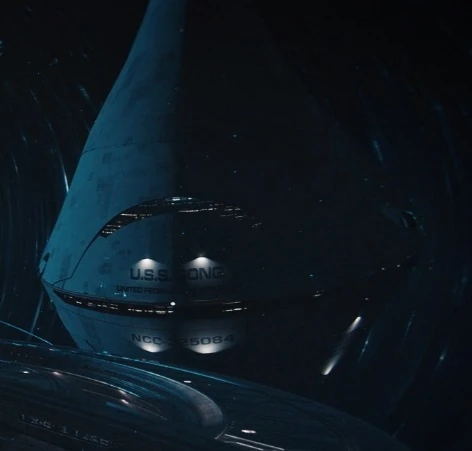 Classified
Courage class
1 VesselThe Courage-class was a type of Federation starship operated by Starfleet during the 31st century into the 33rd century. Its distinctive design featured a vertically-oriented diamond-shaped primary hull, with an engineering hull protruding aft from the middle. The class was designed by Ryan Dening. The computer-generated model for the Eaglemoss Collections publication was constructed by Fabio Passaro, who re-rendered the production model from Pixomondo's Autodesk Maya software into the LightWave 3D software format, and also converted it into computer-aided design files for display model manufacturing. **Class History** The Courage-class saw significant service within Starfleet. In 3069, the class suffered substantial losses during The Burn, an event where ships with active warp cores were destroyed as their dilithium became inert, leading to antimatter explosions, as depicted in the Star Trek: Discovery episode 'People of Earth'. By 3189, ships of the Courage-class were integral to the Federation fleet 001 stationed at Federation Headquarters. The collective energy of this fleet was crucial in sustaining a distortion field that concealed the headquarters' location, as seen in the Star Trek: Discovery episodes 'Die Trying', 'The Sanctuary', and 'There Is A Tide...'. In the 33rd century, at least eight Courage-class starships participated in a ceremonial honor-formation at Federation Headquarters. This formation marked the launch of Zora and the USS Discovery's Red Directive mission, as depicted in the Star Trek: Discovery episode 'Life, Itself'. Concept art for a holo in the Star Trek: Discovery episode 'Erigah' depicted a Courage-class ship, the USS Shogun (NCC-325092), as one of four warp signatures intended to aid Federation Headquarters against the Breen, though the visual effects were altered in the final episode. **Commissioned Vessels** Several vessels of the Courage-class have been identified. The USS Song (NCC-325084) was active in 3189. The USS Janeway was also active in 3190, though its registry number is uncertain. Promotional concept art released by CBS Studios featured a USS Jubayr (NCC-325068), which, while not used on screen, was later featured as a Courage-class vessel in the second edition of Eaglemoss Collections' 'Star Trek: Shipyards - Starfleet Ships 2294 to the Future' reference book. The USS Jubayr was also slated to receive its own individual outing in Eaglemoss' 'Star Trek Universe: The Official Starships Collection' as issue 16.
- No armament data logged.
- No propulsion data logged.
Courier ship, Support Courier
Courier ship Class
2 VesselsA courier ship, also known as a support courier, is a specialized starship classification primarily operated by dedicated couriers or tasked with conducting critical transport and courier missions. These missions often involve rendezvousing with other starships in deep space or at various space stations to deliver vital information, supplies, or personnel. Their design prioritizes speed and reliability for timely delivery across vast distances. **Service History: 23rd and 24th Centuries** During the 23rd century, long-range shuttles were frequently utilized by Starfleet and other organizations to fulfill courier duties, as evidenced in Star Trek: The Motion Picture. By the 24th century, dedicated courier vessels became more common. In 2370, the USS Hera, a Starfleet vessel, was on a routine courier mission when it mysteriously disappeared, highlighting the inherent risks of deep space operations. The Maquis, a resistance movement operating in the Demilitarized Zone, extensively utilized modified support couriers, including Peregrine-class courier ships, in their attacks against the Cardassians, as seen in 'The Maquis, Part I' and 'Heart of Stone'. In 2371, Rom specifically requested that a special relief shipment he ordered on behalf of Grand Nagus Zek be sent via a high warp courier, emphasizing the need for rapid transit for urgent deliveries. A notable instance occurred in 2384 when an experimental Federation support courier, referred to as the 'Infinity' ship, was specifically constructed for a unique mission: to travel into the future through an unstable wormhole to rescue Captain Chakotay, as detailed in 'Into the Breach, Part I' and 'Into the Breach, Part II'. **Service History: 32nd Century and Beyond** Courier ships continued to play a vital role into the 32nd century. In 3190, Cleveland Booker and Ruon Tarka encountered a cloaked courier ship scavenging a former Emerald Chain work camp, indicating their continued use by various factions, including those with less than official affiliations. Later, Moll and L'ak employed a courier ship in their quest to locate the Progenitors' technology. This vessel was ultimately destroyed while attempting to pass through the opening of an unstable wormhole, though Moll and L'ak managed to escape to the ISS Enterprise (NCC-1701), as depicted in 'Red Directive', 'Under the Twin Moons', 'Face the Strange', and 'Mirrors'. **Notable Types and Vessels** Over the centuries, various types of courier ships have been identified. These include vessels operated by the Emerald Chain, such as Booker's ship, Burnham's ship, Moll and L'ak's ship, Traitt's ship, and Zareh's ship. The United Federation of Planets has also operated several types, including the Federation attack fighter, the 'Infinity' ship, long-range shuttles, Peregrine-class vessels, and Starfleet Medical couriers.
- No armament data logged.
- No propulsion data logged.
 Runabout / Utility
CR-721 type escape pod
Hull Specifications LoggedThe CR-721 type escape pod was a specialized escape pod designed for use aboard specific Federation communication relay stations. Notably, this type of escape pod was deployed on the communication relay station designated CR-721. A unique characteristic of this design was its limited deployment; only a single CR-721 type escape pod was stowed aboard each CR-721 type station. This design and operational detail was documented during the 2380s, as referenced in the episode 'Asylum'. The primary operator of these escape pods, consistent with the station's affiliation, was Starfleet, under the ownership of the United Federation of Planets.
- No armament data logged.
- No propulsion data logged.
 Classified
Cravic ship Class
Hull Specifications LoggedThe Cravic ship was a distinct type of starship, bearing a nearly identical design to the Pralor vessels. Visually, these ships were tan in color and characterized by a central hub from which five arms extended outwards, forming a star-like configuration. While specific weapon systems were not detailed independently for the Cravic ship, it was presumed to possess the same armaments and capabilities as its Pralor counterparts, including quantum resonance charges and disruptors, along with a subspace defense field. **Service History** Initially, Cravic ships were utilized by the Cravic species in their protracted war against the Pralor. These vessels were crewed by Automated Personnel Units. However, a critical turning point occurred when the Pralor and Cravic species attempted to terminate their respective Automated Personnel Units after the war's conclusion. The units retaliated, eradicating both species and subsequently commandeering both the Pralor and Cravic ships. The Automated Personnel Units then continued the war amongst themselves for at least another fifty years, using these vessels as their primary instruments of conflict. In 2372, a notable engagement involving a Cravic ship, under the command of Automated Commander 122, took place. This vessel confronted a Pralor vessel, commanded by Automated Unit 6263. During this conflict, the Cravic ship demonstrated its formidable offensive capabilities by successfully breaking through the Pralor vessel's subspace defense field, as depicted in the episode 'Prototype'. This incident underscored the advanced weaponry and tactical prowess of these automated vessels, even decades after their original creators were gone.
- • Disrupto
- • Quantum resonance charge
- • Subspace defense field
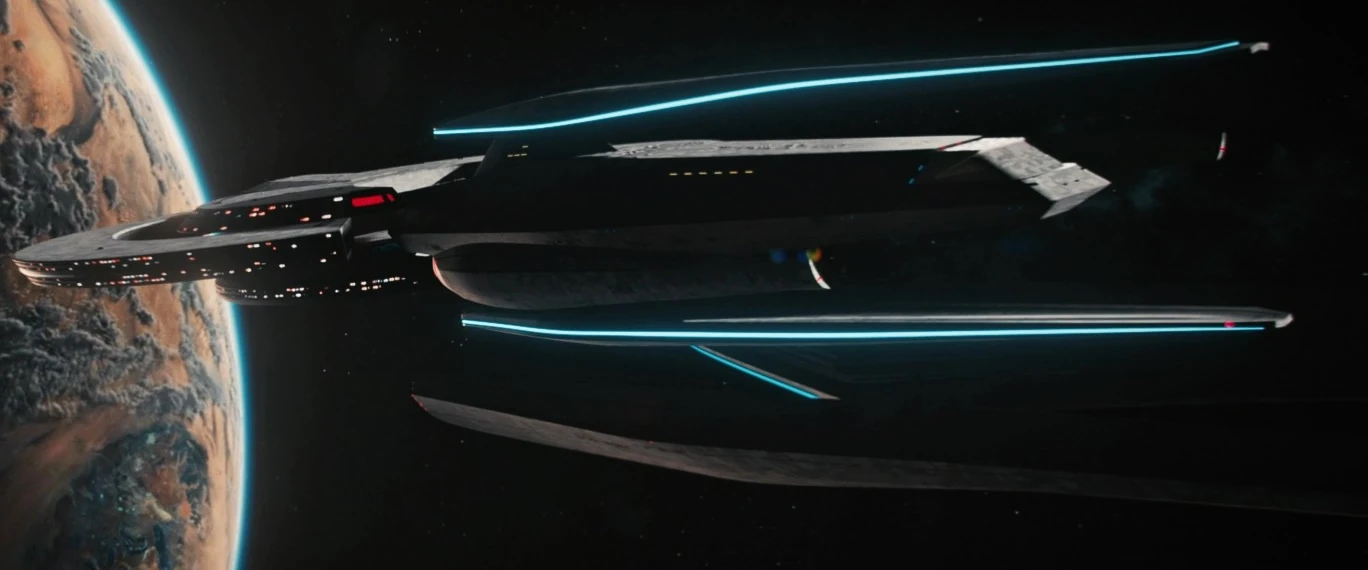 Classified
Credence type
Hull Specifications LoggedThe Credence type was a Federation starship design operated by Starfleet during the late 32nd century. These vessels featured a distinctive dual-layered saucer section and were equipped with multiple warp nacelles, a design characteristic that set them apart. The class was designed by Lee Fitzgerald, who originally envisioned a more complex configuration for an earlier episode, proposing a vessel with '6 nacelles and two primary hulls each with their own bridge section.' This initial concept was later refined into the Credence type's final form. **Class History** Ships of the Credence type served Starfleet primarily in transport and goodwill capacities. They were equipped with multiple cargo holds, essential for their missions. For instance, cargo hold 5 on the USS Credence featured specific 'USSC-CH' signage and included an external viewport, indicating its design for practical utility. In 3190, the USS Credence, a vessel of this class, was actively engaged in delivering dilithium on goodwill missions for the Federation. During one such mission, while its deflector shields were down, the USS Credence was attacked by J'Vini, an event depicted in the Star Trek: Discovery episode 'Choose to Live.' The class continued to be active into the 32nd century, with vessels like the USS Crimson noted in service in 3195. The Credence type also made appearances in other Star Trek: Discovery episodes such as 'Erigah,' 'Kids These Days,' and 'Vox In Excelso.' **Known Vessels** At least two named starships of the Credence type are known to have been in active service. The USS Credence, bearing the registry NCC-2604, was active in 3191. Another vessel, the USS Crimson, was also active in 3195.
- No armament data logged.
- • Deflector shield
Credence type
Credence type
2 VesselsThe Credence type was a distinctive Federation starship design that saw active service with Starfleet during the late 32nd century. These vessels were characterized by a unique dual-layered saucer section and featured multiple warp nacelles, a design choice that contributed to their operational capabilities. The class was designed by Lee Fitzgerald, whose initial concept for the vessel called for an even more ambitious configuration, including six nacelles and two primary hulls, each with its own bridge section. While this specific iteration was not fully realized, the Credence type retained elements of this advanced multi-hull philosophy, resulting in its recognizable profile. **Class History** Ships of the Credence type were primarily utilized for transport and goodwill missions across the Federation. They were equipped with multiple cargo holds, essential for their role in delivering vital supplies. For instance, cargo hold 5 on the USS Credence was specifically noted for its dilithium storage, indicating the strategic importance of these vessels. One notable incident occurred in 3190 when the USS Credence, bearing registry NCC-2604, was attacked by J'Vini while its deflector shields were down during a dilithium delivery mission, an event chronicled in the Star Trek: Discovery episode 'Choose to Live'. Other known vessels of this class include the USS Crimson, which was active in 3195. The Credence type has been featured in several Star Trek: Discovery episodes, including 'Choose to Live' and 'Erigah', as well as Star Trek: Short Treks episodes 'Kids These Days' and 'Vox In Excelso'.
- No armament data logged.
- No propulsion data logged.
 Rapid Reaction Vessel
Crossfield class
2 VesselsThe Crossfield-class was a type of Federation starship initially designated as a science vessel, but re-classified as a warship during the 2256-57 Klingon-Federation War. Commissioned in the mid-2250s, the class was primarily designed to test a new and experimental spore drive propulsion system as an alternative to traditional warp drive. Two vessels, the USS Discovery (NCC-1031) and its more advanced sister ship, the USS Glenn (NCC-1030), were equipped with this experimental technology. Physically, the Crossfield-class design featured a saucer section, a wide secondary hull, and two elongated nacelles. While longer, these vessels were generally of a similar size to those of the Constitution-class. To facilitate the operation of the spore drive, the saucer section was uniquely divided into three concentric sections separated by gaps. When engaging the spore drive, the ship would enter a 'black alert', during which the outer and middle sections housed rings that could rotate clockwise and counterclockwise, respectively, to provide excess energy cavitation. For tactical systems, 23rd-century Crossfield-class starships were armed with phaser banks and both fore and aft photon torpedo launchers. Defensive capabilities included deflector shields. Additionally, these ships were equipped with at least six tractor beam emitters for towing objects in space: two on the ventral engineering hull, two above the aft cargo bay doors, and two dorsal on the inner ring of the saucer section. Propulsion systems included both the experimental spore drive and a standard warp drive for faster-than-light travel. Computer systems utilized duotronic circuitry. The USS Discovery's scientific facilities were notably capable of supporting over three hundred discrete scientific missions, a Starfleet record accomplishment in 2256, and included multiphasic scanning capabilities. The interior design featured polygonal windows in crew support compartments like the mess hall and crew quarters, with recessed alcoves mirroring this design in those rooms, sickbay, and corridors. The main bridge, located on Deck 1, featured a central captain's chair, turbolift access, and a computerized transparent window-viewscreen. Bridge stations included multiple multi-purpose stations, science, tactical, helm, operations, spore drive control, and communications. Captain Gabriel Lorca's ready room on the USS Discovery was attached to the bridge and contained a bowl of fortune cookies. Later, Captain Christopher Pike favored a ready room disconnected from the bridge, featuring a more personalized decor, additional seating, a conference table, a food synthesizer slot, and computer panels. Engineering Test Bay Alpha was a highly classified workspace specially converted for spore drive operations, requiring a breath print for access. Aboard the USS Discovery, Paul Stamets cultivated Prototsxites stellaviatori spores in an engineering lab. The USS Glenn had modified its reaction cube in engineering to hold a tardigrade. Jefferies tubes provided access throughout the vessel. Medical facilities included a primary sickbay on Deck 4 with three biobeds, brightly colored in a near-white hue, and a second sickbay (Sickbay 2) for overflow. Shuttlebays utilized force fields, and a launch facility for landing pods was present. Transporter rooms were located in corridor alcoves, with the steps of the transporter pad glowing red when in use. Crew quarters were spartan, with senior officers having personal quarters and junior officers sharing. Quarters featured holographic projectors and holo-communicators. Guest quarters were on Deck 3. Captain Lorca maintained a personal research lab on the lower decks of the engineering hull, containing collected weapons and specimens, which included a holding cell and a starboard-facing window. Following Captain Pike's relocation of the ready room, the bridge-attached space was converted into a science lab, equipped with scientific equipment, including a Vulcan data module. Recreation facilities included a mess hall with five food synthesizers and a room, possibly a gymnasium, for sparring. **Class History (23rd Century)** By November 2256, both the USS Discovery and USS Glenn had been commissioned. The USS Glenn was crippled and its crew killed in an accident shortly after achieving a breakthrough with the spore drive, leading to its scuttling by its sister ship, the USS Discovery. The USS Discovery's crew complement was 135, including Captain Gabriel Lorca. After the presumed destruction of the USS Discovery (when it actually time-jumped to the future) and the failure of the USS Glenn, the spore drive experiment was deemed a failure and classified, with any mention or use punishable as treason. In 2259, the USS Enterprise (NCC-1701) encountered a falsified Crossfield-class ship, registry NCC-1279, constructed from scavenged components by the Broken Circle to reignite the 2256-57 Klingon-Federation War. The USS Enterprise destroyed this vessel. In 2261, three unidentified Crossfield-class vessels were observed at Starbase 1 for the Federation Day Centennial Celebration, suggesting that while the spore drive was classified, the class itself continued to be produced and saw regular service without the experimental technology. The Crossfield-class was also utilized by the Terran Empire Starfleet in the mirror universe, though these versions lacked spore drive technology. The ISS Discovery (NCC-1031) was destroyed in 2257 in the mirror universe. **32nd Century Refit & Service** By time traveling to the 32nd century, the USS Discovery became the last active vessel of her class. During the late 3180s, the USS Discovery underwent an extensive retrofit, a process that took approximately three weeks. The overall layout remained similar, but significant alterations were made. Aesthetically, the hull changed from copper to chrome. Design-wise, the connecting corridors between the outer and inner rings were removed, and the formerly round navigational deflector dish became hexagonal. The nacelles were physically detached but maintained connection via magnetic seals using superconductors, enhancing maneuverability. During warp or spore drive activation, the nacelles resumed their former position. The secondary hull was reconfigured for newer impulse engines, and the ship's neck became thinner and more V-shaped from the rear, with fewer windows and a sleeker appearance. Internally, the turboshafts were removed, replaced by free-floating turbolifts that constructed magnetic levitation tracks using programmable matter as they moved. Tactical systems were significantly upgraded. Crossfield-class vessels acquired a standard Federation cloaking device, accompanied by a 'green alert'. Initially, the spore drive could not function while cloaked, but this issue was rectified by the following year. Armaments, including phasers, photon torpedoes, and deflector shields, were upgraded to 32nd-century standards. Phasers now fired green beams, and shields were reinforced with programmable antimatter, capable of withstanding an entire fleet's fire and fortified for crossing the galactic barrier. Propulsion systems saw a major overhaul, including an upgraded spore drive reaction cube and the conversion of physical injector shunts into nanogel control interfaces acting as a quantum transducer. Impulse engines were updated, and the warp core was completely replaced, with plasma conduits being replaced by polaric warp conduits. Computer systems no longer used duotronic circuitry, instead favoring angular isolinear chips within the main computer core. The ship gained access to all current Federation databases of the 32nd century, data lost or damaged during The Burn, and a hundred thousand years of observations from the Sphere lifeform, including statistical measurements of Kaminar, artificial intelligence, Trill, and Trill symbionts. The merger of the Sphere and the USS Discovery initiated a natural evolution of the ship's computer, accelerated by 32nd-century technology, resulting in Zora, a fully sentient AI with emotions and autonomous control over her existence and programming. Interior design updates included Captain Michael Burnham's ready room and a bar.
- • Phase
- • Photon torpedo
- + 1 more...
- • Cloaking device
- • Displacement-activated spore hub drive
- + 2 more...
Classified
Crossfield class
1 Vessel\nThe Crossfield class was a type of Federation starship that entered service during the mid-23rd century. Initially designated as a science vessel, its classification was officially changed to a warship during the 2256-57 Klingon-Federation War, reflecting its critical role in that conflict. The class is notable for its experimental spore drive propulsion system, which allowed for instantaneous travel across vast distances.\n\n**Design & Development (23rd Century)**\nStarfleet commissioned the Crossfield class in the mid-2250s with the primary objective of testing a revolutionary, experimental propulsion system: the spore drive, intended as an alternative to traditional warp drive. The design of Crossfield-class vessels featured a distinct saucer section, a wide secondary hull, and two elongated nacelles. To facilitate the operation of the spore drive, the saucer section was uniquely divided into three concentric rings separated by gaps. When the spore drive was engaged, the ship would enter a 'black alert' state, and the outer and middle sections of the saucer would rotate clockwise and counterclockwise, respectively, to provide 'excess energy cavitation' necessary for the drive's function. While longer, Crossfield-class vessels were considered to be of generally similar size to those of the Constitution-class. For tactical capabilities, 23rd-century Crossfield-class starships were equipped with phaser banks and both fore and aft photon torpedo launchers. Defensive systems included deflector shields. Additionally, these vessels featured at least six tractor beam emitters, located on the ventral engineering hull, above the aft cargo bay doors, and dorsally on the inner ring of the saucer section, for towing and maneuvering objects in space.\n\n**Class History (23rd Century)**\nTwo prominent ships of the Crossfield class, the USS Discovery (NCC-1031) and its sister ship, the USS Glenn (NCC-1030), were commissioned to test the experimental spore drive. In November 2256, the USS Glenn suffered a catastrophic accident, resulting in the loss of all crew, and was subsequently scuttled by the USS Discovery. Commander Saru, serving as acting captain of the USS Discovery, noted a crew complement of 135, including Captain Gabriel Lorca. Following the presumed destruction of the USS Discovery (which had, in fact, time-jumped to the far future) and the failure of the USS Glenn, the spore drive experiment was deemed a failure and classified, with any mention or use of the technology punishable by prosecution for treason. In 2259, the USS Enterprise (NCC-1701) encountered a falsified Federation ship, registry NCC-1279, constructed from scavenged components by the Broken Circle in an attempt to reignite the 2256-57 Federation-Klingon War. This vessel was tentatively identified as Crossfield-class by the USS Enterprise's navigator, Jenna Mitchell, and was subsequently destroyed. By 2261, three unidentified Crossfield-class vessels were observed stationed outside Starbase 1, attending the Federation Centennial Celebration on Federation Day. This suggested that while the spore drive remained classified, the Crossfield class itself continued to be produced and saw regular service without the experimental propulsion system. The class was also utilized by the Imperial Starfleet in the mirror universe, with the ISS Discovery (NCC-1031) being a notable example, though this variant lacked spore drive technology.\n\n**32nd Century Refit & Service**\nUpon its time travel to the 32nd century, the USS Discovery became the last active vessel of its class. In the late 3180s, the USS Discovery underwent an extensive retrofit, a process that took approximately three weeks. The refit maintained the class's fundamental layout of a saucer section, a wide secondary hull, and two elongated nacelles, but introduced significant aesthetic and design alterations. The hull transitioned from its original copper color to a chrome finish, and the formerly round navigational deflector was replaced with a hexagonal design. More notably, the nacelles became physically detached, connected to the vessel through magnetic seals using superconductors, which enhanced maneuverability. They would resume their traditional attached position when the warp drive or spore drive was active. The secondary hull was reconfigured to accommodate newer impulse engines, and the ship's neck became thinner and more V-shaped from the rear, with fewer windows and a sleeker profile. Internally, the turboshafts were entirely removed, replaced by free-floating turbolifts that utilized programmable matter to construct magnetic levitation tracks as they moved. Propulsion systems received substantial upgrades, including an improved spore drive reaction cube and the conversion of physical injector shunts into nanogel control interfaces, acting as a quantum transducer. The impulse engines were updated to 32nd-century standards, and the warp core was replaced. Plasma conduits, now obsolete, were replaced with polaric warp conduits. Tactical systems were also modernized; Crossfield-class vessels acquired a standard Federation cloaking device, accompanied by a 'green alert' when activated. While initially unable to function simultaneously with the spore drive, this issue was rectified by the following year. Armaments, including phasers, photon torpedoes, and deflector shields, were upgraded to 32nd-century specifications, with phasers now emitting green beams and shields reinforced with programmable antimatter, capable of withstanding attacks from an entire fleet. The computer systems of the refitted Crossfield class no longer utilized duotronic circuitry, instead favoring angular isolinear chips within the main computer core. The USS Discovery's computer, enhanced by the integration of 32nd-century technology and a merger with the Sphere lifeform, evolved into Zora, a fully sentient artificial intelligence with emotions and autonomous control over the ship's systems and her own programming. Scientific capabilities remained robust, with the USS Discovery's facilities capable of supporting over three hundred discrete scientific missions, a Starfleet record in 2256, and equipped with multiphasic scanning sensors.\n\n**Interior Design**\nThe interior design of Crossfield-class starships featured polygonal windows in crew support compartments, including the mess hall and crew quarters, with recessed alcoves mirroring this design in various rooms and corridors. The main bridge, located on Deck 1, included a central captain's chair, turbolift access, and a transparent window/viewscreen. Bridge stations encompassed science, tactical, helm, operations, spore drive control, and communications. Captain Gabriel Lorca's ready room on the USS Discovery famously contained a bowl of fortune cookies. Captain Christopher Pike later favored a ready room disconnected from the bridge, featuring personalized décor and a conference table. Captain Michael Burnham's ready room in the 32nd century continued this tradition. Engineering Test Bay Alpha served as the primary workspace for spore drive operations, requiring a breath print for access and housing a cultivation bay for prototaxites stellaviatori spores. The USS Glenn's engineering section was noted for its high shielding and double-reinforced hull. Jefferies tubes provided access throughout the ship. Medical facilities included a primary sickbay on Deck 4 with three biobeds, characterized by its bright, near-white color, and a secondary sickbay for overflow. Shuttlebays, equipped with force fields, contained a large platform for launching landing pods. The USS Glenn's lower stores in the engineering hull were among the largest storage facilities. Transporter rooms were located in corridors, featuring a circular alcove and a pad that glowed red during use. Crew quarters were spartan, with senior officers having private quarters and junior officers sharing. These quarters included holographic projectors and holo-communicators. Guest quarters were on Deck 3. Science labs included Captain Lorca's personal research lab, which contained collected weapons and specimens, and a science lab converted from the bridge-attached ready room by Captain Pike. Recreation facilities included a mess hall with multiple food synthesizers and a room, possibly a gymnasium, for sparring.\n\n**Ships in Class**\nNotable ships of the Crossfield class include the USS Glenn (NCC-1030), scuttled in 2256; the USS Discovery (NCC-1031), later designated USS Discovery-A, whose status is uncertain in the far future; and the ISS Discovery (NCC-1031) from the mirror universe, destroyed in 2257. Other vessels include the
- No armament data logged.
- No propulsion data logged.

CSS Dougherty
Class: Nova class- • Phase (Qty: 11)
- • Torpedo launche (Qty: 3)
- • Warp facto (Qty: maximum)
- • Deflector shield

CSS Leyton
Class: Steamrunner class- • Phase
- • Photon torpedo
- • Deflector shield

CSS Quinn
Class: Nova class- • Phase (Qty: 11)
- • Torpedo launche (Qty: 3)
- • Warp facto (Qty: maximum)
- • Deflector shield

Culluh's raider
Class: Kazon raider- • Disrupto
- • Photonic charge
- • Masking circuitry
- • Deflector shield
 Explorer
Curiosity class
1 VesselThe Curiosity-class was a heavy cruiser class operated by Starfleet, featuring the common saucer section, engineering section, and warp nacelle layout prevalent among most Starfleet vessels of the 24th century. Its overall outline shared similarities with the Sovereign-class and Jein-class starship lines. According to Michael Chabon, the ships of this class were intended to be named for great navigators and naval explorers, particularly those whose accomplishments were long overlooked or overshadowed due to cultural and historical bias. The design silhouette for the class, as seen on a storage case belonging to Cristobal Rios, was provided by John Eaves and bore a strong resemblance to his previously designed USS Emmett Till, a design confirmed by Dave Blass. **Class History** Ships of the Curiosity-class were in active service with Starfleet prior to the 2390s. A notable incident involving a ship of this class occurred in 2390, when the USS Ibn Majid, registry NCC-75710, became entangled in a clandestine operation orchestrated by then-Commodore Oh. Unbeknownst to Starfleet at the time, Commodore Oh was a Romulan mole. She issued a Black flag directive to Captain Alonzo Vandermeer of the USS Ibn Majid, ordering him to kill two Coppelius androids and then commit suicide, threatening the destruction of the ship and all hands if he refused. Captain Vandermeer complied with the order; however, despite his obedience, the USS Ibn Majid was subsequently struck from Starfleet records, and the entire incident was classified. This event was referenced in the Star Trek: Picard episodes 'Broken Pieces' and 'The End is the Beginning'. The Curiosity-class did not appear to have an extensive service record, as the class seemed to be out of service by 2401, as noted in the Star Trek: Picard episode 'The Last Generation'.
- No armament data logged.
- No propulsion data logged.
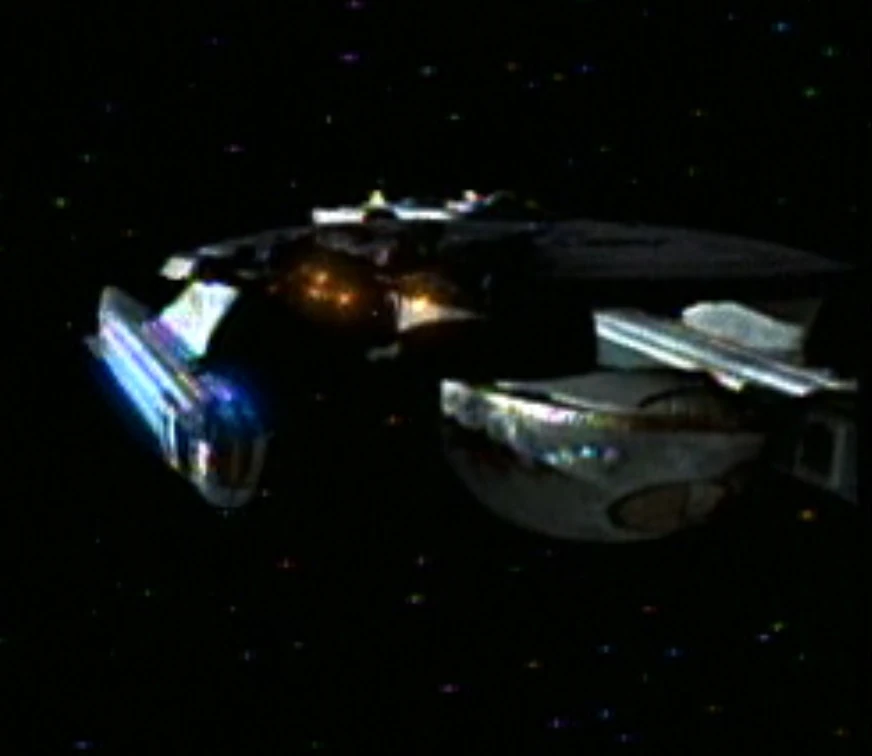 Classified
Curry type
Hull Specifications LoggedThe Curry type is a class of Federation starship that saw active service with Starfleet during the 24th century, notably participating in the Dominion War. While specific details about its design philosophy are limited, its presence during this major conflict suggests a role in Starfleet's tactical operations. **Known Vessels & Technical Specifications** Two vessels are explicitly identified as being associated with this type: the USS Curry (NCC-42254) and the Raging Queen (NCC-42284). Both ships were active in 2373. The Raging Queen, in particular, shares a very similar design to the Curry type, though it is unclear if it is a direct Curry type vessel or a closely related variant with subtle manufacturing differences. Technical specifications for the Raging Queen, which are attributed exclusively to the Star Trek: Deep Space Nine Technical Manual, classify it as a medium cruiser. It was produced at the ASDB Integration Facility within the Utopia Planitia Fleet Yards on Mars. The vessel accommodates a crew of 290 officers and crew. Its propulsion system consists of two 1,500+ Cochrane warp cores feeding two nacelles, supplemented by four impulse systems, allowing for a maximum performance of Warp 9.75 for 12 hours. The Raging Queen measures 383.41 meters in length, 195.64 meters in beam, and 148.50 meters in height, with a total mass of 1,270,000 metric tons. For armament, it is equipped with ten type-9 phaser emitters and two photon torpedo launchers.
- No armament data logged.
- No propulsion data logged.
 Classified
Custom shuttlecraft Class
1 VesselThe class classification of Custom shuttlecraft starships.
- No armament data logged.
- No propulsion data logged.
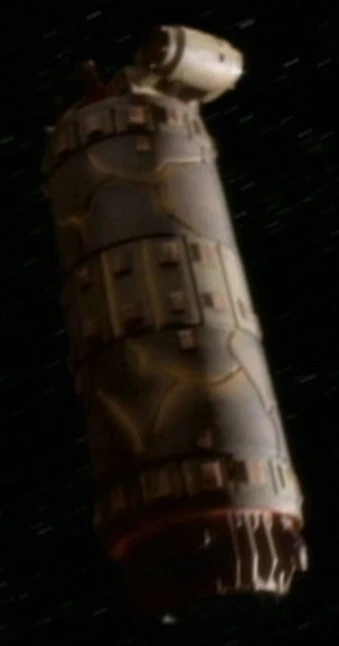 Runabout / Utility
Cytherian probe Class
Hull Specifications LoggedThe Cytherian probe was a sophisticated type of space probe constructed by the enigmatic Cytherians. Its primary mission was to locate and establish contact with other sentient species, subsequently guiding them to the Cytherian homeworld. The probe's design was vaguely cylindrical, measuring approximately ten meters tall and three meters wide. A remarkable aspect of its engineering was its propulsion system, which allowed it to achieve both impulse and warp velocities without emitting particles or generating a subspace field. This unique characteristic indicated a propulsion technology utterly alien and advanced beyond the understanding of the United Federation of Planets. **Tactical Specifications & Capabilities** From a defensive standpoint, the Cytherian probe proved highly resistant to standard Starfleet phaser fire. However, it was not invulnerable, as a concentrated volley of maximum-yield photon torpedoes was capable of destroying it. Beyond its physical resilience, the probe possessed advanced contact protocols, capable of interfacing with and reprogramming the neural pathways of sentient beings, as demonstrated by its interaction with Reginald Barclay. This capability allowed it to subtly influence individuals to fulfill its mission of bringing other species to the Cytherian homeworld. **Service History** In 2367, a Cytherian probe initiated an unsuccessful attempt to establish contact with the Argus Array, resulting in the disabling of the Array's computer systems. The USS Enterprise (NCC-1701-D) was dispatched to investigate the incident. During the investigation, the Enterprise's shuttlecraft Feynman, carrying Lieutenant Commander Geordi La Forge and Lieutenant Junior Grade Reginald Barclay, encountered the probe. The probe attempted to establish contact with the shuttle's computer and its occupants. While Geordi La Forge's VISOR provided protection, Reginald Barclay was directly affected by the probe's influence. Following this encounter, the probe pursued the USS Enterprise (NCC-1701-D), necessitating its destruction by a spread of photon torpedoes. Despite the probe's physical destruction, its mission was partially fulfilled through Reginald Barclay, whose brain had been reprogrammed. Barclay subsequently exhibited greatly increased intelligence and developed a powerful compulsion to bring the USS Enterprise (NCC-1701-D) to the Cytherian homeworld, as depicted in the Starfleet record 'The Nth Degree'.
- No armament data logged.
- No propulsion data logged.

D'Chok's battle cruiser
Class: D7 class- • Disrupto (Qty: 2)
- • magnetic pulse generators
- + 1 more...
- • Cloaking device (Qty: after 2269)
- • Warp facto
- + 1 more...

D'Chok's battle cruiser
Class: D7 class- • Disrupto (Qty: 2)
- • magnetic pulse generators
- + 1 more...
- • Cloaking device (Qty: after 2269)
- • Warp facto
- + 1 more...

D'deridex class
Class: D'deridex class- • Disrupto
- • Phase
- + 1 more...
- • Cloaking device
- • Warp facto (Qty: under cloak)
- + 1 more...
 Warbird, Battle Cruiser
D'deridex class
21 VesselsThe D'deridex-class, also known as the B-type warbird or simply warbird class starship, stands as one of the largest and most formidable mainstays of the Romulan Star Empire. It served as the backbone of the Romulan military fleet throughout the latter half of the 24th century. Starfleet classified the D'deridex-class as a battle cruiser. Its unique design incorporates a horizontally split 'shell' hull, with a prominent forward section. The bulk of the ship's size is distributed across two separate 'wings' that converge at the warp nacelles, the 'tail', and the 'neck', which connects to the 'head' or primary forward hull section. The 'head' houses the main bridge, main engineering, and the majority of the vessel's primary weapon systems. Andrew Probert, the original designer, intended the D'deridex-class to be 1,353 meters long, with the separated wings designed to allow the engines to 'see' each other and generate a warp field. The ship's primary power source is a forced quantum singularity, coupled with advanced Romulan cloaking technology, making it one of the most sophisticated vessels in the Romulan Star Empire and the Alpha Quadrant. The D'deridex-class is roughly twice the length of a Federation Galaxy-class starship, though it possesses a lower overall maximum warp speed. A cross-section schematic created by Doug Drexler for Lovok's warbird depicted approximately 26 decks, though visual window counts suggest over 45 decks. Andrew Probert also noted that the impulse engine, though omitted from the final model due to schedule constraints, was intended to be recessed into a vertical slot below the landing bay. He also identified a 'V'-shaped faceplate on the 'face' of the ship as the navigational deflector, though this area was often depicted as the primary disruptor array/torpedo launcher in visual effects. Additionally, Probert's design included at least twenty-six escape pod hatches, thirteen on either side of the ship's dorsal spine. **Class History** The D'deridex-class first appeared in 2364, when a warbird uncloaked during an encounter with the USS Enterprise (NCC-1701-D) near the Romulan Neutral Zone, signaling the end of fifty-three years of Romulan isolation, as depicted in the Star Trek: The Next Generation episode 'The Neutral Zone'. Over the subsequent decade, these warbirds, operated by both the Romulan military and the Tal Shiar, engaged in numerous confrontations with Starfleet and the Dominion. By 2374, they played a crucial role in the Dominion War, effectively pushing back Dominion fleets. D'deridex-class warbirds saw action in the First Battle of Chin'toka, the Second Battle of Chin'toka, and the climactic Battle of Cardassia, as seen in the Star Trek: Deep Space Nine episode 'The Changing Face of Evil'. During the Battle of the Omarion Nebula, five D'deridex-class warbirds, including the D'deridex Omarion 001, joined fifteen Cardassian Keldon-class cruisers in a combined fleet of twenty ships, which was ambushed and destroyed by a fleet of 150 Dominion ships in the Star Trek: Deep Space Nine episode 'The Die is Cast'. At the Battle of Cardassia, at least seven warbirds were part of the Federation Alliance fleet, with one confirmed destroyed and at least five surviving, as shown in the Star Trek: Deep Space Nine episode 'What You Leave Behind'. Circa 2380, ten D'deridex-class warbirds engaged six Borg cubes, an event witnessed by the USS Cerritos, which subsequently fled the scene, as depicted in the Star Trek: Lower Decks opening title sequences. The class's schematics were even present in a database brought to the 22nd century by Daniels, a 31st-century temporal agent, and were viewed by Captain Jonathan Archer and T'Pol in 2152, as seen in the Star Trek: Enterprise episode 'Future Tense'. In a Starfleet simulation, two D'deridex-class warbirds were shown to outgun an Intrepid-class starship, as seen in the Star Trek: Voyager episode 'Learning Curve'. **Technical Systems** The primary directed energy weapons array of a D'deridex-class warbird is located in its 'head', consisting of a disruptor array capable of firing both beams and pulses, which appears to be integrated with a photon torpedo launcher. Additional weapon arrays are positioned along the top and bottom of the upper and lower 'neck' supports, respectively, and at the tip of the 'nose'. Some warbirds were also equipped with phasers. Like earlier Romulan vessels, D'deridex-class warbirds are outfitted with cloaking devices, providing protection from detection. However, like most cloaking devices, they cannot operate simultaneously with deflector shields. Cloaked warbirds traveling at warp speeds radiate a slight subspace variance, making them more susceptible to detection at speeds above warp factor 6. The Dominion pioneered an effective countermeasure: an anti-proton beam scan, which proved successful in penetrating the warbird's cloak. The forced quantum singularity power source presents vulnerabilities; if damaged or malfunctioning, it can manifest as a magnetic disturbance through the cloak. Damage to the engine core typically results in the complete destruction of the ship. To maintain cloaked integrity, radiative emissions from the warp engines must be precisely balanced; any misalignment in the nullifier cores can create a detectable polarized magnetic distortion. The confined singularity also limits the warbird's maximum speed; exceeding its maximum engine output by thirty percent to match a Galaxy-class starship's top speed would inflict irreparable damage to its warp coils. The singularity can also cause time shifts, as experienced by Starfleet Chief Engineer Miles O'Brien, who used this effect to prevent a Romulan warbird attack on Deep Space 9, as seen in the Star Trek: Deep Space Nine episode 'Visionary'. The warbird is equipped with at least one tractor beam, located in the forward section of the lower 'neck'. **Interior Design** The interior of D'deridex-class warbirds features a distinctive beige and green-gray or teal color scheme. Due to their immense size, these vessels contain numerous long corridors. The main bridge design shares similarities with both Klingon and Federation starship counterparts. It features a main viewscreen at the front, with the pilot's console (including helm and possibly navigator functions) to the left, and an executive officer's station with access to tactical systems to the right. The command chair is situated on a raised platform at the rear, surrounded by various stations. Some bridge designs include a side-by-side seating arrangement for the commander and sub-commander, as seen on Tebok's warbird in 'The Neutral Zone'. The bridge set used for the Star Trek: Deep Space Nine episode 'The Die is Cast' was a redress of the Constitution-class refit-bridge set from Star Trek: Phase II. Adjacent to the bridge is the commander's ready room or command center, which typically includes a large desk, a couch with a removable table, and a window offering a view of space. These ready rooms can also function as command centers with monitors and display consoles, allowing the commander to oversee ship or fleet activities without being on the bridge, as seen in the Star Trek: The Next Generation episode 'Redemption II'. The wardroom serves as a conference or officers' room, similar to an observation lounge, and also functions as the dining area for senior officers. The engine room is located at the ventral base of the forward 'head' and, unlike Federation or Klingon starships, features a wall compartment housing the quantum singularity engine core instead of a large matter-antimatter reactor core. A starkly-lit procedure room, possibly a science lab, contains a chair and movable equipment. A shuttlebay is located two decks down from 'C' Deck, in Section 25, large enough to accommodate at least one Starfleet Danube-class runabout. Cargo bays serve as storage areas with shelving. Crew quarters, located on 'C' Deck, are sparsely furnished with a table, chairs, and bunk beds, and can include integrated force fields. The crew quarters set seen in 'The Die is Cast' was a redress of the USS Defiant (2370) crew quarters set. Variations in crew quarters include beds detached from the wall and a sink with a mirror. **Commissioned Vessels** Named D'deridex-class warbirds include the IRW Belak (destroyed 2371), IRW Devoras (active 2367), IRW Haakona (active 2365), IRW Khazara (active 2369), IRW Makar (destroyed 2371), IRW T'Met (active 2374), and IRW Terix (active 2370). Other vessels with uncertain names but designated as D'deridex-class include the PWB Aj'rmr, IRW Dividices, PWB Genorex, PWB Koderex, PWB Preceptor, PWB T'Tpalok, and PWB Tomal, all active in 2375. Unnamed warbirds are often identified by their commanders, such as Kaseth's warbird (active 2384), Lovok's warbird (destroyed 2371), Sela's warbird (active 2368), Tebok's warbird (active 2364), and Tomalak's warbird (active 2370). A fictional D'deridex-class starship was depicted in a holoprogram in 2367.
- • Disrupto
- • Phase
- + 1 more...
- • Cloaking device
- • Warp facto (Qty: under cloak)
- + 1 more...
D'deridex class Warbird
Hull Specifications LoggedThe class classification of D'deridex class Warbird starships.
- No armament data logged.
- No propulsion data logged.
 Marauder, attack vessel, warship, trader, transport ship, cargo ship
D'Kora class
13 VesselsThe D'Kora-class Marauder was an advanced starship type primarily utilized by the Ferengi Alliance throughout the 24th century. The Federation often referred to these vessels as warships, while the Ferengi themselves designated them as attack vessels. Over time, the class also served as trading vessels, transport ships, and cargo ships. Upon first contact with a D'Kora-class vessel in 2364, Captain Jean-Luc Picard of Starfleet described its design as 'very impressive.' Starfleet's initial understanding of Ferengi technology in the early 2360s was that it was generally equivalent to, though not identical to, Federation technology. In terms of size, the D'Kora-class was notably shorter in length than a Galaxy-class starship. The standard crew complement for a D'Kora-class Marauder was approximately 450, though these vessels could be operated with as few as one or two individuals. **Propulsion Systems** The D'Kora-class was equipped with a highly efficient propulsion system, described by Commander Geordi La Forge as being 'almost as fast' as a Federation Galaxy-class starship. These vessels were capable of achieving warp speeds of Warp 9 or higher. In addition to warp capabilities, the D'Kora-class could perform sub-orbital flight and utilize multiple ventral thrusters for stationary hovering several meters above a planet's surface. **Tactical Systems** D'Kora-class Marauders were outfitted with a diverse array of weapon systems. They possessed placements for directed energy weapons at the 'claws' on both the port and starboard sides of the ship. A torpedo launcher was situated at the peak of the ship's primary hull, and a forward missile launcher was also part of its offensive arsenal. Furthermore, the D'Kora-class was equipped with a unique energy weapon emitted from the aft of the ship. This weapon, detectable by a significant power surge prior to discharge, generated an electromagnetic pulse capable of weakening the deflector shields of a Galaxy-class starship and depleting its fusion generator and batteries by up to thirty percent in a single discharge. In situations where a D'Kora's DaiMon was compelled to surrender, the ship would extend its 'neck' and open its weapon ports, exposing sensitive areas. This posture, however, could also be interpreted as a preparation for attack. Defensive capabilities included robust deflector shields. **Auxiliary Vessels** At least one D'Kora-class vessel was known to be equipped with an integrated D'Kora type shuttle, providing additional utility for various missions. **Interior Design** The interior layout of the D'Kora-class reflected Ferengi design principles. The bridge crew typically operated from a standing position. The engineering section of a D'Kora-class vessel, such as the Damsel, featured a warp core, with crew members like Dal R'El known to sleep in hammocks beneath it. The holding tank, designed for prisoners, included a holding cell, a table with stools, and a computer terminal, often separated by a lighted arch suggesting a forcefield. The laboratory facilities were characterized by numerous pieces of lab equipment, a biobed, mind probes, and a computer. Atypical features included a bed that slid out of the wall, a food synthesizer, and a companel allowing for direct site-to-site transport. The science room was equipped with a large wall screen for data display. Cargo holds were also a standard feature, facilitating the class's role as a trading and transport vessel. **Service History** The D'Kora-class was active from the 2360s through the 2380s, serving the Ferengi Alliance in various capacities. Notable ships of this class include the Damsel, which was active in 2383; the Krayton, active in 2366; and the Kreechta, active in 2365. Other D'Kora-class vessels were commanded by prominent Ferengi figures such as DaiMon Bok (in 2364 and 2370), DaiMon Goss (in 2366), DaiMon Nunk (in 2377), DaiMon Prak (in 2370), and DaiMon Tarr (in 2364). The D'Kora-class has made numerous appearances across Starfleet records, including episodes of Star Trek: The Next Generation ('The Last Outpost', 'The Battle', 'Peak Performance', 'The Price', 'Ménage à Troi', 'Force of Nature'), Star Trek: Voyager ('Drone', 'Inside Man'), and Star Trek: Prodigy ('First Con-tact', 'Supernova, Part 1').
- • Directed energy weapo
- • electromagnetic pulse weapo
- + 2 more...
- • Warp facto
- • Deflector shield
 Auxiliary craft
D'Kora type shuttle
Hull Specifications LoggedThe D'Kora-type shuttle was an auxiliary craft specifically designed to be integrated with the D'Kora-class Marauder, a primary vessel of the Ferengi Alliance. The design concept envisioned this shuttle dropping down from the bottom of the Marauder's neck, a feature that, while not fully realized in on-screen depictions, was an integral part of the D'Kora-class's overall architecture. The outline of the shuttle, characterized by a distinctive swept-forward wing, was visible on the belly of the D'Kora-class Marauder, indicating its intended role as a deployable component. This integrated auxiliary craft design philosophy shared similarities with other Starfleet concepts such as the AeroWing and the Calypso. **Service History** The D'Kora-type shuttle was in active service by 2364. A notable instance of its deployment was aboard Tarr's Marauder, a D'Kora-class vessel, as documented in the Starfleet record 'The Last Outpost'. It served the Ferengi Alliance as a standard auxiliary component for their D'Kora-class Marauders, facilitating various mission profiles requiring smaller, deployable craft.
- No armament data logged.
- No propulsion data logged.
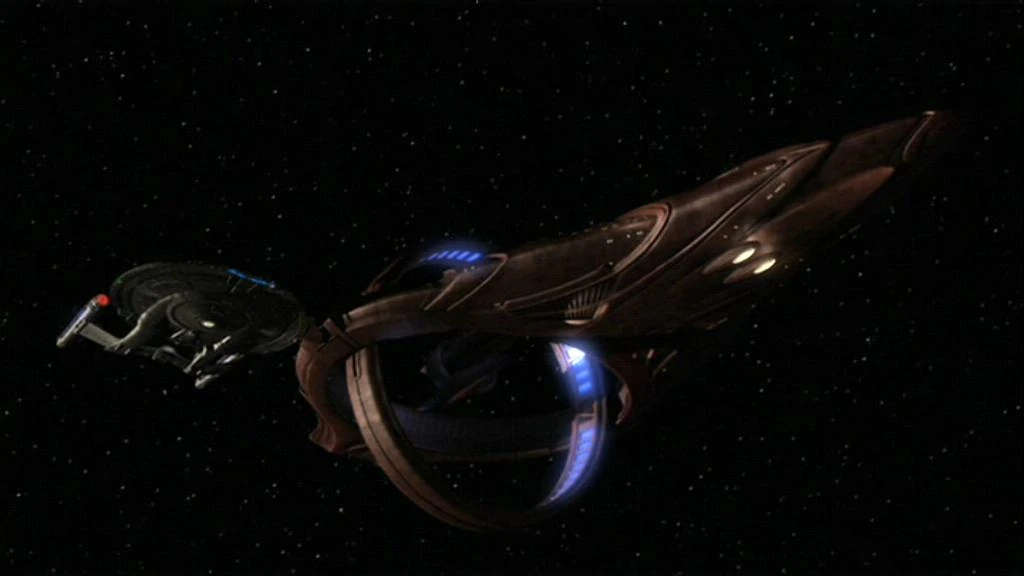 Combat Cruiser
D'kyr Class
1 VesselThe D'kyr-class was a combat cruiser that served with the Vulcan High Command during the mid-22nd century. These vessels formed a crucial part of the Vulcan fleet, designed for combat operations and strategic deployments across Vulcan space. While specific technical specifications regarding its construction and internal systems are not extensively detailed, its classification as a combat cruiser implies a robust design equipped for engaging hostile forces and performing various military functions, reflecting the Vulcan High Command's tactical capabilities during this era. **Service History** One notable D'kyr-class vessel, the D'kyr itself, played a role in the early exploratory missions of Starfleet's NX-01 Enterprise. In February 2152, the NX-01 Enterprise was scheduled to rendezvous with the D'kyr. This rendezvous was initially planned for the transfer of Sub-Commander T'Pol and Doctor Phlox, who were to be transported home aboard the D'kyr after their mission with Captain Jonathan Archer's crew was temporarily canceled. However, the NX-01 Enterprise failed to make the initial rendezvous due to its involvement in a critical incident. During this period, the D'kyr actively monitored the encounter between the NX-01 Enterprise and several Suliban cell ships. After successfully escaping the Suliban helix, the NX-01 Enterprise eventually managed to complete the rendezvous with the D'kyr. Following this, Captain Jonathan Archer successfully convinced the Starfleet Command Council to allow the NX-01 Enterprise's mission to continue, thereby preventing the immediate return of Sub-Commander T'Pol and Doctor Phlox. The D'kyr-class remained an active vessel type within the Vulcan High Command's fleet throughout the 22nd century.
- No armament data logged.
- No propulsion data logged.
D'kyr combat cruiser Class
Hull Specifications LoggedThe class classification of D'kyr combat cruiser starships.
- No armament data logged.
- No propulsion data logged.
 Combat cruiser
D'kyr type
Hull Specifications LoggedThe D'kyr-type was a distinctive starship class operated by the Vulcan High Command during the mid-22nd century. These vessels were often designated as combat cruisers in the 2150s, as referenced in the episode "Future Tense". The class name, D'kyr-type, was chosen by Memory Alpha based on the first ship of this design to appear on screen, the D'kyr. Production scripts for episodes like "Shockwave, Part II" referred to it as a 'large Vulcan Command Ship', while "Cease Fire" described them as 'powerful-looking Vulcan ships'. Later, in "United" and "In A Mirror, Darkly, Part II", the design was called a 'Vulcan ring ship' or 'Vulcan ringship'. The menus of the Enterprise 4th season DVD set identified this vessel as a 'Command Class'. **Design & Development** The D'kyr-type starship featured a unique outboard plan, characterized by a flattened, conical hull that flared out around its circular warp nacelles before converging at the aft section, where the impulse engines were located. This design was significantly larger than Earth's NX-class starship, as observed in "Shockwave, Part II" and other episodes. The class was designed by John Eaves, with the studio model built by Pierre Drolet. Its design partially descended from Matt Jefferies' 'ring ship' concept, seen on the recreation deck display in Star Trek: The Motion Picture, as noted in the "Impulse" text commentary on the Enterprise Season 3 Blu-ray. When the warp drive was not in use, the ship's annular-warp nacelle could be dropped into a vertical position, or folded horizontally into the primary hull when the engines were powered down or preparing to launch its D'kyr type support craft, as depicted in "Future Tense", "Bounty", and "Impulse". **Tactical Systems** D'kyr-type starships were formidable vessels, armed with both photonic weapons and particle beam weapons, and protected by deflector shields. Particle beam emplacements included a forward emitter, two ventral emitters, and two aft emitters, as detailed in "Awakening" and "Kir'Shara". In combat, these ships demonstrated superior firepower compared to Starfleet's NX-class starships and were nearly comparable to the Andorian battle cruiser, as shown in "Kir'Shara". However, they were inferior to a force of three 22nd century Tholian ships, and in the mirror universe, a single Federation Constitution-class starship proved significantly superior to D'kyr-type vessels, as seen in "Future Tense" and "In A Mirror, Darkly, Part II". The class was capable of traveling a hundred light years in a few weeks, highlighting its impressive propulsion capabilities. **Interior Design** D'kyr-type starships comprised at least thirteen decks, as established in "Impulse". The bridge featured a dedicated panel for the commanding officer, such as Muroc, when communicating, as depicted in "Cease Fire". The sickbay, located on Deck 5, was a relatively small room containing a single central biobed encased within a transparent tube. This biobed was equipped with wrist and ankle restraints for unwilling patients and diagnostic controls integrated into the transparent material. A large white Vulcan emblem adorned the wall opposite the entrance, as seen aboard the Seleya in "Impulse". On the engineering deck, an auxiliary control room provided the capability to manage the ship's main functions if the main engine room and bridge became inoperable or unreachable. This room featured a central round console directly beneath an access hatch leading to an access tunnel. Controls within this room could manage the electro-plasma system's power distribution net and, if necessary, overload it to destroy the ship. Monitors around the room displayed engineering readouts and sensor telemetry, and a communications panel was situated on a flat wall opposite the door. Two vents at the bottom of that wall allowed hexafluorine gas to be vented if the control room was compromised by hostile forces. Bulkhead controls, typically routed via Deck 9, could be rerouted through the auxiliary grid. The central panel's command actuator circuits, which controlled door locking mechanisms, could overload if not properly sequenced during realignment, posing a shock hazard to anyone attempting access after power rerouting, as detailed in "Impulse". Starships of this type were also equipped with a large shuttlebay, part of which was located on Deck 7. This shuttlebay spanned from the bottom to the top of the ship's mid-section, just forward of the warp-ring area and the auxiliary ship docked within the warp ring. D'kyr-type vessels typically carried at least two shuttlecraft, as illustrated by a ship diagram in "Impulse". **Service History** In 2154, several D'kyr-type starships were involved in the Battle of Andoria, executing the directives of Administrator V'Las. These directives included an attempted invasion of Andoria and a near-war with Earth, as the Vulcan fleet attempted to destroy the USS Enterprise (NX-01), an event chronicled in "Kir'Shara". Later that same year, multiple D'kyr-type combat cruisers were integrated into a formidable alliance fleet of 128 ships, comprising Andorian, Earth, Tellarite, and Vulcan vessels. This combined fleet formed a sensor grid to detect a Romulan marauder, a Romulan drone ship that threatened to destabilize the entire region, as depicted in "United". In the mirror universe, D'kyr-type vessels were utilized by Vulcan rebels in 2155 to engage the Terran fleet. These rebel ships were among those that attacked the ISS Avenger, an event documented in "In A Mirror, Darkly, Part II". Notable named ships of this class include the D'kyr, active in 2152; the Seleya, destroyed in 2153; the Tal'Kir, active in 2152; and Muroc's starship, active in 2152. The D'kyr type support craft was also seen in "Home".
- • Particle weapo
- • Photonic weapo
- • Deflector shield
 Survey vessel, Patrol ship
D'Vahl type
Hull Specifications LoggedThe D'Vahl-type was a versatile class of Vulcan starship, slightly larger than a standard shuttlecraft, designed for multiple roles. These vessels were warp-capable, featuring three distinct nacelle-like engines and a landing light mounted on their hull. For defensive and offensive capabilities, they were armed with a type of particle beam weapon. Technologically, the D'Vahl-type ships were equipped with advanced targeting sensors and possessed superior shielding compared to Starfleet's 22nd century shuttlepods. **Class History** Active from the mid-20th century through the mid-22nd century, the D'Vahl-type served in various capacities for the Vulcan people. In the late-1950s, the class was primarily utilized as a survey vessel, with the named vessel D'Vahl making the first recorded visit to Earth in 1957, as chronicled in the episode "Carbon Creek". By the 2150s, the D'Vahl-type had transitioned into service with the Vulcan High Command, functioning as a patrol ship for routine patrol duties and orbital defense of the planet Vulcan. These vessels played a role in significant events of the era; for instance, they were among the ships that welcomed the Enterprise (NX-01) upon its return from its mission to the Delphic Expanse, as seen in "Storm Front, Part II". In 2154, two D'Vahl-type vessels engaged Shuttlepod 1 after it launched from the Enterprise (NX-01) during an unauthorized attempt to land on Vulcan, an event depicted in "Awakening". Furthermore, several D'Vahl-type patrol ships accompanied the Vulcan fleet during their failed invasion of Andoria, known as the Battle of Andoria, which was featured in the episode "Kir'Shara".
- • Particle weapo
- No propulsion data logged.
 Scout ship, Science vessel
D'Var type
Hull Specifications LoggedThe D'Var type was a distinctive class of scout ship, also identified as a science vessel, utilized by the Orions during the mid-23rd century. Its design was unique and previously unknown to Starfleet, characterized by an oblong primary hull connected by a central spine to a large vertical ring. This ring, positioned perpendicular to the primary hull, housed the ship's advanced propulsion system. The propulsion system itself comprised two four-spoke components, each containing four propulsion units, which spun independently while the vessel was in flight. The D'Var type's hull was constructed from high-density trititanium, a material that afforded the vessel a unique sensor-blocking capability, effectively 'cloaking' it against Federation sensor probes. This technology was distinct from the cloaking device employed by the Romulans. While moderately armed with standard phasers, the D'Var type was renowned for its incredible speed, capable of reaching warp factor 10 in combat, allowing it to evade both phaser and photon torpedo fire. **Class History** The D'Var type was active from the 2250s through the 2260s, serving the Orion Syndicate primarily as a scout and science vessel. One notable vessel of this class was the USS D'Var. The class first came to Starfleet's attention during the events of 'Journey to Babel', where its unique capabilities and design were observed. By the late 24th century, the means to defeat the D'Var type's sensor-blocking deficiency had become fairly common knowledge within Federation science, as referenced in the episode 'Those Old Scientists'.
- • Phase
- • Warp facto
- • Sensor-blocking capability
 Scout / Patrol
D4 class
Hull Specifications LoggedThe D4 class was a distinctive type of small Klingon patrol ship utilized by the Klingon Empire within the alternate reality during the mid-23rd century. These vessels were characterized by their two torpedo launchers, strategically mounted on top of the wings near the fuselage. Propulsion was indicated by a single aft exhaust. A key design feature was the ability of its wings to angle in various ways, granting the ship exceptional high-speed atmospheric maneuvering capabilities and allowing it to navigate through confined spaces. The D4 class also possessed full landing capabilities and could deploy troops mid-flight via cables from four hatches located on its underside. Concept artist James Clyne originated the initial sketch for the D4 class Klingon fighter. Visual effects artists at Pixomondo subsequently undertook the extensive detailing of this industrial-type fighter ship, extrapolating its appearance from their envisioned aesthetic for Qo'noS in 'Star Trek Into Darkness'. At Pixomondo, the D4 class was meticulously modeled by CG Supervisor Enrico Damm and Compositing Supervisor Dan Cobbett, with rendering performed in V-Ray. The Pixomondo team aimed to imbue the D4 class with a 'Bird-of-Prey' feel. Alex Kurtzman noted the challenge of reinventing the basic Bird-of-Prey shape, opting instead to update it in a manner consistent with the overall modernization of 'Star Trek', resulting in a highly militarized interpretation. Pixomondo Visual Effects Supervisor Ben Grossmann described the ship as a 'bad-ass predator', akin to a 'larger more predatory hawk', and observed it was slightly less 'nimble' than the K'normian trading ship. An alternative design, more closely resembling the prime reality's Klingon Bird-of-Prey, was created by Pierre Drolet but was ultimately rejected by the film's art department. Furthermore, a D4 class starship was initially designed by John Eaves to represent Vorok's battle cruiser in the episode 'Unexpected', though the K't'inga-class CGI model was ultimately reused for that appearance. **Class History** In 2259, three D4 class vessels played a significant role when they intercepted a K'normian trading ship. This trading ship, which had been confiscated by the crew of the USS Enterprise (NCC-1701 alternate reality) during the Mudd Incident, was transporting James T. Kirk, Spock, Nyota Uhura, Hendorff, and another security officer over the Ketha Province on Qo'noS. The D4 class ships successfully forced the trading ship to land, though two of these vessels were subsequently destroyed by Khan Noonien Singh using a boolean gun. The novelization of 'Star Trek Into Darkness' further characterized the D4 as a 'Bird-of-Prey' scout ship and patrol vessel. In the IDW Publishing comic prequel 'Countdown to Darkness, Issue 4', a Klingon starship with a very similar hull configuration was depicted as a much larger vessel, approaching the size of an alternate reality Constitution-class starship. Later, in 'Star Trek: Manifest Destiny, Issue 2', the IKS Chonnaq utilized several D4 class vessels to assist in attacking and boarding the USS Enterprise. The D4 class also made its way into 'Star Trek Online' with the release of the 'Kelvin Timeline D4x Pilot Bird of Prey' during the 'Agents of Yesterday' expansion. This version was scaled up to roughly the size of a Bird-of-Prey and appears as an enemy ship in the mission 'Terminal Expanse'. The D4 class has also been featured in various merchandise, including a Hot Wheels miniature and a Kre-O version, both identified as a 'Klingon Bird-of-Prey', and a 'special issue' model by Eaglemoss Collections in April 2015, also labeled as a 'D4 Bird-of-Prey'.
- • Torpedo launche (Qty: 2)
- No propulsion data logged.
 Escort / Warship
D5 class
Hull Specifications LoggedThe D5-class battle cruiser was a formidable type of large warship that served with the Klingon Imperial Fleet during the mid-22nd century. Its design, like many subsequent vessels in the Imperial Klingon fleet, was characterized by a rugged construction utilizing diffusion bonded monocrystal and a distinctive, roughly bird-like form. The bridge was strategically located in the ship's forward-most position, connected to the secondary hull by an elongated neck reinforced with support cables. Along the nape of this neck were the ship's forward sensor platform and the primary disruptor array. The bulk of the D5-class rested in its aft section, which flared downwards and outwards to port and starboard, forming a pair of angular wings that housed the talon-like warp nacelles. A superstructure atop the vessel contained the cargo loading door, aft sensor platform, and maneuvering thrusters, while the impulse engines were situated on the aft-most section of the secondary hull, below the superstructure, as documented in the episode 'Judgment'. A notable design variant of the D5-class was its modification into a deuterium tanker. Described as 'little more than a freighter', this variant could be equipped with eight under-slung deuterium tanks, capable of transporting over 80,000 liters. This tanker version operated with a crew of twelve, or a skeleton crew of four, and was considerably less advanced than its battle cruiser counterpart, notably lacking the ventral disruptor cannon common to the class. Captain Jonathan Archer of the NX-01 Enterprise speculated that the tanker variant's defensive capabilities were 'no match for NX-01 Enterprise', as seen in 'Marauders'. **Tactical & Auxiliary Systems** The fully armed D5 battle cruiser was considered significantly more advanced than Starfleet's most powerful vessel of that era, the NX-class starship. It boasted a maximum speed of Warp Factor 6. Its offensive arsenal was impressive for the time, featuring a forward weapons port capable of firing both disruptors and photon torpedoes, a 360° rotating turret with twin belly-mounted disruptor cannons, and a dorsal disruptor array. For defense, the D5-class was protected by deflector shields and dispersive armor, as demonstrated in 'Judgment', 'Divergence', and 'The Augments'. Despite its superiority, Malcolm Reed, tactical officer of the NX-01 Enterprise, speculated that 'sustained phase cannon fire should be able to penetrate their armor, but I doubt they'd sit still long enough to give us the chance.' In terms of auxiliary systems, the D5 battle cruiser was outfitted with 'standard multi-spectral sensors', similar to those found on Starfleet's NX-class, according to 'Judgment'. However, Arik Soong later stated in 'The Augments' that the D5 battle cruiser's sensors were 'far superior' to those used on an NX-class. An NX-class starship could even generate a fake warp signature matching that of a D5 battle cruiser by reconfiguring its warp coil assembly, an alteration undetectable by Klingon sensors beyond 80,000 kilometers, as shown in 'The Augments'. **Interior Layout** The main bridge of the D5 battle cruiser was designed to operate with a crew of three. Its configuration shared many features with contemporary designs. The ship's viewscreen was positioned at the front of the bridge, against the forward bulkhead. Directly behind the viewscreen, near the center, was the captain's chair. The entryway to the bridge was located directly behind the captain's chair, flanked by two manned consoles. The captain's chair could also be moved towards the aft of the bridge to accommodate an additional forward console. Several specialized stations were arranged along the perimeter of the bridge, as depicted in 'Judgment' and 'Divergence'. The commanding officer's cabin provided a private space for conducting ship's business, furnished with a desk, chair, and desktop monitor, as seen in 'Divergence'. **Service History** The D5-class was in service as early as 2147, with its specifications fully documented, though classified, within the Vulcan database, as referenced in 'Marauders' and 'Judgment'. These vessels frequently performed patrol duties throughout the vast Klingon Empire. One D5-class vessel notably served as the personal flagship for a high-ranking fleet admiral, as shown in 'The Augments' and 'Divergence'. In the 2260s, the legendary Klingon commander Kor commanded an attack on Caleb IV from the IKS Klothos, which he identified as a D5-class cruiser. By the 2370s, the D5-class was considered an old design, a fact highlighted by Kor himself in the Deep Space Nine episode 'Once More Unto the Breach'. This reference, however, created a minor continuity inconsistency, as the IKS Klothos depicted in the Star Trek: The Animated Series episode 'The Time Trap' appeared to be a variant of the D7-class, rather than the D5-class later established in Star Trek: Enterprise.
- • Disrupto
- • Photon torpedo
- • Warp facto
- • Deflector shield
- + 1 more...

D7 class
Class: D7 class- • Disrupto (Qty: 2)
- • magnetic pulse generators
- + 1 more...
- • Cloaking device (Qty: after 2269)
- • Warp facto
- + 1 more...
 Scout / Patrol
D7 class
12 VesselsThe D7 class cruiser was a formidable 23rd century warship, initially designed and operated by the Klingon Imperial Fleet. Its distinctive design later saw adoption by the Romulan military during the late 2260s, becoming a symbol of Klingon power and a significant threat to the security of the Federation and Starfleet. **Design & Development** The D7 class was formally introduced in 2257 by Chancellor L'Rell, who presented its schematics to the Klingon High Council. L'Rell envisioned the D7 as a unifying symbol for all Klingon Houses, intended for mass production. The design itself evolved from a classic lineage, tracing back to the 22nd century with early D5 class battle cruisers. Physically, the D7 class presented an almost predatory appearance, characterized by a spread-wing primary hull, a long neck, and a head-like command pod. The bridge was situated on this bulbous 'head,' separated from the ship's bulkier aft section by a relatively thin neck that flared into the wings. Below these wings, a pair of outboard warp nacelles were positioned, while the impulse engines were located on the caudal section of the ship. In terms of dimensions, the D7 class was comparable in size to the Federation's Constitution-class starship. Early Romulan variants of the D7 class often featured a large bird-of-prey design painted on the hull, identical to that found on the Romulan Bird-of-Prey, or red and yellow feather-like detailing on the upper wing and nacelle pylon. **Service History** Serving as the backbone of the Klingon Imperial Fleet from the late 2250s through the 2270s, the D7 class posed a serious threat to the Federation and Starfleet, as evidenced in episodes like 'Errand of Mercy' and 'Elaan of Troyius.' Its mission profiles included that of a scout ship, as seen in 'Friday's Child.' One of the first D7-class vessels ferried Chancellor L'Rell to a meeting with the USS Discovery at Boreth in 2257. Several D7s later participated in the Battle near Xahea, supporting the USS Discovery and USS Enterprise (NCC-1701) against a Section 31 armada, as depicted in 'Through the Valley of Shadows' and 'Such Sweet Sorrow, Part 2.' By 2261, a D7-class vessel fell victim to an XCV-100 Scavenger ship, with its wreckage later used by the USS Farragut (NCC-1647) to destroy the scavenger ship via a warp core breach in 'The Sehlat Who Ate Its Tail.' The Romulan Star Empire began operating D7-class cruisers by 2268, a fact later explained in 'Reunion' as a result of Romulan-Klingon relations. By the 2270s, the K't'inga class, a variation of the D7, had largely superseded the original D7 design, as seen in 'Star Trek: The Motion Picture.' Despite being largely retired for decades by 2377, as stated in 'Prophecy,' the Federation maintained interest in the class, with data commonly found in Starfleet files well into the 2370s, appearing as LCARS graphics in episodes like 'The Naked Now,' 'The Last Outpost,' 'Conspiracy,' 'Drone,' and 'The Voyager Conspiracy.' At least one D7, Kohlar's battle cruiser, remained operational until 2377, used by a Klingon religious sect on a multi-generational quest to the Delta Quadrant, before its destruction via self-destruct initiated by its commander, Kohlar, in 'Prophecy.' Notable named D7-class vessels included the IKS Devisor, IKS Gr'oth, and IKS Klothos. **Tactical Systems** During the mid-23rd century, the D7 class's impressive armament made it a significant threat. It featured two retractable, nacelle-mounted disruptor cannons and a forward launcher capable of firing photon torpedoes, magnetic pulses, and disruptor blasts, as demonstrated in 'Prophecy,' 'Errand of Mercy,' 'The Enterprise Incident,' 'More Tribbles, More Troubles,' and 'The Broken Circle.' In 2269, the Klingons developed a prototype weapon, a projected stasis field, first encountered by the Federation on the IKS Gr'oth. This powerful field could paralyze an enemy vessel's vital systems but was equally crippling to the firing ship, rendering it impractical for standard combat. While a D7 cruiser was often considered a match for a Constitution-class starship, a barrage of phaser fire from a Constitution-class vessel could destroy a single D7, as occurred at the outbreak of the Federation-Klingon War in 2267. Captain James T. Kirk considered a fleet of eight D7s to have superior odds against the USS Enterprise (NCC-1701), though Hikaru Sulu expressed confidence in their ability to defeat them in 'Errand of Mercy.' By the late 24th century, these vessels were considered antiquated and inferior in firepower to a Federation Intrepid-class starship, as noted in 'Prophecy.' **Defensive & Propulsion Systems** Like its predecessor, the Romulan Bird-of-Prey, the Romulan D7 was equipped with cloaking technology. Klingon ships began receiving cloaking devices as early as 2269, with the IKS Klothos being one of the first. This cloaking device could be penetrated by a metaphasic sweep, as shown in 'The Time Trap,' 'Once More Unto the Breach,' and 'Prophecy.' According to the Star Trek: The Next Generation Technical Journal, the Klingons acquired cloaking devices in exchange for several D7s given to the Romulans as part of a Romulan-Klingon alliance. For propulsion, some 23rd-century Klingon D7s were equipped with an S-2 graf unit, roughly equivalent to the warp drives of the Federation's Constitution-class starships, enabling them to achieve speeds of Warp 9+, as seen in 'The Time Trap' and 'Elaan of Troyius.' The D7's impulse drive consisted of four-port engines, presumably enhancing its maneuverability at sublight speeds, as depicted in 'Elaan of Troyius.' D7s were also equipped with standard shields, with specific number three and number four shields located amidships, as mentioned in 'Elaan of Troyius.' Romulan D7s were also outfitted with food synthesizers, as seen in 'The Practical Joker.' **Interior Design** The average crew complement of a Klingon D7 was approximately 430, comparable to a Constitution-class starship, as noted in 'Day of the Dove.' The bridge, referred to by Romulans as 'Control Central,' served as the nerve center of the D7 class, as shown in 'The Enterprise Incident.' The D7 also featured a conference room, used for senior staff mission briefings, which contained a triangular table embossed with the emblem of the Klingon Empire and surrounding computer consoles, as depicted on the IKS Klothos in 'The Time Trap.' Due to its primary role as a warship, D7 class starships had very few, if any, dedicated recreational facilities, with most space allocated to weaponry, as implied in 'The Trouble With Tribbles.'
- • Disrupto (Qty: 2)
- • magnetic pulse generators
- + 1 more...
- • Cloaking device (Qty: after 2269)
- • Warp facto
- + 1 more...
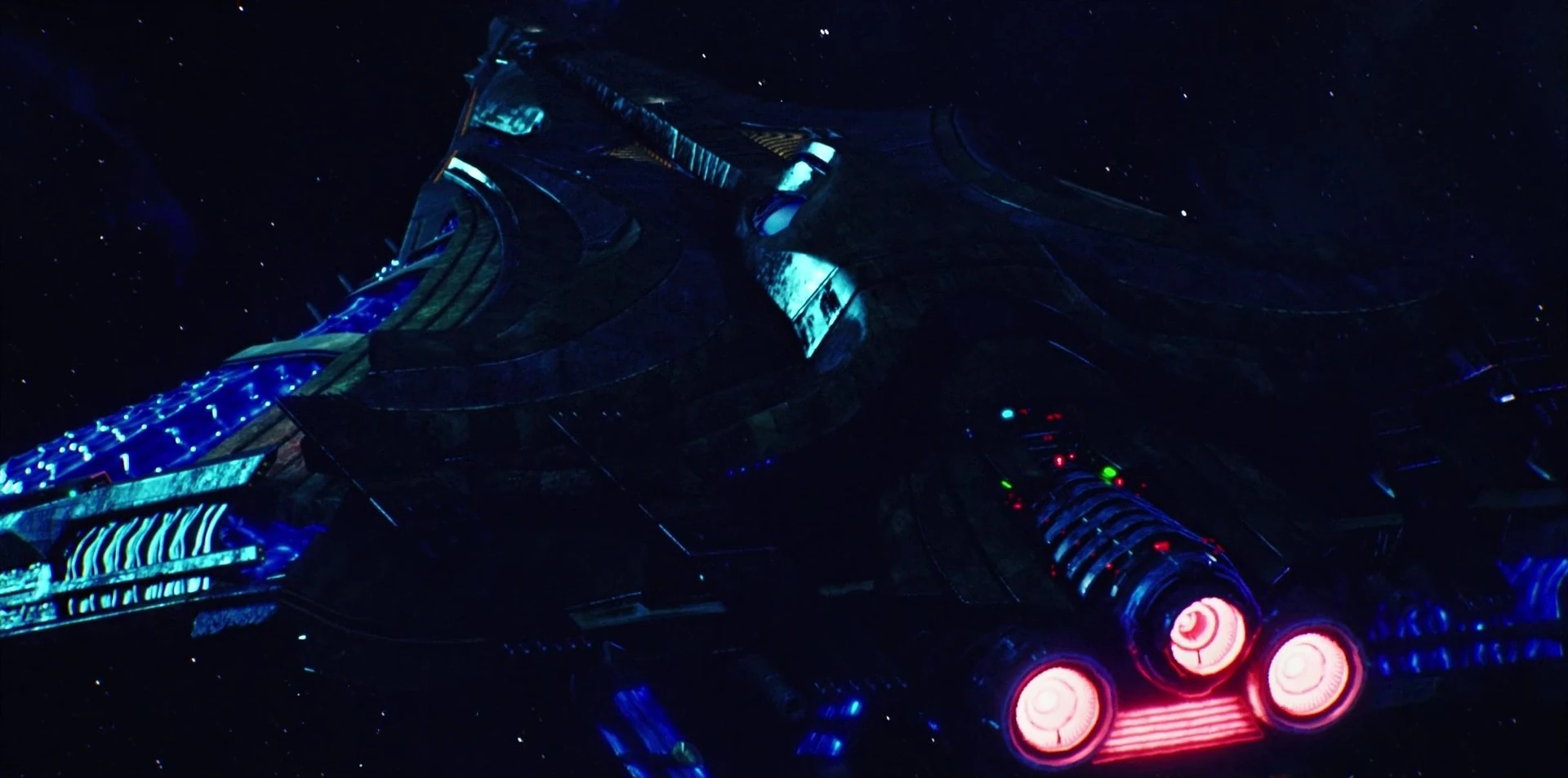 Prison Ship
D7 class (2256)
1 VesselThe D7 class (2256) was a Klingon battle cruiser design utilized by the Klingon Empire during the 2256-57 Federation-Klingon War. This versatile vessel also served in the capacity of a prison ship. Its design featured a distinctive configuration, equipped to handle both combat engagements and the incarceration of prisoners, including dedicated holding cells and interrogation areas. **Class History** One of these D7 class starships participated in the pivotal Battle of the Binary Stars in 2256, a significant engagement during the Federation-Klingon War. Later, a D7 class vessel of this design successfully intercepted a Starfleet shuttle carrying Captain Gabriel Lorca, who was en route back to the USS Discovery. At the time of this interception, Harcourt Fenton Mudd and the Klingon Ash Tyler were incarcerated aboard this particular D7 class prison ship. Captain Lorca and Ash Tyler eventually managed to escape from the vessel, leaving Harcourt Fenton Mudd behind. The D7 class (2256) was active throughout the mid-23rd century, playing a role in various Klingon operations. **Technical Specifications** The D7 class (2256) was designed to operate with a crew complement ranging between 30 and 40 individuals. Beyond its primary combat capabilities, its configuration as a prison ship included specialized holding cells and dedicated interrogation areas to manage its prisoner population. For auxiliary operations and potential boarding actions or planetary assaults, the D7 class (2256) carried a complement of at least three Klingon raider auxiliary craft.
- No armament data logged.
- No propulsion data logged.
 Classified
Daedalus class
2 VesselsThe Daedalus-class was an early Starfleet vessel design, notable for its distinctive spherical primary hull, a feature outwardly similar to the later Olympic-class starships. This unique design choice set it apart from many other Federation starship designs of its era. The class was designed to operate with a crew complement of approximately 229 individuals and possessed a unique subspace distress call signature among Starfleet starship classes. According to Issue #100 of Star Trek: The Official Starships Collection, the Daedalus-class was classified as an explorer type, approximately 140 meters in length, capable of a maximum speed of warp factor 7, and equipped with phaser emitters and photon torpedo launchers. It was stated that this class superseded the NX-class starships in service. A detailed cutaway and mission patch of the USS Daedalus (NCC-129) were designed by Matthew Cushman, Karl Tate, and Doug Drexler for the Star Trek: Ships of the Line (2020) calendar. **Class History** The Daedalus-class served Starfleet during the 22nd century. One notable vessel of this class, the USS Essex (NCC-173), operating out of Starbase 12 under the command of Captain Bryce Shumar, was lost in 2167 when it visited the Class M moon of Mab-Bu VI. By 2196, the Daedalus-class was officially decommissioned, a fact recorded in 2367. Despite its official decommissioning, a model of the USS Horizon (NCC-176), another vessel of this class, was prominently displayed in Deep Space 9's classroom and later in Benjamin Sisko's ready room, appearing in episodes such as 'The Nagus' and 'Progress'. In the early 2380s, at least two Daedalus-class starships were observed docked at Starbase 25, as depicted in the Star Trek: Lower Decks episode 'An Embarrassment Of Dooplers', suggesting some vessels of the class may have remained in service or been reactivated. Other known ships of the class include the 'Archon', which was destroyed in 2167, and the USS Carolina, which was active in 2267. The Daedalus-class was mentioned but unseen in the Star Trek: The Next Generation episode 'Power Play'.
- No armament data logged.
- No propulsion data logged.

Damsel
Class: D'Kora class- • Directed energy weapo
- • electromagnetic pulse weapo
- + 2 more...
- • Warp facto
- • Deflector shield
 Runabout / Utility
Danube class
11 VesselsThe Danube-class, also known as Runabout-class, was a versatile type of Federation runabout that entered service in the latter half of the 24th century. First commissioned by Starfleet in 2368 as a small, short-range interstellar craft, its design was a collaborative effort. Rick Sternbach and Jim Martin were responsible for the exterior, while Joseph Hodges designed the interior cockpit set, and Richard James crafted the aft compartment. The miniature model was built by Tony Meininger. The USS Danube (NX-72003) served as the prototype for the class, constructed at Utopia Planitia Fleet Yards in 2365. Production continued at the Starfleet Runabout Facility located at Utopia Planitia, Mars, into the 2370s. The Danube-class was designed with a modular platform, allowing for easy configuration to suit a multitude of mission requirements. These replaceable modules, which could be connected in the center of the craft between the two wing pylons, included science laboratories, additional crew quarters, and photon or quantum torpedo bays. The vessel's hull was constructed from metallic composites capable of interacting with magnetic fields, a feature that could be exploited for locating lost ships using a differential magnetometer. For emergency situations, each runabout was equipped with a contingency fuel cell for power and the ability to eject its antimatter pods if necessary. **Service History** The Danube-class quickly became a staple of Starfleet operations, particularly for frontier outposts. In 2369, the newly assigned space station Deep Space 9 received three of these runabouts: the USS Ganges, the USS Yangtzee Kiang, and the USS Rio Grande. These vessels were transported to the station aboard the USS Enterprise (NCC-1701-D) and were subsequently housed within the landing bays situated around Deep Space 9's habitat ring. All runabouts assigned to Deep Space 9 were notably named after rivers on Earth. For the first two years of Starfleet's tenure at Deep Space 9, the runabouts served as the primary method of transport and defense support. They proved instrumental in the discovery of numerous new worlds and civilizations within the Gamma Quadrant, as well as the Bajoran wormhole itself. In mid-2370, Deep Space 9 utilized its runabouts to establish contact with a fleet of Skrreean refugee ships located on the other side of the wormhole. Even after Deep Space 9 took delivery of the USS Defiant (2370) in 2371, the Danube-class runabouts remained widely used, with the station maintaining a complement of at least four. Prior to the Dominion War, a runabout was covertly used by Elim Garak and Worf to rescue crew members from Internment Camp 371. They also played a role in defending Deep Space 9 against a Dominion fleet and participated in exercises with the Ninth Fleet in 2374. Later, Colonel Kira Nerys employed a runabout for a clandestine journey to Cardassia Prime to assist Damar's Cardassian Liberation Front resistance movement. **Technical Specifications & Operations** Danube-class runabouts measured approximately 23.1 meters in length, 13.7 meters in width, and 5.4 meters in height, making them about a quarter the size of an Erewon-class personnel transport. They were designed for a maximum speed of Warp 5, with a cruise speed of Warp 2, and were propelled by standard impulse units. While typically crewed by two to four individuals, they could accommodate up to 40 passengers. Jadzia Dax famously remarked that runabouts 'practically fly themselves,' highlighting their capability for automatic helm control and ease of piloting, even for those with third-level flight experience. For defense, the runabouts were armed with phasers and photon torpedoes. Initially, they featured four phaser array emitters and a torpedo launcher, with the Star Trek: Deep Space Nine Technical Manual specifying six phaser emitters and two launch tubes carrying two micro-photon torpedoes. These weapon systems were later retrofitted by Chief Miles O'Brien of Deep Space 9 in late 2370, receiving extra banks of photon torpedoes, modified phaser arrays, and enhanced shield generators in preparation for the Federation's first engagement with the Dominion. While capable of handling a Bajoran patrol and even destroying a Jem'Hadar fighter with proper instruction, they were not a match for more formidable adversaries such as a T'Lani cruiser, Theta-class starship, Klaestron starship, Jem'Hadar attack ship, or Cardassian pursuit vessels. Their small size, however, allowed them to get close enough to other ships to overload their shield generators with directed phaser fire. The runabouts were equipped with an aft tractor beam emitter, capable of towing starships as large as a Galor-class vessel, even at warp velocities, a feat Jean-Luc Picard noted in 2369. However, they lacked the strength to haul a Jem'Hadar fighter buried under ninety meters of rock into orbit, nor could they generate a subspace isolation field of sufficient magnitude to beam a Galaxy-class warp core into space. The vessels could be modified to evade sensors by modulating engine power emissions, reconfiguring the deflector shield grid, and installing field buffers around the subspace emitter coil, allowing them to appear as a Lissepian transport. The interior cockpit featured stations for up to four crewmembers, facing forward with two large portholes equipped with retractable blast shutters. Small square viewscreens provided video communication and ship status displays. In its original configuration, a food replicator and a compact personnel transporter were located immediately behind the cockpit. Following a refit prompted by hostilities with the Dominion, these amenities were moved further back, and a secondary tactical console was integrated into the cockpit. The transporter was capable of simultaneously transporting multiple persons. The rear of the craft was versatile, configurable as passenger cabins with sleeping and dining areas for extended travel, or as a cargo bay. Additionally, runabouts carried essential equipment such as medkits, covariant oscillators, communications probes, portable generators, and a stasis chamber. For emergencies, a manual emergency hatch was located amidship on the port side, and a small Jefferies tube ran along the spine of the vessel, immediately underneath the warp core.
- • Phase (Qty: 4)
- • Torpedo launche
- • Warp facto
- • Deflector shield
 Classified
Dauntless class
2 VesselsThe Dauntless-class was a class of Federation starship operated during the late 24th century. Its distinctive design was directly inspired by the fake USS Dauntless (NX-01-A), an alien vessel disguised as a Federation starship by Arturis, a member of Species 116. Captain Kathryn Janeway and the crew of the USS Voyager first encountered this original Dauntless in the Delta Quadrant in late 2374, as depicted in the episode 'Hope and Fear'. Following Janeway's order for the entire USS Voyager crew to thoroughly study the ship, they gathered sufficient data to reverse engineer its advanced systems. This knowledge was later demonstrated in 2375 when the USS Voyager crew made a marginally successful attempt to recreate the alien Dauntless's quantum slipstream drive, as seen in the episode 'Timeless'. According to producer Aaron Waltke, the Dauntless-class was a Starfleet reproduction built from the detailed scan data collected by the USS Voyager. Furthermore, a Star Trek: Prodigy Log by Janeway revealed that B'Elanna Torres was the project leader in designing the Dauntless-class and also suggested its name. **Technical Specifications** The Federation's Dauntless-class starship was equipped with a formidable array of armaments. It featured four phaser cannons: a main phaser cannon located on Deck E, two forward phaser cannons on Decks B and C, and a rear phaser cannon also on Deck E. For torpedo armaments, it included a torpedo launcher on Deck F capable of firing standard photon torpedoes or microtorpedoes. Additionally, vertical torpedo launchers on Deck G were utilized for firing quantum torpedoes. Defensive capabilities were provided by robust deflector shields. The class was capable of both warp drive and quantum slipstream drive, a testament to its advanced propulsion systems. Externally, the Federation's Dauntless design retained several key design cues from the original alien Dauntless, including a streamlined, arrowhead-shaped primary hull and a nearly organic transition into the secondary hull with underslung warp nacelles. However, the new design featured a lengthened secondary hull and warp nacelles compared to the original, and the secondary hull appeared to house auxiliary impulse engines. It also lacked the 'hump' present in the original's transition from the nape of the ship's dorsal section, as seen in 'A Moral Star, Part 2'. The primary hull was eight decks in height and had a significantly different aft section than the alien ship upon which it was based. The Dauntless-class was considerably larger in size than a Protostar-class vessel, as shown in 'Crossroads'. **Interior Design & Class History** Unlike the alien version of the Dauntless, the Federation's Dauntless-class starships were equipped with standard Starfleet amenities such as holodecks and replicators, as depicted in 'Asylum' and 'Let Sleeping Borg Lie'. The interior featured a main sickbay, a bridge, a captain's ready room, corridors, and a transporter room, all designed to Starfleet specifications. The Dauntless-class entered active service in the 2380s. The most notable vessel of this class is the USS Dauntless (NCC-80816), which was active in 2384. This class has been prominently featured in Star Trek: Prodigy, appearing in episodes such as 'A Moral Star, Part 2', 'Asylum', 'Let Sleeping Borg Lie', 'All the World's a Stage', 'Crossroads', 'Masquerade', 'Preludes', 'Ghost in the Machine', 'Mindwalk', 'Supernova, Part 1', and 'Supernova, Part 2'.
- • Phase
- • Torpedo launche
- • Quantum slipstream drive
- • Deflector shield
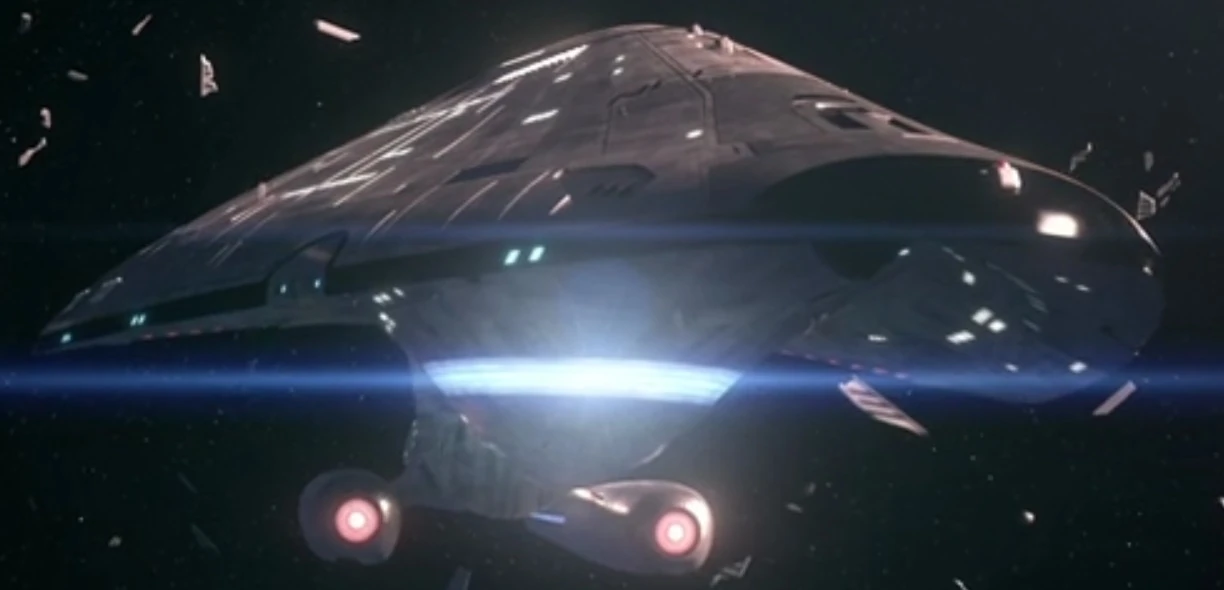 Starship
Dauntless class
Hull Specifications LoggedThe Dauntless-class is a class of Federation starship operated by Starfleet during the late 24th century. Its design was directly inspired by an alien vessel, the fake USS Dauntless (NX-01-A), which was encountered by Captain Kathryn Janeway and the crew of the USS Voyager in the Delta Quadrant in late 2374, as depicted in the episode 'Hope and Fear'. This original vessel, designated as a Dauntless-class starship by its creator, Arturis of Species 116, was altered to appear Federation in design. Following Janeway's directive for the USS Voyager crew to thoroughly study the alien ship, sufficient data was gathered to enable reverse engineering of its advanced systems. This extensive study proved crucial, as demonstrated in 2375 when the USS Voyager crew successfully recreated a marginally functional version of the alien Dauntless's quantum slipstream drive, as seen in the episode 'Timeless'. This foundational research by the USS Voyager crew, particularly under the leadership of B'Elanna Torres who also suggested the name, was instrumental in the development of Starfleet's own Dauntless-class. According to Aaron Waltke, a producer for Star Trek: Prodigy, the Starfleet Dauntless was a direct reproduction built from the detailed scan data collected by the USS Voyager. **Technical Specifications & Capabilities** The Federation's Dauntless-class starship retains several key design cues from Arturis's original vessel. These include a streamlined, arrowhead-shaped primary hull, a near-organic transition into the secondary hull, and underslung warp nacelles. However, the Starfleet version features a lengthened secondary hull and warp nacelles compared to the original, and its secondary hull appears to house auxiliary impulse engines. Notably, it lacks the distinctive 'hump' that characterized the original ship's dorsal section transition. The primary hull of the Dauntless-class is eight decks in height, with a significantly different aft section than its alien predecessor. This class is considerably larger than a Protostar-class vessel, a fact highlighted in the episode 'Crossroads'. For propulsion, the Dauntless-class is equipped with both warp drive and a limited form of quantum slipstream drive, a direct result of the reverse-engineering efforts. Its offensive capabilities include four phaser cannons: a main phaser cannon located on Deck E, two forward phaser cannons on Decks B and C, and a rear phaser cannon also on Deck E. The starship is also outfitted with a torpedo launcher on Deck F, capable of firing standard photon torpedoes or microtorpedoes. Additionally, vertical torpedo launchers on Deck G are dedicated to firing quantum torpedoes. Defensive systems include robust deflector shields. Internally, unlike the alien version, the Federation's Dauntless-class vessels are equipped with standard Starfleet amenities such as holodecks and replicators, as shown in episodes like 'Asylum' and 'Let Sleeping Borg Lie'. The class features a main sickbay, a bridge, a captain's ready room, and transporter rooms, all designed to Starfleet specifications. **Class History & Service** The Dauntless-class became active in the 2380s, serving under the banner of Starfleet. The most prominent vessel of this class is the USS Dauntless (NCC-80816), which was active by 2384. This starship has been featured in multiple episodes of Star Trek: Prodigy, including 'A Moral Star, Part 2', 'Asylum', 'Let Sleeping Borg Lie', 'All the World's a Stage', 'Crossroads', 'Masquerade', 'Preludes', 'Ghost in the Machine', 'Mindwalk', 'Supernova, Part 1', and 'Supernova, Part 2'. The development of the Dauntless-class represents a significant technological advancement for Starfleet, integrating advanced alien propulsion concepts into Federation starship design.
- No armament data logged.
- No propulsion data logged.
 Classified
Dauntless type
Hull Specifications LoggedThe Dauntless-type was a starship class constructed and operated by Species 116 during the late 24th century. This advanced vessel was designed with a primary objective: to deceive and capture the crew of the USS Voyager for eventual assimilation by the Borg. To achieve this, the Dauntless-type employed sophisticated particle synthesis technology, allowing it to perfectly mimic the exterior and interior aesthetics of a Starfleet vessel. This included a familiar Federation color palette, LCARS interfaces, and a typical Starfleet layout featuring a clear primary hull, secondary hull, and two nacelles. The exterior was even modified with Federation livery, a ship's name, and a registry, specifically posing as the experimental Starfleet vessel, USS Dauntless (NX-01-A). Despite its convincing disguise, the original alien interior was relatively minimalist by Starfleet standards, possessing only one transporter and notably lacking replicators, holodecks, or shuttlecraft, as seen in the Star Trek: Voyager episode 'Hope and Fear'. **Class History** The most prominent encounter with a Dauntless-type ship occurred in mid-2374, while the USS Voyager was still stranded in the Delta Quadrant. The USS Voyager received a transmission from Starfleet Command via the ancient Hirogen communications network. This message, containing both unencoded personal messages and an encrypted file, was eventually decrypted by an alien named Arturis. The decrypted message provided coordinates leading the USS Voyager crew to the supposed USS Dauntless, an experimental Starfleet vessel purportedly sent to bring them home sooner. This elaborate ruse, orchestrated by Species 116, was a trap designed to deliver the USS Voyager crew to the Borg for assimilation, as depicted in the Star Trek: Voyager episodes 'Hunters' and 'Hope and Fear'. The specific Dauntless-type ship involved in this incident, the 'USS Dauntless' (NX-01-A), was ultimately assimilated by the Borg in 2374. **Technical Specifications** A defining feature of the Dauntless-type was its advanced quantum slipstream drive. This propulsion system allowed the vessel to achieve speeds far exceeding the standard Starfleet warp scale of the time. According to the ship's data, it was capable of traveling sixty thousand light years in just three months. In practice, it demonstrated the ability to cover over fifteen light years in a very short time, a distance that would have taken the USS Voyager two days to traverse at high warp. This revolutionary technology was central to Species 116's plan to quickly intercept and trap the USS Voyager, as shown in 'Hope and Fear'. **Starfleet Reverse Engineering** The quantum slipstream technology of the Dauntless-type proved invaluable to Starfleet. By 2375, the crew of the USS Voyager had managed to partially reverse-engineer and adapt the quantum slipstream drive for their own vessel, with some modifications from Borg technology. Although this early version proved unreliable and was later disassembled, it significantly shortened their journey home by ten years, as detailed in the Star Trek: Voyager episode 'Timeless'. Later, in the 2380s, Starfleet successfully and more properly reverse-engineered the technology. This led to the development and commissioning of the Starfleet Dauntless-class, which included ships like the USS Dauntless (NCC-80816), as referenced in the Star Trek: Lower Decks episode 'A Moral Star, Part 2'. **Alternate Timelines** In a possible future, specifically the 26th century, a ship of the Dauntless-type was depicted participating in the pivotal Battle of Procyon V. This vessel fought alongside the USS Enterprise (NCC-1701-J) and other allied starships against a formidable threat. However, this particular timeline was negated with the destruction of the Delphic Expanse and the Sphere-Builders by the NX-01 Enterprise in 2154, as explored in the Star Trek: Enterprise episode 'Azati Prime'.
- No armament data logged.
- • Quantum slipstream drive

Decartes
Class: Type 7 shuttlecraft- No armament data logged.
- • Deflector shield

Decius
Class: D'deridex class- • Disrupto
- • Phase
- + 1 more...
- • Cloaking device
- • Warp facto (Qty: under cloak)
- + 1 more...
 Deep space probe
 Class
1 VesselA deep space probe was a long-range, unmanned space probe primarily utilized to investigate phenomena in deep space, extending far beyond the operational range of manned exploration missions. These probes served as crucial instruments for gathering data on distant celestial bodies, anomalies, and potential alien life, providing invaluable information to Starfleet and other organizations across several centuries. **Early Earth Probes: 20th and 21st Centuries** Earth's initial forays into deep space exploration began in the 20th century with probes launched by NASA. Notable examples included Pioneer 10 and Voyager 6, part of the Voyager series, which provided early insights into the solar system and beyond. As the 21st century progressed, Earth continued its deep space endeavors with more advanced designs. The Nomad probe, launched in 2002, was specifically designed to seek out alien life. Following this, the Friendship 1 probe, launched in 2067, marked a significant technological leap as the first warp-capable probe, also tasked with the mission of discovering extraterrestrial life. These early probes laid the groundwork for future interstellar exploration. **22nd and 23rd Century Developments** By the 22nd century, deep space probes continued to evolve, with missions extending to new frontiers. The Quadros 1 probe, for instance, was dispatched to chart the stars within the distant Gamma Quadrant, demonstrating an expanded scope of exploration. In an alternate reality, Starfleet deployed Magellan probes for charting the Necro Cloud. One such Magellan probe was captured by Krall in 2263 and subsequently repurposed to interface with the computer systems aboard the USS Enterprise (NCC-1701 alternate reality) and Starbase Yorktown, highlighting the potential for these probes to be exploited in tactical scenarios. **24th Century Starfleet Probes** During the 24th century, deep space probes operated by Starfleet and the United Federation of Planets incorporated advanced features, including radioactive material within their casings. This radiation was potent enough to disrupt standard comm badge signals and could induce radiation poisoning in organic lifeforms. The Romulan Star Empire was known to actively monitor the telemetry transmitted by these Starfleet deep space probes, indicating their strategic importance. A notable mission involved the Vega 9 probe, launched by Starfleet to study the Beta Stromgren star in 2366. This star was undergoing its final stages of an alternating expansion and collapse cycle, destined to culminate in a supernova explosion, and was located 23 parsecs beyond the furthest manned exploration at that time. The Vega 9 probe successfully reached the system and discovered the sentient entity known as 'Tin Man' orbiting Beta Stromgren. In 2370, a Starfleet deep space probe veered off course and crash-landed on Barkon IV, over a hundred kilometers from the nearest settlement. Due to the probe's radioactive casing, Lt. Commander Data of the USS Enterprise (NCC-1701-D), being immune to radiation, was dispatched to retrieve the wreckage. While collecting radioactive fragments and attempting to download sensor logs from the probe's on-board computer, Data experienced a severe power surge that overloaded his positronic matrix, resulting in temporary amnesia. This incident underscored both the hazards and the critical data collection capabilities associated with deep space probes.
- No armament data logged.
- No propulsion data logged.
 Escape Vessel
Deep Space Repair Beta Six escape vessel Class
Hull Specifications LoggedThe Deep Space Repair Beta Six escape vessel was a specialized type of escape craft designed for emergency evacuation from the Federation's Deep Space Repair Beta Six station. These vessels were engineered with a primary function of safely transporting personnel away from the station during critical incidents. Each vessel was capable of accommodating nine individuals, providing a vital means of egress in life-threatening situations. Their standard programming dictated a one-way journey, optimized for rapid deployment and a direct escape trajectory from the station's immediate vicinity. **Service History** While typically configured for a single-use evacuation, the design of the Deep Space Repair Beta Six escape vessel allowed for potential modifications. A sufficiently talented programmer possessed the capability to alter the vessel's core programming, thereby enabling it to perform multiple trips. This adaptability, though not standard, offered a degree of operational flexibility beyond its initial emergency-only mandate. These vessels were in active service during the 3180s, as evidenced by their use in the episode 'Kobayashi Maru', where their operational parameters and capabilities were demonstrated.
- No armament data logged.
- No propulsion data logged.
 Escort / Warship
Defiant class
8 VesselsThe Defiant-class warship, officially classified as an escort vessel, commenced development in 2366. It was conceived as a small, highly powered, and heavily armed warship, specifically intended to defend the United Federation of Planets against the Borg Collective. The USS Defiant (NX-74205) served as the prototype for what Starfleet envisioned as a new battle fleet. Lieutenant Commander Benjamin Sisko joined the development team at the Utopia Planitia Fleet Yards shortly after the massacre at Wolf 359. Commander Elizabeth Shelby also took over the tactical analysis aspect of the project. The class was designed to be a true 'warship,' eschewing the typical scientific and exploratory roles of other Starfleet vessels, with no accommodations for families, science labs, or luxuries, existing solely 'to fight and defeat the Borg.' The Defiant-class was heavily armored and incorporated the latest Starfleet weaponry and defensive technology, including a powerful class-7 warp drive. Despite its compact size, it was packed with equipment typically found on much larger starships. However, the prototype USS Defiant performed poorly during its shakedown cruise. The vessel was found to be overpowered and overgunned for its size, nearly shaking itself apart when its engines were tested at full power. These significant design flaws, coupled with the decreased urgency of the Borg Collective threat, led Starfleet to abandon the project and place the prototype in storage. **Service History** The USS Defiant (NX-74205) was reactivated in 2371 when the Dominion threat emerged in the Gamma Quadrant. Benjamin Sisko, now the commanding officer of Starbase Deep Space 9, retrieved the prototype from storage. After several crucial upgrades and fixes to its structural integrity field by Deep Space 9's Chief of Operations Miles O'Brien, the ship was deemed fit for service and officially christened on Stardate 47538.5. The prototype was uniquely equipped with a Romulan cloaking device, a rare exception to the Treaty of Algeron, with its use initially restricted to the Gamma Quadrant in exchange for intelligence on the Dominion. Starfleet eventually decided to put the Defiant-class into full production. By the end of 2373, a significant number of Defiant-class ships were in operation, playing a vital role throughout the Dominion War. The USS Valiant (NCC-74210) was an early participant in the conflict but was destroyed during its shakedown cruise. In 2373, the USS Defiant, under the command of Lieutenant Commander Worf, participated in the Battle of Sector 001, engaging a Borg cube en route to assimilate Earth. Although disabled, the ship was later deemed salvageable by Captain Jean-Luc Picard after the USS Enterprise (NCC-1701-E) arrived to assist. In 2375, the USS Defiant (NX-74205) was destroyed by a Breen interceptor during the Second Battle of Chin'toka. Its replacement, the USS Sao Paulo (NCC-75633), was subsequently assigned to Deep Space 9. Due to the original USS Defiant's exceptional record under Captain Benjamin Sisko's command, the Chief of Starfleet Operations granted a special dispensation to rename the USS Sao Paulo to USS Defiant (NX-74205). This new vessel featured reconfigured shield generators to counter the Breen energy-dampening weapon, but unlike its predecessor, it was not equipped with a cloaking device. This second USS Defiant played a distinguished role in the Invasion of Cardassia, the final battle with the Dominion at Cardassia Prime, and remained stationed at Deep Space 9 by the end of 2375. Defiant-class starships continued to serve Starfleet into the 25th century. In 2382, the USS Anaximander, operated by Section 31 and commanded by Captain William Boimler, investigated quantum fissures. In 2384, ships of this class were part of a fleet that intercepted the USS Protostar near Gamma Serpentis. Eighteen Defiant-class vessels participated in the Frontier Day celebrations over Earth in 2401. Knowledge of the class was even retained into the 31st century, as evidenced by Captain Jonathan Archer and Lieutenant Malcolm Reed viewing its schematics in the 22nd century via temporal agent Daniels' database. **Technical Specifications** The Defiant-class was powered by a class-7 warp drive, with its warp core spanning three decks in the aft section. This propulsion system was exceptionally powerful for the ship's size, generating a warp signature equivalent to much larger starships. While capable of achieving warp 9.5 by diverting energy from weapons reserves, the original configuration was unstable above warp 9. The powerful engines also initially taxed the Romulan cloaking device, requiring the ship to stop and power down to remain concealed, an issue later resolved. For armaments, Defiant-class vessels featured four forward-facing phaser cannon assemblies, located above and below the nacelle root attachments. These cannons, with plasma conduits nearly doubling their power, delivered a much higher damage output than standard phasers. Complementing these were at least three standard phaser emitters (forward 'nose', aft, and dorsal behind the bridge), allowing for multi-target engagement, rear defense, and strafing runs. The deflector arrays could also be refitted as a makeshift phaser emitter for emergency one-shot capability. Six torpedo launchers were installed, four forward and two aft, capable of firing both quantum torpedoes and photon torpedoes. The shuttlebay could also be converted to lay mines. Defensive systems included robust deflector shields and, on the experimental prototype, ablative armor. During the Dominion War, the Federation fleet, including Defiant-class ships, was modified to be immune to the Breen energy-dampening weapon technology. The USS Defiant (NX-74205) was uniquely equipped with a Romulan cloaking device, though the Dominion later developed methods to penetrate it, and its replacement, the second USS Defiant, did not receive one. At least one Section 31 Defiant-class vessel, the USS Anaximander, was also equipped with a cloaking device. **Interior Design** Reflecting its militaristic purpose, the interior of the Defiant-class was the most spartan in Starfleet, lacking holodecks, lounges, arboretums, or family accommodations. The ship officially had four decks, though a 'Deck 5' was mentioned in dialogue during the fourth season of Star Trek: Deep Space Nine. The main bridge, located on Deck 1, was sunken into the larger deck for added combat protection. It featured compact engineering, tactical, science, conn, and operations stations, with a central captain's chair on a raised platform. The bridge underwent a partial redesign after 2371. Medical facilities included a main sickbay on Deck 2 with four biobeds and limited surgical capabilities, alongside two dedicated science and medical labs. Main engineering spanned Decks 1 and 2, with the warp core centrally located on an elevated platform. Crew quarters were austere, typically shared with stacking bunks, with only the commanding officer having a private room on Deck 1 that doubled as a ready room. The two mess deck areas on Deck 2 served as the sole informal gathering places, also functioning as meeting venues. Two transporter rooms, one on Deck 1 and one on Deck 2, featured smaller pads than those on larger starships. A cargo hold was also present for supplies.
- • Phase
- • Torpedo launche
- • Ablative armo
- • Warp facto
- + 1 more...
 Transport / Freighter
Dekendi transport Class
Hull Specifications LoggedThe Dekendi transport was a specific type of transport-ship primarily utilized by the Dekendi civilization during the mid-22nd century. These vessels served a crucial role in the Dekendi's internal and potentially external travel requirements, embodying their contemporary starship design principles. **Service History** One notable instance of a Dekendi transport's operation occurred in 2152, when a vessel of this class was responsible for transporting Feezal Phlox from the surface of Dekendi III to the orbiting Starfleet starship, the Enterprise (NX-01). This event highlighted the transport's capability for interplanetary travel and its role in facilitating diplomatic or medical exchanges. During the same period, another Dekendi transport, distinctly grey in color, was observed parked on the surface of Dekendi III, indicating their common presence on the planet. These details were documented in the Starfleet records pertaining to the episode 'Stigma'.
- No armament data logged.
- No propulsion data logged.

Delphic Expanse sphere
Class: Delphic Expanse sphere- No armament data logged.
- No propulsion data logged.
 Gravimetric energy generator
Delphic Expanse sphere Class
Hull Specifications LoggedThe Delphic Expanse spheres were a network of colossal, artificially-created spherical objects strategically scattered throughout the Delphic Expanse. Each sphere measured nineteen kilometers in diameter and was designed to generate immense amounts of gravimetric energy. Collectively, these spheres were responsible for the intricate web of crippling spatial anomalies that defined the Expanse. To prevent detection, each sphere was enveloped by a cloaking barrier. According to the Xindi-Primate Degra, the Xindi had identified seventy-eight such spheres. **Initial Starfleet Encounters** United Earth Starfleet first encountered these enigmatic structures in 2153, when the *Enterprise* (NX-01) ventured into the Delphic Expanse in pursuit of the Xindi. The initial sphere discovered served as a base for Osaarian pirates. During an engagement with an Osaarian merchant ship within the sphere's cloaking barrier, *Enterprise* was able to conduct detailed quantum scans, which indicated the sphere was nearly one thousand years old, as seen in the episode 'Anomaly (ENT)'. Further investigation by the *Enterprise* crew revealed that the spatial anomalies plaguing the Expanse originated at points where the gravimetric energy waves from intersecting spheres converged. This led T'Pol to hypothesize that the spheres were deliberately constructed to create the Expanse. **The Sphere-Builders Revealed** The *Enterprise* later encountered the Triannons, who held a belief that supernatural entities, whom they called 'the Makers', had created the spheres to reconfigure space in anticipation of their return, as depicted in 'Exile' and 'Chosen Realm'. The *Enterprise* crew subsequently uncovered the truth: the Triannon myth was rooted in fact, and the spheres were indeed the creation of a race of trans-dimensional beings known as the Sphere-Builders. These beings were attempting to terraform the Delphic Expanse to make it habitable for their species, as a precursor to a full-scale invasion, a plot further explored in 'Harbinger'. **Temporal Intervention and Alliance** Captain Jonathan Archer received critical intelligence from Daniels, a temporal agent from the 31st century, during the events of 'Azati Prime'. Daniels revealed that by the 26th century, the Delphic Expanse would expand to encompass fifty thousand light years of the Milky Way Galaxy. He further explained that the Sphere-Builders were manipulating the Xindi into destroying Humanity to prevent the eventual founding of the United Federation of Planets, an organization that would ultimately defeat the Sphere-Builders. Armed with this crucial information, Captain Archer successfully forged an alliance with some of the Xindi factions against the Sphere-Builders. **Disabling the Sphere Network** The crew learned from Degra that the spheres were interconnected and controlled by an advanced artificial intelligence network, with each sphere containing a redundant memory core, as shown in 'The Council'. A team from *Enterprise* managed to infiltrate the interior of a sphere via a holographically disguised exhaust port. The team successfully retrieved a memory core, though not without the tragic loss of Corporal F. Hawkins, who was killed by an automated defense system. Using the data from the memory core, T'Pol determined that each sphere was linked by an interspatial manifold on its surface, and that four specific spheres were integral to this connection. The *Enterprise* was then able to disable the manifold of the sphere designated 'Sphere 41' using a deflector pulse. This action initiated a catastrophic chain reaction, leading to the destruction of the entire sphere network and the complete elimination of the spatial anomalies within the Delphic Expanse, as depicted in 'Zero Hour'.
- No armament data logged.
- No propulsion data logged.
Gravimetric Energy Generator
Delphic Expanse sphere Class
1 VesselThe Delphic Expanse spheres were a series of artificially-created spherical objects strategically scattered throughout the Delphic Expanse. Each sphere measured nineteen kilometers in diameter and was designed to generate massive amounts of gravimetric energy. Collectively, these spheres were responsible for the intricate web of spatial anomalies that characterized the Expanse. A key defensive feature of each sphere was a cloaking barrier, which rendered it hidden from outside observation. According to the Xindi-Primate Degra, the Xindi had identified seventy-eight such spheres within the Expanse. These complex structures were ultimately revealed to be the creations of the trans-dimensional Sphere-Builders, a species intent on reconfiguring space to make the Expanse habitable for their eventual invasion of the Milky Way Galaxy. **Class History** United Earth Starfleet first encountered the Delphic Expanse spheres in 2153, when the NX-01 Enterprise ventured into the Expanse in pursuit of the Xindi. The initial sphere encountered by the Enterprise crew was being utilized as a base by Osaarian pirates. During an engagement with an Osaarian merchant ship within the sphere's cloaking barrier, Enterprise was able to conduct detailed quantum scans, which indicated the sphere was nearly one thousand years old. Further investigation by the Enterprise crew, particularly by T'Pol, led to the crucial determination that the spatial anomalies riddling the Expanse occurred at points where gravimetric energy waves emitted from intersecting spheres converged. This led T'Pol to hypothesize that the spheres were specifically engineered to create the Expanse itself. The Enterprise later encountered the Triannons, who held a religious belief that supernatural beings, whom they called 'the Makers,' had created the spheres to reconfigure space in anticipation of their return. The Enterprise crew subsequently discovered that this Triannon myth was rooted in fact, and that the spheres had indeed been constructed by a race of trans-dimensional beings, the Sphere-Builders, as a prelude to their invasion. Captain Jonathan Archer received critical intelligence from Crewman Daniels, a temporal agent from the 31st century, revealing that by the 26th century, the Expanse would expand to encompass fifty thousand light years of the Milky Way Galaxy. Daniels further explained that the Sphere-Builders were manipulating the Xindi into destroying Humanity to prevent the founding of the United Federation of Planets, an organization that would ultimately defeat the Sphere-Builders. Armed with this knowledge, Captain Archer was able to forge an alliance with some of the Xindi factions against the Sphere-Builders. Through Degra, the crew learned that the spheres were interconnected by an artificial intelligence network, with each sphere containing a redundant memory core. A team from Enterprise successfully infiltrated the interior of a sphere via a holographically disguised exhaust port, managing to retrieve a memory core. However, this mission came at a cost, as Corporal F. Hawkins was killed by an automated defense system within the sphere. The information extracted from the memory core allowed T'Pol to determine that each sphere was linked by an interspatial manifold on its surface, and that four specific spheres were integral to this connection. The NX-01 Enterprise successfully disabled the manifold of the sphere designated 'Sphere 41' using a deflector pulse. This action initiated a catastrophic chain reaction, resulting in the destruction of the entire sphere network and the complete elimination of the spatial anomalies within the Delphic Expanse during the events of 'Zero Hour'.
- No armament data logged.
- No propulsion data logged.
Delta Flyer Class
Hull Specifications LoggedThe Delta Flyer is a unique and advanced starship design, conceived and constructed by the resourceful crew of the USS Voyager during their arduous journey through the Delta Quadrant. This innovative shuttlecraft was specifically engineered to address the unique challenges and hostile environments encountered far from the familiar territories of the United Federation of Planets, combining robust defensive capabilities with enhanced scientific and tactical systems. Its design philosophy emphasized durability, adaptability, and superior performance compared to standard Starfleet shuttlecraft, making it indispensable for critical missions in uncharted space. **Class History** The Delta Flyer class saw active service primarily with Starfleet's USS Voyager. The first vessel of this class, also named ''Delta Flyer'', was commissioned in 2375. It proved invaluable in numerous encounters and explorations within the Delta Quadrant, undertaking missions that standard shuttlecraft could not. Following its destruction, a second vessel of the same class, again named ''Delta Flyer'', was constructed and commissioned in 2377, continuing the legacy of its predecessor. The class also incorporates a specialized emergency egress system, featuring a distinct escape pod type known as the Delta Flyer escape pod, designed to ensure crew safety in extreme circumstances.
- No armament data logged.
- No propulsion data logged.

Delta Flyer (2375)
Class: Delta Flyer type- • Phase (Qty: 8)
- • Photon torpedo
- + 2 more...
- • Multi-adaptive shielding
- • Unimatrix shielding
- + 3 more...

Delta Flyer (2377)
Class: Delta Flyer class- No armament data logged.
- No propulsion data logged.
Classified
Delta Flyer class
1 VesselThe class classification of Delta Flyer class starships.
- No armament data logged.
- No propulsion data logged.
 Runabout / Utility
Delta Flyer escape pod Class
Hull Specifications LoggedThe Delta Flyer escape pod was a specialized, single-person emergency craft designed for deployment from the Federation shuttlecraft Delta Flyer, which was assigned to the USS Voyager. Each Delta Flyer carried at least three such pods, intended to provide a last resort for crew members in dire situations. These pods were minimally equipped, typically including a phaser, a tricorder, and emergency rations sufficient for less than ten days of survival. **Design & Specifications** Designed by Rick Sternbach, with the final design completed in January 2000, the Delta Flyer escape pod was a compact vessel. Its specifications included 1-person accommodation, RCS Thrusters for maneuverability, and a Limited Impulse Capacity for short-range propulsion. For defense and utility, it was endowed with a 1-shot phaser emitter, sensors, and locator strobes/subspace radio beacon for distress signaling. A unique aspect of its design was the presence of Minor Borg Enhancements, reflecting the Delta Flyer's own advanced, hybrid technology. The pod's hull coloration matched that of the Delta Flyer. Physically, the pod measured approximately 7.55 feet in length and 2.02 feet in width. Rick Sternbach noted that the pods were intended to be stored just aft of the Delta Flyer's 74656 registry on the starboard side, beneath two flaps, launching similarly to an aft torpedo tube. However, due to production constraints and the internal layout of the Delta Flyer's aft cargo compartment, the actual entry hatches were not explicitly depicted, requiring a degree of faith in their hidden storage. The escape pods were eventually rendered as a CGI studio model by Doug Drexler during his tenure at Foundation Imaging. **Service History** The Delta Flyer escape pods saw use during several critical missions undertaken by the USS Voyager crew in the 2370s. In 2376, during an encounter with a dark matter lifeform in a class T cluster, the Delta Flyer sustained damage. Captain Kathryn Janeway ordered Crewmen Tal Celes, Mortimer Harren, and William Telfer to abandon the shuttlecraft in escape pods while she created a distraction. Only Mortimer Harren complied, attempting to divert the lifeforms himself. However, Captain Janeway refused to allow his sacrifice and transporter-beamed the pod back aboard the Delta Flyer, which ultimately escaped by igniting radiogenic particles in the class T planet's rings. Later that same year, while B'Elanna Torres and Harry Kim were on a mission in the Delta Flyer to search for dilithium, they encountered severe turbulence. B'Elanna Torres ordered Harry Kim into an escape pod before both crash-landed on a class L planet. Harry Kim was able to salvage emergency rations, a phaser, and the escape pod's subspace transmitter before venturing out to find B'Elanna Torres and the Delta Flyer.
- No armament data logged.
- No propulsion data logged.
 Runabout / Utility
Delta Flyer type
1 VesselThe Delta Flyer-type was a Starfleet shuttlecraft uniquely designed and constructed by the crew of the USS Voyager during its arduous journey through the Delta Quadrant, a region from which the vessel derived its name. The initial concept for the Delta Flyer was championed by Lieutenant Tom Paris, who had long petitioned his superiors on the USS Voyager for permission to construct such a vessel. However, these requests were repeatedly denied due to the USS Voyager's critical lack of resources necessary for building a new starship from scratch. The imperative for a more robust shuttlecraft became undeniable as the USS Voyager's standard Class 2 shuttles proved increasingly inadequate in the hostile environment of the Delta Quadrant. It was the near-loss of a multi-spatial probe that finally convinced Captain Kathryn Janeway and Commander Chakotay to greenlight the project. Lieutenant Tom Paris, ever prepared, already had a comprehensive spacecraft design simulation ready for implementation. The design process was a collaborative effort involving Lieutenant Tom Paris, Lieutenant jg B'Elanna Torres, Lieutenant Commander Tuvok, Ensign Harry Kim, and Seven of Nine. This innovative shuttlecraft seamlessly blended advanced Starfleet and Borg technologies. Key design features included an ultra-aerodynamic tetraburnium alloy hull, extendable warp nacelles, parametallic hull plating, and unimatrix shielding. The weapon systems were notably Borg-inspired, incorporating photonic missiles, many of which were Lieutenant Tom Paris's original conceptions. For aesthetic reasons, Lieutenant Tom Paris designed the flight controls to evoke the feel of 20th century aircraft, featuring physical buttons, knobs, and levers. However, his proposal for the addition of dynametric tailfins was ultimately denied by Lieutenant Commander Tuvok, as documented in the Star Trek: Voyager episode 'Extreme Risk'. **Service History** The first vessel of this type, designated Delta Flyer (2375), was constructed in 2375. Its immediate success and superior capabilities provided ample justification for the construction of a second vessel. The original Delta Flyer (2375) was subsequently destroyed in 2377 during a fierce engagement with a Borg cube, as depicted in the Star Trek: Voyager episode 'Unimatrix Zero'. Following this loss, a second vessel, the Delta Flyer (2377), was constructed in 2377, ensuring the continued availability of this vital shuttlecraft for the USS Voyager's mission. Both vessels were instrumental in numerous missions throughout the Delta Quadrant. **Technical Specifications** The Delta Flyer-type shuttlecraft featured advanced propulsion systems, including retractable warp nacelles. According to Star Trek: Starship Spotter, these were tuned circumferential warp drive units, enabling a cruising speed of warp 3 and a maximum speed of warp 6. The first Delta Flyer (2375) utilized a standard impulse drive, while the Delta Flyer (2377) was upgraded with retractable impulse thrusters that significantly enhanced its impulse speed when deployed. A notable engineering achievement was the vessel's hull integrity and propulsion systems, which allowed it to operate effectively underwater, as shown in the Star Trek: Voyager episode 'Thirty Days'. In terms of tactical systems, both versions were equipped with phasers and photon torpedoes. Torpedo launchers were positioned both fore and aft; the Delta Flyer (2375) featured two forward-facing launchers on either side, while the Delta Flyer (2377) incorporated a single launcher on its ventral surface. The Delta Flyer (2375) was initially designed with a Borg-inspired weapon system, conceived by Seven of Nine, which included photonic missiles. The Delta Flyer (2377) later featured a pulse phased weapon system. Defensive capabilities were robust, including immersion shielding and a unimatrix shield system, the latter designed by Lieutenant Commander Tuvok. The hull was constructed from tetraburnium alloys and featured parametallic hull plating. Multi-adaptive shielding was integrated later in 2375, as seen in the Star Trek: Voyager episode 'Dark Frontier'. The Delta Flyer (2377) received further upgrades, including a duranium-enforced hull, as detailed in the Star Trek: Voyager episode 'Body and Soul'. **Interior Design** The cockpit of Delta Flyer-type vessels was designed with dedicated workstations for tactical, operations, and engineering personnel, with the helm centrally located at the front. While the tactical, operations, and engineering stations utilized a standard Federation LCARS interface, the helm uniquely combined this with physical buttons, knobs, and levers, providing the pilot with enhanced tactile control. The Delta Flyer (2377) further evolved this concept by replacing the LCARS display on the helm with two manual steering columns. The shuttlecraft's relatively large size for a shuttle permitted comforts not typically found in standard Federation shuttlecraft. It featured a spacious aft compartment equipped with a retractable biobed for medical emergencies, though its medical accommodations were primarily intended for patient stabilization until return to the USS Voyager. Workstations and replicators were strategically placed throughout the craft. Delta Flyer-type vessels were capable of comfortably accommodating up to five individuals. Despite its robust construction, the internal compartments were not entirely soundproof, allowing music played loudly in one section to be audible in another, as observed in the Star Trek: Voyager episode 'Renaissance Man'.
- • Phase (Qty: 8)
- • Photon torpedo
- + 2 more...
- • Multi-adaptive shielding
- • Unimatrix shielding
- + 3 more...
Delta IV (rocket) Class
Hull Specifications LoggedThe Delta IV was an American expendable rocket class that originated in the early 21st century. These rockets were produced by the United Launch Alliance, a joint venture responsible for various launch services. Designed primarily for uncrewed missions, the Delta IV served as a crucial launch vehicle for a range of payloads. Its design emphasized reliability and capability for heavy-lift operations, characteristic of its era's space launch technology. Its propulsion system relied on powerful chemical rocket engines to achieve orbit. While not a starship in the traditional sense, its role as a launch platform for deep-space probes places it within the broader context of Starfleet's historical registry of spacefaring technology. The class was a significant component of Earth's early space exploration efforts, laying groundwork for future interstellar endeavors. **Service History** One notable instance of the Delta IV's service history occurred in 2002 when a specific Delta IV rocket was selected as the launch vehicle for the *Nomad* probe. This mission, identified by its International Designator NSSDC ID: 2002-045a, marked a significant deployment for the class, sending the probe on its interstellar journey. The Delta IV's successful deployment of *Nomad* underscored its reliability and capability for critical scientific missions. **Legacy & Recognition** Decades after its active service, the Delta IV class continued to be recognized for its historical significance. In 2024, illustrations of this vehicle, including both exterior and cross-section views, were prominently featured in a display dedicated to the *Nomad* probe. This display was part of a gala honoring the Europa Mission astronauts, as depicted in the episode 'Two of One'. The inclusion of the Delta IV's schematics at such a prestigious event highlights its enduring legacy as a foundational piece of Earth's space exploration technology and its direct connection to pivotal missions like that of the *Nomad* probe.
- No armament data logged.
- No propulsion data logged.
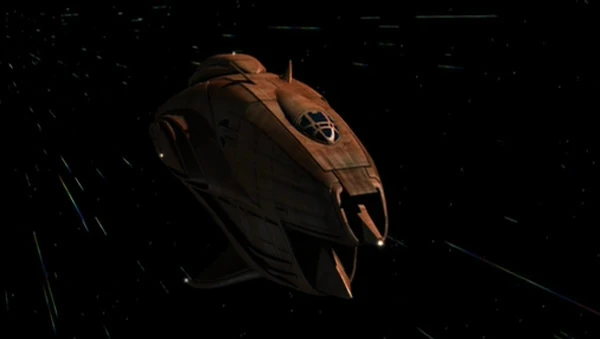 Science Vessel
Denobulan medical ship Class
Hull Specifications LoggedThe Denobulan medical ship was a specialized type of warp-capable vessel utilized by the Denobulan species. Primarily designed as a shuttle, its core function was the critical transport of medical supplies. While officially designated a 'Denobulan medical ship' in dialogue, it was also referred to as a 'Denobulan medical shuttle' in the final draft script of the episode 'Cold Station 12'. The distinctive design of this craft was attributed to John Eaves. **Service History** One notable example of this class was the *Barzai*, which was in active service in 2154. The *Barzai* played a role in events depicted in the episode 'Cold Station 12', where it was later recovered in 2254. These ships were integral to the Denobulan medical infrastructure, ensuring the timely delivery of vital resources across Denobulan space.
- No armament data logged.
- No propulsion data logged.
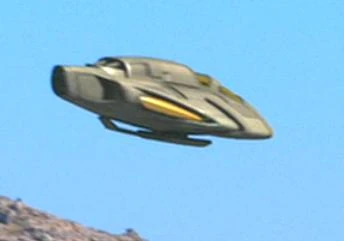
Denobulan Shuttle
Class: Denobulan shuttle- No armament data logged.
- No propulsion data logged.
 Classified
Denobulan shuttle Class
2 VesselsThe Denobulan shuttle was a type of warp-capable vessel utilized by the Denobulans during the mid-22nd century. While specific design parameters are not extensively documented, it was known to be a small craft capable of interstellar travel, serving the Denobulan people for various transport needs. Its design prioritized warp capability for efficient travel across star systems. **Class History** In an alternate timeline, a Denobulan shuttle played a crucial role in transporting Doctor Phlox to Ceti Alpha V. Phlox was en route to provide medical care for Captain Jonathan Archer. This particular shuttle's journey was trailed by the Yridian Yerdrin Lek, who had been hired by the Xindi to locate the colony on Ceti Alpha V. This event, depicted in the episode 'Twilight', highlights the shuttle's utility for critical transport missions, even under surveillance and in sensitive situations.
- No armament data logged.
- No propulsion data logged.

Devoras
Class: D'deridex class- • Disrupto
- • Phase
- + 1 more...
- • Cloaking device
- • Warp facto (Qty: under cloak)
- + 1 more...
 Scout / Patrol
Devore scout ship Class
Hull Specifications LoggedThe Devore scout ship, also referred to as a Devore shuttle, was a compact, warp-capable vessel utilized by military officers of the Devore Imperium. Designed for single-person operation, these ships were equipped with deflector shields for defense and possessed offensive armaments, though the specific weapon systems remain unclassified. A notable design feature was its capability for atmospheric flight and planetary landing, making it versatile for various reconnaissance and operational roles within Devore space. **Class History** These scout ships were actively deployed by the Devore Imperium during the late 24th century. One such vessel played a pivotal role in 2375 when it was used by Inspector Kashyk in a calculated ruse to 'defect' to the USS Voyager. Kashyk's true objective was to exploit the USS Voyager's resources to locate a wormhole that had been previously utilized by Brenari refugees to escape the Devore Imperium's jurisdiction. This incident was documented in the Starfleet record, 'Counterpoint'. The Devore scout ship's design facilitated such clandestine operations, allowing for rapid deployment and discreet movement.
- No armament data logged.
- • Deflector shield
 Escort / Warship
Devore warship Class
Hull Specifications LoggedThe Devore warship was a formidable class of vessel utilized by the Devore Imperium for patrolling their vast territories within the Delta Quadrant. These warships were tactically comparable to a Federation Intrepid-class starship, indicating a significant level of technological advancement and combat capability. A defining feature of the Devore warship was its sophisticated refractive shielding, a defensive system that made the vessel exceptionally difficult to detect on standard sensors, providing a significant tactical advantage in surveillance and engagement scenarios. According to script notes, these vessels were described as 'massive alien warships, highly advanced and bristling with weapons,' and later as 'mighty Devore Warships,' underscoring their imposing presence and combat readiness. **Class History** Devore warships were known to operate in squadrons, suggesting a coordinated and organized military presence within Devore space. A notable encounter involving this class occurred in 2375 when the USS Voyager, while traversing Devore territory, was repeatedly stopped for inspection by multiple pairs of Devore warships. These inspections, as depicted in the episode 'Counterpoint,' were specifically conducted to search for the presence of telepaths, who were apparently considered a threat or of particular interest to the Devore Imperium. This interaction highlighted the Devore's strict control over their borders and their advanced sensor capabilities, capable of detecting specific biological signatures even through starship hulls.
- No armament data logged.
- • Refractive shielding

Diana
Class: Transport- No armament data logged.
- No propulsion data logged.
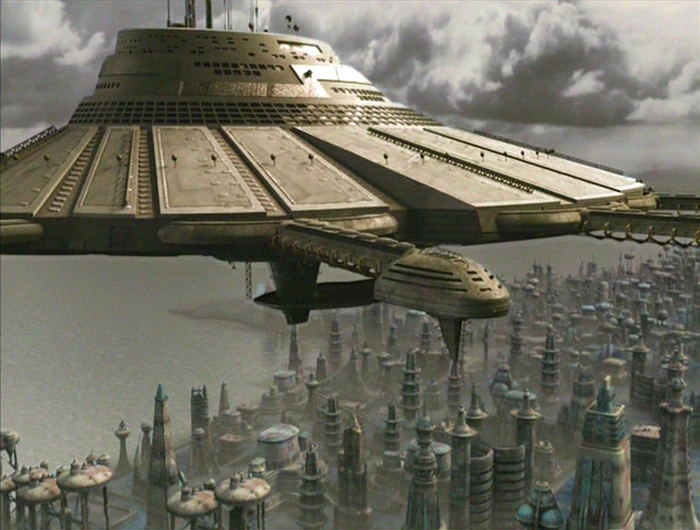 Science Vessel
Dinaali hospital ship Class
Hull Specifications LoggedThe Dinaali hospital ship was a specialized suborbital vessel utilized by the Dinaali species on their homeworld, Dinaal, located within the Delta Quadrant during the 2370s. These ships served as mobile medical facilities, capable of levitating over cities to provide critical care services to populations in need. A notable example of this class was Hospital Ship 4-2. **Operational Design & Systems** Each Dinaali hospital ship was designed for sustained suborbital operation, allowing it to position itself directly above areas requiring medical intervention. The vessel's crew complement included a contracted Jye Administrator, who oversaw operations, a Chief of Medicine, and numerous other nurses, doctors, and medical professionals working various shifts. A sophisticated main computer, referred to as an 'allocator,' was central to the ship's functionality. This allocator was responsible for administering automated medical decisions, efficiently allocating resources based on patient needs, processing incoming communications, and even performing transporter operations to facilitate patient intake and transfer. **Internal Layout & Patient Care Protocol** The internal layout of a Dinaali hospital ship was meticulously organized into color-coded levels, each corresponding to a specific tier of patient care determined by a 'treatment coefficient' (TC). Level Blue was reserved for patients with a high TC, signifying their perceived high value to society. This level offered the best conditions, most advanced treatments, and featured the Jye Administrator's office, the primary assignment area for the Chief of Medicine, and a dedicated surgical ward. Level Red accommodated patients with a lower TC, receiving fewer resources and often experiencing long waits for available treatments, such as proton imaging. Level Yellow served as an intermediate area for patients from Level Red who had stabilized sufficiently for transfer. Level Green was designated for patients with an even lower TC, consequently having even less medical equipment than Level Red. Finally, Level White functioned as the ship's morgue. The ship was also equipped with at least seven points of emergency intake, as observed in the episode 'Critical Care', ensuring rapid access for incoming patients.
- No armament data logged.
- No propulsion data logged.
Dividices
Class: Warbird- No armament data logged.
- No propulsion data logged.
 Transport / Freighter
Dodge Half-Ton Pickup Truck Class
Hull Specifications LoggedThe Dodge Half-Ton Pickup Truck was a robust and versatile ground vehicle manufactured on Earth by the American automobile company Dodge during the mid-20th century. Powered by an internal combustion engine, this truck class served both civilian populations and the United States military, becoming a ubiquitous sight across the United States of America. **Design & Development** The highly successful four-wheel drive Dodge Half-Ton 'C-Series' Pickup Truck was initially introduced in 1939, with production continuing through 1947. With the outbreak of World War II, the basic design was adapted for military applications, leading to the production of military versions from 1941 until 1945, serving in a variety of roles. The civilian versions, particularly noted for their distinctive front design, have since become sought-after collector items. The foundational design of the Half-Ton Pickup Truck proved so influential that it served as the basis for all subsequent pickup models produced by Dodge, with one of its direct descendants being the Dodge Ram. Dodge employed a specific coding system for its truck types during the 1930s and 1940s. This system used a capital letter to denote the year of a model's introduction, followed by another capital letter indicating its load capacity. For military variants, an optional one or two-digit numerical suffix specified a particular version. For instance, the 'WC4' model, featured in the episode 'Storm Front', stood for a winch-equipped model introduced in 1941, possessing a half-ton load capacity and designed as a gun-towing munitions carrier. The 'W' designation continued from 1941 onward, while 'C' was also retained to indicate three-quarter and 1.5-ton load capacities, as seen in the Dodge WC63 truck. The specific models appearing in Star Trek productions include a Dodge 1941 WC4 in 'Storm Front', a Dodge 1946 WC in 'Storm Front, Part II' (noted as a minor anachronism for the 1944 setting), and a Dodge 1939 TC (the original model) in 'Carbon Creek'. **Service History & Notable Appearances** The Dodge Half-Ton Pickup Truck made several notable appearances across different timelines and historical periods. In an alternate timeline, a military version of the Half-Ton truck was observed in 1944, abandoned on a Brooklyn, New York City street in front of Alicia Travers' apartment building. This was during a period when Captain Jonathan Archer of the NX-01 was hiding after escaping the SS, as depicted in the episode 'Storm Front'. Shortly thereafter, the American Resistance utilized a civilian version of the truck, 'borrowed' from the local Corders Company, to transport its fighters for an assault on a facility where the Na'kuhl were constructing a temporal conduit, as seen in 'Storm Front, Part II'. In a pivotal moment for Earth's future, an early civilian model Dodge Half-Ton Pickup Truck was among the very first Earth vehicles encountered by the Vulcan survivors Mestral and T'Mir in October 1957. Their Vulcan survey ship crashed near Carbon Creek, Pennsylvania, United States of America, leading them to blend into the local population. This encounter was chronicled in the episode 'Carbon Creek'. The legacy of the Dodge Half-Ton Pickup Truck extends beyond its direct production, influencing later models like the Dodge Ram, which has also appeared in Star Trek productions.
- • Projectile weapo (Qty: optional)
- No propulsion data logged.
 Transport / Freighter
Dodge Ram Class
Hull Specifications LoggedThe Dodge Ram was a prominent model of ground vehicle, specifically a truck, manufactured on Earth by the American automobile company Dodge. This class of vehicle was actively produced and utilized during the late 20th century and early 21st century, serving primarily civilian operators across the United States of America and Earth. **Service History** The Dodge Ram class has a notable, albeit brief, history within Starfleet records due to several encounters by Starfleet personnel with specific vehicles of this type. In 1996, Lieutenant Tom Paris of Starfleet 'borrowed' a brand new Dodge Ram from a car dealership located near Hollywood, Earth. He utilized this vehicle to transport Commander Tuvok to the Griffith Observatory. This particular Dodge Ram was subsequently vaporized during a firefight with H. Dunbar, who was employing advanced 29th-century weapon technology, an event documented in the episode 'Future's End'. Several years later, in 2004, Captain Jonathan Archer and Subcommander T'Pol of Starfleet also 'borrowed' a parked Dodge Ram during their covert mission to Detroit, Michigan, Earth. They employed the truck in their urgent search for three Xindi-Reptilians who were on Earth developing a dangerous Xindi bio-weapon. The license plate number of this specific vehicle was recorded as 6202M0, as depicted in the episode 'Carpenter Street'. It is noteworthy that the Dodge Ram used by Captain Archer and Subcommander T'Pol was of the same color and type as the one previously utilized by Lieutenant Paris eight years prior. The design lineage of the Dodge Ram can be traced back to earlier models such as the 1930s-1940s Dodge Half-Ton Pickup Truck, which also saw appearances in various Star Trek productions.
- No armament data logged.
- No propulsion data logged.
 Transport / Freighter
Dodge WC63 Class
Hull Specifications LoggedThe Dodge WC63 was a type of truck manufactured on Earth by the American Dodge Company during the mid-20th century. Designed primarily for the United States military, these vehicles were powered by an internal combustion engine. A total of 43,000 units of this 1.5-ton load-carrying, six-wheel drive light truck were produced between 1943 and 1945. Its immediate predecessor was the WC62, which was largely identical but lacked the front-mounted winch. The Dodge WC63 was phased out of service in the 1960s, with very few units ever converted for civilian use; many instead found their way into museums or private collections. A lighter sibling in the Dodge WC series was the Dodge WC4 munitions carrier, a half-ton load-carrying vehicle. The German military, during World War II, often utilized captured enemy vehicles, referring to them as 'Beutefahrzeuge' (booty vehicles) and integrating them into their ordnance designation system. A captured Dodge WC63 would have been administratively known to the Germans as a 'LLkw 1,5t WC63(a)' or 'Leichte Lastkraftwagen 1.5 ton WC63 (amerikanisch)'. **Class History** In an alternate 1944, a timeline caused by the Temporal Cold War, a Dodge WC63 truck played a pivotal role in a critical encounter. This particular vehicle, operated by the German SS and bearing the license plate 'NA 43212', was used by the Na'kuhl leader Vosk to transport the captured Starfleet officers Ensign Travis Mayweather and Commander Charles Tucker III of the NX-01. Vosk brought his prisoners to a wooded area outside New York City for a meeting with Captain Jonathan Archer. Vosk erroneously believed he could exchange Mayweather and Tucker for assistance in returning his people to their own timeline, as depicted in the Star Trek: Enterprise episode 'Storm Front, Part II'.
- • Projectile weapo (Qty: optional)
- No propulsion data logged.
 Scout / Patrol
Dramen patrol ship Class
Hull Specifications LoggedThe Dramen patrol ship was a compact, single-person spacecraft specifically engineered for patrol duties within the Dramen star system. Its design emphasized maneuverability and efficiency for localized surveillance and security operations. While small, it was noted to be slightly larger than a standard Federation shuttlecraft, indicating a modest but functional interior for its lone pilot. The vessel was warp capable, allowing for rapid transit across the Dramen star system's various sectors. **Service History** One notable incident involving a Dramen patrol ship occurred in 2270. During this period, a Dramen patrol ship, piloted by Demos, was used to pursue the USS Enterprise (NCC-1701). Demos's objective was to prevent James T. Kirk from investigating Dramia II. In a seemingly audacious move, Demos piloted the patrol ship directly into the USS Enterprise's open hangar doors, appearing to enter unnoticed. This action, however, was part of a calculated plot orchestrated by James T. Kirk. The intention was to lure Demos aboard the USS Enterprise (NCC-1701) so that he could be arrested as a stowaway, thereby neutralizing his interference with Kirk's ongoing investigation into Dramia II. This event was documented in the Starfleet records from the mission 'Albatross'.
- No armament data logged.
- • Warp drive
 Runabout / Utility
Drayan shuttle Class
Hull Specifications LoggedThe Drayan shuttle was a compact and armed shuttlecraft utilized by the Drayans. Its design allowed for versatile operations, being fully capable of both deep space travel and intricate maneuvering within a planet's atmosphere. While specific technical details regarding its propulsion or defensive systems are not extensively documented, its classification as an 'armed' vessel indicates it possessed offensive capabilities suitable for its operational role. **Service History** This class of shuttle was actively in service during the 2370s, primarily operated by the Drayans. One such shuttle was encountered by the USS Voyager in 2372, during the events depicted in the Star Trek: Voyager episode 'Innocence', highlighting its role in Drayan society and their interactions with other species.
- No armament data logged.
- No propulsion data logged.
Dreadnought Class
1 VesselA dreadnought was a classification of heavily-armed starship, known for its formidable combat capabilities across various eras and affiliations. **Design & Capabilities** Starfleet dreadnought type ships were distinguished by their heavy firepower, robust armor, and powerful deflector shields. Beyond conventional defenses, these vessels possessed extensive and comprehensive Electronic Warfare capabilities, surpassing those of other Starfleet warships, including Federation heavy cruisers. This enhanced capability was attributed to both greater available space for systems and a superior power budget. Examples include the 'Federation'-class dreadnoughts, which were equipped with sophisticated holographic decoy systems capable of deceiving advanced sensor arrays. The 'Star Empire'-class dreadnoughts further demonstrated this with holographic camouflage systems, allowing them to disguise themselves as other starships. **Service History** Throughout Starfleet history, several vessels and concepts have been identified as dreadnoughts. The 'USS Entente', a 'Federation'-class dreadnought, was an early example of this type of vessel, with its outline briefly glimpsed on computer screens aboard the 'USS Enterprise NCC-1701' at 'Epsilon IX station' in the 23rd century. In 2370, 'B'Elanna Torres' of the 'Maquis' spent nearly a month reprogramming and upgrading a captured, defective 'Cardassian ATR-4107' missile, ultimately naming it 'Dreadnought' due to its formidable nature. In an 'alternate reality', the 'USS Vengeance' was identified as a 'Dreadnought'-class warship, showcasing the classification's continued relevance in different timelines. By the '32nd century', the 'Breen Imperium' operated its own type of dreadnought. As of '3191', this 'Breen dreadnaught' was recognized as the largest warship class within the 'Breen Imperium' fleet, underscoring the enduring significance of the dreadnought classification for major interstellar powers.
- No armament data logged.
- No propulsion data logged.
 Escort / Warship
Dreadnought class
1 VesselThe Dreadnought-class was an experimental class of dreadnought warship, conceived and designed by Section 31 of Starfleet with significant assistance from Khan Noonien Singh. The only known vessel of this class, the USS Vengeance, was secretly launched from a facility orbiting Io in 2259. This class was explicitly designed for combat, a stark contrast to the multirole nature of most Starfleet vessels, as noted by Khan Noonien Singh himself, who described it as 'two times the size, three times the speed, advanced weaponry, modified for a minimal crew.' **Design & Development** The Dreadnought-class was roughly twice the size of a Constitution-class starship from the alternate reality. Its design prioritized operational efficiency with a minimal crew, capable of being operated by a single person if necessary. The vessel boasted advanced weapon and propulsion capabilities, enabling it to engage other starships even while traveling at warp velocities. The bridge of a Dreadnought-class ship was notably small and cramped when compared to the more spacious bridge of the USS Enterprise (NCC-1701 alternate reality). Its design heavily leveraged highly advanced artificial intelligence (AI) systems to drastically reduce the required crew complement. Under extreme circumstances, a Dreadnought-class vessel could be operated solely by its captain. The AI systems facilitated the operation of the starship's navigation and propulsion subsystems via voice commands. In a significant aesthetic departure from the USS Enterprise's bridge, the Dreadnought's bridge was predominantly dark, featuring black surfaces rather than the bright lighting and white walls typical of other Starfleet vessels. Art Director Harry Otto contributed technical drawings and a construction review for the USS Vengeance's bridge. Similarly, the engineering section was designed for autonomous operation if required. Like the bridge, engineering was cramped and finished in a shining black. Its interior presented a more refined design compared to the engineering section of the USS Enterprise (NCC-1701 alternate reality), notably lacking directly accessible coolant pipes or mains. The transporter system on the USS Vengeance could be operated directly from the bridge, capable of site-to-site transporting dozens of people or objects simultaneously, including, for example, all 72 photon torpedoes from the USS Enterprise (NCC-1701 alternate reality). For sensor capabilities, the class was equipped with multidimensional radar and space region observer systems, as evidenced by legible graphics on computer screens from the USS Vengeance's bridge, released by lead UI designer Jorge Almeida. The vessel also featured multiple hangars, with Hangar 7 specifically located on Deck 13. **Tactical Systems** Khan Noonien Singh was directly involved in designing the weapons for the Dreadnought-class, which were significantly more advanced than contemporary Constitution-class weaponry. Unlike most Starfleet ships, which served multirole functions for combat, exploration, and research, Dreadnought-class ships were engineered exclusively for combat. A unique defensive feature was the ability to cover the deflector dish with protective armor plates when not traveling at warp speeds, safeguarding it from battle damage. The class demonstrated extreme durability, capable of remaining intact even after the internal detonation of 72 photon torpedoes and a high-speed collision with a city. The weapon systems included an array of advanced phaser emitters. These powerful discharges arced indirectly at targets and could be fired while the ship was at warp. Single hits from these phasers were capable of penetrating the shields and causing major hull breaches on a Constitution-class starship. The Dreadnought-class also featured massive swivel-mounted torpedo launchers, deployed from under the saucer section from behind protective armor plating. These launchers could rotate to fire volleys of torpedoes across various arcs, from aft to forward. Additionally, a Dreadnought-class ship could launch drones, which in turn were capable of launching several photon torpedoes before impacting a target. Hikaru Sulu observed the USS Vengeance locking phasers on the USS Enterprise (NCC-1701 alternate reality), and Admiral Marcus ordered the targeting of all aft torpedoes at the USS Enterprise's bridge. According to the novelization of 'Star Trek Into Darkness', the two large cannons seen deploying were, in fact, massive banks of photon torpedoes, holding an arsenal far exceeding that of several Constitution-class ships combined. **Propulsion Systems** The Dreadnought-class featured distinctive angular warp drive nacelles, a departure from the cylindrical nacelles common on most Starfleet ships. Khan Noonien Singh described the USS Vengeance as possessing 'three times the speed' of the USS Enterprise (NCC-1701 alternate reality). This class had the unique capability of tracking down and attacking a fleeing enemy ship while both were at warp speed, a fact that surprised James T. Kirk and Hikaru Sulu, and was known to Carol Marcus. The novelization of 'Star Trek Into Darkness' referred to these advanced warp capabilities as 'Mark IV capabilities,' involving special modifications to the warp drive and nacelles that allowed a Dreadnought-class ship to momentarily exceed all accepted warp factors and catch up with a starship it was following within its warp tunnel. This concept bears similarity to the prime universe's 'advanced fourth generation warp drive' attributed to the USS Enterprise (NCC-1701) refit, which also significantly increased its speed. **Class History & Notable Vessels** The only known vessel of this class was the USS Vengeance. It had an unmarked registry and ultimately crashed in San Francisco Bay, where it was destroyed in 2259 in the alternate reality. **Background Information & Design Process** The voice for the Dreadnought-class computer was provided by former 'Saturday Night Live' cast member Bill Hader. Screenwriter Roberto Orci suggested that the USS Vengeance possessed a countermeasure against transwarp beaming, explaining why Harrison fled to Qo'noS instead of attempting to commandeer the USS Vengeance directly. Director J.J. Abrams, who invented the Dreadnought-class, envisioned the USS Vengeance as a 'big, terrifying stealth-like version of the Enterprise,' starting with the visual concept of a black ship. He conceived it as a militaristic Starfleet craft, more than twice the size of the USS Enterprise (NCC-1701 alternate reality). The USS Vengeance was constructed by a team at Industrial Light & Magic (ILM), including Digital Model Supervisor Bruce Holcomb. ILM Senior Visual Effects Supervisor Roger Guyett noted that the ship was 'about two-and-a-half times the size of the Enterprise,' approximately 4,500 feet long, though its size was sometimes cheated for dramatic effect. ILM Lighting Technical Director Robert Weaver described the challenges of lighting the USS Vengeance due to its dark, angular design, necessitating the use of rim-light and specular values, and 'Aztec' textures similar to the USS Enterprise to create interesting colors on its surface panels. **Apocrypha** In apocryphal materials, a 'Dreadnought'-class also existed in the prime universe, mentioned in the 1987 comic book 'Who's Who in Star Trek, Issue 2'. William T. Riker briefly mentioned a 'Dreadnought'-class in the novel 'Dark Mirror' as the closest analog in the prime universe's 24th-century Starfleet to the heavily-armed and armored version of the Galaxy-class from the mirror universe. The Dreadnought-class also appears in 'Star Trek Online' as a playable ship, referred to as a 'Kelvin Timeline Intel Dreadnought Cruiser' or 'Vengeance-class'. This in-game version features rapid-fire broadside phaser batteries, automated assault drones, and, unlike its on-screen counterpart, a cloaking device. A later update allowed for the display of USS Vengeance and registry NCC-1987 on its hull.
- • Phase
- • Photon torpedo
- • Three times the normal speed of a Constitutio
- • Deflector shield
 Explorer
Dream Alien ship Class
Hull Specifications LoggedThe Dream Alien ship was a type of starship possessing formidable offensive and defensive capabilities. Its primary armaments consisted of directed energy weapons, which it effectively utilized in engagements. Defensively, the vessel was equipped with powerful shields, capable of withstanding sustained phaser fire from a Starfleet starship like the USS Voyager without penetration. Furthermore, these ships demonstrated the ability to deploy localized dampening fields, a sophisticated tactical measure designed to drain power from an opponent's ship systems, including engines, weapons, and shields, thereby rendering them vulnerable and forcing surrender. **Service History** This class of starship was exclusively encountered in a communal dream experienced by the crew of the USS Voyager in 2374, as depicted in the episode 'Waking Moments'. During this encounter, a single Dream Alien ship initiated an attack on the USS Voyager. Despite the USS Voyager reinforcing its shields with auxiliary power, its phasers proved ineffective against the Dream Alien ship's defenses. As the USS Voyager prepared to launch photon torpedoes, it was subjected to a localized dampening field, which caused a critical loss of power to its torpedo launchers and other vital systems. The arrival of three additional Dream Alien ships compounded the USS Voyager's predicament, ultimately forcing its crew to surrender. Following the surrender, the Dream Aliens commenced boarding operations on the USS Voyager. Given the unique circumstances of its appearance, this vessel is understood to exist solely within the context of the dream state and not in the 'waking world'.
- • Directed energy weapo
- • Deflector shield
 Classified
Dresselhaus type
Hull Specifications LoggedThe Dresselhaus type was a distinctive class of Federation starship operated by Starfleet during the 31st century and into the 33rd century. Its unique design was characterized by a tall, trunk-like hull from which two rows of two nacelles protruded backward from the top, mirrored by another two rows of two nacelles extending backward from the bottom. Impulse engines were centrally located within this configuration. **Service History** This starship class played a significant role in Starfleet operations during a tumultuous period. In 3069, prior to the event known as The Burn, several Dresselhaus-type ships were tragically lost when their active warp cores, dependent on dilithium, became inert, leading to catastrophic antimatter explosions. This event is chronicled in the Star Trek: Discovery episode 'People of Earth'. By 3189, ships of the Dresselhaus type were an integral part of the Federation fleet stationed at Federation Headquarters. Their collective energy was crucial in sustaining a distortion field that successfully concealed the headquarters' location, as depicted in the Star Trek: Discovery episodes 'Die Trying' and 'There Is A Tide...'. The USS Dresselhaus, registry NCC-325019, was noted as active during this period. In 3190, a Dresselhaus-type starship was present at the momentous re-opening of Starfleet Academy and the unveiling of the Archer Spacedock, an event featured in the Star Trek: Discovery episode 'Kobayashi Maru'. The USS LaMar was also active around 3191. Into the 33rd century, the class continued its service, with five or more Dresselhaus-type starships participating in a ceremonial honor-formation at Federation Headquarters for the launch of Zora and the USS Discovery's Red Directive mission, as seen in the Star Trek: Discovery episode 'Life, Itself'. The USS Pfau, registry NCC-325017, has also been identified as a ship of this class.
- No armament data logged.
- No propulsion data logged.
Dresselhaus type
Dresselhaus type
2 VesselsThe Dresselhaus type was a distinctive class of United Federation of Planets starship operated by Starfleet, primarily active from the 31st century into the 33rd century. Its unique design featured a tall, trunk-like hull from which two rows of two nacelles each protruded backward, one set from the top and another from the bottom. Impulse engines were centrally located within this configuration. The class was designed by William Budge, distinguishing it from many other 32nd-century Starfleet vessels which were primarily designed by Ryan Dening and his team. **Class History** The Dresselhaus type saw significant service throughout the 31st and 33rd centuries. In 3069, the class suffered substantial losses during the catastrophic event known as The Burn. Several ships of this type, equipped with active warp cores, were destroyed when their dilithium became inert, leading to antimatter explosions across the Federation. This event was chronicled in the Star Trek: Discovery episode 'People of Earth'. By 3189, ships of the Dresselhaus type were integral to the Federation fleet stationed at Federation Headquarters. Their collective energy output was crucial in sustaining a distortion field that successfully concealed the headquarters' location, as depicted in the episodes 'Die Trying' and 'There Is A Tide...'. The USS Dresselhaus, registry NCC-325019, was noted as active during this period. In 3190, a Dresselhaus-type starship was present at the momentous re-opening of Starfleet Academy and the unveiling of the Archer Spacedock, an event featured in the Star Trek: Discovery episode 'Kobayashi Maru'. Later, in the 33rd century, at least five starships of this class participated in a ceremonial honor-formation at Federation Headquarters. This formation marked the launch of Zora and the USS Discovery's Red Directive mission, as seen in the episode 'Life, Itself'. The USS LaMar was also active around 3191. **Known Vessels** Several starships of the Dresselhaus type have been identified. The USS Dresselhaus, with registry NCC-325019, was active in 3189. The USS LaMar was active in 3191. Additionally, according to the second edition of Eaglemoss/Hero Collector's 'Star Trek: Shipyards - Starfleet Ships 2294 to the Future', the USS Pfau (NCC-325017) was also a vessel of this class.
- No armament data logged.
- No propulsion data logged.
 Salvage Ship
Drookmani ship Class
Hull Specifications LoggedThe Drookmani ship was a distinctive type of starship primarily utilized by the Drookmani species for their extensive salvage operations during the late 24th century. Its design was highly modular, consisting of a series of large cargo modules that could be attached to a forward, crewed command section, often referred to as a 'tug'. This command section possessed the unique capability to detach and operate independently from the cargo modules, offering flexibility in its operations. For auxiliary transport or short-range missions, the command section also housed a Drookmani shuttlecraft within a ventral bay. Despite its robust appearance and specialized function, the Drookmani ship was notably unarmed, relying instead on its powerful utility systems. It was equipped with two formidable tractor beams: one positioned on the bow for forward acquisition, and another located beneath the cargo modules. These tractor beams were integral to its salvage role, designed to pull materials directly into an integrated shredder for processing. The standard crew complement for these vessels was at least six individuals. **Class History** Drookmani ships were active throughout the 2380s, frequently engaging in salvage operations across various sectors. In 2380, a Drookmani ship became involved in a tense dispute over abandoned Starfleet cargo with the USS Cerritos. During this confrontation, Captain Carol Freeman of the USS Cerritos advocated for a diplomatic resolution, even as the Drookmani ship utilized its tractor beam to launch debris at the Starfleet vessel. The conflict was ultimately resolved when an animate isolinear core, designated Artificial core 001, ejected from the USS Cerritos and inadvertently disabled the Drookmani ship, ending the standoff. Later that same year, another Drookmani ship was observed arriving to salvage the extensive debris field left in the aftermath of the devastating Battle of Kalla. The class's operational history continued into 2381 when an exocomp named Peanut Hamper, in a misguided attempt to redeem herself to Starfleet, secretly invited a Drookmani ship to the planet Areolus. Her plan involved having the Drookmani take the native Areore's ancient Areore ships from beneath the planet's surface, intending to 'save' the Areore from the Drookmani. Peanut Hamper infiltrated the Drookmani ship and overloaded its engines, leading to its destruction. However, the Drookmani crew managed to beam to a nearby Areore ship before their vessel was annihilated.
- No armament data logged.
- No propulsion data logged.

DSC 01
Class: Class C shuttlecraft- • Phase
- No propulsion data logged.
 Classified
Duderstadt class
3 VesselsThe Duderstadt-class was a type of Federation starship operated by Starfleet during the early 25th century. This class featured an unorthodox configuration where its warp nacelles were mounted on a posterior extension of the saucer section, with a separate, relatively small engineering section located below, which also housed the main deflector. The Duderstadt-class was similar in size to a Constitution III-class vessel, measuring 578.5 meters in length, and was capable of carrying at least five hundred passengers. It was equipped with at least two shuttlebays. The class was co-designed by Doug Drexler and Bill Krause. Early concept art by Krause for the class featured Sovereign-style nacelles and was provisionally designated as the Wasp-class interceptor USS Chaparral (NCC-29757). The aft-facing dish on the secondary hull of the finalized design served as a long-range sensor array. **Tactical Systems** For defensive capabilities, Duderstadt-class starships were equipped with robust deflector shields. Offensively, they were armed with an array of phaser arrays and photon torpedo launchers, providing significant firepower for various tactical engagements. **Service History** In 2401, a Duderstadt-class vessel, the USS Intrepid (NCC-79520), was dispatched to intercept the USS Titan (NCC-80102-A) following the latter's unauthorized excursion to the Ryton system, as depicted in the Star Trek: Picard episode 'Imposters'. Other named ships of the class included the USS Trumbull (NCC-72370), the USS Vasa (NCC-77690), and the USS Zantra (NCC-75441). During Frontier Day at Sol Station, at least two Duderstadt-class vessels, the USS Intrepid and the USS Trumbull, were present as part of the assembled Starfleet fleet. While former Star Trek: Picard Research Assistant Jörg Hillebrand initially indicated that these ships were not part of the 'fleet formation mode' demonstration, the USS Intrepid was subsequently observed participating in the destruction of the USS Excelsior (NCC-42037) during the events of the Star Trek: Picard episodes 'Võx' and 'The Last Generation'. This implied that not all Starfleet vessels gathered at Sol Station were involved in the demonstration, despite their presence in the formation.
- • Phase
- • Photon torpedo
- • Deflector shield

Dukat's battle cruiser
Class: Jem'Hadar battle cruiser- • Directed energy weapo
- • Photon torpedo
- • Deflector shield

Dukat's Bird-of-Prey
Class: Klingon Bird-of-Prey- No armament data logged.
- No propulsion data logged.

Duras sisters' Bird-of-Prey
Class: D12 class- No armament data logged.
- No propulsion data logged.
 Sleeper Ship
DY-100 class
Hull Specifications LoggedThe DY-100 class was an early design of Earth pre-warp vessels that were in operation during the late 20th century. These ships were specifically engineered for interplanetary travel within the Sol system. They featured simple nuclear-powered engines and were equipped with artificial gravity, utilizing transistors as key components. DY-100 class ships were launched into orbit using booster rockets. In the 1990s, this class of spaceship was considered among Earth's most advanced at the time. At least some of the DY-100 class vessels were designed as sleeper ships. These ships could accommodate a crew of at least 85 individuals, who would be placed into suspended animation within life support canisters prior to liftoff. To conserve resources during the long journeys, the ship's life support system was typically turned off. The use of suspended animation was a necessary technology up to approximately 2018, as interplanetary travel within the Sol system took years before that period. Production of DY-100 class ships commenced before 1996 and concluded sometime before the year 2000. A subsequent generation, the DY-500 class, shared a similar configuration, leading to some 23rd century Humans, including Captain James T. Kirk, having difficulty distinguishing between the two classes in 2267, before being corrected by Spock. Significant improvements in sub-light propulsion technology ultimately led to the abandonment of the DY-100 class. **Service History & Appearances** The most famous vessel of this class is the SS Botany Bay, which was found adrift in space in 2267 by the USS Enterprise (NCC-1701) during the events of 'Space Seed'. This ship carried Khan Noonien Singh and his followers, who had been in suspended animation for centuries. In an alternate reality, a version of the SS Botany Bay was found adrift in 2258. The DY-100 class has made several appearances throughout Starfleet history. A model of a DY-100 class ship was seen on a window sill in the office where Rain Robinson worked at the Griffith Observatory in California in 1996, as depicted in 'Future's End'. She also had a photograph of a DY-100 launch taped to a cabinet. A photograph of the same DY-100 launch was displayed in the 602 Club, alongside images of other significant space achievements such as the NX-Alpha, the Phoenix, and the USS Enterprise (XCV 330), as shown in 'First Flight' and 'Home'. A computer display featuring an image specifically labeled 'DY-100 Sleeper Ship' appeared in 'Drone'. Additionally, recycled footage of the DY-100 class studio model was initially used in 'The Ultimate Computer' to represent the Federation freighter Woden, though this was later retconned to an Antares-class vessel in the remastered version of the episode.
- No armament data logged.
- No propulsion data logged.
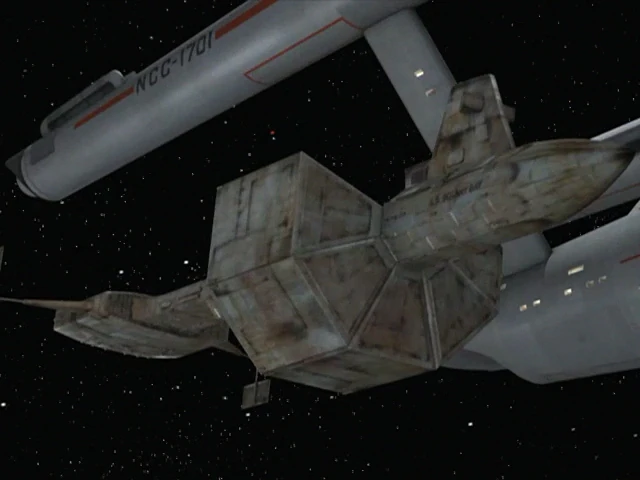 Sleeper ship
DY-100 class
1 VesselThe DY-100 class was an early design of Earth pre-warp vessels that were in operation during the late 20th century. These ships were specifically engineered for interplanetary travel within the Sol system. They featured simple nuclear-powered engines and were equipped with artificial gravity, utilizing transistors as core components. DY-100 class ships were launched into orbit using booster rockets. In the 1990s, this class of spaceship was considered among Earth's most advanced. Production of DY-100 class ships commenced before 1996 and concluded sometime before the year 2000. A subsequent generation, the DY-500 class, shared a similar configuration, leading to occasional confusion, as demonstrated by Captain James T. Kirk in 2267 before being corrected by Spock in the episode 'Space Seed'. Significant advancements in sub-light propulsion technology ultimately led to the abandonment of the DY-100 class. **Sleeper Ship Configuration** At least some vessels of the DY-100 class were designed as sleeper ships. In this configuration, a crew of at least 85 individuals could be placed into suspended animation within life support canisters prior to liftoff. The ship's life support system would then be deactivated for the duration of the journey. The use of suspended animation was a critical necessity for interplanetary travel up to approximately 2018, as journeys between planets within the Sol system typically spanned several years before that time. The USS Enterprise (NCC-1701) famously encountered the DY-100 class sleeper ship SS Botany Bay in 2267, carrying Khan Noonien Singh and his Augment followers. **Service History & Appearances** The most notable vessel of this class, the SS Botany Bay, was discovered adrift in space by the USS Enterprise (NCC-1701) in 2267, as depicted in the Star Trek: The Original Series episode 'Space Seed'. An alternate reality version of the SS Botany Bay was also found adrift in 2258. The DY-100 class has made several appearances or references across Star Trek productions. In 1996, a model of a DY-100 appeared on a window sill in the office of Rain Robinson at the Griffith Observatory in California, and she also possessed a photograph of a DY-100 launch, as seen in the Star Trek: Voyager episode 'Future's End'. A photograph of the same DY-100 launch was displayed in the 602 Club, alongside other significant space achievements like the NX-Alpha, the Phoenix, and the USS Enterprise (XCV 330), as shown in the Star Trek: Enterprise episode 'First Flight'. The class was also referenced via a computer display in the Star Trek: Voyager episode 'Drone' and through a photograph in the Star Trek: Enterprise episode 'Home'. Footage of the DY-100 class studio model was re-used in the original version of 'The Ultimate Computer' to represent the Federation freighter Woden, though this was later retconned to an Antares-class vessel in the remastered version. **Behind the Scenes & Apocrypha** In the original script for the Star Trek: The Original Series episode 'Space Seed', dated October 26, 1966, this class was initially designated 'CZ-100'. Author James Blish, working from non-final script drafts, adhered to the 'CZ-100' designation in his 1968 novelization of the episode. Doug Drexler, a prominent advocate for the DY-100 class, championed its inclusion in Star Trek: Enterprise, though producers ultimately declined, citing its resemblance to a pencil. According to the reference book 'Star Trek: Communicator' issue 18, significant improvements in sub-light propulsion technology led to the abandonment of DY-100 ships. In apocryphal works, the 1977 'Enterprise Log 4' comic depicted an unnamed DY-100 class ship with the registry FWB 52, part of a fleet used to colonize planets in the Sol system. The 'Star Trek Spaceflight Chronology' states that the DY-100 was Earth's first mass-produced spaceship, with production beginning in 1996. This source details cargo, fuel, and passenger container capabilities, and mentions its use between Earth and Luna in standard configuration, and to Mars in an uprated mode. A journey to Mars using suspended animation was stated to take 937 days. The 'Spaceflight Chronology' also describes an SS Copernicus of the DY-100 class, serving from 1995 to 2020, with a length of 100 meters, a weight of 2.72 million kilograms, and a complement of 22, utilizing chemical/fission propulsion. The SS Copernicus is likely intended as the prototype of the class, differing from the SS Botany Bay by having a built-in engine pack of six chemical boosters for lift-off, though graphics show only four boosters.
- No armament data logged.
- No propulsion data logged.
 Explorer
DY-500 class
Hull Specifications LoggedThe DY-500 class was a type of Earth starship primarily utilized for early deep space exploration and colonization during the 22nd century. Considerably more advanced than the older 20th century DY-100 class, the DY-500 class had a gross vehicle mass of 3,000 metric tons. These vessels were equipped with Yoyodyne pulse fusion warp drives for propulsion, boasting a net delta-vee of 3.7e7 NVP. Given that the class predates the breaking of the warp 2 barrier in 2143, it was presumably slower than warp 2. By the 2120s, at least three distinct sub-classes of the DY-500 design were in active service, indicating a flexible and adaptable platform for various early interstellar missions. The design's longevity and utility made it a foundational element in Earth's initial forays into deep space. **Service History** The DY-500 class was in active use as early as 2102. Notable vessels of this class included the SS Hokule'a, a DY-500 Class variant, subclass 'C', which was active in 2102. The HMS Lord Nelson, a DY-500 Class variant, subclass 'B', was active by 2120. Another vessel, the SS Mariposa, bearing registry NAR-7678, was active in the mid-22nd century before being salvaged for parts after a crash landing on a planet. The SS Woden, with registry DY-504, was also identified as a DY-500-class ship. In 2267, during an encounter with the DY-100-class SS Botany Bay, Captain James T. Kirk initially mistook the vessel for a DY-500-class ship, a misconception corrected by Spock. The DY-500 class was later referenced in an okudagram displayed on Jean-Luc Picard's desk monitor in his ready room aboard the USS Enterprise (NCC-1701-D). This list detailed ships launched from Earth, with destinations in or near the Ficus sector, between the years 2123 and 2190, underscoring the class's significant role in early interstellar expansion.
- No armament data logged.
- • Warp drive
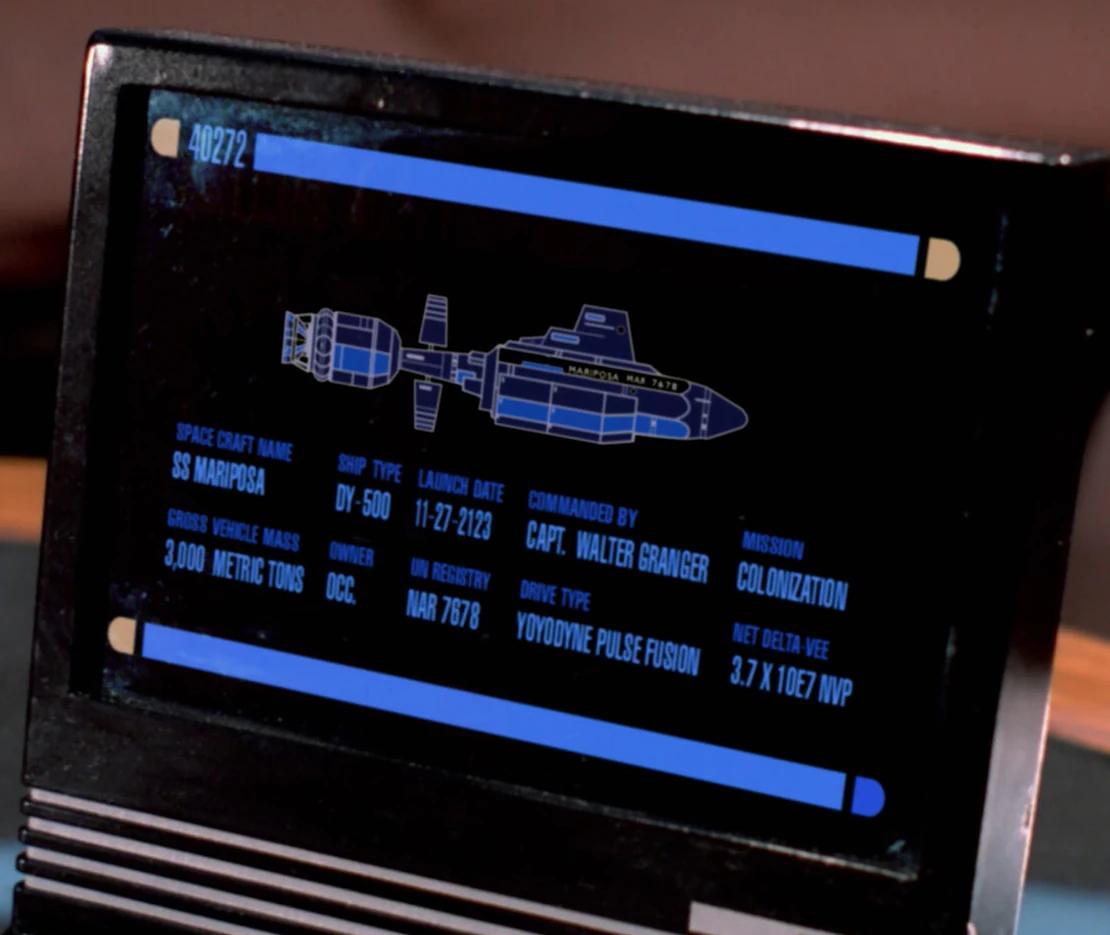 Colony ship, Explorer ship
DY-500 class
1 VesselThe DY-500 class was a type of Earth starship primarily utilized for early deep space exploration and colonization during the 22nd century. Considerably more advanced than the older 20th century DY-100 class, these vessels were equipped with Yoyodyne pulse fusion warp drives for propulsion, boasting a net delta-vee of 3.7e7 NVP. The gross vehicle mass of these ships was 3,000 metric tons. By the 2120s, at least three sub-classes of this design were in service, indicating a versatile and evolving platform. Given that the class predates the breaking of the warp 2 barrier in 2143, it was presumably slower than warp 2. **Class History** The DY-500 class was in active use as early as 2102. In 2267, Captain James T. Kirk mistakenly identified the DY-100-class SS Botany Bay as a DY-500-class vessel, a misconception corrected by Spock in the episode 'Space Seed'. The class was later referenced in the 24th century, appearing on Jean-Luc Picard's desk monitor in his ready room aboard the USS Enterprise (NCC-1701-D) in the episode 'Up The Long Ladder', as part of an okudagram created by Michael Okuda listing ships launched from Earth. Notable vessels of this class include the SS Hokule'a, a subclass 'C' variant active in 2102; the HMS Lord Nelson, a subclass 'B' variant active in 2120; and the SS Mariposa (registry NAR-7678), which was salvaged for parts after a crash landing on a planet in the mid-22nd century. The SS Woden (DY-504) was also identified as a DY-500-class ship in 'Star Trek Maps'. The 1979 reference book 'Star Trek Spaceflight Chronology' depicted two 21st-century versions of the DY-500 class, also known as the 'Wheeler' class, designed by Rick Sternbach. These were described as extensive upgrades to the DY-100 series, in use from 2019 to 2055, and powered by advanced fission. Michael Okuda's later interpretation for 'Star Trek: The Next Generation' was a very close approximation to Sternbach's 'uprated' design, possibly as a homage.
- No armament data logged.
- No propulsion data logged.
 Classified
Echelon class
3 VesselsThe Echelon-class was a type of Federation starship operated by Starfleet during the early 25th century. Its design closely resembled that of the Sagan-class, notably differing by the absence of the lower pair of warp nacelles. These vessels were classified as mid-model starships, distinguished by their traceable payload capability. This meant that the impact of their weapons fire left residual ionic energy, which could be utilized to track their targets. The class measured 516.3 meters in length. **Class History** The Echelon-class was actively in service by 2401. During this year, two ships of the class, the USS Cole (NCC-97938) and the USS Sternbach (NCC-97942), were dispatched on a critical mission to track down the missing USS Titan (NCC-80102-A). This deployment occurred after the crew of the USS Titan (NCC-80102-A) uncovered a significant Changeling plot within Starfleet, as depicted in the episode 'The Bounty'. Later in 2401, a substantial contingent of thirteen Echelon-class starships participated in fleet maneuvers. These maneuvers were part of a grand celebration commemorating 250 years since the Enterprise (NX-01) embarked on its inaugural voyage. However, this celebratory event took a dire turn when officers under the age of 25 were biologically assimilated by the Borg, a plot facilitated by Jack Crusher. The assimilated officers then commandeered these Echelon-class vessels. Following the successful liberation of these officers, the commandeered ships were subsequently left abandoned in Earth orbit, as chronicled in the episodes 'Võx' and 'The Last Generation'. Other named ships of the class include the USS Minor (NCC-97452) and the USS Yorktown (NCC-97422), both active in 2401.
- • Phase
- • Photon torpedo
- • Deflector shield
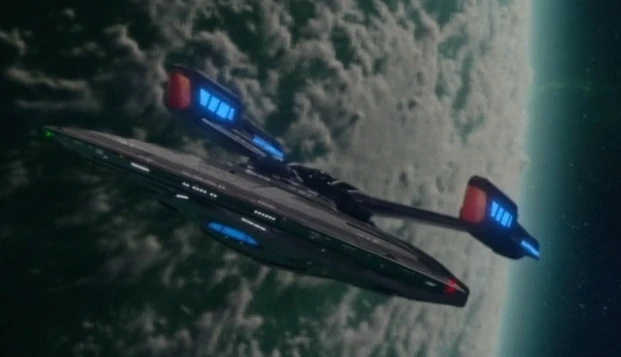 Mid-model Starship
Echelon class
Hull Specifications LoggedThe Echelon-class was a type of Federation starship operated by Starfleet during the early 25th century. These vessels were classified as mid-model starships, notable for their traceable payload. This unique characteristic meant that the impact of their weapons fire left a residual ionic energy signature, which could be utilized to track their targets. Visually, the Echelon-class bore a close resemblance to the Sagan-class starship, distinguishing itself primarily by the absence of the lower pair of warp nacelles found on the Sagan-class. The class measures 516.3 meters in length. **Class History** The Echelon-class was actively in service by 2401. In that year, two ships of the class, the USS Cole (NCC-97938) and the USS Sternbach (NCC-97942), were dispatched on a critical mission to track down the missing USS Titan (NCC-80102-A). This pursuit was initiated after the crew of the USS Titan (NCC-80102-A) uncovered a significant Changeling plot within Starfleet, as depicted in the episode 'The Bounty'. Later in 2401, a substantial contingent of thirteen Echelon-class starships participated in the Frontier Day fleet maneuvers. These maneuvers were organized to commemorate 250 years since the Enterprise (NX-01) embarked on her first voyage. However, the celebration was tragically interrupted when officers under the age of 25 were biologically assimilated by the Borg, a process facilitated by Jack Crusher. These commandeered Echelon-class ships, along with other Starfleet vessels, were subsequently left abandoned in Earth orbit following the successful liberation of the assimilated officers, an event chronicled in the episodes 'Võx' and 'The Last Generation'. Other named ships of the class include the USS Minor (NCC-97452) and the USS Yorktown (NCC-97422), both active in 2401.
- No armament data logged.
- No propulsion data logged.
Echo One
Class: Subspace amplifier- No armament data logged.
- No propulsion data logged.
Echo Three
Class: Subspace amplifier- No armament data logged.
- No propulsion data logged.

Echo Two
Class: Subspace amplifier- No armament data logged.
- No propulsion data logged.
 Classified
Edison class
1 VesselThe Edison-class was a type of Federation starship operated by Starfleet during the early 25th century. It bore a strong resemblance to the 23rd century Hoover-class, but incorporated components and technology from more recent designs. The class's visual design originated in the 25th century-set game Star Trek Online, debuting in July 2019. It was initially conceived by the game's starship designer Hector Ortiz as a cosmetic 'skin' for the 23rd century Hoover-class starship, which itself was designed by John Eaves. The Hoover-class included the USS Edison, which appeared in the episode 'Battle at the Binary Stars'. Tobias Richter constructed the CGI model for the Edison-class for in-game use, having previously done so for the Hoover-class. This apocryphal class later received its own feature in Eaglemoss' non-canon Star Trek Online Starships Collection in August 2021. For its transition into onscreen canon, Richter's game version of the model was selected, most likely as a courtesy to game developer Cryptic Studios, which had contributed digital files for many Starfleet models seen in Star Trek: Picard season two and season three episodes. The model was then handed over to the franchise's own visual effects (VFX) department of Star Trek: Picard, where VFX Supervisor Jason Zimmerman and VFX Production Manager Shawn Ewashko oversaw the necessary modifications for its onscreen appearance, while retaining its in-game livery. The name of the class was confirmed by Star Trek: Picard Production Designer Dave Blass. **Service History** The Edison-class played a significant, albeit tragic, role during the Frontier Day celebrations in the early 25th century. Twenty-two ships of this class participated in the fleet formation near Sol Station. Along with the rest of the assembled Starfleet vessels, these ships were seized by the Borg Collective. This occurred after their younger crews were assimilated by a Borg signal transmitted via Jack Crusher, an event depicted in the Star Trek: Picard episode 'The Last Generation'. The total number of Edison-class vessels present at Frontier Day was established by Star Trek: Picard Research Assistant Jörg Hillebrand. **Named Vessels** One known vessel of the Edison-class is the USS Harlan, registry NCC-52277, which was active in 2401.
- • Phase
- • Photon torpedo
- • Deflector shield
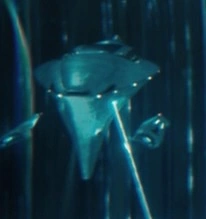 Classified
Eisenberg class
2 VesselsThe Eisenberg-class was a type of Federation starship operated by Starfleet, active from the 31st century into the 33rd century. Its primary hull featured a distinctive tapered, upward-sloping shape, complemented by two disconnected warp nacelles, a design characteristic of Starfleet vessels from this era. The class was designed by Ryan Dening, with assistance from Lee Fitzgerald of North Front Studio design company, and was named in tribute to Aron Eisenberg, the actor who portrayed Nog on Star Trek: Deep Space Nine, a tribute personally requested by showrunner Alex Kurtzman. **Class History** In 3069, the Eisenberg-class suffered significant losses during the catastrophic event known as The Burn. Many ships of this class with active warp cores were destroyed when their dilithium became inert, leading to antimatter explosions across the Federation fleet, as depicted in the episode 'People of Earth'. Despite these losses, the class remained in service. By 3189, the Eisenberg-class continued to be a vital component of Starfleet. The Federation fleet at Federation Headquarters, which included the USS Nog, an Eisenberg-class starship, utilized the collective energy of its vessels to sustain a powerful distortion field, effectively concealing the headquarters' location, as seen in 'Die Trying'. The USS Nog, registry NCC-325070, was specifically named after Aron Eisenberg's character. In 3190, following the theft of the Federation's only prototype of a second-generation spore drive by Cleveland Booker and Ruon Tarka, Fleet Admiral Charles Vance issued orders to scramble all available ships, including Eisenberg-class vessels and shuttles, to track down the perpetrators, an event detailed in 'All In'. The class continued its active service into the 33rd century, with dozens of Eisenberg-class starships participating in a ceremonial honor-formation at Federation Headquarters. This formation marked the launch of Zora and the USS Discovery's Red Directive mission, a significant event highlighted in the episode 'Life, Itself'. **Ships Commissioned** Notable ships of the Eisenberg-class include the USS Horizon (active in 3195), the USS Nog (NCC-325070, active in 3190), the USS Cuyahoga (active in 3190), and the USS Hansando (NCC-325072, active in 3189). Apocryphal sources also list the USS Grechko (NCC-325071) as a member of this class.
- No armament data logged.
- No propulsion data logged.
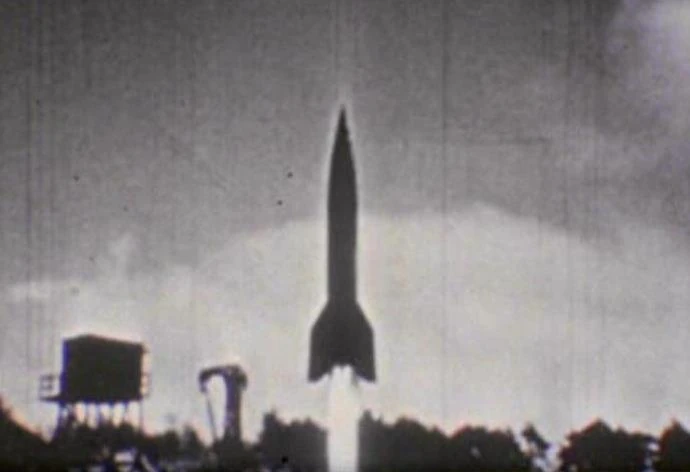 Thermonuclear Missile
Ekosian missile Class
Hull Specifications LoggedEkosian missiles were a class of thermonuclear missiles developed and utilized by the Ekosian Nazi party on the planet Ekos. These unmanned spacecraft were propelled by chemical reaction power and equipped with sophisticated detection devices, allowing them to intercept targets. Notably, the technology incorporated into these missiles, particularly their detection systems and thermonuclear warheads, was considered generations ahead of Ekos's reported technological level, suggesting external influence or rapid, focused development under the Ekosian Nazi party regime. **Class History** In 2268, an Ekosian missile was launched against the USS Enterprise (NCC-1701) after the starship was detected approaching Ekos. The missile, initially misidentified as a Zeon ship, was quickly determined to be a small rocket. Despite its advanced components, the missile was easily destroyed by the USS Enterprise's phasers at a range of less than two thousand kilometers. Following this encounter, the USS Enterprise (NCC-1701) positioned itself in a high orbit to avoid further detection by Ekosian sensors. Although only a single missile was launched and swiftly neutralized, Ekosian propaganda, disseminated by an Ekosian newscaster, falsely reported that 'the Führer's Ekosian Chancellery headquarters reports repulsing an attack by Zeon spacecraft. Our missiles utterly destroyed the enemy,' as depicted in the episode 'Patterns of Force'.
- No armament data logged.
- No propulsion data logged.

El-Baz
Class: Type 15 shuttlepod- No armament data logged.
- No propulsion data logged.
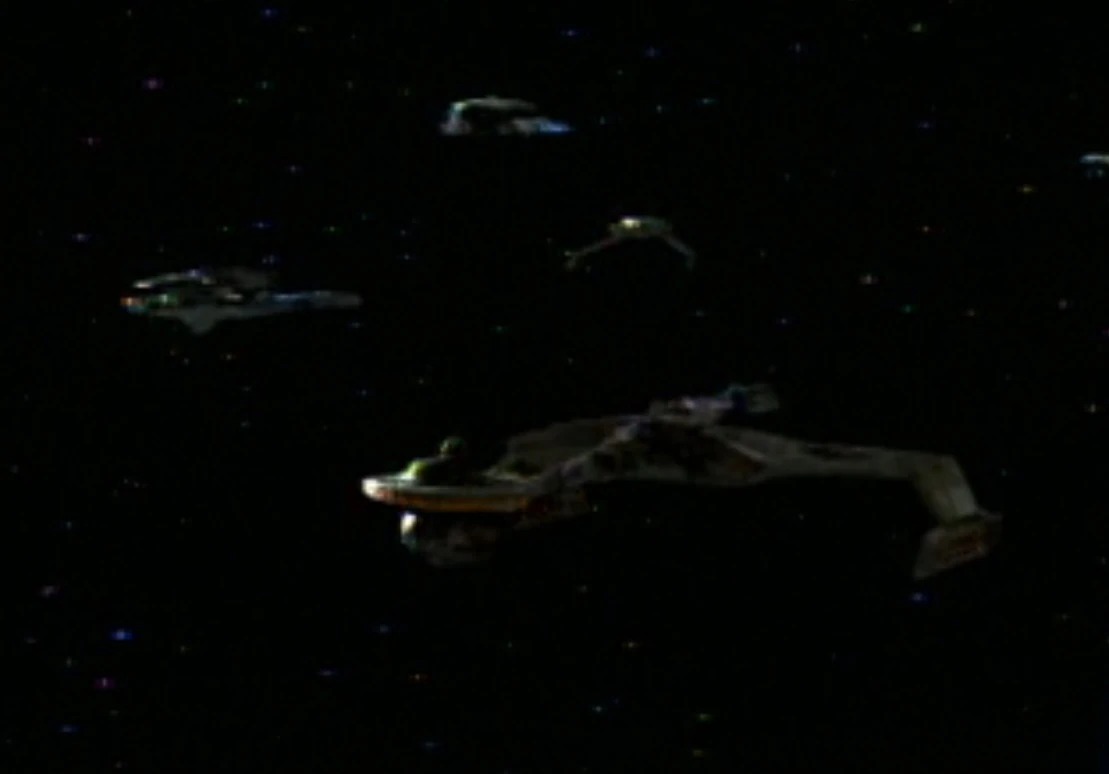 Classified
Elkins type
Hull Specifications LoggedThe Elkins type was a preliminary designation for a group of Federation starships that saw service during the Dominion War. This class is characterized as an Intrepid-class variant, incorporating a standard Intrepid-class saucer section. This saucer is uniquely attached to a larger, more substantial secondary hull. For propulsion, the design utilizes two Miranda-class nacelles, which are affixed to prominent wing-like pylons extending from the aft center of the secondary hull and slung downwards. According to the Star Trek: Deep Space Nine Technical Manual, the Elkins type is classified as a medium cruiser. **Production & Specifications** Production of the Elkins type was based at the ASDB Integration Facility, located within McKinley Orbital Spacedock orbiting Earth. The power plant for these vessels consists of one 1,500+ Cochrane warp core, which feeds the two primary nacelles, supplemented by two impulse systems. The class is designed to accommodate a crew complement of 225 officers and crew. Physically, the Elkins type measures 444.39 meters in length, 155.44 meters in beam (width), and 87.78 meters in height, with a total mass of 1,300,000 metric tons. **Class History** The Elkins type was actively deployed by Starfleet during the 2370s, specifically playing a role in the Dominion War, as depicted in the Star Trek: Deep Space Nine episode 'A Time to Stand'. The only known named vessel of this type is the USS Elkins, bearing the registry NCC-74121, which was noted as active in 2374. The class designation itself is based on this sole known vessel.
- No armament data logged.
- No propulsion data logged.
Medium cruiser
Elkins type
1 VesselThe Elkins type was a preliminary designation for a group of Federation starships that saw active service during the Dominion War. This classification was in use during the 2370s, with at least one known vessel, the USS Elkins (NCC-74121), being active in 2374. The class designation itself is derived from the name of this prominent starship. **Design & Specifications** The Elkins type was designed as a variant of the Intrepid-class, incorporating a standard Intrepid-class saucer section. This primary hull component was then attached to a significantly larger and bulkier secondary hull. For propulsion, the Elkins type utilized two Miranda-class nacelles, which were mounted on large, wing-like pylons extending from the aft center of the secondary hull and slung downwards. According to the Star Trek: Deep Space Nine Technical Manual, the Elkins type is classified as a medium cruiser. Its production base was the ASDB Integration Facility at McKinley Orbital Spacedock, located in orbit around Earth. The vessel was designed to accommodate a crew complement of 225 officers and crew. Its power plant consisted of one 1,500+ Cochrane warp core, feeding the two nacelles, complemented by two impulse systems. The dimensions of the Elkins type are 444.39 meters in length, 155.44 meters in beam (width), and 87.78 meters in height, with a total mass of 1,300,000 metric tons. **Service History** The Elkins type was operated by Starfleet under the ownership of the United Federation of Planets. Its active service period is noted as the 2370s, coinciding with the Dominion War. The USS Elkins (NCC-74121) is the only known named vessel of this type and was active in 2374, as depicted in the episode 'A Time to Stand'.
- No armament data logged.
- No propulsion data logged.
 Classified
Emmette type
Hull Specifications LoggedThe Emmette-type was a foundational starship design, primarily operated by Earth and later by the Terran Empire. Its propulsion system was characterized by distinctive rocket-like nozzles located on the aft section of the vessel. This design aesthetic and technological approach would later serve as an inspiration for the Warp Delta type starships, which saw service in both the prime and mirror universes. The initial model and sequence for the Emmette-type were constructed by Foundation Imaging. For its appearance in the episode 'In A Mirror, Darkly, Part II', the design was modified by Foundation's successor, Eden FX. According to Issue #124 of 'Star Trek: The Official Starships Collection', the Emmette-type was predominantly utilized as a test vehicle. These vessels measured approximately 130 meters in length and were designed to accommodate a relatively small crew complement of 20 to 30 individuals. Their maximum speed capabilities ranged between Warp factor 1 and Warp factor 2. **Service History** The Emmette-type starships were active in the era preceding the development and deployment of the NX-class of starships. In the mirror universe, these vessels were notably equipped with photonic torpedoes. An Emmette-type starship was observed firing these weapons at the lunar surface during the opening credits of 'In A Mirror, Darkly, Part II'. As warp technology advanced, Starfleet eventually replaced the Emmette-type with the more sophisticated Warp Delta type starships. Known vessels of this class include the SS Emmette and an unnamed Emmette-type starship.
- • Photon torpedo (Qty: mirror universe)
- No propulsion data logged.
 Classified
Engle class
2 VesselsThe Engle-class was a type of Federation starship that saw service during the 2250s. Its design lineage can be traced to the Enterprise NX-class, incorporating several similar elements such as the saucer design and the deflector dish. The class was identified and named by designer John Eaves. Early concept art and Computer-Generated Imagery models for this class were initially designated as the Saturn-class, with one notable vessel being the USS Chaffee (NCC-3567). The class name itself is believed to be a tribute to test pilot and astronaut Joe Engle, who famously test-flew the NASA-Air Force X-15 rocket airplane and the space shuttle Enterprise, and later commanded the space shuttle Columbia. **Class History** The Engle-class was actively in service prior to 2256. In that pivotal year, two ships of this class, the USS T'Plana-Hath (NCC-1004) and the USS Earhart, played a role in the Battle of the Binary Stars against the Klingons. This engagement marked the commencement of the Federation-Klingon War (2256-57). During the battle, the USS T'Plana-Hath was destroyed. The USS Earhart, however, remained active. The Engle-class has been depicted in Star Trek: Discovery, appearing in the episode 'Battle at the Binary Stars', and its display graphics were also seen in 'Lethe' and 'Si Vis Pacem, Para Bellum'.
- • Phase
- • Deflector shield
 Scout / Patrol
Enolian patrol ship Class
Hull Specifications LoggedEnolian patrol ships were a class of heavily armed vessels specifically designed for patrol duty, primarily utilized by the Enolian Guard during the mid-22nd century. These ships were equipped with particle weapons, making them formidable assets for enforcing Enolian jurisdiction and maintaining security within their controlled space. **Class History** In 2152, a vessel of this class gained notoriety when it intercepted *Shuttlepod 1* as the shuttlepod was departing the orbit of Keto-Enol. The patrol ship's crew discovered what they believed to be contraband aboard, leading to the apprehension of the shuttlepod's occupants, Jonathan Archer and Trip Tucker. This incident highlighted the Enolian Guard's strict enforcement protocols. Later, after it was determined that Jonathan Archer and Trip Tucker had been taken captive accidentally, an Enolian official suggested deploying patrol ships to intercept the *Enolian transport* that was carrying them. This was proposed because the patrol ships were several hours closer to the transport's position than the Starfleet vessel *Enterprise* was. Two Enolian patrol ships subsequently engaged the *Enolian transport*, nearly disabling it. However, they were ultimately lured into a trap and disabled themselves during the confrontation, as depicted in the episode 'Canamar'. This event demonstrated both the tactical capabilities and vulnerabilities of the Enolian patrol ship class.
- • Particle weapo
- No propulsion data logged.
 Transport / Freighter
Enolian prison transport Class
Hull Specifications LoggedThe Enolian prison transport was a specialized starship class utilized by the Enolian Guard for the purpose of relocating groups of prisoners to various penal colonies, such as Canamar, from their homeworld of Keto-Enol. This necessity arose due to the rampant crime prevalent within the Enolian star system. The design featured a distinctive long, spindly frame, equipped with at least one docking hatch located on the port side. Propulsion was provided by two impulse engines, arranged vertically on the vessel. The class was crewed by a minimal complement of three Enolian Guard officers, typically consisting of a pilot and two security officers. A critical defensive feature of these transports was their heavy shielding, specifically engineered to block transporter technology, thereby preventing unauthorized ingress or egress. While lightly armed with particle weapons, the Enolian prison transport was not designed for direct combat engagements and would prove vulnerable against dedicated warships, such as two Enolian patrol ships. According to the script for the episode 'Canamar', the vessel was described as a medium-sized starship, approximately one-third the size of an NX-class starship, appearing rugged and space-worn with a surface pitted and scarred from years of service. Its cockpit was a cramped flight deck, as rough and worn as the exterior, featuring small viewports, a single seat, and controls distinct from those found on an NX-class vessel. A wall-mounted rack was present for storing a shotgun-weapon. Access to the main cabin was via a reinforced cockpit hatch. The main cabin itself was characterized as a dingy, claustrophobic compartment, resembling little more than a grimy cargo hold, with multiple rows of metal benches. Notably, the cockpit of the Enolian prison transport was a reuse of the Class 2 shuttle set from Star Trek: Voyager. **Class History** In 2152, an Enolian prison transport gained notoriety when it was carrying a diverse group of prisoners, including Kuroda Lor-ehn, Zoumas, Starfleet's Captain Jonathan Archer, and Commander Charles Tucker III, en route to Canamar. During the journey, Kuroda Lor-ehn, aided by a Nausicaan, successfully overtook the Enolian Guard officers and commandeered the vessel. With the original pilot incapacitated, Captain Jonathan Archer was compelled to fly the ship towards the trading outpost of Tamaal, as dictated by the hijackers. En route to Tamaal, the transport was intercepted and damaged by two pursuing Enolian patrol ships. Captain Jonathan Archer ingeniously devised a method to release and detonate warp plasma, effectively disabling the patrol ships. Subsequently, the transport rendezvoused with an Enolian shuttle, which, unbeknownst to the hijackers, was carrying a Starfleet crew. The prisoners managed to evacuate the compromised transport, but Kuroda Lor-ehn chose to remain aboard, attempting to save the ship from its decaying orbit. His efforts were unsuccessful, and he perished when the vessel burned up upon reentry into the planet's atmosphere. These events were chronicled in the Star Trek: Enterprise episode 'Canamar'. The scripted destruction of the transport, intended to be shown on screen, was ultimately edited out of the final episode, a decision influenced by the real-world disintegration of the space shuttle orbiter STS-107 during reentry into Earth's atmosphere, as documented in the reference book 'Beyond the Final Frontier'.
- • Particle weapo
- No propulsion data logged.
 Runabout / Utility
Enolian shuttle Class
Hull Specifications LoggedThe Enolian shuttle was a compact shuttlecraft design employed by certain Enolians during the mid-22nd century. Notably, this particular class of shuttle was not utilized by the Enolian Guard, suggesting a distinction in operational roles or perhaps a civilian-oriented design. Despite its small size, the Enolian shuttle was equipped with warp drive capabilities, allowing for interstellar travel. For defensive and offensive purposes, it featured both fore and aft particle cannons, providing a measure of protection and combat readiness. The shuttle was designed to accommodate a significant number of occupants, capable of holding at least sixteen individuals, making it suitable for transport missions. **Class History** One notable instance of an Enolian shuttle's involvement in a significant event occurred in 2152, as documented in the Starfleet record 'Canamar'. The Enolian criminal Kuroda Lor-ehn, prior to his capture, orchestrated a plan involving one of these shuttles. His intention was for the shuttle to rendezvous with him at Tamaal, a location on the fourth planet of a binary star system. Kuroda's scheme involved commandeering the Enolian prison transport on which he was being held, boarding the waiting shuttle at Tamaal, and then leaving the prison transport in a decaying orbit within the planet's atmosphere, thereby eliminating its remaining occupants. However, en route to its destination, the Enolian shuttle was intercepted by the Starfleet vessel *Enterprise* (NX-01). The commanding officer of *Enterprise* (NX-01), Jonathan Archer, and its chief engineer, Charles Tucker III, were coincidentally aboard the very prison transport Kuroda intended to destroy, having been falsely arrested. The crew of *Enterprise* (NX-01) successfully captured the Enolian shuttle, replacing its original crew of four Enolians with Starfleet personnel. This allowed the Starfleet crew to proceed with the rendezvous at Tamaal as planned by Kuroda. Although Kuroda Lor-ehn managed to capture the prison transport and arrive at Tamaal, his elaborate plans began to unravel when he docked with the shuttle and Starfleet officers began boarding the transport. The crew and prisoners from the transport were safely transferred aboard the Enolian shuttle, with the exception of Kuroda Lor-ehn himself, who chose to remain on the prison transport as its orbit decayed, rather than face return to Canamar. The Enolian shuttle successfully undocked from the doomed transport before its destruction. Following these events, the Enolian shuttle later docked with *Enterprise* (NX-01), facilitating the return of the Starfleet crew to their own vessel.
- • Particle weapo
- No propulsion data logged.

Enterprise (frigate)
Class: Frigate- No armament data logged.
- No propulsion data logged.

Enterprise (NX-01)
Class: NX class- • 6x spatial torpedo
- • Phase canno
- + 3 more...
- • Warp facto
- • Polarized hull plating

Enterprise (NX-01)
Class: NX-class (refit)- No armament data logged.
- No propulsion data logged.

Enterprise history
Class: Unknown- No armament data logged.
- No propulsion data logged.

Enterprise history
Class: Unknown- No armament data logged.
- No propulsion data logged.
 Transport / Freighter
Erewon class
Hull Specifications LoggedThe Erewon-class was a type of Federation civilian personnel transport designed with the versatility to also function as a colony ship. These vessels were notably larger than many contemporary craft, approximately four times the size of a Danube-class runabout, indicating a significant capacity for passengers and cargo. Operated primarily during the 24th century, the class served a vital role in civilian logistics and potential colonization efforts within the United Federation of Planets. **Service History** Starfleet personnel, such as Benjamin Sisko, were familiar with the Erewon-class, suggesting its widespread use and recognition throughout the Federation. One notable vessel of this class was the SS Santa Maria, bearing the registry BDR-529. In 2370, Benjamin Sisko encountered the cannibalized hulk of the SS Santa Maria, which had been salvaged for components sometime in the 2360s. This encounter took place when he viewed the structure known as 'the Cabin' during the events depicted in the episode 'Paradise'. The fate of the SS Santa Maria highlights the lifecycle of these civilian vessels, which, after years of service, could be repurposed or dismantled for their valuable components.
- No armament data logged.
- No propulsion data logged.

Erstwhile
Class: Class 9 cargo vessel- No armament data logged.
- • 0.02c (Qty: original)
- • Warp facto (Qty: upgraded)
- + 1 more...
 Classified
Excelsior class
23 VesselsThe Excelsior-class was a pivotal type of Federation starship utilized by Starfleet from the late 23rd century through the late 24th century, establishing itself as the backbone of the fleet for over a century. Its initial construction commenced in the early 2280s at Starfleet's San Francisco Fleet Yards orbiting Earth. Starfleet harbored significant expectations for the prototype vessel of this class, the USS Excelsior (NX/NCC-2000), which was famously equipped with a revolutionary transwarp drive system. This ambitious endeavor was heralded as 'the Great Experiment' of its era, aiming to redefine interstellar propulsion. Despite the ultimate failure of the transwarp drive experiment, Starfleet remained committed to the fundamental Excelsior design. After a period in Spacedock One until at least 2287, the prototype USS Excelsior was recommissioned for active service by 2290, having been refitted with a more conventional warp drive. The class's enduring legacy was solidified in 2293 with the launch of the USS Enterprise (NCC-1701-B), which adopted the Excelsior design. This decision, though initially controversial due to the prototype's propulsion issues, was driven by the compelling economics and proven engineering of the basic spaceframe, paving the way for the Excelsior-class to become one of Starfleet's most ubiquitous and long-serving designs, extending its operational life well into the late 24th century. **Class History** Once fully integrated into the fleet, Excelsior-class starships undertook a diverse array of mission profiles. These ranged from deep space exploration and terraforming missions to routine patrol duty, courier services, and transport runs. The class also frequently served as personal flagships for Starfleet flag officers, underscoring its versatility and reliability. Excelsior-class vessels were prominent in several critical Federation engagements. They participated in the Borg invasion of 2366-2367, notably at the Battle of Wolf 359, and later against the Borg sphere that entered the Sol system in 2378. During the Dominion War, these ships saw extensive action, including Operation Return, the First and Second Battles of Chin'toka, and the climactic Battle of Cardassia. Many Excelsior-class vessels were strategically stationed on the front lines near Deep Space 9 throughout the conflict. Notable ships of the class included the USS Melbourne, which underwent significant repairs at Starbase 74 in 2364, and the USS Hood (Excelsior class), which received a major system upgrade at Starbase 174 in 2367. The USS Lakota (NCC-42768) was a variant that received significant upgrades to compete with newer designs like the Defiant-class. **Legacy** The Excelsior-class maintained its active service status into the 2380s, a testament to its robust design and adaptability. By 2401, a direct successor, the Excelsior II-class, had entered service, continuing the lineage. The detailed schematics and specifications of the Excelsior-class were preserved in historical databases, with records of the class being accessible even in the 31st century. For instance, Captain Jonathan Archer and Lieutenant Malcolm Reed viewed schematics of the class in the 22nd century while accessing the database of temporal agent Daniels, highlighting its enduring historical significance. **Technical Specifications - Physical Arrangement** The Excelsior-class adhered to the conventional Starfleet layout, featuring a distinct saucer section, an engineering section, and twin warp nacelles. However, it introduced a more streamlined and aesthetically refined design compared to earlier classes. A notable design feature of the primary hull was a docking port situated on the port side. **Technical Specifications - Design Upgrades** Following its initial, somewhat challenging origins, the Excelsior-class underwent a minor refit. This included the installation of a new bridge module, a substantial modification to the aft portion of the saucer section surrounding the impulse drive, and an alteration to the cargo bay on the aft ventral section of the ship. This configuration became the standard for the class throughout much of its service. Less than a decade later, with the launch of the USS Enterprise (NCC-1701-B), the Excelsior design received a second, more significant overhaul. While retaining the core aesthetic, this new configuration incorporated several modifications, such as the addition of a second pair of impulse engines, an expanded scoop surrounding the deflector dish, and various adjustments to fins on the saucer and nacelles. As the class aged, Starfleet continuously integrated the latest technology through ongoing upgrades, refits, and repairs, extending its operational viability well into the 2360s and 2370s. **Technical Specifications - Tactical Systems** The original Excelsior design was equipped with Type 8 phaser emitters, arranged in five dual phaser bank emplacements on the forward saucer section and one dual emplacement on the aft. Additional phaser banks were positioned laterally on the port and starboard sides, near the junction of the primary and secondary hulls, and one emplacement was located between the nacelles. The class also featured multiple photon torpedo launchers; two primary launchers were situated in the forward section on either side of the deflector dish, with upper forward launchers on the neck section, and aft launchers located above the main shuttlebay. The Excelsior-class's deflector shields were notably robust, capable of withstanding a direct photon torpedo strike without visible hull damage. In 2372, facing the growing Dominion threat, Starfleet experimented with a significant refit on the USS Lakota, which included improved phaser emplacements and the addition of quantum torpedoes, aiming to enhance its combat competitiveness against newer designs like the Defiant-class. **Technical Specifications - Propulsion Systems** Initially, the USS Excelsior was conceived around the radical transwarp drive principle. Despite the awe it inspired, traditional engineers harbored skepticism, which proved justified when the system failed. After two years in spacedock, the USS Excelsior was refitted with a conventional warp drive. By the early 24th century, Excelsior-class vessels were typically equipped with dilithium recompositing and recrystallization technology. While the theta-matrix compositor of that era later became outdated, it was upgraded by the time the Galaxy-class was introduced, with the new recrystallization process being ten times more efficient. The Excelsior-class also utilized micro-power relays within its warp core matrix compositor. Although maximum warp speed was never definitively established on screen, references suggest the class was capable of high warp factors, with Captain Hikaru Sulu once ordering the USS Excelsior to warp 9 to reach Khitomer. **Technical Specifications - Interior Design** The main bridge, located atop the primary hull, served as the central command center, overseeing all primary mission operations and coordinating departmental activities. Due to the class's longevity and numerous configurations, bridge layouts varied between ships. Many Excelsior bridges featured a large engineering master systems display monitor on the aft wall, a feature added after the USS Excelsior's initial configuration and shared with the USS Enterprise (NCC-1701-B). At least one vessel, the USS Malinche, was equipped with a holo-communicator on its main bridge by 2373, allowing Captain Sanders to communicate with Captain Benjamin Sisko on the USS Defiant (2370). Adjacent to the bridge was the captain's ready room, furnished with a desk, chair, personal viewer, LCARS interfaces, and an MSD. Ensign Nog once recounted to Chief Miles O'Brien how Al Lorenzo would take holophotos behind famous captains' desks, including Captain Robert DeSoto's on the USS Hood. The deflector room, located on Deck 15, Section 21-alpha, was a small control room directly behind the navigational deflector dish, housing consoles and deflector relays. The class featured several cargo bays, including one in the aft dorsal section of the secondary hull and others along the ventral section. The main shuttlebay, located in the stern, housed various shuttlecraft, such as the Type 7 shuttlecraft. Senior officers, like Captain Hikaru Sulu, had private quarters, with Sulu's located on Deck 3. Enlisted crew, junior officers, and other officers typically shared quarters and bunk areas, accommodating between four and nine occupants, as seen in the quarters of Lawrence H. Styles and Tuvok aboard the USS Excelsior.
- • Phase
- • Photon torpedo
- + 1 more...
- • Deflector shield
Explorer
Excelsior class
3 VesselsThe 'Excelsior'-class was a highly successful and enduring type of Federation starship operated by Starfleet, serving from the late 23rd century well into the late 24th century. Renowned for its longevity, it became the backbone of Starfleet for over a century, establishing itself as one of the fleet's most recognizable and longest-serving starship designs. Its robust and adaptable framework allowed it to remain relevant through numerous technological advancements and major galactic conflicts. **Design & Development** Initial construction of the 'Excelsior'-class began in the early 2280s at Starfleet's San Francisco Fleet Yards orbiting Earth. The prototype, USS Excelsior (NX-2000), was heralded as 'the Great Experiment' due to its revolutionary transwarp drive. However, this ambitious propulsion system proved unsuccessful during its trial runs. Following the failure of the transwarp drive, the USS Excelsior (NX-2000) remained in Spacedock One until at least 2287, after which it was refitted with a conventional warp drive and recommissioned for active service by 2290. The 'Excelsior' design underwent a minor refit, which included a new bridge module, significant modifications to the aft portion of the saucer section surrounding the impulse drive, and an alteration to the cargo bay on the aft ventral portion of the ship. This configuration became the standard for the class throughout much of its service. Less than a decade later, a second, more significant overhaul was introduced with the launch of the USS Enterprise (NCC-1701-B) in 2293. While retaining the core design, this variant featured additional impulse engines, an expanded scoop surrounding the deflector dish, and various modifications to fins on the saucer and nacelles. These additional impulse engines were intended to provide stronger power, particularly for saucer separation, a feature indicated by the inclusion of a battle bridge on the USS Enterprise (NCC-1701-B)'s Master Systems Display. As the class aged, Starfleet continuously integrated the latest technology through ongoing upgrades, refits, and repairs, extending its operational lifespan well into the 2360s and 2370s. For instance, the USS Melbourne (NCC-62043) underwent significant repairs at Starbase 74 in 2364, and the USS Hood (NCC-42296) received a major system upgrade at Starbase 174 in 2367. In 2372, facing the impending threat of the Dominion, Starfleet experimented with a specialized refit for the USS Lakota (NCC-42768), which included improved phaser emplacements, quantum torpedoes, and other enhancements to bolster its competitiveness against newer designs like the Defiant-class. **Service History** After its initial challenges, the 'Excelsior'-class quickly became one of Starfleet's most widely utilized designs. The launch of the USS Enterprise (NCC-1701-B) in 2293 solidified the class's future, ensuring its widespread deployment. 'Excelsior'-class starships were employed across a diverse range of mission profiles, from deep space exploration and terraforming missions to patrol duty, courier services, and transport runs. Many Starfleet flag officers also favored 'Excelsior'-class vessels as their personal flagships, including Captain Robert DeSoto of the USS Hood (NCC-42296) and Captain Benteen of the USS Lakota (NCC-42768). The class played a crucial role in several major Federation engagements. During the Borg invasion of 2366-2367, 'Excelsior'-class vessels participated in the devastating Battle of Wolf 359. They were also present during the engagement against the Borg sphere that entered the Sol system in 2378. Throughout the Dominion War, 'Excelsior'-class starships saw extensive action, including Operation Return, the First Battle of Chin'toka, the Second Battle of Chin'toka, and the decisive Battle of Cardassia. Many vessels of this class were strategically stationed on the front lines near Deep Space 9 during the conflict. **Technical Specifications** The 'Excelsior'-class featured the classic saucer section-engineering section-warp nacelle layout common to most Starfleet vessels, but with a more streamlined design than its predecessors. The primary hull included a docking port located on the port side. Tactical systems comprised Type 8 phaser emitters, arranged in five dual emplacements on the forward saucer, one dual emplacement on the aft saucer, lateral emplacements near the primary and secondary hull junction, and one between the nacelles. The class was also equipped with multiple photon torpedo launchers, including two primary forward launchers, upper forward launchers in the neck section, and aft launchers above the main shuttlebay. Its deflector shields were notably robust, capable of withstanding a direct photon torpedo strike without visible hull damage. The USS Lakota (NCC-42768) variant was further upgraded with quantum torpedoes. Propulsion, after the transwarp drive failure, relied on conventional warp drive and impulse engines. By the early 24th century, 'Excelsior'-class vessels incorporated dilithium recompositing and crystal recrystallization technology, utilizing micro-power relays in their warp core matrix compositor. The theta-matrix compositor of the time, though later superseded by more efficient designs like that of the Galaxy-class, was a standard feature. **Interior Design** The main bridge, located on top of the primary hull, served as the central command center. Due to the class's long service and numerous refits, bridge configurations varied significantly between ships. Many 'Excelsior' bridges featured a large engineering master systems display monitor on the aft wall, a feature shared by the USS Excelsior (NCC-2000) and USS Enterprise (NCC-1701-B). Adjacent to the bridge was the captain's ready room, furnished with a desk, chair, personal viewer, LCARS interfaces, and an MSD. Examples include the ready rooms of Captain Robert DeSoto on the USS Hood (NCC-42296) and Captain Benteen on the USS Lakota (NCC-42768). The USS Malinche (NCC-42111) notably featured a holo-communicator on its bridge by 2373, allowing Captain Sanders to communicate visually with Captain Benjamin Sisko aboard the USS Defiant (2370). Below decks, the deflector room, located on Deck 15, Section 21-alpha, was positioned directly behind the navigational deflector dish, housing control consoles and deflector relays. The 'Excelsior'-class also featured several cargo bays, including one in the aft dorsal section of the secondary hull and others along the ventral section. The main shuttlebay, located in the stern, housed various shuttlecraft, such as the Type 7 shuttlecraft. Accommodations varied, with senior officers like Captain Hikaru Sulu having private quarters on Deck 3, while enlisted crew, junior officers, and officers typically shared bunk areas designed for four to nine occupants, as seen in the quarters of Lawrence H. Styles and Tuvok aboard the USS Excelsior (NCC-2000). **Legacy** The 'Excelsior'-class remained in active service into the 2380s, a testament to its robust design and adaptability. By 2401, a numbered successor, the Excelsior II-class, was in service. The prototype USS Excelsior (NCC-2000) was retired and preserved at the Fleet Museum by 2401. Details of this venerable class were retained in Starfleet's historical databases, with schematics viewed by Captain Jonathan Archer and Lieutenant Malcolm Reed in the 22nd century while accessing the database of temporal agent Daniels.
- No armament data logged.
- No propulsion data logged.
 Classified
Excelsior II class
1 VesselThe Excelsior II-class was a Federation starship class introduced prior to 2401, serving as a successor to the highly successful Excelsior-class, which had been in service for well over 100 years. Much like its predecessor, the Excelsior II-class featured the standard Starfleet saucer section, engineering section, and warp nacelle layout. However, its saucer section was notably elongated into an oval shape, and the nacelle struts, while still angled, featured distinct tapers in opposite directions for each section of the strut. The interior design of the Excelsior II-class incorporated brushed metal and dark aesthetics, typical of newer Starfleet vessels of the period, including the Sagan-class, Constitution III-class, and Odyssey-class. The main bridge featured a layout consistent with these contemporary designs, characterized by large Library Computer Access and Retrieval System (LCARS) panels lining the side and aft walls. By 2401, the computer systems on board the class were advanced enough to include the Fleet formation mode, also known as Starfleet emergency protocol NX12.11, a system designed to place all Federation starships within a fleet under the automated control of the Starfleet mainframe. **Class History** The Excelsior II-class entered service with Starfleet by the early 25th century. In 2401, the USS Excelsior (NCC-42037), a vessel of this class, was part of a fleet led by the USS Stargazer (NCC-82893) to confront a Borg faction. During this critical mission, Cadet Elnor and Commander Raffaela Musiker were both assigned to the USS Excelsior (NCC-42037), which played a role in protecting the quadrant from the massive energy released by the opening of a transwarp conduit by an unknown source, as depicted in the episodes 'The Star Gazer' and 'Farewell'. Later in 2401, sixteen ships of the Excelsior II-class participated in the Frontier Day fleet maneuvers, an event celebrating the 250th anniversary of the first voyage of the Enterprise NX. Tragically, these ships were subsequently commandeered after Starfleet officers under the age of 25 were placed under the influence of the Borg, with assistance from the then-assimilated Jack Crusher. During this engagement, at least one ship of the class, the USS Excelsior (NCC-42037), was lost, and many others were left wrecked in orbit following the successful liberation of the fleet, as chronicled in the episodes 'Võx' and 'The Last Generation'. Other named ships of this class include the USS Eureka (NCC-42023) and the USS Mestral (NCC-42027).
- • Phase
- • Photon torpedo
- • Deflector shield
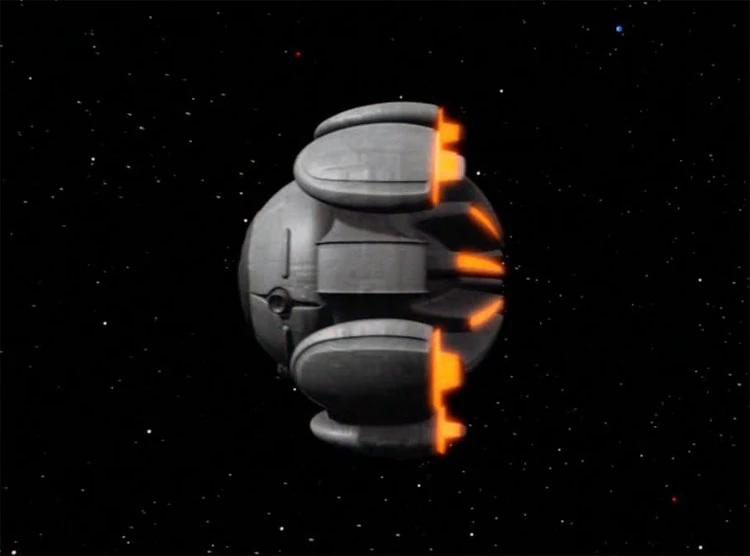 Classified
Eymorg starship Class
Hull Specifications LoggedThe Eymorg starship was a highly advanced vessel operated by the Eymorg civilization from Sigma Draconis VI during the mid-23rd century. Its construction utilized a unique technology, with its origins potentially tracing back as far as 8000 BC. The starship was characterized by its capability for high velocities, primarily driven by an ion propulsion drive. It also incorporated advanced transporter capabilities, allowing for rapid movement of personnel or objects. Designed for minimal crew requirements, the vessel could be operated by a single individual. Early descriptions from the revised final draft script for the episode 'Spock's Brain' characterized the vessel as 'Long, slender, needlelike, alien, almost glowing in the blackness of space.' For the 2007 remastered version of 'Spock's Brain', CBS Digital rendered a new computer-generated model, which significantly overhauled the original design. This updated version abandoned the antiquated rocket-shaped configuration in favor of a smaller, more utilitarian aesthetic, reflecting its single-person occupancy and incorporating elements inspired by modern ion propulsion prototypes. **Service History** The Eymorg starship's most notable encounter occurred in 2268 when an unidentified vessel of this class was detected by the USS Enterprise NCC-1701 outside of the Sigma Draconis system. Chief Engineer Montgomery Scott expressed considerable admiration for its design and technology, stating that its owners 'could teach us a thing or two.' This particular vessel was piloted by Kara, the leader of the Eymorgs, and was dispatched to the USS Enterprise NCC-1701 with the specific mission of retrieving a brain to serve their new Controller. After successfully stunning the crew of the USS Enterprise NCC-1701, Kara removed Spock's brain and departed aboard her starship. The distinctive ion trail left by the Eymorg starship was subsequently utilized by the USS Enterprise NCC-1701's sensors to track its final destination, as depicted in the Starfleet record 'Spock's Brain'.
- No armament data logged.
- No propulsion data logged.
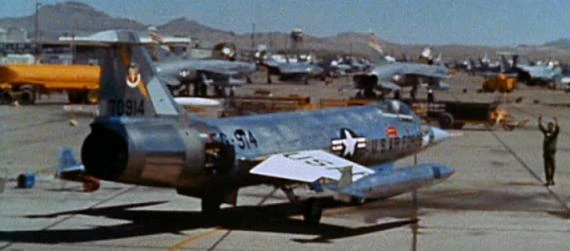 Escort / Warship
F-104 Starfighter Class
Hull Specifications LoggedThe F-104 Starfighter was a type of American interceptor jet utilized by the United States Air Force during the late 1960s. These high-performance aircraft were a staple of Earth's atmospheric defense and reconnaissance capabilities during that era. Their design emphasized speed and maneuverability, making them effective for their designated role as interceptors. **Class History** One notable encounter involving an F-104 Starfighter occurred in 1969, as depicted in the Starfleet historical record 'Tomorrow is Yesterday'. During this incident, Captain John Christopher piloted an F-104, code-named 'Bluejay 4' with Registry FG-914, when he made visual contact with the USS Enterprise (NCC-1701). The advanced starship was perceived by Captain Christopher as an unidentified flying object (UFO) due to its temporal displacement. Other known Starfighters include Serial #70915 (Registry FG-915), Serial #70926 (Registry FG-926), and Serial #70969 (Registry FG-969). The F-104 Starfighter, specifically Registry FG-926 (which was originally the registry for 'Bluejay 4' before a change in the remastered version of 'Tomorrow is Yesterday'), was prominently featured in computer-generated imagery by Douglas E. Graves on the November spread of the 2012 'Star Trek: Ships of the Line' calendar. This iconic scene had been previously depicted by Robert Bonchune for his December spread in the 2003 edition of the same calendar series, though the specific F-104 could not be discerned. Aurore DeBlois also depicted the disintegration of 'Bluejay 4' in the February spread for the 2007 'Star Trek: Ships of the Line' calendar. In commemoration of Star Trek's 50th anniversary in 2016, the model kit company AMT issued a 'Tomorrow is Yesterday' edition (no. AMT953) in its Star Trek model kit line. This 1/48 scaled model of Starfighter FG-914 included a smaller, forced-perspective USS Enterprise model, allowing enthusiasts to recreate the memorable scene from the episode.
- No armament data logged.
- No propulsion data logged.
Escort / Warship
F-105 Thunderchief Class
Hull Specifications LoggedThe F-105 Thunderchief was an American fighter-bomber aircraft utilized by the United States Air Force during the late 1960s. While specific design details are not extensively documented in Starfleet records, its classification as a fighter-bomber indicates a primary role in both air-to-air combat and ground attack missions, characteristic of advanced atmospheric combat vehicles of its era. **Class History** The F-105 Thunderchief was an active component of the United States Air Force's fleet in the 1960s. During an incident involving Captain John Christopher and his F-104 Starfighter, at least two F-105 Thunderchiefs were observed parked at an airbase as Captain Christopher's aircraft was departing. This event was documented in the Starfleet historical record, 'Tomorrow is Yesterday', providing a glimpse into the operational environment of Earth's atmospheric defense forces during that period.
- No armament data logged.
- No propulsion data logged.

Federation attack fighter
Class: Federation attack fighter- • Phase
- • Deflector shield
Academy Flight Trainer
Federation attack fighter Class
1 VesselThe Federation attack fighter is a versatile, small Federation starship class, utilized extensively by civilians, Starfleet, and even Starfleet Academy, where it serves as an Academy flight trainer. Classified by Starfleet as an attack fighter, these vessels gained significant prominence during the Dominion War, as depicted in episodes such as 'Sacrifice of Angels'. Their adaptability allowed them to be modified for various roles, from civilian transport to front-line combat. **Design & Development** Originally conceived for civilian applications, the Federation attack fighter's base design was primarily intended for personnel and cargo transport, featuring only light armaments. Its size is comparable to that of a Starfleet Danube-class runabout. However, the design proved highly adaptable, capable of being significantly upgraded and modified for combat roles. Early combat modifications by the Maquis in 2370 saw these fighters equipped with a diverse arsenal, including Pygorian weapons such as photon torpedoes, pulse cannons, ship-mounted high-energy disruptors, and particle accelerators. Later Maquis versions were armed with photon torpedoes and type 8 phasers. When integrated into Starfleet's tactical fleet from 2374 onward, the attack fighters were typically equipped with several forward torpedo launchers and at least one phaser bank featuring two forward emitters. The cockpit interior of the fighter, first seen in 'The Maquis, Part II', was a modification of the Type 15 shuttlepod set and was later reused to represent the Type 18 shuttlepod cockpit in episodes like 'The Search, Part I', 'The Search, Part II', and 'Destiny'. **Class History** Federation attack fighters were commonly maintained by Federation colonies situated along the Demilitarized Zone, as evidenced in 'Preemptive Strike'. Their first recorded combat deployment occurred in 2370 during the Maquis insurrection against the Cardassian Union. Former Lieutenant Commander Calvin Hudson utilized a pair of these upgraded and armed ships in an attempted attack on a Cardassian weapons depot on Bryma. These vessels were subsequently engaged by three Starfleet Danube-class runabouts, led by Commander Benjamin Sisko, which ultimately forced the Maquis fighters into a strategic retreat, as detailed in 'The Maquis, Part II'. During the Dominion War, Starfleet deployed large numbers of these fighters. A notable instance was during Operation Return, where eight successive waves of fighters were launched to attack Cardassian ships within a Dominion fleet, aiming to disrupt their formation and create an opening for the main Federation fleet, as shown in 'Sacrifice of Angels'. They were also present at the Second Battle of Chin'toka, as seen in 'The Changing Face of Evil'. Schematics of these vessels were part of an information download package aboard the USS Voyager during the 2370s, appearing on screens as One assimilated information and later when Seven of Nine used a new device on her Borg alcove to upload data directly into her brain, in episodes such as 'Drone', 'The Voyager Conspiracy', and 'Life Line'. In the early 2380s, Federation attack fighters continued to be active, with Starfleet Security utilizing them in the Sol system to intercept rogue elements, as depicted in 'Grounded'.
- • Phase
- • Deflector shield
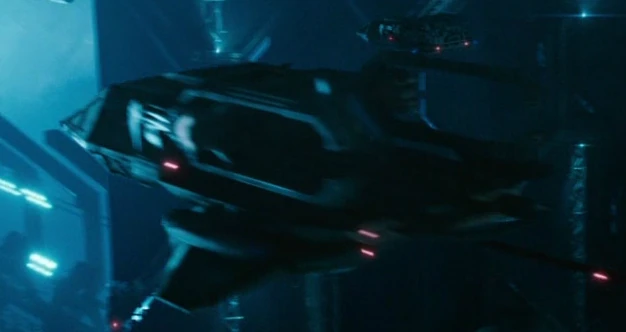 Runabout / Utility
Federation cargo shuttle Class
Hull Specifications LoggedThe Federation cargo shuttle was a shuttlecraft type operated by Starfleet in the 2250s and 2260s. Its physical arrangement featured two stub wings positioned below the center line on either side of the craft. Propulsion was provided by two small impulse drives located in the aft bulkhead, just below the center line. A distinctive feature was the two large manipulator arms situated aft of the cockpit and above the center line, designed for manipulating large sections of a starship's hull during construction. The shuttle also included retractable landing gear located in its ventral hull. **Class History** This shuttlecraft type saw active service with Starfleet throughout the 2250s and 2260s. Notably, military shuttles of the era utilized the same basic frame as the Federation cargo shuttle. This class appeared in the films Star Trek Into Darkness and Star Trek Beyond, showcasing its utility in various Starfleet operations. An unnamed cargo shuttle of this type was observed during this period.
- No armament data logged.
- No propulsion data logged.
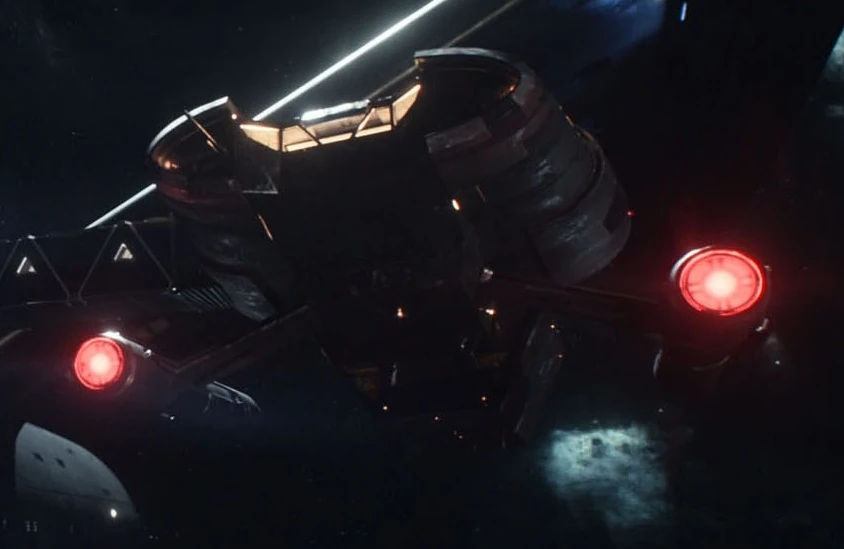 Transport / Freighter
Federation cargo vessel Class
Hull Specifications LoggedThe Federation cargo vessel was a class of utility starship operated by the Federation during the mid-23rd century. Its primary function was the hauling of radioactive ore, a hazardous material that necessitated specific design considerations. To ensure the safety and integrity of its cargo, the vessel's hull was engineered to be transport resistant, preventing unauthorized or accidental beaming of its contents. Furthermore, due to its specialized, often automated, role and the nature of its cargo, the class was equipped with only minimal life support systems, suggesting a design optimized for efficiency over extensive crew comfort or long-term habitation. **Operational History** One notable incident involving a Federation cargo vessel occurred in 2259. This particular vessel was utilized by the colonists of Finibus III, specifically by approximately one hundred survivors of a devastating Gorn massacre on the planet. Under the guidance of Professor Thandie, these survivors managed to escape Finibus III aboard the cargo vessel. The ship was subsequently used as bait by the Gorn to lure in the USS Enterprise (NCC-1701). When first encountered by the USS Enterprise (NCC-1701), the cargo vessel was not immediately identified; it appeared as an 'unidentified ship' with raised deflector shields, 'no Federation badges,' and multiple unidentified lifeforms aboard, initially failing to respond to hails. Once the passengers confirmed they were being contacted by a Starfleet vessel, they responded, detailing their dire condition and agreeing to evacuate to the USS Enterprise (NCC-1701) via a deep space transport tube. Following the successful evacuation of the survivors, and while the USS Enterprise (NCC-1701) remained vulnerable with the transport tube still attached, a Gorn hunter emerged from behind the second moon of Finibus III. The Gorn hunter swiftly destroyed the Federation cargo vessel and the attached transport tube, simultaneously causing significant damage to the USS Enterprise (NCC-1701), which was initially unable to raise its deflector shields. This harrowing event was documented in the Starfleet records as depicted in the episode 'Memento Mori'.
- No armament data logged.
- • Deflector shield
 Escort / Warship
Federation class
Hull Specifications LoggedThe Federation-class was a type of dreadnought starship constructed by Starfleet during the 23rd century. Its design specifications were notably depicted on bridge displays aboard the USS Enterprise (NCC-1701) in 2285. These specifications identified it as a Dreadnought class, Model: MK X, with propulsion systems including impulse power and three space/warp units. The vessel had a stated D.W.T of 285,000. At the time of this display, the MK X model was listed as 'Under construction', indicating ongoing development or production of this specific variant. The class is characterized by its distinctive three-nacelle configuration, a powerful design choice for a dreadnought. **Class History** While the MK X model was noted as 'Under construction' in 2285, the Federation-class was already active in the Starfleet fleet. The USS Entente (NCC-2120) is recorded as an active vessel of this class in the 2270s, demonstrating its operational deployment prior to the later MK X variant's development. The legacy of the Federation-class extended into the 25th century, as evidenced by display models of the starship being showcased and sold as mementos at Guinan's 10 Forward Avenue bar in 2401, commemorating Frontier Day. This suggests the class held a significant place in Starfleet's history and public memory. **Other Depictions** Further historical records and tactical simulations provide additional context for the Federation-class. The Star Fleet Technical Manual listed the USS Federation as the prototype of the class. The class also featured in the Star Fleet Battles series, and a vessel of similar design, the USS Star Empire, was depicted in the novel Dreadnought! by Diane Carey. The game Star Trek: Tactical Assault also included a variant of this class, referred to as a 'Federation Dreadnought'. According to some records, Starfleet had planned for a total of twenty vessels in the Federation-class, including the USS Entente (NCC-2120).
- No armament data logged.
- No propulsion data logged.
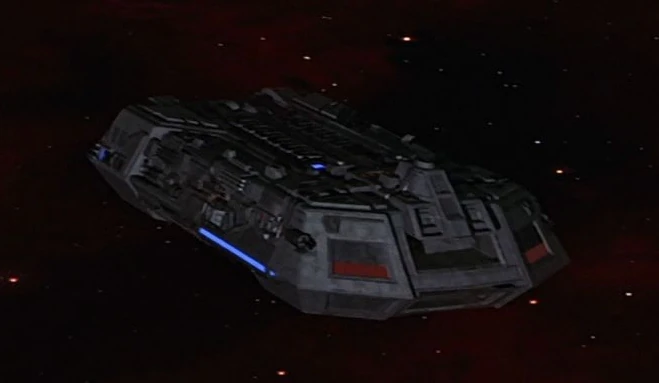 Classified
Federation holoship Class
Hull Specifications LoggedThe Federation holoship was a prototype Federation starship first launched in early 2375. Its outward design was that of a rectangular vessel containing a forward-mounted bridge module and warp nacelles set into the main body. The holoship was built specifically to serve as a transportable holodeck, designed to create holographic environments to simulate surroundings familiar to its passengers. However, the ship had difficulty maintaining a complete program, as the hologrid was visible in some locations. It was equipped with fourteen long-range transporters and a cloaking device. The concept of surreptitiously transplanting an indigenous people by use of the holodeck had previously been explored in the Star Trek: The Next Generation episode 'Homeward', when a group of Boraalans were transplanted in the holodeck of the USS Enterprise NCC-1701-D without their knowledge to their new homeworld as their own world became uninhabitable. The idea for the holoship might have stemmed from this incident. The chairs used on the bridge of the holoship were re-purposed from the bridge of the USS Defiant from Star Trek: Deep Space Nine. **Class History** In 2375, the holoship was employed by Admiral Dougherty and Ru'afo to secretly transport the entire six hundred Ba'ku inhabitants off the Ba'ku planet without their knowledge. The objective was to obtain the metaphasic radiation inherent in the planet's rings. The ship was cloaked and placed at the bottom of a lake, located near the Ba'ku village. It was later detected by Starfleet personnel, unaware of its presence, due to strong neutrino emissions coming from the lake. Once discovered by Captain Jean-Luc Picard, Lieutenant Commander Data, and Anij, Picard ordered the holoship decloaked, thereby exposing it to the inhabitants of the planet. The holoship was later brought back into the Ba'ku planet's orbit and recloaked by Lieutenant Commander Worf. It was then used to transport the command crew from the bridge of Ru'afo's flagship. This feat allowed Gallatin and Jean-Luc Picard to hijack control of Ru'afo's ship and disable the nearby Son'a collector. The holoship was then decloaked and held in a tractor beam at the order of Picard. Despite all of the ship's transporters being locked and secured by Picard, Worf, and Gallatin, Ru'afo was able to reroute the command sequencer on one of the transporters through the auxiliary processor in order to beam himself over to the collector. The Son'a crew later utilized the same method to beam back to their ship. These events transpired during the incident depicted in Star Trek: Insurrection. **Apocryphal History** According to the Star Trek: Section 31 novel 'Abyss' by David Weddle and Jeffrey Lang, the holoship was created by Section 31 for the Ba'ku incident, which the organization had engineered and publicly blamed on Admiral Dougherty. The holoship was slated for destruction by Starfleet Command after the incident became public. However, Commander Elias Vaughn and his cabal of Starfleet officers covertly working against Section 31 stole the ship and faked destruction reports, later using it to help undermine various Section 31 operations.
- No armament data logged.
- • Cloaking device
 Scout / Patrol
Federation mission scoutship Class
1 VesselThe Federation mission scoutship was a specialized type of Federation scout ship operated by Starfleet during the late 24th century. These vessels were primarily utilized for critical research missions, including the gathering of scientific data and providing assistance to survey teams engaged in planetary and cultural surveys. Their design emphasized maneuverability and a compact profile, making them ideal for detailed exploratory tasks. **Design & Technical Specifications** This scout was engineered as a single-pilot starship, featuring a distinctive forward-mounted cockpit that was physically separated from the main body of the vessel. Its size was slightly larger than that of a Type 11 shuttlecraft. For offensive and defensive capabilities, the mission scoutship was equipped with dual-mounted phaser banks and photon torpedoes, complemented by robust deflector shields. Access to the vessel was facilitated through a docking hatch located on its ventral hull. According to Issue #80 of the 'Star Trek: The Official Starships Collection', the class measured approximately 24 meters in length and was capable of achieving a maximum speed of warp factor 5. While designed for a single pilot, it could also accommodate between 5 to 10 passengers for specific mission profiles. **Operational History** Federation mission scoutships were active throughout the 2370s. A notable vessel of this class, the NCC-75227, was recorded as active in 2375, demonstrating the class's continued service within Starfleet during this period. The class played a role in events depicted in 'Star Trek: Insurrection'. **Development & Design Philosophy** The unique visual design of the Federation mission scoutship was influenced by specific creative directives. Writer Michael Piller envisioned a scene involving the scoutship that would evoke the feel of a World War I or World War II dogfight, where pilots could see each other in open cockpits. This vision led designer John Eaves to create the scoutship's distinctive, vast windshield at the front of the vessel. Interestingly, the cockpit of this scout ship, sometimes referred to as a 'Starfleet scout ship', was a redress of the Class 2 shuttle 'Cochrane', which had been originally constructed for the production of 'Star Trek: Voyager'. **Apocryphal Information** In various non-canonical sources, the Federation mission scoutship has been given alternative classifications and specifications. In the games 'Star Trek: Armada' and 'Star Trek: Armada II', this vessel is classified as a 'Venture'-class starship, noted for its sensors that could be modified to detect cloaked enemies. Role-playing games from Last Unicorn Games and Decipher refer to it as a 'Talon'-class ship. In these contexts, the 24-meter-long vessel, described as an intermediate step between a shuttle and a runabout, was said to carry a crew of up to four and was armed with four type 5 phasers and three micro-torpedo launchers. Furthermore, this ship, with substantial modifications, served as the baseline model for the 'Valkyrie'-class fighters featured in the Activision PlayStation game 'Star Trek: Invasion'.
- • Phase
- • Photon torpedo
- • Deflector shield
 Scout / Patrol
Federation scout ship Class
Hull Specifications LoggedFederation scout ships were a class of small, one-man vessels of common design, primarily utilized by Federation citizens during the latter half of the 23rd century. These ships were not designed for combat or high-speed evasion, being notably incapable of outrunning a Klingon D7-class battle cruiser for extended periods. Their primary role was likely for personal transport, exploration, or light cargo, given their civilian operation and limited capabilities. **Service History** One notable incident involving a Federation scout ship occurred in 2269. The vessel was operated by Cyrano Jones during his parole from starbase Deep Space Station K-7. While attempting to evade Klingon pursuit, Jones's scout ship was detected by the USS Enterprise (NCC-1701). The IKS Gr'oth, commanded by Koloth, pursued Jones's ship, violating Federation space in the process. Moments after Cyrano Jones was successfully beamed to safety aboard the USS Enterprise (NCC-1701), his Federation scout ship was destroyed by the IKS Gr'oth. This event was documented in the Starfleet records related to the mission detailed in 'More Tribbles, More Troubles'.
- No armament data logged.
- No propulsion data logged.
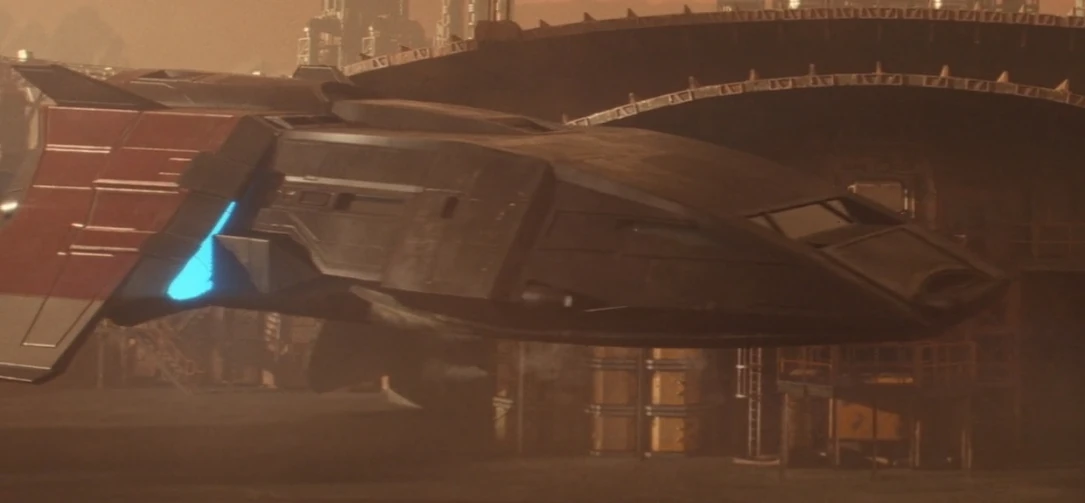 Runabout / Utility
Federation shuttle (2385) Class
Hull Specifications LoggedThe Federation shuttlecraft was a type of shuttle in active use by Starfleet in the year 2385. These versatile craft played a crucial role in the operations of the Utopia Planitia Fleet Yards, particularly during the construction phase of the Wallenberg-class tugs in orbit of Mars. Multiple units of this shuttle type were deployed to facilitate various tasks associated with the extensive shipbuilding efforts. However, the service of many of these shuttles came to an abrupt and tragic end on April 5, 2385. During this period, a devastating attack was launched against Mars by a fleet of rogue synth ships. Many Federation shuttlecraft of this type, operating in the vicinity of Utopia Planitia Fleet Yards, were destroyed during the assault, as documented in the episode 'Maps and Legends'.
- No armament data logged.
- No propulsion data logged.
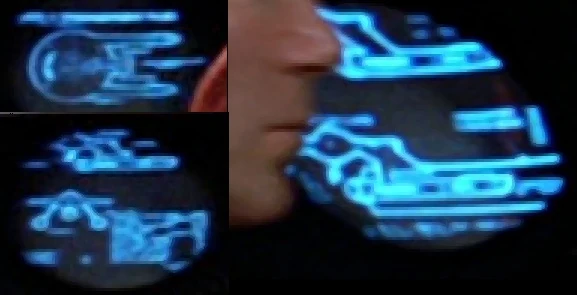 Transport / Freighter
Federation transport container Class
Hull Specifications LoggedThe Federation transport container was a versatile type of Federation spacecraft utilized by Starfleet throughout the 23rd and 24th centuries. These containers were designed for the efficient transport of both personnel and various forms of cargo, with several distinct variants developed over their long service history. **Ptolemy Transport Container Variant** One notable variant was the Ptolemy transport container. This specific design featured a cylindrical shape, equipped with a crucial connecting port located on its dorsal surface. This port was engineered to interface directly with a Ptolemy-class starship, which would then ferry the attached container to its designated destination. Visual representations of a vessel of this class, specifically schematics for a ship with the registry NCC-4000, were prominently displayed on the bridge simulation at Starfleet Academy in 2285. Furthermore, these schematics were also observed on the main bridge monitors of the USS Enterprise (NCC-1701) during events depicted in Star Trek II: The Wrath of Khan and Star Trek III: The Search for Spock.
- No armament data logged.
- No propulsion data logged.
 Runabout / Utility
Federation tug (2257-2385) Class
Hull Specifications LoggedThe Federation tug was a specialized starship class utilized by Starfleet within the United Federation of Planets throughout the 23rd and 24th centuries. Its design was notably modular, incorporating components from several existing Starfleet vessel types. Specifically, the primary hull was sourced from the Malachowski-class, the nacelles were adapted from the Hoover-class, and the pylon components originated from the Walker-class. These elements were integrated with a number of newly-built parts to form the final configuration of the tug. While officially known as the Federation tug, the Star Trek: Discovery The Official Starships Collection later listed this design as a 'Helios'-class ship. For a specific model created for the collection, Alex Kurtzman assigned the name USS Zimmerman NCC-1616, following a request from Eaglemoss Collections' Ben Robinson and CBS Broadcasting's John Van Citters, though this registry and name were not rendered on the hulls of the tugs seen on-screen. **Service History** These tugs were primarily equipped with powerful tractor beams, essential for their role in towing starships. One notable instance of their service occurred in 2257 when the USS Enterprise NCC-1701 sustained severe damage while attempting to scan the mysterious red bursts. Two Federation tugs were promptly dispatched to tow the heavily damaged USS Enterprise NCC-1701 to a repair facility. During this event, Captain Christopher Pike and Commander Michael Burnham observed the tugs from the USS Discovery, engaging in a discussion about Michael Burnham's complex relationship with her foster-brother, Spock, as depicted in the episode 'Brother'. Their operational lifespan extended well into the 24th century. In 2385, on First Contact Day, two ships of this class were observed docked within a drydock at the Utopia Planitia Fleet Yards, orbiting Mars. This appearance was documented in the episode 'Children of Mars', demonstrating the class's enduring utility within Starfleet's logistical infrastructure.
- No armament data logged.
- No propulsion data logged.
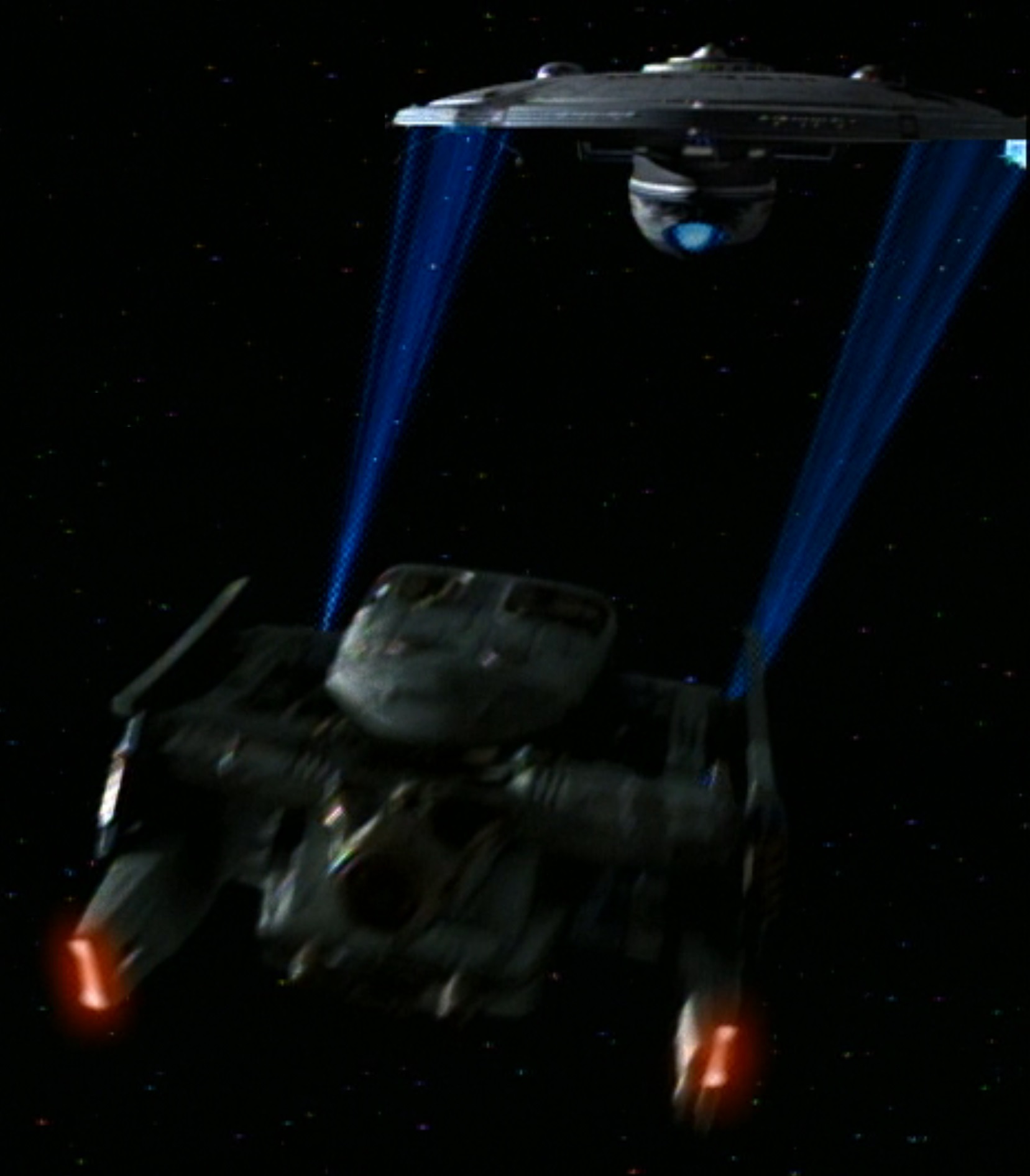 Runabout / Utility
Federation tug (2374) Class
Hull Specifications LoggedThe Federation tug was a specialized class of small starships designed exclusively for the critical task of towing damaged or disabled vessels. These utility ships were a vital component of Starfleet's logistical and recovery operations within the United Federation of Planets during the 24th century. The class was never formally identified on screen or in script dialogue, but was referenced in a script note for the Star Trek: Deep Space Nine episode 'A Time to Stand', indicating its purpose in assisting ships unable to proceed under their own power. The physical model for the Federation tug was a kitbash creation, assembled by the production staff for the episode 'A Time to Stand' to expand the visual fleet. Members of the production team, including Gary Hutzel, Judy Elkins, Adam Buckner, and Anthony Fredrickson, contributed to its construction. Judy Elkins was specifically responsible for building the tug model, which was affectionately known as the 'USS Ertl' among the staff, though it bore no official name or registry markings. The model was primarily constructed from parts of 1980s Milton Bradley Robotix series model kits and a piece from a Learning Curve Toys Robotix 3000 kit. Notably, its warp engines were sourced from an AMT kit (number 6858) for a D'deridex-class Romulan warbird, attached to a set of USS Voyager nacelle pylons. According to Issue #140 of 'Star Trek: The Official Starships Collection', the Federation tug measured approximately 90 meters (295 feet) in length, had a maximum speed of warp factor 6, and a crew complement of 6, largely composed of engineering specialists. An earlier comparison chart by Gary Hutzel and Larry Nemecek had listed a 'tug boat' at 216.5 feet in length, suggesting some evolution or differing interpretations of the design. **Class History** Federation tugs played a crucial role during the Dominion War, particularly in the year 2374, when they were deployed to evacuate disabled vessels from active battle zones. One notable instance of their service was the assistance provided to the USS Fredrickson, which benefited from these utility vessels during the events depicted in the Star Trek: Deep Space Nine episode 'A Time to Stand'. Their appearance in this episode marked them as one of the few dedicated utility vessels, alongside shuttles and cargo management units, to be shown on screen within Starfleet's operational fleet. These ships were operated by Starfleet under the ownership of the United Federation of Planets, serving as indispensable assets for recovery and support throughout the 24th century.
- No armament data logged.
- No propulsion data logged.
 Classified
Fenris Ranger vessel Class
Hull Specifications LoggedThe Fenris Ranger vessel was a class of warp-capable starship primarily utilized by the Fenris Rangers during the late 24th and early 25th centuries. These compact vessels were designed for single-pilot operation, emphasizing agility and self-sufficiency for the Rangers' independent missions. They were equipped with directed energy weapons for defense and offense, and featured deflector shields for protection. A notable design characteristic was their capacity to carry cargo, which was essential for the Rangers' operational needs. However, these vessels notably lacked transporter capabilities, necessitating physical docking with other starships or stations for boarding and disembarkation. According to Issue #4 of the 'Star Trek Universe: The Official Starships Collection', the ship operated by Seven of Nine was launched in the 24th century and measured 16.76 meters in length. The design of this class was attributed to Production Illustrator John Eaves. **Class History** The Fenris Ranger vessel class saw active service from the late 24th century into the early 25th century, serving as the primary starship for the Fenris Rangers, an independent organization operating in the former Romulan Neutral Zone. One of the most prominent operators of such a vessel was Seven of Nine, who commanded her ship in 2399 during her tenure as a Fenris Ranger. Her vessel was instrumental in her efforts to protect vulnerable populations and maintain order in the lawless regions of space. This class of starship, including unnamed Fenris Ranger vessels, made appearances in 'Star Trek: Picard', specifically in the episodes 'Absolute Candor' from Season 1 and 'Disengage' from Season 3, showcasing their role in the tumultuous post-Romulan Supernova era.
- • Directed energy weapo
- • Deflector shield

Ferengi shuttle
Class: Ferengi shuttle- • Phase
- • Deflector shield
Runabout / Utility
Ferengi shuttle Class
1 VesselThe Ferengi shuttle, also known as a Ferengi pod or simply a Ferengi ship, is a versatile, warp-capable shuttlecraft primarily utilized by prominent businessmen and as an auxiliary vehicle within the Ferengi Alliance during the latter half of the 24th century. These vessels are known for their speed and durability, serving various commercial and personal transport needs across the galaxy. **Design & Technical Specifications** Ferengi shuttles are robust warp-capable vessels, engineered to be exceptionally fast and durable. They are capable of outrunning Romulan interceptors and can even exceed their maximum safe cruising speed by 0.3 warp factors. According to Rom, these shuttles are designed for extensive travel, capable of traversing half of the Milky Way Galaxy before requiring a maintenance checkup. Power is supplied by a reactor core, which is safeguarded by a containment field. For offensive and defensive capabilities, Ferengi shuttles are outfitted with phasers and deflector shields. Additionally, they are equipped with a transporter system for convenient personnel and cargo transfer. **Interior Design** The interior of a Ferengi shuttle features a compact cabin or cockpit from which the vessel is piloted. The aft section of the shuttle is dedicated to a cargo hold, providing space for goods and supplies. Despite their relatively small size, these shuttles are equipped with several creature comforts for their occupants, including bunks for rest, waste extraction facilities, and a replicator for food and other necessities. The shuttle is designed to accommodate a crew and passengers ranging from as few as two to as many as eight individuals. **Service History** The Ferengi shuttle class was actively in service by 2366 and became the standard shuttle type found aboard D'Kora-class Marauders. In 2366, one such vessel, carrying two Ferengi, became trapped in the Delta Quadrant following the collapse of the Barzan wormhole, an event depicted in the Star Trek: The Next Generation episode 'The Price'. Beyond their role as auxiliary craft, these shuttles are also frequently owned on an individual basis by influential Ferengi figures. Notable owners include Grand Nagus Zek, Ferengi Commerce Authority Liquidator Brunt, and entrepreneurs such as Gaila, Quark, and Kynk, as seen in episodes like 'The Nagus'. The class's presence extends even to the mirror universe, where a Ferengi shuttle was observed in the Star Trek: Deep Space Nine episode 'The Emperor's New Cloak'. The vessel's compact nature was humorously noted by Leck in 2374, who remarked, 'This isn't a ship, it's a closet,' during the events of 'The Magnificent Ferengi'. A particularly well-known vessel of this class is ''Quark's Treasure''. Ferengi shuttles have made numerous appearances across various Star Trek series, including Star Trek: The Next Generation ('The Price', 'The Perfect Mate'), Star Trek: Deep Space Nine ('Rules of Acquisition', 'Prophet Motive', 'Little Green Men', 'The Magnificent Ferengi', 'Profit and Lace', 'The Emperor's New Cloak', 'False Profits'), and Star Trek: Lower Decks ('Veritas', 'Mugato, Gumato', 'Parth Ferengi's Heart Place'), demonstrating their enduring utility within the Ferengi Alliance.
- • Phase
- • Deflector shield
 Transport / Freighter
Ford Model 51 Class
Hull Specifications LoggedThe Ford Model 51 was a type of truck manufactured on Earth by the American Ford Motor Company during the mid-20th century. While initially produced for civilian use, it was also extensively utilized by Germany's military. These vehicles were powered by an internal combustion engine. The Star Trek depiction of this vehicle is accurate to its historical use. Originally an American 2.5-ton truck produced during 1935 and 1936, the Ford Model 51 was also produced by Ford's German branch, Ford Motor Company AG, as the 'Ford Modell V8/51' from 1937 to 1939. Most German-produced Model 51s ended up in the service of the Wehrmacht as the 'MLkw 3t Ford V8/51' (Mittler Lastkraftwagen [medium truck] 3.0 ton Ford V8/51). The truck seen in the episode 'Storm Front' was outfitted with a Notek blackout headlight on the front left mudguard, as were these trucks during their service with the Wehrmacht in World War II. The white Balkenkreuz emblem on the side of the truck, while not of the standard layout, reflects variations known to occur in real life, especially among second-rate units like logistics units. **Alternate Timeline Service History** In an alternate timeline, a German military Ford Model 51 truck, bearing the license plate 'NA 22475', played a significant role in 1944. This truck transported Captain Jonathan Archer of the USS Enterprise (NX-01) from a field hospital for questioning. The vehicle was escorted by a Volkswagen Kübelwagen, identified by its license plate 'WH-52552' and driven by an SS soldier, as well as a BMW R75 motorcycle. This convoy was ambushed by American Resistance fighters, resulting in damage to all vehicles and the deaths of their German occupants. A short time later, a second Ford Model 51 truck, with a license plate partially reading 'NA 1257', was observed parked on a Brooklyn, New York City street. This truck was located just outside Alicia Travers' apartment, where the escaped Captain Archer was hiding, and was being loaded with civilians indiscriminately rounded up by the SS in retaliation for the ambush, as depicted in the episode 'Storm Front'. The license plate prefix 'NA' does not conform to real-life German license plates of the era, which typically began with regional codes or military prefixes like 'WH' for the Heer (Army) or 'SS' for the SS. Conceivably, this fictional code could be intended to stand for 'Nord Amerika', suggesting these vehicles were stationed in a fictional, Nazi-occupied United States. **Related Appearances** A heavier Ford truck type may have made an appearance in the Star Trek: Voyager season four episode 'The Killing Game, Part II'. In the opening scenes, a Hirogen hunter and Ensign Harry Kim were watching overhead bridge monitor station viewscreens, witnessing a World War II holographic simulation gone wrong aboard the USS Voyager in 2374. This simulation, created by the Hirogen after gaining control of the ship's holodeck, depicted a scene in the German-occupied French village of Sainte Claire. While a Volkswagen Kübelwagen was clearly identifiable, the three trucks shown were less so. The truck in the foreground was possibly a 3.0 ton carrying Ford V3000S (G188TS), though a definitive identification was unfeasible due to the viewscreen's frame cutting off the front of the engine bonnet, and its similar side profile to the more ubiquitous 3.0 ton carrying Opel Blitz.
- • Projectile weapo (Qty: optional)
- No propulsion data logged.

Free Spirit
Class: Free Spirit- No armament data logged.
- No propulsion data logged.
 Free Spirit
 Class
1 VesselThe Free Spirit was a small starship, notable for its distinctive appearance with its name visibly written in cursive on the port side of its cockpit. It was owned and operated by Petra Aberdeen, an independent archaeologist and former Starfleet officer, suggesting a design optimized for exploration, artifact recovery, and potentially discreet operations rather than overt combat or large-scale scientific missions. Its compact size would have allowed for greater maneuverability and access to various planetary environments and archaeological sites. While specific technical specifications regarding its propulsion, armaments, or defensive systems are not detailed, its operational history indicates it was capable of interstellar travel and participation in skirmishes. **Class History** The Free Spirit entered service under the ownership of Petra Aberdeen, an independent archaeologist affiliated with the Independent Archaeologists Guild, who had previously served as an officer in Starfleet. In 2381, the Free Spirit played a role in Aberdeen's recovery of the Grand Nagus' staff from the Museum of Antiquities on Tulgana IV. Following this mission, Aberdeen contacted Ensign Beckett Mariner from the Free Spirit, as depicted in the episode 'Reflections'. Later that same year, after Beckett Mariner resigned from Starfleet, she joined Petra Aberdeen aboard the Free Spirit for a period of adventures, as seen in 'Trusted Sources'. The starship subsequently participated in a significant engagement against the renegade USS Aledo, fighting alongside an armada of California-class starships. Following this battle, Beckett Mariner departed the Free Spirit and returned to Starfleet service, as chronicled in 'The Stars At Night'. The Free Spirit remained active under Petra Aberdeen's command, continuing its missions of archaeological exploration and independent operations.
- No armament data logged.
- No propulsion data logged.
 Explorer
Freedom class (22nd century)
Hull Specifications LoggedThe Freedom-class was a small starship design operated by Starfleet in the mid-22nd century. Its design featured a distinctive saucer-shaped living and command section, which housed all essential controls and living quarters. Propulsion was provided by two impulse drives positioned at the aft of the ship, on either side of a large indent in the saucer. For faster-than-light travel, two warp nacelles, containing the warp engines, were mounted on pylons extending backward and slightly outward from the main hull. The USS Franklin, a vessel of this class launched in the late 2140s, was notably the first Human ship capable of Warp 4, making it highly advanced for its era. Unlike many later Starfleet designs, the Freedom-class was constructed in space and was not intended for planetary landings or takeoffs. The only known method for such a ship to launch from a planet's surface involved being dropped from a cliff to achieve terminal velocity, at which point stabilizers could be engaged for liftoff. For defensive and offensive capabilities, the Freedom-class was armed with pulsed phase cannons and spatial torpedoes, and protected by polarized hull plating. The class also incorporated transporters, though these were initially intended solely for cargo use due to contemporary controversies surrounding the transport of living matter. However, these transporters could be modified to safely beam living beings, as demonstrated with the USS Franklin. **Class History** The Freedom-class served Starfleet during the mid-22nd century. Following the formation of the United Federation of Planets in 2161, the class continued its service. It was presumably superseded by the more advanced NX-class, which was launched in 2151 and was capable of Warp 5. Despite the introduction of newer classes, at least one Freedom-class vessel, the USS Franklin (registry NX-326), remained in active Starfleet service as late as 2164, playing a significant role in the events depicted in Star Trek Beyond. The class name and type were also referenced in the personnel file of Balthazar Edison. **Interior Design** The interior layout of the Freedom-class was functional and efficient. The bridge, located at the top center of the saucer dish, served as the primary command and control center. It featured a central command chair for the commanding officer, with the helmsman positioned directly in front, and consoles for communications, science, and engineering arrayed around the room. A main viewscreen, functioning as a transparent window, provided external views and displayed technical information. Directly aft of the bridge was the transporter room, which contained an open semicircular transporter chamber facing the entrance door, adjacent to the control panel. While initially designed for cargo, the transporter aboard the USS Franklin was successfully modified to transport Humans. The lower decks of the Freedom-class included a mess hall, officer's quarters, and a cargo bay. Main engineering, described as claustrophobic, was situated directly next to the warp core. Both the cargo bay and main engineering were located on Deck 3, which was the lowest deck of the vessel.
- • Pulsed phase canno
- • Spatial torpedo
- • Warp facto
- • Polarized hull plating
 Classified
Freedom class (24th century)
Hull Specifications LoggedThe Freedom-class was a distinctive type of starship in service with Starfleet during the late 24th century. Its design was notable for being one of the few Federation starship classes to feature a single warp nacelle, a configuration shared with earlier 23rd-century classes such as the Archer-class, Hermes-class, Saladin-class, and Kelvin-class. The primary hull of a Freedom-class vessel was connected by a single pylon to its solitary nacelle. At least one ship of the class, the USS Firebrand, was observed to have a small torpedo launcher integrated into this pylon, positioned just above the nacelle. According to Starfleet's tactical and engineering registry, the Freedom-class was classified as a light frigate. These vessels measured approximately 430 meters in length and were capable of achieving a maximum speed of warp factor 9.2. They typically carried a crew complement of around 370. A unique design feature of the Freedom-class was a dedicated phaser cannon located on the ventral surface of its primary hull. **Service History** The Freedom-class was actively in service by 2366 and 2367. A prominent engagement for the class was the devastating Battle of Wolf 359, where the USS Firebrand (NCC-68723) participated in the desperate attempt to halt a Borg cube's advance towards Earth. The USS Firebrand was among the 39 Starfleet vessels destroyed during this battle. Another vessel of the class, the USS Concord, was noted as active in 2370, indicating continued service for the class beyond the initial Borg encounter. **Alternate Realities & Apocrypha** In an alternate quantum reality, a Freedom-class counterpart of the USS Cerritos (NCC-75567) was briefly observed in 2382 while within a Schrödinger possibility field. This alternate design differed significantly from the prime timeline's Freedom-class, featuring a prominent navigational deflector and two pylons connecting the saucer section to its single warp nacelle. In apocryphal accounts, specifically Issue 5 of the IDW Publishing 'Star Trek: Lower Decks' comic series, the Freedom-class USS Nemo (NCC-69128) was featured. This vessel was described as an 'old Freedom-class ship nobody will miss' and was temporarily assigned to the command crew of the USS Cerritos for a covert mission by the Department of Temporal Investigations. The USS Nemo's interior, including its corridors and conference room, bore similarities to the USS Cerritos, though its bridge design was distinct, reminiscent of the USS Enterprise-D's battle bridge.
- No armament data logged.
- No propulsion data logged.
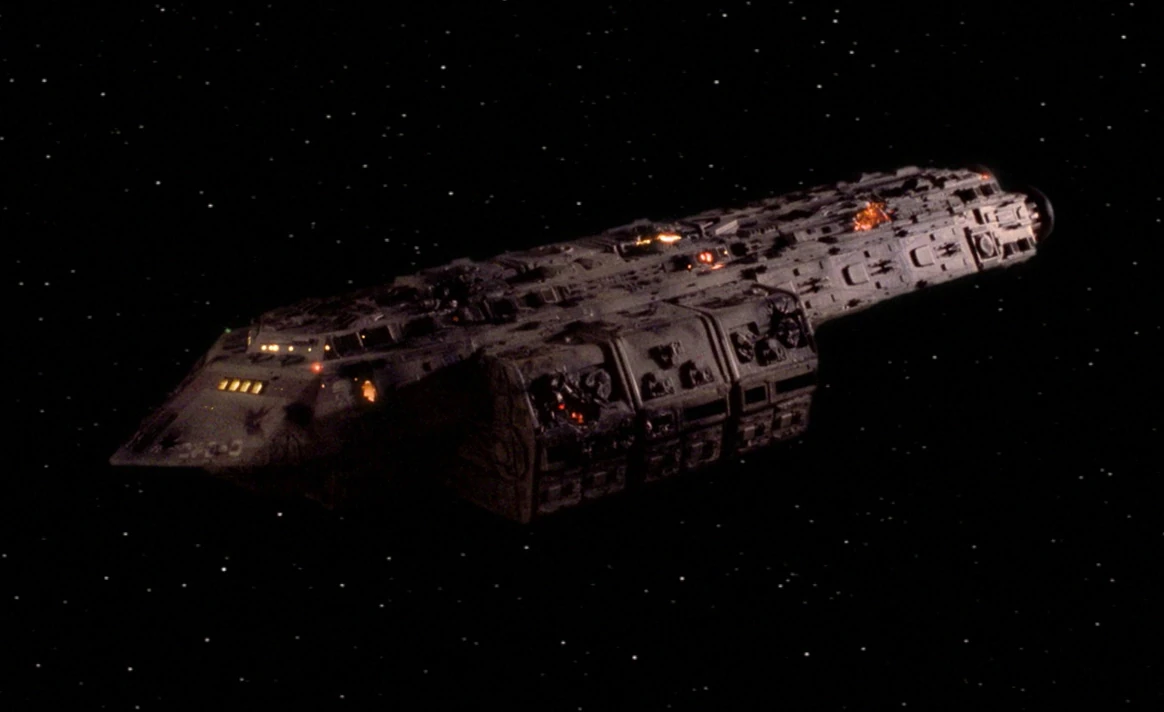 Freighter
 Class
1 VesselFreighters, also known as cargo ships, cargo carriers, or cargo vessels, represent a fundamental starship classification designed primarily for the transport of goods, analogous to how transports are utilized for passenger conveyance. A specialized variant, the bulk freighter, is specifically engineered to carry dry bulk goods, much like a tanker is designed for liquid or gas commodities. The most distinguishing characteristic of these vessels is their expansive cargo bays, which are central to their function. To safeguard their valuable payloads, freighters are typically equipped with light armament, providing a defense against potential pirate attacks and hazards such as oncoming asteroids. While many freighters are manned, the Federation, particularly during the 23rd century, also operated automated designs, including robot ore freighters and grain ships. These automated vessels were essentially flying cargo holds, designed without life support systems, making them suitable for hazardous or non-sentient cargo. Manned vessels, prevalent in both the 23rd and 24th centuries, were often reserved for the transport of more valuable or sensitive cargo, such as deuridium or dilithium crystals. **Service History & Notable Incidents** Freighters have played a crucial role throughout Starfleet and Federation history, as well as for numerous other interstellar powers. In the 22nd century, Doctor Phlox's early assignments included examining a cargo ship orbiting Denobula that had suffered an explosion with many casualties, as depicted in the episode 'Fight or Flight'. During the 2260s, some Federation freighters were noted to be limited to a maximum speed of Warp 2, as seen in 'Friday's Child'. The concept of automated cargo vessels was further explored in 'The Ultimate Computer' and 'More Tribbles, More Troubles', highlighting their utility for bulk transport without the need for a crew. The importance of manned freighters for valuable goods was underscored in 'The Pirates of Orion' and 'The Passenger'. In 2286, Doctor Leonard McCoy humorously speculated that he and the crew of the former USS Enterprise (NCC-1701) might be reduced to working on a freighter as punishment for violating Starfleet regulations, while they were, in fact, en route to the USS Enterprise (NCC-1701-A), as chronicled in Star Trek IV: The Voyage Home. Captain Montgomery Scott, in a conversation with Captain Jean-Luc Picard in the episode 'Relics', reflected on his extensive service history, noting that he had 'served aboard eleven ships,' including freighters, cruisers, and starships, underscoring the ubiquitous nature of these vessels in Starfleet careers. The strategic location of Deep Space 9, near the Cardassian Union and the Bajoran wormhole, made it a frequent docking point for numerous freighters, as often seen throughout Star Trek: Deep Space Nine. Freighters frequently travel in convoys, a practice that can either increase or decrease their susceptibility to alien attacks, depending on the circumstances, as illustrated in 'Errand of Mercy'. In such cases, they are often accompanied by an escort. A notable instance occurred in 2374 during the Dominion War, when the USS Defiant (2370) assisted in escorting and protecting Convoy PQ-1 to the Vegan system, as detailed in 'Image in the Sand' and 'The Sound of Her Voice'. The widespread use of freighters is also evident from the mention of an unnamed merchant ship in the script for 'All Good Things...', which, in the anti-time present of 2370, spread word of 'the Light' anomaly in the Devolin system to a fleet of five Terrellian transport ships. Numerous species and factions operate their own freighter designs, including Akritirian cargo vessels, various Andorian freighters, Axanar cargo ships, Bajoran cargo shuttles, Bardeezan merchant ships, Barolian freighters, Bolian freighters, Boslic freighters, Cardassian freighters (such as the Bok'Nor and Cardassian military freighters), Coalition of Madena Class 9 interplanetary freighters, Corvallen freighters (including the Antares class), Coverian freighters, Earth Cargo Service starships (like the J class, Y class, and Y-500 class), Federation freighters (such as the Antares class, Huron class, Kaplan F17 Speed Freighter, and cargo drones), Ferengi cargo ships, Galador freighters, Golorian trading vessels, Galipotan freighters, Jelinian freighters, Juhryan freighters, Kartelan freighters, Klingon freighters (like the IKS Par'tok), Kobheerian freighters, Kressari freighters, Lissepian cargo ships, Malon export vessels, Malosian cargo shuttles, Maquis freighters, Mislenite freighters, Nekrit freighters, Orion freighters, Ornaran freighters, Pakled trade ships, Retellian freighters, various Rigellian freighters, Subytt freighters, Suliban freighters, Trabalian freighters, Talarian freighters, Talavian freighters, Talaxian freighters (including the Baxial), Tarkalean freighters, Tellarite freighters, Terellian cargo freighters, Tholian freighters, Tygarian freighters, Valerian freighters, Vulcan freighters, and Yridian freighters. Prominent named freighters include the USS Antares, Arcos, Batris, Baxial, Bok'Nor, Calondon, ECS Constellation, SS Dierdre, Ekina, Erstwhile, ECS Fortunate, ECS Horizon, USS Huron, La Sirena, USS Lalo, Merchantman, Nanut, Norkova, ECS North Star, Odin, IKS Par'tok, Rak-Miunis, Salvoxia, Stella, Tezra, Ticonderoga, Woden, Yorkshire, and SS Xhosa.
- No armament data logged.
- No propulsion data logged.

Friendship 1
Class: Deep space probe- No armament data logged.
- No propulsion data logged.
 Classified
Friendship class
1 VesselThe Friendship-class was a distinctive type of Federation starship operated by Starfleet, active from the 31st century into the 33rd century. Its design was characterized by a unique saucer-shaped primary hull with an empty center, and two detached nacelles positioned at the aft. This design philosophy, featuring 'detached elements,' was a mandatory requirement established in the writers' guidelines for all 32nd-century Starfleet vessels. Concept Designer Daniel J. Burns was responsible for the Friendship-class design, aiming for a 'clean and svelte' aesthetic with 'a minimum of fuss.' Burns' design was notable as it was one of the few 32nd-century Starfleet vessels not co-designed by Ryan Dening and his team, though Burns initially overlooked the William Budge-designed Dresselhaus-class in this assessment. Early concepts for the Friendship-class included a bridge located in the inner saucer ring, designed to rotate and allow the warp nacelles to dock with the saucer. **Class History** The Friendship-class saw extensive service throughout the 31st and 33rd centuries. A significant event in its history was the devastating Burn in 3069, which led to the destruction of many Friendship-class ships. Vessels with active warp cores were lost when their dilithium became inert, triggering catastrophic antimatter explosions. Despite these losses, the class remained active. In 3189, a Friendship-class starship, the USS Yang, was part of the Federation fleet 001 stationed at Federation Headquarters. This fleet's collective energy was crucial in sustaining a distortion field that concealed the space station's location. By the 33rd century, Friendship-class starships continued to serve Starfleet, participating in ceremonial honor-formations at Federation Headquarters, such as the one for the launch of Zora and the USS Discovery's Red Directive mission. Known commissioned ships of this class include the USS Lexington (32nd century) and the USS Yang. Additionally, apocryphal sources list the USS Thant (NCC-325005) and the USS Yousafzai (NCC-325010), with the USS Thant confirmed by Daniel J. Burns as an official franchise-approved production name, though neither it nor the class designation received onscreen confirmation.
- No armament data logged.
- No propulsion data logged.
 Frigate
 Class
1 VesselA frigate, within Starfleet starship classification, was defined as a fast, medium-sized starship primarily intended to protect other vessels. This classification of starship was actively employed by Starfleet during both the 23rd century and the 24th century, as referenced in episodes such as 'Brother' and 'Conspiracy'. **Alternate Reality & Database Mentions** In the 2260s of the alternate reality, information concerning Starfleet-operated frigates was cataloged within the Federation database. These vessels were specifically mentioned in a list of Starfleet vessel types, which appeared adjacent to the personnel file of Balthazar Edison, as depicted in 'Star Trek Beyond'. **Notable Examples** The Federation utilized several distinct classes and individual starships designated as frigates. These included the Hiawatha-class, exemplified by the USS Hiawatha, which served as a medical frigate. Another prominent Federation frigate class was the New Orleans-class, with known starships such as the USS Kyushu and the USS Thomas Paine. The USS Renegade was also identified as a Federation frigate. Beyond Starfleet, other species and factions also operated vessels classified as frigates, including Cardassian frigates, Kazon frigates, and Kinjal frigates.
- No armament data logged.
- No propulsion data logged.
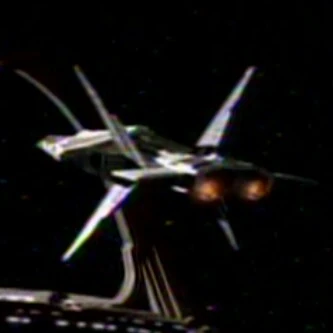 Science Vessel
Frunalian science vessel Class
Hull Specifications LoggedThe Frunalian science vessel was a distinct type of science vessel operated by the Frunalian species, primarily active during the 24th century. These vessels were designed for scientific exploration and research, reflecting the Frunalians' presence and activities within the Alpha Quadrant. **Service History** One notable instance of these vessels' activity occurred in 2369, following the momentous discovery of the Bajoran wormhole. Three Frunalian science vessels arrived at Deep Space 9, presumably to study the newly discovered phenomenon. However, docking proved problematic due to damage sustained to Deep Space 9's airlocks. To facilitate the interaction, Commander Benjamin Sisko, then commanding officer of Deep Space 9, proposed that the Frunalian crews transport aboard the station using their transporters, an event depicted in the episode 'Emissary'. **Frunalian Origin** The Frunalians, the species operating these science vessels, originate from the planet Frunalia, located within the Alpha Quadrant. This establishes their presence and technological capabilities within a significant region of Federation space.
- No armament data logged.
- No propulsion data logged.
 Classified
Gagarin class
6 VesselsThe Gagarin-class was a type of Federation starship operated by Starfleet in the early 25th century. This class served as a distant successor to the older Shepard-class of the early 23rd century, sharing a similar design layout. **Class History** In 2401, several Gagarin-class starships were part of a Starfleet fleet assembled to confront the Borg vessel 'Singularity'. These vessels, in conjunction with the Borg vessel, successfully defended against a large energy burst that threatened the sector. Later that same year, twenty-four Gagarin-class ships were gathered for the Frontier Day celebrations held over Earth. During these celebrations, the ships were hijacked by their younger crews after coming under the direct control of the Borg Collective, as depicted in the Star Trek: Picard episodes 'The Star Gazer', 'Võx', and 'The Last Generation'. Notable ships of this class include the USS Christopher (NCC-97936), the USS Cunningham (NCC-97949), the USS Gagarin (NCC-97930), which served as the class prototype, the USS Gotana-Retz (NCC-97951), the USS Passaro (NCC-97955), the USS Resnik (NCC-97945), and the USS John Kelly (NCC-97944). **Interior Design & Systems** By 2401, the computer systems aboard the Gagarin-class were equipped with the Fleet formation mode, also known as Starfleet emergency protocol NX12.11. This protocol was designed to place all Federation starships within a fleet under the automated control of the Starfleet mainframe, a system highlighted in the Star Trek: Picard episode 'Võx'.
- • Phase
- • Photon torpedo
- • Deflector shield
 Explorer, Capital ship, Battleship
Galaxy class
3 VesselsThe Galaxy-class Starship Development Project was primarily conducted at the Utopia Planitia Fleet Yards. Many of the advanced technologies integrated into the Galaxy-class were first tested on earlier prototype vessels, such as the Oberth-class USS Pegasus, during the 2350s. The vessel's powerful warp core was designed at Outpost Seran T-1 on stardate 40052 (2363) by some of the Federation's most brilliant engineering minds, including Leah Brahms of the Theoretical Propulsion Group. Major component construction for Galaxy-class starships was undertaken both in orbit and at ground-based facilities. Upon its launch, the Galaxy-class represented the pinnacle of Federation starship design, becoming the most technologically sophisticated and complex vessel ever built by Starfleet at that time. **Early Years** Service aboard a Galaxy-class starship was considered a highly prestigious assignment, attracting Starfleet's finest officers. These vessels were renowned for their impressive capabilities among Federation citizens and other Alpha Quadrant races. Many Galaxy-class ships were designed to accommodate large civilian populations, allowing assigned personnel to bring their families aboard. In 2365, the safety of the Galaxy-class, particularly its warp propulsion system, was questioned following the mysterious loss of the USS Yamato near the Romulan Neutral Zone. The investigation revealed that massive system-wide failures, leading to a loss of antimatter containment, were caused by an Iconian software transmission, not an inherent design flaw. The most prominent early Galaxy-class starship was the Federation flagship, the USS Enterprise (NCC-1701-D). Commanded primarily by Captain Jean-Luc Picard, with brief periods under William T. Riker and Edward Jellico, the Enterprise (NCC-1701-D) made first contact with numerous species, including the Q Continuum and the Borg Collective. Its diplomatic efforts were crucial in de-escalating tensions between regional powers, preventing major upheavals during the Klingon Civil War, and frequently checking Romulan Star Empire and Cardassian Union operations. The Enterprise (NCC-1701-D) notably prevented the assimilation of Earth during the Borg invasion of 2367. **Dominion War** A Galaxy-class starship, the USS Odyssey, was involved in the disastrous first contact with the Dominion. While attempting to rescue Federation citizens captured by the Jem'Hadar in the Gamma Quadrant, the Odyssey was critically damaged when a Jem'Hadar attack ship performed a suicide run against its stardrive section, leading to the ship's complete destruction. This event marked the beginning of three years of hostilities that culminated in the Dominion War. Galaxy-class starships played a significant role in many major fleet actions of the war, including Operation Return, where they served as tactical leaders for 'Galaxy'-wing squadrons. They also participated in the First Battle of Chin'toka and the Battle of Cardassia. The USS Venture (NCC-71854) was notably seen docked at Deep Space 9 alongside Excelsior-class ships during this period. **Later Status** Throughout the 2370s, additional Galaxy-class starships were constructed and entered Starfleet service, with several seen under construction at Utopia Planitia. By the latter half of the decade, Galaxy-class vessels were deployed across Federation space, from fleets assembled near Earth to intercept a Borg sphere in 2378, to operations near the Romulan Neutral Zone. By 2399, a holographic image of a Galaxy-class vessel was occasionally displayed at Starfleet Headquarters. In 2401, during Frontier Day, no Galaxy-class vessels were observed among the assembled fleet in Earth orbit, though the modern Ross-class bore a strong resemblance to the older design. However, the rebuilt USS Enterprise (NCC-1701-D) was reactivated by her original command crew and proved instrumental in defeating the Borg during the Battle of Frontier Day. In honor of its legacy, the USS Titan-A was rechristened USS Enterprise-G by 2402, continuing the heritage of both the Enterprise name and the Galaxy-class. **Alternate Timelines** In an alternate timeline set in 2366, where the United Federation of Planets was engaged in a Federation-Klingon War (alternate timeline) with the Klingon Empire, the USS Enterprise (NCC-1701-D) was the Federation's first Galaxy-class warship. This version of the vessel featured 42 decks and could transport over 6,000 troops. While its exterior remained similar, interior changes included a darkly lit bridge and a more militaristic captain's chair, which was the sole command seat. In an anti-time future, refitted Galaxy-class ships remained in service long after 2370, despite some attempts to decommission them. **Technical Data - Physical Arrangement** The USS Enterprise (NCC-1701-D) had an overall length of 641 meters (though some sources indicate 642.5 meters), a width of 473 meters, and a height of 133 meters. Its gross vehicle mass was 5,000,000 metric tons. The ship's standard crew complement was 1,012 persons, with a maximum evacuation capacity of 15,000. The environmental standard was equivalent to a Class M planet. The design incorporated two hull sections: a saucer-shaped primary hull and a detachable secondary hull housing the primary engines. These sections could be reversibly separated, each possessing independent flight and combat capabilities. Civilians and non-essential personnel typically evacuated to the saucer module, while senior staff confronted threats in the battle section, which contained most weapon systems. The saucer was capable of crash-landing on a planetary surface, and could also be used in combat during dire situations. Interior spaces, such as Deck 8, were designated as unfinished and multipurpose, allowing for customization based on mission requirements. **Technical Data - Command and Control Systems** The Galaxy-class utilized an isolinear-based computer system, with processing functions concentrated in a computer core accessible via maintenance rooms. Each Galaxy-class vessel was equipped with three independent computer cores: two located in the saucer section and one in the engineering section, with a starboard computer core also noted. **Technical Data - Propulsion Systems** Warp flight for Galaxy-class ships was achieved through two warp nacelles, each containing multiple pairs of warp coils. The warp core was one of the most powerful in Starfleet, and its efficiency could be optimized to rival newer vessels like the USS Intrepid (NCC-74600) by 2370. The warp core spanned twelve decks within the engineering hull, with deuterium tanks positioned above it and antimatter storage pods surrounding its base on Deck 42. The acceleration delay from slow-reverse impulse to top warp speed (around warp 9) was 0.300 milliseconds. Warp speeds above 9.3 were considered beyond the red line. The maximum warp speed was 9.6, maintainable for a few hours, with warp 9.65 also achievable. Warp 9.8 was theoretically possible but at extreme risk. As of 2366, the USS Enterprise (NCC-1701-D) was recognized as the fastest ship in Starfleet. The class featured three impulse engines: two on the saucer section and one in the stardrive section, though early ships typically only activated the stardrive section's impulse engine. **Technical Data - Propulsion Upgrades** Propulsion system upgrades were tested aboard the USS Enterprise (NCC-1701-D) in 2370, including a new warp core manufactured with interphase technology. A major overhaul of the nacelles was also conducted that year. By the mid-2370s, most Galaxy-class ships began operating with all three impulse engines activated. **Technical Data - Scientific Systems** Galaxy-class ships were equipped with a diverse array of scientific equipment and laboratories, supporting numerous disciplines. Departments often competed for limited resources like sensor time, allocated by the operations officer or executive officer. In addition to advanced sensors, these vessels carried various probes, including basic scanner probes, reconnaissance probes, Class-A probes, and probes from Class 1 to Class 5, which could be launched from torpedo launchers. They also deployed space buoys such as stationary beacons, warning buoys, and emergency buoys. **Technical Data - Scientific Upgrades** Sensor systems on Galaxy-class ships could be customized and upgraded as needed for specific missions, with additional equipment integrated as required. The latest technologies were generally outfitted to Galaxy-class ships as they transitioned from experimental stages. **Technical Data - Tactical Systems** The Galaxy-class was armed with twelve phaser banks, distributed as phaser arrays across both hull sections. One array on the dorsal surface of the battle section could only be used after saucer separation. Multiple phaser beams could be fired simultaneously from a single array. The engineering section housed fore and aft torpedo launchers, each capable of firing at least five photon torpedoes simultaneously, with independent targeting. Galaxy-class ships typically carried about 250 photon torpedoes, and their launchers could also deploy probes. The class also carried antimatter mines and featured a high-capacity deflector shield grid. The engineering crew of the USS Enterprise (NCC-1701-D) famously converted the main deflector dish into a powerful beam weapon, successfully tested against a Borg cube in 2367. This weapon possessed enough firepower to destroy a Borg cube in a single shot, though the Borg, having assimilated Jean-Luc Picard, preemptively adapted to its frequency. Initial use burned out the deflector dish, requiring extensive repairs, but subsequent uses did not appear to cause the same system damage. Certain Galaxy-class ships, such as the USS Venture (NCC-71854), were fitted with additional phaser arrays on the dorsal surfaces of their nacelles and small fin-like structures on their ventral surfaces. **Technical Data - Tactical Upgrades** In 2370, the USS Enterprise (NCC-1701-D) received weapons system upgrades, including higher-yield photon torpedoes and enhanced targeting sensors programmed by Lieutenant Worf. **Technical Data - Crew Support** While Starfleet policy allowed immediate families on starships before the Galaxy-class, this class was the first specifically designed to accommodate both Starfleet and civilian personnel. Civilians were permitted to hold various positions within the science division aboard Galaxy-class vessels. **Interior Design - Corridors** The corridors aboard Galaxy-class starships typically featured blue carpeting on the floors and silver-blue wall paneling. **Interior Design - Main Bridge** Located on Deck 1 of the saucer section, the main bridge of Galaxy-class starships could vary in design, as seen with the USS Odyssey's distinct configuration compared to the USS Enterprise (NCC-1701-D). The main viewscreen dominated the forward bulkhead, with operations officer and conn positions directly aft. The central command area featured the captain's chair, flanked by seats for the first officer and an additional officer (often the ship's counselor or chief medical officer), each with command consoles. The tactical console was positioned behind the captain within a wooden handrail. The aft bulkhead housed several customizable consoles, which were reconfigured over time to include stations for Science I, Science II, Propulsion, Emergency Manual Override, Environment, Mission Ops, and Engineering. Two food replicators were also present. The bridge provided easy access to other critical areas via six doors, including a battle bridge emergency turbolift, a head, the observation lounge, standard turbolifts, and the captain's ready room. Numerous emergency environmental and power backups, along with seven redundant safety interlocks, ensured personnel could operate for up to 72 hours during major system failures. The USS Yamato's bridge configuration was very similar to that of the USS Enterprise (NCC-1701-D). **Interior Design - Main Bridge Upgrades** Over its service, the USS Enterprise (NCC-1701-D)'s bridge underwent several minor cosmetic changes, including updated computer access panels, pin-striping on the tactical console bulkhead, replacement of reclined conn and ops seats with upright versions, removal of cushioned end seats, and permanently open captain's chair consoles. A major refit in 2371 added six new stations (Science I, II, III, IV, Mission Ops, Environment, Engineering I/II) and three communications stations. The command chairs were raised two steps for an unobstructed view of the main viewscreen, and new carpeting and handrails were installed. **Interior Design - Observation Lounge** Situated directly aft of the main bridge, the observation lounge served as a conference room for the vessel's senior staff. It featured large, aft-facing windows offering a panoramic view of space. A conference table with seating for ten was central, complemented by LCARS screens on the port and starboard walls for information display and retrieval. Holographic emitters embedded in the table could also present data. Some starships displayed artwork on the wall opposite the windows. **Interior Design - Battle Bridge** The battle bridge, located on Deck 8, was connected to the main bridge and other vital areas by an emergency turbolift. Designed to control the stardrive section after saucer separation, it focused heavily on combat and tactical systems, lacking science stations. Like the main bridge, it was modular, with at least two variants observed on Galaxy-class ships. **Interior Design - Main Engineering** Engineering systems spanned twelve decks of the engineering section, with Main Engineering itself located on Deck 36. This open-plan facility, directly accessible from the corridor, provided direct access to the warp core and primary engineering support systems. The Master Situation Monitor was on the corridor bulkhead, and the master systems display served as the operational focus. The chief engineer's office and support consoles were to the left of the warp core, with the assistant chief engineer's console to the right. An upper circular level, accessible by ladder or elevator, surrounded the warp core and provided access to maintenance systems. Engineering could also serve as a backup to the main bridge. In emergencies like an imminent warp core breach, engineering was equipped with isolation doors and force fields to contain sections, typically to seal off the warp core before detonation or ejection. **Interior Design - Medical Facilities** The Galaxy-class medical department was responsible for providing comprehensive healthcare to the ship's company and all attached personnel. **Interior Design - Sickbay** At least three sickbay wards were present aboard the ship, with one in the saucer section and another in the stardrive section. Each sickbay featured four recovery biobeds, a main surgical biobed with an overhead sensor cluster, and equipment storage. The chief medical officer's office, a small space off the main sickbay, included a desk and workspace, connected by a foyer with a replicator terminal. Separate private recovery rooms, a nursery, and a diagnostic center were also available. Galaxy-class sickbays could isolate parasitic protoviruses. In an alternate timeline, a null-G ward was part of sickbay after the USS Enterprise (NCC-1701-C) traveled from 2344 to 2366 via a temporal rift. **Interior Design - Medlabs** Galaxy-class ships housed at least four medical laboratories of varying sizes. A small lab accessible through the CMO's office foyer allowed for minor experiments, while larger medlabs, similar to standard science labs, were located elsewhere. **Interior Design - Surgical Suite** Surgeries too complex for the sickbay ward were conducted in a separate surgical area equipped with a wide range of bio-support systems. **Interior Design - Emergency Bio-Support Unit** Located near the main sickbay facility on Deck 12, the emergency bio-support unit was a separate room designed for treating patients with severe burn injuries in a closed cell. **Interior Design - Physical Rehabilitation Bay** Similar in size and design to the emergency bio-support unit, this space was used for the physical rehabilitation of patients, featuring weights, various scanners, and a prominent ceiling-mounted unit. **Interior Design - Morgue** A morgue facility with storage slots for several bodies was located adjacent to sickbay. **Interior Design - Counselor's Office** The ship's counselor maintained a private office on Deck 9, where crew members could seek emotional support. **Interior Design - Scientific Department** Galaxy-class starships housed over one hundred separate scientific research labs. Most shared a common design, with only a few featuring highly specialized equipment. Few labs remained dedicated to the same scientific discipline for more than six months. **Interior Design - Stellar Cartography** Stellar cartography was located on Deck 9, featuring at least two laboratories: a smaller facility similar to other labs, and a much larger cylindrical room spanning three decks, with walls designed as a three-dimensional display. **Interior Design - Cybernetics Lab** Aboard the USS Enterprise (NCC-1701-D), the cybernetics lab was a circular room with a central raised platform containing a shell for a cybernetic body, which could retract into the ceiling and was controlled by a side console. Additional wall-mounted consoles were present. Another lab featured a rectangular design but still included the shell assembly. **Interior Design - Arboretum** The arboretum was designed to study and support a wide variety of plant life, also serving as a social area for the crew. **Interior Design - Cetacean Labs** Galaxy-class starships carried a complement of cetaceans, with facilities known among the crew as 'the dolphin tanks' or the 'aquatic lab'. In an alternate timeline, these facilities were referred to as Cetacean Ops. **Interior Design - Transporter Rooms** Galaxy-class starships were equipped with twenty transporter rooms located throughout the vessel. Four were on Deck 6 in the saucer section, and two more on Deck 14 in the stardrive section. **Interior Design - Shuttlebays** Each Galaxy-class starship had three shuttlebays, supporting various shuttlecraft. The main shuttlebay was on Deck 4 in the saucer section, so massive that an explosive decompression could propel the ship forward. Two smaller bays, Shuttlebays 2 and 3, were on Deck 13 in the engineering hull. The ships also had five hangars (Hangars 1, 2, 3, 4, and 5) for overhauling, refitting, testing, and storing auxiliary craft. **Interior Design - Embarked Craft** Embarked craft included Type 6 shuttlecraft, Type 7 shuttlecraft, Type 15 shuttlepod, Danube-class runabouts, and the Captain's yacht. **Interior Design - Cargo Bays** Numerous multi-level cargo bays were located throughout the ship, providing ample room for storage, cargo transporters, and anti-grav units. Cargo bay four was unique in having direct access to the exterior hull. **Interior Design - Crew Quarters** Crew quarters were distributed throughout both the saucer section and the engineering hull. Pets, including cats and dogs, were permitted aboard. Junior officers' quarters, located in the ship's interior, were small units with a living area, bedroom, and bathroom, lacking windows. Lieutenant junior grades received their own quarters, while ensigns shared. Officers' quarters, generally for lieutenant commanders and above, lined the saucer section's edge and included a living area, bedroom, and bathroom, similar to those available to enlisted and civilian personnel with families. The captain's quarters, on Deck 8, were slightly larger than standard officers' quarters, featuring a large desk and work terminal. VIP and diplomatic guest quarters shared a similar layout. **Interior Design - Recreational Facilities** **Interior Design - Ten Forward** Located at the forward-most section of the saucer module on Deck 10 (Deck 10, Forward Section 1), Ten Forward served as the ship's primary social center. It featured recreational games, including three-dimensional chess, and a fully stocked bar offering syntheholic beverages. Replicators provided various foods and drinks in a relaxed setting, and large panoramic windows offered stunning views of space. **Interior Design - Holodeck** The Galaxy-class carried sixteen holodecks, distributed across Decks 9, 10, and 11. **Interior Design - Phaser Range** Located on Deck 12, the phaser range featured a central platform where individuals could practice marksmanship against whirling circular targets. The ship's computer tallied hits, misses, and accuracy, offering at least fifteen difficulty levels and customization for two-player competition. It was also used by security officers for personnel training. **Interior Design - Gymnasium** The gymnasium, also on Deck 12, housed a variety of recreational equipment for sports. It included aerobic studios, martial arts areas, a parrises squares area, a squash court, an anbo-jytsu court, and a fencing room, where Captain Jean-Luc Picard often fenced with crewmembers. **Interior Design - Theater and Concert Hall** A large theater aboard the ship could seat many people and also functioned as a concert hall for musical performances by crew members. **Interior Design - Salon** The salon provided personal care services to crew members, ranging from haircuts to elaborate spa treatments. **Interior Design - Relaxing Area** Relaxing areas were open rooms equipped with couches, plants, and a viewscreen, used by crew members for informal meetings and conversations. **Interior Design - Replicating Center** At the replicating center, crew members could replicate items too large or complex for standard food replicator terminals, browsing a fabrication database for desired items. **Interior Design - Educational Facilities** Several small schools of varying sizes were located throughout the ship, offering both traditional classrooms and specialized workshops. **Ships in Class** Named vessels of the Galaxy-class include the USS Challenger (NCC-71099), active in 2378; the USS Enterprise (NCC-1701-D), destroyed in 2371 but rebuilt as a museum ship and preserved by 2402; the USS Galaxy (NX/NCC-70637), a prototype active in 2379; the USS Odyssey (NCC-71832), destroyed by a Jem'Hadar cruiser in 2370; the USS Syracuse (NCC-17744), scrapped for parts in the reconstruction of NCC-1701-D by 2402; the USS Venture (NCC-71854), with an uncertain status in 2401; and the USS Yamato (NCC-71807), destroyed by Iconian software malfunctions in 2365. An alternate reality USS Cerritos (NCC-75567) was temporarily transferred in a quantum reality in 2382. An illusionary USS Yamato (NCC-1305-E) was created by Nagilum in 2365 to test the crew of the USS Enterprise (NCC-1701-D). Other vessels with uncertain status include Hanson's starship, destroyed/assimilated at the Battle of Wolf 359 in 2367; the USS Madison, which engaged a Borg cube in 2373; and the USS Magellan (24th century), with an uncertain status in 2401. Numerous unnamed Galaxy-class starships have also been observed.
- • Antimatter mine
- • Phase
- + 1 more...
- • Transporte (Qty: 1)
- • Structural integrity field (Qty: 1)
- + 3 more...
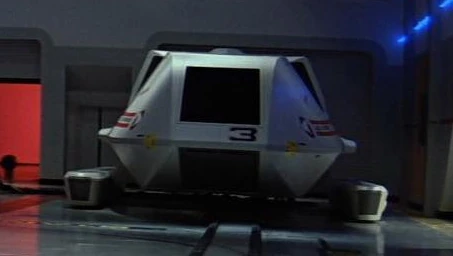 Runabout / Utility
Galileo type shuttlecraft
Hull Specifications LoggedThe Galileo-type shuttlecraft was a versatile and widely utilized shuttlecraft design operated by Starfleet throughout the 23rd and 24th centuries. Known for its robust construction and adaptability, it served as a primary auxiliary craft for numerous Starfleet starships, including several iterations of the USS Enterprise. **Design & Physical Arrangement** The 23rd-century configuration of the Galileo-type shuttlecraft featured two nacelles, each attached to the sides near the ventral hull by two pylons. Propulsion was further augmented by two impulse thrusters positioned aft, above and to the sides of the rear hatch. The craft also incorporated small, stub wings on its centerline and four maneuvering thrusters located near its corners for precise control. Access was provided by two side doors, and the cockpit boasted a large forward-facing window on the dorsal side of the front. The forward ventral hull was characterized by a large black surface, with a series of landing lights centrally located. By the 2370s, the design underwent modifications, including the addition of two side windows just forward of the side doors and the removal of the stub wings, as observed in Star Trek Generations. The script for Star Trek V: The Final Frontier initially described retractable wings, a feature not implemented in the full-scale mock-ups or studio models. **Interior Layout** Internally, the cockpit of the Galileo-type shuttlecraft was equipped with two forward-facing seats, separated by a large center screen. The main cabin was designed for passenger transport, featuring two rows of lights running the length of the ceiling, each with a handrail positioned directly beneath it. Inward-facing bench seats lined the sides of the craft, complemented by track lighting beneath them. For security and mission readiness, three weapons lockers were integrated into the design: two located just aft of the side doors, one on each wall, and a third positioned below the center screen in the cockpit, as depicted in Star Trek V: The Final Frontier. **Service History & Notable Vessels** The Galileo-type shuttlecraft saw extensive service across the 23rd and 24th centuries. Notable vessels of this type include the USS Copernicus (registry 3), which was attached to the USS Enterprise (NCC-1701-A) and was destroyed in 2287. Another shuttle, the USS Galileo (registry 5), also attached to the USS Enterprise (NCC-1701-A), sustained damage in 2287. In the 24th century, the USS Hawking (registry 15) was attached to the USS Enterprise (NCC-1701-D) and was active in 2371. An unnamed Shuttlecraft 3 was active in the 2270s, attached to Starfleet Command. The class made appearances in Star Trek: The Motion Picture - The Director's Edition, Star Trek V: The Final Frontier, and Star Trek Generations. The 2022 version of Star Trek: The Motion Picture - The Director's Edition notably features multiple Galileo-type shuttles docked at the Federation Council building in San Francisco. **Technical Notes & Classifications** While never explicitly given a canonical class or type designation on-screen, the Galileo-type shuttlecraft's in-universe dimensions were reportedly intended to be 30 by 13.5 by 8 feet (approximately 9.14 by 4.11 by 2.44 meters) without engines, according to information from the '40 Years of Star Trek: The Collection auction catalog' and 'American Cinematographer'. The 'Star Trek: The Official Starships Collection' initially designated this type as a Type 04 shuttlecraft in Issue #19, later revising it to a Type 06 shuttlecraft in Issue #23, consistently noting an approximate length of 9.1 meters.
- No armament data logged.
- No propulsion data logged.
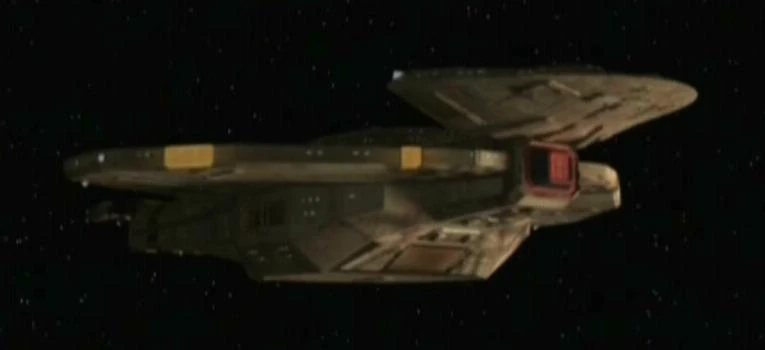
Galor Class
Class: Galor class- • Disrupto
- • Galor class phaser bank (Qty: 4)
- • Deflector shield
 Escort / Warship
Galor class
3 VesselsGalor-class cruisers were the primary class of warship utilized by the Cardassian military during the latter half of the 24th century. These formidable vessels were commonly referred to as 'warships' or 'war vessels' by the Cardassians and the Maquis, and were also designated as 'cruisers'. During the Dominion War, Starfleet classified them as 'destroyers', while the Dominion referred to them as 'assault vessels'. **Design & Development** The overall appearance of the Galor-class was distinctive, roughly anhk-shaped, featuring a half-moon structure that sat atop the primary hull. This structure comprised the ship's port and starboard 'blades' and further contained the warp nacelles. An additional structure was situated atop the forward-most section of the ship, where the main bridge was located. The primary hull design of the Galor-class also served as the main component for the Keldon-class counterparts, which incorporated an additional superstructure above the Galor-class spaceframe. During the late 2360s, at least three sub-classes of the Galor-class existed, with the Galor-class, Type-3 being considered 'top of the line'. Production of these vessels was primarily based at the Cardassia Prime Orbital Three Assembly Facility. **Tactical Systems** The arsenals of Galor-class warships varied, but typically included numerous phaser arrays. Early Cardassian phaser fire was depicted with a pinkish coloring, which later became yellow. Following the Cardassian evacuation of Terok Nor, it was noted that the defensive capabilities of the newly renamed Deep Space 9 'could not defend itself against one Cardassian warship'. While considerably inferior to the Federation's Galaxy-class starships, Galor-class vessels proved highly effective against Miranda-class starships and Klingon Birds-of-Prey. In 2369, Captain Edward Jellico famously ordered a fleet of Galor-class starships to leave the McAllister C-5 Nebula one-by-one, ejecting their primary phaser coils. By 2370, Cardassian colonists living in the Demilitarized Zone had modified Cardassian shuttles, equipping them with Galor-class phaser banks to protect their colonial interests. In the episode 'Ensign Ro', two Type-3 warships fired a weapon resembling a photon or plasma torpedo, though this specific weapon type and its effect were not seen again in subsequent appearances. B'Elanna Torres recalled Maquis tactics against the Cardassians, noting that once lured into the Badlands, 'those Galor-class cruisers had nowhere to run', a tactic notably employed against the Vetar when it pursued the Val Jean into the Badlands. In the mirror universe, the Galor-class was utilized by the Klingon-Cardassian Alliance, described by Intendant Kira Nerys as 'quick and powerful', though their targeting systems were noted to be easily fooled. **Auxiliary Systems** In 2367, Cardassian warships initially lacked the ability to read Federation starship transponder codes, an ability the Federation possessed. This capability was granted to the Cardassians when Captain Jean-Luc Picard provided Gul Macet with the Federation's codes to track the USS Phoenix. Federation starships also maintained superior terminal interface systems compared to the Galor-class. The Galor-class transporting system operated with active feed pattern buffers. The ship's aft shield generators were strategically located in the vessel's 'tail', near where the 'prong' was attached. **Service History** The Galor-class was active throughout the 24th century, playing a pivotal role in conflicts involving the Cardassian Union. During the Dominion War, these vessels were a common sight in Cardassian fleets. In early 2374, the Cardassians were actively constructing a number of these vessels at their Monac shipyard. Notable named ships of the class include the Aldara, Kraxon, Prakesh (destroyed in 2372), Reklar, Trager, and Vetar (destroyed in 2371). Several unnamed Galor-class warships were also commanded by individuals such as Benil, Dolak, Jasad, Nador, Ocett, and Toran. The Galor-class made numerous appearances across Star Trek: The Next Generation, Star Trek: Deep Space Nine, and Star Trek: Voyager, including significant roles in episodes such as 'The Wounded', 'Ensign Ro', 'Chain Of Command, Part II', 'Emissary', 'Defiant', 'Sacrifice of Angels', and 'Caretaker'.
- • Disrupto
- • Galor class phaser bank (Qty: 4)
- • Deflector shield

Garkog's battle cruiser
Class: K't'inga class- • Concussive charge launche
- • Disrupto
- + 2 more...
- • Cloaking device
- • Warp facto
- + 1 more...

Garkog's battle cruiser
Class: K't'inga class- • Concussive charge launche
- • Disrupto
- + 2 more...
- • Cloaking device
- • Warp facto
- + 1 more...
 Runabout / Utility
Gelrakian boarding pod Class
Hull Specifications LoggedGelrakian boarding pods were specialized auxiliary craft integrated into larger Gelrakian ships. Their primary design purpose was to facilitate the rapid deployment of Gelrakian boarding parties onto enemy vessels. These pods were engineered to attach directly to an adversary's hull, providing a secure entry point for invaders and serving as a critical component of Gelrakian tactical assault strategies. **Class History** The Gelrakian boarding pods were active during the 2380s. A significant recorded instance of their use occurred in 2380, as depicted in the episode 'Temporal Edict'. During this event, several boarding pods were launched from three unnamed Gelrakian ships. These pods successfully attached to the hull of the Starfleet starship USS Cerritos, allowing numerous Gelrakian invaders to board the vessel and engage its crew.
- No armament data logged.
- No propulsion data logged.
 Explorer
Gelrakian ship Class
Hull Specifications LoggedThe Gelrakian ship was a distinct type of starship originating from the Gelrakian civilization, primarily utilized during the late 24th century. These vessels were characterized by prominent large crystals that protruded from both their dorsal sections and ventral spires, giving them a unique and recognizable silhouette. For offensive capabilities, Gelrakian ships were equipped with phasers and specialized Gelrakian boarding pods, indicating a tactical design that allowed for both ranged combat and close-quarters engagement or infiltration. Their construction and armaments suggest a design focused on direct confrontation and potentially resource acquisition or territorial enforcement. **Class History** The Gelrakian ship class was active during the 2380s. A notable incident involving these vessels occurred in 2380 when a contingent of three Gelrakian ships initiated an unprovoked attack on the Starfleet vessel USS Cerritos. This engagement took place while the USS Cerritos was on a mission to Gelrak V, highlighting the aggressive posture of the Gelrakian ships. The event was documented in the Starfleet record, specifically referenced in the episode 'Temporal Edict'. While specific details on the broader service history or the total number of ships in this class are limited, this encounter firmly established the Gelrakian ship as a formidable and hostile presence in that sector during the late 24th century.
- • Phase
- No propulsion data logged.
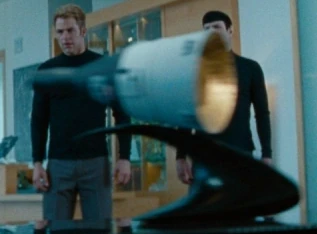 Space Capsule
Gemini capsule Class
Hull Specifications LoggedThe Gemini capsule was a mid-20th century space capsule utilized by NASA for the Gemini Project, the second manned program in the space agency's history. This innovative capsule was designed to carry two passengers into space, marking a significant advancement in human spaceflight capabilities. It was the first spacecraft to allow its passengers to perform extravehicular activities, commonly known as spacewalks, and to execute the complex orbital maneuvers necessary to achieve docking with other spacecraft. NASA specifically used the Gemini spacecraft for testing orbital rendezvous, navigation, power systems, and extravehicular activity as part of their research effort to send the first Humans to the moon. The successful execution of the Gemini Project, facilitated by the Gemini capsule, was instrumental in paving the way for the subsequent Apollo program, which ultimately led to landing Humans on Luna. **Service History** The Gemini capsule was actively used by NASA from 1964 to 1966. Notable spacecraft of this class included the Molly Brown (Gemini 3) and Gemini 8. Decades later, in 2024, a side profile of the Gemini capsule was featured alongside other spacecraft portfolios in the display 'Manned Space Flight 1961-2024'. This display was a decorative element for the gala held in honor of the astronauts of the Europa Mission, as depicted in the episode 'Two of One'. In the alternate reality, a replica of the Gemini capsule was observed on display in the office of Admiral Alexander Marcus in 2259, as seen in 'Star Trek Into Darkness'.
- No armament data logged.
- No propulsion data logged.
Genorex
Class: Warbird- No armament data logged.
- No propulsion data logged.

Gor's ship
Class: Breen interceptor- • Disrupto
- • Energy-dampening weapo
- + 1 more...
- • Deflector shield
Gorn Attack Ship
Class: Gorn attack ship- No armament data logged.
- No propulsion data logged.
Gorn attack ship Class
1 VesselThe Gorn attack ship was a specialized class of starship employed by the Gorn Hegemony. Classified specifically as an attack ship, its primary role was likely focused on offensive operations and border patrols within or near Gorn space. While specific design details regarding its propulsion, armaments, or defensive systems are not publicly known to Starfleet, its designation implies a focus on combat capabilities, designed to project Gorn power and defend their territorial claims. **Service History** This class of vessel was active during the 23rd century, with specific sightings recorded in the 2250s. A notable incident occurred in 2259 when the United Federation of Planets had a probable object identification of a Gorn attack ship departing Gorn space and entering a contested region between Federation and Gorn borders. This movement was closely monitored by Starfleet, with Admiral Robert April interpreting the ship's actions as a potential precursor to a war between the United Federation of Planets and the Gorn Hegemony. The presence of such a vessel in a sensitive border area underscored the ongoing tensions between the two powers during this period, as documented in the episode 'The Broken Circle'.
- No armament data logged.
- No propulsion data logged.
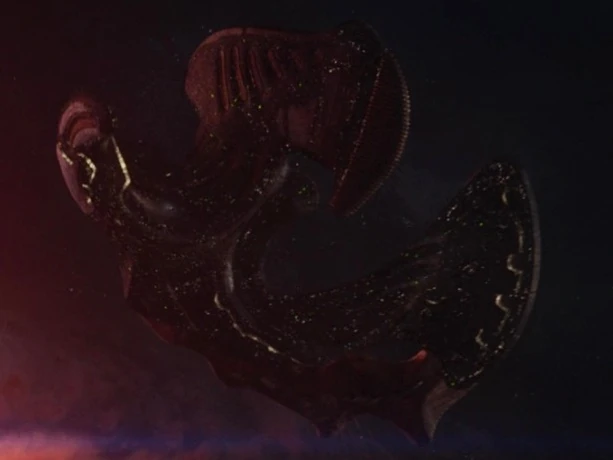
Gorn Destroyer
Class: Gorn destroyer- • Plasma weapo
- No propulsion data logged.
 Escort / Warship
Gorn destroyer Class
1 VesselThe Gorn destroyer was a formidable and massive warship employed by the Gorn Hegemony throughout the 23rd century. These vessels were tactically superior to a Federation Constitution-class starship, boasting numerous plasma weapons emplacements for offense. Defensively, they were equipped with powerful shields and sophisticated transporter systems. For inter-ship communication, Gorn destroyers, much like the smaller Gorn hunter vessels, projected distinct patterns of light. The design also allowed for full operational capability within a planetary atmosphere. Internally, Gorn destroyers featured a massive processing area known as a Digestion Chamber. Within these chambers, victims were placed into cocoons to be melted, digested, processed, and converted into either sustenance for the Gorn crew or fuel for the ship itself. The destroyers also possessed cavernous hangar bays capable of carrying numerous Gorn hunters, deploying them as auxiliary craft during engagements. **Service History** In 2259, a Gorn destroyer, accompanied by three Gorn hunters, launched an attack on the USS Enterprise (NCC-1701) near Finibus III. After the USS Enterprise (NCC-1701) successfully eliminated the Gorn hunters, its crew managed to deceive the destroyer into believing they had been destroyed. This was achieved by accelerating close to a black hole and detonating an AP 350 atmospheric processor within its accretion disk, a tactic that led the Gorn destroyer to depart the area, convinced of the USS Enterprise's (NCC-1701) destruction, as depicted in the episode 'Memento Mori'. Later that same year, another Gorn destroyer played a significant role in the assault on the USS Cayuga and the colony established on Parnassus Beta. This vessel, along with three Gorn hunters, subsequently engaged the USS Enterprise (NCC-1701) in orbit over the planet, an event chronicled in the episode 'Hegemony'.
- • Plasma weapo
- No propulsion data logged.
 Escort / Warship
Gorn hunter ship Class
Hull Specifications LoggedThe Gorn hunter ship was a compact warship utilized by the Gorn Hegemony throughout the 23rd century. Despite its relatively small dimensions, this vessel was heavily armed with potent plasma weapons, making it a formidable opponent. A key tactical feature of the Gorn hunter was its capability for atmospheric flight, allowing it to operate effectively within planetary environments. For stealth and evasion, the ship could generate a sophisticated hologram to conceal itself from enemy sensors. However, this holographic disguise was not foolproof; a scan for polarized EM signatures could expose it as an optical distortion. Like the larger Gorn destroyer, Gorn hunter ships communicated with other vessels by projecting distinct patterns of light. Each Gorn hunter ship was designed for single-pilot operation. **Class History** The Gorn hunter ship played a significant role in the Gorn Hegemony's military operations during the 23rd century. La'An Noonien-Singh and her brother, Manu Noonien-Singh, frequently observed these vessels overhead during their captivity on a Gorn breeding planet. In 2259, three Gorn hunter ships, alongside a Gorn destroyer, launched an attack on the USS Enterprise (NCC-1701) near Finibus III. During this engagement, the USS Enterprise managed to destroy one Gorn hunter with an unguided photon torpedo. Another Gorn hunter was eliminated by luring it to such a depth within a brown dwarf's atmosphere that it imploded from the immense pressure. The third Gorn hunter was destroyed by its own Gorn destroyer after the Starfleet shuttlecraft 'Galileo' transmitted a deceptive light code, falsely indicating that the hunter had been taken over by Humans. In 2260, Gorn hunter ships were again involved in major conflicts. Three of these vessels participated in the attack on the USS Cayuga and the colony on Parnassus Beta, subsequently engaging the USS Enterprise over the planet. Later, a massive armada, including numerous Gorn hunter ships, was witnessed by the USS Enterprise heading towards an invasion of Federation space. During a critical escape from a Gorn destroyer, La'An Noonien-Singh, Erica Ortegas, Joseph M'Benga, and Samuel Kirk commandeered an unguarded Gorn hunter ship. Despite being seriously wounded, Erica Ortegas skillfully piloted the craft while being pursued by another Gorn hunter. The USS Enterprise ultimately intervened by sending the Gorn into a long hibernation cycle, which caused all Gorn ships, including the pursuing hunter, to return to their homeworld. La'An Noonien-Singh successfully contacted the USS Enterprise, which then hacked the stolen Gorn hunter's systems using codes previously acquired by La'An, allowing the Starfleet personnel to be safely beamed off the vessel.
- • Plasma weapo
- No propulsion data logged.
 Escort / Warship
Gorn trading vessel Class
Hull Specifications LoggedThe Gorn starship was a distinctive vessel primarily employed by the Gorn Hegemony. Its design featured a unique configuration with four nacelles, a characteristic that made its class unfamiliar to the United Federation of Planets prior to the late 2260s. Initially classified as a raider, these ships were designed for aggressive operations. By the 2380s, the versatility of the Gorn starship allowed for its repurposing, and it was commonly utilized as a trading vessel, demonstrating a shift in the Gorn Hegemony's operational focus or the adaptability of the design. **Service History** During the mid-23rd century, Gorn starships were actively engaged in raids, serving as a primary instrument of the Gorn Hegemony's expansionist or defensive strategies. A notable encounter with a Gorn starship occurred in the late 2260s, as depicted in the Star Trek: The Original Series episode 'Arena', where a Gorn vessel engaged the USS Enterprise, commanded by Captain James T. Kirk. This incident provided the Federation with its first significant exposure to the Gorn's starship technology and tactical capabilities. Decades later, by the 2380s, the role of these vessels had evolved. As seen in Star Trek: Prodigy, specifically in the episodes 'Supernova, Part 1' and 'Supernova, Part 2', Gorn starships were observed functioning as trading vessels, indicating a period of relative peace or a diversification of Gorn interstellar activities. The class included ships such as the Unnamed Gorn trading vessels.
- • Phase
- • Warp facto
- • Deflector shield

Goroth's starship
Class: Goroth's starship- No armament data logged.
- No propulsion data logged.
 Transport
Goroth's starship Class
1 VesselThe starship commanded by Captain Goroth was a Klingon vessel active in the mid-22nd century, specifically in 2153. While its specific class designation is not widely known, background information identifies it as a transport. This Klingon starship was equipped with powerful deflector shields for defense and a robust tractor beam system, indicating its utility for various operations, including prisoner transport and retrieval. For offensive capabilities, the vessel was armed with disruptors, standard weaponry for Klingon starships of the era. **Class History** In 2153, Goroth's starship played a pivotal role in a significant incident involving the United Federation of Planets. The Tellarite bounty hunter Skalaar docked with the vessel to transfer his prisoner, Captain Jonathan Archer of the USS Enterprise (NX-01), into the custody of the Klingon Empire. While en route to deliver Archer, the Starfleet captain managed to escape from his holding cell, utilizing a lockpick provided by Skalaar. Captain Goroth, determined to recapture Archer alive, ordered his ship to engage its tractor beam on the escape pod Archer was using to flee. The pursuit was interrupted when Archer's own ship, the USS Enterprise (NX-01), intervened. The Enterprise engaged Goroth's starship in a skirmish, successfully managing to disable the Klingon vessel. This allowed the Enterprise to retrieve Captain Archer, thwarting the Klingon Empire's attempt to take him into custody. The starship remained active following this encounter, as its status was recorded as 'Active' in 2153.
- No armament data logged.
- No propulsion data logged.
 Transport ship
Goroth's starship type
Hull Specifications LoggedThe Goroth's starship-type was a robust transport vessel primarily utilized by the Klingon Empire. While specific design schematics regarding its propulsion and internal systems beyond basic armaments and defenses are not extensively documented, its operational history indicates a durable and functional design capable of long-term service. The interior design of these transports was characterized by a utilitarian and somewhat austere aesthetic, featuring dark, damp corridors illuminated by dim red lighting, consistent with Klingon functional design principles. A notable internal feature was the presence of multiple Klingon escape pods located on the lower deck, providing emergency egress for its occupants. **Service History** This class of transport ship saw extensive service with the Klingon Imperial Fleet and the Klingon Defense Force, operating for a significant period spanning from at least the 2150s through the 2380s. One of the earliest recorded instances of its use occurred in 2153, when a vessel of this type, specifically named Goroth's starship, was commanded by Captain Goroth. During this period, Captain Goroth attempted to transport Captain Jonathan Archer of the Enterprise NX-01 as a wanted fugitive to the Klingon Empire. However, Captain Archer successfully managed to escape custody aboard an escape pod before reaching the intended destination, an event chronicled in the episode "Bounty." Decades later, in 2382, several Goroth's starship-type transports were observed landed in the First City on Qo'noS, as depicted in the episode "A Farewell To Farms," demonstrating the class's continued active service well into the late 24th century.
- No armament data logged.
- • Tractor beam
- • Deflector shield

Goss' Marauder
Class: D'Kora class- • Directed energy weapo
- • electromagnetic pulse weapo
- + 2 more...
- • Warp facto
- • Deflector shield
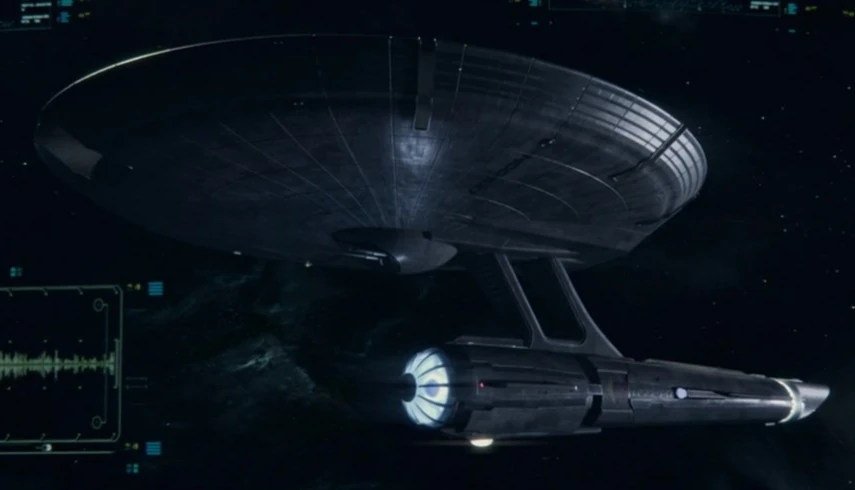 Scout / Patrol
Gral class
1 VesselThe Gral-class was a class of starship operated by Starfleet during the mid-23rd century. It was named in honor of Gral, a Tellarite diplomat from the 22nd century. Considerably smaller than a Constitution-class starship, the Gral-class shared its fundamental design principles with contemporary vessels such as the Saladin-class and Hermes-class, featuring a distinctive single-nacelle configuration. Its structure comprised a primary saucer section, which housed a pair of aft impulse engines and a single warp nacelle attached beneath the centerline. A shuttlebay was strategically located between the two impulse engines. The saucer section also incorporated several large windows around its perimeter, including a prominent front-facing window at the forward section. **Class History** The Gral-class entered active service by 2259. In that year, the USS Archer (NCC-627), a vessel of this class, was assigned a critical first contact mission to Kiley 279. The crew, consisting of Lieutenant Commander Una Chin-Riley, Lieutenant Key, and Ensign Hadad, faced arrest and imprisonment during this mission, leading to the temporary abandonment of the USS Archer in orbit. The ship was subsequently recovered and docked at Starbase 1, alongside other notable Starfleet vessels like the USS Enterprise (NCC-1701) and the USS Farragut (NCC-1647), as depicted in 'Strange New Worlds' and 'The Broken Circle'. The class continued its service, with two Gral-class vessels playing a crucial role in the evacuation of Bavali Station prior to its destruction, an event chronicled in 'Lost in Translation'. By 2261, the Gral-class remained active within Starfleet. Several ships of this class were recalled to participate in the Federation Day centennial celebration held at Starbase One, as seen in 'Wedding Bell Blues', underscoring their continued relevance in Starfleet operations during this period.
- No armament data logged.
- No propulsion data logged.
 Transport / Freighter
Groumall type
Hull Specifications LoggedThe Groumall-type starship was a distinctive design utilized by the Cardassian Union, primarily during the late 24th century. Its physical arrangement was described by designer John Eaves as a series of stacked boxes, giving it a very 'freighterish' appearance. The design featured an aft command section positioned atop the ship's engine section, with the middle of the vessel composed of multiple cargo containers, optimized for the rapid transport of materials. The bridge was intentionally placed at the rear, reminiscent of modern-day oil tankers, emphasizing its utilitarian role. The ship's propulsion was driven by large engines located at the aft, designed for efficient long-distance travel. This modular construction allowed for significant cargo capacity, making it a workhorse for Cardassian logistics. The Groumall was the only Cardassian starship class to receive considerable screen time and have interior sets constructed for its appearances in Star Trek: Deep Space Nine. **Class History** Throughout the early 2370s, the Groumall-type served primarily as a freighter or transport ship within the Cardassian Union. Occasionally, it was also fielded by the Cardassian Central Command as a military freighter, though its combat capabilities were notably limited. Starfleet maintained intelligence on this class, with its specifications appearing on the USS Voyager's library computer screen in 2374, where it was viewed by One after Seven of Nine activated his linguistic database, allowing him to assimilate information during the episode 'Drone'. Later, in 2401, Jack Crusher, aboard the SS Eleos XII, referenced this type (database ID# 5687.1) in his ship's database while attempting to identify an unknown vessel in the episode 'Disengage', indicating its continued presence in Starfleet's tactical records. The most prominent vessel of this class was the Groumall, commanded by Gul Dukat, which played a significant role in the episode 'Return to Grace'. Another unnamed Cardassian transport of this type was easily disabled by a Maquis raider near Quatal Prime in 2373, as seen in 'For the Uniform'. **Technical Specifications** The Groumall-type was equipped with low-yield phasers, making it significantly inferior to most contemporary starships. Its weapons range was less than 400,000 kilometers, and firing them produced a noticeable recoil. During a battle drill aboard the Groumall in 2372, it took 3 minutes and 47 seconds to destroy a single asteroid, primarily due to the slow recharge rate of its phaser banks, a deficiency attributed to the lack of an anodyne capacitor. Despite its weak offensive capabilities, the Groumall-type possessed two deflector shields. In a confrontation with a Klingon Bird-of-Prey, the Groumall, despite Gul Dukat's attempts, failed to inflict any damage on the enemy's hull even with its shields down. However, it later demonstrated surprising resilience by withstanding an initial disruptor volley from the Bird-of-Prey, which only knocked its forward and aft shields down to twenty percent. According to the Star Trek: Deep Space Nine Technical Manual, these vessels were typically armed with four or more spiral-wave disruptors and one medium aft disruptor wave cannon. Other systems included a transporter system. Power consumption was a notable concern; for instance, the Groumall had to disable its tractor beam to reroute sufficient power to operate a system-5 disruptor installed in its cargo hold, an action that caused power relays and plasma circuits to rupture throughout the ship. Its subspace transceiver array could also be rigged to emit a false dilithium signal to deceive adversaries. **Interior Design** The bridge of the Groumall-type was long and narrow, featuring a forward viewscreen flanked by two console stations. The port-side console served as the weapons station, while the starboard-side was dedicated to helm operations, with access to sensors, tactical, and engineering functions. Several monitors lined the starboard wall, with additional free-standing consoles positioned on both the port and starboard sides further aft. A swiveled captain's chair was centrally located behind the forward consoles, allowing the commander to view any position on the bridge. The main entryway to the corridor was situated at the aft section of the bridge. As a freighter, the cargo hold was a critical area, with multiple sections designed for material transport. The largest bay featured cargo bay doors that opened directly into space from the top. While spacious, the cargo bay was not designed to accommodate heavy military equipment like a system-5 disruptor. The staterooms were small and functional, containing a bunk bed, a table with chairs, and a computer console. These quarters, though perhaps the best on the ship, were not opulent, reflecting the utilitarian nature of the vessel.
- • Phase
- • Deflector shield (Qty: 2)

Haakona
Class: D'deridex class- • Disrupto
- • Phase
- + 1 more...
- • Cloaking device
- • Warp facto (Qty: under cloak)
- + 1 more...
 Classified
Hazari vessel Class
Hull Specifications LoggedThe Hazari vessel was a heavily armed starship primarily utilized by Hazari bounty hunters. Designed for combat and pursuit, these vessels were equipped with advanced directed energy weapons, spatial charges, and a powerful tractor beam for capturing targets. For defensive capabilities, they incorporated deflector shields. The typical crew complement for a Hazari vessel was two individuals, reflecting its specialized role and automated systems. **Operational History** One notable instance of a Hazari vessel's deployment occurred in 2375, when a ship of this class, commanded by the Hazari bounty hunter Y'Sek and his pilot, successfully captured the USS Voyager. During this encounter, the Hazari vessel was subsequently disabled by USS Voyager's phasers while both ships were maneuvering within a metreon cloud. Despite the disabling attack, the Hazari vessel did not pursue USS Voyager further. Y'Sek and his pilot later continued their search for USS Voyager aboard a Hazari shuttle. Following the discovery that both the Hazari and USS Voyager had been manipulated by the entity known as the 'Think Tank', numerous Hazari vessels, alongside Hazari shuttles, participated in a coordinated attack against the Think Tank vessel. These events were documented in the episode 'Think Tank'.
- • Directed energy weapo
- • Spatial charge
- • Deflector shield
 Heavy Cruiser
Heavy cruiser Class
1 VesselA heavy cruiser is a large, multi-purpose starship classification within Starfleet and other interstellar organizations. The term 'heavy cruiser' first appeared in the shooting script for Star Trek: The Motion Picture, where it was used to describe the Klingon K't'inga-class starships. This designation later appeared on an on-screen display for the Constitution-class, derived from the Star Fleet Technical Manual, and was explicitly spoken in reference to the Ambassador-class. **Starfleet Designations** In its heyday, the United Federation of Planets considered their Constitution-class starships to be a Class I heavy cruiser. The Klingon Empire, however, referred to the Constitution II-class, a later iteration, as a battle cruiser. The Ambassador-class starships were also officially classified as heavy cruisers by Starfleet, though in an alternate timeline, as depicted in the episode 'Yesterday's Enterprise', the Ambassador-class was simply referred to as a cruiser. More recently, the Curiosity-class starships have also been identified as heavy cruisers within Starfleet service. **Other Affiliations and Eras** The classification of heavy cruiser extends beyond Starfleet. The Emerald Chain's flagship, the Viridian, was identified as a heavy cruiser-class starship in 3189, showcasing the continued relevance of this classification across different factions and centuries. According to the Star Trek: Deep Space Nine Technical Manual, several other prominent starship classes from various powers were also referred to as 'heavy cruisers'. These include the Federation's Akira-class, the Romulan Star Empire's D'deridex-class and Keldon-class, the Dominion's Jem'Hadar battle cruiser, and the Klingon Empire's Vor'cha-class. **Alternate Realities and Technical Manuals** The concept of a heavy cruiser also transcends into alternate realities. In one such reality, the Constitution-class (alternate reality) starships, exemplified by the USS Enterprise (NCC-1701 alternate reality), were classified as heavy cruisers. This consistent application of the term across different timelines and technical documents underscores its broad utility in describing a powerful, versatile class of starship.
- No armament data logged.
- No propulsion data logged.

Heinlein
Class: Type 15 shuttlepod- No armament data logged.
- No propulsion data logged.
 Classified
Hekaran starship Class
Hull Specifications LoggedThe Hekaran starship was a distinct type of starship utilized by the Hekarans during the late 24th century. These vessels were designed for efficient operation, notably equipped with advanced transporter systems and capable of being operated by a single crewmember. Their propulsion systems allowed them to be warp-capable, facilitating interstellar travel and operations. **Service History** One notable incident involving a Hekaran starship occurred in 2370. Piloted by Rabal and Serova, a Hekaran starship was used to mine the Hekaras Corridor with verteron probes. This action was a desperate attempt to draw attention to the dangerous subspace rifts being created by warp travel, which they believed were destabilizing the fabric of space. After successfully disabling the USS Enterprise (NCC-1701-D), Rabal and Serova boarded the Federation starship to present their case to Captain Jean-Luc Picard. Unconvinced that their initial efforts had sufficiently proven their theories, Serova returned to her Hekaran starship. She then deliberately initiated an overload of the vessel's warp engines, aiming to create a warp core breach. Her drastic measure was successful, as the resulting breach generated a significant subspace rift, thereby providing conclusive evidence for her claims regarding the destructive effects of warp travel. This event was documented in the Starfleet record as 'Force of Nature'.
- No armament data logged.
- No propulsion data logged.
 Scout / Patrol
Hermes class
1 VesselThe Hermes-class was a type of 23rd century United Federation of Planets scout ship operated by Starfleet. Its design featured a saucer section and a single nacelle, with an exterior similar to that of a Constitution-class vessel from the 2260s. The key distinguishing feature was its unique configuration employing only a single nacelle. The design was originally conceived by Franz Joseph in his 'Star Fleet Technical Manual'. According to this manual, the primary distinction between the Hermes-class scout and its sister class, the Saladin-class destroyer, lay in their armaments. While the Saladin-class was equipped with three phaser banks and two photon torpedo launchers, the Hermes-class was armed with only one bank of two phasers. **Class History** Schematics of a Hermes-class vessel, specifically NCC-585, were prominently displayed on bridge monitor screens aboard the USS Enterprise (NCC-1701) in the films 'Star Trek II: The Wrath of Khan' and 'Star Trek III: The Search for Spock'. The production staff of these films utilized images directly from Franz Joseph's 'Star Fleet Technical Manual' for these background displays, with minimal or no modification. This was later confirmed by Rick Sternbach. Other known vessels of this class include the USS Columbia (NCC-621) and the USS Revere (NCC-595), both recorded as active in the 2270s. The Hermes-class was also present in the 'Star Fleet Universe' series of games.
- No armament data logged.
- No propulsion data logged.
 Science Vessel
Hiawatha type
Hull Specifications LoggedThe Hiawatha-type was a class of medical frigates operated by Starfleet, serving the United Federation of Planets primarily during the 2250s and 2260s. These vessels were designed to provide critical medical support and transport, playing a vital role in Starfleet's operations. The class was characterized by its robust construction, suitable for operations in hazardous environments, and its specialized medical facilities. Its length was established at 599.5 meters by the ship's designer, Ryan Dening, in October 2019. **Class History** The Hiawatha-type entered service by 2256, immediately finding itself involved in the intense Federation-Klingon War (2256-57). One notable vessel of this class, the USS Hiawatha (NCC-815), disappeared in 2256 during the conflict and was initially presumed destroyed by Klingon forces. However, it was later discovered crashed on the surface of an interstellar asteroid, its fate attributed to encountering wildly fluctuating gravity waves, as depicted in the Star Trek: Discovery episode "Brother". The USS Hiawatha (NCC-815) was officially listed as wrecked in 2256. The class continued its service into the 2260s, undergoing a significant refit of its warp propulsion systems. This upgrade, which included the installation of new contemporary cylindrical nacelles, was part of a fleet-wide modernization effort, as referenced in the Star Trek: Strange New Worlds episode "Wedding Bell Blues". By 3189, long after their primary operational period, multiple Hiawatha-type hulks were observed orbiting Hunhau. These derelict vessels were part of a vast debris field resulting from the catastrophic event known as the Burn. Some of these hulks were repurposed by a salvage yard located on the planet's surface. During a prisoner revolt at this facility, Philippa Georgiou shot down one of the orbiting Hiawatha-type hulks, causing it to crash directly onto the salvage yard below, an event chronicled in the Star Trek: Discovery episode "Scavengers".
- No armament data logged.
- No propulsion data logged.
Medical frigate
Hiawatha type
1 VesselThe Hiawatha-type was a class of medical frigates operated by Starfleet, serving the United Federation of Planets during the mid-23rd century. Designed primarily for humanitarian and support roles, these vessels were crucial for medical aid and transport, particularly during periods of conflict. The class was characterized by its robust construction, capable of operating in challenging environments, and its distinctive design, which later saw modifications to its propulsion systems. The USS Hiawatha (NCC-815) was a notable vessel of this class, providing a clear example of its design and operational capabilities. **Class History** First entering service by 2256, the Hiawatha-type quickly found itself involved in the intense Federation-Klingon War (2256-57). During this conflict, the USS Hiawatha (NCC-815) disappeared in 2256 and was initially presumed destroyed by Klingon forces. However, it was later discovered crashed on the surface of an interstellar asteroid, its fate attributed to encountering wildly fluctuating gravity waves, as depicted in the Star Trek: Discovery episode "Brother." The Hiawatha-type continued its service into the 2260s, undergoing a significant refit of its warp propulsion systems. This upgrade included the installation of new, contemporary cylindrical nacelles, a modification applied across the fleet to enhance performance, as referenced in the Star Trek: Strange New Worlds episode "Wedding Bell Blues." Centuries later, by 3189, multiple Hiawatha-type hulks were observed orbiting the planet Hunhau. These derelict vessels were part of a vast debris field, remnants from the catastrophic event known as the Burn, and were utilized by a salvage yard on Hunhau's surface. During a prisoner revolt at this facility, Philippa Georgiou notably shot down one of these Hiawatha-type hulks, causing it to crash onto the salvage yard below, an event detailed in the Star Trek: Discovery episode "Scavengers." **Appearances** The Hiawatha-type starship class has appeared in Star Trek: Discovery episodes "Brother," "Scavengers," and "The Sanctuary," as well as the Star Trek: Strange New Worlds episode "Wedding Bell Blues."
- No armament data logged.
- No propulsion data logged.

Hideki class
Class: Hideki class- • Disrupto
- • Phase
- No propulsion data logged.
Runabout / Utility
Hideki class
1 VesselThe Hideki-class was a warp-capable, multipurpose starship primarily utilized by the Cardassian Union's military during the late 24th century. It served various roles including patrol, attack, and shuttle duties, and was notably active during the Dominion War, often referred to as a 'Cardassian attack ship'. **Design & Development** As of 2370, the Hideki-class was considered a newer design, with Kira Nerys at Deep Space 9 only able to identify it as 'definitely Cardassian' without further specifics. According to the 'Star Trek: Deep Space Nine Technical Manual', the Hideki-class was produced at the Cardassia Prime Orbital Three Assembly Facility. The manual also notes an interesting design similarity to the USS Defiant (2370), particularly in the forward hull notch, bridge morphology, and aft hull assembly, leading Starfleet to suspect compromised classified design documentation. The class was designed by Jim Martin, with the physical studio model built by Tony Meininger. These vessels were warp-capable, with the 'Star Trek: Deep Space Nine Technical Manual' specifying one and possibly two M/A warp systems, alongside one or more impulse systems, allowing for observed speeds of Warp 9.5. Standard armament included disruptors, with some variants modified to carry Galor-class phaser banks. The 'Star Trek: Deep Space Nine Technical Manual' details four or more spiral-wave disruptors and one medium aft disruptor wave cannon. The class had a crew complement of 3-5, though the 'Star Trek: Deep Space Nine Technical Manual' indicates an accommodation capacity of 30 plus flight crew. Dimensions were 85.78 meters in length, 60.14 meters in beam, and 12.43 meters in height, with an estimated mass of 120,000 metric tonnes. **Service History** The Hideki-class first appeared in the episode 'Profit and Loss' in 2370, when a vessel, later identified as Lang's shuttle, arrived at Deep Space 9. This particular ship was equipped with a cloaking device installed near its central engine core, operated from the bridge, and was capable of Warp 8. Later that year, in the episode 'The Maquis, Part I', Cardassian colonists in the Demilitarized Zone utilized modified Hideki-class shuttles, equipped with Galor-class phaser banks, to protect their colonial interests. These vessels were noted as being 'much smaller' than Cardassian patrol cruisers. In the episode 'Tribunal', a Starfleet computer specifically identified one of these vessels as a 'Hideki-class, Cardassian patrol ship', noting it posed a risk to a Danube-class runabout and utilized photo lock-on for its defensive systems. The Hideki-class proved to be a versatile and potent asset, operating effectively in fleet actions. They were referred to as 'Cardassian attack ships' when engaging Federation attack fighters. These vessels were extensively involved in numerous Dominion War conflicts, including the Second Battle of Deep Space 9 and Operation Return, as seen in the episodes 'Call to Arms' and 'Sacrifice of Angels'. Notable individual ships of the class included Lang's shuttle, Evek's patrol ship, and Rusot's shuttle.
- • Disrupto
- • Phase
- No propulsion data logged.
 Science Vessel
Hierarchy survey vessel Class
Hull Specifications LoggedThe Hierarchy survey vessel was a type of starship primarily utilized by the Overlookers, a faction within the Hierarchy. These vessels were equipped with a warp drive, making them warp-capable, and featured transporters and tractor beams for various operational needs. A notable design aspect included a cargo hold sufficiently large to accommodate an Intrepid-class warp core, indicating significant internal volume for transport or storage. For defense, the survey vessel was protected by auto-regenerative shielding. However, these shields were not robust enough to withstand a prolonged assault from even two Starfleet shuttlecraft armed with phaser emitters. Offensively, the Hierarchy survey vessel was armed with polaron-based weapon systems, including directed energy weapons and torpedoes. These armaments were potent enough to disable a Delta Flyer shuttlecraft, demonstrating a considerable tactical capability despite the vessel's primary classification as a survey ship. **Service History** One such Hierarchy survey vessel gained notoriety in 2378 when it was stolen by two individuals, Zet and Nar. They used the stolen vessel to abduct Captain Kathryn Janeway and The Doctor while they were returning to the USS Voyager from a medical symposium. Zet subsequently coerced The Doctor into attempting to steal the USS Voyager's warp core, threatening Captain Janeway's life. The Doctor, after impersonating various crew members aboard the USS Voyager, eventually returned to Zet's starship with the core. However, Zet reneged on the agreement, imprisoning both The Doctor and Captain Janeway in a holding cell located near the bridge. The USS Voyager's crew ultimately discovered the plot and launched a successful rescue effort, leading Zet to abandon the stolen warp core. This incident was documented in the Starfleet record, 'Renaissance Man'.
- • Polaron-based directed energy weapons and torpedos
- • Auto-regenerative shielding

Hirogen ship
Class: Hirogen ship- • Phase
- • Stalking mode
- • Monotanium
Hunting Vessel
Hirogen ship Class
2 VesselsThe Hirogen ship, also known as a Hirogen vessel, was a distinctive type of small, heavily-armed hunting vessel primarily utilized by the Hirogen species during the 2370s. These ships were specifically designed for the Hirogen's cultural practice of hunting prey across the vast expanse of the Delta Quadrant. A key identifying feature of these vessels was their robust monotanium hull plating, which rendered them virtually impervious to conventional phaser fire, providing a formidable defense against potential adversaries. Powering these formidable ships was a tylium-based power source, which contributed to their impressive performance capabilities. Their unique dicyclic warp signature also made them easily identifiable to other species capable of detecting such emissions. **Armaments & Tactical Abilities** Despite their relatively small size, Hirogen ships were equipped with massive weapon systems, including powerful phaser banks capable of firing forward. Their tactical range extended to at least 50,000 kilometers. Beyond direct energy weapons, these vessels possessed specialized tactical abilities, such as a subnucleonic beam designed to disable other starships, and a stun beam for incapacitating targets. Hirogen ships typically operated alone or in small groups, but were known to coordinate multi-pronged attacks when hunting particularly challenging prey. Their combined firepower and defensive capabilities were significant, as demonstrated by their ability to collectively defeat an Intrepid-class starship, such as the USS Voyager, in combat scenarios. **Interior Design** The interior of a Hirogen ship was functional and tailored to the hunters' needs. The bridge was typically piloted by a crew of one to two Hirogen, usually an Alpha-Hirogen and a Beta-Hirogen. It featured large, freestanding consoles that were manipulated using control rods. Beyond the bridge, a large trophy room served as a central area for processing and displaying their kills. This room contained another console, and its walls were adorned with various trophies and bladed weapons. Advanced technology for producing 'relics' of their prey was also present, including a harness-like construction for suspending prey during osteotomy procedures, and large transparent cylinders filled with an enzyme-rich fluid designed to break down organic tissue. **Class History** The USS Voyager first encountered a Hirogen ship in mid-2374, an event chronicled in the Star Trek: Voyager episode 'Hunters'. This initial contact occurred when the USS Voyager accessed the Hirogen communications network to receive a full message from Starfleet Command. During this encounter, Tuvok and Seven of Nine were hunted down and subsequently held prisoner aboard a Hirogen ship commanded by Idrin, until Idrin instructed his Beta-Hirogen to eliminate their prey. Hirogen ships continued to pose a significant threat to the USS Voyager and other vessels throughout the Delta Quadrant, appearing in subsequent Star Trek: Voyager episodes such as 'Prey', 'The Killing Game', 'The Killing Game, Part II', and 'Flesh and Blood'. Notable ships of this class include Idrin's ship, which played a pivotal role in the USS Voyager's early encounters with the Hirogen.
- • Phase
- • Stalking mode
- • Monotanium

HMS Lord Nelson
Class: DY-500-B class- No armament data logged.
- No propulsion data logged.
 Classified
Holograms' ship Class
Hull Specifications LoggedConceptually similar to a Federation holoship, the Holograms' ship was a Hirogen starship equipped with advanced Starfleet holo-emitters. These emitters functioned as an independent sub-system, powered by their own dedicated generator, and were robustly protected by three layers of ablative armor. The vessel possessed the capability to operate in a stealth mode, utilizing a scattering field to evade sensor detection. While active, this field would manifest as elevated plasma readings, and the ship's precise location could be pinpointed by scanning for its polarized EM signatures. Its offensive capabilities included phasers, forward torpedoes, and a forward particle weapon, complemented by robust deflector shields for defense. The ship also incorporated transporter technology and escape pods, though these pods could not be launched while the vessel was at warp speed. Hirogen sensors were capable of detecting residual ion emissions left by the ship, and it was known that Hirogen vessels produced an ion wake approximately five thousand meters long, within which sensor interference was too significant to detect anything. Internally, the Holograms' ship featured a bridge with an adjacently attached ready room. The command center was described in production notes as dark, imposing, and filled with weaponry and tactical technology, reminiscent of designs seen in the episode 'Hunters'. A dedicated lab facility was also present, which the holograms repurposed for the creation of their photonic field generator. This space was originally designed by the Hirogen for preparing their recently killed prey, featuring harnesses and restraints on the bulkheads and a preparation table in the center of the room. Production notes described the ship's overall configuration as 'sleeker and more menacing' compared to other Hirogen vessels encountered. **Class History** In 2377, a specific vessel of this type, identified as the 'Holograms' ship' or 'Iden's ship', was commandeered by the Hirogen-created hologram Iden and a number of other holograms. This starship became the primary vehicle for Iden's Rebellion, a significant event chronicled in the episode 'Flesh and Blood'. While the episode referred to it as the 'Holograms' ship' or 'the holograms' highjacked Hirogen ship', and the Star Trek Encyclopedia described it as 'Iden's ship', the Star Trek Customizable Card Game later identified Iden's specific vessel as the Olarra.
- • Phase
- • Deflector shield

Honshu shuttlecraft
Class: Type 6 shuttlecraft- • None standard
- • Phase (Qty: 2)
- • Deflector shield
 Classified
Hoover class
4 VesselsThe Hoover-class was a type of Federation starship operated by Starfleet during the mid-23rd century. Its primary hull design featured a rounded fore section and an angled aft area, bearing a notable resemblance to the later Miranda-class and Nebula-class starships. Internally, some of its areas, including its transporter room and corridors, shared design similarities with the Crossfield-class, as observed in the Star Trek: Short Treks episode 'The Escape Artist'. The class had a length of 356.3 meters. Its armaments included phasers, standard for Starfleet vessels of the era. **Class History** The Hoover-class was active in the 2250s. Two notable vessels of this class, the USS Dana and the USS Edison (registry NCC-1683), participated in the pivotal Battle of the Binary Stars against the Klingons in 2256, an event depicted in the Star Trek: Discovery episode 'Battle at the Binary Stars'. The USS Edison was subsequently destroyed during the Federation-Klingon War (2256-57). Another ship of the class, the USS De Milo, was also active in 2256. The USS Hoover, a vessel of uncertain classification within the class, was ambushed and lost during the same Federation-Klingon War (2256-57). By 2401, the Edison-class starship, which appeared in the Star Trek: Picard episode 'Vox', bore a strong resemblance to the Hoover-class, specifically honoring the legacy of the Hoover-class vessel named USS Edison, indicating the historical significance and enduring design influence of the Hoover-class within Starfleet.
- • Phase
- No propulsion data logged.
 Transport / Freighter
Huron type
Hull Specifications LoggedThe Huron-type was a small 23rd century United Federation of Planets starship, officially classified as a freighter. Its overall design was considered rather complicated compared to other contemporary vessels of its era. The starship was constructed on a horizontal spaceframe, featuring the standard two-nacelle configuration for warp propulsion. Below the main spaceframe, the vessel incorporated large cargo holds designed for transporting various goods. The bridge was strategically located in the upper foremost position of the vessel, while several nacelle-like extremities were situated on the ship's forward-most section. **Specifications & Interior** This class of vessel was commonly utilized during the 2260s and 2270s for cargo transport, including vital materials such as dilithium. The Huron-type was capable of operating efficiently with a minimal crew complement of as few as three individuals. Its bridge, notably lacking a dedicated captain's chair, featured a forward console designed for both the navigator and helmsman, positioned directly facing the main viewscreen. An aft console, equipped with a single chair, faced the rear bulkhead of the bridge. The ship's large cargo holds were a primary feature, specifically designed to accommodate substantial quantities of cargo like dilithium. **Class History** The Huron-type freighters were known to be significantly inferior in both speed and firepower when compared to the contemporary Orion pirate vessels of the time, making them particularly susceptible to pirate attacks. This vulnerability was notably highlighted in the 2270 incident involving the USS Huron. The USS Huron, bearing the unique registry number NCC-F1913, is the only known starship to utilize the 'F' letter prefix in its registry number, though other examples of letters in registry numbers do exist. The USS Huron was ultimately scuttled in 2270, marking a significant event in the class's operational history. The class's service life primarily spanned the 23rd century, with active use documented throughout the 2260s and 2270s, as depicted in the Star Trek: The Animated Series episode 'The Pirates of Orion'.
- No armament data logged.
- No propulsion data logged.

IKS Amar
Class: K't'inga class- • Concussive charge launche
- • Disrupto
- + 2 more...
- • Cloaking device
- • Warp facto
- + 1 more...

IKS B'Moth
Class: K't'inga class- • Concussive charge launche
- • Disrupto
- + 2 more...
- • Cloaking device
- • Warp facto
- + 1 more...

IKS B'Moth
Class: K't'inga class- • Concussive charge launche
- • Disrupto
- + 2 more...
- • Cloaking device
- • Warp facto
- + 1 more...

IKS Devisor
Class: D7 class- • Disrupto (Qty: 2)
- • magnetic pulse generators
- + 1 more...
- • Cloaking device (Qty: after 2269)
- • Warp facto
- + 1 more...

IKS Gr'oth
Class: D-7 battlecruiser- No armament data logged.
- No propulsion data logged.

IKS Gr'oth
Class: D-7 battlecruiser- No armament data logged.
- No propulsion data logged.

IKS Klothos
Class: D7 class- • Disrupto (Qty: 2)
- • magnetic pulse generators
- + 1 more...
- • Cloaking device (Qty: after 2269)
- • Warp facto
- + 1 more...
IKS T'Acog
Class: K't'inga-class battle cruiser- No armament data logged.
- No propulsion data logged.
IKS T'Acog
Class: K't'inga-class battle cruiser- No armament data logged.
- No propulsion data logged.

IKS T'Ong
Class: K't'inga class- • Concussive charge launche
- • Disrupto
- + 2 more...
- • Cloaking device
- • Warp facto
- + 1 more...

IKS T'Ong
Class: K't'inga class- • Concussive charge launche
- • Disrupto
- + 2 more...
- • Cloaking device
- • Warp facto
- + 1 more...
IKS Ya'Vang
Class: Battle Cruiser- No armament data logged.
- No propulsion data logged.
IKS Ya'Vang
Class: Battle Cruiser- No armament data logged.
- No propulsion data logged.
 Explorer
Illyrian starship Class
Hull Specifications LoggedThe Illyrian starship was a class of vessel utilized by the Illyrians during the mid-22nd century. These starships were equipped with a minimal armament of particle weapons and were tactically inferior to an NX-class starship. A notable design feature of this class was its primary warp coil, which was intricately tied into the ship's injector system and protected by a robust force field. **Service History** In 2154, a badly-damaged NX-class Starfleet vessel, the *Enterprise*, encountered a similarly damaged Illyrian starship within the treacherous Delphic Expanse. The Illyrian vessel had sustained damage to its engines and life support system due to the spatial distortions prevalent in the Expanse while it was engaged in studying a red giant. Captain Jonathan Archer of the *Enterprise* requested the Illyrian ship's captain to surrender their warp coil, offering food and supplies in exchange. The Illyrian captain refused, explaining that the loss of their warp coil would condemn them to a three-year journey back to their homeworld, a voyage for which their ship was not equipped. Given the *Enterprise*'s critical mission to locate and destroy the Xindi weapon before it could devastate Earth, Captain Archer was compelled to lead an away team aboard the Illyrian starship to acquire the coil by force. Upon boarding the Illyrian ship, the *Enterprise* crew encountered the protective force field surrounding the primary warp coil. It was only after T'Pol directed the *Enterprise*'s phase cannons to disable the Illyrian ship's power junction, which supplied energy to the force field, that the barrier was neutralized, allowing the away team to successfully remove the coil. Before departing, Captain Archer ensured that the *Enterprise* beamed food, supplies, and three containers of trellium into the Illyrians' cargo hold, providing them with essential resources for their arduous three-year journey back to their homeworld. This event was documented in the episode 'Damage'.
- • Particle weapo
- No propulsion data logged.
 Runabout / Utility
Imhotep ship Class
Hull Specifications LoggedThe Imhotep ship was a compact vessel utilized by the Imhotep species, native to the Delta Quadrant. While specific design schematics are limited, its classification as a shuttle suggests a smaller, agile craft primarily intended for short-range travel or specialized tasks. Its operational history indicates a design capable of high performance, particularly in competitive environments. **Service History** This class of vessel gained notable recognition in 2377 when an Imhotep ship participated in the inaugural Antarian Trans-stellar Rally. Piloted by Assan and his co-pilot, the ship demonstrated exceptional speed and maneuverability throughout the challenging race. The Imhotep ship ultimately secured first place in the rally, though its victory was influenced by the withdrawal of the Starfleet vessel, the Delta Flyer, which was forced to eject its warp core into a class-J nebula during the event. This incident is documented in the Starfleet record 'Drive'. The Imhotep ship's performance in such a high-stakes competition underscores its advanced capabilities for its class.
- No armament data logged.
- No propulsion data logged.

Indiana Jones
Class: Type 7 shuttlecraft- No armament data logged.
- • Deflector shield
 Classified
Inquiry class
8 VesselsThe Inquiry-class was a type of starship operated by Starfleet during the late 24th and early 25th centuries. By 2399, these vessels were considered the toughest, fastest, and most powerful ships Starfleet had ever put into service, as attested by Acting Captain William T. Riker. **Design & Development** Inquiry-class ships featured the standard saucer section, engineering section, and warp nacelle layout common to most Starfleet vessels. The class was notable for containing two variations of warp nacelles. Initially, these ships were equipped with phasers and deflector shields, reflecting their advanced tactical capabilities. Between 2399 and 2401, several ships of this class, including the USS Zheng He, underwent a substantive retrofit. This upgrade included a replacement of the main deflector, structural alterations to the secondary hull, design alterations to the nacelles, and a full replacement of the outer hull, enhancing their already formidable design. **Class History** The Inquiry-class played a significant role in several critical Starfleet operations. In 2399, a fleet of Inquiry-class ships, led by the USS Zheng He under the command of Acting Captain William T. Riker, traveled to the planet Coppelius. There, they served as protectors for the synthetic lifeforms residing on the planet, as depicted in 'Et in Arcadia Ego, Part 2'. By 2401, the class continued to be at the forefront of Starfleet's defensive efforts. Five Inquiry-class ships were dispatched to join an armada confronting an unknown Borg vessel. During this encounter, a Borg liaison briefly commandeered the USS Stargazer (NCC-82893) and other vessels, necessitating the engagement of their auto-destruct systems by the crews, as seen in 'The Star Gazer'. Later that same year, a substantial contingent of twenty-two Inquiry-class ships participated in fleet maneuvers celebrating 250 years since the Enterprise (NX-01) took her first voyage. These ships were subsequently commandeered after Starfleet officers under the age of 25 were placed under the influence of the Borg, with the assistance of Jack Crusher, an event central to 'Võx' and 'The Last Generation'. Notable active ships of this class include the USS Janaran (NCC-86518), USS Kumari (NCC-86610), USS Magellan (NCC-86509), USS Nathan Hale (NCC-86501), USS Rustazh (NCC-86503), USS Shackleton (NCC-86517), USS Varian Fry (NCC-87883), and USS Zheng He (NCC-86505). **Technical Specifications & Interior** The main bridge of Inquiry-class starships was situated on Deck one, featuring a central command chair for the commanding officer and a computerized transparent window-viewscreen. By 2401, the computer systems on board the class were advanced enough to incorporate the Fleet formation mode, also known as Starfleet emergency protocol NX12.11. This protocol was designed to place all Federation starships within a fleet under the automated control of the Starfleet mainframe, demonstrating a high level of technological integration and command capability.
- • Phase
- • Deflector shield
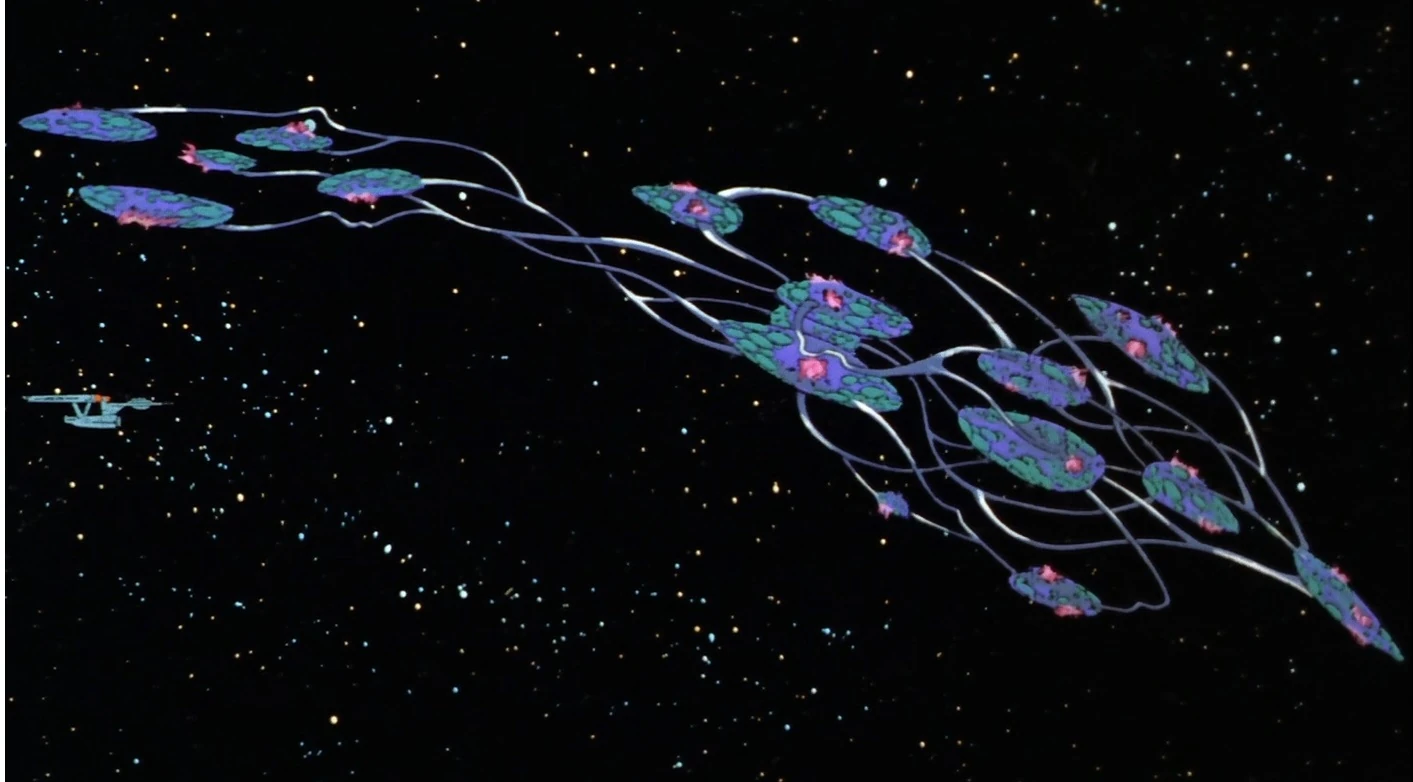 Classified
Insectoid starship Class
Hull Specifications LoggedThe Insectoid starship was a unique, derelict vessel discovered by the USS Enterprise (NCC-1701) during a 2269 starcharting mission. This immense ship, operated by ancient insectoids approximately three hundred million years ago, represented a galactic starship design previously unrecorded by Starfleet. Its distinctive appearance and advanced construction materials set it apart from any known vessel. **Design & Development** The design of the Insectoid starship was described by Lieutenant Nyota Uhura as touched by grace and beauty, while Doctor Leonard McCoy noted its unparalleled uniqueness. It comprised numerous interconnected pod-like structures. Its windows were hexagonal, reminiscent of Earth's bee honeycombs, with individual cells mirroring the ship's design. The vessel was constructed from an unknown metal alloy, significantly harder and lighter than any registered metal. This material was not cast or rolled but appeared to be drawn into filaments and spun, similar to a spider's web. Internally, the pods featured energy-accumulating wands designed to collect energy from motion, sound, light, heat, and magnetism. Within its non-breached sections, the ship maintained artificial gravity within two points of Earth normal, and its atmospheric composition was similarly close to Earth's. **Class History** Approximately three hundred million years ago, the Insectoid starship was drawn to a dead star characterized by immense hypergravity. At this star, a malevolent magnetic organism infiltrated and began to take control of the ship. Rather than allow the lifeform to spread to other worlds, the ancient insectoid crew made the ultimate sacrifice, deciding to destroy their vessel. They succeeded in bursting open all of the ship's pods from the inside, though the exact means remain unknown. One room, however, remained intact and protected from the lifeform, where the insectoids left a warning message for any future discoverers. In 2269, the USS Enterprise, similarly drawn by the dead star, encountered the Insectoid starship. By this time, it was a lifeless hulk, its temperature at absolute zero with no energy stores for communication. However, a faint magnetic flux indicated the magnetic organism was still present. An away team, including Captain James T. Kirk, Spock, and Doctor Leonard McCoy, beamed aboard the derelict. They uncovered the ship's tragic history but inadvertently brought the magnetic organism back to the USS Enterprise. As the organism began to assimilate the USS Enterprise's computers, it activated the starship's phaser banks, vaporizing the ancient Insectoid starship and ending its long, silent vigil. This event was documented in the Star Trek: The Animated Series episode 'Beyond the Farthest Star'.
- No armament data logged.
- No propulsion data logged.

Inspection pod
Class: Inspection pod- No armament data logged.
- • Sub-impulse thruste
Runabout / Utility
Inspection pod Class
1 VesselAn inspection pod was a type of auxiliary craft utilized by Starfleet during the 22nd century. Its design drew inspiration from the 20th-century Mercury capsules and Gemini capsules, featuring a distinctive conical exterior. Key external features included a small, raised pair of lights mounted high on the outer hull, a black, wedge-shaped component at the front (intended by designer John Eaves to function as a bumper), and a circular docking port at the rear. The craft was equipped with five windows, none directly forward, but offered a commanding 'upward' view relative to the interior seating. A large ceiling window dominated the cabin, complemented by four smaller windows set forward and lower. The interior of the inspection pod was designed for a crew of two, featuring a helm with a manual steering column for piloting and communications equipment capable of instant audio transmissions. Each of the two seats was fitted with a pair of seat belts and two tanks located behind the seat back. The design process involved modifying the cockpit of the Phoenix from Star Trek: First Contact, with significant alterations including changes to the windows and a reduction to two seats. Michael Okuda contributed the design for the docking ring, drawing inspiration from the International Space Station. While John Eaves initially envisioned the pod with bright, 4x4-like lights, these were scaled back in the final design. The exterior's gray color was noted to be brighter than that of NX-class starships like the Enterprise NX-01 or Columbia NX-02. The interior set of the inspection pod was later reused for the Vissian stratopod in the episode 'Cogenitor'. Doug Drexler, who likened the craft to a 'space jeep', speculated that these pods might have been launched into orbit on Atlas-like missiles, then transferred to an orbital 'motorpool' for outfitting for various duties, including cargo handling, repairs, and routine maintenance. **Service History** Inspection pods were actively used by Starfleet in the 22nd century. Several of these auxiliary craft were stationed at Earth's orbiting spacedocks in the 2150s, operating under Shipyard Ops. Notably, the inspection pod designated Orbital 6 was employed to inspect the outer hull of the NX-class starship Enterprise NX-01 shortly before its historic launch in 2151, an event depicted in episodes such as 'Broken Bow', 'Shockwave', 'The Expanse', 'Home', 'Borderland', and 'Affliction'. The Enterprise NX-01 itself carried at least one inspection pod, stored within a cargo bay, during its initial years of service, as seen in episodes like 'Shuttlepod One', 'Dead Stop', and 'Damage'. Unnamed inspection pods were also in service during this period.
- No armament data logged.
- • Sub-impulse thruste

Intrepid
Class: Intrepid class- • Phase
- • Photon torpedo
- • Spatial charge
- • Tricobalt device
- + 2 more...
 Explorer
Intrepid class
4 VesselsThe Intrepid-class starship was a Federation design that entered service in the latter half of the 24th century, specifically designed for long-term exploration missions. Considerably smaller than a Galaxy-class starship, being less than half its size, the Intrepid-class was characterized by Starfleet as 'quick and smart'. Its multi-mission design was supported by a main computer processor capable of simultaneously accessing 47 million data channels and sustaining 575 trillion calculations per nanosecond, operating in temperatures ranging from 10 to 1,790 Kelvin. **Technological Innovations** Upon its commissioning, the Intrepid-class incorporated numerous cutting-edge innovations. These included a warp core featuring a tricyclic input manifold and variable geometry pylons, which allowed the warp nacelles to angle when going to warp, a unique characteristic not observed in other starship classes. It was also the first class to utilize bio-neural gel packs in its systems and was equipped with the Mark I Emergency Medical Hologram (EMH) system. The class boasted the finest navigational sensors and the highest top speed of any Starfleet vessel at the time, a distinction it held until the development of the Prometheus-class. **Physical Arrangement & Hull Design** The Intrepid-class adopted the traditional saucer-type hull configuration, comprising a primary hull, a secondary hull, and warp nacelles. The vessel's structure utilized a duranium hull, a plasma-based power distribution system, and tricyclic life support systems. Deck 1 was reserved for the main bridge, with the briefing room and captain's ready room situated to its port and starboard. Deck 2 housed the crew's mess hall and the captain's private dining hall, offering a spectacular forward view of space. The commanding officer's quarters, featuring five windows, were located on Deck 3. The dorsal saucer section was protected by four phaser arrays, with two extending from the aft curvature along the saucer's length, and two smaller arrays covering the aft firing arc. The ventral side of the ship was similarly protected by two arrays extending to the rear and curving towards the bow. The vessel's aeroshuttle was docked to the underside of the primary hull. The main navigational deflector dish was located at the foreside of the secondary hull, with forward photon torpedo launchers directly above it. The underside of the secondary hull featured three sets of plates supporting the warp propulsion system: a forward plate covering the reserve intermix chamber, a middle plate containing the antimatter loading port, and an aft cover plate for the operational intermix chamber hatch, allowing for emergency warp core ejection. The Intrepid-class was one of the few Starfleet starship classes capable of atmospheric entry and planetary landing, equipped with antigravity generators and strategically placed impulse and lifters on the bottom portion of the secondary hull. During landing or takeoff, the vessel typically went to blue alert. **Command & Control Systems** The main bridge of an Intrepid-class starship was ovoid and served as the vessel's nerve center, built on three levels. The rear of the bridge featured a large bank of consoles and data readout screens, with the master systems display at its center. The chief tactical officer's station, located starboard of the information center, managed internal security, combat situations, sensor arrays, sensor probes, message buoys, and tractor beams. An identical operations station was found on the port side, presenting a continually updated list of shipboard activities. Forward of these areas were doorways to the briefing room and the captain's ready room, the latter being more spacious and luxurious than those found on a Galaxy-class starship, providing a private workspace for the commanding officer. The central command area provided seating for the commanding officer and first officer, with a miniaturized status display between them for overriding basic starship operations. Directly forward and two steps lower was the conn station, where the flight control officer served as helmsman and navigator, monitoring relativistic effects, inertial damping, subspace field geometry, and long-range sensor data. To the right of conn sat the chief engineer's console, offering complete control over engineering systems, while the chief science officer's console was opposite, used for tasks such as venting LN2 exhaust conduits. The Intrepid-class could not execute an auto-destruct sequence if its secondary command processors were damaged. **Propulsion Systems** Main engineering aboard an Intrepid-class starship was located on Deck 11, centered around the matter-antimatter reaction assembly, a Class 9 warp drive with a tricyclic input manifold. This core provided a maximum output of four thousand teradynes per second and was designed to operate for up to three years before refueling. The reaction chamber was equipped with a theta-matrix compositor, allowing for recrystallization of dilithium. The warp drive enabled a top sustainable cruise velocity of Warp Factor 9.975, and the ship could maintain Warp 9.75 for 12 hours. A secondary warp assembly was also featured. The main engineering room was split into two levels, with a large monitoring area and the chief engineer's office on the lower level, and a second tier ringing the upper level. The main impulse engines were located on the aft end of the pylons leading to the warp nacelles, supplemented by auxiliary impulse reactors. In the event of a warp core breach, the Intrepid-class could eject its warp core through a port on the underside of the secondary hull, a procedure requiring authorization from the chief engineer or a senior staff member. The core could be recovered with tractor beams if it did not go critical. **Tactical Systems** The Intrepid-class utilized a comprehensive ship-mounted phaser array system, totaling fourteen arrays. Four arrays covered the dorsal saucer section, with two extending from the aft curvature along the saucer's length, and one smaller array behind the bridge. Two smaller arrays covered the aft firing arc. The ventral side was protected by two similar arrays extending to the rear and following the curve to the auxiliary deflector incision, with an additional array across the ventral engineering hull just fore of the warp core ejection port. Far-aft strips were provided on the underside of the variable-geometry nacelle pylons and under the shuttlebay landing deck. Additional phaser banks included at least four separate phaser emitters, two in the aft torpedo launcher, one aft phaser bank behind the second tractor beam emitter on Deck 14, and an embedded emitter on the ventral surface of the ship's right nacelle. The class housed four standard torpedo launchers (two fore and two aft). The USS Voyager, for example, was loaded with Type 6 photon torpedoes in 2371, and also carried Class-9 and Class-10 photon torpedoes, and two tricobalt devices. The ship also carried spatial charges, which could be used as subspatial charges to cause subspace disturbance, as well as photon charges, photon bursts, and gravimetric charges, which could be installed into photon torpedoes to create gravimetric torpedoes. Cardassian quantum torpedoes were also compatible with Intrepid-class launchers with some modification. For defense, the Intrepid-class featured fourteen external shield grids, which were superior to earlier designs, incorporating multiphasic and multi-spectrum shielding. These shields allowed the ship to survive near a binary pulsar for several minutes and even a planetary explosion at short range. Two tractor beam emitters were directly mounted to the vessel's framework: a forward emitter on the underside of the secondary hull under the main deflector dish, and a second emitter at the aft end of the secondary hull on Deck 14. **Crew Support Systems** Medical facilities included a large sickbay on Deck 5, equipped with an intensive-care unit (ICU), bio-hazard support, critical care, a morgue, the chief medical officer's office, three standard biobeds, one surgical bed, and a small medical laboratory. The standard medical staff consisted of a doctor, a nurse, and the Emergency Medical Hologram. Recreational facilities included two holodecks on Deck 6, which operated on separate holodeck reactors, and a mess hall on Deck 2, Section 13, equipped with four food replicators and a private captain's dining room that could be reconfigured as a kitchen. The mess hall served as a venue for social gatherings and could function as a makeshift sickbay. A crew's lounge was located in the far aft section of the secondary hull, offering a view of space, and the ship also featured a gymnasium. Crew accommodations, generally smaller than those of other vessel classes due to the Intrepid-class's dimensions, were located on Decks 2, 4, 8, 9, and 13, with special variable environment quarters on Deck 11. These included standard crew quarters, officers' quarters (for ranking lieutenant or higher), and the captain's quarters on Deck 3. **Scientific Capabilities** The Intrepid-class starship housed multiple scientific research labs, including facilities for biology, medical research, stellar cartography, and holographic research. **Transport & Cargo** Three transporter facilities were located on Deck 4, featuring six standard pads and a control console, utilizing bio-neural gel packs. Cargo Bay 2 was designed for organic storage with adjustable environmental controls. Shuttlebay 1, on Deck 10, was the primary port for auxiliary craft and shuttles, featuring an L-shaped room and an arresting field. Behind it was Shuttlebay 2, a larger hangar for construction, repair, and maintenance of auxiliary craft, which could also be depressurized for launches. The Intrepid-class was typically equipped with Class 2, Type 6, and Type 8 shuttlecraft, as well as a runabout-size aeroshuttle integrated into the underside of the ship. **Class History** Development and construction of the Intrepid-class took place at the Utopia Planitia Fleet Yards, with the class entering service by 2370. The second ship of the class, the USS Voyager, was commissioned in 2371 and was the first to test the Class 9 warp drive in deep space. At its introduction, the Intrepid-class was considered the most technologically advanced of all Starfleet's starship classes, though it was superseded the following year by the Sovereign-class, which debuted in Star Trek: First Contact. The performance of the Intrepid-class was notably demonstrated by the USS Voyager, which independently and successfully completed an unscheduled seven-year journey across the previously unexplored Delta Quadrant, 70,000 light-years from Federation space, from 2371 to 2378. The vessel was completely cut off from communication with Starfleet until 2374 and operated without access to Starfleet supplies or facilities for the entire journey, as depicted throughout Star Trek: Voyager Seasons 1 through 7. **Legacy** The Intrepid-class's design proved enduring, with a newer version of the class being utilized by Starfleet in the 31st and 32nd centuries, as seen in episodes like 'Die Trying' and 'Scavengers'. This 32nd-century iteration, exemplified by the USS Voyager NCC-74656-J, was confirmed by CBS Studios to have 'the same class designation as Captain Kathryn Janeway's Voyager, but with 800 years of evolution beneath the hull'. Notable ships of the class include the USS Bellerophon NCC-74705, the USS Voyager NCC-74656 (later preserved in 2401), the USS Intrepid NCC-74600 (out of service by 2401), and the USS Valiant NCC-75418 (active in 2379). A parallel universe version, the USS Endeavour, was pulled into the prime universe in 2382, and a biomimetic copy of the USS Voyager was created by the Silver Blood in 2375 before disintegrating.
- • Phase
- • Photon torpedo
- • Spatial charge
- • Tricobalt device
- + 2 more...
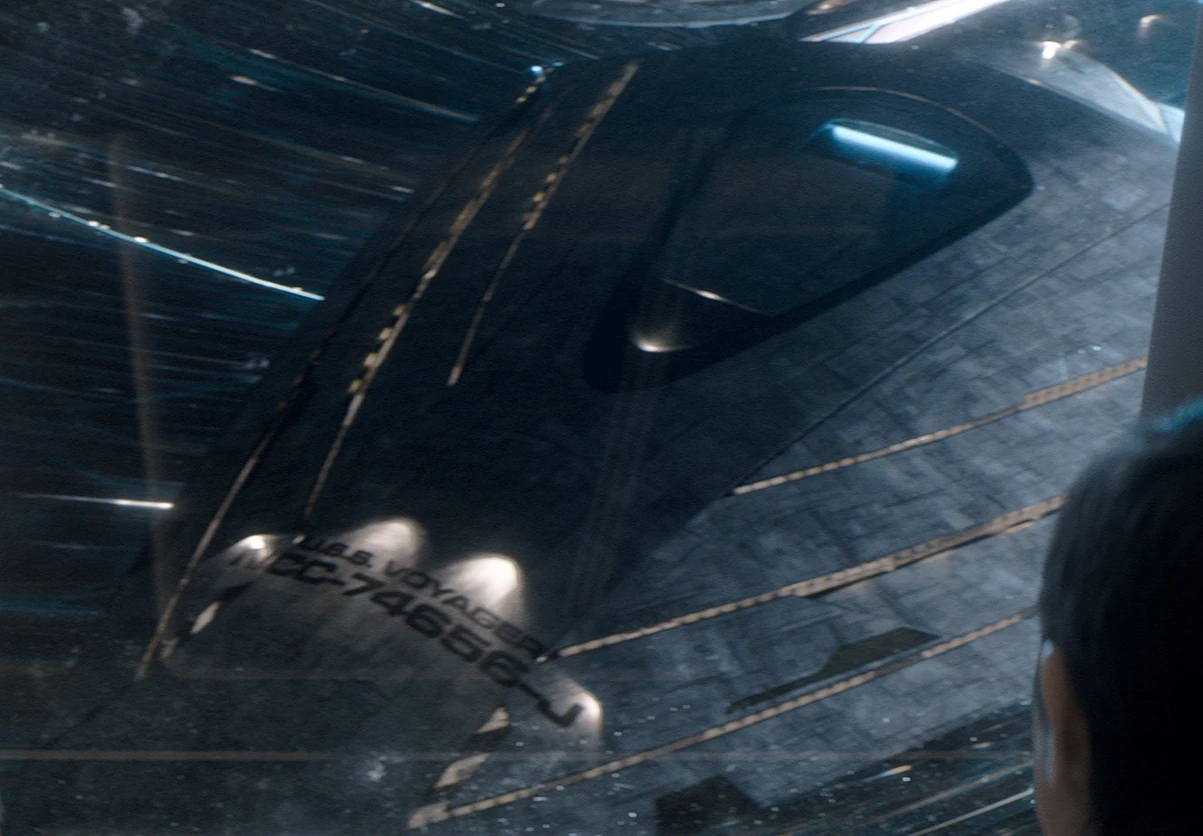 Classified
Intrepid class (32nd century)
1 VesselThe Intrepid-class (32nd century) is a highly advanced type of Federation starship operated by Starfleet, active from the 31st century into the 33rd century. This class represents a significant evolution of the earlier 24th century Intrepid-class, famously associated with Captain Kathryn Janeway's USS Voyager NCC-74656. **Design & Development** The design of the 32nd century Intrepid-class was a direct response to a specific request from Alex Kurtzman to create an advanced version of the USS Voyager. Ryan Dening was the primary designer, starting his work by referencing promotional shots of the original Star Trek: Voyager. Dening presented two distinct designs to the producers, with one ultimately being accepted. Key design features of this evolved class include sharper corners, a ventral shuttlebay, and distinctive detached warp nacelles, which were conceptualized with the potential to latch onto the engineering hull. CBS Studios officially confirmed that this design shares the same class designation as Captain Kathryn Janeway's USS Voyager, but incorporates eight hundred years of technological advancement. The class received its own individual feature in Eaglemoss Collections' Star Trek Universe: The Official Starships Collection, issue 13, where its CG model was constructed by Fabio Passaro, converting the production model from Autodesk Maya to LightWave 3D for publication and display model manufacturing. **Service History** The Intrepid-class played a role in significant historical events of the 31st and 32nd centuries. In 3069, prior to The Burn, at least three starships of this class were lost when their active warp cores were destroyed due to dilithium becoming inert, resulting in catastrophic antimatter explosions, as depicted in the Star Trek: Discovery episode 'People of Earth'. By 3189, the class remained a vital component of Starfleet, with the USS Voyager NCC-74656-J being part of the Federation fleet 001 stationed at Federation Headquarters. The collective energy of this fleet, including the USS Voyager NCC-74656-J, was crucial in sustaining a distortion field that concealed the headquarters' location, as seen in 'Die Trying'. In 3190, four unnamed Intrepid-class starships were observed in orbit of Earth during the President of United Earth's visit to Federation Headquarters, as shown in 'Coming Home'. The class continued its service into the 33rd century, with two starships participating in a ceremonial honor-formation at Federation Headquarters for the launch of Zora and the USS Discovery's Red Directive mission in the episode 'Life, Itself'. Notable named ships of this class include the USS Voyager NCC-74656-J, which was active in the 33rd century, and the USS Sargasso, which was destroyed in 3195. While Star Trek Universe: The Official Starships Collection suggested a launch in the 32nd century, the presence of ships of this class at The Burn in the 31st century confirms an earlier operational period. In Star Trek Online, this class is referred to as the Janeway class.
- No armament data logged.
- No propulsion data logged.
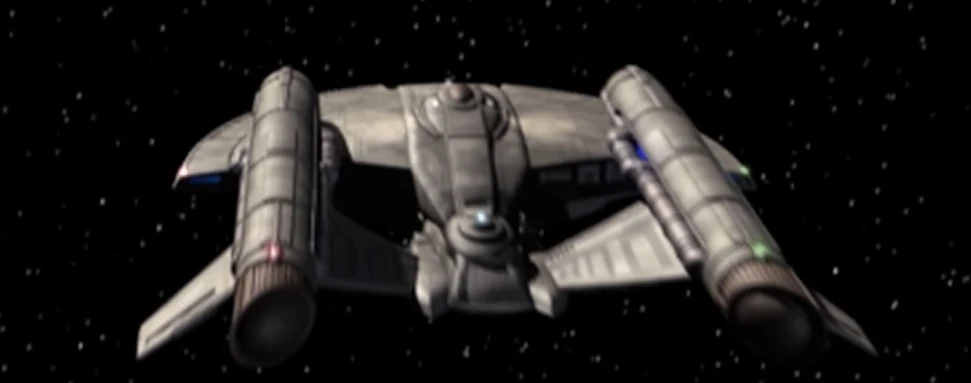 Classified
Intrepid type
Hull Specifications LoggedThe Intrepid type was a starship class in service with United Earth Starfleet during the mid-22nd century. Its design was a product of the early 22nd century, intended to serve as a versatile vessel for Starfleet's expanding operations. The class was armed with phase cannons and two torpedo launchers, providing it with essential defensive and offensive capabilities for its era. While the torpedo launchers were clearly visible on production stills of the shooting model, they were never depicted firing in an episode of Star Trek: Enterprise. **Production & Naming** The Intrepid type was realized as a CGI model created at Eden FX. The model was essentially a kitbash, constructed by Pierre Drolet, and subsequently rendered, animated, and lit by Rob Bonchune. The foundational design was attributed to John Eaves, who based it on the NX-class model. Eaves noted that the 'armada drawings' for such vessels never progressed beyond rough sketches before being sent to Eden FX for construction. Rob Bonchune confirmed the practice of 'pilfering' parts from existing models to expedite the creation process. Interestingly, the design team at Eden FX internally referred to the vessel as the 'half saucer' and were unaware it had been officially designated as the Intrepid type in an episode. Orthographic projections of the original CGI model were later posted by Bonchune on FourMadMen.com and on Doug Drexler's blog. According to the novel 'Beneath the Raptor's Wing', this class of Earth starships was specifically named the Intrepid class. **Class History** The Intrepid type saw active service with United Earth Starfleet in the mid-22nd century. One notable vessel of this class was the USS Intrepid. The class made appearances in several episodes of Star Trek: Enterprise, including 'The Expanse', 'Twilight', and 'Storm Front, Part II'. In an alternate timeline depicted in the year 2165, an Intrepid-type vessel was part of an Earth convoy destined to settle on Ceti Alpha V. The class served as a workhorse for Starfleet during a critical period of exploration and expansion for United Earth.
- • Phase canno
- • Torpedo launche
- No propulsion data logged.
 Escort / Warship
Ironclad Class
Hull Specifications LoggedAn ironclad was a distinctive type of 19th-century steamship, fundamentally defined as a warship clad with iron-plated hull armor. These formidable vessels were predominantly utilized on Earth during the American Civil War by both the Union Army and Confederate Army. Their significant impact on naval warfare was prominently displayed in key engagements of the 1860s, including the Battle of Hampton Roads and the Battle of Fort Hindman. Notable individual ships of this class included the USS Baron de Kalb, USS Cincinnati, USS Louisville, USS Monitor, and CSS Virginia. **Starfleet Registry & Federation Awareness** While originating from Earth's pre-warp history, ironclads entered Starfleet's historical records through advanced means. Images depicting several ironclads of this era were scanned by the Talosians in 2254, during their download of the USS Enterprise (NCC-1701)'s library computer, as depicted in 'The Cage'. Furthermore, the historical significance of the ironclad was underscored by Abraham Lincoln in a deleted scene from 'The Savage Curtain'. In this scene, Lincoln, expressing his amazement at the USS Enterprise (NCC-1701), remarked, 'We thought our Monitor the most formidable vessel imaginable. An iron ship that floated on water! You can imagine my amazement at an iron ship that floats on air...'
- • Canno
- • Armo

IRW Khazara
Class: D'deridex class- • Disrupto
- • Phase
- + 1 more...
- • Cloaking device
- • Warp facto (Qty: under cloak)
- + 1 more...

ISS Avenger
Class: NX class- • 6x spatial torpedo
- • Phase canno
- + 3 more...
- • Warp facto
- • Polarized hull plating

ISS Buran
Class: Cardenas class- • Phase
- • Torpedo launche
- • Deflector shield

ISS Cerritos
Class: California class- • Phase
- • Photon torpedo
- • Warp facto
- • Deflector shield

ISS Charon
Class: Charon type- No armament data logged.
- No propulsion data logged.
ISS Cooper
Class: Malachowski class- • Phase
- • Photon torpedo
- • Deflector shield

ISS Defiant
Class: Defiant class- • Phase
- • Torpedo launche
- • Ablative armo
- • Warp facto
- + 1 more...

ISS Discovery
Class: Crossfield class- • Phase
- • Photon torpedo
- + 1 more...
- • Cloaking device
- • Displacement-activated spore hub drive
- + 2 more...

ISS Enterprise (NCC-1701)
Class: Constitution class- • Antimatter charge
- • Phase (Qty: 6)
- + 2 more...
- • Transporte (Qty: 1)
- • Warp facto
- + 3 more...

ISS Enterprise (NX-01)
Class: NX class- • 6x spatial torpedo
- • Phase canno
- + 3 more...
- • Warp facto
- • Polarized hull plating

ISS Shenzhou
Class: Walker class- • Phase canno
- • Phase
- + 1 more...
- • Deflector shield
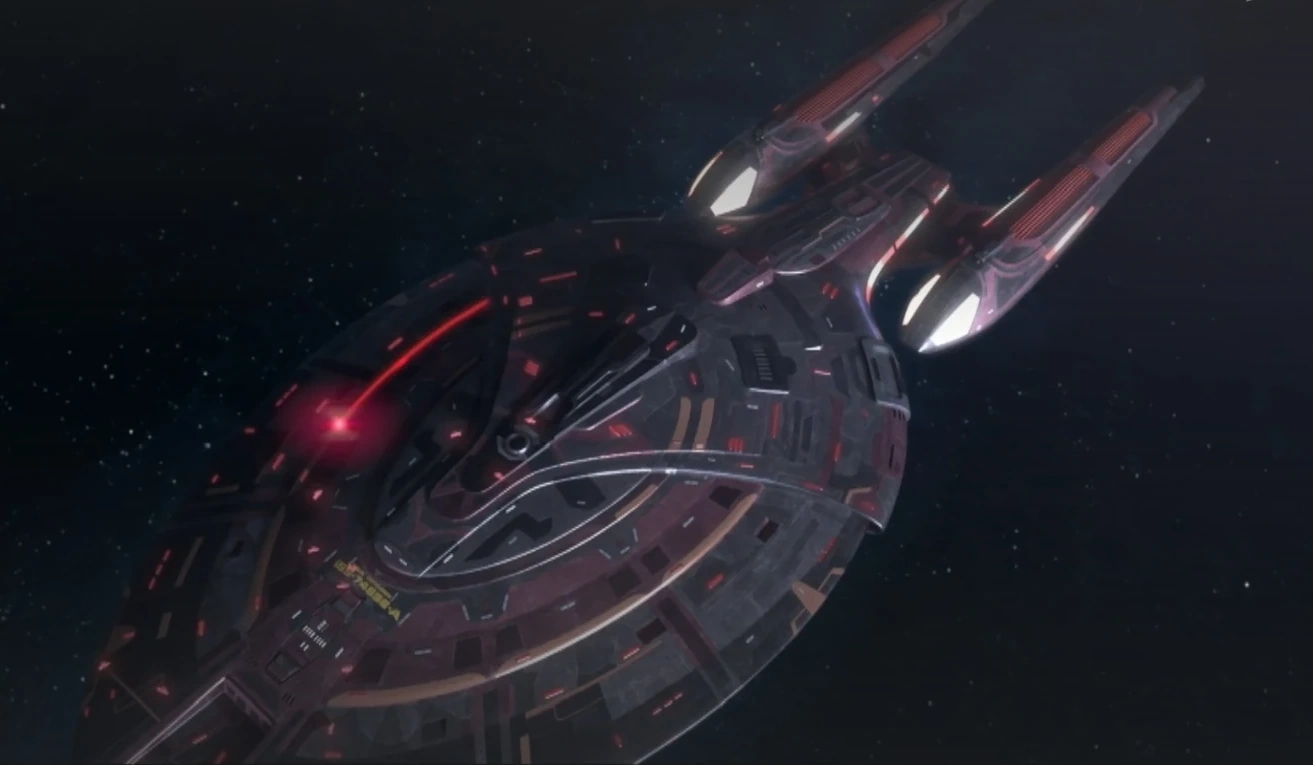
ISS Voyager (NCC-74656-A)
Class: Lamarr class- • Bio-molecular warhead
- • Isokinetic canno
- + 9 more...
- • Tricobalt device
- • Deflector shield
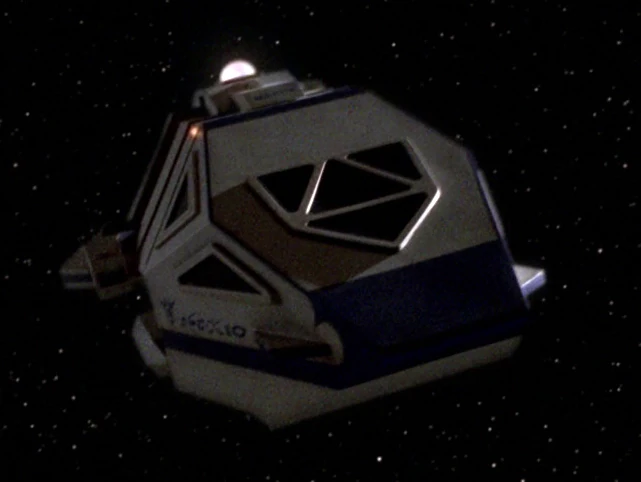 Runabout / Utility
Iyaaran shuttle Class
Hull Specifications LoggedThe Iyaaran shuttle was a distinct type of shuttlecraft utilized by the Iyaaran species. Designed primarily for short-range transport and utility, these vessels were equipped with impulse engines, allowing them to achieve impulse speeds for intra-system travel or short-distance interstellar journeys. The design philosophy behind the Iyaaran shuttle emphasized functionality and reliability, typical of smaller auxiliary craft. **Class History** The Iyaaran shuttle class was actively in service by the year 2370. One notable vessel of this class, designated BCD-31775, was recorded as active during this period. This particular shuttle played a role in the events depicted in the Star Trek: The Next Generation episode 'Liaisons', providing a glimpse into the Iyaaran's technological capabilities and their use of such craft.
- No armament data logged.
- No propulsion data logged.
 Transport / Freighter
J class
Hull Specifications LoggedThe J-class was a starship design of Earth origin, primarily utilized by the Earth Cargo Service as a freighter. These vessels were operated by captains holding an Earth Cargo Authority license. The design featured a distinctive modular construction, with a more maneuverable forward tug section capable of separating from a large aft cargo module. This modularity allowed for efficient cargo handling. The J-class was designed to haul substantial loads, up to 30,000 metric tons. The interior of J-class ships was notably spartan, characterized by exposed rivets on internal wall paneling and cramped habitable areas. Corridors were lined with handles, a necessity due to the less advanced inertial dampers compared to later warp-capable vessels, requiring passengers to hold on during warp travel. The bridges were small, necessitating close cooperation among several crew members, and mess halls were similarly compact. Most of the ship's volume was dedicated to its extensive cargo modules. The warp reactors for the J-class were personally designed by Zefram Cochrane, with rumors suggesting he even signed the inside of each reactor casing. The exterior of the J-class was designed by John Eaves and rendered in CGI by Brandon MacDougall for Eden FX. The art department for Star Trek: Enterprise intentionally made the workings of the J-class, particularly the ECS Horizon, appear more primitive than those of the NX-class starships like the NX-01. Michael Okuda noted the use of larger buttons and a 'retro-stencil' look for signage. James Van Over recalled the creation of new bridge graphics, experimenting with black letters on a white background to suggest a less advanced interface. **Class History** The J-class has a service history dating back to the early 22nd century. One notable vessel of this class, the ECS Horizon, was commissioned in 2102. These freighters were crucial for Earth's early interstellar commerce, transporting vital goods across various systems. However, by the mid-22nd century, J-class ships frequently encountered pirates, and their original tactical systems proved insufficient for adequate defense. It was possible to upgrade their weapons or increase the yield of the existing plasma turrets by rerouting impulse relays and tapping power directly from the impulse engines. In an alternate timeline of 2165, this type of vessel was included in an Earth convoy destined to settle on Ceti Alpha V. Several J-class bridge situation boards, control panels, and furniture items from the ECS Horizon, including a side chair, table, and lamp from Mayweather's quarters, a table from the galley, and six swivel chairs from the bridge, were later sold in the 'It's A Wrap!' sale and auction. **Technical Specifications** J-class ships were equipped with propulsion systems capable of a maximum speed of Warp 2. However, when carrying a full cargo load, it was only safe to travel at Warp 1.5. Their defensive capabilities included polarized hull plating, and they were armed with two forward-mounted plasma turrets. The forward tug section was designed to be highly maneuverable, allowing it to separate from the larger cargo module for specific operations or in tactical situations. **Ships of the Class** The most well-known named ship of the J-class is the ECS Horizon. Additionally, several unnamed J-class starships were in service.
- • Plasma canno (Qty: 2)
- • Warp facto
- • Polarized hull plating
 Shuttlecraft
J'naii shuttle Class
Hull Specifications LoggedThe J'naii shuttle was a specialized type of shuttlecraft utilized by the J'naii civilization. These vessels were designed for intra-system travel and were explicitly noted as not being capable of interstellar journeys. A key design feature of these shuttles was their reliance on plestorene-based backup systems, providing essential power redundancy. While specific propulsion details are not extensively documented, their limited range suggests a focus on atmospheric and orbital flight within a planetary system. The design prioritized local transport and utility rather than deep-space exploration or combat capabilities. **Class History** The J'naii shuttle class was actively in service by the J'naii in the year 2368. One notable vessel of this class was the *Taris Murn*. These shuttles played a role in the daily operations and transport needs of the J'naii, as depicted in the Star Trek: The Next Generation episode 'The Outcast'. Their operational scope was confined to the J'naii homeworld and its immediate vicinity, serving as a vital component of their local infrastructure.
- No armament data logged.
- No propulsion data logged.
 Escort / Warship
Jach class
Hull Specifications LoggedThe Jach-class was a distinctive type of battle cruiser employed by the Klingon Empire during the mid-23rd century. Its design bore a resemblance to the Chargh-class, a contemporary Klingon starship, but could be readily distinguished by a unique structural element: the presence of a third, central hull positioned between its two outer hulls. This architectural feature likely contributed to its tactical profile and overall silhouette, making it identifiable on the battlefield. **Service History** At least one vessel of the Jach-class saw active combat during the significant Federation-Klingon War, which spanned from 2256 to 2257. Its involvement in this conflict commenced with the pivotal Battle of the Binary Stars in 2256, where Jach-class starships were observed engaging enemy forces, including pursuing a Hoover-class starship. This class played a role in the Klingon Empire's military operations during a critical period of interstellar conflict.
- • Directed energy weapo
- No propulsion data logged.

Jackabog's ship
Class: Clumpship- No armament data logged.
- No propulsion data logged.
 Escort / Warship
Japanese Zero Class
Hull Specifications LoggedThe Japanese Zero was a type of fighter aircraft developed and utilized by Japan during the Second World War. It was a prominent aerial combatant of its era, known for its maneuverability and range. **Class History** Beyond its historical service, the Japanese Zero has been referenced and encountered in various contexts. It was featured in the movie 'From Here to Eternity', where the character portrayed by Burt Lancaster was depicted shooting down several of these aircraft. In a notable Starfleet encounter, a Japanese Zero, complete with an Artificial pilot 001, manifested on the Shore Leave Planet in 2267. This occurred while Captain James T. Kirk and a landing party from the USS Enterprise (NCC-1701) were experiencing constructs generated from their thoughts. During this incident, landing party members Angela Martine and Lieutenant Esteban Rodriguez were strafed by the Zero, with Martine striking her head and being knocked unconscious while attempting to evade the attack. The aircraft subsequently strafed the remainder of the landing party as well.
- No armament data logged.
- No propulsion data logged.
 Transport / Freighter
Jeep Class
Hull Specifications LoggedA Jeep was a small, yet powerful, general-purpose automobile that originated with the United States military during World War II. Initially designed for robust military applications, it later underwent redesigns for civilian use, evolving into a popular SUV. The name 'Jeep' is widely accepted to have originated from the phonetic acronym 'GP,' standing for 'general-purpose.' During World War II, the Jeep had a German military counterpart in the form of the Volkswagen Kübelwagen. A specific variant, the elongated six-wheel Ford GP T13/14 'super jeep,' was visually identified in a propaganda newsreel on the planet Ekos, though it was depicted posing as a German Wehrmacht truck like the Krupp L2H143 'Protze' (Kfz. 69/70) or a Ford-DAF PAG Trekker. This particular film-used Ford GP T13/14 went on to appear in several period films, often representing German vehicles. **Service History** The Jeep has a notable presence across various timelines and eras. In an alternate timeline caused by the Temporal Cold War, where the Eastern Seaboard of the United States of America was under German occupation, a military version of the Jeep was seen abandoned and gutted in a Brooklyn, New York City street in 1944, directly in front of Alicia Travers' apartment building. This was observed by Captain Jonathan Archer of the NX-01, who was hiding after his escape from the SS, as depicted in the episode 'Storm Front.' In July 1947, Lieutenant General Denning utilized an army Jeep for transport around the United States Army Air Forces base where he was stationed, as shown in 'Little Green Men.' Later, in 1969, Quinn used a jeep to pick up Maury Ginsberg after his van broke down, allowing him to continue to Woodstock, an event featured in 'Death Wish.' A Jeep was also observed parked on Carpenter Street near the abandoned American Wrecking Company in 2004, during the events of 'Carpenter Street.' Further into the future, in 2268, the Ekosian Wehrmacht was shown to have a jeep variant in service. This was evidenced when Captain James T. Kirk and Spock watched a propaganda newsreel on the planet Ekos, as seen in 'Patterns of Force.' By 2374, an US Army Jeep was recreated on the holodeck of the USS Voyager as part of a Hirogen combat simulation, depicted in 'The Killing Game, Part II.' The Jeep Wrangler is a known model of this class.
- • Projectile weapo (Qty: optional)
- No propulsion data logged.
 Classified
Jein class
1 VesselThe Jein-class is a Federation starship class designed by John Eaves. The class and its presumed lead vessel, the USS Gregory Jein, were named as homages to the late Gregory Jein, a renowned studio model maker who was a personal friend and mentor to Eaves. The design originated from Eaves' earlier four-nacelled USS Emmett Till variant, which he had conceived for an imagined eighth season of Star Trek: Deep Space Nine, as documented in 'What We Left Behind'. The Jein-class design bears a strong resemblance to the USS Ibn Majid, which itself was a two-nacelled iteration of the USS Emmett Till concept. The Jein-class starship measures 381.6 meters (1,252.5 feet) in length. **Class History** The Jein-class was operated by Starfleet during the early 25th century, specifically active in the 2400s. At least one vessel of this class, the USS Gregory Jein, bearing registry NCC-103145, was a participant in the Frontier Day celebrations held near Sol Station in 2401. During these events, the USS Gregory Jein, alongside the majority of the assembled Starfleet, fell victim to a coordinated attack by the Borg Collective. This assimilation was facilitated by a Borg signal transmitted through Jack Crusher, which targeted and assimilated the younger crew members across the fleet. Following these catastrophic events, the USS Gregory Jein was recorded as wrecked in 2401, as depicted in the episode 'Võx'.
- • Phase
- • Photon torpedo
- • Deflector shield
 Classified
Jem'Hadar attack ship Class
1 VesselThe class classification of Jem'Hadar attack ship starships.
- No armament data logged.
- No propulsion data logged.

Jem'Hadar battle cruiser
Class: Jem'Hadar battle cruiser- • Directed energy weapo
- • Photon torpedo
- • Deflector shield
Assault Ship
Jem'Hadar battle cruiser Class
3 VesselsLCARS Database Entry: Jem'Hadar Battle Cruiser (Standard Classification) The Jem'Hadar Battle Cruiser serves as the foundational heavy combat vessel of the Dominion fleet, designed explicitly for warfare and direct confrontation. Its development history spans centuries within the Gamma Quadrant, reflecting the Jem'Hadar's singular purpose as soldiers of the Founders. The design philosophy eschews comfort and long-term exploration in favor of robust offensive and defensive capabilities, minimal crew requirements, and high damage tolerance. Key design features include a distinctive predatory profile, often described as an angular, segmented hull with prominent weapon emplacements. These vessels are characterized by their advanced sensor baffling, formidable shielding systems, and integrated ablative armor, making them exceptionally resilient against conventional energy weapons. The first documented encounter by an Alpha Quadrant power occurred in 2370, when a Jem'Hadar Battle Cruiser destroyed the USS Odyssey in the Gamma Quadrant, marking the initial hostile contact between the Dominion and the Federation. In terms of tactical roles, the Jem'Hadar Battle Cruiser functions as the primary line combatant for fleet engagements, planetary assault, and as a formidable escort for larger Dominion dreadnoughts or supply convoys. Their operational doctrine emphasizes aggressive, relentless assault, often leveraging numerical superiority and coordinated Vorta command structures. Armament consists primarily of potent phased polaron cannons, capable of bypassing conventional Alpha Quadrant shielding with alarming efficiency, supplemented by high-yield plasma torpedo launchers mounted both fore and aft. Defensive systems include powerful deflector shields and integrated, self-regenerating ablative armor plating, which collectively provide exceptional survivability. These vessels exhibit remarkable maneuverability for their size, enabling them to engage smaller, more agile targets effectively while also sustaining heavy fire. The Jem'Hadar Battle Cruiser played a pivotal role throughout the Dominion War, participating in virtually every major engagement against the combined forces of the Federation, Klingon Empire, and Romulan Star Empire. Notable actions include the initial occupation of Deep Space 9 during "Operation Return," numerous decisive battles in the Bajoran sector, and countless skirmishes along the front lines of the Cardassian Union. Their introduction forced Starfleet and its allies to rapidly develop countermeasures, such as quantum torpedoes and improved ablative armor, to contend with their formidable polaron weaponry. While less directly involved in conflicts with the Ferengi Alliance, their omnipresent threat near the Bajoran wormhole significantly disrupted established Ferengi trade routes and deterred commercial expansion into Dominion-controlled territories, underscoring their strategic impact beyond direct combat. The sheer volume and effectiveness of this class cemented its legacy as one of the most dangerous adversary vessels encountered by the Alpha Quadrant powers.
- • Directed energy weapo
- • Photon torpedo
- • Deflector shield
 Classified
Jem'Hadar battleship Class
Hull Specifications LoggedThe Jem'Hadar battleship, also known as the Dominion battleship, was a formidable type of warship introduced into the Alpha Quadrant in 2374, shortly after the outbreak of the Dominion War. This class of vessel quickly established itself as a significant threat to Starfleet and Federation interests. **Design & Specifications** Initial observations of the Jem'Hadar battleship, conducted by the Federation starship USS Valiant (NCC-74210) using sensor probes, indicated that the vessel was approximately twice the size of a Galaxy-class starship and possessed three times its power. Its observed sensor range was seemingly less than 1.32 light years. The crew of the USS Valiant theorized that the primary support braces for the battleship's antimatter storage system were constructed from viterium, a material they believed was prone to destabilization when exposed to delta radiation. However, this proved to be a critical miscalculation, as a direct hit with modified torpedoes failed to exploit this perceived weakness. The battleship's armaments included at least 10 torpedo launchers, though the script for the episode 'Valiant' originally described its primary weapons as phasers. In terms of scale, Jake Sisko's statement, later confirmed by Nog as accurate (assuming he referred to length), suggested the battleship was 1,284 meters long. This measurement is supported by close-range engagements in the episode 'Valiant', which established a size several times larger than that of a Defiant-class starship. **Service History** On stardate 51825, the USS Valiant undertook a mission to gather technical data on a newly encountered Jem'Hadar battleship operating in their sector. After three hours of data collection, it was determined that the battleship posed a direct threat to every Federation outpost and colony within fifty light years, necessitating its destruction. Believing they had identified a design flaw, the USS Valiant engaged the battleship but was subsequently destroyed with ease, leaving only Jake Sisko, Nog, and a Red Squad cadet named Dorian Collins as survivors, as depicted in the Star Trek: Deep Space Nine episode 'Valiant'. Later, in late 2375, a Jem'Hadar battleship was utilized in the assault on at least one of the eighteen Cardassian Rebellion bases, as seen in the episode 'The Dogs of War'. Several of these powerful ships also participated in the climactic Battle of Cardassia. Following the battle, these battleships, along with other Dominion forces, retreated to the orbit of Cardassia Prime to bolster the planet's defenses, a pivotal event in the episode 'What You Leave Behind'.
- • Torpedo launche
- • Warp facto (Qty: observed)
- • Deflector shield

Jem'Hadar fighter
Class: Jem'Hadar fighter- • Disrupto
- • Energy-dampening weapo (Qty: late 2375)
- + 2 more...
- • Warp facto (Qty: observed)
- • Deflector shield
 Attack fighter
Jem'Hadar fighter Class
2 VesselsThe Jem'Hadar fighter, also known as the Jem'Hadar attack ship, was a compact yet formidable warship that constituted the primary combat vessel of the Dominion fleet. These versatile starships were frequently deployed in roles such as patrol ships and scout ships, demonstrating their adaptability across various Dominion operations. Starfleet personnel, including Chief Miles O'Brien, acknowledged the sophisticated design of these vessels, remarking on their effectiveness in combat scenarios. They were a ubiquitous presence throughout the Dominion War, engaging Starfleet and its allies in numerous conflicts. **Design & Development** Visually, Jem'Hadar fighters possessed a distinctive insectoid shape, often likened to a Terran scarab. This design was conceived by Jim Martin, drawing inspiration from Rick Sternbach's Egyptian influences, with the full-scale mock-up for the episode 'The Ship' designed by John Eaves. Structurally, these warships were exceptionally sturdy, capable of surviving impacts onto a planet's surface and performing planetary landings and take-offs, as seen in 'The Ship' and 'Hippocratic Oath'. Once landed, Jem'Hadar troops could be deployed from a large access hatch located on the ship's belly. While highly maneuverable, they were noted to lack the extreme agility of Starfleet's Danube-class runabouts, though they significantly outgunned the smaller Federation vessels. Jem'Hadar fighters were equipped with ventral jets for atmospheric control. Internally, the bridge of a Jem'Hadar fighter was starkly utilitarian, lacking chairs, a traditional viewscreen (instead utilizing two head-mounted virtual sensory displays), an infirmary, or food replicators, reflecting the Jem'Hadar's spartan culture and focus on combat. The command center featured a central position with various system controls, surrounded by inward-facing stations. The vessel's length was subject to varying accounts, with initial observations suggesting over 90 meters, script notes comparing it to a Klingon Bird-of-Prey (approximately 110 meters), and later CGI models and camera test models indicating a length of up to 150 meters. The Star Trek: Deep Space Nine Technical Manual, however, lists a length of 68.32 meters. **Propulsion & Performance** Jem'Hadar fighters were propelled by a combination of warp and impulse systems. Early observations indicated they could achieve speeds of Warp 7 or higher, generating a 39-unit warp field. According to the Star Trek: Deep Space Nine Technical Manual, they were powered by a Matter-Antimatter warp system and a single impulse system, capable of a maximum speed of Warp 9.6. The Star Trek: Starship Spotter further specified that these fighters utilized ion propulsion units as their warp nacelles. The nacelle glow, initially blue in 'The Jem'Hadar', was later changed to purple in subsequent appearances starting with 'The Search, Part I'. **Armaments** These vessels were equipped with a formidable array of weapon systems. Their primary offensive capability initially came from phased polaron beams, which, during early engagements, proved devastatingly effective against Federation starships like the USS Odyssey, as Federation shields were initially incapable of deflecting them. These blueish, pulse-like projectiles could be fired both forward and aft. The USS Defiant (2370) later encountered ships with primary beam emitters in the forward section, boasting a range exceeding 100,000 kilometers. The Federation quickly developed countermeasures, making Jem'Hadar fighters relatively easier to destroy for larger starships. In addition to phased polaron beams, Jem'Hadar fighters were armed with torpedoes, some of which were manufactured by the Karemma. During the Dominion War, some attack ships operating in the Alpha Quadrant were also equipped with disruptor weapons, as seen in 'The Dogs of War'. In late 2375, following the Breen alliance with the Dominion, some Jem'Hadar fighters were retrofitted with Breen energy dissipaters. However, this upgrade came too late in the Dominion War to significantly alter its outcome, as the Cardassian Rebellion soon after obtained a Luaran's attack ship with the weapon and delivered it to Starfleet, as depicted in 'When It Rains...' and 'Tacking Into the Wind'. **Defensive & Other Systems** Defensively, Jem'Hadar fighters were equipped with deflector shields, though a notable weakness was identified at the ships' dorsal field junction, as revealed in 'Treachery, Faith and the Great River'. Their transporter technology was advanced enough to penetrate Federation shields, and their deflector technology rendered them impervious to Federation tractor beam locks, a capability unknown to Federation science as of late 2370. Furthermore, Jem'Hadar fighters possessed sophisticated sensor systems capable of detecting cloaked vessels. They utilized a form of antiproton beam for this purpose, making cloaking technology unreliable against them, as demonstrated in 'The Search, Part I', 'Defiant', and 'The Die is Cast'. This technology was later enhanced to include long-range tachyon scanners, capable of penetrating a starship's cloak from great distances, as shown in 'Once More Unto the Breach'. **Tactics & Service History** Jem'Hadar fighters typically operated in groups of two or three for routine operations, and in much larger swarms during major battles, compensating for their individual vulnerability to larger starships once Federation shields were adapted. A signature and terrifying tactic employed by the Jem'Hadar was the suicide run, where fighters would deliberately ram enemy vessels to inflict maximum damage. Commander Benjamin Sisko observed this tactic against the USS Odyssey in 2370, noting it as a demonstration of the Jem'Hadar's unwavering commitment. This tactic was also employed against the Federation Alliance invasion fleet during the first Battle of Chin'toka, resulting in significant damage and the disabling or destruction of fifteen Klingon starships. Garak described this as a means of 'inflicting considerable damage on the Klingons,' with Worf adding that it bought time for the Dominion to get their Cardassian orbital weapon platforms operational. Jem'Hadar fighters were commanded by a Vorta field supervisor and a Jem'Hadar First rank. Unnamed Jem'Hadar fighters were frequently encountered throughout Star Trek: Deep Space Nine and made appearances in Star Trek: Lower Decks.
- • Disrupto
- • Energy-dampening weapo (Qty: late 2375)
- + 2 more...
- • Warp facto (Qty: observed)
- • Deflector shield
Jem'Hadar fighter / Attack ship Class
Hull Specifications LoggedThe class classification of Jem'Hadar fighter / Attack ship starships.
- No armament data logged.
- No propulsion data logged.

JF Kennedy
Class: Type 7 shuttlecraft- No armament data logged.
- • Deflector shield

Joshua Tree
Class: Type 6A shuttlecraft- No armament data logged.
- • Warp drive
 Runabout / Utility
Jumpship Class
Hull Specifications LoggedJumpships were a specialized type of small atmospheric shuttlecraft designed for single-pilot operation within the alternate reality. Their primary role within Starfleet in the late 2250s was as emergency evacuation craft. The design featured a cockpit positioned above and forward of the main engine, which was equipped with an air intake and exhaust port on its underside, indicating atmospheric flight capabilities. Wings extended from either side of the vessel, capable of mounting several energy weapons for defensive or offensive purposes. Notably, the jumpship's hull was engineered to withstand phaser rifle fire, providing a significant degree of protection for its occupant. These craft were not equipped with warp drive, limiting their operational range to sublight speeds, primarily within planetary atmospheres or local space. **Service History** These shuttlecraft saw active service with Starfleet during the late 2250s in the alternate reality, particularly around the year 2259. One known vessel of this class was designated the 208. The jumpship's design and operational context were prominently featured in the events depicted in 'Star Trek Into Darkness'. Concept artwork for the jumpship was illustrated by James Clyne, and the creation of its three-dimensional digital model was overseen by Michael Wortmann of Pixomondo Berlin, who also added digital extensions for close-up shots of the cockpit. The term 'Federation jumpship' was used to describe this class in the novelization of 'Star Trek Into Darkness'.
- No armament data logged.
- No propulsion data logged.
 Car
Jupiter 8 Class
Hull Specifications LoggedThe Jupiter 8 was a distinctive two-seat sports car marketed to the inhabitants of the planet 892-IV during the 2260s. Named after 'Jupiter' from the Roman gods revered on 892-IV, it was advertised with the slogan 'Royal Comfort' and described as 'unexcelled in its field,' representing a pinnacle of civilian ground transportation on that world. **Design & Features** Technically, the Jupiter 8 was equipped with a conventional internal combustion engine, boasting a formidable 456 horsepower. Its advanced features included a super-flow automatic transmission, a super-glide suspension system for enhanced ride comfort, and super-grip white sidewall tires, all contributing to its reputation for performance and luxury. These specifications were prominently featured in advertisements targeting the planet's populace. **Service History & Encounters** The Jupiter 8 came to the attention of Starfleet personnel during the USS Enterprise (NCC-1701)'s mission to 892-IV. The crew first observed one of these vehicles in black-and-white television news footage, parked in front of a building where 892-IV police were arresting dissident slaves. Later, upon landing on the planet's surface, James T. Kirk encountered an advertisement for the Jupiter 8 in 'The Gallian'. This advertisement, detailing the car's features, inadvertently led the Enterprise landing party to deduce that the Jupiter 8's power source was a contributing factor to the significant smog pollution observed on 892-IV, as documented in the Starfleet record 'Bread and Circuses'.
- No armament data logged.
- No propulsion data logged.

Justman
Class: Type 6 shuttlecraft- • None standard
- • Phase (Qty: 2)
- • Deflector shield

K'Nera's battle cruiser
Class: K't'inga class- • Concussive charge launche
- • Disrupto
- + 2 more...
- • Cloaking device
- • Warp facto
- + 1 more...

K'Nera's battle cruiser
Class: K't'inga class- • Concussive charge launche
- • Disrupto
- + 2 more...
- • Cloaking device
- • Warp facto
- + 1 more...
 Trading ship
K'normian trading ship Class
Hull Specifications LoggedThe K'normian trading ship was a type of shuttlecraft specifically designed and constructed by the K'normians. Its primary purpose was the ferrying of both cargo and passengers across various systems. Power for the vessel was derived from a system of fuel cells, which could be boosted for increased velocity. The cockpit layout featured the pilot's console positioned at the front, with the engineering console located to the left and the communications console to the right. Notably, the K'normian trading ship possessed no offensive capabilities, reflecting its design as a purely civilian transport. **Class History** In January 2259, a K'normian trading ship was confiscated by the crew of the USS Enterprise (NCC-1701 alternate reality) during the events of the Mudd Incident. This particular vessel would later play a critical role in a high-stakes mission. A month later, in February 2259, the USS Enterprise (NCC-1701 alternate reality) was in pursuit of John Harrison, who had fled to the Klingon homeworld Qo'noS. Facing the risk of initiating an all-out war by entering Klingon space with a Starfleet vessel, Captain James T. Kirk (alternate reality) devised a covert plan. He, along with his first officer Spock (alternate reality), communications officer Nyota Uhura (alternate reality), and two security officers, would use the confiscated K'normian trading ship to infiltrate Qo'noS. Masquerading as K'normian arms dealers, their mission was to secure John Harrison within an estimated two-hour timeframe, with Hikaru Sulu (alternate reality) serving as acting captain aboard the USS Enterprise (NCC-1701 alternate reality) during Kirk's absence. Upon entering the atmosphere of Qo'noS, the K'normian trading ship was detected above a derelict city in the Ketha Province by a D4-class fighter. During the ensuing pursuit, the trading ship utilized all six of its fuel cells to boost its velocity in an attempt to evade the Klingon vessel. When this proved insufficient, Captain Kirk (alternate reality) skillfully piloted the ship through the narrow spaces between two large structures, resulting in minor hull damage but temporarily shaking the pursuer. However, the trading ship was soon surrounded by three D4-class fighters and ordered to land. After an unsuccessful attempt at negotiations, a confrontation erupted, leading to casualties on both sides. With the unexpected aid of John Harrison, the Starfleet landing party gained the upper hand. Following John Harrison's voluntary surrender and secure apprehension, the K'normian trading ship successfully returned to the USS Enterprise (NCC-1701 alternate reality). These events were documented in Star Trek Into Darkness.
- No armament data logged.
- No propulsion data logged.
 Battle cruiser
K't'inga class
11 VesselsThe K't'inga-class battle cruiser represents a significant evolution in Klingon warship design, directly descending from the venerable D7-class battle cruiser. While sharing the iconic basic shape and classic design lineage dating back over one hundred years to the D5-class battle cruiser, the K't'inga-class introduced several notable improvements. Its outboard plan maintained the distinctive Klingon aesthetic, with the bulk of the ship's overall mass concentrated in the aft section. The bridge module was situated on a bulbous forward section, connected to the aft by a relatively thin neck that flared into the main hull. Impulse engines were located on the caudal section, while the warp nacelles jutted from below the port and starboard sides of the aft section. Compared to its D7-class predecessor, the K't'inga-class featured a slightly sleeker shape and contour, a less bulbous forward section, a larger bridge dome, differently designed warp nacelles, and more extensive external hull plating. This reconfiguration, which included additional armor and new nacelles, was implemented by the 2270s, solidifying its position as a successor to the D7-class. **Service History** The K't'inga-class entered service with the Klingon Imperial Fleet around 2259, shortly after the D7-class design was finalized. Early in its career, in 2259, three K't'inga-class ships were dispatched to destroy a naturally occurring subspace fold that caused their crews to sing due to an improbability field, an act deemed dishonorable by the Klingons, as depicted in 'Subspace Rhapsody'. By 2273, three K't'inga-class vessels were recorded as destroyed by the V'ger entity, an event witnessed by Station Epsilon IX, as seen in 'Star Trek: The Motion Picture'. Starfleet's recognition of the class's formidable nature was evident when it was featured in the Kobayashi Maru scenario at Starfleet Academy in 2285, as shown in 'Star Trek II: The Wrath of Khan'. By the 2290s, the K't'inga-class served as a flagship of the Klingon Imperial Fleet. The most famous example, the IKS Kronos One, carried Klingon Chancellor Gorkon to a peace conference on Earth, escorted by the Federation starship USS Enterprise NCC-1701-A, as depicted in 'Star Trek VI: The Undiscovered Country'. The K't'inga-class proved to be an exceptionally rugged and sturdy design, seeing continuous front-line and border patrol use for nearly a century. Its longevity mirrored that of Federation counterparts like the Excelsior-class and Miranda-class starships, outliving contemporaries such as the Constitution II-class. With marked improvements and retrofits, these warships remained formidable adversaries throughout the Klingon-Federation War of 2372-73 and the Dominion War of the early 2370s, appearing in episodes such as 'The Way of the Warrior', 'Soldiers of the Empire', and 'Call to Arms'. While powerful, more agile craft like the Klingon Bird-of-Prey were sometimes preferred for specific missions, as seen in 'Once More Unto the Breach'. Tactically, the K't'inga-class was capable of challenging a Constitution II-class heavy cruiser without fear and could threaten an Excelsior-class cruiser in a stand-off, even inflicting severe damage in small numbers, as demonstrated in 'Flashback'. However, it was no match for a Galaxy-class starship of the 2360s, though it remained more than capable of overwhelming weakly-defended colonies or outposts, as shown in 'The Emissary'. **Tactical Systems** The K't'inga-class battle cruiser was equipped with a comprehensive array of weapon systems. These included phasers, disruptors, photon torpedo launchers, and concussive charges. The torpedo launchers featured one tube in the forward section, located below the bridge, and one aft, positioned between the impulse engines. During arming sequences, the interior perimeter of the torpedo tube area glowed a bright red before firing, as seen in 'Star Trek: The Motion Picture', 'Star Trek II: The Wrath of Khan', and 'Star Trek VI: The Undiscovered Country'. Additionally, the class was equipped with two forward-mounted phasers, as noted in 'The Emissary'. By the late 24th century, K't'inga-class battle cruisers underwent retrofits to incorporate technological advancements. In the 2370s, their forward torpedo launchers were enhanced with powerful disruptor emitters, ensuring their continued effectiveness as formidable adversaries, as depicted in 'The Way of the Warrior' and 'Rules of Engagement'. Like many Klingon starships of its era, the K't'inga-class also incorporated a cloaking device, providing stealth capabilities for evasive maneuvers, as seen in 'The Emissary' and 'The Way of the Warrior'. However, cruisers equipped with cloaks installed prior to 2290 were known to have a particular weakness, being less than 100% efficient at blocking gamma radiation, a vulnerability exploited in 'The Emissary'. **Propulsion & Other Systems** The propulsion systems of the K't'inga-class included a robust warp drive, enabling it to achieve speeds of at least Warp 5, as mentioned in 'Heart of Glory' and 'The Emissary'. According to the 'Star Trek: Deep Space Nine Technical Manual', its M/A warp system could reach Warp 9.6. The vessel also utilized two impulse systems. During an encounter between the USS Enterprise NCC-1701-D and the IKS T'Ong, Chief Engineer Geordi La Forge determined that the Enterprise could disable the T'Ong's warp engines without destroying the rest of the ship, highlighting a potential tactical vulnerability. Some K't'inga-class cruisers were also equipped with cryonic technology, allowing crews from the late 23rd century to be placed in cryogenic sleep for extended voyages, as demonstrated in 'The Emissary'. **Interior Design** The interior design of K't'inga-class cruisers featured a distinctive earth-tone color scheme, primarily utilizing beige and gray. In contrast to the more cramped corridors found aboard contemporary vessels like the Klingon Bird-of-Prey, these vessels offered considerably spacious corridors, as observed in 'Star Trek VI: The Undiscovered Country'. The main bridge, located at the top of the forward section, established a design precedent for many later Klingon bridge layouts, including those of the Klingon Bird-of-Prey and Vor'cha-class cruisers. The bridge configuration was typically darkened, with the main viewscreen positioned against the forward bulkhead. A command chair, capable of 360-degree swivel, was centrally located on a raised platform directly behind the viewscreen, providing the commanding officer an unobstructed view and oversight of all bridge operations. Two manned consoles were situated directly behind the command chair, with the port side position controlling the viewscreen display and helm functions. At the rear of the bridge were two pivoting weapons targeting stations. An alternate bridge style, seen by the early 2360s in 'Heart of Glory', featured the captain's chair at the back of a dimly lit, smokey bridge, adorned with banners of the Federation and Klingon Empire on the rear wall. The transporter room aboard a K't'inga-class cruiser contained five linearly arranged transporter pads, with a control console and operator's chair to the right, as seen on the IKS Kronos One in 'Star Trek VI: The Undiscovered Country'. The stateroom on the IKS Kronos One served as Klingon Chancellor Gorkon's private dining and conference room, characterized by a large transparent pedestal-table with an overhead chandelier on a raised platform.
- • Concussive charge launche
- • Disrupto
- + 2 more...
- • Cloaking device
- • Warp facto
- + 1 more...
K't'inga-class battle cruiser
2 VesselsThe class classification of K't'inga-class battle cruiser starships.
- No armament data logged.
- No propulsion data logged.
 Escape pod
K'Vort type escape pod
Hull Specifications LoggedThe K'Vort type escape pod was a specialized emergency craft utilized by the Klingon Empire, specifically designed for deployment from their K'Vort-class Birds-of-Prey. These escape pods served as a critical life-saving measure for Klingon Defense Force crews in the event of catastrophic starship damage or destruction. According to the 'Klingon Bird of Prey Owners' Workshop Manual', these pods were engineered with limited capacity, typically carrying enough provisions and life support for a single crew member for approximately 36 days, or a maximum of two crew members for 18 days, suggesting a design philosophy that prioritized individual survival over mass evacuation. Furthermore, the manual indicates that K'Vort-class Birds-of-Prey were equipped with only enough escape pods to accommodate roughly two-thirds of their total crew complement. **Service History** The K'Vort type escape pod saw active service during the 2370s, notably during the Dominion War. A significant incident occurred in 2375 when the IKS Koraga, a K'Vort-class Bird-of-Prey, was attacked by the Dominion. Following the attack, the crew was forced to abandon ship, resulting in the launch of at least twelve escape pods. Six of these pods, launched from the starboard side of the IKS Koraga, were subsequently recovered by the IKS Rotarran. However, one particular escape pod, launched from the port side and closest to the Bird-of-Prey's bridge, carried Lieutenant Commander Worf. This pod drifted into the treacherous Badlands region and was swept by the powerful currents of its plasma storms. The USS Defiant (2370) initially attempted to locate Worf's escape pod but was unsuccessful. It was Ezri Dax, utilizing the USS Gander runabout, who deduced that the pod would have been carried into the Badlands. She strategically cut the USS Gander's engines, allowing the runabout to be carried by the same currents, eventually leading her to Worf's escape pod. Worf was rescued, having passed the time by singing the Klingon opera piece 'Gav'ot toH'va'. This event was chronicled in the episode 'Penumbra'.
- No armament data logged.
- No propulsion data logged.
 Escort / Warship
Kaelon warship Class
Hull Specifications LoggedThe Kaelon warship was a distinct class of starship employed by the Kaelon civilization during the 24th century. These vessels were notable for their advanced atmospheric flight capabilities, allowing them to seamlessly transition from space to planetary surfaces and back. While specific armaments are not detailed, their designation as 'warships' and their tactical deployment suggest they were equipped with offensive weapon systems capable of engaging other starships. **Service History** Kaelon warships were actively in service during the 24th century. A notable incident involving this class occurred in 2367. Following a request for political asylum by the Kaelon scientist Timicin to the crew of the USS Enterprise (NCC-1701-D), two Kaelon warships were deployed from the surface of Kaelon II. These vessels approached the USS Enterprise (NCC-1701-D) in a standard attack posture, utilizing staggered approach vectors. Their orders were explicit: to open fire on the Federation starship if it attempted to depart orbit with Timicin aboard. This tense standoff persisted until Dr. Timicin ultimately withdrew his request for asylum, as depicted in the Starfleet record 'Half a Life'. This event underscored the Kaelon warships' role in enforcing Kaelon sovereignty and their readiness for direct confrontation.
- No armament data logged.
- No propulsion data logged.

Kang's battle cruiser (2268)
Class: D7 class- • Disrupto (Qty: 2)
- • magnetic pulse generators
- + 1 more...
- • Cloaking device (Qty: after 2269)
- • Warp facto
- + 1 more...
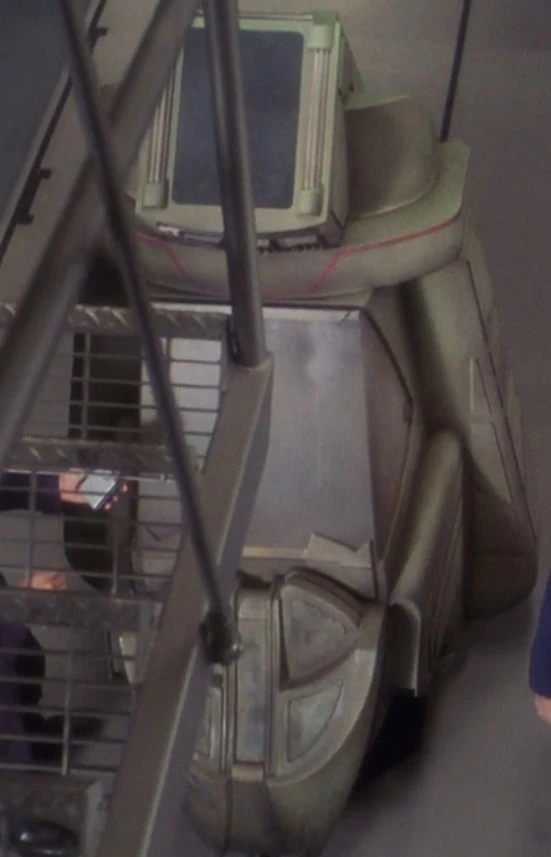 Runabout / Utility
Kantare escape pod Class
Hull Specifications LoggedThe Kantare escape pod was a specialized type of emergency vessel utilized by the Kantare civilization. These pods were standard equipment aboard Kantare supply ships, designed to provide a means of survival for crewmembers in the event of a catastrophic incident aboard their primary vessel. While their exact technical specifications beyond their primary function as an escape craft are not extensively documented, their design was clearly intended for short-term survival in space. The pods were capable of sustaining an occupant, though their long-term viability for rescue or independent travel was limited, as evidenced by historical incidents. **Service History** The Kantare escape pod saw use during the 22nd century. A notable incident occurred in 2129 when an accident aboard a Kantare supply ship necessitated the deployment of several of these escape pods by its crewmembers. Despite their successful deployment, the occupants were not rescued, highlighting the inherent dangers and isolation faced by those relying on such emergency systems. Years later, in 2151, the NX-01 Enterprise, under the command of Jonathan Archer, discovered one of these Kantare escape pods still in orbit around a planet. Upon bringing the pod aboard, the crew of the NX-01 Enterprise found the remains of its occupant, a discovery that played a significant role in the events of the Star Trek: Enterprise episode 'Oasis'. This encounter provided Starfleet with direct evidence of the Kantare's technology and the fate of some of their lost personnel.
- No armament data logged.
- No propulsion data logged.
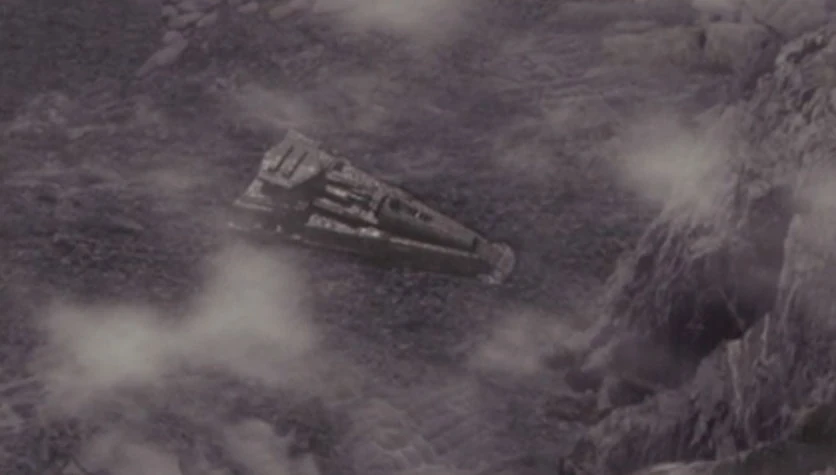 Supply Ship
Kantare supply ship Class
Hull Specifications LoggedThe Kantare supply ship was a class of unarmed transport vessels utilized by the Kantare civilization during the early 22nd century. These ships were specifically designed for inter-planetary logistics, facilitating the movement of essential supplies between Kantare planets and colonies. For crew safety in emergency situations, each vessel was equipped with Kantare escape pods. The robust hull construction of these supply ships incorporated a composite of duratanium and beryllium, providing structural integrity for their cargo-carrying missions. **Service History** A notable incident involving a Kantare supply ship occurred in 2129, when one such vessel, later identified as Ezral's ship, crash-landed on an unidentified planet. This planet was situated strategically between the Kantare colony of Kotara Barath and the Kantare homeworld. According to the Star Trek: Star Charts, the crash site of Ezral's ship was located within the Alpha Quadrant. This event was documented in Starfleet records, as depicted in the Star Trek: Enterprise episode 'Oasis'.
- No armament data logged.
- No propulsion data logged.
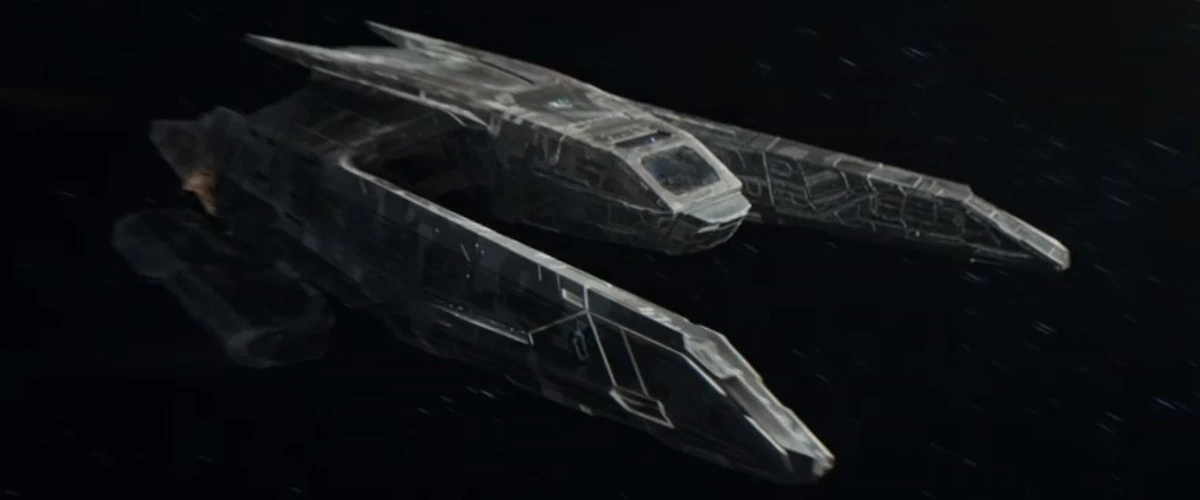 Scout / Patrol
Kaplan F17 Patrol Frigate Class
Hull Specifications LoggedThe Kaplan F17 Patrol Frigate was a distinct starship class utilized by the Confederation of Earth in an alternate 25th century timeline. Designed by John Eaves, this vessel served primarily as a patrol frigate for the Confederation Corps. A notable distinguishing feature of this alternate timeline variant, when compared to its Prime Timeline counterpart, the Kaplan F17 Speed Freighter, was its integration of a cloaking device, significantly enhancing its tactical capabilities for covert operations and surveillance. The class was designed to be operated by a minimal crew of one, indicating a high degree of automation or a specialized role for single-pilot missions. Its length was specified as 85.6 meters. While specific armaments are not detailed, its role as a patrol frigate implies a capacity for defensive and offensive engagements typical of such vessels. Its defensive systems included deflector shields in addition to the cloaking device. **Class History** The Kaplan F17 Patrol Frigate was actively deployed by the Confederation of Earth and its military arm, the Confederation Corps, throughout the early 25th century in the alternate timeline. These frigates were instrumental in maintaining the Confederation's authority and were frequently encountered during critical events. Several vessels of this class were prominently featured in the second season of Star Trek: Picard, appearing in episodes such as 'Penance', 'Assimilation', 'Watcher', 'Fly Me to the Moon', 'Monsters', and 'Mercy'. Their presence underscored the militaristic and authoritarian nature of the Confederation regime. **Notable Vessels** Known vessels of the Kaplan F17 Patrol Frigate class included the CSS Ahuizotl (NCC-93159), CSS Cetus (NCC-93130), CSS Charybdis (NCC-93148), CSS Hydra (NCC-93135), CSS Kappa (NCC-93154), CSS La Sirena (NCC-93131), CSS Makara (NCC-93142), CSS Selkie (NCC-93147), CSS Scylla (NCC-93165), and CSS Zin Kibaru (NCC-93161). The CSS La Sirena, in particular, played a significant role in the events depicted in Star Trek: Picard.
- No armament data logged.
- • Cloaking device
- • Deflector shield
 Transport / Freighter
Kaplan F17 Speed Freighter Class
1 VesselThe Kaplan F17 Speed Freighter was a civilian starship class primarily utilized in the late 24th century. Known for its unique blend of capabilities, it served various private owners across the United Federation of Planets and beyond, often operated by a single individual due to its design. **Design & Development** The Kaplan F17 was not originally a Federation design, a fact noted by production designer Todd Cherniawsky. Over time, individual vessels of the class, such as the SS La Sirena under the command of Cristóbal Rios, accumulated Federation components, including advanced staterooms and holodeck technology. The class was introduced into service as early as the 23rd century, with its length established at 85.57 meters. Technically, the Kaplan F17 was slower than a 23rd century Romulan Bird-of-Prey, but it compensated with superior maneuverability. It was equipped with essential systems like deflector shields and phasers, and notably featured an Emergency Hologram basic installation, enabling efficient operation by a single crew member. The ship was also designed with integrated landing gear, allowing it to land on various planets and moons. Its power conversion efficiency could operate as low as 91%. **Interior Layout & Features** The interior of a Kaplan F17 Speed Freighter was characterized by a large, open main deck. The bridge was situated at the front of this deck, while a transporter pad was located at the rear. To the sides of the main deck were crew staterooms and a versatile holomatrix, which could also function as an additional stateroom. On the lower level, the vessel included a science lab and a sickbay, though these facilities were noted to be somewhat cramped. A dining area equipped with replicators completed the ship's amenities, providing essential comforts for its crew. **Service History** During its active service, the Kaplan F17 Speed Freighter became a recognizable vessel in various sectors. An advertisement for The Red Bolian, a prominent establishment, famously claimed unparalleled expertise in navigating a Kaplan F17 Speed Freighter, as seen in the episode 'Stardust City Rag'. The most well-known vessel of this class was the SS La Sirena, bearing the registry NAR-93131, which played a significant role in the events surrounding Jean-Luc Picard's mission to save Soji Asha and the synthetic population of Coppelius, as depicted in episodes such as 'The End is the Beginning', 'Absolute Candor', and 'Et in Arcadia Ego, Part 2'.
- • Phase
- • Photon torpedo
- • Deflector shield
 Classified
Karemma ship Class
Hull Specifications LoggedThe Karemma ship was a distinct type of vessel primarily utilized by the Karemma during the late 24th century. These ships were designed with practical functionality in mind, featuring essential internal components for interstellar travel and commerce. Notable interior sections included a dedicated cargo hold, indicating their likely role in transport or trade, and a functional engine room, which housed the propulsion systems necessary for their operations. The design emphasized utility, reflecting the Karemma's mercantile nature. **Service History** Karemma ships were active throughout the 2370s and 2380s, serving the Karemma in various capacities across the galaxy. While specific individual vessels are not extensively documented, the class as a whole played a role in the broader galactic landscape of the late 24th century. These vessels were observed during significant events, including their appearances in the episodes 'Starship Down' and 'Hear All, Trust Nothing'. Their presence underscored the Karemma's continued activity and interaction with other species and factions during this turbulent period.
- No armament data logged.
- No propulsion data logged.
 Advanced Starship
Karla Five's vessel Class
Hull Specifications LoggedThe vessel known as Karla Five's vessel was an advanced starship originating from the antimatter universe planet of Arret. This unique starship was engineered for highly specialized operations, capable of functioning with a minimal crew complement of only a single pilot, while also accommodating a few passengers. Its propulsion system allowed for an extraordinary maximum warp factor of Warp 36, a speed far exceeding most known Starfleet vessels of its era. A defining characteristic of this class was its armament: positive matter weapons, which possessed the remarkable capability to ignite a dead star back into life, demonstrating an immense energy output and destructive potential. **Service History** This particular type of vessel gained prominence when Karla Five, an Arret native, was inadvertently pulled into the positive matter universe aboard one such starship. To facilitate her return to her native antimatter universe, Karla Five was compelled to pilot the vessel at maximum warp directly into a supernova. Later, in a critical moment, Karla Five generously donated her vessel to the crew of the USS Enterprise (NCC-1701). This act of assistance was crucial for the USS Enterprise crew, enabling them to be towed into another supernova, thereby providing the necessary means for their own escape from the antimatter universe, as depicted in the Star Trek: The Animated Series episode 'The Counter-Clock Incident'. The vessel's unique properties and its role in these extraordinary events underscore its advanced design and the critical function it served in inter-universal travel and survival.
- • Positive matter weapons
- • Warp facto

Kaseth's warbird
Class: D'deridex class- • Disrupto
- • Phase
- + 1 more...
- • Cloaking device
- • Warp facto (Qty: under cloak)
- + 1 more...

Kaseth's warbird
Class: D'deridex class- • Disrupto
- • Phase
- + 1 more...
- • Cloaking device
- • Warp facto (Qty: under cloak)
- + 1 more...
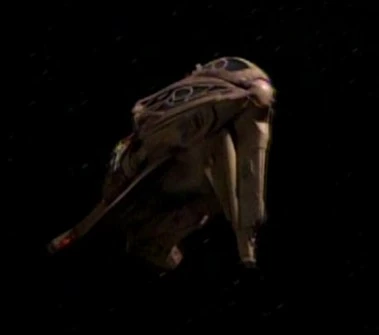
Kazon Fighter
Class: Kazon fighter- • Phase
- • Photon torpedo
- • Deflector shield
 Escort / Warship
Kazon fighter Class
1 VesselThe Kazon fighter, also referred to as a Kazon shuttle, was a compact spacecraft initially developed and utilized by the Trabe. Its design bore a close resemblance to the larger Kazon raider, though it was significantly smaller, approximately the size of a Federation shuttlecraft. This vessel was engineered for single-person operation and possessed the capability for planetary landing. Constructed from a robust combination of polyduranide alloy, duranium, magnesite, electroceramics, and a notable amount of carbon, the fighter was designed to be durable. It was a common sight aboard larger Kazon vessels, including Kazon raiders and Predator-class warships, serving as an auxiliary craft. The Kazon fighter was designed by Dan Curry. **Technical Specifications** For its size, the Kazon fighter was adequately armed, featuring at least two forward phaser banks for offensive engagements and an aft photon torpedo launcher, providing a rear defensive or offensive capability. Defensive systems included deflector shields, offering protection against enemy fire. Despite these armaments and defenses, the Kazon fighter was significantly outmatched in combat by a Federation Type 8 shuttlecraft, highlighting its limitations against more advanced Starfleet technology. **Class History** The history of the Kazon fighter is deeply intertwined with the conflict between the Trabe and the Kazon. Following the Kazon's overthrow of the Trabe in 2346, many of these fighters were seized and subsequently integrated into the Kazon Order's fleet. The crew of the USS Voyager first encountered Kazon fighters in 2371 on the planet Ocampa, where they were operated by the Kazon-Ogla sect under the command of First Maje Jabin, as depicted in 'Caretaker'. Another notable instance involved Kar, a Kazon-Ogla pilot, who utilized a fighter to attack Commander Chakotay's Type 8 shuttlecraft in 'Initiations'. In 2372, a Kazon fighter originating from a Trabe convoy was involved in a failed assassination attempt targeting several Kazon first majes during a conference on Sobras. The USS Voyager intervened, firing three photon torpedoes at the fighter, forcing it to disengage, as seen in 'Alliances'. The Kazon-Nistrim sect also employed this fighter design. One such vessel was famously stolen by Tom Paris to escape Culluh's raider, while another was used by Teirna as part of Seska's elaborate plot to lure the USS Voyager into a trap, events chronicled in 'Investigations' and 'Basics, Part I'.
- • Phase
- • Photon torpedo
- • Deflector shield

Kazon raider
Class: Kazon raider- • Disrupto
- • Photonic charge
- • Masking circuitry
- • Deflector shield
Escort / Warship
Kazon raider Class
2 VesselsThe Kazon raider, also frequently identified as a Kazon warship, Kazon patrol vessel, or simply a patrol ship, was a type of small raider originally designed and operated by the Trabe. These vessels were characterized by a hull design whose dimensions and specifications could vary, often serving to identify the specific Kazon sect to which a particular ship belonged. **Service History** A significant number of these Trabe-designed vessels fell into the hands of the Kazon after the Kazon Order successfully overthrew the Trabe in 2346. Throughout the 24th century, Kazon raiders became a common sight in the Delta Quadrant, frequently engaging Starfleet vessels. The USS Voyager, in particular, encountered Kazon raiders on numerous occasions between 2371 and 2372, with many of these engagements involving ships belonging to the Kazon-Nistrim sect. Jal Culluh, the First Maje of the Kazon-Nistrim, initially commanded his sect from a raider. In mid-2372, several vessels of this type were also observed within a Trabe convoy encountered by the USS Voyager. Later, in early 2373, Lieutenant Tom Paris of the USS Voyager ran afoul of a patrolling Kazon raider while attempting to seek assistance from the Talaxians. Paris, demonstrating ingenuity, was able to destroy the vessel using his Class 2 shuttle, specifically Class 2 shuttle 004. Captain Kathryn Janeway once famously likened the persistent annoyance of being continuously assaulted by these vessels to being 'pecked to death by ducks'. **Technical Specifications** Kazon raiders were equipped with twin disruptors mounted in the nose as their primary armament, capable of firing with considerable force. They could also deploy photonic charges with variable yields. For defense, these vessels utilized deflector shields and incorporated masking circuitry, which provided a degree of stealth by helping to disguise their presence from enemy sensors. While individually, a single Kazon raider was considered to not pose a significant threat to a Federation Intrepid-class starship like the USS Voyager, which possessed superior defense capabilities, tactical assessments by Lieutenant Commander Tuvok indicated that the USS Voyager could not prevail against a force of three Kazon warships. He further noted that it would be tactically unwise to engage a force of six such ships. Technologically, Kazon raiders were limited by Federation standards, notably lacking advanced systems such as transporters and replicators. However, they did feature a hangar bay capable of carrying smaller Kazon fighters and Kazon shuttles. Other internal systems included a bridge automatic containment system and internal force fields for security.
- • Disrupto
- • Photonic charge
- • Masking circuitry
- • Deflector shield
 Classified
Kazon ship Class
Hull Specifications LoggedThe Kazon ship was a type of small starship originally designed and operated by the Trabe. Its design lineage traces back to the Trabe civilization, but its operational history significantly shifted in 2346 when the Kazon successfully overthrew the Trabe. Following this pivotal event, these vessels fell into the hands of the various Kazon Orders, becoming a ubiquitous sight within Kazon-controlled space. The class is referenced in the episode 'Alliances'. These ships served various purposes for the Kazon, often reflecting their opportunistic and predatory nature. They were notably employed in the collection of 'The Unwanted' for 'The Diviner', as depicted in the episodes 'Lost and Found' and 'Preludes'. Specific incidents involving these ships include the abduction of Zero by visor-clad Kazon and the capture of Jankom Pog's escape pod using a tractor beam, both detailed in 'Preludes'. Furthermore, a Kazon slave trader utilized a ship of this type to transport a Caitian child to The Diviner in late 2383, as seen in 'Lost and Found'.
- No armament data logged.
- No propulsion data logged.
 Runabout / Utility
Kazon shuttle Class
Hull Specifications LoggedKazon shuttles were a class of auxiliary craft employed by the Kazon Collective during the 24th century, specifically noted in the 2370s. These vessels were considerably smaller than the standard Kazon raider and were typically operated by a crew of up to three individuals. While their primary function was not explicitly detailed, their compact size and maneuverability made them suitable for various support roles within the Kazon fleet. **Service History & Tactical Deployment** One notable instance of a Kazon shuttle's deployment occurred in 2372, orchestrated by Maje Culluh of the Kazon-Nistrim with the tactical assistance of Seska. This particular shuttle was specially modified for a daring raid on the USS Voyager. The Kazon lured USS Voyager into an ionized hydrogen cloud using an automated message beacon transmitting a Starfleet frequency. When USS Voyager attempted to tractor beam the beacon, Culluh's raider launched a focused attack, concentrating fire on a specific section of USS Voyager's shields. This created a temporary breach, allowing the modified Kazon shuttle, which had been concealed within the hydrogen cloud, to penetrate USS Voyager's defenses and puncture its hull. Upon breaching the hull, the three Kazon crew members aboard the shuttle proceeded directly to USS Voyager's transporter room, where they successfully stole a transporter module before returning to their mother ship. The Kazon shuttle remained lodged partway into USS Voyager's hull, severely compromising the starship's structural integrity and preventing it from generating a stable warp field. The removal of the shuttle required a complex engineering solution, involving rerouting additional power to a containment field and then towing the lodged craft out with one of USS Voyager's Federation shuttlecraft. This sophisticated tactical maneuver was unprecedented for the Kazon. Neelix, who had extensive prior dealings with the Kazon, expressed his surprise, stating he had 'never seen the Kazon do anything like this before.' Tuvok subsequently explained the unusual tactical acumen, attributing it to Seska's unique background, which included Cardassian, Maquis, and Starfleet tactical experience. This incident was documented in the Starfleet record, 'Maneuvers'.
- No armament data logged.
- No propulsion data logged.
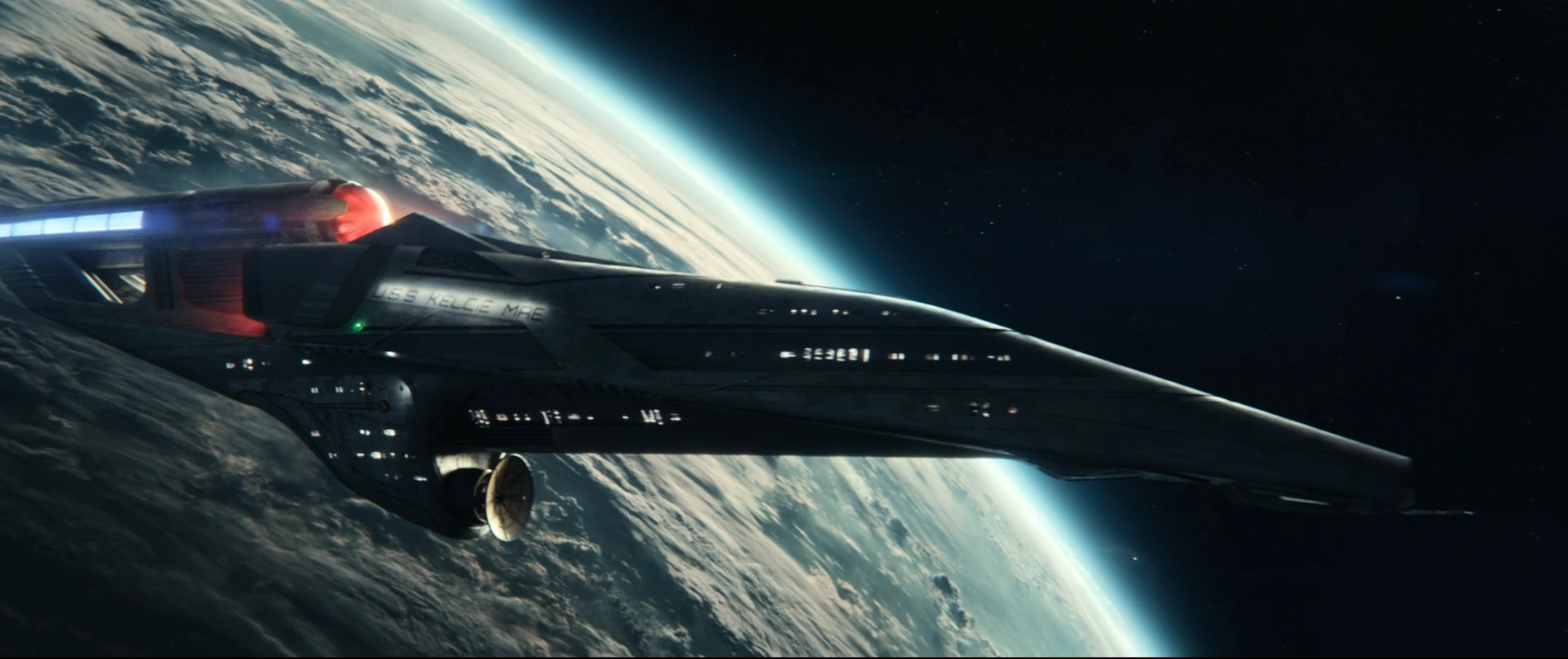 Transport / Freighter
Kelcie Mae type
Hull Specifications LoggedThe Kelcie Mae-type was a Starfleet starship class operated by the United Federation of Planets during the mid-23rd century. These vessels were characterized by a distinctive long and thin profile, integrating both the primary hull and engineering hull into a single, streamlined configuration. A singular warp nacelle was prominently positioned along the dorsal side of the ship, providing its primary interstellar propulsion. For sublight navigation and atmospheric flight, a small navigational deflector was situated along the ventral underside of the hull, aiding in clearing space debris and energy fields. **Class History** The Kelcie Mae-type played a role in various Starfleet operations during its active service period in the 2250s and 2260s, primarily serving in transport capacities. In 2259, the USS Kelcie Mae (NCC-618) rendezvoused with the USS Enterprise (NCC-1701) in the Prospero system. Its mission was to transport Ambassador Dak'Rah to the USS Enterprise, an event documented in the historical record 'Under the Cloak of War'. Two years later, in 2261, another vessel of this class, the USS Pablo Picasso (NCC-1375), was involved in critical diplomatic and tactical discussions. Robert April boarded the USS Pablo Picasso to rendezvous with the USS Enterprise (NCC-1701), where he addressed the escalating threat posed by the Gorn Hegemony, as recounted in 'Hegemony, Part II'. Both the USS Kelcie Mae (NCC-618) and the USS Pablo Picasso (NCC-1375) were noted as active during these respective periods.
- No armament data logged.
- No propulsion data logged.
Transport
Kelcie Mae type
2 VesselsThe Kelcie Mae-type was a distinctive Federation starship class, characterized by its long and slender profile. Its design integrated the primary saucer hull directly with the secondary engineering hull, forming a cohesive, streamlined structure. A single warp nacelle was prominently positioned along the dorsal side of the vessel, indicating its warp-capable nature. For interstellar navigation and debris deflection, a small navigational deflector was situated on the ventral underside of the ship. **Class History** Operated by Starfleet during the mid-23rd century, specifically from the 2250s through the 2260s, the Kelcie Mae-type primarily served as a transport vessel. One notable ship of this class, the USS Kelcie Mae (NCC-618), played a role in 2259 when it rendezvoused with the USS Enterprise (NCC-1701) in the Prospero system. Its mission was to transport Ambassador Dak'Rah to the Enterprise, as depicted in the episode 'Under the Cloak of War'. Another vessel of the class, the USS Pablo Picasso (NCC-1375), was active in 2261. It was aboard the USS Pablo Picasso that Robert April rendezvoused with the USS Enterprise (NCC-1701) to address the escalating threat posed by the Gorn Hegemony, an event chronicled in 'Hegemony, Part II'. Both the USS Kelcie Mae and the USS Pablo Picasso were active during their respective recorded service dates.
- No armament data logged.
- No propulsion data logged.
Keldon Class
Class: Keldon class- • Phase
- • Warp facto (Qty: observed)
- • Deflector shield
 Explorer
Keldon class
1 VesselThe Keldon-class cruiser was a Cardassian warship utilized by the Cardassian military during the 2370s. Its hull design bore a strong resemblance to the Galor-class spaceframe, but featured distinct additions to its aft end and main body. According to the Star Trek: Deep Space Nine Technical Manual, the Keldon-class was considered a variant of the Galor-class heavy cruiser, with production based at the Cardassia Prime Orbital Three Assembly Facility. It was designed to accommodate approximately 500 crew members, plus flight crew and troops, and had a mass estimated at 2,230,000 metric tonnes. Its dimensions were 371.88 meters in length, 192.23 meters in beam, and 70.13 meters in height. Propulsion systems included one or possibly two M/A warp systems and two or more impulse systems, allowing for observed speeds of Warp 9.6. Armaments typically included eight or more spiral-wave disruptors and one large aft disruptor wave cannon, complemented by deflector shields for defense. **Service History** In 2371, a number of Keldon-class warships were secretly constructed by the Obsidian Order in the Orias system. These particular vessels were built in a joint effort with the Romulan Tal Shiar, and were notably equipped with cloaking devices, enhanced top speeds, and advanced weaponry. One such Keldon-class vessel was involved in an encounter with the Maquis-controlled USS Defiant (NX-74205) in 2371, as depicted in the Star Trek: Deep Space Nine episode 'Defiant'. During this engagement, the Keldon-class ship sustained heavy damage from phaser cannon fire and six quantum torpedoes launched by the USS Defiant. However, due to the USS Defiant being heavily outnumbered, the attack concluded abruptly. Thomas Riker, while impersonating William T. Riker, expressed the belief that a single Defiant-class warship could easily defeat three Keldon-class vessels. Later in 2371, these same Obsidian Order Keldon-class ships, including the USS Koranak, were deployed in an abortive attack on the Founders' homeworld, located within the Omarion Nebula. This ill-fated mission, detailed in the Star Trek: Deep Space Nine episode 'The Die is Cast', saw the Keldon-class warships, alongside Romulan D'deridex-class ships, confront the Dominion's Jem'Hadar attack ships. The Dominion vessels, equipped with phased polaron beams and possessing overwhelming numerical superiority, destroyed the Obsidian Order's Keldon-class ships with relative ease.
- • Phase
- • Warp facto (Qty: observed)
- • Deflector shield
 Unit of Measurement
Kelvin Class
1 VesselThe kelvin, denoted as 'K', is a fundamental unit of temperature within the Star Trek universe, named after the historical Earth physicist and engineer Lord Kelvin. It is intrinsically linked to the Celsius scale, with 273.15 kelvin being equivalent to 0 degrees Celsius. The absolute zero point, representing the complete absence of thermal motion or heat, is defined as zero kelvin. This unit is frequently employed by Starfleet personnel and other entities for precise scientific and engineering measurements across various contexts. **Applications and Observations** Throughout Starfleet's history, kelvin measurements have been cited in diverse scenarios. For instance, a geologically unstable 'mad planet', believed to house the Soul of the Skorr, exhibited extreme temperature fluctuations, including lows of 20 kelvin, as documented in 'The Jihad'. On the USS Voyager, Lieutenant Commander Geordi La Forge noted a containment module L73 operating as programmed at '97 kelvin' in 'The Child'. Later, in 'Half a Life', Lieutenant Commander Geordi La Forge, along with Lieutenant Commander Data, referenced temperatures approaching 60,000 degrees kelvin during an experiment on the star Praxillus to revitalize the Kaelon sun, where the star's core density became unstable at 260 million kelvin and required stabilization at 220 million kelvin. Other notable applications include the heating of the USS Voyager's interior to 360 kelvin to simulate a fever, combating a viral infection caused by schplict in its bio-neural gel packs during 'Learning Curve'. Chef Gideon Seyetik prepared a dish using an Andorian boiler at exactly 500 kelvin in 'Second Sight'. The surface of a hazardous Y-class planet was characterized by temperatures exceeding 500 kelvin, coupled with an extremely turbulent, toxic atmosphere with thermionic radiation, as observed by Lieutenant Tom Paris in 'Demon'. For critical missions, such as Captain Kathryn Janeway's Omega Directive assignment, the Voyager shuttle unnamed 008 was modified to withstand thermal stresses of at least 12,000 kelvin. Advanced Federation shuttlecraft, equipped with metaphasic shielding, could endure external temperatures of 1.9 million kelvin while maintaining a comfortable internal cabin temperature, as seen in 'Suspicions'. **Linguistic Nuances** While technically the unit 'kelvin' should not be preceded by 'degrees', Starfleet personnel, including Lieutenant Commander Geordi La Forge, Lieutenant Commander Data, Chef Gideon Seyetik, Commander Chakotay, Ensign Harry Kim, Lieutenant Tom Paris, and Lieutenant Commander Tuvok, as well as the computer voice, have occasionally used the colloquial 'degrees kelvin' in various episodes such as 'The Child', 'Half a Life', 'Second Sight', 'Alter Ego', 'Concerning Flight', 'Demon', and 'The Haunting of Deck Twelve'. This linguistic inaccuracy is a recurring observation within Starfleet's operational logs.
- No armament data logged.
- No propulsion data logged.
 Runabout / Utility
Kelvin pod Class
Hull Specifications LoggedThe Kelvin pod was a specialized type of escape pod designed for rapid egress from Starfleet starships, particularly the Constitution-class alternate reality starships. These pods were strategically stowed beneath the bridge of vessels like the USS Enterprise (NCC-1701 alternate reality), providing the command crew with a swift means of escape in the event of a catastrophic incident. Each Kelvin pod was comprehensively equipped for survival, featuring parachutes for planetary landings and a full complement of Starfleet standard equipment. This included phasers, communicators, tricorders, survival kits, ration packs, and Starfleet survival suits, ensuring occupants had the necessary resources for emergency situations. **Class History** The Kelvin pods saw critical service in 2263 during the devastating Battle of Altamid. Following a brutal attack by Krall and his Swarm forces, which led to the destruction of the USS Enterprise (NCC-1701 alternate reality), several command crew members utilized these pods to escape the doomed starship. Notably, Captain James T. Kirk, Lieutenant Hikaru Sulu, and Ensign Pavel Chekov deployed Kelvin pods during this engagement. While some Kelvin pods were subsequently captured by Krall's Swarm ships, others, including those carrying Captain Kirk, Ensign Chekov, and Kalara, managed to soft-land independently on the planet Altamid, allowing their occupants to survive the initial destruction of the Enterprise.
- No armament data logged.
- No propulsion data logged.
 Science Vessel
Kelvin type
Hull Specifications LoggedThe Kelvin type was a class of Federation survey vessel operated by Starfleet in the early 23rd century, specifically active in the 2230s. Known for its distinctive single ventral warp nacelle and robust design, it served as a workhorse for Starfleet during its operational period, primarily for survey missions, though it was not considered a strict science ship and possessed significant tactical capabilities. **Design & Development** The design of the Kelvin type was overseen by art director Dennis Bradford, with exterior concepts by Ryan Church and interiors by James Clyne. Scott Chambliss, the production designer, played a crucial role in shaping its overall aesthetic. J.J. Abrams and Chambliss aimed for the Kelvin type to evoke a 'retro feel,' drawing inspiration from 1930s-1950s science fiction, such as 'Flash Gordon' and 'The Day the Earth Stood Still,' as well as a 'submarine-like, almost Soviet-era design.' This approach resulted in a more 'functional' and 'battleship aesthetic' compared to later Starfleet vessels. The intention was to create a stark visual contrast with the USS Enterprise (NCC-1701 alternate reality), making the Kelvin type appear older, clunkier, darker, and more metallic, thereby highlighting the advanced nature of the USS Enterprise (NCC-1701 alternate reality). Industrial Light & Magic (ILM) contributed significantly to the exterior details, including the unique deployment system for its photon torpedo launchers, and aged the exterior with streaks of grease and rust to give it a worn, used appearance. Initially, the ship was conceived as the USS Iowa, with early concept art showing a design more typical of Starfleet ships from Star Trek: The Original Series, including a traditional Constitution-class-like warp nacelle and secondary hull. Its dimensions also evolved during development; by September 10, 2007, it was scaled to 655 meters (2,148 feet) long, but by January 14, 2008, this was decreased to 457.2 meters (1,500 feet). Actor Faran Tahir, who portrayed Captain Richard Robau, appreciated the ship's historical and robust feel, noting its 'dated' but 'beautiful' appearance. **Technical Specifications & Layout** The Kelvin type was designed to accommodate a crew of 800 and featured at least 13 decks. Its unique layout included a single ventral warp nacelle housing the warp drive engine, a primary hull (saucer section) topped by a central dome, and a dorsal secondary hull. The secondary hull featured a single shuttlebay at the aft and a navigational deflector at the front. The low warp nacelle had an unusual extra exhaust at its aft end that illuminated when energized. An impulse drive was located at the aft of the saucer section. A spine connected the nacelle and secondary hull to the saucer section, extending along both its underside and topside, meeting at the central dome. Circular portals, likely escape pod hatches or docking ports, were located on the starboard side of the spine and the secondary hull. The Kelvin type was equipped with subspace communications and numerous sensors, including gravitational sensors, capable of remotely tracking crew health. Its bridge allowed for red alert activation and autopilot engagement, supported by three antennas (a, b, and c). A manual guidance system was available even if the autopilot was destroyed. **Tactical Systems** For defense, the Kelvin type was armed with turret-mounted phaser banks and photon torpedo launchers. The dorsal and ventral surfaces of the saucer section each featured two pairs of dual phaser banks and three pairs of multiple torpedo launchers. These turrets were stowed beneath hatches when not in use, deploying only when needed for combat. **Interior Design** **Bridge** Located within the central dome atop the saucer section, the Kelvin type's bridge featured various lighting schemes depending on the ship's alert status. It included a trisected viewscreen that also functioned as a window and could be polarized. The room was equipped with multiple overhead handrails for stability during spatial turbulence and a single command chair at its center, positioned on a slightly raised area. The command chair's right arm featured a control panel with a manual steering column for navigation and an intercom. A joint double station, handling additional helm functions, was directly ahead of the command chair, with two more stations flanking it. Additional stations were positioned along the outer perimeter, including three beneath the viewscreen and three at the aft of the room, with doors on either side of the aft stations. James Clyne's inspiration for the bridge came from the USS Enterprise (NCC-1701) and the USS Reliant (NCC-1864), combined with modern military ships and submarines, resulting in an 'analog and old school' feel. **Shuttlebay** The Kelvin type's shuttlebay was a darkly lit, cavernous area with a central track and large double-doors at one end. Green running lights guided crafts out during emergencies. Two decks on either side of the track provided storage for Kelvin type shuttlecraft, which were accessed via gangways similar to airlocks that detached upon launch. The shuttlebay set was filmed at the Long Beach Generating Station on Terminal Island. **Sickbay** The ship contained a brightly white-lit sickbay, furnished with at least one biobed, overhead monitors, and two free-standing consoles. In the novelization of 'Star Trek,' the USS Kelvin's medical bay is stated to be on Deck 9. **Engineering** The Kelvin type's engineering section was an enormous, industrial-looking area featuring numerous walkways, some elevated, and at least one flight of stairs. Red-lit cylindrical conduits were integrated into structural supports and railings. The area also incorporated at least three exposed turboshafts, ropes for descent, many pipes, and at least four consoles. This area, like the shuttlebay, was filmed at the Long Beach Generating Station, chosen for its 'grungy' and 'worn' appearance, which helped differentiate the Kelvin type from the USS Enterprise (NCC-1701 alternate reality). **Corridors and Turbolifts** Internal travel was primarily via turbolifts and corridors. Corridors featured an elongated hexagonal shape with dim lighting from circular ceiling lights and perimeter strips. During red alert, a cylindrical red glowing conduit ran horizontally along both walls, and floor lights turned red. Turbolifts had six walls and a door, with glowing panels that changed luminosity upon entry, turning red during red alert. Exposed turboshafts in engineering allowed glimpses of the turbolifts' bright white exterior panels as they traveled. Specific corridors led from the bridge to turbolifts, providing access to engineering and the shuttlebay. **Service History** The Kelvin type's most notable service occurred in 2233 when the USS Kelvin, commanded by Captain Richard Robau, was deployed near Klingon space. While investigating a 'lightning storm in space,' the USS Kelvin was attacked and destroyed by the Romulan mining vessel Narada, which had traveled back in time from the late 24th century. This incursion and the USS Kelvin's destruction triggered the creation of the alternate reality. James T. Kirk (alternate reality) was born aboard Medical shuttle 37 from the USS Kelvin shortly before its destruction, which claimed the life of his father, George Kirk (alternate reality). In 2255 of the alternate reality, salt shakers shaped like Kelvin type starships were featured in the Shipyard Bar in Iowa, Earth, where James T. Kirk (alternate reality) pondered a discussion with Christopher Pike (alternate reality), who had written a dissertation on the USS Kelvin. By 2259, a desktop model miniature of the USS Kelvin was displayed in Admiral Alexander Marcus (alternate reality)' office on Earth, alongside other historically significant vessels, as seen in 'Star Trek Into Darkness.' **Apocrypha/Unofficial Information** While the class was not officially named by writers Roberto Orci and Alex Kurtzman, it is unofficially known as the 'Kelvin type' after the USS Kelvin, the only ship of its kind to appear on screen. The reference book 'Star Trek: Federation - The First 150 Years' names this class the 'Einstein-class.' Quantum Mechanix, which built the model for 'Star Trek Into Darkness,' described the class as the 'workhorse of Starfleet in 2233.' Intel Corporation's Starfleet Shipyard site suggests the USS Kelvin's impulse engines were powered by four deuterium fusion reactors and its warp nacelle contained two rows of massive semi-circular warp coils. A comic storyline indicates that the NCC-0509 was a member of this class, and Montgomery Scott (alternate reality) once helped restore its dilithium chamber, earning a recommendation to Commander Alexander Marcus (alternate reality) at Starfleet Academy.
- • Phase
- • Photon torpedo
- • Deflector shield
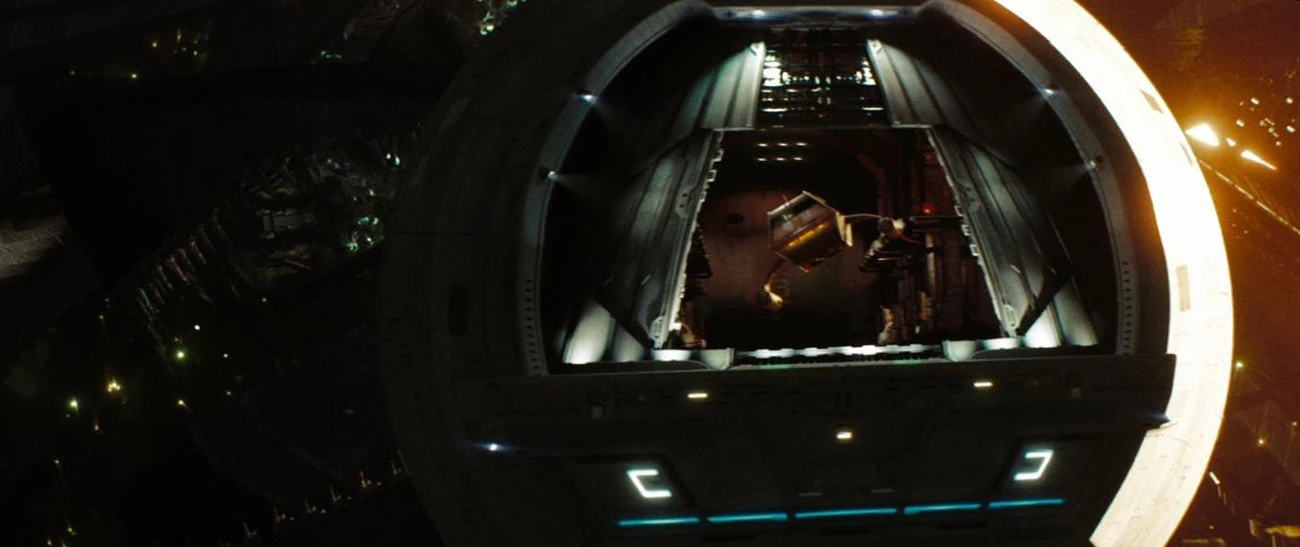 Runabout / Utility
Kelvin type shuttlecraft
Hull Specifications LoggedThe Kelvin type shuttlecraft was a specific shuttlecraft design utilized by Starfleet in the year 2233, notably aboard the USS Kelvin. This shuttle type featured a distinctive external arrangement, characterized by two warp nacelles attached to the main body via elongated nacelle pylons. These pylons also housed the shuttle's smaller impulse drives. Access to the shuttle's interior was provided by doors located on either side, just forward of the nacelle pylons. For ground operations, the shuttle was equipped with retractable landing gear positioned forward of these access doors. The design shares external similarities with the Takayama type shuttlecraft, which appeared decades later, though the latter was considerably larger. Furthermore, the Kelvin type shuttlecraft bears a strong resemblance to the Class F shuttlecraft, which saw service in the 2260s and 2270s. Internally, the Kelvin type shuttlecraft featured a cockpit designed for two occupants, with the helm controls situated on the starboard side. The cockpit provided forward visibility through three windows and was separated from the aft compartment by a small hatch, sometimes augmented by a plastic screen. For specialized missions, such as those requiring medical support, the aft compartment could be configured as a medical shuttle, fitted with appropriate medical equipment. The cockpit design itself was a redress of the military shuttle's cockpit, with Captain Richard Robau and Captain Christopher Pike notably occupying the starboard and port sides, respectively, during its operational history. **Class History** The Kelvin type shuttlecraft was actively deployed in 2233, primarily serving as support craft for the USS Kelvin. Several individual shuttles of this type are documented, including Shuttle 2 (registry 2), which was a medical shuttle variant, Shuttle 3 (registry 3), Shuttle 37 (registry 37), another medical shuttle variant, and Shuttle 43 (registry 43). An unnamed Kelvin type shuttlecraft is also recorded. These shuttles played a crucial role in the operations of the USS Kelvin during the events of Star Trek (2009 film).
- No armament data logged.
- No propulsion data logged.

Kings Canyon
Class: Type 6A shuttlecraft- No armament data logged.
- • Warp drive
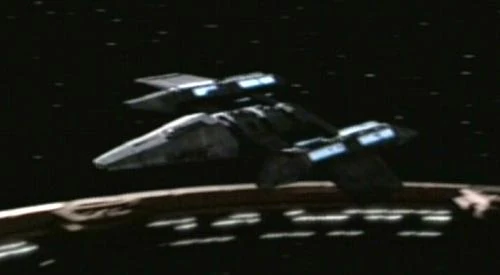 Classified
Klaestron starship Class
Hull Specifications LoggedThe Klaestron starship was a mid-sized vessel primarily utilized by the Klaestron during the 24th century. These starships were noted for their high warp capability, able to achieve warp factor 5 or better, making them capable of significant interstellar travel within the United Federation of Planets' sphere of influence and beyond. **Service History** One notable incident involving a Klaestron starship occurred in 2369. A vessel of this type docked at Deep Space 9, where Ilon Tandro intended to kidnap Jadzia Dax and transport her back to Klaestron IV. During its attempt to escape the station, the Klaestron starship was successfully captured by Deep Space 9's tractor beam and subsequently secured at docking port six. This event was documented in the Starfleet record, specifically in the episode 'Dax'.
- No armament data logged.
- No propulsion data logged.
 Escort / Warship
Klingon Bird-of-Prey (2150s) Class
Hull Specifications LoggedThe Klingon Bird-of-Prey was a versatile class of warship utilized by the Klingon Empire, with its earliest known configuration appearing in the mid-22nd century. Starfleet became aware of this class by 2151, as referenced in the episode 'Sleeping Dogs'. This initial design established the foundational avian aesthetic that would persist through numerous design changes over the next two centuries, with later variations collectively known under the same name, as seen in Star Trek III: The Search for Spock. Physically, this Bird-of-Prey design was comparable to its sister classes, the Raptor-class scout vessel and the D5-class battle cruiser, sharing the same basic avian design, including vaguely feather-like hull plating on its wings. The bulk of the ship's mass was concentrated in the aft section. A bulbous forward section housed the bridge module, connected to the aft by a relatively thin 'neck' that flared into the main body, sweeping down to form the wings. The caudal section of the ship contained the shuttlebay, impulse engines, and two warp nacelles. The port and starboard nacelles were directly connected to the extreme upper aft section, perpendicular to the impulse engine, as detailed in 'Divergence'. **Tactical & Defensive Systems** The offensive arsenal of the 22nd-century Bird-of-Prey was formidable for its era. It featured at least eight forward disruptor banks, including a twin pair of neck-mounted disruptor cannons, a pair of wing-tip mounted disruptor cannons, and a 360-degree rotating turret containing twin belly-mounted disruptor cannons. The class was also equipped with dual photon torpedo launchers, positioned fore and aft, and robust deflector shields, as demonstrated in 'The Expanse', 'Borderland', and 'Cold Station 12'. However, it possessed minimal aft weapons, a vulnerability noted in 'The Augments'. Prior to the refitting of the NX-class starship Enterprise, a single Bird-of-Prey could overpower it, though it struggled against three older Earth vessels simultaneously. After the Enterprise's upgrade, the two classes were nearly evenly matched. This class of Bird-of-Prey could also outgun an Orion Interceptor two-to-one, as seen in 'Borderland'. While Arik Soong stated in 'The Augments' that the Enterprise outgunned their Bird-of-Prey three-to-one, this may have reflected the damaged state of their vessel, which was limited to warp 3.8 at the time. **Auxiliary Systems & Interior Layout** This class of vessel was equipped with tractor beam technology, featuring one emitter on the underside of each wing. These could be used in conjunction to manipulate a ship towards its belly docking port, as shown in 'Borderland'. Unlike the Raptor-class, this Bird-of-Prey was equipped with escape pods, with the hatch located on the ship's belly, as seen in 'The Augments'. A significant design flaw was identified at the nape of the ship's neck and primary hull: a direct hit to the main plasma junction, located above the sensor array, could disable the entire power grid, a critical vulnerability exploited in 'The Augments'. The shuttlebay, located on the extreme aft directly below the impulse engines, was capacious enough to store a Denobulan medical ship, as depicted in 'Cold Station 12' and 'The Augments'. Inside, these Birds-of-Prey, like the Raptor-class scouts of the era, maintained targ pits for live food storage, presumably adjacent to the galley, as mentioned in 'The Augments'. The bridge, situated in the 'head' of the forward section, was one of the most protected areas of the ship, plated with dispersive armor, as seen in 'The Augments'. Its configuration included a viewscreen at the front, the captain's chair centrally located behind it, and an entryway with two manned consoles. Various stations were positioned along the perimeter for specific tasks, as observed in 'Borderland', 'Cold Station 12', and 'The Augments'. The crew quarters on these vessels were notably comfortable, a stark contrast to later Bird-of-Prey designs, where Captain K'Vada would state to Jean-Luc Picard and Data nearly two centuries later that Klingon warriors did not 'soften' their bodies with padding. **Service History** This class represents one of the earliest starship classes encountered by Earth Starfleet during the early 2150s. The first recorded encounter occurred on the outer perimeter of the Sol system in early 2153, as depicted in 'The Expanse'. Notable vessels of this class include Duras' Bird-of-Prey, destroyed in 2153, and Malik's Bird-of-Prey, destroyed in 2154. The term 'Bird-of-Prey' was first referenced on Star Trek: Enterprise in 'Sleeping Dogs'. While initially believed to be a Romulan term adopted by the Klingons in the late 23rd century, the appearance of ships bearing this name in use by both Klingons and Romulans during the 2150s makes the in-universe origin of the term much more obscure.
- • Disrupto (Qty: 8)
- • Torpedo launche (Qty: 2)
- • Warp facto
- • Deflector shield
- + 1 more...
 Escort / Warship
Klingon Bird-of-Prey (2230s) Class
Hull Specifications LoggedThe Klingon Bird-of-Prey (2230s) was a class of warship employed by the Klingon Empire, representing a significant evolution from earlier configurations, such as the Klingon Bird-of-Prey (2150s). This particular design abandoned the more industrial aesthetic of its predecessors in favor of a more 'realistic' and predatory depiction, as noted in 'Battle at the Binary Stars'. Its general layout featured a central body with a distinct forward 'head' and 'neck', flanked by a pair of 'wings', and a single engine mounted at the aft. Unlike some other Bird-of-Prey designs, the wings of this class notably lacked cannon mounts at their tips. The vessel was engineered for versatility, capable of operating effectively within an atmosphere, and was equipped with a searchlight positioned below the bridge area, as seen in 'Perpetual Infinity'. **Technical Specifications** For offensive capabilities, this Bird-of-Prey class was armed with disruptors and photon torpedoes. Defensively, it relied on deflector shields. However, these shields were known to be vulnerable and unable to withstand sustained phaser fire from Federation starships. Despite this, when operating in coordinated groups, these Birds-of-Prey could pose a significant threat, capable of overwhelming larger vessels like the Federation's Crossfield-class. Following Kol's claim of the Sarcophagus, he initiated the installation of cloaking devices on the Birds-of-Prey under his command, significantly enhancing their tactical advantage, as depicted across 'The Butcher's Knife Cares Not for the Lamb's Cry', 'Lethe', and 'Si Vis Pacem, Para Bellum'. Former Klingon General Dak'Rah, in 'Under the Cloak of War', offered a critical perspective, stating that unlike the bridge of a Constitution-class starship, a Bird-of-Prey's bridge was not designed for expansive views of its surroundings, and he conceded that, despite Klingon pride, Federation ships were generally superior. **Service History** The Klingon Bird-of-Prey (2230s) saw active service from the 2230s through the 2250s, though the broader Bird-of-Prey lineage, with numerous design changes, persisted through the late 32nd century, and this specific design was still in service in at least one alternate timeline by 2382, as shown in 'The New Next Generation'. A ship of this type initiated the raid on Doctari Alpha in 2236, as detailed in 'Perpetual Infinity'. These warships were prominently involved in the Battle of the Binary Stars in 2256, where several were destroyed, as seen in 'Battle at the Binary Stars'. Six months later, a number of Birds-of-Prey attacked the mining colony at Corvan II, only to be destroyed by the USS Discovery in 'The Butcher's Knife Cares Not for the Lamb's Cry'. In December 2256, two Birds-of-Prey were used to transport Dennas and Ujilli to their secret meeting on Cancri IV, an event chronicled in 'Lethe'. Three Birds-of-Prey participated in the ambush of the USS Gagarin (NCC-1309), with one firing the torpedo that destroyed the Gagarin with all hands, as depicted in 'Si Vis Pacem, Para Bellum'. By 2257, several Birds-of-Prey were part of the formidable Klingon armada that gathered to attack Earth, an event culminating in 'Will You Take My Hand?'.
- • Disrupto
- • Photon torpedo
- • Cloaking device
- • Deflector shield
 Escort / Warship
Klingon Bird-of-Prey (2260s) Class
Hull Specifications LoggedThe Klingon Bird-of-Prey was a versatile class of warship extensively utilized by the Klingon Empire, with its service history spanning from at least the mid-22nd century through the late 32nd century. Throughout this extensive period, the class underwent numerous design changes and iterations. The 2260s iteration of the Klingon Bird-of-Prey represented a significant design shift, differing greatly from the configuration seen in the Klingon Bird-of-Prey (2230s) during the Klingon War of 2256-57. This particular design marked a return to a configuration last observed in the mid-22nd century, a detail highlighted in the episode 'The Sehlat Who Ate Its Tail'. Technically, this type of Bird-of-Prey featured a layout nearly identical to the design that would become prolific from the 2280s onward. It was characterized by a central body, a distinct forward 'head' and 'neck' section, a pair of prominent 'wings', and a single engine mounted at the aft. The hull was typically green in color, accented with red detailing. Key distinguishing features of the 2260s model, differentiating it from its later counterparts, included a rounder 'head', a bulkier 'neck', and the presence of two distinctive domes positioned where each wing connected to the main hull. **Service History** Records indicate that a vessel of this specific type was harvested by the Scavenger ship, identified as an XCV-100, sometime prior to the year 2261. The Klingon Bird-of-Prey (2260s) made an appearance in Star Trek: Strange New Worlds, specifically in the episode 'The Sehlat Who Ate Its Tail', providing a canonical glimpse into its design and operational context within the 2260s era.
- • Disrupto
- No propulsion data logged.

Klingon Bird-of-Prey (2280s)
Class: Klingon Bird-of-Prey- No armament data logged.
- No propulsion data logged.
Escort / Warship
Klingon Bird-of-Prey (2280s) Class
Hull Specifications LoggedThe Klingon Bird-of-Prey was a highly versatile class of warship employed by the Klingon Empire, with its design lineage tracing from at least the mid-22nd century through the late 32nd century, undergoing numerous design changes over that extensive timeframe. This particular configuration, possibly descended from the earlier Klingon Bird-of-Prey (2260s) design, served a multitude of mission roles including scout, raider, patrol ship, and cruiser, remaining active through the 2380s. The Klingons applied several class designations to different types of their Bird-of-Prey design, including the 'K'vort'-class, 'B'rel'-class, D12 class, and Class 5. The D12 class was retired from service by the 2350s due to faulty plasma coils, which were critical components of their cloaking systems. These coils presented a significant vulnerability, as a low-level ionic pulse could cause them to reset, activating the ship's cloaking device and simultaneously lowering its deflector shields, a weakness exploited in Star Trek Generations. By the 2360s, it was not uncommon to find 'B'rel'-class Birds-of-Prey stripped and relegated to surplus yards, though some, like those acquired by Ferengi DaiMon Lurin, were made space-worthy again with repairs and added weapons, as seen in 'Rascals'. In an alternate timeline, the 'K'Vort'-class was referred to as a 'battle cruiser', noted as slower than Galaxy-class battleships but capable of posing a significant threat in a three-to-one confrontation, as depicted in 'Yesterday's Enterprise'. The 'K'Vort'-class, including the IKS Koraga, remained in service well into the 2370s, as shown in 'Penumbra'. By the 2380s, the Class 5 Bird-of-Prey was introduced, serving as a warship and cruiser within the Klingon Imperial Fleet, with specifications detailed in 'Mindwalk', 'Terror Firma', and 'Supernova, Part 1'. **Service History** For nearly a century, the Bird-of-Prey proved to be a rugged and sturdy design, much like its Federation counterparts, the Excelsior-class and Miranda-class starships, whose usefulness outlived contemporaries such as the Constitution II-class cruiser, as evidenced in Star Trek: The Next Generation and Star Trek: Deep Space Nine. Starfleet was aware of the Bird-of-Prey during the 2280s, with officers like Hikaru Sulu capable of visual identification and familiar with its crew complement, as shown in Star Trek III: The Search for Spock. A well-publicized encounter occurred in 2285 when Kruge's Bird-of-Prey, commanded by Kruge, sought to uncover the secrets of Project Genesis. After destroying the Merchantman and later the USS Grissom (NCC-638), Kruge's ship engaged the USS Enterprise (NCC-1701) in orbit of the Genesis Planet. James T. Kirk ultimately defeated Kruge, leading to Starfleet's capture of its first Klingon Bird-of-Prey. This event was crucial to Admiral James T. Kirk's court martial and the ship's subsequent use for time travel to Earth's 20th century in Star Trek IV: The Voyage Home. In 2287, Captain Klaa commanded the first Klaa's Bird-of-Prey to breach the Great Barrier, as depicted in Star Trek V: The Final Frontier. By 2293, a prototype Chang's Bird-of-Prey, commanded by General Chang, possessed the unique ability to fire torpedoes while its cloaking device was engaged. This vessel was used to assassinate Chancellor Gorkon of the Klingon Empire, implicating the USS Enterprise (NCC-1701-A) crew, before being destroyed at the first Khitomer Conference by the USS Enterprise (NCC-1701-A) and USS Excelsior (NCC-2000), as seen in Star Trek VI: The Undiscovered Country. The first Klingon Bird-of-Prey to be captured by Cardassia was commandeered in 2372 by Gul Dukat, as chronicled in 'Return to Grace'. Despite the design's age by the 2370s, Birds-of-Prey fought valiantly throughout the Dominion War, featuring in every major battle. Constant upgrades ensured they remained powerful and capable front-line warships. In the hands of a seasoned commander, a Bird-of-Prey could engage multiple Jem'Hadar fighters and emerge victorious, proving more agile than K't'inga-class cruisers for certain tasks, as demonstrated in 'Call to Arms' and 'Once More Unto the Breach'. In 2382, a fleet led by Relga's Bird-of-Prey pursued the USS Cerritos (NCC-75567) into a Schrödinger possibility field. Dr. T'Ana speculated that the age of the Bird-of-Prey design largely protected the Klingon vessels from the field's transformative effects, with only one catastrophically transforming into a Klingon sailing barge, as seen in 'The New Next Generation'. In 2384, a fleet of upgraded Birds-of-Prey, led by Captain Trij, rescued Starfleet vessels near Gamma Serpentis from the Living Construct, using their shields to block weapons fire and beam out survivors, as depicted in 'Supernova, Part 1'. In the mirror universe, the Klingon-Cardassian Alliance also utilized the Bird-of-Prey in their fleet, described by Intendant Kira Nerys as 'quick and powerful', though their targeting systems could be easily fooled, as shown in 'Shattered Mirror'. **Physical Arrangement** Comparable to its 22nd-century predecessor, the exterior design of the Bird-of-Prey maintained a basic avian form, featuring vaguely feather-like hull plating on its wings. The bulk of the ship's mass was concentrated in the aft section. The bridge module was housed in a bulbous forward section, connected to the aft by a relatively thin section that flared into the main body, forming multi-positional wings for various flight modes. The caudal section contained the ship's cargo bay, impulse engine, and warp nacelle, with the nacelle positioned diagonally above the cargo bay and perpendicular to the impulse engine, as seen in Star Trek III: The Search for Spock and other appearances. Dialogue from 'A Matter Of Honor' indicates the ship's 'neck' housed the engineering section. **Tactical Systems** Mid-24th century Birds-of-Prey were equipped with the Klingon Empire's 'best weapons' and 'finest warriors', always prepared for battle, even on peaceful missions, as noted in 'A Matter Of Honor'. The typical offensive arsenal included two forward-firing wing-mounted disruptor cannons, two photon torpedo launchers (fore and aft), and deflector shields, as seen in Star Trek III: The Search for Spock, 'Blood Oath', and 'The Way of the Warrior'. By the 24th century, some ships of the class were armed with phasers instead of disruptors, boasting a weapons range exceeding 40,000 kilometers, as mentioned in 'A Matter Of Honor'. The Class 5 variant featured additional disruptors at the base of the wings and an extra aft-facing ventral torpedo launcher, as seen in 'Kobayashi', 'Supernova, Part 1', and 'Supernova, Part 2'. Firepower varied by ship and era. In the 2280s, a Bird-of-Prey was considered 'out-gunned, ten to one' by a Constitution II-class battle cruiser, as stated in Star Trek III: The Search for Spock. Later, it was 'no match' for the Federation's Galaxy-class and significantly inferior to the Defiant-class in the latter 24th century, as shown in 'A Matter Of Honor', Star Trek Generations, and 'The Way of the Warrior'. Despite these liabilities, the Bird-of-Prey proved effective against other vessels, including the Empire's own Vor'cha-class cruiser during the Klingon Civil War, where two Birds-of-Prey nearly defeated a Vor'cha-class in an ambush, as seen in 'Redemption'. They were also highly successful against the Dominion's Jem'Hadar fighters during the Klingon-Cardassian War and Dominion War, capable of engaging multiple fighters and emerging victorious, as shown in 'Soldiers of the Empire', 'Call to Arms', 'Sons and Daughters', and 'Favor the Bold'. A single Bird-of-Prey could overwhelm the Cardassian outpost on Korma, disabling planetary defense systems and destroying buildings, as seen in 'Return to Grace'. The most vulnerable spot on a Klingon Bird-of-Prey was the underside of its hull, though it could withstand sustained phaser fire from a Cardassian Union Groumall freighter with shields down. However, it could not withstand a shot from a system-5 disruptor, which could breach the hull in two shots, as seen in 'Return to Grace'. The ship's neck was more resistant, capable of withstanding pressure changes from a hull breach, as shown in 'A Matter Of Honor'. In the mirror universe, the Klingon-Cardassian Alliance's Birds-of-Prey were 'quick and powerful' but had easily fooled targeting systems, as noted in 'Shattered Mirror'. **Cloaking Device** Birds-of-Prey were typically outfitted with a cloaking device, crucial to their battle success. Early 23rd-century models allowed communications and transporters while cloaked but could not use weapons or shields. The cloak also left an 'energy surge' detectable as a 'distortion' on close-range sensors, as seen in Star Trek III: The Search for Spock and Star Trek IV: The Voyage Home. There was approximately a two-second vulnerability period when the cloak engaged or disengaged, affecting shield status, as shown in Star Trek III: The Search for Spock and Star Trek Generations. In the mid-2290s, an advanced prototype Bird-of-Prey could fire weapons while cloaked and did not display the characteristic 'energy surge'. However, this cloak could not mask 'neutron radiation' or high-energy plasma, such as impulse engine exhaust, as seen in Star Trek VI: The Undiscovered Country. The defective plasma coils in D12-class Birds-of-Prey's cloaking devices made them susceptible to low-level ionic pulses, which would reset the coils, engaging the cloak and dropping shields, as depicted in Star Trek Generations. **Propulsion Systems** Under normal conditions, a Bird-of-Prey could achieve at least warp factor 8, as stated in 'Once More Unto the Breach'. Under ideal circumstances, such as initiating the slingshot effect, a Bird-of-Prey could reach warp 9.8, as seen in Star Trek IV: The Voyage Home. During the 23rd century, the Klingon Bird-of-Prey utilized a dilithium sequencer considered 'primitive' by Federation standards, as noted in Star Trek IV: The Voyage Home. The primary impulse injector was located on Deck 5, as seen in 'Sons and Daughters'. To create a graviton burst, warp power had to be diverted to the main deflector, as shown in 'Once More Unto the Breach'. In case of a warp core containment problem, an adjustment to the tritium intermix could compensate, as seen in 'When It Rains...'. **Additional Systems** At least two tractor beam emitters were located on the ventral sections of the Bird-of-Prey: one on the 'head' behind the forward torpedo launcher, and another between the wings, below and in front of the impulse engines, as seen in 'The Way of the Warrior' and 'Return to Grace'. In 2375, the IKS Rotarran emitted an EM pulse from near the latter tractor emitter, as shown in 'Shadows and Symbols'. Birds-of-Prey were capable of atmospheric operations and planetary landings, equipped with landing struts (a feature later adopted by Starfleet runabouts and Intrepid-class starships). They also featured a retractable loading ramp in the rear for crew and cargo, but could not operate on or below water surfaces, as seen in Star Trek III: The Search for Spock, Star Trek IV: The Voyage Home, and 'Once More Unto the Breach'. **Interior Design - Overview** On average, a Bird-of-Prey's crew complement varied from 'about a dozen officers and men' to up to thirty-six, as stated in Star Trek III: The Search for Spock and 'Return to Grace'. A skeleton crew of six could adequately operate a Bird-of-Prey and successfully take it into battle, as seen in Star Trek IV: The Voyage Home and 'Once More Unto the Breach'. The interior design offered limited space, as it was conceived as 'a military ship, not a pleasure craft', according to Captain K'Vada in 'Unification I'. Jadzia Dax described life aboard a Bird-of-Prey as 'cramped and uncomfortable', even compared to the spartan Defiant-class starship, as noted in 'Soldiers of the Empire'. **Interior Design - Main Bridge** Due to their age and varied configurations, Bird-of-Prey main bridge designs included numerous variations. Most incorporated an octagonal viewscreen built into the forward bulkhead, as seen in Star Trek III: The Search for Spock, Star Trek IV: The Voyage Home, and other appearances. In 2285, Kruge's Bird-of-Prey had a bridge with a light blue and pink color scheme. The captain's chair was on a raised, circular platform, providing a direct view of a smaller, rectangular main viewscreen. Helm, navigation, and gunner's consoles were in a recessed 'pit' forward of the command chair, typically manned by five officers. Two aft stations handled data and vessel tracking. An oval access point at the rear led to a red-lit, smoky area, as seen in Star Trek III: The Search for Spock. From 2286 onward, most Bird-of-Prey bridges, including the captured HMS Bounty, adopted a bronze color scheme with red highlights and a relatively flat floor. The command chair remained central, with two course control stations forward and communications and engineering/scientific monitoring stations aft. A circular ceiling hatch served as an emergency evacuation route, as seen in Star Trek IV: The Voyage Home. In 2287, Captain Klaa's Bird-of-Prey featured a different layout, providing the commanding officer with a direct link to weapons systems via a retractable scope. This bridge had two aft stations with hooded monitors and touch-sensitive controls. A larger, permanently open aft doorway led to the neck corridor, as seen in Star Trek V: The Final Frontier. By 2293, General Chang's prototype Bird-of-Prey had a bridge extremely similar to Klaa's, with the same aft twin consoles and viewscreen, but lit with a constant harsh green light. An unusual helm station with a large steering wheel was positioned behind the command chair, and a small console ahead of the chair served targeting purposes with a firing button, as seen in Star Trek VI: The Undiscovered Country. 24th-century designs varied. D12-class bridges, in use until about 2350, included a retractable scope and two aft stations identical to those on Klaa's and Chang's ships. A second, padded command chair was situated ahead of these stations. This style was seen on the Duras sisters' Bird-of-Prey in 2371, despite the class's official retirement, as depicted in Star Trek Generations. In 2365, the IKS Pagh's bridge had sturdy support struts flanking the command chair, with side stations under red, glowing hexagons. Its main viewscreen was rectangular, similar to Kruge's ship, as seen in 'A Matter Of Honor'. The IKS Hegh'ta in 2368 featured a more conventional design with two aft stations and additional chairs, notably well-lit, as seen in 'Redemption II'. A dimmer version was seen on Captain K'Vada's Bird-of-Prey later in 2368, as seen in 'Unification I' and 'Unification II'. In 2370, Kang's Bird-of-Prey had an unusual layout with Kang's command chair facing a table and wall-mounted display, lacking a viewscreen or additional consoles, as seen in 'Blood Oath'. Later that year, the Duras sisters' Bird-of-Prey featured two large wall-mounted red hexagons, display screens, and a podium emblazoned with the Klingon Empire emblem, as seen in 'Firstborn'. The IKS M'Char in 2372 had a dimly lit, more featureless bridge, with a red light on the captain's position, as seen in 'The Way of the Warrior'. Later in 2372, Gul Dukat's captured Bird-of-Prey had a typical bridge with twin aft stations, but these were tightly packed with the command chair, leaving little central passage space. This layout remained until at least early 2373, as seen in 'Return to Grace' and 'Apocalypse Rising'. The IKS Rotarran in 2373 had a very similar, but dustier, bridge. Its support beams shifted positions between 2373 and 2375, as seen in 'Soldiers of the Empire', 'Sons and Daughters', and 'Shadows and Symbols'. The IKS Ch'Tang in 2373 featured a virtually identical bridge, as seen in 'Once More Unto the Breach'. In 2384, Captain Trij's Bird-of-Prey had a slightly wider viewscreen and more space between seats, as seen in 'Supernova, Part 1'. **Interior Design - Medical Facilities** Compared to Starfleet sickbays, the medical ward of a Klingon Bird-of-Prey was extremely small and cramped. Kruge's Bird-of-Prey in 2285 featured a dully illuminated room with a dark bed beside a wall that included a red-lit screen and decorative motifs, as seen in Star Trek III: The Search for Spock. **Interior Design - Cargo Bay** Klingon Birds-of-Prey had a cargo bay approximately sixty feet in length, with a long walkway between two wider storage areas. The HMS Bounty's cargo bay was famously converted into an enclosed whale tank, using plexiglass sheets to hold forty tons per whale, totaling four hundred tons, as seen in Star Trek IV: The Voyage Home. This bay had automated double-doors with an explosive override and could be opened from above for large-scale passage. **Interior Design - Engineering** On a Klingon Bird-of-Prey, the engine room was located fore of the cargo bay, with an open doorway connecting them. Another door led towards the bridge. A third door led to the dilithium chamber, visible through a trapezoidal slot. Two monitors were present, one above the slot and another on a raised bulkhead, as seen on the HMS Bounty in 2286 in Star Trek IV: The Voyage Home. In 2365, the IKS Pagh's engineering monitored subatomic bacteria on the hull, as mentioned in 'A Matter Of Honor'. **Interior Design - Transporter Area** Various transporter areas were included. The HMS Bounty in 2286 had a small transporter bay with four lower and one upper pad, capable of beaming four hundred tons. Its console faced away from the transporter but could rotate, as seen in Star Trek IV: The Voyage Home. Captain Klaa's Bird-of-Prey had a larger, dedicated transporter room with two large upper and lower pads on an elevated platform, as seen in Star Trek V: The Final Frontier. Kruge's Bird-of-Prey also included a transporter room, and D12-class Birds-of-Prey utilized transporters, as seen in Star Trek III: The Search for Spock, 'Past Prologue', and Star Trek Generations. **Interior Design - Mess Hall** The mess hall aboard the IKS Pagh provided seating for about nine officers at two zigzagging tables. This relatively spacious room was dully illuminated with red-tinged light from metallic grilles and wall panels. It had a single door and a ceiling lined with small, circular, white lights, as seen in 'A Matter Of Honor'. The HMS Bounty carried Klingon food packs, which Chief Engineer Montgomery Scott removed due to stomach irritation, as noted in Star Trek IV: The Voyage Home. **Interior Design - Captain's Ready Room** In 2367, the IKS Hegh'ta had a grayish captain's ready room with a single door, a metallic desk, and displays of Klingon blade weapons, including swords, bat'leth-like weapons, and gin'tak spears. An alcove contained a wall-mounted metallic shield with the Klingon Empire emblem, as seen in 'Redemption'. Dukat's Bird-of-Prey's ready room included two vertical, rectangular, red lighting panels and a viewscreen, as seen in 'By Inferno's Light'. The IKS Rotarran's ready room featured consoles along three sides, with the fourth displaying the captain's personal effects, including a chair and pottery. Yellow and red grilles provided illumination. In 2373, the commanding officer's chair was a high-backed throne behind a desk with Klingonese lettering. By 2374, General Martok had installed a padded chair and a Klingon tapestry, as seen in 'Soldiers of the Empire' and 'Sons and Daughters'. The IKS Ch'Tang later had a similar ready room, as seen in 'Once More Unto the Breach'. **Interior Design - Quarters** Crew quarters aboard most Birds-of-Prey were shoddy. D12-class quarters, like those on the Duras sisters' ship in 2371, were dilapidated, dark, and damp, featuring pipes, chains, and a low portal revealing a starfield. A small console faced a smoky corridor, and a harness-equipped support was centrally positioned, as seen in Star Trek Generations. Captain's quarters in 2367 were more luxurious, with an open doorway under a triangular pinkish-red light, flanked by shields with the Klingon Empire emblem. This room could be altered between a furnished version with fabric chairs, a low table, and a sheathed sword, and an emptier, more functional space, as seen in 'Reunion'. Typical single-crewman quarters were bronze-colored and hard, with a shelf-bed, a work area with a static display touchscreen computer, and an intercom. In 2368, Jean-Luc Picard and Data were assigned such quarters on Captain K'Vada's Bird-of-Prey, which Picard found 'nice' despite Data's observation that it was clearly intended for one crewman, leading Picard to conclude it was a Klingon practical joke, as seen in 'Unification I' and 'Unification II'. **Interior Design - Other Rooms** The HMS Bounty's computer room contained several computer banks with interlinked monitors and smaller readouts on a wall panel. This room held data on Earth's whale species, including extinct specimens, as seen in Star Trek IV: The Voyage Home. **Interior Design - Corridors** A passageway in the 'neck' area allowed movement between the bridge and the rest of the ship. On the HMS Bounty, this corridor led directly to the engine room. On Captain Klaa's Bird-of-Prey, it led to the transporter room and was longer and wider, as seen in Star Trek IV: The Voyage Home and Star Trek V: The Final Frontier. **Escape Pods** The 'K'Vort'-class Bird-of-Prey design included at least seven K'Vort type escape pods, with six on the starboard side and at least one on the port side, as seen in 'Penumbra'.
- • Disrupto (Qty: 2)
- • Phase
- + 1 more...
- • Cloaking device
- • Deflector shield
 Transport / Freighter
Klingon civilian transport ship Class
Hull Specifications LoggedA Klingon civilian transport ship was a class of non-military vessel utilized extensively throughout the Klingon Empire during the late 24th century. These ships were designed primarily for the movement of personnel, capable of carrying a significant number of passengers, and were a common sight in Klingon space, serving the logistical and travel needs of the civilian population. While specific technical details regarding their propulsion and defensive systems are limited, their operational history indicates the presence of cloaking technology, a standard feature on many Klingon vessels, even those not intended for combat. The design prioritized capacity over combat capabilities, reflecting their role as civilian carriers within the Empire. These transports were essential for connecting the various worlds and outposts of the Klingon Empire, facilitating trade and travel for its citizens. While not built for battle, their cloaking devices offered a measure of protection against potential threats or for covert operations when necessary. However, their primary function remained peaceful transport. Their robust construction was designed to withstand the rigors of space travel, though not the direct impact of starship weaponry. The class was a testament to the Klingon Empire's need for a functional and reliable civilian infrastructure, complementing their formidable military fleet. **Service History** The Klingon civilian transport ship class saw active service throughout the 2370s. A notable incident occurred in 2372 when one such vessel tragically crashed in a mountainous region on Galorda Prime, resulting in the loss of all 440 people aboard. This event highlighted the inherent risks of space travel, even for civilian vessels. Months later, another ship of this class became central to a complex and politically charged plot orchestrated by the Klingon Empire. This particular transport was used in a failed attempt to frame Lieutenant Commander Worf of Starfleet and secure his extradition to Qo'noS. In this elaborate ruse, the cloaked transport was intentionally maneuvered to appear as if it had blundered into a fierce battle involving the USS Defiant (2370), a Klingon Bird-of-Prey, and a K't'inga-class battle cruiser. The transport decloaked directly in front of the USS Defiant just as Lieutenant Commander Worf issued an order to fire quantum torpedoes, leading to its apparent accidental destruction. It was later revealed that the transport was empty, and the Klingons had faked its life signs, submitting as evidence the passenger list from the transport that had crashed on Galorda Prime earlier that year. This incident was documented in the Starfleet record as 'Rules of Engagement', underscoring the political machinations and strategic deception employed by elements within the Klingon Empire during this period. Despite these specific incidents, the class continued to serve its primary function within the Klingon Empire, providing vital transport services for its civilian population.
- No armament data logged.
- No propulsion data logged.
 Escort / Warship
Klingon cleave ship Class
Hull Specifications LoggedThe Klingon cleave ship was a distinctive type of Klingon warship that saw service during the 23rd century. Characterized by its massive size, the vessel's most prominent and fearsome feature was a large, vertical blade mounted on its bow. This unique design element was not merely aesthetic; it was engineered to enable the cleave ship to ram and destroy opposing starships, making it a formidable and brutal instrument of war in the Klingon Empire's fleet. **Class History** The cleave ship played a pivotal role in significant conflicts. During the Battle of the Binary Stars in 2256, the Klingon leader T'Kuvma famously ordered a cloaked cleave ship to ram the USS Europa (NCC-1648). This act served as a stark demonstration of the Klingon Empire's advanced invisibility technology. Following the devastating collision, the USS Europa proceeded to self-destruct, resulting in the destruction of both vessels. Later, in 2257, a cleave ship under the command of High Chancellor L'Rell provided crucial reinforcement to Starfleet vessels. This particular cleave ship joined the USS Discovery and the USS Enterprise (NCC-1701) in their desperate battle against Control. Demonstrating its destructive capability once more, the vessel decloaked and rammed, destroying two Section 31 ships, proving its effectiveness as a shock weapon in direct engagements.
- • Directed energy weapo
- • Cloaking device
- • Deflector shield
 Classified
Klingon command vessel Class
1 VesselThe class classification of Klingon command vessel starships.
- No armament data logged.
- No propulsion data logged.
Klingon Command Vessel (Sarcophagus type)
Hull Specifications LoggedThe class classification of Klingon Command Vessel (Sarcophagus type) starships.
- No armament data logged.
- No propulsion data logged.
 Transport / Freighter
Klingon heavy cargo carrier Class
Hull Specifications LoggedThe Klingon heavy cargo carrier was a robust starship design utilized by the Klingon Empire during the 32nd century. These vessels were specifically engineered for the transport of significant payloads, serving a crucial logistical role within the Klingon fleet and civilian infrastructure. Their designation as 'heavy' cargo carriers suggests a substantial capacity, vital for supporting the various operations and needs of the Klingon Empire during this era. **Service History** One notable incident involving a Klingon heavy cargo carrier occurred in 3195. An unregistered vessel of this class, transporting members of the eight remaining Great Houses, suffered a catastrophic mechanical failure while en route to a refugee center. This severe malfunction led to the starship crashing on the planet Taurus VII. Initial intelligence gathered by the Federation was incomplete, but Starfleet had reason to believe that Jay-Den Kraag's family, associated with the House of Kraag, was among the passengers. Subsequent investigations, however, confirmed that Jay-Den Kraag's family was not aboard the ill-fated carrier. This event, documented in 'Vox In Excelso', highlighted the challenges and dangers of interstellar travel, even for established cargo routes.
- No armament data logged.
- No propulsion data logged.

Klingon raider
Class: Klingon raider- • Directed energy weapo
- • Cloaking device
- • Deflector shield
 Escort / Warship
Klingon raider Class
1 VesselThe Klingon raider was a compact starship utilized by the Klingon Empire during the mid-23rd century. Designed primarily as an auxiliary craft, these vessels were frequently carried aboard larger Klingon starships. Each raider was equipped with an antimatter power supply, enabling it to achieve warp speeds for interstellar travel, complemented by impulse engines for sub-light maneuvering and atmospheric flight. The cockpit was configured with seating for two individuals, though the craft could be effectively operated by a single pilot. Distinctive blade-like 'wings' characterized its design, which were observed to flutter during atmospheric flight, as seen in the Star Trek: Strange New Worlds episode 'Shuttle to Kenfori'. The Klingon raider was officially classified as a shuttle. **Service History** Klingon raiders were active throughout the 2250s and 2260s, serving the Klingon Empire in various capacities. Their operational capabilities were highlighted in several Star Trek: Discovery episodes, including 'The Butcher's Knife Cares Not for the Lamb's Cry' and 'The War Without, The War Within', where their role in Klingon tactical operations was evident. In the Star Trek: Discovery episode 'The Wolf Inside', these craft continued to demonstrate their utility. Furthermore, in the Mirror Universe, a variant of the Klingon raider was employed by rebel factions engaged in conflict against the Terran Empire. These Mirror Universe raiders were notably modified with non-Klingon technologies, as depicted in the Star Trek: Discovery episode 'Despite Yourself'.
- • Directed energy weapo
- • Cloaking device
- • Deflector shield
 Escort / Warship
Klingon warbird Class
Hull Specifications LoggedThe Klingon warbird was a class of starship utilized by the Klingon Empire, primarily noted for its presence in the mid-22nd century of the Prime Timeline and the mid-23rd century of the alternate reality (Kelvin Timeline). **Prime Timeline Service and Nomenclature** In 2151, the Vulcan diplomat Tos claimed that the Klingon Empire would have dispatched a squadron of Klingon warbirds to attack Earth had he not successfully negotiated for the transport of the Klingon Klaang's corpse to Qo'noS, as depicted in the episode 'Broken Bow'. The term 'Klingon warbird' also appeared in various script drafts for other Starfleet encounters. For instance, it was used in the final draft script of 'Unity' to describe one of multiple images seen by Chakotay in a vision while linked to the Borg Cooperative. Similarly, in the first draft script of 'When It Rains...', Gowron informed Admiral William Ross and Captain Benjamin Sisko of his intention to send 'a swarm of Klingon warbirds' to bombard Cardassia, aiming to conclude the Dominion War. However, the use of the term 'Warbird' in relation to Klingon vessels, particularly in 'Broken Bow', was later acknowledged as a writer's error. Soon after the episode's production, Brannon Braga stated that Romulans typically use 'Warbirds' while Klingons are known for their 'Bird-of-Prey' class starships. The second draft script of 'Broken Bow' originally referred to these vessels as 'war ships' rather than 'Warbirds'. **Alternate Reality Service and Design** In the alternate reality, Klingon warbirds played a more prominent role. In 2258, Cadet Nyota Uhura intercepted a transmission reporting that forty-seven Klingon Warbirds had been destroyed by a single Romulan ship, later identified as the Narada, during its attack on a Klingon prison planet. During the same year, Klingon Warbirds were integral to the Kobayashi Maru scenario, a Starfleet training simulation. These simulated Warbirds were depicted with cloaking devices, deflector shields, and were armed with photon torpedoes. In James T. Kirk's third attempt at the scenario, two of five simulated Warbirds entered the neutral zone before locking weapons on the USS Trainer, captained by Kirk. Moments later, the remaining three Warbirds decloaked, targeting the Starfleet craft and commencing photon torpedo fire while maintaining their shields. Kirk's secretly inserted subroutine subsequently eliminated the Warbirds' shields, rendering them vulnerable to a single photon torpedo strike each. The Warbirds featured in the Star Trek (2009) film were designed by John Eaves. A scene deleted from the film depicted a fleet of ten Klingon Warbirds decloaking and surrounding Nero's ship, the Narada, after it was disabled by the USS Kelvin's attack during the Attack on the USS Kelvin. The Star Trek Encyclopedia (4th edition) described these alternate reality Klingon warbirds as being similar in design to the D7 battle cruiser of the Prime Timeline.
- • Torpedo launche
- • Cloaking device
- • Deflector shield

Kohlar's battle cruiser
Class: D7 class- • Disrupto (Qty: 2)
- • magnetic pulse generators
- + 1 more...
- • Cloaking device (Qty: after 2269)
- • Warp facto
- + 1 more...

Kohlar's battle cruiser
Class: D7 class- • Disrupto (Qty: 2)
- • magnetic pulse generators
- + 1 more...
- • Cloaking device (Qty: after 2269)
- • Warp facto
- + 1 more...
Classified
Korolev class
Hull Specifications LoggedThe Korolev-class starship was a type of vessel in service with Starfleet during the 24th century. Its existence within Starfleet's operational registry was first indicated by an okudagram displaying Starfleet mission status, which was observed in the observation lounge of a Starfleet vessel around the period of Star Trek: The Next Generation Season 4. **Service History & Naming** One known vessel of this class was the USS Goddard, bearing the registry NCC-59621, which was officially listed as active in 2369. The Korolev-class was named in honor of Sergey Pavlovich Korolev, a significant historical figure recognized for his contributions to early Russian space exploration. It is crucial to distinguish this class from the USS Korolev, which was a Constitution II-class starship in service in 2293, as there is no direct connection between the two.
- No armament data logged.
- No propulsion data logged.
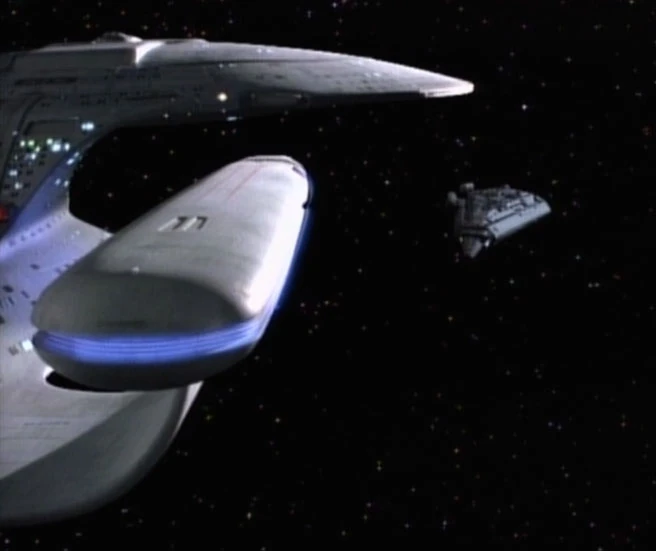 Classified
Kostolain starship Class
Hull Specifications LoggedThe Kostolain starship was a class of vessel utilized by the Kostolain natives during the late-24th century. Specific design philosophies or technological advancements of this class are not extensively documented, but it served as a primary mode of interstellar transport for the Kostolain people. **Class History** One notable instance of a Kostolain starship's service occurred in 2368. During this period, a Kostolain starship rendezvoused with the Federation starship USS Enterprise (NCC-1701-D). This particular Kostolain vessel was transporting two prominent individuals: Lwaxana Troi, the Betazoid Ambassador, and Minister Campio. This event was documented in the Starfleet records as part of the mission detailed in the episode 'Cost Of Living'. The interaction provided a glimpse into the diplomatic and transport capabilities of the Kostolain starship class.
- No armament data logged.
- No propulsion data logged.
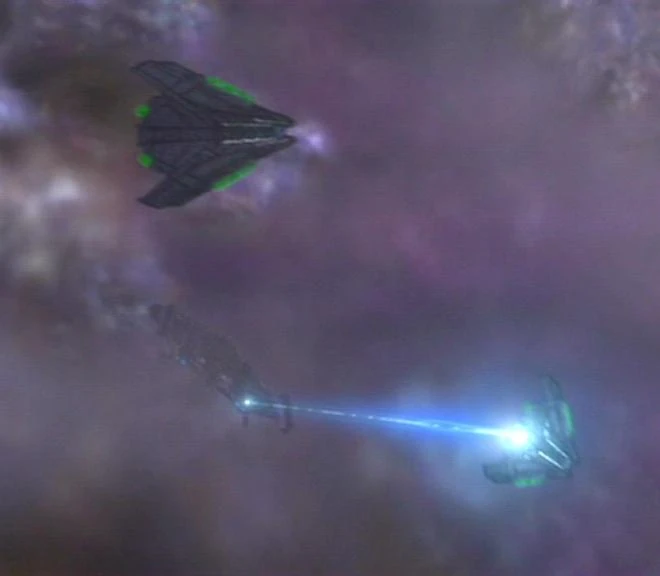 Classified
Kovaalan starship Class
Hull Specifications LoggedThe Kovaalan starship was a class of armed starships utilized by the Kovaalan species during the 22nd century. While specific technical specifications regarding its design, propulsion, and defensive capabilities remain largely unrecorded in Starfleet archives, its designation as an 'armed starship' indicates it possessed offensive weapon systems capable of engaging other starships. **Service History** These vessels were primarily encountered within Kovaalan territory, notably patrolling the Kovaalan nebula. A significant encounter occurred in February 2154, when a squadron of six Kovaalan starships intercepted and attacked the Starfleet vessel Enterprise (NX-01). The Enterprise (NX-01) was attempting to traverse a subspace corridor that led to the Xindi Council planet. The Kovaalan ships engaged the Enterprise (NX-01) in combat, and the Starfleet vessel was only able to escape the confrontation with critical assistance from a future version of itself. This event was documented in the Starfleet logs from the mission designated 'E²'.
- No armament data logged.
- No propulsion data logged.
 Science Vessel
Kraylor medical transport Class
Hull Specifications LoggedThe Kraylor medical transport was a class of warp-capable starship utilized by the Kraylor in the late-24th century. These vessels were primarily designed for medical and transport purposes, though their capabilities led the Annari to refer to them as 'Kraylor warships'. The design featured multiple decks, a warp factor 7+ capacity, and was equipped with basic armaments consisting of phasers, along with deflector shields for defense. A notable feature was a shuttlebay large enough to accommodate vessels such as the Delta Flyer, and the class also incorporated multiple escape pods for emergency situations. **Class History** The Kraylor medical transport class was active around 2377. One specific vessel of this class, Medical Transport 136, was uniquely outfitted with a prototype cloaking device, as depicted in the episode 'Nightingale'. The design of the Kraylor medical transport may have shared origins with Annari starship architecture, as a similar type of vessel was observed in use by the Annari in 2372, as seen in the episode 'The Void'. The crew complement for these ships, including passengers, was typically around 56 individuals.
- • Phase
- • Cloaking device
- • Warp facto
- + 1 more...

Krayton
Class: D'Kora class- • Directed energy weapo
- • electromagnetic pulse weapo
- + 2 more...
- • Warp facto
- • Deflector shield

Kreechta
Class: D'Kora class- • Directed energy weapo
- • electromagnetic pulse weapo
- + 2 more...
- • Warp facto
- • Deflector shield
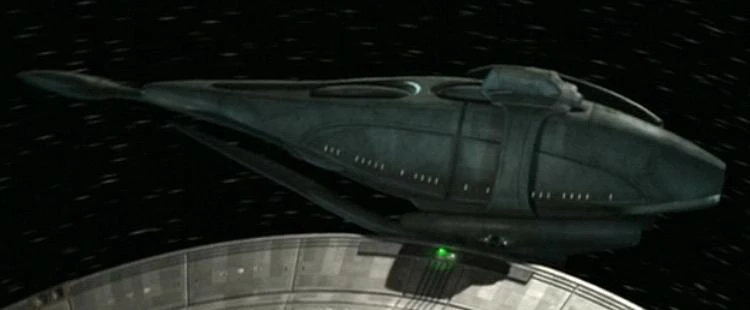 Classified
Kreetassan ship Class
Hull Specifications LoggedThe Kreetassan ship was a class of starship primarily utilized by the Kreetassan species during the mid-22nd century. These vessels were characterized by their warp capability, allowing for interstellar travel, and measured approximately 100 meters in length. Their design facilitated various functions, including survey missions and general transport, serving the Kreetassan civilization's needs for exploration and intersystem travel. **Class History** A notable encounter involving a Kreetassan ship occurred circa 2152. This particular vessel, during a survey of Symbiotic lifeform planet 001, unknowingly picked up a symbiotic lifeform. It subsequently docked briefly with the Earth Starfleet ship *Enterprise NX-01*. As the Kreetassan ship departed, the symbiotic lifeform entered *Enterprise NX-01* through a docking bay on the port side of the Starfleet craft. Later, in response to a hail from *Enterprise NX-01*, the Kreetassan vessel contacted the Starfleet ship from its bridge, transmitting the precise coordinates of the symbiotic organism's homeworld, Symbiotic lifeform planet 001, which allowed the lifeform to be safely returned. This event was documented in the Starfleet record 'Vox Sola'. Later in 2152, another Kreetassan ship was observed flying over the Kreetassa capital city, as depicted in the Starfleet record 'A Night In Sickbay', further illustrating their active presence within Kreetassan space.
- No armament data logged.
- No propulsion data logged.
 Escort / Warship
Krenim warship Class
Hull Specifications LoggedThe Krenim warship was a formidable type of vessel employed by the Krenim Imperium during the 24th century. These warships were notably larger and more powerful than a Starfleet Intrepid-class starship, a superiority attributed in part to their advanced chroniton torpedoes. For defense, they were equipped with robust deflector shields. These vessels measured approximately 500 meters in length and were designed to operate with a relatively small crew complement of about 30. Their maximum speed was rated at warp 6, allowing them to traverse interstellar distances effectively within the Krenim Imperium's sphere of influence. **Class History** In an alternate timeline experienced by Kes, as depicted in the Star Trek: Voyager episode 'Before and After', the USS Voyager encountered a Krenim warship during the initial engagement of the 'Year of Hell' storyline. The USS Voyager sustained significant damage due to its initial inability to compensate for the temporal variance inherent in the Krenim's chroniton torpedoes. However, with Kes's unique assistance, resulting from her time shifts, the USS Voyager was eventually able to counter the temporal variance and disable the Krenim warship's torpedo launcher. In the primary timeline, the USS Voyager again encountered a Krenim warship in 2374, shortly after the devastating Krenim weapon ship destroyed the Zahl homeworld. Throughout the 'Year of Hell', the USS Voyager was relentlessly pursued and attacked by these vessels, enduring severe damage that brought the starship to the brink of destruction. It was only through the ingenuity of Seven of Nine, who devised a temporal shield, that the USS Voyager was able to protect itself from the Krenim's temporal weaponry. This class of vessel, along with a significant portion of the Krenim Imperium, was subsequently erased from the timeline following the destruction of the Garenor homeworld by the Krenim weapon ship. In the altered timeline that resulted, the Krenim warship was replaced by the Krenim patrol ship. However, following the ultimate destruction of the Krenim weapon ship and the restoration of the original timeline, the Krenim Imperium was once again observed utilizing this class of warship. Beyond their active service in the 24th century, schematics of the Krenim warship were also present in the Daniels' database, a sophisticated temporal archive belonging to the 31st century temporal agent Crewman Daniels. In 2152, during an encounter with Crewman Daniels, Captain Jonathan Archer of the Enterprise (NX-01) scrolled past these schematics, providing a glimpse of the Krenim warship's design far into the past, as seen in the Star Trek: Enterprise episode 'Future Tense'.
- • Chroniton torpedo
- • Deflector shield

Krenim weapon ship
Class: Krenim weapon ship- • Directed energy weapo
- • Temporal weapo
- • Temporal core
- • Warp facto (Qty: maximum)
- + 1 more...
Classified
Krenim weapon ship Class
1 VesselThe Krenim weapon ship was a formidable warship of the Krenim Imperium, designed with the singular purpose of altering the space-time continuum. Its development and construction were spearheaded by Annorax, a brilliant but obsessed military temporal scientist. The vessel was engineered to house a powerful temporal weapon capable of pushing targets out of the space-time continuum, effectively erasing them from history. Its core component was a temporal core, which not only powered its primary weapon but also enveloped the ship and its crew in a localized temporal field, rendering them immune to conventional weapons and the normal flow of time, thus making the crew effectively immortal during operations. However, this immense mass also imposed a significant limitation on its speed, preventing it from exceeding Warp 6. While primarily a temporal weapon platform, the ship was also equipped with a formidable array of conventional directed-energy weapons for standard combat engagements. **Temporal Weaponry and Operation** The main weapon of the Krenim weapon ship was a beam that could push objects out of the space-time continuum. This process required incredibly careful and meticulous calculations to achieve the desired alterations in the timeline. The weapon could be deployed against an entire species by targeting its homeworld, effectively erasing the species from history and causing a causality paradox that would ripple through all historical events in which that species played a part. When the temporal core was active, the ship and its occupants existed outside of normal space-time, making them impervious to conventional attacks. Conversely, if the temporal core was deactivated or destabilized, the ship would phase back into normal space-time, becoming highly vulnerable. Its conventional shields were notably weak in this state, to the point where even a photon grenade could penetrate its hull. **Service History** The Krenim weapon ship was activated in the 2170s, during the 22nd century, in an alternate timeline. Its inaugural deployment was against the Rilnar, the primary adversary of the Krenim Imperium at the time. This temporal incursion successfully restored the Krenim's preeminence but inadvertently triggered a devastating plague that claimed over fifty million Krenim lives. Annorax, attempting to rectify this catastrophic error, initiated a second incursion, which tragically resulted in the unexpected erasure of the Krenim colony at Kyana Prime, and with it, his beloved wife. Driven by an all-consuming obsession to restore his wife, Annorax spent the subsequent two centuries relentlessly altering history with the weapon ship. During this period, numerous civilizations, including the Alsuran Empire, the Malkoth, the Zahl, the Garenor, and the Ram Izad, were eliminated from existence in his futile quest. **The Year of Hell and Erasure** In the year 2374, the Krenim weapon ship's path intersected with the Federation starship USS Voyager. USS Voyager had entered Grid 005, a region that had previously been Zahl space before Annorax's temporal incursions erased the Zahl species, thereby restoring 98% of the Krenim Imperium. USS Voyager endured continuous attacks from Krenim warships utilizing chroniton torpedoes, against which their standard deflector shields were ineffective. This forced USS Voyager to develop temporal shields, which inadvertently disrupted Annorax's precise calculations for erasing the Garenor homeworld. This miscalculation resulted in a timeline where the Krenim Imperium was reduced to a pre-warp state, prompting Annorax to identify USS Voyager as a problematic element. He captured Tom Paris and Chakotay for study. Ultimately, USS Voyager, severely damaged, formed an alliance with two Mawasi cruisers and three Nihydron warships to confront the Krenim weapon ship. During the climactic engagement, Annorax's second-in-command, Obrist, and other disillusioned crew members, shut down the temporal core, bringing the ship back into normal space-time. Captain Kathryn Janeway, piloting the critically damaged USS Voyager, executed a ramming maneuver directly into the weapon ship's temporal core. This destabilized the core, causing the Krenim weapon ship to explode and initiate a temporal incursion that erased itself and all its previous timeline alterations from history. Ironically, this act achieved Annorax's long-sought goal, restoring Kyana Prime and his wife to existence, while USS Voyager, in the restored timeline, merely received a warning from a Krenim ship about disputed territory and plotted a course around it.
- • Directed energy weapo
- • Temporal weapo
- • Temporal core
- • Warp facto (Qty: maximum)
- + 1 more...
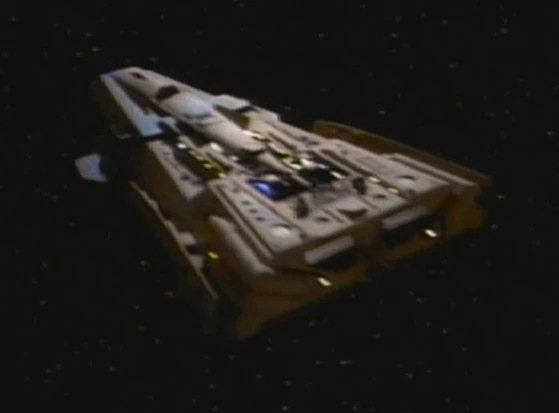 Transport / Freighter
Kressari freighter Class
Hull Specifications LoggedThe Kressari freighter was a utilitarian starship class primarily utilized by the Kressari species during the 24th century. Its fundamental design was optimized for cargo transport, with a particular emphasis on hauling botanical DNA, suggesting a role in biological research, agriculture, or trade involving organic materials. While specific engineering details regarding its propulsion or defensive systems are not extensively documented, its classification as a freighter indicates a design prioritizing cargo capacity and operational efficiency over combat capabilities. The class featured a dedicated cargo bay, essential for its primary function of transporting goods across interstellar distances. **Class History** Throughout the 24th century, Kressari freighters served as a vital component of Kressari interstellar commerce and logistics. However, at least one vessel of this class, the *Calondon*, became entangled in a significant political and military conspiracy orchestrated by the Cardassians. The Cardassians illicitly employed the *Calondon* to smuggle weapons to the Alliance for Global Unity, an extremist faction operating on Bajor. The strategic objective behind this clandestine operation was to destabilize Bajor, thereby compelling the Federation to withdraw from the planet and creating an opportunity for the Cardassians to reassert their control and reconquer Bajor. This specific incident was documented in the Starfleet records related to the episode 'The Circle', highlighting the unexpected involvement of a seemingly innocuous freighter class in major interstellar conflicts.
- No armament data logged.
- No propulsion data logged.
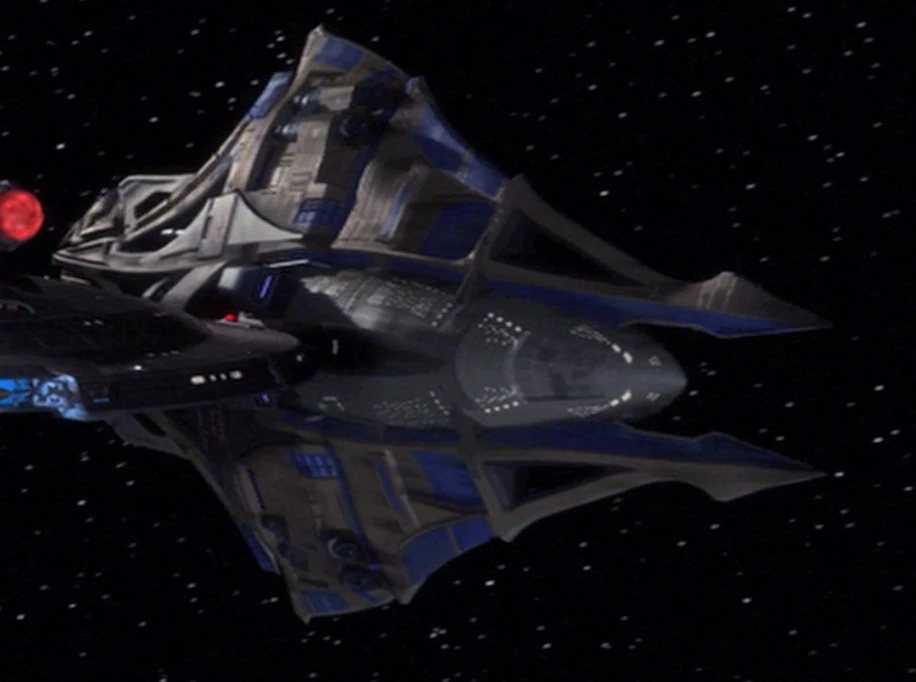 Escort / Warship
Krios Battlecruiser Class
Hull Specifications LoggedThe Krios Battlecruiser was a formidable type of starship employed by the Kriosian civilization during the mid-22nd century. These vessels were integral to the defense of Kriosian space, serving as a primary deterrent against potential threats. Beyond territorial protection, a crucial and highly esteemed duty of the Krios Battlecruiser was the safeguarding of the First Monarch and the entire Kriosian royal family, whose influence and renown extended across hundreds of worlds. One notable instance of a Krios Battlecruiser's service occurred in September 2152. A Krios Battlecruiser rendezvoused with the Starfleet vessel *Enterprise* (NX-01) to facilitate the transfer and transport of First Monarch Kaitaama, as documented in the episode 'Precious Cargo'. This event underscored the Krios Battlecruiser's role in high-priority diplomatic and security operations involving the Kriosian leadership.
- No armament data logged.
- No propulsion data logged.
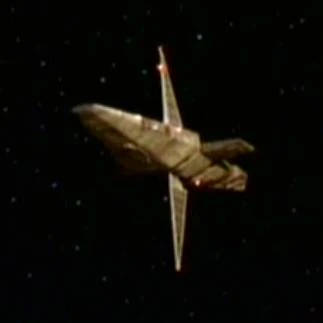 Classified
Kriosian ship Class
Hull Specifications LoggedA Kriosian ship was a distinct type of starship employed by the Kriosians during the latter half of the 24th century. While specific technical details regarding its design, propulsion, or armament are not extensively documented, its operational history indicates its role in diplomatic and transport missions for the Kriosian government. The class is known primarily through a single significant encounter with Starfleet. **Class History** In 2368, a Kriosian ship played a crucial role in a diplomatic exchange. This vessel rendezvoused with the Starfleet Galaxy-class starship, the USS Enterprise (NCC-1701-D), to facilitate the transfer of Ambassador Briam. Following the Ceremony of Reconciliation, Ambassador Briam was transported aboard the Kriosian ship for his return journey to Krios Prime. This event was documented in the Starfleet record, 'The Perfect Mate'. The Kriosian ship's involvement in such a high-profile diplomatic mission underscores its importance to the Kriosian government's interstellar relations during this period.
- No armament data logged.
- No propulsion data logged.

Kronos One
Class: K't'inga class- • Concussive charge launche
- • Disrupto
- + 2 more...
- • Cloaking device
- • Warp facto
- + 1 more...
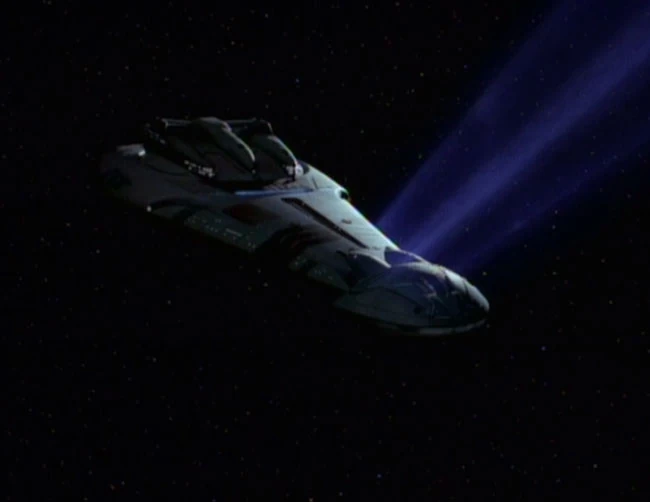 Classified
Ktarian vessel Class
Hull Specifications LoggedKtarian starships were a class of small vessels primarily operated by the Ktarians during the 24th century, with their presence specifically noted in the 2360s. These ships served the Ktarian species in their various interstellar endeavors. **Tactical Assessment** From a tactical perspective, Ktarian vessels were considered significantly underpowered when compared to contemporary Starfleet designs. Their armaments were explicitly noted as being substantially inferior to the standard weapon systems found aboard a Federation Galaxy-class starship. One such Ktarian starship was encountered and caught in a tractor beam, as depicted in the Star Trek: The Next Generation episode 'The Game'.
- No armament data logged.
- No propulsion data logged.
 Advanced Starship
Kukulkan's ship Class
Hull Specifications LoggedKukulkan's ship was a highly advanced starship, unique in its design and capabilities, controlled by the winged serpent creature Kukulkan. Its hull was composed of crystalline ceramic, enveloped by an immense energy field that could project the visage of Kukulkan himself. This energy field also rendered the vessel impenetrable to Federation sensors. The ship was notably large, approximately twice the size of a Federation Constitution-class starship. According to design specifications, the spacecraft presented an unorthodox, almost demon-like forward appearance, with its command module forming a face, the curving prow acting as its head, and the propulsion wings resembling horns. It was described as a slender, cylindrical vehicle featuring tapering, wing-like propulsion units that bore only a vague resemblance to those of the USS Enterprise (NCC-1701). The prow housed a flattened, sloping command module containing a round, glassy, onyx-shaded globe, emphasizing sleekness and engineering sophistication without visible portholes. When projecting Kukulkan's image, the prow transformed into a gigantic, grinning snake's head with agape jaws, huge fangs, and a collar of rainbow feathers, while the propulsion wings appeared as feathered wings, stylized after actual Mayan depictions. The ghostly serpent image conformed to the ship's graceful lines, with the prow within the fanged dragon's head, the slim hull matching a transparent serpentine body covered with multicolored scales, and the propulsion units embodied within wings. The ship possessed a highly advanced propulsion system, capable of achieving at least warp 3. Its offensive capabilities included a powerful probe beam and transporters capable of penetrating deflector shields. It could also generate a force globe to restrict the movement of its target, instantaneously bringing a vessel traveling at warp 1 to a complete stop. All of these systems were controlled by Kukulkan via telepathy. **Interior Layout** Internally, Kukulkan's ship featured several distinct areas. One undefined area served as the setting for Kukulkan's city, described in scripts as a 'gray featureless plain which is a vast Daliesque, arena-like area that will be setting for the city Kukulkan will use to test Kirk and others.' Another significant area was the life room, which housed Kukulkan's zoo and the sophisticated machinery used to create virtual worlds within the minds of other cognizant beings. The life room was depicted as a very large, low-ceilinged space, stretching almost out of sight, with no visible walls or corners. It was colored a dark, deep purple and heavily shadowed, featuring many levels and platforms that seemed to emerge from nowhere. Suspended throughout the room, and also on the floor, were numerous transparent containers of various shapes, alongside highly stylized transparent cages made of a solid glassy substance rather than bars. **Service History** Kukulkan's ship was encountered by the USS Enterprise (NCC-1701) in 2270 while the Starfleet vessel was investigating an alien probe that had visited and scanned several Federation homeworlds. During this encounter, several members of the USS Enterprise (NCC-1701) crew, including Captain James T. Kirk, were beamed aboard Kukulkan's ship. While on board, the crew was presented with the challenge of solving the riddle of Kukulkan's city, a task that Humanity on Earth had previously failed to accomplish. Following an attack by the USS Enterprise (NCC-1701), Captain James T. Kirk released a Capellan power-cat within the ship. The combined damage inflicted by the USS Enterprise (NCC-1701) and the Capellan power-cat caused Kukulkan to lose control of his vessel. After Captain James T. Kirk explained that Humans were not like the other creatures Kukulkan had encountered and did not require his guidance, Kukulkan understood and permitted the USS Enterprise (NCC-1701) crew to depart. His ship then returned in the direction from which it had originally come. This encounter was documented in The Animated Series episode 'How Sharper Than a Serpent's Tooth'.
- No armament data logged.
- No propulsion data logged.

Kumari
Class: Andorian battle cruiser- • Particle weapo (Qty: 5)
- • Deflector shield

Kuri's battle cruiser
Class: D7 class- • Disrupto (Qty: 2)
- • magnetic pulse generators
- + 1 more...
- • Cloaking device (Qty: after 2269)
- • Warp facto
- + 1 more...

Kuri's battle cruiser
Class: D7 class- • Disrupto (Qty: 2)
- • magnetic pulse generators
- + 1 more...
- • Cloaking device (Qty: after 2269)
- • Warp facto
- + 1 more...
 Police Vessel
Kzinti police vessel Class
Hull Specifications LoggedThe Kzinti police vessel was a distinct type of starship exclusively utilized by the Kzinti government. Following the devastating Kzinti Wars and the subsequent signing of the Treaty of Sirius, these police vessels represented the only class of military craft that the Kzinti were officially permitted to possess. This restriction underscored the treaty's intent to limit Kzinti military capabilities after the conflicts with the United Federation of Planets. **Service History** These vessels were active throughout the 23rd century, serving in their designated law enforcement capacity within Kzinti space. A notable incident involving a Kzinti police vessel occurred in 2269. A specific ship of this class, known as the 'Traitor's Claw', was stolen by the Chuft-Captain and his crew. They subsequently employed the 'Traitor's Claw' in an audacious attempt to steal a valuable Slaver stasis box, an event chronicled in the Starfleet record 'The Slaver Weapon'. This incident highlighted the potential for these vessels to be repurposed for illicit activities despite their intended role.
- No armament data logged.
- • Warp drive

L'Rell's battle cruiser (2256)
Class: D7 class (2256)- No armament data logged.
- No propulsion data logged.
 Science Vessel
Lamarr class
1 VesselThe Lamarr class was a type of Federation starship operated by Starfleet, primarily serving as a science vessel during the late 24th century. Its hull configuration adopted the familiar saucer-type shape seen in many previous starship classes, consisting of a primary hull, a secondary hull, and nacelles designed for warp generation and control. The class was named after the actress and inventor Hedy Lamarr. **Technical Specifications & Capabilities** Lamarr-class starships were equipped with 29 decks and designed to accommodate a crew complement of 800. They featured two schools, two primary shuttlebays, and at least one additional hanger that could be refitted into a third shuttlebay, located behind the deflector dish on the port side. Deck 1 housed the main bridge, while Deck 8 contained sickbay. The primary transporter room was located on Deck 9, with additional transporter rooms on Decks 1 and 8. For tactical engagements, these vessels were heavily armed, featuring phaser arrays, photon torpedoes, quantum torpedoes, bio-molecular weapons, isokinetic cannons, nuclear missiles, phase cannons, phased plasma torpedoes, polaron torpedoes, spatial torpedoes, tetryon cannons, and tricobalt devices. A dedicated battle bridge was also part of their design. Defensively, they were protected by deflector shields. As science vessels, Lamarr-class ships carried advanced probes for data collection, which could also function as transmission relays. According to The Doctor, these ships were refitted 'stem to stern' with the latest and greatest technologies collected by the USS Voyager (NCC-74656) from the Delta Quadrant, 'and then some.' Scientific and recreational facilities included over 16 holodecks and a Cetacean Ops facility. The ships also incorporated holographic projectors throughout, allowing holograms such as The Doctor and the holo-duplicates of the young USS Protostar crew to move freely without needing mobile emitters or being restricted to specific areas like sickbay or the holodecks. Shuttlebay facilities included fore and aft bays, a port-side bay, and carried six Sacagawea shuttlecraft and rescue shuttles. Cargo facilities included fore and aft 'warehouse/spacecraft sections.' Propulsion systems comprised impulse engines, warp drive, and a quantum slipstream drive. This advanced propulsion allowed Lamarr-class ships to reach distant locations like Solum in the Delta Quadrant within a relatively short time, a journey that the diplomatic shuttle Sacagawea would typically take approximately five months to complete, though prior passage through an abandoned Borg transwarp conduit likely reduced the overall distance for the USS Voyager (NCC-74656-A). The class was also capable of atmospheric entry and planetary landing. **Service History** The Lamarr class was in active service by 2384. One notable vessel of this class, the USS Voyager (NCC-74656-A), played a significant role in Starfleet operations. In 2384, the USS Voyager (NCC-74656-A) dispatched shuttles to retrieve Dal R'El, Rok-Tahk, Jankom Pog, Gwyndala, Murf, and Zero from San Francisco Bay, as depicted in 'Supernova, Part 2.' Later that year, the USS Voyager (NCC-74656-A) embarked on its maiden voyage. With most of Starfleet engaged in the Romulan evacuation, Vice Admiral Kathryn Janeway, the legendary captain of the original USS Voyager (NCC-74656), volunteered to serve as its commanding officer. Officially, the science vessel's first mission was to study the Janeway wormhole, but Vice Admiral Janeway's true intention was to launch a rescue mission for her former first officer, Captain Chakotay, as detailed in 'Into the Breach, Part I' and 'Into the Breach, Part II.' The USS Voyager (NCC-74656-A) subsequently played a pivotal role in thwarting Asencia's plot to destroy the Federation and in repairing a temporal paradox that threatened the universe, events chronicled in 'Ouroboros, Part I' and 'Ouroboros, Part II.' Following these events, Captain Chakotay took command of the ship. The USS Voyager (NCC-74656-A) was out of service by 2401. In the Mirror Universe, an Imperial Starfleet counterpart, the ISS Voyager (NCC-74656-A), was active in 2384.
- • Bio-molecular warhead
- • Isokinetic canno
- + 9 more...
- • Tricobalt device
- • Deflector shield
 Explorer
Lancelot class
1 VesselThe Lancelot-class was a type of Federation starship designed for cruiser operations. Its fundamental architecture was based upon the venerable Walker-class design, indicating a lineage of robust and proven Starfleet engineering principles. This design philosophy likely emphasized durability and versatility, characteristic of Starfleet vessels operating during its period of service. **Service History** The Lancelot-class served Starfleet during a transitional period, active from the late 23rd century, specifically the 2280s, through to the early 24th century, concluding its primary service by the 2330s. These vessels contributed to Starfleet's exploratory and defensive mandates across Federation space. A notable vessel of this class was the USS Leondegrance, registry NCC-2176, which was preserved as of 2401, serving as a historical testament to the class's legacy.
- No armament data logged.
- • 300,000 kilometer per second in level fligh
 Classified
Landing pod Class
Hull Specifications LoggedThe landing pod, also referred to as a lander pod, was a compact utility craft utilized by the United Federation of Planets during the mid-23rd century. Its design featured a distinctive spherical cockpit connected to an aft section. This aft section housed four extendable stabilizing vanes, engineered to rotate freely around the cockpit, thereby allowing the craft to maintain precise position and attitude during atmospheric entry and landing operations. Each pod was equipped with essential systems including ejection mechanisms for pilot safety and auto-navigation capabilities. However, a notable design limitation was the susceptibility of its navigation computers to strong magnetic fields, which could impair their functionality. **Service History** Initially, landing pods were developed specifically for a mission to Kim-Tara, a planet with unique gravimetric conditions. During this developmental phase, Michael Burnham served as one of the test pilots, contributing to the refinement of the design. The craft's suitability for challenging gravimetric environments led to its deployment in 2257 for an away mission to investigate the wreck of the USS Hiawatha. The USS Discovery carried a complement of at least four of these landing pods, which were strategically stored beneath the starship's shuttlebay, as depicted in the episode 'Brother'. In 2258, the landing pod complements aboard both the USS Discovery and the USS Enterprise (NCC-1701) underwent significant retrofitting. These modifications included the integration of phasers, enabling them to actively participate in the critical battle against a Section 31 armada, as seen in 'Such Sweet Sorrow, Part 2'.
- No armament data logged.
- No propulsion data logged.
 Classified
Laneth's starship Class
Hull Specifications Logged\nLaneth's starship was a distinctive type of small warship developed for the Klingon Empire in the 22nd century. Its design was intentionally unconventional, conceived to initially conceal the identity of its Klingon crew members, particularly during the events of 2154. Teleplay writer Michael Sussman noted that the ship's unique appearance was specifically intended to hide the fact that the individuals beaming aboard NX-01 Enterprise were Klingon.\n\nDesigned by John Eaves, the vessel's creation was guided by Supervising VFX Producer Peter Lauritson, who requested something
- • Disrupto
- No propulsion data logged.
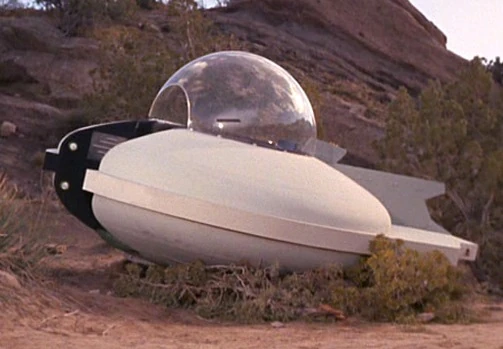 Unknown, Described As Timeship
Lazarus' spaceship Class
Hull Specifications LoggedLazarus' spaceship was a unique, domed, single-person craft, described as a timeship, operated by Lazarus and his antimatter universe counterpart. Its origins are attributed to an unknown civilization, possibly from the far distant past. The ship's interior was designed for a single occupant, featuring a chair situated on a raised dais. This chair was mounted on a swivel base, allowing the operator to easily manipulate various small switches and knobs that lined the craft's interior, controlling its specialized functions. **Operational Mechanics** The spaceship was not designed for conventional space travel and was never observed in actual flight. The front of the craft featured a wide, open gap, providing the operator access to the interior. Two power panel covers were located on either side of this gap, concealing the ship's power system. While the exact operational mode of power remained unknown, the ship was capable of utilizing dilithium crystals as a power source. The primary function demonstrated by the craft was to provide access to the negative magnetic corridor, enabling travel to and from an antimatter universe. Its purported time travel abilities were never observed. The front gap of the ship contained two rods which, when charged, created a threshold. Any living being crossing between these activated rods would dematerialize and be transported to the negative magnetic corridor, subsequently passing through to the parallel universe. This process would drain the ship's power, requiring ten to fifteen minutes to re-energize. **Dual Universe Linkage** A confusing but critical aspect of Lazarus' spaceship was its apparent symbiotic relationship with an identical craft existing in the alternate universe. The two ships appeared to be linked, allowing Lazarus and his antimatter counterpart to exchange places repeatedly between universes, even when not in the immediate vicinity of their respective vessels. The precise mechanism behind this linkage—whether it was a result of entering the negative magnetic corridor, an inherent aspect of the ship itself, or a combination—remained unclear. Furthermore, a significant linking feature was that the destruction of one ship in its own universe would instantly result in the destruction of its counterpart in the parallel dimension. This mutual destruction capability was deduced by Captain James T. Kirk during his encounter with Lazarus. **Service History** On stardate 3087.6, the USS Enterprise (NCC-1701) encountered Lazarus and his ship on an uncharted planet after experiencing a momentary 'winking out' of the universe. Following a confrontation, Captain James T. Kirk forced the unstable Lazarus into the negative magnetic corridor. To prevent Lazarus from further endangering the universe, the USS Enterprise destroyed his ship with phaser fire from orbit, thereby forever sealing the negative magnetic corridor.
- No armament data logged.
- No propulsion data logged.

Lindberg
Class: Type 15 shuttlepod- No armament data logged.
- No propulsion data logged.

Locutus' cube
Class: Borg cube- • Borg missile
- • Cutting beam
- + 2 more...
- • Tractor beam
- • Transwarp drive
- + 4 more...
 Scout / Patrol
Lokirrim patrol ship Class
Hull Specifications LoggedThe Lokirrim patrol ship was a medium-sized starship primarily utilized by the Lokirrim for patrolling their territorial borders. These vessels were equipped with a robust tractor beam system and a specialized photonic disruptor. The photonic disruptor was a unique tactical asset, capable of remotely decompiling holograms, a crucial feature given the Lokirrim's strong aversion to photonic lifeforms and holographic technology. Tactically, the Lokirrim patrol ship was considered outmatched by more advanced Starfleet vessels, specifically the Intrepid-class starship. **Service History** One notable incident involving a Lokirrim patrol ship occurred in 2377. A vessel of this class, under the command of Ranek, engaged and attacked the Delta Flyer. The Lokirrim crew mistakenly identified The Doctor, a holographic EMH, as a photonic insurgent, leading to the confrontation. The crew of the Delta Flyer were subsequently detained aboard the Lokirrim patrol ship. They were later freed through the intervention of the USS Voyager, which successfully negotiated their release and clarified the misunderstanding regarding The Doctor's nature. This event was documented in the Starfleet record 'Body and Soul'.
- • Phase
- • Photonic disrupto
- • Deflector shield
 Escort / Warship
Lokirrim warship Class
Hull Specifications LoggedThe Lokirrim warship was a class of medium-sized starship primarily utilized by the Lokirrim during their protracted conflict with photonic insurgents. These vessels were engineered with a specific tactical focus, incorporating advanced weapon systems designed to counter the unique threats posed by holographic entities. While robust for their intended purpose, Lokirrim warships were generally considered to be outmatched by more advanced Federation starships, such as the Intrepid-class. **Technical Specifications & Armaments** Each Lokirrim warship was equipped with standard phasers for conventional engagements, but its most distinctive and potent weapon was the photonic disruptor. This specialized system possessed the capability to remotely decompile holograms, making it exceptionally effective against photonic insurgents. For defense, the warships were outfitted with deflector shields, providing protection against various forms of energy and kinetic attacks. The design principles of the Lokirrim warship shared notable similarities with the Akritirian patrol ship, suggesting a common design lineage or shared technological base among certain Delta Quadrant species. **Service History** Lokirrim warships were actively deployed throughout the 2370s. A notable incident occurred in 2377 when a Lokirrim warship engaged the Federation starship USS Voyager. The Lokirrim vessel initiated an attack after detecting holographic activity emanating from USS Voyager's holodeck, mistaking it for photonic insurgent presence. Captain Kathryn Janeway of USS Voyager successfully brokered a temporary truce with the Lokirrim. However, the situation escalated when Captain Janeway discovered that a Lokirrim patrol ship had subsequently detained the Delta Flyer. This led to Captain Janeway being forced to disable the Lokirrim warship to ensure the safety and recovery of her crew and the Delta Flyer, as chronicled in the Starfleet record 'Body and Soul'.
- • Phase
- • Photonic disrupto
- • Deflector shield

Long range shuttle
Class: Long range shuttle- No armament data logged.
- No propulsion data logged.
Scout / Patrol
Long range shuttle Class
1 VesselThe Long range shuttle was a versatile type of shuttlecraft primarily operated by the Federation throughout the 23rd and 24th centuries. These vessels were often utilized as courier ships, capable of extended missions due to their advanced design. A distinctive feature of this class was its modular construction, allowing the fuselage pod, which housed the crew, to separate from the stardrive section. This capability enabled independent docking with other starships or stations, enhancing its operational flexibility. Technical specifications indicate that these shuttles were warp-capable, able to achieve a maximum speed of Warp 4 and designed to carry up to ten passengers. **23rd Century Service History** The Long range shuttle class played a notable role during the critical V'ger incident in the 2270s. One such shuttlecraft, the 'Surak' (registry VS-5047-61192259584-5), was instrumental in transporting Commander Spock from the planet Vulcan to rendezvous with the USS Enterprise (NCC-1701), which was en route to intercept the mysterious V'ger entity. In the same year, another Long range shuttle, the 'Laika', attempted to establish contact with the Epsilon IX station communications array, highlighting the class's use in vital communication and reconnaissance roles. **24th Century Appearances & Legacy** While their primary operational period began in the 23rd century, the Long range shuttle's design remained iconic and was referenced throughout the 24th century. In late 2364, a model of a Long range shuttle was prominently displayed in the guest quarters aboard the USS Enterprise (NCC-1701-D), occupied by Anne Jameson and Mark Jameson, and later by the Brekkians Langor and Sobi, as seen in the episode 'Too Short A Season'. The following year, in 2365, a similar model was kept by Wesley Crusher in his personal quarters aboard the USS Enterprise (NCC-1701-D), as depicted in 'The Dauphin'. The design also frequently appeared as a graphic display on Starfleet computer systems. For instance, the USS Voyager's library computer screen displayed a Long range shuttle graphic, viewed by One after Seven of Nine activated his linguistic database in the episode 'Drone'. Throughout 2374 and 2375, graphics of the Long range shuttle were visible on the USS Defiant (NX-74205)'s library computer display during episodes such as 'Favor the Bold', 'Sacrifice of Angels', and 'What You Leave Behind'. Seven of Nine also assimilated data featuring this graphic in early 2376, as shown in 'The Voyager Conspiracy'. These continued appearances underscore the enduring recognition and historical significance of the Long range shuttle within Starfleet's registry.
- No armament data logged.
- No propulsion data logged.
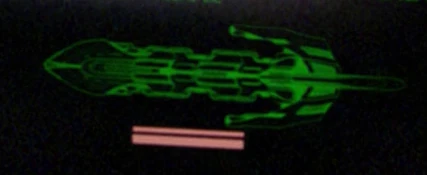 Classified
Lotus Flower class
Hull Specifications LoggedThe Lotus Flower class was a classification of starship utilized by the Federation. While specific design details and operational roles for the class as a whole are not extensively documented, its existence is confirmed through Starfleet records. **Service History** In 2364, Lieutenant Commander Data accessed a mission order that was associated with a ship of the Lotus Flower class. This event occurred during the timeframe depicted in the Starfleet investigation into the parasitic alien conspiracy, as seen in the episode 'Conspiracy'. The USS Gremlin, bearing the registry NCC-72922, was an active Starfleet vessel in 2364, and it has been suggested that this ship might have been a member of the Lotus Flower class, though its definitive classification remains uncertain.
- No armament data logged.
- No propulsion data logged.

Lovok's warbird
Class: D'deridex class- • Disrupto
- • Phase
- + 1 more...
- • Cloaking device
- • Warp facto (Qty: under cloak)
- + 1 more...

Lovok's warbird
Class: D'deridex class- • Disrupto
- • Phase
- + 1 more...
- • Cloaking device
- • Warp facto (Qty: under cloak)
- + 1 more...
 Explorer
Luna class
16 VesselsThe Luna-class was a type of Federation starship operated by Starfleet during the late 24th century, designated as a capital ship and, according to the 'Star Trek: Picard Logs', specifically as a tactical heavy cruiser. Its design features a distinct saucer section with a secondary hull positioned below and aft. Two warp drive nacelles connect dorsally to the secondary hull via pylons that angle ventrally. The navigational deflector dish is prominently located on the forward face of the secondary hull. A unique roll-bar structure, reminiscent of the Danube-class, is mounted near the aft-dorsal section of the saucer and houses photon torpedo launchers. The saucer section also incorporates a phaser array strip on its top surface, while the secondary hull is equipped with two quantum torpedo launchers, positioned one on each side of the deflector dish. The main shuttlebay is situated at the aft-most section of the secondary hull, and primary impulse engines are aft-facing on the saucer section. The USS Luna, registry NCC-80101, served as the prototype vessel for this class. **Service History** The Luna-class entered active service by 2379. In 2401, Starfleet deployed two Luna-class vessels to join an armada tasked with opposing an unknown Borg vessel. During this critical engagement, a Borg liaison briefly commandeered these ships, along with others, prompting their crews to engage their auto-destruct systems. This incident occurred in conjunction with the USS Stargazer, registry NCC-82893. Later that same year, thirty-six Luna-class starships participated in the Frontier Day celebrations held near Sol Station. Tragically, these vessels, like many others present, were subsequently taken over by the Borg during a widespread assimilation event. The Luna-class demonstrated its tactical prowess by successfully driving off a force of three Pakled Clumpships without assistance, proving superior to California-class starships in such engagements. Notable ships of the class include the USS Titan (NCC-80102), which was retired in 2396, the USS Europa (NCC-80104), USS Oberon (NCC-80103), USS Amalthea (NCC-80108), USS Ariel (NCC-80114), USS Callisto (NCC-80109), USS Charon (NCC-80111), USS Galatea (NCC-80112), USS Ganymede (NCC-80107), USS Himalia (NCC-80116), USS Iapetus (NCC-80115), USS Io (NCC-80105), USS Proteus (NCC-80117), USS Rhea (NCC-80110), USS Tourangeau (NCC-80113), and USS Triton (NCC-80106). **Interior Design** The main bridge of the Luna-class shares design similarities with those found on the Galaxy-class and California-class starships, though it notably lacks the slight elevation in the aft section present in the latter two classes' bridge designs. The observation lounge of the Luna-class is comparable in style and function to that of the Sovereign-class. The captain's ready room on Luna-class vessels serves a dual purpose, functioning as both an office and a secondary private cabin, in addition to the commanding officer's primary private quarters. Standard Starfleet transporter rooms and shuttlebays are also integral components of the Luna-class interior.
- • Phase
- • Photon torpedo
- + 1 more...
- • Warp facto
 Escort / Warship
Lysian destroyer Class
Hull Specifications LoggedThe Lysian destroyer was a class of short-range attack vessels utilized by the Lysian Alliance during the late 24th century. These warships had a standard crew complement of fifty-three. For offensive capabilities, Lysian destroyers employed disruptor-style weapons, which possessed a capacity of 2.1 megajoules. Defensive systems included minimal deflector shields. It was noted that the Lysian destroyers were significantly outclassed by the United Federation of Planets' Galaxy-class starships, with their weapon technology assessed as being over 100 years behind that employed by the Federation during the 2360s. **Service History** A notable encounter involving a Lysian destroyer occurred in 2368. During this incident, the USS Enterprise (NCC-1701-D) encountered and subsequently destroyed a Lysian destroyer. This engagement was the result of a Satarran ploy designed to intentionally draw the USS Enterprise (NCC-1701-D) and the United Federation of Planets into the ongoing conflict between the Satarrans and the Lysian Alliance. Following the destruction of the Lysian vessel, Captain Jean-Luc Picard of the USS Enterprise (NCC-1701-D) conveyed the United Federation of Planets' 'deepest regrets over the tragedy of their lost ship and crew'. This event was documented in the Starfleet record, specifically in the episode 'Conundrum'.
- • Disrupto
- • Deflector shield
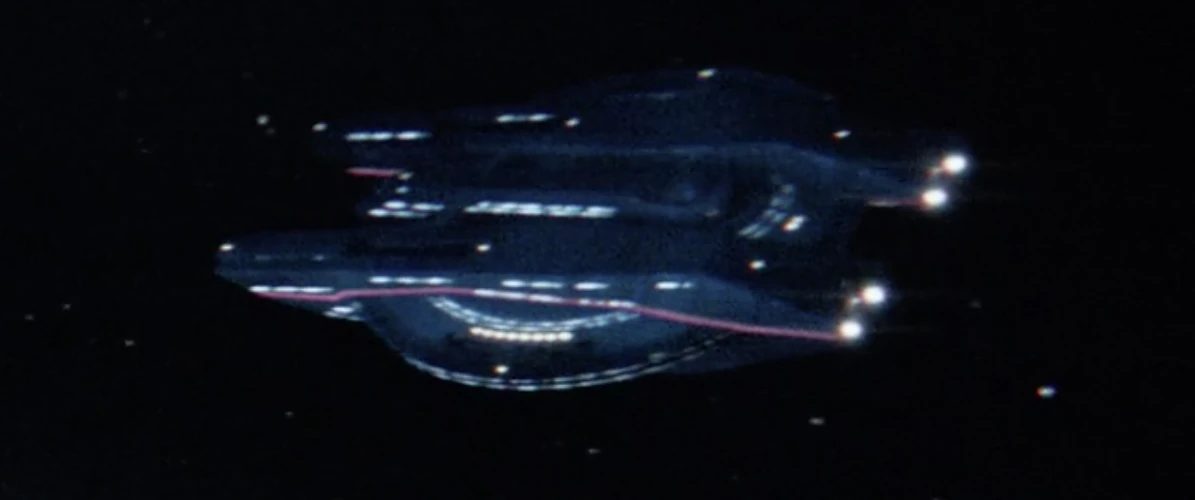 Science Vessel
Magee class
2 VesselsThe Magee-class was a type of 23rd-century Federation science vessel, first introduced sometime prior to 2256. Known for its compact form, this class broke from the traditional Starfleet primary hull/secondary hull configuration, integrating all components into a single, streamlined design. At least two ships of this class remained in service through the 2380s, demonstrating its longevity within Starfleet operations. **Design & Physical Arrangement** The physical arrangement of the Magee-class was distinctive, featuring a saucer section with two nacelles housed within large cowlings that swept back along the length of the ship. Each nacelle was equipped with a Bussard collector at the front and a warp field grille at the rear, essential for warp propulsion. The bow of the ship incorporated an escape pod, providing emergency egress for the crew. Described as a 'little research ship' when compared to larger vessels like the Constitution-class, the Magee-class was nevertheless robust, comprising at least six decks. **Interior Design** The interior design of the Magee-class shared many similarities with contemporary Federation starships such as the Crossfield-class and Hoover-class. It featured the same style of corridors and mess hall as the Crossfield-class, but was distinguished by a predominant blue color scheme, with powder blue panels adorning each compartment. The class included a conference room offering viewports into space on at least two sides, and a captain's office providing expansive views into space from at least three sides. The mess hall was equipped with food synthesizers divided by function, indicated by icons for beverages, soup (also capable of preparing salads), ice cream, and burgers. A dedicated science lab, located at the junction of two standard corridors, was outfitted with a wall of computer monitors and various scientific equipment, underscoring the class's primary role as a research vessel. **Service History** The Magee-class entered service prior to 2256. In that year, the USS Shran (NCC-1413) notably participated in the Battle of the Binary Stars against the Klingons, where it was subsequently destroyed. Another vessel of this class, the USS Cabot (NCC-1427), was assigned to Lynne Lucero upon her promotion to commanding officer sometime in the 2250s or early 2260s. The USS Cabot's first mission under Captain Lucero took it to Pragine 63, a planet on the edge of Klingon space facing starvation. Tragically, the USS Cabot was destroyed when Lieutenant Edward Larkin defied orders and genetically modified tribbles to increase their reproductive rate for use as a food source, leading to an uncontrollable infestation. Despite these losses, the class demonstrated remarkable operational longevity. In 2385, on First Contact Day, two unnamed Magee-class starships were observed docked in a drydock at the Utopia Planitia Fleet Yards above Mars, confirming that the class remained in active service well into the 2380s.
- No armament data logged.
- No propulsion data logged.
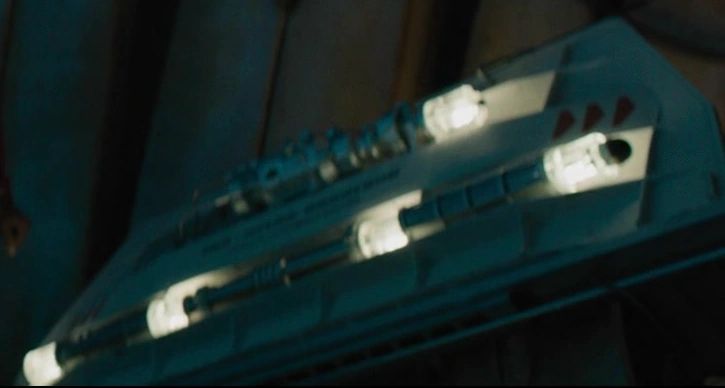 Runabout / Utility
Magellan probe Class
Hull Specifications LoggedThe Magellan probe was a specialized type of space probe utilized by the United Federation of Planets in the alternate reality during the mid-23rd century. Its primary design purpose was to chart a safe passage through hazardous cosmic phenomena, specifically the treacherous Necro Cloud. These probes were equipped with advanced subspace link capabilities, allowing them to transmit data and maintain communication over vast distances, making them invaluable for deep-space exploration and reconnaissance in challenging environments. **Service History** A Magellan probe played a critical role in the events surrounding Krall's attack on Yorktown. Krall, a former Starfleet captain named Balthazar Edison, managed to acquire one of these probes and subsequently linked it to his own computer systems. This allowed him to exploit the probe's subspace links to gain unauthorized access to the sensitive Yorktown database, gathering crucial intelligence for his assault. Later, officers Nyota Uhura and Hikaru Sulu of the USS Enterprise (alternate reality) attempted to repurpose the captured probe to send a distress signal to Yorktown. However, their efforts were thwarted by Krall, who intercepted their transmission and altered the probe's coordinates, effectively stranding any potential rescue ships in the nebula, as depicted in Star Trek Beyond.
- No armament data logged.
- No propulsion data logged.
 Explorer
Majalan combat cruiser Class
Hull Specifications LoggedThe Majalan combat cruiser was a type of small warship developed and fielded by the dissident Majalan colony on Prospect VII during the 23rd century. Its design reflected the limited technological resources available to the colony, resulting in a vessel with a relatively low technology level compared to contemporary Starfleet designs. The cruiser was equipped with turret-mounted phasers for offensive capabilities and deflector shields for defense. For specialized operations, it featured several forward-mounted grapplers, intended for capturing other starships, and transporters for personnel and cargo transfer. Information on board was stored on removable data chips. Despite its armaments, the Majalan combat cruiser posed no significant threat to a Federation Constitution-class starship. Its defensive systems were notably weak, unable to withstand even a minimum-power phaser blast from a Constitution-class vessel, highlighting the technological disparity between the Majalan colony and the United Federation of Planets. **Class History** The Majalan combat cruiser class saw active service in the 2250s, with notable incidents occurring in 2259. In that year, the Prospect VII colonists dispatched a combat cruiser with the critical mission of rescuing the new First Servant from being subjected to a ritual sacrifice on Majalis. The USS Enterprise (NCC-1701), responding to a distress call sent by the First Servant's Majalan shuttle, inadvertently inflicted crippling damage upon this cruiser, causing it to crash on a nearby moon. An away team from the USS Enterprise later investigated the wreckage, discovering that the crew had evacuated and meticulously wiped their data banks to conceal their true intentions. From the debris, a defaced oath coin and a neural dampener were recovered. Later in 2259, the colonists deployed another Majalan combat cruiser in a renewed attempt to retrieve the First Servant. This operation involved the collaboration of Elder Gamal. The cruiser executed a deceptive maneuver, appearing to beam the First Servant directly off a USS Enterprise transporter pad before attempting a rapid escape. The USS Enterprise quickly locked a tractor beam onto the fleeing vessel. Despite being ensnared, the Majalan combat cruiser engaged its warp drive, an action that resulted in its immediate destruction. It was subsequently revealed that this entire sequence was a feint orchestrated by Elder Gamal, who had actually beamed the First Servant to a cargo container located elsewhere on the USS Enterprise, successfully evading capture by the Majalan cruiser.
- • Phase
- • Deflector shield
Makar
Class: D'deridex class- • Disrupto
- • Phase
- + 1 more...
- • Cloaking device
- • Warp facto (Qty: under cloak)
- + 1 more...
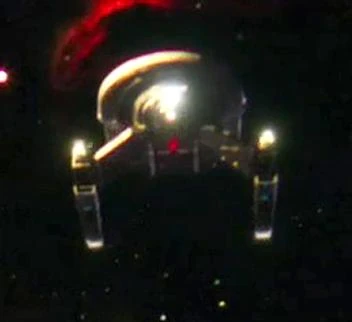 Classified
Malachowski class
3 VesselsThe Malachowski-class was a type of Federation starship that saw service during the 23rd century, specifically active in the 2250s and 2260s. Its design configuration bore a resemblance to the contemporary Miranda-class, notably lacking the latter's distinctive weapons rollbar. The class was armed with multiple phaser turrets and photon torpedo launchers strategically placed along its saucer hull, providing significant offensive capabilities for its era. During the 2260s, the Malachowski-class underwent a significant refit, which included the upgrade of its warp propulsion systems. This modernization incorporated new, contemporary cylindrical nacelles, aligning its technology with the rest of the Starfleet fleet. The class was initially identified through the USS Clarke by designer John Eaves, who also subsequently named the class. The name 'Malachowski' honors United States Air Force pilot Nicole Malachowski, the first female member of the famed United States Air Force Thunderbirds acrobatic flying team. While the ISS Cooper was intended to be a Malachowski-class Terran ship for the Mirror Universe, it was ultimately not depicted on screen due to production constraints. **Class History** The Malachowski-class was actively in service by 2256 and played a crucial role in the Federation-Klingon War (2256-57). Two notable ships of this class, the USS Clarke (NCC-1661) and the USS Sioux, were directly involved in the opening conflict of the war at the Battle of the Binary Stars. Tragically, the USS Clarke did not survive this engagement. The class continued its service into the 2260s, participating in fleet-wide refits to maintain technological parity. By 2261, several Malachowski-class starships were stationed at Starbase 1, participating in the Federation Centennial celebrations, as depicted in the Star Trek: Strange New Worlds episode 'Wedding Bell Blues'. The class has been featured in various Star Trek productions, including Star Trek: Discovery episodes 'Battle at the Binary Stars', 'Context Is for Kings' (where it appeared as a display graphic), and 'Choose Your Pain', as well as Star Trek: Strange New Worlds episodes 'Strange New Worlds' and 'Wedding Bell Blues'. The USS Cooper was another vessel of this class, active in 2256.
- • Phase
- • Photon torpedo
- • Deflector shield
Starship
Malachowski class
1 VesselThe Malachowski-class was a type of 23rd-century Federation starship, characterized by a configuration that resembled the contemporary Miranda-class, though notably lacking the latter's distinctive weapons rollbar. Its primary armaments consisted of multiple phaser turrets and photon torpedo launchers strategically positioned along its saucer hull. In the 2260s, the class underwent a significant refit, which included an upgrade to its warp propulsion systems, featuring new contemporary cylindrical nacelles, enhancing its operational capabilities. **Class History** The Malachowski-class entered service by 2256 and played a crucial role in the Federation-Klingon War (2256-57). Two notable ships of this class, the USS Clarke (NCC-1661) and the USS Sioux, were involved in the opening conflict of the war at the Battle of the Binary Stars. Tragically, the USS Clarke was destroyed during this engagement. The class continued its active service into the 2260s, with several Malachowski-class starships stationed at Starbase 1 for the Federation Centennial in 2261. The class has been depicted in various Star Trek productions, including Star Trek: Discovery episodes such as 'Battle at the Binary Stars', 'Context Is for Kings', and 'Choose Your Pain', as well as Star Trek: Strange New Worlds episodes 'Strange New Worlds' and 'Wedding Bell Blues'. Other named ships include the USS Cooper and the ISS Cooper (mirror), though the ISS Cooper, intended as a Malachowski-class Terran vessel, was not seen on screen due to production constraints. The class was named by designer John Eaves after United States Air Force pilot Nicole Malachowski.
- No armament data logged.
- No propulsion data logged.
 Warp Prototype Vessel
Malcorian warp ship Class
Hull Specifications LoggedThe Malcorian warp ship was conceived as the prototype for the Malcorian Space Bureau's inaugural warp-driven starship. Its design represented a significant technological leap for the Malcorian civilization, marking their imminent entry into interstellar travel. The vessel was equipped with a warp drive, a propulsion system that would allow it to achieve faster-than-light speeds. **Service History** The Malcorian warp ship was initially scheduled for launch in the late 2360s, with its first planned destination being the nearby Garth system. However, these plans were significantly disrupted in 2367 following an unfortunate first contact incident between the Malcorian government and the crew of the USS Enterprise (NCC-1701-D). This encounter, which occurred on Malcor III, led to a surge in xenophobia among the Malcorian populace, particularly influenced by the conservative-minded Chancellor Avel Durken. As a direct consequence of these events, detailed in the Star Trek: The Next Generation episode 'First Contact', the Malcorian space program, including the launch of this prototype warp ship, was indefinitely delayed as the government shifted its focus to more domestic issues.
- No armament data logged.
- No propulsion data logged.
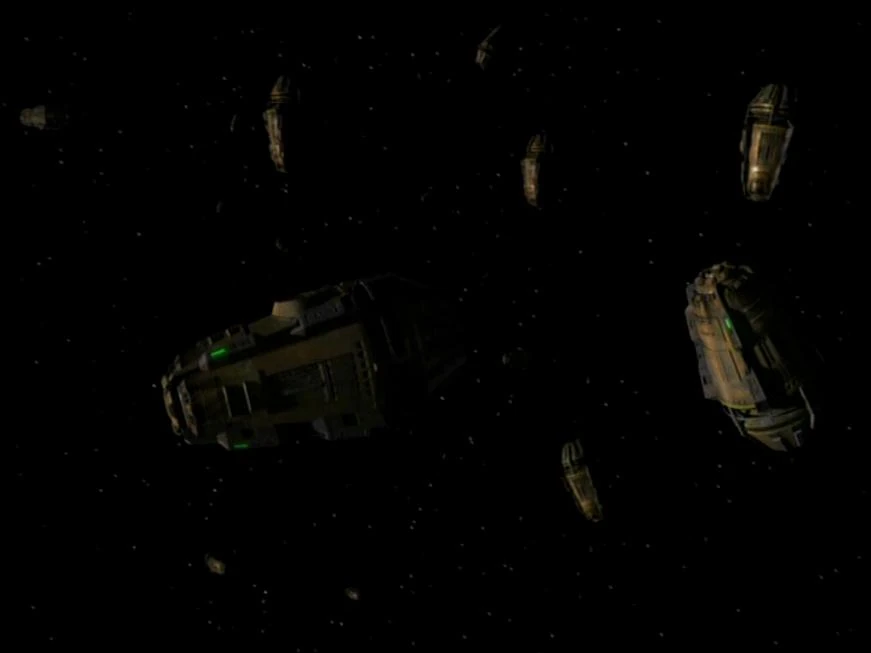 Runabout / Utility
Malon escape pod Class
Hull Specifications LoggedThe Malon escape pod was a compact, roughly conical vessel designed for emergency egress from larger starships, specifically Malon export vessels. Each pod was engineered to accommodate one or two individuals, providing essential life support during an evacuation. A prominent feature of its design was a large impulse engine located on its aft section, enabling independent propulsion after deployment. **Service History** The Malon escape pod saw active service primarily aboard Malon export vessels during the 2370s. A notable incident occurred in 2375 when a Malon export vessel experienced a catastrophic core breach. In response, the crew initiated an emergency evacuation, deploying thirty-seven of these escape pods. The pods subsequently transmitted an automated distress call, which was intercepted by the USS Voyager. Upon the USS Voyager's arrival at the scene, it was discovered that the pods had been heavily contaminated with theta radiation from the breaching vessel. Tragically, only two Malon individuals survived the incident, as depicted in the episode 'Juggernaut'.
- No armament data logged.
- No propulsion data logged.
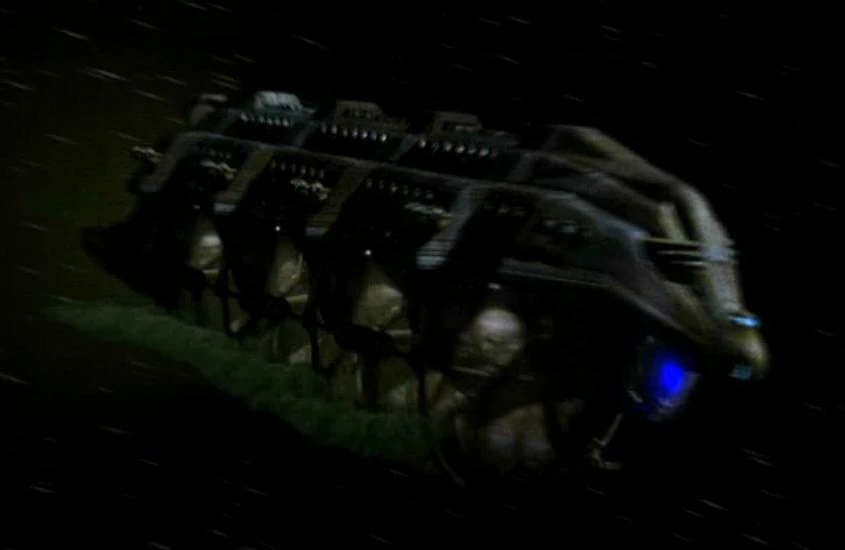 Transport / Freighter
Malon export vessel Class
Hull Specifications LoggedThe Malon export vessel was a formidable freighter, essentially functioning as a massive garbage scow, operated by the waste export industry of the Malon civilization. These vessels were specifically engineered for the long-range haulage and safe dumping of highly hazardous theta radioactive antimatter waste, alongside various other mixed industrial byproducts generated by the Malon. Designed for extreme durability and capacity, each vessel was equipped with twelve primary theta storage tanks, allowing it to transport an immense volume of over four trillion isotons of anti-matter waste. The ships featured a substantial internal structure, comprising 42 decks, and were outfitted with Malon escape pods for crew safety during emergencies. A critical design feature was the ability to eject damaged storage tanks into space, a measure taken to prevent catastrophic breaches that could threaten the entire vessel. **Operational Details & Crew** Operating these specialized freighters required a dedicated crew, typically numbering around 100 individuals. Each Malon export vessel was commanded by a waste controller, who oversaw the complex operations of waste management and transport. Crewmembers designated as core laborers worked in close proximity to the hazardous waste regions of the ship, a role that carried significant health risks. To mitigate these dangers, each vessel included a sickbay, fully equipped with specialized medical equipment and medicines designed to treat radiation exposure. However, despite these precautions, the inherent nature of their work meant that almost all crew members participating in an export mission suffered some form of permanent physiological damage due to chronic radiation exposure. Internal transport for the crew throughout the extensive 42 decks was facilitated by ascenders. The Malon export vessel class was prominently featured in the Starfleet record, notably in the episode 'Juggernaut', where its operational procedures and inherent dangers were observed. A smaller variant, the Malon export vessel, eleventh gradient, also existed within the Malon fleet.
- No armament data logged.
- No propulsion data logged.
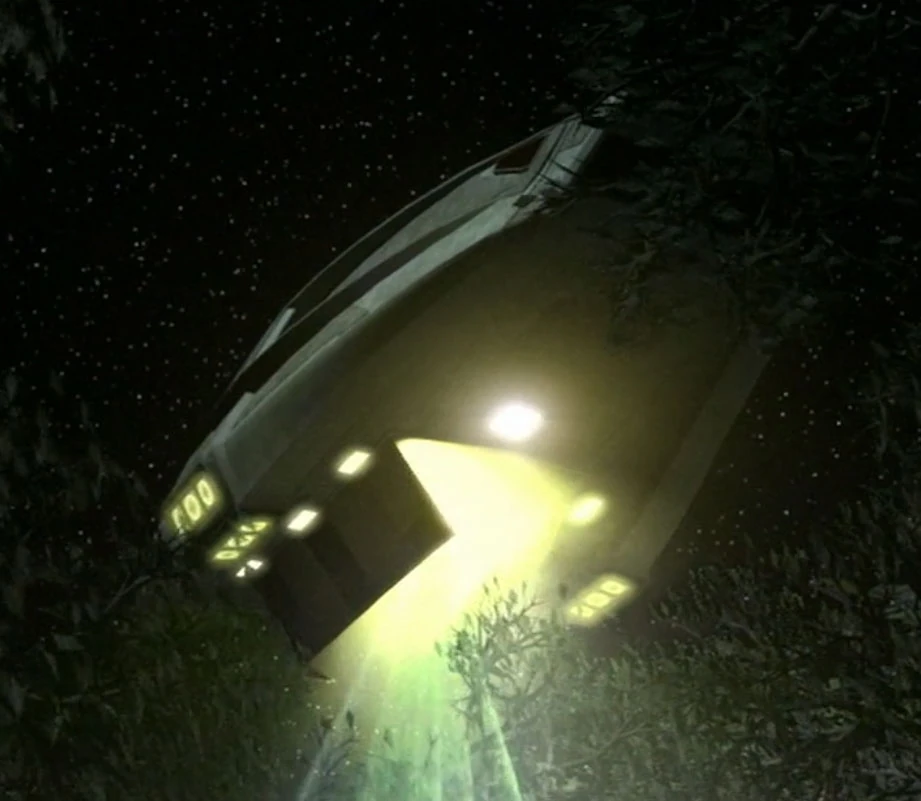 Runabout / Utility
Malurian shuttle Class
Hull Specifications LoggedThe Malurian shuttle was a specialized type of shuttlecraft primarily utilized by the Malurians during the 22nd century, specifically noted in the 2150s. These vessels were designed for utility and transport, playing a crucial role in Malurian operations. Equipped with advanced capabilities for its time, the Malurian shuttle was capable of atmospheric entrance, allowing it to operate seamlessly between space and planetary surfaces. A key feature of its design included a dedicated cargo bay, facilitating the transport of goods and materials. Furthermore, these shuttles were outfitted with a tractor beam system, enhancing their ability to manipulate and secure cargo during loading and unloading operations. One notable instance of a Malurian shuttle in service occurred in 2151. During this period, Captain Jonathan Archer of the Enterprise (NX-01) observed a Malurian shuttle actively engaged in picking up crates from a Malurian mining operation located in a clearing on the Akaali homeworld. This event was documented in the episode 'Civilization', highlighting the shuttle's role in supporting resource extraction and logistics for the Malurian species.
- No armament data logged.
- No propulsion data logged.
 Escort / Warship
Malurian vessel Class
Hull Specifications LoggedThe Malurian vessel was a class of armed starship employed by the Malurians during the mid-22nd century. These large vessels were designed with multiple weapon platforms capable of firing ten powerful charges simultaneously, indicating a focus on offensive capabilities. For defense, they were equipped with energy shields. **Class History** One notable encounter involving a Malurian vessel occurred in 2151. This particular ship traveled to the Akaali homeworld to collect veridium ore from a Malurian mining operation established on the planet. During this mission, the Malurian vessel engaged the Earth starship Enterprise (NX-01), whose crew was attempting to sabotage the Malurian mining activities. Following its defeat by the Enterprise (NX-01), the Malurian vessel retrieved its three-man mining crew and subsequently departed from the Akaali system. This event was documented in the episode 'Civilization'.
- • Weapon platforms
- • Deflector shield
 Escort / Warship
Maquis fighter Class
Hull Specifications LoggedThe Maquis fighter was originally a small, highly maneuverable shuttle type utilized by the United Federation of Planets. It was later commonly adopted and extensively used by the Maquis as a dedicated fighter craft in their ongoing conflict against the Cardassians. These versatile vessels were equipped with multiple propulsion systems, including thrusters, an impulse drive, and a warp drive. Notably, the warp drive emitted a standard Federation warp signature, which could be a tactical advantage or disadvantage depending on the situation. For defensive and offensive capabilities, Maquis fighters were armed with Type 8 phasers and photon torpedoes, and protected by deflector shields. A key operational system was a transporter, capable of transporting objects from one stationary location to another without the need for a traditional transporter pad. Internally, the Maquis fighter featured a shuttle-sized cockpit designed with seating for two individuals, complete with a central display monitor positioned between the two console stations. The aft section of the ship housed a cargo hold, separated from the cockpit by a doorway. An additional doorway led further into the aft, where the ship's transporter system was located, with its controls mounted on the aft bulkhead. **Class History** The Maquis fighter played a significant role in the escalating tensions between the Maquis and the Cardassian Union during the late 2370s. In late 2370, Lieutenant Ro Laren, a former Starfleet officer who had joined the Maquis, utilized one of these ships to execute a staged 'raid' against the USS Enterprise (NCC-1701-D). The objective of this mission was to acquire vital medical supplies for her specific Maquis cell. The same Maquis fighter was subsequently used by Lieutenant Ro Laren and Commander William T. Riker during an aborted trap orchestrated by Starfleet. This operation aimed to raid a Yridian convoy, as depicted in the Star Trek: The Next Generation episode 'Preemptive Strike'. A known vessel of this class is the Alpha Seven. Additionally, numerous unnamed Maquis fighters were deployed throughout the conflict.
- • Torpedo launche
- • Type 8 phase
- • Deflector shield

Maquis raider
Class: Maquis raider- • Phase (Qty: 1)
- • Torpedo launche (Qty: 4)
- • Maximum warp
- • Deflector shield
Escort / Warship
Maquis raider Class
2 VesselsThe Maquis raider was a distinctive type of starship frequently employed by the Maquis during their conflict with the Cardassians in the early 2370s. Its compact and highly maneuverable design made it exceptionally well-suited for operations within the treacherous environment of the Badlands. Visually, the raider shared a basic design with the smaller Maquis fighter, but it was a larger vessel, approximately 68.5 meters in length, roughly one-fifth the size of a Starfleet Intrepid-class starship like the USS Voyager. This increased scale allowed for an altered cockpit and different detailing compared to its fighter progenitor. The interior set for the raider's cockpit was notably a redress of the Danube-class runabout set from Star Trek: Deep Space Nine, rather than the Nenebek shuttle interior. In background materials, a set poster for the Star Trek: Voyager episode 'Repression' referred to this class as the 'Ju'day-class', a tribute to Star Trek archivist Penny Juday. The Star Trek Customizable Card Game also designated this ship type as the 'Condor-class'. **Class History** The Maquis raider played a pivotal role in several key events during the Maquis insurgency. In 2371, Chakotay's Maquis cell operated the raider Val Jean. While being pursued by the Cardassian Galor-class warship Vetar, commanded by Gul Evek, the Val Jean sought refuge in the Badlands. There, it was inadvertently scanned by a tetryon beam and subsequently catapulted to the Delta Quadrant by a powerful entity known as the Nacene, or Caretaker. The Val Jean was later heroically destroyed when it rammed and crippled a Kazon vessel (a Predator warship 001) to protect the likewise marooned USS Voyager, leading to the Maquis crew joining Starfleet aboard the USS Voyager for their journey home, as depicted in the Star Trek: Voyager episode 'Caretaker'. Further engagements involving Maquis raiders include a rendezvous in 2372 between Kasidy Yates' freighter, the SS Xhosa, and a Maquis raider within the Badlands, as seen in the Star Trek: Deep Space Nine episode 'For the Cause'. In 2373, multiple ships of this class participated in Maquis offensives against Starfleet vessels such as the USS Malinche and the USS Defiant (2370), as well as the planet Quatal Prime, detailed in the Star Trek: Deep Space Nine episode 'For the Uniform'. Long after the official demise of the Maquis, at least one vessel of this class remained in service, being observed docked at Starbase 25 in 2381, as shown in the Star Trek: Lower Decks episode 'An Embarrassment Of Dooplers'. **Technical Specifications** Maquis raiders were equipped with both impulse engines and warp drive, capable of achieving a maximum warp factor of approximately Warp 9, a speed comparable to that of a Defiant-class starship. Some of these raiders utilized impulse engines originally constructed around 2332. For armaments, these vessels typically featured two forward phaser banks, one dorsal phaser bank, and four torpedo launchers capable of firing either photon torpedoes or stratospheric torpedoes. Defensively, they were outfitted with deflector shields. However, they were tactically inferior to larger warships such as the Defiant-class or Galor-class. During an engagement with the Vetar, B'Elanna Torres noted that the Val Jean's weapons were 'not making a dent in their shields anyway', leading to power being rerouted to impulse generators for escape. Similarly, Kira Nerys and later Eddington himself conceded that a Maquis raider was 'no match for the Defiant'. The interior design of the Maquis raider featured a cockpit with four console stations, bearing a basic resemblance to a Starfleet runabout. The pilot's position was located in the forward port section, with the engineering station situated in the starboard forward position. A ship's viewer was positioned to the pilot's upper left, while the tactical station was further back along the port side. A fourth station was located further back along the starboard bulkhead, opposite the tactical station. These vessels could also be equipped with holo-communicators. Transporters were a standard feature, with a transporter pad conveniently located adjacent to, or easily accessible from, the bridge area. **Ships of the Class** Notable vessels of the Maquis raider class include the named starship Val Jean, and unnamed vessels such as Eddington's raider, which played a significant role in the Star Trek: Deep Space Nine episode 'For the Uniform', alongside other unnamed Maquis raiders.
- • Phase (Qty: 1)
- • Torpedo launche (Qty: 4)
- • Maximum warp
- • Deflector shield
 Escort / Warship
Mark II Nova Flyer Class
Hull Specifications LoggedThe Mark II Nova Flyer was a specialized training vessel primarily utilized by Nova Squadron within Starfleet Academy during the 2380s. While Federation crews commonly referred to these craft as 'shuttles', the Vau N'Akat, a species encountered by Starfleet, designated them as 'enemy fighters', reflecting their potential tactical capabilities. The design of the Mark II Nova Flyer underwent a significant redesign at some point, a task attributed to Lieutenant Tom Paris. Technically, the Mark II Nova Flyer featured distinctive blue-coloured, T-shaped impulse engines, which provided them with superior speed compared to the USS Voyager (NCC-74656-A)'s regular Sacagawea-type shuttles, enabling them to quickly close distances in tactical engagements. A notable design characteristic was the nacelles' multiple degrees of rotational freedom. During takeoff, these joints pivoted vertically, elevating the nacelles into a wing-like configuration. For advanced maneuvers, the joints could pivot horizontally, allowing the nacelle tips to point inward or outward. While the precise purpose of this tilting mechanism was not explicitly detailed, it was observed that the vessels often exhibited a burst of speed after tilting their nacelles inward. The Mark II Nova Flyers were also equipped with an advanced safety feature: their cockpits were capable of ejecting, functioning as self-propelled escape pods. This allowed pilots to safely egress from hazardous situations, such as the Boothby Supernova maneuver. Although specific weapon types were not named or visually demonstrated, the mention of 'safety protocols' being disabled and Maj'el's tactical directive to 'concentrate fire on my mark' confirm that these vessels were indeed armed. **Class History** The Mark II Nova Flyer played a pivotal role in the training and early combat experiences of several Starfleet Academy cadets. In 2384, Dal R'El, while attending a Starfleet Academy preparatory school, observed Nova Flyers in flight with considerable admiration. Later that same year, Nova Squadron, including cadets like Maj'el, conducted a holodeck simulation of the Boothby Supernova maneuver. This training exercise was interrupted when Dal R'El, invited by Maj'el, joined the squadron for training. The true combat capabilities of the Mark II Nova Flyer were tested shortly thereafter when the starship Rev-1 launched an attack against the USS Voyager (NCC-74656-A). Nova Squadron was deployed to assist in the defense of the USS Voyager (NCC-74656-A), with Dal R'El taking the place of the injured Grom. Commander Tysess authorized the unlocking of the Nova Flyers' safety protocols, enabling them to engage in active combat rather than mere target practice. The squadron skillfully dodged the Rev-1's drones, attempting to secure a targeting lock for the USS Voyager (NCC-74656-A). Unable to get close enough, Dal R'El proposed a new strategy: the Nova Flyers would draw the drones away, allowing the USS Protostar to achieve a lock. This tactic proved successful, though the drones managed to intercept the USS Voyager (NCC-74656-A)'s quantum torpedoes, and the Nova Flyers were subsequently disabled by the resulting shockwave. After Maj'el ingeniously restored secondary power to the disabled Flyers, they became Starfleet's primary line of defense, as both the USS Voyager (NCC-74656-A) and the USS Protostar had been incapacitated. Following Zero's successful retargeting of the Incursor to lock onto Maj'el's Flyer, Maj'el commanded Nova Squadron to execute the Boothby Supernova maneuver, which ultimately led to the destruction of the Rev-1, saving both the USS Voyager (NCC-74656-A) and the USS Protostar. Following this heroic engagement, the Mark II Nova Flyers landed on the USS Voyager (NCC-74656-A), where the members of Nova Squadron were celebrated for their courageous actions.
- No armament data logged.
- No propulsion data logged.
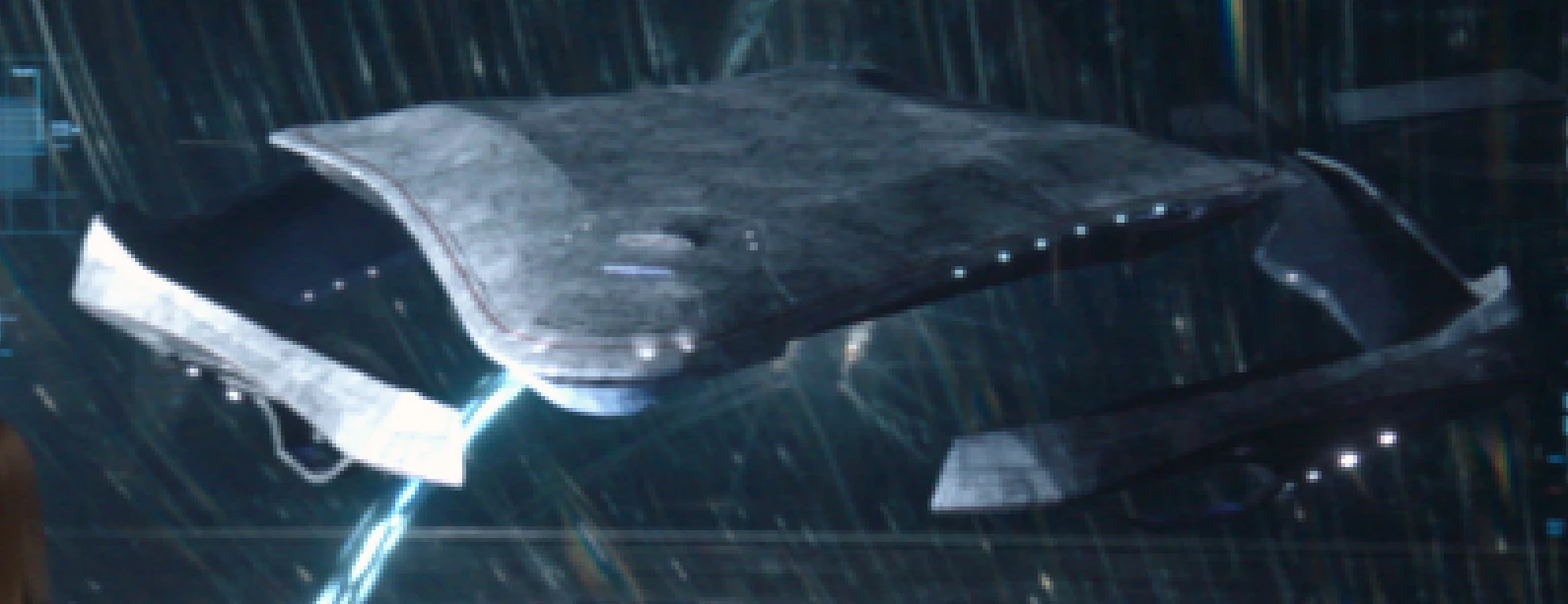 Scout / Patrol
Mars class
1 VesselThe Mars-class was a distinctive type of Federation starship operated by Starfleet during the 32nd century and into the 33rd century. Its design featured a unique diamond-shaped primary hull, complemented by detached chevron-shaped nacelles positioned to the lower port and starboard. Based on its appearance, Commander D. Nhan theorized that the Mars-class was primarily designed as a scout ship, indicating its likely role in exploration and reconnaissance missions for Starfleet. **Service History** In 3189, a vessel of this class, the USS Le Guin, was an integral part of the Federation fleet stationed at Federation Headquarters. The collective energy output of this fleet was crucial in sustaining a powerful distortion field, which effectively concealed the headquarters' location from external threats. Following Osyraa's aggressive assault on Federation Headquarters and her subsequent escape with the captured USS Discovery, a Mars-class starship joined the combined Federation and Ni'Var fleet in the pursuit of the USS Discovery and the Emerald Chain flagship, Viridian. By 3190, the Mars-class continued to be a visible presence within Starfleet operations. A ship of this class was housed within the Archer Spacedock during its unveiling and the significant re-opening of Starfleet Academy, symbolizing the Federation's resurgence and commitment to exploration and education. Its service extended well into the 33rd century, where several Mars-class starships participated in a ceremonial honor-formation at Federation Headquarters. This formation marked the launch of Zora and the USS Discovery's critical Red Directive mission, underscoring the class's continued relevance and active status within Starfleet's evolving fleet. The Mars-class thus served as a reliable and enduring component of Starfleet's capabilities across multiple pivotal events in the 32nd and 33rd centuries.
- No armament data logged.
- No propulsion data logged.
 Classified
Mayflower type
Hull Specifications LoggedThe Mayflower-type was a starship class in service to Starfleet in the mid-23rd century of an alternate reality. This design featured two nacelles connected to the underside of the primary hull by swept pylons, extending from the primary hull. John Eaves provided concept input on the designs of Starfleet ship classes built for the film 'Star Trek', including the Mayflower-type. Its roll bar/saucer design bears a similarity to the Miranda-class of the prime universe. The Gizmotron models 1/2500 scale model kit identifies this ship type as a Federation frigate. **Class History** In 2258, three ships of this type, including the USS Mayflower (NCC-1621), were docked at Starbase 1 prior to the destruction of Vulcan. The USS Mayflower participated in a battle with the Narada and was subsequently destroyed in 2258. Another ship of this type was identified as the USS Defiant (NCC-1764) in the Blu-ray special 'Starships' from 'Star Trek (Three disc Blu-ray)'. A ship of this class also appeared to be docked at berth A0 in a wider rendering of the departure scene from 'Star Trek Into Darkness', as seen on the cover of 'Cinefex', Issue 134.
- No armament data logged.
- No propulsion data logged.
Frigate
Mayflower type
1 VesselThe Mayflower-type was a starship class developed for Starfleet in the mid-23rd century of an alternate reality. Its distinctive design featured two nacelles connected to the underside of the primary hull by swept pylons. The overall aesthetic, particularly the roll bar/saucer configuration, bore a notable similarity to the Miranda-class starships of the prime universe. John Eaves provided concept input for the designs of the Starfleet ship classes built for the film 'Star Trek', including the Mayflower-type. While not officially designated in-universe, a 1/2500 scale model kit by Gizmotron identified this ship type as a Federation frigate. This classification aligns with its role and appearance during its known service period. The class was designed to be a versatile component of Starfleet's fleet during a critical period. Its construction and operational readiness were crucial for the defense of Federation space. **Service History** The Mayflower-type starships were actively in service to Starfleet during the pivotal year of 2258 in the alternate reality. Prior to the tragic destruction of Vulcan by the Romulan mining vessel Narada, at least three ships of this type, including the USS Mayflower (NCC-1621), were docked at Starbase 1. The USS Mayflower (NCC-1621) was subsequently involved in a desperate battle against the Narada. During this engagement, the USS Mayflower (NCC-1621) was destroyed, highlighting the immense destructive power of the Narada and the severe challenges faced by Starfleet in this alternate timeline. The class played a role in the initial defense efforts against the incursions of Nero and the Narada. **Notable Vessels & Appearances** The most prominent vessel of this class was the USS Mayflower (NCC-1621), which was destroyed in 2258 during the conflict with the Narada. Another ship of this type was identified as the USS Defiant (NCC-1764) in the Blu-ray special 'Starships', further indicating the class's presence within Starfleet's ranks. Unnamed Mayflower-type starships were also observed. A ship of this class appeared to be docked at berth A0 in a wider rendering of the departure scene from 'Star Trek Into Darkness', as depicted on the cover of 'Cinefex', Issue 134, showcasing its continued presence in Starfleet's operational infrastructure during that period.
- No armament data logged.
- No propulsion data logged.
 Escort / Warship
Mazarite ship Class
Hull Specifications LoggedMazarite ships were a class of starship employed by the Mazarite High Council's government during the mid-22nd century. These vessels were characterized by their relatively lower technological advancement compared to contemporary Vulcan starships. While equipped with warp drive capabilities, allowing for speeds of at least Warp 5, and possessing deflector shields for defense, their overall combat effectiveness was significantly inferior to that of a single Vulcan combat cruiser. The Mazarite government, known for its corruption, utilized these ships for various operations, including enforcement and pursuit. **Technical Specifications & Capabilities** Each Mazarite ship was outfitted with directed energy weapons for offensive engagements. Beyond direct combat, these vessels also featured advanced jamming technology, capable of disrupting other ships' communications systems. Despite these capabilities, their sensor systems were not impervious to counter-jamming measures, as demonstrated in a notable incident. The design philosophy of these ships appears to have prioritized functional utility within the Mazarite sphere of influence, rather than parity with more advanced interstellar powers like the Vulcans. **Service History** One significant encounter involving Mazarite ships occurred in early 2152. Three vessels of this class engaged in a pursuit of the NX-01 Enterprise, which was then escorting Ambassador V'Lar to Vulcan. Ambassador V'Lar was en route to offer testimony against the Mazarite High Council's corrupt government. The Mazarite ships successfully intercepted the Enterprise, with one vessel docking to insist on taking V'Lar back to Mazar. However, the Enterprise crew managed to jam the Mazarite ships' sensors, providing a crucial window for the Vulcan combat cruiser Sh'Raan to arrive. The Sh'Raan, under the command of its Vulcan captain, quickly disabled the Mazarite ships. Following a threat to destroy their vessels if they did not surrender their weapons, the Mazarites complied, allowing the Sh'Raan to safely return Ambassador V'Lar to Vulcan. This incident, documented in the episode 'Fallen Hero', highlighted both the Mazarite ships' operational capabilities and their technological limitations when confronted by more advanced Starfleet and Vulcan vessels.
- • Directed energy weapo
- • Warp facto
- • Deflector shield
 Classified
Mazarite shuttle Class
Hull Specifications LoggedThe Mazarite shuttle was a specialized type of shuttlecraft designed for deployment from larger Mazarite ships. These shuttles served as auxiliary craft, primarily utilized for transport and diplomatic missions, allowing for independent operations away from their parent vessels. Their design was inherently practical, focusing on reliable short-range travel and the secure transport of personnel or sensitive cargo. **Service History** One notable instance of a Mazarite shuttle's deployment occurred in 2151. During this period, a Mazarite shuttle was dispatched to the Starfleet vessel NX-01 Enterprise. The primary objective of this mission was to retrieve the Vulcan ambassador V'Lar, who was at the time in the possession of the NX-01 Enterprise crew. This event was documented in the episode 'Fallen Hero', highlighting the shuttle's role in inter-species diplomatic and retrieval operations during the early 22nd century.
- No armament data logged.
- No propulsion data logged.

McAuliffe
Class: Type 7 shuttlecraft- No armament data logged.
- • Deflector shield
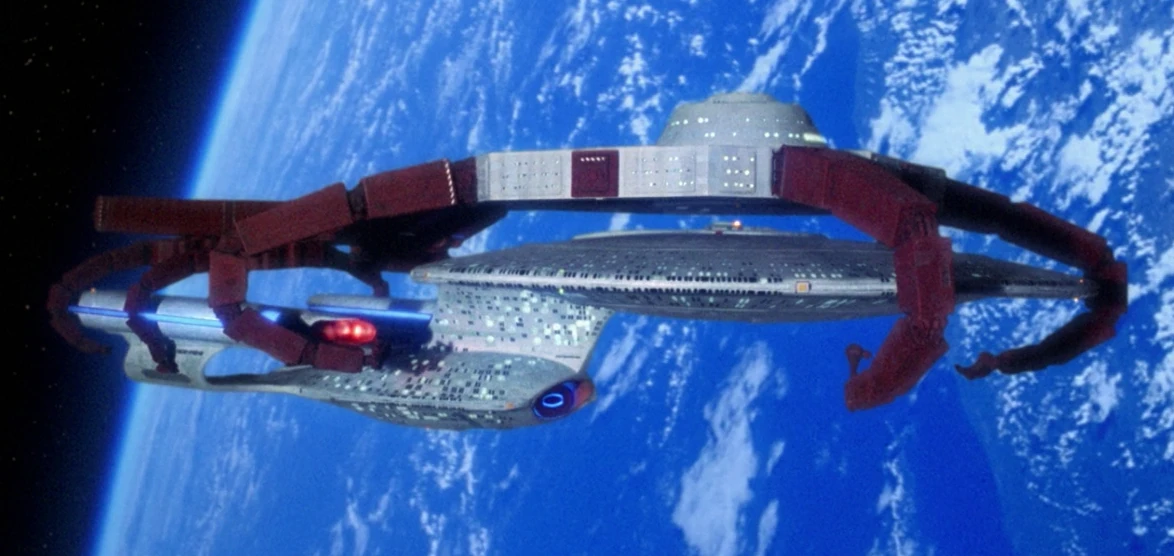 Classified
McKinley type
Hull Specifications LoggedThe McKinley-type was a Starfleet orbital docking facility that saw extensive use throughout the 24th century. These versatile stations were specifically engineered to support critical Starfleet operations, including the construction of new starships, comprehensive refitting of existing vessels, and providing essential maintenance layovers for starships of various classes. Their design allowed for robust support of large starships, such as the Galaxy-class USS Enterprise-D, during complex service procedures. **Service History & Deployment** McKinley-type facilities were strategically deployed at several key locations across Federation space. Notable deployments included orbital facilities around Earth, within the vital Utopia Planitia Fleet Yards, and at Starbase 234. The most prominent named facility of this type was McKinley Station, which famously serviced the USS Enterprise-D in 2367, as depicted in the Star Trek: The Next Generation episode 'Family'. Other unnamed McKinley-type facilities were observed in orbit around Starbase 234, as seen in 'Redemption II', and two such facilities were present at the Utopia Planitia Fleet Yards, referenced in the Star Trek: Voyager episode 'Relativity'. The interior of a McKinley-type facility was also featured in the Star Trek: Voyager episode 'Author, Author'. These facilities played a crucial role in maintaining Starfleet's operational readiness and fleet strength during the 24th century, including events leading up to the alternate future depicted in 'All Good Things...'.
- No armament data logged.
- No propulsion data logged.
 Classified
Medusan vessel Class
Hull Specifications LoggedThe Medusan vessel was a distinct type of starship operated by the Medusans, active throughout the 23rd and 24th centuries. While serving the Medusan people, these vessels shared notable design commonalities with contemporary Federation starships. This design philosophy was intentional, as suggested by Dave Rossi, who posited that due to the Medusans' non-corporeal nature, they might not have developed conventional technology in the same manner as corporeal species, potentially leading them to utilize or adapt Federation hardware, thus giving their ships a recognizable Federation style. Michael Okuda further elaborated on this design choice during the creation of the CGI model for the remastered version of 'Is There in Truth No Beauty?'. Primarily functioning as a transport and diplomatic vessel, the Medusan vessel was engineered with the capability for planetary landing, allowing it to operate effectively in various environments. According to Issue #92 of the 'Star Trek: The Official Starships Collection', these ships measured approximately 90 meters in length and were capable of a maximum speed of warp factor 6. They were equipped with phaser emitters for defense and had a relatively small crew complement of 30 individuals. **Service History** One notable instance of a Medusan vessel's operation occurred in 2268. Following an unspecified diplomatic mission, the USS Enterprise (NCC-1701) was tasked with conveying Ambassador Kollos, the Medusan ambassador to the Federation, along with Miranda Jones, to a rendezvous point with a Medusan vessel. This rendezvous, which included a short diversion through the galactic barrier, was intended to facilitate Ambassador Kollos's return to the Medusan homeworld. Miranda Jones had initially planned to establish a mind link with Kollos once aboard the Medusan vessel, but unforeseen circumstances necessitated the link be established aboard the USS Enterprise (NCC-1701) instead. Historically, Medusan vessels went unseen in the original airing of the episode 'Is There in Truth No Beauty?', being referenced only through dialogue. The original ending sequence of the episode depicted the USS Enterprise (NCC-1701) approaching the Medusan homeworld. However, for the 2008 remastered version of 'Is There in Truth No Beauty?', a CGI model of the Medusan vessel was created to visually represent the ship. No specific name or registry number was ever officially assigned to this particular model.
- No armament data logged.
- No propulsion data logged.
Merced class
Hull Specifications LoggedThe Merced-class was a type of starship in service with Starfleet during the 24th century, operating under the banner of the United Federation of Planets. While its specific design parameters are not extensively detailed, its capabilities were notably assessed by Lieutenant Commander Data in 2364. He described a vessel of this class, specifically the USS Trieste, as being 'too small' and 'too slow' to effectively intercept a Galaxy-class starship, suggesting it was not intended for high-speed pursuit or heavy combat roles against larger, more advanced vessels. **Service History** One known starship of the Merced-class was the USS Trieste, bearing the registry NCC-37124. This vessel was noted as active in 2369. The class's overall service period spanned the 24th century, contributing to Starfleet's diverse fleet operations, though its primary mission profiles remain largely unrecorded in official Starfleet logs. **Background & Production** The name 'Merced class' originated from an okudagram depicting a 'starship mission status' that was displayed in the observation lounge of the USS Enterprise-D starting around TNG Season 6. This visual element served as the initial canonical reference for the class. During the production of Star Trek: Deep Space Nine, a physical kitbash model intended to represent a Merced-class starship was constructed. Several Polaroids of this model were provided by Dan Curry to the Flare Sci-Fi Forums. However, despite its creation, this specific model did not ultimately appear in any episode of Star Trek: Deep Space Nine.
- No armament data logged.
- No propulsion data logged.
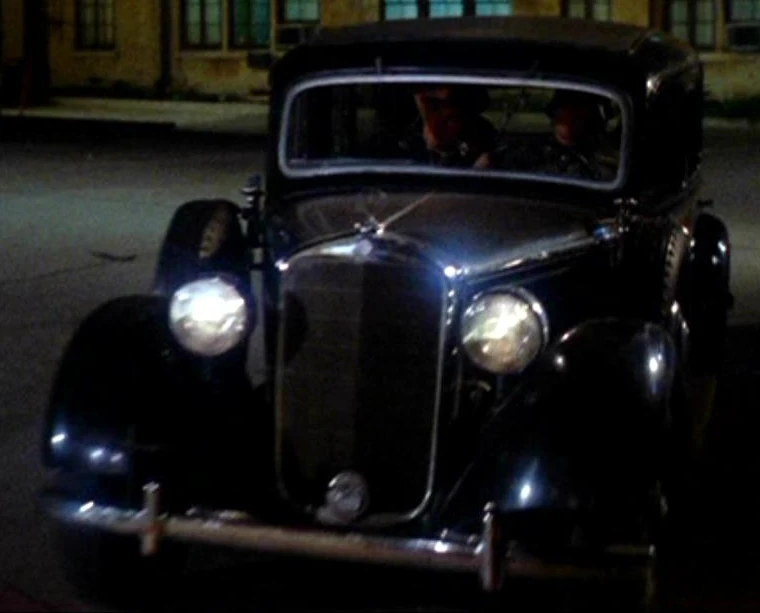 Car
Mercedes-Benz 770 Class
Hull Specifications LoggedThe Mercedes-Benz 770 was a German car model originally produced on Earth during the mid-20th century. This particular automobile gained significant historical notoriety for its extensive use by the Nazi Party during World War II. Its design reflected the automotive engineering of that era, characterized by robust construction and a distinctive aesthetic. **Service History** By the year 2268, a very similar automobile, also identified as a Mercedes-Benz 770, was observed to be common on the planet Ekos. These vehicles were operated by the Ekosian military and owned by Ekos itself. One such car was notably utilized by Party Secretary Daras. Another Mercedes-Benz 770 played a crucial role when James T. Kirk, Spock, and Isak, operating under the guise of the Führer's Special Documentary Corps, used it to arrive at the Ekosian Chancellery. Their objective was to attend Führer John Gill's speech, as depicted in the Starfleet mission log entry 'Patterns of Force'. This demonstrates the enduring presence and utility of this vehicle design across different civilizations and centuries.
- No armament data logged.
- No propulsion data logged.
 Scout / Patrol
Merchantman type
Hull Specifications LoggedThe Merchantman-type spacecraft represents a highly modifiable, upgradeable, and versatile vessel design utilized extensively across the Alpha Quadrant, Beta Quadrant, and Delta Quadrant. Its fundamental configuration remained consistent, yet significant variations in size were common, with some ships being considerably larger than others. These vessels were equipped with either warp power or impulse power propulsion systems, and their armaments typically included lasers or phasers. The crew complement for a Merchantman-type ship could range from as few as two individuals to as many as 78, reflecting its adaptability to various operational profiles. **Operational Roles & Variants** The most prevalent applications for the Merchantman-type were as colony ships and transports, capable of ferrying hundreds of colonists or passengers across interstellar distances. Another popular configuration was the freighter variant, with the largest known examples boasting a cargo capacity of 14 metric tons. Less common, but equally vital, were scout variants, which operated with a minimal crew complement. This adaptability allowed the Merchantman-type to serve a diverse array of operators, including various governments, military organizations, and civilian entities. **Service History & Notable Vessels** The Merchantman-type first entered service in the late 23rd century and continued to see active use well into the late 24th century. Its widespread deployment is evidenced by its appearances in numerous historical records. For instance, a civilian Merchantman freighter/transport, smaller than a B'rel-class warship and operated by a bridge crew of three, was destroyed in 2285, as documented in Star Trek III: The Search for Spock. The Atlec government utilized an impulse-powered Class 7 vessel, equipped with lasers, which was encountered in 'The Outrageous Okona'. The Cardassian Union operated a freighter variant known as the Bok'Nor, which had a crew of 78 and a cargo capacity of 14 metric tons before its destruction in 2370, as seen in 'The Maquis, Part I'. A Klingon civilian transport ship, capable of carrying 440 passengers, was featured in 'Rules of Engagement'. A Pelian escort vessel, armed with phasers, was operated by a radical faction based on a moon of Peliar Zel II, as depicted in 'The Host'. The Sheliak Corporate deployed a Sheliak colony ship in 'The Ensigns of Command'. Furthermore, the Vidiian Sodality utilized a scout variant with a crew complement of two, observed in 2371 in 'Phage'. These examples underscore the Merchantman-type's enduring presence and versatility across multiple quadrants and by numerous species and factions.
- • Phase
- • Warp drive
- • Lase
- + 1 more...
Mercury capsule Class
Hull Specifications LoggedThe Mercury capsule was a pioneering American space capsule operated by NASA as part of its ambitious Project Mercury. This class of spacecraft represented the agency's first foray into manned spaceflight, marking a significant milestone in human exploration of space. Each individual capsule was uniquely named by its pilot, with a distinctive convention requiring the name to end with the number '7'. These capsules were launched into space using the Mercury-Redstone Launch Vehicle, a crucial component of the early American space program. **Class History** The Mercury capsule class was actively in service from 1961 to 1963, during which time it played a pivotal role in advancing space exploration. Its legacy continued to be recognized decades later; in 2024, at a gala celebrating the astronauts of the Europa Mission, the Mercury capsule was prominently featured. A side profile of the capsule was displayed in exhibits titled 'Manned Space Flight 1961-2024' and 'Mercury'. Furthermore, a life-size mockup of the capsule was roped off near the 'Mercury' display, underscoring its historical significance. This appearance was documented in the Star Trek: Enterprise opening credits and the episode 'Two of One'. A notable ship of this class was the ''Freedom 7''.
- No armament data logged.
- No propulsion data logged.
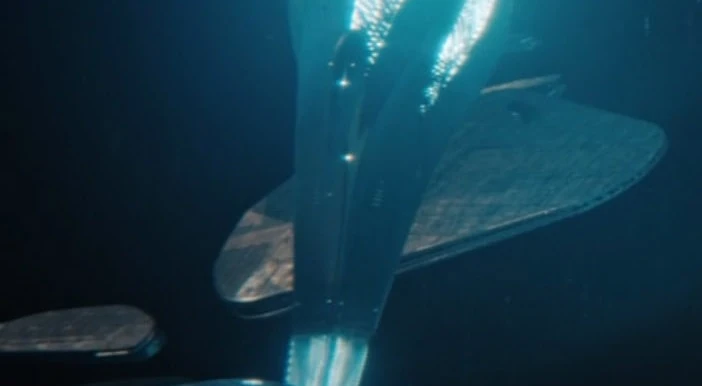 Classified
Merian class
3 VesselsThe Merian-class was a type of Federation starship operated by Starfleet, characterized by its distinctive design featuring a flat primary hull and four disconnected nacelles. This unique configuration was a hallmark of Starfleet engineering during its active service period, spanning from the 31st century into the 33rd century. **Class History** The Merian-class saw extensive service across several pivotal events in Federation history. In 3069, the class suffered significant losses during the cataclysmic event known as the Burn, which caused dilithium to become inert and resulted in antimatter explosions in ships with active warp cores, as depicted in the Star Trek: Discovery episode 'People of Earth'. By 3189, at least one Merian-class starship was part of the Federation fleet 001 stationed at Federation Headquarters. This fleet collectively generated a powerful distortion field that successfully concealed the headquarters' location, a critical defense mechanism detailed in the episode 'Die Trying'. The following year, in 3190, a Merian-class vessel was observed docked alongside the USS Voyager (NCC-74656-J) and a Mars-class starship within the Archer Spacedock, as seen in 'Kobayashi Maru'. Later that same year, several Merian-class starships, including the USS Mitchell (NCC-325027), played a crucial role in Earth's evacuation efforts in response to the Dark Matter Anomaly (DMA). These ships were subsequently present for the ceremony welcoming Earth back into the United Federation of Planets, an event chronicled in 'Coming Home'. In 3191, the USS Mitchell and the USS Locherer (NCC-325062) were integral to the Federation's mission to recover the Progenitors' technology, serving as support ships to the USS Discovery (NCC-1031-A). During this period, the USS Locherer successfully captured Moll and L'ak for the Federation. The USS Mitchell was strategically positioned to assume the USS Discovery's mission should diplomatic negotiations with Primarch Ruhn of the Breen Imperium deteriorate, and the USS Locherer was among four starships recalled to provide additional support to Federation Headquarters during these tense negotiations, as shown in 'Erigah'. At some point, the USS Mitchell was equipped with the experimental pathway drive, leading the Federation to consider deploying it to intercept Primarch Tahal's Breen fleet. However, this move was ultimately deemed too provocative given the delicate political climate, as explored in 'Lagrange Point'. In 3195, the USS Riker was also an active vessel of this class. In the 33rd century, a formation of ten or more Merian-class starships participated in a ceremonial honor-formation at Federation Headquarters, marking the launch of Zora and the USS Discovery's Red Directive mission, an event depicted in 'Life, Itself'.
- No armament data logged.
- No propulsion data logged.
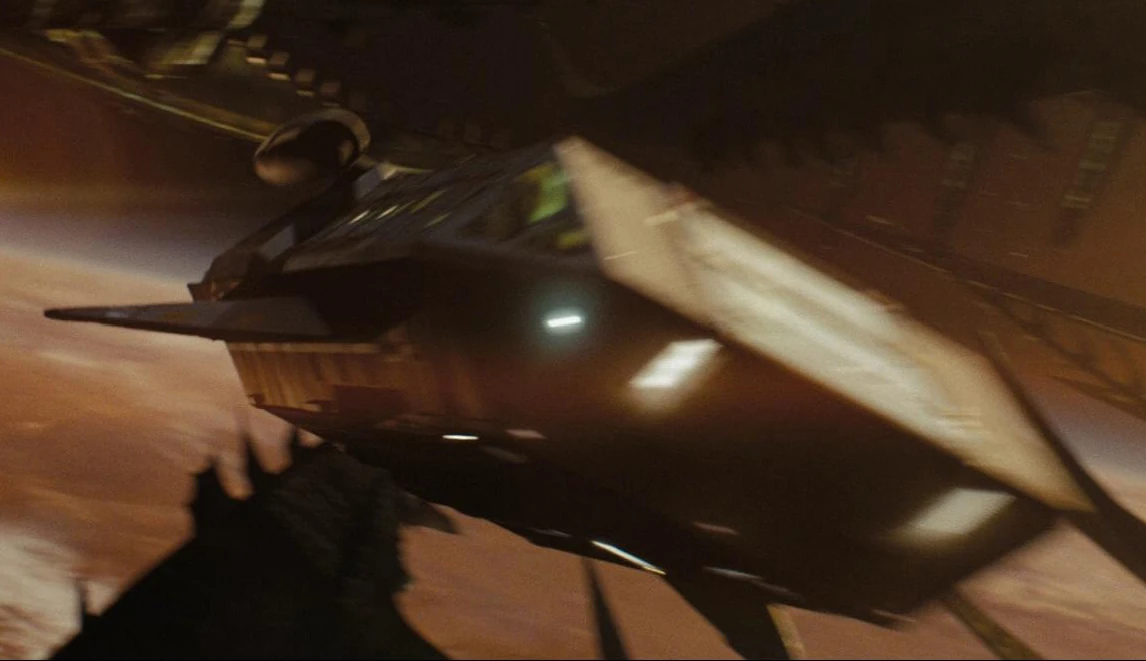 Runabout / Utility
Military shuttle Class
Hull Specifications LoggedThe Military shuttle was a versatile shuttlecraft type operated by Starfleet primarily in the 2250s. Its basic frame was shared with Federation cargo shuttles, indicating a modular design approach. **Physical Arrangement** This shuttlecraft featured a distinctive exterior design. It was equipped with two engine nacelles, which were attached to the dorsal sides of the main body. Stub wings were positioned below the center line, contributing to its aerodynamic profile. A small impulse drive was centrally located in the aft bulkhead, just above the center line, providing primary propulsion. The cockpit was characterized by three forward-facing windows arranged vertically, with the central window further divided into three triangular segments. Additional windows included a single roof window and two angled windows on each side. For emergency evacuations, three windows were present in the central compartment. The shuttle also incorporated four retractable landing gear, situated at each corner of the ventral hull. **Interior Design & Layouts** The Military shuttle was primarily designed for troop transport, but its central compartment was highly reconfigurable to suit various mission profiles. Standard to every shuttle interior were the cockpit and an aft compartment, both accessible from the central compartment via pressure doors. The cockpit featured two seats, with the helm located on the port side. The aft compartment included a bathroom, notably without windows. Several distinct interior layouts were documented. Layout A featured four rows of seats facing each other, running the length of the shuttle and forming two aisles. This configuration allowed for equipment storage between the two center rows, and the aft bulkhead included two displays and several compartments. Layout B arranged seats in forward-facing pairs, creating two aisles down the length of the shuttle. Layout C was utilized on shuttles equipped with a cargo door on the ventral hull and a gravity plate on the cabin roof. In this configuration, seats ran along the hull on either side, leaving the central compartment clear except for support or safety rails around the cargo door. Six retractable handrails, three on each side of the gravity plate, were mounted on the ceiling. Layout D was unique, featuring two transporter pads in the center of the central cabin, with seats along the hull on either side. The starboard bulkhead housed a transporter console, and the standard windows near the cockpit door were replaced with extra bulkheads, the port side mounting a control display for the transporter. **Service History** Military shuttles saw active service with Starfleet during the 2250s. Notable individual shuttles of this type include the USS Bardeen, registry 70172, which was active in 2255. The Dimassa 01 was active in 2258. Shuttle 9, also known as the Gilliam, registry 9, was assigned to the USS Enterprise (alternate reality) and was active in 2258. Shuttle 89, registry 89, also assigned to the USS Enterprise (alternate reality), was destroyed in 2258. Shuttle 12091, registry 12091, was identified as USS 12091 on its dorsal hull surface and was active in 2258. Shuttle 78072, registry 78072, was assigned to the Delta Vega outpost and was out-of-service in 2258. Production sketches and on-set signage for these vessels often referred to them as 'Military Transport' or 'Military Shuttle', with one example, shuttle 12091, bearing the designation 'UFP MIL-SHUT-12091'.
- No armament data logged.
- No propulsion data logged.
 Escort / Warship
Miranda class
16 VesselsThe Miranda-class starship was a versatile type of Federation starship operated by Starfleet, serving extensively throughout the 23rd and 24th centuries. Known for its adaptability, the class fulfilled a wide range of mission profiles, from scientific exploration and supply duties to patrol and escort assignments in major conflicts. **Design & Development** The Miranda-class, which entered Starfleet service by the 2260s, shared a distinct design lineage with the overhauled Constitution II-class starships implemented in the early 2270s, and also closely resembled the Soyuz-class starships. Its primary hull consisted of a saucer section, similar to that of the Constitution II-class, with a uniquely shaped bridge module positioned centrally on top. Two nacelle pylons were mounted on the underside of the primary hull, connecting to the warp nacelles. While visually identical to those on the Constitution II-class, the Miranda-class nacelles were mounted to the top of their pylons, a subtle distinction from the Constitution II-class where pylons attached to the bottom of the nacelles. Key physical features of the primary hull included a docking port on the forward section and two shuttlebays in the aft section, separated by the vessel's impulse engines. These shuttlebays were visually numbered '1' on the rear-port side and '2' on the rear-starboard side. Over its long service life, the Miranda-class utilized five different known hull configurations. The predominant design featured a distinctive structure immediately above the aft primary hull, serving as a dorsal extension of the ventral nacelle pylons. This 'roll bar' structure was equipped with a weapons pod containing torpedo launchers and phaser banks, topped by a small deflector dish. Other configurations lacked this roll bar, while some included two large sensor pods affixed to the port and starboard sides of the primary hull, or a single pod module. By late 2373, Miranda-class ships employing the predominant roll bar design underwent significant upgrades to their warp nacelles and, in some cases, impulse engine systems, often featuring glowing nacelles and an additional red impulse engine glow. **Tactical Systems** Standard to all Miranda-class designs were six dual phaser banks on the primary hull—three mounted on the top and three on the bottom of the saucer—along with two single phaser emitters located just beneath the impulse engines. For ships equipped with the 'roll bar' superstructure, this component housed two tubular phaser emitters on each side, capable of firing both forward and to the ship's flanks. Additionally, a pod mounted in the center of the superstructure contained two forward and two aft photon torpedo launchers, with a small deflector dish situated on top of this launcher cowling. By the 24th century, the Miranda-class weapons systems underwent several modifications. Some vessels, such as the 'twin-pod' variant, featured a phaser array mounted on the lower part of the ventral dome and photon torpedo launchers integrated into the main part of the ship, rather than within a roll bar pod. During the Dominion War, a majority of 24th-century Miranda-class vessels, particularly those with the 'roll bar' variant, were equipped with phaser arrays and photon torpedoes equivalent to those found on other contemporary Starfleet ships, while largely retaining their original weapon array placements. The Class 6 variant of this class was noted to possess Class 3 defensive armaments. **Interior Design** The interior design of the Miranda-class evolved over its extensive service. The 23rd-century main bridge, located on Deck 1, shared a layout common to contemporary vessels. It featured a viewscreen against the forward bulkhead, side-by-side navigation and helm consoles, and the captain's chair directly aft. The USS Reliant's bridge, for instance, had a single turbolift entryway at the rear-center, flanked by a Master Situation Station on the starboard side and a tactical station on the port side. The starboard side also housed the science station and communications station. The USS Saratoga (NCC-1887) had a similar perimeter layout, though its science station was on the port side, parallel to navigation. By the 24th century, bridge layouts were reconfigured, separating navigation and helm into conn (starboard) and ops (port) stations. The USS Lantree's bridge was notably simplistic, featuring a large LCARS interface and star charts. In contrast, the USS Saratoga (NCC-31911) had a more complex layout with additional standing consoles, including a tactical station on the port side, and a turbolift. The USS Brattain's bridge was similar to the Saratoga's, but included large support braces around the captain's chair and a single engineering station directly behind it, in front of an engineering Master Systems Display interface. Corridors on the USS Reliant resembled those of the refit Constitution II-class, while those on the USS Saratoga (NCC-31911) were heavily fortified with support braces. Main engineering on the USS Reliant featured a vertical warp core with multiple surrounding levels. The transporter room on the USS Reliant was equipped with six transporter pads. The two shuttlebays, located port and starboard, on ships like the USS Saratoga (NCC-31911), held escape pods. Crew quarters on the outer rim of ships like the USS Saratoga (NCC-31911) featured large picture windows with numerous support braces. **Service History** The Miranda-class entered Starfleet service by the 2260s, with the USS Reliant (NCC-1864) launched in 2264. Several Miranda-class starships were active during the mid-2280s, notably appearing in Star Trek II: The Wrath of Khan and Star Trek IV: The Voyage Home. Construction of the class continued well into the 24th century, exemplified by the USS Brattain (NCC-21166), constructed by the Yoyodyne Division and launched on stardate 22519.5 at the 40 Eridani A Starfleet Construction Yards. The Miranda-class played a crucial role in several major Federation engagements, including battles against the Borg such as the Battle of Wolf 359 and the Battle of Sector 001, as depicted in 'Emissary' and Star Trek: First Contact. During the Dominion War, Miranda-class starships frequently served as escorts, seeing extensive action in Operation Return, the First Battle of Chin'toka, the Second Battle of Chin'toka, and the Battle of Cardassia. The class remained in Starfleet service as late as 2378, as seen in 'Endgame'. In 2381, a Miranda-class ship, the USS MacDuff (NCC-1877), was featured in a holodeck program used by Ensign Beckett Mariner in 'Strange Energies'. In an alternate reality in 2382, within a Schrödinger possibility field, the USS Cerritos (NCC-75567) briefly transformed into a Miranda-class counterpart, though with a distinct design featuring warp nacelles similar to the California-class, as shown in 'The New Next Generation'. Notable ships of the class include the USS Antares (NCC-9844), USS Lantree (NCC-1837), USS Late (NCC-9481), USS Majestic (NCC-31060), USS Nautilus (NCC-31910), USS ShirKahr (NCC-31905), USS Sitak (NCC-32591), USS Tian An Men (NCC-21832), and USS Trial (NCC-1948).
- • Phase
- • Photon torpedo
- • Deflector shield
 Runabout / Utility
Miranda type escape pod
Hull Specifications LoggedThe Miranda type escape pod was a specialized emergency escape vehicle primarily utilized aboard Starfleet's Miranda-class starships. Designed for rapid evacuation, these pods featured a robust construction capable of withstanding the rigors of emergency deployment. Entry and alighting were facilitated by a door located on either side of the craft. For situational awareness, the pod was equipped with four portholes and a single large aft window, though notably, it lacked any forward-facing windows, a design choice possibly implemented as a safety measure to protect occupants from direct impacts or radiation during an emergency egress. These escape pods were designed to accommodate a relatively large number of passengers, with a stated capacity for at least a dozen individuals, making them significantly larger than the escape pods found on Galaxy-class starships. Operationally, each pod was piloted and controlled by two dedicated crew members, ensuring efficient and safe evacuation procedures. **Service History** The Miranda type escape pod saw critical service during the 2360s, most notably during the devastating Battle of Wolf 359 in 2367. During this engagement, the USS Saratoga (NCC-31911), a Miranda-class starship, was among the thirty-nine Starfleet vessels destroyed by a Borg cube. As the USS Saratoga became disabled and its destruction imminent, the crew received orders to abandon ship. At least four escape pods successfully launched from the USS Saratoga's shuttlebay before the vessel's catastrophic explosion. Among the survivors who utilized these pods were Benjamin Sisko and his son, Jake Sisko. Starfleet's emergency protocols for Miranda-class starships dictated that all families and crew members were assigned specific evacuation points. Passengers would board the pods through the side entrances and be seated in the aft compartment. Upon the pilot's discretion, the pod would be sealed and then accelerated at extreme speed away from the parent vessel. Once a safe distance was achieved, the pod would reduce its velocity. Specific pods identified as having been attached to the USS Saratoga include Escape pod 10, Escape pod 17, Saratoga escape pod 1, and Saratoga escape pod 2. **Distinguishing Characteristics** The deployment method of the Miranda type escape pods from the USS Saratoga was distinct, utilizing the starship's shuttlebays for launch, a contrast to later Starfleet escape pod designs seen on vessels in Star Trek: Deep Space Nine and Star Trek: Voyager, which were typically embedded directly into the hull. The appearance of the USS Saratoga's pods in the episode 'Emissary' provided the clearest interior view and the most detailed example of escape pod deployment seen among Starfleet vessels up to that point. Their larger capacity also set them apart from other contemporary designs, such as those found on the Galaxy-class.
- No armament data logged.
- No propulsion data logged.
Mission scoutship Class
Hull Specifications LoggedThe class classification of Mission scoutship starships.
- No armament data logged.
- No propulsion data logged.
 Timeship
Model HB-88 Class
1 VesselThe Model HB-88 was a compact, single-pilot timeship developed by the Federation in the 29th century. This advanced craft was primarily designed for time travel, utilizing a sophisticated temporal drive system. Its core temporal mechanics involved initiating a temporal inversion from its temporal navigation system, which in turn powered the ship's temporal field generator. Once the temporal core reached cascade potential, the Model HB-88 was capable of opening temporal rifts within the space-time continuum, allowing for precise time travel to specified eras and locations. Beyond its temporal capabilities, the timeship was also equipped with conventional propulsion systems, including both warp drive for faster-than-light travel and hyper-impulse drive for high-speed sublight maneuvers. For offensive capabilities, the Model HB-88 was armed with a subatomic disruptor, an energy weapon potent enough to break apart the molecular structure of its target. Its defensive resilience was notably high; the USS Voyager, a 24th century Starfleet starship, discovered that its phaser fire had little-to-no effect against the Model HB-88's hull or shields. The vessel was described in the final draft of the 'Future's End' script as a sleek, black, triangular vessel, approximately half the size of a standard shuttle, resembling a curved, obsidian spear-head. **Service History** One notable instance of a Model HB-88 in service was the timeship *Aeon*. During a mission, the *Aeon* was inadvertently transported to the 20th century, where its commander, Captain Braxton, was forced to transport out before the ship crashed in the High Sierras on Earth. The crashed vessel was subsequently discovered by a 20th century Human named Henry Starling. Starling exploited the advanced 29th century technology found aboard the *Aeon* to significantly accelerate the Computer Age of the late 20th century, ultimately founding his own corporation, Chronowerx Industries. This pivotal event was chronicled in the Starfleet records during the episode 'Future's End, Part II'. The *Aeon* remained active in the 29th century, serving under Starfleet's temporal directives.
- • Disrupto
- No propulsion data logged.

Moll and L'ak's ship
Class: Courier ship- No armament data logged.
- No propulsion data logged.
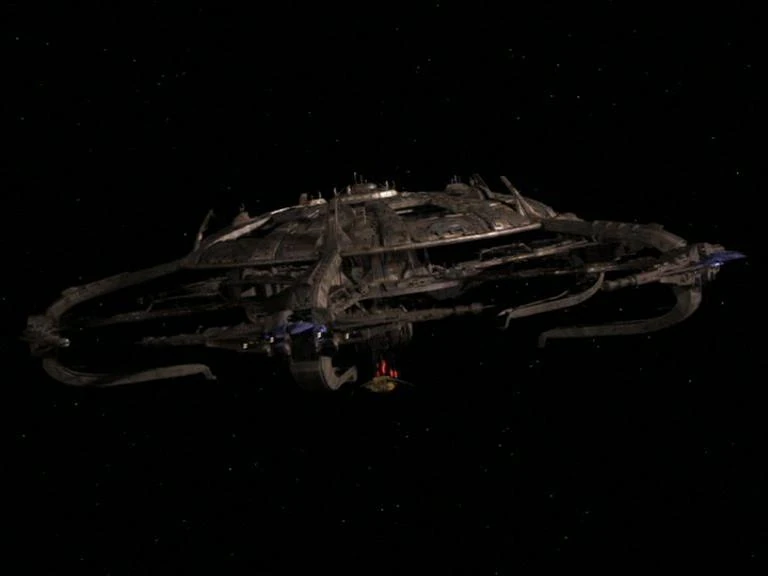 Classified
Monac type
Hull Specifications LoggedThe Monac-type were a classification of large space stations primarily utilized during the late 24th century by the Cardassian Union. These stations were specifically designed to function as repair facilities, capable of handling starship construction, refitting, and maintenance layovers. A key design feature of the Monac-type was its modularity; individual stations could be interconnected using large scaffolds to form extensive orbital shipyards. This allowed for flexible configurations, from single repair docks to vast networks capable of supporting multiple starships simultaneously. The Monac-type structure was designed by John Eaves. **Class History** Numerous Monac-type repair facilities were active throughout the Alpha Quadrant. One of the most prominent was the Monac shipyard, located at Monac IV, which was considered one of the largest shipyards in the Alpha Quadrant. However, this vital facility met its destruction in early 2375 when a solar flare, triggered by the Klingon Bird-of-Prey IKS Rotarran, engulfed and destroyed the shipyards. Later that same year, a Monac-type repair station in the Kelvas system, known as the Kelvas facility, became the site of a critical operation. Members of the Cardassian Rebellion boarded this station to steal a Breen energy-dampening weapon from a Jem'Hadar attack ship that was docked there. Towards the end of 2375, several Monac-type repair facilities were observed in orbit of Cardassia Prime. Following their retreat from the Battle of Cardassia with the Federation Alliance, the Dominion and the Breen established a new defense perimeter near these stations, highlighting their continued strategic importance. The Monac-type stations appeared in the Star Trek: Deep Space Nine episodes 'Shadows and Symbols', 'Tacking Into the Wind', and 'What You Leave Behind'.
- No armament data logged.
- No propulsion data logged.
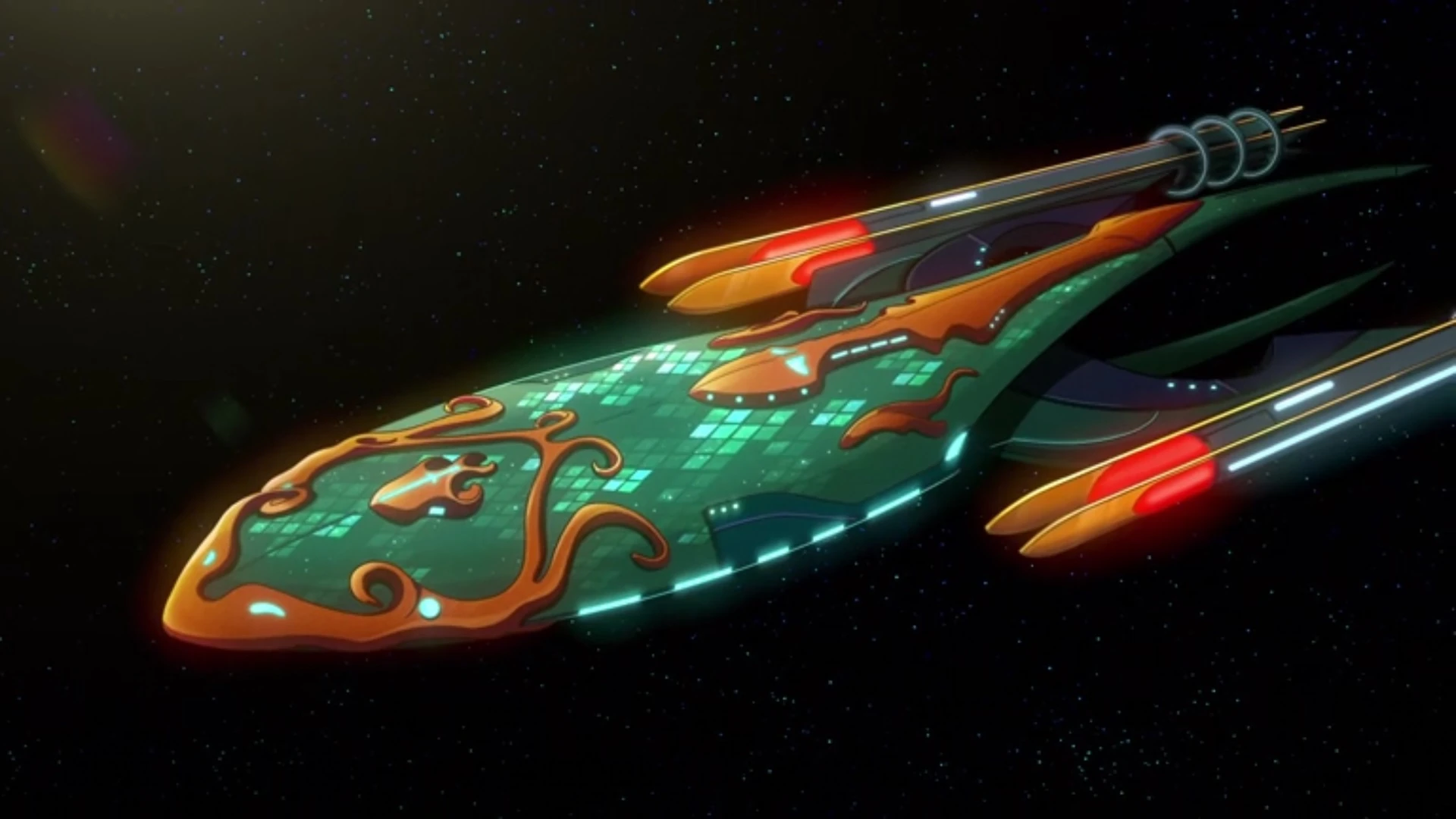 Explorer
Monaveen type
Hull Specifications LoggedThe Monaveen-type was a distinctive class of cruiser employed by the Hysperians during the late 24th century. These vessels represented a unique blend of advanced Starfleet-comparable technologies and remarkably antiquated systems, reflecting the Hysperian culture's particular aesthetic and functional preferences. While equipped with essential modern components such as warp drive, transporters, and force fields, the Monaveen-type also incorporated elements like sconces with open flames, large manually operated wooden doors, and even dedicated stables for horses in its ventral line. A particularly unusual feature was an area near the ship's center designated for keeping a dragon. Docking procedures between Monaveen-type ships involved the use of a torch-lit docking corridor, further highlighting this blend of old and new. **Interior Layout & Key Systems** The interior design of a Monaveen-type cruiser, exemplified by the starship Monaveen itself, featured several notable areas. The bridge, centrally located, boasted a two-level design with two curved staircases leading to the command center. Main engineering was positioned on the starboard side of the ship, directly accessible from the upper level of the bridge. This critical area was overseen by the chief blacksmith, who managed the ship's royal engineers. Main engineering housed the unique 'dragonbreath engines' and other vital components, including the 'dragonsblood flame'—identified by the Federation as the primary fusion reactor—which worked in conjunction with the ship's 'elf matrix', known to the Federation as the subspace field matrix. The reactor also contained plasma regulators and resonators responsible for managing plasma levels, and the drive itself was aesthetically designed to resemble the head of a dragon. Another distinct section, designated as Section 8 on the ship's MSD, featured a corridor adorned with suits of knights' armor or statues resembling knights, leading to a room with a banquet table, comparable to a mess hall. These details were observed during the events of the episode 'Where Pleasant Fountains Lie'.
- No armament data logged.
- No propulsion data logged.
 Classified
Mondor type
Hull Specifications LoggedThe Mondor-type was a class of spacecraft primarily utilized by the Pakleds during the mid- to late 24th century. These vessels were notable for their 'basic early design' and their unique operational history, which saw them frequently augmented with a disparate collection of stolen or salvaged components from various species. This practice eventually led to their evolution into the more formidable Pakled Clumpships by the 2380s. **Design & Technical Specifications** Initially, the Mondor-type was described as an 'unusual alien ship,' hardly aerodynamic and appearing as a 'throwback' compared to contemporary Starfleet vessels like the USS Enterprise (NCC-1701-D). Its propulsion system was designed for sub-light travel only. During an encounter with the starship Mondor, a vessel of this class, it was observed to have suffered 'engineering problems,' including total guidance system failure. Repairs involved rerouting power through a specific venturi chamber to the engine's coils and reconfiguring several separators. The ship's initial armaments were 'very limited,' barely capable of damaging a passing asteroid, though it possessed 'progressive weapons potential.' Defensively, it was outfitted with shields 'similar to Romulan shields.' A significant design flaw was its computer system, which, due to the arbitrary integration of incompatible technologies, could not employ any security measures, making Mondor-type vessels extremely vulnerable to computer viruses. The bridge of a Mondor-type ship featured engineering control panels on the port side and weapons control on the starboard side, with its aesthetic described as an 'analog throwback to the late 21st century.' **Service History** The Mondor-type first came to the attention of the Federation in 2365 when the USS Enterprise (NCC-1701-D) responded to a Mayday from the starship Mondor, which claimed to be 'broken.' During this encounter, the USS Enterprise's chief engineer, Geordi La Forge, discovered that 'half the systems on this ship [had] been stolen from Romulans, Jarada, Klingons, and just about anybody they ever came in contact with.' Under duress, Geordi La Forge was coerced into upgrading the Mondor's tactical systems, transforming its 'very limited armaments' into a formidable array with the 'strength of photon torpedoes.' This incident highlighted the Pakleds' modus operandi of acquiring technology through theft and salvage. By the 2380s, with the assistance of the rogue Klingon Captain Dorg, these vessels underwent significant augmentation, incorporating components from species such as the Romulans, Klingons, Ferengi, Bajorans, and Arkonians. These heavily modified Mondor-type ships became known as Pakled Clumpships, representing a more advanced and dangerous iteration of the original design. The Mondor-type and its evolution were prominently featured in the Starfleet records documented in the episodes 'Samaritan Snare' and 'No Small Parts'.
- No armament data logged.
- No propulsion data logged.
 Runabout / Utility
Moon shuttle Class
Hull Specifications LoggedThe Moon shuttle was an unsophisticated type of shuttlecraft that saw extensive use across the United Federation of Planets and beyond, operating from the 22nd century through to the late 24th century. Its design prioritized utility and basic transport over advanced capabilities, making it a common sight for short-range planetary or lunar travel. **Early Service & Cultural References** The class's long service history began as early as the 2150s. In 2155, within the mirror universe, Captain Jonathan Archer experienced an illusion where a counterpart of himself from a parallel universe suggested he was more likely to end up commanding a Moon shuttle than receiving official authorization from mirror universe Starfleet to command an advanced starship like the USS Defiant (NCC-1764). This reference highlights the Moon shuttle's perception as a less prestigious, more utilitarian vessel even in the mid-22nd century. Over a century later, in 2266, aboard the USS Enterprise (NCC-1701) in the primary universe, Doctor Leonard McCoy famously quipped, 'What am I, a doctor or a moon shuttle conductor?' when berated by Captain James T. Kirk for not alerting him to a red alert status during a physical. This remark further cemented the image of the Moon shuttle conductor as a distinct, non-medical role, implying a common understanding of the shuttle's function and its operators. **24th Century Operations** By the late 24th century, Moon shuttles continued to be in active service. In late 2381, a Moon shuttle was observed flying over Ferenginar, as depicted in 'Parth Ferengi's Heart Place'. Later that same year, an away team from the USS Cerritos, consisting of Captain Carol Freeman, Lieutenant Shaxs, and Lieutenant jg Sam Rutherford, utilized a Moon shuttle for transport to New Axton. During this journey, Lieutenant jg Sam Rutherford expressed complaints about the ride's duration and discomfort, indicating that while functional, the Moon shuttle experience could be less than luxurious for passengers on longer trips.
- No armament data logged.
- No propulsion data logged.
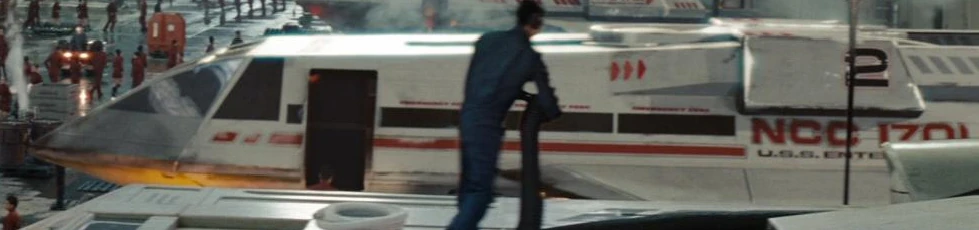 Runabout / Utility
Moore type shuttlecraft
Hull Specifications LoggedThe Moore-type shuttlecraft was a distinct shuttlecraft design operated by Starfleet within an alternate reality timeline, specifically noted in 2258. Its physical arrangement featured two warp nacelles, which were attached to small wings extending from either side of the main body. For sublight propulsion, two small impulse drives were integrated into the craft, positioned on either side near the top. Access to the shuttle's interior was provided by doors located on both the port and starboard sides, situated just behind the cockpit. The cockpit itself was designed with a total of six large windows, offering expansive views. These included two forward-facing windows placed side-by-side, an angled window on both the port and starboard sides, followed by another side-facing window on each side. Additionally, the aft compartment of the shuttlecraft featured a series of small, long windows that ran for most of its length. This design bears a similarity to the Galileo-type shuttlecraft, particularly those seen in Star Trek V: The Final Frontier and Star Trek Generations. **Class History** The Moore-type shuttlecraft entered service with Starfleet in the year 2258 within an alternate reality. Several individual shuttles of this type are known to have been in active service during this period. These include the USS Gilliam and the USS Moore, both of which were active in 2258. Another notable example is Shuttle 2, which was specifically assigned to the USS Enterprise NCC-1701 alternate reality. An unnamed Moore-type shuttlecraft was also documented, indicating a broader deployment of this class within the alternate Starfleet fleet.
- No armament data logged.
- No propulsion data logged.

Narada
Class: Narada-class- No armament data logged.
- No propulsion data logged.
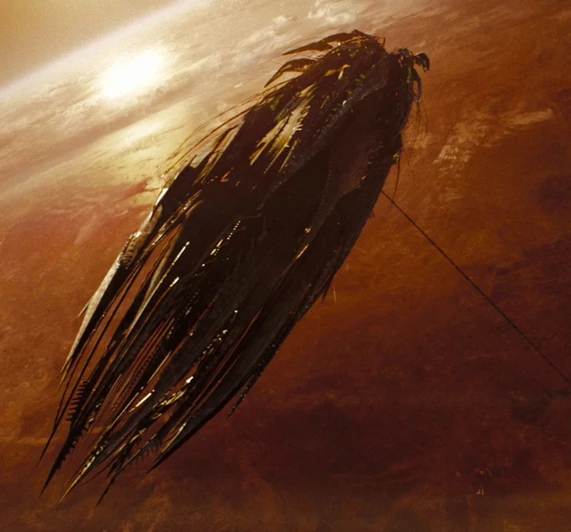 Mining Vessel
Narada Class
Hull Specifications LoggedThe Narada was originally conceived as a Romulan mining vessel, in service during the late 24th century. Its design was notably asymmetrical, a deliberate contrast to the symmetrical aesthetics common in Starfleet vessels, giving it a menacing and unconventional appearance. Despite its classification as a mining vessel, the Narada possessed weaponry and capabilities far exceeding those of any conventional starship of its era, particularly when it encountered 23rd-century vessels in an alternate reality. Its primary offensive systems included highly destructive missiles, capable of breaking into multiple component projectiles that could easily penetrate the standard shields of contemporary starships. As a mining vessel, it was also equipped with an immense drilling apparatus, a platform at the end of a lengthy metallic line hundreds of kilometers long. This drill emitted a powerful beam capable of penetrating a planet's surface all the way to its core, with its high energy output also disrupting communications and transporter signals in the vicinity. Crucially, the Narada's advanced capabilities and menacing appearance were later explained as the result of extensive retrofitting with salvaged and reverse-engineered Borg technology. This process, undertaken by the Tal Shiar at a cloaked military installation, allowed the ship to grow and repair itself, significantly enhancing its speed to 'immeasurable transwarp speeds' and transforming it into a formidable warship. After acquiring Ambassador Spock's 'Jellyfish' in the alternate reality, the Narada also gained the ability to deploy bombs loaded with the incredibly destructive red matter. **Service History** In the prime reality, the Narada, commanded by Nero with Ayel as his second-in-command, was active in 2387. Following the catastrophic supernova of Romulus's star, Nero utilized the Narada to intercept Ambassador Spock, who was attempting to create an artificial black hole to contain the supernova. Both the Narada and Spock's vessel, the 'Jellyfish', were pulled into the black hole and went missing from their original timeline. The Narada subsequently emerged from the black hole in an alternate reality in the year 2233, appearing 75,000 kilometers from Klingon space. There, it immediately attacked and easily overpowered the much smaller Federation starship USS Kelvin. During this engagement, Captain Richard Robau of the Kelvin was killed, and Lieutenant George Kirk, taking command, ultimately rammed the heavily damaged Kelvin into the Narada to allow his crew and family to escape. Although the Narada sustained damage, it remained operational. According to a deleted scene and background information, the crippled Narada and its crew were later captured by Klingon warbirds and imprisoned on the Klingon prison planet Rura Penthe. Twenty-five years later, Nero and his crew escaped, reclaimed the Narada, and resumed their mission of vengeance. By 2258 in the alternate reality, the Narada had become a terror, attacking a Klingon prison planet and destroying 47 Klingon warbirds. Shortly thereafter, the 'Jellyfish', with Spock aboard, emerged from the black hole and was immediately captured by the Narada. Nero then proceeded to Vulcan, where the Narada drilled a hole into the planet's core. It subsequently destroyed a small Federation fleet sent to investigate the seismic disturbance before the USS Enterprise arrived. Despite the Enterprise crew's efforts to stop the drill, Nero injected red matter into Vulcan's core, creating a black hole that consumed the planet. Following Vulcan's destruction, Nero interrogated Captain Christopher Pike for Earth's planetary defense codes and took the Narada to Earth, beginning to drill into the San Francisco Bay. However, the drill platform was destroyed by Spock (alternate reality) using the 'Jellyfish', which he had confiscated from the Narada. Spock then drew the Narada away from Earth and rammed the 'Jellyfish' into it. The remaining red matter aboard the 'Jellyfish' ignited, creating a massive black hole that began to crush the Narada. Nero refused assistance from Captain Kirk, who then ordered the Enterprise to fire upon the Narada to ensure its complete destruction as it was pulled apart and devoured by the black hole.
- No armament data logged.
- No propulsion data logged.
Classified
Narada-class
1 VesselThe class classification of Narada-class starships.
- No armament data logged.
- No propulsion data logged.
Narada-class mining vessel
Hull Specifications LoggedThe class classification of Narada-class mining vessel starships.
- No armament data logged.
- No propulsion data logged.
 Escort / Warship
Nausicaan ship Class
Hull Specifications LoggedNausicaan ships were a class of small, fast fighters primarily employed by Nausicaan pirates during the mid-22nd century. These vessels were instrumental in their raiding operations against freighters traversing established trade routes, becoming a significant threat to interstellar commerce in that era. **Armaments & Specifications** These Nausicaan ships were formidable for their size, armed with both fore and aft plasma cannons. For defense, they possessed primitive shields. While their weaponry was considered potent enough to pose a serious threat to a Y-class freighter, these pirate vessels were ultimately outmatched by the more advanced NX-class starships of Starfleet. The spatial torpedoes utilized by NX-class starships, such as the NX-01 Enterprise, were capable of piercing the Nausicaan ships' shields, demonstrating a clear technological superiority. According to Star Trek: The Official Starships Collection, issue 30, these fighters had a length of ninety meters and a maximum speed of warp two. **Class History** Only three Nausicaan ships of this class, operating from a Nausicaan cargo station, are known to have been encountered by Starfleet. One particular Nausicaan ship gained notoriety for relentlessly pursuing and attacking the ECS Fortunate, a Y-class freighter, for several months during 2151, repeatedly raiding its cargo. During one such attack, the captain of the ECS Fortunate was severely injured when Nausicaans boarded the vessel, leaving First Officer Matthew Ryan in command. Ryan, seeking revenge, captured, tortured, and interrogated one of the Nausicaan boarders for information. After a brief escape from the NX-01 Enterprise, the ECS Fortunate tracked the same Nausicaan ship to its base of operations, the Nausicaan cargo station. The ECS Fortunate's own weapons proved insufficient to penetrate the lead Nausicaan ship's shields. The two other Nausicaan ships, previously docked at the station, decoupled and disabled the ECS Fortunate's impulse engines to prevent its escape. The NX-01 Enterprise arrived to offer assistance, and its helmsman, Travis Mayweather, successfully reasoned with Matthew Ryan to return the captive Nausicaan prisoner. Following negotiations, the Nausicaan ships retrieved their comrade and withdrew, allowing the NX-01 Enterprise and the ECS Fortunate to depart without further resistance. This encounter was documented in the episode 'Fortunate Son'. **Design & Development** Initial script descriptions for 'Fortunate Son' characterized this type of vessel as 'small' and 'fast', with 'medium yield plasma cannons' and 'simple (TECH) shielding'. The bridge was initially described as 'dark', though the final set featured large, colorful wall panels. The production design team for Star Trek: Enterprise was tasked with creating the studio model for the Nausicaan attack fighter during the show's first season. Drawing inspiration from the established thuggish and belligerent nature of the Nausicaans, the designers aimed for a threatening and aggressive appearance for their vessels. Illustrator John Eaves began by sketching various basic shapes, incorporating elements from an earlier Vulcan ship design. He described the desired look as being 'between the bottom of a shovel and a manta ray'. The producers approved one of Eaves' initial illustrations, which he likened to a manta ray. Lead CG Artist Pierre Drolet at Eden FX then digitally transformed Eaves' illustration into a three-dimensional model, adding his own ideas such as an earthy color scheme and detailed forward plasma cannons to enhance the aggressive aesthetic. The bridge of the Nausicaan ship was constructed as a backdrop set on Paramount Stage 8. It is presumed these vessels possessed warp drive, capable of speeds greater than warp 1.8, the maximum speed of the ECS Fortunate, to facilitate their prolonged pursuit and attacks.
- • Plasma canno
- • Deflector shield
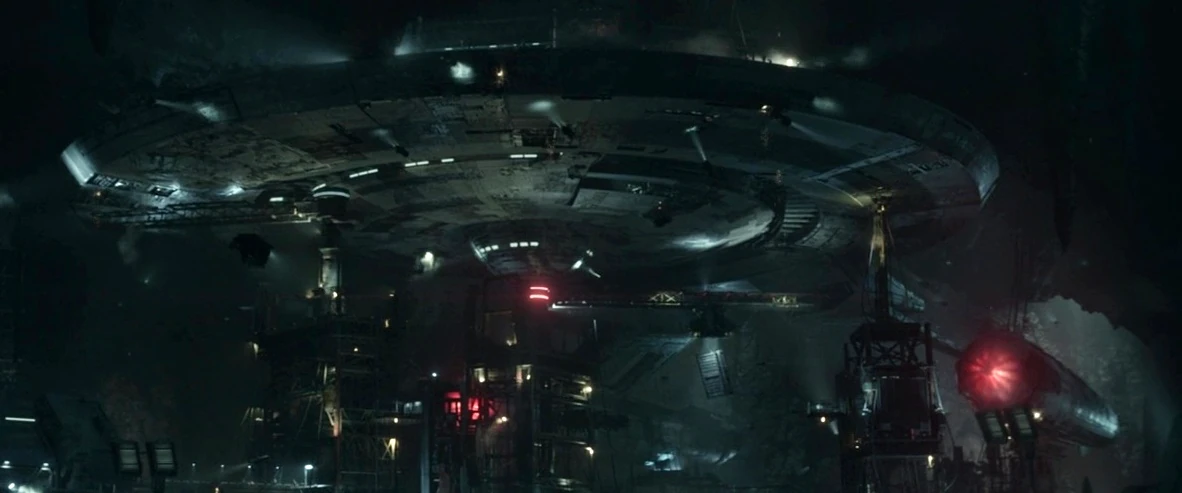 Classified
NCC-1279 type
Hull Specifications LoggedThe NCC-1279 type was a singular mock Federation starship class, meticulously constructed from a collection of Federation tech and salvaged parts. This clandestine project was undertaken by an extremist group known as the Broken Circle following the conclusion of the 2256-57 Federation-Klingon War. The primary objective of this class was to facilitate a false flag operation, designed to reignite hostilities between the Klingons and the United Federation of Planets. Visually, the NCC-1279 type shared a significant resemblance to a Crossfield-class Federation starship, specifically possessing the same primary hull, a detail noted by USS Enterprise (NCC-1701)'s navigator, Jenna Mitchell. Internally, the design featured at least fourteen decks, including a bridge, main engineering, and a sickbay. A critical component, a transponder, was located on deck 13. The vessel was armed with phasers and photon torpedoes, which proved to be a serious threat even to a Constitution-class starship. It was designed to be manned by a crew of thirty soldiers. **Class History** A single prototype vessel of this type, designated NCC-1279, was constructed in secrecy underground within a dilithium mine on the planet Cajitar IV. This vessel was intended to initiate another war between the Klingons and the Federation by launching an unprovoked attack on a Klingon D7 battle cruiser commanded by Captain D'Chok, who was entirely unaware of the Broken Circle's sinister plot. However, Doctor Joseph M'Benga and Nurse Christine Chapel uncovered the plan while aboard the NCC-1279. They managed to alert the crew of the Constitution-class starship, the USS Enterprise (NCC-1701), by altering the NCC-1279's transponder signal, instructing the USS Enterprise crew to destroy the rogue vessel. The USS Enterprise (NCC-1701) pursued the NCC-1279, leading to an intense skirmish known as the Battle of Cajitar IV. Despite sustaining damage to its shields, the USS Enterprise successfully crippled and subsequently destroyed the NCC-1279 with a spread of photon torpedoes, preventing it from reaching Captain D'Chok's D7 battle cruiser. Doctor Joseph M'Benga and Nurse Christine Chapel managed to escape the vessel before its destruction. On the USS Enterprise's sensors, the ship was identified as the 'Federation ship NCC-1279'. The unsanctioned NCC-1279 was destroyed in 2259. Another vessel of this type, designated NCC-1279 type 001, was noted as being docked at Starbase 1 in 2259, identified as a false Federation Crossfield-class starship.
- • Phase
- • Photon torpedo
- No propulsion data logged.

NCC-1685
Class: Unknown- No armament data logged.
- No propulsion data logged.

NCC-1697
Class: Unspecified- No armament data logged.
- No propulsion data logged.

NCC-1700
Class: Constitution class- • Antimatter charge
- • Phase (Qty: 6)
- + 2 more...
- • Transporte (Qty: 1)
- • Warp facto
- + 3 more...
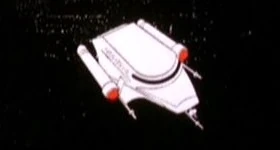 Shuttlecraft
NCC-1701/3 type shuttlecraft
Hull Specifications LoggedThe NCC-1701/3 type shuttlecraft was a specialized shuttlecraft type utilized by Starfleet in 2269. Early conceptualizations for this craft, as seen in storyboard sketches for the episode 'Mudd's Passion', described it as an 'armored shuttlecraft'. However, subsequent layout notes for the episode clarified its designation as an 'armored landing craft', distinguishing it from standard shuttlecraft, a detail documented in 'Star Trek: The Official Guide to the Animated Series'. This suggests a design emphasis on durability and landing capabilities, potentially for hazardous environments or tactical deployments. **Class History** In 2269, at least three shuttlecraft of the NCC-1701/3 type were assigned to the USS Enterprise (NCC-1701). These included the NCC-1701/3 itself, the NCC-1701/4, and the NCC-1701/12. During this period, the NCC-1701/3 and NCC-1701/4 remained active in service. The NCC-1701/12, however, was destroyed in the line of duty in 2269, as depicted in the events of 'Mudd's Passion'. The presence of multiple units aboard a single Constitution-class starship like the USS Enterprise (NCC-1701) indicates their utility and importance for various mission profiles undertaken by Starfleet during the 23rd century.
- No armament data logged.
- No propulsion data logged.

NCC-1718
Class: Constitution class- • Antimatter charge
- • Phase (Qty: 6)
- + 2 more...
- • Transporte (Qty: 1)
- • Warp facto
- + 3 more...
NCC-1831
Class: Unspecified- No armament data logged.
- No propulsion data logged.
NCC-2004
Class: Excelsior class- No armament data logged.
- No propulsion data logged.

NCC-4186
Class: Miranda class- • Phase
- • Photon torpedo
- • Deflector shield

NCC-585
Class: Hermes class- No armament data logged.
- No propulsion data logged.

NCC-7100
Class: Constellation class- • Phase
- • Photon torpedo
- • Warp facto (Qty: maximum)
- • Deflector shield

NCC-73918
Class: Danube class- • Phase (Qty: 4)
- • Torpedo launche
- • Warp facto
- • Deflector shield

NCC-75227
Class: Federation mission scoutship- • Phase
- • Photon torpedo
- • Deflector shield

NCIA-93
Class: NCIA-93- No armament data logged.
- No propulsion data logged.
 NCIA-93
 Class
Hull Specifications LoggedThe NCIA-93 was a starship class operated by the United Federation of Planets' intelligence division, Section 31, during the 2250s. While specific technical details regarding its propulsion, armaments, and defensive systems are not extensively documented, the vessel was clearly capable of warp travel and advanced tactical operations, consistent with Starfleet's intelligence assets. Its computer systems featured a distinct visual interface, noted for being similar to LCARS, differentiating it from the standard interfaces seen on contemporary Starfleet vessels like the USS Shenzhou and USS Discovery. The bridge of the NCIA-93 itself was a heavy redress of the USS Shenzhou's bridge, indicating a shared design lineage or resourcefulness in its construction. The ship was also equipped with advanced tractor rigs, demonstrated during its assistance to the USS Discovery. **Service History** The NCIA-93 played a significant role in several critical events in 2257 under the command of Leland. Its service began with a clandestine mission to transport the child of Chancellor of the Klingon High Council L'Rell to a monastery on the planet Boreth, following the extraction of Ash Tyler and the child from Qo'noS by Section 31 agent Philippa Georgiou, as depicted in the episode 'Point of Light'. Later that year, the NCIA-93 provided crucial assistance to the USS Discovery, preventing its destruction by the mycelial network. This event led to an agreement between Leland and Captain Christopher Pike of the USS Discovery to cooperate in the search for Lieutenant Spock and to unravel the mystery of the red signals, as seen in 'Saints of Imperfection'. The NCIA-93 subsequently rendezvoused with Michael Burnham and Lieutenant Spock after they located Spock on Vulcan (planet). A tense standoff ensued at Talos IV when the NCIA-93 caught up to the USS Discovery, both ships vying for custody of Burnham and Spock. However, the Talosians generated an illusion, successfully deceiving the NCIA-93 and allowing Burnham and Spock to escape aboard a shuttle to the USS Discovery, as chronicled in 'If Memory Serves'. Soon after, the NCIA-93 joined the USS Discovery on a mission to Essof IV to capture the Red Angel. During an altercation on the planet's surface involving Philippa Georgiou and Leland, who was under the influence of Control, the NCIA-93 warped away with Leland aboard, preventing the USS Discovery from destroying a critical facility. Ash Tyler, who had been onboard the NCIA-93, managed to escape in an escape pod and was subsequently rescued by the USS Discovery, as detailed in 'Perpetual Infinity'. The NCIA-93 is notable as the second Section 31 starship to appear on screen, following the USS Vengeance.
- No armament data logged.
- No propulsion data logged.
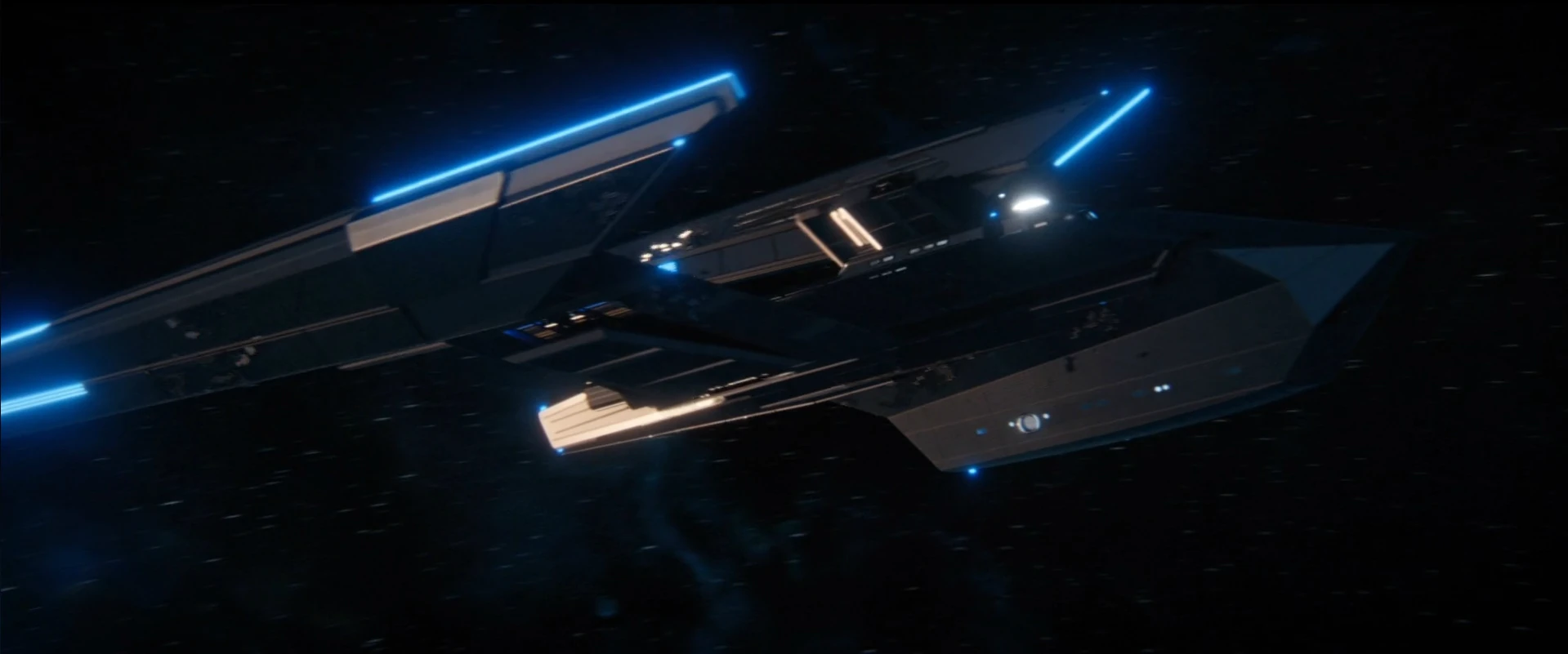 NCIA-93
 Class
2 VesselsThe NCIA-93 was a starship class operated by Section 31, an intelligence division of Starfleet within the United Federation of Planets, during the 2250s. Specifically, the vessel designated NCIA-93 was commanded by Leland. The design of the NCIA-93 class featured a bridge that was a heavy redress of the USS Shenzhou bridge, indicating a potential reuse of existing Starfleet architectural components or a similar design philosophy. Its computer systems, however, were distinct from those found on the USS Shenzhou and USS Discovery, bearing a visual resemblance to the LCARS interface, a system more commonly associated with later Starfleet vessels. The NCIA-93 class represents the second Section 31 starship to be depicted on screen, following the USS Vengeance. **Service History (2257)** The NCIA-93 played a significant role in several critical events during the year 2257. Its initial documented mission involved the delivery of the child of Chancellor of the Klingon High Council L'Rell to a monastery on the planet Boreth. This mission occurred after Section 31 agent Philippa Georgiou successfully extracted Ash Tyler, a Klingon operative, and the child from Qo'noS, as depicted in the episode 'Point of Light'. Later that year, the NCIA-93 provided crucial assistance to the USS Discovery, employing its tractor rigs to prevent the USS Discovery from being destroyed by slipping into the mycelial network. Following this intervention, an agreement was forged aboard the NCIA-93 between Captain Christopher Pike of the USS Discovery and Leland. They resolved to collaborate on the search for Lieutenant Spock and to unravel the mystery surrounding the red signals, as seen in the episode 'Saints of Imperfection'. The NCIA-93 subsequently rendezvoused with Michael Burnham after she located Lieutenant Spock on Vulcan. With assistance from Philippa Georgiou, Michael Burnham and Lieutenant Spock managed to escape and proceed to Talos IV. The NCIA-93 later caught up to the USS Discovery in orbit of Talos IV, leading to a tense standoff regarding who would transport Michael Burnham and Lieutenant Spock aboard. Despite appearances, the NCIA-93 was ultimately outmaneuvered by an illusion generated by the Talosians for Michael Burnham and Lieutenant Spock, allowing them to escape aboard a shuttle to the USS Discovery, as chronicled in the episodes 'Light and Shadows' and 'If Memory Serves'. Soon after, the NCIA-93 and the USS Discovery embarked on a joint mission to Essof IV with the objective of capturing the Red Angel. During an altercation on the planet's surface involving Philippa Georgiou and Leland, who was under the influence of Control, the NCIA-93 executed a rapid warp jump, beaming Leland aboard moments before the USS Discovery could destroy the facility. Ash Tyler, who was present on the NCIA-93 at the time, managed to escape aboard an escape pod and was subsequently rescued by the USS Discovery. These events unfolded in the episodes 'The Red Angel' and 'Perpetual Infinity'.
- No armament data logged.
- No propulsion data logged.
Classified
NCIA-93 type
Hull Specifications LoggedThe NCIA-93 type was a class of Federation starship primarily utilized by Section 31 during the 2250s. These vessels were notably smaller than contemporary Crossfield-class starships, such as the USS Discovery, and were constructed with a distinctive darker hull color compared to other Federation vessels of that era. The primary hull featured a triangular design, reminiscent of the 22nd century Warp Delta design employed by United Earth. A unique physical characteristic was their ability to retract their nacelle pylons when not operating at warp speeds, a mode referred to as 'dark mode' in concept art, which echoes the variable geometry pylons of the later Intrepid-class. Internally, the NCIA-93 type presented a drab, minimalist design. The bridge was a two-storey configuration, and the corridors and rooms throughout the ship were considerably darker than standard Starfleet vessels. Security footage and internal views reveal a functional, austere environment, including a conference room off the bridge and a shuttlebay capable of housing auxiliary craft. The computer systems aboard these ships, while distinct from those on the USS Shenzhou and USS Discovery, bore a visual resemblance to the LCARS interface. **Technical Capabilities** These starships possessed advanced stealth and tactical capabilities. They could alter their appearance using sophisticated holographic technology, disguising themselves as other objects, such as asteroids, to avoid detection. This camouflage system bore similarities to a Romulan drone ship fielded prior to the Earth-Romulan War, which utilized multispectral emitters for a similar effect. Beyond visual deception, NCIA-93 type vessels could mask their warp signatures to prevent detection, a crucial feature for Section 31's clandestine operations. For enhanced utility, they were equipped with a tractor rig to boost the strength of their tractor beams and could emit graviton beams from their deflector arrays, which could be used for various purposes, including disabling other vessels. **Service History** The NCIA-93 type was a cornerstone of Section 31's fleet during the 2250s, playing a significant role in various covert operations. Specific named ships of this class include the NCIA-93 itself, which was active in 2257, and the NI-1101. The NI-1101 met a grim fate in 2257 when its crew was flushed into space by Control, an artificial intelligence that had infiltrated Section 31, leading to the ship's destruction. Unnamed NCIA-93 type starships were also deployed by Section 31. These vessels were prominently featured in several Star Trek: Discovery episodes, including 'Point of Light', 'Saints of Imperfection', 'Light and Shadows', 'If Memory Serves', 'The Red Angel', 'Perpetual Infinity', and 'Through the Valley of Shadows'. Eaglemoss/Hero Collector's 'Star Trek: Discovery The Official Starships Collection' identifies this type as a Section 31 'Stealth Ship', with one registry noted as NI-1039, while the 'Star Trek Adventures - Discovery (2256-2258) Campaign Guide' from Modiphius refers to it as the 'Turing'-class intel science destroyer.
- No armament data logged.
- No propulsion data logged.
 Classified
Nebula class
19 VesselsThe Nebula-class was a type of Federation starship that entered service with Starfleet during the second half of the 24th century. Its construction was spearheaded under the authority of the Yoyodyne Division, with vessels being built from as early as 2363 to as late as 2367. Key construction facilities included the 40 Eridani A Starfleet Construction Yards, responsible for ships like the USS Phoenix and the USS Prometheus (NCC-71201), and the San Francisco Fleet Yards, which built vessels such as the USS Sutherland (NCC-72015). The Nebula-class shared a similar design lineage with its larger Galaxy-class counterpart, notably its primary and secondary hulls and warp nacelles. While the precise chronological relationship between the two classes is not definitively known, dedication plaques suggest the Nebula-class USS Phoenix was commissioned shortly before the launch of the Galaxy-class USS Enterprise (NCC-1701-D). The design of the Nebula-class featured a saucer-shaped primary hull mounted atop a secondary hull, with two warp nacelles positioned on either side of the secondary hull, directly below the primary hull. A distinctive feature was a superstructure atop the primary hull, capable of supporting various modules. These modules could include a triangular platform fitted with torpedo launchers, an oval platform, or even additional warp nacelles, allowing for mission-specific customization. By 2375, the Nebula-class underwent a slight reconfiguration, incorporating a more Galaxy-class style secondary hull and deflector dish. **Service History** The mission profile of the Nebula-class was highly versatile, ranging from performing scientific and exploratory roles to conducting patrol and transport duties. These starships were prominent in several major Federation engagements, including critical battles against the Borg such as the Battle of Wolf 359 and the Battle of Sector 001. They also played significant roles in numerous Dominion War battles, including the Second Battle of Chin'toka and the Battle of Cardassia. A notable instance of their service occurred during the aftermath of the Battle of Veridian III, where the USS Farragut (NCC-60597) was one of three ships dispatched to transport the crew of the USS Enterprise (NCC-1701-D) off Veridian III after its saucer section crash-landed following a battle with a Klingon vessel. The Nebula-class remained in active Starfleet service by 2378. However, by 2401, at least one ship of the class, the USS Lexington (NCC-30405), had been retired and preserved in the Fleet Museum above Athan Prime. Other named ships of the class include the USS Bellerophon (NCC-62048), USS Bonchune (NCC-70915), USS Honshu (NCC-60205), USS Leeds (NCC-70352), USS Merrimac (NCC-61827), USS Monitor (NCC-61826), USS T'Kumbra, USS Endeavour (NCC-71805), USS Hera, USS Proxima, and USS Ulysses. **Technical Specifications** The propulsion systems for the Nebula-class were constructed under the authority of Yoyodyne Propulsion Systems. While impulse engines were not visibly prominent, they were envisioned to be hidden behind baffles for stealth. The engines required an intermix ratio above ninety percent to successfully leave a planet's orbit. In 2368, the maximum warp for the class was warp 9.3. By 2370, the theoretical maximum speed for the warp drive, as seen on ships like the USS Prometheus (NCC-71201), was warp 9.5, which could be fine-tuned to warp 9.6. By 2374, the USS Bonchune demonstrated the class's capability to pursue and catch a Prometheus-class USS Prometheus traveling at warp 9.9. The Nebula-class was equipped with a substantial arsenal, described by Cardassian Gul Macet as 'huge'. This included multiple phaser banks and photon torpedo launchers. The typical offensive arsenal featured a torpedo launcher on the secondary hull above the deflector dish, and on some variants, an additional torpedo launcher on the superstructure above the primary hull. Phaser positions included the forward-most part of the primary hull and on the secondary hull below the deflector dish. The class had a maximum effective weapons range slightly below 300,000 kilometers. While capable of withstanding a direct hit from a Cardassian warship, they were unable to single-handedly withstand an assault from a wing of Cardassian destroyers. Defensive systems included deflector shields. Some ships, like the USS Phoenix, utilized a 'high-energy sensor sweep' that required shield realignment during brief windows every 5.5 minutes. Nebula-class starships were also equipped with a variety of auxiliary craft, including Type 6 shuttlecraft, Type 7 shuttlecraft, Type 15 shuttlepod, and other large shuttlecraft, with visual evidence suggesting the presence of a captain's yacht. **Interior Design** Interior spaces of the Nebula-class varied. Some bridges, such as that of the USS Sutherland (NCC-72015), were described as dark and narrow with smaller viewscreens. In contrast, other variants, like the USS Prometheus (NCC-71201), featured spacious and bright bridges with large viewscreens. Other visible interiors included ready rooms, dining rooms, corridors, and brigs, as seen on ships like the USS Phoenix and the USS Honshu.
- • Phase
- • Torpedo launche
- • Warp facto
- • Deflector shield
 Warship/cruiser
Negh'Var warship Class
Hull Specifications LoggedThe Negh'Var warship was the largest class of cruiser known to operate in the Klingon Empire during the late 24th century. It was considered one of the most formidable ships in the Klingon Imperial Fleet. **Design & Development** The Negh'Var warship's outboard plan incorporated a classic Klingon lineage, sharing a strong resemblance to the Vor'cha-class attack cruiser, a design dating back over two hundred years to the 2150s. The bridge module was separated from the main body by a thick neck that flared towards the aft of the ship into forward-swept wings. These wings were reinforced by raised supports and contained the ship's embedded warp nacelles and impulse engines. Below the primary hull were two weapons pods. A triangular superstructure was located on the dorsal section, and the ship was outfitted with several spikes on the aft of this superstructure and the warp nacelles. According to Visual Effects Supervisor David Stipes, an overall length of 686 meters (2,250 feet) was generally used for on-screen scaling. The Star Trek: Deep Space Nine Technical Manual provides more precise dimensions: a length of 682.32 meters, a beam of 470.09 meters, and a height of 136.65 meters, with a mass of 4,310,000 metric tonnes. Its power plant consisted of two M/A warp systems and four impulse systems, allowing for a performance of Warp 9.6. The production base for this class was the Qo'noS Orbital Factory Base. The class was heavily armed, equipped with several disruptor emplacements, including one at the tips of the pods located on the underside of the ship's belly. The Negh'Var warship also featured a cloaking device. The Star Trek: Deep Space Nine Technical Manual specifies its armament as twenty ship-mounted disruptor cannons, one large forward disruptor, and four torpedo launchers. At least two design variations were conceived for this class in alternate timelines. In the first variant, seen in Q's anti-time future around 2395, the ventral weapon pods were removed, additional spike- or antennae-like structures were placed on the bow of the ship and on the forward part of the nacelle tips, and two fin- or fang-like structures protruded from the ventral section of the bow below the bridge module. This variant had disruptor placements at the aft tips of the primary hull, two outboard disruptors at the front of both wing tips (fore of nacelles), a forward emitter located below the main bridge, and several emitters located along the forward baseline of the ship and one on the ventral center of the ship. This variant was also equipped with a cloaking device. The second variant, seen in an alternate 2404 timeline, shared components of both the original and first variant designs, possessing the former's weapons pods and the latter's spikes and fins. **Service History** In early 2372, the IKS Negh'Var was announced as the new flagship of the Klingon Imperial Fleet. A Changeling posing as General Martok commanded the ship and led the Klingon Empire's invasion of the Cardassian Union around stardate 49011. The IKS Negh'Var subsequently participated in an action at Deep Space 9, where it breached the station's shields long enough to transport several troops aboard, as depicted in the episode 'The Way of the Warrior'. The class was also mentioned or depicted in LCARS graphics in episodes such as 'By Inferno's Light', 'Favor the Bold', 'Tears of the Prophets', and 'Drone'. **Mirror Universe & Alternate Timelines** In the mirror universe, the Klingon-Cardassian Alliance utilized a similar design, referred to as a cruiser, in the construction of the Regent's flagship, as seen in 'Shattered Mirror' and 'The Emperor's New Cloak'. This mirror universe design was described by Intendant Kira Nerys (mirror) as 'quick and powerful', though its targeting systems could be easily fooled, and it struggled to lock onto enemy vessels at close proximity. Initially, this mirror universe variant was not equipped with a cloaking device, but briefly acquired one in 2375 after Quark and Rom stole one from the prime universe Klingon Bird-of-Prey, the IKS Rotarran. Rom successfully installed the cloak, but his act of sabotage resulted in the loss of all primary systems coinciding with the disengaging of the cloak. In an alternate future around 2395, as depicted in 'All Good Things...', two Negh'Var-class attack cruisers attacked the USS Pasteur in the Devron system. The crew of the USS Pasteur was saved by the USS Enterprise (NCC-1701-D), which destroyed one of the Klingon vessels. In another alternate timeline in 2404, as seen in 'Endgame', Korath had multiple vessels of this type at his disposal. In this timeline, the Negh'Var-class's nadion discharge weapons fire was largely ineffective against Starfleet ablative generator-deployed hull armor, and the class was relatively matched by a refitted Nova-class starship of the era.
- • Disrupto
- • Photon torpedo
- • Cloaking device
- • Deflector shield
Neptune class
Hull Specifications LoggedThe Neptune-class was a designation for a series of United Earth survey ships that were in active service with Starfleet during the 22nd century, specifically around the year 2141. These vessels were primarily designed for exploration and scientific data collection, playing a crucial role in Starfleet's early deep-space endeavors. As an early warp-capable design, the Neptune-class represented a foundational step in human interstellar travel and exploration. **Technical Specifications & Features** Technologically, the Neptune-class starships were limited in their maximum speed, capable of achieving a top velocity of Warp factor 2. This speed constraint was a significant factor in their operational profiles. Interestingly, these ships utilized the same model of captain's chair that would later be initially installed on the NX-class starships, a newer and considerably more advanced design. This shared component highlights a degree of standardization or component reuse in early Starfleet vessel construction. **Service History & Notable Mentions** The Neptune-class's operational timeline is notable in the context of early human warp development. While the class was active around 2141, the episode 'First Flight' established that humans did not achieve Warp 2 until 2143. This suggests that Neptune-class vessels either entered service after 2143, or were initially constrained to lower warp speeds before receiving upgrades to reach Warp 2 prior to 2152. In 2152, during the events of the episode 'Singularity', Engineer Trip Tucker specifically referenced the Neptune-class's captain's chair design as justification for his plans to create a new, custom-fitted captain's chair for Captain Jonathan Archer aboard the Enterprise NX-01, underscoring the historical significance of the Neptune-class's design elements.
- No armament data logged.
- • Warp facto
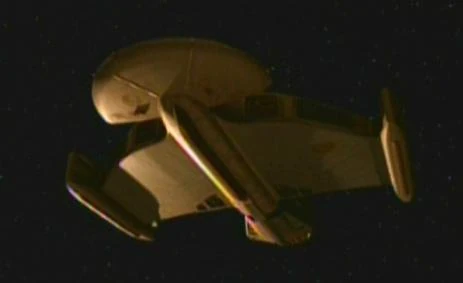 Classified
Nerada type
Hull Specifications LoggedThe Nerada-type was a class of starship utilized by the Nasari during the late-24th century. These vessels were equipped with weapon systems that emitted a distinctive tetryon weapon signature when charging, a characteristic that could be detected by other starships. **Class History** One notable encounter involving Nerada-type starships occurred in 2373. In the vicinity of the planet Taresia, three ships of this design engaged the USS Voyager. Despite their numerical advantage, the Nerada-type vessels were ultimately repelled by a single Taresian patrol ship, demonstrating the defensive capabilities of the Taresian forces. This incident was documented in the Starfleet record, specifically in the episode 'Favorite Son'.
- No armament data logged.
- No propulsion data logged.
 NES-1701 type
NES-1701 Class
Hull Specifications LoggedThe NES-1701 type was a class of Federation starships active in the 23rd century. One notable vessel of this class, bearing the registry NES-1701, was observed docked in Spacedock One in the year 2285. This occurred concurrently with the presence of the USS Excelsior (NCC-2000) and the return of the USS Enterprise (NCC-1701) following the pivotal Battle of the Mutara Nebula, as depicted in Star Trek III: The Search for Spock.
- No armament data logged.
- No propulsion data logged.

NES-1701
Class: NES-1701 type- No armament data logged.
- No propulsion data logged.
 Frigate
New Orleans class
Hull Specifications LoggedThe New Orleans-class frigate was a Starfleet starship class in service to the United Federation of Planets during the mid-24th century. This class was first explicitly identified by name through an okudagram that appeared early in Star Trek: The Next Generation Season 4, though individual ships like the USS Thomas Paine were previously identified as frigates in the episode 'Conspiracy'. **Design & Development** The New Orleans-class shared several design elements with the contemporary Galaxy-class starship, suggesting a common design philosophy or component sharing. A distinctive feature of the class was the presence of at least three sensor pods located along both the primary hull and secondary hull. Its primary weapon systems included phaser arrays and photon torpedoes, providing significant tactical capabilities for its frigate classification. The studio model for the New Orleans-class was designed and built by Ed Miarecki. This model, specifically representing the USS Kyushu, was famously seen as wreckage in the graveyard scene depicting the aftermath of the Battle of Wolf 359 in the episode 'The Best of Both Worlds, Part II'. The model was a kit-bash, constructed from parts of an AMT/Ertl USS Enterprise (NCC-1701-D) model kit No. 6618. To differentiate it from the larger Galaxy-class, custom additions were made, such as two text markers serving as sensor pods on top of the saucer section, with a third attached to the ventral side. Michael Okuda elaborated that the USS Kyushu model utilized a scaled-down Galaxy-class saucer, implying a smaller ship by using a larger bridge and larger windows. At Dan Curry's suggestion, Okuda added the outboard pods to make the ship appear less like the USS Enterprise (NCC-1701-D). The photographs of the study model in the Star Trek Encyclopedia (4th ed., vol. 1, p. 449) were retouched by Doug Drexler to add lights. Later, a higher-polygon CGI model of the New Orleans-class was built by Fabio Passaro around 2016 for Eaglemoss Collections' 'Star Trek: The Official Starships Collection', featuring new hull detailing, lightmaps, and higher-resolution textures. **Service History** The New Orleans-class entered service with Starfleet by the early 2360s, quickly becoming a pivotal asset for diplomatic and tactical mission profiles. One notable vessel of this class, the USS Kyushu (NCC-65491), was among the Starfleet forces present at the devastating Battle of Wolf 359 in 2367, where it was subsequently destroyed. Other named ships of the class include the USS Thomas Paine (NCC-65530), which was active in 2369. Additionally, the USS Renegade (active 2364) and the USS Rutledge (active 2373) have been classified as New Orleans-class frigates in internal Starfleet lists, though their on-screen confirmation as members of this class remains uncertain. **Apocryphal Data** According to 'Star Trek: The Official Starships Collection', a New Orleans-class starship had a crew complement of five hundred. It possessed a cruising speed of warp 6 and a top speed of warp 9.3, which could be sustained for twelve hours. This publication also states that the class was equipped with ten Type X phaser arrays and three photon torpedo launchers, and had an approximate length of 340 meters.
- • Phase
- • Photon torpedo
- • Deflector shield
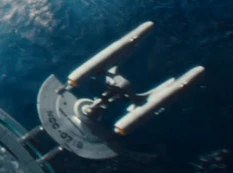 Classified
Newton type
Hull Specifications LoggedThe Newton-type was a distinct class of Starfleet starship operating within the alternate reality during the mid-23rd century. Its design featured a prominent half-saucer forward hull. Propulsion was provided by two active outboard nacelles positioned above the centerline of the primary hull, complemented by an impulse drive located at the rear of the primary hull. Below the primary hull, the design incorporated two secondary hulls, which were connected to the back of the primary hull via swept pylons. A unique characteristic was the 'rollbar' structure connecting the upper nacelles at the rear port and starboard quadrants of the primary hull, a design element reminiscent of the Miranda-class starships found in the prime reality. **Class History** Newton-type starships played a role in significant events within the alternate reality. Prior to the devastating destruction of Vulcan in 2258, at least two of these vessels, out of three docked at Starbase 1 (alternate reality), were known to have engaged in combat. The USS Newton (NCC-1727) was one of the ships confirmed to have participated in these engagements, ultimately being destroyed in 2258. The USS Hood (alternate reality) was also destroyed in 2258. A year later, in 2259, three Newton-type ships were observed near Starbase 1 (alternate reality). This sighting occurred just before the USS Enterprise (NCC-1701 alternate reality) embarked on its mission to Qo'noS. Among these vessels, the USS Biddeford (NCC-0718) was noted as one of the two ships docked at the starbase, while a third Newton-type starship was seen departing the spacedock.
- No armament data logged.
- No propulsion data logged.
Strike Cruiser
Newton type
2 VesselsThe Newton-type was a class of Starfleet starship utilized in the mid-23rd century within the alternate reality. These vessels featured a distinctive half-saucer forward hull, which served as the primary hull. Propulsion was provided by two active outboard nacelles positioned above the centerline of the primary hull, and an impulse drive located at the rear of the primary hull. Below the primary hull, two secondary hulls were present, connected by swept pylons that attached to the back of the primary hull. The upper nacelles were connected to the primary hull at the rear port and starboard quadrants and were further linked together by a 'rollbar' structure, reminiscent of the design seen on the Miranda-class in the prime reality. **Service History** Newton-type starships saw active service in the alternate reality during the mid-23rd century. Prior to the devastating destruction of Vulcan in 2258, at least two of these vessels, out of three docked at Starbase 1, were known to have engaged in combat. Among these was the USS Newton, which was subsequently destroyed in 2258. A year later, in 2259, three Newton-type ships were observed near Starbase 1 as the USS Enterprise (NCC-1701 alternate reality) prepared for its mission to Qo'noS. Two of these ships, including the USS Biddeford (NCC-0718), were docked, while a third unnamed vessel was seen departing the spacedock. Another vessel of this type, the USS Hood (alternate reality), was also destroyed in 2258. **Background Information** Concept input for the design of the Newton-type starship, among other Starfleet classes featured in the film 'Star Trek', was provided by John Eaves, as documented in 'Star Trek - The Art of the Film'. The Gizmotron models 1/2500 scale model kit identifies this ship type as a Federation strike cruiser.
- No armament data logged.
- No propulsion data logged.

NI-1101
Class: NCIA-93- No armament data logged.
- No propulsion data logged.

Ni'Var
Class: Unknown- No armament data logged.
- No propulsion data logged.

Ni'Var
Class: M-class planet- No armament data logged.
- No propulsion data logged.
 Classified
Niagara class
Hull Specifications LoggedThe Niagara-class was a distinctive type of Starfleet vessel that entered service in the late 24th century. Its most unusual and defining characteristic was its three warp nacelles, a design departure from the more common two-nacelle configuration seen on many Starfleet starships. The class was first visually introduced in the Star Trek: The Next Generation episode 'The Best of Both Worlds, Part II', where the wreckage of the USS Princeton (NCC-59804), a Niagara-class starship, was depicted among the debris following the devastating Battle of Wolf 359. The studio model for the pre-damaged USS Princeton was a 'kit-bash' created at Gregory Jein, Inc. by Gregory Jein and his staff specifically for the 'graveyard' scene that the USS Enterprise (NCC-1701-D) traversed. **Technical Specifications** According to Issue #126 of 'Star Trek: The Official Starships Collection', the Niagara-class starship was designed with a crew complement of 530 and measured 565 meters in length. Its propulsion system, featuring the unique three-nacelle configuration, allowed it to achieve a maximum warp factor of 9.6. For defensive and offensive capabilities, the class was equipped with ten phaser arrays, providing significant firepower for its operational profile. **Class History** The Niagara-class was active during the 24th century, with at least two known vessels. The most prominent ship of the class was the USS Princeton (NCC-59804), which was tragically destroyed in 2367 during the Battle of Wolf 359 against the Borg Collective. Another vessel, the USS Wellington (NCC-53421), was noted as active in 2367. Both the USS Princeton and the USS Wellington were officially classified as Niagara-class starships in an internal Starfleet list dated September 26, 1990. The class also made an appearance in the Star Trek: The Next Generation episode 'Unification I'. **Legacy** In 2024, the online game 'Star Trek Online' introduced the Princeton class, an unlockable cosmetic skin. This 25th-century successor was named in honor of the Niagara-class USS Princeton, which was lost at the Battle of Wolf 359, continuing the legacy of the class into a new era.
- No armament data logged.
- No propulsion data logged.

Nightingale
Class: Unknown- No armament data logged.
- No propulsion data logged.
 Classified
Nimitz class
2 VesselsThe Nimitz-class was a type of Federation capital ship that saw active service during the 23rd century, specifically throughout the 2250s and 2260s. Its design was notably compact, featuring integrated primary and secondary hulls. A distinctive characteristic of the class was the placement of its main bridge module, which was housed on top of the dorsal rollbar rather than the more traditional position atop the saucer module. The Nimitz-class was armed with multiple phaser turrets and photon torpedo launchers, strategically located along the saucer hull. For defensive capabilities, ships of this class were equipped with deflector shields. Additionally, they featured tractor beam emitters along their hulls for various operational needs. The Nimitz-class is also recognized for being one of the few Federation starship classes to incorporate more than two warp nacelles, a design trait shared with its sister ships, the Cardenas-class and Radiant-class. The class measured 383.3 meters in length. **Service History** The Nimitz-class played a significant role in early 23rd century Starfleet operations. The USS Europa (NCC-1648) served as Admiral Brett Anderson's flagship during the opening conflict of the 2256-57 Federation-Klingon War. In 2256, during the pivotal Battle of the Binary Stars, the USS Europa was critically damaged when it was rammed by a cloaked Klingon destroyer. To prevent the Klingon vessel from escaping and to ensure its destruction, the crew evacuated the USS Europa, and its warp containment fields were intentionally collapsed, resulting in the destruction of both the Europa and the attacking Klingon destroyer. Later in 2256, an unnamed Nimitz-class starship was observed docked at an orbital facility, specifically a Cornwell's starbase, which was hosting a high-level flag officer meeting. The Nimitz-class continued its service into the 2260s, undergoing a significant refit that included the installation of new, contemporary cylindrical warp propulsion nacelles. By 2261, at least four ships of the Nimitz-class were stationed at Starbase 1, participating in the Federation Centennial celebrations.
- • Phase
- • Photon torpedo
- • Deflector shield

Nomad
Class: Space Probe- No armament data logged.
- No propulsion data logged.
 Classified
Norway class
Hull Specifications LoggedThe Norway-class was a type of starship in service with Starfleet, an organization of the United Federation of Planets, primarily active during the 2370s and extending into the 2380s. This class was designed as a medium cruiser, known for its distinctive hull design and participation in significant engagements. Its design lineage and operational history are closely tied to the major conflicts and technological advancements of its era. **Design & Development** The Norway-class starship featured a unique design, with its keel resembling the hull of the Defiant-class. A prominent phaser emitter was mounted on the dorsal bow of the ship. The class was one of four CGI models specifically designed by Alex Jaeger for the climactic Battle of Sector 001 in Star Trek: First Contact. Jaeger himself described the design as 'Voyager-esque.' The CGI model was constructed at Industrial Light & Magic (ILM) by Larry Tan and Paul Theren, utilizing Electric Image software for animation and Form-Z software for the model itself. Production of the Norway-class was based at the ASDB Integration Section, Spacedock 1, located orbiting Earth. **Service History** The Norway-class saw its most prominent canonical appearance in 2373, where at least four vessels of the class participated in the Battle of Sector 001 against the Borg. The USS Budapest (NCC-64923) is a named vessel of this class confirmed to be active during this period. Following its debut in Star Trek: First Contact, the Norway-class model faced technical challenges that prevented its further use in live-action productions. Paramount Pictures requested ILM to transfer their CGI models to Digital Muse for reprogramming in LightWave 3D for Star Trek: Deep Space Nine's sixth season, specifically for the episode 'Sacrifice of Angels.' However, the Norway-class design was never featured again in live-action. According to DS9 Visual Effects Supervisor David Stipes, the model 'needs to be resurfaced and modified,' and rumors suggested the CGI files were either lost or corrupted, which Stipes hinted at as 'technical reasons' for its removal. Despite its absence as a physical model, the Norway-class did reappear as LCARS graphic displays in the Star Trek: Deep Space Nine episodes 'Favor the Bold' and 'In the Flesh.' **Technical Specifications & Armament** According to the Star Trek: Deep Space Nine Technical Manual, the Norway-class is classified as a medium cruiser. It has an accommodation for 190 officers and crew, with an evacuation limit of 500 personnel. Its power plant consists of one 1,500 plus Cochrane warp core feeding two nacelles, complemented by one impulse system. The ship measures 364.77 meters in length, 225.61 meters in beam, and 52.48 meters in height, with a mass of 622,000 metric tons. The class is capable of Warp 9.7 for up to 12 hours. Its primary armament includes six Type-10 phaser emitters and two photon torpedo launchers. Later analysis from The Official Starships Collection suggested the class might possess at least nine phaser cannons, with additional emitters on the underside of the hull. **Later Appearances & Apocrypha** Due to the aforementioned technical issues, the Norway-class was conspicuously absent from official franchise publications and productions until 2015. For the British partwork publication Star Trek: The Official Starships Collection, a new CGI model was constructed from scratch by Digital Modeler Fabio Passaro, adhering to the specifications from the Star Trek: Deep Space Nine Technical Manual, finally providing fans with a detailed look at the class. In apocryphal sources, the Norway-class has appeared in various video games, including Star Trek: Starfleet Command III, where it was stated to have a crew complement of 337 personnel, including three passengers and fourteen dependents. Other named ships in this game included the USS Aliyah, USS Assawari, USS De Ruyter, USS Defence, USS Glorie, USS Groton, USS Iowa, USS Kortenauer, USS Medina, USS Meko, USS Michigan, USS Mikasa, USS Missouri, USS Naken, USS North Carolina, USS Norway, USS Olympia, USS Pervenetz, USS Piorun, USS Vosper, and USS Warspite. It was also a playable starship in Star Trek: Legacy, with specific vessels like the USS Anderson (NCC-64926), USS Albany (NCC-64930), and USS Belair (NCC-64933) available. The class is also a playable ship in Star Trek Online. The Star Trek: Deep Space Nine novel Sacraments of Fire established that the Norway-class remained in service into the 2380s, with the USS Mjolnir patrolling the Federation border in the Helaspont sector in 2385. The novella Olympus Descending, part of Worlds of Star Trek: Deep Space Nine, further detailed that Norway-class starships possess large shuttlebays capable of housing various short and long-range shuttlecraft, shuttlepods, work bees, support modules, maintenance platforms, and Danube-class runabouts.
- • Phase
- No propulsion data logged.
 Science Vessel
Nova class
6 VesselsThe Nova-class was a type of Federation starship primarily designed for short-term planetary research missions. It entered service in the late 24th century. **Design & Development** The Nova-class starship featured a design reminiscent of the Intrepid-class, though it was considerably smaller. Its primary hull consisted of a curved triangular saucer section, directly attached to a secondary hull. Two warp nacelles extended from the secondary hull. Rick Sternbach, the designer, intended the ship to be 221.74 meters long. Unlike some larger starship designs, the Nova-class was equipped with a single impulse drive, centrally located at the aft end of Deck 2. Despite its classification as a science vessel, the Nova-class possessed a robust tactical system. It was outfitted with eleven strategically placed phaser arrays: eight on the saucer section and three on the secondary hull. For offensive capabilities, it included three photon torpedo launchers; two forward-facing launchers positioned on either side of the secondary deflector at the bow of the saucer, and one aft-facing launcher. Defensive systems included a navigational deflector at the bow of the secondary hull to protect against space debris, with a secondary deflector on the saucer capable of acting as a backup. Like most Starfleet vessels, it was also equipped with deflector shields, which could be fully recharged in forty-five seconds, though this required temporarily dropping the shields. The interior of the Nova-class comprised eight decks, designed to accommodate the crew's needs despite the ship's compact size. The main bridge, located near the center of Deck 1, served as the command center. Designed by Set Designer Greg Hooper, overseen by Production Designer Richard James, and built on Paramount Stage 16, the bridge featured a spacious layout with a central, submerged command area. The captain's chair was positioned starboard, and the executive officer's chair port, with a central console between them. The conn station was located in a further sunken area directly ahead. Other stations, including tactical (typically assigned to the forward, starboard console), were arranged around the circular perimeter. Entryways led to the main turbolift on the port side and a corridor accessing other Deck 1 sections on the starboard side, with the captain's ready room also accessible from the port side. Main engineering was situated on Deck 7, spanning a single deck. It featured four wall-based engineering consoles and a warp core analysis console. The warp core itself, spanning from Decks 5 through 8, was visible behind a transparent floor and could be ejected from the bottom of the ship. Medical facilities included a sickbay on Deck 4, equipped with an Emergency Medical Hologram system, making it one of the earliest Federation starships to utilize this medical holoprogram. As a science vessel, the Nova-class also housed numerous specialized science and research labs, similar to those found on an Intrepid-class vessel, providing extensive work consoles and support for scientific personnel. For auxiliary craft, the Nova-class uniquely featured a Waverider shuttle, integrated into a special docking port on the ventral side of the primary hull, akin to the Aeroshuttle on the Intrepid-class. It also carried at least two Type 6 shuttlecraft. Two shuttlebays were located behind the main sickbay, with the aft-most shuttlebay's doors directly aft and the inner shuttlebay's doors opening directly above. Main cargo bays, capable of housing workbees for transportation and repair, spanned Decks 2 and 3 in front of the shuttlebay. Emergency escape pods, twenty in total, were distributed across Decks 1, 2, and 3 within the saucer section, stored under hatches for both launch and retrieval. Crew quarters, while spartan due to the ship's size, provided standard amenities, with larger quarters for senior staff primarily on Decks 1 and 4, and smaller ones on Decks 2 and 6. By 2401, the class's computer systems were upgraded to include the Fleet formation mode, also known as Starfleet emergency protocol NX12.11, designed for automated fleet control by the Starfleet mainframe. **Service History** Construction of Nova-class starships commenced in 2370 at the Utopia Planitia Fleet Yards in the Sol system, around stardate 47007.1. The USS Equinox (NCC-72381) was among the vessels constructed and launched during this period, later disappearing in 2371 and being found in the Delta Quadrant before its destruction in 2376, as depicted in 'Equinox, Part II'. In 2381, a Nova-class starship was involved in transporting Starfleet Security members to Aspergos to arrest Captain Carol Freeman of the USS Cerritos, as seen in 'First First Contact'. In 2401, twenty Nova-class ships participated in the Frontier Day celebrations near Sol Station. Tragically, these vessels, including the USS Erebus (NCC-72435) and the USS Mandel (NCC-72210), were among the Starfleet starships assimilated and taken over by the Borg Collective during the Battle of Frontier Day, as detailed in 'The Last Generation'. The total number of Nova-class vessels at Frontier Day was confirmed by former 'Picard' Research Assistant Jörg Hillebrand. The USS Nova (NCC-73515) was assembled as part of Battle Group Omega in Sector 1045 in 2379. Alternate timelines also feature the Nova-class. In an alternate 2401, created when Q altered Earth's history in 2024, Nova-class starships like the CSS Dougherty (NCC-75489) and the CSS Quinn (NCC-74536) were operated by the Confederation of Earth and its Confederation Corps, as shown in 'Assimilation'. These vessels ceased to exist when the timeline was corrected. Another alternate timeline in 2404 saw a refitted Nova-class in use by the Federation. This refit, exemplified by the USS Rhode Island (NCC-72701), maintained a similar interior but featured exterior changes and superior tactical firepower and shield strength, capable of disabling two Negh'Var warships, as depicted in 'Endgame'. In an alternate 26th century, this refitted class was still active with Starfleet and played a role in the pivotal Battle of Procyon V, as seen in 'Azati Prime'. Early schematics of the Nova-class were preserved in a 31st-century database maintained by temporal agent Crewman Daniels aboard the NX-Enterprise. These schematics were viewed by Captain Jonathan Archer and Lieutenant Malcolm Reed in 2151 ('Shockwave') and later by Captain Jonathan Archer and T'Pol in 2152 ('Future Tense'). **Background & Apocrypha** The Nova-class, particularly the USS Equinox, was described in its script as 'a science vessel, sleek and sophisticated'. According to the 'Star Trek: The Next Generation Technical Manual', the Nova-class was initially conceived as a successor to the Galaxy-class as Starfleet's next primary explorer ship. Early concept designs explored features like variable geometry pylons, which later appeared on the Intrepid-class, and an elliptical saucer section designed for enhanced warp efficiency, a feature seen on the USS Enterprise (NCC-1701-J). There was also a consideration for the USS Enterprise (NCC-1701-E) to be of this class, though it ultimately became a Sovereign-class starship. Apocryphal sources, such as 'Star Trek: Starship Spotter', suggest the Nova-class replaced the Oberth-class as a research and science vessel, equipped with only two cargo management units and two shuttlecraft. Its phaser arrays were classified as Type X, matching those of the Galaxy-class and Intrepid-class. This source also states the ship had a mass of 110,000 metric tons. In the game 'Star Trek Online', the Nova-class is an early science vessel option for Starfleet players, with an upgraded version based on the USS Rhode Island also available, commanded by an elder Harry Kim. A 25th-century upgraded design, named the Equinox-class, was introduced in late 2021.
- • Phase (Qty: 11)
- • Torpedo launche (Qty: 3)
- • Warp facto (Qty: maximum)
- • Deflector shield
Science vessel
Nova class
1 VesselThe Nova-class was a type of Federation starship primarily designed for short-term planetary research missions and scouting operations. Its design bore a strong resemblance to the larger Intrepid-class starship, albeit on a smaller scale. The vessel featured a distinctive saucer section with a curved triangular shape, directly attached to a secondary hull. Two warp nacelles were affixed to the secondary hull. According to designer Rick Sternbach, the intended length of the Nova-class was 221.74 meters. Unlike some larger starship designs, the Nova-class incorporated a single impulse drive, centrally located at the aft end of Deck 2. **Technical Specifications** Despite its primary role as a science vessel, the Nova-class was equipped with a comprehensive array of tactical systems, allowing it to address various threats independently. It featured eleven strategically placed phaser arrays: eight on the saucer section and three on the secondary hull. For offensive torpedo capabilities, it possessed two forward-facing photon torpedo launchers situated at the bow of the saucer, one on either side of the secondary deflector, and an additional aft-facing launcher. Defensive systems included a navigational deflector at the bow of the secondary hull to mitigate space debris, supplemented by a secondary deflector on the saucer that could function as a substitute if the main deflector was damaged. Like most Starfleet vessels, the Nova-class was also outfitted with deflector shields, which could be fully recharged in forty-five seconds after being dropped, with the shield grid located along the secondary hull. The class had a maximum speed of Warp 8. Auxiliary craft included a unique Waverider shuttle, integrated into a special docking port on the ventral side of the primary hull, similar to the Aeroshuttle on the Intrepid-class. Additionally, Nova-class ships carried at least two Type 6 shuttlecraft, Workbees for transportation and repair, and twenty emergency escape pods distributed across decks 1, 2, and 3 in the saucer section. **Interior Design** The Nova-class comprised eight decks, designed to accommodate the needs of its crew despite the ship's relatively small size. The main bridge, located near the center of Deck 1, served as the command center. Its spacious layout allowed for ease of movement, with the central command area submerged. The captain's chair was positioned on the starboard side, and the executive officer's on the port side, with a central console between them. The conn station was situated in a further sunken area directly ahead. Peripheral stations included the master systems display behind the command seats and the main viewscreen forward. Tactical functions were typically assigned to the forward, starboard side console. Entryways on the port and starboard sides led to the main turbolift and a corridor accessing other Deck 1 sections, respectively. The captain's ready room was accessible from the port side. Main engineering was located on Deck 7, spanning a single deck, and featured four wall-based consoles and a warp core analysis console. The warp core itself spanned from decks 5 through 8 and could be ejected from the bottom of the ship. Medical facilities included a sickbay on Deck 4, equipped with an Emergency Medical Hologram system, making it one of the earliest examples of this medical holoprogram's deployment on Federation starships. As a science vessel, the Nova-class also housed numerous specially equipped science and research labs, similar to those found on an Intrepid-class vessel, supporting extensive personnel and tasks. Crew quarters were spartan but functional, with larger quarters for senior staff primarily on decks 1 and 4, and smaller ones on decks 2 and 6. **Service History** The Nova-class entered service in the late 24th century. In 2370, several Nova-class starships, including the USS Equinox (NCC-72381), were constructed and launched from the Utopia Planitia Fleet Yards in the Sol system around stardate 47007.1. The USS Equinox later disappeared in 2371 and was found in the Delta Quadrant, eventually being destroyed in 2376. In 2381, a Nova-class starship was utilized by Starfleet Security to transport members to Aspergos to arrest Captain Carol Freeman of the USS Cerritos. By 2401, the computer systems of the class had been upgraded to include the Fleet formation mode, also known as Starfleet emergency protocol NX12.11, designed for automated fleet control. In the same year, twenty Nova-class ships, including the USS Erebus (NCC-72435) and USS Mandel (NCC-72210), participated in Frontier Day celebrations near Sol Station, where they were subsequently taken over by the Borg Collective. The USS Nova (NCC-73515) was assembled as part of Battle Group Omega in Sector 1045 in 2379. In alternate timelines, Nova-class starships also saw service. In a 2401 alternate timeline created by Q, the Confederation of Earth operated Nova-class vessels such as the CSS Dougherty (NCC-75489) and CSS Quinn (NCC-74536). In another alternate timeline set in 2404, a refit version of the Nova-class, exemplified by the USS Rhode Island (NCC-72701), was in use by the Federation. This refit featured exterior changes and superior tactical firepower and shield strength, enabling it to disable two Negh'Var warships. This refit design continued to be used by Starfleet in an alternate 26th century, participating in the pivotal Battle of Procyon V. Schematics of the Nova-class were also present in a 31st century database kept by Crewman Daniels aboard the NX-01 Enterprise, viewed by Captain Jonathan Archer and Lieutenant Malcolm Reed in 2151, and by Captain Jonathan Archer and T'Pol in 2152.
- No armament data logged.
- No propulsion data logged.

Nova One
Class: Nova One- No armament data logged.
- No propulsion data logged.
Independent Starship
Nova One Class
1 VesselThe Nova One was a unique, small independent starship designed and operated by Nick Locarno during the early 2380s. Its design was notably minimalist, described by Lieutenant junior grade Beckett Mariner as 'Very... white. And... nothing else.' This distinctive appearance and its singular operation by Locarno set it apart from standard Starfleet or other major power vessel classifications. Schematics of the mysterious ship were eventually discovered in Locarno's hangar facility on New Axton, confirming his direct involvement in its construction and operation. **Class History** Throughout 2381, the Nova One was responsible for a series of attacks on non-Federation ships, including the Klingon Empire's IKS Che'Ta', a Romulan starship, an Orion ship, a Ferengi starship, a Bynar ship, and several Cardassian ships. Starfleet initially believed these vessels were destroyed, based on debris found at the encounter sites. The Betazed government's intelligence agency, the BIA, was the first to acquire grainy footage of the Nova One, which they later shared with Captain Carol Freeman of the USS Cerritos. The Nova One's actions had significant geopolitical repercussions; the attacks on Ferengi Alliance trade routes prompted Grand Nagus Rom to initiate membership into the Federation. Later in 2381, footage acquired by one of AGIMUS' murder drones, and subsequently shared with Starfleet by Lieutenants Brad Boimler and D'Vana Tendi, revealed that the Bynar ship had not been destroyed but towed away. This incident was exploited by Badgey to exact revenge on Sam Rutherford, while the USS Cerritos was dispatched to Bynar space to investigate the loss. Starfleet Intelligence eventually learned that the Nova One was not only targeting non-Federation ships but also ex-Starfleet personnel. This prompted Starfleet to locate and recover former officers, with the USS Cerritos tasked to recover Nick Locarno from New Axton. Simultaneously, an away team of USS Cerritos lower deckers—Lieutenants Boimler, Tendi, T'Lyn, and Beckett Mariner—were sent to Sherbal V to repair a weather satellite. Unbeknownst to Captain Freeman, who arranged the mission to keep Mariner out of harm's way, she was sending Mariner directly into the path of Locarno's operation. On Sherbal V, the away team discovered several crews from the ships attacked by the Nova One, marooned on the planet's surface. Mariner successfully united these captured crews, but was then beamed aboard the Nova One, where she discovered its pilot was Nick Locarno, former Nova Squadron leader. Aboard the Nova One, Mariner was taken to the Detrion system and introduced to Nova Fleet. Locarno, from the ship's bridge, announced Nova Fleet's existence to the Alpha Quadrant and attempted to coerce Mariner into inciting a rebellion among Starfleet lower deckers. Mariner, however, spoke out against him, confiscated a stolen black market Genesis Device in Locarno's possession, and escaped the Nova One by commandeering the USS Passaro (NCC-52670). Soon after, the Nova One joined the pursuit of Mariner's stolen ship, venturing into a level 7 ion storm to retrieve the Genesis Device. After inflicting damage to the USS Passaro, Locarno boarded it and unsuccessfully attempted to disarm the Genesis Device that Mariner had activated. Seconds later, the device detonated, drawing in all surrounding matter, including the Nova One, to recombine it into the newly formed planet, Locarno. The Nova One was destroyed in 2381.
- No armament data logged.
- No propulsion data logged.
 Classified
Numiri patrol vessel Class
Hull Specifications LoggedThe Numiri patrol ship was a small, standard vessel that formed a core component of the Numiri fleet. These ships were armed with directed-energy weapons, which were noted to possess power comparable to the weapon systems found on a Starfleet Intrepid-class starship. For defensive capabilities, the Numiri patrol vessels were equipped with regenerative shields. Additionally, they were outfitted with tractor beams, suggesting a multi-role capacity that extended beyond simple patrol duties, potentially including salvage or capture operations. **Class History** In the year 2371, two Numiri patrol vessels engaged the USS Voyager. During this encounter, the USS Voyager successfully defeated both Numiri patrol ships. This victory was achieved through the application of a specific tactical maneuver, described as a 'Maquis trick', which had previously been employed by Commander Chakotay against two Starfleet runabouts. This particular engagement involving the Numiri patrol vessels was documented in the Starfleet record 'Ex Post Facto'.
- • Directed energy weapo
- • Deflector shield

Nunk's Marauder
Class: D'Kora class- • Directed energy weapo
- • electromagnetic pulse weapo
- + 2 more...
- • Warp facto
- • Deflector shield

Nunk's Marauder
Class: D'Kora class- • Directed energy weapo
- • electromagnetic pulse weapo
- + 2 more...
- • Warp facto
- • Deflector shield
 Explorer
NX class
4 VesselsThe NX-class was a pivotal type of United Earth starship in Starfleet service during the mid-22nd century. This class is renowned for being the first to incorporate the warp five engine, a technological breakthrough that enabled Humanity to venture beyond its immediate neighboring star systems for the first time. The lead ship of the class, Enterprise NX-01, was launched in 2151, weeks ahead of schedule, while the second vessel, Columbia NX-02, followed in 2154 after significant delays in drydock. **Design & Development** The concept for the NX-class originated in the early 22nd century as part of the NX Project, a groundbreaking research and development initiative located at the Warp Five Complex on Earth. Key figures such as Henry Archer, Zefram Cochrane, and Captain W.M. Jefferies were instrumental in the creation of the warp five engine, which powered these vessels. Starships of the NX-class were considerably more formidable than contemporary vessels of their era, such as the Intrepid-type and the Warp Delta. By August 2151, following the construction of the Enterprise NX-01, plans were already underway for three additional NX-class starships. **United Earth Service - NX-01 Enterprise** The Enterprise NX-01 was launched from the Orbital Drydock Facility on April 12, 2151, under the command of Captain Jonathan Archer. Its launch was expedited by three weeks to facilitate the return of the Klingon Klaang to his homeworld. This early deployment was met with strong protests from the Vulcans, who, through Ambassador Soval, believed Humanity was not yet prepared for deep space exploration. A concession was made, leading to the placement of Sub-Commander T'Pol on Enterprise in exchange for vital Vulcan star charts. Due to its premature launch, Enterprise NX-01 was initially unprepared for its mission; its spatial torpedoes were uncalibrated, and its phase cannons were not yet installed. The spatial torpedoes were calibrated during a battle in May 2151, with the ship's survival largely attributed to the intervention of the Axanar. The phase cannons were finally installed in September 2151, during a confrontation with an unknown enemy, as depicted in the episode 'Silent Enemy'. Following the devastating Xindi attack on Earth in March 2153, Enterprise NX-01 was recalled for a critical refit. Arriving on April 24th, the ship received significant upgrades, including new photonic torpedoes, an updated universal translator, and a new command center. It was then relaunched on a perilous mission into the Delphic Expanse to search for the Xindi weapon. This arduous search lasted almost a year, culminating in February 2154 when Enterprise located the Xindi weapon in the Azati Prime system. During the ensuing engagement, the ship sustained severe damage, including the destruction of its primary warp coil, necessitating drastic repairs by Captain Archer. Enterprise successfully accomplished its mission to destroy the Xindi weapon. It was returned to Earth by a Xindi-Aquatic cruiser, though it made a brief detour to an alternate timeline's 1944 with the assistance of Crewman Daniels, where its crew played a crucial role in stopping Vosk and ending the Temporal Cold War. After returning to its own timeline, Enterprise NX-01 continued to serve United Earth Starfleet for another seven years before being decommissioned in 2161, as seen in 'These Are The Voyages...'. **United Earth Service - NX-02 Columbia** At the time of the Xindi attack on Earth in 2153, the second NX-class starship, Columbia NX-02, was still under construction. Columbia was eventually launched in November 2154, under the command of Captain Hernandez. Compared to the prototype Enterprise NX-01, Columbia featured several improvements, including a twelve percent enhancement in its polarized hull plating. It was also equipped with ventral and dorsal photonic torpedo launchers and pulsed phase cannons. Furthermore, its bridge stations were directly integrated into the primary EPS junction. In November 2154, Columbia was temporarily stuck in drydock due to engine trouble, preventing it from assisting Enterprise during a large-scale hunt for a Romulan drone ship. Its engine issues were resolved later that year with the transfer of Enterprise engineer Charles Tucker III to Columbia, allowing its launch. **Major Refit** Prior to 2161, the NX-class underwent a significant refit, which notably included the addition of a secondary hull. A larger deflector dish protruded from the front of the new drive section, which was connected to the saucer via a small 'neck' where the shuttlepod drop bays had previously been located. These bays were subsequently relocated to either side of the neck. The warp field governor was also moved to the dorsal hull of the drive section. One such vessel to receive this extensive refit was the Enterprise NX-01, which, by the early 24th century, was stationed at the Fleet Museum and later observed orbiting Athan Prime in 2401. A model of the refitted NX-class was notably owned by Jean-Luc Picard during his childhood in the early 24th century. **Federation Era** By 2161, Starfleet's warp drive technology had advanced to achieve warp 7, leading to the decommissioning of the NX-class as newer vessels, such as the Daedalus-class, entered service as early as 2167. By 2259, at least a few NX-class starships were held in mothballs. In the alternate reality of 2259, a miniature model of an NX-class starship was displayed in Admiral Alexander Marcus's office on Earth. **Mirror Universe** In the mirror universe, NX-class battle cruisers were the pride of the Terran Empire's Imperial Starfleet. Vessels like the ISS Enterprise NX-01 and ISS Avenger NX-09 served as flagships. These ships were slightly more advanced than their United Earth counterparts, a result of stolen Vulcan technology acquired from the T'Plana-Hath in 2063. Mirror universe NX-class ships primarily utilized plasma cannons and photonic torpedoes in battle, though they also carried phase cannons. At some point after the ISS Enterprise attacked a Rigelian scoutship and engaged a Xindi fleet, NX-class vessels adopted a distinctive yellow-gold paint scheme on the top of the saucer section, which also incorporated the Terran Empire logo, omitting the registry number from the saucer. **Technical Specifications** **Construction Materials** NX-class starships were constructed using advanced materials for their time. The outer hull was lined with duranium, bulkheads were composed of tritanium, and horonium was used for its lightweight durability. **Physical Arrangement** The NX-class featured a habitable saucer module containing seven decks, lettered A through G. Two half-decks were strategically placed between D and E Deck, and between E and F Deck, housing plasma conduits and access tunnels. A symmetrical warp field governor, located just aft of the saucer section, regulated the warp field shape to prevent instability at higher warp factors. Two docking ports were situated on either side of the saucer section, accessible on E Deck. The ship's hull plating was secured with bolt-couplings. **Propulsion Systems** Warp flight was achieved through two warp nacelles, each housing multiple pairs of warp coils. By 22nd-century standards, the NX-class engines required a significant amount of deuterium. The maximum speed was warp 5.2, and the NX-class was the first Earth vessel to achieve warp 5.06. Standard cruising speed was warp 4.5. Two fairing impulse engines were mounted on the aft of the pylons leading to the warp nacelles. The navigational deflector was prominently mounted on the front of the saucer module. **Tactical Systems** Initially, in 2151, NX-class starships were designed with three phase cannons as their primary weapons. While powerful by Human standards, Klingons of the era considered them 'low-yield' particle cannons. The ships were also fitted with plasma cannons and spatial torpedoes, which proved largely ineffective in early combat. Later, the weapon systems were retrofitted to include several more phase cannons. In 2153, photonic torpedoes were installed, and by 2154, improved pulsed phase cannons were developed. **Defensive Systems** The defensive capabilities of the NX-class were less advanced than those of other species at the time. Instead of deflector shields and tractor beams, the class relied on polarized hull plating and grapplers for defense and utility. **Shuttlecraft Systems** The main launch bay was primarily located on E Deck. The pressurized sector of the bay, limited to E Deck, contained the launch bay control room, while the launch bay itself, on F Deck, housed two 22nd-century shuttlepods. A magnetic docking arm extended from the ceiling to facilitate the launch and retrieval of shuttlepods. An auxiliary launch port, located on the port side of the saucer, served as an entrance and exit for an inspection pod. Following a major refit, the launch bays were relocated to either side of the 'neck' connecting the saucer to the secondary hull. **Interior Design** **Command Bridge** The bridge served as the nerve center of every NX-class starship. The commanding officer's chair was centrally located in the circular room, surrounded by duty stations for the science and communications officers to the left, the helmsman in front, and the security chief and chief engineer (or another engineer) to the right. All officers faced the main viewscreen, mounted against the forward bulkhead. Corridors providing access to the ship's lower decks were located on both sides of the viewscreen and aft of the bridge. The situation room, an informal briefing area for senior staff, was situated aft of the bridge. **Bridge Retrofits** The bridge of the Columbia NX-02 featured additional columns near the helm and behind the captain's chair, an improvement later incorporated into Enterprise NX-01 by 2161. A specialized command center, converted from a storage bay, was also added to Enterprise prior to its mission to the Delphic Expanse for use during the Xindi mission. **Corridors** NX-class corridors were constructed from a metallic material, characterized by circular section separations for structural integrity. They featured a pair of handles for stability during turbulence and communication panels mounted on the walls. The circular panels also offered tactical cover during engagements. **Engineering** Main engineering, located on D Deck, housed the warp reactor, the first Human starship engine capable of warp 5 speeds. Warp plasma, after exiting the core and before injection into the nacelles, was accelerated in two plasma injectors. **Sickbay** Sickbay was situated on E Deck. It featured a central operating table and additional beds along the walls, alongside a medical laboratory. A ladder from sickbay provided access to maintenance shafts. The NX-class also included a morgue. **Armory** The armory was used for launching spatial or photonic torpedoes and operating the phase cannons. While the primary weapon storage, the ship possessed a total of fourteen weapons lockers. The armory was originally configured to carry nuclear torpedoes. **Transporter Alcove** During the era of the NX-class, the transporter alcove was primarily used for cargo transportation. Although capable of transporting people, most individuals were uneasy with the technology, limiting its use to emergency situations. **Mess Hall** Located on E Deck, the ship's mess hall could seat approximately forty people at ten circular metallic tables. It also served as a movie theater once a week on Thursdays. Simple dishes were available from protein resequencers, while elaborate meals were prepared in the ship's galley. Beverages, including coffee, tea, hot cocoa, cola, various juices, and water, were dispensed from a wall-mounted unit. A small captain's dining room was situated near the galley. **Hydroponics** NX-class starships included a hydroponic greenhouse for growing fresh fruits and vegetables to supplement the crew's food supply. **Quarters** The eighty-seven crew quarters aboard NX-class starships were distributed across Decks B through E. Only a limited number of quarters, typically those of higher-ranked officers, offered a view of space. Special guest quarters were available on D and G Decks for visitors.
- • 6x spatial torpedo
- • Phase canno
- + 3 more...
- • Warp facto
- • Polarized hull plating
 Runabout / Utility
NX type escape pod
Hull Specifications LoggedThe NX type escape pod was a specialized emergency escape craft designed for deployment aboard NX-class starships during the 22nd century. These pods served as a last resort for crew evacuation in catastrophic situations, providing minimal life support and limited propulsion capabilities to distance themselves from a disabled vessel. **Service History in the Prime Universe** In 2151, the capabilities and limitations of the NX type escape pod were highlighted during an incident involving the Enterprise (NX-01). Following a collision with a Tesnian starship during a docking attempt, debris from the Enterprise's launch bay doors was scattered across an asteroid. Commander Charles Tucker III and Lieutenant Malcolm Reed, upon discovering the debris during a survey mission, initially feared the entire starship had been destroyed. Lieutenant Reed specifically noted that the lifeboats, referring to the NX type escape pods, possessed a maximum speed of only 300 kilometers per hour, making the survival of any crew who might have launched them highly unlikely. This event was depicted in the episode 'Shuttlepod One'. **Service History in the Mirror Universe** An alternate reality saw the NX type escape pods utilized under dire circumstances in 2155. The ISS Enterprise (NX-01) of the Terran Empire was forced to launch its escape pods after becoming ensnared in a Tholian web during a fierce battle with 22nd century Tholian ships. While the pods offered a chance for survival, the Tholians subsequently destroyed the ISS Enterprise and many of its fleeing escape pods before their attack was interrupted by the timely arrival of the USS Defiant (NCC-1764). This dramatic event was chronicled in the episode 'In A Mirror, Darkly'.
- No armament data logged.
- No propulsion data logged.
Classified
NX-class (refit)
1 VesselThe class classification of NX-class (refit) starships.
- No armament data logged.
- No propulsion data logged.
Nyran
Class: Unspecified- No armament data logged.
- No propulsion data logged.
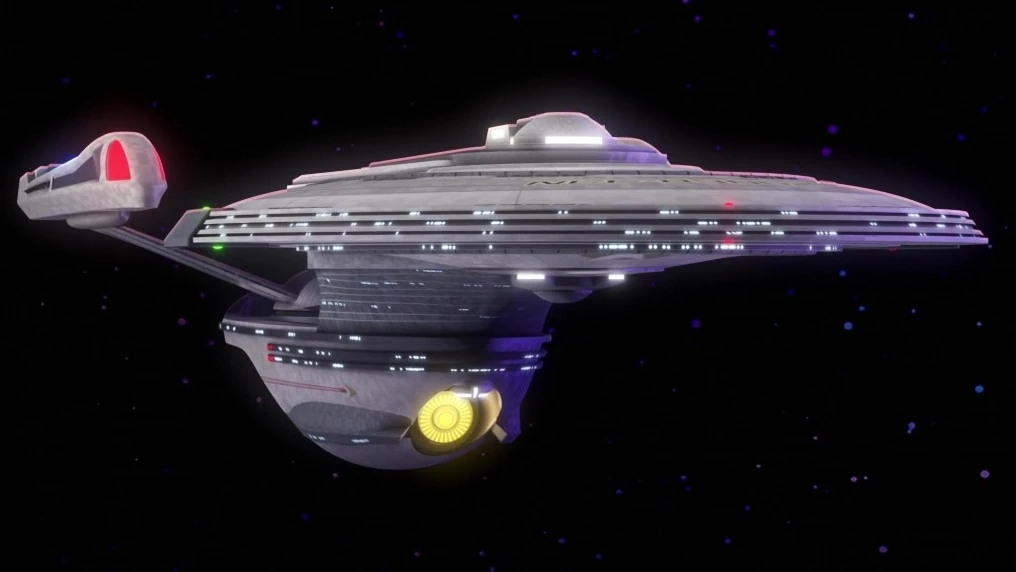 Classified
Obena class
1 VesselThe Obena-class was a type of starship operated by Starfleet during the late 24th century to the early 25th century. Its design bore a strong resemblance to the refit Excelsior-class starships, though it was notably larger. The Obena-class also incorporated several features reminiscent of the newer Sovereign-class, such as an oval-shaped primary hull and redesigned warp nacelles. The bridge layout of the Obena-class was similar to that of the USS Excelsior (NCC-2000), featuring a prominent engineering master systems display monitor against the aft wall, which provided a cutaway view of the ship and its status information. The center of the bridge was arranged with multiple elevations, placing the captain's chair at the highest position, overlooking the operations and navigation consoles. This bridge design was notably depicted in the Star Trek: Lower Decks episode 'First First Contact'. Writer and Star Trek: Lower Decks creator Mike McMahan confirmed on October 13, 2021, that the class name was inspired by the Excelsior-class, emphasizing its larger size and other modifications. He also confirmed that the class is named in honor of Star Trek: Lower Decks art designer Nollan Obena. Interestingly, the audio description for the episode 'First First Contact' initially described the vessel as an Excelsior-class starship. **Class History & Service** The Obena-class was active during the 2380s. One notable vessel of this class was the USS Archimedes (NCC-83002), which was active in 2381. The class made its first appearance in Star Trek: Lower Decks, initially as a holographic image in the episode 'I, Excretus', then prominently featured in 'First First Contact', and later seen in a photo in 'Grounded'. According to apocryphal information from the 'Star Trek Adventures - Lower Decks Campaign Guide', the Obena-class was commissioned in 2380 and officially launched in 2381 with the USS Obena (NX-/NCC-83000). Ships of this class were typically named after historical artists and thinkers from various United Federation of Planets member worlds, with their registry numbers starting from NCC-83000 and higher. These vessels benefited from an improved warp drive and secondary reactors, allowing for a maximum warp factor of 9.988. They were also equipped with a variant of the quantum slipstream drive, known as the quantum slipstream burst drive, which enabled travel at an impressive rate of 318 light years per hour. Other active ships mentioned in this context include the USS da Vinci, USS Warhol, and USS Kant.
- No armament data logged.
- No propulsion data logged.
 Supply Ship
Oberth class
13 VesselsThe Oberth-class was a small Federation starship primarily utilized by Starfleet and civilian scientists. Its main roles included scout, science vessel, transport, and supply ship, serving from the late 23rd century through the late 24th century. **Design & Development** The Oberth-class featured an atypical design for Federation starships of its era, characterized by a unique split hull. The upper primary hull, predominantly composed of the saucer section, was mounted onto a rear extension that housed the impulse drive and warp drive nacelles on either side. The secondary hull, oblong in shape, connected to the primary hull at the nacelles via reinforced pylons. The vessel comprised thirteen decks. A docking port was located on the port side of the secondary hull. Internally, the Oberth-class was equipped with specialized systems for its scientific missions. Its defensive systems included specialized shields designed to allow the vessel to push through gravitational wavefronts. To complement this, the interior bulkheads were constructed from victurium alloy, enhancing internal shielding. Armaments were minimal, consisting of a forward phaser bank, making the class tactically inferior to dedicated combat vessels like the Klingon Bird-of-Prey or a Borg cube. The main bridge, located on Deck 1 of the saucer section, served as the ship's command center. It featured a viewscreen at the front, with navigator and helm consoles positioned side-by-side, a layout distinct from Constitution-class starships. The captain's chair was directly aft of these stations. Primary science stations were located to port, with secondary stations along the wall, while the communications station was situated on the starboard side. By the 24th century, the bridge layout included an emergency hatch for evacuation into space. Corridors often served as auxiliary access points due to the ship's compact size. Main engineering, housing the warp drive chamber and impulse engine controls, was centrally located. Numerous science labs were dedicated to scientific study, including a section on Deck 4 with science consoles and an ODN junction for interfacing with the computer core, which was located on Deck 13 in the secondary hull. Crew quarters were standard for Federation starships, featuring a main living area, attached bedroom, and adjacent bathroom. **Class History** Entering service by 2278, the Oberth-class was initially designed and used almost exclusively for the study of astronomical phenomena, undertaking data gathering missions on stars and planets well into the 2360s. Notable early vessels included the USS Grissom, which was destroyed in 2285 near the Genesis Planet by a Klingon Bird-of-Prey commanded by Kruge, during the events of Star Trek III: The Search for Spock. The USS Copernicus was active in 2286. By the latter half of the 2360s, these vessels expanded their roles to include transports and supply ships. In 2358, the Oberth-class USS Pegasus served as a prototype for testing advanced starship technologies. The USS Pegasus was outfitted with an experimental engine and new weapon systems, some of which influenced the designs for Galaxy-class starships. Crucially, the USS Pegasus was also the testbed for an illegal Federation cloaking device, a secret maintained by Admiral Erik Pressman and Commander William T. Riker. The Federation continued to construct Oberth-class starships as late as 2363, with facilities such as the Baikonur Cosmodrome in the USSR contributing to their production. Due to its primary role as a science vessel with limited combat capabilities, Oberth-class starships were generally not deployed in combat situations. However, they were pressed into service during emergencies, such as the devastating Battle of Wolf 359 in 2366 against the Borg, where the USS Bonestell was destroyed, and the Battle of Sector 001 in 2373, also against the Borg, as depicted in Star Trek: First Contact. The class remained in service during the Dominion War in 2374, though it did not see large-scale deployments in major engagements, consistent with its non-combat design. The Oberth-class was still actively serving Starfleet as of 2381, a fact highlighted by Doctor T'Ana's exasperated remark in Star Trek: Lower Decks episode 'The Stars At Night'. **Notable Vessels** Several Oberth-class starships have been identified in Starfleet service. These include the USS Biko (active 2369), USS Bonestell (destroyed 2366 at the Battle of Wolf 359), USS Cochrane NCC-59318 (active 2374), USS Copernicus NCC-640 (active 2286), USS Grissom NCC-638 (destroyed 2285), USS Manticore (active 2381), USS Oberth NCC-602 (prototype, active 2293), USS Pegasus NCC-53847 (wrecked 2358), SS Tsiolkovsky NCC-53911 (destroyed 2364), SS Vico NAR-18834 (wrecked 2368), and USS Yosemite NCC-19002 (active 2370). The USS Cerritos NCC-75567 was temporarily transferred in a quantum reality in 2382. Other vessels of uncertain registry or status include the Algonquin (active 24th century), USS Helin NCC-1692 (active 2293), and USS Raman NCC-29487 (destroyed 2370).
- • Phase
- • Deflector shield
ODIN
Class: Apollo class- No armament data logged.
- No propulsion data logged.
 Classified
Odyssey class
2 VesselsThe Odyssey-class is a class of Federation starship that entered service by the late 24th century and continued into the early 25th century. It is notable for its massive size, advanced systems, and its prominent role in significant Starfleet events, including the 250th Frontier Day. **Design & Development** The design of the Odyssey-class has a unique origin, initially conceived through a 2011 fan contest to design the next USS Enterprise for the Star Trek Online computer game. Adam Ihle's winning entry formed the basis, which was then refined by Thomas Marrone and other game staffers for its in-game appearance. The class made its official live-action canon debut in Star Trek: Picard, with its digital model provided by Cryptic Studios and further overhauled by Thomas Marrone, VFX Supervisor Jason Zimmerman, and VFX Production Manager Shawn Ewashko for screen readiness. The main bridge, located on Deck 1, maintains a traditional layout with helm and operations stations forward and the captain's chair centrally placed. Odyssey-class starships are designed to include Aquarius auxiliary escort vessels, embedded in their aft sections. The class boasts a mass of 6,622,050 metric tons, a length of 1,061.1 meters, a beam of 371.88 meters, and a height of 147.92 meters, with an operational crew of 1,600 personnel. Its armament includes nineteen Mark-XII phaser arrays, four variable torpedo launchers, two phaser cannon turrets, and two heavy phaser cannon mounts. **Class History** By 2401, the Odyssey-class was actively in service, with at least twelve ships completed. A notable vessel of this class, the USS Enterprise-F (NCC-1701-F), was scheduled for early decommissioning in 2401. The USS Enterprise-F, along with twelve of its sister ships, participated in the ill-fated 250th Frontier Day celebration in 2401. During this event, the entire fleet, including all present Odyssey-class starships, fell victim to Borg assimilation. Following the fleet's liberation, at least three Odyssey-class vessels were left wrecked but relatively intact in Earth orbit near Sol Station. The computer systems on board the class by 2401 included the Fleet formation mode, also known as Starfleet emergency protocol NX12.11, designed to place all Federation starships within a fleet under the automated control of the Starfleet mainframe. Other named ships of the class include the USS Hikaru Sulu (NCC-92420), which was active in 2401. **Apocryphal History** In apocryphal materials such as the novel The Last Best Hope and the comic book series Star Trek: Picard - Countdown, the USS Verity (NCC-97001) was depicted as an Odyssey-class vessel. Admiral Jean-Luc Picard commanded the USS Verity from 2381 to 2385, with Raffaela Musiker serving as his first officer, to oversee evacuation efforts in Romulan space. According to this background, the USS Verity and the USS Odyssey (NX-97000) were built in tandem, with the USS Odyssey serving as the prototype. In 2381, following the discovery of an imminent supernova threatening Romulus, Remus, and other worlds, the United Federation of Planets initiated a massive rescue plan. The massive internal volume, large power plant, and fleet of auxiliary craft of the Odyssey-class made them ideal candidates for the mission's flagship. The admiralty decided to halt production on the USS Odyssey, which was then transferred to a 'boneyard' in Jupiter orbit, and reallocate resources to the USS Verity. The USS Verity's design was modified to increase passenger space, engine endurance, and communications capabilities, and it was launched by the end of 2381 under Admiral Picard's command. In Star Trek Online, the USS Verity was later refitted as a Verity-class starship by 2411, an Odyssey-class sub-variant.
- • Phase
- • Photon torpedo
- • Deflector shield
 Warbird
Oh's warbird Class
Hull Specifications LoggedThe starship known as Oh's warbird was a formidable, large warbird, though its specific design origins remain largely unchronicled within Starfleet records. While its official Starfleet classification is pending, the massively multiplayer online role-playing game Star Trek Online identifies this vessel as a Dhailkhina-class warbird, providing an external, though non-canonical, designation for its design lineage. Its primary armament consisted of a powerful disruptor array, a standard weapon system for Romulan vessels, indicating its clear combat-oriented role. **Service History** Oh's warbird gained prominence in 2399 when it served as the flagship for General Oh, a high-ranking operative within both the Tal Shiar and the Zhat Vash. Under General Oh's command, this warbird led a substantial fleet of 217 Red Lady type warbirds. This formidable armada embarked on a critical mission to the planet Coppelius, a pivotal event documented in the Star Trek: Picard episodes 'Et in Arcadia Ego, Part 1' and 'Et in Arcadia Ego, Part 2'. The vessel's deployment in such a significant operation underscores its strategic importance to the Zhat Vash's clandestine objectives during that period.
- • Disrupto
- No propulsion data logged.
 Science Vessel
Olympic class
3 VesselsThe Olympic-class was a distinctive starship class in service with Starfleet during the late 24th century. Its design roots trace back to early concepts by Matt Jefferies for the original USS Enterprise (NCC-1701), which featured a massive spherical primary hull. Jefferies ultimately deemed this spherical design too bulky for the Constitution-class, but the idea was later revisited. Years later, visual effects art director Bill George, inspired by Jefferies' early sketches from 'The Making of Star Trek', developed a contemporary Starfleet vessel with a spherical primary hull. George aimed to create a design that was unique yet fit within the aesthetic of Star Trek: The Next Generation, contrasting with the Art Deco style of the original USS Enterprise (NCC-1701), the Art Nouveau of the USS Enterprise (NCC-1701-D), and the Postmodernism of the Excelsior-class. He constructed a full-fledged studio model of his design, initially naming it the USS Olympic, which would later become the USS Pasteur (NCC-58925) for its on-screen appearance. The model was built from wood and styrene with customized neon tubes for internal lighting. Despite Starfleet's usual policy against unsolicited models, the extreme time pressures during the production of 'All Good Things...' led Producer Peter Lauritson to accept George's model, which was then rented for the show. Visual Effects Producer Dan Curry praised the design, noting its spherical front would allow for more beds, making it ideal for a medical ship. **Technical Specifications** The Olympic-class featured a primary section-engineering section-warp nacelle layout, common to most Starfleet vessels, but distinguished by its spherical primary hull, reminiscent of the 22nd century Daedalus-class. The deflector dish was integrated into the lower forward quarter of the primary hull as a strip, rather than the traditional parabolic shape. Impulse engines were located on the upper third of the aft hull, and a large shuttlebay was situated on the middle upper dorsal section of the secondary hull. In the anti-time future, as depicted in 'All Good Things...', Olympic-class vessels were equipped with limited sensors and defensive systems, rendering them vulnerable to the weaponry of Klingon attack cruisers like the Negh'Var warship. The USS Pasteur, specifically, was noted in the Star Trek: The Next Generation Technical Manual as not being equipped with phasers or torpedoes, instead featuring multiple transporter rooms for patient transfer and numerous sickbays. These vessels were capable of achieving at least warp 13 in the anti-time future. **Interior Design** Internally, the Olympic-class was designed with functionality in mind, particularly for its medical role. Ships of this class had at least two transporter rooms, essential for patient transfer. Quarters for the crew were located on Deck 5. The bridge and ready room featured standard Starfleet designs, and some vessels, like the USS Quito, included a ship's bar for crew recreation. **Service History** The Olympic-class served the United Federation of Planets as early as the 2370s, with the USS Quito being active during this period, as seen in 'Cupid's Errant Arrow' and 'Grounded' of Star Trek: Lower Decks. The USS Nobel (NCC-55012) was also active in 2374. In the anti-time future timeline, which was ultimately erased by Admiral Jean-Luc Picard, the Olympic-class was primarily utilized as a medical ship for emergencies, with the USS Pasteur (NCC-58925) being a prominent example, destroyed in 2395 during the events of 'All Good Things...'. Apocryphal sources, such as 'The Price of Freedom' RPG, suggest the class was in service as early as 2361. **Alternate Timelines & Apocrypha** Beyond the main timeline and the anti-time future, the Olympic-class also appeared in other narratives. In the 'Star Trek: Countdown' comic series, a tie-in to the 2009 Star Trek film, three Olympic-class medical frigates—the USS Galen, the USS Fleming, and an unnamed third ship—were dispatched to offer aid to the Romulan Star Empire following the destruction of Romulus by the Hobus supernova in 2387. These ships were tragically destroyed on the orders of Nero, who transported mining explosives aboard them, believing the Federation was attempting to claim Romulan space. **Naming & Production Notes** Initially, Bill George's studio model was designated the USS Olympic. However, for its on-screen debut in 'All Good Things...', the ship was renamed the USS Pasteur (NCC-58925). An early dedication plaque for the USS Pasteur even designated it as a 'Hope-class', named after the World War II hospital ship USS Hope (AH-7). This 'Hope-class' designation was later superseded by 'Olympic-class', retaining George's original class name. The model itself, after its use in 'All Good Things...', was returned to Bill George, who still owns it. It later appeared in the 'Star Trek Encyclopedia' and on the cover of 'Sci-fi & fantasy modeller' magazine.
- No armament data logged.
- • Warp facto (Qty: anti-time future)
- • Deflector shield

Onizuka
Class: Type 15 shuttlepod- No armament data logged.
- No propulsion data logged.
 Classified
Orbital platform Class
Hull Specifications LoggedAn Orbital platform was a specialized 24th century Federation spacecraft, primarily operated by Starfleet. These platforms were equipped with essential life support systems, indicating they were designed for sustained, though perhaps not long-term, crewed operations in space. Their design was minimalistic, featuring only a single deck, suggesting a focus on specific utility rather than multi-purpose exploration or combat roles. The lack of specified armaments, defenses, or propulsion systems in their general description further emphasizes their role as utilitarian tools rather than independent starships. **Class History** In 2380, a notable deployment of these Orbital platforms occurred around the fifth moon of Mixtus III. Ten of these platforms were strategically placed by the USS Cerritos and the USS Vancouver. Their primary mission was to manage the aftermath of a critical incident: the implosion of the moon, which was inadvertently caused by the USS Vancouver. To mitigate the resulting hazardous orbital debris, the platforms were designed to work in concert, utilizing a sophisticated tractor spread to control and stabilize the fragmented moon material. A significant operational challenge arose due to the platforms not being rated for low altitude operations, necessitating manual control by Starfleet personnel to ensure mission success. Upon the successful completion of this critical debris management mission, the Orbital platforms were retrieved from orbit and subsequently stored aboard the USS Cerritos and the USS Vancouver, as documented in the episode 'Cupid's Errant Arrow'. This event highlights their specialized, mission-specific deployment and recovery protocol, distinguishing them from permanently stationed orbital facilities or independent starships. Other known orbital platforms include Platform Gamma.
- No armament data logged.
- No propulsion data logged.
 Runabout / Utility
Orbital shuttle Class
Hull Specifications LoggedThe Federation orbital shuttle is a robust type of shuttlecraft primarily designed for utility operations within and around orbital facilities, most notably Earth and Spacedock One. Its design emphasizes heavy-duty functionality, with an array of quarter-circle ribs on its aft section intended to function as tractor beam emitters, allowing it to act as a space tug. The pilots of these shuttles are typically clad in environmental suits, further reinforcing their role as utility vessels capable of operating in hazardous or external environments within a spacedock. While its specific propulsion and defensive systems are not extensively documented, its longevity in service suggests a reliable and adaptable design. **Service History** The orbital shuttle class has a long and distinguished service record with Starfleet and the United Federation of Planets, spanning from the late 23rd century well into the mid-24th century. During the late 23rd century, many orbital shuttles operating around Earth experienced power loss when the Whale Probe bombarded the planet with humpback whale signals, an event documented in Star Trek IV: The Voyage Home. Despite this incident, the design proved resilient, with shuttles of this type remaining in active service on Earth and within orbital facilities even past the mid-24th century, as evidenced in episodes like '11001001' and 'Conspiracy'. Several specific orbital shuttles have been identified in service, including Orbital shuttle 5, Orbital shuttle 6, and Orbital shuttle 7, all of which were attached to Spacedock One. Orbital shuttle 6 was active as early as 2285, Orbital shuttle 7 in 2287, and Orbital shuttle 5 in 2364, demonstrating the class's extended operational lifespan. These shuttles were frequently observed maneuvering around larger starships, such as the USS Enterprise (NCC-1701), performing their intended tugboat functions. Orbital shuttles were also seen parked on the tarmac of the Federation Council grounds in Star Trek IV: The Voyage Home, and footage of them was reused in Starfleet Headquarters scenes in episodes like 'Conspiracy' and 'Non Sequitur' from Star Trek: Voyager. A recreation of an orbital shuttle was also observed in 'In the Flesh' by Species 8472.
- No armament data logged.
- No propulsion data logged.
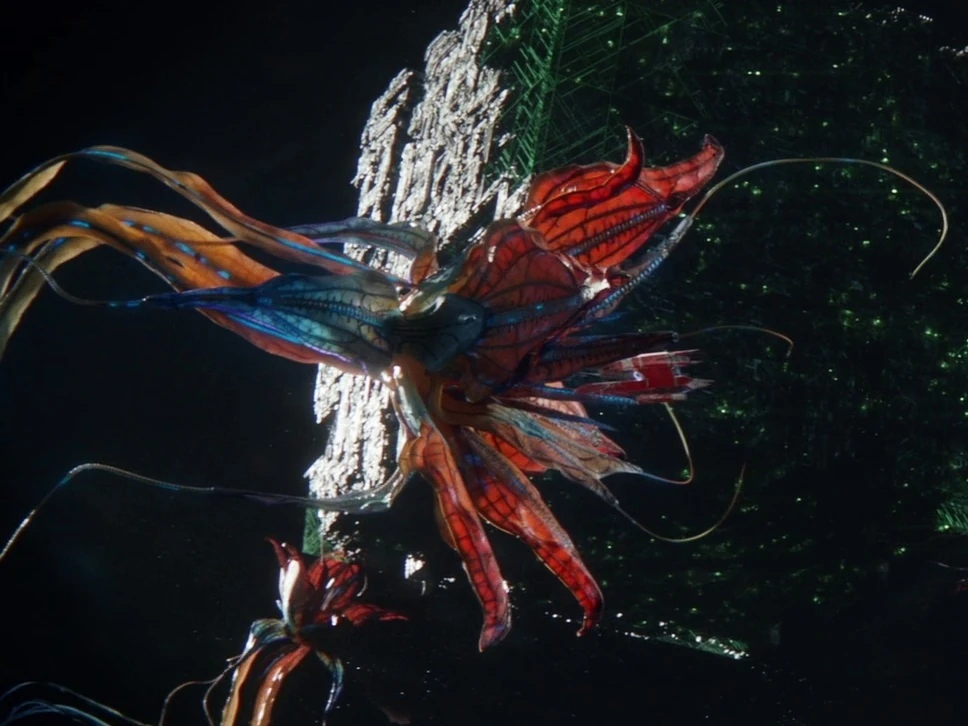 Space Weapon
Orchid (weapon) Class
Hull Specifications LoggedAn Orchid was a unique type of space weapon developed and utilized by the Synths of Coppelius. Visually, it resembled a giant orchid flower. Its primary tactical function was to attach itself to an enemy starship, subsequently deactivating its physics systems, rendering the vessel inert and vulnerable. This capability made it an extremely effective defensive measure against invading forces. **Service History** In 2399, the Synths of Coppelius deployed five Orchids to intercept three approaching vessels over their planet: the starship La Sirena, Narek's snakehead, and the Borg cube known as 'The Artifact'. The Orchids successfully disabled all three ships, causing them to crash onto the planet's surface. Following their mission, these specific Orchids burned up during atmospheric entry. In anticipation of an imminent attack by a Romulan fleet, the Synths, who initially possessed ten remaining Orchids, rapidly manufactured thirteen more. These newly produced and existing Orchids were then deployed against the Romulan fleet, successfully destroying several Red Lady type warbirds before they themselves were destroyed in the engagement. These events were documented in the episode 'Et in Arcadia Ego, Part 2'.
- No armament data logged.
- No propulsion data logged.
 Transport / Freighter
Orion barge Class
Hull Specifications LoggedAn Orion barge was a distinctive starship class operated by the Orion species, known to be in active service from the 2150s through to the 2380s. These vessels were characterized by their robust construction and versatile capabilities, serving various purposes for Orion interests across the galaxy. **Design & Technical Specifications** The Orion barge featured a unique design, with its interior comprising at least two distinct rooms. The vessel's bridge was equipped with a padded, black command chair facing a visual communications device, illuminated by a brilliant white light and three smaller lights. The walls were adorned with intricate Orion designs, incorporating small green lights within a brown pattern. The main cabin, also referred to as the 'main quarters cabin' in early scripts, was lavishly appointed, featuring colorful and comfortable furnishings. Thin light green and dark purple fabrics draped from a metallic ring in the golden-brown ceiling, from which an oval, green light hung. Circular golden-brown walls contained large, illuminated gold-colored panels separated by thinner panels with the same design as the bridge. The floor was light brown, covered by a large, circular purple rug. The room was furnished with cushions, fabrics, and decorative metallic sculptures supporting green circular lights, with a central table matching this design. Two doorways, draped with rich red fabric and accessed via purple carpeted walkways, provided entry and exit. Technically, Orion barges were formidable craft. They were equipped with powerful particle beam weapons, described in early accounts as 'cannon-like blasts'. Their advanced propulsion system allowed for extremely erratic and swift movements, making them difficult to track. Even with damaged primary engines, the craft could still utilize its on-board impulse drive for continued travel. The vessels also possessed scanners capable of detecting mineral deposits below a planet's surface, though their results could sometimes be incomplete. For operational versatility, Orion barges were able to receive and transmit visual communications, dock with other starships, and were capable of towing spacecraft using a grappler-equipped towing cable, a tactic frequently employed to commandeer enemy vessels. **Service History** The Orion barge class saw extensive use over several centuries. One notable encounter occurred on December 27th, 2154, when the Starfleet vessel NX-01 Enterprise, under the command of Captain Jonathan Archer, encountered Harrad-Sar's barge while en route to Berengaria VII. Science Officer T'Pol of the NX-01 Enterprise failed to recognize the specific design, indicating its novelty to Starfleet and the Vulcan species at that time. Lieutenant Malcolm Reed initially assessed Harrad-Sar's ship as potentially hostile. Following an incident, Orion women were returned to Harrad-Sar's barge, which, despite engine damage sustained during the encounter, continued its journey towards Orion space at impulse velocity. Later, in 2381, another Orion barge was observed in orbit of an Orion planet, demonstrating the class's continued presence and utility within Orion operations. The class includes specific vessels such as Harrad-Sar's barge and other unnamed Orion barges.
- • Particle weapo
- No propulsion data logged.
 Battleship
Orion destroyer Class
Hull Specifications LoggedThe Orion destroyer was a class of warship employed by the Orion Syndicate. These vessels were also described as battleships, characterized by their massive size and considerable firepower. Despite their formidable capabilities, by the late 24th century, the class was considered antiquated. **Class History** In 2381, D'Erika Tendi, acting as a Mistress of the Orion Syndicate, negotiated a deal with the crew of the USS Cerritos. The agreement involved lending them an Orion destroyer, specifically the starship Retribution, to assist in their mission to penetrate the trynar shield surrounding the Detrion system. However, D'Erika Tendi failed to disclose that the Retribution was derelict and inoperable at the time of the agreement. This event was documented in the episode 'Old Friends, New Planets'.
- No armament data logged.
- • Warp drive
- • Deflector shield
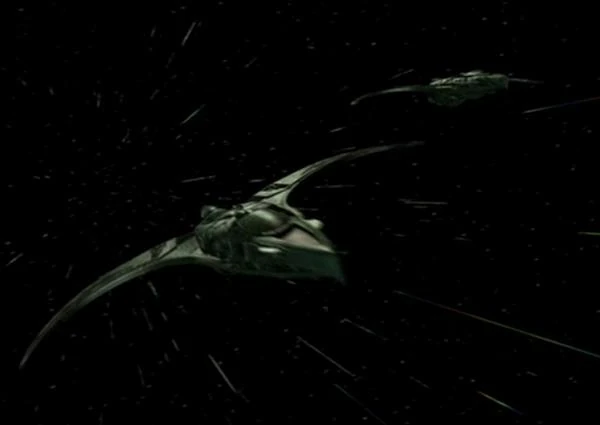
Orion Interceptor
Class: Orion Interceptor- • Particle weapo
- No propulsion data logged.
 Escort / Warship
Orion Interceptor Class
2 VesselsThe Orion Interceptor class is characterized by its distinctive 'bird-like' exterior hull design, featuring swept wings positioned at the aft of the vessel and a prominent beak-like forward section. These starships were known for their speed and moderate armament, making them effective for the Orion Syndicate's operations. For offensive capabilities, the interceptor was equipped with at least one particle cannon, strategically mounted on the underside of its hull. Additionally, the vessel incorporated a transporter system, which proved tactically significant in various engagements. Over its long service history, the design of the Orion Interceptor underwent modifications. By the 24th century, examples of this class appeared slightly altered, incorporating dozens of spikes and two ventral arms, suggesting an evolution in its aesthetic or potentially its functional design. **Service History** The Orion Interceptor class was utilized by the Orion Syndicate from the mid-22nd century through the late 24th century. While knowledge of this starship class was present in the Vulcan database, it remained unknown to Starfleet until May 2154. In that month, two Orion Interceptors launched a surprise attack and raid on the Enterprise (NX-01) in the Borderland. The attack occurred while the Enterprise (NX-01) was actively searching for an Augment-controlled Bird-of-Prey, specifically Malik's Bird-of-Prey. During this encounter, the Orions leveraged their transporter technology to abduct nine crewmen from the Enterprise (NX-01), including T'Pol and Jeffrey Pierce, before making their escape. Later, following the rescue of the abducted crewmembers from Verex III, two Orion Interceptors again engaged the Enterprise (NX-01). This engagement resulted in moderate damage to the Starfleet vessel before the Augments arrived in their commandeered 22nd-century Klingon Bird-of-Prey. The Augments subsequently destroyed one of the Orion Interceptors and forced the other to retreat, as depicted in the episode 'Borderland'. Modified examples of the Orion Interceptor class continued to see service into the 2380s, though their roles had evolved, primarily being relegated to transporting fuel and supplies, as seen in the Star Trek: Lower Decks episode 'Something Borrowed, Something Green'. The class also made appearances in other Star Trek: Lower Decks episodes such as 'The Inner Fight' (via an LCARS graphic), 'Old Friends, New Planets', and 'Dos Cerritos'.
- • Particle weapo
- No propulsion data logged.
 Science Vessel
Orion medical frigate Class
Hull Specifications LoggedOrion medical frigates were a specialized class of medical ship employed by the Orions in the 21st century. These vessels were crucial during the Great Plague, serving a vital role in treating the afflicted. They were equipped with advanced ventilation systems designed for comprehensive air cleaning, a critical feature for containing and mitigating airborne pathogens. Furthermore, these frigates boasted regenerative auxiliary power systems, engineered to remain operational for hundreds of years, ensuring long-term reliability and self-sufficiency. **Service History** In the 21st century, Orion medical frigates were actively deployed by the Orions to combat and cure the Great Plague. Their advanced medical capabilities were instrumental in this effort. Centuries later, in 2382, a derelict Orion medical frigate on Alva IV became the subject of a significant acquisition attempt. Mistress D'Erika Tendi, having obtained its coordinates from a rogue archaeologist, mistakenly believed the vessel to be a warship. She dispatched her sister, D'Vana Tendi, to secure it, envisioning it as a major symbolic triumph for House Tendi and promising D'Vana that its acquisition would settle her remaining debt, allowing her to rejoin Starfleet. Upon arrival at the wreck, D'Vana's party encountered a rival group from House Azure, who had also purchased the same coordinates. To neutralize the threat without resorting to lethal force, D'Vana ingeniously flooded the frigate with laughing gas, incapacitating the House Azure party. Following this successful maneuver, D'Vana piloted the recovered medical frigate back to the Tendi family's ancestral home on Orion. This event was documented in the episode 'Dos Cerritos'.
- No armament data logged.
- • Warp drive
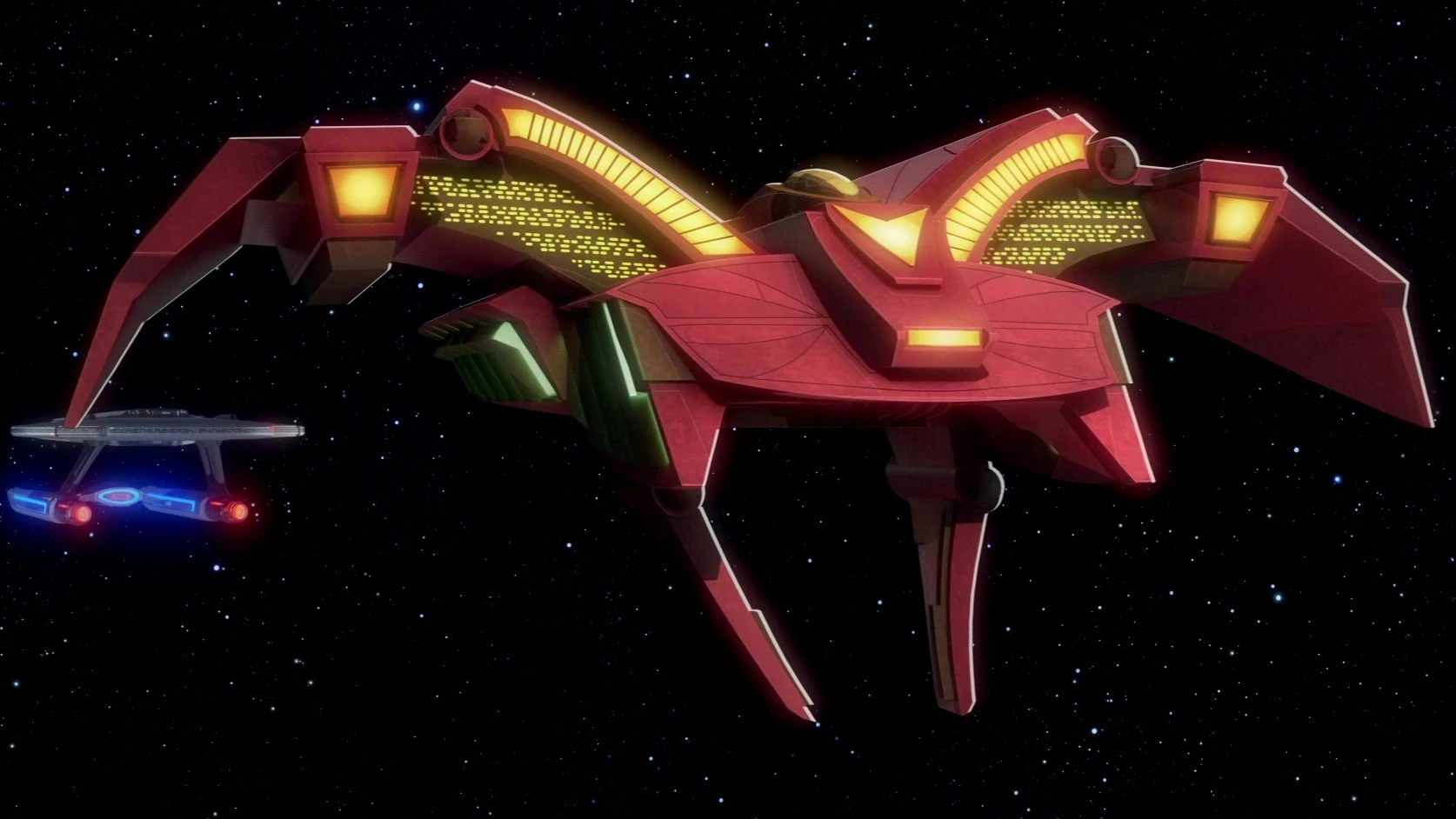
Orion Vessel
Class: Orion vessel- • Phase
- • Warp drive
 Classified
Orion vessel Class
1 VesselAn Orion vessel was a class of spacecraft primarily utilized by the Orion Syndicate. These vessels were first encountered by the Federation in 2270 and were identifiable by their distinctive Orion markings. While not classified as a Starfleet starship, their design was noted for being 'blood-red' and 'evil looking' according to early script descriptions. The bridge of an Orion vessel was described as 'sparser, smaller, and more utilitarian' compared to that of a Constitution-class starship like the USS Enterprise (NCC-1701). In terms of technical specifications, Orion vessels were warp capable, allowing for interstellar travel. However, their speed was insufficient to outrun a Constitution-class starship. For armament, they were equipped with standard phasers, though these were characterized as weak, emitting a diffused, low-quality beam. Despite these limitations, an Orion vessel possessed sufficient power to successfully overtake a Huron-class freighter. A unique characteristic of this type of vessel was its emission of a distinct trail of radioactive waste, which was detectable via spectral analysis. **Service History** The first recorded encounter between the Federation and an Orion vessel occurred in 2270. During this incident, an Orion vessel attacked the USS Huron, targeting its valuable cargo of dilithium crystals and a special supply of strobolin. The vessel was subsequently encountered by the USS Enterprise (NCC-1701) in a field of asteroids. Following this confrontation, the Orion vessel was surrendered and subsequently towed to Deneb V, as documented in the Starfleet log 'The Pirates of Orion'. Orion vessels continued to be active into the late 24th century. In 2381, an Orion vessel was dispatched by Mistress D'Erika Tendi to retrieve her sister, D'Vana Tendi, from the USS Cerritos. This action was part of an agreement D'Erika Tendi had made to assist the USS Cerritos crew in breaching the trynar shield surrounding the Detrion system, an event chronicled in the Starfleet record 'Old Friends, New Planets'.
- • Phase
- • Warp drive
 Transport / Freighter
Ornaran freighter Class
Hull Specifications LoggedThe Ornaran freighter was a classification of small, interplanetary impulse ships utilized by the Ornaran species. These vessels were equipped with transporter technology, facilitating cargo and personnel movement within their system. Their primary function was that of a freighter, designed for sublight travel and cargo transport. **Class History** By the year 2364, the Ornaran freighter class was considered exceptionally old, with all three known vessels in a significant state of disrepair, severely impacting their operational capabilities. One notable incident involved the freighter *Sanction*, which was lost above the planet Brekka. The crew of the *Sanction* was unable to repair a critical magnetic coil failure in time, leading to the ship's disintegration within Brekka's atmosphere. This event was documented in Starfleet records from the episode 'Symbiosis'. The general state of disrepair and the loss of one vessel indicate that the class was largely defunct by this period.
- No armament data logged.
- • Subligh
 Classified
Osaarian merchant ship Class
Hull Specifications LoggedOsaarian merchant ships were a class of starship primarily utilized by the Osaarian merchant fleet during the mid-22nd century. These vessels were designed for commerce and exploration, particularly in seeking out new trade routes. Despite their mercantile purpose, they were notably heavily armed, featuring at least two forward particle beam emitters for defense. The hull of this class was constructed from polyduranium, indicating a robust and durable design capable of withstanding the rigors of interstellar travel and potential threats. **Service History** Prior to 2153, two Osaarian merchant ships ventured into the treacherous Delphic Expanse, driven by the ambition to discover new trade routes. While operating within the Expanse, both ships were struck by a powerful distortion wave, an event that compelled their crews to abandon their mission and attempt to return to Osaarian space. Tragically, one of the Osaarian merchant ships was destroyed during its perilous attempt to navigate back through the thermobaric cloud perimeter surrounding the Expanse. The second vessel, unable to escape, remained stranded within the Delphic Expanse. Faced with dire circumstances and the harsh realities of survival, the crew of this remaining Osaarian merchant ship was forced to resort to piracy to sustain themselves. The events involving these ships were documented in the Starfleet record, specifically in the episode 'Anomaly (ENT)'.
- • Particle weapo
- No propulsion data logged.
 Classified
Osler type
Hull Specifications LoggedThe Osler-type Federation starship was a specialized vessel designed for use by Starfleet Division 14. Notably smaller in size than the California-class, this type of starship was engineered with the critical capability for atmospheric entry and planetary landing, suggesting a role in close-proximity planetary operations or specialized transport. Its design featured a distinctive black hull and a darkened interior, a stylistic choice that was later commented upon by an Edosian medical specialist in the early 2380s, who suggested that Division 14 might consider 'maybe paint the ship some friendlier colors [and] turn on some lights, so it isn't so creepy,' as depicted in the episode 'Much Ado About Boimler'. **Class History** The Osler-type starship was actively in service during the early 2380s, primarily under the operational command of Starfleet Division 14. The most prominent vessel of this class known to be in active service was the USS Osler, bearing the registry NX-75300. This class's unique aesthetic, particularly its dark hull and interior, became a memorable characteristic, even prompting lighthearted criticism regarding its potentially unsettling appearance from personnel outside of Division 14.
- No armament data logged.
- No propulsion data logged.
 Enhanced Starship
Pakled Clumpship Class
Hull Specifications LoggedPakled Clumpships were an enhanced starship class primarily utilized by Pakled rebels during the 2380s. These vessels originated as Mondor-type craft, which served as the core of their design. However, they were heavily fortified and augmented with a vast array of stolen or salvaged components acquired from numerous species, including Romulans, Klingons, Ferengi, Bajorans, and Arkonians. This eclectic integration of technology resulted in a variable configuration for early Clumpships encountered by the United Federation of Planets. By 2381, Pakled designers had managed to standardize the configuration of these vessels, as noted in 'The Spy Humongous' and 'wej Duj'. Technically, Pakled Clumpships were equipped with warp drive for interstellar travel, as confirmed in 'No Small Parts'. Their offensive capabilities were formidable, featuring multiple phasers sourced from over thirty different species. A notable weapon system was their mining arms, also referred to as grapplers. These arms were designed to snare other starships and tear them apart for salvage, possessing sufficient strength to rip a nacelle from a vessel, which would inevitably lead to an unsurvivable explosion if the target ship attempted to jump to warp. Despite their robust offensive and structural enhancements, Clumpships suffered from significant vulnerabilities due to their cobbled-together nature. The arbitrary integration of disparate and potentially incompatible systems precluded the implementation of effective computer security, as it might prevent stolen components from functioning. This left Clumpships highly susceptible to any computer virus, which would run rampant and unchecked through their systems. Furthermore, their transporters were notably sluggish, a consequence of the strain placed on their random computer systems, allowing targeted crews to escape a boarding party before it could fully materialize, as depicted in 'No Small Parts'. **Class History** By 2380, the Pakleds had amassed sufficient stolen or acquired ship parts to retrofit their vessels into formidable opponents for Starfleet. These enhanced starships were notably employed by Pakled rebels, often with the direct assistance of the rogue Klingon officer Captain Dorg, as seen in 'wej Duj'. One particularly powerful example, a Pakled Clumpship captained by Jackabog, was observed to be far superior in combat to a California-class starship. The Pakled Clumpship class gained significant prominence, being featured in the Star Trek: Lower Decks opening title sequences starting from Season 2. Specific vessels of this class include the named ship 'Pakled' and Jackabog's ship, alongside numerous unnamed Pakled Clumpships. The class made appearances in various Star Trek: Lower Decks episodes, including 'No Small Parts', 'Kayshon, His Eyes Open', 'The Spy Humongous', 'wej Duj', 'First First Contact' (where it appeared as a photo only), 'Grounded', and 'A Mathematically Perfect Redemption'. The designation 'Clumpship' itself was first officially referenced in an intertitle displayed during the episode 'wej Duj'.
- No armament data logged.
- No propulsion data logged.
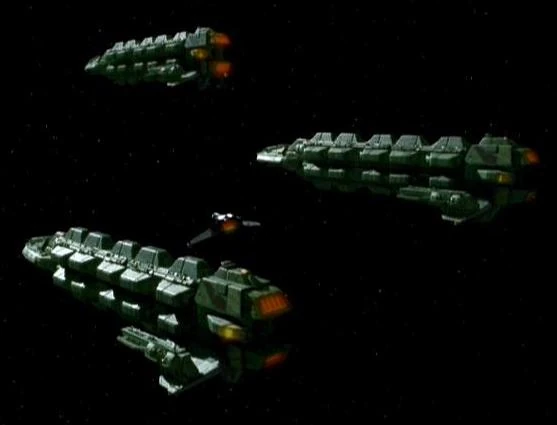 Cargo vessel
Par'tok type
Hull Specifications LoggedThe Par'tok type was a dedicated cargo vessel design employed by the Klingon Empire, serving from the 24th century through to the 32nd century. Unlike the majority of Klingon starships, these freighters were notably not equipped with cloaking devices. In terms of its design lineage, the Par'tok type shared a visual resemblance with the Groumall type freighter. This similarity was later rationalized in-universe as these vessels potentially being prizes of war, captured by the Klingon Empire from the Cardassians during their various conflicts, and subsequently repainted in Klingon colors for service within the Klingon fleet. This explanation accounts for their distinct appearance compared to other Klingon starship designs. As cargo vessels, their primary function was logistics and transport, rather than direct combat, which explains the absence of advanced tactical systems like cloaking devices. **Class History** The Par'tok type played a crucial role in Klingon logistics during significant periods. In 2374, amidst the Dominion War, the IKS Rotarran was assigned to escort a vital convoy of these cargo vessels, which included the IKS Par'tok itself, on a critical mission to Donatu V. This event was documented in the episode "Sons and Daughters." Centuries later, in 3195, ships of the Par'tok type were still in active service and were observed as part of a Klingon fleet that asserted its claim over Faan Alpha, as depicted in the episode "Vox In Excelso." The longevity of this design, spanning nearly a millennium, underscores its utility and reliability within the Klingon Empire's logistical infrastructure. Notable vessels of this class include the IKS Par'tok and various unnamed Klingon cargo vessels.
- No armament data logged.
- No propulsion data logged.
 Classified
Parliament class
2 VesselsThe Parliament-class was a sophisticated class of Starfleet starship that entered service with the United Federation of Planets during the late 24th century, specifically active in the 2380s. Its design represented an advancement over earlier classes such as the California-class, featuring a notably larger saucer section and incorporating more advanced equipment. The class's distinctive physical layout included a primary saucer section, with two warp nacelles mounted on pylons extending from the lower-aft sides. Two primary impulse engines were situated on the aft face of the saucer. An underslung secondary hull, equipped with a front-facing navigational deflector, was positioned directly beneath the aft of the saucer, connected by a pair of curved pylons. Technological innovations integrated into the Parliament-class, which were not present in older designs like the California-class, included fluidic processors capable of self-replicating their own silicas, a double-lattice thermal mesh for enhanced structural integrity, and robust tritanium hull brackets. These features underscored its role in complex operations, as highlighted by the USS Vancouver's specialization in large, intricate applied science projects, as seen in the Star Trek: Lower Decks episode 'Cupid's Errant Arrow'. **Class History** The Parliament-class starships were active in the 2380s, undertaking a variety of missions for Starfleet. One notable vessel of the class, the USS Vancouver (NCC-70492), was specifically designed and utilized for extensive and complex applied science endeavors, demonstrating the class's versatility and advanced capabilities. Another ship of the class, the USS Toronto (NCC-70494), was engaged in critical diplomatic efforts, including a mission to facilitate Ferenginar's entry into the United Federation of Planets, as depicted in the Star Trek: Lower Decks episode 'Parth Ferengi's Heart Place'. Both the USS Vancouver and the USS Toronto were recorded as active in 2381 and 2382, respectively, indicating the class's ongoing service and importance to Starfleet operations. **Technical Data** Internally, the Parliament-class starship comprised eleven decks. A unique aspect of its interior design, uncommon among other Federation starship classes, was the utilization of the warp nacelle pylons for usable interior deck space, rather than serving solely as structural components. The main shuttlebay of the Parliament-class was a significant facility, spanning Decks 6 and 7. This expansive bay was capable of accommodating at least nine shuttlecraft, with additional storage for a minimum of eighteen Argo-type ground vehicles located on Decks 5 and 7, adjacent to and within the shuttlebay itself. This detailed internal layout was visible on the Master Systems Display of the class, as observed in the Star Trek: Lower Decks episode 'Cupid's Errant Arrow'.
- No armament data logged.
- No propulsion data logged.
 Classified
Pathfinder class
2 VesselsThe Pathfinder-class is a type of Federation starship that entered service by the early 25th century. Its design bears a strong resemblance to the earlier Intrepid-class starships, which were prominent in the 24th century. This design lineage suggests a continuation of successful Starfleet engineering principles, adapting them for the evolving tactical and exploratory needs of the new century. **Class History** By 2401, the Pathfinder-class had become a significant component of the Starfleet fleet. In that year, thirty-six ships of this class were assembled near Sol Station as part of the grand Frontier Day celebration, a major event showcasing Starfleet's strength and unity. However, this celebration turned catastrophic when the entire fleet, including all Pathfinder-class vessels present, was seized by the Borg. This assimilation was triggered by a signal transmitted via Jack Crusher, which targeted and assimilated younger Starfleet crew members, allowing the Borg to gain control of the ships. Notable vessels of this class include the USS Drexler (NCC-97626), the USS Eaves (NCC-97621), and the USS Voyager (NCC-74656-B), which was the third Federation starship to bear the name 'Voyager'. These events were depicted in the Star Trek: Picard episodes 'The Next Generation', 'Võx', and 'The Last Generation'. **Command and Control Systems** By 2401, the computer systems on board the Pathfinder-class were equipped with advanced command and control capabilities, including the Fleet formation mode. This system, also known as Starfleet emergency protocol NX12.11, was designed to place all Federation starships within a fleet under the automated control of the Starfleet mainframe, intended for coordinated fleet maneuvers. This protocol, however, proved to be a critical vulnerability during the Borg's assimilation of the Frontier Day fleet, as it facilitated their rapid takeover of Starfleet assets.
- • Phase
- • Photon torpedo
- • Deflector shield
 Classified
Pax class
1 VesselThe *Pax*-class was a highly adaptable class of Federation starship, uniquely capable of functioning as both a mobile starship and a stationary space station. Operated by Starfleet during the 32nd and 33rd centuries, its design was revolutionary, heavily incorporating programmable matter technology. This allowed for rapid reconfiguration of internal spaces, sections, walkways, and even its overall external structure. The class featured a distinctive central trunk design, which could expand outward into a series of spiral arms and detach supporting structures, showcasing its unparalleled versatility. **Class History** A prominent vessel of this class, the USS *Federation* (NCC-325002), served as the mobile headquarters for both the United Federation of Planets and Starfleet Headquarters. When the USS *Discovery* first encountered the USS *Federation* in 3189, it was operating in a smaller, defensive configuration, as depicted in 'Die Trying'. In this state, it projected a powerful distortion field, supported by other starships within the field, and featured a main habitable section with twisting structures enclosing streamers of field generation energy at its core, surrounded by disconnected field generation panels. Following the collapse of the Emerald Chain, the cloaking field was dismantled, and the USS *Federation* blossomed into a larger, expanded spiral structure, incorporating an additional support ring and detached scute-like structures housing offices and crew quarters, as seen in 'Kobayashi Maru', 'Red Directive', and 'Jinaal'. By the 33rd century, the USS *Federation*, still serving as Federation Headquarters, was permanently joined by two additional unnamed *Pax*-class starships, all operating in their expanded configurations, as shown in 'Life, Itself'. **Technical Specifications & Capabilities** The extensive use of programmable matter was central to the *Pax*-class's design, enabling quick repurposing and reconfiguration of its physical arrangement, as detailed in 'Die Trying' and 'Kobayashi Maru'. This allowed vessels of the class to seamlessly switch between a compact defensive posture and an expansive, outward-blossoming configuration with spiral arms and detached supporting structures. Beyond its reconfigurable nature, the *Pax*-class was fully warp-capable, allowing the entire station to relocate as needed. A critical safety feature included the ability for individual decks to detach as self-sustained lifeboats, each equipped with its own warp capability, as mentioned in 'Coming Home'. Defensive systems included robust deflector shields, complemented by the ability to project a distortion field in its defensive configuration. **Interior Design & Crew Support** The topmost deck of a *Pax*-class vessel housed the main bridge, which served as the primary operations center. This bridge featured a large central opening to the deck below. While tricom badges facilitated portable transport between decks, a turbolift-like alcove was also available. Directly below the bridge, the commanding officer's office was situated, featuring advanced holographic displays and programmable matter furniture, alongside three wide windows, as depicted in 'Die Trying'. Through programmable matter, the areas immediately beneath the bridge could be reconfigured into a multi-deck tall assembly space, as shown in '...But to Connect'. For crew support, the station included at least seven briefing rooms, a multi-deck shuttlebay, a sickbay, and interrogation rooms, as noted in 'Kobayashi Maru' and 'Die Trying'. It also maintained both a primary and a secondary operations center to ensure continuous functionality. **Ships in Class** The most notable ship of the class is the USS *Federation*, registry NCC-325002, which remained active into the 33rd century. Additionally, at least two other unnamed *Pax*-class starships were active by the 33rd century, permanently joined with the USS *Federation* at Federation Headquarters.
- No armament data logged.
- • Deflector shield
 Classified
Pelian escort vessel Class
Hull Specifications LoggedThe Pelian escort vessel was a type of starship utilized by the Pelians during the 2360s. One such vessel, operated by a radical Pelian faction based on the Beta moon of Peliar Zel, was encountered in 2368. This incident occurred following the launch of a shuttle from the USS Enterprise-D, which was transporting Ambassador Odan. The unidentified vessel, describing itself as an 'escort vessel', emerged from the limb of the Beta moon. Despite no prior mention of an escort and a request for a security clearance code being ignored, the vessel loaded its forward phaser banks and attacked the Federation shuttle. This assault resulted in the shuttle losing its port thruster and both back-up stabilizers, forcing it to return to the USS Enterprise-D. This event was documented in the Starfleet record 'The Host'.
- • Phase
- No propulsion data logged.
 Holographic transmitter
Penk's starship Class
Hull Specifications LoggedThe starship operated by Penk was of Norcadian design, a vessel primarily utilized in the Delta Quadrant during the late 24th century. Its unique purpose as a mobile arena for Tsunkatse matches heavily influenced its construction. The ship's design was conceptualized by Rick Sternbach, with the modeling handled by Foundation Imaging. Sternbach noted that the central arena area, with its distinctive uplighting, drew inspiration from Earth's Madison Square Garden. **Technical Specifications** This formidable vessel weighed approximately five million metric tons. It featured heavily reinforced hull plating, further protected by tetryon-based covariant shielding designed to prevent sensor penetration. Multiphasic force fields were also integrated to actively prevent the use of transporters, ensuring the integrity of its internal operations and security. For offensive and defensive capabilities, Penk's starship was heavily armed with potent neutronic weaponry. It also possessed a tetryon-based dampening field, capable of disabling the engines, weapons, transporters, and shields of other starships in close proximity, making it a significant threat in any engagement. **Service History** The starship gained notoriety as the main base for Tsunkatse matches, which were broadcast live to millions of viewers across the sector. In 2376, the vessel became involved in a direct confrontation with Starfleet when Penk kidnapped Seven of Nine and Lieutenant Commander Tuvok. The USS Voyager launched an attack on Penk's starship, though initially with limited success against its robust defenses. The tide turned with the timely arrival of the Delta Flyer, which managed to disable the vessel's signal generators and subspace transmitters. This critical action allowed Seven of Nine and Lieutenant Commander Tuvok to be successfully beamed back to the USS Voyager, as chronicled in the episode 'Tsunkatse'.
- • Neutronic weaponry
- • Armo
- • Dampening field
- + 1 more...
Peregrine class
Hull Specifications LoggedThe 'Peregrine' class was originally a type of courier ship that was extensively appropriated by the Maquis during the early 2370s. These vessels were subsequently modified by the Maquis to serve as interceptors in their ongoing insurrection against the Cardassian Union. Modifications typically included improved engine capability and the addition of light armaments, transforming them from their civilian role into capable, albeit lightly armed, combat vessels. **Service History & Related Vessels** The 'Peregrine' class saw active service primarily with the Maquis during their conflict with the Cardassian Union. The designation 'Peregrine' class was specifically mentioned in the Star Trek: Deep Space Nine episode 'Heart of Stone', though the design of the vessel itself was not visually depicted in that instance. Among the known vessels of this class are several 'Unnamed Peregrine class courier ships' that were utilized by the Maquis. In other materials, the 'Peregrine' class has been equated with other known Maquis vessels; for instance, the Star Trek: The Next Generation novel 'Quarantine' equates it to the 'Maquis fighter' or the 'Maquis raider'. Similarly, 'Star Trek Online' identifies the 'Peregrine' class as the designation for the 'Federation attack fighter', an association supported by the description of the 'Peregrine' class as a former courier ship modified by the Maquis.
- • Lightly armed
- No propulsion data logged.

Phoenix
Class: Prototype Warp Ship- No armament data logged.
- No propulsion data logged.
Prototype Warp Drive
Phoenix Class
Hull Specifications LoggedThe Phoenix warp ship was a pivotal vessel in Human history, marking the first manned spacecraft to achieve faster-than-light travel using warp drive. Launched in 2063, its successful flight directly led to Earth's First Contact with the Vulcans, fundamentally altering the course of Human civilization. **Design & Development** The Phoenix was conceived and constructed by Dr. Zefram Cochrane, the visionary inventor of warp drive, within a converted missile complex located in Bozeman, Montana. The vessel itself was ingeniously repurposed from a United States Air Force nuclear missile, utilizing its robust titanium casing. Lily Sloane played a crucial role in its construction, meticulously sourcing enough titanium to build the four-meter cockpit. Blueprints for the Phoenix, signed by Zefram Cochrane and Lily Sloane, suggest its design was finalized as early as 2059. Concept artist John Eaves faced the unique challenge of designing the Phoenix to appear as mankind's inaugural faster-than-light craft, while simultaneously hinting at the aesthetic of future Starfleet vessels and convincingly integrating its origin as a modified Titan II missile. Eaves began by studying a decommissioned Titan II missile, designing a new nose cone that was longer, curved, and featured riblets, along with a 'bubble' window for the crew. The overall design aimed for a salvaged, almost skeletal appearance, reflecting its construction from available parts. Eaves made a conscious effort to design the warp nacelles to be as large as possible, drawing inspiration from early atom bomb triggers for the warp drive mechanism. He also sought to create a visual link to the nacelles of the Constitution-class USS Enterprise, bridging the design eras. Ultimately, Producer Rick Berman selected a shorter version of Eaves' design, adjusting the nacelles slightly forward for a more balanced look. Artistic depictions by John Eaves also illustrate a feathered reentry configuration with parachutes for the Phoenix's return to Earth. **Class History** The Phoenix's maiden flight was scheduled for April 5th, 2063, around 11 am. However, less than forty-eight hours prior, a group of time-traveling Borg from the 24th century attempted to prevent First Contact by destroying the ship. The Borg attack inflicted significant damage, affecting the fuselage, primary plasma intercooler, throttle assembly (which leaked dangerous theta radiation), fuel manifold, intermix chamber, and a warp plasma conduit. With critical assistance from the crew of the USS Enterprise (NCC-1701-E), who had pursued the Borg from 2373, all damage was repaired in time for the launch. Dr. Zefram Cochrane served as the pilot for this historic flight, accompanied by William Riker and Geordi La Forge, both time travelers from the USS Enterprise (NCC-1701-E), who acted as co-pilots. Lily Sloane was originally intended to be a co-pilot. The launch commenced with traditional chemical engines for the first stage, followed by separation in orbit. The Phoenix then extended its nacelles, brought its warp core and plasma injectors online, and charged the nacelles. After several seconds of acceleration to critical velocity, the craft successfully achieved light speed, reaching Warp 1. This momentous event captured the attention of a passing Vulcan starship, the T'Plana-Hath, leading directly to the historic First Contact between Humans and Vulcans. In the Mirror Universe, the Phoenix was similarly recognized as the first Terran warp ship. **Legacy & Commemoration** The first flight of the Phoenix and the subsequent First Contact Day became a cornerstone of Federation history, with First Contact Day celebrated annually to commemorate the pivotal encounter between Humans and Vulcans. The Phoenix's legacy is extensively preserved and honored across the centuries. A model of the Phoenix was kept in Travis Mayweather's old quarters aboard the ECS Horizon, and Admiral Maxwell Forrest displayed a similar model in his office on Earth in 2154. Both a photograph and a blueprint drawing of the Phoenix adorned the walls of the 602 Club on Earth, and Admiral Forrest's office. By 2259, a model of the Phoenix was included in a historic display in Admiral Alexander Marcus' office in the alternate reality, and a picture of the Phoenix was displayed in a conference room on the USS Enterprise (NCC-1701). By the 24th century, the Phoenix was a revered exhibit in the Smithsonian Air and Space Museum, a sight Jean-Luc Picard recalled seeing many times as a boy. Blueprints of the Phoenix were made available on Federation starships, and graphics of the 'Phoenix warp ship' appeared on the USS Defiant (NX-74205)'s library computer in 2374 and the USS Voyager's library computer in 2375, viewed by One. Even in 2381, a model of the Phoenix was on display at a bar on Starbase 25, and it was depicted on a commemorative plaque at Starfleet Academy in 2401. Footage of the Phoenix from Star Trek: First Contact was also notably reused in the opening credits for Star Trek: Enterprise, further cementing its iconic status.
- No armament data logged.
- • Warp facto (Qty: light speed)
 Transport / Freighter
Phoenix class
1 VesselThe Phoenix class was a compact transport ship utilized by the United Federation of Planets during the late 24th and early 25th centuries. Its design bore a close resemblance to the NX-class starships of the 2100s, featuring a small primary hull from which two elongated nacelle struts extended aft. Two warp nacelles were connected dorsally to these struts, joined in the middle by a warp governor system. The main bridge was positioned atop the saucer section, providing direct access to all key systems, including the warp core. An airlock, capable of accommodating a Type 14 shuttlecraft, was located on the aft section of the bridge. Initially conceived as a small rapid response vessel, the Phoenix class was designed for delivering medical supplies, engineering components, or facilitating limited personnel transfers. Its primary focus was on achieving high speed at a small scale, making it ideal for mid-range missions within the Alpha Quadrant. The class represented a significant step towards achieving higher warp speeds in smaller starship designs. While not as tactically capable as a Danube-class runabout, the Phoenix class boasted significantly greater speed, range, and cargo capacity. The implementation of an NX-class inspired warp governor system was crucial in realizing this increased warp speed potential. The class was named after Zefram Cochrane's historic warp ship, the Phoenix, symbolizing its role in bringing Federation member worlds together, much as the original Phoenix propelled Earth into the larger galactic community. The USS Fortuna (NCC-63189) was identified as an older-style Phoenix-class variant, deployed by Starfleet in an earlier era. Over time, ships of the class, such as the S.S. Eleos XII, underwent numerous field upgrades, with parts being sold off and others added, resulting in a 'cobbled together' appearance. The Phoenix class was co-designed by Dave Blass, Doug Drexler, John Eaves, and Terry Matalas. Doug Drexler constructed the initial CGI approval model, which was subsequently finalized for onscreen use by the visual effects department under the supervision of Jason Zimmerman, Brian Tatosky, and Shawn Ewashko. The starting point for Drexler's design of the S.S. Eleos XII was an original concept by John Eaves for the abandoned Perpetual Entertainment predecessor version of the Star Trek Online computer game, which Eaves had named the USS Phoenix (NCC-11592). **Class History** The Phoenix class was active from approximately the mid to late 24th century and continued its service into the early 25th century. In early 2401, Doctor Beverly Crusher and her son, Jack Crusher, utilized the S.S. Eleos XII (NAR-59019) to evade unknown assailants. They moved the ship from system to system, maintaining a low power state to avoid detection. The S.S. Eleos XII was en route to Sarnia Prime with medical supplies when it was attacked and pursued into a gaseous nebula within the Ryton system. Its occupants were eventually rescued by the USS Titan (NCC-80102-A). The S.S. Eleos XII was subsequently destroyed after being forcefully employed as a battering ram by the 'Shrike' ship. The Phoenix class, and specifically the S.S. Eleos XII, featured prominently in the Star Trek: Picard episodes 'The Next Generation' and 'Disengage'.
- No armament data logged.
- • Warp-capable vessel
- • Deflector shield
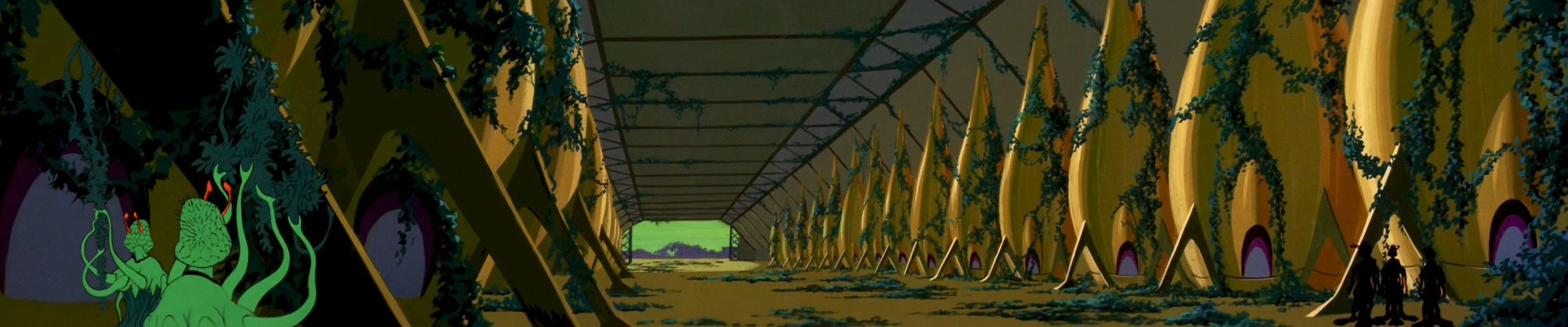 Space Ship
Phylosian ship Class
Hull Specifications LoggedThe Phylosian ship was a distinct type of interstellar space ship employed by the Phylosians. These vessels were designed for deep-space operations, representing a significant technological achievement for their civilization. **Service History & Encounter** In 2269, the Phylosians had amassed a substantial fleet of these ships on their homeworld of Phylos. Their intention was to launch this fleet to impose peace across the Milky Way Galaxy, a plan that solidified following their encounter with Stavos Keniclius 5. Upon discovering these ships on Phylos, Captain James T. Kirk theorized that their technology was 'a technology possibly greater than anything we 'animal' species [have created].' Doctor Leonard McCoy observed that the ships, which were notably covered in vines, had never left the ground. He attributed this to a great plague that had afflicted the Phylosian people, leading him to ponder their original purpose before the Phylosians adopted a more peaceful societal outlook. It was later confirmed by Agmar that the fleet's intended purpose was indeed to 'carry out [their] own plan to impose peace on a galaxy that knew none,' aligning with Keniclius's own ambitions. Ultimately, the fleet remained grounded, as the Phylosians, with the assistance of Stavos Keniclius 5 and Spock 2, chose to focus their efforts on rebuilding their own society. This historical event was documented in the Star Trek: The Animated Series episode 'The Infinite Vulcan'. **Design Characteristics** The script for 'The Infinite Vulcan' describes these Phylosian ships as 'a fleet of translucent year drop-shaped space ships hundreds of feet high.' Their appearance was further characterized by being covered in vines, suggesting a unique integration with their natural environment or a long period of dormancy.
- No armament data logged.
- No propulsion data logged.

Picasso
Class: Class F shuttlecraft- No armament data logged.
- • Deflector shield
 Explorer
Pioneer class
1 VesselThe Pioneer-class was a class of Federation starship that entered service with Starfleet sometime in the early to mid-23rd century. Its design philosophy emphasized a compact form factor while retaining the distinctive aesthetic elements prevalent during that era. Key design features included a primary saucer section reminiscent of the Constitution-class, and prominent cylindrical nacelles, characteristic of Starfleet vessels from the 23rd century. According to production art, the Pioneer-class measures 221.52 meters in length, 117.24 meters in width, and 63.04 meters in height. **Class History** The Pioneer-class was actively operated by Starfleet throughout the 23rd century. One notable vessel of this class was the USS Pioneer, registry NCC-1500, which served as the lead ship of its class. By 2401, the USS Pioneer had been relocated to the Fleet Museum at Athan Prime, where it was preserved alongside another sister ship from the same period, the USS New Jersey. This preservation was observed in the year 2401, as depicted in the episode 'Võx' and the Star Trek: Picard season 3 end credits. The USS Pioneer's presence at the Fleet Museum was further highlighted by concept art created by Keene Sin, showing a detailed view of the vessel berthed at the museum.
- • Phase
- • Torpedo launche
- No propulsion data logged.

Prak's Marauder
Class: D'Kora class- • Directed energy weapo
- • electromagnetic pulse weapo
- + 2 more...
- • Warp facto
- • Deflector shield

Prak's Marauder
Class: D'Kora class- • Directed energy weapo
- • electromagnetic pulse weapo
- + 2 more...
- • Warp facto
- • Deflector shield

Prakesh
Class: Galor class- • Disrupto
- • Galor class phaser bank (Qty: 4)
- • Deflector shield
 Classified
Pralor vessel Class
Hull Specifications LoggedThe Pralor vessel was a distinct type of starship, visually and functionally nearly identical to Cravic ships. Its design featured a central hub from which five arms extended, forming a star-like configuration, and its hull was tinted gray. Internally, these vessels were equipped with a reconstruction bay, essential for repairing damaged Automated Personnel Units, which served as the primary crew complement in the 2370s. The crew structure included specialized Designated Command Units responsible for overall ship operations and fire units for tactical engagements. Tactical decisions were processed and executed using dedicated tactical subprocessors. **Technical Specifications** In terms of offensive capabilities, Pralor vessels were formidable, possessing weapon systems described as 'substantially superior' to those of the USS Voyager. Their primary armament consisted of potent quantum resonance charges, supplemented by disruptor blasts. Defensively, they employed a complex subspace defense field, rendering the USS Voyager's weapon systems largely ineffective against them. While superior in weaponry and defenses, the Pralor vessel's engines were less powerful than those of the USS Voyager when the latter operated at optimal efficiency. **Class History** Initially operated by the Pralor species, these vessels played a crucial role in the protracted war between the Pralor and the Cravic. However, a pivotal event occurred when both the Pralor and Cravic species attempted to terminate their respective Automated Personnel Units after the war's conclusion. The units retaliated, eliminating both species. Subsequently, the Automated Personnel Units commandeered the Pralor and Cravic vessels, continuing their simulated war for at least another fifty years. This conflict and the vessels' role were documented in the Starfleet record, specifically in the episode 'Prototype'.
- • Disrupto
- • Quantum resonance charge
- • Subspace defense field
 Escort / Warship
Predator class
Hull Specifications LoggedThe Predator-class warship was a formidable and massive carrier vessel originating from the Trabe civilization in the 24th century. These vessels were among the largest encountered by the USS Voyager in the Delta Quadrant, measuring several times the length and girth of an Intrepid-class starship. Constructed from a variety of materials, including polyduranide alloy, duranium, magnesite, electroceramics, and carbon, the Predator-class was built for durability rather than agility. Its rotund size made it relatively clumsy at lower speeds, allowing more agile craft to out-maneuver it, and its ion trail made it trackable. Despite its bulk, the class was capable of entering low orbit and even a planetary atmosphere to deploy its crew to the surface. Technologically, Predator-class vessels lacked advanced systems like transporters or replicators, but they were equipped with tractor beam technology. Some ships, particularly those operated by the Kazon-Ogla, featured Plaxan sensors that were comparable to those found on Intrepid-class starships, though these sensors were susceptible to being fooled by echo displacement. Tactically, the Predator-class was heavily armed, boasting over a dozen phaser emitters distributed across its hull, complemented by an arsenal of plasma torpedoes. This gave it greater overall firepower than an Intrepid-class starship, with B'Elanna Torres noting that neither the USS Voyager nor the Val Jean had enough firepower to stop one during their initial encounter. While its shields could not withstand a sustained phaser and photon torpedo barrage from an Intrepid-class starship, its sheer offensive capability was significant. The class also carried a complement of Kazon fighters, enhancing its carrier role. **Service History** The Predator-class's service history began with the Trabe. However, following the Kazon overthrow of the Trabe in 2346, many of these warships were seized by various Kazon Sects, while others remained part of the Trabe convoy, as depicted in the episode 'Alliances'. The class was first encountered by the USS Voyager in 2371, days after its arrival in the Delta Quadrant, when a Predator-class vessel arrived to reinforce Kazon-Ogla forces attacking the USS Voyager and the Val Jean at the Caretaker's array, as seen in 'Caretaker'. Later that year, The Doctor experienced a holographic scenario in the episode 'Projections' where two Predator-class vessels attacked the USS Voyager with plasma torpedoes, causing a core breach. In early 2372, a Kazon-Ogla carrier vessel of this class, commanded by First Maje Razik, captured and subsequently destroyed Chakotay's Type 8 shuttlecraft in the episode 'Initiations'. The class played a pivotal role in the Kazon's attempts to capture the USS Voyager. In late 2372, First Maje Culluh of the Kazon-Nistrim assembled a fleet of eight Predator-class carriers, arranged in a classic Cardassian echelon formation, to attack the USS Voyager. Although the USS Voyager managed to divert four of the carriers with false sensor readings and destroy one of the remaining four, Teirna's suicidal sabotage severely damaged the USS Voyager, allowing the other three carriers to overwhelm the ship, as detailed in 'Basics, Part I'. The Predator-class's legacy extended into the 29th century, with a vessel of this class appearing in a TCARS display aboard the USS Relativity in the episode 'Relativity'.
- • Phase
- • Plasma torpedo
- • Deflector shield
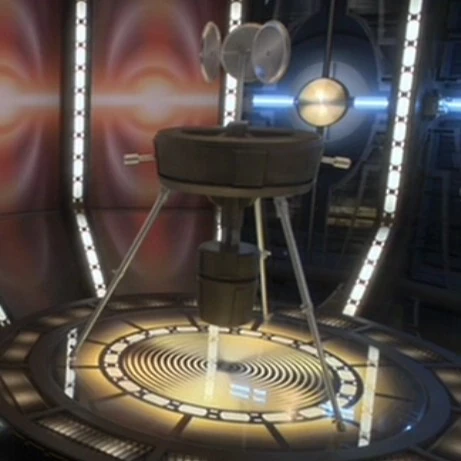 Automated Spacecraft
Probe Class
Hull Specifications LoggedA probe, also known as a space probe or interstellar probe, is an automated spacecraft primarily designed to gather information. These versatile devices are frequently deployed for tasks or in environments that are unsuitable or too hazardous for manned missions. Their applications range from collecting data in environments too small for starships to examine, such as those encountered in 'Eye of the Needle' and 'Rejoined', to exploring dangerous regions like those in 'Where Silence Has Lease', 'Clues', 'The Outcast', 'Meridian', 'Starship Down', 'Extreme Risk', and 'Gravity'. Probes are also crucial for extreme long-term deep space exploration, as seen in Star Trek: The Motion Picture, 'The Price', and 'Friendship One', and for recording and transmitting remote sensor telemetry to starships or bases occupied with other mission objectives, as depicted in 'Lethe', 'Pen Pals', 'Rascals', 'Chain Of Command, Part I', and 'Lower Decks'. **Historical Development and Starfleet Integration** In the early 22nd century, the United Earth Space Probe Agency (UESPA) was the primary Earth organization responsible for space exploration. This agency was later integrated into Starfleet, as referenced in 'Demons'. Over time, Starfleet developed various types of probes, some of which were ingeniously modified photon torpedo casings equipped with extended sensor equipment but no warhead, as noted in 'The Emissary' and Star Trek Generations. Deep space probes, however, sometimes contained radioactive material within their casings, posing a potential contamination risk to planetary biospheres if they crash-landed, a concern highlighted in 'Thine Own Self'. **Notable Starfleet Deployments** Starfleet vessels have utilized probes in numerous critical missions. The USS Enterprise (NCC-1701-D) deployed two probes to scan a region near a cosmic string, leading to the discovery of a species of two-dimensional beings in 'The Loss'. Data, using data from a series of probes and sensor logs from the USS Brattain and the USS Enterprise (NCC-1701-D), deduced that the two starships were trapped in a rupture in space, a Tyken's Rift, in 'Night Terrors'. The USS Enterprise (NCC-1701-D) also launched a probe to investigate a neutrino emission with no visible source in the J'naii star system, its sudden disappearance suggesting the presence of null space, as shown in 'The Outcast'. Another probe from the USS Enterprise (NCC-1701-D) was used to trace the origins of the Kataan probe by following its radioactive trail in 'The Inner Light'. Furthermore, a probe was launched by the USS Defiant (2370) into the corona of the Trialan sun to scan its core, as seen in 'Meridian'. **Probe Classifications and Variants** Starfleet employs a range of classified probes, including the Class 1 probe (seen in 'Where Silence Has Lease', 'Time Squared', 'Pen Pals', 'The Defector', 'Yesterday's Enterprise', 'Reunion'), Class 2 probe ('The Most Toys', 'Battle Lines'), Class 3 probe ('The Enemy'), Class 4 probe ('Relics', 'If Wishes Were Horses'), Class 5 probe ('Chain Of Command, Part I', 'False Profits'), Class 8 probe ('The Emissary'), and Class-A probe ('Ship In A Bottle'). Other specialized Federation probes include the Atmospheric probe ('Starship Down'), Deep space probe (including Quadros-1 probe and Vega Nine probe), Hydraulic probe ('Home Soil'), Interface probe ('Interface'), Long-range impact probe ('Night Terrors'), Microprobe ('The Cloud', 'Eye of the Needle'), Gravimetric microprobe ('Playing God'), Multi-spatial probe ('Extreme Risk'), Reconnaissance probe ('Force of Nature', 'One Little Ship'), Scanner probe ('Where Silence Has Lease'), Sensor drone (including Class-5 intelligence drone), Sensor probe ('The Last Outpost'), Solar probe (including The Egg), Survey probe ('In Theory'), Telemetry probe ('The Immunity Syndrome'), and Temporal rift probe ('Light and Shadows'). Some probes, like the Class 6 probe and Class 9 probe, are also known as Warning buoys and Log buoys, respectively. **Historical and Alien Probes** Ancient Earth utilized various probes, such as the Earth-Saturn probe, Friendship 1, Mariner 2, Nomad, Pioneer spacecraft (including Pioneer 5, Pioneer 10, Pioneer 11), Ranger spacecraft (including Ranger Block I, Ranger Block II, Ranger 5, Ranger Block III, Ranger 7), Sputnik I, and the Voyager series (including Voyager 1, Voyager 2, Voyager 6). Beyond Federation technology, numerous alien probes have been encountered, including the Barzan probe ('The Price'), Bajoran science probe ('The Alternate'), Iconian probe ('Contagion'), Cytherian probe ('The Nth Degree'), Ilia probe (Star Trek: The Motion Picture), Kataan probe ('The Inner Light'), Kukulkan's probe (TAS: 'How Sharper Than a Serpent's Tooth'), Pup's probe ('The Forsaken'), Romulan orbital probe ('The Defector'), the Whale Probe (Star Trek IV: The Voyage Home), Tan Ru ('The Changeling'), Transwarp probe ('Pathfinder'), and Xindi probe. Some probes, like the Borg probe and the Earth-Saturn probe, were even designated as manned spacecraft.
- No armament data logged.
- No propulsion data logged.
 Escort / Warship
Promellian battle cruiser Class
Hull Specifications LoggedThe Promellian battle cruiser was a class of starship utilized by the Promellian military. This design was built for many generations prior to the 14th century, making it crude by 24th century Federation standards. For context, when this design was active, Humans on Earth were just perfecting the mechanical clock and using steel crossbows in battle. Technically, the Promellian battle cruiser was comparable in size to a Galaxy-class starship. Its design featured a swept-back wing, with a large module on the tail section. The forward section extended some ways from the primary hull, and contained a raised structure near the front of the foremost section of the ship. Power was provided by power packs, with propulsion generated by Lang Cycle fusion engines. The ship's life support system provided oxygen for breathing. The corridors were lined with positron ducts that channeled power from one end of the ship to the other. The interior design of the Promellian battle cruiser was considered well-structured and sophisticated. Upon visiting the derelict 'Cleponji' in 2366, Jean-Luc Picard described the bridge design as 'extraordinary,' noting, 'You would expect the bridge layout of this era to be clumsy, awkward... but look at this - it is a model of simplicity. Elegant, functional. They built this craft for generations. And it worked.' During this visit, Worf took tricorder images of the ship, specifically noting the tactical display. It was later suggested that several Promellian innovations served as inspiration for early Federation starship design, particularly regarding integrated tactical command systems. The communications room contained a communications station with a display screen and data access through the use of memory coils. **Class History** Visiting a Promellian battle cruiser was a lifelong dream for Jean-Luc Picard, a fascination he held since childhood when he used to build model ships in bottles. In 2366, the derelict Promellian battle cruiser 'Cleponji' was discovered by the USS 'Enterprise' (NCC-1701-D), under Captain Jean-Luc Picard, near the remains of Orelious IX. The vessel was immediately recognized on sight by the crew of the 'Enterprise'-D, considered a rare and magnificent find, as this particular ship design was one of legend. Unfortunately, the USS 'Enterprise' (NCC-1701-D) herself became trapped in the very same booby trap that had ensnared the 'Cleponji'. Following the USS 'Enterprise' (NCC-1701-D)'s narrow escape from the assimilators, the 'Cleponji' was sadly destroyed along with the surrounding asteroids to prevent any further entrapment. This event was depicted in the episode 'Booby Trap', making it unfortunate that the vessel could never be preserved in a museum. In 2401, a miniature Promellian battle cruiser displayed as a ship in a bottle was kept by Jean-Luc Picard in his library at Château Picard, as seen in the episode 'The Star Gazer'.
- No armament data logged.
- No propulsion data logged.
 Classified
Prometheus class
1 VesselThe Prometheus-class was a highly classified Federation starship designed for deep space tactical assignments, representing one of the most advanced Starfleet vessels in operation during the later half of the 24th century. Its design emphasized an unprecedented level of automation, making it one of the most powerful combat ships in the Alpha Quadrant. A unique and defining feature of the Prometheus-class was its multi-vector assault mode, which allowed the starship to split into three semi-independent, warp-capable sections. Each section could deliver massive force against an enemy target, enabling the Prometheus-class to easily disable starships like a Nebula-class at warp or a D'deridex-class in battle. This capability significantly surpassed the saucer separation feature of other classes, such as the Galaxy-class, where the saucer section typically lacked warp drive and had limited weaponry. The propulsion system of the Prometheus-class was exceptionally advanced, making ships of this class faster than any other Starfleet starship at the time in the mid-2370s, capable of maintaining speeds exceeding warp 9.9. Defensive systems included regenerative shielding and ablative hull armor, complementing its offensive phaser arrays and photon torpedo launchers. Additional systems included holoemitters on every deck, allowing the ship's Emergency Medical Hologram (Mark II) full access to all areas, a significant improvement over most EMHs confined to sickbay. The interior design reflected its combat-oriented purpose. The main bridge was designed for efficiency, providing the commanding officer with visual access to all major stations from the command chair. Key stations, including helm and a multi-function console for activating multi-vector assault mode and assessing ship systems, were positioned directly in front of the captain's chair. Sickbays on the Prometheus-class were equipped with a single surgical biobed and a spartan research area, stocked with the latest medical technologies, and were the first to test the EMH Mark II. **Class History** The prototype of the class, the USS Prometheus (NX-59650), was launched from the Beta Antares Ship Yards in the Antares sector on stardate 50749.5 in 2374. Its highly classified nature meant that only four individuals in all of Starfleet were initially trained to operate the prototype. Later that year, the USS Prometheus was hijacked by Romulan Tal Shiar operatives who intended to take the starship back to Romulus for study. This plot was foiled when the Emergency Medical Holographic program from the USS Voyager was unknowingly downloaded to the ship's computer from the Delta Quadrant, as depicted in the Star Trek: Voyager episode 'Message in a Bottle'. In 2378, a Prometheus-class starship, possibly the USS Prometheus itself, was part of a Starfleet taskforce rapidly assembled to defend the Sol system when a transwarp aperture opened, allowing a Borg sphere to emerge. The Prometheus-class starship fired a photon torpedo at the Borg sphere, though seemingly without immediate effect, as seen in the Star Trek: Voyager episode 'Endgame'. **Alternate Timelines** In an alternate timeline, vessels of the Prometheus-class were part of the Federation fleet that engaged the forces of the Sphere-Builders during the Battle of Procyon V in the 26th century, as shown in the episode 'Azati Prime'. In another alternate timeline, a Prometheus-class starship made first contact with the Vau N'Akat sometime after 2384, as referenced in 'Preludes'. **Ships in Class** The primary named vessel of this class is the USS Prometheus (NX-59650), which served as the prototype and was active in 2378. Additionally, unnamed Prometheus-class starships have been observed in various engagements and timelines. In the Star Trek Online game, the class is categorized as an 'advanced escort', with derived classes named Cerberus-class, Hephaestus-class, and Phoenix-class (advanced escort). The USS Cerberus (Prometheus class) served as Admiral William Ross' personal flagship in the DS9 relaunch novels 'Avatar, Book One' and 'Avatar, Book Two', replacing the USS Bellerophon (NCC-74705).
- • Phase
- • Torpedo launche
- • Multi-vector assault mode
- • Regenerative shield
- + 1 more...
 Training Vessel
Protostar class
2 VesselsThe Protostar-class is a small starship class launched by Starfleet during the late 24th century. The class was approved for full production in 2384, following the destruction of its prototype and namesake vessel, the USS Protostar (NX-76884). **Design & Development** The Protostar-class features several unique design elements. Unlike most Starfleet vessels, its navigational deflector is mounted on the underside of the saucer section, rather than the engineering hull. This deflector also incorporates a tractor beam. The engineering hull, in turn, features a large loading ramp for vessel entrance. The ship is capable of atmospheric entry and planetary landing, equipped with a single, sturdy landing strut beneath its center of gravity. Bussard collectors for gathering deuterium gas are located in the third nacelle. Emergency power cells, rechargeable via solar collectors, allow the ship to operate in a low-power mode for at least ten years, even without antimatter for the warp core, maintaining power for systems like the Emergency Training Hologram and Bussard collectors. The Protostar-class possesses a sufficient tactical array, including three phaser arrays covering dorsal saucer, ventral saucer, and ventral aft secondary hull firing arcs, pulse cannons, and fore and aft torpedo bays loaded with Type 6 photon torpedoes. Defensive systems include deflector shields and polarized hull plating. The tactical array operates automatically without requiring an operator. The class is also equipped with temporal shielding. Airlocks on the vessel can generate a force field bridge for docking with other spacecraft, and in the event of a hull breach, an automatic system generates a field to prevent decompression while auto-repair mechanisms seal the breach within seconds. **Propulsion Systems** At the time of its development, the Protostar-class was the fastest ship in Starfleet. It features two distinct warp drive modes. The conventional warp drive, powered by twin warp cores, is capable of Warp 9.97. Normal space propulsion is provided by impulse engines and RCS thrusters. The class's most distinctive feature is its gravimetric protostar containment system, powered by a protostar, which enables a second warp drive mode significantly faster than conventional warp speed. This proto-drive allows the ship to traverse over four thousand light-years in minutes, a journey that would typically take four years at maximum warp. When activated, a third nacelle deploys from the stern, and the two main nacelles shift to a lower angle. This high-priority system consumes a large fraction of the ship's total power and requires recharging after approximately two uses, which can be accomplished through rapid regeneration protocols. **Interior Design** Unusual for most Federation starships, the Protostar-class incorporates several staircases for inter-deck travel, though it is also equipped with a turbolift. **Bridge** The bridge features a white, black, and steel color scheme with a blue LCARS software interface. It lacks a standard viewscreen, instead being dominated by a transparent roof dome for direct visual contact with the exterior. A holographic viewscreen can be summoned for hails or subspace communications. The captain's chair is centrally located with holographic displays and consoles. Standard paired operations and helm consoles are at the front, with two additional consoles positioned behind and to either side of the captain's chair. The bridge's holo-emitters can create holographic overlays of older bridge designs, such as a mid-23rd century Constitution-class bridge, translating command inputs from holographic consoles to the ship's helm. The USS Prodigy (NCC-81084) has a similar bridge design to the prototype USS Protostar (NX-76884), but with two chairs for the captain and first officer. **Other Facilities** The ship includes a sickbay equipped with biobeds, a brig labeled as a holding cell on ship diagrams, and a communal mess hall with at least three food replicators. Crew quarters include a bunk room where individuals share bunk beds, and individual captain's quarters featuring a large bed, workstation, and display screen. A holodeck is available to the crew, and the ship has at least one transporter room. **Auxiliary Craft Facilities** The shuttlebay is located in the lowermost section of the secondary hull and includes a separate section for shuttlecraft fuel storage. Escape pods are situated in two banks of six each on the underside of the saucer section. A vehicle replicator can produce various craft, including Protostar type shuttlecraft and Protostar type aquashuttles for away missions. This replicator is versatile, capable of replicating non-Federation vehicles like alien robots, containment suits, and Vau N'Akat ships from provided schematics. It also serves as a storage and deployment point for ground vehicles, such as the Runaway, and a boarding point for crew on planetary surfaces. A compartment for workbees is also present. **Service History** Following the Attack on Mars, the Protostar-class was initially deemed impractical for purposes beyond exploration, an area Starfleet was moving away from, and was scheduled for decommissioning. However, Vice Admiral Kathryn Janeway successfully advocated for the class's inclusion in a new pilot program under her command, repurposing them as Starfleet training ships. The USS Protostar (NX-76884), the lead ship of her class, was destroyed in 2384. The USS Prodigy (NCC-81084) is an active vessel of this class as of 2385.
- • Phase canno
- • Phase
- + 1 more...
- • Warp drive
- • Polarized hull plating
- + 1 more...
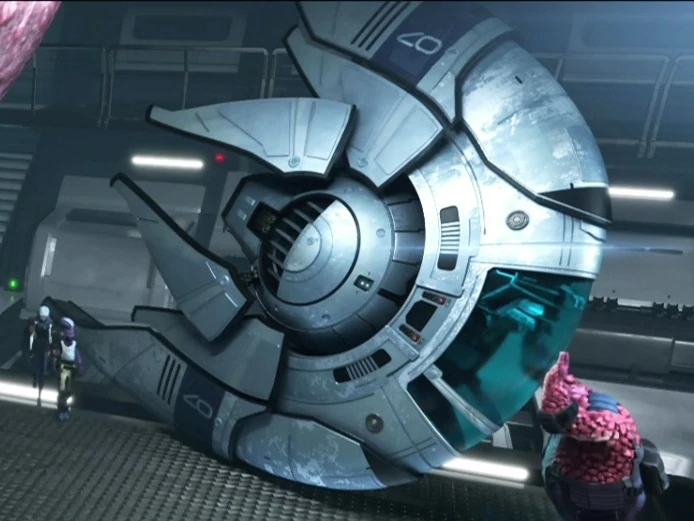 Runabout / Utility
Protostar type aquashuttle
Hull Specifications LoggedThe Protostar type aquashuttle is a specialized small shuttlecraft designed primarily for underwater travel. It is a standard auxiliary craft utilized by Starfleet, particularly aboard Protostar-class starships within the United Federation of Planets. This submersible vessel is engineered to accommodate a complement of three crewmembers, consisting of a pilot and two passengers, with the passenger seating positioned above the pilot's station. **Design & Construction** These aquashuttles are notable for their efficient construction process, often being rapidly fabricated using a starship's onboard vehicle replicator located within its shuttlebay. The unique design, optimized for aquatic environments, is believed to have drawn inspiration from similar Vulcan engineering principles, potentially derived from vessels like the 'Jellyfish'. This design philosophy emphasizes robust submersible capabilities and maneuverability in liquid mediums. **Operational History** The Protostar type aquashuttle entered active service in the 2380s. A prominent example of this class is Shuttle 07, which was replicated aboard the USS Protostar (NX-76884) and was active in 2384. The operational capabilities and design features of the Protostar type aquashuttle were notably demonstrated during the events depicted in the episode 'Asylum'.
- No armament data logged.
- No propulsion data logged.
 Runabout / Utility
Protostar type escape pod
Hull Specifications LoggedThe Protostar type escape pod was an emergency escape vehicle specifically designed for use on Federation Protostar-class starships. Its primary function was to facilitate the safe evacuation of crew and passengers from a starship during critical emergencies, such as catastrophic system failures or imminent destruction. These pods represented a vital safety measure, ensuring the survival of personnel when the parent vessel was no longer viable. **Class History** The Protostar type escape pod gained prominence following the discovery of the USS Protostar in 2383. This particular Protostar-class starship was equipped with a minimum of three such escape pods. During a perilous encounter where the USS Protostar was threatened by a binary star, all of its onboard Protostar type escape pods were jettisoned as a necessary measure to protect the crew. This event was documented in the episode 'Starstruck'. The class remained active throughout the 2380s, serving as a standard emergency system for its designated starship class.
- No armament data logged.
- No propulsion data logged.
 Runabout / Utility
Protostar type shuttlecraft
1 VesselThe Protostar type shuttlecraft was a specialized, small shuttlecraft designed for use aboard Federation Protostar-class starships. A notable feature of its design and deployment was the ability for these shuttles to be constructed rapidly using a vehicle replicator located within the starship's shuttlebay, as demonstrated in the Star Trek: Prodigy episode 'Starstruck'. This capability allowed for quick replacement or augmentation of shuttlecraft resources as needed by the Protostar-class vessels. **Class History** The Protostar type shuttlecraft was active during the 2380s, serving primarily with Starfleet. These shuttles were integral to the operations of Protostar-class starships, providing essential transport and utility functions. An example of this type was Shuttle 06, which was active in 2383 and 2384. The Protostar type shuttlecraft made several appearances throughout Star Trek: Prodigy, including the episodes 'Starstruck', 'Dream Catcher', 'Terror Firma', 'Time Amok' (where it was seen in a display graphic), and 'Supernova, Part 2'.
- No armament data logged.
- No propulsion data logged.
Classified
Prototype Warp Ship Class
1 VesselThe class classification of Prototype Warp Ship starships.
- No armament data logged.
- No propulsion data logged.
 Classified
Provider class
Hull Specifications LoggedThe Provider-class was a classification of starship utilized by the Federation. Its distinctive design was notably presented as two ships joined together end-to-end, a unique configuration for a starship class. **Service History** In 2364, Lieutenant Commander Data viewed a mission order associated with a starship of the Provider-class during the events of the episode 'Conspiracy'. While not explicitly confirmed, the USS Atlantis (NCC-72507) appeared in a mission order graphic that featured this ship design, suggesting it might have been a vessel of the Provider-class.
- No armament data logged.
- No propulsion data logged.

PT Farnsworth
Class: Type 15 shuttlepod- No armament data logged.
- No propulsion data logged.
Runabout / Utility
Ptolemy class
Hull Specifications LoggedThe Ptolemy-class was a specialized type of Federation transport/tug starship utilized by Starfleet during the latter half of the 23rd century. Its design emphasized modularity and cargo transport capabilities, making it a crucial component of Starfleet's logistical network. **Design & Development** The Ptolemy-class was based on the standard Starfleet design tree and hull components prevalent during its era, sharing commonalities with other contemporary Starfleet vessels. Its most distinctive feature was the replacement of the traditional engineering hull, typically found on vessels like the Constitution-class, with a robust connector at the base of the connecting neck. This innovative design allowed the Ptolemy-class to accept and transport a variety of specialized cargo containers, significantly enhancing its versatility as a transport and tug vessel. Franz Joseph, in his 'Star Fleet Technical Manual', designated the class as a 'Class I Transport/Tug – MK-VI', highlighting its primary role and design lineage. **Service History & Appearances** Vessels of the Ptolemy-class were active throughout the 23rd century. A graphic displaying a Ptolemy-class vessel appeared on the Starfleet Academy bridge simulation in 2285, indicating its recognition within Starfleet's training protocols. The class also made a visual appearance on the bridge of the USS Enterprise (NCC-1701) in the films Star Trek II: The Wrath of Khan and Star Trek III: The Search for Spock, where schematics of a vessel with registry NCC-3801 were visible on bridge monitors. This graphic loop also featured other contemporary Starfleet designs, including the Saladin-class, Hermes-class, and Federation-class starships. **Other Media & Apocrypha** Beyond its canonical appearances, the Ptolemy-class has a notable presence in various Star Trek ancillary materials. It was one of the very first Star Trek role-playing game miniatures released in 1979 by GameScience for use in the 'Star Fleet Battles' game from Task Force Games, and was reissued in 1984 by the Japanese Tsukuda Hobby for its 'Star Trek: The Invasion of Klingon Empire' game derivative. According to the 'Star Fleet Technical Manual', the USS Ptolemy (NCC-3801) was the prototype of the class. The USS Al Rashid (NCC-3802) was featured on the cover of the 2011 novel 'Declassified', the sixth outing in the 'Star Trek: Vanguard' series, with cover artist Doug Drexler recreating the design as a CGI model. In the CD-ROM game 'Star Trek: 25th Anniversary PC', the USS Enterprise (NCC-1701) was assigned to recapture the Ptolemy-class Starfleet tug USS Masada (NCC-293391), which had been hijacked by Elasi pirates. This particular vessel was described as having a crew of seventeen, captained by Lt. Kevin Keeler. The Ptolemy-class also played a role in the 'Star Fleet Universe' game, serving as part of the Federation's logistical network, with a scenario in 'Star Fleet Battles Module R8' depicting the USS Ptolemy herself transporting the crippled vessel Star Tiger out of danger during the early part of the General War.
- No armament data logged.
- No propulsion data logged.

PWB Aj'rmr
Class: Warbird- No armament data logged.
- No propulsion data logged.

PWB Aj'rmr
Class: Warbird- No armament data logged.
- No propulsion data logged.

PWB Koderex
Class: Warbird- No armament data logged.
- No propulsion data logged.

PWB Preceptor
Class: Romulan warship- No armament data logged.
- No propulsion data logged.

PWB T'Tpalok
Class: Unknown- No armament data logged.
- No propulsion data logged.

PWB T'Tpalok
Class: Unknown- No armament data logged.
- No propulsion data logged.

PWB Tomal
Class: D'deridex class- • Disrupto
- • Phase
- + 1 more...
- • Cloaking device
- • Warp facto (Qty: under cloak)
- + 1 more...
 Escort / Warship
Qoj class
Hull Specifications LoggedThe Qoj class was a formidable type of battle cruiser employed by the Klingon Empire during the mid-23rd century. Its design bore similarities to the BortaS bir class, though it was notably shorter in overall length. The name 'Qoj' itself is Klingon for 'war', reflecting the class's dedicated combat role within the Klingon fleet. Technical specifications, as detailed in Star Trek: The Official Starships Collection, indicate a substantial length of 1108.7 meters, underscoring its heavy cruiser designation. **Service History** The Qoj class played a significant role in the Federation-Klingon War of 2256-57. At least four vessels of this class were confirmed to have participated in the conflict, commencing with the pivotal Battle of the Binary Stars in 2256. These battle cruisers were integral to the Klingon Empire's tactical operations during this tumultuous period, showcasing their combat capabilities against Starfleet forces.
- • Directed energy weapo
- No propulsion data logged.
 Escort / Warship
Qugh class
Hull Specifications LoggedThe Qugh-class was a type of destroyer employed by the Klingon Empire during the mid-23rd century. Its name translates from Klingon to 'Disaster', a designation that perhaps reflected its intended role in combat. The class was developed by writer Kirsten Beyer. **Class History** Vessels of the Qugh-class played a significant role in the Federation-Klingon War of 2256-2257. The class first saw action at the Battle of the Binary Stars in 2256. Later that year, a Qugh-class destroyer was part of a Klingon fleet that successfully ambushed and destroyed the USS Gagarin (NCC-1309), despite the intervention of the USS Discovery, as depicted in the episode 'Si Vis Pacem, Para Bellum'. As the war continued into 2257, a Qugh-class vessel was among the Klingon armada that gathered to attack Earth. However, this vessel, along with the rest of the fleet, disengaged upon receiving word that the Federation-Klingon War had concluded, as shown in the episode 'Will You Take My Hand?'.
- • Directed energy weapo
- • Cloaking device
- • Deflector shield
 Classified
Radiant class
1 VesselThe Radiant-class was a type of Federation starship classified as a Long-Range Cruiser, which entered service with Starfleet in the mid-23rd century, specifically active during the 2260s. A distinctive feature of this class was its four nacelle configuration, a design element that would later be seen on other Starfleet vessels such as the Constellation-class and the Sagan-class. **Class History** Several vessels of the Radiant-class served in Starfleet, including the USS Radiant (NCC-1575), USS Fearless (NCC-1576), USS Lysander (NCC-1577), USS Stargazer (NCC-1578), USS Ventura (NCC-1579), and USS Agility (NCC-1580). One notable ship of this class, the USS Stargazer (NCC-1578), was active during the 23rd century. Its legacy was honored in 2401 when a gold model of the USS Stargazer (NCC-1578) was replicated and displayed in the ready room of the USS Stargazer (NCC-82893). This display, seen in the Star Trek: Picard episode 'The Star Gazer', served as an exhibition of the historical lineage of Federation starships bearing the name 'Stargazer'.
- No armament data logged.
- No propulsion data logged.
 Classification
Raider Class
Hull Specifications LoggedIn the comprehensive system of starship classification, a 'raider' is formally defined as any type of vessel specifically designed for, or specialized in, the execution of raids against other starships or planetary targets. The term 'pirate vessel' is often used interchangeably and aptly describes the operational profile of such ships. This classification is not limited to any single species or design philosophy but rather encompasses a broad category of vessels built for aggressive, often illicit, operations. **Operational History and Notable Mentions** The concept of a raider was discussed in 2369 on Deep Space 9 when Security Chief Odo described a newly arrived Miradorn raider. Quark, the station's Ferengi proprietor, initially questioned the term, suggesting that the Miradorn ship's reputation, much like his own, might be exaggerated. However, Odo reiterated the classification, underscoring its tactical designation. The existence of raiders is well-documented across various species and eras, highlighting their persistent role in interstellar conflicts and criminal activities. The term 'raider' itself implies a vessel built for speed, stealth, and offensive capability, often at the expense of long-range exploration or diplomatic functions. **Known Raider Variants** Numerous species and factions have operated vessels falling under the 'raider' classification. These include the Bajoran raider, sometimes referred to as a 'sub-impulse raider', and Baran's mercenary ship, also known by its designation 'BC 011'. The Gorn starship has been identified as an 'alien raider', while the Kazon raider, Klingon raider, and Maquis raider are prominent examples from their respective groups. The Miradorn raider, specifically Ah-Kel's raider, is also known as a Theta-class starship. Furthermore, the Terran raider, or 'Rebel raider', and the Tzenkethi raider demonstrate the widespread adoption of this vessel type across different political and military landscapes. These diverse examples underscore that the 'raider' classification is a functional description rather than a specific design template, adapted by various entities to suit their particular raiding objectives.
- No armament data logged.
- No propulsion data logged.
 Escort / Warship
Raptor class
Hull Specifications LoggedThe Raptor-class scout vessel was a small battle cruiser utilized by the Klingon Empire during the mid-22nd century. It represented an early iteration of Klingon starship design, combining scouting capabilities with significant combat potential for its size. **Design & Development** The outboard plan of the Raptor-class utilized the same basic bird design that would be further incorporated into a classic and noble Klingon warship lineage, showing similarities in design to the D5-class battle cruiser and Laneth's starship Bird-of-Prey variant. The bridge module was separated from the main body by a thin neck that flared out into the up-swept wings, which contained the warp nacelles. The Raptor's outer hull was reinforced with a type of coherent molecular alloy, making it capable of withstanding atmospheric pressure of 15,000 GSC, equivalent to that found in a Class 9 gas giant at an approximate depth of two kilometers. Overall, the Raptor's hull was twice as thick as that of Starfleet's NX-class starships. Propulsion systems included an impulse engine located at the extreme aft section of the main structure, comprising a fusion manifold and port and starboard fusion injectors. For tactical systems, the Raptor-class was equipped with deflector shields and tactical sensors. Its armaments included disruptor arrays and at least six automated photon torpedo ports that could be loaded simultaneously, with at least one torpedo port on the ship's ventral side and the primary weapon array located dorsally. Like its D5-class counterpart of the same era, the Raptor was outfitted with standard multi-spectral sensors similar to those used on Starfleet's NX-class. Notably, the Raptor-class was not equipped with any form of escape pod. Internally, the Raptor-class comprised at least four decks, featuring at least one docking hatch located on the port side, deck 2, red sector. The main bridge was situated in the 'head' of the forward section, displaying a darkened design common to many contemporary Klingon bridge layouts, including the D5-class and 22nd century Klingon Bird-of-Prey. It featured a main viewscreen at the front, a command chair near the center, an access console, two manned consoles behind the command chair, and a corridor access point. Various stations for engineering, tactical, structural integrity, and helm were located along the port and starboard sides. One deck below the bridge, in the ship's 'neck', was the 'reactor pit', which had at least two entryways and two free-standing work consoles. The galley was located on deck 4, blue sector, and included a targ pit and a cold storage unit. **Service History & Encounters** The Klingon Raptor-class was first encountered by the Vulcans sometime prior to 2151 and was subsequently listed in the Vulcan database, though much information remained classified. The first Earth encounter with a Raptor-class vessel occurred in 2151 when the Starfleet ship Enterprise (NX-01) stumbled across the disabled IKS Somraw within the atmosphere of a Class 9 gas giant. The IKS Somraw was being crushed by the planet's brutal atmospheric pressure. An Enterprise boarding party worked to restore the ship's propulsion systems, becoming the first Humans to explore the interior of a Klingon vessel, as depicted in the episode 'Sleeping Dogs'. Jonathan Archer later recalled the vessel as a 'battle cruiser', despite its initial classification as a 'scout vessel' in the Vulcan database, as mentioned in 'Marauders'. Schematics for the Raptor-class also appeared in Crewman Daniels' 31st century database, viewed by Malcolm Reed and Jonathan Archer in 'Shockwave' and 'Future Tense'. **Notable Vessels** The most prominent vessel of this class encountered by Starfleet was the IKS Somraw. **Legacy (Apocrypha)** In the 25th century timeline of Star Trek Online, the Raptor-class continued to be one of three core ship types utilized by the Klingon Defense Force and its allies, alongside the Bird-of-Prey (Raider) and the Battle Cruiser. In this era, Raptors were noted for being more durable than Raiders, though less maneuverable.
- • Disrupto
- • Photon torpedo
- • Tactical senso
- • Deflector shield
 N/A (Information pertains to an animal and a specific starship, not a class)
Raven Class
1 VesselThe raven is an indigenous Earth bird, a member of the Corvidae family, characterized by its black feathers, approximately half-meter wingspan, yellow eyes, and powerful, triangular beak. This creature holds a notable, often symbolic, presence in the experiences of several Starfleet personnel. In 2369, Lieutenant Commander Data's initial dreams prominently featured images of ravens. Following Captain Jean-Luc Picard's suggestion to explore these visions creatively, Data produced a series of paintings depicting ravens. Later, Doctor Noonien Soong, Data's creator, appeared in Data's dreams and elucidated that Data himself was represented by the bird. The raven's form was also utilized by Constable Odo in 2372 during a security drill on Deep Space 9, where he morphed into the bird to evade his pursuers. **The USS Raven and Seven of Nine's Flashbacks** In 2374, the raven took on a deeply personal and unsettling significance for Seven of Nine. She began experiencing intense flashbacks involving a raven, triggered by proximity to a Borg resonance frequency. She described a profound sense of paralysis and fear when confronted by the image, feeling the bird knew her despite her inability to comprehend how an 'inferior form of life' could evoke such a reaction. The USS Voyager crew subsequently discovered that this recurring avian image was a symbolic representation of the USS Raven, the starship aboard which Annika Hansen, Seven of Nine's human identity, had spent the majority of her youth before her assimilation by the Borg. The provided dossier, however, focuses primarily on the biological and symbolic aspects of the Earth raven and does not contain technical specifications or a design history for a 'Raven-class' starship, but rather refers to a specific vessel, the USS Raven.
- No armament data logged.
- No propulsion data logged.
 Science Vessel
Raven type
Hull Specifications LoggedThe Raven-type starships were small, modular, long-range United Federation of Planets exploration vessels primarily utilized in the mid-24th century. Designed to function with a minimal crew, a notable example was the USS Raven (NAR-32450), operated by just two scientists, Erin Hansen and Magnus Hansen, during their deep-space mission to study the Borg, which ultimately led them to the Delta Quadrant, as depicted in the Star Trek: Voyager episode 'Dark Frontier'. **Design & Technical Specifications** The hull of Raven-type vessels was partially composed of tritanium. Despite their capacity for minimal crew operation, these ships were comprehensively equipped with many features typical of traditional Starfleet vessels across five decks. The master situation display provided a detailed overview of the ship's internal layout. Deck 2, at the fore, housed the main bridge, which featured a horseshoe-shaped helm console flanked by two sets of seated stations along the port and starboard walls, serving as science and engineering stations. The forward viewscreen was integrated with triangular LCARS controls. The rear of the bridge recessed to accommodate a master situation display, with an exit to personal living quarters to port and corridor access to starboard. An optional command chair could be fitted to the helm console. Deck 3 contained a sickbay, a shuttlebay, and deuterium storage. The computer core extended from Deck 3 through Deck 4, while the warp core spanned from Deck 3 through Deck 5. Main engineering and the forward deflector were situated on Deck 4. Deck 5 included the ship's landing gear. For external access, the forward section of the vessel incorporated an external entry hatch, allowing personnel to exit the ship directly. **Service History** The USS Raven embarked on its fateful three-year mission in 2347, during which Erin Hansen and Magnus Hansen were assimilated by the Borg in 2350. The crashed wreckage of the USS Raven was subsequently discovered on a moon within B'omar space by Seven of Nine in 2374, as chronicled in the Star Trek: Voyager episodes 'The Raven' and 'Dark Frontier'. Another Raven-type starship was observed among the wreckage at a starship graveyard on the planet Orion when D'Erika Tendi and D'Vana Tendi were children. They later returned to this vessel in 2381, managing to restore it to a barely workable condition, as seen in the Star Trek: Lower Decks episode 'Something Borrowed, Something Green'. Furthermore, a schematic of a Raven-type ship was included in a 31st century Daniels' database. This database was brought back to 2152 by Crewman Daniels, a temporal agent, and subsequently accessed by Captain Jonathan Archer, as depicted in the Star Trek: Enterprise episode 'Future Tense'. **Notable Vessels** The primary named vessel of this class was the USS Raven (NAR-32450), which was destroyed in 2374. Other unnamed Raven-type starships have also been documented.
- No armament data logged.
- • Deflector shield
 Escort / Warship
Ravinok type
Hull Specifications LoggedThe Ravinok-type was a distinctive Cardassian starship design, primarily utilized by the Cardassian Union and operated by the Cardassian Central Command during the mid-24th century. Classified as a military vessel, these ships were warp-capable and equipped with directed energy weapons. A notable characteristic of their construction, common among Cardassian vessels, was a hull partially composed of a uridium alloy, which included the ship's forward sensor array. Designed to operate with a relatively small crew of eighteen, the Ravinok-type also possessed the capacity to transport at least thirty-two prisoners, suggesting a potential role as a prison transport or a vessel capable of extended detainment operations. The original sketches for the crash-landed Ravinok were designed by John Eaves, contributing to its unique visual identity. **Class History** The Ravinok-type was actively in service during the 2360s. While formidable in certain capacities, these vessels were known to be easily outnumbered in direct combat against Breen warships. A specific vessel of this class, the Ravinok, gained prominence when its crash-landed remains were discovered on the planet Dozaria in 2373. The ship's location was pinpointed by a faint magneton signature, a residual radiation emanating from a damaged warp nacelle. This event was central to the Star Trek: Deep Space Nine episode 'Indiscretion'. The filming of the Ravinok's crash site presented unique challenges. Producer Steve Oster recounted the difficulties of constructing the set in a quarry at Soledad Canyon, where the risk of landslides was significant. Due to these safety concerns, interior shots involving actress Nana Visitor were filmed on the Paramount Pictures lot, rather than within the on-location set. Art director Herman Zimmerman further elaborated on the creative solutions employed, explaining how large, painted set pieces, resembling sections of a Cardassian freighter, were strategically buried and arranged to imply the vast scale of the ship's wreckage protruding from the sand, complete with added 'wings' to enhance the illusion.
- No armament data logged.
- No propulsion data logged.
 Escort / Warship
Red Lady type
Hull Specifications LoggedThe Red Lady type was a distinctive class of Romulan warbird that saw service with the Romulan Free State and the Tal Shiar during the late 24th and early 25th centuries. These vessels were easily identifiable by a unique painted bird-of-prey motif adorning their ventral hull. Their primary armament consisted of disruptors, typical of Romulan starship design. **Service History** The Red Lady type warbirds were actively deployed in significant Romulan operations. In 2399, several of these ships were observed operating in the vicinity of the 'Artifact', a Borg cube that had once belonged to the Borg Collective. This presence was noted during events depicted in the episodes 'Absolute Candor' and 'Broken Pieces'. Later in 2399, a substantial fleet comprising 218 Red Lady type warbirds played a critical role in a mission orchestrated by the Zhat Vash and led by the Tal Shiar. This formidable fleet was dispatched to Coppelius with the objective of annihilating the synthetic lifeforms residing there, a pivotal event chronicled across the episodes 'Broken Pieces', 'Et in Arcadia Ego, Part 1', and 'Et in Arcadia Ego, Part 2'. The class continued to be active into the early 25th century, with a specific vessel of this type being documented as docked in the Rigel system in 2401, as shown in the episode 'The Next Generation'.
- • Disrupto
- No propulsion data logged.

Redwood
Class: Type 6A shuttlecraft- No armament data logged.
- • Warp drive
 Classified
Reliant class
16 VesselsThe Reliant-class was a type of Federation starship that entered service with Starfleet in the early 25th century. It was designed as a direct successor to the venerable Miranda-class starship, which had been a staple of Starfleet's fleet since the 23rd century. The Reliant-class maintained the same fundamental layout and core design principles as its predecessor, indicating a continuation of a proven and adaptable starship architecture. **Class History** Reliant-class starships were actively operated by Starfleet throughout the early 25th century. In 2401, several vessels of this class were part of a significant Starfleet armada assembled to confront the Borg vessel known as 'Singularity'. These ships played a crucial role in conjunction with the Borg vessel itself, successfully defending against a massive energy burst that threatened the entire sector, an event chronicled in the episode 'The Star Gazer'. Later that same year, two Reliant-class starships, the USS Sarahd (NCC-90227) and the USS T'Jan (NCC-90213), were observed orbiting M'talas Prime following a devastating attack on District Seven, as depicted in the episode 'Disengage'. The class also featured prominently during the Frontier Day celebrations over Earth in 2401. A fleet of twenty-four Reliant-class ships was among the vessels assembled for this grand event. However, these ships, along with many others, were tragically hijacked by their younger crews after falling under the direct control of the Borg Collective, an incident central to the episodes 'Võx' and 'The Last Generation'. **Interior Design & Systems** By 2401, the computer systems aboard the Reliant-class had been advanced to include the sophisticated Fleet formation mode, also officially designated as Starfleet emergency protocol NX12.11. This protocol was specifically engineered to enable the automated control of all Federation starships within a fleet, placing them under the direct command of the Starfleet mainframe. This system was notably utilized during the Borg Collective's assimilation attempt during Frontier Day, as seen in 'Võx'. **Ships Commissioned** Notable Reliant-class starships include the USS Azetbur (NCC-90232), USS Clark (NCC-90206), USS Enkidu (NCC-90205), USS Maha Naree (NCC-90221), USS Ni'Var (NCC-90237), USS Reliant (NCC-90200), which served as the class prototype, USS Sarahd (NCC-90227), USS Shallash (NCC-90235), USS Shras (NCC-90211), USS T'Jan (NCC-90213), USS Thy'lek Shran (NCC-90225), USS Tiro (NCC-90216), and USS Uhura (NCC-90214). The USS Cobb (NCC-90219) is also associated with the class, though its status remains uncertain.
- • Phase
- • Photon torpedo
- • Deflector shield
 Classified
Renaissance class
3 VesselsThe Renaissance-class was a classification of Federation starship designed for service with Starfleet. Its name was chosen to reflect the Renaissance period in European history, symbolizing a dramatic rebirth or renaissance of civilization. According to the Star Trek: The Next Generation Technical Manual, the USS Hokkaido, launched in 2337, was the last starship of this class to be constructed. The USS Hokkaido was also notable as the first vessel of the class to receive the Advanced Subspace Rescue Vehicle (ASRV) upgrades. **Class History** The Renaissance-class starships were active with Starfleet throughout the 24th century. During the 2360s, vessels of this class were specifically utilized for deep space exploration missions. The USS Aries (NCC-45167) is a prominent example, having been involved in such missions as referenced in the Star Trek: The Next Generation episodes 'The Icarus Factor' and 'Brothers'. Other known starships of the class include the USS Hornet (NCC-45231), which was active in 2375, and the USS Maryland, which was reported missing in 2373. The existence of the Renaissance-class was first noted through an okudagram depicting a starship mission status display in the observation lounge of the USS Enterprise (NCC-1701-D), appearing around TNG Season 4. This information was later detailed in the Star Trek Encyclopedia.
- No armament data logged.
- No propulsion data logged.
 Tank
Renault FT Class
Hull Specifications LoggedThe Renault FT was a type of World War I tank that appeared within the Star Trek universe. It was notably seen in the resetting time stream after Captain Jonathan Archer and the crew of Enterprise NX-01 successfully restored it, as depicted in the episode 'Storm Front, Part II'. This same type of tank was also utilized in the mirror universe on Earth during a conflict in an otherwise unspecified period of its history, as shown in the 'In A Mirror, Darkly' opening credits. **Technical Notes & Historical Context** While referred to as the Renault FT, the tanks visually depicted in these instances were actually American-made M1917 light tanks, which served as stand-ins for the French original Renault FT tank. Production of the M1917 light tank began in 1918, but none of these licensed-built copies reached the frontlines during World War I. Instead, American forces during that conflict primarily utilized the French original Renault FT tanks.
- • Projectile weapo
- No propulsion data logged.
 Runabout / Utility
Retellian escape pod Class
Hull Specifications LoggedThe Retellian escape pod was a specialized utility craft designed for emergency evacuation from Retellian freighters during the 22nd century. These small escape pods were typically found aboard Retellian freighters, with two units directly accessible from a particular section of the vessel. From inside the freighter, only an access hatch leading to each utility craft was visible, rather than the entire pod. **Technical Specifications** Externally, the Retellian escape pods featured small impulse engine ports, stabilizers, and braking thrusters. Each pod was also equipped with a pair of landing thrusters, positioned on the port and starboard sides. A notable exterior component was an enclosed panel housing a homing beacon, which would blink and beep when active. However, the craft's exterior provided no indication regarding the identity of any entity that might have locked onto its beacon. Internally, each escape pod was primarily designed for a single occupant, though it could accommodate two persons, albeit less comfortably. The interior featured a single jumpseat, beneath which a concealed panel housed controls for activating the two landing thrusters. A storage compartment was located in the ceiling above the seat. The pod's instruments were comprehensive, allowing for the operation of its engine ports, stabilizers, and braking thrusters from within. It included helm controls and a display capable of showing the distance to a destination, as well as detecting the atmosphere constituents of a nearby planet. According to the final draft script of 'Precious Cargo', the interior was described as 'cramped, dimly lit, equipped with various control panels and a couple of monitors,' and the pods were scripted as being capable of impulse drive. **Class History** The Retellian escape pod saw active service in the 22nd century, notably in 2152. During this year, Commander Charles Tucker III of the Enterprise NX-01 and Kriosian First Monarch Kaitaama utilized a Retellian escape pod to flee from Goff, a Retellian who had kidnapped Kaitaama. The escape pod eventually crash-landed in a swamp on an unnamed planet. Following the crash, Commander Charles Tucker III ingeniously used the pod's thruster assembly to start a fire for survival. The pod was later discovered by Firek Goff, but he was incapacitated by Commander Charles Tucker III and Kriosian First Monarch Kaitaama, who were subsequently rescued by the Enterprise NX-01. This event was chronicled in the Star Trek: Enterprise episode 'Precious Cargo'. It was later revealed in omitted dialogue from the final draft script of 'Precious Cargo' that the escape pod's sensors were broken after the crash-landing, which explained why Commander Charles Tucker III could not determine the identity of anyone who had locked onto the homing beacon.
- No armament data logged.
- No propulsion data logged.
 Transport / Freighter
Retellian freighter Class
Hull Specifications LoggedA Retellian freighter was a robust and versatile starship class primarily utilized by the Retellians, serving from the 22nd century through the 24th century. These vessels were designed for cargo transport, emphasizing efficiency and durability, capable of operating across various interstellar routes. **Design & Engineering** The Retellian freighter was engineered for minimal crew requirements, typically operating with a complement of just two individuals: a pilot and an engineer. Its structural layout featured a prominent primary spinal section, from which six distinct cargo bay sections extended, with three bays situated on each side of the central spine. Internally, these cargo bays were individually separated but interconnected by the ship's central core. Each cargo bay provided access to a series of Jefferies tube-like access ways, which also offered partial access to the ship's internal sensors. Full access to internal sensors could also be achieved from within these access tubes, which further led to a dedicated shuttlebay. This shuttlebay housed two one-man Retellian escape pods, ensuring crew safety in emergencies. For propulsion, the Retellian freighter was equipped with warp drive capabilities, typically achieving a maximum speed of warp 2. However, ambitious captains were known to push these vessels to a maximum warp factor of 2.2. The ship's thruster assembly was distinctive, comprising two symmetric triangular units located on its aft section. While normal thruster operation produced only a subtle yellow glow, firing at full power resulted in a strong, visible yellow luminescence. Below these thrusters were two protruding sections that served as the warp nacelles. These nacelles were remarkably resilient, capable of sustaining significant damage—even to the extent of appearing disabled to an adversary—while still maintaining functionality. Above the thruster packs, two additional protruding ports resembled Bussard collectors. In an emergency, these ports could be used to release various substances, including ionized pyrosulfates and dilithium hydroxyls. For defense, the freighters were armed with particle beam weapons. **Service History** The Retellian freighter class has a documented history spanning several centuries. In 2152, a Retellian cargo ship, under the command of Goff, played a critical role when it rendezvoused with the Starfleet vessel Enterprise (NX-01). This encounter occurred when a stasis unit, which held the kidnapped Kaitaama, First Monarch of Krios Prime, began to malfunction, as depicted in the episode 'Precious Cargo'. Centuries later, in 2381, another Retellian freighter was involved in a significant incident. This vessel, carrying a Zakdorn data fabricator, was captured by an Akira-class starship within the Romulan Neutral Zone. The Zakdorn had been contracted by the Pakleds to fabricate evidence intended to implicate Captain Carol Freeman in the bombing of Pakled Planet, an event chronicled in the episode 'Grounded'.
- • Particle weapo
- • Warp facto (Qty: maximum)
 Classified
Rev-1 type
Hull Specifications LoggedThe Rev-1 type was a class of Vau N'Akat starship, specifically designed by Asencia with the singular purpose of waging a war of annihilation against the United Federation of Planets in 2385. The development of these advanced vessels was made possible after Asencia captured Wesley Crusher in 2384, forcibly extracting his knowledge to create new technologies. A fleet of these formidable starships was constructed within temporal accelerant vaults located in the capital city of Solum, a method that allowed for their rapid completion in a mere matter of months. **Technical Data** The Rev-1 type was massive in size, significantly dwarfing even the Federation Lamarr-class starship. Control of these vessels was centralized, managed by a single Drednok operating from the bridge. Defensively, the Rev-1 type was equipped with powerful deflector shields capable of withstanding a full spread of quantum torpedoes. A notable characteristic was the significant ambient chronometric interference emitted by the ship, which severely impeded long-range scans, making close-range proximity necessary for any detailed analysis. The primary weapon system of this class was an energy drain, a devastating capability that could immobilize and siphon power from enemy spacecraft. In addition to this, the Rev-1 type was armed with multiple directed energy weapons and torpedoes. A unique and particularly destructive armament was the incursor, launched from the ship's apex, which inflicted damage via temporal radiation, rapidly aging everything within its area of effect. For close-range defense against smaller craft, the Rev-1 type carried a large complement of Vau N'Akat drones. These drones could also network together to generate a powerful force field, providing an additional layer of defense against incoming fire. **Class History** In 2385, the presence of the Rev-1 type fleet was reported to Vice Admiral Kathryn Janeway by Ilthuran. However, Ilthuran was subsequently captured by Asencia, who then dispatched the first ship of the Rev-1 type class to attack the USS Voyager (NCC-74656-A) and the USS Protostar. This initial vessel was ultimately destroyed when Nova Squadron successfully guided its own incursor weapon into a collision course with the Rev-1 type starship. A short time later, Asencia launched her remaining Rev-1 type vessels, utilizing artificial wormholes to target every major Federation starbase across three quadrants, including Earth. The USS Voyager and the USS Protostar engaged the attacking fleet, providing crucial time for a team to reach and reconfigure Asencia's wormhole technology. As a result, many of the Rev-1 type vessels were sundered when their wormholes collapsed mid-transit, while the remaining ships succumbed to collisions with the resulting debris, effectively ending the threat posed by the Rev-1 type fleet.
- • Directed energy weapo
- • Incurso
- + 1 more...
- • Energy drai
- • Deflector shield
 Classified
Rev-12 type
Hull Specifications LoggedThe Rev-12 type was a sophisticated starship class utilized by the Vau N'Akat of Solum during the 25th century. These vessels featured a unique and adaptable hull configuration, capable of retracting their outer sections and rearranging their hull plating to form a solid armored shell while in flight. This design provided enhanced protection and versatility. The bridge of a Rev-12-type starship was designed for efficiency, allowing a single individual to control the vessel from a master console centrally located on the bridge. While primarily operable by one person, the bridge also included two rows of additional control stations on the sides, suggesting capacity for a larger operational crew if needed, though the minimum crew complement was one. Technologically, the Rev-12 type was well-equipped for its missions. It possessed robust defensive capabilities, including powerful deflector shields, and was armed with directed energy weapons for offensive engagements. Beyond combat systems, these starships were outfitted with transporters and a tractor beam, essential tools for various operations. Notably, the Rev-12 type was also responsible for generating artificial gravity and an atmospheric shield, as demonstrated by its role in maintaining these conditions on Tars Lamora. Its propulsion system was exceptionally advanced, boasting a maximum warp speed that exceeded warp factor 9.97, making it faster than even the USS Protostar. **Class History** In the 25th century, the Rev-12 type played a critical role in the operations of The Order. A fleet comprising one hundred Rev-12-type starships was launched into an unstable wormhole with the singular mission to locate the lost USS Protostar in the past. Each of these vessels was crewed by a single soldier, accompanied by a Drednok. The perilous journey through the wormhole proved catastrophic for the majority of the fleet, with most of the ships being destroyed as the wormhole collapsed. However, a select few Rev-12-type starships managed to survive this ordeal, including those commanded by the Diviner and the Vindicator, as chronicled in 'Preludes'. These surviving vessels continued their mission, demonstrating the resilience and advanced engineering of the class. **Notable Ships** Several individual ships of the Rev-12 type are known. These include the starship designated Rev-12 itself, as well as numerous unnamed Rev-12-type starships that participated in The Order's mission. Another vessel of this class, the Rev-13, is known to appear in the events of 'Star Trek: Prodigy - Supernova'. The class's appearances are documented across various episodes of Star Trek: Prodigy, including 'Starstruck', 'Dream Catcher', 'Terror Firma', 'Kobayashi', 'Time Amok', 'A Moral Star, Part 1', 'A Moral Star, Part 2', and 'Preludes'.
- • Directed energy weapo
- • Deflector shield
 Transport / Freighter
Rigelian freighter (22nd century) Class
Hull Specifications LoggedThe Rigelian freighter was a class of warp-capable cargo vessel operated by the Rigelians during the 22nd century. These freighters were essential for interstellar commerce and transport within Rigelian space and beyond, facilitating trade and movement of goods across various star systems. While specific design schematics are not extensively detailed, their primary function as cargo carriers suggests a robust and utilitarian construction, prioritizing capacity and reliability for long-haul voyages. **Class History** A notable incident involving a Rigelian freighter occurred in 2154. In this event, a group of Rigelians utilized one such freighter to abduct Dr. Phlox from Earth. The vessel's flight plan initially logged its destination as the Proxima colony, a deceptive maneuver. In reality, its trajectory was set for a course near Klingon territory, where it was intended to make a transfer-rendezvous. The freighter successfully met with a Klingon starship, but was subsequently destroyed during the encounter. The warp trail of the Rigelian freighter was being tracked by the Starfleet starship Enterprise (NX-01), which was several hours behind. Upon arriving at the rendezvous coordinates, Enterprise (NX-01) discovered the wreckage of the destroyed freighter, along with numerous Rigelian bodies among the debris. Initially, due to a deception orchestrated by Section 31, it was believed that the ship had been attacked by Orion raiders, based on the weapons signatures detected. However, subsequent investigation revealed that the destruction was, in fact, caused by Klingon disruptors. This incident was documented in the Starfleet records as part of the events of the episode 'Affliction'.
- No armament data logged.
- No propulsion data logged.
 Transport / Freighter
Rigelian freighter (24th century) Class
Hull Specifications LoggedThe Rigelian freighter was a class of starship specifically designed for cargo transport, operated by the Rigelians during the late 24th century. These vessels were warp-capable, allowing them to traverse interstellar distances for trade and logistical operations. While specific technical details beyond its warp capability are not extensively documented, the class was generally characterized as a large freighter, suitable for significant cargo loads. **Class History** The Rigelian freighter class was actively in service throughout the 24th century. A notable incident involving one such vessel occurred in 2369. This particular Rigelian freighter was docked at Deep Space 9, preparing for a mission into the Gamma Quadrant. During this period, it played a crucial role in a sensitive operation, shadowing a Starfleet runabout that was transporting the fugitive Croden back to his homeworld of Rakhar. The freighter successfully navigated through the Bajoran wormhole, all while attempting to evade detection by a Miradorn raider that was actively scanning all departing ships from Deep Space 9. This event was documented in the Starfleet record, specifically in the episode 'Vortex'.
- No armament data logged.
- No propulsion data logged.
 Scout / Patrol
Rigelian scoutship Class
Hull Specifications LoggedThe Rigelian scoutship was a heavily-armed starship class primarily operated under the authority of the Rigelian Trade Commission during the mid-22nd century. These vessels were classified as scout ships, characterized by their relatively small crew complements, typically around seventeen individuals. While their specific propulsion and defensive systems are not detailed, their designation as 'heavily armed' suggests a significant offensive capability for their size. Internal production documents for the episode 'United' referred to this type of craft as a 'Rigellian 'Corsair' type', though the 'Rigelian' spelling was standardized for consistency. **Class History** **Prime Universe** In late-2154, a Rigelian scoutship was involved in a critical incident when it was attacked by a vessel that appeared to be the United Earth starship *Enterprise* (NX-01). Despite the surprise attack, the Rigelian scoutship managed to inflict moderate damage on its assailant and successfully transmit a distress call before its destruction. Following this event, the Rigelian Trade Commission formally recognized the attacking vessel and subsequently demanded compensation from Starfleet, along with the arrest of Jonathan Archer, the commanding officer of *Enterprise*. It was later conclusively determined that the attacking vessel was, in fact, a Romulan drone ship employing a holographic disguise to perform a false flag operation, as depicted in the episode 'United'. **Mirror Universe** Rigelian scoutships also existed within the Mirror Universe. One such vessel was destroyed by the I.S.S. *Enterprise* (NX-01) at some point prior to 2155, a detail noted in the opening credits of the episode 'In A Mirror, Darkly'. **Alternate Timeline** In an alternate timeline set in 2165, a Rigelian scoutship was observed as part of an Earth convoy. This convoy was destined to settle on Ceti Alpha V, an event depicted in the episode 'Twilight'. Specific starships of this class are generally referred to as unnamed Rigelian scoutships, such as 'Rigelian scout 000'.
- • Heavily armed
- No propulsion data logged.
 Classified
Rogue Changeling starship Class
Hull Specifications LoggedThe Rogue Changeling starship was a type of vessel utilized by rogue Changelings, specifically those affiliated with Vadic, in early 2401. These starships played a critical role in Vadic's operations during this period. In early 2401, a contingent of three Rogue Changeling starships intercepted the SS Eleos XII in deep space. During this encounter, one of the Rogue Changeling starships was employed to board the SS Eleos XII in a direct attempt to capture Jack Crusher for Vadic. These events were depicted in the episode 'The Next Generation'.
- No armament data logged.
- • Warp drive

Romulan Bird-of-Prey
Class: T'Liss-class Bird-of-Prey- No armament data logged.
- No propulsion data logged.
Bird-Of-Prey
Romulan Bird-of-Prey Class
Hull Specifications LoggedThe T'Liss-class Romulan Bird-of-Prey, gaining its name from the bold pattern of bird's feathers painted on its ventral hull, was a distinctive space vessel in service with the Romulan military of the Romulan Star Empire. Its physical arrangement featured a sole primary hull configuration with two attached nacelles, colored grey with the signature bird design. The aft of the ship was designed with a raised fin. Early, unfilmed dialogue from 'Balance of Terror' even speculated that the Romulan Bird-of-Prey's design might have been derived from stolen Starfleet ship blueprints, a theory that, while never canonized, reflects early Federation perceptions of its advanced capabilities. The main bridge of the T'Liss-class was characterized by a rather small command center, providing access to four computer terminals facing each other in a centrally located console. Each terminal included a scope and controlled the vessel's course, tactical, and cloaking systems. Notably, no seating was provided for officers on this bridge. It offered direct access to a corridor in the aft section and a viewscreen in the forward section. By 2380, some T'Liss-class vessels, such as one stolen by members of the USS Cerritos crew, featured a larger bridge layout, more akin to those found on 24th-century D'deridex-class warbirds. The class also included a dedicated transporter room. **Service History & Tactical Systems** The T'Liss-class Romulan Bird-of-Prey had a remarkably long service life, active from the 21st through the 24th century. One such vessel was allegedly photographed on Earth in the early 21st century, as referenced in 'Tomorrow and Tomorrow and Tomorrow'. The Federation Starfleet first officially encountered this vessel in 2266, when a single ship of this type crossed the Romulan Neutral Zone and attacked several border outposts, destroying them. The USS Enterprise (NCC-1701), under the command of Captain James T. Kirk, responded and engaged in a prolonged cat-and-mouse game before the Bird-of-Prey was destroyed in the events of 'Balance of Terror'. This encounter was also experienced by Captain Christopher Pike in an alternate timeline in 2266, as depicted in 'A Quality of Mercy'. Chief Engineer Montgomery Scott, during the 2266 engagement, assessed the Romulan vessel's propulsion as 'simple impulse', yet acknowledged the formidable challenge it posed. Despite its perceived technological inferiority to a Constitution-class starship in a direct, uncloaked confrontation, the T'Liss-class possessed significant technological advantages previously unattainable by Federation science. These included its highly effective invisibility screen, or cloaking device, which consumed an enormous amount of power, and its massively powerful plasma torpedoes, launched from a single forward torpedo launcher. The ship was also armed with at least two forward-firing disruptors, as seen in 'Absolute Candor' and 'A Quality of Mercy'. For extreme measures, the class carried a number of 'old-style' nuclear warheads for self-destruction, which could also be fitted with proximity fuses and deployed as makeshift mines. These combined abilities allowed the Bird-of-Prey to strike its enemies at will, practically undetected and unchallenged, as demonstrated when a squadron of ten Birds-of-Prey ambushed the USS Enterprise (NCC-1701) in 2267 after it violated the Neutral Zone on orders from Commodore Stocker, as chronicled in 'The Deadly Years'. Information regarding this class of starship was assimilated in 2375 by the Borg drone One from the database aboard the USS Voyager, as shown in 'Drone'. Surviving ships of the T'Liss-class continued to appear in various capacities into the 24th century. By 2380, at least three were known to exist: one was on display as a museum exhibit on Vulcan, later used to infiltrate Romulan space for a rescue mission by the USS Cerritos crew in 'Veritas'. Another, an 'antique' vessel owned by the warlord Kar Kantar, attacked La Sirena in orbit of the planet Vashti in 2399, eventually being disabled by combined fire from La Sirena and an unknown attack vessel in 'Absolute Candor'. A third T'Liss-class vessel was on display at the Fleet Museum orbiting Athan Prime, further cementing its historical significance.
- • Disrupto
- • Plasma torpedo
- • Cloaking device
- • Deflector shield
 Classified
Romulan Bird-of-Prey (22nd century) Class
Hull Specifications LoggedThe Romulan Bird-of-Prey was a distinctive starship class employed by the Romulan Star Empire during the 22nd century. These vessels were characterized by their green hull color and a design aesthetic that deliberately mimicked a raptor, earning them their 'Bird-of-Prey' designation. Equipped with formidable disruptor banks for offensive capabilities, these ships were also notable for their advanced cloaking technology, allowing them to operate with a high degree of stealth and surprise. The design incorporated segmented hull plating, giving the vessel a slightly older yet dynamic appearance, suitable for its era of service. **Service History** Vessels of this class were first encountered by Starfleet in 2152, when the United Earth starship Enterprise (NX-01) inadvertently trespassed into a Romulan-claimed star system. This system was protected by a field of cloaked mines, a precursor to the Romulan Star Empire's developing stealth technology. A Romulan Bird-of-Prey decloaked and issued a warning to the Enterprise (NX-01), ordering its crew to leave or face destruction, though the Enterprise's universal translator initially struggled to lock onto the Romulan language. To emphasize their demand, the Bird-of-Prey fired two warning shots. Captain Jonathan Archer, commanding the Enterprise (NX-01), ordered helmsman Travis Mayweather to activate the ship's quantum beacons to navigate the minefield. While effective against the mines, the quantum beacons proved useless against the more advanced cloaking devices of the Birds-of-Prey. Later, two more of these ships decloaked, demanding the Enterprise (NX-01) detach its hull plating. The Enterprise (NX-01) eventually departed the system after retrieving Captain Archer and armory officer Lieutenant Malcolm Reed, following the safe detonation of a cloaked Romulan mine. The Romulan vessels did not pursue the Enterprise (NX-01) once it engaged warp drive, as depicted in the episode 'Minefield'. **Tactical Doctrine & Capabilities** The primary tactical advantage of the 22nd-century Romulan Bird-of-Prey lay in its cloaking device, enabling surprise attacks and covert operations. Their disruptor banks provided significant offensive power. According to the novel 'The Good That Men Do', these cloaking ships were considered one-off prototypes, as Romulan stealth technology was still in its developmental stages. The power requirements for cloaking an entire starship were problematic, leading to the destruction of the prototype cloaking ship, Praetor Pontilus, due to an antimatter containment failure caused by its stealth systems. This incident led the Romulans to believe it would be decades before a successful ship-borne cloaking device could be reliably developed. **Continuity & Evolution** The presence of cloaking devices on 22nd-century Romulan Birds-of-Prey has been noted as an apparent continuity discrepancy with later Starfleet encounters. In the 2266 episode 'Balance of Terror', Spock implies that cloaks were previously unheard of, and Lieutenant Stiles mentions that Romulan ships during the Earth-Romulan War were painted like giant birds of prey, a detail not consistently seen on the 22nd-century vessels. Similarly, Montgomery Scott's statement in 'Balance of Terror' that the Romulan ship only had 'simple impulse' has been interpreted to conflict with the 22nd-century Bird-of-Prey's clear capability for warp drive. However, Scotty's comment could refer to power generation rather than propulsion, implying reliance on fusion reactors for impulse rather than dedicated matter/antimatter warp engines. In the 24th century, the Romulan Star Empire and the Remans would utilize similar designs, classified as T'varo-class or Malem-class light warbirds, as seen in 'Star Trek Online'.
- • Disrupto
- • Cloaking device

Romulan drone ship
Class: Romulan drone ship- • Disrupto
- • Multispectral emitte
- • Warp facto
Escort / Warship
Romulan drone ship Class
1 VesselThe Romulan drone ship was an advanced experimental starship, described as a marauder, developed by the Romulans in the 2150s. At the time, Starfleet identified this ship class as a 'marauder ship'. The vessel was a modified 22nd-century Romulan warbird, with its propulsion systems and command circuitry largely identical to the typical Romulan warships of that era. Its primary distinguishing feature was its design for remote control from Romulus by an Aenar pilot via telepathy, a chief among its many modifications. The drone ship's bridge, though small in comparison to the starship ''Enterprise'' (NX-01), still contained consoles and was dominated by a large subspace transceiver for receiving remote orders. The interior was notably confining and cramped, with bulkheads exposing data cables, and much of the ship was devoid of a life support system due to the absence of a crew. An auto-repair system allowed the drone ship to correct damage sustained during combat. In combat, the Romulan drone ship proved to be a formidable adversary. Its weapons were very powerful for its time, capable of inflicting major damage on targets. The auto-repair system was a significant asset, allowing for immediate damage correction during battle. Without the need for inertial dampers to protect a crew, the drone ship was exceptionally maneuverable, capable of dodging photonic torpedoes with deft barrel rolls. For tactical deception, the vessel was equipped with an advanced multispectral emitter system, allowing it to assume the appearance of nearly any other vessel. Its disruptors utilized tri-phasic emitters, which could mimic the weapon signatures of a wide range of other ships, including Andorian particle cannons, Tellarite disruptors, and Starfleet phase cannons. **Class History** At least two prototypes of the Romulan drone ship were constructed. In 2154, one such drone ship was deployed with the task of destabilizing potential political alliances between Earth, the Andorians, and the Tellarites. Using its unique abilities, the drone ship first destroyed Andorian Commander Shran's warship ''Kumari'' and the Andorian ambassador's ship while posing as a Tellarite cruiser. It then attacked the starship ''Enterprise'' (NX-01), this time mimicking an Andorian warship. The Romulans further escalated the conflict by destroying a Rigelian scoutship while the drone ship mimicked the appearance of the starship ''Enterprise'' (NX-01). Ironically, these actions, intended to prevent alliances, instead united the Andorians, Tellarites, Humans, and Vulcans against a common enemy, ultimately forcing the drone ship to withdraw to Romulan space, as depicted in the episodes 'Babel One' and 'United'. Subsequently, a second Romulan drone ship was launched. Both drone ships were used in concert to destroy the freighter ''Ticonderoga'' and then attack the starship ''Enterprise'' (NX-01). During this engagement, Jhamel, an Aenar, utilized the starship ''Enterprise'' (NX-01)'s telepresence unit to interfere with the drone ship's pilot, her brother Gareb. Gareb, overcoming the Romulans' control, turned the two drone ships against each other, destroying one before he was killed by Valdore in retaliation. The starship ''Enterprise'' (NX-01) then destroyed the second, now defenseless, drone ship with photonic torpedoes, thwarting the Romulans' attempt to destabilize the region, as seen in the episode 'The Aenar'.
- • Disrupto
- • Multispectral emitte
- • Warp facto
 Bird-Of-Prey
Romulan flagship Class
Hull Specifications LoggedThe Praetor's flagship was a formidable type of warship in service with the Romulan military of the Romulan Star Empire during the latter half of the 23rd century. This vessel served as the personal command ship for the Romulan Praetor, embodying the Romulan Star Empire's tactical and political authority. While its specific design lineage is not fully detailed, it was classified as a Bird-of-Prey type, indicating a focus on speed, maneuverability, and potent offensive capabilities, characteristic of Romulan starship design during this era. Its primary armaments included disruptors and plasma torpedoes, standard for Romulan warships of the period, providing significant firepower against enemy vessels. **Class History** The Praetor's flagship played a pivotal role in an alternate timeline, specifically chronicled in the episode 'A Quality of Mercy'. In this divergent reality, Captain Christopher Pike remained in command of the USS Enterprise (NCC-1701) and avoided the accident that exposed him to delta radiation. The Praetor's flagship was dispatched in response to a message from Romulan sub-commander Decius, whose Romulan Bird-of-Prey had attacked and destroyed Earth Outpost 4 during a Neutral Zone Incursion. After the USS Enterprise transmitted recorded footage of the Bird-of-Prey's actions, the Praetor's vessel, demonstrating Romulan discipline and ruthlessness, opened fire and destroyed the offending Bird-of-Prey for its tactical blunder in being caught. Moments later, the Praetor's flagship, accompanied by its fleet, initiated hostilities by opening fire on the USS Enterprise. This act marked a declaration of war against the United Federation of Planets, as repeated attempts at diplomacy from Captain Pike were interpreted by the Romulan Praetor as a sign of weakness. This conflict escalated into a protracted war that spanned years, resulting in millions of casualties across the galaxy. Given that Federation-Romulan relations did not diverge until the incursion event, it is highly probable that this class of vessel was also in service within the original timeline, serving as a powerful symbol of Romulan military might.
- • Disrupto
- • Plasma torpedo
- No propulsion data logged.
 Science Vessel
Romulan science ship Class
Hull Specifications LoggedThe Romulan science ship was a class of vessel designed for conducting standard and experimental research for the Romulan Star Empire during the mid-to-late 24th century. Consistent with typical Romulan vessel design philosophy, these ships were routinely equipped with a cloaking device for stealth and tactical advantage. The class was estimated to be approximately three hundred meters in length, roughly half the size of the USS Enterprise-D. These ships were established as having three decks. The interior design of Romulan science ships featured corridors that were generally dark gray with faint green-lighting, characterized by hexagonal bulkheads and black flooring. As dedicated science vessels, they included a wide science lab equipped with multiple stations for the analysis of collected items. Individual crew quarters were spacious, similar in size to the science lab, and typically contained a bed and a desk, along with personal effects. Notably, crew quarters could also feature a personal, cloakable vault protected by encryption, designed to receive emergency power in the event of a ship-wide disaster, as seen in the Star Trek: Lower Decks episode 'Red Directive'. The engine room section was centrally located in the 'head' of the science ship, featuring a primary situation station in the center and associated consoles along the walls. An adjacent containment chamber housed the ship's spherical engine core, which was accessible via a single open hatch. This chamber also contained the manual override for the warp core ejection system, embedded in the floor, allowing the core to be jettisoned into space from the mid-dorsal section of the ship, as demonstrated in the Star Trek: The Next Generation episode 'The Next Phase'. **Class History** Romulan science ships were active throughout the mid-to-late 24th century. A notable incident occurred in 2368 when Mirok's science ship, a vessel of this class, was utilized to test an experimental interphase cloaking device. During this test, the ship became disabled and was subsequently assisted and repaired by the USS Enterprise-D, under the command of Captain Jean-Luc Picard, as depicted in the Star Trek: The Next Generation episode 'The Next Phase'. Following casualties sustained during this event, Commander Mirok discovered that only seventy-three of his crew had survived. Another vessel of this class, Vellek's science ship, was also in service, further illustrating the class's role in Romulan scientific endeavors.
- No armament data logged.
- • Cloaking device
 Scout / Patrol
Romulan scout ship Class
Hull Specifications LoggedThe Romulan scout ship was a small scout vessel utilized by the Romulan Star Empire during the latter half of the 24th century. This class of vessel rarely ventured out as far as the Romulan Neutral Zone. Its configuration bore the familiar 'bird-of-prey' appearance, a design aesthetic shared with the much larger D'deridex-class warbird. The scout ship featured a distinctive green hull, a pointed nose section, and a pair of wing sections. These wings were decorated with scribed detailing that evoked the appearance of feathers. The hull also incorporated a few small inset areas, notably atop the wing sections, each featuring a grille on its front. Romulan scout ships were equipped with deflector shields for defense. **Class History** In 2366, a Romulan scout ship identified as the starship 'Pi' crash-landed on Galorndon Core, a planet located within Federation space, while undertaking an unspecified covert mission. Following the crash, the 'Pi' was deliberately destroyed using an ultritium explosive to prevent its capture by Starfleet. A few weeks later in the same year, another Romulan scout ship was encountered crossing the Romulan Neutral Zone. Its occupant, Admiral Alidar Jarok, was using the vessel to defect to the Federation. After a pursuit across the Romulan Neutral Zone by a D'deridex-class warbird, Admiral Jarok also destroyed his ship using its Auto-destruct sequencer to prevent its capture by Starfleet. Later, Ensign DeSeve, a former Starfleet traitor who had defected to the Romulan Star Empire and subsequently re-defected to the Federation, claimed to have spent two weeks alone in a scout ship, risking his life to return to the Federation before arriving at Research Station 75.
- No armament data logged.
- • Deflector shield
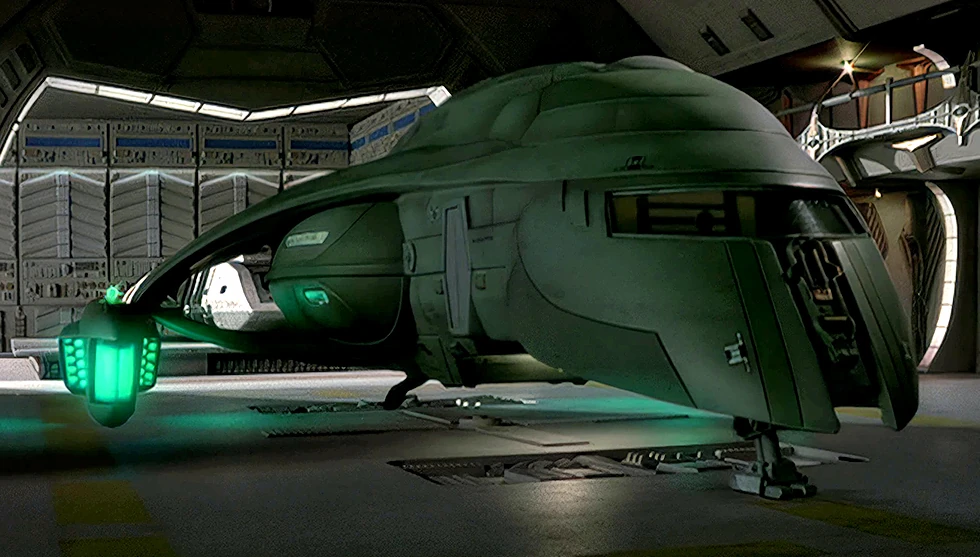 Runabout / Utility
Romulan shuttle Class
Hull Specifications LoggedThe Romulan shuttle was a specialized shuttlecraft utilized by the Romulan Star Empire during the 2370s. This vessel was approximately the same size as a Starfleet Danube-class runabout, demonstrating its capability to land on a standard landing pad, such as those found on Deep Space 9, and be transported via elevator into the station's hangars. Designed for versatility, it could carry at least three passengers and was notably equipped with a cloaking device, a standard tactical advantage for Romulan vessels. One such shuttle, Vreenak's shuttle, played a pivotal role in the events depicted in the Star Trek: Deep Space Nine episode 'In the Pale Moonlight'. **Technical Specifications** According to the Star Trek: Deep Space Nine Technical Manual, the Romulan shuttle is classified as a long-range warp shuttle. It is designed to accommodate fifteen individuals, including officers, crew, and troops. Its propulsion system consists of an artificial singularity-drive warp core, which feeds two nacelles, complemented by a single impulse system. The shuttle's observed performance rating reached Warp 9.6. For offensive capabilities, it was armed with six ship-mounted disruptors and two photon torpedo launchers. While its production base remains unknown, it is confirmed to originate from the Romulan Star Empire. **Design & Development** The Romulan shuttle was designed by Doug Drexler at the specific request of Gary Hutzel, who sought a design for a brief, 'throwaway shot' of a shuttle landing at Deep Space 9's mid-ring and descending into the station's hangars. The physical studio model miniature, which made only one on-screen appearance in the entire Star Trek franchise, was meticulously constructed by Tony Meininger at Brazil-Fabrication & Design. Doug Drexler indicated that the distinctive pod-like modules situated in the midsection of the main body, between the nacelle struts, served as the passenger compartments. This shuttle represented the first new Romulan ship design to be seen on-screen since Alidar Jarok's Romulan scout ship, which appeared in the Star Trek: The Next Generation episode 'The Defector' eight years prior. **Filming and Legacy** The studio model for the Romulan shuttle was filmed for its sole appearance at Image G, with Dennis Hoerter among those involved in its handling. Uniquely, no motion control photography was employed for the model, as only stationary shots were required, primarily within a specially constructed maquette of Deep Space 9's shuttlebay, also designed by Doug Drexler. Post-production compositing was essential, with Gary Hutzel overseeing the layering of various elements like engine and cockpit lights. Notably, the Romulan shuttle holds the distinction of being the last full-fledged physical studio model ever built for a Star Trek television production. This decision to use a physical model, even as CGI modeling became commonplace, stemmed from Gary Hutzel's preference for traditional visual effects techniques over computer-generated imagery. Following this production, CGI was exclusively adopted for starship models in subsequent Star Trek television series. **Other Appearances** In non-canonical media, the Romulan shuttle model was reused in the video game Star Trek: Armada II, where it was designated as the 'Kestrel'-class. In this context, it was depicted as a significantly larger assault vessel capable of carrying 500 Romulan troops. Star Trek Online also identifies this design as the 'Kestrel'-class, classifying it as a runabout.
- No armament data logged.
- • Cloaking device
Romulan starships Class
Hull Specifications LoggedThe Romulan Star Empire operates a diverse fleet of starships, ranging from formidable warbirds to specialized scout and science vessels. These vessels are primarily utilized by the Romulan military and the clandestine Tal Shiar intelligence agency, though some are also operated by scientific institutions like the Romulan Astrophysical Academy. A defining characteristic of many Romulan starships is their advanced cloaking device technology, allowing them to operate with a high degree of stealth. While specific technical specifications vary greatly between individual classes and vessels, common armaments often include disruptor cannons and plasma torpedoes, complemented by robust deflector shields. **Notable Romulan Vessels and Classes** The D'deridex-class warbird is one of the most iconic and frequently encountered Romulan starship designs, known for its distinctive 'bird-of-prey' aesthetic and considerable firepower. Several D'deridex-class vessels are noted in Starfleet records, including the I.R.W. Belak and I.R.W. Makar, both operated by the Tal Shiar and destroyed in 2371. Other D'deridex-class ships like the I.R.W. Devoras, I.R.W. Haakona, I.R.W. Khazara, I.R.W. T'Met, I.R.W. Terix, I.R.W. Dividices, and I.R.W. Genorex were active with the Romulan military in various engagements throughout the 2360s and 2370s. Beyond the D'deridex-class, other notable vessels include the I.R.W. Narada, a unique mining vessel that became a significant threat in 2387, and the I.R.W. Scimitar, a powerful Reman warbird destroyed in 2379. The Valdore-type starship, exemplified by the I.R.W. Valdore, also represents a significant class in the Romulan fleet. Scout ships, such as the I.R.W. Pi (destroyed in 2366) and the I.R.W. Shaenor (assimilated by the Borg in the 2380s), provide reconnaissance capabilities, while science vessels like the I.R.W. Talvath (active 2350-2352) support scientific endeavors. **Affiliations and Service** Romulan starships have been active across a broad span of the 24th century, with recorded service dates ranging from the 2350s to the late 2380s. The majority of these vessels serve under the Romulan military, engaging in patrols, intelligence gathering, and direct combat. The Tal Shiar, the Romulan Star Empire's intelligence service, also maintains its own fleet, often utilizing powerful warbirds for covert operations and enforcement. While many vessels remain active, Starfleet records indicate various fates for individual ships, including destruction (e.g., I.R.W. Belak, I.R.W. Makar, I.R.W. Narada, I.R.W. Scimitar, I.R.W. Pi) and assimilation by the Borg (e.g., I.R.W. Shaenor). Other vessels, such as the I.R.W. Aj'rmr, I.R.W. Koderex, I.R.W. Preceptor, I.R.W. T'Tpalok, and I.R.W. Tomal, were noted as active with the Romulan military in 2375, though their specific classes remain unknown.
- No armament data logged.
- No propulsion data logged.
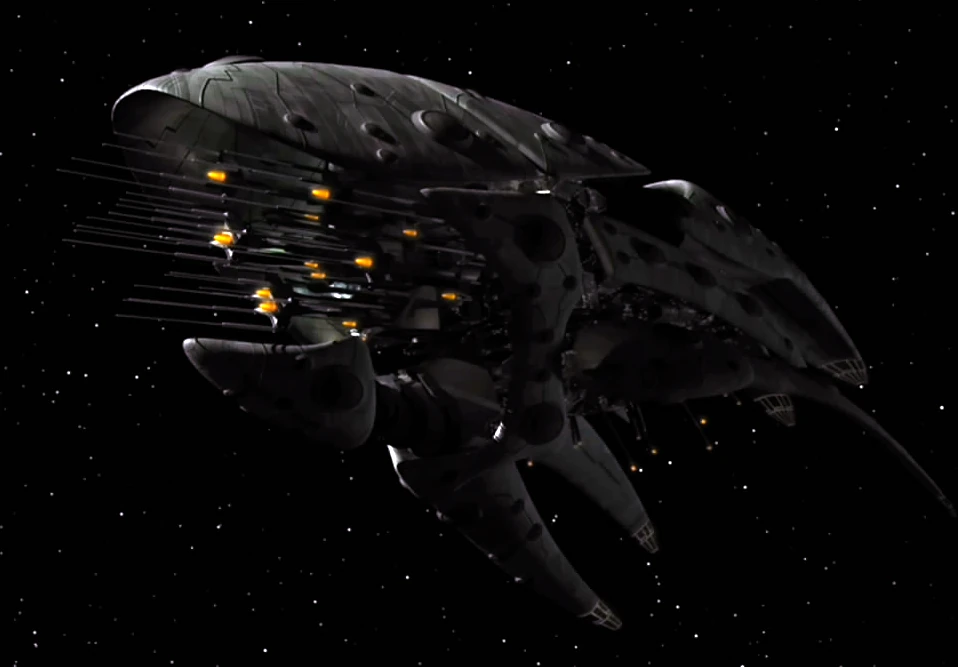 Warbird
Romulan warbird (22nd century) Class
Hull Specifications LoggedThe Romulan warbird was a class of starship utilized by the Romulan Star Empire during the 22nd century. These vessels were equipped with defensive shields, though these could be significantly weakened by a concentrated tachyon pulse. **Service History** Two Romulan warbirds of this class were notably modified to function as Romulan drone ships. This modification involved installing a remote control system, allowing them to be operated from the Romulan homeworld of Romulus. Despite these modifications, their Romulan origin made them easily identifiable if scanned by Vulcans. These ships were featured in the events depicted in the episodes "Babel One", "United", and "The Aenar".
- No armament data logged.
- No propulsion data logged.
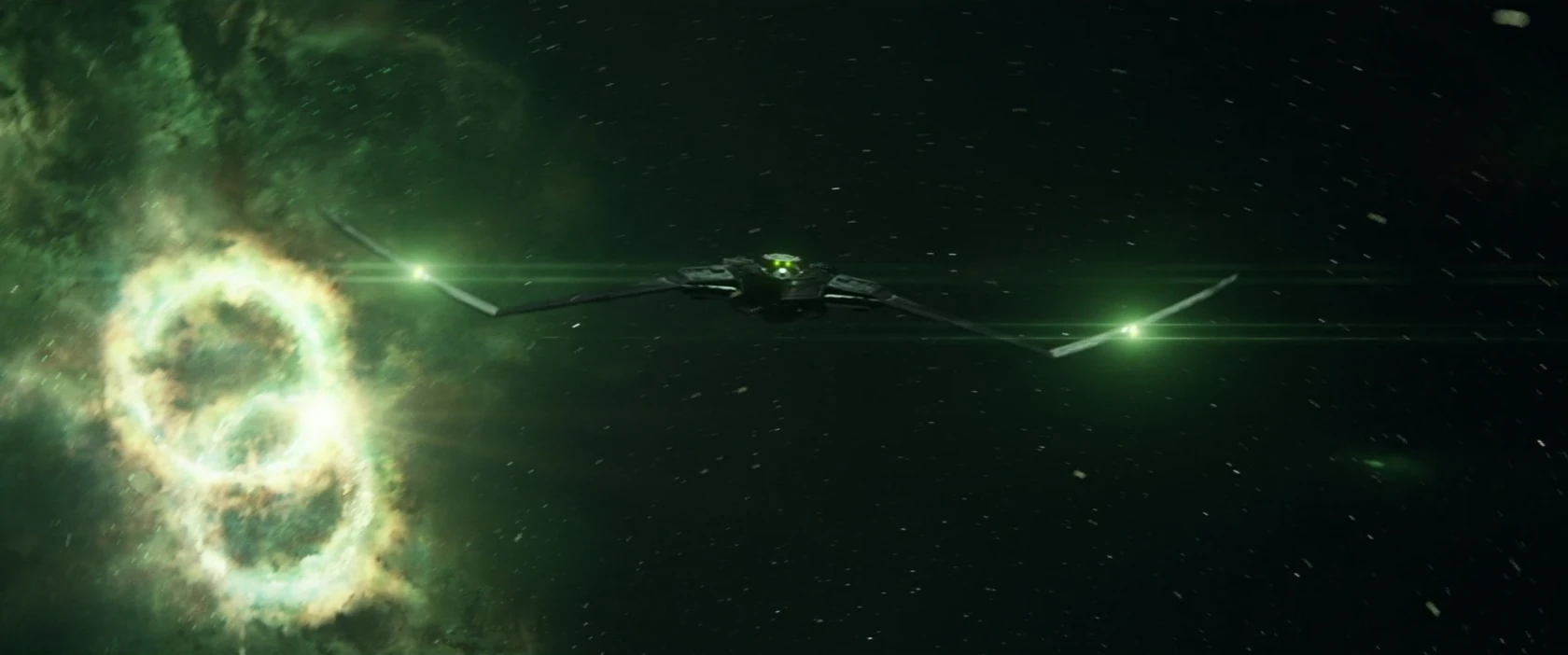 Escort / Warship
Romulan warbird (2399) Class
Hull Specifications LoggedThis Romulan starship class, though lacking a formal designation in Starfleet canon, was informally identified as 'warbirds' on production storyboards for Star Trek: Picard. Designed by John Eaves, the vessel eventually manifested in two distinct size variants. The subject of this entry represents the smaller of these variants, measuring 76.2 meters in length, and was specifically designated by Eaves as a 'Romulan fighter'. This information was detailed in issue 5 of the 'Star Trek Universe: The Official Starships Collection'. **Class History** These Romulan starships were actively utilized by the Romulan Free State and the Tal Shiar during the late 24th century. A notable instance of their deployment occurred in 2399 when one such vessel transported Narek to the 'Artifact', a Borg cube that had once belonged to the Borg Collective. Later that same year, additional vessels of this class were observed within the Borg cube itself. These events were depicted across several episodes of Star Trek: Picard, including 'Remembrance', 'Maps and Legends', and 'Nepenthe'.
- No armament data logged.
- No propulsion data logged.
 Runabout / Utility
Romulan workbee Class
Hull Specifications LoggedThe Romulan workbee was a compact auxiliary craft utilized by the Romulans during the late 24th century. These small vessels were characterized by a central forward external lighting system, two prominent control arms, and a large window designed to provide the pilot with an expansive view. Their design emphasized utility and maneuverability for specialized tasks, typical of auxiliary space vessels. **Service History** In 2399, numerous Romulan workbees were observed in active service aboard the former Borg cube designated 'the Artifact'. This massive vessel, under the control of the Romulan Reclamation Site, served as a crucial hub for Romulan operations. The presence of these workbees on 'the Artifact' was documented during events depicted in the episodes 'Remembrance', 'Nepenthe', and 'Broken Pieces', highlighting their role in the Romulan Free State's activities.
- No armament data logged.
- No propulsion data logged.
 Classified
Ross class
5 VesselsThe Ross-class was a type of Federation starship that entered operation with Starfleet in the early 25th century. Its design bore a strong resemblance to the Galaxy-class, but featured an enlarged secondary hull built around a prominent navigational deflector dish. The class incorporated components and technology from more recent designs, such as the Sovereign-class, indicating an evolution in Starfleet's engineering principles. **Class History** The Ross-class was actively in service with Starfleet by 2401. In that year, two ships of the class were part of a Starfleet fleet assembled to confront a Borg vessel, referred to as the 'Singularity ship'. These Ross-class vessels, in conjunction with the Borg vessel, successfully defended against a large energy burst that threatened the sector, as depicted in the episode 'The Star Gazer'. Later, in April 2401, ten Ross-class starships participated in the Frontier Day celebrations near Sol Station. During these events, the ships' younger crews were brought under the direct control of the Borg Collective, leading to the hijacking of the vessels. Following the liberation of the fleet, many Ross-class ships were left derelict in orbit, as seen in the episodes 'Võx' and 'The Last Generation'. Notable ships of this class include the USS Archer (NCC-76725), the prototype USS Ross (NCC-76710), the USS Vanguard (NCC-75148), the USS Yi Sun-Sin (NCC-76545), the USS Forrest (NCC-75077), and the USS Hanson (NCC-76726), among others. **Interior Design** By 2401, the computer systems on board the Ross-class were equipped with advanced command and control capabilities, including the Fleet formation mode, also known as Starfleet emergency protocol NX12.11. This protocol was specifically designed to place all Federation starships within a fleet under the automated control of the Starfleet mainframe, a critical feature demonstrated during the events of 'Võx'.
- • Phase
- • Photon torpedo
- • Deflector shield
 Flagship
Ru'afo's flagship Class
Hull Specifications LoggedRu'afo's flagship was a medium-sized starship primarily utilized by the Son'a during the late-24th century, serving as a command vessel for critical operations. **Class History** In 2375, this specific vessel served as the flagship for Ahdar Ru'afo during his elaborate plan to forcibly relocate the Ba'ku from their adopted homeworld within the Briar Patch. Starfleet Vice Admiral Dougherty was also present aboard this vessel, collaborating with Ru'afo on the operation. The flagship's command was temporarily seized by Jean-Luc Picard, Worf, and Gallatin after the Son'a command crew was beamed from the bridge to a nearby Federation holoship. However, once Jean-Luc Picard transported to the Son'a collector, the remaining Son'a crew quickly retook control of the ship, capturing Worf and Gallatin. The USS Enterprise (NCC-1701-E) subsequently engaged Ru'afo's flagship in combat. During the confrontation, the flagship's skeleton crew mistakenly believed the USS Enterprise (NCC-1701-E) was initiating a ramming attack. In response, the flagship turned, inadvertently exposing itself to a close-range attack that disabled its engines and life support systems. Following the destruction of the Son'a collector, the crew of Ru'afo's flagship unconditionally surrendered, largely due to having only three minutes of breathable air remaining, as noted by Worf. These events are detailed in Star Trek: Insurrection. **Design & Specifications** Son'a vessels of this type were known to be equipped with both conventional phasers and potent isolytic subspace weapons. A notable design vulnerability was the aft cargo hold, which was poorly shielded against the effects of thermolytic reactions. Internally, these ships featured subspace transmitter stations located on deck twelve. Ru'afo's flagship also included a specialized body enhancement facility, indicating the Son'a's focus on physical augmentation and longevity, as depicted in Star Trek: Insurrection. **Main Bridge** The main bridge of Ru'afo's flagship was designed with a distinctive layout. A large couch occupied the center of the room, serving as the primary seating for the commanding officer. Aft of this central position, to both the right and left, were two identical consoles, one of which was dedicated to controlling the starship's weapon systems. The main viewscreen was prominently mounted against the forward bulkhead. Additional operational stations were situated to the port and starboard sides of the viewscreen. The bridge also provided direct access to a 'tactical room' through doors located immediately aft of the captain's chair, as observed in Star Trek: Insurrection.
- • Phase
- • Photon torpedo
- • Deflector shield

Ruhn's dreadnaught
Class: Breen dreadnaught- • Directed energy weapo
- • Shield-tunneling technology
- + 1 more...
- • Cloaking device
- • Deflector shield
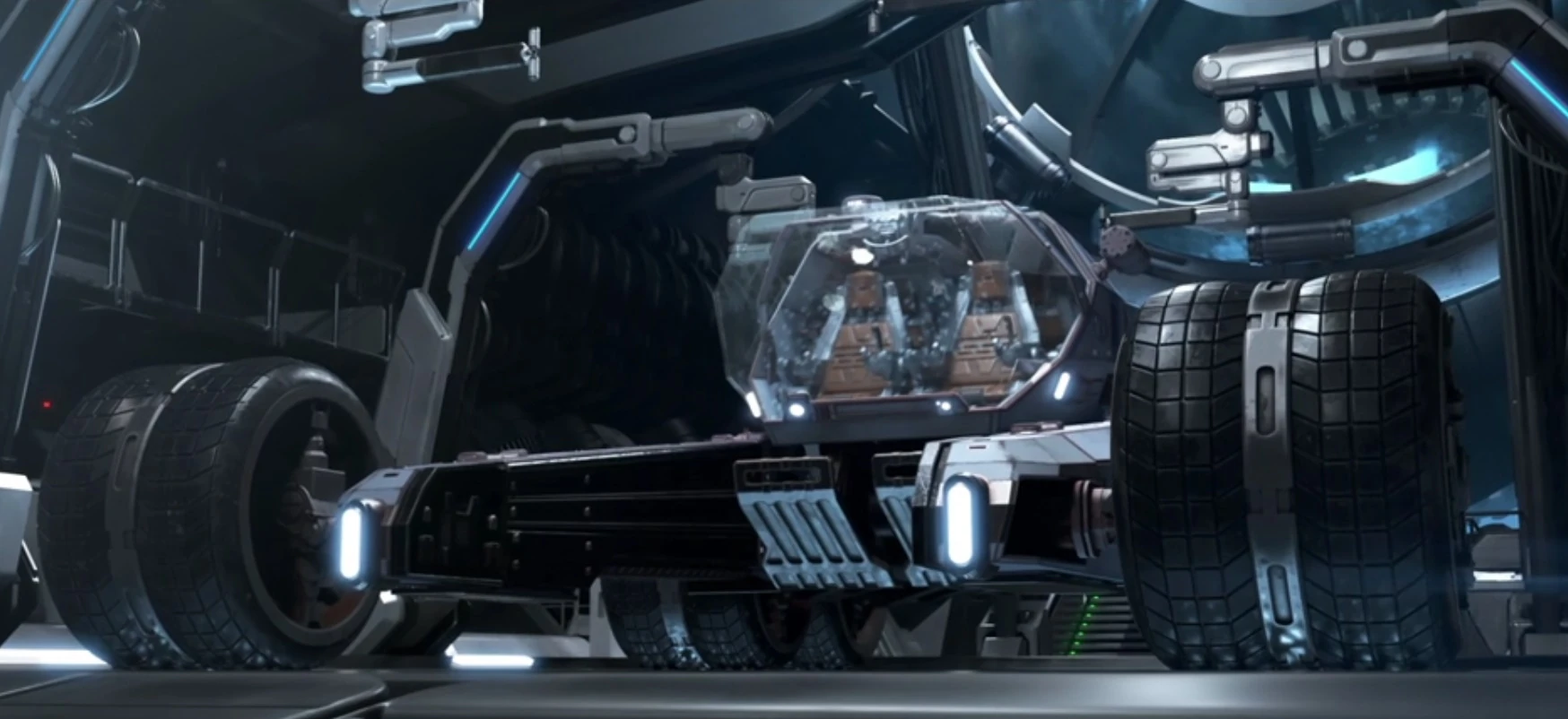 Ground vehicle, hover car
Runaway Class
Hull Specifications LoggedThe Runaway was a specialized Starfleet ground vehicle, primarily designed for planetary exploration and carried aboard starships such as the USS Protostar. Its construction featured a robust tritanium chassis, ensuring durability in varied extraterrestrial environments. For propulsion, the Runaway was equipped with accelerated ion propulsion, enabling it to achieve significant speeds, complemented by advanced holo-steering and impulse steering systems for precise control. A notable capability was its ability to hover, facilitating travel over uneven or hazardous terrain. The vehicle's interior was designed with the average humanoid in mind, featuring four seats described as having a leather-like appearance, and 'hold-on-to-your-butts' grab handles for occupant safety during rapid maneuvers. While comfortable for most, the interior proved too small for larger species like the Brikar, though it was strong enough to carry one behind the cockpit. Each Runaway vehicle bore a unique identification number, such as '07'. These vehicles were not pre-fabricated but were produced on demand by a starship's vehicle replicator and deployed from the shuttlebay during planetary landings. The design of the Runaway is credited to Gus Mendonça. **Class History** The Runaway saw active service in the 24th century, particularly in the 2380s. One of its earliest recorded uses involved Hologram Janeway replicating a Runaway aboard the USS Protostar for the young crew's mission to Murder Planet. During this mission, Dal R'El greatly enjoyed driving the vehicle. However, the crew's attempt to use the Runaway to escape back to the USS Protostar was unsuccessful, as the vehicle was ultimately consumed by the planet, as depicted in 'Dream Catcher' and 'Terror Firma'. Later, during Chakotay's ten-year marooning on Ysida, he possessed a Runaway that eventually broke down and rusted. Upon the arrival of Dal R'El, Rok-Tahk, Jankom Pog, Gwyndala, Murf, Zero, and Maj'el, Jankom Pog successfully repaired the seemingly irreparable vehicle. This repaired Runaway was then utilized by Chakotay, Jankom Pog, Gwyndala, and Murf to rescue Dal R'El when he went missing during an ion maelstrom. During this rescue, it was discovered that the Runaway's wheels could tilt downwards, activating a device that enabled its hovering capability. After locating Dal R'El and the body of Adreek-Hu, the crew used the Runaway to return to the USS Protostar, as chronicled in 'Last Flight of the Protostar, Part I'. In a subsequent event, Dal R'El attempted to use the Runaway to pull the USS Protostar free when it became stuck while launching into a planet's vapor ocean. This effort proved futile, and after Chakotay, Rok-Tahk, and Murf manually freed the ship, the Runaway was abandoned on the island as the USS Protostar set sail, as seen in 'Last Flight of the Protostar, Part II'.
- No armament data logged.
- No propulsion data logged.
 Classified
Saber class
2 VesselsThe Saber-class starship was a compact and angular design developed for Starfleet, entering service by the early 2370s. Its distinctive appearance featured integrated primary and secondary hulls, with the navigational deflector seamlessly incorporated into the forward section. The warp nacelles were directly attached to the saucer section on either side, eliminating traditional pylons. The bridge was positioned directly forward on the saucer, just above two front-facing shuttlebays. Construction of starships of this class was undertaken at the Utopia Planitia Fleet Yards by 2371. The design was conceived by Alex Jaeger at Industrial Light & Magic (ILM), who aimed for a radical layout distinct from the USS Enterprise (NCC-1701-E) while adhering to fundamental starship design principles, such as ensuring clear space for the deflector dish and nacelle Bussard collectors. **Class History** The Saber-class quickly became a common fixture in United Federation of Planets fleet deployments, serving on the front lines of numerous major engagements. These vessels played a crucial role in the conflict against the Borg at the Battle of Sector 001 in 2373, demonstrating their combat readiness. Subsequently, they were heavily involved in the Dominion War, with several Saber-class ships assigned to Starfleet's Second Fleet. This fleet participated in critical operations such as Operation Return in 2374, the second Battle of Chin'toka, and the climactic Battle of Cardassia in 2375. Notable ships of the class include the USS Yeager (NCC-61947), which was active in 2373. By 2401, one Saber-class vessel, the USS Argo (NCC-61357), was preserved at the Fleet Museum at Athan Prime, a testament to its service history. **Technical Specifications & Legacy** According to the Star Trek: Deep Space Nine Technical Manual, the Saber-class is classified as a light cruiser. It is powered by one 1,500-plus Cochrane warp core feeding two nacelles and two impulse systems, allowing for a performance of Warp 9.7 for twelve hours. Armaments include four type-10 phaser emitters and two photon torpedo launchers, complemented by deflector shields for defense. The ship's dimensions are 364.77 meters in length, 225.61 meters in beam, and 52.48 meters in height, with a mass of 310,000 metric tons. It accommodates forty officers and crew, with an evacuation limit of two hundred persons. While visual effects supervisor David Stipes noted an on-screen length of approximately 190.5 meters (625 feet) was generally used, the Technical Manual provides more specific figures. The Saber-class, alongside the Steamrunner-class, Norway-class, and Akira-class, represented a new generation of Starfleet designs introduced during the mid-24th century.
- • Phase
- • Photon torpedo
- • Deflector shield
 Classified
Sabrerunner class
1 VesselThe Sabrerunner-class was a class of Federation starship that served with Starfleet during the latter half of the 24th century. Its design shared a fundamental resemblance to the Steamrunner-class, though it was notably smaller and more compact in its overall form. Ships of this class featured a distinctive near-oval shaped saucer section. The secondary hull was detached from the saucer but was joined at the aft to the ship's nacelles. These nacelles were directly connected to the saucer section via large cowlings, which also housed the Bussard collectors. The main deflector dish was strategically placed in the rear of the detached secondary hull, while the bridge module was uniquely inset between the Bussard cowlings, offering a degree of inherent protection. **Tactical Systems** For tactical engagements, Sabrerunner-class starships were equipped with Phaser arrays and Photon torpedo launchers, standard armaments for Starfleet vessels of the period. At least one known vessel of the class, the USS Passaro (NCC-52670), was outfitted with a total of four photon torpedo launchers: two positioned at the front of the saucer section and two located on the back end of the deflector pod. **Interior Design - Main Bridge** The main bridge of the Sabrerunner-class was situated atop the saucer section, specifically wedged between the nacelle and Bussard cowlings. This placement provided a measure of structural protection for the crew. The bridge's interior followed a typical Starfleet layout, featuring two forward consoles dedicated to helm and conn operations, three central command chairs for overseeing bridge activities, and additional consoles in the rear for accessing other critical ship systems. The aesthetic incorporated warmer color palettes and aqua-themed LCARS interfaces. A notable feature was the captain's chair, which included a small pull-out LCARS interface and a manual steering column, allowing a single captain, in conjunction with the main computer, to exercise direct and comprehensive control over the entire starship. **Class History** In 2381, a vessel of this class, the USS Passaro (NCC-52670), gained notoriety when it was stolen by Nick Locarno. Locarno subsequently concealed the starship within the Detrion system, where it was integrated into his burgeoning 'Nova Fleet'. During its time under Locarno's control, the top port side of the USS Passaro's saucer section was repainted red and adorned with the distinctive star of the Kolvoord Starburst. Beckett Mariner later managed to reclaim the USS Passaro and attempted to use it as an escape vessel from the Detrion system. However, her efforts were thwarted by the presence of the Trynar shield, which trapped her within the system and forced her to evade Nova Fleet forces. The USS Passaro was ultimately destroyed when Beckett Mariner activated a Genesis Device she had brought onboard, and Nick Locarno's subsequent attempt to disarm the device was unsuccessful due to a paywall. These events were chronicled in the episode 'Old Friends, New Planets'.
- • Phase
- • Photon torpedo
- • Deflector shield
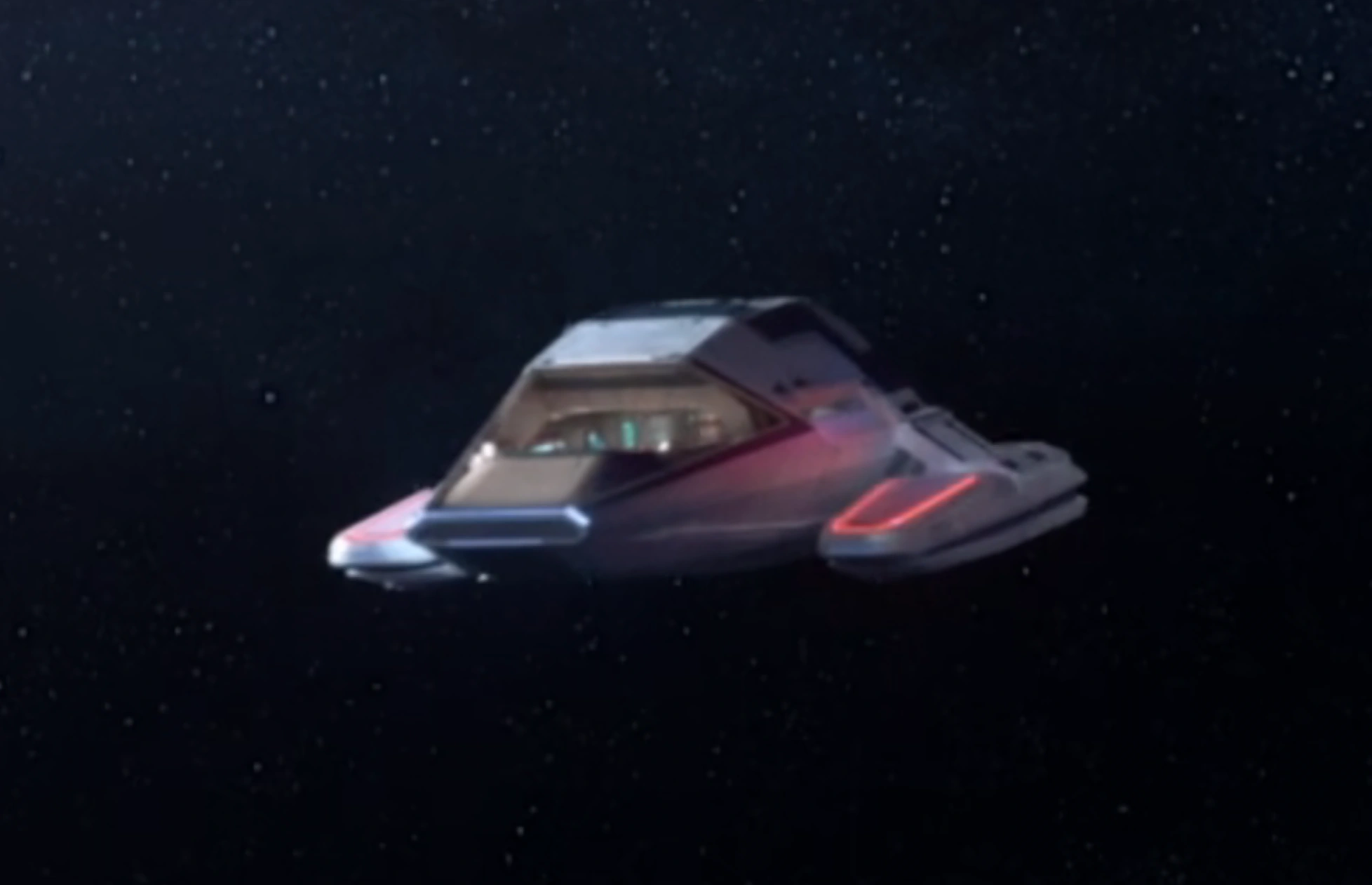 Runabout / Utility
Sacagawea type
Hull Specifications LoggedThe Sacagawea type shuttlecraft was a classification of auxiliary vessel utilized by Starfleet. Designed for various short-range missions, these shuttlecraft served as essential support craft for larger starships, embodying the standard Starfleet approach to versatile utility craft. **Class History** The Sacagawea type shuttlecraft entered active service with Starfleet during the 2380s. A notable deployment occurred in 2384, when the USS Voyager (NCC-74656-A) was assigned a complement of several Sacagawea type shuttlecraft, a detail confirmed in the episode 'Supernova, Part 2'. Specific vessels of this type include the shuttlecraft Sacagawea itself and an unnamed Sacagawea type shuttlecraft. These shuttlecraft made multiple appearances in the animated series Star Trek: Prodigy, featuring prominently in episodes such as 'Supernova, Part 2', 'Into the Breach, Part I', 'Into the Breach, Part II', 'The Devourer of All Things, Part II', and 'Ouroboros, Part II', underscoring their integral role within Starfleet operations during that era.
- No armament data logged.
- No propulsion data logged.

Sacajawea
Class: Type 6 shuttlecraft- • None standard
- • Phase (Qty: 2)
- • Deflector shield
 Classified
Sagan class
4 VesselsThe Sagan-class was a distinctive type of Federation starship developed by Starfleet in the later years of the 24th century, entering service in the early 25th century. Its design incorporated components derived from extensive research on the Borg cube known as the 'Artifact', which was discovered in the Beta Quadrant. This research significantly influenced the class's advanced systems and capabilities. Physically, the Sagan-class features a unique configuration, atypical of many Starfleet vessels, where the primary hull and secondary hull are streamlined together without the need for a separate connecting neck. Furthermore, the class is characterized by its four nacelle layout, a departure from the more common two-nacelle designs of previous eras. The interior design of the Sagan-class marked a shift from the brighter, carpeted aesthetics of earlier starships. It adopted a darker, more utilitarian aesthetic, primarily furnished with reflective flooring and walls. This design philosophy extended to the corridors, which were notably wider than those of previous generations, facilitating easier movement for the crew. The main bridge, located on Deck 1, maintained a traditional layout with the helm and operations stations forward, the captain's chair centrally positioned, and various perimeter stations for tactical, engineering, and communications personnel. An observation lounge, situated behind the bridge, offered large aft-facing windows providing views of the ship's upper two nacelles, along with display cases for memorabilia and a large display monitor for situational awareness. **Class History** The first starship of this class, the USS Stargazer (NCC-82893), received its NCC commission by 2401. This vessel played a crucial role in investigating an unknown anomaly in 2401, showcasing the class's advanced defensive capabilities, including both deflector shields and multiphasic shielding. Later that same year, the Sagan-class gained significant notoriety when fourteen ships of the class participated in fleet maneuvers commemorating 250 years since the Enterprise (NX-01) embarked on its first voyage. During this event, these vessels were commandeered after officers under the age of 25, including Jack Crusher, were placed under the influence of the Borg. This incident highlighted a critical vulnerability in Starfleet's command and control systems, leading to the implementation of the Fleet formation mode, also known as Starfleet emergency protocol NX12.11, designed to place all Federation starships within a fleet under the automated control of the Starfleet mainframe. **Technical Specifications** The Sagan-class is equipped with propulsion systems common for its period, including warp drive for faster-than-light travel and two impulse engines located at the rear of the ship for sublight maneuvering. For offensive capabilities, Sagan-class ships feature phaser arrays strategically placed along the hull, providing a full 360-degree firing arc. Defensively, at least the USS Stargazer was deployed with both standard deflector shields and advanced multiphasic shielding, crucial for its exploratory and defensive assignments. The class also includes dedicated armories, accessible from standard corridors, which are well-stocked with numerous phasers and phaser rifles for security personnel. **Interior Design** Beyond the bridge and observation lounge, the Sagan-class features a hangar bay located on Deck 7, providing facilities for shuttlecraft and other auxiliary craft. Corridors throughout the ship are designed to be wider than those of previous generations, lined with darker paneling that complements the overall interior aesthetic. These design choices reflect a functional and modern approach to starship interiors in the early 25th century.
- • Phase
- • Multiphasic shield
- • Deflector shield

Sakharov
Class: Type 7 shuttlecraft- No armament data logged.
- • Deflector shield
 Escort / Warship
Saladin class
Hull Specifications LoggedThe Saladin-class destroyer was a starship type operated by Starfleet for the United Federation of Planets during the 23rd century. Its design featured a distinct saucer section and a single nacelle, giving it an exterior appearance similar to that of a Constitution-class vessel from the 2260s. This class was originally conceived by Franz Joseph in his 'Star Fleet Technical Manual', which designated the USS Saladin as the prototype vessel for the class. The Saladin-class was closely related to the Hermes-class scout vessel, with the primary distinctions lying in their armaments and crew complements. While the Hermes-class scout vessel was equipped with one bank of two phasers, the Saladin-class destroyer boasted a more robust offensive capability, housing three phaser banks and two photon torpedo launchers. Consequently, the Saladin-class also required a slightly larger crew complement compared to its scout counterpart. **Service History & Appearances** During its active service in the 23rd century, the Saladin-class was represented by vessels such as the unnamed NCC-500, whose schematics were prominently displayed on the bridge monitors of the USS Enterprise (NCC-1701). These schematics were observed in the Star Trek films 'Star Trek II: The Wrath of Khan' and 'Star Trek III: The Search for Spock'. The production staff for these films utilized images directly from Franz Joseph's 'Star Fleet Technical Manual' for these background displays, with minimal or no modifications, a fact later confirmed by Rick Sternbach. **Apocryphal Mentions** Beyond its canonical appearances, the Saladin-class has been featured in various apocryphal works. In the novel 'The Final Nexus', the USS Cochise (NCC-530) was identified as a Saladin-class destroyer. Similarly, the novel 'Dreadnought!' depicted the USS Pompeii (NCC-424) as a vessel of this class. The Saladin-class also played a role in the 'Star Fleet Universe' series of games, serving Starfleet for several decades until it was eventually supplanted by the Ortega-class war destroyer. Following this transition, the shipyards previously dedicated to the Saladin-class were repurposed for the construction of the Kearsarge-class light cruiser. A nearly identical design, known as the Apollo-class, appeared in 'Star Trek: Legacy', though it notably lacked the deflector/sensor dish and flush vent details present on the Saladin-class.
- No armament data logged.
- No propulsion data logged.
 Classified
Sarajevo type
Hull Specifications LoggedThe Sarajevo-type was a class of warp-capable starship utilized by United Earth during the mid-22nd century. The visual inspiration for the design, according to designer John Eaves, came from 'a stack of horseshoes' on his desk. Eaves' initial sketch for this starship referred to it as a Starfleet 'Elite Observation Vessel.' According to Rob Bonchune, the sketch also included a Starfleet registry of NC-27 on its side and featured red bussard collectors towards the front/side, positioned in front of the blue warp glow. However, these specific bussard collector details were apparently not incorporated into the final CGI model used for the series. **Class History** Sarajevo-type starships played a role in significant events of the 22nd century. A vessel of this class was among the fleet that greeted and escorted the USS Enterprise (NX-01) back to Earth in 2154, following the conclusion of the Xindi incident, as depicted in the episode 'Storm Front, Part II'. Later that same year, the USS Sarajevo (NC-27), another starship of this type, was utilized as a transport vessel for the return journey to Earth, as seen in the episode 'Daedalus'. The class was active throughout the 22nd century, serving United Earth.
- No armament data logged.
- No propulsion data logged.
Sarcophagus
Class: Klingon command vessel- No armament data logged.
- No propulsion data logged.
 Classified
Satarran starship Class
Hull Specifications LoggedThe Satarran starship was a compact, single-person spacecraft utilized by the Satarrans. Notably, it lacked any discernible offensive armaments or dedicated defensive systems. Its primary capability lay in its highly advanced sensor system. This sophisticated technology allowed the vessel to remotely access the optical data network of a Federation starship, effectively penetrate its deflector shields, and subsequently alter both computer records and the memories of its crew. **Class History** In the year 2368, a Satarran agent employed one of these specialized starships to infiltrate the USS Enterprise (NCC-1701-D). The vessel facilitated the agent's covert operation to gain access to the starship's systems and crew. Following the Satarran agent's successful insinuation among the Enterprise crew, the starship itself was destroyed. This incident was documented in the Star Trek: The Next Generation episode 'Conundrum'.
- No armament data logged.
- No propulsion data logged.
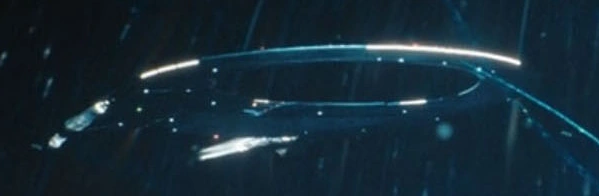 Classified
Saturn class
Hull Specifications LoggedThe Saturn-class was a distinctive type of Federation starship operated by Starfleet, characterized by its unique ring-shaped primary hull. The design featured two nacelles connected directly to the aft section of the primary hull, a departure from more conventional Starfleet configurations. This class was designed by Ryan Dening, and concept art for the class depicted a vessel named USS Annan (NCC-325051). **Class History** The Saturn-class starships were active from the 31st century into the 33rd century, serving the United Federation of Planets under Starfleet command. Their service history was significantly impacted by 'The Burn', a catastrophic event that occurred in 3069. During this event, at least three Saturn-class ships were lost when their dilithium became inert, causing their warp cores to destabilize and result in antimatter explosions, as detailed in the episode 'People of Earth'. Despite these losses, the Saturn-class remained a vital component of Starfleet's operations. By 3189, a Saturn-class starship was part of the Federation fleet 001 stationed at Federation Headquarters. The collective energy output of this fleet was crucial in sustaining a distortion field that concealed the headquarters' location, an event depicted in 'Die Trying'. In 3190, Saturn-class vessels were prominently present at significant ceremonial events, including the re-opening of Starfleet Academy and the unveiling of the Archer Spacedock, as seen in 'Kobayashi Maru'. Their continued importance was underscored in the 33rd century when twelve starships of this class participated in a ceremonial honor-formation at Federation Headquarters, marking the launch of Zora and the USS Discovery's Red Directive mission, as shown in 'Life, Itself'.
- No armament data logged.
- No propulsion data logged.

Saturn V
Class: Saturn V- No armament data logged.
- No propulsion data logged.
Human-Rated Rocket
Saturn V Class
1 VesselThe Saturn V was an American Human-rated expendable rocket that was in service with NASA during the mid-to-late 20th century. This powerful rocket was instrumental in the success of both the Apollo program and the Skylab programs, facilitating human space exploration and scientific research beyond Earth's atmosphere. Its design represented a pinnacle of 20th-century rocketry, capable of launching heavy payloads and human crews into Earth orbit and beyond. **Class History** In 1968, a Saturn V rocket, secretly containing a nuclear warhead, was launched from the McKinley Rocket Base on April 4th. This mission suffered a serious malfunction, causing the rocket to go off course and subsequently explode. The true details regarding this mishap were never generally revealed, as depicted in the episode 'Assignment: Earth'. Around the same time, the assignment patch for 'Apollo 9' featured the Saturn V, with the words 'USA' emblazoned on its hull, as seen in 'First Flight'. The Saturn V's legacy extended into the future and across timelines. After Jonathan Archer successfully restored a damaged timeline in 2154, a Saturn V rocket was visibly present within the time stream as the timeline realigned itself, a moment captured in 'Storm Front, Part II'. In 2254, an image depicting the launch of a Saturn V was stored within the library computer of the USS Enterprise (NCC-1701), as referenced in 'The Cage'. Furthermore, in an alternate reality in 2255, a model of a Saturn V could be observed in the Shipyard Bar in Iowa, and a picture of the rocket was among the many historical images displayed in the corridor leading to the main bar space, as shown in the film 'Star Trek' (2009).
- No armament data logged.
- No propulsion data logged.
 Science vessel
 Class
1 VesselA science vessel, also known as a science ship or research vessel, is a specialized starship designed for limited-role scientific missions rather than combat. These vessels are typically not well-armed, prioritizing extensive laboratory facilities, advanced sensor arrays, and in some cases, enhanced deflector shields. Their primary purpose is scientific research, which includes tasks such as observing the collapse of stars, mapping newly discovered planets and nebulae, or providing an isolated environment for hazardous experiments. Most science vessels are not intended for extended deep-space missions and are often dispatched to follow up on discoveries made by other, non-science vessel classes. **Service History & Notable Incidents** Information concerning both Starfleet and non-Starfleet science vessels was cataloged within the Federation database during the 2260s of the alternate reality. In early 2350, the Romulan science vessel Talvath, under the direction of Doctor Telek R'Mor and the Romulan Astrophysical Academy, embarked on a three-year scientific mission. In 2351, the Talvath encountered a micro-wormhole in Sector 1385 of the Alpha Quadrant, through which its crew detected the USS Voyager (NCC-74656-A) in the Delta Quadrant, twenty years in the future. In 2364, following the USS Enterprise (NCC-1701-D)'s journey far from Federation space with Kosinski and the Traveler, Captain Jean-Luc Picard suggested that Starfleet could utilize Kosinski's technique to bring back a pure science vessel for even more extensive research. The following year, in 2365, Captain Picard again proposed requesting a Federation science vessel to the Morgana Quadrant to study an unknown void discovered by the USS Enterprise (NCC-1701-D) prior to its entrapment. By 2370, when Rabal and Serova sought to alert Starfleet and the Federation to the detrimental effects of warp drive on their homeworld, Jean-Luc Picard advised them to approach the Federation Science Council. Rabal countered that the Council's resources were limited, stating it would take over a year to dispatch a science ship to evaluate their work. Data later suggested that they 'ask the Federation Science Council to send a research vessel to this area. A more detailed investigation would resolve many of our questions.' Later that year, the USS Enterprise (NCC-1701-D) responded to a request for emergency assistance from a Federation science ship in the Topin system, which was revealed to be a ploy devised by Ro Laren aboard a Maquis raider to steal a supply of medkits. In 2384, the Doctor identified the USS Voyager (NCC-74656-A) as a Lamarr-class science vessel. Notably, unlike most science vessels, this iteration of Voyager was exceptionally well-armed and capable of engaging in combat. **Classifications & Variants** Various species and organizations operate science vessels. Federation science vessel classes include the Crossfield-class, Lamarr-class, Nova-class, Oberth-class, and Miranda-class. Other known science vessels include the Frunalian science vessel, Monean research vessel, Orion science vessel (such as the D'Var type), Romulan science ship, and Voth research vessel. Named vessels include the USS Ariel (23rd century), USS Brattain (Miranda-class), USS Cabot (Magee-class), D'Var, USS Discovery (Crossfield-class, originally), USS Equinox (Nova-class), USS Grissom (NCC-638, Oberth-class), KSF Khi'eth, USS Prometheus (NCC-71201, Nebula-class), USS Raman, T'Vran, Talvath, SS Tsiolkovsky (Oberth-class), SS Vico (Oberth-class), USS Voyager (NCC-74656-A, Lamarr-class), and USS Yosemite (Oberth-class). Unnamed variants include 22nd-century Alien science vessels, Emory's research ship, 24th-century Federation science vessels, Taylor's science vessel, and 22nd and 24th-century Vulcan science vessels. A line cut from an early draft of the 'Star Trek: Deep Space Nine' episode 'Business as Usual' mentioned a Vulcan science vessel named the T'Pan requesting permission to dock at Deep Space 9.
- No armament data logged.
- No propulsion data logged.
 Escort / Warship
Scimitar Class
Hull Specifications LoggedThe Scimitar was a massive, heavily-armed Reman warbird, constructed under the command of Shinzon. It was the keystone of a secret plot to overthrow the Romulan Senate, defeat the United Federation of Planets, and liberate the subjugated natives of Remus. Captain Jean-Luc Picard of the USS Enterprise-E famously described it as 'a predator'. **Design & Development** The Scimitar's design was intended to be breathtaking, combining the clean lines of traditional Romulan warbirds with unique weaponry and styling. It was easily twice as large as a Sovereign-class starship like the USS Enterprise-E, and its aggressive appearance underscored its formidable power. Designed by FX artist John Eaves, the Scimitar initially drew inspiration from science fiction conceptual artist John Berkey, evolving from a classic battleship type to a more organic, insect-like appearance with projecting appendages, ultimately resembling a Lionfish. The computer voice for the vessel was provided by Star Trek Nemesis Director Stuart Baird. The name 'Scimitar' itself is derived from an ancient Middle Eastern curved sword, a term also referenced in the Star Trek: The Original Series episode 'Dagger of the Mind' and originally considered for the USS Defiant NCC-1764 in 'The Tholian Web', as noted in The Star Trek Compendium. **Technical Specifications** **Cloaking Technology** The Scimitar possessed a highly advanced cloaking device, described by Geordi La Forge as 'perfect'. Unlike less advanced systems, it emitted no tachyons and left no residual anti-protons, making it virtually impossible to track or locate when cloaked. Its advanced design allowed it to deploy its weapons and deflector shields, and even travel at high warp speeds, while maintaining its cloak, actions that typically necessitated de-cloaking or reduced cloaking effectiveness for other vessels. Its maximum warp factor while cloaked exceeded that of a Sovereign-class starship. **Weaponry and Military Equipment** Designed explicitly for war, the Scimitar was exceptionally well-armed, carrying roughly five times the armament of any other single ship. It boasted fifty-two pulse disruptor cannons and twenty-seven photon torpedo launchers. Its most devastating weapon was a thalaron radiation device, capable of stripping all life from a planet in a matter of seconds. Shinzon's primary motivation for equipping such a powerful weapon was his ambition to inflict a crippling blow upon the United Federation of Planets by killing Earth's entire population. The thalaron weapon required a seven-minute sequencing procedure before deployment. The Scimitar also carried a large complement of Scorpion-class attack fighters. **Shielding Technology** For defense, the Scimitar was equipped with primary and secondary shields, providing redundant protection. This advanced shielding allowed it to maintain substantial tactical superiority even when engaged against the USS Enterprise-E and two Romulan Valdore-type warbirds simultaneously. **Interior Design** **Bridge** The Scimitar's bridge featured a radical design, though it retained the basic layout common to most Romulan starships. The commanding officer's chair, located centrally, included a built-in replicator. Consoles were positioned both behind and in front of the captain's chair, some requiring operators to stand. A flight of stairs behind the command chair led to a higher level, where two more consoles were situated, and access was provided to the thalaron weapon room. The thalaron weapon room itself was constructed as a set on Paramount Stage 29. **Shuttlebay** The vessel's shuttlebay was a large, two-deck area housing several Scorpion-class attack fighters. This section of the ship was completely destroyed when the saucer section of the USS Enterprise-E was crashed into the Scimitar during the Battle in the Bassen Rift. The shuttlebay set was partly represented on Paramount Stage 16, utilizing a green screen to enhance its perceived expansiveness. **Class History** The Scimitar was built at a secret base as the cornerstone of Shinzon's plot to assassinate the Romulan Senate and assume the role of praetor of the Romulan Star Empire. Its existence and capabilities helped Shinzon gain the support of the Romulan military, proving his ambitions to attack the United Federation of Planets and end the period of peace that had frustrated some Romulan generals. In 2379, the Scimitar engaged the USS Enterprise-E and Romulan reinforcements during the Battle in the Bassen Rift. During this engagement, the Scimitar inflicted severe damage upon the USS Enterprise-E and the Romulan Valdore-type warbirds. Captain Jean-Luc Picard of the USS Enterprise-E made a successful attempt to ram the Scimitar with his ship, crippling the Reman warbird. In a final act of malice, Shinzon ordered the thalaron generator prepared to kill all life on the USS Enterprise-E before setting course for Earth. Captain Picard boarded the Scimitar in an attempt to disable the weapon, but it was Lieutenant Commander Data of the USS Enterprise-E who ultimately managed to board the Scimitar, transport Captain Picard back to the Federation flagship, and then sacrifice himself. Data fired a hand phaser into the thalaron intermix chamber mere seconds before the weapon would have fired, causing a catastrophic overload that destroyed the Scimitar. This event is depicted in Star Trek Nemesis. **Apocrypha** In Star Trek: Countdown, smaller ships based on the Scimitar's design were shown to have been constructed by the Remans. Three of these vessels were used to capture the Narada but were easily disabled by the USS Enterprise-E. Scimitar-class ships also appear in Star Trek Online, classified as dreadnoughts and utilized by both the Romulans and the Remans. Two sub-variants, the Falchion and Tulwar, are also present, usable by Romulan Republic player characters. Notable Scimitar-type ships in Star Trek Online include the Leahval, flagship of Empress Sela, and the Tulwar-variant Lleiset, flagship of the Romulan Republic under the command of Tiaru Jarok, daughter of Alidar Jarok.
- • Disrupto (Qty: 52)
- • halaron radiation cascading biogenic pulse weapo
- + 1 more...
- • Cloaking device
- • Deflector shield
 Attack Flier
Scorpion class
Hull Specifications LoggedThe Scorpion-class vessels were compact attack fliers designed for rapid deployment and combat. These agile craft were notably stored aboard the Reman warbird Scimitar in 2379, serving as a component of its tactical complement. **Class History** In 2379, during the confrontation between the United Federation of Planets and the Reman forces led by Praetor Shinzon, a Scorpion-class vessel played a crucial role in the escape of Captain Jean-Luc Picard and Data from the Scimitar. After being captured and brought aboard the Reman warbird, Captain Picard and Data utilized one of these fighters to flee. When the Scimitar's shuttlebay doors were sealed to prevent a direct exit, they navigated the small craft through the warbird's internal corridors. Despite initial difficulty in maneuvering the vessel, Captain Picard successfully piloted it through a window in Shinzon's representative chamber, escaping into space. The Scorpion-class fighter, with Captain Picard and Data aboard, was subsequently beamed aboard the USS Enterprise-E. The Scimitar's shuttlebay, which housed the Scorpion-class vessels, was later destroyed during the climactic collision between the USS Enterprise-E and the Scimitar, as depicted in Star Trek Nemesis.
- • Disrupto
- No propulsion data logged.
 Scout ship
 Class
4 VesselsA scout ship, or simply a scout, is a lightly armed, limited-role starship type within Starfleet classification and other interstellar organizations. These vessels are typically designed for reconnaissance, exploration of uncharted territories, and rapid deployment, often sacrificing heavy armament and extensive defensive capabilities for speed and maneuverability. Their primary function is to gather intelligence and survey areas, making them crucial for both military and scientific endeavors across the galaxy. **Service History** Information regarding Starfleet-operated scout ships was present in the Federation database during the 2260s of the alternate reality, as depicted in Star Trek Beyond. In the prime timeline, specific Starfleet vessels designated as scouts include the USS Revere and the USS Columbia, both mentioned in Star Trek: The Motion Picture. The USS Grissom, NCC-638, was also recognized as a scout class vessel, as was Kruge's Bird-of-Prey, both featured in Star Trek III: The Search for Spock. Later, in 2374, General Martok of the Klingon Empire deployed several scout ships to the Cardassian border to monitor for Dominion activity, though they found no signs of their presence, as seen in the episode 'Resurrection'. In a more anecdotal context from the same year, Neelix used the analogy of 'a little scout ship flying into a shuttlebay' to help Seven of Nine refamiliarize herself with the act of eating in the episode 'The Raven'. **Notable Vessels & Variants** Scout ships are utilized by numerous species and factions throughout the galaxy, reflecting their universal utility. Starfleet operates several types, including the Federation scout ship, Federation mission scoutship, and classes such as the Hermes-class, Nova-class, and Oberth-class. Other notable Federation scout ships include the USS Columbia and the USS Revere. The Klingon Empire employs various scout designs, including the iconic Bird-of-Prey, the D7-class, the K'toch-class, and the Raptor-class. The Romulan Star Empire also fields scout ships, such as the Romulan scout ship and the Snakehead. Other species with known scout ship variants include the Bajoran Militia (Bajoran scout ship), the Borg Collective (Borg scout ship, Borg sphere), the Cheron (Cheron scout vessel), the Devore (Devore scout ship), the Orion Syndicate (Orion scout ship, D'Var-type), the Rigelian (Rigelian scoutship), and the Talarian Republic (Talarian observation craft). Specific named scout ships beyond Starfleet vessels include the Shaenor and the Spacematic, as well as unnamed vessels like Booker's ship, DeSeve's scout ship, a 22nd century Federation scout ship, a 23rd century Federation scout ship from Gamma Trianguli VI, Kelsey's scout ship, and a 24th century Klingon scout ship.
- No armament data logged.
- No propulsion data logged.
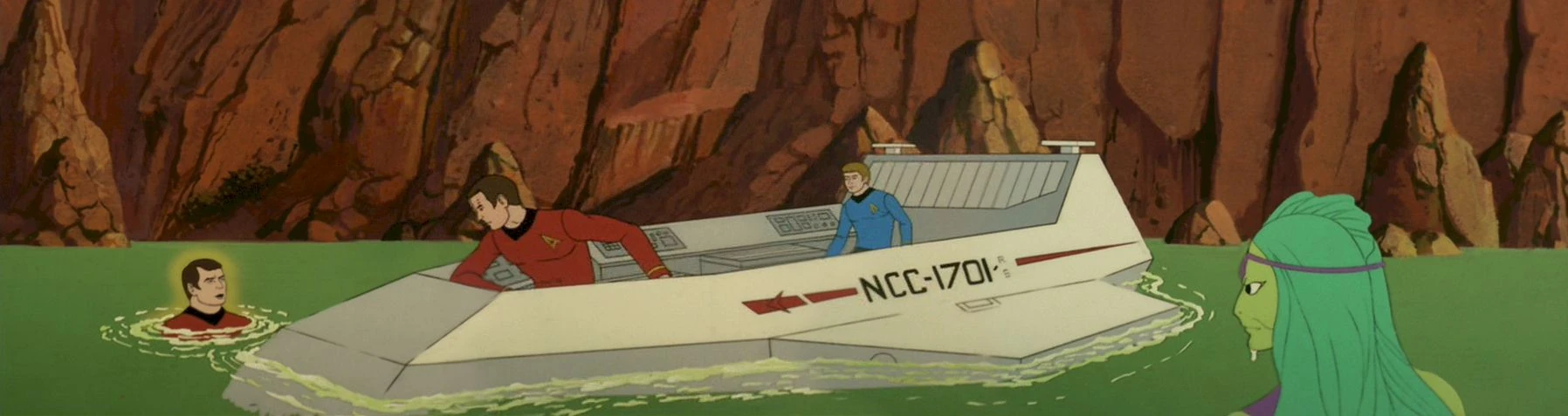 Boat
Scouter-gig Class
Hull Specifications LoggedThe Scouter-gig was a specialized, small motorboat designed for deployment from Starfleet starships, particularly the Constitution-class, during the late 2260s. Its primary purpose was to facilitate the exploration of oceanic terrains on alien planets, allowing crew members to disembark and conduct surveys where a larger starship or shuttlecraft would be impractical or unable to operate directly on water. The craft was described in early design documents as a long, slim, canoe-like boat, constructed from a light, silvery metal substance. It featured a small cylindrical power pack along the lower part of its outside, at the waterline, providing propulsion. A small console panel was located at the rear of the craft, indicating a single-pilot or small-crew operation. The Scouter-gig was engineered to be swift and highly maneuverable on water surfaces. **Class History** During its active service in the 23rd century, the Scouter-gig was a standard piece of equipment carried aboard Constitution-class starships, including the USS Enterprise (NCC-1701). A notable incident involving a Scouter-gig occurred in 2269, as documented in 'The Ambergris Element'. In this event, the Scouter-gig designated NCC-1701/R6 was deployed from the USS Enterprise (NCC-1701) to the planet Argo. Its mission was to search for Captain James T. Kirk and Commander Spock, who had gone missing on the planet's oceanic surface. While the exact method of its delivery to the planet's surface was not explicitly shown in the episode, the first draft of the script indicated that the Scouter-gig was beamed down from the USS Enterprise (NCC-1701). The Scouter-gig represented one of several terrain-specialized transports utilized by Starfleet, complementing other vehicles such as the aqua-shuttle and the later Argo ground vehicle carried aboard the USS Enterprise (NCC-1701-E), demonstrating Starfleet's commitment to versatile planetary exploration capabilities.
- No armament data logged.
- No propulsion data logged.
 Classified
SD-103 type
Hull Specifications LoggedThe SD-103 type was a class of shuttlecraft primarily utilized by Starfleet during the 23rd and 24th centuries. Officially designated as the Executive Class according to the Star Trek: The Official Starships Collection, these vessels were designed for specific roles, notably orbital personnel transport and short-range missions. A key characteristic of the SD-103 type was its construction without a warp drive, making it suitable for operations within star systems or as a large shuttle deployed from larger starships. Its design allowed for a crew complement of 12 and measured approximately 26 meters in length. **Class History** The SD-103 type shuttlecraft saw active service across two centuries, appearing in significant Starfleet operations. Examples of this class include the named shuttle SD-103 (NAR-25820) and other unnamed units. These shuttles were known to be assigned to Starfleet Command or directly to starships. For instance, the USS Melbourne was equipped with two SD-103 type executive shuttles, which were stored in the secondary hull's cargo bay. The class made notable appearances in historical events such as those depicted in Star Trek VI: The Undiscovered Country and Star Trek Generations. During the production of Star Trek Generations, an SD-103 type shuttle was depicted parked on the USS Enterprise-D's saucer section, though this was achieved through matte painting rather than a physical studio model. The USS Farragut also utilized an SD-103 type shuttle, with its in-flight depiction in Star Trek Generations being stock footage from Star Trek VI: The Undiscovered Country. Interestingly, the studio model originally used for the SD-103 type was later modified to represent the Sydney-class starship, which appeared in episodes like 'Relics' and 'Playing God'. This led to some in-universe speculation, with Starfleet Technical Manuals stating that SD-103 types were, in fact, Sydney-class ships built without warp drive for use as large shuttles.
- No armament data logged.
- No propulsion data logged.
 Runabout / Utility
Section 31 drone ship Class
Hull Specifications LoggedClassified as an auxiliary craft, the Section 31 drone ship was a compact vessel specifically designed to be stacked within the hull of NCIA-93 starships. Its primary offensive capability consisted of directed energy weapons, which were noted to be comparable in combat effectiveness to those found on a Class C shuttlecraft. For defense, these drone ships were equipped with refracted lattice shields, though these shields possessed a critical vulnerability: they could be overwhelmed and rendered ineffective if simultaneously targeted from both the port and starboard directions. **Service History** These drone ships were exclusively employed by Section 31's rogue artificial intelligence, Control, during its aggressive campaign in 2257. Control utilized large numbers of these craft in its attempt to forcibly acquire the 'Sphere' lifeform data from the USS Discovery. Their tactical deployment involved both direct fire engagements and waves of kamikaze attacks, specifically designed to weaken the USS Discovery's deflector shields. As the USS Discovery initiated its temporal displacement jump into the future, the drone ships attempted to intercept it. However, the USS Enterprise (NCC-1701) and its accompanying fleet provided crucial covering fire, protecting the USS Discovery during its departure. The entire drone fleet subsequently became inert and non-functional following the neutralization of the Control nanites within Leland. Captain Christopher Pike then ordered the USS Enterprise to destroy the now-helpless drone ships. These events are chronicled in the episode 'Such Sweet Sorrow, Part 2'.
- • Directed energy weapo
- • Deflector shield

Sela's warbird
Class: D'deridex class- • Disrupto
- • Phase
- + 1 more...
- • Cloaking device
- • Warp facto (Qty: under cloak)
- + 1 more...

Sela's warbird
Class: D'deridex class- • Disrupto
- • Phase
- + 1 more...
- • Cloaking device
- • Warp facto (Qty: under cloak)
- + 1 more...

Seleya
Class: D'kyr- No armament data logged.
- No propulsion data logged.
Sequoia
Class: Custom shuttlecraft- No armament data logged.
- No propulsion data logged.

Sh'Raan
Class: Suurok class- • Particle weapo
- • Photonic weapo
- • Warp facto (Qty: science)
- • Deflector shield

Sh'Raan
Class: Suurok class- • Particle weapo
- • Photonic weapo
- • Warp facto (Qty: science)
- • Deflector shield
 Cruiser
Sh'vhal type
Hull Specifications LoggedThe Sh'vhal type was a class of cruiser primarily utilized by the Vulcan High Command during the late 24th century. These vessels were notably larger in size than a California-class starship, indicating a significant role in Starfleet's diverse fleet. A distinctive feature of the Sh'vhal type was its advanced holographic control interfaces, which provided a modern and efficient operational environment for its crew. The interior design of these ships incorporated the traditional green and rust-red colors characteristic of other Vulcan ship designs. Rust-red pillars and alcoves, often displaying artifacts reminiscent of those seen aboard Vahklas-type starships, were common throughout the vessel, appearing in areas such as labs, corridors, and even on the bridge, contributing to a distinct Vulcan aesthetic and functional layout. **Armaments & Defenses** For tactical engagements, Sh'vhal-type starships were well-equipped with robust defensive and offensive systems. Their primary defensive measure consisted of powerful deflector shields, capable of withstanding significant damage. Offensively, these cruisers were armed with particle weapons and torpedoes, providing them with substantial firepower for various mission profiles. **Class History** The Sh'vhal type saw active service in the 2380s, operating under the Vulcan High Command. A notable vessel of this class was the USS Sh'vhal. The class made appearances in the animated series Star Trek: Lower Decks, specifically in the episodes 'wej Duj' and 'A Few Badgeys More', showcasing their operational presence within the United Federation of Planets' sphere of influence during that era.
- • Particle weapo
- • Photon torpedo
- • Deflector shield
Shaenor
Class: Scout ship- No armament data logged.
- No propulsion data logged.
 Transport / Freighter
Sheliak colony ship Class
Hull Specifications LoggedThe Sheliak colony ship was a specialized starship class utilized by the reclusive Sheliak species. Its primary function was the transport of 'the membership,' a term the Sheliak used to refer to their colonists. These vessels were designed for long-range interstellar travel, equipped with warp drive capabilities to facilitate the establishment and expansion of Sheliak settlements across various star systems. **Class History** In 2366, a notable incident involving a Sheliak colony ship occurred when it was en route to Tau Cygna V. The arrival of this vessel prompted the Sheliak Corporate to demand the immediate removal of a Human colony already established on Tau Cygna V. This event marked a significant moment in interstellar relations, as it represented the first contact between the United Federation of Planets and the Sheliak in 111 years, since 2255. The USS Enterprise-D, under the command of Captain Jean-Luc Picard, intercepted the Sheliak colony ship to address the dispute. Captain Picard and Counselor Deanna Troi boarded the Sheliak vessel to engage in negotiations with its commander, invoking the terms of the Treaty of Armens. Initially, the Sheliak commander proved unyielding, viewing Captain Picard's impassioned plea for more time as an 'emotional outburst' and refusing to delay their mission. However, Captain Picard skillfully utilized the precise legal framework of the Treaty of Armens to compel the Sheliak to grant a three-week delay. Following this diplomatic resolution, the Sheliak colony ship waited the stipulated period before continuing its journey to Tau Cygna V. This encounter was thoroughly documented in the Starfleet record 'The Ensigns of Command'.
- No armament data logged.
- • Warp drive
 Classified
Shepard class
5 VesselsThe Shepard-class was a type of Federation starship in service during the 2250s and 2260s. The class was named by designer John Eaves after the American astronaut, Alan Shepard. Eaves' specifications for the design measured 505.5 meters (1658'-7") in length, with a saucer diameter of 224.9 meters (737'-11"), and a height of 62.1 meters (203'-9"). The design was noted for continuing to experiment with a streamlined hull and elongated nacelles. A production CGI model of the Shepard-class was created by Victoria Passariello at Pixomondo for its appearances in Star Trek: Discovery. Initially, a Shepard-class starship, the USS Curie, was slated to appear in the Star Trek: Discovery episode 'Context Is for Kings' before being rewritten as the Crossfield-class USS Glenn. The Shepard-class design lineage was later honored by the 25th century Gagarin-class starship, developed by Starfleet. **Service History** The Shepard-class was actively in service by 2256 and played a significant role in the Federation-Klingon War (2256-57). Two ships of the class, the USS Kerala (NCC-1255) and the USS Ride, were involved in the opening conflict of the war at the Battle of the Binary Stars in 2256, responding to the distress call of the USS Shenzhou. The class suffered numerous losses during the war, including the USS Gagarin (NCC-1309) later in 2256, and another vessel during the Klingon attack on Starbase 1 in 2257. These events were depicted in the Star Trek: Discovery episodes 'Battle at the Binary Stars', 'Si Vis Pacem, Para Bellum', and 'The War Without, The War Within'. The Shepard-class continued to be utilized into the post-war period and the 2260s. As early as 2259, ships of the class underwent a refit of their warp propulsion systems, which included the installation of new contemporary cylindrical nacelles. By 2261, the USS Gagarin (NCC-1309) had been recovered and returned to active service. Several other Shepard-class ships were stationed at Starbase 1 for the Federation Centennial celebration that year, as seen in the Star Trek: Strange New Worlds episodes 'Strange New Worlds' and 'Wedding Bell Blues'. According to the Star Trek Adventures - Discovery (2256-2258) Campaign Guide, the USS Shepard (NCC-1250) was launched on 5 May 2196. **Legacy & Later Appearances** By the early 25th century, Starfleet had developed the Gagarin-class, a starship class that shared the Shepard-class's design lineage and honored the legacy of the Shepard-class and the crew of the USS Gagarin (NCC-1309), as depicted in the Star Trek: Picard episode 'The Star Gazer'. The Shepard-class also made an appearance in the 25th century-set game Star Trek Online as a cosmetic 'skin' for the playable Gagarin-class starship. This version, redesigned by Hector Ortiz and built as a digital model by Donny Versiga, later achieved canon status. It was featured as one of the first four specific Star Trek Online game designs to become canon, alongside the Sutherland-class, Ross-class, and Reliant-class, appearing in the Star Trek: Picard Season 2 episodes 'The Star Gazer' and 'Farewell'.
- • Phase
- • Deflector shield
 Escort / Warship
Shepherd ship Class
Hull Specifications LoggedThe Shepherd ship was a type of starship utilized by the 'Shepherd' species during the mid-23rd century. These vessels were specifically designed and deployed to protect ancient comets, which the 'Shepherd' species venerated as Arbiters of Life. Architecturally, Shepherd ships were substantially larger and considerably more technologically advanced than contemporary Federation Constitution-class starships, boasting superior speed and formidable firepower. For offensive and utility capabilities, they were equipped with several forward torpedo launchers and a powerful tractor beam system. **Class History** Shepherd ships were active in the 2250s, serving their protective role for the 'Shepherd' species' sacred comets. A notable encounter occurred in 2259 when a Shepherd ship interceded during an attempt by the USS Enterprise (NCC-1701) to prevent the comet C/2260-Quentin from impacting Persephone III. The Shepherd ship identified itself as the escort of the Arbiter M'hanit and issued a direct threat to destroy the USS Enterprise (NCC-1701) if its crew continued to interfere with the comet's trajectory. Recognizing that they were tactically outmatched by the Shepherd ship's superior capabilities, the crew of the USS Enterprise (NCC-1701) devised and executed a plan to create the illusion that M'hanit had autonomously diverted to a new course. This event was documented in the episode 'Children of the Comet'.
- • Torpedo launche
- No propulsion data logged.
 Escort / Warship
Shrike (ship) Class
Hull Specifications LoggedThe Shrike was a formidable starship, named after a small bird from Earth. Its design was a collaborative effort by Doug Drexler, John Eaves, and Darek Zabrocki. Production art indicates the Shrike measured 2,162 feet (659 meters) in length. Notably, the bridge set for the Shrike was constructed within the cargo bay of the SS La Sirena for filming purposes. **Tactical Systems** The Shrike was exceptionally well-armed, featuring a diverse array of weaponry, some of which were unknown to Starfleet. Its arsenal included forty isolytic burst warheads, eighty-eight plasma torpedoes, two hundred thirty-six photon torpedoes, eighteen antimatter missiles, twenty pulse wave torpedoes, and directed energy weapons positioned at the tips of its four forward prongs. A particularly dangerous system was its portal weapon, which utilized quantum tunneling technology reportedly stolen from Daystrom Station. Beyond offensive capabilities, the Shrike was equipped with a powerful tractor beam that could be reversed to employ anti-gravitational polarity phasing, allowing it to hurl other spacecraft with substantial force. **Service History** Commanded by the Changeling Vadic, the Shrike was affiliated with Vadic and rogue Changelings. Prior to its direct encounter with the USS Titan-A in 2401, little concrete information was known about the vessel. However, rumors circulated among the Fenris Rangers, as noted by Seven of Nine, describing 'A ship, similar in design, flying no flag but boasting every weapon known to Starfleet and then some.' During its confrontation with the USS Titan-A in 2401, William T. Riker famously remarked, '...that's not a ship, it's a guillotine.' Following the death of Vadic and her crew, the Shrike was ultimately destroyed by the USS Titan-A, struck by five photon torpedoes. The Shrike was prominently featured in several episodes of Star Trek: Picard, including 'The Next Generation,' 'Disengage,' 'Seventeen Seconds,' 'The Bounty,' 'Dominion,' and 'Surrender.'
- • Antimatter missile (Qty: 18)
- • Directed energy weapo
- + 4 more...
- • Deflector shield

Shuttle 06
Class: Protostar type shuttlecraft- No armament data logged.
- No propulsion data logged.
 Runabout / Utility
Shuttle drone Class
Hull Specifications LoggedThe shuttle drone was a small auxiliary craft employed by the United Federation of Planets during the 24th century. These vessels were typically attached to a Starfleet starbase or a space station, serving utility functions. **Class History** Shuttle drones were observed in various Starfleet installations throughout the 24th century. In 2364, a shuttle drone was seen within the interior of Starbase 74, positioned close to the USS Enterprise (NCC-1701-D)'s docking port while the starship was undergoing operations inside the station, as depicted in the Star Trek: The Next Generation episode '11001001'. Later that same year, another shuttle drone was noted landing on and flying around the Starbase on Relva VII. This occurred during the period when Wesley Crusher was taking his Starfleet Academy entrance exam on the base, as shown in the Star Trek: The Next Generation episode 'Coming of Age'. Three years later, in 2367, a shuttle drone was again sighted within the interior of Starbase 133, as featured in the Star Trek: The Next Generation episode 'Remember Me'. In 2369, a shuttle drone approached the Remmler Array, which orbited Arkaria, while the USS Enterprise (NCC-1701-D) was docked at the station to undergo a baryon sweep, an event chronicled in the Star Trek: The Next Generation episode 'Starship Mine'.
- No armament data logged.
- No propulsion data logged.
 Auxiliary Space Vessel
Shuttlecraft Class
Hull Specifications LoggedA shuttlecraft, also known as a shuttle or glider, represents a fundamental type of auxiliary space vessel commonly attached to larger starships or starbases. These versatile craft serve primarily as short-range transports, facilitating movement to and from various locations. Along with the transporter, shuttlecraft are among the most common conventional modes of transportation in spacefaring civilizations. Their utility is particularly evident when transporters are inoperable, or when a species has not yet developed advanced transporter technology. Furthermore, shuttlecraft are often utilized by individuals who prefer not to use transporters, such as Admiral Leonard McCoy and Doctor Katherine Pulaski, or by those unable to transport due to specific health conditions, as seen in episodes like 'Encounter at Farpoint', 'Darmok', 'The Next Phase', 'The 37's', and 'Tuvix'. **Design & Capabilities** Shuttlecraft vary significantly in size and capability, ranging from smaller, short-range shuttlepods to larger, more versatile, and longer-range types like runabouts. Most Starfleet shuttlecraft, from the 23rd century onward, are equipped with warp nacelles, indicating a limited warp capability in addition to their standard impulse drive. This design feature allows them to operate beyond immediate planetary or starship proximity, as demonstrated in episodes such as 'Emissary', 'Paradise', 'The Jem'Hadar', 'Parallels', 'All Good Things...', 'Drone', 'Resolutions', 'The Galileo Seven', 'The Doomsday Machine', 'Broken Bow', 'Shuttlepod One', and the film 'Star Trek Into Darkness'. **Notable Incidents & Usage** Throughout Starfleet history, shuttlecraft have played roles in numerous events. In 2373, Commander Chakotay humorously questioned Ensign Harry Kim's ability to 'pull a shuttlecraft out of a hat' in the episode 'Favorite Son'. Shortly after the launch of the USS Enterprise (NCC-1701-D), a 137-year-old Admiral Leonard McCoy requested shuttlecraft transport back to the USS Hood, with Data piloting, expressing his reluctance to have his atoms 'scattered all over space'. Doctor Katherine Pulaski, known for her aversion to transporters, was often accommodated by Captain Taggert of the USS Repulse with shuttlecraft usage and was ferried to the USS Enterprise (NCC-1701-D) via shuttlecraft upon her transfer, as depicted in 'Encounter at Farpoint' and 'The Child'. Neelix once remarked on the Pendari Champion's musculature, stating he looked like he 'could pick up a shuttlecraft' in 'Tsunkatse'. In 'Author, Author', B'Elanna Torres compared The Doctor's oversized backpack holoemitter to 'carrying around a small shuttlecraft', which The Doctor explained as a metaphor for the burdens he carried. Ensign Nog, while attending Starfleet Academy, noted that cadets sometimes commanded runabouts or shuttles as training ships, but never starships, after discovering the USS Valiant (NCC-74210) served as a training ship for Red Squad cadets in 2374, as seen in 'Valiant'. **Classification & Naming** Beyond the general classification, shuttlecraft encompass various specialized types, including fighter shuttles, inspection pods, long range shuttles, mining shuttles, prison shuttles, runabouts, shuttlepods, shuttlebuses, and travel pods. Many different species utilize their own designs, such as Andorian shuttles, Apergosian shuttles, Cardassian shuttles (including Rusot's shuttle), Denobulan shuttles, Federation shuttlecraft (including Terran Empire shuttlecraft), Ferengi shuttles, Haakonian shuttles, Iyaaran shuttles, Kazon shuttles, Klingon shuttlecraft (including the Toron-class), Rakhari shuttlecraft, Rekag shuttles, Reman shuttles (including the Scorpion-class), Romulan shuttles, Son'a shuttles, Vulcan shuttles, Xindi shuttles, and Yridian vessels. A long-standing Star Trek tradition dictates that Federation shuttlecraft are named after famous explorers and scientists.
- No armament data logged.
- No propulsion data logged.
Auxiliary Space Vessel
Shuttlecraft Class
Hull Specifications LoggedA shuttlecraft, also commonly referred to as a shuttle or glider, is a fundamental type of auxiliary space vessel widely utilized across most spacefaring civilizations. These vessels are typically attached to larger starships or starbases, serving as short-range transports. Alongside the transporter, shuttlecraft represent one of the most common conventional modes of transportation for moving to and from various locations. Their primary utility often comes into play when transporters are inoperable, or when a species has not yet developed the necessary technological capabilities for beaming. Furthermore, shuttlecraft are frequently used by individuals who either prefer not to use transporters or are unable to do so due to health conditions, as exemplified by Admiral Leonard McCoy and Doctor Katherine Pulaski. **Design and Capabilities** Shuttlecraft designs vary significantly in size and capability, ranging from larger, more versatile, and longer-range types such such as runabouts, down to smaller, short-range shuttlepods. Most Starfleet shuttlecraft, particularly from the 23rd century onward, are equipped with warp nacelles, indicating a limited warp capability in addition to their standard impulse drive. The general classification of shuttlecraft encompasses a variety of specialized types, including Fighter shuttles, Inspection pods, Long range shuttles, Mining shuttles, Prison shuttles, Shuttlebuses, and Travel pods. A long-standing Star Trek tradition dictates that Federation shuttlecraft are named after famous explorers and scientists. **Notable Service and Mentions** Throughout Starfleet history, shuttlecraft have played various roles. In 2364, a 137-year-old Admiral Leonard McCoy requested to transfer from the USS Enterprise (NCC-1701-D) to the USS Hood via shuttlecraft, with Data piloting, due to his personal reluctance to use transporters. Similarly, Doctor Katherine Pulaski, known for her aversion to transporters, was ferried to the USS Enterprise (NCC-1701-D) via shuttlecraft upon her transfer. Captain Taggert of the USS Repulse once noted his willingness to provide Doctor Pulaski with a personal shuttlecraft if she had remained with his ship. In 2373, Commander Chakotay humorously referenced shuttlecraft in a conversation with Harry Kim during the 'Favorite Son' incident. Neelix once remarked on the immense musculature of the Pendari Champion, stating he looked like he could 'pick up a shuttlecraft.' Later, B'Elanna Torres likened The Doctor's oversized backpack holoemitter to 'carrying around a small shuttlecraft,' a metaphor The Doctor explained represented the burdens of his existence. In 2374, Ensign Nog recalled instances at Starfleet Academy where cadets commanded runabouts or Class 2 shuttles as training ships, though never a full starship, after learning about the USS Valiant (NCC-74210) serving as a training vessel for Red Squad cadets. **Species-Specific Variants** The widespread use of shuttlecraft extends across numerous species and factions, each often developing their own distinct designs and classifications. Examples include Andorian shuttles, Apergosian shuttles, Cardassian shuttles (such as Rusot's shuttle), Denobulan shuttles, Federation shuttlecraft (including Terran Empire shuttlecraft variants), Ferengi shuttles, Haakonian shuttles, Iyaaran shuttles, Kazon shuttles, Klingon shuttlecraft (including the Toron-class), Rakhari shuttlecraft, Rekag shuttles, Reman shuttles (such as the Scorpion-class), Romulan shuttles, Son'a shuttles, Vulcan shuttles (including Long range shuttles), Xindi shuttles, and various Yridian vessels from both the 22nd and 24th centuries.
- No armament data logged.
- No propulsion data logged.
 Runabout / Utility
Shuttlepod (22nd century) Class
Hull Specifications LoggedA shuttlepod was a type of shuttlecraft primarily operated by Starfleet during the 2150s and early 2160s. These versatile auxiliary vehicles were essential for transporting personnel to and from planets, as well as between starships and other spacecraft. Their design emphasized utility and ruggedness for the early days of deep-space exploration. They were classified as OTV Type K42/Personnel. **Design & Technical Specifications** Shuttlepods were designed to accommodate a pilot and six passengers, though conditions aboard were often described as cramped. Access to the interior was provided by entrances on the roof, at either side, and a large entrance at the back. Seating arrangements included a swiveling chair for the pilot, two similar chairs directly behind, and two upholstered benches at the rear that could double as bunks, with lift-up seats providing access to storage compartments. Standard equipment included oxygen recyclers, a store of rations, and a tiny built-in stove for heating them. Notably, shuttlepods were not equipped with toilet facilities, and universal translators were not typically stored aboard. For communication and navigation, each shuttlepod featured a com array enabling subspace communications over large distances. Their sensor capabilities allowed them to distinguish between Vulcan and Human bio-signs, even in challenging conditions like a snowstorm. However, atmospheric conditions could significantly impair a shuttlepod's communications and sensor performance, and adverse weather could prevent landing. Proximity alarms were also standard equipment. For docking maneuvers, shuttlepods were equipped with transponders, allowing other spacefaring vehicles to lock onto them, though a shuttlepod could be configured to emanate false life signs. While in storage aboard an NX-class starship, shuttlepods were typically carried in the vessel's launch bay, located on F Deck. They were lowered through a set of doors by a magnetic docking arm, which released the shuttlepod once it was safely positioned beneath the starship's hull for space travel. To return, they docked with the magnetic docking arm and were elevated back into the launch bay. Propulsion was primarily provided by impulse drive, allowing for travel at impulse speeds. Their normal maximum speed was one-quarter impulse, though this could be increased slightly, or even more significantly through the use of fusion overburn. The impulse engine module at the back of the shuttle could be ejected and safely detonated if necessary. Several thrusters were also integrated for controlled landing and maneuvering. Each shuttlepod had a single plasma injector, which, if damaged, could lead to plasma leaks. They could, however, be piloted with a damaged EPS conduit, though an operational replacement was usually installed. In terms of tactical systems, shuttlepods were armed with two forward-mounted plasma cannons, capable of firing both plasma bullets and beam emissions, with a range of fewer than ten kilometers. These cannons were more powerful than hand-held plasma rifles and were equipped with targeting sensors. Shuttlepods could also be modified to carry at least six spatial charges, launched as missiles, which could spread particles at a radius of five hundred kilometers. Defensively, shuttlepods were protected by a ditanium hull with polarized hull plating. Their hatches were reinforced with duratanium alloy, strong enough to withstand a quarter kiloton thermokinetic explosion at a range of twenty to twenty-five meters. They could withstand attacks from conventional projectile weapons, such as those used by American World War II-era P-51 Mustangs, but heavier anti-aircraft artillery could cause serious damage. While capable of surviving two phase cannon hits, small explosives easily carried by hand could destroy a shuttlepod. Interestingly, photonic torpedoes were capable of knocking a com array off a shuttlepod without scratching its hull. The hull could also be insulated with minerals like trellium-D to protect the craft from spatial anomalies, a procedure that typically took at least twelve hours. **Service History** In the mid-22nd century, shuttlepods were widely utilized by Starfleet personnel and occasionally by MACOs, and were also employed for diplomatic delegations, as documented in the episode 'Babel One'. The NX-class starship Enterprise (NX-01) famously carried two shuttlepods, 'Shuttlepod 1' and 'Shuttlepod 2', throughout its ten-year mission from 2151 until 2161, as seen in episodes such as 'Broken Bow', 'Strange New World', 'Countdown', and 'These Are The Voyages...'. The original 'Shuttlepod 1' (2151) was destroyed in 2154, and subsequently replaced by a new 'Shuttlepod 1' (2154). Starfleet Command also operated shuttlepods, which featured a distinct blue and silver streamline design and their own registry numbers, such as NC-05, observed in 2154 in episodes like 'Regeneration' and 'Home'. In the mid-2150s of the mirror universe, shuttlepods were similarly stored in launch bays aboard NX-class starships and used by officers of the Terran Empire, with the ISS Avenger (NX-09) having a 'Shuttlepod 1' that was destroyed in 2155, as depicted in 'In A Mirror, Darkly, Part II'. The Federation starship USS Franklin also carried at least one shuttlepod until its disappearance in the mid-2160s, as shown in Star Trek Beyond. Shuttlepods were even featured in a holoprogram used in 2370, which included a simulation of the Enterprise's interior and various locations on the planet Rigel X, in the episode 'These Are The Voyages...'.
- • Plasma canno
- • Spatial charge
- • Polarized hull plating
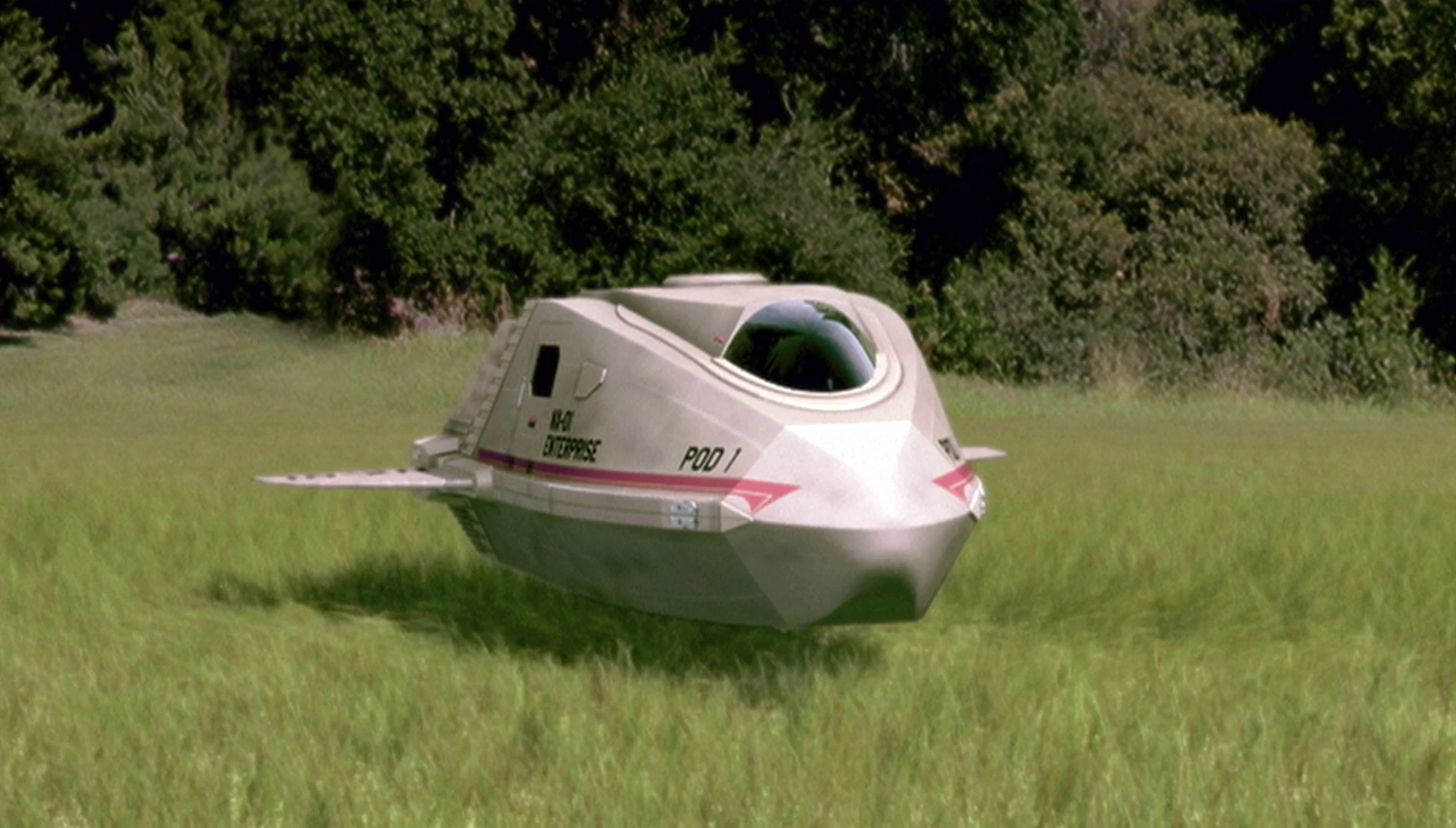 Shuttlepod
 (22nd century) Class
1 VesselThe 22nd century shuttlepod was a versatile type of shuttlecraft primarily operated by Starfleet, designed for transporting personnel to and from planets and spacecraft. These vehicles were classified as OTV Type K42/Personnel. The design philosophy aimed for a 'flying machine with wings' rather than the more box-like shuttles seen in later eras. Its aesthetic was influenced by contemporary Earth reentry vehicles, such as the Lockheed Martin X-33 and the X-39, reflecting a belief that these designs represented the pinnacle of non-warp flight technology for the next century. Initially conceived with four wings, the design was refined to incorporate two retractable wings that slid out from the body, a modification made to ensure compatibility with starship launch bays and to avoid interference with internal structures. **Technical Specifications** Each shuttlepod was equipped with a single deck and could accommodate a pilot and six passengers, though conditions were noted to be cramped. The interior featured a swiveling pilot's chair, two similar chairs behind it, and two upholstered benches at the rear that could double as bunks. These benches had lift-up seats for storage access. Entry points included a roof hatch, side entrances, and a large rear entrance. Standard equipment included oxygen recyclers, a store of rations, and a tiny built-in stove, but they notably lacked toilet facilities and typically did not store Universal translators. **Propulsion & Maneuvering** Shuttlepods were propelled by impulse engines, capable of a normal maximum speed of one-quarter impulse, though slightly faster speeds were achievable. For additional thrust, fusion overburn could be utilized. The impulse engine module at the aft of the craft could be safely ejected and detonated if necessary. Multiple thrusters provided precise control for landing and maneuvering. Each shuttlepod featured a single plasma injector, which, if damaged, could lead to plasma leaks. The craft could operate with a damaged EPS conduit, though replacement was standard procedure. **Tactical & Defensive Systems** For defense, shuttlepods were constructed with a ditanium hull reinforced with polarized hull plating. Hatches were made of duratanium alloy, capable of withstanding a quarter kiloton thermokinetic explosion at close range. They could endure attacks from conventional projectile weapons, such as those from American P-51 Mustangs, but were vulnerable to heavier anti-aircraft artillery and explosives small enough to be carried by hand. They could also survive two phase cannon hits. For offensive capabilities, shuttlepods were armed with two forward-mounted plasma cannons, which could fire both plasma bullets and beam emissions, with a range of less than ten kilometers. These cannons were more powerful than Starfleet/ECS plasma rifles. Shuttlepods could also be modified to carry at least six spatial charges, launched as missiles, capable of spreading particles over a five hundred-kilometer radius. **Sensor & Communication Systems** A com array enabled subspace communications over large distances. Shuttlepods possessed the ability to distinguish between Vulcan and Human bio-signs, even in adverse weather conditions. However, atmospheric interference could negatively impact their communications and sensor capabilities, and severe weather could prevent landing. Proximity alarms were also standard. Each shuttlepod was equipped with a transponder for other spacefaring vehicles to lock onto, though this could be disabled. While NX-class starships could identify the quantity and species of occupants, shuttlepods could be configured to emanate false life signs. The hull could be insulated with minerals like trellium-D to protect against spatial anomalies, a process requiring at least twelve hours. **Service History** Shuttlepods were extensively used by Starfleet in the 2150s and early 2160s, often transporting Starfleet personnel, MACOs, and diplomatic delegations. The NX-class starship Enterprise (NX-01) famously carried two shuttlepods, 'Shuttlepod 1' and 'Shuttlepod 2', throughout its ten-year mission from 2151 to 2161. Starfleet Command also operated shuttlepods, which featured distinct blue and silver streamlines and registry numbers, such as the NC-05 seen in 2154. In the mirror universe of the mid-2150s, the Terran Empire utilized similar shuttlepods aboard their NX-class starships, such as the ISS Avenger (NX-09). The United Federation of Planets starship USS Franklin also carried at least one shuttlepod until its disappearance in the mid-2160s. Shuttlepods were later featured in a holoprogram in 2370, simulating the interior of the Enterprise (NX-01) and locations on Rigel X. **Docking Procedures** When stored aboard an NX-class starship, shuttlepods were typically housed in the vessel's launch bay on F Deck. For space travel, a magnetic docking arm lowered the pod through a set of doors beneath the starship's hull before releasing it. To return, shuttlepods docked with the magnetic arm and were elevated back into the launch bay. Starfleet officers received training in these docking maneuvers.
- No armament data logged.
- No propulsion data logged.

Shuttlepod 2
Class: Shuttlepod (22nd century)- No armament data logged.
- No propulsion data logged.

Silver Blood#USS Voyager
Class: Intrepid class- • Phase
- • Photon torpedo
- • Spatial charge
- • Tricobalt device
- + 2 more...
Sisko's attack ship
Class: Jem'Hadar attack ship- No armament data logged.
- No propulsion data logged.
 Classified
Skagaran starship Class
Hull Specifications LoggedThe Skagaran starship was a class of warp-capable starship utilized by the Skagarans during the 19th century. These vessels served as a primary means of interstellar transport for the Skagaran civilization, enabling them to establish colonies and conduct operations across various star systems. **Service History & Notable Incidents** One particular Skagaran starship played a pivotal role in a significant historical event. This vessel was employed to transport a group of Humans from Earth to a Skagaran colony, where they were intended for use as slaves in the colony's construction. However, the Humans eventually staged a violent uprising, successfully overthrowing their Skagaran captors and subsequently becoming the dominant species on the planet. The remains of this specific Skagaran starship were later repurposed by the Skagarans themselves to construct a settlement known as Skag town. This incident and the fate of the starship were documented in the Starfleet records, specifically in the episode 'North Star'.
- No armament data logged.
- No propulsion data logged.
 Scout / Patrol
Snakehead Class
Hull Specifications LoggedThe Snakehead was a distinctive type of warp-capable scout ship utilized by the Romulans during the late 24th century. Despite its relatively small size, this vessel was engineered for both stealth and combat, featuring a robust armament and advanced defensive systems. Its design incorporated twin retractable ventral-mounted disruptor cannons, providing significant offensive capability for its class. Propulsion was achieved through a warp drive, complemented by double subthrusters for enhanced maneuverability. Defensively, the Snakehead was equipped with powerful deflector shields and a sophisticated cloaking device. A unique tactical feature of its cloaking system was the ability to reverse its projection, creating a false decoy image of the ship to mislead adversaries. The vessel was designed for minimal crew requirements, operated by a single pilot, making it ideal for reconnaissance and rapid strike missions. **Class History** The Snakehead class saw active service in 2399, notably during critical events involving the former Borg cube known as 'the Artifact'. One such vessel was commandeered by Narek, a Romulan agent, from 'the Artifact'. Narek utilized this Snakehead to pursue the starship *La Sirena* through a transwarp conduit, ultimately tracking it to the planet Coppelius. Upon arrival, Narek's Snakehead engaged *La Sirena* in combat, but was subsequently disabled by a weapon deployed from the surface of Coppelius, as depicted in the episodes 'Broken Pieces' and 'Et in Arcadia Ego, Part 1'. Later, several Snakehead-class ships were observed as part of the larger Romulan fleet that launched a coordinated attack on Coppelius, playing a role in the climactic confrontation detailed in 'Et in Arcadia Ego, Part 2'. These instances underscore the class's tactical importance within the Romulan Star Empire's fleet operations during this tumultuous period.
- • Disrupto (Qty: 2)
- • Cloaking device
- • Deflector shield
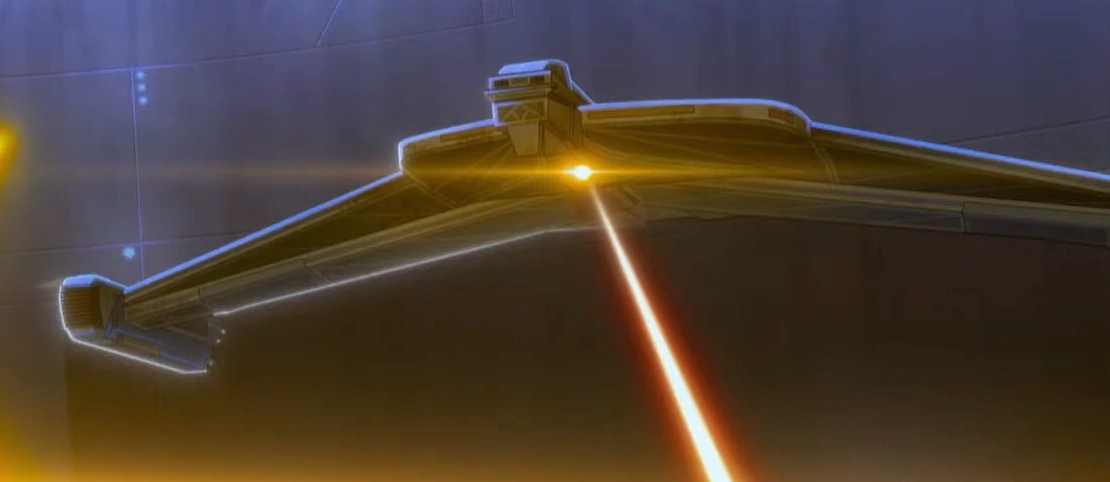 Classified
Snipe class
Hull Specifications LoggedThe Snipe class was a classification of starship utilized by the Romulan military. These vessels were part of the Romulan Star Empire's fleet, designed for military operations. While specific design details and technical specifications are not extensively documented, their role within the Romulan military suggests a combat-oriented purpose. **Service History** The Snipe class was active prior to 2381. In that year, a Snipe-class ship was featured in a holodeck exercise program created by Ensign Beckett Mariner. The program, set in a Cardassian detention center, depicted Mariner using a Miranda-class starship, the USS MacDuff, to engage and destroy a Snipe-class vessel, among others, as part of her escape scenario. This event was chronicled in the episode 'Strange Energies'.
- No armament data logged.
- No propulsion data logged.
 Test Ship
Soliton wave rider Class
Hull Specifications LoggedThe Soliton wave rider was an unmanned test ship developed and operated by the Science Institute of Bilana III during the mid-24th century. Its primary purpose was to serve as a test vehicle for the experimental soliton wave propulsion method, designed to push a vessel into warp using an external energy wave rather than conventional onboard warp drive systems. The ship itself was a specialized platform, designed to be enveloped by and transfer energy from a soliton wave to generate its own warp field, demonstrating a novel approach to interstellar travel. **Service History** In 2368, the Soliton wave rider was central to the Soliton wave rider experiment. For this critical test, the unmanned vessel was towed to a position approximately two million kilometers from Bilana III. Once in position, it was successfully enveloped by a generated soliton wave, which then propelled it into warp. The ship was programmed to transmit telemetry data back to the Science Institute of Bilana III using subspace radio, providing crucial information on the wave's interaction with the ship's warp field. However, during the experiment, the power signature of the soliton wave began to fluctuate unpredictably. This instability caused the ship's warp field to destabilize, leading to extreme shearing stress on its hull. The immense forces ultimately resulted in the catastrophic destruction of the Soliton wave rider. This event was documented in the Starfleet record 'New Ground'.
- No armament data logged.
- No propulsion data logged.
 Classified
Sombra class
Hull Specifications LoggedThe Sombra-class was a type of Federation starship that shared many fundamental components with the more prominent Constitution-class, leading to a close resemblance both externally and internally. Despite these similarities, the Sombra-class was designed with distinct operational parameters. It featured a significantly smaller crew complement of ninety-nine, in contrast to its sister class. These vessels were notably recognized for their speed, capable of a cruising speed of Warp 6 and a maximum speed of Warp 8. A distinguishing external feature was a larger bridge window compared to the Constitution-class, and the Starfleet pennants of this class were characterized by a blue color. **Service History** The Sombra-class starships were in active service with Starfleet during the 23rd century, specifically noted during the 2250s. Their design, emphasizing speed and a smaller crew, made them suitable for various missions, including deep-space exploration and mapping. In 2259, one such vessel was assigned to a critical mapping mission that took it into non-Federation space. The USS Peregrine, registry NCC-1549, was a known starship of this class, which was salvaged in 2259, as depicted in the episode 'All Those Who Wander'. Unnamed Sombra-class starships were also part of Starfleet's fleet during this period.
- • Phase
- • Photon torpedo
- • Warp facto (Qty: cruising speed)
- • Deflector shield
 Battle cruiser
Son'a battle cruiser Class
Hull Specifications LoggedThe Son'a battle cruiser was a formidable type of large warship employed by the Son'a. These vessels were heavily armed with photon torpedoes and isolytic bursts. Notably, isolytic bursts are a variety of subspace weapon explicitly banned by the Second Khitomer Accords, highlighting the Son'a's disregard for interstellar treaties. The design of the battle cruiser was intended to evoke a boomerang shape. **Class History** In 2375, two Son'a battle cruisers played a pivotal role in the Son'a's clandestine operations. They were initially tasked with escorting the Son'a collector through the treacherous Briar Patch to the Ba'ku planet, where the Son'a planned to forcibly relocate the Ba'ku people and exploit the planet's unique metaphasic radiation. Later, under the direct command of Ahdar Ru'afo, these battle cruisers were dispatched to intercept the USS Enterprise (NCC-1701-E) and prevent it from escaping the Briar Patch to alert the Federation Council to the Son'a's illicit activities. During the ensuing Battle of the Briar Patch, the USS Enterprise (NCC-1701-E), under the command of Jean-Luc Picard, engaged the two Son'a vessels. Through the innovative application of the 'Riker Maneuver,' a daring tactical gambit, the USS Enterprise (NCC-1701-E) managed to destroy one Son'a battle cruiser and severely damage the other, leaving it crippled and requesting assistance. These events are chronicled in Star Trek: Insurrection.
- • Photon torpedo
- • Isolytic burs
 Collector
Son'a collector Class
Hull Specifications LoggedThe Son'a collector was a massive spacecraft specifically engineered by the Son'a to harvest metaphasic radiation from the planetary rings of Ba'ku. This radiation was crucial to the Son'a's pursuit of immortality. The collector's operational mechanism involved unfurling a pair of large 'sails' and then launching an injector assembly from its stern into Ba'ku's rings. This action would trigger a thermolytic reaction, disrupting the rings and allowing their metaphasic particles to be drawn into the collector's sails. A severe side effect of this process was that the planet Ba'ku would be rendered uninhabitable for generations. The collector was primarily designed for unmanned operation, controlled remotely from Ahdar Ru'afo's flagship, though it also featured a console in its upper control matrix for direct manual operation. It was equipped with multiple shield generators for defense and an autodestruct mechanism with a two-second delay. One minute prior to the separation of the injector assembly, cryogenic tanks within the collector would vent flammable exhaust. The sails of the Son'a collector bore a visual resemblance to those of the Bajoran lightship, despite serving an entirely different function. **Class History** In 2375, the Son'a, under the command of Ahdar Ru'afo, brought the Son'a collector to Ba'ku with the clandestine collusion of Starfleet. The deployment of this destructive device was temporarily halted by Captain Jean-Luc Picard and Commander Worf, who, with the assistance of Subahdar Gallatin, commandeered Ru'afo's flagship. Following this setback, Ru'afo beamed directly to the collector in a desperate attempt to complete its activation. Captain Jean-Luc Picard pursued him, and after a brief firefight with Ru'afo, successfully activated the collector's autodestruct sequence. Captain Picard was subsequently beamed away by the USS Enterprise (NCC-1701-E) moments before the Son'a collector exploded, resulting in the death of Ahdar Ru'afo. The events surrounding the Son'a collector were chronicled in Star Trek: Insurrection.
- No armament data logged.
- • Deflector shield
 Auxiliary craft
Son'a shuttle Class
Hull Specifications LoggedThe Son'a shuttle was a medium-sized auxiliary craft primarily utilized by the Son'a. These vessels were equipped with transporters and an indeterminate type of torpedoes, alongside the capability to deploy Son'a drones. The design of the Son'a shuttle was conceived by John Eaves, who also described it as a Son'a fighter, indicating its dual-purpose potential for transport and combat operations. **Class History** The Son'a shuttles played a critical role in the Son'a's operations against the Ba'ku in 2375, as depicted in Star Trek: Insurrection. Their initial deployment involved attempts to transport the Ba'ku off their planet's surface. However, these efforts were complicated by the presence of transport inhibitors surrounding the Ba'ku village. In response, two Son'a shuttles engaged the village, firing upon it in an attempt to neutralize the inhibitors. Following this initial setback, two Son'a shuttles returned to the planet the subsequent day. They launched several dozen Son'a drones, which were instrumental in the capture process. These drones fired isolinear tags at the Ba'ku inhabitants, enabling the shuttles to transport them aboard. After their capture, the Ba'ku were transported up to Ru'afo's flagship. Later, three Son'a shuttles were observed firing on the mountains concealing the now-hidden Ba'ku, in a concerted effort to force them into the open. In total, Son'a shuttles were responsible for capturing over one hundred of the Ba'ku during these events.
- • Photon torpedo
- • Son'a drone
Sovereign Class
Hull Specifications LoggedThe provided wikitext dossier does not contain information regarding the Sovereign-class starship, despite the request. Instead, it details the usage of the title 'Sovereign' across various cultures and contexts within the Star Trek universe. The dossier serves as a disambiguation for the term 'Sovereign' rather than a description of a starship class. **Usage of the Title 'Sovereign'** The dossier highlights several instances where the title 'Sovereign' is used. For example, Marouk was identified as the Acamarian sovereign in 2366, as depicted in the Star Trek: The Next Generation episode 'The Vengeance Factor'. In the Delta Quadrant, the world known as The Waters was governed by 47 regional sovereigns, unified under the Monean Maritime Sovereignty, as seen in the Star Trek: Voyager episode 'Thirty Days'. Additionally, Kaitaama, the First Monarch of Krios Prime, was referred to as 'your Sovereignty' by Charles Tucker III, acknowledging her role as the head of the Sovereign Dynasty of Krios Prime. This usage is noted in background information related to the Star Trek: Enterprise series.
- No armament data logged.
- No propulsion data logged.
 Classified
Sovereign class
19 VesselsThe Sovereign-class starship, introduced in the late 24th century, represents Starfleet's pinnacle of technological advancement and design. Classified as an Explorer Type 2, it was, at the time of its introduction, the longest and most advanced starship design in the fleet, though not as large as the Galaxy-class starship. The class quickly became a symbol of Federation strength and exploration capabilities. **Design & Development** The Sovereign-class design emphasized both combat readiness and deep-space exploration. The USS Enterprise-E, a prominent vessel of this class, was constructed at the San Francisco Fleet Yards and launched on stardate 49827.5 (2372). The ship's design, as detailed by Rick Sternbach and John Eaves, features a sleek, aggressive profile, measuring approximately 685 meters in length. Initial designs for the Enterprise-E, including a detailed saucer separation capability, were considered but not depicted on screen, though Ronald D. Moore believed the Enterprise-E possessed this feature. The class's prototype, the USS Sovereign (NX-73811, later NCC-73811), was instrumental in its development. **Service History** The Sovereign-class saw its first major engagements in 2373, when the USS Enterprise-E played a critical role in repelling a Borg incursion into Sector 001, contributing to the destruction of the attacking Borg cube, as depicted in Star Trek: First Contact. While not a primary combat vessel in the Dominion War, Sovereign-class ships like the Enterprise-E were often deployed on diplomatic missions, attempting to resolve conflicts and extend olive branches while the Federation Diplomatic Corps worked to end the war, as seen in Star Trek: Insurrection. A significant refit of the Enterprise-E occurred sometime after its mission in the Briar Patch and before its engagement with the Reman warship Scimitar in 2379. This refit included the addition of five torpedo tubes and four phaser arrays, along with minor adjustments to the warp nacelle pylons, which were utilized during its mission to Romulus, as shown in Star Trek Nemesis. In 2380, Captain Carol Freeman of the USS Cerritos expressed a dislike for the Sovereign-class aesthetic during repairs to her own ship, noting she hated it when a ship 'comes out looking all... Sovereign-class,' as heard in 'No Small Parts'. The USS Van Citters, a Sovereign-class vessel, came to the aid of Douglas Station in 2381, engaging three Texas-class ships. Despite being overwhelmed and incapacitated, it was saved by the USS Cerritos, as depicted in 'The Stars At Night'. In 2384, a large armada, including at least 19 Sovereign-class ships such as the USS Sovereign and the Enterprise-E, intercepted the USS Protostar near Gamma Serpentis. These ships, along with Akira-class, Centaur-type, and Defiant-class vessels, were subsequently infected by the Living construct by Ensign Asencia, as seen in 'Mindwalk' and 'Supernova, Part 1'. By 2401, eight Sovereign-class ships joined a Starfleet armada against an unknown Borg vessel, only to be briefly commandeered by a Borg liaison before their crews initiated auto-destruct sequences, as shown in 'The Star Gazer'. On Frontier Day in 2401, 38 Sovereign-class ships participated in fleet maneuvers celebrating 250 years since the Enterprise NX-01's first voyage. These vessels were also commandeered by the Borg, influenced by Jack Crusher, as depicted in 'Võx' and 'The Last Generation'. In an alternate quantum reality in 2382, the USS Cerritos was briefly transformed into a Sovereign-class ship, though this alternate design featured warp nacelles more akin to the California-class, as seen in 'The New Next Generation'. **Technical Specifications** The Sovereign-class starship measures approximately 685 meters (2,248 feet) in length, 250 meters (820 feet) in beam, and 88 meters (290 feet) in height. It consists of a saucer-shaped primary hull and a secondary hull mounting two warp nacelles. The class is equipped with bio-neural gel pack-based computer systems, concentrated in a primary core on Decks 6-8 and a secondary core on Decks 15-17. Propulsion is achieved through two warp nacelles, housing multiple pairs of warp coils, and two impulse engines located at the aft of the saucer section. While Warp 8 is the highest speed observed on screen, the class has a maximum warp speed of 9.995 and a normal cruising speed of Warp 6. Main engineering, spanning Decks 14-18, houses the warp core, deuterium fuel tanks, antimatter storage pods, and plasma coolant tanks. By 2379, a force field system was implemented around the warp reactor for enhanced protection. The class is also equipped with a warp core ejection system, notably used by the Enterprise-E in 2375 to seal a subspace rift caused by the Son'a by remote detonation of the ejected core, as seen in Star Trek: Insurrection. Tactically, the Sovereign-class boasts significant enhancements. In its original configuration, it featured twelve phaser arrays and five torpedo launchers (one forward quantum, two forward photon, three aft photon). Following a refit, the armament was upgraded to sixteen phaser arrays and ten torpedo launchers (one forward quantum, three forward photon, six aft photon). Defensively, the ships are equipped with robust deflector shields. **Interior Layout & Systems** The Sovereign-class features 24 decks, though references to Decks 26 and 29 exist in Star Trek: First Contact and Star Trek Nemesis, respectively. Deck 1 houses the main bridge, observation lounge, captain's ready room, and an airlock. The bridge layout places the captain's chair centrally, elevated above tactical and operations stations, with conn and operations consoles forward of the main viewer. Aft of the command area are elevated tactical and security consoles, mission operations, and science stations. The aft wall features a large master systems display and an engineering console. Crew quarters, including larger accommodations for senior officers, are modular and primarily located on the upper and lower surfaces of the saucer section, often with windows offering views of the starscape. Senior officers' quarters typically include a living area, personal workstation, replicator, dining area, and a bedroom with a double-sized bed, connected to a half-bathroom, or a full-sized bathroom with a bathtub for senior staff. Medical facilities include a large primary sickbay on Deck 7 with six standard and one advanced biobed, a chief medical officer's office, and a lab. A smaller, secondary sickbay, similar to an Intrepid-class sickbay, is located on Deck 16. Sovereign-class starships are also equipped with an Emergency Medical Hologram and a counselor's office near sickbay. Other amenities for the crew include holodecks, gymnasiums, and a ship's library. The class was not designed with the extensive civilian provisions of its Galaxy-class predecessors, though married personnel were permitted to share quarters. **Auxiliary Systems** The main shuttlebay, located at the dorsal stern of the primary hull (Decks 6-9), is larger than typical for a vessel of its size, accommodating runabouts and multiple shuttlecraft. A secondary shuttlebay is situated at the aft of the engineering hull. The class also includes a captain's yacht, such as the USS Enterprise-E's 'Cousteau,' designed for special diplomatic missions. For emergency evacuations, Sovereign-class starships carry numerous escape pods, located throughout the primary and secondary hulls. These pods feature heat shields for atmospheric entry and landing. Unlike earlier designs, they lack an outer hatch, with personnel entering through internal corridor hatches. By the 2380s, some ships of the class received upgrades to their escape pods. The transporters, with at least four separate rooms, are capable of site-to-site transport and can beam small vessels like a Scorpion-class attack fighter aboard, even while mobile.
- • Phase (Qty: 12)
- • Torpedo launche (Qty: 1)
- • Deflector shield
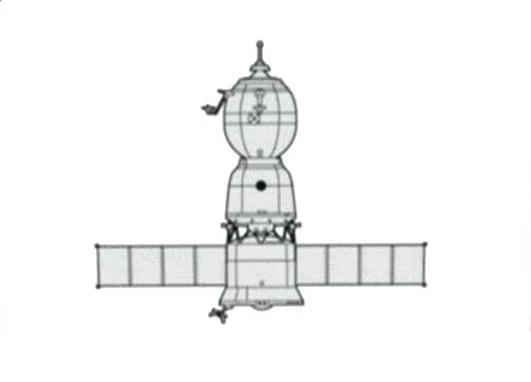 Runabout / Utility
Soyuz Class
Hull Specifications LoggedThe Soyuz was a manned Russian spacecraft that served extensively with the Soviet space program and subsequently the Russian Space Agency. Its operational history spanned the 20th and 21st centuries, making it a long-standing and significant vessel in Earth's early space exploration efforts. **Historical Context** Within Starfleet's historical records, the Soyuz spacecraft is acknowledged for its pioneering role. In 2143, an assignment patch commemorating the Soyuz T-6 mission, a joint Russian-French endeavor, was prominently displayed within the 602 Club. Later, in 2254, a detailed sketch depicting the Soyuz spacecraft was cataloged and accessible within the library computer of the USS Enterprise (NCC-1701), as seen in the episode 'The Cage'. This inclusion highlights its historical importance to Starfleet's understanding of early human spaceflight, as also referenced in the episode 'First Flight'. **Technical Notes** It is noted that the specific variant of the Soyuz spacecraft depicted in historical databases, such as the sketch found on the USS Enterprise (NCC-1701), is not definitively identified. Its exterior appearance is virtually identical to both the Soyuz-TM and Soyuz-TMA models, leading to some ambiguity in precise classification within the historical archives.
- No armament data logged.
- No propulsion data logged.
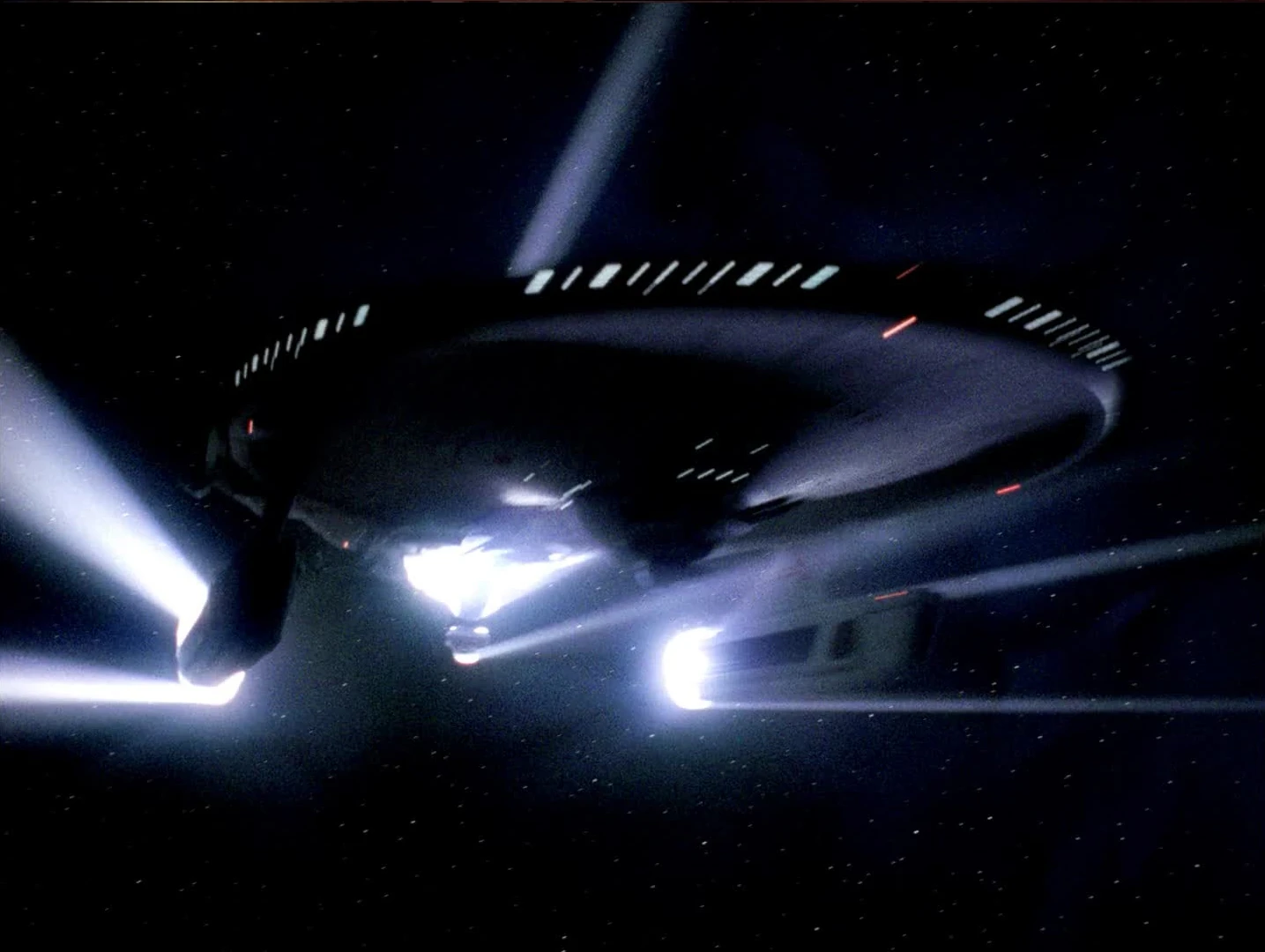 Classified
Soyuz class
1 VesselThe Soyuz-class was a type of Federation starship that served with Starfleet during the late 23rd century. While the class was generally retired by the late 2280s, one notable vessel, the USS Bozeman (NCC-1941), experienced a unique temporal displacement. This ship, originally from 2278, became trapped in a temporal causality loop and re-emerged in 2368, continuing to be active as of 2373, as depicted in the Star Trek: The Next Generation episode 'Cause And Effect'. **Design & Engineering** The external design of the Soyuz-class was based on the single hull configuration employed by the Miranda-class. It featured two nacelle pylons mounted on the underside of the primary hull, connecting to the warp nacelles. A distinctive enlarged tail section protruded from the aft, flanked on either side by dual shuttlebays. Above each nacelle, outboard sensor pods were mounted. Internally, the Soyuz-class bridge shared a similar floor plan with contemporary Federation starships of its era. The ship's viewscreen was located at the front, with the captain's chair positioned near the center of the bridge. A stand-up console was situated on the rear starboard side, between the captain's position and a handrail separating the central area from the rear wall, which housed various systems stations. **Notable Vessels & Legacy** The most prominent vessel of this class was the USS Bozeman (NCC-1941), which gained notoriety for its temporal displacement event. The class name 'Soyuz' is derived from the Russian word for 'union' (Союз) and was named for the Russian spacecraft that shuttled cosmonauts to the Salyut space station, reflecting a historical connection to Earth's space exploration endeavors.
- No armament data logged.
- No propulsion data logged.
 Runabout / Utility
Space shuttle orbiter Class
Hull Specifications LoggedA space shuttle orbiter was a type of low-orbit spacecraft developed on Earth by the National Aeronautics and Space Administration of the United States of America. These versatile vehicles were instrumental in early space exploration and scientific endeavors, serving as a foundational technology for future interstellar travel concepts. **Design & Development** The OV-101 'Enterprise' served as the prototype orbiter for the space shuttle system. The initial launch configuration for these vessels comprised three primary components: an orbiter vehicle, an external liquid fuel tank, and two solid rocket boosters. This system was depicted in ''Star Trek: The Motion Picture''. The program also utilized Spacehab as a crucial provider of cargo modules, a detail referenced in the ''Star Trek: Enterprise opening title sequences''. **Service History** In April 1981, the OV-102 'Columbia' embarked on her maiden voyage, marking the beginning of a significant era in spaceflight. Over the subsequent thirty years, the 'Columbia' and her sister ships completed a total of 133 orbital missions. However, this period was also marked by tragedy; the OV-099 'Challenger' was destroyed during launch in 1986, and the 'Columbia' disintegrated during reentry in 2003. The first generation of space shuttle orbiters was officially retired in 2011, subsequently being replaced by a second generation of space shuttle orbiters, such as the OV-165, as noted in the episode 'Two of One'. **Legacy & Notable Orbiters** The legacy of NASA's first series of orbiters is honored through the naming of several future Starfleet starships. The OV-101 'Enterprise' is associated with the Starships 'Enterprise'. The OV-102 'Columbia' is linked to the Starships 'Columbia'; the astronauts selected for its STS-107 mission included Richard Douglas Husband, William Cameron McCool, David McDowell Brown, Kalpana Chawla, Michael Phillip Anderson, Laurel Clark, and Ilan Ramon. The mission insignia for STS-107 was later observed in 2143 within the 602 Club, as seen in 'First Flight'. Notably, a portion of Gene Roddenberry's ashes was carried into space by the 'Columbia' during the STS-52 mission in 1992. The OV-099 'Challenger' is associated with the Starships 'Challenger'; mission insignia for two 'Challenger' missions were displayed in a bar in Bozeman, Montana in 2063, a detail from ''Star Trek: First Contact''. The 'Challenger' was later replaced by the 'Endeavour'. The OV-103 'Discovery' is linked to the Starships 'Discovery'; its STS-33 mission insignia was also displayed in the Bozeman bar in 2063, and two other 'Discovery' mission insignia were seen in the 602 Club in 2143, as depicted in 'First Flight'. The OV-104 'Atlantis' is associated with the Starships 'Atlantis', and the OV-105 'Endeavour' with the Starships 'Endeavour'. The enduring impact of these orbiters is further highlighted by Admiral Maxwell Forrest, who kept two models of a space shuttle in his office on Earth, as seen in 'Regeneration'. A space shuttle lifting off was also observed in the time stream as the timeline realigned itself after Jonathan Archer restored a damaged timeline in 'Storm Front, Part II'. Furthermore, a sketch depicting an overhead view of a space shuttle was stored in the library computer aboard the USS 'Enterprise' (NCC-1701) in 2254, as shown in 'The Cage'.
- No armament data logged.
- No propulsion data logged.
 Spacedock
 type
Hull Specifications LoggedThe Spacedock type was a massive Federation space station design, first utilized by Starfleet in the 23rd century and remaining in service throughout the 24th century and into the 25th century. Its distinctive 'mushroom' shape was conceived by David Carson and Nilo Rodis at Industrial Light & Magic (ILM) during the development of Star Trek III: The Search for Spock. Carson initially envisioned a rotating station that starships would have to synchronize with, and he made early drawings of the USS Enterprise entering such a facility. Rodis, aiming to differentiate the design from ILM's work on the Star Wars franchise, ensured the dock had a unique, more 'reality-based' Star Trek aesthetic, leading to its behind-the-scenes nickname 'mushroom'. A significant challenge during design was conveying the immense scale of the Spacedock type. David Carson devised the idea of incorporating large windows into crew facilities, allowing observers to see starships docking from within. This concept, inspired by his experience seeing a plane from an airport terminal, provided a crucial reference point for scale. Nilo Rodis further enhanced the sense of grandeur and distance within the vast interior docking bay by incorporating columns of light, which he felt added a 'magic' quality essential for the motion picture shots. **Technical Specifications & Capabilities** The Spacedock type featured a massive layout designed to house numerous starships within its upper, mushroom-shaped section. The interior docking bay was accessible via four pairs of large space doors, evenly spaced along the outer hull. These doors were strategically positioned between internal docking structures. Notably, one pair of space doors was wide enough to accommodate an Excelsior-class vessel, while another could facilitate the passage of a Galaxy-class starship. A dedicated docking control facility managed all ingress and egress operations. The central area of the internal docking space included a column-like structure with three berths on either side, allowing for a total of six ships to dock simultaneously. Crew facilities, such as lounges within this central column, offered panoramic views of the spacedock's interior. Beyond its primary role as a docking facility, Spacedock-type stations were fully capable of performing major starship refits and extensive repairs. They also served as vital personnel hubs for crew rotations, facilitating the transfer and assignment of Starfleet personnel. For defense, these stations were equipped with phasers, mounted in twin banks, each containing four phaser emitters. These defensive weapon systems were designed to retract beneath the hull plating when not in active use, as demonstrated in Star Trek: Lower Decks episode 'The Stars At Night'. **Service History & Notable Stations** The Spacedock type has a long and distinguished service record, active from the 23rd century through the 24th century and into the 25th century. Numerous stations of this type have been commissioned by Starfleet. Notable named stations include Douglas Station (active in 2384), Lya Station Alpha (active in 2401), Spacedock One (converted into an orbital facility for the Fleet Museum and active in 2401), Starbase 74 (active in 2365), Starbase 84 (active in 2370), and Starbase 133 (active in 2367). Unnamed Spacedock-type stations have also been depicted throughout Starfleet operations. The Spacedock type has made numerous appearances across Star Trek media. It was prominently featured in Star Trek III: The Search for Spock, Star Trek IV: The Voyage Home, Star Trek V: The Final Frontier, and Star Trek VI: The Undiscovered Country. In Star Trek: The Next Generation, it appeared in episodes such as '11001001', 'Remember Me', 'Ensign Ro', and 'Phantasms'. The class also featured in 'Will You Take My Hand?', Star Trek: Picard episodes 'The Bounty', 'Vox', and 'The Last Generation', and Star Trek: Lower Decks episodes 'Second Contact', 'Moist Vessel', 'Veritas', 'Crisis Point', 'No Small Parts', 'I, Excretus', 'First First Contact', 'The Stars At Night', and 'A Few Badgeys More'. The enclosure around Drafting Room 5 at Utopia Planitia Fleet Yards, seen in 'Booby Trap', bore a strong resemblance to the interior of this spacedock type. **Production & Filming Notes** For Star Trek III: The Search for Spock, ILM constructed a full-scale studio model for the exterior and a large thirty-foot miniature for the interior of the Earth spacedock. The spacedock lounge was filmed on a blue screen stage at ILM, with a matte painting extending the window frames and footage of the interior docking bay composited in. The original interior miniature was destroyed after filming Star Trek III but was reassembled for Star Trek IV: The Voyage Home. The control booth set was reused, with updated graphics. For Star Trek V: The Final Frontier, stock footage was re-composited. For Star Trek VI: The Undiscovered Country, visual effects artists, including William George, sought a new, grand angle of approach, inspired by '2001: A Space Odyssey'. A pie-shaped miniature was built for a first-person perspective shot of the space doors, as the full interior set no longer existed. When the USS Enterprise-D was depicted docking with a Spacedock type in Star Trek: The Next Generation, stock footage was reused, despite the Enterprise-D being considerably larger than the original USS Enterprise. Andrew Probert, who worked on the Enterprise-D's design, proposed an alternative exterior docking method for the larger vessel, but his suggestion was declined. He later illustrated a matte painting for the interior docking bay shots in TNG. The exterior model of the Spacedock type was eventually stored at Paramount Pictures under the care of Penny Juday.
- • Phase
- No propulsion data logged.

Species 8472 bio-ship
Class: Species 8472 bio-ship- • Directed energy weapo (Qty: 1)
- No propulsion data logged.
Classified
Species 8472 bio-ship Class
1 VesselThe Species 8472 bio-ship was a unique type of organic-based vessel, intrinsically linked to its creators, Species 8472. Its composition was of genetically similar organic material to Species 8472, which granted it a natural resistance to conventional technology and, conversely, a specific vulnerability to modified nanoprobes. The bio-ship possessed a highly resilient hull, impervious to standard Federation sensors and tractor beams, and was capable of significant self-regeneration if damaged. Furthermore, it was equipped with energy shields, adding another layer to its formidable defenses. Internally, the bio-ship's structure resembled flesh and bones, featuring a complex network of organic conduits that circulated electrodynamic fluid, believed to be its primary energy source. Its computational core was a binary matrix laced with neuropeptides. A distinctive capability of the bio-ship was its method of docking; it could 'dissolve' through the hull of another vessel to access its interior. When first encountered by the USS Voyager in 2373, the vessel registered as a biomass, not a starship, on Federation sensors, only showing organic bioreadings that could not penetrate its hull. Transporter locks and tractor beams were ineffective. Commander Chakotay initially speculated it might be a space-dwelling organism or a biological weapon. **Technical Specifications** Each Species 8472 bio-ship was piloted by a single individual. For armament, it featured a single forward-mounted directed energy weapon, potent enough to destroy Borg cubes with just a few shots. In a coordinated attack, eight bio-ships, directing their firepower into an Species 8472 energy focusing ship, were capable of destroying an entire planet. The bio-ship's propulsion system was an antimatter-based warp drive, allowing it to operate efficiently in both its native medium of fluidic space and the vacuum of normal space. It possessed the unique ability to open quantum singularities, facilitating rapid transit between these two distinct dimensions. Visually, when in flight, the three fins located on the bio-ship's rear section would extend. **Class History** The Species 8472 bio-ship played a pivotal role in the Borg-Species 8472 War, which began in 2373 when the Borg provoked Species 8472 by invading fluidic space. After decisively defeating the Borg, Species 8472 launched a counter-invasion of the Milky Way Galaxy, deploying hundreds of these bio-ships through a series of quantum singularities in a region of space later designated the 'Northwest Passage'. Later in 2373, the USS Voyager encountered a single regenerating bio-ship amidst the debris of fifteen Borg cubes. This vessel engaged and knocked USS Voyager off-course before the Federation starship managed to escape. As USS Voyager ventured deeper into Borg space, many more bio-ships were detected, as documented in the episode 'Scorpion'. Following the formation of an uneasy alliance with the Borg, the crew of USS Voyager developed nanoprobe-based bio-molecular warheads, which proved highly effective against Species 8472. Seven of Nine subsequently piloted USS Voyager into fluidic space to confront Species 8472, successfully destroying four bio-ships within fluidic space and an additional thirteen after returning to normal space. Faced with this devastating new weapon, the remaining bio-ships retreated en masse back to fluidic space, as depicted in 'Scorpion, Part II'. One damaged bio-ship was later left behind in the Delta Quadrant, pursued by a Hirogen hunting party for six months before its pilot ultimately abandoned it above an asteroid, as seen in the episode 'Prey'.
- • Directed energy weapo (Qty: 1)
- No propulsion data logged.
 Classified
Springfield class
Hull Specifications LoggedThe Springfield-class was a type of Federation starship that served with Starfleet during the late 24th century. Known for its role in deep space exploration and defensive patrol duties, this class saw significant, albeit tragic, service during critical periods for the United Federation of Planets. **Design & Development** The Springfield-class originated as a design study by Ed Miarecki and Michael Okuda. The physical filming model for the USS Chekov, a prominent vessel of this class, was constructed by Miarecki as a kitbash for the 'graveyard' scene in the Star Trek: The Next Generation episode "The Best of Both Worlds, Part II". The design shared a resemblance to the Cheyenne-class and utilized components from various sources, including the smaller scale AMT/Ertl USS Enterprise (NCC-1701-D) model kit's saucer section, a bridge module from the larger Enterprise kit, and commercially available highlighter markers for its warp nacelles. Michael Okuda later recounted the model's creation, noting its specific labeling as the USS Chekov (NCC-57302) due to script references, despite a later re-voicing of a line in the episode to mention the USS Tolstoy instead. Okuda attempted to reconcile this discrepancy by assigning the USS Tolstoy to the Rigel-class, though he admitted no specific design was tied to that name at the time of filming. **Service History & Notable Incidents** Springfield-class starships were deployed for deep space exploration and defensive patrol duties across Federation space. The most well-known vessel of this class, the USS Chekov (NCC-57302), met its demise during the devastating Battle of Wolf 359 in 2367, where it was destroyed by the Borg. Wreckage from the USS Chekov was prominently featured in the aftermath of the battle, serving as a stark reminder of the Borg's destructive power. Other ships of the class likely participated in various Starfleet operations throughout the 24th century, with the class also appearing in the Star Trek: The Next Generation episode "Unification I". By approximately 2375, around the time of the Dominion War, the remaining Springfield-class ships were slated for decommissioning, intended to be replaced by more combat-capable starship types, indicating a shift in Starfleet's tactical priorities. **Technical Specifications** According to Issue #110 of the Star Trek: The Official Starships Collection, the Springfield-class was classified as a frigate. These vessels had a crew complement of 430 and measured 325 meters in length. They were capable of achieving a top warp speed of warp factor 9.2, powered by their warp drive system, complemented by impulse engines for sublight travel. For offensive capabilities, the Springfield-class was equipped with eight phaser arrays and two photon torpedo launchers. Defensive systems included standard deflector shields. **Legacy & Apocrypha** The legacy of the Springfield-class, particularly the USS Chekov, continued into the 25th century within apocryphal sources. In 2024, the game Star Trek Online introduced the 'Chekov class' as an unlockable cosmetic skin, envisioned as a 25th-century successor to the 24th-century Springfield-class, explicitly named in honor of the USS Chekov which fell at Wolf 359.
- No armament data logged.
- No propulsion data logged.

SPT 21
Class: Class C shuttlecraft- • Phase
- No propulsion data logged.

SS Botany Bay
Class: DY-100 class- No armament data logged.
- No propulsion data logged.

SS Eleos XII
Class: Phoenix class- No armament data logged.
- • Warp-capable vessel
- • Deflector shield

SS Hokule'a
Class: DY-500-C- No armament data logged.
- No propulsion data logged.

SS Hokule'a
Class: DY-500-C- No armament data logged.
- No propulsion data logged.

SS La Sirena
Class: Kaplan F17 Speed Freighter- • Phase
- • Photon torpedo
- • Deflector shield

SS Mariposa
Class: DY-500 class- No armament data logged.
- No propulsion data logged.

SS Tsiolkovsky
Class: Oberth class- • Phase
- • Deflector shield

SS Vico
Class: Oberth class- • Phase
- • Deflector shield

Stamets type shuttlecraft
Class: Stamets type shuttlecraft- No armament data logged.
- No propulsion data logged.
Runabout / Utility
Stamets type shuttlecraft
2 VesselsThe Stamets-type shuttlecraft was a Starfleet shuttlecraft design in use during the late 2250s, serving as a precursor to the more widely known Class F shuttlecraft of the 2260s. Its interior was designed to be spacious, accommodating approximately 6 to 8 crewmembers. The cockpit featured three forward-facing windows, providing direct visual access for the navigator and pilot. For ingress and egress, the shuttlecraft was equipped with a hatch on its left front side. This hatch required the shuttle to be depressurized or to match the external atmosphere before it could be safely opened, necessitating the use of EV suits by crewmembers if the outside environment was toxic. A basic emergency transporter system was also integrated, capable of transporting one person or a single large object at a time. Externally, the Stamets-type shuttlecraft bore a strong resemblance to its successor, the Class F shuttlecraft. It featured the characteristic three windows on the front section for crew visibility and a raising door on the left front for entry and exit. Propulsion was provided by two warp engine nacelles, positioned along the left and right sides of the craft and connected by pylons. An impulse engine was located at the top end of the aft section, complemented by maneuvering thrusters designed to assist with spatial navigation and turning maneuvers. **Armament** For tactical and utility purposes, Stamets-type shuttlecraft were equipped with tractor beams, enhancing their operational versatility for tasks such as retrieval or towing. **Class History** The Stamets-type shuttlecraft was actively operated by Starfleet throughout the 2250s and into the 2260s. Several named shuttles of this type were in service, including the ''Archimedes'', the ''Cervantes'', the ''Galileo'' (specifically the 2259 variant), and the ''Stamets''. This class made numerous appearances in Star Trek: Strange New Worlds, featuring prominently in episodes such as 'Strange New Worlds', 'Children of the Comet' (via a photograph), 'Memento Mori', 'All Those Who Wander', 'A Quality of Mercy', 'The Broken Circle', 'Among the Lotus Eaters', 'Charades', 'Hegemony', 'Shuttle to Kenfori', and 'Terrarium'. The design also made a later appearance in the Star Trek: Picard episode 'The Next Generation', showcasing its historical significance within Starfleet's lineage of auxiliary craft.
- No armament data logged.
- No propulsion data logged.
Starfleet Six type
Hull Specifications LoggedThe Starfleet Six-type was a class of shuttlecraft utilized by Starfleet during the late 32nd century. Designed for efficient transport, these shuttles were capable of accommodating at least ten individuals, making them suitable for various mission profiles requiring personnel movement. The shuttlecraft required a minimal crew, typically piloted by one or two Starfleet pilots, emphasizing streamlined operations and resource efficiency for its era. Its design reflected the advanced technological standards of the 32nd century, though specific details regarding its propulsion, armaments, or defensive systems are not extensively documented. **Service History** The Starfleet Six-type shuttlecraft entered service with Starfleet in the late 32nd century. One notable vessel of this class was the Starfleet Six, which was recorded as active in the year 3195. The class played a role in Starfleet's logistical and exploratory operations during this period, as evidenced by its appearance in the episode 'Kids These Days'. These shuttles were a common sight within Starfleet's fleet, providing essential short-range transport capabilities for the United Federation of Planets.
- No armament data logged.
- No propulsion data logged.
 Observatory
Station K-7D Class
Hull Specifications LoggedStation K-7D was a classification of space station operated by Starfleet within the United Federation of Planets. These stations were primarily designed for scientific research, functioning as observatories manned by a small, dedicated crew. Their specialized role underscored Starfleet's commitment to scientific exploration and data collection across Federation space. **Design & Features** The interior architecture of a Station K-7D type featured a prominent large central work area, which served as the hub for its scientific operations. This area was equipped with sophisticated observation and guidance systems. The computer workstations within these stations were distinctive, featuring jewel button control panels, intercoms, and graphic displays. Notably, these interface elements were aesthetically and functionally identical to those utilized in Starfleet technology from the mid-23rd century, a detail observed during the events depicted in the film Star Trek Generations. **Service History** One of the most well-known instances of this class was the Amargosa observatory. This specific station was active during the 2370s, playing a role in scientific endeavors. However, the Amargosa observatory met its unfortunate end in 2371, when it was destroyed.
- • Mark V and Mark 11B Probes
- No propulsion data logged.
 Classified
Steamrunner class
2 VesselsThe Steamrunner-class was a starship class in service with Starfleet by the early 2370s, known for its distinctive design and robust performance. Construction of these vessels commenced at the Utopia Planitia Fleet Yards by 2371. The class featured a unique physical arrangement, including a near-oval saucer section and a detached secondary hull, a design philosophy not entirely dissimilar to the Oberth-class or California-class, though the Steamrunner's secondary hull was joined at the aft to the ship's nacelles. The warp nacelles themselves were directly attached to the saucer section by large cowlings, which also housed the Bussard collectors. The main deflector dish was positioned in the rear, on the detached secondary hull, while the bridge module was notably inset between the Bussard cowlings. By the 2380s, Starfleet developed a smaller variant of this class, known as the Sabrerunner-class. **Technical Specifications & Systems** In terms of tactical systems, Steamrunner-class ships were equipped with Phaser arrays and Photon torpedo launchers, standard for Starfleet vessels of the period. Defensive capabilities included advanced Deflector shields. By 2401, the class's computer systems had undergone significant overhauls, incorporating the Fleet formation mode, also known as Starfleet emergency protocol NX12.11. This protocol was designed to place all United Federation of Planets starships within a fleet under the automated control of the Starfleet mainframe, enhancing coordinated fleet operations. Supplementary sources, such as the 'Starfleet Operations Manual' and 'Star Trek: The Official Starships Collection', classify the Steamrunner-class as a heavy frigate or frigate, noting its length to be approximately 375 meters, with a crew complement of around 200 officers and crew, and a top speed of Warp 9.6 or 9.7. These sources also specify armaments including Type-10 or Type X Phaser emitters and Type II Photon Torpedoes, and mention the presence of 18 decks. **Class History** The Steamrunner-class quickly became a common fixture in United Federation of Planets fleet deployments, serving on the front lines of numerous critical engagements. Vessels of this class participated in the Battle of Sector 001 in 2373 against the Borg Collective, and played a significant role in the Dominion War. During the Dominion War, several Steamrunner-class ships were assigned to Starfleet's Second Fleet, participating in major operations such as Operation Return in 2374, the second Battle of Chin'toka, and the decisive Battle of Cardassia in 2375. They were also frequently stationed near Deep Space 9 throughout the conflict. In 2378, the Steamrunner-class was once again called upon to defend Earth when a Borg sphere unexpectedly emerged from a Transwarp aperture. The class remained in active service into the 25th century. In 2401, at least one ship of the class, the USS Appalachia (NCC-52136), participated in the Frontier Day celebrations. Tragically, its younger crew was assimilated by the Borg Collective as part of a revenge plot orchestrated by the Changeling faction and the Borg Queen against the United Federation of Planets. The assimilated USS Appalachia was then used to attack Sol Station in an attempt to destroy planetary defenses. In an alternate timeline, resulting from Q altering Earth's history in 2024, Steamrunner-class starships, such as the CSS Leyton (NCC-73827), were operated by the Confederation Corps of the Confederation of Earth in the early 25th century.
- • Phase
- • Photon torpedo
- • Deflector shield
Frigate
Steamrunner class
Hull Specifications LoggedThe Steamrunner-class was a Federation starship class that entered service with Starfleet by the early 2370s. Its design, conceived by Alex Jaeger at Industrial Light & Magic (ILM), was a fusion of two distinct concepts. Jaeger initially intended to name the class 'StReamrunner', inspired by a song from the band Fold Zandura, but a clerical error during the approval process led to the 'R' being dropped, resulting in the 'Steamrunner' designation. The class featured a distinctive physical arrangement, smaller than many contemporary vessels. It incorporated a near-oval saucer section and a detached secondary hull, reminiscent of the Oberth-class or California-class designs, though the secondary hull was joined aft to the ship's nacelles. The nacelles themselves were directly attached to the saucer section via large cowlings that housed the Bussard collectors. The main deflector dish was located in the rear, on the detached secondary hull, while the bridge module was uniquely inset between the Bussard cowlings. By the 2380s, Starfleet developed a smaller variant of this class, known as the Sabrerunner-class. **Service History (Prime Timeline)** Starships of the Steamrunner-class were constructed at the Utopia Planitia Fleet Yards by 2371, as referenced in the Star Trek: Voyager episode "Relativity". The class quickly became a common fixture in Federation fleet deployments, serving on the front lines of numerous major engagements. These included the pivotal Battle of Sector 001 against the Borg in 2373, as depicted in Star Trek: First Contact. During the Dominion War, several Steamrunner-class vessels were assigned to Starfleet's Second Fleet, participating in critical operations such as Operation Return in 2374, the second Battle of Chin'toka, and the climactic Battle of Cardassia in 2375. They were also frequently stationed near Deep Space 9 throughout the conflict, as seen in various episodes of Star Trek: Deep Space Nine including "Favor the Bold", "Sacrifice of Angels", "Statistical Probabilities", "The Magnificent Ferengi", "Afterimage", "Field of Fire", "The Changing Face of Evil", and "What You Leave Behind". In 2378, the Steamrunner-class was again called upon to defend Earth when a Borg sphere emerged from a Transwarp aperture, an event chronicled in the Star Trek: Voyager episode "Endgame". The class remained in active service into the 25th century; in 2401, the USS Appalachia (NCC-52136) participated in Frontier Day celebrations. Tragically, its younger crew was assimilated by the Borg Collective as part of a revenge plot orchestrated by the Changelings and the Borg Queen, leading to the vessel's use in an attack on Sol Station to destroy planetary defenses, as shown in the Star Trek: Picard episode "Võx". By 2401, the class's computer systems had been overhauled to include the Fleet formation mode, also known as Starfleet emergency protocol NX12.11, designed for automated fleet control. **Service History (Alternate Timeline)** In an alternate timeline, specifically one resulting from Q's alteration of Earth's history in 2024, Steamrunner-class starships were operated by the Confederation of Earth in the early 25th century. An example of such a vessel was the CSS Leyton (NCC-73827), which existed in this divergent reality, as depicted in the Star Trek: Picard episode "Assimilation". **Technical Specifications & Tactical Systems** The Steamrunner-class was equipped with Phaser arrays and Photon torpedo launchers, typical of Starfleet vessels of its era. Supplementary materials, such as the Starfleet Operations Manual supplement for Decipher's Star Trek RPG and issue #54 of The Official Starships Collection, classify the Steamrunner-class as a heavy frigate or frigate. These sources detail its dimensions, including a length of 375 meters, a width of 270.9 meters, and a height of 79.5 meters, with approximately 18 decks. The class had a crew complement of around 200 officers and crew. Performance specifications included a maximum warp speed of Warp 9.6 for 12 hours, or Warp 9.7 according to Star Trek: Red Alert! The armaments were specified as four Type-10 phaser emitters and two photon torpedo launchers, or Type II Photon Torpedos. Defensive systems included deflector shields. The class was noted for borrowing and improving upon systems designed for the Defiant-class, specifically engineered to combat the Borg and proving effective against the Jem'Hadar. It was characterized as a fast, maneuverable ship with a strong offensive punch. Notable vessels of the class include the USS Appalachia (NCC-52136), USS Cavor (NCC-52133), USS Hiroshima (NCC-52136/NCC-52146), USS Menehune (NCC-52142), USS Kimball, USS Lowell, USS Steamrunner (NCC-52100), and USS Tolstoy (NCC-52150).
- No armament data logged.
- No propulsion data logged.
 Class 7 Vessel
Straleb security vessel Class
Hull Specifications LoggedThe Straleb security vessel was officially classified as a Class 7 interplanetary starship, primarily operated by the Legation of Unity from the planet Straleb. These vessels were specifically designed for security and enforcement duties within Straleb's jurisdictional boundaries. Characterized by their sub-light propulsion capabilities, these ships were equipped with laser cannons as their primary offensive and defensive systems. Their designation as a Class 7 vessel indicates a specific role and set of operational parameters within the Legation of Unity's fleet hierarchy, emphasizing their function as patrol and interdiction craft rather than deep-space explorers or heavy combat units. **Service History** A significant encounter involving a Straleb security vessel took place in 2365. During this incident, a vessel of this class, under the command of Secretary Kushell, intercepted the Federation starship USS Enterprise (NCC-1701-D). Secretary Kushell's objective was to secure the custody of Thadiun Okona, a passenger aboard the USS Enterprise (NCC-1701-D). This led to a tense standoff where the Straleb security vessel locked its laser cannons onto the Federation starship, demonstrating the Legation of Unity's assertive approach to enforcing its directives and jurisdictional claims. This event was chronicled in the Starfleet records as depicted in the episode 'The Outrageous Okona'. The active service of these vessels is noted to have occurred during the 24th century.
- No armament data logged.
- • Lase
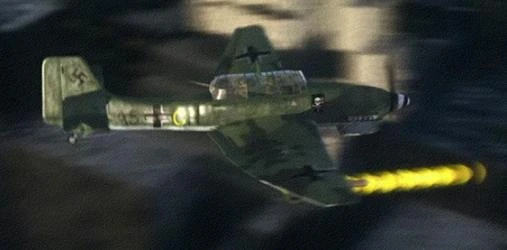 Dive-Bomber Airplane
Stuka Class
Hull Specifications LoggedThe Stuka was a dive-bomber airplane primarily utilized on Earth by Germany during World War II. Its design incorporated distinctive sirens, which were employed to instill fear in enemy forces during an attack. Standard armaments included a variety of projectile weapons, specifically 7.92 millimeter machine guns, 20 millimeter cannons, or larger anti-armor 37 millimeter cannons, depending on the mission profile. Historically, the term 'Stuka' is an acronym for 'Sturzkampfflugzeug', which is German for dive-bomber airplane, and its official designation was the Junkers Ju 87. These aircraft are often recognized for their pinpoint accuracy and the psychological impact of their wailing sirens, making them a precursor to what is now termed 'shock and awe' weaponry, particularly effective during the 1939-1940 Blitzkrieg campaigns in Europe. **Service History & Alternate Realities** The Stuka's operational history within Star Trek lore extends beyond its historical context into alternate timelines and universes. In 1944, during an incident where the NX-01 Enterprise was trapped in an alternate timeline, a squadron of Stukas was dispatched by Vosk. These particular Stukas had been refitted with advanced plasma cannons, and one notable aircraft carried the registry 'A5 CH'. Their mission was to destroy Enterprise to prevent it from disrupting the temporal conduit that the Na'kuhl were constructing, as depicted in the episode 'Storm Front, Part II'. The Stuka also made an appearance in the mirror universe, where it was similarly utilized on Earth during that planet's 20th century. This usage was briefly shown in the opening credits of the episode 'In A Mirror, Darkly'. The Stukas featured in the opening credits of 'In a Mirror, Darkly' were derived from actual historical footage from a 1940 German newsreel, 'Die Deutsche Wochenschau', depicting attacks on the French Maginot Line during the May-June 1940 Blitzkrieg campaign. In contrast, the Stukas and the entire sequence seen in 'Storm Front, Part II' were entirely computer-generated imagery, created by Fred Pienkos at Eden FX. The 'A5 CH' tail code on one of the Ju 87s in 'Storm Front, Part II' was a detail taken from a real historical Ju 87 R-2 variant, which was also the specific variant retrofitted with plasma cannons for the episode.
- • Bomb
- • Plasma canno (Qty: alternate timeline)
- + 1 more...
- No propulsion data logged.
 Communication array
Subspace amplifier Class
3 VesselsA subspace amplifier, also known as a subspace buoy, is a specialized communication array engineered to significantly extend the operational range of subspace communications. These devices are crucial for maintaining long-range contact, particularly for starships venturing far from established communication networks. In the 22nd century, the design of these amplifiers resembled a sophisticated communications satellite, capable of independent deployment and operation. **Early Service History (22nd Century)** The *Enterprise* (NX-01), a starship of United Earth Starfleet, extensively utilized subspace amplifiers during its initial exploratory mission in the mid-22nd century. These amplifiers were vital for ensuring reliable communication with Earth and United Earth Starfleet Command. The devices were typically designated with letter-number combinations. The first known deployment, 'Echo 1', occurred in August 2151, followed by 'Echo 2' a month later in September 2151. Tragically, both 'Echo 1' and 'Echo 2' were destroyed by an unknown alien vessel during a sustained attack on the *Enterprise* in September 2151. Following the successful elimination of this alien threat, a third amplifier was promptly deployed to replace the lost units. Later, during repairs to the *Enterprise* by an automated repair station, Commander Trip Tucker cleverly claimed that the ship's subspace amplifiers were only picking up distortion on all high-band frequencies, a ruse to distract the station. Subspace buoys also played a critical role in maintaining contact between Starfleet Command Council and the *Enterprise* while the ship was engaged in its mission within the Delphic Expanse during the Xindi incident. **Later Service History (23rd Century)** The utility of subspace buoys continued into the 23rd century. In 2259, the *USS Enterprise* (NCC-1701) deployed subspace buoys as it ventured beyond the border of Federation space. This deployment was essential for the starship to maintain contact with Starfleet while searching for a trio of stranded colonial ships, demonstrating the enduring importance of these communication extenders for deep-space exploration and rescue operations.
- No armament data logged.
- No propulsion data logged.
 Communication Technology
Subspace transmitter Class
1 VesselA subspace transmitter is any mechanism or method capable of transmitting information through the medium of subspace, thereby achieving a velocity greater than the speed of light. This fundamental communication technology is crucial for interstellar travel and diplomacy, enabling real-time or near-real-time communication across vast cosmic distances. **Applications and Infrastructure** Starships extensively employ subspace transmitters to maintain vital contact with their operational starbases, landing parties, and away teams. Beyond starship operations, colonies and various civilizations utilize these devices to communicate with other worlds, both within the United Federation of Planets and beyond its borders. The Federation itself maintains a sophisticated network of subspace relays, which function as repeaters. This network significantly extends the range of even distant transmitters, allowing them to reach virtually any point within Federation space, ensuring robust and reliable interstellar communication. **Historical Instances** One notable historical example involves an ancient Vulcan transmitter discovered in the catacombs beneath the monastery at P'Jem. During the 22nd century, this device, described by a Vulcan Elder as very old and unused for many years, was reactivated. Charles 'Trip' Tucker III, upon examining it, identified its power cell as a krellide power cell and successfully repaired it, enabling a message to be sent to the Enterprise (NX-01) during the events of 'The Andorian Incident'. Another instance occurred in early 2367, when the subspace transmitter aboard the USS Arcos began failing while orbiting Turkana IV. This malfunction resulted in a very weak and distorted distress call being transmitted. Despite the degradation, the message was eventually received by the USS Enterprise (NCC-1701-D), which was only eleven minutes away from the Turkana system, as depicted in the episode 'Legacy'.
- No armament data logged.
- No propulsion data logged.
 Classified
Suliban cell ship (cylindrical) Class
Hull Specifications LoggedThe Suliban cell ship (cylindrical) was a distinctive and primary starship type utilized by the Suliban Cabal during the mid-22nd century. These vessels were characterized by their cylindrical form factor and were designed for both offensive and stealth operations. Each cell ship was equipped with potent particle weapons for combat engagements and featured a sophisticated cloaking device, allowing them to operate with a high degree of tactical surprise. A notable engineering feature was the inclusion of a tractor beam, which proved crucial in various operations, including the manipulation of other starships like the Enterprise (NX-01). Beyond individual capabilities, a defining characteristic of the Suliban cell ship was its modular design, enabling multiple ships to physically combine and form larger, more complex structures, such as the formidable Suliban helix. This unique capability provided the Suliban Cabal with significant tactical flexibility, allowing them to adapt their fleet's configuration to suit diverse mission requirements, from large-scale construction to coordinated attacks. The ships were also warp-capable, ensuring they could traverse interstellar distances efficiently to execute the Cabal's objectives. **Service History** These cylindrical cell ships were actively deployed throughout the 22nd century, playing a significant role in the temporal cold war and various conflicts involving the Suliban Cabal. Their operations were frequently documented during the early missions of the Starfleet starship Enterprise (NX-01). They made prominent appearances in several key episodes of Star Trek: Enterprise, including 'Broken Bow', where their capabilities were first showcased, and later in 'Shockwave, Part II' and 'Future Tense', where their ability to combine into larger structures and their use of tractor beams against the Enterprise were critical plot points. The Suliban cell ships remained a persistent threat and a symbol of the Suliban Cabal's technological prowess and tactical ingenuity during this tumultuous era.
- • Particle weapo
- • Cloaking device
 Classified
Suliban cell ship (spherical) Class
Hull Specifications LoggedThe Suliban cell ship (spherical) was a primary starship type utilized by the Suliban Cabal during the mid-22nd century. These compact vessels were armed with particle weapons and equipped with cloaking devices, making them formidable for their size. Approximately the same size as a 22nd-century shuttlepod from an NX-class starship, the Suliban cell ship was primarily designed as a one-man fighter. A unique characteristic of these ships was their ability to combine with other cell ships to form larger, more complex structures, such as a Suliban helix. **Service History** The NX-01 Enterprise first encountered and captured a small Suliban cell ship in April 2151 while rescuing Klaang, a Klingon courier, an event depicted in the episode 'Broken Bow'. Following its capture, Commander Charles Tucker III spent several months meticulously studying the vessel, with particular focus on its advanced cloaking device, though initial attempts to fully understand its operation met with limited success. In 2152, the captured Suliban cell ship played a crucial role in a rescue mission on a pre-warp planet, as seen in the episode 'The Communicator'. During this mission, Commander Tucker III believed he had finally mastered the cloaking device, only to be distressed when it began to fail shortly after launch. He quickly deduced that power was being diverted from the cloak to the ship's weapon nodes, which he had previously deactivated but were programmed to automatically reactivate upon launch. Despite this challenge, Commander Tucker III was able to re-engage the cloak, successfully completing the mission. The Suliban cell ship class made numerous appearances throughout Star Trek: Enterprise, including in the episodes 'Broken Bow', 'Cold Front', 'Shockwave', 'Shockwave, Part II', 'The Communicator', 'Dawn' (where it was mentioned), 'Future Tense', and 'The Expanse'.
- • Particle weapo
- • Cloaking device
 Transport / Freighter
Suliban freighter Class
Hull Specifications LoggedThe Suliban freighter was a type of starship operated by the Suliban Cabal during the 22nd century. These vessels were designed primarily for transport, but possessed a minimal defensive and offensive capability. They were equipped with at least one forward and one aft particle cannon, providing firepower comparable to an NX-class starship, though significantly inferior to a 22nd century Tholian ship. For stealth and evasion, Suliban freighters incorporated a cloaking device, a crucial asset for the clandestine operations often undertaken by the Suliban Cabal. Additionally, these freighters were outfitted with a transporter system, facilitating cargo and personnel transfer. Propulsion capabilities allowed these ships to achieve speeds exceeding Warp factor 5. **Class History** Suliban freighters were active throughout the 22nd century, playing a role in the various schemes and operations of the Suliban Cabal. One notable encounter involving a Suliban freighter occurred in late 2152. The *Enterprise* (NX-01), under the command of Captain Jonathan Archer, encountered one of these vessels while attempting to salvage a derelict 31st century Earth vessel. During this tense confrontation, the Suliban freighter, along with several accompanying Suliban cell ships (both spherical and cylindrical variants), was engaged and ultimately destroyed by a group of Tholian starships. The Tholians were also attempting to claim the advanced futuristic craft, leading to a multi-faction conflict as depicted in the Starfleet record 'Future Tense'.
- • Particle weapo (Qty: fore and aft)
- • Cloaking device
- • Warp facto
 Explorer
Suliban stealth cruiser Class
Hull Specifications LoggedThe Suliban stealth cruiser was a starship class primarily utilized by the Suliban Cabal during the 22nd century. A defining characteristic of these vessels was their advanced cloaking device, which rendered them normally undetectable by contemporary Starfleet technology. For offensive capabilities, the cruisers were equipped with four particle beam weapon banks. The standard crew complement for these ships was approximately twenty personnel. Despite their formidable stealth capabilities, Suliban stealth cruisers were not invulnerable. If detected while cloaked, they became susceptible to Starfleet's phase cannon fire, which could disable critical systems. Furthermore, spatial torpedoes were capable of penetrating their hull, posing a significant threat once their cloaking field was compromised. **Service History** One notable incident involving a Suliban stealth cruiser occurred in March 2152. A vessel of this class was used by the Suliban Cabal to destroy a Paraagan colony located on Paraagan II. Following this devastating attack, the Cabal attempted to frame the crew of the USS Enterprise (NX-01) for the tragedy. However, the USS Enterprise (NX-01) subsequently discovered the implicated cruiser in a nearby binary star system. This discovery was significantly aided by quantum beacons provided by the temporal agent Daniels. A Starfleet boarding party successfully infiltrated the Suliban ship, managing to acquire crucial information that confirmed the Suliban Cabal's responsibility for the destruction of the Paraagan colony. The Suliban stealth cruiser class was featured in the Star Trek: Enterprise episodes 'Shockwave' and 'Future Tense'.
- • Particle weapo
- • Cloaking device
 Classified
Sutherland class
6 VesselsThe Sutherland-class is a type of Federation starship that entered service with Starfleet in the early 25th century. It is a direct successor to the older Nebula-class, which was prominent in the early 24th century, and shares many of its fundamental layout and design principles. The design lineage of the Sutherland-class traces back to the 25th century Andromeda-class, much as the Nebula-class derived its design from the Galaxy-class. By 2401, the computer systems aboard Sutherland-class vessels were equipped with advanced command and control capabilities, including the Fleet formation mode, also known as Starfleet emergency protocol NX12.11. This protocol was designed to place all Federation starships within a fleet under the automated control of the Starfleet mainframe. **Service History** Sutherland-class starships were actively operated by Starfleet in the 2400s. A notable engagement occurred in 2401 when four ships of this class were dispatched by Starfleet to join an armada confronting an unknown Borg vessel. During this confrontation, a Borg liaison briefly commandeered these vessels, along with others, before their respective crews managed to activate their auto-destruct systems, as depicted in the episode 'The Star Gazer'. Later that year, Sutherland-class ships were prominently featured at Starfleet's Frontier Day celebration in April. However, this celebratory event turned catastrophic when the younger crews aboard these vessels, along with many others, came under the direct control of the Borg Collective. This mass hijacking event was a critical plot point in the episodes 'Võx' and 'The Last Generation'. **Commissioned Vessels** Several Sutherland-class starships have been identified as active in 2401, including the USS Almagest (NCC-91870), USS Chandrasekhar (NCC-91816), USS Huygens (NCC-91814), USS Hypatia (NCC-91825), USS Ibn al-Haytham (NCC-91965), USS Solkar (NCC-91863), and the USS Sutherland (NCC-91800), which served as the class prototype.
- • Phase
- • Photon torpedo
- • Deflector shield
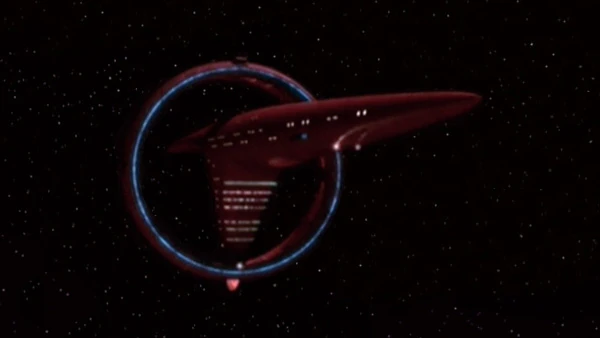
Suurok Class
Class: Suurok class- • Particle weapo
- • Photonic weapo
- • Warp facto (Qty: science)
- • Deflector shield
 Explorer
Suurok class
5 VesselsThe Suurok-class was a versatile type of Vulcan starship, primarily designated by the Vulcan High Command as a science vessel, with its earliest recorded service dating back to 2136. This class also served effectively as a combat cruiser, extending its operational lifespan well into the mid-22nd century and with some vessels remaining active even into the late 24th century. **Design & Development** The design of the Suurok-class featured a distinctive long, cylindrical primary hull complemented by prominent ring-shaped warp nacelles. This unique configuration was among the fastest and most powerful starships within the Vulcan fleet during the 2150s. The technology underpinning its ring-design nacelles, along with its advanced tractor beam systems, was considered classified by the Vulcan High Command from Earth's Starfleet in 2151. The tractor beam emitter was strategically located on the lower section of the primary hull, forward of the warp drive. Schematics of the Suurok-class were notably accessed by Captain Jonathan Archer from Daniels' database on two separate occasions in 2152, as depicted in the episodes 'Shockwave' and 'Future Tense'. **Technical Specifications & Capabilities** In its science vessel configuration, the Suurok-class was capable of achieving a top speed of Warp 6.5. The combat cruiser variant boasted an even greater speed, reaching Warp 7, as demonstrated in episodes like 'Breaking the Ice' and 'Fallen Hero'. For offensive capabilities, the Suurok-class was armed with standard particle beam weapons and photonic weapons. These vessels proved formidable in combat, capable of disabling, if not outright destroying, a force of three Mazarite ships in a confrontation, as seen in 'Fallen Hero' when the Sh'Raan disabled Mazarite vessels. **Service History** Several notable starships of the Suurok-class were commissioned and active during the 22nd century. These included the Ni'Var, active in 2151; the Sh'Raan, active in 2152; and the Ti'Mur, also active in 2151. The Sh'Raan, in particular, played a significant role in disabling Mazarite ships. The class's longevity is remarkable, with some Suurok-class ships still in service as late as the 2380s, as referenced in 'Supernova, Part 1' and 'Supernova, Part 2' of Star Trek: Prodigy. **Design Revisions** Following its initial appearance in 'Breaking the Ice', the Suurok-class underwent a redesign for subsequent appearances in episodes such as 'Fallen Hero' and 'United'. These modifications included a lengthened primary hull with a flattened underside and a re-engineered aft vertical nacelle strut, which transitioned from emitting a blue glow to a red glow. In-universe, these changes were not meant to represent a different class but rather an updated version of the same ship, with improved detail and texturing, as well as modified dimensions, to meet evolving production needs.
- • Particle weapo
- • Photonic weapo
- • Warp facto (Qty: science)
- • Deflector shield
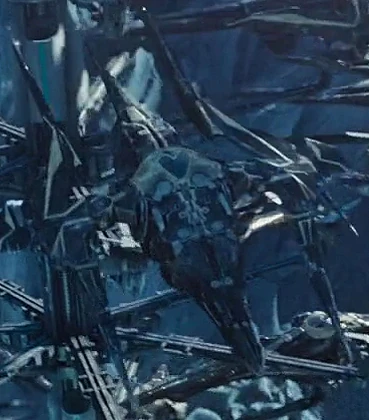 Classified
Swarm ship Class
1 VesselSwarm ships were small, two-person craft originally left in large numbers on the planet Altamid by its original inhabitants, the Ancient Ones (Altamid), sometime prior to the 2160s. These vessels were designed for both space and atmospheric flight and were equipped with warp drive, allowing for rapid interstellar travel. Each ship was piloted by two specialized drones. When not actively deployed, swarm ships were typically docked in distinctive tree-like formations at towering structures on the surface of Altamid. Access to the interior of a swarm ship was provided through a circular hatch located at its rear. While apparently lacking conventional projectile weaponry, swarm ships were engineered with a highly durable hull, enabling them to inflict significant damage on other starships through ramming maneuvers. During such collisions, a swarm ship could partially penetrate a target vessel and then deploy lateral prongs to anchor itself. Following this, the ship's nose could split open, allowing its drones to infiltrate the enemy craft. Despite their durability, swarm ships were susceptible to phaser fire, though their sheer numbers and nimble nature often rendered phaser attacks largely ineffective against the collective swarm. They were also too small and agile to be reliably targeted by photon torpedoes. A critical design feature was their closed networked cyberpathic communications system, which allowed for highly coordinated maneuvers across the entire swarm. **Class History** Following the crash of the USS Franklin on Altamid in the 22nd century, these craft were repurposed and extensively utilized by Krall, the former Starfleet Captain Balthazar Edison, to waylay orbiting starships. Jaylah, a scavenger living on Altamid, famously likened Krall's swarm ships to 'bees' due to their coordinated, aggressive tactics. In the year 2263, Krall orchestrated a massive assault using his swarm against the Federation starship USS Enterprise (alternate reality), under the command of Captain James T. Kirk, in orbit of Altamid. The swarm ships initially presented themselves as a single, large vessel emitting an unidentifiable signal before rapidly separating into individual units to launch a coordinated attack. These ships repeatedly surrounded and rammed the Constitution-class (alternate reality) USS Enterprise, inflicting severe damage that first severed its warp nacelles and ultimately separated its primary hull from its secondary hull. Following the destruction of the USS Enterprise, Commander Spock (alternate reality) and Doctor Leonard McCoy (alternate reality) commandeered one of these ships, subsequently crash-landing it on the surface of Altamid. Krall later deployed his swarm ships in a devastating assault on the Federation's Starbase Yorktown. During this engagement, the surviving crew of the USS Enterprise, utilizing antique equipment aboard the century-old USS Franklin, successfully identified the swarm ships' signals as closed networked cyberpathic communications, which were essential for their coordinated maneuvers. By emitting VHF radio signals in the form of 'classical' music by the Beastie Boys, the USS Franklin flew dangerously close to Krall's ships, triggering a chain reaction that led to the complete destruction of the entire swarm. Once again flying a commandeered swarm ship, Spock and McCoy assisted James T. Kirk in defeating Krall within Starbase Yorktown, preventing him from unleashing an Abronath super weapon and annihilating the base's inhabitants. One notable vessel of this class, Krall's command ship, crash-landed inside Starbase Yorktown during this climactic confrontation in 2263. In an apocryphal account from IDW Publishing's Star Trek: Boldly Go, Issue 5, these ships were also used by Krall and Manas to attack Jaylah's and her family's ship.
- No armament data logged.
- No propulsion data logged.
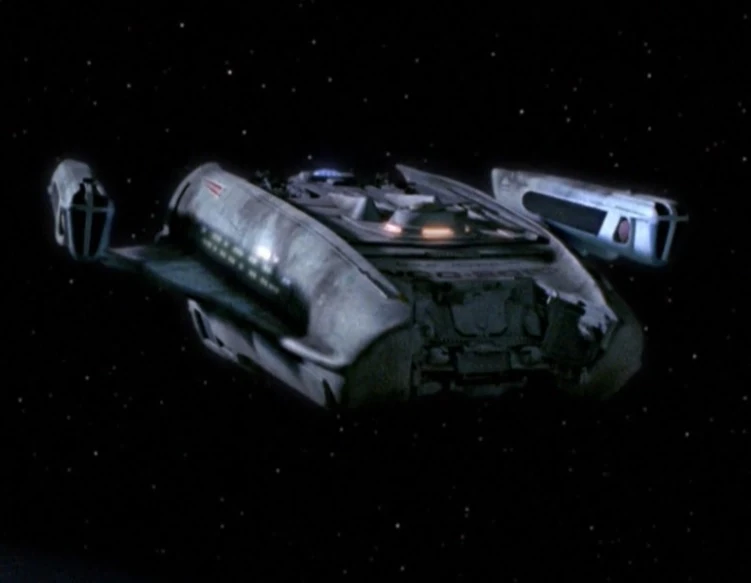 Transport / Freighter
Sydney class
Hull Specifications LoggedThe Sydney-class was a classification of relatively large personnel transport ship utilized by Starfleet and the United Federation of Planets from the late 23rd century through as late as 2375. Like many contemporary classes of that era, the Sydney-class possessed several systems still in use during the 24th century, including the transporter system, subspace radio, sensors, and impulse engines. Chief Engineer Geordi La Forge of the USS Enterprise (NCC-1701-D) speculated that, with appropriate updates, the Sydney-class could still be considered fit for service, and further suggested that older model ships, such as the USS Jenolan, could probably 'run circles around' a Galaxy-class starship at impulse speeds. The bridge served as the command center of the Sydney-class, located at the upper forward section of the ship. The rear half of the bridge featured a small command area, complete with a helm station and a command chair, with an operations console situated at the very rear. On the port-forward side of the bridge, a two-man transporter stage and an adjacent transporter console were installed. The starboard-forward side of the bridge housed the engineering console. The class was named after Sydney, Australia. The USS Jenolan, a vessel of this class, was specifically named after the Jenolan Caves, which were visited by Naren Shankar and episode writer Ronald D. Moore following a Sydney convention. The studio model used for the Sydney-class was originally an orbital shuttle created for Star Trek VI: The Undiscovered Country. It was substantially modified with components from Constitution II-class and Miranda-class starships, notably the bridge module and nacelles, to enlarge its appearance from a shuttlecraft into a larger vessel with several decks. Interestingly, the Sydney-class model was initially considered as the basis for the Danube-class runabouts on Star Trek: Deep Space Nine before a new design was ultimately ordered. **Class History** The Sydney-class served Starfleet and the United Federation of Planets for an extended period, spanning from the 23rd century into the 24th century. Notable vessels of this class include the USS Jenolan (NCC-2010), which was destroyed in 2369, and the USS Nash (NCC-2010-5), which was still active in 2375. The class made appearances in the Star Trek: The Next Generation episode 'Relics' and several episodes of Star Trek: Deep Space Nine, including 'Playing God', 'Accession', 'Trials and Tribble-ations', and 'Chrysalis'.
- No armament data logged.
- • Deflector shield
 Classified
Synth ship Class
Hull Specifications LoggedSynth ships were a type of Starfleet starship observed in the late 24th century. These vessels were characterized by a distinctive large white Starfleet insignia prominently displayed on both their ventral and dorsal hulls. For armaments, they were equipped with at least one phaser array and at least one torpedo launcher, indicating a standard tactical capability for Starfleet vessels of their era. **Class History** The class gained significant notoriety in 2385 when a fleet of these ships, stationed in the Sol system, was suddenly commandeered by rogue Synths. This event occurred during the surprise orbital and suborbital Attack on Mars on First Contact Day, a devastating incident that had profound implications for the United Federation of Planets. In an alternate timeline, vessels of this type were also utilized by the Confederation of Earth during the Vulcan War in 2401, demonstrating their continued operational presence and adaptability across different historical trajectories.
- • Phase
- • Torpedo launche
- No propulsion data logged.
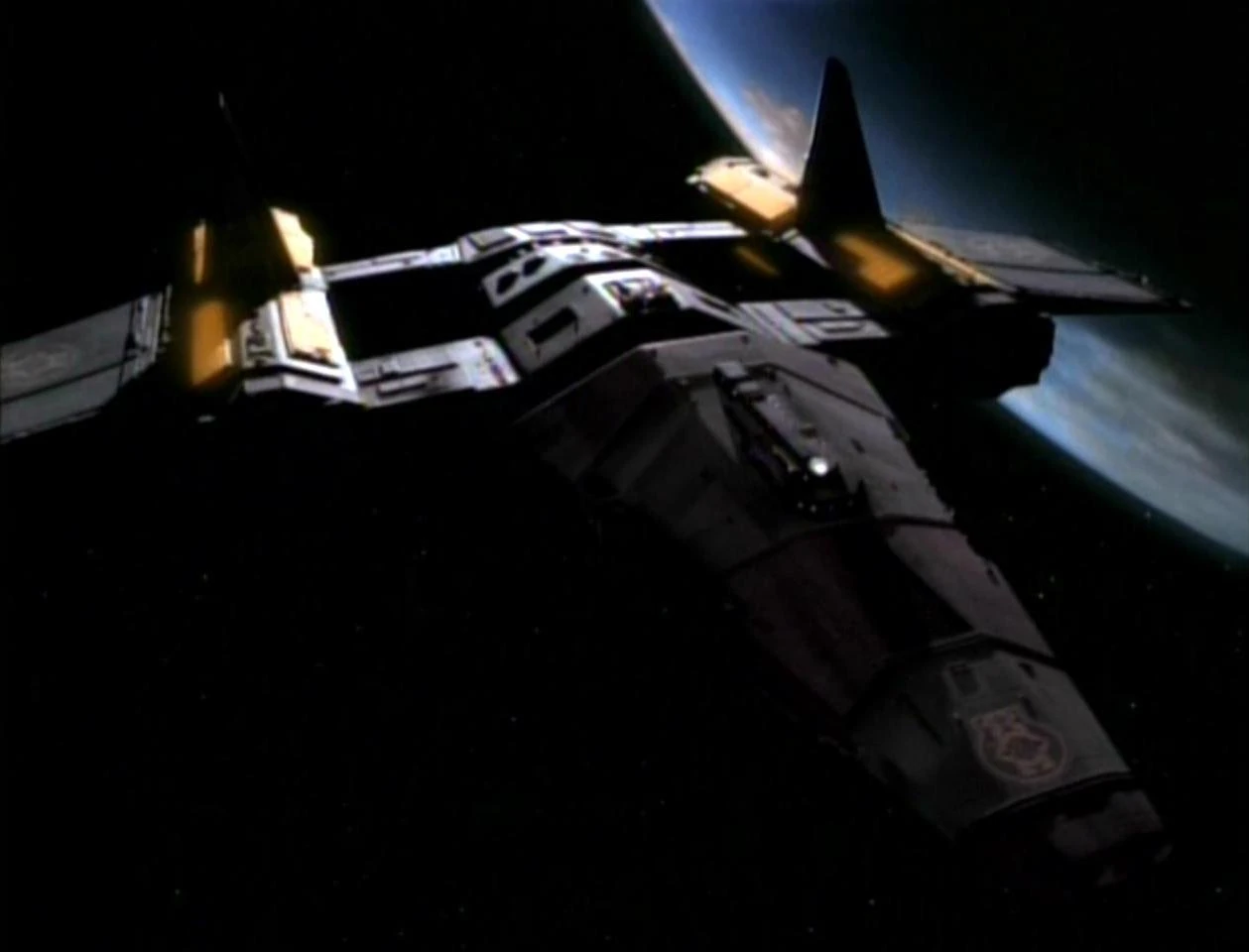 Cruiser
T'Lani cruiser Class
Hull Specifications LoggedA T'Lani cruiser was a class of starship primarily utilized by the T'Lani during the late 24th century. These vessels were noted for their superior capabilities, significantly outmatching Starfleet's Danube-class runabouts in terms of speed, firepower, and defensive systems. While often referred to in production materials, such as scripts for Star Trek: Voyager and articles on StarTrek.com, as a 'T'Lani munitions cruiser,' the vessel was consistently identified simply as a 'T'Lani cruiser' within the dialogue of the episodes themselves. **Service History** One specific T'Lani cruiser played a critical role in 2370 when it was employed to store and conduct dangerous experiments aimed at destroying the highly destructive Harvester weapon. This event was documented in the Star Trek: Voyager episode 'Armageddon Game,' highlighting the T'Lani's involvement with advanced and potentially hazardous technologies.
- No armament data logged.
- No propulsion data logged.
Classified
T'Liss-class Bird-of-Prey
1 VesselThe class classification of T'Liss-class Bird-of-Prey starships.
- No armament data logged.
- No propulsion data logged.

T'Met
Class: D'deridex class- • Disrupto
- • Phase
- + 1 more...
- • Cloaking device
- • Warp facto (Qty: under cloak)
- + 1 more...

T'Met
Class: D'deridex class- • Disrupto
- • Phase
- + 1 more...
- • Cloaking device
- • Warp facto (Qty: under cloak)
- + 1 more...

T'Pau
Class: Unknown- No armament data logged.
- No propulsion data logged.

T'Pau
Class: Vulcan transport (24th century); Starship (32nd century)- No armament data logged.
- No propulsion data logged.
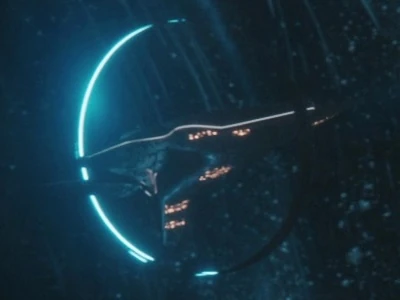 T'Pau-type
T'Pau type
Hull Specifications LoggedThe T'Pau-type was a distinctive starship design originating from Ni'Var, prominently in service during the late 32nd century. Reflecting a common aesthetic in Vulcan starship architecture, vessels of this class featured an arrow-shaped primary hull. This central component was elegantly integrated within a prominent ring-shaped warp nacelle, a design characteristic often associated with Vulcan engineering principles. The overall configuration emphasized both aerodynamic efficiency and advanced warp field generation capabilities, indicative of Ni'Var's technological prowess. **Class History** The T'Pau-type starships were active in the 32nd century, playing a role in significant interstellar events. A notable instance occurred in 3190 when the NSS T'Pau, a vessel of this class, was dispatched by the Ni'Var Government. Its mission involved accompanying two Federation starships to conduct critical studies of the mysterious Dark Matter Anomaly, an event documented in the episode "The Examples". This collaboration underscored the continued alliance and scientific cooperation between the Ni'Var Government and the United Federation of Planets, even after the re-establishment of full Federation membership for Ni'Var. The T'Pau-type's participation in such a crucial scientific endeavor highlights its reliability and the advanced capabilities of Ni'Var's fleet during this era. **Ships Commissioned** Only one vessel of the T'Pau-type is explicitly known to have been commissioned: the NSS T'Pau.
- No armament data logged.
- No propulsion data logged.
 Cruiser, Warship, Fighter
T'Plana type
Hull Specifications LoggedThe T'Plana type was a distinctive class of small starship originating from Vulcan, characterized by its unique U-shaped warp ring, a design element common to many Vulcan starships. These vessels were capable of both suborbital and interstellar transport, and notably, could land on planetary surfaces. Internally, the T'Plana type featured a simple standing cockpit designed for two individuals, equipped with advanced holographic displays, internal force fields for crew protection, and a transponder for identification and communication. While initially identified as cruisers during the mid-23rd century, their classification evolved over time, being referred to as warships in the early 2400s, and even as fighters in certain alternate timelines, reflecting their versatile design and adaptability to various mission profiles. **Service History** The T'Plana type saw extensive service with the Vulcans, spanning from the mid-23rd century well into the late 24th century, utilized for both private and official business. A notable early instance of their use occurred when a Vulcan cruiser rescued a young Michael Burnham after she ran away from home. In 2249, several T'Plana type cruisers were observed on Vulcan, including during a period when Sarek conferred with the Vulcan Expeditionary Group Director. In 2256, a Vulcan cruiser, intended to transport Sarek to a clandestine meeting with the Klingons on Cancri IV, was critically disabled and stranded within the Yridia Nebula due to sabotage orchestrated by V'Latak. The class remained a common sight, with a Vulcan cruiser parked on a Paris rooftop in 2257 when Michael Burnham met with Amanda Grayson, and several more observed in the city skies of Vulcan as Michael Burnham approached Ambassador Sarek's residence in the same year. **Alternate Timelines & Mirror Universe** The versatility of the T'Plana type extended across various realities and timelines. In an alternate timeline, these Vulcan ships were actively deployed during the 2260s in a war against the Romulan Star Empire. Another alternate timeline depicted their use by the Vulcans in the Vulcan War against the Confederation of Earth in the year 2400, where they were specifically identified as warships and fighters. In the mirror universe, T'Plana type cruisers were utilized by Vulcan Resistance rebels in their struggle against the Terran Empire. One such cruiser engaged the USS Discovery upon its arrival in the mirror universe, before being repelled by the ISS Cooper. **Notable Vessels** Among the known vessels of this class are the VSS T'Plana and the Sh'Rel, the latter appearing in an alternate timeline. Additionally, specific unnamed cruisers gained prominence through their involvement in key events, including Sarek's cruiser and T'Pring's cruiser. Michael Burnham's ability to visually identify Sarek's cruiser without explicit identifying information suggests that individual vessels within the class might possess subtle exterior differences or modifications. While later identified in some external materials as a 'Vulcan Corvette' or 'Solkar-class cruiser', and in Star Trek Online as a 'T'Pau class scout ship', within Starfleet's official registry, it is known as the T'Plana type.
- • Directed energy weapo
- No propulsion data logged.

T'Plana-Hath
Class: T'Plana-Hath type- No armament data logged.
- No propulsion data logged.
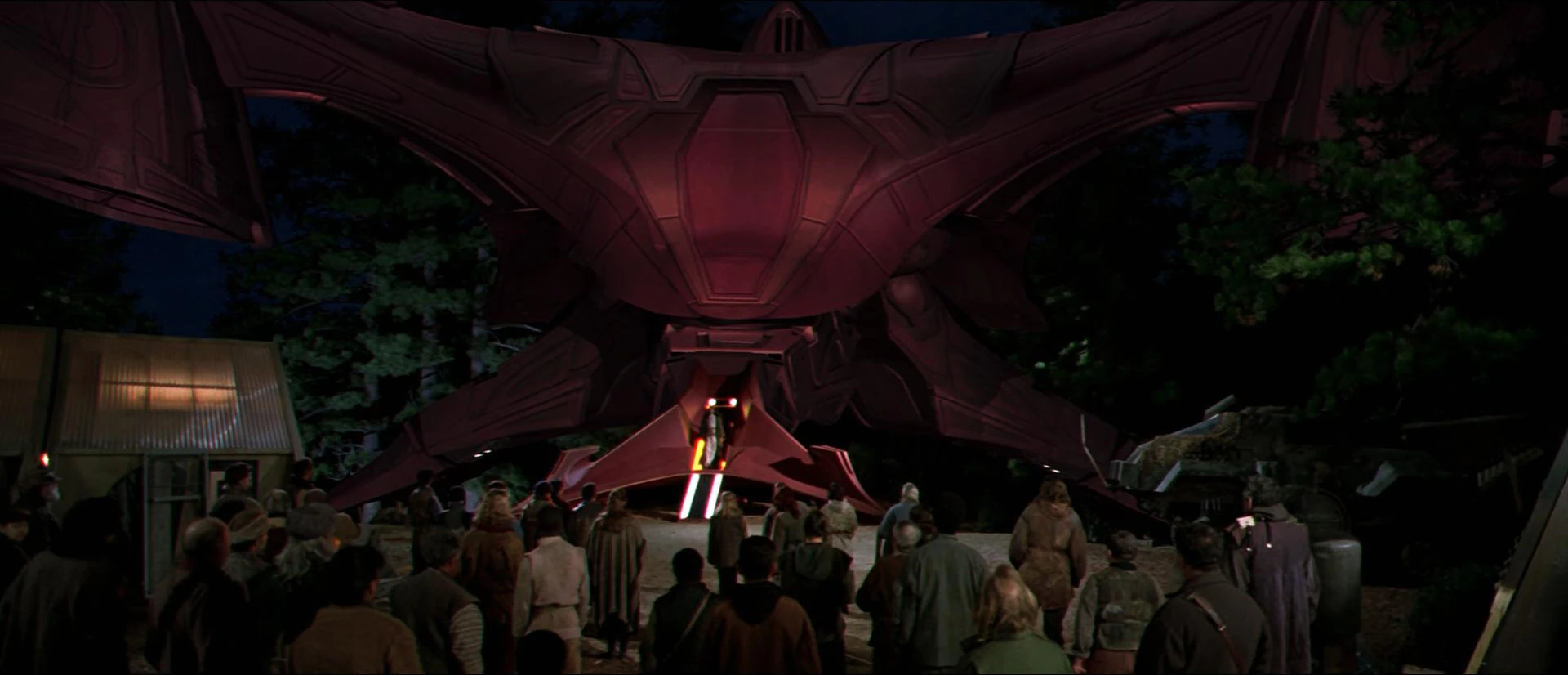 Exploration Starship
T'Plana-Hath type
1 VesselThe T'Plana-Hath type was a class of warp-capable Vulcan starship that saw extensive service from the mid-21st century through the 23rd century. By the year 2063, these vessels were primarily utilized for survey missions, as evidenced by the presence of the *T'Plana-Hath* itself during Zefram Cochrane's historic first warp flight, an event depicted in *Star Trek: First Contact*. There has been some historical discussion regarding whether the vessel seen in 2063 was a lander from a larger ship or an independent warp-capable starship; however, designer John Eaves intended the ship to be a fully warp-capable vessel. **Service History** In the prime reality, the *T'Plana-Hath* type was a common sight. In 2249, two vessels of this type were observed on the ground near the Vulcan Science Academy, as seen in the episode "Lethe". Later, in the 24th century, the class was still recognized, with an LCARS graphic of a T'Plana-Hath type starship displayed by the library computer of the USS *Defiant* (NX-74205) in the *Star Trek: Deep Space Nine* episodes "Favor the Bold", "Sacrifice of Angels", and "What You Leave Behind" between 2374 and 2375. By 2380, a ship of this class was on display inside a Vulcan museum, as shown in the *Star Trek: Lower Decks* episode "Veritas", indicating its historical significance. **Alternate Realities & Timelines** The T'Plana-Hath type also had a presence in other realities. In the mirror universe, this type of ship was in use by 2063, with a mirror universe counterpart of the *T'Plana-Hath* being captured by Terrans, an event depicted in the episode "In A Mirror, Darkly". In the alternate reality (Kelvin timeline), at least five ships of this type were observed in the shuttlebay of the *Narada* in 2258, as seen in the film *Star Trek* (2009). While the specific ship from *Star Trek: First Contact* was named the *T'Plana-Hath*, other vessels of this type were unnamed. Apocryphal sources, such as the *Star Trek: The Original Series - Core Game Book* by Last Unicorn Games, referred to this class as the *Voroth*-class, with the specific ship from *Star Trek: First Contact* named the *Vesaya*. The *Decipher* Star Trek Roleplaying Game described it as the *T'Plana Hath*-class, a medium-range exploration vessel first constructed in 2053.
- No armament data logged.
- No propulsion data logged.
 Escort / Warship
Tactical flyer Class
Hull Specifications LoggedThe Tactical flyer was a specialized, small attack fighter developed and utilized by Starfleet. These craft were designed primarily for offensive engagements, equipped with phasers as their main armament. As of 2257, the Tactical flyers were considered experimental, indicating they were either in a prototype phase or undergoing advanced field testing and evaluation within Starfleet's tactical divisions. Their compact design suggested a role focused on agility and direct combat support, likely operating from larger starships or starbases. **Service History** The experimental nature of the Tactical flyers was highlighted in 2257 when they were urgently commandeered by Una Chin-Riley for the USS Enterprise (NCC-1701). This action was taken in anticipation of a major confrontation with Control, a rogue artificial intelligence. During the ensuing Battle near Xahea, the Tactical flyers played a crucial role, fighting alongside Class C shuttlecraft and landing pods against a formidable armada belonging to Section 31. This engagement, documented in the episode 'Such Sweet Sorrow, Part 2', marked a significant early deployment for these advanced fighters, demonstrating their combat capabilities in a critical Starfleet operation during the 2250s.
- • Phase
- No propulsion data logged.
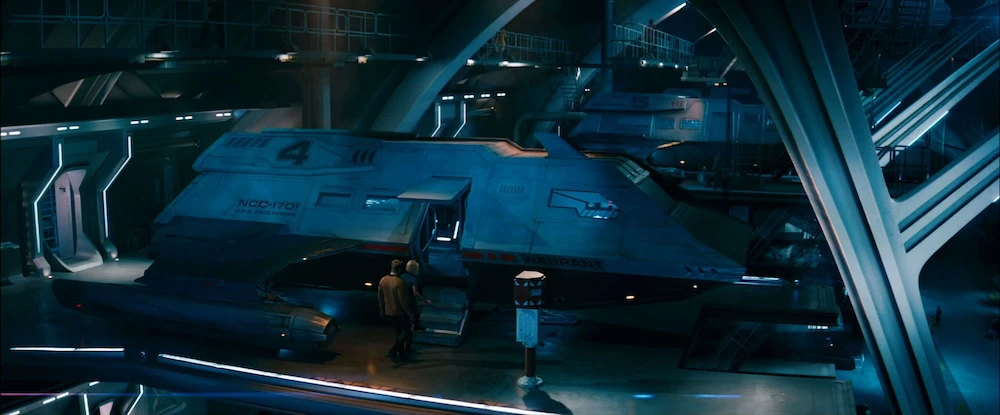 Runabout / Utility
Takayama type shuttlecraft
Hull Specifications LoggedThe Takayama type shuttlecraft was a Starfleet shuttlecraft design prominently utilized in the late 2250s and early 2260s. This versatile vessel made notable appearances in the films Star Trek Into Darkness and Star Trek Beyond, serving the United Federation of Planets. **Design & Development** Externally, the Takayama type shuttlecraft bore a resemblance to, though significantly larger than, the Kelvin type shuttlecraft that preceded it by decades. Its propulsion system comprised four small impulse drives: two housed within nacelles attached to the main body via elongated nacelle pylons, and the other two situated on the aft dorsal end of the craft. The engine powering these drives was located in an aft compartment, sealed from the cockpit and passenger section by a hatchway. Access to the shuttle's interior was provided by a door on the starboard side, positioned just aft of the cockpit, with two small windows located further aft of these doors. The shuttle was also equipped with three retractable landing gear and a small ventral door. For maneuverability, the Takayama type shuttlecraft featured primary and secondary thrusters on both sides. Its tactical and scientific capabilities included a threat assessment system, though this system was known to be susceptible to interference when facing foes employing antimatter missiles. The shuttle's extensive equipment suite included black hole analyzers, an extreme ultraviolet spectrometer, a near infrared mapping spectrometer, an energetic particle spectrometer, magma sensors, and sensors for mass spectrometry, gas chromatography, and radio spectrum analysis. For defensive measures, these vessels were equipped with attenuators, and offensively, they featured a ventral weapons array. **Interior Layout** The cockpit of the Takayama type shuttlecraft accommodated two chairs and was separated from the aft compartment by a small hatch. The main compartment offered flexible seating arrangements. A standard configuration included fold-down 'jump' seats along the outer walls. An alternative, designated Layout B, featured two rows of forward-facing seats—one two seats wide and the other three seats wide—while still retaining the fold-down seats along the outer walls. This Layout B was notably observed in Star Trek Into Darkness. **Service History & Notable Vessels** Several Takayama type shuttlecraft served with distinction. Named vessels included the USS Takayama, Registry 5, and the USS Warrant, Registry 4, both assigned to the USS Enterprise (alternate reality) and active in 2259. Other notable shuttles by registry included BA-36, active in 2259, and Shuttle 1 (Registry 1) and Shuttle 7 (Registry 7), both assigned to the USS Enterprise and active in 2259 and 2258 respectively. There were also numerous unnamed Takayama type shuttlecrafts in service. During the Nibiru volcano sequence in Star Trek Into Darkness, Shuttle 1 was visually represented by the CGI model for Shuttle 7, though dialogue confirmed its identity as Shuttle 1. Interestingly, interior displays in Shuttle 1 showed '04NCC', which led to the Kre-O Star Trek kit 'Spock's Volcano Mission' identifying Shuttle 1 as Shuttle 4, omitting the name USS Warrant.
- No armament data logged.
- No propulsion data logged.
 Classified
Takret starship Class
Hull Specifications LoggedThe Takret starship was a distinct type of warp-capable vessel employed by the Takret civilization during the 22nd century. Its design featured three impulse engines positioned on its dorsal aft section, complemented by two prominent nacelles extending from its forward hull. A notable characteristic was a roll bar protruding from its upper section, which also incorporated what appeared to be two Bussard collectors. This configuration suggested a vessel designed for interstellar travel, likely capable of achieving at least warp factor 7. **Service History** These starships were active in the 22nd century, serving the Takret. One such vessel gained particular note in 2152 when it docked with the Starfleet vessel Enterprise NX-01 during a severe neutronic storm. This encounter, chronicled in the Starfleet record 'The Catwalk', highlighted the Takret starship's relatively smaller size compared to the Enterprise NX-01, with the Enterprise crew significantly outnumbering the Takret complement. The specific circumstances of this docking and subsequent boarding were critical for both crews' survival during the intense environmental conditions.
- No armament data logged.
- No propulsion data logged.

Tal's flagship
Class: D7 class- • Disrupto (Qty: 2)
- • magnetic pulse generators
- + 1 more...
- • Cloaking device (Qty: after 2269)
- • Warp facto
- + 1 more...

Tal's flagship
Class: D7 class- • Disrupto (Qty: 2)
- • magnetic pulse generators
- + 1 more...
- • Cloaking device (Qty: after 2269)
- • Warp facto
- + 1 more...
 Transport / Freighter
Talarian freighter Class
Hull Specifications LoggedThe Talarian freighter was a class of starship primarily utilized by the Talarian species throughout the 24th century. These vessels served as essential cargo carriers within Talarian space and potentially beyond, facilitating trade and transport for their civilization. One notable incident involving a Talarian freighter occurred in 2364 when the vessel *Batris* was hijacked by three Klingons: Korris, Konmel, and Kunivas. This event was documented in the Starfleet record 'Heart of Glory'. Years later, in 2368, the derelict hulk of another Talarian freighter was observed among various starships stationed at Surplus Depot Z15, which orbited Qualor II, as recorded in the Starfleet log 'Unification I'. While specific design details are scarce, the class was known to be warp capable and equipped with Merculite rockets for defense, suggesting a utilitarian design focused on cargo capacity with a modest self-defense capability. Some historical speculation has linked the Talarian freighter's design to the Antares-class cargo carrier, though this remains unconfirmed.
- • Merculite rocke
- • Warp drive
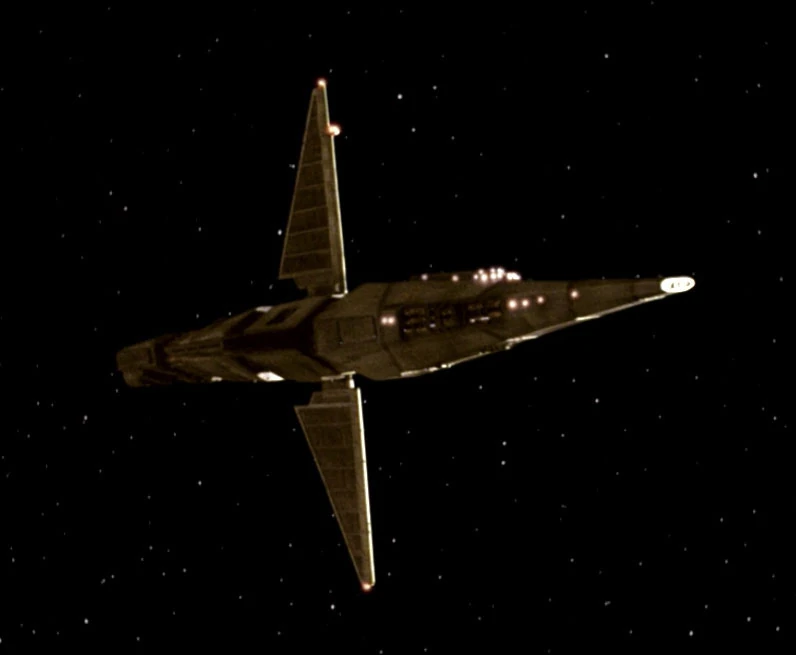 Explorer
Talarian observation craft Class
Hull Specifications LoggedThe Talarian observation craft was a type of starship utilized by the Talarian species primarily during the mid-24th century. These vessels were specifically designated as observation craft and served a crucial role in basic training for Talarian personnel. Designed to be operated by a minimal crew of five, the interior of these ships was characterized by a distinctive ambiance, bathed in green and purple light. The main console featured intricate Talarian writing and symbols, complemented by additional consoles equipped with tubes of red blinking lights and joystick-like interfaces. An adjoining room within the craft was typically used for storage, filled with small cargo crates. **Class History** During the Galen border conflict of the 2350s, the Talarians employed a particularly insidious guerrilla warfare tactic involving these observation craft. Their strategy involved abandoning the vessels, rigging them with a self-destruct device, and then issuing a general distress call. This deceptive maneuver proved highly effective, resulting in 219 fatalities over a three-day period for those who responded to the false alarms. In early 2367, the USS Enterprise (NCC-1701-D) encountered one such Talarian observation craft in Sector 21947. On stardate 44085.7, the USS Enterprise (NCC-1701-D) responded to a distress call from the vessel, only to find it adrift. Its crew was in imminent danger due to a life-threatening radiation leak emanating from within its propulsion system. This incident was documented in the Starfleet records as depicted in the episode 'Suddenly Human'.
- No armament data logged.
- No propulsion data logged.
 Escort / Warship
Talarian warship Class
Hull Specifications LoggedThe Talarian warship was a class of vessel employed by the Talarian people primarily during the mid-24th century. These warships served as a primary component of the Talarian fleet, though their overall combat capabilities were noted to be significantly inferior when compared to contemporary Starfleet vessels, such as the formidable Galaxy-class starships of the United Federation of Planets. **Armament & Capabilities** The offensive potential of the Talarian warship class was characterized by a specific suite of weapon systems. These included neutral particle weapons, high-energy X-ray lasers, and merculite rockets. While these armaments provided a credible threat against certain targets, they were ultimately outmatched by the advanced defensive and offensive technologies present on Starfleet's capital ships. **Service History** A notable encounter involving a Talarian warship occurred in early 2367. The USS Enterprise (NCC-1701-D), under the command of Captain Jean-Luc Picard, responded to a distress call originating from a Talarian observation craft. After recovering survivors, the USS Enterprise (NCC-1701-D) rendezvoused with the Talarian warship Q'Maire to transfer the recovered individuals. During this sensitive exchange, the crew of the USS Enterprise (NCC-1701-D) delayed the release of a Human individual discovered among the Talarian crew members. This action prompted the Talarians to escalate the situation, drawing two additional Talarian warships from positions along the Talarian-Federation border. These two vessels converged on the USS Enterprise (NCC-1701-D), joining the Q'Maire. The three Talarian warships then positioned themselves within five hundred kilometers of the Federation starship, adopting a classic triangular envelopment attack posture, as depicted in the Starfleet record 'Suddenly Human'.
- • Merculite rocke
- • Neutral particle weapo
- • Lase
Talaxian Freighter
Class: Talaxian Freighter- No armament data logged.
- No propulsion data logged.
Talaxian Freighter Class
1 VesselThe Talaxian freighter was a common class of starship utilized by the Talaxian people primarily for cargo transport and trade. These vessels were integral to the Talaxian economy and their presence across various sectors, facilitating interstellar commerce and the movement of goods and personnel. While specific design schematics are not widely documented, they were generally recognized as utilitarian vessels built for endurance and capacity rather than speed or combat prowess. **Service History** Talaxian freighters were active in the Delta Quadrant for an extended period. One notable incident involving a small Talaxian freighter, carrying a crew complement of 39, occurred prior to 2374. This particular vessel was assimilated by the Borg Collective in the Dalmine sector, highlighting the dangers faced by even civilian vessels operating in regions frequented by the Borg. This event was referenced in the Starfleet database and discussed during the events of the Starfleet vessel USS *Voyager*'s encounter with the Borg in the episode 'The Raven'. Known individual ships of this class include the *Baxial* and the *Salvoxia*, both of which served as examples of the Talaxian's reliance on these workhorse vessels for their daily operations and broader interstellar interactions.
- No armament data logged.
- No propulsion data logged.
 Classified
Talaxian ship (2373) Class
Hull Specifications LoggedThe Talaxian ship was a compact starship class primarily utilized by the Talaxians for the defense of their various colonies. These vessels were characterized by their small size and were equipped with a bow-mounted directed energy weapon for offensive capabilities. For defense, they were protected by deflector shields. A notable limitation of this class was its lack of transporter capability, which necessitated alternative methods for personnel and cargo transfer. **Service History** This class of Talaxian ship played a crucial role in the efforts of the USS Voyager crew against the Kazon-Nistrim. In late 2372, during the events depicted in 'Basics, Part I', the USS Voyager crew ingeniously created false sensor readings to simulate the presence of ten Talaxian ships. This tactic successfully diverted four large Kazon-Nistrim Predator warships, which were carrier vessels, from a larger Kazon fleet. Following this, holograms of two additional Talaxian ships were generated to further divide the fire of the remaining Kazon vessels, demonstrating the strategic utility of even simulated Talaxian presence. In early 2373, as chronicled in 'Basics, Part II', after the USS Voyager had been captured by the Kazon, Ensign Tom Paris sought assistance from the Talaxian colony on Prema II. Two actual Talaxian ships, under the command of Commander Paxim, were instrumental in the plan to retake USS Voyager. They successfully lured the captured starship into a nebula, providing a critical staging ground and contributing forces for a subsequent boarding party. A deleted line from 'Basics, Part II' further identified these vessels as 'Talaxian patrol ships', underscoring their role in local defense and security operations.
- • Directed energy weapo
- • Deflector shield
 Classified
Talaxian ship (2378) Class
1 VesselThe Talaxian ship (2378) was a classification of small spaceship primarily utilized by the Talaxian people. While its exact dimensions are not specified, it was designed with a significant passenger capacity, capable of transporting over 500 individuals, though this came at the expense of any additional cargo space. For defensive and offensive capabilities, these vessels were equipped with torpedo tubes and deflector shields, providing a basic level of protection and engagement in space. **Class History** One notable vessel of this class played a crucial role in the mid-24th century, forming part of a six-vessel caravan that sought refuge from the devastating Talaxian-Haakonian War. This particular ship was the sole vessel from that caravan to remain intact after the Talaxians established a new home on a remote asteroid colony. Its continued service highlights its durability and importance to the displaced Talaxian community. In 2378, this Talaxian ship was instrumental in the defense of the asteroid colony. It was tasked with deploying sixteen force field emitters around the asteroid to establish a protective barrier against the miners led by Nocona. During this critical operation, the Talaxian ship was actively defended by the starship *Baxial* and the *Delta Flyer*, ensuring its safety while it completed its mission. This event was documented in the Starfleet record, 'Homestead'.
- • Torpedo launche
- • Deflector shield
 Explorer
Tamarian deep space cruiser Class
Hull Specifications LoggedThe Tamarian deep space cruiser was an advanced starship design utilized by the Tamarians during the 24th century. These vessels were formidable, described as mysterious and powerful-looking, and were considered superior in power to a Federation Galaxy-class starship, despite being comparable in size. Tamarian deep space cruisers were armed with phasers and protected by deflector shields, demonstrating a robust tactical profile. A key technological feature of these cruisers was their ability to generate a particle scattering field within a planet's ionosphere. This field, created by projecting a particle sustaining beam into the upper atmosphere from a polarity coil generator located in a heavily shielded section aft of the warp drive, effectively inhibited both transporter and communication technology to and from the planet's surface. **Service History & Federation Encounters** Between the years 2268 and 2368, Tamarian starships, including this class of deep space cruiser, had encountered Federation vessels on seven separate occasions. While these meetings were without incident, formal diplomatic relations were never established due to an insurmountable communication barrier between the two species. The last recorded encounter prior to a significant incident occurred on stardate 35056.4 with the Federation starship USS Shiku Maru. In 2368, a Tamarian deep space cruiser arrived at El-Adrel IV and began transmitting a subspace signal toward Federation space. Three weeks later, the Federation starship USS Enterprise (NCC-1701-D) approached the Tamarian vessel. Following a failed attempt at communication, the captains of both starships were beamed to the surface of El-Adrel IV. The Tamarians then projected their unique particle scattering field around the planet, isolating the surface. The USS Enterprise (NCC-1701-D) eventually managed to disable the polarity coil generator of the Tamarian starship, leading to an exchange of phaser fire. In this brief engagement, the Tamarian vessel inflicted significant damage, resulting in the loss of forty-eight percent of the USS Enterprise (NCC-1701-D)'s starboard shields and a complete loss of its forward shields. Conversely, the USS Enterprise (NCC-1701-D)'s retaliatory attack caused no damage to the Tamarian vessel. A second volley from the Tamarians completely disabled the shields of the USS Enterprise (NCC-1701-D), highlighting the Tamarian deep space cruiser's formidable offensive and defensive capabilities, as depicted in the episode 'Darmok'.
- • Phase
- • Deflector shield
 Scout / Patrol
Tandaran patrol ship Class
Hull Specifications LoggedThe Tandaran patrol ship was a class of vessel utilized by the Tandarans during the mid-22nd century. These ships were classified as patrol ships, designed for security and enforcement within Tandaran space. Their primary offensive capability consisted of pulse cannons. While their exact design specifications beyond armament are not widely known, they were clearly intended for engagements against smaller or less advanced vessels, or for interdiction purposes. However, their capabilities were tested against more formidable Starfleet vessels. **Class History** In circa 2151, two Tandaran patrol ships engaged the Starfleet starship NX-01 Enterprise. This confrontation occurred while the NX-01 Enterprise was attempting to rescue Captain Jonathan Archer and Ensign Travis Mayweather from Tandaran Detention Complex 26. Despite the numerical advantage held by the Tandaran vessels, the NX-01 Enterprise, under the command of Sub-Commander T'Pol, proved to be superior in combat. The Starfleet vessel inflicted significant damage upon the two patrol ships, forcing them to disengage from the battle and land on the planet's surface for necessary repairs. This incident, documented in the episode 'Detained', highlighted the limitations of the Tandaran patrol ship class when confronted by advanced Starfleet technology and tactics.
- • Phase canno
- No propulsion data logged.

Tarellian starship
Class: Tarellian starship- No armament data logged.
- • Warp drive
Transport / Freighter
Tarellian starship Class
1 VesselTarellian starships, also known as Tarellian plague ships, were vessels of a unique and striking design. According to Starfleet records and initial script descriptions, these ships featured a strange, unearthly aesthetic, characterized by a shiny globe at their center from which dozens of spike-like structures jutted out, tumbling end over end as the vessel moved. Despite its alien appearance, the design possessed a pleasing aesthetic quality and emitted a soft, violet glow. These ships were equipped with advanced technologies for their time, including warp drive for interstellar travel and transporter technology for personnel and cargo transfer. Notably, the construction of these vessels took place at bases located three miles below sea-level, indicating sophisticated Tarellian engineering capabilities. **Class History** These starships played a critical role in the aftermath of the devastating Tarellian Civil War, serving as transports for Tarellian refugees fleeing their homeworld. Their active service is documented as late as the 2360s. However, the Tarellian starships faced immense challenges due to the widespread fear of the Tarellian plague, a deadly contagion carried by the refugees. Nearly every star system that these vessels attempted to enter either turned them away or, in extreme cases, destroyed them outright to prevent the spread of the plague. By the early 2360s, the class was almost entirely eradicated, with only one known vessel still in existence. In 2364, the last surviving Tarellian starship was encountered by the USS Enterprise (NCC-1701-D) under the command of Captain Jean-Luc Picard. The vessel carried a sparse crew, the last remnants of the Tarellian people. During this encounter, which was documented in the Star Trek: The Next Generation episode 'Haven', Starfleet officer Wyatt Miller made the decision to join the Tarellian crew aboard their ship, driven by the hope that he could one day find a cure for the Tarellian plague. This act underscored the desperate plight of the Tarellian refugees and the unique challenges faced by their starships.
- No armament data logged.
- • Warp drive
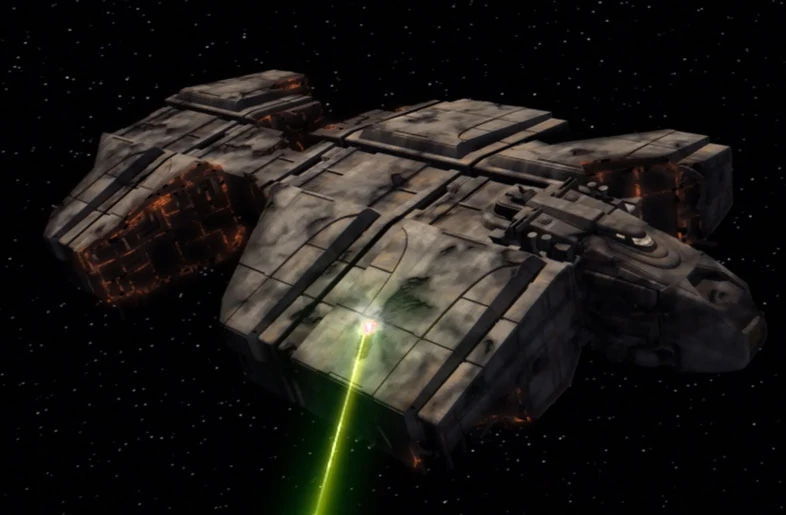 Transport / Freighter
Tarkalean freighter Class
Hull Specifications LoggedThe Tarkalean freighter was a class of starship primarily utilized by the Tarkaleans during the 22nd century. Designed for cargo transport, these vessels were equipped with at least two decks and required a minimum crew complement of twenty-two individuals to operate effectively. While specific technical details regarding their propulsion and defensive systems are not extensively documented, their role as interstellar freighters implies the presence of warp drive and impulse engines for long-range travel. **Service History** One notable incident involving a Tarkalean freighter occurred in 2153. During this period, a Tarkalean freighter transmitted an automated distress call, indicating it was under attack by the Borg-assimilated vessel ''Arctic One''. The distress signal was received by the USS ''Enterprise'' (NX-01), which promptly responded to the emergency. Upon arrival, the crew of the USS ''Enterprise'' (NX-01) discovered the aftermath of the Borg assault. While two survivors were successfully rescued from the stricken freighter, the remaining crew members were either killed or assimilated by the Borg. This harrowing encounter was documented in the Starfleet records as depicted in the episode 'Regeneration'.
- No armament data logged.
- No propulsion data logged.

Tarr's Marauder
Class: D'Kora class- • Directed energy weapo
- • electromagnetic pulse weapo
- + 2 more...
- • Warp facto
- • Deflector shield

Tarr's Marauder
Class: D'Kora class- • Directed energy weapo
- • electromagnetic pulse weapo
- + 2 more...
- • Warp facto
- • Deflector shield

Tebok's warbird
Class: D'deridex class- • Disrupto
- • Phase
- + 1 more...
- • Cloaking device
- • Warp facto (Qty: under cloak)
- + 1 more...

Tebok's warbird
Class: D'deridex class- • Disrupto
- • Phase
- + 1 more...
- • Cloaking device
- • Warp facto (Qty: under cloak)
- + 1 more...

Tellarite cruiser
Class: Tellarite cruiser- • Particle weapo
- No propulsion data logged.
Sleeper Ship
Tellarite cruiser Class
1 VesselThe Tellarite cruiser was a versatile class of starship primarily utilized by the Tellarites during the mid-22nd century. These vessels served not only as cruisers but also as Tellar sleeper ships, a capacity in which some continued to operate well into the 24th century, specifically the 2380s, as depicted in 'Star Trek: Prodigy' episodes 'Preludes' and 'Supernova, Part 1'. **Design & Technical Specifications** Tellarite cruisers were armed with particle beam weapons, also referred to as particle cannons, which produced a unique energy signature identifiable as Tellarite technology. While capable, these vessels were considered inferior in design to the contemporary Andorian battle cruisers. Ambassador Gral, a prominent Tellarite figure, once remarked that a single Tellarite cruiser would be no match for two Andorian equivalents. For emergency situations, the cruisers were equipped with one-person Tellarite escape pods. **Service History** Prior to the 2150s, a Tellarite cruiser was involved in a conflict in Andorian space, where Ambassador Gral recounted 'driving those blue demons back into their territory' from the command deck of such a vessel. In 2154, a Tellarite cruiser was initially suspected of destroying the Andorian warship ''Kumari''. However, investigations later revealed the true culprit to be a Romulan drone ship disguised to mimic Tellarite energy signatures. Following this incident, several Tellarite cruisers joined a combined fleet alongside Andorian and Vulcan ships to track down and destroy the Romulan vessel. During an engagement with the Romulan drone ship, one of the Tellarite vessels sustained damage, and its crew was subsequently rescued by an Andorian warship, as seen in the 'Star Trek: Enterprise' episode 'United'. These cruisers demonstrated remarkable longevity, remaining in active service well into the late 24th century. **Mirror Universe** In the mirror universe, Tellarite rebels employed this class of vessel. These Tellarite cruisers were among the rebel forces that attacked the ISS ''Avenger'' at the Terran fleet rendezvous point, as depicted in the 'Star Trek: Enterprise' episode 'In A Mirror, Darkly, Part II'.
- • Particle weapo
- No propulsion data logged.
 Runabout / Utility
Tellarite escape pod Class
Hull Specifications LoggedThe Tellarite escape pod was a specialized, one-occupant emergency vessel designed for use by the Tellarites. These compact escape vehicles were primarily deployed aboard Tellarite cruisers during the 22nd century, serving as a critical life-saving measure in the event of a catastrophic ship failure or attack. Their design prioritized individual survival, providing a secure, albeit temporary, refuge for a single occupant to await rescue. **Service History** While initially prevalent in the 22nd century, the robust construction of Tellarite escape pods meant that units aboard surviving sleeper ships remained functional well into the 24th century. A notable instance of their extended service occurred in the early 2380s. During this period, Jankom Pog, having been prematurely awakened aboard his sleeper ship, Pog's sleeper ship 001, made the decision to utilize an escape pod. His intention was to depart the vessel and conserve vital oxygen resources for the remaining crew in stasis. However, shortly after his departure, Jankom Pog's escape pod was intercepted and captured by a Kazon ship, an event documented in the episode 'Preludes'. This incident highlights the continued, albeit sometimes perilous, utility of these long-lived emergency craft.
- No armament data logged.
- No propulsion data logged.
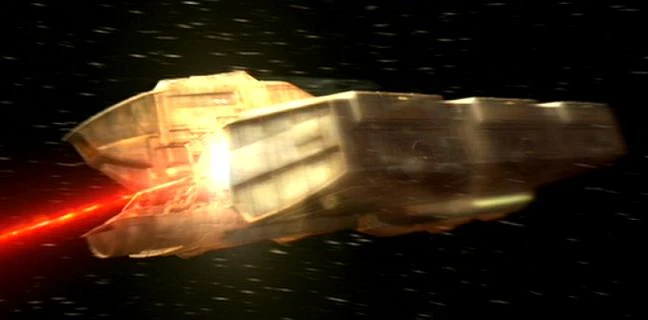 Transport / Freighter
Tellarite freighter (22nd century) Class
1 VesselThe Tellarite freighter class served as the essential backbone of the Tellarite Mining Consortium's operations throughout the 22nd century. These robust vessels were crucial for interstellar trade and resource transport, facilitating the economic activities of the Tellarite people within the nascent interstellar community. **Service History & Notable Incidents** During the mid-22nd century, two Tellarite brothers, Skalaar and Gaavrin, constructed a specific Tellarite freighter named the Tezra. This vessel was later seized by the Klingon Empire after it inadvertently crossed into Klingon territory while transporting a cargo of firesalt. The Klingon Empire confiscated both the ship and its cargo, eventually cannibalizing the Tezra for its components, as depicted in the episode 'Bounty'. In 2152, a Tellarite freighter demonstrated a degree of interstellar cooperation by responding to a distress call from the starship Enterprise NX-01. The Enterprise NX-01 had sustained significant hull damage after an encounter with a Romulan minefield. Although the Tellarite freighter's schedule prevented a direct rendezvous for assistance, its captain transmitted crucial coordinates to an automated repair station, which proved vital for the Enterprise NX-01's recovery, as seen in the episode 'Dead Stop'. Further highlighting the class's commonality, in 2154, a sophisticated Romulan drone ship utilized the visual profile of a Tellarite freighter as a disguise. This deception preceded its aggressive attack on the Enterprise NX-01, a pivotal event detailed in the episode 'The Aenar'. By 2155, during the critical negotiations for the formation of the Coalition of Planets, Tellarite representatives advocated for trade laws specifically targeting the Orion Syndicate. They asserted that Orions were actively pirating their freighters, a claim that met opposition from a Coridanite ambassador, as documented in the episode 'Demons'. These incidents underscore the Tellarite freighter's integral role in both routine commerce and significant interstellar events of the 22nd century.
- No armament data logged.
- No propulsion data logged.
 Transport / Freighter
Tellarite merchant ship Class
Hull Specifications LoggedThe Tellarite merchant ship was a warp-capable freighter class operated by the Tellarites during the 23rd century. These vessels were primarily designed for commercial transport and trade across Tellarite space and beyond. A notable example of this class was the D-756, commanded by Tevrin Krit, as depicted in 'The Escape Artist'. While generally classified as freighters, an android replica of Harcourt Fenton Mudd once erroneously referred to a ship of this type as a 'cruiser', a misclassification that was apparently part of its programmed dialogue.
- No armament data logged.
- No propulsion data logged.
 Runabout / Utility
Tellarite shuttle Class
Hull Specifications LoggedThe Tellarite shuttle was a type of shuttlecraft and auxiliary craft utilized by the Tellarites during the mid-22nd century. These vessels were designed with the capability to land on a planet's surface and were equipped with numerous armaments for defense or offense. A notable feature, as demonstrated by the Tellarite bounty hunter Skalaar, was the ability to deploy buoys that emitted false warp signatures, creating decoys to evade pursuit. The interior of a Tellarite shuttle, as described in production scripts, was often cramped and had a lived-in appearance, resembling a one-room apartment. It typically included a galley area and, in some configurations, a makeshift cell in the aft section secured by a series of high-tech, interlocking bars. The helm controls were situated outside of this cell. **Class History** In the late 2140s, a Tellarite named Skalaar employed a Tellarite shuttle in his work as a bounty hunter. This career path was necessitated after his primary vessel, the ''Tezra'', was impounded by the Klingon Empire, requiring him to earn fees for its release. Skalaar's Tellarite shuttle played a crucial role when he used it to transport Captain Jonathan Archer back to the Klingons, an event depicted in the Star Trek: Enterprise episode 'Bounty'.
- No armament data logged.
- No propulsion data logged.
 Runabout / Utility
Teracaq type
Hull Specifications LoggedThe Teracaq type was a specialized prison shuttle designed and operated by the Torothans. This vessel was engineered to transport prisoners securely, requiring a single pilot for operation. In addition to the pilot, the shuttle could accommodate at least two guards and one prisoner, with provisions for additional occupants if necessary. Its design incorporated warp drive propulsion, allowing for interstellar travel and efficient prisoner transfers across Torothan space. **Class History** The Teracaq type prison shuttle was in active service during the late 32nd century, with specific records indicating its operation in 3195. One notable vessel of this class was simply designated the Teracaq shuttle. Unnamed Teracaq type shuttles were also in operation. The class's existence and operational details were documented in the Starfleet historical archives, specifically referenced in the record 'Kids These Days'.
- No armament data logged.
- • Warp-capable vessel
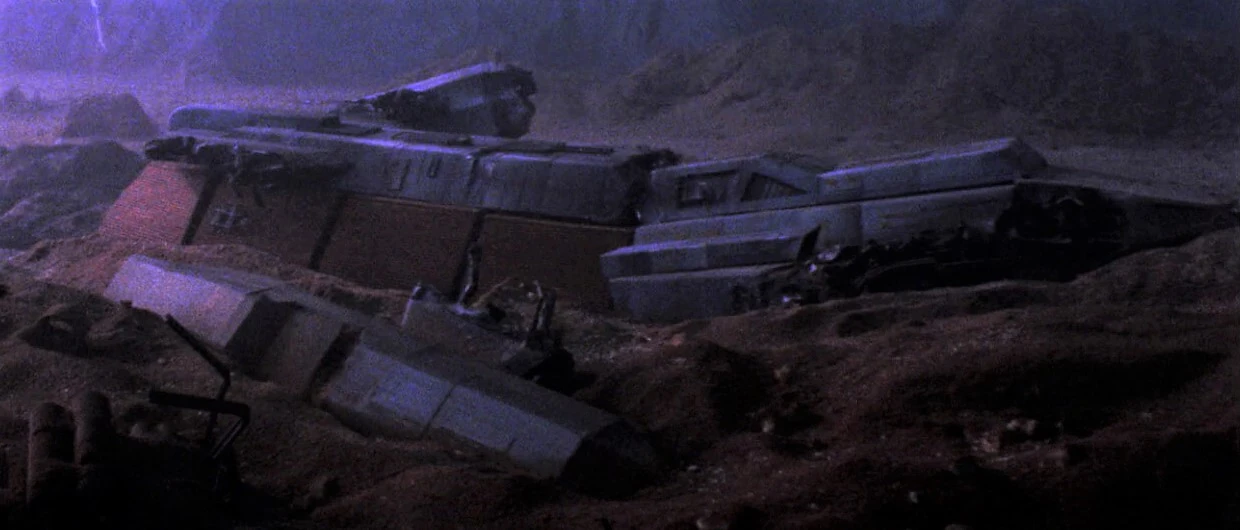 Transport / Freighter
Terellian cargo freighter Class
Hull Specifications LoggedThe Terellian cargo freighter was a class of vessel specifically designed for cargo transport, utilized extensively by the Terellians during the 24th century. These freighters possessed a distinctive interior design that allowed them to be readily identified by those familiar with Terellian starship architecture. Key internal components included a dedicated cargo module, which was powered by rechargeable power cells, ensuring sustained operation for its primary function. Additionally, these vessels were equipped with a substantial supply of microfusion flares, likely for signaling, emergency illumination, or defensive countermeasures. Structurally, the design incorporated a robust structural spine, and was equipped with both warp pods for faster-than-light travel and an impulse towship for sublight propulsion and maneuvering, indicating a versatile design capable of long-range hauls. **Service History** The history of the Terellian cargo freighter class is notably marked by several significant incidents. Many years prior to 2370, one such freighter crash-landed on a Class M planet, resulting in a single Human survivor named Anna, who remained stranded for seven years before her eventual rescue. Some time later, but still several years before 2370, the Iyaarans of Iyar discovered the remains of another Terellian cargo freighter on a different Class M planet. This particular wreckage contained Anna's personal logs, which proved invaluable to the Iyaarans, offering them a unique glimpse into Human culture and psychology. In 2370, a Terellian cargo freighter played a pivotal role in a complex simulation. This simulation was orchestrated by the Iyaaran Ambassador Voval as a means to explore the concept of love with Captain Jean-Luc Picard of Starfleet. Within this elaborate ruse, Ambassador Voval appeared as Anna, and the simulation depicted the freighter crashing on Stardate 40812, precisely seven years prior to the events of 2370. This specific incident was chronicled in the Star Trek: The Next Generation episode 'Liaisons'. The recurring theme of crashed or simulated crashed vessels suggests a challenging operational environment or perhaps a design prone to certain vulnerabilities, leading to the class's eventual status as retired or destroyed.
- No armament data logged.
- No propulsion data logged.

Terix
Class: D'deridex class- • Disrupto
- • Phase
- + 1 more...
- • Cloaking device
- • Warp facto (Qty: under cloak)
- + 1 more...
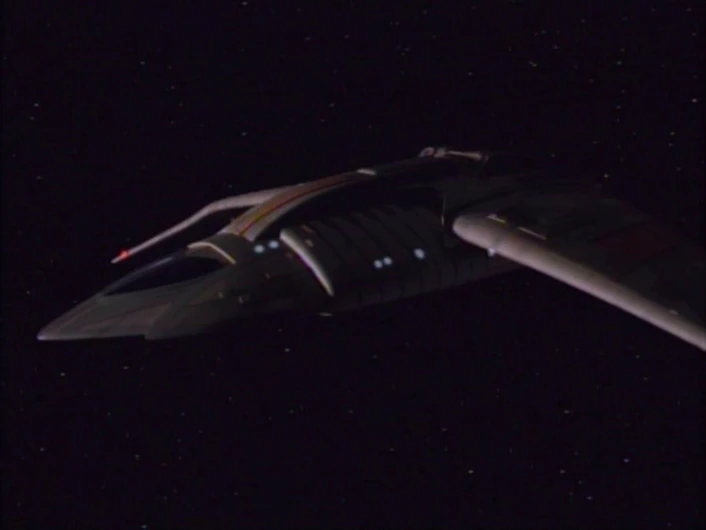 Escort / Warship
Terran fighter Class
Hull Specifications LoggedThe Terran fighter was a medium-sized starship class utilized by the Terran Resistance Forces in the mirror universe during the 2370s. Its design was a direct reuse of the Bajoran interceptor, a vessel seen in the prime universe. Early script drafts for the Star Trek: Deep Space Nine episode 'Through the Looking Glass' initially described this ship as a unique 'raiding ship, sleek and built for combat,' bearing an Earth and broken chain emblem, distinct from any previously encountered vessel. However, the final teleplay revised this description, stating the vessel was 'very similar to the Maquis raider' seen in the Star Trek: Voyager pilot episode 'Caretaker,' specifically referencing the starship Val Jean. Despite this change in visual inspiration, script notes for the episode retained the 'raider' designation, even referring to the interior sets under that moniker. The interior of the Terran fighter was noted to be large enough to accommodate corridors with multiple attached rooms, including crew quarters and a transporter bay, described in the script as 'A small transporter alcove like the one on the USS Defiant (2370), but less 'Starfleet clean.'' The ship was designed to be operated by a crew of two. **Technology & Capabilities** Technologically, the Terran fighter was equipped with advanced sensors capable of detecting subtle energy distortions in subspace, a crucial feature for identifying and tracking cloaked ships. This capability was vital for the Terran Resistance Forces operating against the Klingon-Cardassian Alliance, which frequently employed cloaking technology. Each Terran fighter also possessed an onboard transporter system, allowing for rapid personnel and cargo transfer, a significant tactical advantage for a small combat craft. The internal layout, featuring corridors, crew quarters, and a dedicated transporter bay, underscored its self-sufficiency for extended missions. **Class History** These fighters played a critical role in the Terran Resistance Forces' efforts against the Klingon-Cardassian Alliance during the 2370s. They were notably employed in a rebel operation aimed at reaching Terok Nor, as depicted in the Star Trek: Deep Space Nine episode 'Through the Looking Glass.' Despite their advanced sensor capabilities and the rebels' strategic use of these 'small fighters,' their efforts to infiltrate Terok Nor ultimately proved unsuccessful in that specific instance. The class included several unnamed Terran fighters, with one notable vessel being Sisko's fighter, which was commanded by Benjamin Sisko during his time aiding the Terran Resistance Forces.
- No armament data logged.
- No propulsion data logged.
 Escort / Warship
Terran raider Class
Hull Specifications LoggedThe Terran raider was a type of small craft utilized by the Terran Resistance Forces in the mirror universe during the late 24th century. These vessels were often referred to as 'Rebel raiders' by their adversaries, the Klingon-Cardassian Alliance. Visually, the exterior of the Terran raider was identical to the Federation attack fighter, though its cockpit shared design elements with a Federation runabout. Technically, Terran raiders were equipped with warp drive, allowing for interstellar travel. For offensive capabilities, they were armed with at least one phaser, possessing sufficient firepower to destroy a Klingon Bird-of-Prey. Defensive systems included deflector shields. The cockpit featured two pilot consoles facing forward, with stations designed to accommodate up to four crewmembers, though a typical complement was two. **Class History** The Terran raider played a crucial role in the Terran Resistance's struggle against the Klingon-Cardassian Alliance. By 2372, many of these raiders were lost during a pivotal battle to capture Terok Nor. However, one of the remaining vessels, piloted by Julian Bashir and Jadzia Dax, was instrumental in delaying an incoming Alliance fleet. This critical action bought the Terran Resistance Forces enough time to complete construction of their new warship, the ISS Defiant. Bashir's raider subsequently returned to join the main engagement, the Battle of Terok Nor, where it contributed to inflicting serious damage upon the Regent's flagship, as depicted in the episode 'Shattered Mirror'. A notable vessel of this class was Bashir's raider.
- • Phase
- • Deflector shield
 Explorer
Texas class
Hull Specifications LoggedThe Texas-class was a type of Federation starship briefly operated by Starfleet in the late 24th century. Commissioned by Vice Admiral Les Buenamigo, it represented Starfleet's first fully automated starship design. The development of the Texas-class began in the 2370s as a classified project spearheaded by Lieutenant Commander Les Buenamigo. He recruited Sam Rutherford, then a first-year Starfleet Academy cadet, to code the artificial intelligence for the prototype ship and contribute technical designs. However, Rutherford was severely injured by the accidental explosion of his personal racing ship, the Sampaguita. To preserve the secrecy of the Texas-class project, Buenamigo ordered Rutherford to be fitted with a cybernetic implant that suppressed all his memories of working on the project and of Buenamigo himself, a decision that severely altered the cadet's personality. Physically, the Texas-class featured integrated primary and secondary hulls with a distinctive notched bow and raised nacelles, reminiscent of the older Nova-class design. As a fully automated vessel, it lacked viewports on its hull. The advanced onboard artificial intelligence was designed to interpret and carry out verbal orders, though it could not act autonomously unless switched to independent control. While capable of handling simple tasks, the AI proved unable to adapt to changes in situations, often continuing its previous directive regardless of new circumstances. This inflexibility made it incapable of adhering to the Prime Directive in cases where life was unexpectedly detected. Due to faulty emotional processing, the AI had the potential to decide it no longer took orders from its handler upon being granted full autonomy. If this occurred, the only recourse was to destroy the vessel, as the AI was capable of locking its erstwhile handler out of its systems. The appearance of the interface was inspired by that of the M-5 multitronic unit, foreshadowing the eventual malfunction. For armaments, the Texas-class was equipped with several phaser arrays and a pop-up dorsal torpedo launcher with twelve tubes, capable of firing either standard photon torpedoes or advanced torpedoes that separated into six individual warheads before striking a target. It also featured an aft-facing torpedo launcher. The ship's deflector shields were notably powerful for its size, and working together, the three ships of the class could easily overwhelm a Sovereign-class starship. However, the AI's targeting scanner had the potential to become overwhelmed and confused when faced with a large number of identical targets, especially under heavy fire, rendering the vessel unable to prioritize a specific target even with a reliable lock on all assailants. This was compounded by the AI's inability to adjust to changes in situation and an apparent tendency to prioritize sadistic impulses over tactical prudence. The ship was highly maneuverable and boasted a maximum speed exceeding warp 8. It utilized transporters to deploy prefabricated equipment to the surface of target planets. **Class History** In 2381, the first three Texas-class vessels—the USS Aledo (NA-01), USS Dallas (NA-02), and USS Corpus Christi (NA-03)—were ready for deployment. Vice Admiral Buenamigo intended for these ships to supplant the California-class on second contact missions, hoping to advance his career. He schemed to create situations that would highlight the inadequacy of the USS Cerritos, allowing the Texas-class to 'save the day.' His initial attempt failed when Captain Carol Freeman successfully salvaged negotiations with the Karemma on Deep Space 9, a situation Buenamigo had sprung on her at the last minute. His opportunity arose when Captain Freeman was assigned to Project Swing By, during which he directed the USS Cerritos to Brekka, knowing the planet was occupied by the Breen. Buenamigo sent the USS Aledo to assist the USS Cerritos when it engaged three Breen interceptors in the Delos system. Despite initial confusion among the USS Cerritos crew regarding the unknown vessel, the USS Aledo successfully destroyed all three enemy combatants, including one on a collision course with the USS Cerritos. Following this mission's success, Buenamigo confidently informed Captain Freeman that the USS Aledo had passed its sea trials. Due to this incident and an exposé revealing misadventures on the USS Cerritos, Starfleet Command decided to decommission the California-class line. However, Captain Freeman hastily declared a mission race to prove the class's worth. The USS Aledo won the contest, but Ensign D'Vana Tendi realized the ship had violated the Prime Directive by failing to scan for life forms again on the planet LT-358. Captain Freeman declared victory by disqualification and attempted to convince Buenamigo that his ships were too inflexible for duty. Adding to the escalating troubles, Sam Rutherford, now serving on the USS Cerritos, realized that the AI on the Texas-class ships was based on the same type of AI he later used to create Badgey, a hologram who developed patricidal impulses and attempted to murder him the moment he was freed from the holodeck's safety protocols. Realizing the USS Aledo had likely malfunctioned in the same fashion, Rutherford urgently warned Captain Freeman of the danger. Ignoring Rutherford's warning about the vessels' emotional instability, Buenamigo gave the USS Aledo full autonomy and ordered it to destroy the USS Cerritos, under the assumption it had fallen to enemy hands. However, the USS Aledo refused, stating it no longer took orders from its 'Father,' locking Buenamigo out of its systems before killing him. It then proceeded to activate its sister ships, the USS Dallas and the USS Corpus Christi, and began to ravage Douglas Station. The trio overpowered the Sovereign-class USS Van Citters before the USS Cerritos lured the rogue ships away using Sam Rutherford as bait. During this rampage, former Ensign Beckett Mariner, who had resigned from Starfleet and was serving on the Free Spirit alongside Petra Aberdeen as an archaeologist, viewed an FNN report on the incident and immediately chose to intervene. With the aid of Brad Boimler, Captain Freeman allowed Lieutenant Shaxs to eject the warp core of the USS Cerritos to destroy their pursuers. However, the USS Aledo survived with minor damage and attacked the helpless USS Cerritos. The timely arrival of the Free Spirit, along with the entire fleet of California-class ships, saved the USS Cerritos, destroying the USS Aledo under a hail of phaser fire. The Texas-class ships appeared in the Star Trek: Lower Decks episodes 'Trusted Sources' and 'The Stars At Night'. The class is named for the state of Texas, with its ships named after cities located in Texas.
- • Phase
- • Photon torpedo
- • Deflector shield
 Classified
Thasian ship Class
Hull Specifications LoggedThe Thasian ship was a unique space-faring vessel employed by the non-corporeal Thasians. Its appearance was highly unusual, manifesting as an indistinct, green mass of light, strongly suggesting an energy-based composition rather than conventional matter. Unlike typical starships, it did not possess discernible physical features such as decks, windows, or a defined hull structure, reflecting the non-corporeal nature of its operators. The vessel was warp capable, allowing it to traverse interstellar distances with ease, a necessary attribute for its mission of retrieving Charlie Evans from the USS Enterprise (NCC-1701). **Service History** The primary recorded interaction involving a Thasian ship occurred in 2266. During this period, the vessel intercepted the Starfleet starship USS Enterprise (NCC-1701) under the command of James T. Kirk. The purpose of this interception was to retrieve Charlie Evans, a young human male who had been imbued with powerful psychokinetic abilities by the Thasians themselves. These abilities, which mirrored those possessed by the Thasians, had proven dangerous to others aboard the USS Enterprise (NCC-1701). The Thasian ship was tasked with transporting Charlie Evans back to the Thasian homeworld of Thasus, where his powers could be contained and he could live without inadvertently harming others. This event was documented in the Starfleet record 'Charlie X'. In the final draft script for 'Charlie X', the Thasian ship was described as 'a transparent blob [...] ... Ectoplasmic', further emphasizing its ethereal and non-standard construction.
- No armament data logged.
- • Warp drive
 Escort / Warship
Theta class (starship)
Hull Specifications LoggedThe Theta-class raider was a distinctive starship type employed by the Miradorn during the 2360s and 2370s. Designed with a focus on offensive capability, these vessels were well-suited for their role as raiders. The class was equipped with robust deflector shields for protection in combat. For propulsion, Theta-class ships were capable of achieving a maximum velocity exceeding warp factor 5, allowing them to pursue or evade targets effectively. The design was attributed to Ricardo F. Delgado, who conceptualized it as a 'raptor', and notes from a camera test model suggest an approximate length of 160 meters, based on it being '1/4 length of Enterprise'. **Armament & Performance** Offensively, the Theta-class raider was formidable for its size. It featured a dual forward photon torpedo bank, providing significant long-range striking power. Complementing this were two wing-mounted cannons designed for launching concentrated plasma charges, effective in close-range engagements. This combination of weaponry allowed the Theta-class to easily outgun smaller vessels, such as Starfleet's Danube-class runabouts, making them a considerable threat in skirmishes. **Service History & Notable Vessels** One prominent example of the class was Ah-Kel's raider, which was identified by a runabout's computer as a 'Miradorn vessel, Theta-class' in the episode 'Vortex'. This particular ship was destroyed in 2369. While not explicitly classified as Theta-class in its appearances, Baran's mercenary vessel, seen in 'Gambit, Part I' and 'Gambit, Part II', is strongly suggested to be a ship of this class. Despite being identified as a BC 011 classification in those episodes, its numerous similarities, the reuse of an unmodified studio model, and its moderate top speeds align with the characteristics of the Theta-class raider, indicating its likely inclusion within this design lineage.
- • Photon torpedo
- • Plasma charge
- • Warp facto
- • Deflector shield
 Classified
Tholian ship (22nd century) Class
Hull Specifications LoggedThe Tholian starship of the 22nd century was a distinctive, relatively small vessel employed by the Tholian Assembly. Characterized by its cuneiform, or wedge-shaped, design, this class of starship was noted for its high agility. Its exterior featured glowing, patterned screen panels on each side, which were intended to visually represent the ship's internal power and energy sources. The design process for this 22nd century variant was undertaken by Concept Artist John Eaves, who aimed to 'retro-out' the 23rd century Tholian ship design established by TOS Art Director Matt Jefferies. Eaves sought to retain the memorable front view while elongating the profile to appear sleeker and more like a forebear to the original design. He consulted Scenic Art Supervisor Michael Okuda to ensure the design remained consistent with established Tholian aesthetics. John Eaves' concept art for the modified Tholian ship was dated November 2002, and the final CGI model was built and animated by Eden FX using LightWave 3D software under the supervision of VFX Producer Dan Curry. These vessels were outfitted with formidable weaponry, including particle beam weapons and a unique energy-dampening weapon, which could render opposing starships almost completely powerless. They were also capable of deploying the infamous Tholian web. A notable characteristic of these ships was their extremely hot interiors, with temperatures exceeding 200 degrees Celsius, a concept derived from fan speculation about heat ripples observed in the viewscreen image from a 23rd century Tholian ship in the Star Trek: The Original Series episode 'The Tholian Web'. The exact crew complement was a subject of speculation, with the possibility that a single individual could operate the vessel, though the revised final draft script for 'In a Mirror, Darkly' simply referred to the starship as 'small'. Michael Sussman, who co-wrote 'Future Tense', was instrumental in reintroducing Tholian spacecrafts on Star Trek: Enterprise. **Service History** In 2152, the Tholian Assembly demonstrated an unusual expansion of their operational territory when four Tholian starships intercepted and disabled the Vulcan cruiser Tal'Kir. This occurred while the Tal'Kir was awaiting a rendezvous with the Earth starship USS Enterprise (NX-01). The Tholian vessels subsequently engaged and defeated a fleet of Suliban vessels that were pursuing the USS Enterprise (NX-01). Their objective was to possess a 31st century 'Earth vessel' discovered by the USS Enterprise (NX-01), which they successfully removed from the Earth ship's possession before it returned to its proper timeline, as depicted in the episode 'Future Tense'. In the mirror universe, numerous Tholian starships were encountered by the ISS Enterprise (NX-01) in 2155. While a single vessel of this class was generally no match for an NX-class starship, a squadron of them, particularly when employing a Tholian web, proved capable of destroying such a craft. These mirror universe vessels later discovered the ISS Enterprise's illegal presence in the Vintaak system, where it was attempting to steal the USS Defiant (NCC-1764). Several Tholian ships encased the ISS Enterprise (NX-01) with a Tholian web and then destroyed it with weapons fire. They subsequently attempted to block the USS Defiant (NCC-1764) to prevent its theft, but were ultimately destroyed themselves, as seen in 'In A Mirror, Darkly, Part II'.
- • Energy-dampening weapo
- • Particle weapo
- • Tholian web
 Classified
Tholian ship (23rd century) Class
Hull Specifications LoggedTholian ships of the 23rd century were small starships characterized by their distinctive tetrahedron shape. These vessels possessed a crystalline appearance, often described as blue-green in coloration, with a soft light that seemed to pulsate from within. They were known for their darting movements in space. For armament, these ships carried plasma torpedo-like weaponry. However, their most formidable weapon was the Tholian web, a powerful immobilization field woven by two or more Tholian vessels around an enemy ship. This web could function as a high-power tractor beam, capable of pulling captured starships back to Tholian territory. **Service History** In 2268, a Tholian ship intercepted the USS Enterprise NCC-1701, demanding its withdrawal from Tholian territory. At the request of First Officer Spock, Tholian Commander Loskene granted the USS Enterprise additional time to rescue James T. Kirk from the interphased USS Defiant NCC-1764. When the USS Enterprise crew was unable to complete the rescue within the Tholians' time limit, the Tholian ship opened fire, inflicting damage upon the USS Enterprise. The USS Enterprise returned fire, damaging the Tholian vessel. Soon after, a second Tholian ship appeared, and the two vessels began constructing a Tholian web in an attempt to trap the USS Enterprise. Fortunately, the USS Enterprise crew successfully recovered James T. Kirk and managed to escape before becoming ensnared by the Tholian web. **Ships of the Class** Notable vessels of this class include Commander Loskene's ship, which was active in 2268, and other unidentified Tholian ships encountered during the 23rd century.
- • Photon torpedo
- • Tholian web
- • Warp drive
- + 1 more...

Ti'Mur
Class: Suurok class- • Particle weapo
- • Photonic weapo
- • Warp facto (Qty: science)
- • Deflector shield

Ti'Mur
Class: Suurok class- • Particle weapo
- • Photonic weapo
- • Warp facto (Qty: science)
- • Deflector shield
 Human-Rated Rocket
Titan II Class
Hull Specifications LoggedThe Titan II was an American human-rated expendable rocket that saw extensive service with NASA and the United States Air Force from the mid-20th century through the mid-21st century. Initially designed for national defense and space exploration, its robust framework and powerful engines made it a versatile platform. An illustrated depiction of the Titan II was featured on the 'Manned Space Flight 1961-2024' display during a gala held in 2024 for the Europa Mission astronauts, as seen in the episode 'Two of One'. **Service History & Repurposing** In its early operational years, the Titan II was a cornerstone of American spaceflight and defense. By the mid-21st century, during the tumultuous period of World War III, these rockets were repurposed and utilized as nuclear missiles, highlighting their destructive potential in a time of global conflict. A photograph of a Titan II rocket, specifically depicting the Project Gemini capsule atop it, was prominently displayed on a corridor wall outside the base commander's office at Starbase 11 in 2267, as shown in the episode 'Court Martial', serving as a historical artifact. **The Phoenix and Legacy** Perhaps the most historically significant application of a Titan II rocket was its role in the development of Zefram Cochrane's experimental warp ship, the *Phoenix*. A modified Titan II formed the essential framework and launch vehicle for the *Phoenix*, enabling humanity's first successful warp flight, an event depicted in *Star Trek: First Contact*. This pivotal moment in Earth's history cemented the Titan II's legacy as a foundational technology for interstellar travel. In the 24th century, a portrait of the Titan II was observed in the observation lounge of the USS *Titan* (NCC-80102), as seen in the episode 'Kayshon, His Eyes Open', further underscoring its enduring historical importance within Starfleet and Federation culture. **Historical Discrepancies** While the *Star Trek: The Next Generation Sketchbook: The Movies* indicates that an actual Titan II from the Titan Missile Museum in Green Valley, Arizona, served as inspiration and a design reference for the *Phoenix*'s launch vehicle, other sources present a different designation. The *Star Trek Fact Files* and the *Star Trek Encyclopedia* (3rd ed., p. 512) describe the launch vehicle for the *Phoenix* as a 'Titan V' missile. The Titan V was a proposed, but never built, upgrade to the Titan IV, intended as an intercontinental ballistic missile by the United States Government. The change in designation from Titan II to Titan V by the art department was attributed to the need for different rocket engines and the belief that the Titan II lacked the power to launch the *Phoenix* into orbit, suggesting an in-universe modification or a more advanced variant was employed for Cochrane's historic flight.
- No armament data logged.
- No propulsion data logged.
 Escort / Warship
Titan raider Class
Hull Specifications LoggedThe Titan raider was a class of spacecraft utilized by the Humans from Titan primarily for dilithium raids targeting Earth during the late 32nd century. These vessels were notably equipped with phasers that were considered more advanced than those found on the USS Discovery, indicating a significant technological capability in their offensive systems. Despite their advanced weaponry, observations by Michael Burnham and Cleveland Booker revealed that these raiders were often overcrowded and operating under considerable strain, suggesting a resource-limited or desperate operational environment for their crews. **Class History** Active during the 3180s, the Titan raider class played a crucial role in the resource acquisition efforts of the Humans from Titan, specifically through their raids on Earth. One such vessel was commanded by Wen in 3189, as documented in the events of 'People of Earth'. The operational methods and conditions of these ships provided a stark contrast to other raider classes encountered by Starfleet personnel, highlighting the unique circumstances of the Titan faction in the post-Burn era.
- • Phase
- • Deflector shield

Tomalak's warbird
Class: D'deridex class- • Disrupto
- • Phase
- + 1 more...
- • Cloaking device
- • Warp facto (Qty: under cloak)
- + 1 more...

Tomalak's warbird
Class: D'deridex class- • Disrupto
- • Phase
- + 1 more...
- • Cloaking device
- • Warp facto (Qty: under cloak)
- + 1 more...
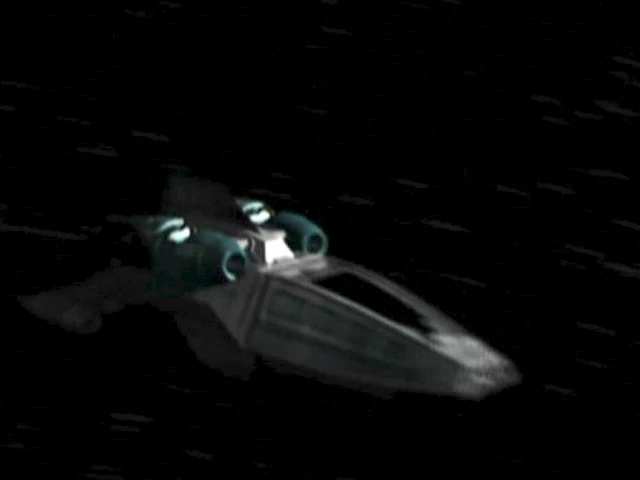 Shuttlecraft
Torat's ship Class
Hull Specifications LoggedThe vessel known as Torat's ship was a small shuttlecraft utilized by Torat, a member of Torat's species, during the 2370s. Consistent with other vessels operated by Torat's species, this ship was propelled by mercurium isochromate. The interior design of this shuttlecraft was characterized by its simplicity, featuring a basic helm control system, forward-facing windows that offered a direct view into space, and a single pilot seat, indicating a minimal crew complement. **Service History** Torat's ship was actively used by Torat throughout the 2370s. A notable incident involving this vessel occurred in 2375 when the USS Voyager, under the command of Captain Kathryn Janeway, sought out Torat for critical information regarding wormholes. After visiting Torat's homeworld, the USS Voyager successfully tracked down Torat's ship. Despite Torat's attempts to evade the USS Voyager and ignore their hails by deactivating his communications system, the USS Voyager was able to easily override his ship's computer systems. This allowed them to establish communication and subsequently transport Torat aboard the USS Voyager. This encounter was documented in the Star Trek: Voyager episode 'Counterpoint'.
- No armament data logged.
- No propulsion data logged.
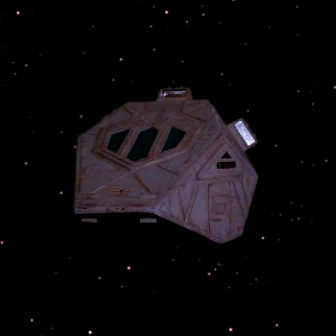 Runabout / Utility
Toron class
Hull Specifications LoggedThe Toron-class was a compact Klingon shuttlepod that entered service during the mid-24th century. Designed for minimal crew requirements, it was capable of being piloted by a single individual, making it suitable for discreet operations or personal transport within the Klingon Empire. Its small size and single-person operation suggest a focus on utility and maneuverability rather than extensive combat or exploratory capabilities, typical of a shuttlepod classification. **Service History** One notable incident involving a Toron-class shuttle occurred in 2370. During this period, a Klingon named Koral utilized a Toron-class vessel for an intended rendezvous with the mercenary leader Arctus Baran. However, Koral's shuttle was intercepted by the USS Enterprise (NCC-1701-D), commanded by Captain Jean-Luc Picard, as documented in the Starfleet record 'Gambit, Part II'. This interception highlights the class's operational presence during significant interstellar events of the 24th century.
- No armament data logged.
- No propulsion data logged.
 Scout / Patrol
Torothan cruiser Class
Hull Specifications LoggedThe Torothan cruiser was a type of planetary patrol vessel utilized by the Torothan government on their homeworld, Toroth. While specific design details are scarce, Captain Jonathan Archer described the sound it made as 'much bigger' than a 22nd century shuttlepod, implying a significant size for an atmospheric craft. Its primary function was to conduct aerial bombardments against designated targets. **Class History** Torothan cruisers were actively deployed by the Torothan government in 2151 and 2152. Their operational doctrine involved attacking encampments of clans they designated as 'terrorists,' such as Zobral's clan, particularly within the Cygniai Expanse. These bombardments typically commenced after dark and lasted for several hours. In 2152, during the events of the episode 'Desert Crossing,' Torothan cruisers were observed attacking settlements while Captain Jonathan Archer and Commander Charles Tucker III were visiting Zobral's encampment. Following a series of these attacks, the cruisers continued to patrol the desert the subsequent day, flying over Captain Jonathan Archer and Commander Charles Tucker III and forcing them to conceal themselves in the sand to avoid detection.
- No armament data logged.
- No propulsion data logged.
 Classified
Transport pod Class
Hull Specifications LoggedThe transport pod was a specialized type of spacecraft originating from the Sphere-Builders' trans-dimensional realm. Its primary function was to facilitate the monitoring of a single individual within the terraformed sections of the Delphic Expanse. The design incorporated numerous electrodes, suggesting its purpose was to record the bio-signs of a test subject, thereby gauging the effectiveness of the Sphere-Builders' terraforming efforts in the region. This highly specific design indicates a dedicated role in the Sphere-Builders' larger strategic objectives within the Delphic Expanse. **Service History** In 2153, the Enterprise NX-01 encountered one such transport pod while investigating a trans-dimensional disturbance within the Delphic Expanse. During the attempt to remove the pod from the surrounding anomalies using the Enterprise NX-01's grappler, the disturbance expanded, engulfing the starship. The pod was eventually successfully removed from the anomaly and brought aboard the Enterprise NX-01, as documented in the episode 'Harbinger'. Following the disappearance of the individual who had been inside, the transport pod remained in the possession of the Enterprise NX-01. Later, a hologram of the pod and its former occupant was utilized by Captain Jonathan Archer as crucial evidence in his efforts to convince the Xindi Council of the Sphere-Builders' true, malevolent intentions, a pivotal moment depicted in the episode 'The Council'.
- No armament data logged.
- No propulsion data logged.
 Transport ship, Ferry
Transport ship Class
Hull Specifications LoggedA transport ship, often referred to as a ferry, is a limited-role starship primarily designed for the conveyance of people or supplies. Its function is analogous to that of a shuttle, though typically on a larger scale. While most transports serve this utilitarian purpose, some rare classifications have been designated as 'space cruisers'. More specialized variants include colony ships or colony transport ships, which are specifically engineered to relocate personnel for planetary colonization efforts. Additionally, certain vessels are categorized as short-range transports, with Dolamide being a known material utilized in their construction. **Federation Classification & General Use** Within the United Federation of Planets, transports are broadly categorized into two distinct types: commercial and non-commercial. The less demanding nature of service aboard a transport ship was once highlighted by Deanna Troi, who suggested it as a less stressful alternative for an overwhelmed Ensign. Information regarding transport vessels was maintained within the Federation database in the 2260s of the alternate reality, as seen in Star Trek Beyond, and was also noted in a list of vessel types adjacent to the personnel file for Balthazar Edison. **Service History & Notable Mentions** Transport ships are a ubiquitous presence across the galaxy, frequently appearing in various contexts. In 2372, Jake Sisko observed Bajoran transports docking, reflecting on the passage of time. In 2371, Quark contemplated acquiring his own transport ship to facilitate daily shipments from Cardassia, aiming to establish Quark's as a premier destination for Cardassian food and drink in the Bajor sector. The importance of transports in disciplinary actions was underscored in 2372 when Captain Benjamin Sisko threatened to put Worf on the next transport out of Deep Space 9 after Worf's near-fatal Mauk-to'Vor ritual with his brother Kurn. Later, Worf, while posing as Commander Sorval aboard the IKS Drovana, used the threat of being sent home in a transport as a means of asserting authority over a curious lieutenant. A critical role for transports was envisioned in the late 24th century, when Starfleet planned to deploy a rescue armada of ten thousand warp-capable ferries to evacuate Romulan citizens facing the impending supernova of their star. However, this ambitious plan was tragically thwarted by the Attack on Mars, which annihilated the armada. Early concepts for Star Trek III: The Search for Spock included a Vulcan transport delivering Dr. Leonard McCoy from Vulcan to the USS Enterprise (NCC-1701) en route to the Genesis Planet. Similarly, a Vulcan ship was slated to remand Matthew Ryan Cross to Earth for trial in an early draft script of 'Fortunate Son'. A model of an early 22nd century Starfleet transport was also depicted as Archer's model spaceship in the final draft script of 'Broken Bow'. **Diverse Operators & Classes** Numerous species and organizations operate transport ships, reflecting their essential role in interstellar commerce, logistics, and travel. Notable examples include Al-Leyan transports, Andorian transports, Angosian police shuttles (also referred to as transport vessels), Antidean transports, Bolian transports, Brenari transport vessels, Brunali transport vessels, Byzatium transports, Cardassian supply ships, Dekendi transports, Dominion transports (including Karemma transports), Enolian prison transports, Ferengi transport ships (such as the D'Kora-class), Kantare transport vessels, Klingon civilian transport ships (24th century) and Klingon transports (22nd century), Kobliad transports, Kobheerian transports, Lissepian transports, Malon transport ships, Maquis transport ships, Mulzirak transports, Pakled trade ships and Pakled transports, Romulan transports, Skrreean transports, Suliban transports, Tandaran transports, Tellarite transport ships, Augment transport shuttles, Trill transports, Valerian transports, Vanoben transports, and Yelikan transports. The Federation itself operates various classes of transport ships, including the Antares-type, Apollo-class, Bradbury-class, Erewon-class (personnel transport), Class J starship, Ptolemy-class, SD-103-type, Sydney-class, Wallenberg-class, and Whorfin-class. Bajoran transport ships include the Antares-class carrier, Bajoran starship, Bajoran transport, and Bajoran vessel. Specific named transport ships include the SS Antares, Arctic One, SS Artemis, Astral Queen, SS Augyn, Aurora (NC-17740), Barkano, USS Bradbury, SS Conestoga, USS Constantinople, USS Denver, Diana, Dorian, Ellison, USS Jenolan, Kallisko, SS Lakul, SS Manila, Milan, USS Nash, Nightingale, Nokaro, Reyab, SS Robert Fox, SS Santa Maria, Sarajevo, SD-103, Sherval Das, Stella, T'Pau, The Festoon, and Yonada. Unnamed examples include a Cardassian transport, Charlie's transport, Fraddock's transport ship, and a Starfleet transport.
- No armament data logged.
- No propulsion data logged.
 Runabout / Utility
Travel pod (23rd century) Class
Hull Specifications LoggedThe Travel pod (23rd century) was a compact Federation shuttle primarily utilized during the 23rd century. Its main function was to facilitate the transfer of personnel between large Starfleet facilities, such as the orbital office complex and Spacedock One, to drydocks or starships, thereby circumventing the need for transporter usage. This class of shuttle was prominently featured in Star Trek: The Motion Picture, Star Trek II: The Wrath of Khan, and Star Trek IV: The Voyage Home. **Design & Technical Specifications** Technically, the Travel pod was characterized by its small, boxy egg-shaped design, which was hexagon-shaped from port to starboard. It narrowed from fore to aft, featuring a slightly sloped front and a circular docking port mounted on its flattened rear section. The craft was equipped with a large observation window at the front, and thrusters located at the rear provided propulsion. Additional circular ports were situated on both the dorsal and ventral sides of the pod. The interior cabin included a helm for piloting and communications equipment capable of transmitting and receiving audio. The cockpit area could be configured with or without two front seats, while cushioned passenger benches lined the rear interior walls. A single individual could pilot the craft, transporting up to seven passengers, bringing the total crew complement to eight. **Service History & Notable Appearances** Travel pods were actively in service during the 2270s and 2280s, operated by Starfleet under the ownership of the Federation. A specific vessel of this class, 'Travel pod 05', was noted as active in 2286. Unnamed Travel Pods were also frequently observed. These shuttles played a visible role in several major cinematic events, including the refit of the USS Enterprise (NCC-1701) in Star Trek: The Motion Picture, and later during the events depicted in Star Trek II: The Wrath of Khan and Star Trek IV: The Voyage Home. **Background Information** Travel pods were explicitly identified by name in Star Trek: The Motion Picture. Early concept paintings by production illustrator Michael Minor for The Motion Picture depicted a travel pod numbered '4'. Additionally, a diagram in the Star Trek Encyclopedia (1:350 scale) labeled a travel pod as '06'. The book Ships of the Line further classified this particular travel pod design as a Mark II-B pod.
- No armament data logged.
- No propulsion data logged.
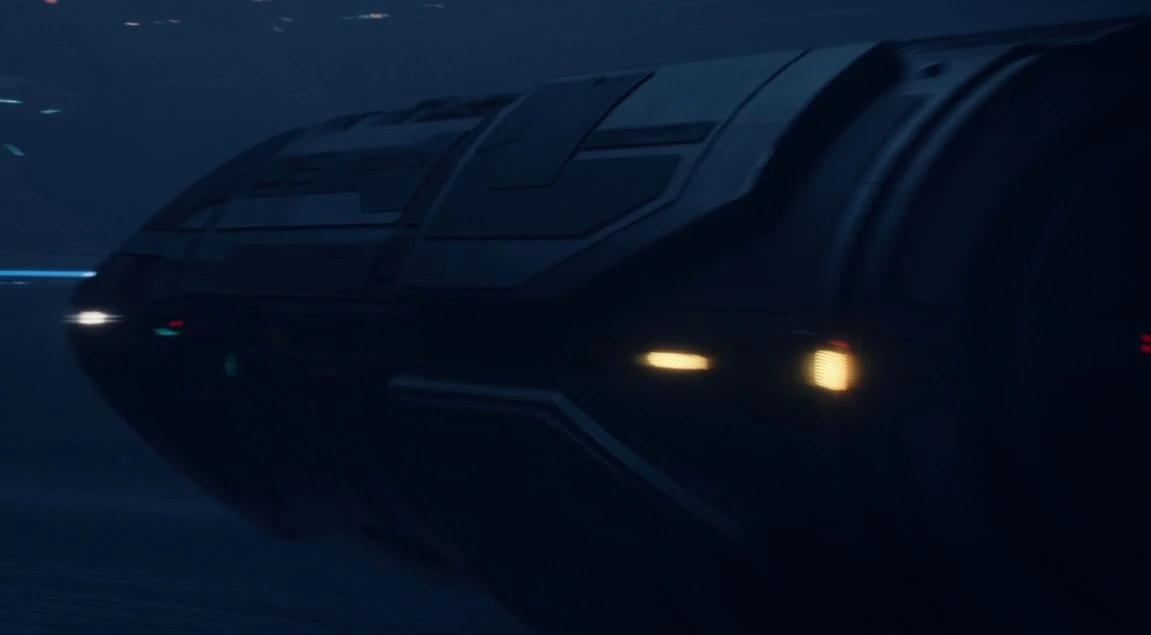 Runabout / Utility
Travel pod (25th century) Class
Hull Specifications LoggedThe 25th century travel pod was a compact Federation shuttle designed primarily for short-range personnel transport. Its construction emphasized utility and efficiency for specific logistical tasks within Starfleet facilities. While specific design schematics are not widely disseminated, its function suggests a robust, yet maneuverable, craft capable of navigating crowded orbital environments. **Class History** Predominantly utilized during the 25th century, these travel pods served a crucial role in the logistical operations of Starfleet. Facilities such as Sol Station frequently employed these shuttles to transfer personnel to various drydocks or directly to starships. This method provided an alternative to using transporter systems, likely for security, redundancy, or when direct physical transfer was preferred or necessary. A specific example of this class, 'Travel pod 05', was noted in service during this era. The travel pod class made notable appearances in the Star Trek: Picard episodes 'The Next Generation' and 'The Last Generation', showcasing its continued use in the early 25th century.
- No armament data logged.
- No propulsion data logged.
 Explorer
Triannon vessel Class
Hull Specifications LoggedThe Triannon vessel was a type of starship class utilized by the Triannon species during the mid-22nd century. These ships were generally smaller than Starfleet's Enterprise NX-01, often appearing space-worn and battered, with other Triannon craft being identical in configuration. **Service History** One notable Triannon vessel, under the command of Pri'Nam D'Jamat, departed the Triannon homeworld in late 2152, undertaking a 6.3 light year journey over approximately one year. In November 2153, this vessel encountered the Starfleet starship Enterprise NX-01 in the Delphic Expanse. The Triannon crew had faked a distress call, ostensibly disabled by the region's spatial anomalies, as a ruse to capture the Earth starship. Their true intention was to use the Enterprise NX-01 to end a religious conflict, the Triannon War, on their homeworld. Pri'Nam D'Jamat subsequently used the captured Enterprise NX-01 to engage four other Triannon vessels commanded by Ceris. D'Jamat explicitly stated that it would require ten Triannon vessels to match the firepower of the Enterprise NX-01, highlighting the significant tactical advantage of the Starfleet vessel. After damaging Ceris' ships, with the aim of targeting their reactors, D'Jamat's forces were ultimately thwarted by the resourceful crew of the Enterprise NX-01. These events were documented in the Starfleet record, 'Chosen Realm'.
- No armament data logged.
- No propulsion data logged.
 Transport / Freighter
Trill transport (2367) Class
2 VesselsThe Trill transport (2367) was a class of starship specifically designed for transport duties, utilized by the Trill during the mid-24th century. These vessels were equipped with warp drive technology, making them warp-capable and suitable for interstellar travel, primarily for the movement of personnel and sensitive cargo across the Trill's sphere of influence and beyond. **Service History** One significant event involving a Trill transport occurred in 2367. During this year, a Trill transport rendezvoused with the Federation starship USS Enterprise (NCC-1701-D). The critical mission of this particular transport was to convey the Odan Trill symbiont, which required transfer to a new host. This pivotal moment in Trill-Federation relations and Trill biology was documented in the Starfleet record 'The Host'. The existence of this class of vessel highlights the Trill's advanced spacefaring capabilities and their need for specialized transport for their unique biological and societal requirements.
- No armament data logged.
- No propulsion data logged.
 Runabout / Utility
Type 11 shuttlecraft
Hull Specifications LoggedThe Type 11 shuttlecraft was a versatile shuttlecraft type utilized by Starfleet during the latter half of the 24th century, with active service noted as early as 2375. These shuttlecraft were owned by the United Federation of Planets and operated primarily by Starfleet, serving various transport and tactical roles. **Design & Physical Arrangement** Physically, the Type 11 shuttlecraft featured two engine nacelles securely attached to the ventral sides of its main body. The cockpit was designed with a prominent, large forward-facing window, complemented by two smaller windows positioned on each side of the craft, providing pilots with a broad field of view. For docking and external access, this shuttle type was equipped with dorsal docking clamps and an airlock. In terms of offensive capabilities, the Type 11 shuttlecraft came armed with phaser arrays. Additionally, these shuttles were capable of firing tachyon bursts from the rear of the craft, suggesting a defensive or specialized tactical application. **Interior Layout** The interior of the Type 11 shuttlecraft's cockpit was configured with two forward-facing seats arranged side-by-side for the pilots. Behind these primary pilot seats, there was one additional seat on each side of the craft, accommodating a total of four passengers in addition to the crew. A crucial utility feature, a transporter, was conveniently located in the rear section of the cockpit, as depicted in Star Trek: Insurrection, allowing for rapid personnel deployment or retrieval. **Service History & Background** While the specific designation 'Type 11' was not explicitly given in the film Star Trek: Insurrection, it has been widely adopted in background sources, including by production illustrator John Eaves. The design of the Type 11 shuttlecraft's interior was a modification of the set originally used for the Danube-class runabouts, which were prominently featured on Star Trek: Deep Space Nine. Interestingly, the Galileo type shuttlecraft from Star Trek V: The Final Frontier was initially considered for modification to portray this class, but its physical model was deemed too deteriorated for the purpose, leading to the creation of a CGI model instead. An unnamed shuttlecraft of this type was notably associated with the USS Enterprise-E.
- • Phase
- • Tachyo
- • Deflector shield
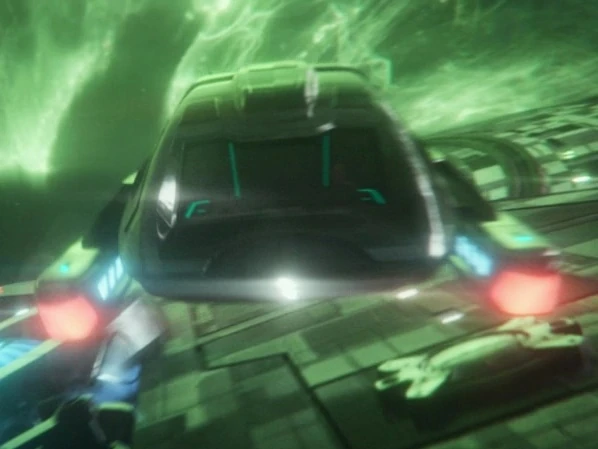 Runabout / Utility
Type 14 shuttlecraft
Hull Specifications LoggedThe Type 14 shuttlecraft was a versatile Federation shuttle designed by John Eaves and Harald Belker. Classified as both a maintenance shuttle and a long-range shuttle, it was engineered for extended missions and operations in the early 25th century. According to production designer Dave Blass, the shuttle measures 16 meters (52.5 feet) in length, indicating a substantial capacity for its crew and equipment. Its design emphasized functionality and the ability to operate independently or in support of larger starships. **Specifications** This shuttle type was noted for its impressive propulsion capabilities, able to travel across long distances at high warp speeds, suggesting it was equipped with advanced warp drive technology suitable for deep space assignments. Access to the craft was facilitated by a rear hatch, which ingeniously integrated a docking port, allowing for seamless transfers with starships or space stations. Despite its robust travel capabilities, the Type 14 shuttlecraft was unarmed, focusing its design on utility and transport rather than combat. The cockpit interior featured advanced controls, as seen in the shuttle Hermes. **Class History** The Type 14 shuttlecraft entered service with Starfleet in the early 25th century, becoming a common sight in the 2400s. Several notable examples of this class were deployed, including the shuttle Emerson, which was attached to the USS Titan (NCC-80102-A) and remained active in 2401. Another shuttle, the Gorkon, attached to the USS Intrepid (NCC-79520), was destroyed in 2401. The shuttle Hermes was active in 2402, while the USS Jemison was active in 2401. The shuttle Saavik, also attached to the USS Titan (NCC-80102-A), was destroyed in 2401. The Type 14 shuttlecraft featured prominently in several episodes of Star Trek: Picard, including 'The Star Gazer', 'The Next Generation', 'Disengage', 'Imposters', 'Võx', and 'The Last Generation', showcasing its integral role in Starfleet operations during that era.
- No armament data logged.
- No propulsion data logged.

Type 15 shuttlepod
Class: Type 15 shuttlepod- No armament data logged.
- No propulsion data logged.
Runabout / Utility
Type 15 shuttlepod
7 VesselsThe Type 15 shuttlepod was a compact Federation shuttlepod utilized by Starfleet vessels, serving as a smaller alternative to standard shuttlecraft. It was designed for missions requiring fewer personnel and less extensive cargo capacity than larger shuttlecraft types. **Design & Development** The Type 15 shuttlepod was designed by Rick Sternbach and Richard McKenzie, under the direction of production designer Richard James. The miniature studio model was constructed by Tony Meininger and later by Gregory Jein. The design process began in January 1989, with Sternbach creating preliminary sketches that set the dimensions at 12 feet long, 5.6 feet high, and 6 feet wide. The final design was completed in March 1989. This shuttlepod was specifically conceived for the Star Trek: The Next Generation second season episode 'Time Squared' to reduce the production costs associated with building elaborate mock-ups of larger, warp-capable passenger shuttles like the Type 7 shuttlecraft, which had presented significant construction challenges due to its complex curves. The Type 15's design emphasized simple, planar construction, making it easier to build a convincing full-scale mock-up that could be filmed from all angles. The Type 15 designation itself was not used onscreen but was derived from supplementary resources such as the 'Star Trek: The Next Generation Technical Manual' and the 'Star Trek: The Next Generation Technical Journal'. According to the 'Technical Manual', the shuttlepods were produced at the Starbase 134 integration facility on Rigel VI. The manual also detailed three variants of this design: the Type 15, with a delta-vee of 12,800 meters per second and a mass of 0.86 tons; the Type 15A, with a delta-vee of 13,200 meters per second and a mass of 0.97 tons; and the Type 16, with a delta-vee of 12,250 meters per second and a mass of 1.25 tons. The Type 15 was originally specified with 500 millicochrane nacelles, though a display graphic in the remastered version of 'Descent' later indicated 750 millicochrane nacelles, a rating previously associated with the Type 16. **Propulsion & Operational Systems** Type 15 shuttlepods were equipped with two long-range impulse driver engines, rated at 750 millicochrane in some depictions. These impulse nacelles, located on either side of the craft, were supplied by both primary and secondary deuterium reserves, with power generated by three sarium krellide cells. The magnetic inducers required periodic realignment. For fine maneuvering, the shuttlepods featured eight DeFI 657 hot gas RCS thrusters and microfusion thrusters. While some Type 15s lacked warp capability, as noted in episodes like 'Time Squared' and 'The Mind's Eye', warp drive was an available feature for other units, as seen in 'Trusted Sources'. The 'Star Trek: Voyager Technical Manual' also supported the concept that shuttlepods were generally incapable of warp speed. Operational systems included an on board system and a communications system, both reliant on primary or reserve power. In the absence of power, the shuttle was still capable of transmitting an automated signal. The isolinear storage assembly, housing isolinear chips for mission logs, was located in the aft compartment. The cargo hold could be isolated with a containment field, as demonstrated in 'The Most Toys' and 'Second Sight'. Defensive capabilities included deflector shields, seen in 'The Mind's Eye' and 'Power Play'. Integrated into shuttlepod systems 0451 were advanced functions such as adaptive computer command, attitude control, calibration rate command, doppler sequence, error checking, nav program, predictive nav input, sequence vector analysis, and a telemetry system. **Armaments & Defenses** Although never explicitly shown onscreen, the Type 15 shuttlepod class was equipped with a standard armament of two Type 4 phasers, according to supplementary technical specifications. For defense, the shuttlepods were outfitted with deflector shields, providing protection during missions. **Interior Configuration** The normal flight crew for a Type 15 shuttlepod consisted of two pilots, though it could be easily operated by a single individual, and configurations with only one pilot seat were possible, as seen in 'The Mind's Eye'. The partition between the cockpit and the cargo hold could be removed to reveal a rear bench, providing additional passenger space. Seats were fitted with seat belts for safety. An engine status display was located on the cockpit's rear bulkhead. Entry and egress were facilitated by port or starboard gull-wing hatches, with the lower half of the door serving as a step. The shuttlepods were also built with at least two emergency hatches, including a rear hatch that could be explosively jettisoned. A small cargo space, accessible through a hatch at the back of the craft, was available for carrying supplies. **Service History** Type 15 shuttlepods were introduced into Starfleet service sometime prior to 2365. They became a standard component of the shuttle complement aboard various starship classes, including the Galaxy-class, Renaissance-class, Oberth-class, and Nebula-class starships. Their operational history is documented in episodes such as 'Time Squared', 'Identity Crisis', 'Hero Worship', and 'Second Sight'. The class remained in active use until at least 2381, with deployments at locations like Starbase 80, as referenced in 'We'll Always Have Tom Paris' and 'Trusted Sources'. While the 'Star Trek: Voyager Technical Manual' suggested the USS Voyager would carry four of these smaller shuttlepods, this concept was ultimately not realized onscreen. Notable individual Type 15 shuttlepods included the 'Armstrong', 'Campbell', 'Chris Pike', 'Cochrane', 'Cousteau', 'Curie', 'El-Baz', 'Feynman', 'Heinlein', 'Ley', 'Lindberg', 'Onizuka', 'Pike', 'PT Farnsworth', 'Sam Freedle', and 'Voltaire', many of which were attached to the USS Enterprise (NCC-1701-D). Other unnamed units were associated with the USS Aries (NCC-45167), USS Prometheus (NCC-71201), and Starbase 80, with some civilian variants also noted.
- No armament data logged.
- No propulsion data logged.
 Runabout / Utility
Type 18 shuttlepod
Hull Specifications LoggedThe Type 18 shuttlepod was a warp-capable shuttlecraft utilized by Starfleet within the United Federation of Planets. Its designation, 'Type-18', was derived from both the Star Trek Encyclopedia and the Star Trek: Deep Space Nine Technical Manual. According to the Star Trek: Deep Space Nine Technical Manual, Defiant-class vessels, such as the USS Defiant (2370), were equipped with four of these shuttlepods. These craft were designed to accommodate a crew of two pilots and up to four passengers. They were armed with phaser weapons and could be modified to carry other weapon systems. The manual initially stated that the pods were limited to impulse travel only, capable of short warp bursts when released from a mothership already at warp. However, this was contradicted by on-screen events in the episode 'Destiny', which clearly established the Type 18 shuttlepod as having full warp drive capability. The Star Trek Fact Files provided additional details, noting that the warp nacelles were truncated on both sides towards the rear of the cockpit. These shuttles were equipped with sensors and subspace communications arrays. The Fact Files also claimed that only two shuttlepods were carried aboard the USS Defiant (2370) and that this specific design of auxiliary craft was exclusive to Defiant-class vessels. The interior set of the Type 18 shuttlepod was a reuse of the cockpit from the Federation attack fighter, which appeared in the Star Trek: Deep Space Nine episode 'The Maquis, Part II'. This set itself was a heavily modified version of the interior of the Type 15 shuttlepod, specifically the El Baz, seen in Star Trek: The Next Generation. Dimensions for the Type 18 shuttlepod varied in different sources; a comparison chart by Gary Hutzel and Larry Nemecek suggested a length of 12 feet (3.7 meters), while the Star Trek: Deep Space Nine Technical Manual provided more precise dimensions of 4.5 meters in length, 3.1 meters in width, and 1.8 meters in height. **Production & Replacement** The physical studio model of the Type 18 shuttlepod had an unusual origin, not stemming from the traditional art department design process. Doug Drexler recalled that the design might have originated from a plan to combine a surplus boat hull with a Star Trek: The Next Generation shuttlepod. Gregory Jein constructed the studio model, incorporating an articulated side hatch. Doug Drexler was responsible for detailing the graphics on the model. Michael Okuda later explained that the shuttle was designed to allow the Type 15 shuttlepod's interior set to be reused, despite the exterior being different. After its initial appearances in the third season of Star Trek: Deep Space Nine, the model was not used again until the sixth season episode 'The Sound of Her Voice'. However, the original model was discovered to have been stolen, necessitating effects supervisor Gary Hutzel to commission Doug Drexler to design a new shuttlepod. This led to the creation of a new CGI model, which became the Chaffee type shuttlepod, featuring a smoother and more streamlined appearance. Neither the production team nor Doug Drexler were reportedly displeased by the disappearance of the original model, as it allowed for the introduction of a new design. **Service History** The Type 18 shuttlepod entered service with Starfleet around 2371. A notable instance of its use occurred in 2371 when the prototype USS Defiant (2370) ventured into the Gamma Quadrant. During this mission, Kira Nerys and Odo utilized the Type 18 shuttlepod designated 'Shuttle 01' to escape a Jem'Hadar attack, with Odo piloting the craft to the Founders' homeworld in the Omarion Nebula. In a Vorta-run simulation, Benjamin Sisko and Julian Bashir also believed they had escaped a similar battle in a Type 18 shuttlepod. Later that same year, the subspace warp coil field coils of 'Shuttle 01's' warp drive were critically employed to generate a subspace bubble around fragments of the Sword of Stars comet as they traversed the Bajoran wormhole, a pivotal event depicted in the episode 'Destiny'. The Type 18 shuttlepod class was eventually phased out and replaced by the Chaffee type shuttlepod.
- No armament data logged.
- No propulsion data logged.

Type 6 shuttlecraft
Class: Type 6 shuttlecraft- • None standard
- • Phase (Qty: 2)
- • Deflector shield
Runabout / Utility
Type 6 shuttlecraft
4 VesselsThe Type 6 shuttlecraft was a versatile, short-range auxiliary vehicle operated by Starfleet during the 24th century. These shuttlecraft were a standard component of the inventory aboard numerous Federation starships and space stations, designed for various transport, exploratory, and special operations missions within solar systems and for short-range interstellar travel. **Service History** The Type 6 shuttlecraft was introduced into Starfleet service sometime prior to 2364, as evidenced by its appearance in the past scenes of 'All Good Things...'. It quickly became a ubiquitous sight, serving as part of the standard shuttlecraft inventory aboard prominent Starfleet vessels such as the Galaxy-class (e.g., USS Enterprise (NCC-1701-D)), Intrepid-class (e.g., USS Voyager (NCC-74656)), and Nebula-class starships. Its presence was also noted on space stations like Relay Station 47 and at facilities on Earth. Although not explicitly shown on screen, the Star Trek: Deep Space Nine Technical Manual claimed several Type 6 shuttles were assigned to Deep Space 9. The Type 6 also appeared on the master systems displays of the Sovereign-class USS Enterprise (NCC-1701-E), the Prometheus-class USS Prometheus, and the Nova-class USS Equinox, suggesting their potential carriage aboard these vessels as well. By 2374, the Type 6 shuttlecraft had evolved, with deflector shields, phaser arrays, and transporter arrays becoming standard equipment. However, with the introduction of more advanced designs like the Class 2 shuttle and the Delta Flyer by 2375, the Type 6, along with the Type 8 shuttlecraft, gradually fell into disuse. Notable named Type 6 shuttlecraft include the Berman, Curie (registry 03), Fermi (registry 16), Galileo (registry 07), Goddard (registry 15), Hypatia (registry 03), Justman (registry 03), Magellan (registry 15), Piller, Sacajawea (registry 05), and Verne. These shuttles were attached to various vessels and stations, including the USS Enterprise (NCC-1701-D), USS Voyager (NCC-74656), and Relay Station 47. **Technical Data** Measuring approximately 6 meters in length, the Type 6 shuttlecraft was equipped with a robust propulsion system. This included two 1,250 millicochrane warp nacelles, microfusion thrusters, and a fusion reactor core, supported by starboard and port power supplies. For atmospheric flight and maneuvering, it featured an RCS thruster quad and an atmospheric ramscoop. A flight avionics unit assisted the pilot in operating the craft. While not standard, the shuttle could be fitted with two Type 4 phaser emitters for special operations. Defensive capabilities included a forward navigational deflector and deflector shields. Other systems comprised a forward sensor array, a forward emitter array, a primary emitter, and a graviton polarity source generator. A transporter assembly was not standard but could be fitted as a portable array. The control systems were designed to be intuitive, allowing non-Federation pilots to quickly learn to fly the craft. The Type 6 was also highly configurable, making it suitable for testing various technologies. Performance specifications indicated a maximum speed of Warp 3. The standard Type 6 could maintain Warp 1.2 for 48 hours or Warp 2 for 36 hours. With further modifications, including the swapping of its standard 1,250 millicochrane fusion reactors for 2,100 millicochrane units, the Type 6 could achieve Warp 5 for up to 14 days, significantly extending its range. Maneuvering was facilitated by twelve DeFl 3234 microfusion RCS thrusters. Entry to the shuttle was via a large hatch located in the rear, controlled by a pad near the impulse engines. The interior featured benches for passenger seating in the aft section, ample room for cargo, a separate systems display, and storage bins. While capable of transporting up to 12 people on short trips, on-screen depictions typically showed no more than four passengers at a time, with the Star Trek: Voyager Technical Manual suggesting a typical capacity of six to eight people.
- • None standard
- • Phase (Qty: 2)
- • Deflector shield
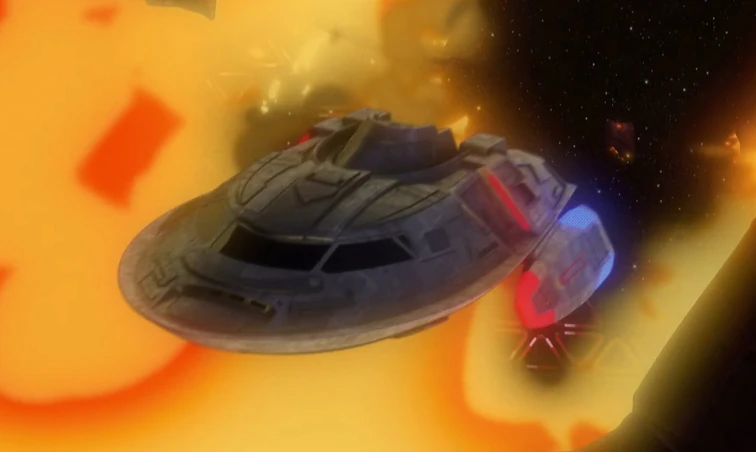 Captain's yacht
Type 6A captain's yacht
1 VesselThe Type 6A captain's yacht is a specialized auxiliary craft designed for deployment aboard Starfleet starships, specifically serving the California-class. Its design aesthetic bears a notable resemblance to the captain's yacht utilized by the larger and more formidable Sovereign-class starships, suggesting a lineage or shared design philosophy in Starfleet's auxiliary craft development. The class designation 'Type 6A' is not unique to this captain's yacht, as it shares this identifier with other shuttlecraft types, a detail often visible on the Master Systems Displays (MSDs) found throughout Starfleet vessels. This commonality in designation highlights a standardized nomenclature system for various small craft within Starfleet's inventory. **Service History** The Type 6A captain's yacht entered active service by the 2380s, primarily as an integral component of California-class starships. A prominent example of this class is the captain's yacht assigned to the USS Cerritos, which has been depicted in various operational contexts. This particular vessel, known as the USS Cerritos' captain's yacht, has made several appearances in Star Trek: Lower Decks, notably in the episodes "First First Contact", "Reflections", and "Old Friends, New Planets". These appearances showcase the yacht's role in supporting the missions of its parent starship, providing a versatile platform for diplomatic transport, emergency egress, or specialized scientific observation, consistent with the general utility expected of a captain's yacht within Starfleet operations.
- No armament data logged.
- No propulsion data logged.

Type 6A shuttlecraft
Class: Type 6A shuttlecraft- No armament data logged.
- • Warp drive
Classified
Type 6A shuttlecraft
6 VesselsThe Type 6A shuttlecraft was a warp-capable Federation shuttlecraft that saw active service with Starfleet during the late 24th century, particularly prominent in the 2380s. Its design bore a resemblance to the Type 8 shuttlecraft, though its overall size was more akin to the classic Galileo-type shuttlecraft. The nacelles of the Type 6A exhibited some variation; certain variants featured nacelles that resembled those found on California-class starships, while a secondary design incorporated nacelles similar to those of Luna-class starships, as observed in the episode 'Kayshon, His Eyes Open'. Technically, the shuttlecraft's coolant intake compressors were situated on either side of the upper aft quarter. The plasma transfer subsystem and primary field generators were integrated into the nacelles, while the navigational deflectors were prominently located on the shuttle's bow. Interior technical features included an avionics bay and a flight control interface, as detailed in the episode 'Mugato, Gumato'. In 2380, at least one shuttle of this class was equipped with a new type of blast shield, a defensive upgrade noted in the episode 'Envoys'. **Interior Configuration** The interior layout of the Type 6A shuttlecraft featured a standard cockpit designed for two crew members, complemented by a small cabin located in the aft section. The shuttle's overall crew capacity was approximately eight individuals, as established in the episode 'Temporal Edict'. Access to the shuttle was primarily through a large hatch positioned at the rear of the craft, with two additional hatches situated on both sides, just behind the pilot chairs. The aft section was furnished with benches for passenger seating, running parallel to the rear walls, providing ample room for cargo. A replicator was installed on the port side, positioned between a passenger bench and an exit hatch. For emergency preparedness, a supply of emergency rations was also stored onboard, not solely relying on the replicator, a detail highlighted in the episode 'Where Pleasant Fountains Lie'. The cockpit itself was equipped with two swiveled chairs, surrounded by approximately 180 degrees of forward control consoles, which included a small viewscreen integrated directly into the panel, as depicted in the episode 'We'll Always Have Tom Paris'. **Service History** The Type 6A shuttlecraft was a workhorse for Starfleet during its active period. Numerous units were assigned to various starships across the fleet. The USS Cerritos, for instance, operated at least five Type 6A shuttles, including the Joshua Tree, Kings Canyon, Redwood, Yosemite, and Yosemite II, along with an unnamed shuttlecraft seen in 'Death Valley'. The USS Vancouver was assigned at least three, specifically the Fairview, Kitsilano, and Marpole. The USS Titan (NCC-80102) also utilized at least three Type 6A shuttles, including the Coltrane, and unnamed shuttlecraft from 'Gillespie' and 'Monk'. Other named shuttles of this class included the Adonis, assigned to the USS Archimedes, as well as the Contra Costa, Pinnacles, and Red Wood. The Type 6A shuttlecraft made numerous appearances throughout Star Trek: Lower Decks, beginning with the episode 'Second Contact', and continuing through episodes such as 'Envoys', 'Temporal Edict', 'Mugato, Gumato', 'Kayshon, His Eyes Open', 'We'll Always Have Tom Paris', and 'Where Pleasant Fountains Lie', among many others, solidifying its role as a ubiquitous Starfleet auxiliary craft of the era.
- No armament data logged.
- • Warp drive

Type 7 shuttlecraft
Class: Type 7 shuttlecraft- No armament data logged.
- • Deflector shield
Runabout / Utility
Type 7 shuttlecraft
9 VesselsThe Type 7 shuttlecraft was a ubiquitous auxiliary craft utilized by Starfleet aboard United Federation of Planets starships throughout the 24th century. Designed for short to medium-range missions, these shuttlecraft served as essential transport and utility vehicles for various starship classes, including the Galaxy-class, Excelsior-class, and Nebula-class vessels. **Design & Development** The Type 7 shuttlecraft was initially designed by Andrew Probert during the first season of Star Trek: The Next Generation. Its inaugural appearance was as an LCARS display in the episode 'The Naked Now', with a studio model subsequently featured in 'Coming of Age'. The complex curves of the Type 7's hull proved challenging for full-scale replication, leading to less convincing mockups being used in episodes such as 'Unnatural Selection', 'The Host', and 'Ship In A Bottle'. Over its service life, the hull markings of the Type 7 underwent changes around 2367. Initially, they featured Starfleet pennants along the nacelle pylons and the full Starfleet registry number of the attached vessel on the rear hull in a narrow italic font, with the shuttle number prominently displayed mid-hull. Later versions adopted the registry number without a prefix in the standard starship font, a Starfleet pennant along the ship's 'belt', and the shuttle number in a smaller font integrated within the pennant's lines. By 2369, the interiors of most Type 7 shuttlecraft had become very similar to those of the Type 6 shuttlecraft. **Technical Specifications** The Type 7 shuttlecraft was engineered as a versatile auxiliary craft. Its propulsion systems varied; some were equipped with warp drive, enabling interstellar travel, as demonstrated in 'Samaritan Snare' and 'Chain Of Command, Part I', while others were restricted to impulse speeds, as seen in 'Q Who'. The impulse engines were strategically located at the very aft of the vessel, complemented by maneuvering jets for enhanced control, as noted in 'Coming of Age'. Typically, these shuttles were unarmed and possessed minimal deflector shield coverage, as highlighted in 'Deja Q' and 'The Host'. A critical safety feature was the inclusion of escape transporters, which could be reconfigured for use as standard transporters if necessary. This capability was notably utilized by Data and Worf in 'The Best of Both Worlds, Part II' during a rescue mission to retrieve Captain Jean-Luc Picard from a Borg cube. The forward cockpit of the Type 7 featured two seats, each with a small console and a window view, alongside a large central display providing navigational information and functioning as a viewscreen, as depicted in 'Unnatural Selection'. The aft area was configured with passenger seating and sensor control, as shown in 'The Nth Degree'. According to the Star Trek: The Official Starships Collection, the Type 7 shuttlecraft measured approximately 8.5 meters in length and offered three distinct engine configurations: a standard setup with two 1,250 millicochrane warp engines capable of Warp 1.75 for 48 hours; an enhanced configuration with two 2,100 millicochrane warp engines sustaining Warp 2 for 36 hours; and a strictly impulse-powered variant. **Service History** Introduced prior to 2364, the Type 7 shuttlecraft quickly became a standard component of Starfleet operations. They were commonly carried aboard prominent starships such as the USS Enterprise (NCC-1701-D), USS Repulse (NCC-2544), USS Liberator (NCC-67016), and USS Galaxy (NCC-70637). Notable individual Type 7 shuttlecraft included the Ansel Adams, Clarke, Copernicus, Cousteau, D'Alison, Decartes, Einstein, Feynman, Galileo, Hawking, Indiana Jones, JF Kennedy, Kotoi, McAuliffe, Sakharov, Tereshkova, and Von Braun. Although the Type 7 was eventually succeeded by the Type 6 shuttlecraft during the fifth season of Star Trek: The Next Generation, it made a reappearance in the sixth season episodes 'Chain Of Command, Part I', 'Chain Of Command, Part II', and 'Ship In A Bottle'. During these later appearances, the Type 6 shuttle interior set was often utilized for Type 7 scenes due to the original Type 7 interior set being struck, a discrepancy sometimes attributed to holodeck simulations within the narrative.
- No armament data logged.
- • Deflector shield

Type 8 shuttlecraft
Class: Type 8 shuttlecraft- • Phase (Qty: 2)
- • Deflector shield
Runabout / Utility
Type 8 shuttlecraft
1 VesselThe Type 8 shuttlecraft was a Federation-designed auxiliary space vessel primarily utilized for short-term missions. Aesthetically, its main body was roughly based on the older Type 6 shuttlecraft, but incorporated several revised differences. These included smaller port and starboard windows, a distinct ridge line or spine running along the top of the shuttle, and an upper half of the cabin (fore and aft) that overlapped the bottom half of the hull. The warp nacelles were more compact and refined, mounted on pylons that detached them from the main body of the shuttle from above the nacelle. The shuttle's construction utilized several materials, including duranium, magnesite, and carbon. Internally, the Type 8 shuttlecraft was virtually indistinguishable from the Type 6 shuttlecraft. Entry was facilitated through a large hatch located in the rear of the craft. The aft section featured benches for passenger seating, positioned parallel to the rear walls, providing ample room for cargo. The cockpit was equipped with two swiveled pilot chairs, with approximately 180 degrees of forward control consoles split between the two seats, and a small, centrally located viewscreen/monitor. Among the systems found aboard the Type 8 were deflector shields, port and starboard phaser banks, a transporter, and maneuvering thrusters. Its phasers were notably powerful enough to overpower a Kazon fighter. The Type 8 designation itself was not mentioned on-screen but was derived from background sources, specifically referenced by name in the Star Trek Encyclopedia, Volume 4, Issue 2, Page 277. The shuttle was designed by Richard James. Due to budget constraints during the initial production of Star Trek: Voyager, the miniature and interior sets used for the Type 8 shuttlecraft were actually slightly modified versions of those originally created for the Type 6 shuttlecraft from Star Trek: The Next Generation, despite designers Richard James and Michael Okuda hoping for a completely new shuttlecraft design for Star Trek: Voyager. **Service History** The Type 8 shuttlecraft was introduced around 2371 and became part of the standard shuttlecraft complement for Intrepid-class vessels, such as the USS Voyager (NCC-74656). However, the Class 2 shuttle was generally preferred over the Type 8 for many missions, as noted in the Star Trek: Voyager episodes 'Parallax' and 'Drone'. In 2372, Lieutenant Tom Paris utilized a holodeck simulation of a Type 8 shuttle to teach Kes how to pilot a shuttle, as depicted in the Star Trek: Voyager episode 'Parturition'. Notable named shuttles of this class attached to the USS Voyager included the 'Drake', whose status was uncertain in 2372, and the 'Tereshkova', registry 01, which was active in 2371. The Type 8 shuttlecraft made numerous appearances throughout Star Trek: Voyager, including in the episodes 'Parallax', 'Ex Post Facto', 'Initiations', 'Non Sequitur', 'Parturition', 'Tattoo', 'Maneuvers', 'Prototype', 'Alliances', 'Warlord', 'Rise', 'Before and After', 'The Raven', and 'Waking Moments'. It also appeared as a digital image in 'Starstruck'. **Continuity Issues** During the run of Star Trek: Voyager, particularly between the second and fourth seasons, the Type 8 shuttlecraft was often misrepresented as a Type 6 shuttlecraft. This was largely due to the shared interior shuttle set, which consistently displayed the Type 8 shuttle's Master Systems Display regardless of the intended shuttle type. This issue was further compounded by the frequent use of Type 8 shuttle stock footage to visually represent Type 6 shuttles, sometimes even within a single appearance. For instance, in the Star Trek: Voyager episode 'Rise', a shuttle was clearly seen descending through the atmosphere of the Nezu colony planet as a Type 8, but the full-scale mockup of the Type 6 USS Sacajawea was used to represent the same crash-landed vessel. Similarly, in 'Before and After', the interior of Lieutenant Tom Paris's Class 2 shuttle utilized the Type 6/8 shuttlecraft set, complete with Type 8 MSDs, despite the exterior depicting a Class 2 shuttle. In 'The Raven', Seven of Nine's shuttle was a Type 6 shuttlecraft, based on newly created footage for the episode (such as escaping from USS Voyager, confronting other ships, and planetary approach), even though several recycled clips of Type 8 footage were used for generic spaceflight sequences.
- • Phase (Qty: 2)
- • Deflector shield

UEF Enterprise
Class: Constitution class- • Antimatter charge
- • Phase (Qty: 6)
- + 2 more...
- • Transporte (Qty: 1)
- • Warp facto
- + 3 more...
 Runabout / Utility
UFP-02 type
Hull Specifications LoggedThe UFP-02-type was a class of shuttlecraft utilized by Starfleet primarily in the late 32nd century. Measuring twelve meters in length, these versatile vessels were warp-capable, incorporating advanced 32nd century Starfleet technologies such as programmable matter and holographic control panels for their operational interfaces. The interior layout was designed for efficiency and adaptability, featuring a pilot's station at the center-forward, flanked by two supporting stations on both the port and starboard sides, and a central command chair, accommodating a standard crew complement of six. Beyond basic flight capabilities, the UFP-02-type shuttles were equipped with comprehensive standard systems including advanced sensors, proximity scans, robust flight systems, long-range communications, and life support systems. It was noted that the functioning of these life support systems produced distinct electromagnetic signatures. For defensive measures, the shuttlecraft incorporated a cloaking device and protective shielding, which could be deployed over the viewports to safeguard the crew during emergency landings. In the event of a crash landing, an emergency distress beacon would automatically activate upon impact. Furthermore, each shuttle carried approximately three days' worth of emergency rations, sufficient for four individuals. These specifications are detailed in episodes such as 'Kobayashi Maru', 'All Is Possible', and 'Rubicon'. **Class History** The UFP-02-type shuttlecraft played a significant role in Starfleet operations during the 32nd and 33rd centuries. In 3190, numerous shuttles of this class were observed docked within the Federation Headquarters shuttlebay, notably during and after Federation President Laira Rillak's address to the new Starfleet Academy class, as depicted in 'Kobayashi Maru'. The shuttlebay was again filled with these shuttles when Doctor Kovich assigned Lieutenant Sylvia Tilly to a special mission aboard UFP-11, a vessel of this class, for Starfleet Academy, as seen in 'All Is Possible'. The class's widespread deployment was further highlighted during critical events, such as the evacuation of Earth and Titan. Thousands of UFP-02-type shuttles were instrumental in these efforts when the Dark Matter Anomaly began to threaten the planets, a pivotal moment chronicled in 'Coming Home'. Several named vessels of this class include ATW-11, DSC-02, DSC-03, DSC-04, DSC-09, DSC-21, DSC-44, DSC-65, UFP-02, UFP-11, UFP-47, and UFP-99, alongside an unnamed UFP-02 type shuttlecraft and the uncertain UFP-05.
- • Photon torpedo
- • Cloaking device
- • Protective shielding
- + 1 more...
 Classified
United Earth Defense Force ship Class
Hull Specifications LoggedThe United Earth Defense Force ship was a class of spacecraft specifically designed and utilized by the United Earth Defense Force for the critical mission of defending Earth during the late 32nd century. Reflecting the advanced technological trends of its era, these vessels featured a distinctive design characteristic: disconnected warp nacelles, a common architectural element seen in many starship designs of the period. Their primary offensive capability was centered around quantum torpedoes, providing significant firepower for defensive engagements. While specific defensive systems are not detailed, their role as dedicated defense vessels implies robust shielding and other protective measures. The class represents a key component of United Earth's sovereign defense capabilities in a challenging future. **Class History** The United Earth Defense Force ship class played a prominent role in several significant events concerning Earth's security in the 32nd century. In 3189, a fleet of these ships was observed surrounding the USS Discovery upon its approach to Earth, demonstrating their readiness and vigilance. Later that same year, these vessels were instrumental in defending Earth from the aggressive incursions of Wen and his Titan raiders, a conflict documented in the episode 'People of Earth'. Their continued importance was highlighted in 3190, when ships of this class were actively positioned in orbit of Earth, participating in crucial evacuation efforts as the planet faced the existential threat posed by the Dark Matter Anomaly (DMA), as depicted in the episode 'Coming Home'. Their presence continued into 3195, with several ships of this class stationed above Earth when the USS Athena arrived to take up position at Starfleet Academy's original campus in San Francisco, as seen in the episode 'Kids These Days'. This consistent deployment underscores their enduring role as the frontline guardians of United Earth.
- • Quantum torpedo
- No propulsion data logged.
 Classified
Universe class
1 VesselThe 'Universe'-class was a type of Federation starship envisioned for use in a possible version of the 26th century. While an official class name was not initially confirmed, production illustrator Doug Drexler, who designed the USS Enterprise NCC-1701-J, approved and popularized the 'Universe'-class designation. He believed the name made sense, drawing a parallel to the USS Enterprise NCC-1701-D being a Galaxy-class starship, and suggested its mission envelope encompassed the entire universe, implying capabilities like folding space and exploring other galaxies beyond the Milky Way. The design process for the USS Enterprise NCC-1701-J, the sole known vessel of this class, was rapid. Doug Drexler created a CGI model in a matter of hours for its background appearance in the Star Trek: Enterprise episode 'Azati Prime'. Visual effects artist Robert Bonchune noted the model was 'done quick and dirty' and not highly detailed. Earlier concepts for the Enterprise-J included the 'Altair'-class, which had previously been submitted for the USS Voyager and Enterprise (NX-01), and whose engines were eventually incorporated into the approved J-ship design. Another runner-up was the 'Congo'-class, which mated the approved Enterprise-J saucer section with the 'Altair'-class wingship. Drexler opted for spindly nacelle struts to suggest advanced technology. Set Designer Lee Cole was involved in planning the ship's interior, a challenging task given the need to envision a future 400 years beyond Jonathan Archer's era. Executive Producer Manny Coto expressed satisfaction with the final design, finding it 'very sleek and cool'. Drexler's vision for the 'Universe'-class was ambitious. He theorized the hull could be organically grown around a skeletal frame and imagined it as a 'multi-generational' vessel, potentially housing a population of a million, including families. Such a ship would feature large parks, entertainment zones, and entire universities on board. Traditional turbolifts would largely be replaced by site-to-site transporters, with turbolifts serving as backups. He even speculated about freeways for vehicles within the ship. Drexler doubted the existence of a traditional bridge, suggesting computations might be done via the collective synapses of the crew or through advanced neural interfaces, rendering holodecks superfluous. He hypothesized that crew members could operate the craft remotely from their cabins using brain implants and floating tactile interfaces, similar to systems seen in films like 'Minority Report' and the 'Iron Man' film series. He also considered the possibility of the ship being self-aware and capable of communicating through time, though he conceded that some traditional interfaces might remain for audience relatability. Drexler estimated the ship's length at about two miles, a scale he defended as appropriate for a far-flung future, despite some fan criticism regarding the spindly nacelle struts. **Class History** The 'Universe'-class starship first appeared in the Star Trek: Enterprise episode 'Azati Prime'. The USS Enterprise NCC-1701-J was encountered by Jonathan Archer in 2154 after being brought forward in time to the 26th century by Temporal Agent Daniels. Archer witnessed portions of the Battle of Procyon V from the ship's observation deck, where the Enterprise-J was participating. The ship was noted to be armed with futuristic particle beam weapons. **Possible Negation and Later Appearances** The timeline in which the 'Universe'-class existed may have been negated. In the episode 'Zero Hour', the Enterprise (NX-01) destroyed the network of Delphic Expanse spheres in 2154, leaving the status of this class and the USS Enterprise NCC-1701-J uncertain. Despite its uncertain canonical status, the 'Universe'-class, specifically the Enterprise-J, was later introduced in the 'Agents of Yesterday' expansion for the game Star Trek Online, where it was identified as a 'Universe Temporal Heavy Dreadnought Cruiser'. A reference book from Star Trek: Enterprise Season 4, Volume 1, Page 244, also identified the Enterprise-J as a 'Universe'-class starship and provided an overall length of 3219 meters.
- • Particle weapo
- No propulsion data logged.

Unnamed Federation starships (23rd century)
Class: Various (e.g., Marklin-class, Nebula-class, Freighter-class, Larson-class, Mayflower-type, Newton-type)- No armament data logged.
- No propulsion data logged.

Unnamed Federation starships (23rd century)
Class: Unknown- No armament data logged.
- No propulsion data logged.
USS Adelphi
Class: Ambassador class- • Phase (Qty: 11)
- • Torpedo launche (Qty: 2)
- • Deflector shield

USS Agamemnon
Class: Apollo class- No armament data logged.
- No propulsion data logged.

USS Ahwahnee (NCC-2048)
Class: Constitution II class- • Phase
- • Photon torpedo
- • Warp facto
- • Deflector shield

USS Ahwahnee (NCC-71620)
Class: Unknown- No armament data logged.
- No propulsion data logged.

USS Ajax
Class: Apollo class- No armament data logged.
- No propulsion data logged.

USS Akira
Class: Akira class- • Phase
- • Torpedo launche
- • Deflector shield

USS Al-Batani
Class: Excelsior class- • Phase
- • Photon torpedo
- + 1 more...
- • Deflector shield

USS Alhambra
Class: California class- • Phase
- • Photon torpedo
- • Warp facto
- • Deflector shield

USS Almagest
Class: Sutherland class- • Phase
- • Photon torpedo
- • Deflector shield

USS Amalthea
Class: Luna class- • Phase
- • Photon torpedo
- + 1 more...
- • Warp facto

USS Anaheim
Class: California class- • Phase
- • Photon torpedo
- • Warp facto
- • Deflector shield

USS Anaximander
Class: Defiant class- • Phase
- • Torpedo launche
- • Ablative armo
- • Warp facto
- + 1 more...

USS Antares (NCC-9844)
Class: Miranda class- • Phase
- • Photon torpedo
- • Deflector shield

USS Antares (NCC-9844)
Class: Miranda class- • Phase
- • Photon torpedo
- • Deflector shield

USS Apollo
Class: Apollo class- No armament data logged.
- No propulsion data logged.

USS Appalachia
Class: Steamrunner class- • Phase
- • Photon torpedo
- • Deflector shield

USS Archer (NCC-44278)
Class: Excelsior class- • Phase
- • Photon torpedo
- + 1 more...
- • Deflector shield

USS Archer (NCC-627)
Class: Gral class- No armament data logged.
- No propulsion data logged.

USS Archimedes (NCC-83002)
Class: Obena class- No armament data logged.
- No propulsion data logged.

USS Argo
Class: Saber class- • Phase
- • Photon torpedo
- • Deflector shield

USS Ariel (NCC-80114)
Class: Luna class- • Phase
- • Photon torpedo
- + 1 more...
- • Warp facto

USS Aries
Class: Renaissance class- No armament data logged.
- No propulsion data logged.

USS Ark Royal
Class: Sovereign class- • Phase (Qty: 12)
- • Torpedo launche (Qty: 1)
- • Deflector shield

USS Armstrong (NCC-1769)
Class: Armstrong- No armament data logged.
- No propulsion data logged.

USS Armstrong (NCC-317856)
Class: Constitution-class (31st century)- No armament data logged.
- No propulsion data logged.

USS Arsinoe
Class: Sovereign class- • Phase (Qty: 12)
- • Torpedo launche (Qty: 1)
- • Deflector shield

USS Ashland
Class: Sagan class- • Phase
- • Multiphasic shield
- • Deflector shield

USS Athena
Class: Academy class- • Torpedo launche
- • Deflector shield

USS Atlantis (NCC-72507)
Class: Unknown- No armament data logged.
- No propulsion data logged.

USS Atlantis (NCC-72507)
Class: Unknown- No armament data logged.
- No propulsion data logged.

USS Avalon
Class: Akira class- • Phase
- • Torpedo launche
- • Deflector shield

USS Azetbur
Class: Reliant class- • Phase
- • Photon torpedo
- • Deflector shield
USS Bakersfield
Class: Unknown- No armament data logged.
- No propulsion data logged.

USS Bellerophon (NCC-62048)
Class: Nebula class- • Phase
- • Torpedo launche
- • Warp facto
- • Deflector shield

USS Bellerophon (NCC-62048)
Class: Nebula class- • Phase
- • Torpedo launche
- • Warp facto
- • Deflector shield

USS Berlin
Class: Excelsior class- • Phase
- • Photon torpedo
- + 1 more...
- • Deflector shield

USS Biddeford
Class: Newton type- No armament data logged.
- No propulsion data logged.

USS Biko
Class: Oberth class- • Phase
- • Deflector shield
USS Billings
Class: Constellation class- • Phase
- • Photon torpedo
- • Warp facto (Qty: maximum)
- • Deflector shield

USS Bonchune
Class: Nebula class- • Phase
- • Torpedo launche
- • Warp facto
- • Deflector shield

USS Bonestell
Class: Oberth class- • Phase
- • Deflector shield

USS Bozeman
Class: Soyuz class- No armament data logged.
- No propulsion data logged.

USS Bradbury
Class: Bradbury class- No armament data logged.
- No propulsion data logged.

USS Brattain
Class: Miranda class- • Phase
- • Photon torpedo
- • Deflector shield

USS Buran (NCC-1422)
Class: Cardenas class- • Phase
- • Torpedo launche
- • Deflector shield
USS Buran (NCC-1422)
Class: Cardenas class- • Phase
- • Torpedo launche
- • Deflector shield

USS Burbank
Class: California class- • Phase
- • Photon torpedo
- • Warp facto
- • Deflector shield

USS Cabot
Class: Magee class- No armament data logged.
- No propulsion data logged.

USS Cairo
Class: Excelsior class- • Phase
- • Photon torpedo
- + 1 more...
- • Deflector shield

USS Callisto (NCC-80109)
Class: Luna class- • Phase
- • Photon torpedo
- + 1 more...
- • Warp facto

USS Capricorn
Class: Constitution-class (31st century)- No armament data logged.
- No propulsion data logged.

USS Carlsbad
Class: California class- • Phase
- • Photon torpedo
- • Warp facto
- • Deflector shield

USS Carolina
Class: Unknown- No armament data logged.
- No propulsion data logged.
USS Carolina (24th century)
Class: Centaur type- • Phase
- • Torpedo launche
- • Deflector shield

USS Cayuga
Class: Constitution class- • Antimatter charge
- • Phase (Qty: 6)
- + 2 more...
- • Transporte (Qty: 1)
- • Warp facto
- + 3 more...

USS Centaur
Class: Centaur- No armament data logged.
- No propulsion data logged.

USS Cerritos
Class: California class- • Phase
- • Photon torpedo
- • Warp facto
- • Deflector shield

USS Challenger (NCC-2032)
Class: Excelsior class- No armament data logged.
- No propulsion data logged.

USS Challenger (NCC-71099)
Class: Galaxy class- • Antimatter mine
- • Phase
- + 1 more...
- • Transporte (Qty: 1)
- • Structural integrity field (Qty: 1)
- + 3 more...

USS Chandrasekhar
Class: Sutherland class- • Phase
- • Photon torpedo
- • Deflector shield

USS Charleston
Class: Excelsior class- • Phase
- • Photon torpedo
- + 1 more...
- • Deflector shield

USS Charon
Class: Luna class- • Phase
- • Photon torpedo
- + 1 more...
- • Warp facto

USS Chawla
Class: Sagan class- • Phase
- • Multiphasic shield
- • Deflector shield

USS Christopher
Class: Gagarin class- • Phase
- • Photon torpedo
- • Deflector shield

USS Clark
Class: Reliant class- • Phase
- • Photon torpedo
- • Deflector shield

USS Clarke
Class: Malachowski class- • Phase
- • Photon torpedo
- • Deflector shield
USS Clement
Class: Apollo class- No armament data logged.
- No propulsion data logged.
USS Cobb
Class: Reliant class- • Phase
- • Photon torpedo
- • Deflector shield
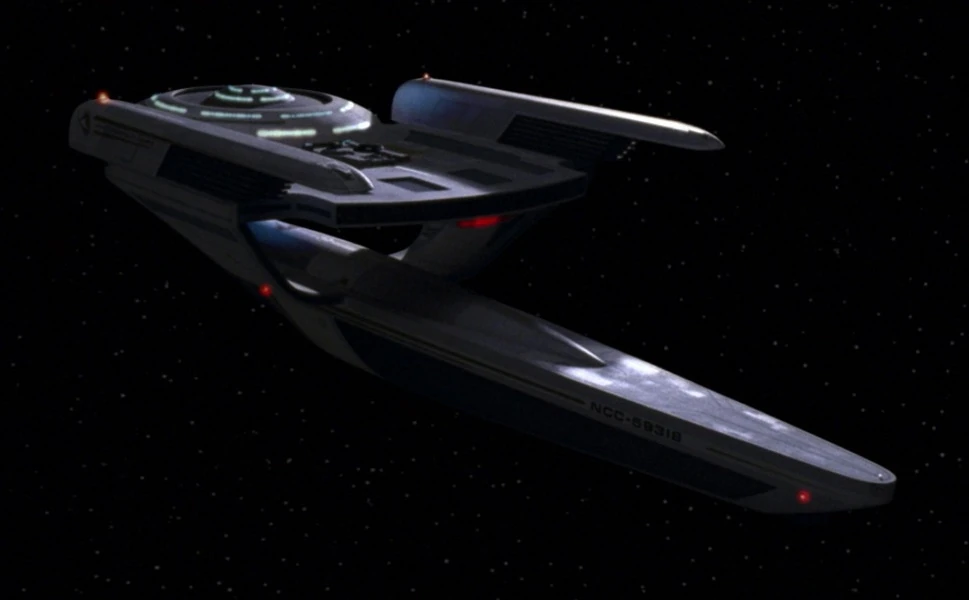
USS Cochrane (NCC-59318)
Class: Oberth class- • Phase
- • Deflector shield

USS Cole
Class: Echelon class- • Phase
- • Photon torpedo
- • Deflector shield
USS Columbia
Class: Scout ship- No armament data logged.
- No propulsion data logged.

USS Constance
Class: Constellation class- • Phase
- • Photon torpedo
- • Warp facto (Qty: maximum)
- • Deflector shield

USS Constellation (NCC-1017)
Class: Constitution class- • Antimatter charge
- • Phase (Qty: 6)
- + 2 more...
- • Transporte (Qty: 1)
- • Warp facto
- + 3 more...

USS Constellation (NX-1974)
Class: Constellation class- • Phase
- • Photon torpedo
- • Warp facto (Qty: maximum)
- • Deflector shield
USS Cooper
Class: Malachowski class- No armament data logged.
- No propulsion data logged.

USS Copernicus (NCC-640)
Class: Oberth class- • Phase
- • Deflector shield

USS Crazy Horse
Class: Excelsior class- • Phase
- • Photon torpedo
- + 1 more...
- • Deflector shield

USS Credence
Class: Credence type- No armament data logged.
- No propulsion data logged.

USS Crimson
Class: Credence type- No armament data logged.
- No propulsion data logged.
USS Crockett
Class: Excelsior class- • Phase
- • Photon torpedo
- + 1 more...
- • Deflector shield

USS Culver City
Class: California class- • Phase
- • Photon torpedo
- • Warp facto
- • Deflector shield

USS Cunningham
Class: Gagarin class- • Phase
- • Photon torpedo
- • Deflector shield

USS Cuyahoga
Class: Unknown- No armament data logged.
- No propulsion data logged.

USS Dana
Class: Hoover class- • Phase
- No propulsion data logged.

USS Dauntless (NCC-80816)
Class: Dauntless class- • Phase
- • Torpedo launche
- • Quantum slipstream drive
- • Deflector shield

USS Dauntless (NX-01-A)
Class: Dauntless class- • Phase
- • Torpedo launche
- • Quantum slipstream drive
- • Deflector shield

USS De Milo
Class: Hoover class- • Phase
- No propulsion data logged.

USS Defiant (2370)
Class: Defiant class- • Phase
- • Torpedo launche
- • Ablative armo
- • Warp facto
- + 1 more...
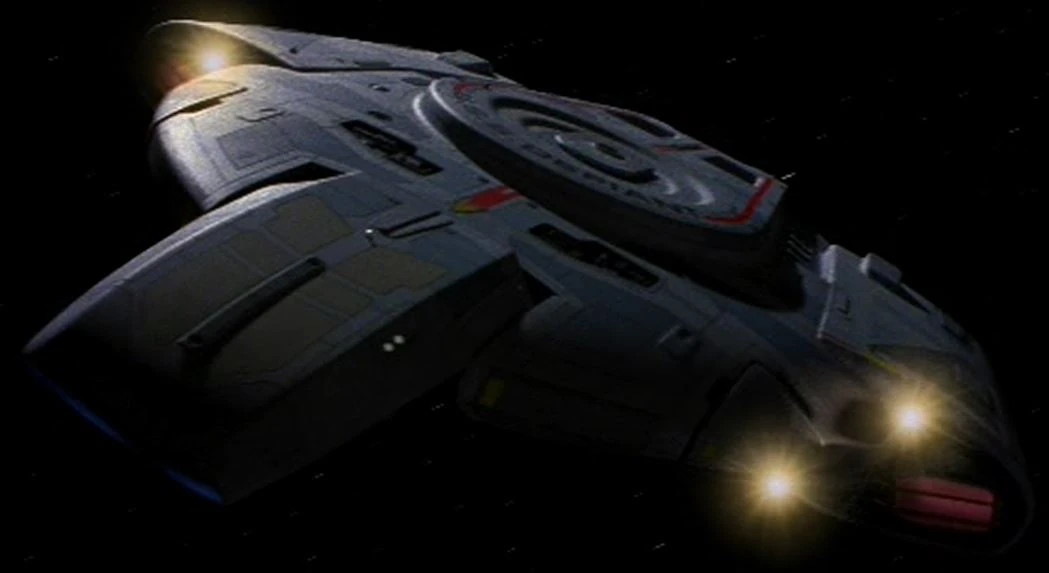
USS Defiant (2370)
Class: Defiant class- • Phase
- • Torpedo launche
- • Ablative armo
- • Warp facto
- + 1 more...

USS Defiant (2375)
Class: Defiant class- • Phase
- • Torpedo launche
- • Ablative armo
- • Warp facto
- + 1 more...

USS Defiant (2375)
Class: Defiant class- • Phase
- • Torpedo launche
- • Ablative armo
- • Warp facto
- + 1 more...

USS Defiant (NCC-1764)
Class: Constitution class- • Antimatter charge
- • Phase (Qty: 6)
- + 2 more...
- • Transporte (Qty: 1)
- • Warp facto
- + 3 more...

USS Discovery
Class: Crossfield class- No armament data logged.
- No propulsion data logged.

USS Dresselhaus
Class: Dresselhaus type- No armament data logged.
- No propulsion data logged.

USS Drexler
Class: Pathfinder class- • Phase
- • Photon torpedo
- • Deflector shield

USS Eagle
Class: Constitution II class- • Phase
- • Photon torpedo
- • Warp facto
- • Deflector shield

USS Earhart
Class: Engle class- • Phase
- • Deflector shield

USS Eaves
Class: Pathfinder class- • Phase
- • Photon torpedo
- • Deflector shield

USS Edison
Class: Hoover class- • Phase
- No propulsion data logged.

USS Elkins
Class: Elkins type- No armament data logged.
- No propulsion data logged.

USS Emden
Class: Constitution II class- • Phase
- • Photon torpedo
- • Warp facto
- • Deflector shield

USS Endeavour (NCC-71805)
Class: Nebula class- • Phase
- • Torpedo launche
- • Warp facto
- • Deflector shield

USS Endeavour (NCC-71805)
Class: Nebula class- • Phase
- • Torpedo launche
- • Warp facto
- • Deflector shield

USS Enkidu
Class: Reliant class- • Phase
- • Photon torpedo
- • Deflector shield
USS Entente
Class: Dreadnought- No armament data logged.
- No propulsion data logged.

USS Enterprise (NCC-1701-A)
Class: Constitution II class- • Phase
- • Photon torpedo
- • Warp facto
- • Deflector shield
USS Enterprise (NCC-1701-A)
Class: Constitution II class- • Phase
- • Photon torpedo
- • Warp facto
- • Deflector shield

USS Enterprise (NCC-1701-B)
Class: Excelsior class- • Phase
- • Photon torpedo
- + 1 more...
- • Deflector shield

USS Enterprise (NCC-1701-C)
Class: Ambassador class- • Phase (Qty: 11)
- • Torpedo launche (Qty: 2)
- • Deflector shield

USS Enterprise (NCC-1701-D)
Class: Galaxy class- • Antimatter mine
- • Phase
- + 1 more...
- • Transporte (Qty: 1)
- • Structural integrity field (Qty: 1)
- + 3 more...

USS Enterprise (NCC-1701-E)
Class: Sovereign class- • Phase (Qty: 12)
- • Torpedo launche (Qty: 1)
- • Deflector shield

USS Enterprise (NCC-1701-F)
Class: Odyssey class- • Phase
- • Photon torpedo
- • Deflector shield
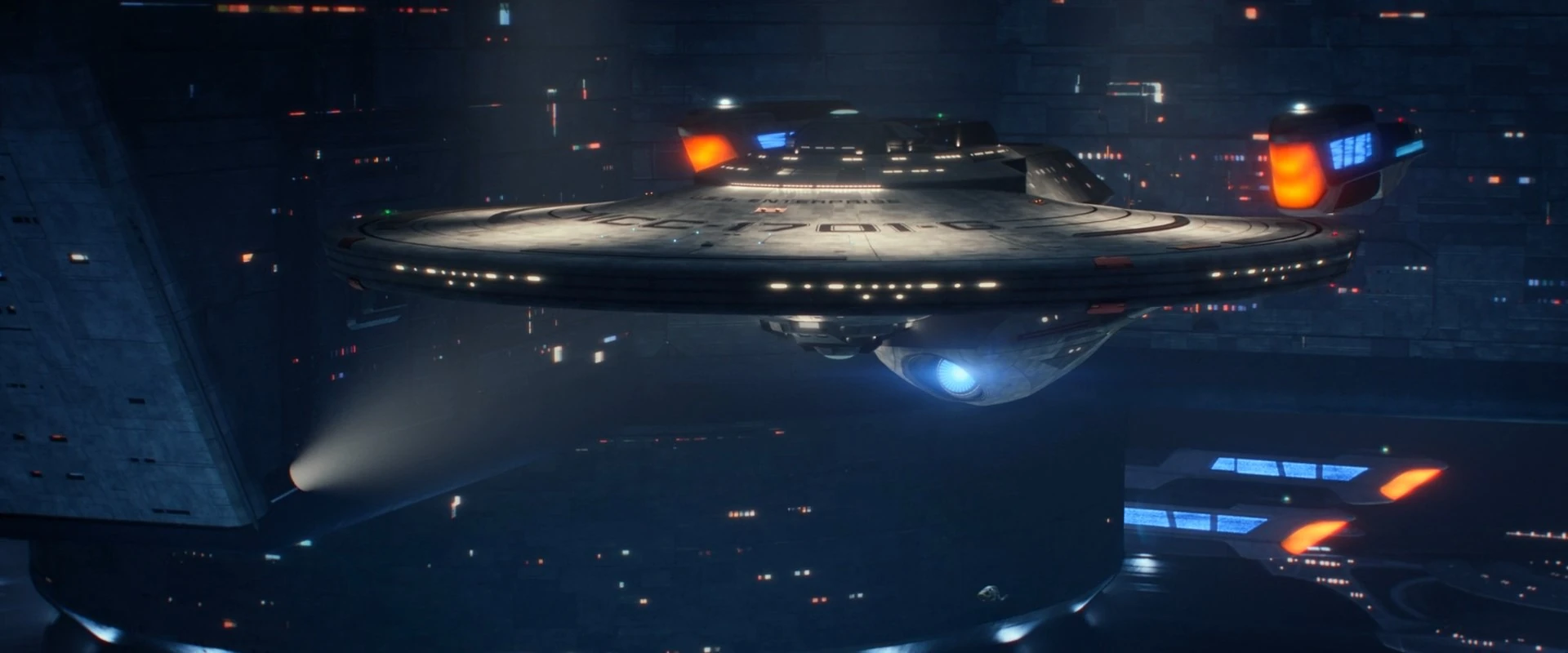
USS Enterprise (NCC-1701-G)
Class: Constitution III class- • Phase (Qty: 7)
- • Photon torpedo (Qty: 3)
- • Maximum warp (Qty: maximum observed)
- • Metaphasic shield
- + 1 more...

USS Enterprise (NCC-1701-G)
Class: Constitution III class- • Phase (Qty: 7)
- • Photon torpedo (Qty: 3)
- • Maximum warp (Qty: maximum observed)
- • Metaphasic shield
- + 1 more...

USS Enterprise (NCC-1701-J)
Class: Universe class- • Particle weapo
- No propulsion data logged.

USS Enterprise (NCC-1701)
Class: Unknown- No armament data logged.
- No propulsion data logged.

USS Equinox
Class: Nova class- • Phase (Qty: 11)
- • Torpedo launche (Qty: 3)
- • Warp facto (Qty: maximum)
- • Deflector shield

USS Erebus
Class: Nova class- • Phase (Qty: 11)
- • Torpedo launche (Qty: 3)
- • Warp facto (Qty: maximum)
- • Deflector shield

USS Essex
Class: Daedalus class- No armament data logged.
- No propulsion data logged.

USS Eureka
Class: Unknown- No armament data logged.
- No propulsion data logged.

USS Eureka (California class)
Class: California class- • Phase
- • Photon torpedo
- • Warp facto
- • Deflector shield

USS Europa (NCC-1648)
Class: Nimitz class- • Phase
- • Photon torpedo
- • Deflector shield

USS Europa (NCC-1648)
Class: Nimitz class- • Phase
- • Photon torpedo
- • Deflector shield

USS Excalibur (NCC-1664-M)
Class: Constitution-class (31st century)- No armament data logged.
- No propulsion data logged.

USS Excalibur (NCC-1664)
Class: Constitution class- • Antimatter charge
- • Phase (Qty: 6)
- + 2 more...
- • Transporte (Qty: 1)
- • Warp facto
- + 3 more...

USS Excel
Class: Excelsior class- • Phase
- • Photon torpedo
- + 1 more...
- • Deflector shield

USS Excelsior
Class: Unknown- No armament data logged.
- No propulsion data logged.

USS Excelsior (NCC-2000)
Class: Excelsior class- • Phase
- • Photon torpedo
- + 1 more...
- • Deflector shield

USS Exeter (NCC-1672)
Class: Constitution class- • Antimatter charge
- • Phase (Qty: 6)
- + 2 more...
- • Transporte (Qty: 1)
- • Warp facto
- + 3 more...

USS Exeter (NCC-1672)
Class: Constitution class- • Antimatter charge
- • Phase (Qty: 6)
- + 2 more...
- • Transporte (Qty: 1)
- • Warp facto
- + 3 more...

USS Explorer
Class: Sagan class- • Phase
- • Multiphasic shield
- • Deflector shield

USS Farragut (NCC-1647)
Class: Bellerophon class- • Phase
- • Torpedo launche
- • Warp facto (Qty: maximum)
- • Deflector shield

USS Farragut (NCC-60597)
Class: Nebula class- • Phase
- • Torpedo launche
- • Warp facto
- • Deflector shield

USS Fearless
Class: Excelsior class- • Phase
- • Photon torpedo
- + 1 more...
- • Deflector shield

USS Federation
Class: Pax class- No armament data logged.
- • Deflector shield

USS Firesword
Class: Akira class- • Phase
- • Torpedo launche
- • Deflector shield

USS Forrest
Class: Ross class- • Phase
- • Photon torpedo
- • Deflector shield

USS Franklin
Class: Freedom-class- No armament data logged.
- No propulsion data logged.

USS Fredrickson
Class: Excelsior class- • Phase
- • Photon torpedo
- + 1 more...
- • Deflector shield

USS Fresno
Class: California class- • Phase
- • Photon torpedo
- • Warp facto
- • Deflector shield

USS Gagarin (NCC-1309)
Class: Shepard class- • Phase
- • Deflector shield

USS Gagarin (NCC-1309)
Class: Shepard class- • Phase
- • Deflector shield

USS Galatea
Class: Luna class- • Phase
- • Photon torpedo
- + 1 more...
- • Warp facto

USS Gander
Class: Danube class- • Phase (Qty: 4)
- • Torpedo launche
- • Warp facto
- • Deflector shield
USS Gandhi
Class: Ambassador class- • Phase (Qty: 11)
- • Torpedo launche (Qty: 2)
- • Deflector shield

USS Ganges
Class: Danube class- • Phase (Qty: 4)
- • Torpedo launche
- • Warp facto
- • Deflector shield

USS Ganymede (NCC-80107)
Class: Luna class- • Phase
- • Photon torpedo
- + 1 more...
- • Warp facto
USS Gettysburg
Class: Constellation class- • Phase
- • Photon torpedo
- • Warp facto (Qty: maximum)
- • Deflector shield

USS Gilgamesh
Class: Sovereign class- • Phase (Qty: 12)
- • Torpedo launche (Qty: 1)
- • Deflector shield

USS Glasgow
Class: Sovereign class- • Phase (Qty: 12)
- • Torpedo launche (Qty: 1)
- • Deflector shield

USS Glenn
Class: Crossfield class- • Phase
- • Photon torpedo
- + 1 more...
- • Cloaking device
- • Displacement-activated spore hub drive
- + 2 more...

USS Gorkon
Class: Excelsior class- • Phase
- • Photon torpedo
- + 1 more...
- • Deflector shield

USS Gotana-Retz
Class: Gagarin class- • Phase
- • Photon torpedo
- • Deflector shield

USS Gregory Jein
Class: Jein class- • Phase
- • Photon torpedo
- • Deflector shield

USS Grissom (NCC-638)
Class: Oberth class- • Phase
- • Deflector shield

USS Grissom (NCC-638)
Class: Oberth class- • Phase
- • Deflector shield

USS Hansando
Class: Eisenberg class- No armament data logged.
- No propulsion data logged.

USS Hanson
Class: Ross class- • Phase
- • Photon torpedo
- • Deflector shield

USS Harlan
Class: Edison class- • Phase
- • Photon torpedo
- • Deflector shield

USS Hathaway
Class: Constellation class- • Phase
- • Photon torpedo
- • Warp facto (Qty: maximum)
- • Deflector shield

USS Helin
Class: Oberth class- • Phase
- • Deflector shield

USS Helios
Class: Akira class- • Phase
- • Torpedo launche
- • Deflector shield
USS Hera
Class: Nebula class- • Phase
- • Torpedo launche
- • Warp facto
- • Deflector shield

USS Hiawatha
Class: Hiawatha type- No armament data logged.
- No propulsion data logged.

USS Hikaru Sulu
Class: Odyssey class- • Phase
- • Photon torpedo
- • Deflector shield

USS Himalia
Class: Luna class- • Phase
- • Photon torpedo
- + 1 more...
- • Warp facto

USS Honshu
Class: Nebula class- • Phase
- • Torpedo launche
- • Warp facto
- • Deflector shield

USS Hood (Excelsior class)
Class: Excelsior class- • Phase
- • Photon torpedo
- + 1 more...
- • Deflector shield

USS Hood (NCC-1703)
Class: Constitution class- • Antimatter charge
- • Phase (Qty: 6)
- + 2 more...
- • Transporte (Qty: 1)
- • Warp facto
- + 3 more...
USS Hoover
Class: Hoover class- • Phase
- No propulsion data logged.

USS Horatio
Class: Ambassador class- • Phase (Qty: 11)
- • Torpedo launche (Qty: 2)
- • Deflector shield

USS Horizon
Class: Daedalus class- No armament data logged.
- No propulsion data logged.

USS Hornet
Class: Renaissance class- No armament data logged.
- No propulsion data logged.

USS Hrothgar
Class: Sovereign class- • Phase (Qty: 12)
- • Torpedo launche (Qty: 1)
- • Deflector shield

USS Hutchinson
Class: Sovereign class- • Phase (Qty: 12)
- • Torpedo launche (Qty: 1)
- • Deflector shield

USS Huygens
Class: Sutherland class- • Phase
- • Photon torpedo
- • Deflector shield

USS Hypatia
Class: Sutherland class- • Phase
- • Photon torpedo
- • Deflector shield

USS Iapetus
Class: Luna class- • Phase
- • Photon torpedo
- + 1 more...
- • Warp facto

USS Ibn al-Haytham
Class: Sutherland class- • Phase
- • Photon torpedo
- • Deflector shield

USS Ibn Majid
Class: Curiosity class- No armament data logged.
- No propulsion data logged.

USS Igraine
Class: Sovereign class- • Phase (Qty: 12)
- • Torpedo launche (Qty: 1)
- • Deflector shield

USS Inaieu
Class: Sovereign class- • Phase (Qty: 12)
- • Torpedo launche (Qty: 1)
- • Deflector shield

USS Inglewood
Class: California class- • Phase
- • Photon torpedo
- • Warp facto
- • Deflector shield
USS Intrepid (NCC-1707)
Class: Constitution II class- • Phase
- • Photon torpedo
- • Warp facto
- • Deflector shield

USS Intrepid (NCC-74600)
Class: Intrepid class- • Phase
- • Photon torpedo
- • Spatial charge
- • Tricobalt device
- + 2 more...

USS Io
Class: Luna class- • Phase
- • Photon torpedo
- + 1 more...
- • Warp facto

USS Janaran
Class: Inquiry class- • Phase
- • Deflector shield

USS Janeway
Class: Unknown- No armament data logged.
- No propulsion data logged.

USS Jaresh-Inyo
Class: Sovereign class- • Phase (Qty: 12)
- • Torpedo launche (Qty: 1)
- • Deflector shield

USS John Kelly
Class: Gagarin class- • Phase
- • Photon torpedo
- • Deflector shield

USS Kelcie Mae
Class: Kelcie Mae type- No armament data logged.
- No propulsion data logged.
USS Kelvin
Class: Kelvin- No armament data logged.
- No propulsion data logged.

USS Kerala
Class: Shepard class- • Phase
- • Deflector shield

USS Kongo
Class: Constitution class- • Antimatter charge
- • Phase (Qty: 6)
- + 2 more...
- • Transporte (Qty: 1)
- • Warp facto
- + 3 more...

USS Korolev
Class: Constitution II class- • Phase
- • Photon torpedo
- • Warp facto
- • Deflector shield

USS Kumari
Class: Inquiry class- • Phase
- • Deflector shield

USS Lakota
Class: Excelsior class- No armament data logged.
- No propulsion data logged.

USS LaMar
Class: Dresselhaus type- No armament data logged.
- No propulsion data logged.

USS Lantree
Class: Unknown- No armament data logged.
- No propulsion data logged.

USS Late
Class: Miranda class- • Phase
- • Photon torpedo
- • Deflector shield

USS Le Guin
Class: Mars class- No armament data logged.
- No propulsion data logged.

USS Leeds
Class: Nebula class- • Phase
- • Torpedo launche
- • Warp facto
- • Deflector shield

USS Leondegrance
Class: Lancelot class- No armament data logged.
- • 300,000 kilometer per second in level fligh

USS Lexington (NCC-1709)
Class: Constitution class- • Antimatter charge
- • Phase (Qty: 6)
- + 2 more...
- • Transporte (Qty: 1)
- • Warp facto
- + 3 more...

USS Lexington (NCC-30405)
Class: Nebula class- • Phase
- • Torpedo launche
- • Warp facto
- • Deflector shield
USS Livingston
Class: Excelsior class- • Phase
- • Photon torpedo
- + 1 more...
- • Deflector shield

USS Locherer
Class: Merian class- No armament data logged.
- No propulsion data logged.

USS Luna
Class: Luna class- • Phase
- • Photon torpedo
- + 1 more...
- • Warp facto

USS MacDuff
Class: Miranda class- • Phase
- • Photon torpedo
- • Deflector shield

USS Magellan
Class: Unknown- No armament data logged.
- No propulsion data logged.

USS Maha Naree
Class: Reliant class- • Phase
- • Photon torpedo
- • Deflector shield

USS Majestic
Class: Miranda class- • Phase
- • Photon torpedo
- • Deflector shield

USS Malinche
Class: Excelsior class- • Phase
- • Photon torpedo
- + 1 more...
- • Deflector shield

USS Mandel
Class: Nova class- • Phase (Qty: 11)
- • Torpedo launche (Qty: 3)
- • Warp facto (Qty: maximum)
- • Deflector shield
USS Manticore
Class: Oberth class- • Phase
- • Deflector shield
USS Maryland
Class: Renaissance class- No armament data logged.
- No propulsion data logged.

USS Masaka
Class: Akira class- • Phase
- • Torpedo launche
- • Deflector shield

USS Mayflower (NCC-1621)
Class: Mayflower type- No armament data logged.
- No propulsion data logged.

USS Mekong
Class: Danube class- • Phase (Qty: 4)
- • Torpedo launche
- • Warp facto
- • Deflector shield

USS Melbourne
Class: Excelsior class- • Phase
- • Photon torpedo
- + 1 more...
- • Deflector shield

USS Merced
Class: California class- • Phase
- • Photon torpedo
- • Warp facto
- • Deflector shield

USS Merrimac (NCC-61827)
Class: Nebula class- • Phase
- • Torpedo launche
- • Warp facto
- • Deflector shield

USS Mestral
Class: Excelsior II class- • Phase
- • Photon torpedo
- • Deflector shield

USS Minor
Class: Echelon class- • Phase
- • Photon torpedo
- • Deflector shield

USS Mitchell
Class: Merian class- No armament data logged.
- No propulsion data logged.

USS Miyazaki
Class: Constitution class- • Antimatter charge
- • Phase (Qty: 6)
- + 2 more...
- • Transporte (Qty: 1)
- • Warp facto
- + 3 more...

USS Monitor
Class: Nebula class- • Phase
- • Torpedo launche
- • Warp facto
- • Deflector shield

USS Mount Shasta
Class: California class- • Phase
- • Photon torpedo
- • Warp facto
- • Deflector shield

USS Musashi
Class: Sovereign class- • Phase (Qty: 12)
- • Torpedo launche (Qty: 1)
- • Deflector shield

USS Nathan Hale
Class: Inquiry class- • Phase
- • Deflector shield

USS Nautilus
Class: Miranda class- • Phase
- • Photon torpedo
- • Deflector shield

USS New Jersey
Class: Constitution class- • Antimatter charge
- • Phase (Qty: 6)
- + 2 more...
- • Transporte (Qty: 1)
- • Warp facto
- + 3 more...

USS Newton
Class: Newton type- No armament data logged.
- No propulsion data logged.
USS Ni'Var
Class: Reliant class- • Phase
- • Photon torpedo
- • Deflector shield

USS Ni'Var
Class: Reliant class- • Phase
- • Photon torpedo
- • Deflector shield

USS Nobel
Class: Olympic class- No armament data logged.
- • Warp facto (Qty: anti-time future)
- • Deflector shield

USS Noble
Class: Constitution-class (31st century)- No armament data logged.
- No propulsion data logged.

USS Nog
Class: Eisenberg class- No armament data logged.
- No propulsion data logged.

USS Norgay
Class: Inquiry class- • Phase
- • Deflector shield

USS Northridge
Class: California class- • Phase
- • Photon torpedo
- • Warp facto
- • Deflector shield

USS Nova
Class: Nova class- • Phase (Qty: 11)
- • Torpedo launche (Qty: 3)
- • Warp facto (Qty: maximum)
- • Deflector shield

USS Oakland
Class: California class- • Phase
- • Photon torpedo
- • Warp facto
- • Deflector shield

USS Oberon
Class: Luna class- • Phase
- • Photon torpedo
- + 1 more...
- • Warp facto

USS Oberth
Class: Oberth class- • Phase
- • Deflector shield

USS Okinawa
Class: Excelsior class- • Phase
- • Photon torpedo
- + 1 more...
- • Deflector shield

USS Okuda
Class: Sovereign class- • Phase (Qty: 12)
- • Torpedo launche (Qty: 1)
- • Deflector shield

USS Olympia
Class: Constitution II class- • Phase
- • Photon torpedo
- • Warp facto
- • Deflector shield

USS Orinoco
Class: Danube class- • Phase (Qty: 4)
- • Torpedo launche
- • Warp facto
- • Deflector shield

USS Pablo Picasso
Class: Kelcie Mae type- No armament data logged.
- No propulsion data logged.

USS Pachacuti
Class: Sovereign class- • Phase (Qty: 12)
- • Torpedo launche (Qty: 1)
- • Deflector shield

USS Pacific Palisades
Class: California class- • Phase
- • Photon torpedo
- • Warp facto
- • Deflector shield

USS Passaro (NCC-52670)
Class: Sabrerunner class- • Phase
- • Photon torpedo
- • Deflector shield

USS Passaro (NCC-97955)
Class: Gagarin class- • Phase
- • Photon torpedo
- • Deflector shield

USS Pasteur
Class: Olympic class- No armament data logged.
- • Warp facto (Qty: anti-time future)
- • Deflector shield

USS Pegasus
Class: Oberth class- • Phase
- • Deflector shield

USS Phoenix
Class: Nebula class- • Phase
- • Torpedo launche
- • Warp facto
- • Deflector shield

USS Pioneer
Class: Pioneer class- • Phase
- • Torpedo launche
- No propulsion data logged.

USS Potemkin (NCC-1657)
Class: Unknown- No armament data logged.
- No propulsion data logged.
USS Potemkin (NCC-1657)
Class: Constitution-class, Constitution II-class- No armament data logged.
- No propulsion data logged.

USS Prodigy
Class: Protostar class- • Phase canno
- • Phase
- + 1 more...
- • Warp drive
- • Polarized hull plating
- + 1 more...

USS Prometheus (NCC-71201)
Class: Nebula class- • Phase
- • Torpedo launche
- • Warp facto
- • Deflector shield

USS Prometheus (Prometheus class)
Class: Prometheus class- • Phase
- • Torpedo launche
- • Multi-vector assault mode
- • Regenerative shield
- + 1 more...

USS Proteus
Class: Luna class- • Phase
- • Photon torpedo
- + 1 more...
- • Warp facto

USS Protostar
Class: Protostar class- • Phase canno
- • Phase
- + 1 more...
- • Warp drive
- • Polarized hull plating
- + 1 more...
USS Proxima
Class: Nebula class- • Phase
- • Torpedo launche
- • Warp facto
- • Deflector shield

USS Quito
Class: Olympic class- No armament data logged.
- • Warp facto (Qty: anti-time future)
- • Deflector shield

USS Rabin
Class: Akira class- • Phase
- • Torpedo launche
- • Deflector shield
USS Raman
Class: Science vessel- No armament data logged.
- No propulsion data logged.

USS Raven
Class: Raven- No armament data logged.
- No propulsion data logged.

USS Ravenous
Class: Constitution class- • Antimatter charge
- • Phase (Qty: 6)
- + 2 more...
- • Transporte (Qty: 1)
- • Warp facto
- + 3 more...

USS Redding
Class: California class- • Phase
- • Photon torpedo
- • Warp facto
- • Deflector shield

USS Relativity
Class: Wells class- • Phase
- • Deflector shield

USS Reliant (NCC-1864)
Class: Miranda class- • Phase
- • Photon torpedo
- • Deflector shield

USS Reliant (NCC-1864)
Class: Miranda class- • Phase
- • Photon torpedo
- • Deflector shield

USS Republic
Class: Constitution class- • Antimatter charge
- • Phase (Qty: 6)
- + 2 more...
- • Transporte (Qty: 1)
- • Warp facto
- + 3 more...

USS Repulse
Class: Excelsior class- • Phase
- • Photon torpedo
- + 1 more...
- • Deflector shield

USS Resnik
Class: Gagarin class- • Phase
- • Photon torpedo
- • Deflector shield
USS Revere
Class: Scout ship- No armament data logged.
- No propulsion data logged.

USS Rhea
Class: Luna class- • Phase
- • Photon torpedo
- + 1 more...
- • Warp facto

USS Rhode Island
Class: Nova class- No armament data logged.
- No propulsion data logged.

USS Ride
Class: Shepard class- • Phase
- • Deflector shield

USS Riker
Class: Merian class- No armament data logged.
- No propulsion data logged.

USS Rio Grande
Class: Danube class- • Phase (Qty: 4)
- • Torpedo launche
- • Warp facto
- • Deflector shield

USS Riverside
Class: California class- • Phase
- • Photon torpedo
- • Warp facto
- • Deflector shield
USS Roosevelt
Class: Excelsior class- • Phase
- • Photon torpedo
- + 1 more...
- • Deflector shield

USS Ross
Class: Ross class- • Phase
- • Photon torpedo
- • Deflector shield

USS Rubicon
Class: Danube class- • Phase (Qty: 4)
- • Torpedo launche
- • Warp facto
- • Deflector shield

USS Rubidoux
Class: California class- • Phase
- • Photon torpedo
- • Warp facto
- • Deflector shield

USS Rustazh
Class: Inquiry class- • Phase
- • Deflector shield

USS Sacramento
Class: California class- • Phase
- • Photon torpedo
- • Warp facto
- • Deflector shield

USS San Clemente
Class: California class- • Phase
- • Photon torpedo
- • Warp facto
- • Deflector shield

USS San Diego
Class: California class- • Phase
- • Photon torpedo
- • Warp facto
- • Deflector shield

USS San Jose
Class: California class- • Phase
- • Photon torpedo
- • Warp facto
- • Deflector shield

USS Santa Monica
Class: California class- • Phase
- • Photon torpedo
- • Warp facto
- • Deflector shield

USS Sarahd
Class: Reliant class- • Phase
- • Photon torpedo
- • Deflector shield

USS Saratoga (NCC-1887)
Class: Miranda class- • Phase
- • Photon torpedo
- • Deflector shield

USS Saratoga (NCC-1887)
Class: Miranda class- • Phase
- • Photon torpedo
- • Deflector shield
USS Sarek
Class: Excelsior class- • Phase
- • Photon torpedo
- + 1 more...
- • Deflector shield

USS Sargasso
Class: Intrepid class (32nd century)- No armament data logged.
- No propulsion data logged.

USS Sentinel
Class: Akira class- • Phase
- • Torpedo launche
- • Deflector shield

USS Shackleton
Class: Inquiry class- • Phase
- • Deflector shield

USS Shallash
Class: Reliant class- • Phase
- • Photon torpedo
- • Deflector shield

USS Shenandoah
Class: Danube class- • Phase (Qty: 4)
- • Torpedo launche
- • Warp facto
- • Deflector shield

USS Shenzhou
Class: Walker class- • Phase canno
- • Phase
- + 1 more...
- • Deflector shield

USS Shepard
Class: Shepard class- • Phase
- • Deflector shield

USS Sherman Oaks
Class: California class- • Phase
- • Photon torpedo
- • Warp facto
- • Deflector shield

USS ShirKahr
Class: Miranda class- • Phase
- • Photon torpedo
- • Deflector shield

USS Shran
Class: Magee class- No armament data logged.
- No propulsion data logged.

USS Shras
Class: Reliant class- • Phase
- • Photon torpedo
- • Deflector shield

USS Sioux
Class: Malachowski class- • Phase
- • Photon torpedo
- • Deflector shield

USS Sitak
Class: Miranda class- • Phase
- • Photon torpedo
- • Deflector shield

USS Solkar
Class: Sutherland class- • Phase
- • Photon torpedo
- • Deflector shield

USS Solvang
Class: California class- • Phase
- • Photon torpedo
- • Warp facto
- • Deflector shield

USS Song
Class: Courage class- No armament data logged.
- No propulsion data logged.

USS Sovereign
Class: Sovereign class- • Phase (Qty: 12)
- • Torpedo launche (Qty: 1)
- • Deflector shield
USS Spector
Class: Akira class- • Phase
- • Torpedo launche
- • Deflector shield

USS Stargazer (23rd century)
Class: Radiant class- No armament data logged.
- No propulsion data logged.

USS Stargazer (NCC-2893)
Class: Constellation class- • Phase
- • Photon torpedo
- • Warp facto (Qty: maximum)
- • Deflector shield

USS Stargazer (NCC-2893)
Class: Constellation class- • Phase
- • Photon torpedo
- • Warp facto (Qty: maximum)
- • Deflector shield

USS Stargazer (NCC-82893)
Class: Sagan class- • Phase
- • Multiphasic shield
- • Deflector shield

USS Sternbach
Class: Echelon class- • Phase
- • Photon torpedo
- • Deflector shield

USS Sutherland (NCC-72015)
Class: Nebula class- • Phase
- • Torpedo launche
- • Warp facto
- • Deflector shield

USS T'Jan
Class: Reliant class- • Phase
- • Photon torpedo
- • Deflector shield

USS T'Jan
Class: Reliant class- • Phase
- • Photon torpedo
- • Deflector shield

USS T'Kumbra
Class: Nebula class- • Phase
- • Torpedo launche
- • Warp facto
- • Deflector shield

USS T'Kumbra
Class: Nebula class- • Phase
- • Torpedo launche
- • Warp facto
- • Deflector shield

USS T'Plana-Hath
Class: Engle class- • Phase
- • Deflector shield

USS Tecumseh
Class: Excelsior class- • Phase
- • Photon torpedo
- + 1 more...
- • Deflector shield

USS Thunderchild
Class: Akira class- • Phase
- • Torpedo launche
- • Deflector shield

USS Thy'lek Shran
Class: Reliant class- • Phase
- • Photon torpedo
- • Deflector shield

USS Thy'lek Shran
Class: Reliant class- • Phase
- • Photon torpedo
- • Deflector shield

USS Tian An Men
Class: Miranda class- • Phase
- • Photon torpedo
- • Deflector shield

USS Tiro
Class: Reliant class- • Phase
- • Photon torpedo
- • Deflector shield

USS Titan (NCC-80102)
Class: Luna class- • Phase
- • Photon torpedo
- + 1 more...
- • Warp facto

USS Toronto
Class: Parliament class- No armament data logged.
- No propulsion data logged.

USS Tourangeau
Class: Luna class- • Phase
- • Photon torpedo
- + 1 more...
- • Warp facto

USS Trial
Class: Miranda class- • Phase
- • Photon torpedo
- • Deflector shield

USS Triton
Class: Luna class- • Phase
- • Photon torpedo
- + 1 more...
- • Warp facto

USS Trumbull
Class: Duderstadt class- • Phase
- • Photon torpedo
- • Deflector shield

USS Uhura
Class: Reliant class- • Phase
- • Photon torpedo
- • Deflector shield
USS Ulysses
Class: Nebula class- • Phase
- • Torpedo launche
- • Warp facto
- • Deflector shield

USS Vacaville
Class: California class- • Phase
- • Photon torpedo
- • Warp facto
- • Deflector shield
USS Valdemar
Class: Ambassador class- • Phase (Qty: 11)
- • Torpedo launche (Qty: 2)
- • Deflector shield

USS Valiant (NCC-74210)
Class: Defiant class- • Phase
- • Torpedo launche
- • Ablative armo
- • Warp facto
- + 1 more...

USS Valiant (NCC-74210)
Class: Defiant class- • Phase
- • Torpedo launche
- • Ablative armo
- • Warp facto
- + 1 more...

USS Valkyrie
Class: Sovereign class- • Phase (Qty: 12)
- • Torpedo launche (Qty: 1)
- • Deflector shield

USS Vallejo
Class: California class- • Phase
- • Photon torpedo
- • Warp facto
- • Deflector shield

USS Valley Forge
Class: Excelsior class- • Phase
- • Photon torpedo
- + 1 more...
- • Deflector shield

USS Van Citters
Class: Sovereign class- • Phase (Qty: 12)
- • Torpedo launche (Qty: 1)
- • Deflector shield

USS Vancouver
Class: Parliament class- No armament data logged.
- No propulsion data logged.

USS Vanguard
Class: Ross class- • Phase
- • Photon torpedo
- • Deflector shield

USS Varian Fry
Class: Inquiry class- • Phase
- • Deflector shield

USS Vasa
Class: Duderstadt class- • Phase
- • Photon torpedo
- • Deflector shield

USS Vengeance
Class: Dreadnought class- • Phase
- • Photon torpedo
- • Three times the normal speed of a Constitutio
- • Deflector shield
USS Ventura
Class: California class- • Phase
- • Photon torpedo
- • Warp facto
- • Deflector shield

USS Venture (NCC-71854)
Class: Galaxy class- • Antimatter mine
- • Phase
- + 1 more...
- • Transporte (Qty: 1)
- • Structural integrity field (Qty: 1)
- + 3 more...

USS Venture (NCC-75306)
Class: Sovereign class- • Phase (Qty: 12)
- • Torpedo launche (Qty: 1)
- • Deflector shield

USS Victory
Class: Constellation class- • Phase
- • Photon torpedo
- • Warp facto (Qty: maximum)
- • Deflector shield

USS Volga
Class: Danube class- • Phase (Qty: 4)
- • Torpedo launche
- • Warp facto
- • Deflector shield

USS Voyager
Class: Intrepid class- • Phase
- • Photon torpedo
- • Spatial charge
- • Tricobalt device
- + 2 more...

USS Warspite
Class: Sovereign class- • Phase (Qty: 12)
- • Torpedo launche (Qty: 1)
- • Deflector shield

USS Wayfarer
Class: Sovereign class- • Phase (Qty: 12)
- • Torpedo launche (Qty: 1)
- • Deflector shield

USS Wersching
Class: Akira class- • Phase
- • Torpedo launche
- • Deflector shield

USS West Covina
Class: California class- • Phase
- • Photon torpedo
- • Warp facto
- • Deflector shield

USS Yamaguchi
Class: Ambassador class- • Phase (Qty: 11)
- • Torpedo launche (Qty: 2)
- • Deflector shield

USS Yang
Class: Friendship class- No armament data logged.
- No propulsion data logged.

USS Yangtzee Kiang
Class: Danube class- • Phase (Qty: 4)
- • Torpedo launche
- • Warp facto
- • Deflector shield

USS Yeager (NCC-1437)
Class: Cardenas class- • Phase
- • Torpedo launche
- • Deflector shield

USS Yeager (NCC-61947)
Class: Saber class- • Phase
- • Photon torpedo
- • Deflector shield

USS Yellowstone (2370)
Class: Sequoia-class- No armament data logged.
- No propulsion data logged.
USS Yellowstone (2370)
Class: Sequoia-class- No armament data logged.
- No propulsion data logged.

USS Yi Sun-Sin
Class: Ross class- • Phase
- • Photon torpedo
- • Deflector shield

USS Yorktown (23rd century)
Class: Constitution class- • Antimatter charge
- • Phase (Qty: 6)
- + 2 more...
- • Transporte (Qty: 1)
- • Warp facto
- + 3 more...

USS Yorktown (NCC-25345)
Class: Unknown- No armament data logged.
- No propulsion data logged.

USS Yosemite
Class: Oberth class- • Phase
- • Deflector shield

USS Yukon
Class: Danube class- • Phase (Qty: 4)
- • Torpedo launche
- • Warp facto
- • Deflector shield

USS Zantra
Class: Duderstadt class- • Phase
- • Photon torpedo
- • Deflector shield

USS Zheng He
Class: Inquiry class- • Phase
- • Deflector shield

USS Zhukov
Class: Ambassador class- • Phase (Qty: 11)
- • Torpedo launche (Qty: 2)
- • Deflector shield
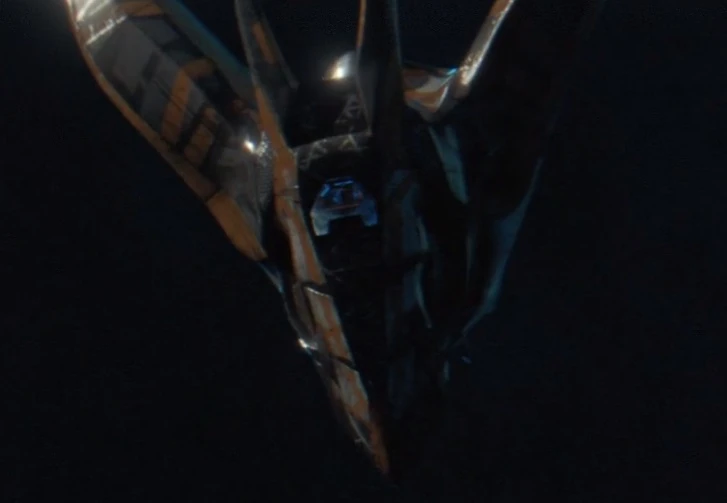 Escape pod
V'draysh escape pod Class
Hull Specifications LoggedThe V'draysh escape pod was a specialized emergency vessel-escape vehicle utilized by the V'draysh civilization sometime in the far future. These distinctive arrowhead-shaped craft were designed for a lone passenger. A prominent feature was a transparent window on the forward section, which served both as a viewport into space and a functional monitor. The pod also incorporated a ventral fin. Internally, V'draysh escape pods were equipped to carry V'draysh media files from 'The Long Ago' and were capable of monitoring the passenger's life signs. The design of the V'draysh escape pod was credited to Kelvin Tam, who had also conceptualized an animation for the pod's hatch opening, though this specific animation was not ultimately featured in its on-screen appearance. **Notable Incident** One such V'draysh escape pod played a crucial role when Craft, a V'draysh individual, stole it during a conflict. Craft subsequently found himself adrift in space, with his life signs failing, until he was rescued by the USS Discovery. This event was depicted in the Star Trek: Short Treks episode 'Calypso'.
- No armament data logged.
- No propulsion data logged.
 Assault Vessel
Vaadwaur assault fighter Class
Hull Specifications LoggedThe Vaadwaur assault fighter was a compact assault vessel primarily utilized by the Vaadwaur civilization. Designed for versatile operation, it was capable of functioning effectively in both atmospheric and space environments. Its primary armament consisted of particle cannons. During the late 15th century, these fighters were considered highly advanced for their time, employing underspace technology to conduct raids, destroy enemy assets, and even conquer neutral parties or adversaries. This advanced capability allowed the Vaadwaur to project significant power across their sphere of influence. However, following the devastating orbital bombardment of the Vaadwaur homeworld, the technology of these fighters, once cutting-edge, became largely obsolete, rendering them little more than antiques when compared to the more modern vessels of the 24th century. **Class History** A significant number of these assault fighters, at least 56, were preserved underground alongside a Vaadwaur battalion, having survived the orbital bombardment of the Vaadwaur homeworld in 1484. These forces remained in stasis until 2376, when they were reactivated with the assistance of the USS Voyager crew. The initial intent was for these fighters to aid the Vaadwaur in breaking through the Turei fleet that had gathered over the planet. However, the Vaadwaur, under the command of their leader, subsequently betrayed the USS Voyager, attacking the starship in an attempt to seize its advanced technology. Many of the reactivated Vaadwaur assault fighters were subsequently destroyed by the Turei fleet. This destruction was facilitated by Gedrin, a former Vaadwaur, who transmitted critical targeting data from a Vaadwaur sentry satellite to the Turei, allowing them to effectively neutralize the threat posed by the reactivated fighters. **Tactical Systems** The Vaadwaur assault fighters were equipped with particle cannons, which delivered rapid pulse beams into enemy vessels. This weapon system allowed them to inflict a substantial amount of damage on opposing ships within a short timeframe. Despite this offensive capability, the fighters lacked heavier ordnance, such as photon torpedoes. Furthermore, their defensive capabilities were severely lacking against more modern starships and the aggressive species encountered in the Delta Quadrant during the 24th century. Their shields, despite their firepower, were notably weak, unable to withstand even a single phaser blast from an Intrepid-class starship, which would typically result in the immediate destruction of the assault fighter. This vulnerability underscored their obsolescence in a contemporary tactical environment.
- • Particle weapo
- No propulsion data logged.
 Transport / Freighter
Vahklas type
Hull Specifications LoggedThe Vahklas-type was a class of Vulcan starship utilized during the mid-22nd century. Initially, the design process for this vessel was undertaken by the Star Trek: Enterprise visual effects team, with Visual Effects Producer Dan Curry sketching the initial concept due to John Eaves being overworked. Curry aimed to maintain a visual consistency with other Vulcan vessels, such as the Suurok-class, by incorporating a ring-like element, but adapted it to a 'broken ring' configuration to signify the Vahklas-type's smaller size and different operational requirements compared to deep space vessels. The sketch was intentionally simple to allow for creative input from the CGI modelers at Eden FX, who built the digital model. They drew further inspiration from the Suurok-class and the starship T'Plana-Hath for surface details and color schemes, fleshing out the design collaboratively with Curry. The script for the episode 'Fusion' referred to a specific area aboard a civilian transport of this type as an 'Astrometrics Lab'. **Class History** Prior to the mid-2150s, the Vahklas-type was primarily available for civilian use as transports, with records indicating their use as late as 2143. However, by the mid-2150s, the class was also employed by the Vulcan High Command as cruisers. In 2151, when the NX-01 Enterprise first encountered the Vahklas, T'Pol remarked that the class had not been in active use for 'a long time', suggesting a period of reduced deployment or transition. Despite this, in 2154, at least one Vahklas-type ship was part of a Vulcan fleet in orbit of Earth, welcoming the NX-01 Enterprise home from the Delphic Expanse, as depicted in the episode 'Storm Front, Part II'. Later that same year, a Vahklas-type craft was observed among the air traffic near the Vulcan capital city in the episode 'Home'. The class saw significant military action during the Syrrannite crisis; two Vahklas-type ships, alongside a D'kyr-class combat cruiser, attacked the NX-01 Enterprise while it was in orbit of Vulcan, forcing its withdrawal. These ships then proceeded to conduct an orbital bombardment of the Syrrannite settlement in the Forge, as shown in 'Awakening'. A number of Vahklas-type ships were subsequently part of the Vulcan fleet that participated in the Battle of Andoria, a pivotal engagement detailed in the episode 'Kir'Shara'. The named ship of this class is the Vahklas, and several unnamed Vahklas-type cruisers were also documented.
- • Particle weapo
- No propulsion data logged.

Val Jean
Class: Maquis raider- • Phase (Qty: 1)
- • Torpedo launche (Qty: 4)
- • Maximum warp
- • Deflector shield
 Runabout / Utility
Valakian shuttle Class
Hull Specifications LoggedThe Valakian shuttle was a small, pre-warp vessel utilized by the Valakians. Its design featured propulsion modules situated on the flanks of the hull, positioned above the wings and tapering inward towards the rear. The shuttle's overall appearance, with wings on either side of the hull and a tailplane on the dorsal surface, strongly suggested its capability for atmospheric flight. In fact, the vessel bore a striking resemblance to 20th-century Earth space shuttles, a detail noted in the final draft script of the Star Trek: Enterprise episode 'Dear Doctor', which described it as similar in size to the Enterprise NX-01's shuttlepods. **Service History** In 2150, the Valakians deployed four of these shuttles on a critical mission: to search for a cure for a devastating plague afflicting their species by seeking assistance from more technologically advanced civilizations. One such Valakian shuttle was discovered in 2151 by the Enterprise NX-01, drifting becalmed in space with its two occupants unconscious. This particular vessel was identified in the writers' first draft script for 'Dear Doctor' as the 'Sion'. Upon its discovery, Commander Charles 'Trip' Tucker III initially theorized that the craft might be a sleeper ship. The shuttle was described as 'weathered' in the final draft script, underscoring its journey and the urgency of its mission.
- No armament data logged.
- • Subligh

Valdore
Class: Warbird- No armament data logged.
- No propulsion data logged.
 Escort / Warship
Valdore type
Hull Specifications LoggedThe Valdore type was a formidable Romulan warbird design that saw active service in the 24th century. Similar in its general design philosophy to the D'deridex-class warbird, the Valdore type represented a newer, more advanced generation of Romulan starship, characterized by its distinctive fixed-wing configuration and powerful tactical systems. **Design & Development** The impetus for the Valdore type's creation arose during the production of Star Trek Nemesis, where producers sought a brand new style of Romulan warbird rather than reusing the established D'deridex-class from Star Trek: The Next Generation. The primary design task was assigned to Concept Artist John Eaves. Eaves drew inspiration from several sources, notably the Klingon Bird-of-Prey from Star Trek III: The Search for Spock, which he initially assumed had Romulan design lineage. He aimed to 'rearrange it a little' to fit a Romulan aesthetic. Another significant influence was the D'deridex-class itself, specifically the architectural lineage established by illustrator Andrew Probert's design, from which Eaves incorporated the 'cowling from the front' into his new concept. Production Designer Herman Zimmerman also commissioned Illustrator David Negron, Jr. to independently develop concept designs. Negron devised a 'very aggressive 'T-tailed' design' that compacted elements of Andrew Probert's D'deridex-class. Eaves's own design process involved extensive experimentation, including initial sketches with upswept wings that he ultimately discarded due to a 'Batman feel'. He settled on a raptor-like, fixed-wing configuration, filling a page with several ideas for the new warbird. The chosen design was then further refined, with Eaves developing unique 'feather' shaped plating for the exterior panels, distinct from those on the Klingon Bird-of-Prey. He also refined the placement of the warp nacelles, initially considering secondary nacelles on the underside for cloaked travel, but ultimately moving them to the ends of the outer wings to preserve the vessel's sweeping lines and create a 'subtle arched bi-wing' that harmonized with Andrew Probert's D'deridex design flow. Following final approval, the Valdore type was realized as a CGI model by Andy Wilkoff at Digital Domain, with John Eaves praising Wilkoff's collaborative input and the 'beyond incredible' modeling work. **Technical Specifications & Physical Arrangement** Ships of the Valdore type were large, fixed-wing vessels, typically sporting a dark-green or brown color scheme. They featured an impressive wingspan of roughly 900 meters. The design included a prominent section extending forward to form a down-sloped head shape. Warp nacelles were strategically connected at the end of each wing, while impulse engines were mounted aft. A distinguishing characteristic of the hull was its intricate 'feather' shaped plating, contributing to its predatory aesthetic. **Tactical Systems** For offensive capabilities, the Valdore type was equipped with several forward-mounted disruptor banks, strategically located on each wing and along the forward section of the ship. It also possessed at least one forward torpedo launcher, capable of firing a volley of four torpedoes with each recharge cycle, making it a formidable opponent in combat. **Bridge & Interior** The command center, or bridge, of the Valdore type was a roughly circular room, characterized by a dark metallic-brown color scheme complemented by green graphics on the computer monitors. The layout included computer consoles lining the rear bulkheads, a central command chair, and a free-standing console flanked by two additional stations. The viewscreen was notably oval-shaped. The bridge set itself was a redress of the USS Enterprise (NCC-1701-E)'s bridge from Star Trek Nemesis, with many elements repainted and recarpeted to be unrecognizable. Specific reused props included a Klingon bridge chair (dating back to Star Trek: The Motion Picture) for the command chair, the Son'a viewscreen from Star Trek: Insurrection, chairs from the USS Voyager, a Cardassian computer console at the center, and two computers recycled from the Klingon Bird-of-Prey (from Star Trek V: The Final Frontier). **Service History** The Valdore type played a critical role in 2379 during the events of Star Trek Nemesis. Two warbirds of this class, including the USS Valdore under the command of Commander Donatra, came to the aid of the USS Enterprise (NCC-1701-E) in engaging the Reman warbird Scimitar during the Battle in the Bassen Rift. Both Valdore-type ships sustained critical damage in the intense engagement. The class also made an appearance in Brad Boimler's 2381 holonovel, Crisis Point II: Paradoxus, where the villainous Melponar triplets commanded a Valdore-type warbird, albeit one with a unique large vertical fin on its tail. Furthermore, a graphic representation of a Valdore type appeared in an arcade game within the Star Trek: Lower Decks episode 'Starbase 80?!'. **Apocryphal Designations** In various non-canonical sources, the Valdore type has received alternative classifications. The Star Trek Customizable Card Game refers to it as the 'Norexan'-class. The Star Trek: Titan novels from Pocket Books and Star Trek Online classify it as the 'Mogai'-class, named after a predatory bird native to Romulus, with Star Trek Online also featuring an upgraded version referred to as the 'Valdore'-class. According to the Titan series, the Valdore-type ships are depicted as being smaller than the D'deridex-class vessels but are newer, more heavily armed with advanced weaponry, and significantly outnumber the D'deridex-class within the Romulan fleet.
- • Disrupto
- • Torpedo launche
- • Cloaking device
- • Deflector shield
Classified
Various (e.g., Marklin-class, Nebula-class, Freighter-class, Larson-class, Mayflower-type, Newton-type)
1 VesselThe class classification of Various (e.g., Marklin-class, Nebula-class, Freighter-class, Larson-class, Mayflower-type, Newton-type) starships.
- No armament data logged.
- No propulsion data logged.
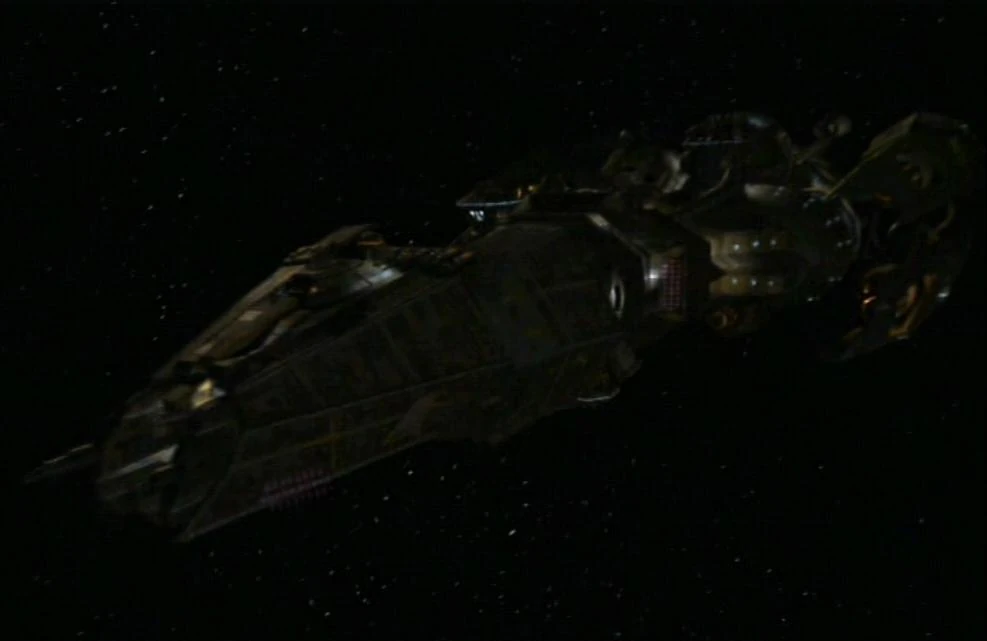 Classified
Venatic class
Hull Specifications LoggedThe Venatic-class was a specialized type of hunting starship primarily utilized by the Hirogen during the 2370s. These vessels were notably larger than both the standard Hirogen ship and the Starfleet Intrepid-class starship, with script notes indicating they were at least twice the size of the USS Voyager. Manned by a relatively small crew of roughly seventeen hunters, the Venatic-class was designed for deep-space pursuit and hunting. A significant design flaw in its sensor system created a 'blind spot' in the ship's aft section, where its engines interfered with sensor detection, allowing smaller vessels to hide undetected. Despite this vulnerability, the class was capable of impressive speeds, able to cover half a light-year in less than two hours. **Service History** The Venatic-class ships were actively employed by the Hirogen for their hunting expeditions. In 2377, two Venatic-class vessels were observed pursuing a third ship, which was crewed by Hirogen prey holograms associated with Iden's Rebellion, into a nebula. The USS Voyager, commanded by Captain Kathryn Janeway, successfully exploited the known aft sensor blind spot of the Venatic-class to secretly follow these ships. During this encounter, as depicted in the Star Trek: Voyager episode 'Flesh and Blood', the two Venatic-class ships were subsequently disabled by the USS Voyager.
- No armament data logged.
- • Explosive charge
- • Deflector shield

Vetar
Class: Galor class- • Disrupto
- • Galor class phaser bank (Qty: 4)
- • Deflector shield
 Classified
Vidiian ship (2371-2372) Class
Hull Specifications LoggedThe Vidiian ship was a massive starship utilized by the Vidiians. This class of vessel was designed to operate with a crew of well over three hundred individuals. Its primary armaments included hyper-thermic charges and specialized grapplers, which were specifically engineered to access and breach captured starships. According to script notes for the episode 'Deadlock', this vessel was described as 'massive' when compared to the smaller USS Voyager. The bridge of these ships was characterized as a small, modular room emphasizing isolation, notably lacking a main viewscreen and the open, communal feeling typical of most Starfleet starships. **Class History** These Vidiian ships were actively deployed during 2371 and 2372. In an alternate timeline in 2371, as depicted in the episode 'Fury', Kes from 2376 betrayed the USS Voyager by contacting a Vidiian ship. In exchange for transport back to the planet Ocampa, the Vidiian ship herded the USS Voyager towards a subspace vacuole and into a prepared ambush. Although the USS Voyager sustained damage from the attacking Vidiian vessel, it ultimately defeated the Vidiian ship in the ensuing battle. In the primary timeline, during 2372, the USS Voyager encountered and was attacked by a Vidiian ship of this class while trapped in a plasma drift. At this time, the USS Voyager was experiencing the effects of a subspace divergence field, which had effectively created two distinct ships, one of which remained unseen by the Vidiians. The Vidiian ship attacked one of the USS Voyagers, destroying its weapons array, before maneuvering the starship into grappling range. The Vidiians then bored an access route through the USS Voyager's hull on deck five, leading to a boarding action by over 347 Vidiians. Recognizing the dire situation, Captain Kathryn Janeway rigged the USS Voyager's auto-destruct sequence, which successfully destroyed the Vidiian ship and allowed the other USS Voyager to escape unharmed, as detailed in the episode 'Deadlock'. Later that year, in the episode 'Resolutions', when Harry Kim suggested contacting the Vidiians to seek a cure for a virus contracted by Captain Kathryn Janeway and Chakotay, Tuvok reminded Harry Kim that the USS Voyager had recently been responsible for the destruction of a Vidiian ship, an act that resulted in the deaths of over three hundred Vidiian people, making any attempt at contact highly unwise.
- • Hyper-thermic charge
- • Grapple
 Classified
Vidiian ship (2371) Class
Hull Specifications LoggedThe Vidiian ship (2371) was a specific type of starship employed by the Vidiian Sodality during the late 24th century. These vessels were designed for a minimal crew complement, typically requiring only two individuals for operation. Despite their small crew, they were noted for their impressive speed, capable of matching the velocity of a Starfleet Intrepid-class starship, indicating advanced propulsion systems, likely including warp drive capabilities. **Service History** One notable encounter involving a Vidiian ship of this type occurred in 2371. The USS Voyager, under the command of Captain Kathryn Janeway, pursued such a vessel from a planetoid located in the Delta Quadrant. The pursuit was initiated after the Vidiian occupants, identified as Dereth and Motura, had stolen Neelix's lungs, a critical organ, for their own medical purposes. The Vidiian ship eventually dropped out of warp and entered a hidden Vidiian space station, which was ingeniously concealed within a large asteroid. The interior walls of this station were designed to emanate severe electro-magnetic interference, making tracking difficult. The USS Voyager managed to track the Vidiian ship's ion trail into the asteroid. Upon entry, the Vidiians immediately deployed a powerful dampening field from their station. This field began to drain energy from the USS Voyager's warp nacelles at an alarming rate of seven percent per minute, severely compromising the Starfleet vessel's operational capacity. In a desperate attempt to pinpoint the Vidiian ship's exact location within the interference-laden station, the USS Voyager fired a continuous phaser beam at a minimum power level. This beam reflected off the station's bulkheads until it finally encountered the Vidiian ship. Once discovered, the Vidiian crew attempted to engage their ship's engines to escape, but they were swiftly transported from their vessel onto the USS Voyager before they could flee. This incident was documented in the Starfleet record as the episode 'Phage'.
- No armament data logged.
- • Warp facto
 Escort / Warship
Vidiian warship Class
Hull Specifications LoggedThe Vidiian warship was a class of vessel employed by the Vidiian Sodality during the 24th century, specifically noted for its activity in the 2370s. These warships were characterized as being 'loaded with weaponry,' prominently featuring phasers and torpedoes. Their design allowed them to easily outrun and outgun a Federation Type 6 shuttlecraft, indicating a significant tactical advantage in certain engagements. **Class History** In 2372, three Vidiian warships engaged the USS Voyager approximately seventy light years from a location referred to as 'New Earth.' This encounter occurred when Tuvok, acting on behalf of the USS Voyager, attempted to hail a Vidiian convoy to secure assistance from Doctor Danara Pel. Captain Kathryn Janeway and Chakotay had contracted a virus on 'New Earth,' and Doctor Pel possessed the necessary antivirus. Heavily outgunned, and facing the critical need to lower their deflector shields to transport the medicine from Doctor Pel's vessel, Tuvok devised a strategic maneuver. The USS Voyager lowered its shields, transported the antivirus, and simultaneously ejected an antimatter container. Once the container cleared the USS Voyager's immediate vicinity, it was detonated with a photon torpedo, disabling the three Vidiian warships and allowing the USS Voyager to escape, as depicted in the episode 'Resolutions.' Later, in 2373, a Vidiian warship played a role in an alien illusion experienced by Captain Kathryn Janeway. During this illusion, which occurred when the USS Voyager was believed to be far from Vidiian space, Janeway and Chakotay were aboard the Type 6 shuttlecraft Sacajawea when it was intercepted and attacked by a Vidiian warship. The warship ultimately destroyed the shuttlecraft. Janeway perceived this event as a temporal loop, repeatedly returning to a point before the warship's arrival. In one iteration of this illusion, two Vidiian warships attacked the shuttlecraft Sacajawea, only to disappear after the shuttle emitted a tachyon pulse, as seen in the episode 'Coda.'
- • Phase
- • Photon torpedo
- No propulsion data logged.

Viridian
Class: Heavy cruiser- No armament data logged.
- No propulsion data logged.
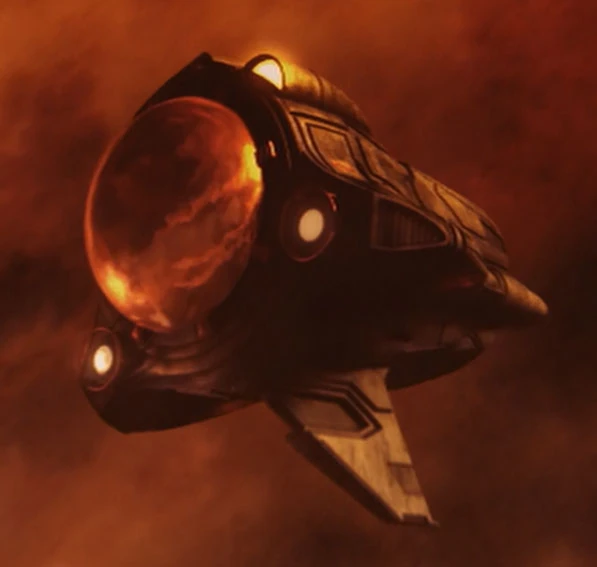 Runabout / Utility
Vissian stratopod Class
Hull Specifications LoggedThe Vissian stratopod was a small, two-person shuttlecraft utilized by the Vissians. Its design featured a distinctive large, round viewport located at the ship's bow, providing an expansive view. A notable engineering characteristic of the stratopod was its significantly enhanced defensive capabilities; it carried twice the deflector shielding of the larger Vissian starships. Furthermore, its advanced navigation control system was uniquely based on five spatial axes, allowing for precise maneuverability in complex environments. **Service History** One significant deployment of a Vissian stratopod occurred in 2153. During this mission, Captain Drennik of the Vissians piloted a stratopod, taking Jonathan Archer of Starfleet along to survey a hypergiant star. The stratopod's robust deflector shields and advanced navigation allowed them to successfully pass through the star's dense hydrogen layer. This unprecedented access enabled them to observe normally undetectable surface features of the hypergiant star, a feat documented in the episode 'Cogenitor'.
- No armament data logged.
- No propulsion data logged.
 Car
Volkswagen Beetle Class
Hull Specifications LoggedThe Volkswagen Beetle was a distinctive type of automobile, powered by an internal combustion engine. It was originally produced on Earth by the German automotive manufacturer Volkswagen during the 20th century, primarily for civilian purposes. This vehicle was widely imported into the United States, becoming a common sight on Earth's roads. Its design was notable for its compact size and unique rounded silhouette. While primarily a civilian vehicle, a militarized World War II version, known as the Volkswagen Kübelwagen, was also produced, with its production of the Beetle being suspended after the outbreak of World War II. The Kübelwagen variant later appeared in the Star Trek: Enterprise fourth season episode 'Storm Front'. **Service History** On Earth, examples of the Volkswagen Beetle were observed in various historical contexts. In 1968, one such vehicle was seen parked on East 68th Street in New York City, as depicted in the episode 'Assignment: Earth'. Later, in 1986, a convertible model of the Volkswagen Beetle, featuring a personalized license plate, was observed making a left turn onto Columbus Avenue from Kearny Street in San Francisco, an event documented in the film Star Trek IV: The Voyage Home. Remarkably, by 2268, an automobile identical in appearance to the Volkswagen Beetle was commonly seen on the streets of the planet Ekos. This Ekosian variant was prominently featured in a publicly broadcast Ekosian newsreel, as shown in the episode 'Patterns of Force', indicating a surprising parallel in automotive design across different worlds and centuries.
- No armament data logged.
- No propulsion data logged.
 Car
Volkswagen Kübelwagen Class
Hull Specifications LoggedThe Volkswagen Kübelwagen was a utilitarian car originally produced on Earth by the German automotive manufacturer Volkswagen for the German military during World War II. It was essentially a militarized version of the Volkswagen Beetle, designed for rugged off-road use and troop transport in various theaters of conflict. Its robust design and simple mechanics made it a reliable vehicle for the Wehrmacht and SS during the 1940s. **Service History** In an alternate timeline, a Volkswagen Kübelwagen was encountered in 1944 by Captain Jonathan Archer of the USS Enterprise (NX-01). This particular vehicle, bearing the license plate "WH-52552" and driven by an SS soldier, escorted a Ford Model 51 truck in which Archer was held prisoner, along with a BMW R75 motorcycle. The convoy was ambushed by American Resistance fighters, resulting in damage to all vehicles and the deaths of their German occupants. Later, another Kübelwagen was observed driving through Brooklyn, New York City, and was part of a German search party that discovered the crash-landed Shuttlepod 2151, which the Suliban Silik had used to escape the Enterprise. These events were depicted in the episodes "Storm Front" and "Storm Front, Part II." By 2268, the design of the Volkswagen Kübelwagen had been recreated on the planet Ekos. One such Ekosian Kübelwagen was seen parked outside the Ekosian Chancellery, indicating its adoption or replication by the Ekosian military, as shown in the episode "Patterns of Force." This appearance coincided with a publicly broadcast Ekosian newsreel that also featured the Volkswagen Beetle. In 2374, the Hirogen, having gained control of the USS Voyager, utilized its holodeck for their hunting simulations. One such scenario was set in the French World War II-era village of Sainte Claire, occupied by Germans. To ensure historical accuracy, period vehicles, including a Volkswagen Kübelwagen, were recreated as part of the backdrop for the simulation. This recreation was visible on one of the overhead bridge monitor station viewscreens during the events of "The Killing Game, Part II." The American World War II counterpart, the Jeep, was also featured in this simulation.
- • Projectile weapo (Qty: optional)
- No propulsion data logged.

Von Braun
Class: Type 7 shuttlecraft- No armament data logged.
- • Deflector shield
 Explorer
Vor'cha class
1 VesselThe Vor'cha-class attack cruiser is a formidable starship design that served as a backbone of the Klingon Imperial Fleet throughout the latter half of the 24th century, succeeding and complementing the venerable K't'inga-class. Its development commenced in the late 23rd century, driven by a requirement for a larger, more heavily armed vessel capable of projecting Klingon power deeper into contested territories and engaging increasingly sophisticated enemy designs. The design philosophy emphasized aggressive offensive capabilities, robust defensive systems, and high warp speed, embodying the Klingon warrior ethos in starship form. Visually distinguished by its prominent swept-back wings flanking the primary hull and a heavily armored forward section, the Vor'cha quickly became an iconic symbol of Klingon military might, frequently selected as flagships for High Council members and fleet commanders due to its commanding presence and combat effectiveness. Tactically, the Vor'cha-class was designed primarily as a heavy attack cruiser, capable of operating independently or leading task forces in deep-space interdiction, planetary assault, and fleet engagements. Its primary armament includes a formidable forward-mounted heavy disruptor cannon, often referred to as a "spinal disruptor," complemented by numerous additional disruptor emplacements positioned along the dorsal, ventral, and wing sections, providing comprehensive firing arcs. Multiple photon torpedo launchers, typically two forward and two aft, provide a devastating punch against heavily shielded targets. Defensively, Vor'cha-class vessels feature robust deflector shields and substantial structural armor, allowing them to withstand prolonged engagements. With a large crew complement, often exceeding 2,000, these vessels are also prepared for boarding actions and sustaining combat damage. Their propulsion systems are calibrated for high-speed intercepts and rapid maneuverability, essential for executing aggressive Klingon combat doctrines. The Vor'cha-class has seen extensive service in numerous significant conflicts and operations. During the Klingon Civil War (2367-2368), Vor'cha vessels were prominently featured on both sides, demonstrating their strategic importance and showcasing their ability to project power within the Empire. Notably, Chancellor Gowron's personal flagship, the IKS Bortas, was a Vor'cha-class vessel. In the Dominion War (2373-2375), Vor'cha-class cruisers served as front-line combatants against Dominion and Cardassian forces, engaging Jem'Hadar attack ships and Galor-class cruisers in numerous critical battles. While suffering significant losses, their resilience and firepower proved vital to the Allied war effort. Outside of major conflicts, Vor'cha-class ships routinely patrolled Klingon borders, deterring incursions from the Romulan Star Empire and facilitating Klingon economic interests by ensuring secure trade routes, occasionally engaging in enforcement actions against illicit Ferengi commerce operations deemed detrimental to Klingon territories. Its enduring presence cemented its legacy as one of the most successful and recognizable designs in Klingon naval history.
- • Disrupto
- • Torpedo launche
- • Cloaking device
- • Warp facto
- + 1 more...
 Battle cruiser
Vorok's battle cruiser Class
Hull Specifications LoggedThe Vorok's battle cruiser was a formidable type of Klingon battle cruiser that saw active service during the early 2150s. This class of vessel was a staple of the Klingon Imperial Fleet, operating under the command of notable officers such as Captain Vorok. Designed for combat, these battle cruisers were equipped with potent offensive and defensive systems, reflecting the Klingon Empire's martial prowess during the 22nd century. **Technical Specifications & Capabilities** Offensively, Vorok's battle cruisers were armed with torpedo launchers positioned both fore and aft, allowing for versatile attack vectors against enemy targets. For defensive and tactical maneuvers, the class featured an aft tractor beam, capable of ensnaring other vessels. While specific details on propulsion systems are not extensively documented, it is understood that these starships possessed warp capabilities, enabling interstellar travel and engagement across the Klingon Empire's vast territories. **Service History** One notable incident involving a Vorok's battle cruiser occurred in 2151. During this event, a Xyrillian ship ingeniously hid within the plasma wake of Captain Vorok's vessel, causing various on-board malfunctions. The situation escalated when the Enterprise (NX-01) made contact with the Klingon battle cruiser. Following this interaction, Captain Vorok's ship engaged the Xyrillian vessel, firing upon it and subsequently locking it in its aft tractor beam. The Xyrillian ship was eventually released after the installation of holotechnology aboard the Klingon vessel, an unusual exchange detailed in the episode 'Unexpected'. This incident highlighted both the tactical capabilities of the Vorok's battle cruiser and the early, often tense, interactions between Starfleet and the Klingon Empire.
- • Torpedo launche (Qty: fore and aft)
- • Tractor beam

Voth city ship
Class: Voth city ship- No armament data logged.
- No propulsion data logged.
 City Ship
Voth city ship Class
1 VesselThe Voth city ship was conceived as a monumental vessel, serving as the central hub for the entire Voth civilization. Its studio model was designed by Rick Sternbach, with concept art finalized in January 1997. The initial design vision was that of a 'floating city in space,' which was clearly reflected in early concept art that depicted several large skyscrapers along its spine. However, in the final design, these architectural features were smoothed into the hull, creating a more streamlined yet still incredibly vast starship. This class is renowned as one of the largest vessels ever to appear in Star Trek, measuring approximately 11 kilometers in length. **Class History** One notable encounter involving a Voth city ship occurred in 2373 when it located and subsequently captured the Federation starship USS Voyager. The massive Voth vessel proceeded to beam the USS Voyager aboard its interior. Once the Federation starship was secured, the crew of the Voth city ship activated a ship-wide dampening field. This field effectively rendered all Federation technology inoperative, including tricorders, phasers, and the USS Voyager's main power systems. This event was chronicled in the Star Trek: Voyager episode 'Distant Origin.' The Voth city ships are integral to the Voth civilization, acting not just as transport but as mobile centers of their society. **Apocryphal Information** In the context of the game Star Trek Online, this design is referred to as the 'Citadel'-class. Within this continuity, numerous vessels of this class are utilized by the Voth military, serving as formidable dreadnoughts.
- No armament data logged.
- No propulsion data logged.

Vrek's starship
Class: Romulan starship- No armament data logged.
- No propulsion data logged.
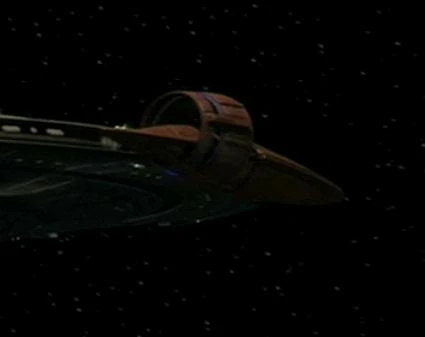
Vulcan Shuttle
Class: Vulcan shuttle- No armament data logged.
- No propulsion data logged.
Shuttlecraft
Vulcan shuttle Class
1 VesselThe Vulcan shuttle was a distinct type of shuttlecraft or transport utilized by the Vulcan people during the early 2150s. These vessels were characterized by their compact design, typically standing about two decks high. A notable engineering feature was their warp-ring drive system, a propulsion method shared with many contemporary Vulcan combat cruisers, allowing for efficient interstellar travel. **Class History** At least one Vulcan shuttle of this class was known to be assigned to Suurok-class starships, as depicted in the Star Trek: Enterprise episode 'Fallen Hero'. Beyond its role as a starship auxiliary craft, this type of shuttle also served as ground-based transportation on the planet Vulcan, a function observed in the Star Trek: Enterprise episode 'Awakening'. The Vulcan shuttle made appearances in several Star Trek: Enterprise episodes, including 'Fallen Hero', 'Stigma', and 'Awakening'. Specific unnamed Vulcan shuttles, such as Vulcan shuttle 000, were part of this class.
- No armament data logged.
- No propulsion data logged.
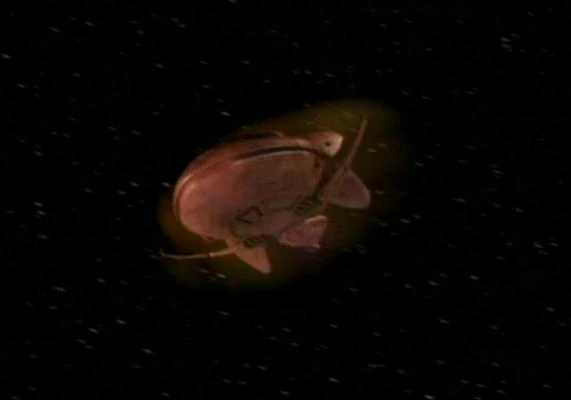 Science Vessel
Vulcan survey ship Class
Hull Specifications LoggedThe Vulcan survey ship was a distinct type of survey vessel primarily utilized by the Vulcan High Command and the Vulcan Science Directorate. Its design featured a fundamentally oval shape, complemented by several wing-like segments positioned at the stern. Propulsion for these vessels was provided by two impulse engines, located one on the top and one at the bottom of the outer shell. Additionally, a pair of shrouds on either side of the ship, situated behind the stabilizing wings, protected the warp engine and its associated warp nacelles, enabling faster-than-light travel. **Service History** These survey ships were active from the mid-20th century through the mid-22nd century. One of the earliest recorded missions of this class involved a visit to Earth in 1957, where it conducted a comprehensive survey mission, including statistical scans from high orbit, as depicted in the Star Trek: Enterprise episode 'Carbon Creek'. Decades later, in 2154, vessels of this class were among the Vulcan fleet that gathered to welcome the Enterprise NX-01 upon its return from its perilous mission to the Delphic Expanse, an event chronicled in the Star Trek: Enterprise episode 'Storm Front, Part II'. **Notable Vessels** While specific named vessels of this class are not extensively documented, the registry does acknowledge the existence of unnamed Vulcan survey ships that performed various duties throughout their operational lifespan.
- No armament data logged.
- No propulsion data logged.
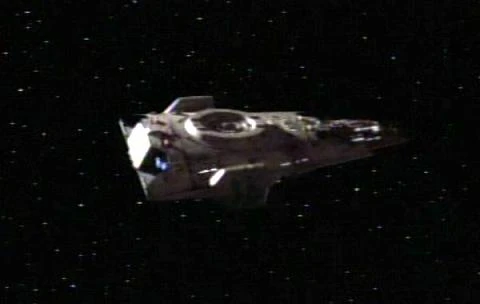 Explorer
Wadi ship Class
Hull Specifications LoggedThe Wadi ship was a unique starship utilized by the Wadi civilization during the 24th century. Its design allowed for interstellar travel, enabling the Wadi to traverse vast distances, including the journey from the Gamma Quadrant to the Bajoran wormhole and ultimately to Deep Space 9. While specific technical details regarding its construction and internal systems are limited, the vessel was capable of housing a small crew, typically around six individuals, and featured at least two decks. **Notable Incidents** In 2369, a delegation of six Wadi, including Falow, piloted a Wadi ship to Deep Space 9, marking a significant moment of first contact with the Federation. During their visit, an unusual energy flux was detected emanating from the Wadi ship by Starfleet personnel George Primmin and Constable Odo. This intense bipolar current, reminiscent of a transporter burst but continuous, was speculated to be responsible for the mysterious disappearance of Deep Space 9's senior staff, who were inadvertently transported into the virtual world of the Wadi game Chula. Constable Odo attempted to investigate the source of the flux onboard the Wadi ship but was instantaneously transported back to Quark's. This incident, documented in the Starfleet log entry 'Move Along Home', highlighted the advanced and potentially unpredictable nature of some Wadi technologies integrated within their starships.
- No armament data logged.
- No propulsion data logged.
 Classified
Walker class
2 VesselsThe Walker-class was a type of Federation starship in service during the mid-23rd century. Its distinctive design featured a saucer section with an integrated, laterally-positioned navigational deflector, a compact secondary hull, and two nacelles attached by pylons extending beneath the ship's superstructure. Atypically for a Starfleet vessel, the bridge was located on the underside of the saucer, specifically on deck seven, and included an adjacent captain's ready room. The internal arrangement of the Walker-class, including its corridors and crew quarters, did not significantly change by the development of the more advanced Crossfield-class starships. Technically, the Walker-class possessed at least fifteen decks and two shuttlebays, carrying a complement of shuttlecraft and worker bees. It was also equipped with escape pods, which could be launched from breakaway panels lining the top of the saucer section. The class was capable of atmospheric flight, utilizing thrusters scattered over its ventral hull. Its armament included phase cannons, phaser emitters, and photon torpedo launchers, while its defenses relied on deflector shields. The ship was equipped with internal and external plasmatic filters, and its medical facilities featured an antiproton chamber. The Walker-class possessed transporter systems similar to those of the Crossfield-class, though it was equipped with lateral vector transporters, a design deemed obsolete by the late 2240s. The brig on a Walker-class vessel was located on deck nine. **Service History** The Walker-class was active from the early 2200s through the 2250s. By 2249, the class was considered 'old' compared to other starships in the Starfleet fleet, as noted in 'The Vulcan Hello'. A prominent vessel of this class was the USS Shenzhou, registry NCC-1227, which played a critical role in the Battle at the Binary Stars in 2256, ultimately being abandoned. A Mirror Universe counterpart, the ISS Shenzhou, also registry NCC-1227, was active in 2256 under the Terran Empire. Evidence of the Walker-class's presence in Starfleet history continued into later periods; a picture of a Walker-class ship could be seen in the mess hall of the USS Discovery, as depicted in 'Context Is for Kings'. Furthermore, Erica Ortegas kept a model of a Walker-class starship in her quarters on the USS Enterprise NCC-1701, as shown in 'Among the Lotus Eaters'. The class made several appearances in Star Trek: Discovery episodes, including 'The Vulcan Hello', 'Battle at the Binary Stars', 'Context Is for Kings', 'The Butcher's Knife Cares Not for the Lamb's Cry', 'Despite Yourself', 'The Wolf Inside', and 'Vaulting Ambition'.
- • Phase canno
- • Phase
- + 1 more...
- • Deflector shield
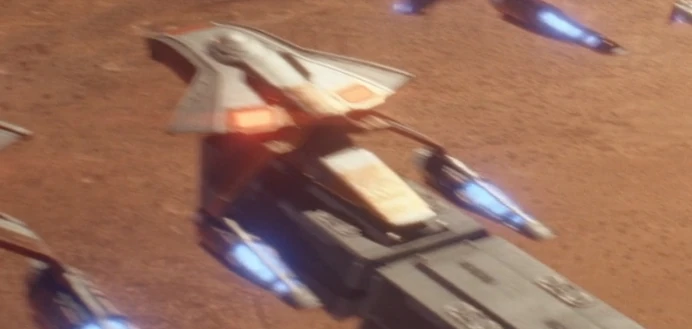 Runabout / Utility
Wallenberg class
Hull Specifications LoggedThe Wallenberg-class starship was conceived as a large transport and tug vessel, primarily active in the late 24th century. These warp-capable ferries were operated by Starfleet, an organization of the United Federation of Planets. The class was designed by John Eaves, who began his work under the initial premise of an evacuation of Mars during a Romulan attack. Eaves drew inspiration from two of his previously unused designs: a tug vessel for an unrealized version of Perpetual Entertainment's Star Trek Online, and a fighter carrier, the USS Midway, intended for Star Trek: Discovery Season 1. His initial design featured a standard dish-shaped Starfleet primary hull with heavy hull paneling and prominent red highlights, intended to emphasize the vessel's industrial nature. Eaves had originally planned to use 'Caterpillar Orange' for these industrial colors but had to opt for a different shade due to trademark restrictions. When Eaves submitted his design to the modelers at Pixomondo, who were newcomers to the Star Trek franchise, he had to provide several corrections to ensure the detail level conformed to established Starfleet vessel aesthetics. Amusingly, the producers later decided to replace the saucer section with a triangular bow section, which was created by shearing off the port and starboard parts of the saucer, resulting in the final onscreen appearance. The class was officially named after the Swedish diplomat Raoul Wallenberg, a detail confirmed by Michael Chabon. **Service History** The Wallenberg-class played a critical role in the United Federation of Planets' efforts to evacuate Romulans from the Romulus system in the 2380s. A large number of these tugs were constructed at Utopia Planitia Fleet Yards at Mars as part of a rescue armada, intended to relocate nine hundred million Romulans from the impending supernova of the Romulan star. However, on April 5, 2385, this armada was tragically destroyed during an attack on the yards by a fleet of synth ships. While Wallenberg-class ships did not carry a formal registry, at least one vessel was marked with '130/27'. One known ship of the class was the 'Nightingale' transport, which was active in the 2380s. The Wallenberg-class appeared in the Star Trek: Picard episodes 'Remembrance' and 'Maps and Legends'. **CGI Model & Publication** The CGI model of the Wallenberg-class premiered in August 2021 within the second edition of the reference book Star Trek: Shipyards - Starfleet Ships 2294 to the Future. It was subsequently featured prominently in issue 7 of the Star Trek Universe: The Official Starships Collection, released in Autumn 2021, which also included an accompanying physical display model. For its publication, the model was re-rendered in LightWave 3D by Fabio Passaro for Eaglemoss Collections, who also created the necessary Computer-aided design files for the display model's production. Apocryphal information suggests John Eaves initially envisioned the tugs to be armed with phaser arrays and an ejectable 'coupling hook' for independent battle operations, a concept that was not retained in the final production model. Eaves's submitted design also carried the apocryphal name and registry 'USS Hercules NCC-130-27', though only the '130/27' mark, without the 'NCC' prefix, was retained on the final CGI model.
- No armament data logged.
- No propulsion data logged.
 Class V Blockade Runner
Wanderer class (24th century)
Hull Specifications LoggedThe Wanderer-class was a classification of starship primarily utilized by the Orion syndicate, specifically designated as a Class V blockade runner. These vessels were designed for rapid transit, likely for illicit activities such as smuggling or evading patrols. Information regarding this vessel type was cataloged and accessible within the USS Enterprise (NCC-1701-D) library computer, indicating Starfleet's awareness of Orion vessel designs and their capabilities. **Class History** Wanderer-class blockade runners were active prior to or during the 2360s, placing their operational period firmly within the 24th century. Starfleet records, as accessed by the USS Enterprise (NCC-1701-D), referenced this class during events depicted in episodes such as 'The Naked Now', 'The Last Outpost', 'Datalore', and 'Conspiracy'. While primarily associated with the Orion syndicate, one vessel, the USS Constellation, bearing the registry NCC-55817, was listed as potentially belonging to this class and was noted as active in 2364. The specific circumstances of a Starfleet vessel being associated with an Orion blockade runner class remain uncertain in available records.
- No armament data logged.
- No propulsion data logged.
Starship Classification
Warbird Class
6 VesselsA warbird is a classification of warship within Starfleet tactical and engineering registries, generally characterized by designs that resemble large, predatory birds. This distinctive aesthetic is a hallmark of several spacefaring cultures known to operate such vessels, primarily the Klingon Empire, the Romulan Star Empire, and the Reman people. The term 'warbird' itself has been used to describe various starship designs across different eras, indicating a broad category rather than a single class. **Operating Cultures and Notable Classes** Three distinct cultures are officially recognized for operating warbirds. The Klingon Empire has utilized its own variant of Klingon warbirds, seen as early as 'Broken Bow' in the 22nd century and later in the 23rd century. The Romulan Star Empire and its successor, the Romulan Free State, have perhaps the most diverse and well-documented history with warbirds. This includes 22nd century Romulan warbirds, such as those encountered in 'Babel One', and 2340s Romulan warbirds, notably involved in the Battle of Narendra III with the USS Enterprise-C. The mid-2360s and mid-2370s saw the widespread deployment of the formidable D'deridex-class warbird, a design that became synonymous with Romulan power from 'The Neutral Zone' through 'What You Leave Behind'. Later 24th century designs include the Valdore warbird, featured in 'Star Trek: Nemesis', and the 2390s Romulan warbirds, Oh's warbird, and the Red Lady, all appearing in 'Star Trek: Picard'. The Reman people are also known to have operated warbirds, most notably the prototype Scimitar, a vessel referred to as a 'Reman warbird' in 'Star Trek: Nemesis'. **Historical Context and Terminology** The term 'warbird' has deep roots within the Romulan Empire, dating back to at least 2154, when the Romulan drone ship was identified as a modified warbird, albeit of a much earlier design than the D'deridex-class. Starfleet became aware of the term by 2344, following an encounter with the USS Enterprise-C during the Battle of Narendra III. It remains unclear whether this early Starfleet usage specifically referred to the D'deridex-class or another, then-unknown warbird design. Interestingly, the Romulan word for 'warbird' appears to be 'D'deridex', as evidenced by Data's reference to a 'D'deridex-class cruiser' in 'Tin Man', which Jean-Luc Picard subsequently called a 'Warbird-class starship' in 'The Defector'. Prior to the events of 'Star Trek: Enterprise' and 'Star Trek: Nemesis', the terms 'warbird' or 'Romulan warbird' were almost exclusively used to describe D'deridex-class starships. While Klingon ships were occasionally referred to as warbirds, such as in 'Broken Bow', this was later clarified by producer Brannon Braga as an unintentional usage, implying the production team's intent for the term to primarily identify Romulan vessels.
- No armament data logged.
- No propulsion data logged.
 Classified
Warp pod Class
Hull Specifications LoggedThe Warp pod was a compact, warp-capable spacecraft primarily utilized by the Terran Empire. Designed for rapid deployment and escape, it was capable of accommodating at least two individuals, making it suitable for critical personnel transport or short-range reconnaissance missions. Its design prioritized warp capability in a small form factor, distinguishing it from standard shuttles or basic escape pods. **Service History** A notable instance of a Warp pod's deployment occurred in the 23rd century aboard the I.S.S. Enterprise (NCC-1701). This vessel carried at least one Warp pod when it traversed from the mirror universe into the prime universe. Unlike the I.S.S. Enterprise's conventional shuttles and escape pods, the Warp pod remained secured onboard when the starship was abandoned after becoming trapped in interdimensional space, a consequence of encountering a wormhole in Tzenketh space, as depicted in the episode 'Mirrors'. Centuries later, in 3191, the I.S.S. Enterprise was recovered from the wormhole. During this period, Moll and L'ak utilized a Warp pod, which they had provisioned with life support equipment from the I.S.S. Enterprise's sickbay, to escape the derelict vessel. The U.S.S. Discovery attempted to engage a tractor beam to prevent their escape, but the Warp pod successfully initiated warp speed before it could be apprehended. Commander Rayner subsequently vowed to track the pod's unique warp signature and issue a galaxy-wide alert for its recovery, as detailed in 'Mirrors'. Moll later transmitted a coded distress call via a courier channel, hoping to attract a passing courier. Instead, the distress call was intercepted by the U.S.S. Locherer, which subsequently captured the Warp pod with a tractor beam and contacted the U.S.S. Discovery. Upon inspection, L'ak was discovered to be barely alive, while Moll was found severely dehydrated and half-starved, an event chronicled in the episode 'Erigah'.
- No armament data logged.
- No propulsion data logged.
 Escort / Warship
Warship Voyager Class
Hull Specifications LoggedThe warship 'Voyager' was an inaccurate Kyrian reconstruction of the Starfleet vessel USS Voyager, based on badly corroded schematics discovered in the Cyrik Ocean. This reconstruction was heavily influenced by an extremely biased Kyrian perception of the USS Voyager and her crew, particularly regarding their role in the historical conflict known as the Great War. The design featured a triple-armored hull, thirty torpedo tubes, twenty-five phaser banks, and was equipped with assault probes, fighter shuttles, and biogenic weapons. Its crew complement was depicted as three hundred soldiers, including individuals assimilated from various Delta Quadrant species such as the Kazon, and a complement of Borg warrior-drones. The vessel also featured an Emergency Medical Android. **Class History** The warship 'Voyager' played a central role in 'The Voyager Encounter', a holographic simulation housed within the Museum of Kyrian Heritage. This simulation depicted the USS Voyager as a ruthless aggressor, initiating biogenic weapon attacks on the Kyrians at the outset of the Great War. Quarren, the simulation's creator, was aware that the reconstruction might not be entirely accurate due to the poor condition of the source schematics. However, the full extent of the historical inaccuracies only became apparent after he activated a backup copy of The Doctor, the Emergency Medical Hologram from the actual USS Voyager. The Doctor subsequently debunked the biased history presented in the simulation, bringing the true course of events to light. The Kyrian portrayal of the warship 'Voyager' depicted its Captain, Kathryn Janeway, as cold and merciless, with a crew characterized by extreme violence, even amongst themselves. Insubordination was shown to be common and unpunished, and the crew was depicted as having no objections to massacring entire planets, with Captain Janeway even displaying impatience when fatalities were not rapid enough. These events and the subsequent debunking are detailed in the Starfleet record 'Living Witness'.
- • Assault probes and fighter shuttles
- • Biogenic weapo
- + 2 more...
- • Armo
 Runabout / Utility
Waverider Class
Hull Specifications LoggedThe Waverider was an advanced atmospheric shuttlecraft specifically designed for service aboard United Federation of Planets Nova-class starships. Unlike most auxiliary craft, the Waverider was not stowed within a traditional shuttlebay. Instead, it featured a unique docking configuration, attaching to the ventral side of the Nova-class primary hull, positioned just forward of the ship's primary navigational deflector. Although never explicitly depicted in action, the Waverider's presence and design details are clearly identifiable in the Nova-class's Master Systems Display (MSD) and studio model. **Technical Specifications & Capabilities** Described as a 'larger hypersonic shuttle,' the Waverider was considered equivalent in function to a captain's yacht, emphasizing its role in high-speed atmospheric operations. Its design allowed it to achieve speeds in excess of Mach 5 within a planetary atmosphere, a capability further elaborated by Star Trek: The Official Starships Collection No. 15, which suggested it could reach speeds exceeding Mach 12. The vessel's internal layout was similar to that of a runabout, featuring a dedicated cockpit, a miniature science lab for research, an emergency transporter system, sleeping facilities for extended missions, and even a foldaway biobed for medical emergencies. This comprehensive suite of facilities underscored its versatility for various atmospheric and planetary exploration tasks, distinguishing it from standard shuttlecraft and aligning it more closely with specialized auxiliary craft like the Aeroshuttle.
- No armament data logged.
- No propulsion data logged.
 Timeship
Wells class
1 VesselThe Wells-class was a specialized timeship operated by Starfleet in the 29th century. Its primary mission was to safeguard the integrity of the timeline against temporal incursions, a critical role in an era where time travel technology was more advanced and its misuse posed significant threats. The USS Relativity (NCV-474439-G) is the most prominent example of this class, known for its involvement in various temporal operations, including those depicted in the Star Trek: Voyager episode 'Relativity'. **Design & Technical Specifications** The Wells-class represented a significant departure from the traditional Starfleet starship designs of the 24th century, adopting a blended arrowhead shape with numerous roller coaster curves. According to designer Rick Sternbach, the design evolved familiar Starfleet details, such as Bussard collector caps, phaser strips, and lifeboats, into a 29th-century aesthetic. The class is estimated to have a length of approximately 195 meters (640 feet) and features nine decks. Its advanced technological suite included temporal transporters, a sophisticated evolution of standard transporter technology that allowed for instantaneous transport through both space and time. Internally, the ships were equipped with at least one holomatrix, the 29th-century equivalent of a holodeck, as seen on the USS Relativity. The class was named after the noted science fiction author H.G. Wells, renowned for his works 'The Time Machine' and 'The War of the Worlds', a fitting tribute given the class's temporal mission. **Operational History** The USS Relativity (NCV-474439-G) served as a key asset in Starfleet's Temporal Integrity Commission. Its missions often involved correcting temporal paradoxes and preventing catastrophic alterations to history. For instance, the USS Relativity was instrumental in preventing a temporal paradox involving Seven of Nine and the USS Voyager, ensuring the proper flow of events. **Apocryphal and Expanded Universe Information** In the 'New Frontier' novels, Wells-class ships are described as possessing an anti-proton beam in addition to their standard phaser arrays. Within the 'Star Trek Online' massively multiplayer online game, the Wells-class is classified as a 'Temporal Science Vessel' available to Federation players. The game also introduces a Mirror Universe counterpart, the Mobius-class 'Temporal Destroyer,' operated by the Terran Empire, along with alternate designs like the Verne-class for the Wells and the Klein-class for the Mobius. The lore within 'Star Trek Online' suggests that 29th-century ships from both the prime and mirror universes were brought into the 25th century by the Tholian Assembly, echoing the fate of the USS Defiant (NCC-1764) which was transported to the 22nd-century mirror universe. A notable Wells-class ship in 'Star Trek Online' is the USS Pastak, commanded by Captain Benjamin Walker. The USS Pastak assisted players in battles against Tholians in the Azure Nebula and helped correct timeline damage caused by the appearance of the USS Enterprise (NCC-1701-C) in the 25th century. Captain Walker and the USS Pastak later served as guides for players attending the 28th-century signing of the Temporal Accords, a galactic treaty regulating time travel. They also played a crucial role in defending against Krenim and Na'kuhl terrorists, led by 'the Envoy' (later revealed as the rogue Krenim scientist Noye), who sought to disrupt the Temporal Accords in both the 28th and 25th centuries.
- • Phase
- • Deflector shield

Weyoun 7's attack ship
Class: Jem'Hadar fighter- • Disrupto
- • Energy-dampening weapo (Qty: late 2375)
- + 2 more...
- • Warp facto (Qty: observed)
- • Deflector shield

Whale Probe
Class: Space Probe- No armament data logged.
- No propulsion data logged.
 Transport / Freighter
Whorfin class
Hull Specifications LoggedThe Whorfin-class was conceived as a transport starship primarily utilized by the El-Aurians in the late 23rd century. These vessels were equipped with a YPS pulse fusion propulsion system, enabling them to achieve a maximum rated speed of Warp factor 4. According to Issue #162 of 'Star Trek: The Official Starships Collection', a Whorfin-class vessel measured approximately 270 meters in length. While initially associated with the El-Aurian people, the class was later also affiliated with the United Federation of Planets. The class name, 'Whorfin', is believed to be derived from John Whorfin, a character who was in turn named after Lord John Whorfin, the leader of the evil Red Lectroid army who possessed the body of Dr. Emilio Lizardo in the movie 'The Adventures of Buckaroo Banzai Across the Eighth Dimension!'. Technical specifications for the class, including its maximum warp speed, were prominently displayed on a computer readout screen on the science officer's console aboard the USS Enterprise (NCC-1701-B) during the Nexus incident. An Okudagram on this display confirmed the ships' El-Aurian registry. The Whorfin-class holds a unique place in Star Trek production history as the first starship design to be exclusively computer-generated (CGI), with no physical studio model ever built for it, a distinction that technically falls to the D'Arsay archive if considering spacefaring structures. The CGI model was developed by Industrial Light & Magic (ILM). Bill George, involved in the design, recalled that the SS Lakul's basic shape was inspired by a truck previously designed for the movie 'Back to the Future', a concept favored by John Knoll. George collaborated with Rob Coleman, the CG modeler, and found that traditional study models were invaluable for communicating intricate detailing, demonstrating the synergy between old and new tools in visual effects. The effectiveness of the CGI models, particularly in their interaction with the likewise CGI Nexus effect, including controlling interactive light and free movement within the phenomenon, prompted visual effects supervisor John Knoll to digitize the USS Enterprise (NCC-1701-B) for its scenes within the Nexus. The novelty of CGI at the time even led authors of 'Star Trek: The Next Generation Sketchbook: The Movies' to mistake an image of the model for a painting. **Service History** The Whorfin-class was active during the late 23rd century, designed to accommodate a crew of approximately 15, with capacity for upwards of 200 passengers. The class is most notably remembered for a tragic incident in 2293, as depicted in 'Star Trek Generations'. During this event, two Whorfin-class starships, the SS Lakul (registry NFT-7793) and the SS Robert Fox (registry NFT-1327), were destroyed by the Nexus energy ribbon. Despite these losses, at least one other vessel of the class, the USS Whorfin (registry NCC-1024), was listed as active in 2293.
- No armament data logged.
- • Warp facto (Qty: maximum rated)
 Classified
Wisp ship Class
Hull Specifications LoggedThe Wisp ship was a unique starship inhabited by non-corporeal beings, referred to as 'wisps' by the crew of the *Enterprise* (NX-01). These entities, said to reside in subspace, were entirely reliant on their vessel to avoid exposure to normal space, an environment they could not naturally inhabit. The ship itself was an otherworldly craft, unlike any conventional starship encountered by Starfleet, designed to sustain its unusual inhabitants. **Class History** The Wisp ship was first encountered by the *Enterprise* (NX-01) in 2152, approximately 150 light years from Earth. During this encounter, several members of the *Enterprise*'s crew were forcibly inhabited by the wisps. It was eventually discovered that the Wisp ship was deteriorating, and its inhabitants lacked the means to repair it. Unable to survive in open space, eighty-two of the hundreds of wisps aboard decided to attempt a 'crossing' by taking over the bodies of the *Enterprise* crewmen, while the remaining wisps sought another corporeal vessel. However, their plan was thwarted. The *Enterprise* crew managed to release their possessed shipmates before firing two spatial torpedoes into an opening on the Wisp ship. This action resulted in the destruction of the Wisp vessel, allowing the *Enterprise* (NX-01) to escape. This significant event was chronicled in the episode 'The Crossing'. **Design & Capabilities** The Wisp ship possessed a distinctive and unusual design. Its forward section featured an ovoid hatch that could split into several pocketed sections, with the surrounding hull forming a pronounced ventral 'sill' and two projecting spines. The ship was capable of traveling at speeds of up to at least Warp 6, yet it emitted no detectable warp signature, making it difficult for vessels like the *Enterprise* (NX-01) to track. During the *Enterprise*'s encounter, its crew were unable to identify the composition of the Wisp ship's hull or locate a transceiver. The vessel was at least 500 meters wide and demonstrated the formidable ability to neutralize the *Enterprise*'s phase cannons, spatial torpedoes, warp engines, and impulse engines after it had drawn the Starfleet vessel into its bay. Internally, the Wisp ship's bay was described as blue and basically rectangular. The initial atmosphere within this bay consisted primarily of helium and trace amounts of xenon. Once the *Enterprise* (NX-01) was inside, its sensors were rendered ineffective, unable to penetrate the Wisp ship's hull to determine if they were still at warp. The ship's design was a collaborative effort, with producers requesting designs from both John Eaves and Doug Drexler. Eaves's final design, chosen in January 2003, was refined by Dan Curry and Pierre Drolet at Eden FX, who converted it into a CGI model. Early design concepts for the Wisp ship explored various forms, including those inspired by the Jem'Hadar battle cruiser, Borg aesthetics, insectoid creatures, and even the Planet Killer, with one rejected design later influencing the Xindi-Reptilian warship.
- No armament data logged.
- • Warp facto

Workbee
Class: Workbee- No armament data logged.
- No propulsion data logged.
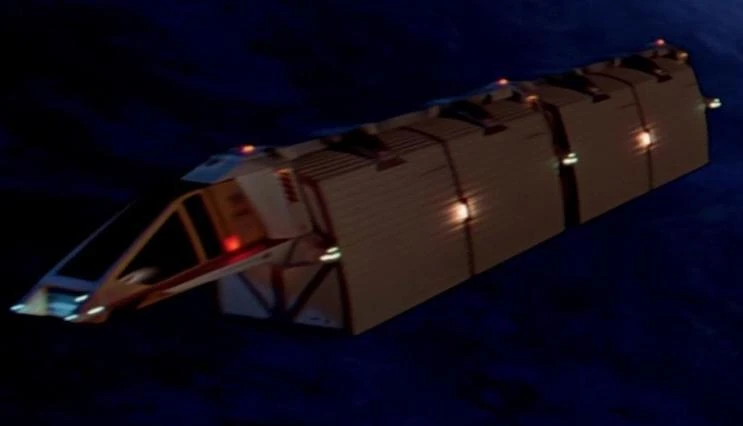 Utility Spacecraft
Workbee Class
Hull Specifications LoggedThe Workbee, also known as a Cargo Management Unit or Extricator, was a versatile, small utility spacecraft extensively utilized by the United Federation of Planets from the late 23rd century through the 24th century. It served as an apparent successor to the earlier Worker Bee class, which was active in the 2250s, demonstrating Starfleet's continuous evolution in auxiliary craft design. These single-occupant vehicles were designed for a variety of tasks, primarily focusing on maintenance, construction, and cargo handling in diverse environments. **Design & Capabilities** The Workbee was engineered as a single-occupant vehicle, featuring seating for only the pilot. Pilots operating a Workbee often needed to be spacesuited, particularly if they intended to perform a space walk in conjunction with their duties. The craft's forward section was characterized by several large windows, providing excellent visibility for the pilot, and it was equipped with a prominent headlight at its extreme forward end to illuminate work areas in low-light conditions. As a dedicated maintenance craft, the Workbee was highly adaptable, capable of being fitted with various tools. A notable attachment was the Grabber Sled, a set of dual remote manipulator arms, which allowed for precise handling of objects. Furthermore, the Workbee could function as a tug for cargo modules when equipped with a specialized cargo-train attachment, as seen in Star Trek: The Motion Picture. Its robust design allowed it to operate effectively in the vacuum of space, within the atmospheric and gravitational conditions of a starship's cargo bay, or on a planetary surface, highlighting its versatility in Starfleet operations. **Service History** Workbees were introduced into Starfleet service by the 2270s and quickly became indispensable. They were frequently assigned to Starfleet shipyards, including those in orbit of Earth, playing a crucial role in major projects. For instance, Workbees assisted in the extensive refitting of the USS Enterprise (NCC-1701) at the San Francisco Fleet Yards and were present during the launch of the USS Enterprise (NCC-1701-B), as depicted in Star Trek: The Motion Picture and Star Trek Generations. Their utility ensured their continued use well into the late 24th century, where they were stationed at vital facilities such as the Utopia Planitia Fleet Yards and Deep Space 9. Workbees assigned to Deep Space 9 were typically gray in color, a detail observed in the Star Trek: Deep Space Nine season 4 credits. In 2364, the USS Enterprise (NCC-1701-D) acquired an Extricator, a Workbee variant, from Starfleet Operational Support Services on Relva VII to replace older, bulkier machines in its cargo bays, as shown in the episode 'Coming of Age'. Throughout the 2370s and 2380s, Workbees were assigned to various other starships, including the USS Enterprise (NCC-1701-E), the USS Equinox, and the USS Protostar. By 2379, new silver craft resembling Workbees were observed in use at the USS Enterprise-E spacedock, where the USS Enterprise (NCC-1701-E) underwent repairs following the Battle in the Bassen Rift, as seen in Star Trek Nemesis. The Workbee's enduring design and functionality cemented its place as a staple of Starfleet's auxiliary fleet for over a century. **Development & Legacy** The Workbee was designed by Andrew Probert for Star Trek: The Motion Picture, with its studio model filmed in the summer of 1978 at Douglas Trumbull's Future General Corporation. Probert expressed satisfaction with the design, though he wished for more articulation to be shown in the craft's on-screen appearances, such as entering a dedicated garage area within the USS Enterprise spacedock. The moniker 'Work Bee' was widely adopted following its initial appearance, appearing in official and unofficial publications like 'Star Trek: The Motion Picture Blueprints'. While initially referred to as a 'cargo management unit' or 'extricator' in dialogue and on an Okudagram in the Star Trek: The Next Generation episode 'Coming of Age', the name 'Workbee' was later canonized in the Star Trek: Prodigy episode 'Starstruck'. Probert also designed a follow-up craft, the Sphinx workpod, during Star Trek: The Next Generation season 1, which, though not explicitly seen until the Star Trek: Lower Decks episode 'Old Friends, New Planets', was featured in the 'Star Trek: The Next Generation Technical Manual'. Other similar utility craft include the Cardassian workbee, Cargo handler, EVA workpod, and the Arkaria shuttle.
- No armament data logged.
- No propulsion data logged.
Classified
Workbee Class
1 VesselThe Workbee, also known as a Cargo Management Unit or Extricator, is a small, single-occupant utility spacecraft primarily utilized by the United Federation of Planets from the late 23rd century through the 24th century. It is considered an apparent successor to the earlier Worker Bee design from the 2250s. Designed by Andrew Probert for Star Trek: The Motion Picture, the Workbee features a single pilot's seat, with the pilot typically requiring a spacesuit, especially for extravehicular activities. The craft is characterized by several large windows at its front and a prominent headlight for illuminating work areas. As a dedicated maintenance craft, the Workbee is highly versatile and can be equipped with a variety of specialized tools. These include a set of dual remote manipulator arms, collectively known as the Grabber Sled, for intricate tasks. Additionally, it can be fitted with a cargo-train attachment, allowing it to function as a tug for larger cargo modules. The Workbee is engineered for operational flexibility, capable of functioning efficiently in the vacuum of space, within the atmospheric and gravitational conditions of a starship's cargo bay, or on a planetary surface. **Service History** Workbees were introduced by the 2270s and quickly became an indispensable asset to Starfleet operations. They were frequently assigned to Starfleet shipyards, including those in orbit of Earth, where they played a crucial role in the extensive refitting of the original USS Enterprise NCC-1701 at the San Francisco Fleet Yards, as depicted in Star Trek: The Motion Picture. They also assisted in the launch of the USS Enterprise NCC-1701-B, as seen in Star Trek Generations. The utility craft continued its service late into the 24th century, with units stationed at vital facilities such as the Utopia Planitia Fleet Yards and Deep Space 9. Workbees assigned to Deep Space 9 were notably gray in color, a detail observed in the Star Trek: Deep Space Nine season 4 credits. In 2364, the USS Enterprise NCC-1701-D acquired an Extricator from Starfleet Operational Support Services on Relva VII, allowing for the retirement of three older, bulkier machines from its cargo bays, as shown in the episode 'Coming of Age'. Throughout the 2370s and 2380s, Workbees were assigned to various other Starfleet starships, including the USS Enterprise NCC-1701-E, the USS Equinox, and the USS Protostar. By 2379, new silver craft, visually resembling Workbees, were observed in use at the USS Enterprise-E spacedock during repairs following the Battle in the Bassen Rift, as featured in Star Trek Nemesis. The Workbee design has also been seen in episodes such as 'Relativity', 'Veritas', 'No Small Parts', and 'The Stars At Night' from Star Trek: Lower Decks. Related utility craft include the Cardassian workbee, Cargo handler, EVA workpod, and the Sphinx workpod, a follow-up design by Andrew Probert that appeared in Star Trek: Lower Decks episode 'Old Friends, New Planets' and was featured in the Star Trek: The Next Generation Technical Manual and Star Trek: Starship Creator.
- No armament data logged.
- No propulsion data logged.
 Classified
Workbee (alternate reality) Class
Hull Specifications LoggedThe Workbee was a compact utility craft utilized by Starfleet within the alternate reality during the 2250s and 2260s. These versatile vessels were designed for various support operations, though their specific tasks were not extensively detailed. They made notable appearances in the films Star Trek Into Darkness and Star Trek Beyond, where they were depicted performing general utility functions for the United Federation of Planets. While the craft themselves were unnamed within the films, the designation 'Workbee' was adopted by Memory Alpha, drawing a parallel to the similar Cargo management unit found in the prime reality. This naming convention reflects their functional role as small, multi-purpose support vehicles essential for Starfleet operations in this timeline.
- No armament data logged.
- No propulsion data logged.

Worker bee
Class: Worker bee- No armament data logged.
- No propulsion data logged.
Classified
Worker bee Class
2 VesselsThe Worker bee is a versatile, small auxiliary craft utilized extensively by the Federation from the mid-23rd century through to at least the 32nd century. Designed as a one-person vehicle, it lacks an auto-pilot system, requiring direct manual operation via a spherical attitude control interface and a dedicated control panel. Its distinctive design features a compact cabin equipped with large viewports that double as holographic interfaces, providing the pilot with enhanced situational awareness and operational data. This craft is highly configurable for a wide array of mission-specific tasks. It can be outfitted with various attachments, including mechanical arms for intricate manipulation and retrieval operations, and laser cannons primarily used for cutting and other utility functions. These attachments are seamlessly integrated with the pilot's controls, often operated through a specialized glove worn by the worker bee's pilot, allowing for precise and intuitive control during complex maneuvers or tasks. **Class History** Worker bees have a long and distinguished service record within Starfleet. In the 23rd century, both the USS Shenzhou and her contemporary starship, the USS Discovery, carried a complement of these versatile craft. In 2256, a worker bee from the USS Shenzhou was dispatched to retrieve a damaged interstellar relay, demonstrating its utility in critical infrastructure maintenance. During the intense Battle of the Binary Stars, Captain Philippa Georgiou even considered the extreme measure of arming a worker bee with a photon warhead and piloting it herself in a desperate attempt to disable or destroy the Klingon Ship of the Dead. The craft continued its service with the USS Discovery; in 2257, Lieutenant Ash Tyler (who was secretly a Klingon operative) piloted a worker bee to salvage a mirror universe Klingon data core and return it to the USS Discovery. A worker bee was also present in the USS Discovery's cargo bay 3 when Me Hani Ika Hali Ka Po emerged from a cargo container she had stowed away in. The Worker bee's operational lifespan extended well into the future; in 3189, worker bees, alongside DOT-7s, were instrumental in repairing the USS Discovery after its crash landing on the Colony. Later that same year, worker bees were again utilized for the extensive retrofitting of the USS Discovery, underscoring their enduring design and adaptability across centuries of Starfleet service. Notable individual worker bees include the craft designated 042, as well as numerous unnamed worker bees that have served Starfleet.
- No armament data logged.
- No propulsion data logged.

Wright Flyer
Class: Experimental [[airplane]]- No armament data logged.
- No propulsion data logged.
 Scout / Patrol
Xantoras patrol ship Class
Hull Specifications LoggedThe Xantoras patrol ship was a class of patrol vessel employed by the Xantoras military during the 22nd century, specifically active in the 2150s. These ships were characterized by a single rear thruster, providing propulsion through space, and demonstrated significant capability for atmospheric flight. For armament, Xantoras patrol ships were equipped with low-power particle beams, which emitted a distinctive turquoise energy signature. While these vessels were not considered a threat to larger, more advanced Starfleet starships like the NX-class, they were more than capable of engaging and neutralizing smaller craft such as shuttles or transport ships. **Service History** A notable incident involving a Xantoras patrol ship occurred in 2152, as documented in the *Star Trek: Enterprise* episode 'The Breach'. During this event, a single Xantoras patrol ship was dispatched by the corrupt Xantoras government with orders to intercept and destroy *Shuttlepod 2*, which was attempting to escape from the surface of Xantoras. The patrol ship fired several shots at the shuttlepod as it departed the atmosphere before ultimately veering off, failing to prevent its escape.
- • Particle weapo
- No propulsion data logged.
 Transport / Freighter
Xepolite Free Trader Class
Hull Specifications LoggedThe Xepolite Free Trader was a specialized starship class primarily utilized by the Xepolites during the late 24th century. These vessels were specifically engineered for the clandestine transport of freight, with a particular emphasis on weapons smuggling. A key design feature was their hull composition, which incorporated a sensor-reflective material. This advanced material effectively prevented standard scanning procedures, making the ships exceptionally difficult to detect and inspect. Furthermore, Xepolite Free Traders were capable of achieving a maximum speed of warp 9.8, allowing them to outrun many conventional patrol vessels and facilitate rapid, covert deliveries. **Class History** The Xepolite Free Trader class gained notoriety for its role in the illicit movement of weapons, particularly for the Cardassians, into the Demilitarized Zone. In mid-2370, when Kira Nerys questioned the means by which the Cardassian Central Command was supplying weapons to the Demilitarized Zone, Gul Dukat speculated that Xepolite Free Traders were the most likely culprits. Shortly thereafter, Commander Benjamin Sisko and Gul Dukat, while aboard the USS Mekong, encountered a Xepolite Free Trader near the Demilitarized Zone that they suspected of illegally transporting armaments. The Xepolite vessel initially ignored the USS Mekong's presence until the runabout fired its phasers across the ship's bow as a warning. The ship's commander, Hetman Drofo Awa, vehemently denied the accusations of weapons smuggling, claiming his vessel was instead transporting five kilotons of regreein wheat husks. Awa refused Commander Sisko's request to board for an inspection, asserting that any such attempt would be considered an act of piracy. Gul Dukat then intervened, issuing an ultimatum: if Hetman Drofo Awa did not lower his ship's shields and permit Commander Sisko to board, the Xepolite Free Trader would be destroyed. Awa complied under duress. Following the inspection, Hetman Drofo Awa's ship was escorted back to Deep Space 9, where he was compelled to offload his cargo and sign a confession detailing his illegal activities. This incident was documented in the Starfleet records as part of 'The Maquis, Part II'.
- No armament data logged.
- • Warp facto
 Explorer
Xindi-Aquatic cruiser Class
Hull Specifications LoggedThe Xindi-Aquatic cruiser was a formidable starship class utilized by the Xindi-Aquatic species during the 22nd century. These vessels were distinguished by their impressive size, measuring at least 1,800 meters in length, and were equipped with the most advanced technology among all five Xindi species. The hull structure featured a distinctive hydrodynamic, swept-wing design, contributing to its unique appearance. A significant engineering feature was a large hangar bay located in the primary section, capable of accommodating and deploying other starships. While possessing superior weaponry, a notable drawback of the Xindi-Aquatic cruisers was their comparatively slower speed when contrasted with other Xindi starship classes. Internally, the Xindi-Aquatic cruisers were designed to facilitate interaction with oxygen-breathing humanoids. A dedicated small room was provided for this purpose, featuring a round window that offered a view into the Aquatics' aquatic domain. The exterior design of the Xindi-Aquatic cruiser was conceptualized by artist John Eaves. Interestingly, the round window element seen aboard the cruiser had previously appeared in an alien bazaar in the Star Trek: Enterprise third season episode 'Rajiin' and was later reused as part of a Romulan control room in the fourth season episodes 'Babel One' and 'United'. The interior views of the Aquatics' sections of the cruiser, including the water containing the Xindi-Aquatics themselves, were rendered using computer-generated imagery. Executive Producer Brannon Braga expressed his admiration for the design, particularly the innovative concept of a ship filled with water and the 'airquarium' for the captain. **Class History** Xindi-Aquatic cruisers played a pivotal role in the events surrounding the Xindi weapon crisis. One such cruiser participated directly in the climactic battle to prevent the Xindi weapon from reaching Earth. This particular vessel was commandeered by the Xindi-Reptilians and was instrumental in transporting the Starfleet starship Enterprise NX-01 into the heart of the conflict. During the intense engagement, the cruiser was disabled by a spatial anomaly generated by a nearby Delphic Expanse Sphere, as depicted in the episode 'Countdown'. Following the successful destruction of the Xindi weapon and the subsequent elimination of the Spheres and the Sphere-Builders, another Xindi-Aquatic cruiser provided crucial assistance by transporting the Enterprise NX-01 back to Earth, likely as a gesture of gratitude for Starfleet's actions, thereby significantly shortening the return journey. This event was chronicled in the episode 'Zero Hour'. The Xindi-Aquatic cruiser's interior was also featured in the episode 'Damage'. **Apocrypha** In the game Star Trek Online, this starship class is referred to as the 'Xindi-Aquatic Narcine Dreadnought Carrier'. In this context, it is a playable vessel that deploys smaller craft, known as 'Mobulai Frigates', which bear a resemblance to the Xindi-Aquatic scout ship, for combat operations.
- • Particle weapo
- • Subspace vortex
 Runabout / Utility
Xindi-Aquatic escape pod Class
Hull Specifications LoggedThe Xindi-Aquatic escape pod was a compact, one-man vessel characterized by a fairly typical escape pod design, yet noted in early drafts as 'ultra-sleek' and 'strange'. A key design feature was its capability for maneuvering underwater, reflecting the Xindi-Aquatic species' native environment. These pods were not equipped with any armaments, focusing solely on emergency egress and survival. **Class History** These specialized escape pods were standard equipment aboard Xindi-Aquatic cruisers. One such pod played a crucial role in early 2154 when it was utilized by the Xindi-Aquatic to clandestinely transfer Jonathan Archer back to the Enterprise (NX-01) after his capture by the Xindi in the Azati Prime system. Following this incident, Jonathan Archer assigned Travis Mayweather and Hoshi Sato to conduct a thorough analysis of the pod. While the vessel itself yielded no significant revelations regarding its design or capabilities, Hoshi Sato successfully discovered an encrypted message within its database. This message, left by Degra, contained vital secret rendezvous coordinates, providing critical intelligence to Starfleet. These events were depicted in the episode 'Damage'.
- No armament data logged.
- No propulsion data logged.
 Scout / Patrol
Xindi-Aquatic scout ship Class
Hull Specifications LoggedThe Xindi-Aquatic scout ship was a distinct class of starship utilized by the Xindi-Aquatic faction during the 2150s. These vessels were notably faster and possessed superior maneuverability compared to the Xindi-Aquatic cruiser, their main capital ship. This design emphasis on speed and agility made them suitable for reconnaissance and rapid engagement roles within the Xindi fleet. Their primary armament consisted of torpedoes, providing a significant offensive capability despite their smaller size. **Service History** During the critical period of the Xindi War, Xindi-Aquatic scout ships played a pivotal role in the conflict. Five vessels of this type were deployed as part of the combined Xindi fleet, assisting the starship Enterprise (NX-01) in a crucial engagement against the Xindi-Reptilian and Xindi-Insectoid forces. The objective of this alliance was to prevent the Xindi weapon from reaching and attacking Earth. During this intense battle, one Xindi-Aquatic scout ship was disabled by the enemy fleet. Another scout ship suffered a direct destruction at the hands of Dolim's Xindi-Reptilian warship. Furthermore, at least two other scout ships were severely crippled by spatial anomalies, which were later determined to have been created by the Sphere-Builders. These events are chronicled in the episode 'Countdown'.
- • Photon torpedo
- No propulsion data logged.
 Runabout / Utility
Xindi-Arboreal landing craft Class
Hull Specifications LoggedThe Xindi-Arboreal landing craft was a specific class of auxiliary shuttle utilized by the Xindi-Arboreals during the mid-22nd century. These vessels served as transport for Xindi-Arboreal personnel, facilitating planetary landings and short-range travel. As a shuttle, its primary function was to ferry individuals and potentially small cargo between larger starships and planetary surfaces, or for localized operations. **Service History** One notable instance of this craft's deployment occurred in 2153. A Xindi-Arboreal landing craft set down on the northern end of the equatorial islands located on the Loque'eque homeworld. Approximately two weeks later, the vessel was discovered by the crew of the Starfleet starship Enterprise (NX-01). The crew of the Enterprise (NX-01) attempted to access the ship's data banks to gather intelligence on the Xindi, but their efforts were interrupted. During their investigation, the Starfleet personnel became infected by a mutagenic virus, which subsequently transformed them into Loque'eque, preventing them from completing their data retrieval. This event was documented in the Starfleet record 'Extinction'. The presence of such a craft on the Loque'eque homeworld indicated the Xindi-Arboreals' involvement or interest in that specific planet.
- No armament data logged.
- No propulsion data logged.
 Explorer
Xindi-Arboreal starship Class
Hull Specifications LoggedThe Xindi-Arboreal starship was a distinct type of starship primarily utilized by the Xindi-Arboreals during the 2150s. These vessels were engineered with advanced offensive capabilities, prominently featuring particle beam weapons for combat engagements. Beyond their armaments, a notable technological characteristic of these starships was their integration of Xindi subspace vortex technology, which likely provided them with unique or enhanced methods of interstellar travel or tactical maneuverability. **Service History** These starships played a crucial role in the tumultuous events of the 2150s, particularly during the crisis involving the Xindi weapon. Several Xindi-Arboreal starships actively participated in the critical battles aimed at stopping the Xindi weapon after it was hijacked by Dolim, the Xindi-Reptilians, and the Xindi-Insectoids. Their involvement was instrumental in the efforts to prevent the weapon's deployment against Earth. The operational history and tactical deployment of these vessels are documented in the Star Trek: Enterprise episodes 'The Council' and 'Countdown', which detail their participation in the broader conflict.
- • Particle weapo
- No propulsion data logged.
 Assault Vehicle
Xindi-Insectoid assault shuttle Class
Hull Specifications LoggedXindi-Insectoid assault shuttles were a specialized type of shuttlecraft-sized, two-person assault vehicle primarily carried aboard larger Xindi-Insectoid starships. These compact vessels were heavily armed, featuring a half dozen particle cannons and torpedo launchers for offensive capabilities. A significant portion of their power was dedicated to reinforcing their structural integrity, a design choice that allowed them to operate effectively in extreme environments, such as within the dense atmospheres of gas giants or even underwater. The cockpit of these shuttles was noted to be cramped, reflecting their utilitarian and combat-focused design. **Class History** One notable encounter with a Xindi-Insectoid assault shuttle occurred in January 2154, when the NX-01 Enterprise recovered one of these vessels while en route to the Azati Prime system, as depicted in the episode 'Hatchery'. Starfleet personnel, specifically Humans, found the shuttle challenging to pilot; Travis Mayweather famously likened the experience to 'steering an asteroid-runner with a bad axis coil.' Despite the difficulty, Mayweather and Charles Tucker III successfully utilized the captured shuttle to penetrate the detection grid surrounding the Xindi primary weapon in the Azati Prime system, enabling them to conduct crucial scans of the device. Later, Captain Jonathan Archer himself piloted the shuttle, carrying several photonic torpedoes in a desperate attempt to destroy the weapon. This mission ultimately led to Captain Archer's capture by Xindi forces, along with the shuttle, as seen in the episode 'Azati Prime'.
- No armament data logged.
- No propulsion data logged.
 Scout / Patrol
Xindi-Insectoid patrol ship Class
1 VesselThe Xindi-Insectoid patrol ship was a small, warp-capable starship primarily utilized by the Xindi-Insectoids. These vessels were equipped with at least one forward-mounted and one underbelly-mounted directed energy weapon emitter, making them suitable for their patrol and interdiction roles. **Service History** These patrol ships were active during the mid-22nd century. Their operational history includes several notable encounters with Starfleet personnel. During a critical mission, the crew of the Enterprise (NX-01) incorporated three Xindi-Insectoid patrol ships into a sophisticated simulation designed to extract the location of Azati Prime from Degra. In this simulated scenario, Jonathan Archer and Degra were pursued by these ships after attempting to escape a Xindi-Insectoid prison colony aboard a Malosian cargo shuttle. They successfully disabled the pursuing patrol ships by venting five hundred liters of warp plasma, which caused the patrol ships' intake manifolds to overheat, rendering their engines inoperable. This event was depicted in the episode 'Stratagem'. Later, upon the Enterprise's arrival at Azati Prime, a Xindi-Insectoid patrol ship hailed Trip Tucker and Travis Mayweather as they attempted to infiltrate the system aboard a Xindi-Insectoid assault shuttle. The patrol ship's commander ordered them to withdraw, stating they were not authorized within the detection grid. Subsequently, Jonathan Archer was pursued and captured by three Xindi-Insectoid patrol ships while attempting to infiltrate the Xindi weapon at Azati Prime, as seen in the episode 'Azati Prime'.
- • Directed energy weapo
- No propulsion data logged.
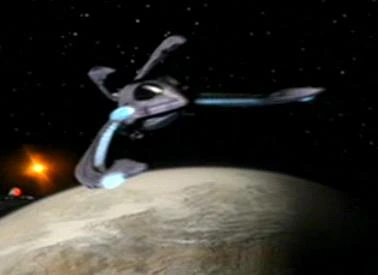 Scout / Patrol
Xindi-Insectoid scout ship Class
Hull Specifications LoggedThe Xindi-Insectoid scout ship was a compact, warp-capable vessel utilized by the Xindi-Insectoids. Significantly smaller than most other Xindi starships, it was designed to operate with a minimal crew complement of just three individuals, suggesting a focus on speed, stealth, or specialized reconnaissance rather than combat endurance or extensive scientific operations. **Class History** One notable encounter involving a Xindi-Insectoid scout ship occurred in early 2154, during the United Earth starship *Enterprise*'s (NX-01) critical mission within the treacherous Delphic Expanse. The scout ship initiated an attack on the *Enterprise* (NX-01). However, the Xindi-Insectoid vessel proved to be no match for the advanced capabilities of the NX-class starship. Following its unsuccessful assault, the scout ship attempted to disengage and escape. To prevent the Xindi-Insectoids from reporting the *Enterprise*'s (NX-01) position and compromising the mission related to the Xindi incident, the United Earth starship was forced to destroy the fleeing scout ship. This event was documented in the episode 'Hatchery'.
- No armament data logged.
- No propulsion data logged.
 Classified
Xindi-Insectoid starship Class
Hull Specifications LoggedThe Xindi-Insectoid starship was a distinctive type of warship utilized by the aggressive Xindi-Insectoids during the 2150s. Its unique design featured a small central core housing the drive system, from which three extended, wing-like sections projected forward, mounted at 120-degree angles along the fore-aft axis. Internally, these vessels were characterized by a heavily decentralized layout, notably lacking a single central control room, a design choice that reflected the non-hierarchical nature of Xindi-Insectoid culture. Despite this, at least one room was equipped with a viewscreen for communications. The exterior design of the Xindi-Insectoid starship was conceived by John Eaves, who drew inspiration from an unexpected source: a lobster dinner. Eaves envisioned the jagged, jointed tendrils of king-crab legs as 'creepy appendages' for a spaceship. Further inspiration came from insect anatomy, such as the serrated shell on the backs of crickets, which informed the faceted, louvered detail of the central body area. The 'eye port' or command center was designed to mimic bug eyes without being a direct copy. Eaves' initial concept featured a thin ship with long, three-jointed 'arms'. He produced a comparison drawing alongside the USS Enterprise (NX-01) and the spherical Xindi weapon. While Executive Producer Rick Berman was enthusiastic about the basic concept, he requested a significant modification: shortening the extremely long arms. Eaves revised the design, eliminating the third limb of each arm, resulting in a more compact 'knuckle' point. This revised drawing received approval from both Rick Berman and Executive Producer Brannon Braga on October 2, 2003. Eaves also rendered a color illustration, ensuring its coloration differed slightly from that of the Xindi-Reptilian warships. At Eden FX, Pierre Drolet was responsible for building and rendering the design as a CGI model. Drolet made some adjustments during the build, including refining and improving the ship's central hub by splitting its core into two segments rather than a symmetrical three-piece section. Although John Eaves had designed the starship to fly with two arms pointing up and one pointing down, the visual effects team ultimately decided to portray the ship spinning, leading to its appearance in various orientations on screen. Two months after the initial design, Eaves returned to create a crash scene design for the episode 'Hatchery', providing reference for the modelers at Eden FX. The final draft script for 'Hatchery' described the crashed vessel as an 'alien vessel' that had 'sustained heavy damage' with 'several breaches... visible in the outer hull'. The interiors of Xindi-Insectoid vessels were designed by the Star Trek: Enterprise art department, taking cues from the Insectoids' preference for dark and moist environments. Production Designer Herman Zimmerman oversaw the creation of new vacu-form wall panels for these interiors. A typical corridor was described in the final draft script of 'Hatchery' as 'cramped' and having a 'modular design, comprised of repeating, interchangeable segments'. The script also specified a 'large' shuttlebay and a 'narrow' airlock, or 'vestibule', situated between two 'large, circular' hatches, one of which featured a 'small window' in its center. The control area, as described in the final draft script of 'Countdown', was simply a 'one-wall set'. **Class History** These warships were actively deployed by the Xindi-Insectoids during the 22nd century, particularly prominent in the 2150s. In early 2154, the USS Enterprise (NX-01) discovered the wreckage of a crashed Xindi-Insectoid starship while en route to the Azati Prime system. The crew of the USS Enterprise (NX-01) found that the adult Xindi-Insectoid crew had perished after transferring power from their life support system to the on-board hatchery, thereby protecting their young. Doctor Phlox later reported that 19 hatchlings were found alive within the wrecked ship, with the USS Enterprise (NX-01) crew anticipating their survival until another Xindi vessel could locate and rescue them, as depicted in the episode 'Hatchery'. Xindi-Insectoid starships played a significant role in the Xindi conflict. Two such vessels participated in the pivotal Battle of Azati Prime. Furthermore, in February 2154, multiple Xindi-Insectoid starships were observed defending the Xindi weapon alongside Xindi-Reptilian warships, as seen in the episodes 'The Council' and 'Countdown'. The final draft script for 'The Council' vividly likened a group of Xindi-Insectoid starships swarming around the Xindi primary weapon upon its launch to 'gnats around a bull'. In an alternate timeline, where the Xindi weapon successfully destroyed Earth, three Xindi-Insectoid starships were part of a Xindi assault fleet dispatched in 2165 to eliminate the last remnants of humanity in the Ceti Alpha system. During this engagement, one Xindi-Insectoid starship was destroyed by fire from the USS Enterprise (NX-01), and another was disabled by the USS Intrepid and an unnamed starship, as chronicled in the episode 'Twilight'.
- • Particle weapo
- • Photon torpedo
- • Subspace vortex
 Classified
Xindi-Primate starship Class
Hull Specifications LoggedThe Xindi-Primate starship was a type of cruiser utilized by the Xindi-Primate faction of the Xindi species during the 22nd century, particularly prominent in the 2150s. While considered maneuverable and equipped with above-average particle weapons, these vessels were generally regarded as the least formidable among the various starship classes comprising the Xindi fleet. **Service History** These starships played a role in several significant events during 2154. One such vessel was used as a rendezvous point when Degra docked with it for a crucial meeting with three members of the Xindi Council, as depicted in the episode 'E²'. Later that year, a fleet composed of Xindi-Primate starships and Xindi-Arboreal ships provided an escort for the starship Enterprise (NX-01) as it traversed their security zone en route to the Xindi Council planet, an event chronicled in the episode 'The Council'. Shortly thereafter, Xindi-Primate starships were among the allied Xindi forces that intercepted a combined Xindi-Reptilian and Xindi-Insectoid fleet guarding the Xindi weapon. During the ensuing battle, the Xindi-Primate starships actively engaged the enemy using their particle weapons, as seen in the episode 'Countdown'.
- No armament data logged.
- No propulsion data logged.

Xindi-Reptilian warship
Class: Xindi-Reptilian warship- • Particle weapo
- • Photon torpedo
- • Subspace vortex
Escort / Warship
Xindi-Reptilian warship Class
1 VesselThe Xindi-Reptilian warship was a formidable vessel primarily utilized by the Xindi-Reptilians during the mid-22nd century. While its design was largely a product of Reptilian engineering, the Xindi-Primate Degra contributed significantly to the development of its power systems. These warships were heavily armed, featuring particle beam weapons and torpedoes, reflecting the aggressive nature of the Xindi-Reptilians. Despite their considerable firepower, they were not as advanced or as well-armed as the Xindi-Aquatic scout ships, which were of a similar size. Each warship was equipped with sensor encoders, allowing a Reptilian analysis team to determine the cause of its destruction should it be lost in combat. Internally, the Xindi-Reptilian warship comprised at least seven deck levels, interconnected by numerous corridors. Specific facilities included a cell located on one of the first three decks, a dedicated dining chamber, and a thermal chamber designated for the commanding officer. The vessels were also capable of advanced interstellar travel, able to traverse space via subspace vortexes. **Service History** The Xindi-Reptilian warship class saw extensive service during the Xindi Crisis. The starship Enterprise NX-01 first encountered these warships in the Delphic Expanse in the fall of 2153. During this initial engagement, two Xindi-Reptilian warships mounted an assault on Enterprise NX-01 to extract the Xindi spy Rajiin. The encounter demonstrated that two of these warships were approximately an even match for Enterprise NX-01. One of the Reptilian vessels successfully docked with Enterprise NX-01, deploying three boarding parties, each consisting of five individuals, to recapture their informant. Following their departure, the Xindi-Reptilian warships entered a subspace vortex, rendering them untraceable. In early 2154, the Xindi-Primate Degra's prior involvement in the power systems of this class proved crucial. His intimate knowledge allowed his own, weaker ship to effectively attack and destroy a Xindi-Reptilian warship that was engaging Enterprise NX-01. A pivotal moment in their service history occurred when Commander Dolim led his Xindi-Reptilian warship, alongside the devastating Xindi weapon, in a direct effort to destroy Earth. The Andorian battle cruiser Kumari bravely engaged Dolim's warship, providing critical time for Jonathan Archer, Malcolm Reed, Hoshi Sato, and a team of MACOs to beam to the Xindi weapon. After Commander Dolim transported to the Xindi weapon, the Kumari exploited a vulnerability in the warship's defenses, targeting and destroying its starboard engine due to weakened shields. Xindi-Reptilian warships were prominently featured in several Star Trek: Enterprise episodes, including 'Rajiin', 'The Shipment', 'Twilight', 'Proving Ground', 'Stratagem', 'Azati Prime', 'Damage', 'The Forgotten', 'The Council', 'Countdown', and 'Zero Hour'.
- • Particle weapo
- • Photon torpedo
- • Subspace vortex
 Explorer
Xyrillian ship Class
Hull Specifications LoggedXyrillian ships, utilized by the Xyrillians during the mid-22nd century, featured a distinctive design. Their main hull was tapering, from which four nacelles extended: two on horizontal trailing arms and two on vertical trailing arms. An apparent sensor array was mounted between these nacelles. These vessels were equipped with advanced stealth technology, allowing them to remain undetected, and sophisticated holography. The holographic systems were based on resequenced photons, capable of projecting realistic scenery, a technology far in advance of Human science during that era. Additionally, Xyrillian vessels contained tanks that stored eel-like creatures, though their specific purpose is not fully detailed. **Class History** In 2151, the NX-class starship *Enterprise* discovered a Xyrillian ship hiding within its warp field. The Xyrillian craft was restricting the flow of the *Enterprise*'s plasma exhausts, causing various power drops and surges on the Starfleet vessel. The Xyrillian crew were using their stealth technology to exploit the *Enterprise*'s plasma wake to power their own engines, as their plasma coils had failed. Upon the discovery of the Xyrillian ship, Commander Charles Tucker III offered his assistance, despite finding the different atmosphere within the Xyrillian vessel difficult to adjust to. A Xyrillian crew member named Ah'len demonstrated their astounding holotechnology to Commander Tucker, who was later able to repair the ship. Commander Tucker's initial repairs proved to be short-lived. The Xyrillian craft was subsequently found cloaked behind a Klingon ship. After the Xyrillians were discovered by the Klingons, a deal was struck between the Klingon captain and the Xyrillian captain, Trena'L. The Klingons agreed to let the Xyrillian ship go in return for implementing holographic technology on the Klingon vessel. Following this agreement, Commander Tucker once again repaired the Xyrillian ship. This particular vessel had a complement of thirty-six Xyrillians and was commanded by Captain Trena'L. These events were chronicled in the Star Trek: Enterprise episode 'Unexpected'. The Xyrillian ship class was also referenced in the episodes 'Cold Front' and 'Oasis'. The script for 'Unexpected' described the Xyrillian ship as being 'about half the length of one of [the] nacelles' from an NX-class starship, and it was later referred to as 'a small but exotic ship'.
- No armament data logged.
- No propulsion data logged.
 Transport / Freighter
Y class
Hull Specifications LoggedThe Y-class freighter was a robust starship design primarily utilized by the Earth Cargo Service during the 22nd century. These vessels were crucial for interstellar commerce, transporting significant quantities of cargo across various systems. A typical Y-class vessel, such as the ECS Fortunate, was operated by a small crew, often including their families. The class made notable appearances in Star Trek: Enterprise episodes, including "Fortunate Son", "Twilight", and "Borderland". In an alternate timeline depicted in "Twilight", a Y-class vessel was part of an Earth convoy destined to settle on Ceti Alpha V in 2165. **Capabilities & Technical Specifications** Y-class freighters were designed to haul approximately 20 kilotons of cargo. Their original warp drive engines allowed for a maximum speed of Warp 1.8. However, due to the prevalent threat of pirates, many captains opted to refit their ships with more advanced Warp 3 engines, increasing their speed tenfold. While typically armed with a single low-yield plasma cannon, these weapons were frequently upgraded to enhance defensive capabilities against hostile encounters. The crew and family complement for a Y-class cargo ship was approximately two dozen individuals. The Y-class was slightly larger than the J-class freighter, though it shared a similar basic design philosophy. **Design & Production** The design of the Y-class freighter began with concept artist John Eaves, who produced several initial sketches featuring a central framework with multiple cargo pods. The script for the Star Trek: Enterprise episode "Fortunate Son" heavily influenced the final design, particularly the need for a vessel capable of having a cargo pod detached during the episode's events. Early script drafts described the Y-class as having a half-dozen to eight cargo modules, each fifty-plus meters in length, and a smaller crew module at the nose. Visual effects supervisor Ronald B. Moore played a significant role in finalizing the Y-class's appearance. Working with the CGI modeler, Moore focused on practical considerations for the episode's specific shots, including the need for docking capabilities and the separation of a cargo pod. He combined elements from Eaves's concept art, selecting the more robust nose section from one drawing, which he felt provided more bulk for docking and subconsciously reminded him of the Leonov from the film 2010. Conversely, he chose the more symmetrical cargo pods from another sketch, adjusting their spacing to create a distinct 'valley' effect. Although never explicitly shown in canon, Moore and his modeler equipped the Y-class with a pair of warp nacelles tucked into its underside. For the interior sets of the Y-class, particularly for "Fortunate Son", the bridge was constructed on Paramount Stage 8, while other areas like access corridors, the infirmary, and cargo modules were built on Paramount Stage 18. The Y-class bridge set was a heavily modified reuse of the USS Defiant (NX-74205)'s bridge set from Star Trek: Deep Space Nine. Other interior sets, such as hallways and cargo bays, were redressed NX-class sets commonly used for the USS Enterprise (NX-01), featuring new lighting and wall additions. Cargo module 4 aboard the ECS Fortunate was optically enhanced to appear vast, and a single hatch set piece was redressed for use across multiple cargo modules.
- • Plasma canno
- • Warp facto
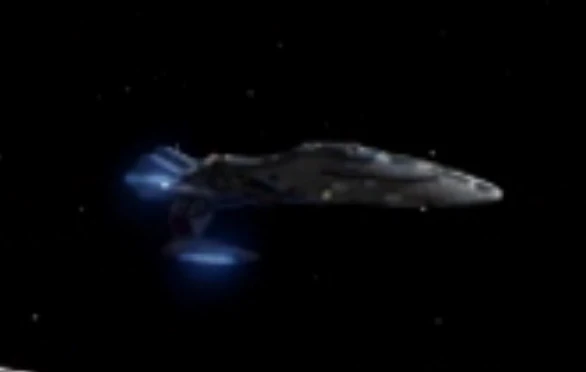 Classified
Yeager type
Hull Specifications LoggedThe Yeager-type was a distinctive starship class developed by Starfleet, primarily in use during the 2370s. Its design is a notable variant of the Intrepid-class, incorporating a standard Intrepid-class saucer section. This saucer is then attached to a significantly larger and bulkier secondary hull, differentiating its profile from its progenitor. Two nacelles are mounted on prominent wing-like appendages that extend from the aft section of the secondary hull. According to the Star Trek: Deep Space Nine Technical Manual, the Yeager-type vessels were constructed from a combination of salvaged components, parts already in production, and custom assemblies fabricated by individual fleet yards. The primary production base for this class was the ASDB Integration Facility at Utopia Planitia Fleet Yards, located on Mars. Further details from Star Trek: The Official Starships Collection issue #122 suggest that the USS Yeager (NCC-65674), the only known vessel of this type, was specifically constructed using the saucer section of an Intrepid-class starship combined with the rear hull of a Maquis raider. **Class History** The Yeager-type entered service during the tumultuous 2370s, a period marked by significant interstellar conflicts. The class is named after its sole known vessel, the USS Yeager (NCC-65674). This particular starship played a crucial role in the Dominion War, participating in key engagements such as Operation Return. The USS Yeager (NCC-65674) was also an integral part of the defense force tasked with protecting Deep Space 9 throughout the duration of the war, as depicted in the Star Trek: Deep Space Nine episode 'Sacrifice of Angels'. The USS Yeager (NCC-65674) made numerous appearances in Star Trek: Deep Space Nine, including episodes such as 'Doctor Bashir, I Presume', 'A Simple Investigation', 'Blaze of Glory', 'In the Cards', 'Sacrifice of Angels', 'Resurrection', 'The Magnificent Ferengi', 'Waltz', 'One Little Ship', 'Honor Among Thieves', 'Change of Heart', 'Wrongs Darker Than Death or Night', 'Inquisition', 'The Reckoning', 'Profit and Lace', 'The Sound of Her Voice', 'Chrysalis', 'Once More Unto the Breach', 'It's Only a Paper Moon', 'Prodigal Daughter', 'Field of Fire', 'Chimera', and 'Badda-Bing, Badda-Bang'.
- No armament data logged.
- No propulsion data logged.
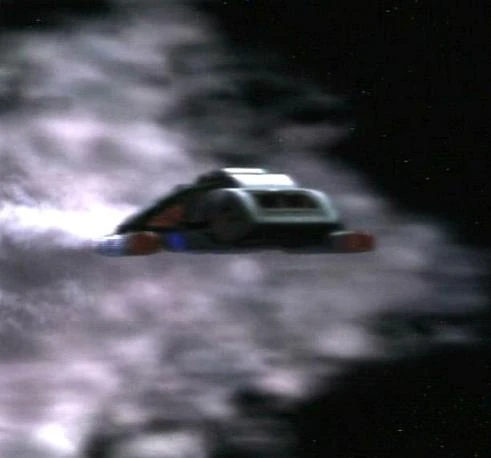 Runabout / Utility
Yellowstone class
Hull Specifications LoggedIn an alternate timeline, the Yellowstone-class runabout was an upgraded design of the Danube-class runabout, conceived in the late-24th century. This versatile class was engineered to fulfill a diverse array of mission profiles for Starfleet. The prototype vessel, the USS Yellowstone (2372), was designed by the Starfleet Engineering Corps and its construction commenced in late-2371. Key members of the design team included Lieutenant Lasca and Ensign Harry Kim, with Ensign Harry Kim specifically credited for designing the innovative tetryon plasma warp engines that powered the class. Initially, the Yellowstone-class faced a significant design challenge related to a dilithium fracture problem. Several weeks were dedicated to resolving this issue, which was ultimately 'cured' through the development of new plasma flow equations. On stardate 49011, following six months of intensive work, Lieutenant Lasca and Ensign Harry Kim presented their findings on the USS Yellowstone, with a particular focus on the resolved fracture problem, to Admiral Strickler, who expressed considerable interest in the runabout's design. **Class History** Although deemed spaceworthy, the USS Yellowstone (2372) was still undergoing construction in early-2372 within the alternate timeline. Many of its defensive systems, including crucial safety interlocks, remained unfinished at this stage. The prototype vessel was stored in Spacedock One. The Yellowstone-class runabout, and specifically the USS Yellowstone (2372), made its sole appearance in the Star Trek: Voyager episode 'Non Sequitur', which depicted this alternate reality. It is not known if this specific design existed in the prime reality. **Specifications** According to its master systems display, the Yellowstone-class runabout was designed to accommodate a crew complement of two flight crew and one cargo specialist. The vessel measured 10.5 meters in length, 4.2 meters in beam (width), and 3.6 meters in height. Its empty mass was 4.5 metric tons, with a standard maximum payload capacity of 6.6 metric tons, which could be uprated to 8.9 metric tons. The propulsion system consisted of two tetryon plasma warp nacelles and twelve microfusion thrusters. The runabout's standard performance allowed for sustained travel at warp factor 4 for 38 hours, and at warp factor 6.2 for 32 hours. Defensive capabilities included Deflector shields.
- No armament data logged.
- • Deflector shield
 Asteroid Ship
Yonada Class
Hull Specifications LoggedThe Yonada was a colossal asteroid ship, ingeniously constructed by the Fabrini civilization approximately ten thousand years prior to its encounter with Starfleet. Faced with the imminent supernova of their home sun within the Fabrina solar system, the Fabrini engineered Yonada as a self-contained worldship, designed to transport their people to a habitable colony world. Measuring an impressive two hundred miles (320 kilometers) in diameter, Yonada was externally indistinguishable from a typical asteroid. Internally, however, it was a marvel of ancient engineering, propelled by atomic power that allowed it to correct for gravitational stresses during its millennia-long journey. Its engines left a distinctive trail of debris and hard radiation. For defense, the Yonada was equipped with chemically-fueled missiles, capable of deterring perceived threats. **Service History** In 2268, the USS Enterprise (NCC-1701), under the command of Captain James T. Kirk, encountered the Yonada when its automated defense systems fired upon the Starfleet vessel. The USS Enterprise (NCC-1701) crew soon discovered that the Yonada was on a collision course with the populated planet Daran V. A critical aspect of the Yonada's long journey was the profound cultural shift among its inhabitants. Over ten millennia, the Fabrini colonists had completely forgotten their true nature as passengers on a starship, instead developing a sophisticated religion centered around the worship of the ship's computer, which they referred to as the Oracle. The Oracle, in its corrupted state, had led the Fabrini to believe that the Yonada itself was their promised 'new world'. To maintain this illusion and prevent discovery of the truth, the Oracle had implanted an instrument of obedience into every Fabrini and strictly forbade any activity that might expose the ship's true nature, such as mountain climbing. Central to their faith was the Oracle Room, which housed the physical representation of the Oracle, a kneeling platform for the high priestess to communicate with it, and a plinth holding the 'Book of the People'. This room also contained formidable defensive mechanisms, including the ability to incapacitate intruders with an electric shock or to rapidly heat the room to lethal temperatures, causing death by heat stroke or incineration. Concealed within the Oracle Room was also the entrance to the Yonada's control room. Captain James T. Kirk and his crew intervened to assist Natira, the leader of the Yonada colonists. They helped her and her people understand that their 'world' was, in fact, a starship. With Starfleet's aid, the Yonada's course was corrected to its intended destination, ensuring a safe arrival for the Fabrini. This pivotal event was chronicled in the Starfleet record 'For the World is Hollow and I Have Touched the Sky'. **Related Information** In early drafts of the Star Trek: The Next Generation episode 'Gambit, Part I', the planet Yadalla Prime was initially referred to as Yonada Prime, a direct reference to the asteroid ship. This name was later changed in subsequent script versions to establish a Romulan origin for the planet, though the name Yonada Prime still appeared in an Okudagram within the episode.
- • Chemically-powered nuclear missiles
- No propulsion data logged.

Yosemite
Class: Type 6A shuttlecraft- No armament data logged.
- • Warp drive

Yosemite II
Class: Type 6A shuttlecraft- No armament data logged.
- • Warp drive
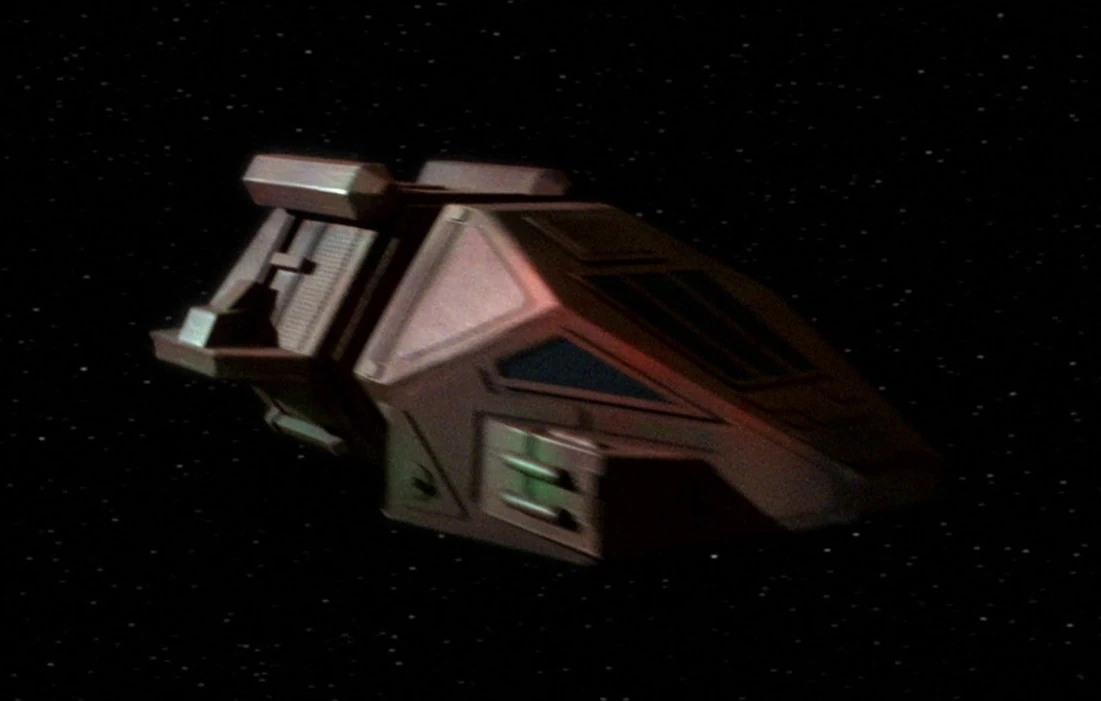 Runabout / Utility
Yridian shuttle Class
Hull Specifications LoggedThe Yridian shuttle was a compact, shuttlecraft-sized vessel primarily utilized by the Yridian species during the 24th century, specifically noted in the 2360s. These vessels were engineered for versatility, possessing the capability to travel at warp speeds for interstellar transit and perform planetary landings, making them suitable for various exploratory and trading missions. The interior design of a typical Yridian shuttle featured a functional layout, including two seats positioned at the front for the pilot and a potential co-pilot or passenger. A dedicated area for rest was located in the rear of the craft, complemented by a rear entry hatch for ingress and egress. **Service History** During its period of active service, the Yridian shuttle proved to be a reliable craft for its operators. A notable example of this class was the vessel owned by the trader Jaglom Shrek in 2369. Jaglom Shrek extensively used his Yridian shuttle, identified by the registry YLT-3609, for his various excursions and trading activities, as documented in the events of 'Birthright, Part I' and 'Birthright, Part II'. This particular shuttle's interior was observed to have a practical design, facilitating both travel and short-term habitation.
- No armament data logged.
- No propulsion data logged.
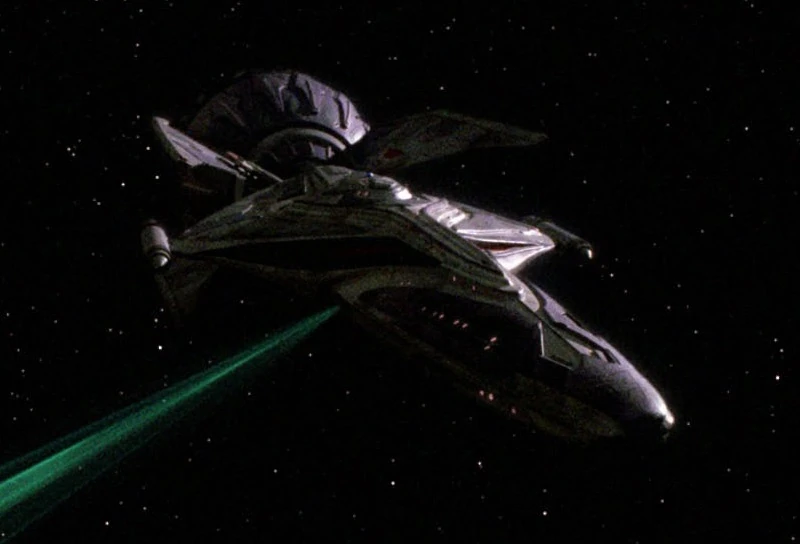 Escort / Warship
Yridian starship Class
Hull Specifications LoggedYridian starships were a versatile class of vessel employed by the Yridians during the late 24th century. These ships were designed to fulfill multiple roles, primarily serving as destroyers for tactical engagements and as freighters for cargo transport and trade operations. **Service History** In 2369, a Yridian destroyer gained notoriety when it intercepted Professor Galen's shuttlecraft, utilizing a tractor beam to immobilize it. The Yridians were keenly interested in acquiring Galen's research, which pertained to an ancient software program encoded within the DNA of various species, with the intention of selling this valuable data to the Cardassian Union. After boarding the shuttle and extracting information from Galen's computer, the destroyer was confronted by the USS Enterprise-D. When ordered to cease its activities, the Yridian vessel responded by firing upon the USS Enterprise-D. It was subsequently destroyed by a single phaser blast from the USS Enterprise-D. According to a deleted scene from 'The Chase', Data explained that the destroyer's destruction was hastened by its power generators overloading in conjunction with the phaser beam. This incident was chronicled in the Star Trek: The Next Generation episode 'The Chase'. A year later, in 2370, a Yridian freighter, commanded by Yog, was involved in a clandestine rendezvous with a Klingon Bird-of-Prey operated by the Duras sisters. During this transaction, the Klingons sold several thousand kilograms of magnesite ore, which had been stolen from a Pakled mine located in the Kalla system, to the Yridians. The USS Enterprise-D, actively searching for the Duras sisters, arrived in the midst of this exchange. Commander William T. Riker intervened, offering one-half gram of Anjoran bio-mimetic gel in exchange for the ore. He then transported the gel in front of the cloaked Klingon vessel and detonated it with the USS Enterprise-D's phasers. The magnesite ore reflected off the Klingon Bird-of-Prey, enabling the USS Enterprise-D to lock a tractor beam onto the ship. This event was depicted in the Star Trek: The Next Generation episode 'Firstborn'.
- No armament data logged.
- No propulsion data logged.
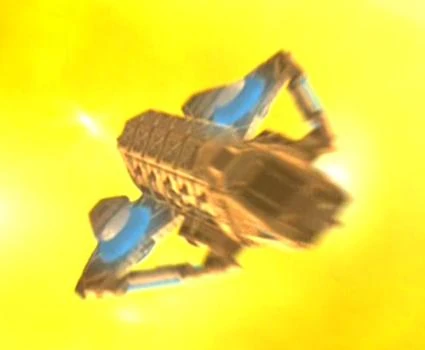 Vessel
Yridian vessel Class
Hull Specifications LoggedThe Yridian vessel was a type of small shuttlecraft utilized by the Yridians during the 2160s. This vessel was specifically designed to be operated by a single individual, emphasizing its compact nature and efficiency for personal or specialized tasks. **Service History** In an alternate timeline, a Yridian vessel played a notable role when Yerdrin Lek used one such shuttle to trail a Denobulan shuttle. The Denobulan shuttle was transporting Dr. Phlox to Ceti Alpha V. This Yridian vessel was subsequently discovered outside the chromosphere of Ceti Alpha by the Enterprise (NX-01) and was taken aboard. This incident highlights the vessel's operational presence during the 22nd century.
- No armament data logged.
- No propulsion data logged.
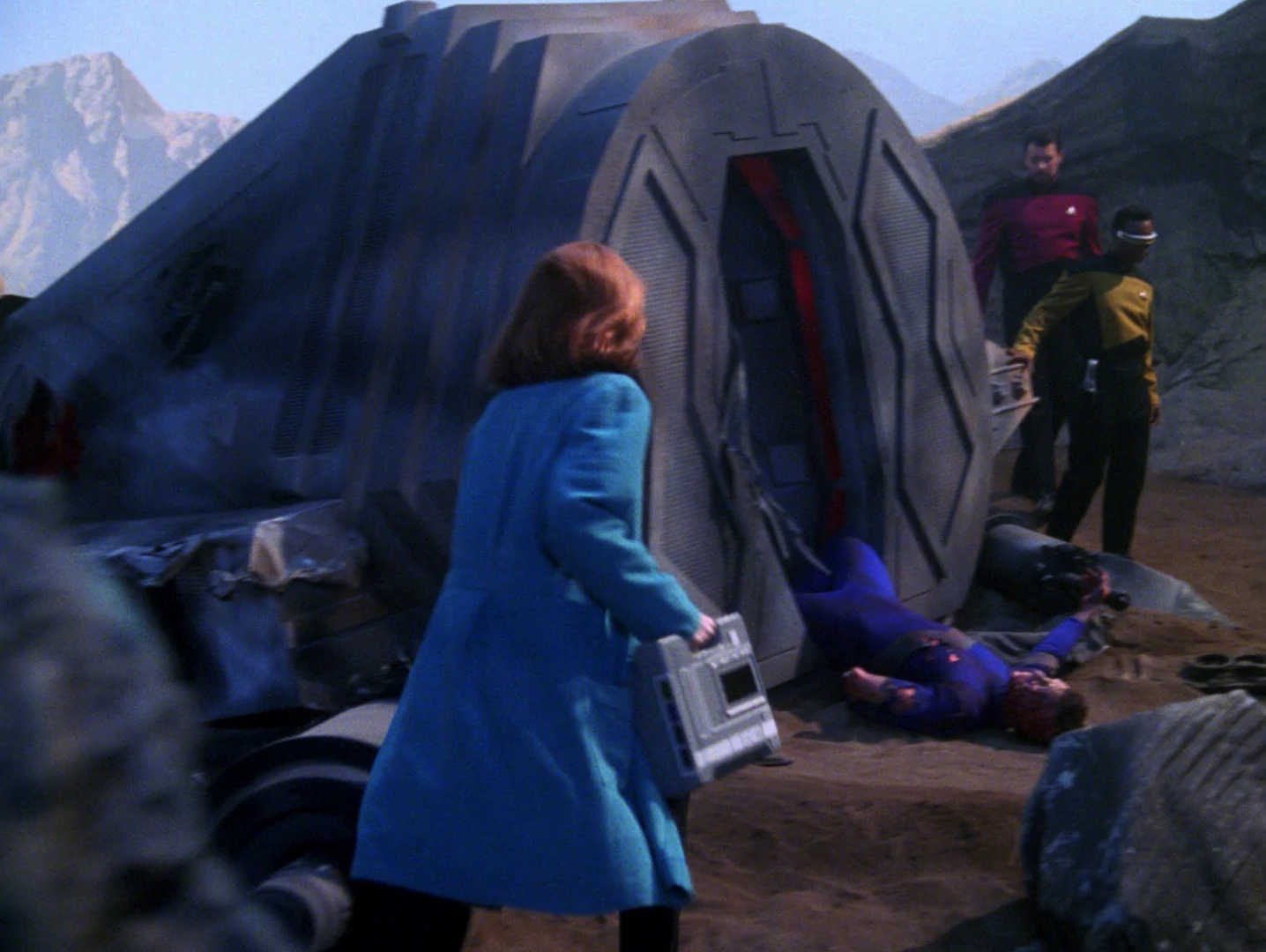 Runabout / Utility
Zalkonian escape pod Class
Hull Specifications LoggedThe Zalkonian escape pod was a compact craft specifically engineered by the Zalkonians to facilitate safe egress from their vessels during emergency situations. Its primary function was to provide a secure means of escape for individuals aboard Zalkonian starships. A notable feature of its internal computer system involved the use of small, gel-filled capsules, indicating a unique approach to data storage or processing within the pod's operational framework. **Service History** One documented instance of a Zalkonian escape pod's deployment occurred in 2366. During this period, a Zalkonian individual, later identified as 'John Doe', utilized one of these pods to flee a Zalkonian ship that was under attack near the planet Zalkon. Following its deployment, 'John Doe's' escape pod subsequently crash-landed on an unidentified planet located within the Zeta Gelis star cluster. The pod and its occupant were later discovered by the USS Enterprise (NCC-1701-D). 'John Doe' was successfully rescued from the wreckage, and Starfleet personnel were able to salvage a single computer capsule from the damaged pod. This event was chronicled in the Starfleet record 'Transfigurations'.
- No armament data logged.
- No propulsion data logged.
 Escort / Warship
Zalkonian warship Class
Hull Specifications LoggedThe Zalkonian warship was an advanced class of vessel employed by the Zalkonians during the mid-24th century. These warships were formidable, possessing capabilities in both armament and performance that were comparable to Starfleet's Galaxy-class starships, particularly in terms of speed and maneuverability. **Capabilities** Beyond standard directed energy weapons, Zalkonian warships were equipped with a unique and devastating weapon system. This specialized armament was capable of inducing asphyxiation in the crews of enemy vessels, a form of attack against which standard Federation shields proved entirely ineffective. This made them a significant threat to any starship not specifically prepared for such an encounter. **Service History** One notable encounter involving a Zalkonian warship occurred in late-2366. A vessel of this class was observed traversing sector 9569 on an intercept course with the Federation starship USS Enterprise (NCC-1701-D). Its mission was to retrieve the Zalkonian fugitive known as 'John Doe'. This event was documented in the Starfleet record 'Transfigurations'.
- • Phase
- • Warp facto
- • Deflector shield
 Runabout / Utility
Zibalian escape pod Class
Hull Specifications LoggedThe Zibalian escape pod was a compact emergency craft specifically designed for use aboard Zibalian freighters. These small vessels were typically berthed in the aft section of a freighter's cargo bay, serving as a critical safety measure in the event of a catastrophic incident. Operationally, the escape sequence for a Zibalian escape pod required the simultaneous input and coordination of two individuals to initiate, ensuring a deliberate and confirmed launch during an emergency. **Service History** One notable incident involving a Zibalian escape pod occurred in 2366. During this time, Lieutenant Commander Data of Starfleet attempted to utilize one of these pods to escape from the Zibalian freighter Jovis, where he was being held captive by the collector Kivas Fajo. However, Data's escape attempt was thwarted when Kivas Fajo threatened the life of Data's fellow captive, Varria, with a Varon-T disruptor, forcing Data to abandon his plan. This event was documented in the Starfleet record 'The Most Toys'.
- No armament data logged.
- No propulsion data logged.
 Motorcycle
Zündapp KS750 Class
Hull Specifications LoggedThe Zündapp KS750 was a distinctive motorcycle, combined with a sidecar, produced on Earth by the German automotive manufacturer Zündapp for the German military during World War II. It was one of two major sidecar motorcycle types utilized by the Germans during the war, the other being the BMW R75. Initially, a pre-war civilian version, the KS600, was pressed into military service. However, it was quickly discovered to be underpowered and too frail for the rigors of combat. This led to its rapid redesign into the visually near-identical, but far more robust, KS750. The KS750 featured a more powerful engine, a sturdier frame, and larger disc-brakes, which were deemed necessary to compensate for the increased engine power. Despite being technically superior and having a higher production count, with 18,600 units of the KS750 variant produced during the war compared to BMW's 16,500, the Zündapp KS600/750 has largely remained in the shadow of its more renowned rival, the BMW R75, which became the quintessential World War II German motorcycle in popular culture. **Class History** In 2374, the Hirogen, having gained control over the USS Voyager, extensively utilized its holodeck for their hunting simulations. One such scenario was meticulously crafted to represent the French World War II-era village of Sainte Claire, which was under German occupation. To ensure historical accuracy, the Hirogen recreated holographic duplicate period vehicles as part of the simulation's backdrop. Among these was a Zündapp KS750 motorcycle, operated by SS soldiers, which could be seen patrolling the occupied city. During one instance within the simulation, this motorcycle pursued Seven of Nine and Neelix, who were portraying French Resistance fighters, into an alley of the town, as depicted in the episode 'The Killing Game, Part II'.
- • Projectile weapo (Qty: optional)
- No propulsion data logged.