Class dossier: Constitution II class
Introduction
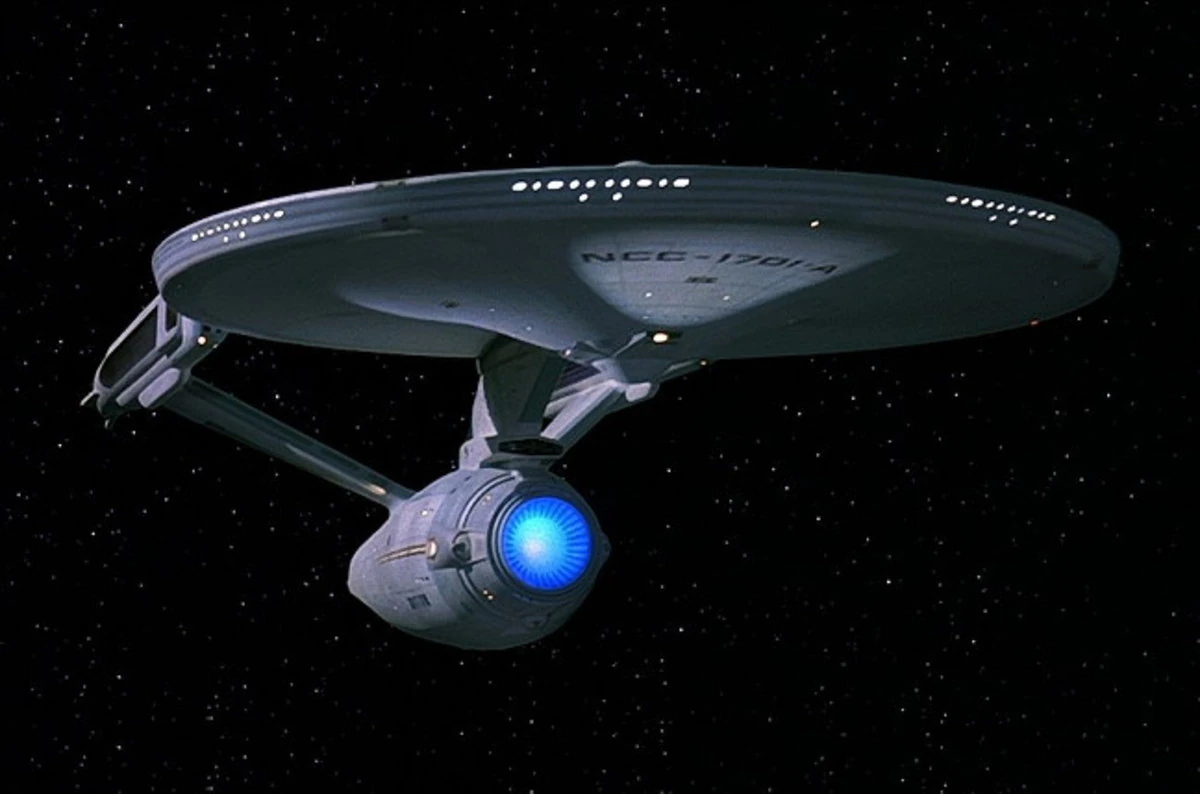
The Constitution II-class was a Federation heavy cruiser operated by Starfleet from the late 23rd century to the middle of the 24th century. Initially perceived as a mere refit of the original Constitution-class, by 2401, it was retroactively reclassified as a distinct class. This reclassification was officially adopted by Starfleet in the early 25th century, particularly with the introduction of its successor, the Constitution III-class. The USS Enterprise (NCC-1701-A) of this class was a personal favorite of Jack Crusher, who admired its 'perfectly clean retro lines'.
Design & Development
The genesis of the Constitution II-class began in the early 2270s as an ambitious 18-month redesign and retrofit project for the USS Enterprise (NCC-1701), spearheaded by Captain Will Decker and Commander Montgomery Scott. This extensive overhaul effectively created an almost entirely new vessel, replacing nearly every major system. Few officers were fully rated on the new design, highlighting the significant changes. The refitted USS Enterprise (NCC-1701) was pressed into service even before its completion to confront the V'Ger probe.
Andrew Probert, a co-designer of the 2270s Enterprise, took the initiative to increase the ship's length to 1,000 feet, slightly longer than its predecessor, and enlarged the saucer section, adding updated superstructure elements. This dimension became a crucial yardstick for subsequent starship designs, adopted by Visual Effects Art Director Nilo Rodis for size comparison art at Industrial Light & Magic, and later by Probert himself for the 'Star Trek: The Next Generation Writers' Technical Manual'.
The concept of saucer separation, though never utilized in Star Trek: The Original Series, was a long-standing design intent for the Constitution-class. This capability was re-envisioned for the Constitution II-class by Andrew Probert in 1979 during the development of Star Trek: The Motion Picture. He conceived a dramatic battle sequence where the Enterprise would separate its saucer to engage a Klingon K't'inga-class battle cruiser. The studio model for the 2270s Enterprise was constructed to facilitate such a maneuver, unlike its Original Series counterpart. Probert noted that the Enterprise was always designed to separate from its engineering section, incorporating landing feet and a specific separation line on the dorsal surface.
Class History
2280s
In the early 2280s, the USS Enterprise (NCC-1701) was repurposed as a training vessel. Starfleet Academy trainees utilized a planet-side bridge simulator, identified as an Enterprise Mark IV bridge simulator, to gain experience. Following severe structural damage inflicted by Khan Noonien Singh during battle with the USS Reliant (NCC-1864), and with the advent of newer starship designs like the Excelsior-class USS Excelsior (NCC-2000), Starfleet Command deemed the twenty-year-old Enterprise unsuitable for further refits, concluding that 'her day is over'.
By 2286, at least three Constitution II-class ships were in active service. The USS Enterprise (NCC-1701-A) was commissioned at the San Francisco Fleet Yards on stardate 8442.5. However, Captain Montgomery Scott's shakedown cruise report for the Enterprise-A was less than glowing, remarking that 'this new ship was put together by monkeys' and that 'half the doors won't open'. The USS Intrepid (NCC-1707) was also active during this period.
2290s
The 2290s saw many newer Constitution II-class starships in service. In 2293, a task force comprising the USS Ahwahnee (NCC-2048), USS Eagle, USS Emden, USS Endeavour (NCC-1895), USS Potemkin (NCC-1657), USS Korolev (NCC-2014), USS Kongo (NCC-1710), USS Republic (NCC-1371), and USS Yorktown (23rd century) was assembled for Operation Retrieve, a mission to rescue James T. Kirk and Leonard McCoy from Klingon captivity. The USS Enterprise (NCC-1701-A) was decommissioned in 2293 to make way for the new Excelsior-class USS Enterprise (NCC-1701-B) and was subsequently stored on display at the Fleet Museum.
24th Century
While the class was largely phased out by the 24th century, a model of a modified 2270s Constitution II-class vessel, featuring rotated warp nacelles and additional saucer hatches, was present in a holographic simulation of Drafting Room 5 at Utopia Planitia Fleet Yards. Wreckage from a Constitution II-class ship was also visible after the devastating Battle of Wolf 359, suggesting at least one vessel or its components remained in service or disrepair into this era.
Legacy
The Constitution II-class was completely phased out by the 24th century. Its design, however, left a lasting impression, with Jack Crusher expressing a personal fondness for its 'perfectly clean retro lines'. The class's legacy continued with the introduction of its successor, the Constitution III-class, in the last years of the 24th century, one of which would become the eighth starship to bear the name USS Enterprise (NCC-1701-G).
Technical Specifications
Physical Arrangement
The Constitution II-class adhered to the classic Starfleet saucer section-engineering section-warp nacelle layout.
Propulsion Systems
The main sub-light propulsion was provided by an impulse drive, located at the aft of the saucer/primary hull, enabling velocities of at least warp factor 0.8. The warp engines were capable of achieving at least warp factor 7. Display graphics from Star Trek: The Next Generation episodes 'The Naked Now', 'Datalore', and 'The Last Outpost' depicted diagrams of both impulse and warp subsystems.
Tactical Systems
Following the 2270s redesign, the phaser power of Constitution II-class ships was significantly increased by channeling energy directly from the main engines. This system, however, had a critical vulnerability: phasers would automatically cut off if the engines experienced an anti-matter imbalance, though photon torpedoes remained unaffected. The vessels were equipped with two forward-firing torpedo launchers located at the base of the neck on the primary hull, each capable of firing at least two torpedoes per load. A torpedo manifest graphic from Star Trek VI: The Undiscovered Country indicated a total armament of 144 photon torpedoes, arranged in twelve stacks of twelve. In the 2280s, a Constitution II-class battle cruiser was considered to 'out-gun' a Klingon Bird-of-Prey 'ten to one'.
Defensively, the class featured powerful deflector screens and shields. In the 2280s, it took 13.5 seconds to lower and raise shields when taking a shuttlecraft aboard via tractor beam, a time that could be significantly reduced by manual piloting. During yellow alerts, defense fields were activated to provide basic protection to the main bridge.
Interior Design
The interior color scheme evolved from a beige tone with red accents in the 2270s to a predominantly gray/dark gray palette by the 2280s.
Bridge
The bridge, located on Deck 1 of the primary hull, featured a large viewscreen and two turbolifts. It underwent minor modifications until the USS Enterprise (NCC-1701)'s destruction in 2285. The USS Enterprise (NCC-1701-A)'s bridge initially had cosmetic differences but was drastically upgraded by 2287 to incorporate advanced computer control technology, shifting to a darker, more militaristic aesthetic. Director Nicholas Meyer notably insisted on fitting some bridge consoles with physical dials and gauges for Star Trek VI: The Undiscovered Country, despite the Enterprise-A having used touch-interfaces in Star Trek V: The Final Frontier.
Main Engineering
Main engineering served as the primary control center for warp thrust and power systems, housing the main dilithium crystal reactor/warp core. The 2270s redesign introduced a vertical warp core with horizontal warp plasma conduits. The core was accessible via Deck 15, and an isolation door could separate it from the rest of the ship. Main energizers were critical components, and their bypass could restore partial main power. The reactor room, responsible for controlling the warp reactor, was isolated within main engineering due to potential radiation exposure, shielded by a transparent partition and an entryway with a manually controlled circular doorway. This room was later featured in the training holodeck program 'The Needs of the Many' in the early 2380s.
Transport and Cargo
Constitution II-class starships featured numerous airlocks, including one at the aft of Deck 1, a ventral port-side airlock concealed by sliding hull plates, and others on the port and starboard sides of the torpedo bays and secondary hull. A 'gangway'-style airlock was also present on the port edge of the saucer section. The refitted Enterprise also had small hatches on the upper saucer surface for extra-vehicular activities.
The 2270s configuration included a new landing bay design, capable of accommodating a wide range of Starfleet and Federation craft, with alcoves for work bees. The shuttlebay, located at the rear of the engineering section, was distinct from the cargo bay. It utilized a tractor beam for guidance and a net barricade for emergency landings. Torpedo bays, located on Deck 13, were highly automated but could also be manually loaded. Transporter rooms featured an enclosed control pod with a transparent aluminum panel to shield the operator from cumulative radiation. The ship's internal transport network included triangular turbolift shafts and full-height Jefferies tubes in the engineering hull.
Medical Facilities
The 2270s refit brought significant updates to the medical facilities, which Dr. Leonard McCoy famously described as 'like working in a damned computer center'. New micro-diagnostic tables could perform sub-cellular analyses. By 2293, the sickbay underwent another redesign.
Crew Accommodations
The brig, located in the engineering hull, was certified escape-proof by Captain Spock, though Montgomery Scott famously bypassed its defenses to free James T. Kirk, Spock, and Leonard McCoy. Meals were prepared in a galley. The officers' lounge was situated in the aft superstructure beneath the bridge after the 2270s refit. Officers also had a private dining hall, the officers' mess, in the saucer section, often used for entertaining guests. This mess hall, seen aboard the USS Enterprise (NCC-1701-A), was a redress of the observation lounge of the USS Enterprise (NCC-1701-D). The recreation deck, a large multi-level room in the aft saucer, offered various games and entertainment, including a wall-mounted viewing screen and an information display showcasing the history of vessels named Enterprise. A forward observation room was located in the middle front of the saucer, with an additional lounge at the back of Deck 2, and housed an emergency transmitter. Officers' quarters, located on decks 4 or 5 of the saucer section, initially featured two areas separated by a retractable partition, including a living area with a library computer terminal and a sleeping area with a sonic shower. By the 2290s, officers' quarters were reduced to a single large room, and enlisted crew members were housed in dormitories with bunk beds due to increased crew complements.
-
Impulse engines
-
Phaser banks
-
Photon torpedoes
-
Deflector shields
-
Defense fields
This directory lists all individual commissioned starships belonging to this class profile. Data is retrieved from the Starfleet registry ledger.
No individual vessels of this class are currently registered in the active Starfleet archives.