Tactical Node: ODIN
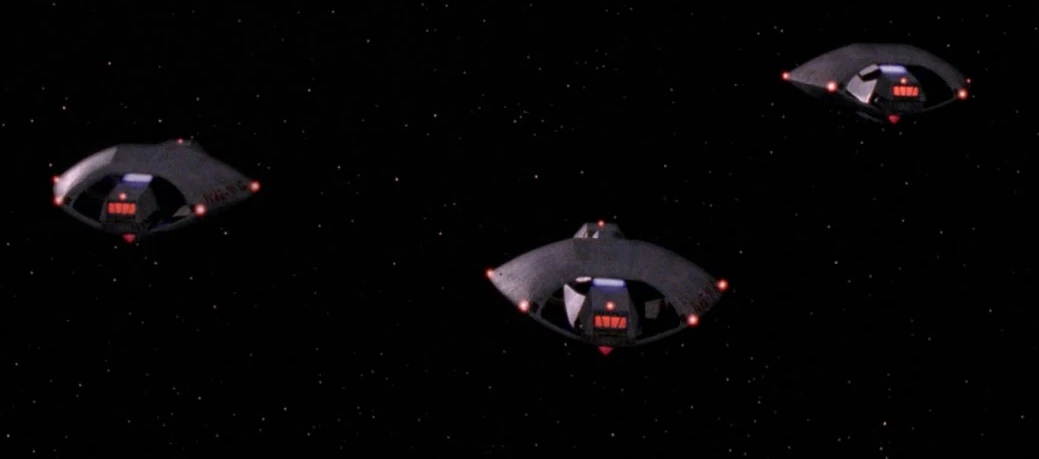
Official registry parameters and hull specifications retrieved from the Starfleet Command vessel databases.
Tactical Specifications & Registry Dossier
Overview
ODIN was an agency or a specific title held by a Starfleet officer within Starfleet Command's Fleet Operations Center, located in the Sol Sector. It represented a functional designation rather than a physical vessel or installation, playing a role in the administrative and operational structure of Starfleet during the mid-22nd century.
Historical Context
In January 2155, ODIN was actively referenced within Starfleet operations. During this period, Starfleet officers G. Tachell, E. Kelly, and J. Rarick were noted as working in or as ODIN, with their names and the ODIN designation appearing on directory placards at the Fleet Operations Center. This detail was observed in the episode 'Demons', providing a glimpse into the organizational nomenclature of United Earth Starfleet at the time.
Engine specs, warp rating, and propulsion technology compiled from Starfleet engineering files.
- No propulsion telemetry logged in database.
Weapon arrays, tactical payloads, and firepower configurations retrieved from Starfleet armory logs.
- No armament telemetry logged in database.
Deflector shielding, structural integrity fields, and defensive arrays cross-referenced from defense command.
- No defensive systems telemetry logged in database.
Class Specification: Apollo class
This panel displays official design specifications and historical class notes from the Starfleet registry archives for the Apollo class class.
Introduction & Overview
The Apollo-class was a versatile class of Federation starship that saw extensive service during the 24th century. Primarily operated by Starfleet for deep-space exploration missions, these vessels were active from the 2320s through the 2370s. Beyond Starfleet, the Apollo-class also found utility within the Vulcan National Merchant Fleet, where they served as freighters and transports, and were even appropriated by the Maquis for similar purposes. A distinctive feature of their construction was the partial use of dentarium alloy in their hull. The class name itself pays homage to the sun god Apollo from Earth's Greek mythology, as well as the historic Apollo 11 spacecraft that first carried Humans to Luna.
Design & Specifications
Designed by individuals such as Rick Sternbach, who created the studio model for the T'Pau, the Apollo-class incorporated advanced, and at times experimental, technologies. Notably, some vessels of this class were equipped with a conjectural annular warp drive, a unique propulsion system characterized by a large, hoop-shaped field generator that replaced conventional nacelles. These starships measured approximately 470 meters in length and were capable of achieving a maximum speed of warp factor 9.6. They were designed to accommodate a crew complement of around 650 individuals. For defensive capabilities, the Apollo-class was outfitted with graviton-based deflector shields, while its offensive armaments included particle beam weapons.
Service History & Notable Vessels
The Apollo-class has a rich and varied service history, marked by both routine operations and critical incidents. In 2364, the USS Ajax (NCC-11574), an Apollo-class vessel, received experimental warp drive upgrades from Kosinski, which reportedly led to a measurable increase in performance and engine efficiency. It was later speculated that Kosinski's enhancements might have simply optimized existing inefficiencies within the ship's older engine systems, as observed in the Starfleet vessel USS Enterprise (NCC-1701-D) in the episode 'Where No One Has Gone Before'.
A more somber chapter in the class's history occurred in 2368. Fragments from the navigational deflector array of a Vulcan transport of this class were discovered in the Hanolin asteroid belt, originating from a downed Ferengi cargo ship. Molecular pattern traces identified the vessel as the T'Pau (NSP-17938). This ship, along with two other Apollo-class vessels, was subsequently used by the Romulans as part of a deceptive 'peace' envoy to the planet Vulcan. These three vessels traveled from Romulus across the Romulan Neutral Zone at warp 1, secretly carrying over two thousand Romulan troops. Following the Federation's discovery of the Romulans' true intentions to invade Vulcan, the Romulan force attempted to retreat. During an attempted interception by the USS Enterprise (NCC-1701-D), a D'deridex-class Romulan Warbird destroyed all three Vulcan transports and their Romulan complements, as depicted in the episodes 'Unification I' and 'Unification II'.
The class also played a role in the escalating conflict with the Maquis. In 2372, Starfleet Command ordered the transport of several CFI replicators to Cardassia aboard a Vulcan freighter, which was later revealed to be under Maquis control. The Maquis diverted the vessel and its cargo to the Demilitarized Zone, taking possession of the replicators. Michael Eddington, a former Starfleet officer, notably left his Starfleet career to join the Maquis full-time aboard this Vulcan freighter, as seen in the episode 'For the Cause'. Furthermore, an Apollo-class starship, the USS Gage (NCC-11672), was among the Starfleet vessels lost during the Battle of Wolf 359 against the Borg cube, having been ordered to attack alongside the USS Melbourne and the USS Kyushu in a scene cut from the episode 'Emissary'.
■ Correlative Archive Mappings (Explicit Registry Connections)
Explicit database relations. Unmarked links are manually or structurally verified; links with 🤖 are established via AI analysis.
Synaptic Diagnostics (Outgoing Mentions)
Subspace Neural Link Diagnostics: Links marked with the 🤖 AI insignia are synaptic linkages dynamically reconstructed from local summaries, while unmarked links indicate official Starfleet database entries registered in primary archives.
It represented a functional designation rather than a physical vessel or installation, playing a role in the administrative and operational structure of Starfleet during the mid-22nd century. In January 2155, ODIN was actively referenced within Starfleet operations.
ODIN was an agency or a specific title held by a Starfleet officer within Starfleet Command's Fleet Operations Center, located in the Sol Sector.
This detail was observed in the episode 'Demons', providing a glimpse into the organizational nomenclature of United Earth Starfleet at the time.
■ Synaptic Diagnostics (Incoming Mentions) (In-Text References)
Reconstructed text references. Unmarked entries are canonical database linkages; links with 🤖 are derived from LCARS text analysis.
Fleet Deployments
This list displays officially verified Starfleet database logs for episodes and movies where this starship was actively deployed or officially recorded.
| Franchise Division / Series | Episode Coords | Mission Title | Stardate |
|---|---|---|---|
| Star Trek: The Next Generation | S1 E13 | Angel One | 41636.9 |
■ Synaptic Diagnostics (Incoming Mentions) (In-Text References)
Reconstructed text references. Unmarked entries are canonical database linkages; links with 🤖 are derived from LCARS text analysis.
Other locations, starships, technologies, or cultural files containing direct textual references to this profile.
Character dossiers referencing this profile; links with 🤖 indicate AI-derived connections.