Personnel dossier: Zefram Cochrane

| Species | Human |
| Rank / Title | Doctor |
| Occupation | Scientist, Inventor |
| Born / Origin | 2030s, Montana, North America, Earth |
| Status | Active |
| Datestatus | 2267 |
| Portrayed By | Glenn Corbett, James Cromwell |
Actors & Casting

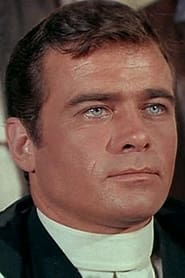
Archival biography summary
Early Life and World War III
Dr. Zefram Cochrane, a pivotal figure in Human history, was born in the 2030s in Montana, North America, Earth. An eccentric genius, he would later become the inventor of warp drive on Earth and the first recorded Human to travel faster than light, leading to official first contact with the Vulcans.
Cochrane's early life was significantly shaped by the aftermath of World War III. This global conflict provided him with at least minimal knowledge of ECON, one of the aggressor factions during that tumultuous period.
Developing Warp Drive and First Contact
During the 2060s, Zefram Cochrane and his team of engineers embarked on the monumental task of developing the warp drive. The theoretical challenges of warp technology proved to be immensely time-consuming. By 2061, Cochrane was credited with Earth's first successful demonstration of light speed propulsion, though his work was far from complete. His primary motivation for pursuing warp technology was financial gain, seeking prosperity in the poverty-stricken United States of America that emerged from the Third World War.
Cochrane eventually constructed Earth's first warp ship, the Phoenix, with the hope that its success would allow him to retire to a tropical island. Ironically, despite the Phoenix inaugurating an era of peace, Cochrane incorporated a weapon of mass destruction into its design, building the craft in a missile complex silo and using a Titan II missile as its launch vehicle.
On April 4, 2063, as Cochrane finalized plans for the Phoenix's test warp flight scheduled for the next morning, his missile complex was attacked by a Borg sphere. Photon torpedoes exploded near him, and he was temporarily presumed dead by the crew of the Federation starship USS Enterprise-E, who had traveled back from 2373 to prevent the Borg from altering history. When located, Cochrane had abandoned hope for the Phoenix, but the Enterprise-E crew, treating him as a historical figure, convinced him to persist. Initially resistant to his perceived destiny as a herald of a better world, he attempted to flee but was subdued by Commander Will Riker with a phaser set to minimal power.
By 10:00 a.m. on April 5, Cochrane, despite a hangover, prepared to make history. An hour later, he launched aboard the Phoenix, accompanied by Commander Riker and Lieutenant Commander Geordi La Forge. Cochrane was instrumental in the flight, famously giving the command, ‘Engage,’ to activate warp drive. He was amazed by the view of Earth and the Enterprise-E from space and shocked by the sensation of warp travel. Just after 11:00 a.m., he broke the warp barrier, attracting the attention of a Vulcan survey ship, the T'Plana-Hath, passing near Earth. That evening, Cochrane was among the Humans who witnessed the Vulcan ship land in Bozeman, Montana, marking first contact and ushering in a new era for mankind. He welcomed the Vulcan captain with a handshake, finding difficulty in returning a Vulcan salute. In an alternate timeline, the Borg succeeded in stopping Cochrane from breaking the warp barrier, leading to Earth's population becoming entirely Borg.
Post-First Contact Era
In 2064, Zefram Cochrane delivered a commencement address at Princeton University, acknowledging details about first contact in Bozeman. He claimed it involved ‘cybernetic creatures from the future’ repelled by Humans from the same era, though his audience largely dismissed his remarks due to his imaginative stories and intoxication. Over time, Cochrane resigned himself to the historical narrative, recanting his earlier statements about the warring groups involved in first contact. In 2073, he was recorded proclaiming, ‘Don't try to be a great man; just be a man, and let history make its own judgments.’
In the early 22nd century, Cochrane designed a style of warp reactor fitted aboard J-class freighters, with rumors suggesting he personally signed the inside of each casing. He also collaborated with Henry Archer on the warp five engine. In 2119, Cochrane officially opened the Warp Five Complex on Earth, delivering a public speech at the ceremony. During this period, he met Henry's son, Jonathan Archer, who would later captain the *Enterprise
- NX-01. A historic holoprogram later recounted that Cochrane gifted Henry Archer a bottle of whiskey to celebrate the groundbreaking of the Warp Five Complex.
Disappearance and Life with the Companion
At the age of eighty-seven, Zefram Cochrane left his new home on the Alpha Centauri colony for an interstellar expedition. Tired and dying from old age, he chose to die in space, and his body was never recovered, leading to his presumed death.
However, Cochrane did not die. He ended up on an asteroid in the Gamma Canaris region, brought there by a cloud-like non-corporeal entity he called the Companion, while his spaceship was disabled and he was near death from old age. The Companion rejuvenated him, keeping him young and alive for 150 years. He cannibalized his ship to construct a building for shelter, and the Companion provided necessities like food and water, communicating with him telepathically. Despite the care, Cochrane eventually found immortality boring and wished to be released from the entity's supervision, explaining his loneliness. The Companion, in response, decided to bring him other Humans for company.
Re-encounter with Starfleet (2267)
In 2267, Captain James T. Kirk, Commander Spock, and Dr. Leonard McCoy of the USS Enterprise (NCC-1701), along with terminally ill Federation Commissioner Nancy Hedford, were mysteriously brought to Cochrane's asteroid by the Companion. Cochrane was delighted to meet them, exchanging handshakes and expressing admiration for their shuttlecraft. He initially concealed the truth, claiming he had crashed there and feigning ignorance of the Companion. Under duress from Kirk, he confessed the specifics of his arrival and learned about the Federation and universal translator, as well as updates on modern propulsion. Kirk noted that Cochrane didn't ‘look a day over thirty-five.’
The situation became complicated when it was discovered that the Companion was a feminine entity with romantic feelings for Cochrane. To allow Cochrane to leave with his guests, the Companion entered the body of Commissioner Hedford, merging with her. Cochrane, initially disgusted by the idea of the Companion as a lover and frightened by the merged entity, eventually realized his intolerance was prejudice. He fell in love with the combined Companion-Nancy being, sacrificing the opportunity to explore the galaxy to stay with her on the asteroid. He confessed to Kirk that his love for her, and the prospect of many happy years together, was his true motivation for staying, not merely gratitude. Cochrane began a new life with the integrated being, both now possessing a typical Human lifespan, and made Kirk swear never to reveal his fate to the authorities.
Enduring Legacy
Though Zefram Cochrane, at the time of First Contact, lacked a grand vision for mankind's future or the gift of warp technology, these qualities were commonly ascribed to him by later generations, solidifying his legend. After his disappearance, abundant hearsay circulated, including suppositions that he was testing an experimental warp ship or flying a one-man craft. Another rumor suggested he personally signed the inside of each reactor casing aboard J-class freighters.
Numerous phrases from Cochrane's speech at the Warp Five Complex dedication ceremony, such as exploring ‘strange new worlds,’ seeking ‘new life and new civilizations,’ and going ‘where no man has gone before,’ were repeated by Starfleet for generations. The latter line, in particular, adorned the dedication plaques of various starships named Enterprise. In 2151, a recording of this speech was displayed at the launch ceremony for the *Enterprise
- NX-01, commanded by Jonathan Archer, whose quarters also housed a statuette of Cochrane. Admiral Maxwell Forrest prefaced the recording with a speech alluding to Cochrane's ‘legendary’ warp flight. In November 2151, Lieutenant Malcolm Reed playfully suggested that if Cochrane had been European, Vulcans might have been less reluctant to aid Human space travel, and speculated on Cochrane's American boyhood interests. By 2152, Cochrane's involvement in First Contact was widely known among schoolchildren, and a statue of him stood in Bozeman. Admiral Forrest characterized his disappearance as ‘the greatest missing person case of the century.’ When the Enterprise encountered a 31st-century craft with a deceased Human pilot in October 2152, Captain Archer wondered if it could be Cochrane, prompting Dr. Phlox to request Cochrane's genetic profile from his surviving family, though the pilot was later identified as a 31st-century Human.
By 2153, the Cochrane Equation, a fundamental mathematical expression in warp theory, was named in his honor, as were Cochrane distortion (a fluctuation in the subspace field) and the ‘cochrane’ unit of subspace distortion. The Cochrane deceleration, a well-known 23rd-century battle maneuver, also bore his name. The first chapter of Basic Warp Design, a required course at Starfleet Academy, was titled ‘Zefram Cochrane.’ By 2154, numerous schools, including Zefram Cochrane High School and the Zefram Cochrane Science Institute, were named after him. In 2267, Spock remarked that Cochrane's name was ‘revered throughout the known galaxy,’ with planets, universities, and cities bearing his name, though Cochrane himself considered his life with the Companion-Nancy entity ‘honors enough.’ A starship, the USS Cochrane (NCC-59318), was launched by 2367.
In a holodeck program set in 2161, Hoshi Sato compared Archer's avoidance of credit for the Coalition of Planets to Cochrane's lack of credit for warp drive, and the holographic Jonathan Archer recalled Cochrane gifting whiskey to Henry Archer. In 2256, Captain Gabriel Lorca of the USS Discovery cited Cochrane, alongside Orville and Wilbur Wright and Elon Musk, to motivate Lieutenant Paul Stamets to continue his work on the spore drive. In 2368, Geordi La Forge expressed that participating in one of the first soliton wave propulsion tests would be akin to witnessing Cochrane engage the first warp drive, an ironic statement given La Forge's later actual involvement in that historic event. In 2372, Captain Kathryn Janeway of the USS Voyager remarked that if Tom Paris's transwarp drive test flight succeeded, he would join an elite group of historic pilots including Cochrane. Two of Voyager's shuttlecraft were subsequently named Cochrane. During the Year of Hell in 2374, B'Elanna Torres could only recall that the famous ship involved in Earth's first contact with Vulcans was Cochrane's vessel. By 2375, the Cochrane Medal of Honor was established as a Starfleet award, with an alternate timeline featuring the Cochrane Medal of Excellence. In 2378, the Voyager crew celebrated the 315th anniversary of First Contact Day with a party in the mess hall, playing rock and roll music and serving cheese pierogi, Cochrane's favorite music and food.
In the early 2380s, the ‘Ride the Phoenix’ attraction at the Historical Bozeman theme park, developed around Cochrane's statue, featured a hologram of Cochrane piloting replicas of the Phoenix on a recreation of his First Contact Day flight, with visitors able to purchase souvenir caps. In an alternate reality in 2382, Cochrane collaborated with Lily Sloane on a quantum reality drive instead of the warp drive, with Sloane later explaining to William Boimler that Cochrane initially struggled with the concept of multiversal exploration until she demonstrated the limitless potential of humanity across the multiverse. In a predestination paradox involving events from 2384 to 2436, the Medusan Zero suggested that the involvement of themselves and others in the launch of the USS Protostar into the past was part of a causal time loop, with the Vulcan Maj'el listing the Cochrane warp test as another example of such loops involving Starfleet personnel.
■ Characters Portrayed by James Cromwell (Dossier Registry)
This registry displays all characters played by James Cromwell across the Star Trek franchise, dynamically compiled from casting credits, production archives, and actor relationship mapping within the Federation database.


■ Characters Portrayed by Glenn Corbett (Dossier Registry)
This registry displays all characters played by Glenn Corbett across the Star Trek franchise, dynamically compiled from casting credits, production archives, and actor relationship mapping within the Federation database.
■ Species Taxonomy Mappings (Consolidated Database)
This panel displays the taxonomic classification profiles associated with this character. The species registry mappings are compiled from anatomical telemetry, evolutionary archives, and genetic profiles stored in the Consolidated Registry Database.

Genealogy vectors
This diagram maps the familial ties, bloodline vectors, and personal relationship nodes established in the databases. Information is derived from canon dialogue and genealogy net transcripts.
No family vectors registered in the interactive network graph.
Career rank progression timeline
This ledger tracks the official rank promotions, demotions, and strategic commission shifts of this officer over their operational history. Data is compiled from canon episode transcripts and Starfleet registry timelines.
No rank promotions or commission changes logged in Starfleet logs.
Archival appearances log
This registry lists all episodes and films featuring appearances or text mentions of this character, dynamically cataloged from cast records, credit databases, and synaptic analysis of lore descriptions.
Telemetry Verification & Badge combinations
[ Badge Combinations ]
Row entries render two distinct telemetry vectors side by side:
- Type of Role: Denoted by Main (regular cast) or Guest (guest star).
- Data Verification: Denoted by the source label next to it (e.g. Memory Alpha, 🤖 LCARS Telemetry).
Example: A row displaying "Main" + "Memory Alpha" means the character was a regular cast member and the appearance was confirmed via direct Memory Alpha references.