Mission Briefing
Starfleet Command Database Log: The USS Enterprise-D encounters a profound ethical dilemma when Lieutenant Worf suffers a catastrophic injury in Cargo Bay 3, resulting in permanent paralysis of his lower body. For a Klingon warrior, such a disability is considered a profound dishonor, leading Worf to request assistance in performing the Hegh'bat ritual, a traditional form of ritual suicide. This request deeply conflicts with United Federation of Planets medical ethics and the personal convictions of his friends, including Commander William T. Riker and Dr. Beverly Crusher.
The situation is further complicated by the arrival of Dr. Toby Russell, a brilliant but controversial neuro-specialist. Dr. Russell proposes a radical, untested genetronic replicator procedure to create a new spinal column for Worf, an option Dr. Crusher initially rejects due to its extremely low success rate and inherent risks. As Worf grapples with his new reality and the conflicting paths before him, the crew of the USS Enterprise-D must navigate the complex interplay of cultural tradition, personal friendship, and medical ethics, all while responding to a major casualty event involving the USS Denver and a Cardassian gravitic mine.
LCARS Tactical Mission Registry: A detailed reconstruction of chronological events and narrative progression compiled from historical logs and mission briefs.
Lieutenant Worf and Lieutenant Commander Geordi La Forge are investigating strange readings in Cargo Bay 3 when a freak accident occurs. Two heavy containers, one leaking and the other stacked on top, fall, with the upper container striking Worf in the back. Rushed to Sickbay, Dr. Beverly Crusher delivers the grim news: Worf's spinal cord is crushed, resulting in permanent paralysis. This devastating injury leaves Worf unable to move his legs, a condition that, for a Klingon warrior, is considered a profound dishonor. Captain Jean-Luc Picard's log notes the arrival of Dr. Toby Russell, a neuro-specialist, but even with her expertise, Dr. Crusher believes Worf's paralysis may be permanent. The unique nature of Klingon physiology, with its twenty-three ribs, two livers, and eight-chambered heart (the 'brak'lul'), means there is little Starfleet Medical research on neurological trauma for their species, as Klingons traditionally choose 'Hegh'bat', a ritual suicide, rather than live with such a disability.
Commander William T. Riker visits Worf in Sickbay, initially believing the paralysis is temporary. Worf, however, confirms its permanence and, to Riker's shock and repulsion, asks him to assist in performing the 'Hegh'bat' ritual. Worf insists there are no other options, pleading with Riker to help him end his life with dignity and honor, rather than live with pity and shame. Meanwhile, Dr. Russell proposes a radical new surgical procedure: using a 'genetronic replicator' to create an entirely new spinal column. Dr. Crusher vehemently rejects this, citing a mere thirty-seven percent success rate in holographic simulations and the extreme risk of removing Worf's existing spinal column without sufficient knowledge of Klingon biology for reattachment. The USS Enterprise-D is then diverted to aid the USS Denver, which struck a Cardassian gravitic mine from the Federation-Cardassian War, requiring Dr. Crusher to set up triage units in the shuttlebays, accepting Dr. Russell's offer of assistance.
Captain Jean-Luc Picard and Commander William T. Riker discuss Worf's request for 'Hegh'bat'. Riker expresses his disgust, arguing that Worf could still live a full life. Picard, however, offers a more understanding perspective, explaining that a Human might adapt, but for a Klingon, the inability to stand and fight signifies the end of their life. Picard encourages Riker to make his decision based on his deep friendship with Worf. Counselor Deanna Troi attempts to reason with Worf about his refusal to see his son, Alexander Rozhenko, who is deeply upset. Later, Dr. Crusher and Dr. Russell demonstrate neural transducers that would allow Worf partial mobility, but Worf rejects them, refusing to live as a 'half-Klingon machine'. Against Dr. Crusher's wishes, Dr. Russell then proposes her 'genetronic replicator' procedure directly to Worf, who listens intently, seeing it as his only chance for full recovery. Dr. Crusher confronts Russell, accusing her of exploiting Worf's desperation and noting that Starfleet Medical had denied Russell's requests to test 'genetronics' on humanoids three times.
During the treatment of USS Denver casualties, Dr. Crusher discovers that Dr. Russell used an untested, experimental treatment called 'borathium' on a patient, who subsequently died, despite conventional treatments like 'leporazine' or 'morathial' potentially saving his life. Outraged by Russell's reckless disregard for patient safety, Dr. Crusher relieves her of duty. However, Captain Jean-Luc Picard later urges Dr. Crusher to reconsider, arguing that allowing the 'genetronic' operation might be Worf's only path to avoid suicide, as a Klingon would rather risk death in a fight for full recovery than live with a disability. Commander William T. Riker, after studying 'Hegh'bat', confronts Worf, calling the ritual despicable and reminding him of fallen comrades like Sandoval, Fang-lee, Marla Aster, and Natasha Yar, who fought for life until their last moments. Riker then reveals a crucial detail: Klingon tradition dictates that the oldest son must assist in the 'Hegh'bat'. This revelation, and the prospect of asking Alexander to participate, leads Worf to choose life and the 'genetronic' procedure.
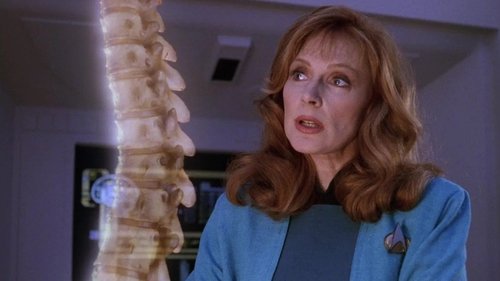
Before the surgery, Worf asks Counselor Deanna Troi to raise Alexander if he does not survive, a request she honorably accepts. During the complex 'genetronic' procedure, Dr. Russell and Dr. Crusher remove Worf's spinal cord and begin generating a new one using a 'DNA sequencer'. Despite initial success, Worf suddenly crashes, and Nurse Alyssa Ogawa reports no vital signs, declaring Worf dead on the operating table. Dr. Crusher tearfully informs Alexander of his father's death, but as they view the body, Worf's 'synaptic functions' miraculously reactivate. It is revealed that Worf's Klingon brain also possessed a 'backup system', allowing him to survive the operation. While thrilled by Worf's recovery, Dr. Crusher confronts Dr. Russell, condemning her 'ends justify the means' approach and her willingness to gamble with patients' lives for research. Worf begins a slow physical therapy, re-learning to walk. In a poignant moment, he asks Alexander for help, signifying a shift in his Klingon stoicism and a commitment to their shared struggle for recovery.
LCARS Tactical Mission Log: Chronological action logs detailing exactly what each character did during the events of this mission, linked directly to personnel dossiers.


Subspace Visual Feed
Sensors & Diagnostic Metrics
Visual Sensor Logs


Synaptic Lore Link Contexts
When a catastrophic explosion in the cargo bay leaves Worf tragically paralyzed, the Klingon warrior confronts a profound crisis of identity and honor.
The Enterprise diverted to assist a vessel that had struck a Cardassian gravitic mine, a remnant from the `Federation-Cardassian War`, while transporting colonists.The USS Enterprise-D is then diverted to aid the USS Denver, which struck a Cardassian gravitic mine from the Federation-Cardassian War, requiring Dr. Crusher to set up triage units in the shuttlebays, accepting Dr. Russell's offer of assistance.
Dr. Crusher mentioned that her proposals were rejected three times by `Starfleet Medical` when submitted for humanoid patients.The unique nature of Klingon physiology, with its twenty-three ribs, two livers, and eight-chambered heart (the 'brak'lul'), means there is little Starfleet Medical research on neurological trauma for their species, as Klingons traditionally choose 'Hegh'bat', a ritual suicide, rather than live with such a disability.
The USS Enterprise-D is then diverted to aid the USS Denver, which struck a Cardassian gravitic mine from the Federation-Cardassian War, requiring Dr. Crusher to set up triage units in the shuttlebays, accepting Dr. Russell's offer of assistance.
During the complex 'genetronic' procedure, Dr. Russell and Dr. Crusher remove Worf's spinal cord and begin generating a new one using a 'DNA sequencer'.
The unique nature of Klingon physiology, with its twenty-three ribs, two livers, and eight-chambered heart (the 'brak'lul'), means there is little Starfleet Medical research on neurological trauma for their species, as Klingons traditionally choose 'Hegh'bat', a ritual suicide, rather than live with such a disability.
Later, Dr. Crusher and Dr. Russell demonstrate neural transducers that would allow Worf partial mobility, but Worf rejects them, refusing to live as a 'half-Klingon machine'.
Later, Dr. Crusher and Dr. Russell demonstrate neural transducers that would allow Worf partial mobility, but Worf rejects them, refusing to live as a 'half-Klingon machine'.
Despite initial success, Worf suddenly crashes, and Nurse Alyssa Ogawa reports no vital signs, declaring Worf dead on the operating table.
Meanwhile, Dr. Russell proposes a radical new surgical procedure: using a 'genetronic replicator' to create an entirely new spinal column.
Mission Registries & Linkages
Subspace Playlists
This registry lists all curated subspace playlists and chronological collections containing this mission.

Technology
This registry contains all specialized technologies deployed, analyzed, or referenced during this mission.
Location
This registry displays all celestial bodies, planets, starbases, or coordinates charted or visited during this mission.
Starship
This registry lists all vessels encountered, scanned, or active during this mission.
[ NO STARSHIPS REGISTERED ]
Species & Factions
This registry documents all species, civilizations, and organizational factions contacted or active in this sector during the mission.
Culture & Lore
This registry outlines historical events, cultural traditions, organizations, and database lore referenced during this mission.
Production & Archival Linkages
This registry documents behind-the-scenes production references, draft concepts, star charts, or archival cataloging links officially connected to this mission.
"Following a paralyzing injury, Worf was placed on a `biobed` in Sickbay to receive medical care and reflect on his circumstances."
"Commander Riker referenced a `disruptor` blast while discussing Sandoval's death with Worf, highlighting the struggle for survival against Worf's preference for ritual suicide."
"During the genetronic replicator procedure, Dr. Toby Russell and Dr. Beverly Crusher employed a `DNA sequencer` to analyze genetic coding and create a new spinal cord for Worf."
"A specialized `exoscalpel` was used during Worf's intricate genetronic replicator surgery to accurately remove his injured spinal column."
"In the novel Warpath, `nanite` technology is described as being used to enhance the genetronic procedure, leading to the successful repair of Lieutenant Ro Laren's spine."
"The USS Denver was transporting colonists to the `Beloti sector` when it encountered a Cardassian gravitic mine, requiring the USS Enterprise-D to provide assistance."
"The USS Denver encountered a gravitic mine, a remnant of the Federation-`Cardassian` War, underscoring the ongoing hazards from previous conflicts and prompting the USS Enterprise-D to assist in rescue efforts."
"Worf's `Klingon` heritage and cultural beliefs, especially concerning honor, physical strength, and death, are central to the episode's conflict and shape his choices following his paralysis."
"The Klingon ritual suicide, known as "Hegh'bat", forms a key ethical challenge in the episode when Worf seeks help to perform it following a paralyzing injury, considering it the honorable choice for a warrior no longer able to engage in combat."
"Although not a direct `Prime Directive` issue concerning non-Federation cultures, the episode examines the Federation's dedication to honoring varied cultural beliefs, even when they clash with Starfleet principles, exemplified by Picard's advice to Riker about Worf's Klingon customs."
"The episode's continuity section mentions "Sto-vo-kor", the Klingon afterlife reserved for honorable warriors, prompting discussion about whether performing Hegh'bat would ensure entry and its overall importance within Klingon spiritual beliefs."
Continuity & Trivia
-
Ronald D. Moore, a key writer for the series, often cited "Ethics" as one of his favorite TNG episodes due to its deep exploration of moral and ethical dilemmas.
-
Writer Herbert J. Wright suggested a more grotesque experimental procedure for Worf involving small creatures eating away damage, but the idea was rejected to prioritize drama over distracting science fiction elements.Sources: Memory Alpha
-
Director Chip Chalmers revealed that an initially more heated argument scene between Riker and Worf, where they yelled "nose to nose," was cut because it was deemed to have gone too far for the characters.Sources: Memory Alpha
-
For most of Worf's surgery scenes, his character was portrayed by Al Foster, Michael Dorn's photo double.Sources: Memory Alpha
-
The pyramid-shaped device Alexander is seen playing with during Worf's surgery is a real-world video game called "Pair Match," which was also frequently recycled as a prop in Ten Forward.Sources: Memory Alpha
-
This episode expands on Klingon physiology, revealing they possess visible ridges not only on their foreheads but also on their spines and feet.Sources: Memory Alpha