Astrometrics Node: Bajoran

Xenobiology & Cultural Archive Dossier
History & Origins
The Bajorans, or Bajora, are a humanoid species native to the planet Bajor in the Bajoran system, located in the Alpha Quadrant. Their civilization is one of the oldest and richest in the quadrant, with a history stretching back more than half a million years. The ancient Bajorans were renowned for their accomplishments in science, mathematics, philosophy, and the arts. The 'First Republic' flourished between 20,000 and 25,000 years ago, during which magnificent cities like B'hala were constructed.
Approximately 10,000 years ago, the discovery of the first of the Tears of the Prophets above Bajor ushered in a new era of spiritual connection with their gods, the Prophets. By the 16th century, the Bajorans had developed sublight space travel and explored their home star system using solar-sail spacecraft. Some intrepid Bajoran explorers even reached the Cardassian system, several light-years away, by sailing at warp speed within tachyon eddies. As late as the 22nd century, Bajorans adhered to a strict caste system known as D'jarra. This period of independent development tragically ended with the annexation of Bajor by the Cardassian Union sometime before 2319, an event referenced in episodes like 'Ensign Ro' and 'Explorers'.
The Cardassian Occupation & Liberation
The Occupation of Bajor, often simply called 'the Occupation' by Bajorans, lasted from 2328 to 2369. During this brutal period, the Cardassians perpetrated a coordinated scheme of strip-mining, forced labor, and genocide across the planet. This oppression gave rise to the fierce Bajoran Resistance, which employed guerrilla and terror tactics to eventually force the Cardassians to withdraw. Many Bajorans also fled, settling in refugee camps across the Milky Way Galaxy, such as those on Valo II. In 2368, Jean-Luc Picard reflected on their plight in 'Ensign Ro', noting, 'I read about the achievements of the ancient Bajoran civilization in my fifth-grade reader. They were architects and artists, builders and philosophers when Humans were not yet standing erect. Now I see how history has rewarded them.'
With their liberation in 2369 and the simultaneous discovery of the Bajoran wormhole, the Bajorans were thrust onto the interstellar stage. The newly formed Bajoran Provisional Government, facing a devastated and politically fragile planet, requested Federation support. Starfleet established joint administration with the Bajoran Militia over the former Cardassian space station Terok Nor, which was renamed Deep Space 9. Bajor applied for Federation membership in 2373, but the Chamber of Ministers voted to defer it after Benjamin Sisko, acclaimed as the Emissary of the Prophets, warned that Bajor would be destroyed unless it stood alone, as seen in 'Rapture'. The Federation remained hopeful for future membership, which was eventually achieved by 3191, as shown in 'Lagrange Point'.
Dominion War & Beyond
Before the Dominion War began in 2373, Bajor, on Benjamin Sisko's recommendation, signed a nonaggression pact with the Dominion, choosing neutrality. This decision protected Bajor from foreign rule when the Dominion captured Deep Space 9 later that year. However, Bajor ultimately joined the fight against the Dominion in 2374 after the Allies recaptured Deep Space 9 in Operation Return. The Bajorans continued to fight until 2375, when the Dominion War Declaration of Peace was signed on Deep Space 9. Following the war, Bajor resumed its efforts to join the United Federation of Planets.
Biology & Physiology
Externally, Bajorans resemble Humans, distinguished by a series of four to seven horizontal creases across their noses. Their blood is red, as seen in 'The Circle', and their skin colors range from light to dark, similar to Humans, as depicted in 'The Homecoming'. Bajoran women have a gestation period of only five months, forming an intricate network of blood vessels between mother and fetus. During pregnancy, they frequently experience uncontrollable sneezing fits, analogous to Human morning sickness, as noted in episodes like 'A Man Alone' and 'Body Parts'. Labor focuses on keeping the woman relaxed.
Bajoran hearts and spines differ from Humans. In 'A Man Alone', Julian Bashir observed that a knife thrust between the right and left thoracic vertebrae, perforating the lower ventricle of the heart, would be fatal. This suggests Bajorans may possess two parallel spines or a single spine with bilateral vertebrae, and their hearts may have an upper and lower ventricle, possibly indicating upper and lower atria. Bajorans have a lifespan of at least a hundred years; for example, Els Renora was a practicing arbiter at 100 in 'Dax'.
Government & Politics
Following the Cardassian withdrawal, the Bajoran Republic was established to govern Bajor and its colonies. Bajoran politics balances the secular Chamber of Ministers, led by the First Minister, and the religious Vedek Assembly, led by the kai. An individual can hold both the kai and First Minister positions simultaneously, as Winn Adami did for several weeks in 2371, as seen in 'Shakaar'. Key governmental agencies include the Bajoran Institute of Science, Bajoran Intelligence, and the Bajoran Militia.
Religion & Spirituality
Bajorans have a deeply spiritual society, with their religion serving as a major unifying force. The spiritual leader, or kai, wields significant moral and political authority, advising the First Minister. The kai is chosen from a council of vedeks, who are Bajoran religious leaders. Other religious titles include ranjen and prylar. Both male and female Bajorans can achieve any level within the religious structure, including kai, and are free to have intimate relationships, marriage, and children. The Bajoran religion is based on the revelations of the Prophets, timeless beings residing in the Bajoran wormhole, which they call the Celestial Temple. Starfleet officer Benjamin Sisko became known as the Emissary of the Prophets after being the first to make contact with them. A central aspect of their religion involves the Tears of the Prophets, reality-distorting energy orbs produced by the Prophets. Several of these were stolen by the Cardassians during the Occupation but were later recovered.
Culture & Society
Bajoran culture and customs are closely intertwined with their religious beliefs. Bajoran naming convention places the surname (family name) before the given name; thus, Major Kira Nerys is addressed as Major Kira. Bajorans consider it an honor for off-worlders to use their names correctly, though many have adapted to other cultures' naming conventions, as noted in 'Ensign Ro'.
Traditional Bajoran birthing ceremonies, as depicted in 'The Begotten', involve the woman's family and a midwife. The ritual aims for complete relaxation through breathing exercises, rhythmic percussion music, and incense, allowing for pain-free birth. However, the birth must occur within a specific timeframe to prevent toxic levels of endorphins in the mother's system. Upon birth, the child is greeted with the words: 'Awake, child; we await you with love and welcome you into the world.'
Bajoran funerary customs generally involve burying the deceased in graves marked with a decorated arch. Rites can be elaborate, such as the two-hour-long Bajoran death chant. The physical body's preservation is not paramount, as Bajorans believe a person's pagh joins the Prophets in the Celestial Temple after death, leaving only an empty shell. Duranja lamps are lit to mourn loved ones, as seen in 'Ties of Blood and Water'. Bajorans typically clap with their right palms on their left wrists, as shown in 'In the Hands of the Prophets'.
Bajor is known for its music, both before and after the Occupation, with the Jalanda Forum being a popular performance venue. The belaklavion is a Bajoran musical instrument, and the Bajoran hand flute is often used in sensitive scenes. Holidays and festivals include the Days of Atonement, Gratitude Festival, Ha'mara, and the Bajoran Time of Cleansing. Their cuisine features items such as alvas, Bajoran shrimp, deka tea, foraiga, groatcake, hasperat, hasperat souffle, jumja stick, jumja tea, kava, kava juice, katterpod, klavaatu, larish pie, mapa bread, moba fruit, palukoo, springwine, synthale (or Bajoran ale, including voodai), tuwaly pie, and veklava.
In the Mirror Universe, Bajorans were initially conquered by the Terran Empire but were later liberated by the Klingon-Cardassian Alliance, becoming leading members, though some joined the Terran Rebellion. Unlike their primary universe counterparts, Mirror Universe Bajorans were not spiritual and did not know of the Prophets, as explored in 'Crossover' and 'Resurrection'. In another quantum reality, the Bajorans overthrew the Cardassian Union before 2370 and became aggressive towards the Federation, even attacking the USS Enterprise-D, as depicted in 'Parallels'.
Technology
The Bajorans possess simple holographic technology, capable of creating false holographic covers for entrances, as seen in 'Emissary'. Their technological capabilities also include various Bajoran starship classes and a Bajoran Regional Comm Network. The oval-shaped Bajoran symbol, designed by Nathan Crowley and Doug Drexler and refined by Michael Okuda, became a hallmark of Bajoran design, appearing on architecture and Bajoran combadges. John Eaves later designed the Reckoning Tablet based on an ancient representation of this symbol for 'The Reckoning'.
■ Correlative Archive Mappings (Explicit Registry Connections)
Explicit database relations. Unmarked links are manually or structurally verified; links with 🤖 are established via AI analysis.
Synaptic Diagnostics (Outgoing Mentions)
Subspace Neural Link Diagnostics: Links marked with the 🤖 AI insignia are synaptic linkages dynamically reconstructed from local summaries, while unmarked links indicate official Starfleet database entries registered in primary archives.
Automatically mapped connection based on archive scanning.This period of independent development tragically ended with the annexation of Bajor by the Cardassian Union sometime before 2319, an event referenced in episodes like 'Ensign Ro' and 'Explorers'. The Occupation of Bajor, often simply called 'the Occupation' by Bajorans, lasted from 2328 to 2369.
Automatically mapped connection based on archive scanning.The Federation remained hopeful for future membership, which was eventually achieved by 3191, as shown in 'Lagrange Point'. Before the Dominion War began in 2373, Bajor, on Benjamin Sisko's recommendation, signed a nonaggression pact with the Dominion, choosing neutrality.
Automatically mapped connection based on archive scanning.In the Mirror Universe, Bajorans were initially conquered by the Terran Empire but were later liberated by the Klingon-Cardassian Alliance, becoming leading members, though some joined the Terran Rebellion.
Automatically mapped connection based on archive scanning.This period of independent development tragically ended with the annexation of Bajor by the Cardassian Union sometime before 2319, an event referenced in episodes like 'Ensign Ro' and 'Explorers'. The Occupation of Bajor, often simply called 'the Occupation' by Bajorans, lasted from 2328 to 2369.
Automatically mapped connection based on archive scanning.However, Bajor ultimately joined the fight against the Dominion in 2374 after the Allies recaptured Deep Space 9 in Operation Return.
Automatically mapped connection based on archive scanning.The physical body's preservation is not paramount, as Bajorans believe a person's pagh joins the Prophets in the Celestial Temple after death, leaving only an empty shell.
Automatically mapped connection based on archive scanning.In the Mirror Universe, Bajorans were initially conquered by the Terran Empire but were later liberated by the Klingon-Cardassian Alliance, becoming leading members, though some joined the Terran Rebellion.
Automatically mapped connection based on archive scanning.In the Mirror Universe, Bajorans were initially conquered by the Terran Empire but were later liberated by the Klingon-Cardassian Alliance, becoming leading members, though some joined the Terran Rebellion.
Automatically mapped connection based on archive scanning.Following the war, Bajor resumed its efforts to join the United Federation of Planets. Externally, Bajorans resemble Humans, distinguished by a series of four to seven horizontal creases across their noses.
Some intrepid Bajoran explorers even reached the Cardassian system, several light-years away, by sailing at warp speed within tachyon eddies.
Starfleet established joint administration with the Bajoran Militia over the former Cardassian space station Terok Nor, which was renamed Deep Space 9.
Many Bajorans also fled, settling in refugee camps across the Milky Way Galaxy, such as those on Valo II.
In the Mirror Universe, Bajorans were initially conquered by the Terran Empire but were later liberated by the Klingon-Cardassian Alliance, becoming leading members, though some joined the Terran Rebellion.
Starfleet established joint administration with the Bajoran Militia over the former Cardassian space station Terok Nor, which was renamed Deep Space 9.
This period of independent development tragically ended with the annexation of Bajor by the Cardassian Union sometime before 2319, an event referenced in episodes like 'Ensign Ro' and 'Explorers'. The Occupation of Bajor, often simply called 'the Occupation' by Bajorans, lasted from 2328 to 2369.
In another quantum reality, the Bajorans overthrew the Cardassian Union before 2370 and became aggressive towards the Federation, even attacking the USS Enterprise-D, as depicted in 'Parallels'. The Bajorans possess simple holographic technology, capable of creating false holographic covers for entrances, as seen in 'Emissary'.
Starfleet established joint administration with the Bajoran Militia over the former Cardassian space station Terok Nor, which was renamed Deep Space 9.
By the 16th century, the Bajorans had developed sublight space travel and explored their home star system using solar-sail spacecraft.
Some intrepid Bajoran explorers even reached the Cardassian system, several light-years away, by sailing at warp speed within tachyon eddies.
Bajor is known for its music, both before and after the Occupation, with the Jalanda Forum being a popular performance venue.The Bajorans, or Bajora, are a humanoid species native to the planet Bajor in the Bajoran system, located in the Alpha Quadrant.
Many Bajorans also fled, settling in refugee camps across the Milky Way Galaxy, such as those on Valo II.
Bajoran women have a gestation period of only five months, forming an intricate network of blood vessels between mother and fetus.
Some intrepid Bajoran explorers even reached the Cardassian system, several light-years away, by sailing at warp speed within tachyon eddies.
They were architects and artists, builders and philosophers when Humans were not yet standing erect.
Their cuisine features items such as alvas, Bajoran shrimp, deka tea, foraiga, groatcake, hasperat, hasperat souffle, jumja stick, jumja tea, kava, kava juice, katterpod, klavaatu, larish pie, mapa bread, moba fruit, palukoo, springwine, synthale (or Bajoran ale, including voodai), tuwaly pie, and veklava.
Recorded Visitations
This list displays officially verified Starfleet database logs for episodes and movies where this species or faction was actively encountered or officially recorded.
■ Synaptic Diagnostics (Incoming Mentions) (In-Text References)
Reconstructed text references. Unmarked entries are canonical database linkages; links with 🤖 are derived from LCARS text analysis.
Other locations, starships, technologies, or cultural files containing direct textual references to this profile.
Subspace Scan Mentions: This list records episodes where this species or faction was not officially registered as a primary profile detail, but is mentioned by name within the episode's plot summary or dialogue transcripts.
■ Associated Technologies & Weapons (Database Registry)
Technologies and weapons commonly utilized or invented by this species or faction.

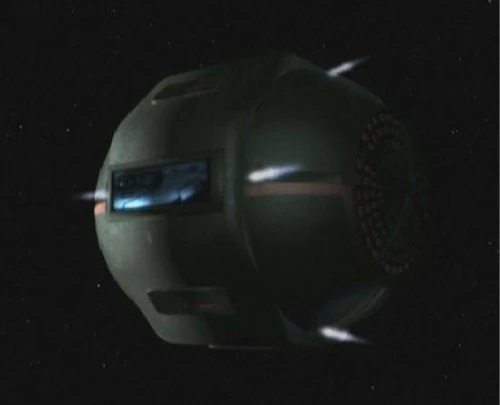
■ Associated Starships & Vessels (Vessel Registry)
Starships operated by or affiliated with this species or faction.


■ Bajoran Members & Faction Personnel (Dossier Registry)
Explicit members and affiliated personnel resolved from structured dossier metadata.


■ Associated Characters & Personnel (Textual References)
Character dossiers referencing this species or faction; links with 🤖 indicate AI-derived connections.


