Mission Briefing
A crucial mission takes an unexpected and perilous turn when the USS Enterprise's shuttlecraft, Galileo, carrying Captain James T. Kirk, First Officer Spock, Chief Medical Officer Leonard McCoy, and Assistant Federation Commissioner Nancy Hedford, is intercepted. En route to deliver Commissioner Hedford, who is critically ill and urgently requires medical attention to prevent a war on Epsilon Canaris Three, the shuttle is violently pulled off course towards the Gamma Canaris region. Stranded on a desolate, uncharted planetoid, the crew quickly discovers their technology is rendered inoperable by a mysterious dampening field, cutting them off from the USS Enterprise and crucial medical aid.
Their desperate search for solutions leads to an astonishing encounter: a seemingly young man who introduces himself as Zefram Cochrane, the legendary discoverer of the space warp from Alpha Centuri, long believed deceased. Cochrane reveals he was brought to the planetoid by a powerful, non-corporeal energy being he calls 'the Companion,' which has sustained his life and youth for over a century. With Commissioner Hedford's condition rapidly worsening, Captain Kirk faces the formidable challenge of understanding the enigmatic Companion and finding a way to escape this impossible situation, all while grappling with the presence of a living legend from humanity's past.
LCARS Tactical Mission Registry: A detailed reconstruction of chronological events and narrative progression compiled from historical logs and mission briefs.
The USS Enterprise shuttlecraft, Galileo, carrying Captain James T. Kirk, First Officer Spock, Chief Medical Officer Leonard McCoy, and Assistant Federation Commissioner Nancy Hedford, is en route to rendezvous with the USS Enterprise. Commissioner Hedford is critically ill with Sakuro's disease, requiring urgent medical attention to prevent a war on Epsilon Canaris Three. Suddenly, an unknown energy entity intercepts the shuttlecraft, disabling its systems and pulling it off course towards the Gamma Canaris region, eventually stranding them on a small, uncharted planetoid. The crew's initial attempts to repair the shuttlecraft and re-establish contact with the USS Enterprise are futile due to a mysterious dampening field that renders all their technology inoperable. The situation is dire, as Commissioner Hedford's condition continues to worsen, placing immense pressure on Captain Kirk to find a solution.
While exploring the planetoid, the landing party encounters a seemingly young man who introduces himself as Zefram Cochrane. This revelation is astonishing, as Zefram Cochrane, the legendary discoverer of the space warp and humanity's pioneer of interstellar travel from Alpha Centuri, is canonically believed to have died 150 years prior. Cochrane explains that he was dying of old age when he was brought to the planetoid by a powerful, non-corporeal energy being he calls 'the Companion.' The Companion rejuvenated him, granting him perpetual youth and providing for all his needs, effectively keeping him alive and young for a century and a half. However, Cochrane admits to Captain Kirk that he is a prisoner, kept on the planetoid to alleviate the Companion's profound loneliness, a fact he initially tried to conceal.
As Assistant Federation Commissioner Nancy Hedford's condition rapidly deteriorates, Captain James T. Kirk becomes desperate to escape. He learns from Zefram Cochrane that the Companion brought the shuttlecraft Galileo to the planetoid specifically to provide him with company, as Cochrane had expressed his loneliness. The crew attempts to disable the Companion using a device designed by First Officer Spock, which is intended to scramble its electrical impulses. However, the Companion retaliates with immense power, nearly choking Captain Kirk and Chief Medical Officer Leonard McCoy, demonstrating its formidable capabilities. Realizing force is ineffective, Captain Kirk decides to attempt communication using a universal translator. During this attempt, the translator reveals the Companion's voice to be feminine, and First Officer Spock deduces that the Companion is not merely a caretaker but is deeply in love with Zefram Cochrane. Cochrane is initially repulsed by this revelation, viewing the Companion as an 'inhuman monster' that 'fed on him,' expressing a 'parochial attitude' towards its alien nature. Assistant Federation Commissioner Nancy Hedford, in her delirium, expresses a poignant regret at never having known love, contrasting sharply with Cochrane's rejection of it.
Captain James T. Kirk tries to convince the Companion that its love is condemning Zefram Cochrane to a meaningless existence, arguing that true love sometimes requires sacrifice and that their species needs obstacles to thrive. He highlights that the Companion, being non-corporeal, cannot truly 'join' with Cochrane in a human sense. In a dramatic and unexpected turn, the Companion, driven by its deep love for Zefram Cochrane and a desperate desire to truly experience human connection, merges with the dying Assistant Federation Commissioner Nancy Hedford. This profound act transforms the Companion into a humanoid form, simultaneously saving Commissioner Hedford's life and granting the Companion mortality. The newly merged entity, now possessing both the Companion's consciousness and Commissioner Hedford's body, can finally experience physical touch and human emotions. However, the Companion reveals that its life force is intrinsically tied to the planetoid, meaning it cannot leave with Zefram Cochrane.
Despite the opportunity to return to the Federation and be honored as a living legend, Zefram Cochrane chooses to remain on the planetoid with the Companion/Nancy Hedford. He realizes that his long-sought immortality had become a burden of boredom, and that true fulfillment lies in shared experience and love, even if it means embracing mortality. He expresses his love for the merged entity, accepting a future where they will grow old together and eventually die, finding joy in the simple act of planting a fig tree and experiencing life's natural progression. Captain James T. Kirk, respecting Cochrane's profound decision, agrees to keep his continued existence a secret from the Federation. The USS Enterprise arrives, and the shuttlecraft Galileo crew transports back, leaving Zefram Cochrane and the Companion/Nancy Hedford to live out their lives on the planetoid, having found a unique form of companionship and love. The episode concludes with Captain Kirk acknowledging the unexpected resolution, even at the cost of Assistant Federation Commissioner Nancy Hedford's original mission to Epsilon Canaris Three.
LCARS Tactical Mission Log: Chronological action logs detailing exactly what each character did during the events of this mission, linked directly to personnel dossiers.


Subspace Visual Feed
Sensors & Diagnostic Metrics
Visual Sensor Logs


Synaptic Lore Link Contexts
En route (shortly past point 3, on course 201 Mark 15), the shuttlecraft encounters a phenomenon that Spock describes as "vaguely like a cloud of ionized hydrogen, but with strong erratic electrical impulses".
Initial attempts by the crew to repair the vessel and re-establish contact with the USS Enterprise prove futile, as a mysterious dampening field renders all their technology inoperable.
However, their journey takes a perilous turn when an unknown energy entity suddenly intercepts the Galileo, disabling its systems and forcing it off course into the Gamma Canaris region.
Hedford is also bitter at what she regards as incompetence in the Federation Medical Department, which she believes should have properly prepared her.
He tells the officers that a damping field prevents some technology here from working.Initial attempts by the crew to repair the vessel and re-establish contact with the USS Enterprise prove futile, as a mysterious dampening field renders all their technology inoperable.
Kirk, Spock, and McCoy are ferrying Federation Commissioner Nancy Hedford back to the .
Kirk asks him his first name, and then realizes why Cochrane seems so familiar: he is Zefram Cochrane of Alpha Centauri, inventor of space warp drive.
There, it is soft-landed on an iron-nickel planetoid with a standard oxygen-nitrogen atmosphere and standard gravity – a place entirely suited for Human life.He highlights that the Companion, being non-corporeal, cannot truly 'join' with Cochrane in a human sense.
During the discussion, Hedford suddenly starts crying and yelling incoherently, forcing McCoy to sedate her with a hypospray and place her in Cochrane's bed.
Cochrane is reluctant at first, but becomes enthusiastic, promising to show her the galaxy now that he can.
Realizing force is ineffective, Captain Kirk decides to attempt communication using a universal translator.
Mission Registries & Linkages
Subspace Playlists
This registry lists all curated subspace playlists and chronological collections containing this mission.
Technology
This registry contains all specialized technologies deployed, analyzed, or referenced during this mission.
Location
This registry displays all celestial bodies, planets, starbases, or coordinates charted or visited during this mission.
Starship
This registry lists all vessels encountered, scanned, or active during this mission.
Species & Factions
This registry documents all species, civilizations, and organizational factions contacted or active in this sector during the mission.
Culture & Lore
This registry outlines historical events, cultural traditions, organizations, and database lore referenced during this mission.
Production & Archival Linkages
This registry documents behind-the-scenes production references, draft concepts, star charts, or archival cataloging links officially connected to this mission.
"The planet used as Gamma Canaris N (a purple color-corrected version of the planet created for , portraying Deneva) was reused in subsequent episodes, representing the Halkan homeworld in , Omega IV in , and Holberg 917G in ."
"Day 1 – , Thursday (Half Day) – Desilu Stage 10: Ext. Gamma Canaris surface"
"The planet used as Gamma Canaris N (a purple color-corrected version of the planet created for , portraying Deneva) was reused in subsequent episodes, representing the Halkan homeworld in , Omega IV in , and Holberg 917G in ."
"The planet used as Gamma Canaris N (a purple color-corrected version of the planet created for , portraying Deneva) was reused in subsequent episodes, representing the Halkan homeworld in , Omega IV in , and Holberg 917G in ."
Continuity & Trivia
-
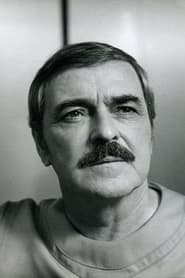
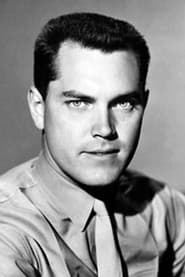
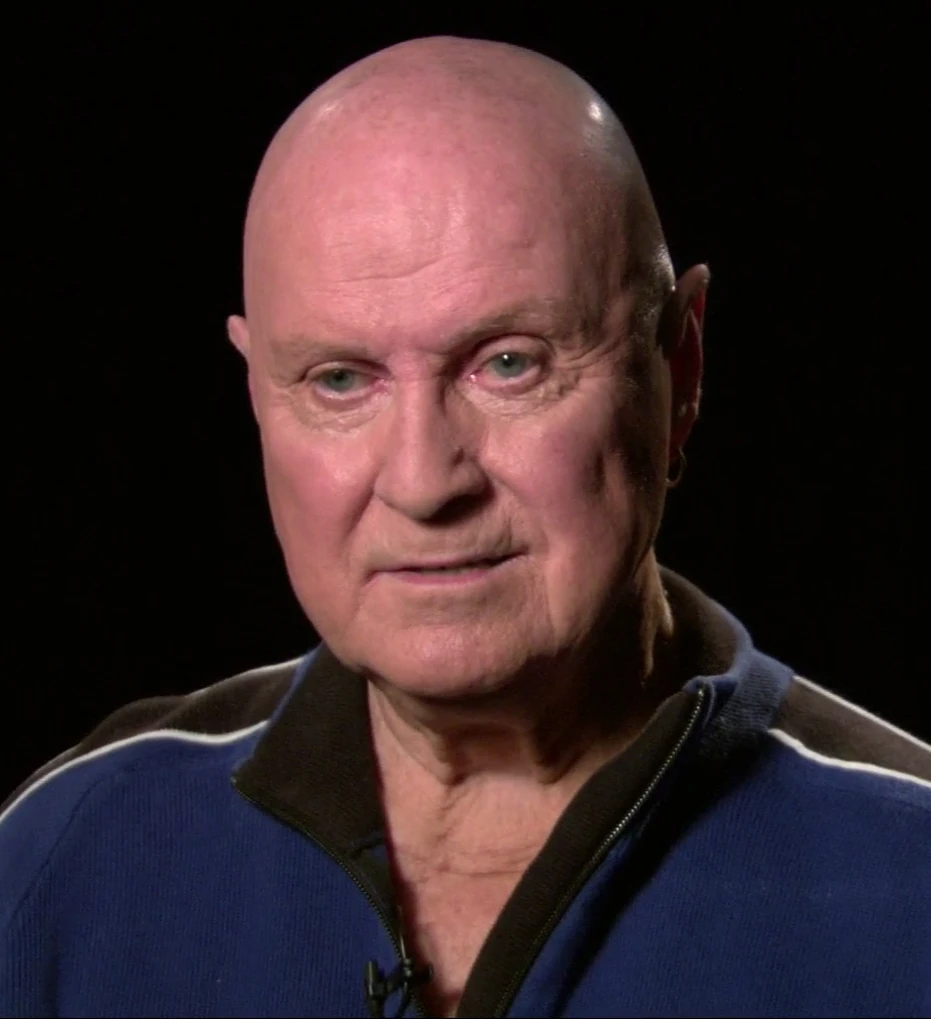
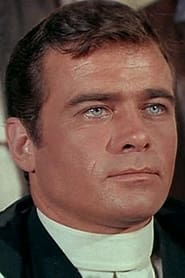
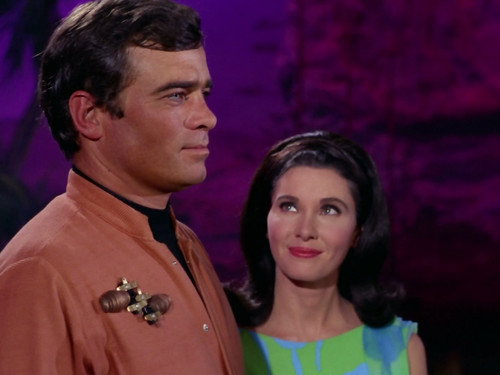
Glenn Corbett, who played Zefram Cochrane, was a prominent actor of the era, known for his role in the 1960s television series 'Route 66'.
-
The distinctive, echoing voice of the non-corporeal Companion was provided by Majel Barrett, Gene Roddenberry's wife and the voice of the USS Enterprise computer.
-
This episode provides a canonical explanation for Zefram Cochrane's disappearance, a significant event in Star Trek lore, explaining how the inventor of warp drive vanished without a trace.
-
The Companion's original voice, performed by Elizabeth Rogers, was deemed too emotionless and subsequently re-recorded by the uncredited actress Lisabeth Hush.Sources: Memory Alpha
-
Captain Kirk remains off the USS Enterprise for the entire episode, a rare occurrence for the first two seasons, and the starship itself does not appear until twenty-seven minutes into the story.Sources: Memory Alpha
-
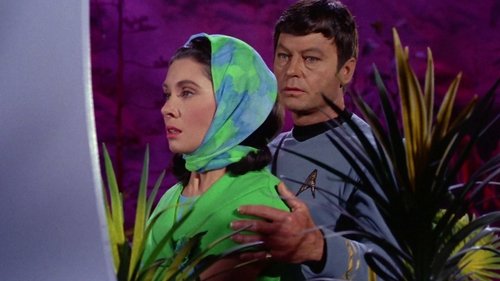
Director Ralph Senensky spontaneously decided on set to make Commissioner Hedford's scarf patterns symbolically match the Companion's energy field, and the scarf later helped conceal actress Elinor Donahue's ten-pound weight loss during re-shoots due to pneumonia.Sources: Memory Alpha
-
This episode introduces Zefram Cochrane, the pivotal inventor of warp drive, who would later be portrayed by James Cromwell in "Star Trek: First Contact" and "Star Trek: Enterprise".Sources: Memory Alpha
-
Several visual effects were reused, including all exterior shuttlecraft footage from "The Galileo Seven," and the planet Gamma Canaris N, a color-corrected asset from "Operation -- Annihilate!", which appeared as different planets in subsequent episodes.Sources: Memory Alpha