Mission Briefing
Lieutenant Reginald Barclay, a brilliant but socially awkward Starfleet officer assigned to the Pathfinder Project, becomes increasingly obsessed with finding a way to contact the USS Voyager, stranded in the Delta Quadrant. His unconventional methods and intense focus lead him to spend an alarming amount of time in the holodeck, creating elaborate simulations of the USS Voyager and its crew. This behavior raises concerns among his superiors, particularly Commander Pete Harkins, who fears a relapse of Reginald Barclay's past holo-addiction.
Despite the official Starfleet plan for one-way communication, Reginald Barclay believes he has devised a method for two-way contact using a unique application of the Mutara Interdimensional Deep Space Array System (MIDAS array) and a class B itinerant pulsar. His attempts to present this theory are met with skepticism and dismissal, forcing him to confront the chain of command and his own psychological well-being in his desperate quest to bring the USS Voyager crew closer to home.
LCARS Tactical Mission Registry: A detailed reconstruction of chronological events and narrative progression compiled from historical logs and mission briefs.
Lieutenant Reginald Barclay, a brilliant but socially awkward Starfleet officer, is introduced in his unkempt apartment on Earth, where he is visited by Counselor Deanna Troi. He confesses his profound obsession with the USS Voyager crew, revealing that he has been working on the Pathfinder Project, an initiative aimed at establishing contact with the stranded starship. Barclay's initial, highly theoretical idea involves directing a tachyon beam at a class B itinerant pulsar to generate enough gravimetric energy to create an artificial wormhole using the Mutara Interdimensional Deep Space Array System (MIDAS array). This concept is met with skepticism by his superior, Commander Pete Harkins, who reminds Barclay of a previous failed transwarp probe simulation and dismisses his current theory as an 'abuse of MIDAS'. Barclay's deep-seated need to connect with USS Voyager leads him to increasingly rely on the holodeck for 'inspiration' and emotional support, where he runs simulations of the USS Voyager's bridge, attempting to establish communications.
Barclay's reliance on the holodeck quickly escalates into a full-blown relapse of his holo-addiction, a condition he previously struggled with. Within the holodeck, he creates a comforting, idealized version of the USS Voyager, where he plays poker with holographic versions of Chakotay, B'Elanna Torres, Harry Kim, and Tom Paris, and receives therapeutic massages from The Doctor. He finds more solace and a sense of 'family' in his holographic quarters than in his own apartment. The narrative then shifts to a critical briefing with Admiral Owen Paris, whose son, Tom Paris, is aboard USS Voyager. Commander Pete Harkins presents the official Starfleet plan: a one-way hyper-subspace communication system developed with the Vulcans, capable of sending messages that would reach USS Voyager in days. Barclay, unable to contain his excitement, impulsively interrupts the briefing, attempting to explain his wormhole theory. His inarticulate presentation and emotional outburst lead to a cold rebuke from Admiral Owen Paris and his dismissal from the briefing by Commander Pete Harkins.
Following his dismissal, Barclay's desperation intensifies. He returns to the holodeck, creating a holographic briefing room and engineering lab on USS Voyager to refine his micro-wormhole concept with the holographic crew, including Captain Kathryn Janeway and Tuvok. He works through the technical challenges, hitting on the idea of compressing the data stream to allow for a smaller, more manageable micro-wormhole. Commander Pete Harkins discovers Barclay in the holodeck, noting his excessive usage—twenty to thirty hours a week—and confronts him about his holo-addiction relapse. Despite Barclay's protests that his work is helping USS Voyager, Commander Pete Harkins removes him from the Pathfinder Project and restricts his access to the lab and hologrid. Undeterred, Barclay seeks out Admiral Owen Paris, apologizing for his previous behavior and presenting his refined plan. Admiral Owen Paris, disturbed by Barclay's use of a holographic Tom Paris, initially stands by Commander Pete Harkins' decision but eventually agrees to order a review of Barclay's findings.
Back in his apartment, Deanna Troi expresses deep concern over Barclay's acute anxiety, sleeplessness, and paranoia, recognizing the severity of his obsession. She advises him to let Starfleet handle USS Voyager and focus on his own well-being. Barclay, on the verge of a breakdown, confesses his profound loneliness since leaving the USS Enterprise (NCC-1701-E), explaining that he created the holographic USS Voyager crew as a surrogate family. Deanna Troi, moved by his distress, offers to take a temporary leave of absence from Captain Jean-Luc Picard to help him. Despite this support, Barclay, driven by an unyielding determination, cannot sleep. He overrides the lab's security lockout, interfaces with the MIDAS array, and activates it. He directs a sixty terawatt tachyon beam at the class B itinerant pulsar, successfully creating a micro-wormhole and transmitting a Starfleet emergency message towards USS Voyager's projected location.
Commander Pete Harkins and a security team arrive to apprehend Barclay, but he transfers the controls to the holodeck and escapes into the holographic USS Voyager program. With the assistance of the holographic crew, he evades the security team, erecting force fields and redirecting the wormhole multiple times to different sectors, retransmitting his message. Unable to shut down the encrypted hologrid, Commander Pete Harkins initiates a holographic warp core breach to force Barclay out. Unwilling to see his holographic USS Voyager destroyed, Barclay finally ends the program. Simultaneously, on the real USS Voyager, Seven of Nine detects the micro-wormhole and a partial, garbled transmission on a Starfleet emergency channel. Captain Kathryn Janeway quickly responds as the wormhole begins to collapse. Back on Earth, Barclay is being led away when Admiral Owen Paris arrives, having reviewed and approved Barclay's plan. A beeping noise signals a garbled transmission from USS Voyager, vindicating Barclay. With Commander Pete Harkins' help, Barclay cleans up the signal, allowing Captain Kathryn Janeway to communicate with Starfleet Command. Admiral Owen Paris speaks directly to his son, Tom Paris, expressing his pride. Before the wormhole collapses completely, Barclay transmits hyper-subspace technology data to USS Voyager, and Captain Kathryn Janeway sends ship's logs and crew reports. Commander Pete Harkins apologizes to Barclay, and Admiral Owen Paris declares that Project Voyager is just beginning. On USS Voyager, the crew celebrates, with Tom Paris toasting Reginald Barclay. Deanna Troi congratulates Barclay, who reveals he is now dating Hope, Commander Pete Harkins' sister-in-law, who, coincidentally, loves cats, much like Barclay's own cat, Neelix.
LCARS Tactical Mission Log: Chronological action logs detailing exactly what each character did during the events of this mission, linked directly to personnel dossiers.



Subspace Visual Feed
Sensors & Diagnostic Metrics
Visual Sensor Logs


Synaptic Lore Link Contexts
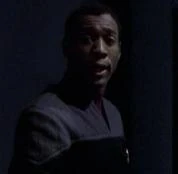
In an apartment on Earth, there's a knock at the door, and Lieutenant Reginald Barclay gets up from a couch to answer it.Lieutenant Reginald Barclay, a brilliant but socially awkward Starfleet officer, is introduced in his unkempt apartment on Earth, where he is visited by Counselor Deanna Troi.
In a poignant and highly anticipated episode, Lt. Reginald Barclay, still struggling with his holodeck addiction, dedicates himself to the Pathfinder Project at Starfleet Communications, a daring initiative to establish a stable, long-range subspace link with USS Voyager.
He's been working on the Pathfinder Project until recently, and he was under a lot of pressure.In a poignant and highly anticipated episode, Lt. Reginald Barclay, still struggling with his holodeck addiction, dedicates himself to the Pathfinder Project at Starfleet Communications, a daring initiative to establish a stable, long-range subspace link with USS Voyager.
The next morning at the briefing, Commander Harkins tells Admiral Paris that when The Doctor's program was transferred to Starfleet two years ago, Voyagers position was Delta Quadrant sector 41751, grid 9.In a poignant and highly anticipated episode, Lt. Reginald Barclay, still struggling with his holodeck addiction, dedicates himself to the Pathfinder Project at Starfleet Communications, a daring initiative to establish a stable, long-range subspace link with USS Voyager.
Barclay assures her he's fine and that since the Enterprise is in orbit, he just wants to spend some time with her.Barclay, on the verge of a breakdown, confesses his profound loneliness since leaving the USS Enterprise (NCC-1701-E), explaining that he created the holographic USS Voyager crew as a surrogate family.
In a poignant and highly anticipated episode, Lt. Reginald Barclay, still struggling with his holodeck addiction, dedicates himself to the Pathfinder Project at Starfleet Communications, a daring initiative to establish a stable, long-range subspace link with USS Voyager.
Admiral Paris asks if they can contact them, and Harkins says that they have been working with the Vulcans on the deployment of the MIDAS array, which is still in the testing phase.Commander Pete Harkins presents the official Starfleet plan: a one-way hyper-subspace communication system developed with the Vulcans, capable of sending messages that would reach USS Voyager in days.
He sends her information on the hyper-subspace technology, and Janeway transmits the ship's logs, crew reports, and navigational logs.Before the wormhole collapses completely, Barclay transmits hyper-subspace technology data to USS Voyager, and Captain Kathryn Janeway sends ship's logs and crew reports.
Barclay's initial, highly theoretical idea involves directing a tachyon beam at a class B itinerant pulsar to generate enough gravimetric energy to create an artificial wormhole using the Mutara Interdimensional Deep Space Array System (MIDAS array).
He overrides the lab's security lockout, interfaces with the MIDAS array, and activates it.
Barclay's initial, highly theoretical idea involves directing a tachyon beam at a class B itinerant pulsar to generate enough gravimetric energy to create an artificial wormhole using the Mutara Interdimensional Deep Space Array System (MIDAS array).
Mission Registries & Linkages
Subspace Playlists
This registry lists all curated subspace playlists and chronological collections containing this mission.

Technology
This registry contains all specialized technologies deployed, analyzed, or referenced during this mission.
Location
This registry displays all celestial bodies, planets, starbases, or coordinates charted or visited during this mission.
Starship
This registry lists all vessels encountered, scanned, or active during this mission.
Species & Factions
This registry documents all species, civilizations, and organizational factions contacted or active in this sector during the mission.
Culture & Lore
This registry outlines historical events, cultural traditions, organizations, and database lore referenced during this mission.
Production & Archival Linkages
This registry documents behind-the-scenes production references, draft concepts, star charts, or archival cataloging links officially connected to this mission.
"Barclay has worked with another communications array in , when the had to fix the Argus Array."
"This episode references aspects of all three of the live-action Star Trek spinoffs that existed at the time: Troi mentions the Enterprise being in orbit, Barclay mentions receiving information from Deep Space 9, and Pathfinder tries to contact Voyager."
"This was the first time Starfleet Headquarters was seen after the Breen attack on Earth during the final weeks of the Dominion War in 2375, depicted in . Most of San Francisco, including the Golden Gate Bridge, has evidently been restored by this time. Starfleet officers in the shot of the building's exterior, however, are still wearing the older-style uniform."
"The holographic Voyager crew are all dressed in their first season attires, including Janeway's hair bun, Paris' lieutenant pips, and Chakotay and Torres in Maquis fatigues. In the script they are identified as "Holo-Paris", "Holo-Kim", "Holo-Chakotay", "Holo-Torres", "Holo-Doctor", and "Holo-Janeway". Neelix and Seven do not appear in the holodeck program, although Barclay has some knowledge about Neelix and named his cat after him."
Continuity & Trivia
-
This episode marks the first time a Starfleet crew in the Alpha Quadrant successfully makes contact with Voyager in the Delta Quadrant, providing a crucial plot development for the series.
-
Reginald Barclay's holodeck recreation of the Voyager crew features actors who bear a strong resemblance to the actual cast members, including a look-alike for Captain Janeway, Commander Chakotay, and even the Doctor.
-
The character of Lt. Barclay, played by Dwight Schultz, makes his first appearance on Star Trek: Voyager in this episode, having previously been a recurring character on Star Trek: The Next Generation.
-
The episode's working title was "Home Fires," and Marina Sirtis noted that Counselor Troi's role was significantly expanded after she agreed to appear, leading to a planned character of Barclay's wife being written out.Sources: Memory Alpha
-
This episode holds the distinction of being the final Star Trek installment to air in the 1990s.Sources: Memory Alpha
-
Marina Sirtis accepted her invitation to appear without reading the script, primarily influenced by the prospect of working with Dwight Schultz, and she did not interact with any of the actual Voyager cast members as all her scenes were on Earth with Schultz.Sources: Memory Alpha
-
A photo of Robert Duncan McNeill as Nicholas Locarno from *The Next Generation*'s "The First Duty" was recycled to portray Tom Paris on Admiral Paris's desk, featuring a continuity error where the combadge switched sides between shots.Sources: Memory Alpha
-
Barclay's holographic *Voyager* crew appears in their first season attires, including Janeway's hair bun and Maquis fatigues for Chakotay and Torres, while notably omitting Neelix and Seven of Nine, though Barclay named his cat after Neelix.Sources: Memory Alpha